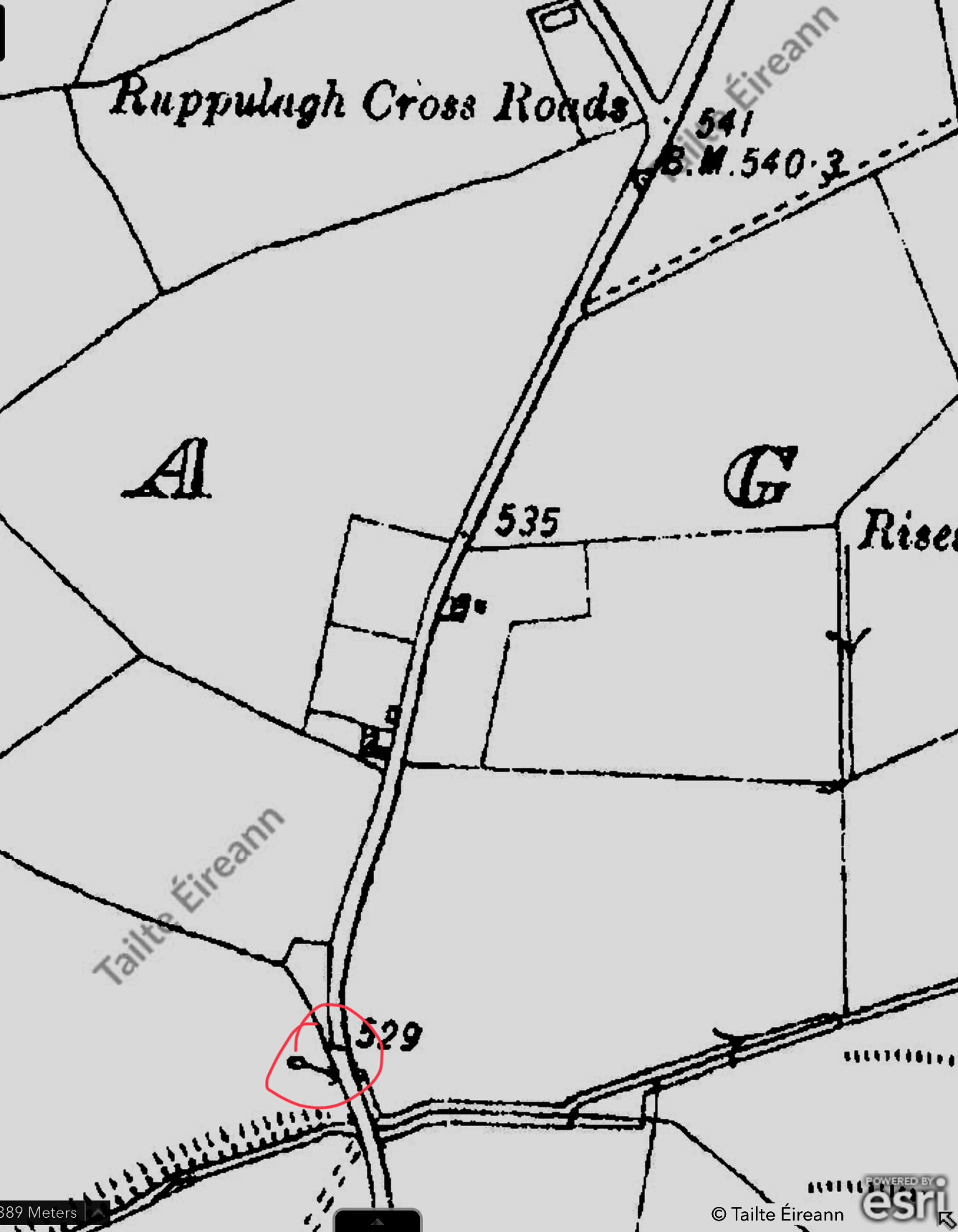
I spent much of my childhood going to the well for water. We lived in a house without running water, so like our neighbours, we drew water many times a day, depending on what the kitchen or farm needed. The well sat on our land, about two hundred yards from our house. All our neighbours in that small hamlet in Ruppulagh also drew water from the same well, the Hawn.
The Hawn was a shortened English version of the Irish word sruthán, meaning a stream. It was one of those names that had been destroyed by our colonial betters in the 19th century in their futile efforts to eradicate our language and our culture. Before the local water scheme arrived in the 60s and brought piped water to each home, the Hawn was the central focal point of our small community, providing a steady, reliable water supply. It was, in effect, our very own ‘parish pump’.
Neighbours, good and bad, used the well for all their domestic needs. The Connells, the Tobins, the McGraths, and Jack Connell, the postman, drew water from the Hawn in enamel-coated buckets, later stainless steel, while the young often used the shiny, silvery ‘sweet gallons’ recycled from Hennessy’s shop in Glenroe. Eventually we graduated to using buckets, one in each hand for balance. We would often multitask, and when we went to bring the cows home for milking in the evening, we would also draw water from the well.
Like Seamus Heaney in his poem Personal Helicon, I, too, was fascinated by wells:
As a child, they could not keep me from wells
And old pumps with buckets and windlasses.
I loved the dark drop, the trapped sky, the smells
Of waterweed, fungus and dank moss.
The poem appeared in his first collection, Death of a Naturalist, and celebrated a myriad of rural crafts slowly being replaced by more modern approaches. Digging, ploughing, divining, going to Barry Devlin’s forge to have the farm horse shod, and going to the pump in the farmyard for water, were all slowly fading away but are celebrated beautifully in Heaney’s early work.
I was equally fascinated by religion, especially the Bible stories I learned at school. My heart goes out to the parents and teachers who strive to awaken a sense of faith in young people today; for me, it came naturally. The Gospels spoke in simple, familiar images. When I heard of Jesus meeting the woman at the well, I pictured the Hawn at once. Across two thousand years, little had changed: the well in Samaria served much the same purpose as our humble draw well in Ruppulagh. Looking back, I realise how naïve that belief was. This was the early 1960s, and before the decade was over, humanity had taken its giant leap and walked on the moon.
Wells were hugely important in rural Ireland in the 50s and early 60s. Many of these wells were ‘holy wells’. In fact, our neighbouring townland was Ballintubber, in Irish ‘Baile an Tobair’, the townland of the well. Caoimhín Ó Danachair (1955, 207) recorded the following details about this holy well:
‘Toberbreedia (on 1841 Ordinance Survey map). A small spring in an open field, with some old whitethorn trees. The rounds path is marked by five stones. Rounds are still made, but not often. Formerly much visited, especially on 1st February. Widely known as the “Chincough Well” and said to cure whooping cough in children. Alternatively, water was taken from the well to the patient; moss from the well was boiled in milk and the milk drunk; or the patient was sometimes brought to the well and drank the water there’.
I remember visiting this well with my dad. It sat just beyond the old national school in Ballintubber, and we were probably passing on our way to Ballylanders. A narrow pathway led into the well, with ditches on either side. I thought it was a very eyrie place. Today, that pathway (and the well itself) is almost totally overgrown and hidden from all casual passers-by.
Our well wasn’t so holy, yet we visited it many times a day in those halcyon summer days. I have no memory of ever drawing water in the rain. Such is my faulty memory! To enter the Hawn, one climbed a stile, walked along the top of the ditch to another stile at the end. I remember a blackthorn bush at the stile, and in September and October the sloes were ripe for picking. However, the fruit’s taste was startlingly acerbic to unsuspecting young palates. Sloes are extremely astringent, sour, and bitter because of their high tannin content; biting into one immediately dries out your mouth. There then followed a short, well-worn path through the rushy field to the well. A large flat stone covered the well, protecting it from the cows that grazed the nearby fields.
Our small farm of nine acres had two fields, the front field and the back field. It seemed to us that all the water flowing from Sheehy’s Hill and Bawnard (Bonn Aird, ‘the high point’) found its way to our two fields. The Hawn could be described as a flowing artesian well, while nearby there was also ‘the river’, actually a small rivulet that ran along the boundary of our land and Kevin Condon’s farm. This stream flowed under a rustic bridge across the roadway, into Louis Walsh’s land, and on through the Garlochs (from the Gaelic words Gearr, meaning short, and Loch, meaning lake), until it merged with other streams to form the Ahaphuca River (Abha Phúca). In Irish folklore, the Púca was a mischievous, shape-shifting spirit that could bring either good or bad fortune. It commonly appeared as a sleek dark horse with glowing eyes, or as a goat, dog, hare, cat, or human with animal features. It was traditionally linked to Samhain, the night of November 1st, when farmers left a portion of their harvest—known as the “púca’s share”—to keep the spirit happy.
My brother, Tom, the land’s current owner, undertook a major reclamation project when he retired a number of years ago. One of the biggest changes was removing the ditch that separated the front field from the back field, so today, there is but one big field. The contractor had major problems with the old drains my father and grandfather had laid down over the years. He complained that there was water everywhere! Luckily, the Hawn survived the tractors, earthmovers and bulldozers, and water continues to flow with the quiet persistence of memory, cold and clear from the darkness beneath the fields. Today its water slips over the stones in a silver thread, whispering its way through rushes, sweet-grass, felustrums (our name for yellow flag iris), and water mint, as though the earth itself had found a voice.
I have vivid memories of magnificent starling murmurations undulating this way and that under Bawnard on murky Autumn evenings as I traipsed home with my pail of water – literally thousands of birds flowing as one dark ribbon across the evening sky. Billowing, folding, and unfurling like smoke caught in an invisible wind, each sudden turn passing through the flock like a whispered thought. For those few breathless moments, the sky seemed alive: writing, erasing, and rewriting itself before the birds dissolved into the encroaching dusk.
Shortly after my dad died on the evening of May 8th, 1998, my son Don wrote a poem in his memory. The beautiful poem mentions and celebrates our fields, the streams, the bridge, the well, and his beloved, mischievous grandad. The poet was twelve years old.
Field Trip
We walked through the fields
By the limestone stream
To the back field.
We played with the electric fence:
My rubber sole froze.
Forestry covered the red hill green.
The stream was all bed and no sheets.
We went under the bridge
Bending backs,
Kissing the water.
The sun dried the grass yellow,
The well muddied the glass.
But now,
There are fields beyond,
We’re wary of the wire,
The cows aren’t counted,
And I don’t hear the old stories.
I set down these scattered memories, these ‘old stories’, here because the Ireland of my childhood—the Ireland of my parents and grandparents—has all but vanished. Yet it lives on in memory, and it is a memory worth preserving.
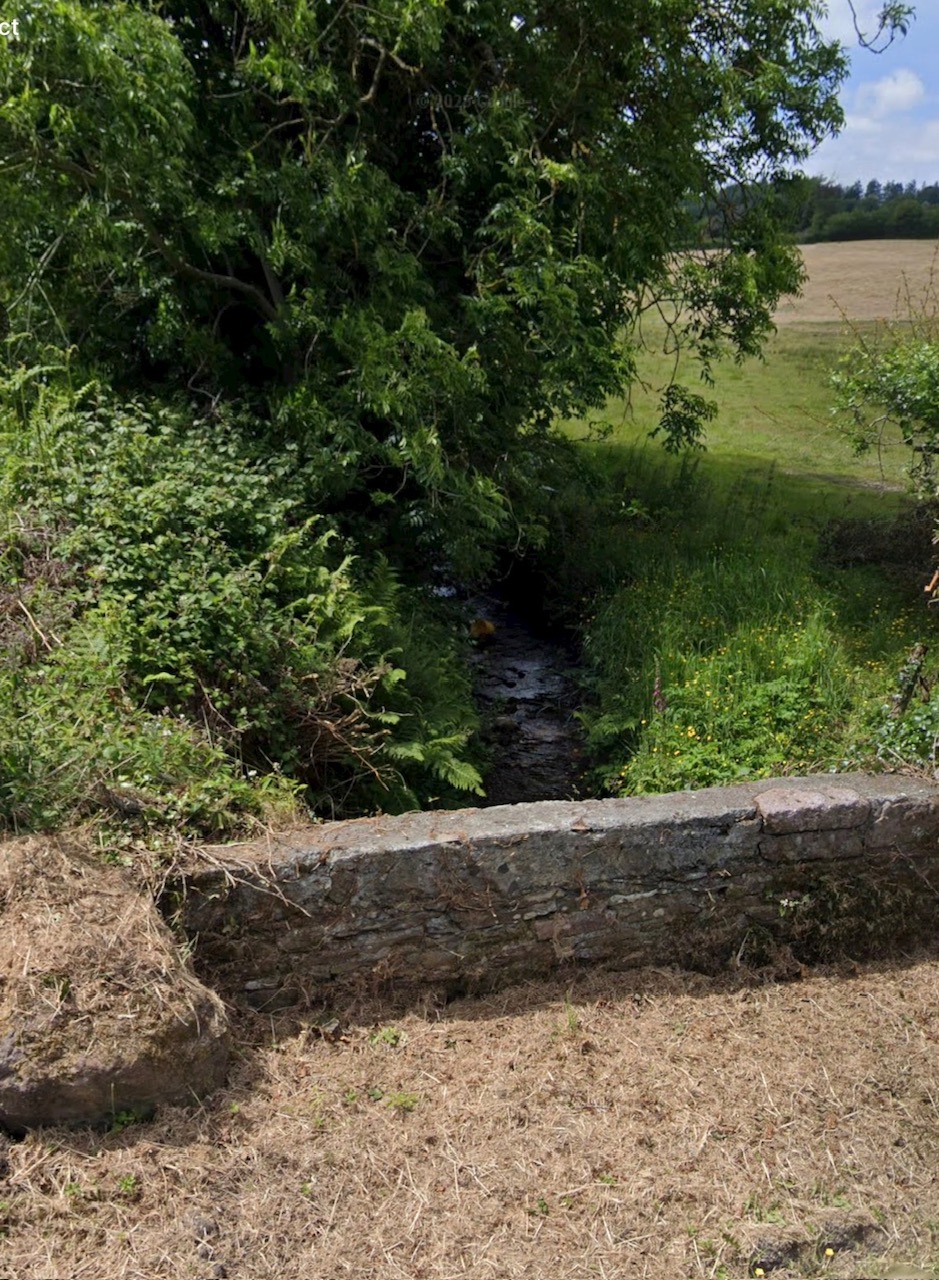
We went under the bridge
Bending backs,
Kissing the water.
References
Heaney, Seamus. Death of a Naturalist, London: Faber and Faber, 1966.
Ó Danachair, C. The Holy Wells of County Limerick, Journal of the Royal Society of Antiquaries of Ireland 85, (193-217), 1955.

