Superannuated Man - interests include education, literature, politics, religion, ICT. In thrall to the unlimited heartbreak associated with following Knockaderry and Limerick GAA!
Holy Wells and Shrines have been renowned places of worship in Ireland from the earliest times, all dedicated to some particular saint. The Knockaderry Marian Shrine was built in 1963 on a natural base of rock, on an elevated site beside Saint Munchin’s Church in the village. The beautiful Carrara marble statue of Our Lady was purchased from a firm in Rome.
On the Feast of the Immaculate Conception the shrine was blessed and unveiled by the Parish Priest of Knockaderry, Very Rev. Fr. T. Costello, assisted by Rev. J. Sheehy, CC, Knockaderry, and Rev. T. Greene, CC, Feoghanagh. To mark the occasion a special sermon was preached by the Very Rev. Archdeacon Carroll, PP, VF, Rathkeale, and a very large number of parishioners were present at the ceremony.
All the work on the Shrine was done voluntarily under the guidance of the local guild of Muintir na Tire. The railings and wrought iron canopy was the work of local craftsman, Denis O’Sullivan.
In 1978 the Shrine underwent a facelift. the large granite stones were removed and replaced by Liscannor flags. The existing railing was removed and replaced by a brick frontage. Flower beds were introduced on both sides of the path. Kerbing was also laid.
Further restoration was carried out in 2013 under the guidance of Pat Quilty and a beautiful stone backing and canopy was constructed to protect the statue. On November 22nd 2013 the Shrine was again blessed and reconsecrated by Bishop Brendan Leahy, Bishop of Limerick, assisted by Rev. Fr. Edwin Irwin, PP, Knockaderry and by Mons. Liam Boyle.
The work of construction and the dedication and blessing of the shrine was filmed and captured for posterity by John Joe Harrold on his own cine camera.
I recently came across this fascinating footage of the Official Opening of Scoil Mhuire, Ahalin (Achadh Lín) in 1963. The filming was done by local parishioner and filmmaking enthusiast John Joe Harrold. In recent weeks up to 45 short videos, many filmed in the early 1960’s, have been uploaded to You Tube and are now finally available for all to see. As you can see this short film is Episode 38 of this series, which is entitled Memories of the Past.
The “New School” in Ahalin was built on a site purchased from Mr. James Cantillon, commanding a fine view southwards towards Kilmeedy. The first intake of pupils took place in September 1963 when all existing pupils from the old school in Ahalin relocated to their new state of the art Primary School. The school was officially opened on 21st October 1963 and, as can be seen in the film clip, it was an occasion of great celebration for the parish of Knockaderry Clouncagh and for the School Manager, Rev. Canon Costelloe P.P.
Master Micheál de Búrca, who features prominently in the film clip, was the first Principal of the new school and he continued in this role until his retirement in 1970. He died in 1973 and is remembered by many for his commitment to the promotion of the Irish language and for his work in promoting Drama within the school and parish.
Sources: Knockaderry and Clouncagh Annual 1990 and jdtvideo and You Tube.
The film, Strictly Ballroom, was released in 1992. The screenplay was based on an earlier thirty-minute stage play developed by Luhrmann in the National Institute of Dramatic Art (NIDA) in 1985. It was first screened at the Cannes Film Festival and went on to win the ‘Prix de Jeunnes’ there. Various Australian Film Institute awards were followed by two BAFTA awards, a Golden Globe nomination, and prizes from the Sydney, Melbourne and Chicago Film Festivals.
PLOT SUMMARY
This story is about the Hastings family who are Australian and who take part in ballroom dancing competitions. Scott, the young son, is participating in the Waratah Dance Championship. He is determined to be creative in his style of dancing and not adhere to the conventional steps. Barry Fife is the manager of the Pan Pacific Dancing Competition and controls all entries and all styles of dance. In addition, Scott’s mother Shirley is determined that Scott will win this competition. Scott loses his partner Liz who is frustrated at his innovativeness.
Later, Scott encounters a young girl called Fran. Fran is keen to become Scott’s partner and dance along with his style. They practice secretly and improve their steps greatly. At the same time, we see Scott’s father Doug practicing his own style of dance. As the story develops, we learn that Doug was banned by the Federation for attempting to dance according to his own style. This makes Scott and Fran even more determined to dance and to win the competition.
They enter the competition in spite of the huge opposition from Fife and Shirley. Fife’s bullying and corrupt methods are overturned at the conclusion. Scott and Fran dance to the music of Love is in the Air and are joined on the ballroom floor by the whole audience. Scott’s efforts have not only helped him win the competition but it has vindicated the reputation of his father.
LITERARY GENRE
The film is a romantic comedy/musical that tells the story of how Scott Hastings manages to find a way to buck the system, dance his own steps, and find true love in the form of his unlikely dancing partner, Fran. It uses parody in the ‘mockumentary’ about ballroom dancing in the opening sequences. Here Shirley is satirized frequently when she intervenes to inform the audience about the proceedings. There are undertones of hysteria in these documentary-style interventions. It also uses elements of farce and caricature to mock certain figures and poke fun at institutions such as Barry Fife’s Federation. It satirizes the glitzy artificiality of the ballroom competition circuit by contrasting it with the much simpler and genuine approach to dance taken by Fran’s family.
Fran and Scott must cross the bridge between these two worlds and find the freedom to grow into people who are not afraid to express themselves in the way they themselves choose. There is more than a touch of the fairy-tale about it. Its origins as a piece of theatre are signalled in the many features of drama that occur throughout the film. For example, the film opens with the curtains being drawn back as in a theatre. The action moves from the district to the state championships and on to the Pan-Pacific Grand Prix.
The film constructs its own unique world where the characters exist only to dance and win competitions. Normal routines of family life and social life take second place to the demands of dancing. It is a world where tradition is in conflict with innovation and change. This conflict is further heightened by the clash of cultural traditions of the old world and the new, the influence of Spanish dance versus those of the ballroom tradition. The conflict is resolved in the final dance sequence where the new steps which draw on both traditions are seen to win. A new equilibrium is established which respects the best of both worlds.
We need to be aware that this is a film (!) and films use various ‘tricks’ and techniques to tell their story. The whole point of this Comparative Section is to make you more aware of these techniques and of the underlying symbolism in the story being presented before us. Much of the imagery of a film (or a play or novel, for that matter) may only emerge after a number of viewings. In the opinion of many, this is what makes a film great, the fact that you can watch it again and again, not just on a literal level, on the level of the story, but on a deeper metaphorical level as well.
The Musical Score
When you listen to the music in this film you will begin to see that certain tunes become associated with certain characters or groups. The Blue Danube Waltz is constantly linked with the Federation and the hold that it has over its members. Once you hear this tune, even though there is no mention of Barry Fife and his organisation, you begin to realise that the power of the organisation over the individual is being asserted. So the music acts as a symbol. Likewise with the percussion-driven music that Scott dances to as Fran peeps in at him, and the music that Doug dances to in secret. We have here the basic music of the individual dancer and the elaborate orchestral score of the Strauss waltz being juxtaposed. This points up one of the major themes of the film – how an organisation can stifle individual flair and initiative. The Flamenco music also comes to stand for something more than itself. It symbolises the whole culture of Fran’s people, who find themselves living on the edge of Scott’s world, on the other side of the tracks, trying to keep their traditions alive in a foreign environment.
The use of the Spanish language and dance also take on symbolic significance when they are used to assert group identity and exclude outsiders. Fran is an outsider trying to use dance to break into Scott’s world. Scott enters Fran’s world first by trying to work out the Spanish proverb and then by using dance.
Settings
The differences and similarities between these two worlds are referred to symbolically in the settings used in the film. There are four distinct locations within the film:
The competition venues
Scott’s home
Kendall’s School of Dance
Fran’s home
The characters must move between each one and adapt to their changing conditions. Each setting is distinct and separate, which helps to underline the symbolic differences between them.
Certain aspects of the settings take on extra meaning e.g. the officials sit at tables that literally look down on the competing dancers. The worlds of Scott and Fran are separated by a bridge symbolising the distance between them. Les Kendall’s studio has three main areas – the dance floor, the basement and the roof. The basement is a place that Doug uses to hide away the things of his past. The roof-top might be a symbol of the freedom that comes with dancing one’s own steps outside the confines of the rulers and regulations of the Federation. (No doubt this is one of the reasons why Coco Cola chose this spot for their ‘product placement’ coup!)
Lighting
The spotlight in Les’ studio acts symbolically to set Doug, Scott and Fran apart from the rest of the characters in this story. The lighting is used throughout the film to show characters in a good or bad light. Barry Fife and Shirley are constantly shown in light that distorts their features. The effect is added to by the close-up use of the camera.
Fairy-Tale motif
In the dressing room scene, we are expected to be able to make the connection between what is happening here and our knowledge of fairy-tales. We are expected to be able to recognize the Evil Stepmother and the Ugly Sisters and we are reminded of an earlier scene of Fran working, sprinkling the floor of the studio, as everyone else dances around the floor. She is represented here as a Cinderella figure who does all the work. She finally meets Prince Charming and becomes a dazzling beauty at the ball at the film’s end!
Costume
Items of dress, spectacles, hairpieces and hair styles all form part of the imagery of the film and take on symbolic meaning to back up the characterisation and themes of the film. Barry Fife’s hair-piece may signify his attempt to cover up what he really is, or to put it another way, his attempts to appear to be something that he is not. Fran’s increasing confidence is symbolised by the gradual change in her costume and ‘look’ as the film progresses. She graduates from the sloppy white t-shirt to the elegance of her mother’s Flamenco dress (the Ugly Duckling becomes a Swan!). This dress and Rico’s jacket may represent the continuation of the traditional Flamenco dancing in an environment that is, on the face of it, an alien one.
Cinematic Props
Various props assume symbolic significance as we get more familiar with the film. Doug’s camera is old-fashioned in this Netflix age. This hints that Doug himself is somehow locked into the past. The shop sign reading ‘closed’ may indicate the attitude of Fran’s people to those who come from ‘the other side of the tracks’. All the photographs and trophies take on symbolic significance in the building up of character and theme. The only thing Shirley lives for is to win trophies. These are knocked over and cast down at the end of the film, an image of the way Scott and Fran have brought about a revolution in the world of the Australian Dance Federation.
THEMES AND ISSUES
Although Strictly Ballroom may seem to be a light romantic comedy on first viewing, there are several serious themes being explored throughout the film.
Prominent themes in Strictly Ballroom include:
Relationships
Self-expression/Self-identity
Power/Corruption
RELATIONSHIPS
The most important relationships in the story revolve around Scott and Fran. You need to examine the parent/child relationship between Scott and Fran and their parents.
Another relationships theme you could look for is ‘The individual and society’, examining the relationship between Scott and Fran and the Federation.
Many of the relationships treated in this film centre on the dancing world. Scott is at odds with Barry Fife and his mother because of his refusal to conform to the particular style of dancing required by the Pan Pacific Competition. When he meets Fran their relationship flourishes through their strong dancing partnership. As a result of this Scott’s father who is originally seen as a type of outcast in his own family is seen to be a heroic figure.
However, the main relationship, the one that gives the film its romantic thrust, is the one between Fran and Scott. She is in love with Scott from the start but he is blind to her true worth. She lacks confidence in herself. In the second half of the film true love wins out and we close with the lovers in each other’s arms. This plot line is typical of the genre we call ‘Romance’.
The relationship between young people and their parents is explored in some detail in the film and the manner in which young people have to challenge their parents’ values rather than simply accept them is also explored. There is also the added dimension that the parents in this tale are using their children to achieve what they themselves have failed to achieve.
Scott tells us that he has been training to win the Pan Pacific competitions since he was six years old. Obviously, it was his parents who decided on this goal for him. Part of Scott’s struggle involves him challenging the path his parents have laid out for him. Fran too has to challenge her father and the control he tries to exert on her life.
SELF-EXPRESSION/SELF-IDENTITY
In Strictly Ballroom, identity is being explored on two levels. On one level we have the struggle for personal identity, which all the main characters have to endure before the film’s narrative is resolved. On another level we have a conflict of cultural as well as group identity against which the individual characters must seek to define themselves.
Initially, identity is defined in terms of insider and outsider. As the film opens, the world of ballroom dancing is a closed and competitive world. Within this world Scott, Shirley, Les, Barry and Liz are some of the key insiders. They are known in terms of their success and expertise as dancers. They have reputations and are looked up to by other people.
Doug and Fran, on the other hand, are the outsiders and are generally ignored by everyone else. Fran has been a beginner for two years and still has no partner. Doug, even though he is Scott’s father, is treated as something of a fool by his wife Shirley and others.
It is obvious from the way Fran is treated that this is a difficult world to break into. When she first approaches Scott, he tries to dismiss her as ‘only a beginner’ who has no right to approach an ‘open amateur’. He turns on her for trying to break the ‘rules’ and it is only when she points out to him how he is trying to change the rules, that he begins to realise that they have something in common.
As the film’s narrative progresses we discover the reason for Doug’s isolation from the group. He had tried to dance his own steps, thereby breaking the rules, and was ostracised by the rest of the ballroom dancing world. This detail establishes how strong the group identity is and how ruthless it can be to those who challenge the established order. In the beginning Scott was unaware of the fact that his father had already tried to cultivate an individual style of dance and self-expression. However, through Scott’s sustained efforts and with the help of Fran both characters succeed where he had failed and they go on to cultivate their own unique style of dance and triumph over the corruption of the system personified by Barry Fife and his Federation.
As a balance to the tightly controlled world of ballroom dancing the film takes us into the world of Fran’s family. This is a world of outsiders in a cultural sense. Their outsider status is shown through the location of their home close to the bridge and the railway tracks, both of which signify travel and distance (as well as the old cliché about being born on ‘the wrong side of the tracks’!). It is also underlined by the family’s use of Spanish and the need for subtitles so that the audience can follow what they are saying.
Unlike the world of dance whose members are kept together and gain their identity from the rules they follow, the world of Fran’s family is bound by a common language and a tradition of values and friendship. It too is a world which is slow to accept outsiders, as Scott discovers, but once he shows them that he understands and appreciates their values and traditions he is accepted by them.
The struggle between the two worlds is resolved in the final dance sequence of the film. To the accompaniment of ‘Love is in the Air’, dancers, parents and audience take to the floor and mingle. They are not dancing to the strict movements of either side but are developing a closer, more intimate style. In a sense, a new, more inclusive identity is being created out of the old order.
Likewise, Scott and Fran’s struggle for their own personal identity is resolved by their successful challenge to the rules of ballroom dancing and their acceptance by the audience at the championships.
POWER/CORRUPTION
The film explores the nature of power and the manner in which corrupt individuals can have a controlling influence on an organisation. In many ways Barry Fife is portrayed as a comic figure. The constant use of close-up shots exaggerates his features and tends to make him look grotesque rather than natural.
However, there is nothing comical about the way he exerts control over the Australian Dance Federation or the manner in which he turns this control to his own ends. At every event Barry is placed above the dancers, judging and controlling their performance. The halls are full of reminders of his influence in the form of photographs and display stands for his videos.
He moves in a world of shadows from where he issues his orders. He also manipulates the weaker characters such as Wayne Burns or Ken Railings in order to achieve his ends. He is the ‘evil’ force against which the hero, Scott, must struggle.
In this way, the film can be read as a traditional fairy-tale narrative in which the forces of ‘good’ as personified by Scott and Fran must struggle against the forces of ‘evil’ as personified by Barry Fife.
GENERAL VISION AND VIEWPOINT
The ability to withstand pressure and to fight for what one believes in becomes evident throughout the film. Scott is forced to take a stance against his family and suffer rejection, like his father before him, in order to stand up for what he believes is right. Fran also, is forced to confront her family and fight for her relationship with Scott. The strength of conviction and its capacity to expose lies and deceit becomes evident as the story unfolds and the corrupt maneuverings of Fife becomes evident to everyone.
In Strictly Ballroom the director creates a fairy-tale world in which the ‘good’ characters must struggle to overcome the ‘evil’ ones. The film identifies with Scott’s point of view. It is the story of his struggle to achieve his ambition of dancing his own steps. All the other characters are judged in relation to Scott.
As an audience, we have a privileged viewpoint. At all points in the film we, as audience, know more about what is happening than any of the characters. Although there may be surprises for the characters, there is none for us until the final sequence when Doug’s intervention allows Scott and Fran to finish their dance.
It is a point of view that allows us to relax and enjoy the spectacle of the film with its dancing set pieces without any disturbing elements of suspense or danger. The story opens in flashback to set up the conflict between Scott and Barry Fife, which drives the narrative. It is a film in which action, i.e. the dance set pieces, dominates character development.
NOW VIEW THE FILM AGAIN BELOW! MICROWAVE THAT POPCORN!
This review and notes are based on the Merchant Ivory Film of A Room with a View, which was directed by James Ivory and produced in 1986. It is based on the novel of the same name, which was written by E.M. Forster in the early 1900s and set in 1907, at the end of the Edwardian era. This was a moment in British history when Britain was still an imperial power. It is an old love story with a happy ending (much like Pride and Prejudice). The film was shot on location in Tonbridge Wells, Kent and in Florence, Italy. In 1987 the film won three Oscars (and a further six nominations) and also won five BAFTA Awards and one Golden Globe.
THE STORY
Lucy Honeychurch, a young English lady, is on a visit to Florence in Italy, chaperoned by her cousin Miss Charlotte Bartlett. They had been led to believe that they would have a wonderful view at the Pensione Bertolini, but this is not the case when they arrive. Another couple, a father and son, overhear them when they express their dissatisfaction and they promptly offer to exchange rooms. Charlotte is offended at this presumption for her young cousin’s sake, especially when the young man is dangerously attractive. However, the Reverend Beebe, the rector of Lucy’s parish at home in England, happens to be staying there as well. He offers to act as an intermediary and the rooms are exchanged without further ado.
The next morning, Charlotte tours the city with Eleanor Lavish, a lady novelist whom she had met at dinner the night before. Lucy goes for a walk alone and she witnesses a violent street fight where a young man is seriously injured. She becomes weak and faints from the shock. Luckily, George Emerson, the young man she had met in the Pensione, is there to help her back to her room.
The following day, the visitors in the Pensione arrange to go sightseeing as a group and the Emersons also are part of the group. George and Lucy become separated from the others and he kisses her in a cornfield. Charlotte witnesses what happened between them and after they return to the city she arranges for them to leave their rooms the next day. The women agree not to tell anyone what has happened to Lucy.
Back in England, Lucy accepts a proposal of marriage from Mr. Cecil Vyse, who is a rather pompous, arrogant snob. By a chance arrangement, the Emersons take a house in the area, close to the Honeychurch residence. Lucy’s brother Freddy, and the Rector, Mr. Beebe, invite George to go swimming in a nearby ‘lake’ on his first day in Summer Street. The men are quite spirited, and they chase each other around the lake for fun. Unfortunately, this occurs at the same time as the ladies are taking their afternoon walk in the woods and they see the men in all their naked glory!
Now that George has arrived and Freddy befriends him, he is invited to the Honeychurch home regularly to play tennis. Lucy is perturbed by George’s renewed proximity. The contrast between George and the stuffy Cecil is very obvious and this unsettles Lucy.
When Charlotte comes to stay with the family, she is very concerned for Lucy in case the presence of George will do harm to her engagement to Cecil. One day, Cecil is reading and criticising what he considers to be a dreadful novel and both Lucy and George are listening. The book happens to be by Eleanor Lavish, the woman who stayed in the same pensione in Florence as they did. The novel is set in Florence and Cecil reads a paragraph describing exactly where and when George kissed Lucy. On the way back into the house, George kisses Lucy again out of sight of the others.
Lucy is upset by this and hurt that Charlotte has told Eleanor Lavish after they had agreed not to tell anyone about what had occurred in Italy. Lucy asks George in the presence of Charlotte to leave. George gives a passionate account of his love for her and tries to make her see that Cecil only cares for her as he would a prize possession. Lucy denies the fact that she may love George, but all the same, she breaks off her engagement with Cecil soon after this.
When George sees that Lucy will not have him, he decides to leave Summer Street because he cannot bear to be near her. Lucy is surprised and shocked to see the furniture being removed from the house. Mr. Emerson talks to her and makes a heartfelt plea to her to stop denying the truth. Realisation dawns on her that she does love George after all and the film ends with the two lovers on their honeymoon back in the Pensione Bertolini in Florence. They kiss passionately at the window of A Room with a View.
THEMES
The themes which we will consider and touch on here are: Love versus hatred, The importance of social class and self-deception and self-realisation.
A Room with a View, deals with the discovery that real love is a powerful and regenerative force: essentially it is a love story with a happy ending. In the film, Lucy Honeychurch experiences a transition from a superficial understanding of love to a full understanding of its power and potential. The film uses many devices to illustrate this change:
The language of the characters
Their actions and gestures
The symbolic use of landscape and flowers
The metaphor of a room with a view.
Unlike a play and a novel, which rely heavily on the reader’s ability to interpret the subtlety and significance of images or references made in the texts, A Room with a View can guide the viewer to their meaning by using effective cinematography.
In the opening sequence of the film, the courtyard view which Lucy has from her window is very disappointing. She was expecting a spectacular view of Florence and this indicates to the viewer Lucy’s desire for new experiences. The room with a view becomes a metaphor for Lucy’s desire to live an exciting and full life.
Lucy’s disappointment with the restricted view is captured by the close-up camera shot of her face. This is intensified by her costume and by the incessant chatter of her cousin Charlotte.
In the dinner sequence, the camera focuses on a large question mark which George Emerson has arranged with the food on his plate. He deliberately shows this question mark to Lucy so that it becomes a symbolic representation for the viewer of their quest to find a meaningful and passionate existence.
The film clearly shows, even in the opening sequences, that the conventions which govern English society are useless in Italy. This is reflected in the open and direct manner of Mr. Emerson who offers Lucy and Charlotte the opportunity to change rooms. Mr. Emerson’s passionate plea that they should have a view indicates his emotional nature and affinity with the workings of the human heart: ‘I don’t care what I see outside. My vision is within. Here is where the birds sing; here is where the sky is blue.’
To emphasise Emerson’s passionate nature even further, the camera focuses on his face, which changes from a look of congeniality when he first suggests the switch, to a rising colour in his cheeks and a pleading look in his eyes. The shot also captures his emphatic gesture of beating his chest with his fork as he speaks, to indicate that his heart is where he feels life most powerfully.
The dialogue between Lucy, Charlotte, Mr. Beebe and the Misses Alan, as they discuss Mr. Emerson’s proposal, illustrates the conflict between the dictates of society and individual free will. Miss Catherine Alan’s opinion, that things which are indelicate can sometimes be beautiful, is a philosophy which Lucy adopts for her stay in Italy.
When Charlotte accepts the Emerson’s offer, she takes the larger of the two rooms for herself, explaining to Lucy that it belonged to George: ‘In my small way I am a woman of this world and I know where things can lead to.’
The ambiguity of this statement is apparent and hints at the physical attraction which exists between Lucy and George. It is also quite a pathetic statement, and though the viewer is not prone to like Charlotte at this stage in the film because of her ramrod stature, her severe hairstyle and her irritating personality, it does evoke a sense of empathy with her for her repressed emotions.
This shot is followed by the image of Lucy lying on the bed the next morning with a vertical strip of sunlight partly illuminating her face and body. This sensual image is enhanced when she rises from the bed and opens the window onto a panoramic view of Florence.
These images of Lucy along with her passionate piano playing indicate her desire to be free to experience all aspects of life and also to be free from the constraints and petty rules of society.
The sequence of shots in Santa Croce illustrates the Emersons rejection of social norms and the religious hypocrisy of people like the Rev. Cuthbert Eager. Mr. Emerson even makes fun of Giotto’s frescoes because he sees no truth in them. While this statement might appear like ignorance to art historians or religious zealots, it is not meant to be blasphemous; rather it reflects his belief that spirituality alone, faith without emotion, cannot sustain the human heart.
The close-up camera shots which move rapidly from fresco to fresco illustrates their disproportion to real life figures. These shots can be contrasted with the opening of this sequence where, through a high camera angle, Lucy wanders through the vast space of the church on her own. This contrast emphasises Lucy’s individualistic nature, which instinctively reacts against society’s expectations. This point is also highlighted in her dialogue with Mr. Emerson who pleads with her to help his son to stop brooding: ‘I don’t require you to fall in love with my boy but please try to help him’.
The ambiguity of this exchange is further emphasised by Mr. Emerson’s reference to the ‘everlasting why’ which he says George is trying to answer and also to his belief that there is ‘a yes and a yes and a yes’ which lies at the side of the everlasting why. These statements reflect an inner sensibility in Emerson to recognise an openness to love and passion in his son and most importantly a recognition of these qualities when he finds them in Lucy. Emerson’s riddles are comparable to the cryptic language of the Fool in King Lear, the purpose of which is to provoke deep, soul-searching contemplation and honest interaction between characters.
While the Santa Croce sequence is taking place, Miss Lavish is leading Charlotte on a tour of the ‘real’ Italy. The camera follows them down little alleys and side streets, soaking up the atmosphere of Florence. As they pass down one side street, three local Italian men try to catch their attention. The individual responses of the women are interesting. Miss Lavish seems to be oblivious to them but the camera focuses on Charlotte’s face, which reflects a sense of repulsion and scorn. This reaction illustrates Charlotte’s inability to cope with raw passion and desire. Miss Lavish, on the other hand, seems to have a rather lax attitude towards the rules which govern society. They both try to be individualistic, self-sufficient and daring and both are opinionated and headstrong. There is, however, a sense of innocence about them, as though they know the theory about love but have little actual experience of it. This is illustrated by the over-sentimentalised love story which Miss Lavish writes, using Lucy and George as her protagonists. Her philosophy that ‘one has always to be open, wide open to physical sensation’, is applied to Lucy when she describes her as a ‘young English girl transfigured by Italy’.
The irony of this statement is emphasised in the next sequence which catapults Lucy into this very ‘transfiguration’. The camera, having cut to Lucy, follows her across the piazza, widening into a high angle shot so that the frame encompasses the width and breadth of the square and Lucy is swallowed up into the crowd. The camera then focuses on close up shots of various sculptures of classical figures holding decapitated heads and figures bearing swords and clubs, engaged in various acts of barbarity. These shots, accompanied by ominous background music, are indicative of the terrible violence which Lucy is about to witness. What looks like a fist fight between two young Italian men, suddenly turns to murder when one of them is stabbed. The stabbing indicates the evil nature of humanity when passion overrides moral judgement. It is juxtaposed with Lucy’s discovery of real love and thus serves to contrast the struggle between the destructive power of hatred and the transforming power of love.
After the brawl in the piazza there is a low camera angle and close up shot of the victim’s face, so that the frame encompasses his mouth which is covered in blood and his eyes which reflect the horror of his attack. The impact of this scene on Lucy is captured in the slow camera movement which lingers on the victim’s face in a moment of tension and drama, indicated by the swell of dramatic music in the background. It is as if the blood which drains from the young man’s body is also being drained from Lucy, and the high camera angle which captures her fainting spell illustrates the subconscious impact which the event will evoke in her. When George Emerson rescues Lucy from the frenzied crowd, the camera cuts back and forth between the victim’s predicament and Lucy’s attempt to disengage herself, both mentally and physically, from George. Her awkwardness at this point reflects the intimacy that has occurred between them, an intimacy which would be frowned upon by society.
Her attempt at aloofness fails because he tells her that something tremendous has happened between them. Lucy’s notion that after the upheavals experienced by people in their lives, they return to their old life is rejected by George, who tells her that this is not so with him. His words are graphically illustrated by their close proximity to each other on the bridge and when he throws her pictures, which are covered in the victim’s blood, into the river. The camera follows the pictures as they are swept away by the swift flowing waters, metaphorically representing the passion which has been ignited between them. From this moment onwards every time Lucy and George encounter each other, the viewer is aware of the attraction that lies between them. This is evident in their gestures and interactions with each other and most particularly in the amorous eye contact made between them. All these relationships are highly charged with dramatic tension because of their forbidden nature. They illustrate very effectively the possibility of desire creating strong characters or contemptible individuals.
In the sequence where the company drive out in two carriages to see a view, the theme of love versus hatred is evident. As they drive, Rev. Eager reprimands Phaethon, the young Italian coachman, for his intimacy with the young girl who accompanies him. Their display of affection conflicts with Eager’s clinical unemotive personality and his patronising attitude to Lucy. Ironically, while he points out various buildings and houses which he recognises, the driver and his companion continue to caress each other and it is obvious that Lucy finds their actions much more interesting than Rev. Eager’s conversation.
Her curiosity is illustrated when the camera focuses on her as she spies on the lovers through Miss Lavish’s binoculars. In this interesting shot the camera allows the viewer to see Lucy’s point of view. The frame is confined to the close-up of the lovers’ kiss. This emphasis on Lucy’s curiosity parallels her desire to experience passion and prepares the viewer for her climactic encounter with George later on in the sequence.
Later George and Lucy encounter each other in a secluded part of the view and finally succumb to their desires and they embrace passionately. Their abandonment of proper etiquette is reflected in the scenery, which is untamed and surrounded by luscious greenery. Ironically, it was Phaethon, the young Italian driver, who guided Lucy to George. The paralleling of the Italian and his lover with George and Lucy emphasises the importance of love in the film. The comparison between the Italian’s relaxed image in the carriage when Lucy comes upon him and her sensuous image in bed at the beginning of the film, reiterates her latent desire.
When Charlotte finds George and Lucy embracing, the look of repulsion on her face symbolises her suppression of emotion but when compared to her earlier conversation with Miss Lavish about a woman marrying a lover ten years younger than her, this seems contradictory. The tone of the lovers’ conversation infers the scandalous nature of such behaviour but it also illustrates the emptiness of Charlotte’s existence; she can only talk about such passion while Lucy actually experiences it with George. However liberating this experience is for Lucy, it becomes a burden which she must hide from her own conscience, her family and the other guests in the pensione.
It is interesting that after this episode, Charlotte continually orders Lucy away from the window in her room, but symbolically Lucy is drawn back to it again. It is as if having once experienced such passion she is ensnared by it and wants to explore it more fully.
The sequence which takes place in England allows the viewer to contrast the dull conventionalism of English society with the open and unpretentious society of Italy. This contrast is reinforced by the formality of Cecil Vyse’s proposal to Lucy. The stylised position of their bodies as he proposed illustrates the emotional distance between them and is emphasised by the camera movement out through the drawing-room window to give the viewer Mrs. Honeychurch’s point of view of the setting. The dialogue between Lucy and Cecil cannot be heard because the dialogue Mrs. Honeychurch has with her son has precedence. Their dialogue implies Freddy’s dislike of Cecil’s pomposity and unsuitability for Lucy. Her acceptance of Cecil’s proposal is her attempt to purge herself of the memory of George Emerson.
Cecil’s unsuitability for Lucy is reflected very well in Mr. Beebe’s face when Cecil tells him about the engagement. The camera holds on Mr. Beebe and the viewer witnesses the mingling of his shock and sadness.
Subconsciously Cecil is probably aware of his unsuitability for Lucy because it is inferred when he suggests that she is more comfortable with him in a room than in the open countryside. It is most definitely evident in the way he kisses her. This shot reflects his inexperience and sexual indifference to her, while Lucy displays an avid desire for a passionate embrace. Lucy’s disappointment with Cecil is reflected by the close-up camera shot of Lucy’s face, which highlights her bewilderment at expressing so much unrequited passion. It is also evident in the dissolving of this frame into the sequence in the Italian countryside where George Emerson first kissed her.
In the London sequence when Cecil and his mother talk about Lucy it is in the tone of having acquired a possession. This attitude is highlighted when Mrs. Vyse watches the reactions of her guests to Lucy’s piano playing. The claustrophobic room where this sequence takes place also illustrates that the acquisition of objects is more important to the Vyses than self-knowledge or real feelings.
The shot which focuses on the faces of Cecil and his mother captures their conspiratorial gaze and also forces Mrs. Vyse to look up at Cecil while he is talking. This inference of Cecil’s superior attitude is reflected in his dialogue about the education of his children in the future. The sense of confined space in this frame, suggested by the vast array of ornaments in the room, is paralleled to Lucy’s encounter with Cecil on the landing before she retires to bed. The sense of awkward anticipation in her gestures underlines her inner frustration with Cecil’s lack of passion. Their incompatibility is carried into the next sequence which contrasts the Vyses’ home with the Honeychurch’s’ sprawling house and gardens and the horseplay of Freddy and Lucy.
The arrival of the Emersons in Summer Street propels the theme of love into the foreground of this sleepy, contented little place. The first suggestion of the upheaval which their arrival will bring about is the swimming sequence. The close camera shots of Freddy, Mr. Beebe and George Emerson frolicking and carousing about the place naked is symbolic of the raw and primitive passion which exists in human beings and which must find expression. The seclusion of the frame with the three men surrounded by bushes and trees is contrasted with the long-distance shot of Cecil, Mrs. Honeychurch and Lucy.
When Lucy, Cecil and Mrs. Honeychurch come face to face with George and Freddy, their reactions are typical. Only Lucy, who makes a tentative effort to shield her eyes with her umbrella, finds the episode humorous, while Cecil attempts to beat an escape route through the undergrowth with his cane, in order to avoid confrontation.
Constantly in this film Cecil is used as a medium through which the upper classes are ridiculed and this is obvious in his self-delusion and his blindness about what is really going on around him. He becomes a source of fun and is ridiculed. This is illustrated in the sequence where Lucy and George embrace in the garden while Cecil reads Miss Lavish’s book about their first encounter in Italy. Cecil is incapable of seeing things as they really are. He is content in his delusion but outside influences force him to suffer for his ignorance. Cecil is very pompous, dismissive and critical of other people.
Lucy finally breaks off her engagement with Cecil. This sequence takes place at night and Lucy’s delivery of the bad news, while she tidies the drawing room, begins politely but increases in vehemence.
The final sequence of the film reiterates the symbolic importance of a room with a view. The close-up camera shot of George and Lucy, framed by the open window, against the backdrop of Florence in the distance, captures their love for each other. The evils which exist in A Room with a View, therefore, are found in the repression of society, the snobbery of class distinction and the inability to express openly the passions of the heart.
LITERARY GENRE
This film is a classic romance, a love story with a happy ending. Before the end, however, both Lucy and George Emerson must overcome obstacles to their love and in the end, they are happily reunited once again.
The viewer is expected to suspend disbelief concerning the numerous rather extravagant coincidences in the plot – the initial confusion over the room, meeting with George at the street fight, the great coincidence that there was a novelist present to enshrine the illicit kiss in fiction, and the even greater coincidence when that novel is read by Cecil in the presence of Lucy and George, etc. ….. !
PLOT
The plot of the film is straightforward. The heroine and hero meet in a hotel in Florence and are attracted to one another. The hero falls in love immediately but the heroine will not allow herself to do so. They meet again in England and eventually marry despite their social backgrounds.
SETTING
The film is set in Florence and Summer Street in England. It begins and ends in Florence, and it begins and ends with the view from the hotel window as the main focus. The rest of the film is set in England. There is only one brief visit to London when Lucy goes to stay with Cecil’s family.
VISUALS
The Florentine scene with the view as the main focus is a striking part of the film. When the tourists go on their day trip the attractions of the Italian countryside are emphasised. Art is an important topic and there are many shots of the architecture of Florence. The stone carvings on the streets and the inside of a church, Santa Croce, are examined. Pictures in the Art Gallery in London feature and Cecil compares Lucy to a Leonardo painting. George and Lucy kiss in a beautiful cornfield and later on in a green countryside. The colour green is evident everywhere. The lush landscape of England is seen in the season of swimming and tennis parties.
CAMERA SHOTS/ANGLES
There is nothing unusual about the camera shots or angles: they reinforce and aid the leisurely flow of the story. There is one flashback sequence when Cecil is clumsily venturing to kiss Lucy on the mouth and she cannot help remembering George’s passionate embrace in Italy. This is shown briefly on screen accompanied by passionate music. This is a very effective device as the difference between the two men is revealed and from here on in the film, the audience become alienated from Cecil.
There is clever use of camera shots in the cathedral in Florence. An obedient crowd of tourists rotate their heads in the required direction when their guide indicates an important feature of its architecture. The camera switches to the particular feature and back to the crowd in readiness for the next swivel of heads. This happens a few times and it arouses the viewer’s curiosity.
When the men are bathing in the lake near Summer Street their enjoyment of the afternoon is clearly established in the viewers’ minds before the ladies and Cecil are introduced. The camera changes from the men to the women a couple of times to heighten the suspense of the approaching discovery.
LIGHTING
There are no major changes in the lighting in the film. Italy and England in the summer time are awash with light. England indoors is often in shadow, this sometimes varies depending on the scene. When Lucy is breaking up with Cecil the room is particularly dark. Most of the shadowy lighting reflects their relationship.
MUSIC
The music varies with the scenes. When emotional scenes are being shown, it is often subtle, and particularly romantic when Lucy and George are kissing. There is a strong beat which heightens the drama when the fight occurs. Near the conclusion, the music reaches a crescendo when Lucy realises who she really loves.
LANGUAGE
The accents of the actors are clearly distinguished. Cecil Vyse, in particular, has what he considers to be a superior accent. His speeches are in a haughty tone and this is more exaggerated when he is criticising or demeaning someone. His affected language makes him both sound and look ridiculous. Mr. Emerson speaks with a plain and unadorned accent to indicate a more honest character who speaks his mind. He stands out in contrast to Cecil, and in particular to the company he meets in Florence and in England.
SYMBOLS
The piano is a key symbol in the film. Lucy plays it regularly, expressing her strongest emotions through her playing. It is Mr. Beebe who is struck by the fact that her personality does not match the way she plays. He makes the point that if Lucy lives as she plays, ‘it will be very exciting for us, and for her’. He suspects that she will break out someday and, ‘One day music and life will mingle.’
CULTURAL CONTEXT
Society is a central issue in the film. For the Edwardians, social position was everything. English hypocrisy and pretentiousness is highlighted here. Social snobbery is rife. Charlotte’s attitude towards Mr. Emerson in the pensione is a striking example of this. The Miss Alans, an elderly couple, also illustrate this. They both sympathise with Charlotte and Lucy for having to endure Mr. Emerson’s insistence on exchanging rooms. Cecil is depicted as an insufferable snob, who sneers at everything that does not match his standards. Ironically he shows how social standings and gentility do not always go together. He is quite rude about Lucy’s brother Freddy because he is not an academic. He also makes Lucy’s mother feel that she is not good enough for him.
Social snobbery at its worst is evident when Lucy visits Cecil’s home. When Cecil and his mother discuss Lucy’s potential, it is as if they are discussing the potential of a new household acquisition. In the end, however, Lucy has the courage to overcome the social barriers that divide her and George and she decides to follow her instincts. Much of the film concentrates on Lucy’s emancipation from the restrictions imposed upon her by the society that surrounds her.
The culture of England and Italy are also contrasted in the film. The English visitors are restrained by their code of behaviour. The Italians, who are only briefly introduced, are uninhibited, and are puzzled and slightly amused by the prudish behaviour of the English. Charlotte Bartlett typifies this particularly English approach. The rector, Mr. Eager, is also easily horrified at what he considers to be a blatant show of sexuality when he sees the young Italian driver embracing his girlfriend.
Therefore the viewer is presented with two very different cultures in this film: upper-class England and Florence. England is emotionally restricted, bourgeois and staid. Certain codes of behaviour are rigidly adhered to and women have to travel with a chaperone. The stiffness and formality of this lifestyle is represented in the clothes of the time, manners, language and physical movement. Florence, on the other hand, is rich, relaxed and flamboyant. The social atmosphere is open and bright with streets full of life and endlessly fascinating. The viewer sees the beautiful, airy streets and squares, stunning monuments and impressive architecture.
The colour and variety of the Italians engage the viewer, and the contrast between the social mores of the English visitors is marked. The Italians chat easily to foreigners and just as easily get caught up in violent street fights.
And so, in the end, realisation dawns on Lucy that she does love George after all and the film ends with the two lovers on their honeymoon back in the Pensione Bertolini in Florence. They kiss passionately at the window of A Room with a View – and like all good love stories, they both live happily ever after!
Two roads diverged in a yellow wood,
And sorry I could not travel both
And be one traveler, long I stood
And looked down one as far as I could
To where it bent in the undergrowth;
Then took the other, as just as fair,
And having perhaps the better claim,
Because it was grassy and wanted wear;
Though as for that the passing there
Had worn them really about the same,
And both that morning equally lay
In leaves no step had trodden black.
Oh, I kept the first for another day!
Yet knowing how way leads on to way,
I doubted if I should ever come back.
I shall be telling this with a sigh
Somewhere ages and ages hence: Two roads diverged in a wood, and I—
I took the one less traveled by,
And that has made all the difference.
‘The Road not Taken’ has always been a very popular poem and despite 21st Century developments such as Google Maps and iPhones and Sat Navs it still bears a relevance for the modern reader. Then again not all journeys are easily mapped and some take place off-road! This lyric poem, a first-person narrative tale, describes a key moment in the poet’s life. In the poem, the speaker, whom we can assume is Robert Frost himself, is faced with a choice that appears quite suddenly as he walks along a forest track. Imagine walking through beautiful woodland in upstate New York or Vermont as the Fall takes hold and imagine at this moment, the route on which you travel diverges into two separate paths. This mirrors the poet’s dilemma in the poem and he faces a difficult decision that has to be made for the moment, yet may have repercussions that last a lifetime. This is what makes the decision so difficult.
If you consider, briefly, some decisions you make in your own life, you know that you might make hundreds of choices in any one day, most without even noticing! Deciding where to go for lunch is usually not too difficult; however, a much more difficult decision is the career to follow after your Leaving Cert or A Levels. Your choice may affect your life for many years and so you tend to take time and effort in arriving at that decision.
So, Frost comes to a fork in the road. If taken on a literal level, the choice is simply the path along which to continue. However, if these paths are seen in a symbolic or allegoric way, then the choice is more challenging. Great poetry and literature have always given us many examples where life is seen in terms of a journey on which we will meet many twists and turns. So, therefore, the moment described so beautifully in the poem could be such a moment in anyone’s life.
The poet considers his options carefully. He looks down both paths, ‘as far as I could’ in an attempt to see what they might offer. But his view is limited by the bend as the track veers into the undergrowth. It is, in other words, impossible to foresee what future may lie ahead – and Frost did not seem to have the luxury of a Change-of-Mind slip! At first, each alternative is equally appealing or ‘just as fair’. Similarly, both roads diverge into ‘a yellow wood’ – Vermont in all its Autumnal glory! The first path, however, is a more popular route, while the other less-traveled path is overgrown and ‘wanted wear’. The choice is clear but not at all simple: the common, easy path or the unusual, more challenging path? The first road might prove more reliable, even reassuring, for others have gone that way. The more difficult road, however, may produce a less predictable outcome yet perhaps a more fulfilling and individual one.
The poet is aware that the minor difference between the paths at this time will become major differences as the paths diverge further into the woods and into the future. Each path is attractive and alluring in its own way, but he cannot travel both. You can’t have your cake and eat it! This he regrets. Nonetheless, he decides.
Even as he travels his chosen path he still wonders about the path he has rejected and hopes to keep ‘the first for another day’. Yet, he knows in his heart that ‘way leads on to way, / I doubted if I should ever come back’. The poem, in this way, suggests that we can only hope to explore a very limited number of life’s possibilities. Finally, the poet ‘sighs’, happy with his choice, yet wondering what if…..? What experiences might have occurred along the other path? Certainly, his choice has ‘made all the difference’. That is gratifying; the decision has had a positive effect on his life and he is thankful for that and overall seems pleased with the road he has chosen.
This poem reminds us that important decisions in life are not exact predictions. We base our choice on reflection of what might be encountered along the way. Like Frost, we all hope that our major decisions will make ‘all the difference’ in our lives. We need to believe they will.
Frost believed that each poem was a ‘little voyage of discovery’; a path to something else, rather than an end in itself. Perhaps, the road not taken is just such a voyage?
Marriage is the focal point of Pride and Prejudice. The plot concerns a series of marriages (Four Weddings and a ….. ?), the characters are revealed and developed through marriage and the lessons Jane Austen teaches us are centred around marriage.
Why does Jane Austen choose marriage as her main theme? In her world, marriage was the ‘only honourable provision’, infinitely preferable to the dependency of spinsterhood or the near slave-labour of being a governess. Socially, it marked maturity. When she married and started a family, a woman took her place in society. So marriage is obviously the focus of interest in Austen’s world.
How does she present her view? Against a background of conventional contemporary attitudes on the subject, she places a series of actual and possible relationships. Elizabeth and Darcy, Jane and Bingley, Lydia and Wickham, Mr Collins and Charlotte Lucas all marry. Some couples, such as the Bennets and the Gardiners, are already married, and there are a variety of potential marriages throughout the novel. Through all of these Jane Austen shows us, and Elizabeth, what she considers to be worthwhile in marriage and life. Elizabeth eventually reaches a real understanding of what a good marriage involves, and she finds it with Darcy.
At first, Jane Austen seems to disapprove strongly of such arrangements. From the opening sentence of the book, she mocks the link between marriage and money made by Mrs Bennet when talking about Bingley. Wickham’s fortune hunting is condemned by Mrs Gardiner; his eventual marriage, the result of a bribe, is doomed from the start. Darcy’s awareness of the ‘inferiority of (Elizabeth’s) connections’ is seen as a major flaw in his character. All those who scheme for arranged marriages are condemned: Mrs Bennet, Lady Catherine, and Caroline Bingley.
From the start, Elizabeth despises those who wed to be ‘well-married’. She defends before Mrs Gardiner her right to marry without a fortune and implies the same to Mr Collins when he proposes. She is determined to choose her husband for love, rather than money. Jane Austen’s influence seems quite clear here.
However, Elizabeth must learn that love is not enough. Without financial stability, in Jane Austen’s world, people literally starved to death, and the building of a family circle with a sound economic base was therefore highly important. For example, Mr Collins wishes to marry for his own ‘happiness’, to set an example, to gain Lady Catherine’s approval. His reasons are selfish, but his intention is sound. When he meets Charlotte, someone with equal aims, they marry. Elizabeth is horrified, but the Hunsford visit reveals a marriage that works. Possessions take the place of affection, but it is a stable social unit and therefore valid. Charlotte has ‘a degree of contentment’ and by the end of the novel the couple are expecting a child, fulfilling the purpose of this kind of marriage and offering the couple an established place in society.
The success of this marriage helps change Elizabeth’s mind. After Darcy’s letter and her self-realization, she matures further. Soon the Wickham she was prepared to marry without money seems ‘mercenary’ for wanting an unequal match. She still retains her basic belief in marriage based on love rather than practicalities, as when she refuses to agree to Lady Catherine’s marriage arrangements and maintains her right to choose a husband for herself. But she now also realises how essential practical considerations are, and when she marries Darcy and moves to the comfort and elegance of Pemberley, she has also achieved an adult view of marriage as a practical and necessary financial contract.
It is very obvious to the modern reader, however, that Jane Austen’s view of sexuality seems very old-fashioned. There is little examination of the feelings and responses sexual attraction can bring. Sexual attraction comes way down the list of priorities in all but one of the marriages arranged during the course of the novel and then even though we see that Darcy is infatuated with Elizabeth the idea of sex or a sexual relationship seems not to have ever entered her head! (Or am I completely wrong here??). Once respect, regard and love were established and validated by marriage, then sexuality was acceptable and taken for granted. Outside marriage, sexuality was merely self-indulgent, and therefore a threat to society.
Her views on marriage based on sexual attraction alone changes little through the novel. She at first responds to Wickham’s ‘beauty… countenance … figure’, but very soon realises that appearance is not everything. It has to be matched by real worth. She realises, too, that Darcy’s goodness more than compensates for any lack of ‘appearance’, while he, at first thinking her ‘not handsome enough’, in the end, finds her ‘loveliest Elizabeth’. Elizabeth continues to question Lydia’s marriage and in the midst of general rejoicing she alone sees the difference between a physically-based marriage and a working relationship. ‘For this, we are to be thankful?’ she asks. All this shows what Elizabeth and Darcy eventually learn – that obvious physical attraction may mislead, but once affection brings knowledge of and respect for one’s partner, true love follows.
Jane Austen obviously sees her heroine’s marriage as a model one, the outcome that her readers have been hoping for, and one that rises above the other marriages in the book. What makes it so ideal?
Their marriage is primarily a sound personal relationship where each person gives something and helps the other to mature. Secondly, the marriage marks a step to this maturity for each of them. By learning to put the other first, they have advanced from the self-centeredness of their unmarried lives. They have learnt to accept responsibility for each other, and to put their relationship first. In Elizabeth’s case, this means accepting the importance of marriage as a sound financial and social contract; for both it means realising that infatuation is not the basis for a lifelong commitment.
Chiefly, however, they have matured by casting aside their main faults – pride and prejudice – through their developing relationship. This maturing of Elizabeth and Darcy culminates in their marriage. Now the ‘proud’ Darcy and ‘wild’ Elizabeth can take their rightful place in society and form a true family.
In Pride and Prejudice, Jane Austen looks at people who are guilty of pride, and the effects it has both on their lives and the lives of others. Everyone in the book has some degree of pride, but the key characters are often caricatures of proud people: Mr Collins and Lady Catherine de Bourg. Darcy and Elizabeth develop as characters during the course of the novel and they are also seen to have pride as part of their personality.
Caricatured pride is shown by Austen to be obnoxious. Lady Catherine is proud because she was born an aristocrat, raised to believe herself to be superior to others. She is patronising, believes she has a right to know and judge everything and gives petty advice because she needs to feel useful. She always likes to be the centre of attention, and she expects to be always obeyed.
Lady Catherine is challenged by Elizabeth, who unlike everyone else, is not overawed by her. Lady Catherine is outraged when Elizabeth answers her back at Rosings and later when she barges in to Longbourn. She tries to bully her at first, ordering her not to marry Darcy and finally insulting her by saying that accepting Darcy will pollute the shades of Pemberley. She demands instant submission and when this is not on offer her pride is severely dented.
Mr Collins had long been supplying this need. He had been raised with ‘humility of manner’, but living at Hunsford has made him a mixture of ‘pride and obsequiousness, self-importance and humility’ and this lapdog servility makes him even more unlikeable in our eyes. The key scene showing Collins’s pride comes with his proposal to Elizabeth, where he not only assures her he will not despise her for being without a dowry but tells her that she might as well accept him, for he is the best she can expect.
Elizabeth herself, though chiefly signifying prejudice, is guilty of the pride on which this prejudice is based. Darcy tells her when he proposes, ‘Had not you heart been hurt … (my faults) might have been overlooked’, and in the key chapter that follows, she admits this. She has been convinced she was right about Bingley’s treatment of Jane, Charlotte’s and Collins’s marriage, Wickham’s goodness and Darcy’s lack of worth. She learns that her prejudice has been due to her belief in the infallibility of her own judgement. Also, she realises her vanity has been wounded.
The distinction between pride and vanity is made early in the novel. Mary comments that ‘pride relates more to our opinion of ourselves, vanity to what we would have others think of us’. As well as pride, Elizabeth has, therefore, been guilty of vanity. She has been far too influenced by Wickham’s attention and Darcy’s neglect. She admits this immediately, making an honest effort from then on to be neither proud nor vain.
The chief representative of pride in the novel is Darcy. On his introduction in Chapter 3, he is said to be proud. He seems withdrawn, superior and cynical. He puts Elizabeth down coldly with a patronising comment about her looks. Later, despite his infatuation, he feels himself superior to Elizabeth and kindly condescends to ignore her towards the end of her visit to Netherfield so that ‘nothing could elevate her with the hope’ of marrying above herself. Pride convinces Darcy he is right to interfere in Bingley’s relationship with Jane, and pride keeps him from lowering himself and his family by disclosing Wickham’s bad nature.
By the time he makes his first blighted proposal to Elizabeth, Darcy is firmly established in our minds as the epitome of pride. The proposal, ‘not more eloquent on the subject of tenderness than of pride’, reveals a Darcy who considers he is doing her a favour. She is outraged and accuses him of ‘arrogance’ and ‘conceit’. Were he a lesser character, like Mr Collins, for instance, he would have sulked and moved on to fresher pastures, but Darcy, the hero, ponders Elizabeth’s accusations, realises the truth in them and he resolves to change. At first, we only see his outward transformation, his gentle behaviour at Pemberley, his assistance to the Bennets after the elopement. It is only after his second and more successful proposal that we see evidence of his complete change of heart. Loving Elizabeth has made him realise that people can be good despite their humble origins and that love is not compatible with condescension.
We must remember of course that Darcy was never all bad. Our view of him as such is largely formed by Elizabeth’s prejudice. His reputation for being proud largely stems from his being shy and his dislike of socialising. He may put people down, but he also helps them, as friends and dependants. Remember his housekeeper’s kindly comments: ‘Some people call him proud; but I am sure I never saw any thing of it’.
By the end of the novel, Darcy still has some pride, but with good reason. The mature Elizabeth has learnt, as have we, that there is good pride and bad. ‘Vanity is a weakness’, says Darcy, but with ‘superiority of mind, pride will always be under good regulation’. Elizabeth, thinking he is guilty of both, smiles. But Darcy is right. Vanity, as seen in Lady Catherine, Mr Collins, Elizabeth, and even in Darcy himself, is wrong, but pride, while also being wrong, can be acceptable if properly controlled. In many ways, Darcy controls his pride. The Darcy who saves Lydia and marries Elizabeth is a well balanced mature individual. He is master of Pemberley and Elizabeth sees this in a positive light; he has many good attributes and a capacity to help his family, tenants and friends. She defends Darcy to her father, telling him that he is proud, but has ‘no improper pride’.
Lady Catherine and Mr Collins don’t change in the course of the novel but Elizabeth and Darcy do. Having learnt a valuable lesson they both are now ready to take up residence at Pemberley and reign supreme at the centre of Austen’s universe!
THE THEME OF PREJUDICE
In this age of political correctness and media spin the notion of prejudice, as described in the novel, is very pertinent. In the novel, Jane Austen talks about the idea of ‘universal acknowledgement’, where society in general takes a united (and she infers, a biased) stand, welcoming Bingley because he is an eligible bachelor, rejecting Darcy because he seems proud and favouring Wickham because he flatters and charms.
Against this background of public prejudice, Jane Austen presents several particular illustrations of people who confuse appearance with reality because of their personal bias.
Mrs Bennet is probably the most humorous example of this, seeing the world in terms of the wealth and charm of potential husbands. Thus, she is blind to Collins’s faults, is deceived by Wickham, and yet cannot see Darcy’s real worth: ‘I hate the very sight of him’. (Yet, worryingly, she welcomes Wickham as Lydia’s husband even though he nearly ruined her reputation and the reputation of her family).
There are many examples of social prejudice and snobbery dealt with in the novel (and this overlaps with the vice of pride). Lady Catherine, Collins and the Bingley sisters all fail to see the real Bennets when they judge them early on. Look at Collins’s proposal and how he constantly reminds Elizabeth of her inferior position in life, echoing the comments of Lady Catherine at Rosings. The Bingley sisters spend several sessions judging Jane and Elizabeth on their relatives and their wealth.
Darcy, though in the main clear-sighted and intelligent in his approach to life, at first joins in this social snobbery. His initial opinion of Elizabeth herself was formed by her lack of beauty and then compounded by her lack of connections. This snobbery led him to influence Bingley away from Jane and to resist his own infatuation for Elizabeth. It is only when Elizabeth points out his pride, after his first proposal to her, that he realises his mistake and he makes an honest effort to change his behaviour. By the end of the novel, he respects Elizabeth’s family and sees only the true Elizabeth, not her social standing.
It is Elizabeth who most typifies prejudice for us. The first time she and Darcy meet he snubs her and this turns her against him. From then on, instead of attempting to understand him, she reacts only to his proud outer appearance and delights in fuelling her prejudice as much as possible. At first, she can be pardoned for disliking a man who has insulted her but, as she admits, her reasons were not sound. She wanted to score points, to seem clever, and to say something witty.
It is not until the first proposal that Elizabeth begins to doubt her judgement. After all, she has been prejudiced against Darcy because of his insensitive remarks and in the case of Wickham, her judgement has been clouded by sexual attraction and flattery. In the crucial Chapter 36, Elizabeth considers Darcy’s letter and there follows a careful account of how she overcomes her prejudice. At first totally biased against Darcy, without ‘any wish of doing him justice’, she then realises that if his account is true, she must have deceived herself. Notice how by putting the letter away she literally refuses to see the truth. Almost immediately, however, her strength of character triumphs, she rereads the letter, and Elizabeth now sees the situation clearly. She admits to being ‘blind, partial, prejudiced’ and achieves insight into the situation and her own character. She admits her fault to Jane, and by letting Wickham know that she sees the difference between appearance and reality, she makes a public statement of her new self-knowledge.
She sees things in a clearer light from this point on, viewing Pemberley with unbiased eyes and meeting Darcy with an open mind. She also begins to understand his criticisms of her family, seeing them objectively possibly for the first time in her life. Finally, she comes to accept Darcy as an acceptable partner and she works hard to overcome her family’s prejudices against him by presenting him in his true light.
Elizabeth has learnt many valuable lessons at the end of this novel: she now knows that ‘first impressions’ are rarely sufficient and she comes to see the reality of true worth, not the appearance of it. There may be lessons here for us as well. Our age is obsessed with image, and spin and outward appearances and social snobbery. Finding our own Elizabeth or Mr Darcy is not going to be easy either!
Elizabeth is the central character in Pride and Prejudice – indeed it could be said that Elizabeth is Pride and Prejudice. She is the main focus of our interest, she is the novel’s heroine, even though she makes mistakes and is not particularly heroic. Her personality, her attitudes and her development throughout the novel bring together the story and all the other characters. The novel is concerned with pride and with prejudice and she and Darcy are the main players. She is Mr Bennet’s favourite daughter and her ‘quickness of mind’ is made evident in her witty and teasing conversations, where she often adopts striking and independent views. (See Chapters 8,9, and 11, when she is looking after Jane at Netherfield, in her conversations with Bingley, his sisters and Darcy).
She likes to laugh at people, including herself. She shares her capacity for irony with her father and the narrator. This allows her to stand back and offer judgements on certain situations. She often says the opposite of what she really means. In Chapter 6 (p. 27) she says, ‘Mr. Darcy is all politeness’, as a way of avoiding dancing with him after his rude remarks earlier.
A key passage in reviewing Elizabeth’s growth is Chapter 36 when we see her painfully coming to terms with her mistaken understanding of Wickham and Darcy while reading Darcy’s letter. She is forced here to confront some of her prejudices and earlier judgements, and in doing so realises that she has not been as sharp a reader of character as she has previously supposed. She blames herself for not having recognises the smack of ‘impropriety’ in Wickham’s behaviour, but had allowed herself to be deceived by his charm.
Elizabeth’s most appealing characteristic is her independent streak, her ‘self-sufficiency’. She judges things for herself and she is capable of decisive action as when she calmly, yet firmly, stands up to Mrs Bennet over Mr Collins’s proposal. She argues later that it is this ‘self-sufficiency’ which made Darcy fall in love with her.
However, though formidable at times, Elizabeth is also emotional. She feels great affection for Jane and is concerned for Lydia and Kitty. She is very close to her father, though she is often exasperated by her mother’s behaviour. She is very kind-hearted and we see this in her relationships with Charlotte and Georgiana.
She is not faultless, however, and her main fault is her prejudice. As Darcy is Pride, so Elizabeth is the Prejudice of the book’s title. She may see and judge for herself, but often these judgements are based on appearance rather than reality, on her strong emotions, not on rational thought. The two main targets for her prejudice are Darcy and Wickham. She tells us that from the beginning she meant to be ‘uncommonly clever’ in disliking Darcy ‘without any reason’. In fact, her initial dislike is seen as being justified because Darcy’s first comment was cruel and offensive. Afterwards, however, she delights in provoking him, and when he is denounced by Wickham, she is more than ready to believe the accusations made about him. One moment she is stating firmly that she does not think Darcy capable of such inhumanity, the next she is totally accepting Wickham’s story that he is! From the start, she is ‘out of her senses’ about Wickham’s looks and charm. For the next twenty chapters (!) she takes Wickham’s side despite warnings from Jane, Mrs Gardiner and Caroline Bingley, all of whom, ironically, Elizabeth considers to be prejudiced!
Darcy’s letter opens her eyes to the truth. He has already hinted that she only hears what she wants to hear. She therefore makes a conscious effort to read his letter openly, and on the second reading does so, analysing it rationally and she finally begins to notice Wickham’s inconsistencies and the lack of any real evidence of goodness on his part. She finally realises how ‘blind, partial, and prejudiced’ she has been. She also realises that she has been guilty of the same fault she accused Darcy of having – pride. She, too, has believed herself to be superior to others, and refused to believe she could be wrong, her vanity fuelled by Wickham’s attentions and offended by Darcy’s. She realises that ‘Till this moment, I never knew myself’. This is a crucial moment in the novel which marks her realisation of her faults and her decision to change.
Although she is still angry with Darcy, from this point on in the novel we see that she has changed and we see that she does try to see things clearly and without pride. She admits her faults to Jane, tells Wickham she knows the truth about him, tries to work out her problems honestly and rationally, and from now on values Darcy. It is her ability to do this which makes her the heroine of the novel. Faced with the truth about herself, realising she has been badly affected by both her pride and her prejudice, she accepts the fact, thinks about it and acts on her conclusions. She has, in effect, become a mature adult.
Her views on love and marriage also change. Jane Austen uses Elizabeth to show us the mature, ideal marriage, and by contrasting through her eyes other, less worthy marriages, we ourselves learn what is best. Elizabeth, at first, seems very clear about what she expects from a relationship. As she tells Charlotte, she is not seeking a husband, let alone a rich one. She despises courtship games, wants to know all about her partner, and when she hears of Charlotte’s engagement, her reaction is ‘impossible!’. She slowly learns that her prejudice has led her astray. Her visit to Hunsford shows her that such a marriage is not only possible but a fair compromise. Darcy’s views, Pemberley, and the elopement show her too that financial and social considerations in marriage are important. She needs to learn this before she can take a realistic view of marriage as a social union and become the responsible mistress of Pemberley. However, her view of marriage as an equal partnership is a very valid one and her refusal of Mr Collins’s proposal is vindicated. His marriage to Charlotte works because it is balanced, and all that remains now is for Elizabeth to meet her equal – quite literally she too must meet her match! Elizabeth needs a real partner, like Darcy.
It is worth your while trying to pinpoint the exact moment at which Elizabeth falls in love with Darcy. The fact that she dislikes and provokes him in the early part of the novel may well be a sign of her attraction, but Elizabeth does not admit this. She claims to find him obnoxious and certainly has no second thoughts about refusing his first patronising proposal. Not until her visit to Pemberley does she appreciate Darcy’s real worth and his change of heart, and she begins then to feel more for him. Her view of marriage also begins to change. She knows that Darcy is correct in his assessment of her family, and Lydia’s elopement only confirms this. The inequalities between herself and Darcy are eventually overcome, and Elizabeth betters herself by marrying Darcy. However, she never takes advantage of this. Seeing Pemberley marks the start of her affection for Darcy because there she begins to appreciate his real character, rather than simply his wealth.
The elopement crystallises Elizabeth’s view of marriage – she now sees the ideal, and realises that Darcy could provide it, ‘answer’ her needs. His generosity on Lydia’s behalf compounds her feelings and when he returns to Longbourn, Elizabeth is quiet and uncertain; he is now important to her and she knows that she needs his attention and approval. But first, she must overcome the twin hurdles of Darcy’s family and her own! She defeats Lady Catherine first, defending the right of Darcy and herself to choose their own partner. Her courage here against the formidable Lady Catherine surely encourages Darcy to propose again. She then overcomes her own family’s prejudice against Darcy, showing that she is now a truly independent adult and ready to be married.
Her relationship with Darcy is sound. They communicate well, give each other mutual support and affection and generally are good for one another. She has found her true partner, with whom she can live at Pemberley, her true home. At the end of the novel, Elizabeth is the happy heroine, the centre of everything. She has not only changed herself through her newly found love for Darcy, but she equally has changed Darcy through his love for her.
Mr. Darcy
Mr Darcy is the hero of Pride and Prejudice. He is entitled to be considered a hero because he has the capacity to change and mature and because he is a true partner for our heroine, Elizabeth Bennet. When we meet him first, however, he seems to be the villain of the book. He appears at the Meryton ball and is immediately disliked by everyone because he so obviously disapproves of the evening, will not mix, and seems above himself, particularly to Elizabeth. What we learn about him later supports this view: he is ‘haughty, reserved ……. continually giving offence’. These ‘first impressions’ are strengthened by more serious criticisms: his condescending manner towards Elizabeth at Netherfield, his actions to Wickham, his influencing of Bingley against Jane.
By the end of Chapter 33 we, like Elizabeth, have come to form a clear but negative view of Darcy. Then he proposes, but patronisingly, and they quarrel, gaining self-awareness shortly afterwards. From this point on, Darcy ceases to be an anti-hero and begins to change. We also begin to view him differently. Once the truth behind Wickham’s assertions and the reasoning behind Darcy’s influencing of Bingley are known, Elizabeth begins to reconsider her opinion of Darcy. The business with Wickham was, of course, a slander. Darcy seems to have done all that could have been asked of him and more: to have judged Wickham correctly and to have been generous enough not to seek revenge for the planned elopement with his sister. Over the Jane and Bingley affair, he seems to have acted honestly, if through pride, and his concern for Bingley’s welfare is touching.
We, like Elizabeth, begin to see things in a new light and to reconsider our own opinion of Darcy. Notice that in fact the very first impression he gave, at the Meryton ball, was good: ‘fine, handsome, noble’. We learnt too that he was intelligent and clear-sighted, and his conversations with Elizabeth certainly showed his thought and intelligence. When she finally realises that Darcy is right for her, she comments particularly on his ‘judgement, information, and knowledge of the world’. We are made increasingly aware also of Darcy’s real kindness and generosity. He is an affectionate brother, trusted by Georgiana, a wise and generous landlord and a good friend to Bingley. His free use of money to help first Wickham, then Lydia, is admirable.
In fact, Darcy’s chief fault is his pride, and this he honestly tries to conquer in the course of the novel. His is the pride in the title of the novel. He was brought up to be proud, almost trained to it. At the start of the novel, he triumphantly defends it, though he realises the importance of controlling it, which he feels he can do. However, he is wrong. His pride does lead him to behave wrongly – on three occasions. He conceals Wickham’s faults because he does not wish the name of Darcy to be humiliated. He is totally convinced of his own good judgement over the matter of Jane and so influences Bingley accordingly. Over Elizabeth, his pride causes him to despise her family connections, and though at first he resists, the attraction remains; he sees his own proposal as demeaning, without realising the implications of this for his relationship with Elizabeth.
Elizabeth reacts to his proposal with genuine anger, and for the first time in his life, Darcy’s ‘arrogance, conceit, disdain’ are challenged. This is, of course, the point of change for Darcy. He later tells Elizabeth that it took him some time to begin to alter, but in fact, by the next morning, he has understood enough to want to justify himself in a letter. He thinks over his actions, slowly realising ‘how insufficient were all my pretensions to please a woman worthy of being pleased’. By the time we reach Pemberley, he is eager to show his new persona. His outward manner, unlike so many in the novel, is a sign of his inward change. He accepts Elizabeth and her relations, and soon after accepts responsibility for Lydia’s elopement and arranges her marriage. His final proposal expresses his hopes, but not expectations, of being accepted, and he admits his pride, with gratitude to Elizabeth for humbling him.
We must not, however, judge Darcy too harshly. He is neither vain nor self-centred. Much of his pride is valid, the natural result of being master of Pemberley, affording him a self-confidence that allows him to help others. Equally, Elizabeth has coloured our view! Much of Darcy’s pride is a figment of her own prejudice. Her final declaration to her father, that ‘he has no improper pride’, says everything.
Although he represents pride in the novel, he is not without prejudice. He sees beyond superficial appearance more quickly than Elizabeth but nevertheless dismisses her at first glance on her looks alone. He soon changes his mind but is still put off by her inferior connections and does not consider her on her true merits. He learns to recognise his priorities after she has rejected his first proposal, and on his return to Longbourn is not disheartened by his reception, also seeing clearly now what he before judged wrongly – Jane’s true feelings for Bingley.
Darcy is, however, generally more clear-sighted than Elizabeth, and points out to her that she is prejudiced. This is the point of self-awareness for her and completes the circle whereby both hero and heroine are responsible for the other’s maturity. It is evident that as Darcy develops and matures so too does his love for Elizabeth. He is, from the start, Elizabeth’s obvious match; the story of their relationship is the story of the novel. At first, he dismisses her, then is attracted by her ‘playfulness’ and her kindness to Jane. His love is immature, though, and after her refusal of his proposal, he is forced to reconsider and reassess what she thinks of him and act on it. Gradually he develops a genuine regard for her. During the elopement crisis, his awareness and practical help both reflect and develop the growing affection he feels. One thing is certain; only when Darcy overcomes his faults and infatuation and acts truly for Elizabeth’s sake can he hope to win her. When he does, also righting the wrong he has done, by persuading Bingley after all to marry Jane, he proposes again. He is now in a position to receive the ‘happiness’ he deserves.
Darcy and Elizabeth are the one true model union in the novel. He is good for her; his pride shows her her own and through him, she learns how prejudiced she is. He alone can stand up to her, balancing her uncontrolled emotion with his controlled rationality. He ‘answers’ her totally, as no one else can. Darcy is thus the hero. He stands head and shoulders above all the other male characters in the novel. His personality also contrasts with Elizabeth’s, complementing it, as has been said, and forming a true unity. As her partner, he is as much the centre of the novel as Elizabeth is, though it is not seen through his eyes. He represents the male ideal: intelligent, rational, shows good judgement and right action, has a handsome, moneyed appearance but is nevertheless valued for his true inner qualities. He is indeed the ideal partner for our heroine; he is mature and unlike the New Man (Our 21st. Century Model!) he always considers her before himself!
This novel lays claim to being (probably) the most memorable fictional evocation of America of the ‘roaring twenties’, the jazz-age America which came to such a devastating end with the Wall Street Crash at the end of that crazy decade. Gatsby, Fitzgerald’s finest achievement, is interesting as the record of an era and of the disillusionment felt by thoughtful, sensitive people with established institutions and beliefs and in their sense of moral chaos in America after the Great War of 1914-1918.
Such was Fitzgerald’s success in expressing what was widely regarded as the spirit of the twenties that he was virtually credited with inventing the period. It was inevitable that he should be honoured with such dubious titles of distinction as ‘the laureate of the jazz age’ and ‘the novelist of the American dream’. It is true that he is remarkably successful in rendering some of the essential features of an exciting time. Sometimes it seems that Gatsby captures the moment and renders a more convincing account of the ‘Roaring Twenties’ than many a historical document.
The fragile, rich, drifting world of the twenties was the emotional heart of Fitzgerald’s life, the source of his happiness as well as his misery. Gatsby is a reflection of his passionate involvement in the issues of his day, but also of his ambivalent attitude to what he saw and experienced. It is, however, more than that. In 1950, the critic Lionel Trilling remarked that The Great Gatsby was still as fresh and as relevant as when it first appeared in 1925, and that it had even gained in stature and relevance, something that could be said of few American novels of its time. Sixty five years after Trilling’s comment, there is little evidence that interest in the novel has in any way declined. Indeed, its popularity has been enhanced by Hollywood film producers who have brought the novel and the era to the silver screen with great success and acclaim.
The American Dream
The Great Gatsby is, like many American novels, about an American dream, one dreamed by the romantic, wealthy bootlegger who gives the book its title. Gatsby’s dream begins when, as a poor young man, he falls in love with Daisy, a girl whose charm, youth and beauty are coloured and made glamorous in his eyes by a lifetime of wealth, whose very voice, he notes, ‘is full of money’. His dream that Daisy may become accessible to one of his class and background is nourished by two circumstances: the war makes him an officer, and his post-war activities elevate him to riches. Gatsby must, however, learn that such things will not bring Daisy wholly within his reach and that however ardently he may pursue it, his dream cannot be realised simply because he wills it.
Class differences
In Gatsby, Fitzgerald is dealing with an important social theme. He is fascinated by class distinctions and their relationship with the possession of wealth. This places him firmly in the tradition of the great classical novelists. The English novel originated in an age (the early eighteenth century) when class structures were drastically disturbed. Most of the major English novelists have since continued to be absorbed by class differences, and to draw heavily on these and their influences on human behaviour and attitudes. Think of the dominance of class and money in the novels of Jane Austen. Although there is an evident ambiguity in Fitzgerald’s attitude to those who possess great wealth, the established rich, they still represent what Lionel Trilling calls, ‘the nearest thing to an aristocracy that America could offer him’. Fitzgerald deals with the trappings and symbols of this American aristocracy, the great one being money. In one of his stories, The Rich Boy, there is this telling comment:
Let me tell you about the very rich. They are different from you and me. They possess and enjoy early, and it does something to them.
Readers of Gatsby will recognise that it is mainly about what money does to those who possess it in abundance.
There are, of course, two main versions of wealth in The Great Gatsby, dramatically contrasted throughout. This contrast gives the book much of its interest. Gatsby himself is the newly-rich tycoon, the boy from Dakota who thought he had to get rich quickly to win the love of a rich girl. His wealth gives him a vulgar neo-Gothic mansion, an incredible car, and garish clothes; it causes him to assume uncharacteristic stances and attitudes, including ‘an elaborate formality of speech’. All of these things placed side by side with the grace and ease associated with the representatives of the established rich, Daisy and Tom Buchanan, appear ludicrous. Gatsby is, from one point of view, a vulgar upstart who purchases his standing in society by giving mammoth parties patronised by all and sundry. (Check out Fitzgerald’s descriptions of these parties). His great wealth, for all his efforts, cannot imitate the effects produced by that of the Buchanans.
The world of the Buchanans
But the contrast is not entirely, or even mainly, in favour of the established rich. Gatsby, for all his lavish vulgarity, turns out all right in the end in the eyes of the reader; the Buchanans do not. Gatsby is using his money as an instrument with which to achieve something, to further his aim of enriching his life; he has a capacity for wonder, for excitement, not shared by the Buchanans. Their wealth and that of their associate Jordan Baker is sterile, which induces a tired, bored attitude to life. “We ought to plan something,” yawns Jordan, ‘sitting down at the table as if she were getting out of bed’; and again, “You see I think everything’s terrible anyhow … Everybody thinks so.”
What Fitzgerald establishes in the scenes involving the Buchanans is that their money has drained away their emotions. Daisy’s pattern of living, based as it has always been on the security of possession, has given her the habit of retreating in the face of responsibility into ‘their money or their vast carelessness’. This aspect of the mentality of the established rich is more than once contrasted with Gatsby’s heroic, if ludicrous, romantic idealism. He watches outside the Buchanan house after the accident, seeking to shelter Daisy from its unpleasant consequences. She is seated with Tom over a plate of cold chicken and two bottles of ale (‘an unmistakable air of natural intimacy about the picture’) when Nick arrives. Gatsby looks at the latter ‘as though his presence marred the sacredness of the vigil’. The vulgar tycoon can also be the chivalrous, incorruptible upholder of ideals, however, mistaken these may be.
Gatsby’s world
The superficial beautiful world of Tom and Daisy is just as ludicrous in its way as the one Gatsby creates around himself. Gatsby’s world is, of course, a pathetic attempt to reproduce that of people like the Buchanans; by aping its surface, he fondly imagines that he can capture its heart. His provision for himself of an acceptable background is part of the elaborate, absurd pretence. As he reveals these fictional details, his speech becomes stiff and stilted, he chokes and swallows on the phrases:
I am the son of some wealthy people in the Middle west – all dead now. I was brought up in America but educated at Oxford, because all my ancestors have been educated there for many years. It is a family tradition.
Almost all of this is false, of course, the truth being less flattering: ‘An instinct towards his future glory had led him to the small Lutheran college of St Olaf’s in Southern Minnesota’. His stay at Oxford is short and undistinguished. But the attitudes of the Buchanans are exposed by Fitzgerald to as pitiless a scrutiny. Here is a sample of what passes for thinking among them on ‘serious’ issues:
This idea is that we’re all Nordics. I am, and you are, and you are, and – After an infinitesimal hesitation he included Daisy with a slight nod, and she winked at me again – And we’ve produced all the things that go to make civilisation – oh, science and art and all that. Do you see?
The narrator Nick caraway remarks at the beginning that one of the things his father told him was that ‘a sense of the fundamental decencies is parcelled out unequally at birth.’ It is, oddly enough, in the socially deprived Gatsby rather than the long-established Buchanans that the ‘fundamental decencies’ are most in evidence.
Balancing two worlds in the novel
‘The test of a first-class intelligence,’ Fitzgerald remarked, ‘is the ability to hold two opposed ideas in the mind at the same time and still retain the ability to function.’ In The Great Gatsby, he holds contrasting ideas simultaneously on some major aspects of his material and successfully integrates opposing arguments and points of view. The most obvious instance of this is when he oscillates between imaginative identification with the splendours of rich society and a recurring tendency towards objective analysis of its limitations. The boredom, limited emotional range and narrowness of mind of the Buchanan set is very cleverly conveyed in the dialogue, but against this, he can also convey in a very sensuous way the attractions of being very wealthy:
All night the saxophones wailed the hopeless comment of the ‘Beale Street Blues’; while a hundred pairs of golden and silver slippers shuffled the shining dust. At the grey tea hour there were always rooms that throbbed incessantly with the low, sweet fever, while fresh faces drifted here and there like rose petals blown by the sad horns around the floor.
But a more significant tension is that between the responses called forth by the two sides of Gatsby’s nature, as they are revealed in a few critical episodes and mediated to us through the play of Nick’s judgement of the events and his responses to them. The central passage of the novel, taken in conjunction with Gatsby’s own account of his background, provides a good example of the ambivalence with which the hero is regarded by his creator:
I suppose he’d had the name ready for a long time, even then. His parents were shiftless and unsuccessful farm people – his imagination had never really accepted them as his parents at all. The truth was that Jay Gatsby of West Egg, Long Island, sprang from his Platonic conception of himself. He was a son of god – a phrase which, if it means anything, means just that – and he must be about His Father’s business, the service of a vast, vulgar, and meretricious beauty. So he invented just the sort of Jay Gatsby that a seventeen-year-old boy would like to invent, and to this conception, he was faithful to the end.
The obscene, gargantuan vulgarity of his weekend parties is evoked with sober irony:
Every Friday, five crates of oranges and lemons arrived from a fruiterer in New York – every Monday these same oranges and lemons left his back door in a pyramid of pulpless halves. There was a machine in the kitchen which could extract the juice of two hundred oranges in half an hour if a little button was pressed two hundred times by a butler’s thumb!
Gatsby as a tragic figure
If this were all there was to Gatsby, we would read the novel as a satire on contemporary manners. Fitzgerald’s first publishers did, indeed, call the book a satire, but it is only incidentally so: principally in the contribution of the minor characters, and in the occasional comment on the incongruous activities of the major ones. But the story and the main character are tragic. The tragic implications of story and character arise chiefly from Gatsby’s redeeming qualities. Like Fitzgerald himself, Gatsby is a romantic, and in the end meets the fate of all romantics: disillusion, a sense of inadequacy in the face of experience, a deeply felt sense of failure. His romantic dream is centred on Daisy, an unworthy object as he finds out too late.
Gatsby’s romanticism is stressed throughout the book. It sometimes involves an endearingly childlike attitude to experience, a sentimental attachment to anything associated with those he loves, not found in any of the other characters. ‘If it wasn’t for the mist,’ he tells Daisy, ‘we could see your house across the bay. You always have a green light that burns all night at the end of your dock.’ This green light acquires a symbolic force. In a famous passage at the close of the novel, we are reminded of the sense of wonder Gatsby experienced when he first noticed the light at the end of daisy’s dock; it comes to stand as a memorial to his romantic idealism:
Gatsby believed in the green light, the orgastic future that year by year recedes before us. It eluded us then, but that’s no matter – to-morrow we will run faster, stretch out our arms farther … And one fine evening – So we beat on, boats against the current, borne back ceaselessly into the past.
A sense of the past
Gatsby has the characteristic romantic preoccupation with the past. This is beautifully evoked by Fitzgerald in a telling passage, which reveals some of the hidden springs of his failure and of his tragedy. His great delusion is a sad and common one: that the past can be restored and duplicated, and the effects of the passage of time erased. Gatsby wants Daisy to abandon Tom Buchanan so that, after she is free, she may go back with him to Louisville to be married from her house, ‘just as if it were five years ago’. When caraway tells him he can’t repeat the past like this he can see no reason whatever why: ‘I’m going to fix everything just as it was before.’ His longing to do so is perfectly comprehensible. His life has been disordered since his parting with Daisy: he wants to ‘recover something, some idea of himself, perhaps, that had gone into loving Daisy’. He returns in his poignant day-dream to a starting place, to a scene with Daisy, described in heightened, poetic, emotionally-charged language, that can make sober realities pale into unimportance. The incident takes on almost an absolute value, for us readers as well as for Gatsby. Little wonder that he wants to begin again from such a point:
One autumn night, five years before, they had been walking down the street when the leaves were falling, and they came to a place where there were no trees and the sidewalk was white with moonlight. They stopped here and turned toward each other. Now it was a cool night with that mysterious excitement in it which comes at the two changes of the year …
His vain hope of recapturing such a past is finally extinguished by Tom Buchanan’s exposure of his activities during the intervening years. The romantic cavalier is mercilessly stripped of his glamour: ‘He and Wolfstein bought up a lot of side-street drug stores here and in Chicago and sold grain alcohol over the counter … I picked him for a bootlegger the first time I saw him.’ Tom reduces Gatsby’s thrilling aspirations to the level of the sordid: ‘I think he realises that his presumptuous little flirtation is over.’ The end of the quest for lost happiness is tellingly rendered:
But with every word she was drawing further and further into herself, so he gave that up, and only the dead dream fought on as the afternoon slipped away, trying to touch what was no longer tangible, struggling unhappily, undespairingly, towards that lost voice across the room.
Fitzgerald the moralist
Scott Fitzgerald was at heart a moralist. He once gave as his reason for writing fiction ‘a desire to preach at people in some acceptable form’. Moralists often find their natural outlet in satire, and Fitzgerald was gifted with a keen satiric eye and a keen sense of the absurdities of human nature. Tom’s defence of ‘civilisation’ against the ‘inferior’ races provides a good example. There are more good satiric portraits of minor figures like Catherine and Mr. McKee:
Her eyebrows had been plucked and then drawn on again at a more rakish angle, but the efforts of nature toward the restoration of the old alignment gave a blurred air to her face … He informed me that he was in ‘the artistic game’, and I gathered later that he was a photographer and had made a dim enlargement of Mrs. Wilson’s mother which hovered like an ectoplasm on the wall. His wife was shrill, languid, handsome and horrible.
But these, and the description of the massive vulgarity of the Gatsby residence are isolated patches; Fitzgerald was much more attracted to the affirmation of what he saw as the good than to the denunciation of the bad. The positives celebrated in The Great Gatsby are the simple virtues: the hopeful, wondering, questioning attitudes of mid-Western America, o the ‘broad, sprawling, swollen towns beyond the Ohio’, over against which, in rich contrast, is the urban sophistication, culture, boredom and corruption of the jaded East.
Flaws in the novel
The significance of the title of the book in relation to all this is often missed. Gatsby is great is so far as he stands for the simplicity of heart Fitzgerald identified with the mid-West; he is a vulgar, contemptible figure in so far as he revels in the notoriety that his worldly success lends to his name. He is, of course, a man of limited understanding, failing at once to appreciate his own real claims to recognition (his idealism, his high romantic aspirations) and to recognise his error in thinking that he really belongs to the world he has entered. In its way, too, the novel is limited in its treatment of its central figure. After all, we are expected to find the supreme value of the story and its hero in its romantic aspirations, in his ‘heightened sensitivity to the promises of life’. There is no voice in the novel, no point of view which seems to question the adequacy of this attitude. To many readers, it must seem a poor enough one in face of the complexities of actual living. What is perhaps more disturbing is that the novelist himself seems to find Gatsby’s romantic stance entirely adequate. A remark of his seems to bear this out:
That’s the whole burden of the novel, the loss of those illusions that give such colour to the world so that you don’t care whether things are true or false as long as they partake of the magical glory.
If this is the best that can be set over against the amoral world of the established rich, many readers will leave the book down with a sense of disappointment.
Merits of The Great Gatsby
Against this, however, one must stress the considerable virtues of The great Gatsby: its poetic quality (Fitzgerald was a devoted reader of T.S. Eliot, who influenced him here), its almost flawless structure, Fitzgerald’s mastery of technique. His use of detail to suggest symbolic meaning is particularly impressive. Here it is interesting to note that one of the best symbols in the book, the grotesque eyes of T.J. Eckleburg’s billboard came to him by chance. His publisher had a dust jacket designed for The Great Gatsby, a poor quality picture intended to suggest, by means of two enormous eyes, Daisy brooding over an amusement-park version of New York. Fitzgerald’s brilliant reworking of this in the book is a tribute to his intuitive skill. Again, the slow, gradual presentation of Gatsby is a tour de force. We are more than half-way through the book before we know the important things about him. The evocation of atmosphere and background is memorable and utterly satisfying; a detail or two will often suffice to fix indelibly a scene, a character or a mood:
With an effort Wilson left the shade and support of the doorway, and, breathing hard, unscrewed the cap of the tank. In the sunlight his face was green.
One must not ignore the intelligent use by Fitzgerald of Carraway as narrator; a good deal of the colour and subtlety of the novel arises from the response of the narrator’s judgement and feelings to the events he describes.
Finally, the power and impact of the book are greatly enhanced by Fitzgerald’s concentration of his story and theme into a relatively few telling scenes.
About the Author....
Francis Scott Key Fitzgerald (September 24, 1896 – December 21, 1940), known professionally as F. Scott Fitzgerald, was an American novelist and short story writer, whose writing gives us a memorable fictional evocation of America of the ‘roaring twenties’ and of the Jazz Age. He is widely regarded as one of the greatest American writers of the 20th century. Fitzgerald is considered a member of the “Lost Generation” of the 1920s. He finished four novels: This Side of Paradise, The Beautiful and Damned, The Great Gatsby (his best known), and Tender Is the Night. A fifth, unfinished novel, The Love of the Last Tycoon, was published posthumously. Fitzgerald also wrote numerous short stories, many of which treat themes of youth and promise, and age and despair (Wikipedia).
The critic C.S.Lewis once remarked that the qualification for judging any piece of workmanship from a corkscrew to a cathedral ‘is to know what it is, what it was intended to do and how it is meant to be used’. George Orwell, with nice irony, subtitled Animal Farm ‘A Fairy Tale’. It is, in fact, an extended allegory. As a literary term, allegory is not really difficult to grasp. The writer of allegory describes a subject under the guise of another subject which has apt and suggestive resemblances to the first one. The allegorical work conveys a meaning other than, and in addition to, the literal meaning. If we read a story and conclude that beneath its surface meaning another meaning may be discovered and that the real point of the story resides in this other meaning, then we may safely conclude that we have been reading an allegory. Even the least qualified reader of Animal Farm will no doubt reach such a conclusion.
Animal Farm is a special kind of allegory, the beast fable. Most of us are familiar with this universal literary form through our reading of Aesop’s Fables. Those who have read the Fourth Book of Swift’s Gulliver’s Travels will scarcely be surprised to learn that Swift’s talking horses are literary ancestors of Orwell’s talking farm animals. A fable is a story designed to inculcate a moral about some aspect of human behaviour. Sometimes (as in the case of Animal Farm) the moral or lesson is implicit in the story; sometimes it is explicitly stated in brief form at the end. Like other writers of beast fables, Orwell uses animals and birds to represent the deeds and motives of human beings; like them, too, he has his moral lesson to enforce.
Satirical allegory of the Russian Revolution
Every account of Animal Farm traces the fairly obvious parallels between the characters and motives of Orwell’s animals and those of the human beings they represent. It was immediately clear to his original readers (in the mid-1940’s) that Orwell had written a fairly explicit satirical allegory of the Russian Revolution and the rise of Stalin, a circumstance which made it difficult for him to find an English publisher. The parallels are easily traced. Major is Lenin, although since he dies before the rising, the identification is not exact. Napoleon is Stalin, and Snowball is Trotsky, whose quarrel with Stalin after Lenin’s death led to his expulsion from the Communist Party and from Russia. Molly stands for those Russians who fled the country after 1917. Boxer is an image of the loyal, uncomplaining proletariat, and Moses an unattractive representation of the Russian Orthodox Church. The Battle of the Cowshed is clearly the Civil War that followed the 1917 Revolution; Western countries (Jones and his neighbours) sent troops to the aid of the dissenting White Russians. The Battle of the Windmill is the German invasion of 1941. Orwell pointed this out in a letter to his publisher. He felt that at one point in the story he had been unfair to Stalin. ‘All the animals including Napoleon,’ he wrote in the Windmill episode, ‘flung themselves on their faces.’ This he wanted altered to ‘All the animals except Napoleon flung themselves on their faces,’ pointing out that Stalin, after all, did remain in Moscow during the German invasion.
The moral lesson of the fable
So much for the main parallels between Orwell’s animals and their human counterparts. What of the moral lesson of the fable? His experiences during the Spanish Civil War and his close study of Russian politics made Orwell acutely conscious of what he called ‘the barbaric and undemocratic’ methods of Communist governments. His main concern in Animal Farm was to make people in Western Europe see the Soviet regime for what it really was.
It appeared to him that since 1930 the USSR, far from moving towards socialism, showed clear signs of transforming itself into a hierarchical society in which the rulers (the pigs of the fable) were no more inclined than were the members of any other power elite to surrender their privileges. Since it was the common view of Western European socialists that a genuinely socialist regime existed in Russia, Orwell saw it as one of his tasks to dispel this misunderstanding in a story that could easily be assimilated by almost anyone, and that would lend itself to easy translation into other languages.
At the end of Animal Farm it is impossible to distinguish the human beings from the pigs, the latter having entered heartily into commercial and social relations with their former enemies and abandoned the major slogan of the Revolution, ‘Four legs good, two legs bad.’ In his preface to the Ukranian edition, Orwell made an interesting (and perhaps surprising) comment on his ending. A number of readers, he felt, might finish Animal Farm with the impression that it ends in the complete reconciliation of the pigs (the Soviet power elite) and the humans (the Western capitalist leaders). This, he pointed out was not his intention. On the contrary, he meant the book to end on a note of discord. He wrote it immediately after the Teheran Conference, which everybody thought, had established the best possible relations between the USSR and the West. ‘I personally,’ Orwell observed with satisfaction, ‘did not believe that such good relations would last long; and, as events have shown, I wasn’t far wrong.’
A novel of universal political truths
Some of the pleasure of reading Animal Farm lies in the reader’s gradual recognition of the parallels with modern Russian history. The various identifications can be disclosed rather like the answers to a crossword puzzle, or chalked up on the blackboard like so many equations. But the question arises: once we have made all the identifications what further interest are we likely to have in a work like Animal Farm? It might be argued that even as an allegory of Soviet politics, the book has lost some of its original point, since Orwell clearly did not contemplate, for example, such developments as those associated with the Krushchev era, or the astonishing course taken by the Soviet system since the coming to power of Gorbachev in 1985. Fortunately for Orwell’s reputation, his book is likely to attract readers long after the Russian experience has been forgotten, because it has large implications extending beyond the immediate circumstances of any single movement such as the Russian Revolution of 1917.In several respects, Orwell’s fable embodies universal political truths. What he describes is what happens sooner or later, to a greater or lesser extent, to all revolutionary movements. The modern Chinese theory of continuous revolution as a means of preserving intact the ideals of the first revolutionaries is an interesting recognition of the dangers (so convincingly illustrated in Animal Farm) which attended all large-scale efforts at the betterment of the human lot. Orwell’s book is a comment on the failure, as he saw it, of the Russian Revolution to fulfil the expectations of those who saw it marking a new era of true socialist democracy. But it can also be read as a disillusioned recognition of the apparently inevitable failure of every great reforming movement to preserve its original momentum. The French Revolution began in unbounded hope for a better world and petered out in the Jacobin terror.
Limitations of the moral fable
In Animal Farm, as in all moral fables, the author starts off with his abstract truth or idea, and uses his story to illustrate this, to give it life. All the elements in the story are necessarily subordinated to the pattern dictated by whatever precepts the author desires to enforce on the minds of his readers. Even these bald statements about the literary genre to which Animal Farm belongs suggest its almost inevitable limitations. The major landmarks of fiction are exploratory in character; their important discoveries about human life and conduct emerge with the progress of the story. Writers like the Orwell of Animal Farm, on the other hand, give the impression of having made their discoveries before composing their works. The problem for all those who write fiction to illustrate pre-conceived ideas is that they must force a disorderly mass of experience into conformity with these ideas, which results inevitably either in some falsification of experience, or in a radically simplified view of it. Inconvenient facts tend to be rigorously excluded. Orwell, however, in choosing to illustrate what seems to be a universal human experience, is exempt from charges of distortion, whatever may be said about the limitations of his fable.
Orwell was one of those fortunate writers who recognised his limitations, who knew what suited his special talents and what did not. Readers of his other novels will quickly realise that he found it extremely difficult to breathe life into his characters, none of whom is really convincing or memorable. There is a sense in which Orwell is not really a creative writer, but a brilliant publicist, journalist, and apologist for liberal causes, who used the conventional fictional framework for his special purposes. If he could not create life-like characters in his novels, he could at any rate write a great political fable. What gives Animal Farm its vitality is not the kind of imaginative power one associates with a great novelist. Such imaginative power was not really needed in this kind of work. Orwell’s mind was one, which, like Swift’s, often contemplated the great human questions in political terms; like Swift, he found the beast fable an admirable vehicle for political ideas. The almost perfect correspondence in Animal Farm between form and content at once helps to explain its astonishing popular success and to ensure its survival as a minor classic.
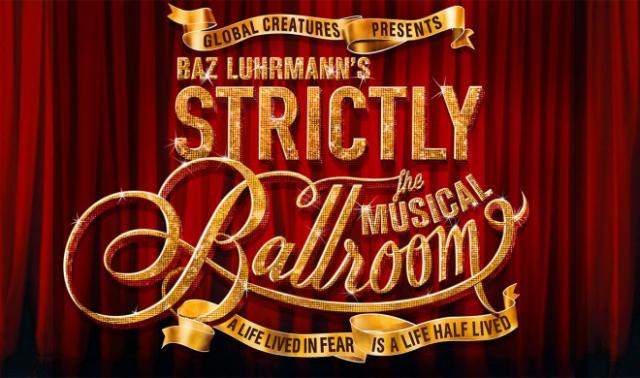

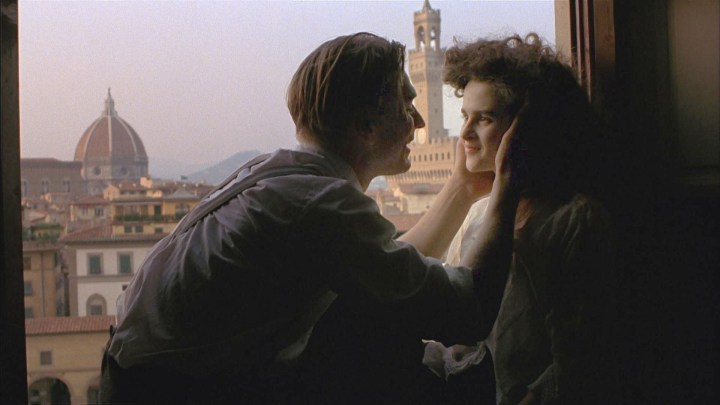


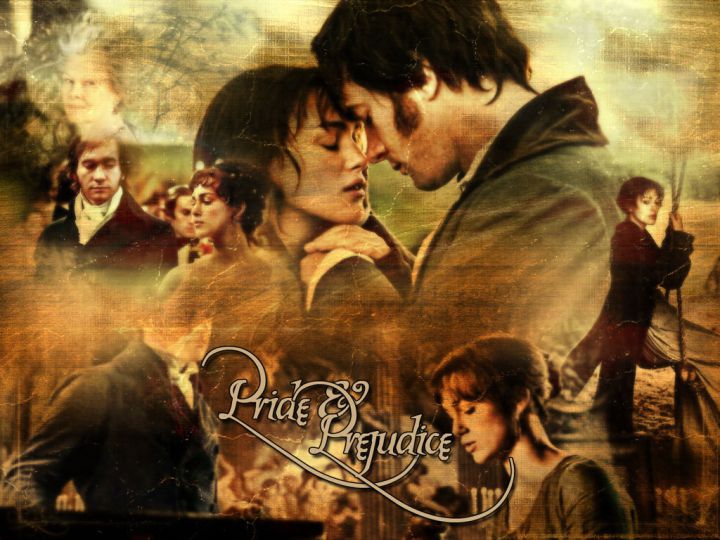


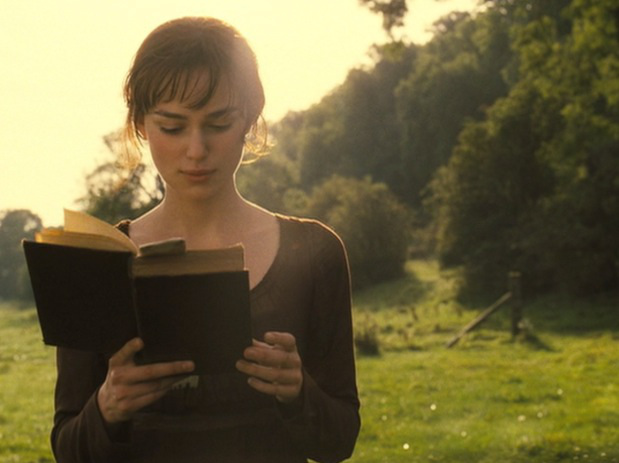
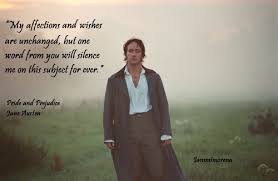



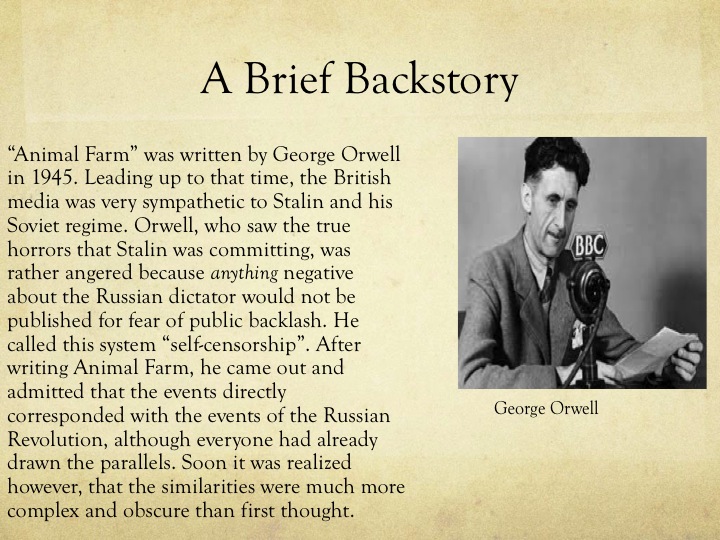
 Reviews Rants and Rambles
You must be logged in to post a comment.