Journey of the Magi by T.S. Eliot

773777-6
Journey of the Magi by Graham Pope

Journey of the Magi

The Gospel of Matthew is the only one of the four canonical gospels to mention the Magi. Matthew 2:1–2 has it that they came “from the east” to worship the “king of the Jews”.  We know that St. Matthew wrote his Gospel with a Jewish audience in mind and so, therefore, he begins his Gospel account with an elaborate genealogy that places Jesus as an ancestor of King David and Abraham. Here already Matthew shows his special interest and the intended audience for his Gospel and so he presents Jesus as a King, better than David, and a teacher greater than Moses.

It is Matthew who tells us about the Three Wise Men (Eliot’s Magi) who came to worship, bringing gifts fit for a king.  Matthew, in his powerful birth account, presents Jesus, in fulfillment of the prophecies and hopes of the Hebrew Scriptures, as the King of the Jews who has been given all authority in Heaven and Earth. He is Emmanuel, God with us.  Matthew, however, is making a powerful distinction for his Jewish audience – the Magi represent those outsiders, those wise men, magicians, or astrologers from the East, from Persia or other civilisations or religions who will now be saved by this Christ child.  The Good News of Matthew, therefore, is that this Christ has come for all people and not just for the Chosen People of Israel.  Eliot sees in the Magi a metaphor for his own conversion – he too has made a long and tortuous journey and has finally made his decision to bow down before the Christian God.

This poem, ‘Journey of the Magi’, published in 1927, was the first of a series of poems written by Eliot for his publisher, Faber and Faber, composed for special booklets or greeting cards which were issued in the late 1920s and early 1930s.

 ‘Journey of the Magi’ – one of the great classic Christmas poems – is told from the perspective of one of the Magi (commonly known as the ‘Three Wise Men’, though the Bible makes no mention of their number or gender – it does mention that they brought three gifts, gold, frankincense, and myrrh). The poem examines the implications that the advent of Christ had for the other religions of the time, and it emphasizes this pivotal moment in human history.  In the Christian calendar, the coming of the Wise Men or Magi is celebrated on January 6th – the Twelfth Day of Christmas.  It is often referred to as the Feast of the Epiphany, when Jesus is revealed to all, Jew and Gentile, as the Saviour of the World.

 This is an apocryphal account of the journey made by the Three Wise Men which eventually led them to a humble stable in Bethlehem where the Christ Child lay.  It is narrated to us by one of their number, perhaps over a glass of wine, after their return home.  The story, and it is a beautifully told story, is told not in Biblical language, but in the language of everyday speech and with an amount of detail not found in the Gospel story of St. Matthew.

 The opening quotation comes from one of Bishop Lancelot Andrewes’ Nativity Sermons, preached at Christmas during the 1620s. The speaker, one of the Magi, talks about the difficulties encountered by the Magi during their eventful journey to see the infant Christ. It is unconventional in that it focuses on the details of the journey: their longing for home (and for the ‘silken girls’ bringing the sweet drink known as ‘sherbet’), their doubts about the point of the journey they’re undertaking, the unfriendly people in the villages where they stop over for the night, and so on. The hardships of the journey are recounted in some detail.  The details underline the absurdity of the journey in the first place but stress the strong impulses that made them undertake the journey in the middle of winter. The hardship is further stressed by the sharp juxtaposition between what they faced on their journey and what they had left behind in their ‘palaces’. 

 Eventually, the Magi arrive at the place where the infant Christ is to be found. The weary travelers trek through a ‘temperate valley’ – a kind of Garden of Eden – and eventually arrive at a tavern with its drunkenness and gambling. The description of the valley is akin to a movie still – the camera pans slowly over the landscape lingering on sharply etched details such as the running stream, the watermill, the three trees, and the old white horse.  Then the camera moves on and picks out the gamblers and the empty wine skins.  There is no mention of Bethlehem or the stable in this account and the narrator simply states that they ‘arrived at evening, not a moment too soon / finding the place; it was (you may say) satisfactory’.  Neither is there mention of the star which – the Gospels and a million children’s nativity plays tell us – guided the Magi to the spot where Christ lay in a manger. The words ‘not a moment too soon’ are important here because the narrator seems to realize that they, like Simeon later, because of their advanced years, were unlikely to survive to witness the Crucifixion or the Resurrection of Christ and that they can only count themselves lucky to have witnessed the beginning of this powerful movement.

 The poem ends with the poem’s speaker reflecting on the journey years later, saying that if he had the chance he would do it again, but he remains unsure about the precise significance of the journey and what they found when they arrived. Was it the birth of a new world (Christianity) or the death of an old one (i.e. the Magi’s own world)? The speaker then reveals that, since he returned home following his visit to see the infant Christ, he and his fellow Magi have felt uneasy living among their own people, who now seem to be ‘an alien people clutching their gods’ (in contrast to the worshippers of the newly arrived Jesus, who worship one god only, in the form of the Messiah). The speaker ends by telling us that he is resigned to die now, glad of ‘another death’ (his own) to complement the death of his cultural and religious beliefs, which have been destroyed by his witnessing the baby Jesus.

 Jesus himself, however, is absent from this poem. One reason for this may be that we are, of course, all too familiar with the story of the Nativity and we don’t need reminding here.  Another possible reason is that the focus here in this account is on the journey, the quest, and the hardship of the search.  Eliot places himself here among and alongside the Persian astrologers as they seek out the face of the baby Christ. The poet empathises with the ‘Wise Men’ who are seeing their once deeply held beliefs being called into question by this new Messiah.

 No study of the poem would be complete without reference to the imagery used by the poet.  In carrying out such an analysis we also need to remember that the narrator is one of a band of ‘wise men’, ‘astrologers’ who are learned in the study of signs and omens.  Sadly, it seems, the Magi miss the significance of almost all the images mentioned in the poem!  Much of the imagery foreshadows Christ’s later life: the three trees suggesting Christ’s crucifixion on Calvary; the vine, to which Jesus will liken himself; the pieces of silver foreshadowing the thirty pieces of silver Judas Iscariot will receive for betraying him; the wine-skins foreshadowing the wine that Jesus would beseech his disciples to drink in memory of him at the Last Supper. Even though the narrator is a priest or astrologer, someone trained to look for the significance in the things around him, to read and interpret signs as symbols or omens, he fails to pick up on what they foreshadow.  We, however, living in a Christian (or even a post-Christian) society, can read their significance all too well. At the poem’s end, the narrator is left feeling perplexed and troubled by his visit and by the advent of Christ: he wonders whether Christ’s birth has been a good thing since his arrival in the world has finally signalled the death of his own old religion and the religion of his people. Now, he and his fellow Magi, like Simeon in Eliot’s other great religious poem, A Song for Simeon, are left world-weary and they welcome the end.

 So, therefore, ‘Journey of the Magi’ is partly about belonging, about social, tribal, and religious belonging: the speaker of the poem reflects sadly that the coming of Christ has rendered his own gods and his own tribe effete, displaced, destined to be overtaken by the advent of Christ – and, with him, Christianity. It is tempting to see the poem – written in the year Eliot converted to Anglo-Catholicism – as a metaphor for Eliot’s own feelings concerning secularism and the Christian religion. In the space of the century since its publication, Christianity has itself been rendered effete in the face of Darwinism, modern physics, secular philosophy, and whatever the hell is going on in 2023!  And so, therefore, this poem, about a people’s conversion from one religion to another, is equally bound up with Eliot’s own conversion to Christianity.

isp_eliot_sketch_color
T.S. Eliot portrait by Baltimore Maryland artist Jerry Breen.


Analysis of Robert Lowell’s Skunk Hour

cover-500

Skunk Hour

Nautilus Island’s hermit
heiress still lives through winter in her Spartan cottage;
her sheep still graze above the sea.
Her son’s a bishop. Her farmer
is first selectman in our village;
she’s in her dotage.

Thirsting for
the hierarchic privacy
of Queen Victoria’s century,
she buys up all
the eyesores facing her shore,
and lets them fall.

The season’s ill—
we’ve lost our summer millionaire,
who seemed to leap from an L. L. Bean
catalogue. His nine-knot yawl
was auctioned off to lobstermen.
A red fox stain covers Blue Hill.

And now our fairy
decorator brightens his shop for fall;
his fishnet’s filled with orange cork,
orange, his cobbler’s bench and awl;
there is no money in his work,
he’d rather marry.

One dark night,
my Tudor Ford climbed the hill’s skull;
I watched for love-cars.   Lights turned down,
they lay together, hull to hull,
where the graveyard shelves on the town. . . .
My mind’s not right.

A car radio bleats,
“Love, O careless Love. . . .” I hear
my ill-spirit sob in each blood cell,
as if my hand were at its throat. . . .
I myself am hell;
nobody’s here—

only skunks, that search
in the moonlight for a bite to eat.
They march on their soles up Main Street:
white stripes, moonstruck eyes’ red fire
under the chalk-dry and spar spire
of the Trinitarian Church.

I stand on top
of our back steps and breathe the rich air—
a mother skunk with her column of kittens swills the garbage pail
She jabs her wedge-head in a cup
of sour cream, drops her ostrich tail,
and will not scare.


Glossary:

hull to hull – the speaker sees the cars as boats, next to one another as if on a river, maybe the river Styx from Greek mythology, associated with the final crossing of the soul?

hill’s skull – a suggestion of Golgotha, or Calvary which was the hill Christ was crucified on.  Both words, Golgotha (from Hebrew) and Calvary (from Latin) translate as ‘skull’.

spar spire – mastlike spire

Tudor Ford – Ford luxury car


Commentary

Skunk Hour is a confessional poem written in 1957. It depicts a man at a moment of crisis in his life.  It was the last poem in an important volume of poetry titled Life Studies (1959), one of Lowell’s most influential publications.  This is a dark and thought-provoking poem, with religious anxieties surfacing, and it raises issues that are universal and relevant for us today. The speaker admits to secretly watching lovers in their cars at night and this makes him feel bad. He confesses to being a type of voyeur – a victim of a modern, uncaring, materialistic community, a depressed loner who will resort to spying on young couples for titillation.

The first four verses of Skunk Hour focus on several prominent inhabitants of Nautilus Island, Maine:  the ‘hermit heiress’, the ‘summer millionaire’, and the ‘fairy decorator’. Brief descriptions set the scene until the main protagonist, the sad, lonely speaker, begins his rather pathetic confession.  Lowell once remarked, ‘The first four stanzas are meant to give a dawdling more or less amiable picture of a declining Maine sea town’.

In fact, as Scott Edward Anderson tells us, ‘he wrote the poem “backwards,” the final stanzas before the opening four, but did it with such seeming ease that the opening reads as almost a laconic warm-up exercise or scene-setter’.  In truth, however, the opening four verses are masterful: the weight of his forthcoming confession weighs so heavily upon him that he delays and obfuscates because of the enormity of it.  Lowell is human, after all.

The scene is set by first introducing the old and frail heiress of the island who is a stickler for tradition, a conservative, a fading aristocrat landowner with a bishop for a son, and ruins for the future.  The poet’s diction reflects this refusal to move on by using the word still twice to emphasize the longevity of her reign. She clings on through the winter, and the sheep go on grazing. Even her farmer (more likely her gardener) is a traditional local administrator (selectman) in the speaker’s own village.

The tone is one of mild desperation at this stage in the poem, the heiress thirsting for a return to the glorious days of old Queen Victoria, when the great and good ruled supreme and everyone knew their place.  Basically, she’s living in the past and as derelict buildings come on the market, she buys them up ‘and lets them fall’, presumably to protect her privacy, as well as to reclaim some semblance of what the place resembled in the previous golden era.

The line, ‘she’s in her dotage’, echoes ‘the world is in its dotage’ from Oliver Goldsmith’s The Vicar of Wakefield (1766).  Note the way the poet uses end half-rhyme (slant or near or imperfect rhyme) in cottage/village/dotage which suggests that things are not making full sense, and there is little harmony.  These combine to endorse the idea that on this island things are falling into a state of disrepair, which doesn’t bode well for the future.

Skunk Hour is a free verse poem of eight sestets (six-line stanzas).   There is no set rhyme scheme but there are interesting end rhymes and some internal rhymes that help our understanding.  These sounds, a variation on a theme of ill, are half-rhymes and produce an echo that keeps the reader in touch with the voice of the speaker, alive in a season that is itself ill.  This is illustrated by the demise of ‘our summer millionaire’ who despite putting on a fashionable outward appearance falls ill and dies and his yawl ‘was auctioned off to lobstermen’.   Lowel’s use of words like lost, leap, and auctioned off all point to a person permanently not returning, his boat now belonging to locals who will put it to better use. The stanza ends with the enigmatic line, ‘A red fox stain covers Blue Hill’.  Lowell reassures us that the line ‘was merely meant to describe the rusty reddish colour of autumn on Blue Hill, a Maine mountain near where we were living’.

In stanza four the plot thickens, and we are introduced to the “fairy decorator,” actually, “our fairy decorator,” because every summer village from Massachusetts to Bangor, Maine, had one! He appropriates the tools of the local fishing and lobstering trade to decorate the windows of his shop, and would “rather marry,” presumably an heiress, since there’s “no money in his work” and without any prospect of marrying someone of his own sex for at least another half-century. Of course, this was before the arrival of political correctness! Lowell would no doubt be challenged by his characterization here were he writing today. The full-end rhyme fall/awl and half-rhymes cork/work and fairy/marry help tie up this stanza, a near-comic portrayal of a guy making the best out of a sorry situation. Wedlock would seem to be a way out of a life destined for a peculiar kind of sad, island loneliness.  In these four stanzas, Lowell has masterfully built up a vivid portrait of a threadbare New England village and its archetypes.

Stanza five offers us some clues as  to what the poet is wrestling with in his own darkness, his own crisis point: the stanza opens with “One dark night,”  and he ends the stanza with, “My mind’s not right.” ‘One Dark Night’ as well as being a good opening for a scary story told at Halloween also has echoes of ‘The Dark Night of the Soul’ as depicted by St. John of the Cross, a Spanish mystic monk and poet from the 16th century.  In a talk ‘On Skunk Hour’, Lowell stated,

‘I hoped my readers would remember St John of the Cross’s poem.  My night is not gracious, but secular, puritan, and agnostic.  An existentialist night.’

The speaker’s dark troubled secret is revealed in this stanza, giving the poem its confessional nature.  He climbs into his Ford Tudor sedan and drives up to a quiet graveyard on a hill overlooking the town and he watches the young couples necking in their cars, windows steaming in the late summer night – it is late August, early September. He remembers the anecdote related to him by Elizabeth Bishop of Walt Whitman in his old age being driven by horse and buggy to witness the hillside lovers in a bygone era and imagines the internal satisfaction that that poet felt from seeing young people in love.  Lowell was continually influenced by Elizabeth Bishop’s work and, apparently, the Bishop poem that inspired Lowell’s Skunk Hour and helped unlock his new, freer style, was The Armadillo which was written in Brazil in the mid-fifties at the height of the Cold War. ‘Armadillo is one of your absolutely top poems, your greatest quatrain poem,’ Lowell writes to Bishop late in 1958. ‘I mean it has a wonderful formal-informal grandeur – I see the bomb in it in a delicate way.’  It was originally published in The New Yorker in June of 1957 and she later dedicated the poem to Lowell when it appeared in Questions of Travel in 1965.  Lowell, in turn, dedicated Skunk Hour to Bishop.

So, in stanza five the speaker is revealed to us at last; having ‘hidden’ behind the first four stanzas he finally reveals his dark secret: he has come here to this Golgotha to spy, like some Judas, on couples having sex in their cars:

I watched for love-cars. Lights turned down,

they lay together, hull to hull,

And that line about the graveyard is a powerful hint – it ‘shelves’ or slopes down and so the island’s dead are looking in on this love-making too, just like the speaker. The four dots at the end of this line are poignant and pregnant with possibility. The stanza ends in self-reflection with yet another confession: ‘My mind’s not right’.

In the sixth stanza, the speaker is so close to the cars on the hill he can hear music from one of the radios. He hears snippets of Fats Domino singing “Careless Love,” and this depresses him even further and he realizes he is on a fool’s mission: he won’t find what he is looking for here either. He heads back down the hill, noticing off to his left, that autumn has already arrived on  Blue Hill, and in the fading light, the hill is turning ‘fox red’, as the first trees and the low shrubs start to turn. He admits that his “mind’s not right.” He needs to get home. When he reaches the house, he enters through the back porch so as not to disturb his wife and three-month-old child.

At this point, the speaker feels completely alone, in sharp juxtaposition to the lovers in their cars on the nearby hill.  Some have argued that Lowell was feeling suicidal here, or more likely he was coming to the realization that he was on the verge of another manic episode. (He’d been free of such episodes for three years but in December 1957 he was again admitted to Boston State Hospital).

Ascending the back stairs, he is startled by a noise from the garbage cans behind the house. A mother skunk and her kittens are nosing around in the spilled contents which include a cup of sour cream that the mother skunk jabs her nose into with abandon. Nature comes to his rescue in the form of the instinctive skunk, a mother with her young in tow out looking for food. The speaker seems almost relieved as he watches this family go about their business of surviving in an urban environment, an unnatural one for these animals.

The last two stanzas bring some redemption for the sad speaker, whose meaningless existence in a Maine backwater is put on hold temporarily by the simple act of witnessing a lowly skunk scavenging with her young kittens.

Skunk Hour and the other poems Lowell wrote late in 1957 turned increasingly inward only to emerge into an outward flourish of personal expression that critics came to call “confessional.” The overall tone of Skunk Hour is pessimistic, even depressing – there is an atmosphere of doubt, failure, and poverty of spirit, relieved temporarily by the actions of the courageous if slightly disgusting, skunks.  Only they seem to live brightly in the here and now of Nautilus Island. It’s not a fun place to exist in according to the speaker; there is a sickness pervading, and he seems to be a victim of it, admitting that ‘my mind’s not right’.  He probably sensed another manic bout in the offing and, sure enough, by December 1957 Lowell was again hospitalized due to bipolar disorder, the mental condition then known as “manic depression”.    While bipolar disorder was often a great burden to the writer and his family, it also provided the subject matter for some of Lowell’s most influential poetry, such as Skunk Hour and the other poems included in his prize-winning volume, Life Studies (1959).

References:

Anderson, Scott Edward. The Nautilus of Robert Lowel’s Skunk Hour, in  http://www.svjlit.com/

MECastineSeenfromNautilusIsland1905

Listen to Robert Lowell read Skunk Hour

‘My November Guest’ by Robert Frost

My November Guest (2)

My Sorrow, when she’s here with me,

Thinks these dark days of autumn rain

Are beautiful as days can be;

She loves the bare, the withered tree;

She walks the sodden pasture lane.


Her pleasure will not let me stay.

She talks and I am fain to list:

She’s glad the birds are gone away,

She’s glad her simple worsted grey

Is silver now with clinging mist.


The desolate, deserted trees,

The faded earth, the heavy sky,

The beauties she so truly sees,

She thinks I have no eye for these,

And vexes me for reason why.


Not yesterday I learned to know

The love of bare November days

Before the coming of the snow,

But it were vain to tell her so,

And they are better for her praise.

Commentary

This poem, “My November Guest”,  is taken from A Boy’s Will, the first published volume of Frost’s poetry (1913). This is among the best of Robert Frost’s poems where he speaks of the Fall in rural New Hampshire.

The poet at some point of time must have experienced extreme pain and sorrow in the month of November. There is an air of familiarity created by the poet and he and his guest have walked and talked along the ‘sodden pasture lane’.   Sorrow is personified as a woman – a friend, companion, and she is considered a regular visitor and ‘a guest’ in the poem.  He is very comfortable in her company and doesn’t wish to be separated from her – ‘She talks and I am fain to list’.  She is dressed for the weather – that time of year in New England before the first snows of winter – wearing ‘simple worsted grey’.

As the poem commences, Sorrow is personified as a woman and someone whom the poet dearly loves.  In the very first line, “My Sorrow, when she’s here with me,” marks the peak of the poet’s togetherness with sorrow.

My Sorrow, when she’s here with me,
Thinks these dark days of autumn rain
Are beautiful as days can be;

Walking with the poet, she (Sorrow) speaks of the beautiful Autumn days, finds ecstasy in the withered trees, and the autumnal browns! Fall is a season marked with desolate earth, deserted trees, the sodden pasture lane and the departure of the birds. The poet’s Sorrow finds beauty in the Autumn days. She reprimands the poet for not being able to experience the joy in Autumn and asks for an explanation. The phrase “Simple worsted grey is silver now with clinging mist” reflects the mood of the poem, the coexistence of joy and sorrow.

Not yesterday I learned to know
The love of bare November days
Before the coming of the snow,
But it were vain to tell her so,
And they are better for her praise

In the first three stanzas the poet is forced to listen to his ‘guest’ extol the virtues of Autumn, ‘the dark days of autumn rain’ and she seems convinced that he has ‘no eye for’ the beauty that surrounds him at this time of year.  Those of us familiar with the poetry of Frost know this to be false and we know that he does appreciate these beauties.  However, the constant repetition of ‘She’ creates a sense of easy familiarity with his guest, ‘She walks’, ‘She talks’, ‘She thinks, ‘She’s glad’ and, therefore,  out of respect or deference, he doesn’t make any effort to correct his companion, for ‘they are better for her praise’.  In actual fact, it was not just yesterday that he discovered this fact, he has known it for many a long day:

Not yesterday I learned to know

The love of bare November days

The poem is lucid, characterized by a tone which is musical – is written in iambic tetrameter. The poem expresses the poet’s love for November days in an extremely original way. The poet seems to happily embrace the November Guest (Sorrow) and seems to enjoy her company.  The pictorial imagery in the poem is easy, vivid, simple, and rich.

The intriguing question here is, of course, who, if anyone, is being referred to when he speaks of ‘My Sorrow’?   Maybe ‘Sorrow’ represents someone close to him, his wife perhaps, who despite her closeness to him fails to recognise that he too finds November beautiful.  In a famous letter written by Frost in 1939 to his daughter, Lesley, he refers to a letter written by his wife Elinor to their children:

“My, my, what sorrow runs through all she wrote to you children.  No wonder something of it overcasts my poetry if read aright.  No matter how humorous I am, I am sad.  I am a jester about sorrow.  She coloured my thinking from the first just as at the last she troubled my politics.  It was no loss but a gain of course.  She was not as original as me in thought but she dominated my art with the power of her character and nature” (Latham : 397-8).

If we are to assume – and this is dangerous ground – that the speaker is Frost himself then we can sieve through biographical details for clues as to the identity of this Sorrow.  Any such survey, however, will show that Frost’s personal life was plagued by grief and sorrow and loss.  By the time this poem was published in 1913 Frost had buried two of his children: his son Elliot died of cholera in 1900 aged four and his daughter Elinor Bettina died just three days after her birth in 1907.  His mother who had cancer had also passed away – co-incidentally in November 1900!  Maybe it is one of these losses that caused Frost such sorrow?

However, Frost’s life, even after the publication of A Boy’s Will in 1913, continued to be plagued with sorrow and heartache. In 1920, he had to commit his younger sister Jeanie to a mental hospital, where she died nine years later. Mental illness apparently ran in Frost’s family, as both he and his mother suffered from depression, and his daughter Irma was committed to a mental hospital in 1947. Frost’s wife, Elinor, also experienced bouts of depression.   She also suffered from heart problems throughout her life.  She developed breast cancer in 1937 and eventually died of heart failure in 1938.  His son Carol, born in 1902, committed suicide in 1940.

In my view, it is highly unlikely that any of these tragic biographical events formed the basis for this poem – although the loss of his mother in November 1900 may indeed have been a catalyst.  While this literary detective work may have some foundation, I am more inclined to believe that the ‘Sorrow’ in question here may be simply a melancholic mood that comes over the poet during the long month of November, a sense of resignation that Winter is at last upon him.  He tells us that Sorrow’s visit is only a temporary visitation and that it is hugely influenced by the bleakness of nature and the greyness of the weather.  However, the poet owns this blue mood that comes over him during November.  He says it’s ‘My Sorrow’ and it has come to visit annually during November. Indeed, November and Thanksgiving are synonymous and Frost sees the bright side here:  Sorrow teaches him how to appreciate Nature at this time of the year and he is a willing student.

The poem is living proof of that old saying, ‘Beauty is in the eye of the beholder’ and that at this time of year these ‘dark days’ hold their own beauty: ‘the withered tree’, ‘the sodden pasture’, ‘the clinging mist’ evoke a powerful and distinctive feeling or emotional memory in the poet.  Even his ‘Guest’ chides him that he cannot see that even in November every cloud has a silver lining!

Frost’s world, the world we perceive in his poetry, is largely a rural world, a world of nature and trees, and soil, and pasture.  His poetry, like that of Kavanagh, Heaney, and others, recreates a local and familiar landscape in which Frost, as a poet and as a person, is in communion.  We sense that he knows nature’s spaces.  We believe that his is a voice of integrity that invites us into fields and pastures and along the brooks of New England.  And we occasionally feel that along the way, we may even discover something of Frost himself.

Works Cited

Latham, Edward, ed., Robert Frost: A Biography, New York: Holt, Rinehart, and Winston, 1981.

Wikipedia page on Robert Frost

 “My November Guest”,  is taken from A Boy’s Will, the first published volume of Frost’s poetry (1913).  Here it is read by the poet himself.

FURTHER READING:

For a more detailed analysis of Robert Frost’s poetry see here

For commentary on ‘Spring Pool’ by Robert Frost check here

For commentary on ‘A Tuft of Flowers’ by Robert Frost check here

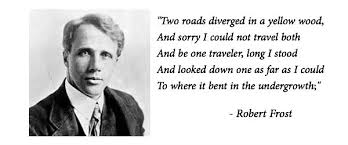
Check out some reflections on Robert Frost’s ‘The Road not Taken’ here

To Kill a Mockingbird – Characters, Themes, and Motifs


 ok-Harper-Lee_s-To-Kill-a-Mockingbird-e1520599905726

To Kill a Mockingbird is a modern reinterpretation of the old fable The Emperor Has No Clothes.  We are given a glimpse of modern American society through the eyes of a seven-year-old girl called Scout.  Even she can see the injustice and yet the adults fail to see the criminal miscarriage of justice and toxic levels of racial prejudice that lie at the heart of the novel.

The novel is a classic bildungsroman where Scout, the central character and narrator, is taken from a state of innocence and brought to a state of enlightenment as a result of a series of misadventures that are recounted in the novel.  A classic bildungsroman forces the young character at its heart to grow up and face harsh adult realities long before he or she should normally have to cope with life’s harsh lessons.

To Kill a Mockingbird by Harper Lee is, therefore, a novel that deceives the reader with its apparent simplicity.  Beneath the surface, however, there exist a number of complex and very important themes and motifs.  Rather than its being simply a novel that explores and exploits the topic of racial prejudice in a small town in the Deep South, it makes Maycomb, Alabama, a microcosm of American society in the 1930’s.

I want to focus for a little while on the setting of both of Harper Lee’s novels, To Kill a Mockingbird and Go Set a Watchman.  It is clear to me that the real-life Monroeville, Alabama of her youth becomes the fictional Maycomb, Alabama of her novels.  She tells us that one went to Maycomb, ‘to have his teeth pulled, his wagon fixed, his heart listened to, his money deposited, his soul saved, his mules vetted’.  She describes it as an isolated place, in effect it is an Everyplace – the town, ‘had remained the same for a hundred years, an island in a patchwork sea of cotton fields and timberland’.  It is, in effect, a remote backwater bypassed by progress, the perfect playground of her youth, and the perfect cauldron for change.

In Go Set a Watchman she says that Maycomb County is, ‘a wilderness dotted with tiny settlements’, it is, ‘so cut off from the rest of the nation that some of its citizens, unaware of the South’s political predilection over the past ninety years, still voted Republican.’  It is so remote, ‘no trains went there’.  In fact Maycomb Junction, ‘a courtesy title’, was located in Abbott County twenty miles away!  However, she tells us that the ‘bus service was erratic and seemed to go nowhere, but the Federal Government  had forced a highway or two through the swamps, thus giving the citizens an opportunity for free egress.’  However, Lee tells us that few took advantage of this opportunity!  Then in one of those Harper Lee epiphany moments, one of those lightning bolts she releases now and then, she perceptively describes her hometown as a place where, ‘If you did not want much, there was plenty.’

In To Kill a Mockingbird she continues in the same rich vein.  Maycomb is, ‘a tired old town’. People moved slowly, ‘they ambled across the square, shuffled in and out of the stores around it, took their time about everything’.  She tells us that, ‘There was no hurry, for there was nowhere to go, nothing to buy and no money to buy it with, nothing to see outside the boundaries of Maycomb County’.

To Kill a Mockingbird is dominated by two very contrasting characters and our first task is to explore in some detail the part played by Scout and Atticus in conveying the difficult and often divisive subject matter to the reader.

SCOUT

Scout is the narrator of the story, and the impressions we get of all the other characters must, therefore, be filtered through her point of view.  All the activities and opinions in the novel are expressed through the mind of this innocent child who does not always understand the significance of the events she is narrating and, as a result, much of the comedy in the book comes from her misunderstandings.  Typical of the central character in a bildungsroman novel Scout changes and matures and gains greater insight as the novel progresses and she learns – as do her readers, young and old – a great deal from her experiences.

She is a very open-minded and clever girl who accepts the people around her at face value.  For example, she is able to go to Calpurnia’s church without making any social distinctions.  Furthermore, she accepts people like the Cunninghams and the Ewells as equal, but during the course of the novel, she learns to make a distinction between these two groups of people.  Ironically, the distinctions that she has to learn involve the differences between different types of whites such as the Cunninghams and the Ewells, and do not involve any judgements about the Negro race.  Eventually, however, she learns not only about the complex white social relationships, but she also learns about the prejudices harboured by the white man for the Negro.

Throughout the novel, we watch Scout as a character change from a belligerent young girl who is always ready to fight her corner to a person with a certain degree of understanding for those around her.  For example, at the beginning of the novel she is willing to play any type of prank on Boo Radley, but by novel’s end she walks him back to his house and she realises that things look the same from Boo Radley’s porch as they do from hers.  She also has the insight to see that Sheriff Heck Tate is right in not charging Boo with the murder of Bob Ewell.  In her view, it would be like killing a mockingbird and at that stage in the novel, one dead mockingbird (Tom Robinson) is enough.  This is one of the many valuable lessons learned by Scout in the course of the novel.

Scout is a very clever girl and she can read and write before she goes to school.  She tends to react emotionally to events, ready to fight first and think later.  As the novel opens she accepts people as they appear on the surface, but later she learns that society is complex and that people can be very prejudiced.  Her own upbringing and personality give her an appreciation of justice, but Tom Robinson’s trial shows her that others are not so fair-minded.  The self-control she has to exercise at this time helps her to mature.  She feels that she would be letting her father down if she were to lose her temper.

She is naturally warm and friendly.  She wants to visit Calpurnia in her home, she rushes in to talk to Mr. Cunningham outside the jail and tries to be polite and put him at his ease even though he is part of a mob.  She can be very sensitive to other people’s feelings.  She feels guilty about the games the children played on Boo Radley and she takes great care to treat Boo with courtesy and dignity when they finally meet.  Because she is a girl, Scout is expected to behave in a way that she finds constricting.  She is more comfortable in her overalls than in a pretty dress, but as she matures she learns that it can take courage to be a real lady.  This is brought home to her at Aunt Alexandra’s tea party on the day of Tom Robinson’s death.

At novel’s end, we see just how sensitive to other people Scout has become.  She realises that Boo Radley is a shy man and that to draw any more unwelcome attention to him would be like killing a mockingbird.  She has also learned how to see things from another person’s point of view.

ATTICUS

Atticus Finch represents the rational man in a world of highly emotional people.  Atticus is a stable and mature figure who is able to cope with the unreasonable and highly emotional element of the town.  He can handle the prejudiced white people and still deal justly with the underprivileged Negro population.  He is one of the few people in Maycomb who understands the individual worth of a person regardless of the color of their skin.  He is able to defend Tom Robinson solely on the basis of justice and does not allow the colour of Tom’s skin to prejudice him against Tom’s case.

It is necessary to have a man with a high and ideal view of justice defending Tom Robinson because even Atticus knows that the case is hopelessly lost before it begins.  He is wise enough to know that the prejudices of the Deep South will never allow justice to be done, but at the same time, he is determined that the truth will be told so that those who convict Tom will be aware that they are convicting an innocent man.

Atticus is also Harper Lee’s spokesman of the moral philosophy of the novel.  He teaches his children that they must learn to be compassionate and understanding of the problems and conditions of life faced by other people.  He frequently advises Scout that she must be able to step into the shoes of others such as the Ewells, Boo Radley, and the Cunninghams.  Consequently, he will not allow the children to torment Boo Radley and wants Scout to try to see things from Boo’s point of view.

Atticus’ relationship with his children is very important in understanding his character.  He has an outstanding rapport with his children because he treats them as mature adults and tries to explain to them how to meet the problems that are presented to them in an adult world.  All of Atticus’s relatives feel that he is bringing up his children incorrectly, and they challenge his methods of handling the children.  However, the incident with Uncle Jack illustrates that his methods are for the best.  Uncle Jack punishes Scout without listening to her side of the story, whereas Atticus always gives her the opportunity to explain her point of view.  As a parent, therefore, he is easy-going but wise, not worrying about petty things, but instead teaching his children important values.

He teaches them to be sensitive to other people like Mrs. Dubose and Boo Radley and above all to be able to step into other people’s shoes and see things from their point of view.  He teaches by example and his children learn kindness, tolerance, courage, self-control, and forgiveness from observing their father.  He listens to them, has patience with them and always tells them the truth.  They respond by loving and respecting him; they worry about him when he is tired or troubled and try their best not to cause him grief.

Therefore, Atticus is the voice of reason and justice in the novel whether he is dealing with the grim ingrained prejudices in Maycomb or whether he is trying to handle a minor problem of discipline with his own children.  He is portrayed by Harper Lee as a responsible citizen, a loving parent, and a true Christian.  He is a just man who deals fairly and sensitively with all people and he is completely lacking in prejudice.  His physical courage is seen when he shoots the rabid dog and also when he faces down the mob outside the jail, while his moral courage becomes obvious in his sincere defense of Tom Robinson, even when he knows he is unlikely to win the case.

He gives us his own powerful definition of courage: ‘It’s when you know you’re licked before you begin but you begin anyway and you see it through no matter what’.  He hopes that although they will not admit it, the people of Maycomb will realise that they are convicting an innocent man.  He is modest and never boasts about his talents and even his own children are unaware that he is an exceptional marksman until he is called upon by Sheriff Tate to shoot the rabid dog.  Scout also realises his bravery when she sees how he deals with Mrs. Dubose: ‘It was times like these when I thought my father, who hated guns and had never been to any wars, was the bravest man who ever lived’.

‘I do my best to love everybody’, Atticus tells Scout and Miss Maudie recognizes that he is a real Christian.  She says of him: ‘We’re so rarely called on to be Christians, but when we are, we’ve got men like Atticus to go for us’.  He treats all people with respect and as equals: Mrs. Dubose at her most contrary, young Walter Cunningham when he is a guest in the house, Mayella Ewell on the witness stand.  His kindness and consideration never fail and even in an emergency he is thoughtful; he remembers to rescue Miss Maudie’s favourite chair from the fire that engulfs her home.  His character is such that he may, with some justification, be considered the hero of the novel.

8ec44521f53a88d9d8dc39a367fff946

***********

MAJOR THEMES AND MOTIFS IN THE NOVEL

Several themes and motifs run through the novel and serve to underscore the basic reality of prejudice in both Maycomb and in the rest of America during the 1930’s.

THE MOCKINGBIRD MOTIF

(A motif is a recurring idea or thought that acts as a unifying device in a novel and sometimes develops as a commentary on characterisation or on the action of the novel).

The mockingbird motif, in this case, gives the novel its name.  It represents innocence in the novel and both Miss Maudie and Atticus feel that it would be a great sin to kill a mockingbird because this bird only sings a beautiful song and does not harm anyone.  When Atticus gives the children air rifles for their Christmas presents, he reminds them again that it would be dreadful to kill such an innocent bird:

“Shoot all the bluejays you want, if you can hit ’em, but remember it’s a sin to kill a mockingbird.’

That was the only time I ever heard Atticus say it was a sin to do something, and I asked Miss Maudie about it.

‘Your father’s right,’ she said.

This motif is also the device by which the two plot elements are unified in the novel by Harper Lee.  The first part of the novel is concerned with the Boo Radley mystery and the second part is concerned with the Tom Robinson trial.  Both of these characters can be viewed as being mockingbirds: both are harmless members of society and both are innocent people, yet in some way, both are persecuted by society.

Scout herself comes to realise that Boo Radley is a mockingbird figure because when he rescued her at the end of the novel, he was forced to kill Bob Ewell.  But to bring such a retiring and bashful man to trial would be just like killing a mockingbird.  It is also evident that Tom Robinson is a mockingbird figure because he is destroyed by his willingness to help Mayella Ewell.  His efforts to help her got him into trouble and finally cost him his life.

Ultimately, to kill a mockingbird is equated with performing a deliberately evil and mean act.  Atticus, at one point in the novel, thinks that there is nothing worse than a white man who will take advantage of a Negro.  Yet the entire town is partly responsible for Tom Robinson’s death, which must be viewed as a senseless act of injustice.

large

THE GUN MOTIF

In a country which now sees a mass shooting on average every 60 days the time for gun control in the USA is long overdue  Many of the most notorious of these mass shootings have taken place in schools: we remember with sadness the massacre at Columbine High School in 1999 where 24 were killed; Virginia Tech in 2007 where 33 were killed; Sandy Hook Elementary School in 2012 where 28 were killed; and Stoneman Douglas High School in 2018 where 17 were shot and killed.  Recently, churches and synagogues have been easy targets for depraved gunmen with their own myopic agendas and easy access to automatic weapons.  Harper Lee, writing in what many would consider less dangerous times in the late Fifties and early Sixties thought fit to raise the issue of guns in To Kill a Mockingbird.   In the novel, guns represent false strength. According to Atticus, guns do not prove manhood or bravery, rather they come from a man’s ability to persevere and fight using his wits, his heart, and his character.  Early in the novel, we learn that Atticus does not approve of guns.  He believes that guns do not make men brave and that the children’s fascination with guns is unfounded.

 entertainment-2016-02-to-kill-a-mockingbird-quote-02-main

 EDUCATION

In this novel, the process of education occurs both inside and outside the classroom.  It is not limited only to the education of Scout, for it affects both adults and other children in the story.  Harper Lee’s thesis is that it is education that separates the whites from the blacks, the Cunninghams from the Ewells, and it is education which further separates the Finches from the Cunninghams.  Education – and the lack of education – are responsible for creating and re-enforcing a sort of caste system in Maycomb, a caste system which decrees that black children don’t sit in the same classroom and receive the same education as white children do.

Early in the novel, and several times later in the story, the reader is taken into the classroom with Scout to view the school system in operation.  As Jem tells Scout, the new way of teaching which Miss Caroline is practicing is one which the entire school will use eventually, and is one in which ‘ you don’t hafta learn that much out of books that way’.

And while Miss Caroline is officially the teacher, there is great irony created when we realise that it is she who must actually learn the most during her first few days at school.  The learning-by-doing approach advocated by Miss Caroline has been practiced naturally by Scout and Jem since they were very young and they learned to read by simply observing their father and by reading along with him in the evenings.  Miss Caroline ironically criticises both Scout and her father, Atticus, as having done it all wrong! Yet Atticus’ method is the very same one that she presumes to espouse!

For the children, then, learning has come not from formal teachers such as Miss Caroline and Miss Gates, but through the common-sense wisdom of Atticus, Calpurnia and Aunt Alexandra.  These ‘teachers’ have presented the children with real experiences that over the course of the novel, shapes their beliefs, their opinions,, and actions.  Outside of the classroom, the children enact the very methods which the formal teachers attempt to impart.

Harper Lee does not appear to be criticising education so much as she is attacking those teachers who possess erroneous, rigid beliefs about human nature.  Miss Caroline presumes to teach others, yet she herself knows next-to-nothing about getting along with other people.  Rather than attempting to blend her teaching and her classroom philosophy to suit the young people of Maycomb, she tries to change the students to fit her perceptions.  She fails miserably in her encounters with Burris Ewell and Walter Cunningham and even though Scout does feel some pity for her she won’t offer her any comfort because there has been no friendliness offered in exchange.

Miss Gates teaches the children little about life.  Theoretically, she espouses a system of democracy yet she worries about the Negroes who seem to be trying to ‘get above themselves’, and in particular, she fears that they might start marrying whites!  She is keen to point out examples of racial prejudice in Hitler’s Germany yet fails to point out the obvious prejudice closer to home in Maycomb itself.

In essence, it is Atticus who personifies the attainment of true education, in contrast to the formal schooling offered to the children.  It is left to Scout to make the final assessment of formal education.  At the end of the novel, now in third grade, Scout says, ‘… I thought Jem and I would get grown but there wasn’t much else left for us to learn, except possibly algebra.’ !!!

 1436806701-1436806701_goodreads_misc

 STANDING IN ANOTHER PERSON’S SHOES – A NEW PERSPECTIVE

When Scout comes home after her first day at school she is determined never to return there, because it has been a disaster.  Atticus explains to her that she will get along much better in life if she learns to understand another person and to do this she must consider things from that person’s point of view.  He advises her to ‘climb into his skin and walk around in it’.

When Scout doesn’t understand Jem, Atticus encourages her to try to understand how he might be feeling.  Usually, Scout finds this advice helpful, and her attempts to gain insight into other people’s perspectives on life and the world broaden her moral education and understanding.

When Mrs. Dubose, the mean old woman who lives down the street from the Finch family yells insults at Jem and Scout on her way to town, Jem reacts by returning and cutting up all the flowers in her front yard.  His punishment is to read to Mrs. Dubose for a specific time period every day.  He complains to Atticus that she is an awful woman, but Atticus tells Jem and Scout to try to understand Mrs. Dubose’s point of view.  She is an old woman, very set in her ways, and she is entirely alone in the world.  Jem and Scout agree to visit her.  After her death, Atticus reveals that by reading to her each day, the children were helping her break her morphine addiction.  Atticus explains that she was fighting to regain control over her life even as she knew that she was dying.  Because of this, Atticus says that she is the bravest person he has ever known.  He explains this to the children to try to make them understand the terrible pain she was experiencing, and how their presence helped her to defeat her addiction.  Although she may have said some horrible things to them, Atticus encourages Jem and Scout to try to see the world from her perspective and to realise how brave and strong she was.

It is Atticus’s own ability to do this which makes him such a fair-minded, honourable man.  Even when he disagrees with them he can sympathise with other people’s feelings.  He knows how people like the Cunninghams feel, he understands Mrs. Dubose and her fight against morphine addiction and why Mayella Ewell acts as she does in accusing Tom Robinson of rape.  It is this sympathy for and empathy with other people that he tries to pass on to his children.  We know that he has been successful in doing so when we see Jem’s sensitive nature and also at the end of the novel when Scout stays for a moment on the Radley porch and stands as it were in Boo Radley’s shoes, we know that she too has absorbed Atticus’s and Harper Lee’s message.

mockingbird7-01

 ‘THE HELL PEOPLE GIVE EACH OTHER’

When Mr. Dolphus Raymond talks to Scout and Dill outside the courthouse during Tom Robinson’s trial, he understands why Dill is upset.  He talks about, ‘the simple hell people give other people – without even thinking.  Cry about the hell white people give coloured folks, without even stopping to think that they’re people too’.  By this, he means the cruelty people inflict on each other in their racial, social and family relations.

Racial prejudice is very clearly depicted in the novel.  Black people are discriminated against in Maycomb.  They are not treated as equals by the white community and even in a law court, they cannot expect to receive justice.  The trial of Tom Robinson illustrates this very clearly.  The teacher, Miss Gates, who is very much aware of racial prejudice in other countries, like Germany, is prejudiced herself towards black people.  Scout hears her outside the court during the Tom Robinson trial saying that she thought it was, ‘time somebody taught them a lesson, they thought they were getting way above themselves, an’ the next thing they think they can do is marry us’.  Scout can see straight away that this statement is in clear conflict with her teaching (about Germany) in her classroom.

There are also many examples of social snobbery among Maycomb people.  Aunt Alexandra is very conscious of family backgrounds and she will not allow Scout to invite young Walter Cunningham to the house because she does not consider him to be from the proper social background.  It is also snobbery that is responsible for the Radleys’ refusal to allow their son, Arthur, to be punished in the same way as the other boys when he gets into trouble with the law as a teenager.

The novel shows us that even families can be extremely cruel places to survive.  The Radley family treat Arthur with great cruelty by keeping him locked up for fifteen years because of a minor misdemeanour he committed as a boy.  Dill’s mother and stepfather neglect him and leave him to the care of his Aunt Rachel who is a secret drinker.  The Ewell children live in squalid circumstances while their father spends his welfare money on drink.  The Ewell children are not sent to school and Mayella, the eldest girl who tries to look after the younger children is abused by her father.  This is probably the most poignant moment in the trial when we are given a horrific image of what goes on inside the Ewell family compound.  This is just one of the masterful storytelling devices used by Harper Lee. In these days when stories of sexual abuse are everywhere in our media, how salutary to come across the true barbarity of it here, revealed in one tiny phrase: ‘she never kissed a grown man before an’s she might as well kiss a nigger.  She says what her papa do to her don’t count.’

mockingbird3-01

GROWING UP

As mentioned already, the novel To Kill a Mockingbird belongs to a genre of novel called Bildungsroman, or a ‘novel of maturation’.  In such a novel the central character is usually a very young person, and they are usually taken from a state of childhood innocence and brought to a state of experience and enlightenment as a result of a series of misadventures which are recounted in the novel.  He or she should, thus, be ready for adulthood.  In this novel, which covers a period of three years, Scout develops from a state of childish innocence to a state of maturity.

Early in the novel, she learns the meaning of real courage as she witnesses Mrs. Dubose’s struggle to overcome her addiction to morphine.  She also learns to appreciate her father’s physical courage and skill as he saves the town from a mad dog by killing it with one shot.  Up to then she and Jem had looked on Atticus as a feeble, ageing man.

More important to her development is the moral courage her father displays in his fight for justice for Tom Robinson when the black man is accused of raping a white woman.  Most people are ready to condemn Tom because of his colour and race, but Atticus defies the majority opinion and makes every effort to see that justice is administered.  When he fails and Tom is wrongly convicted Scout has to learn that the law is not always fairly applied and that there is a great deal of prejudice in the society in which she lives.  Even her teacher, Miss Gates, who can find fault with people in other countries for being racially prejudiced, shows by her remarks outside the courthouse that she does not recognise prejudice in her own town.  As she matures Scout learns to control her emotions and to act more sensitively to other people.  At the beginning of the story, she is afraid of Boo Radley and she believes all sorts of nonsensical tales about him.  She takes part in schemes to make him ‘come out’ of his house and plays games that make fun of him.  Later she comes to see him as a real person, who not only gives her presents but who also saves both her life and Jem’s.  She even learns to stand in Boo Radley’s shoes and see the world from his point of view.

By novel’s end, she realises that it is like shooting a mockingbird to harm a person who is harmless, that it is possible to understand another person if you see things from his point of view and that ‘nothin’s real scary except in books’.

******

I mentioned at the very beginning that To Kill a Mockingbird could be considered as a modern re-imagining of the old fable The Emperor Has No Clothes.   The reason I said this is that the novel masterfully exposes the grim reality of what first appears as a sleepy old southern town.  By novel’s end Harper Lee, mainly through her precocious young narrator, reveals the true nature of the place:  she presents us with a classic tragedy of injustice, prejudice and man’s inhumanity to man.  But it is told to us matter-of-factly by a mere child, ignorant of what rape is, and in whom the ingrained teaching of an upbringing in Alabama in the 1930s has left a belief that black people are only slightly superior to farm animals.  Our greatest fear, as readers, is that Scout and Jem will feel quite differently about these subjects when they eventually grow up!!!


download (9)


The full list of Junior Cycle English Texts for Second and Third Year is available here

Commentary on ‘A Tuft of Flowers’ by Robert Frost

tuft-of-flowers-ken-fiery
Tuft of Flowers by Ken Fiery

The Tuft of Flowers


         By Robert Frost

I went to turn the grass once after one

Who mowed it in the dew before the sun.


The dew was gone that made his blade so keen

Before I came to view the levelled scene.


I looked for him behind an isle of trees;

I listened for his whetstone on the breeze.


But he had gone his way, the grass all mown,

And I must be, as he had been,—alone,


‘As all must be,’ I said within my heart,

‘Whether they work together or apart.’


But as I said it, swift there passed me by

On noiseless wing a ‘wildered butterfly,


Seeking with memories grown dim o’er night

Some resting flower of yesterday’s delight.


And once I marked his flight go round and round,

As where some flower lay withering on the ground.


And then he flew as far as eye could see,

And then on tremulous wing came back to me.


I thought of questions that have no reply,

And would have turned to toss the grass to dry;


But he turned first, and led my eye to look

At a tall tuft of flowers beside a brook,


A leaping tongue of bloom the scythe had spared

Beside a reedy brook the scythe had bared.


I left my place to know them by their name,

Finding them butterfly weed when I came.


The mower in the dew had loved them thus,

By leaving them to flourish, not for us,


Nor yet to draw one thought of ours to him.

But from sheer morning gladness at the brim.


The butterfly and I had lit upon,

Nevertheless, a message from the dawn,


That made me hear the wakening birds around,

And hear his long scythe whispering to the ground,


And feel a spirit kindred to my own;

So that henceforth I worked no more alone;


But glad with him, I worked as with his aid,

And weary, sought at noon with him the shade;


And dreaming, as it were, held brotherly speech

With one whose thought I had not hoped to reach.


‘Men work together,’ I told him from the heart,

‘Whether they work together or apart.’

Commentary:

Robert Frost is reputed to have said that ‘a poem begins in delight and ends in wisdom’.  This statement is definitely true of this beautiful lyric which was written in 1913.  He tells us that the poem reflected ‘my position between socialism and individualism’.  Indeed, the poem ends with a wonderful epiphany which suggests that he is leaning more towards socialism!

This lovely nature lyric creates a wonderful allegory on the position of the poet and his place in the modern world which, for me, is equally as profound as Heaney’s allegory in ‘Digging’.  Frost uses the mower in this poem to represent the artist, the poet, the painter, the creator of beautiful thought-provoking things.   The mower has left a tuft of flowers, just as poets leave their life’s work, as a reminder to all who follow that there is beauty in the world.  However, very often in Frost’s poetry humans are depicted as isolated figures in the landscape.  Not only are they isolated but they represent loneliness, and thereby acquire symbolic status.  Loneliness can be seen as a human condition and man’s efforts to communicate effectively are at best difficult as seen in this beautiful lyric.  This is why poets and artists are still needed by us to act as our trailblazers and scouts, to go before us, to take the risks, and help us discover the hidden beauty that lies in our meadows and pastures, leaving us many ‘a message from the dawn’.

Frost describes how he sets out to ‘turn the grass’ after the mower has earlier cut the meadow with his scythe in the early morning, ‘in the dew before the sun’.  He looks in vain for the mysterious mower who has disappeared and has presumably moved on to another meadow.  Then unexpectedly ‘a bewildered butterfly’ stumbles on the scene.  The poet has a sudden moment of epiphany when he beholds the sight of flowers that have been left untouched by the scythe:

A leaping tongue of bloom the scythe had spared

Beside a reedy brook the scythe had bared.

Even though the two men are working separately the poet realises that in this tuft of flowers which have been spared by the mower is a message from the man who has gone before him.  Frost realises that the mower too has a deep appreciation of nature’s beauty and has left the tuft of flowers by the brook as a reminder and as a sign of solidarity.  This leads him to believe that he is no longer alone, that in some way he is linked to this enigmatic mower:

And feel a spirit kindred to my own;

So that henceforth I worked no more alone;

So, from an ordinary everyday experience Frost has moved to the appreciation for the need for fellowship in his life:

‘Men work together,’ I told him from the heart,

‘Whether they work together or apart.’

This epiphany strikes Frost like a thunderbolt as he turns the new-mown hay in the meadow but it also strikes the reader and further serves to reinforce for us the simple wonders and powers of nature.  ‘A Tuft of Flowers’ highlights for us how joy can return to the poet’s soul through work and companionship with other people, often through little, unremarkable random acts of kindness.  It reinforces for me how life can offer many different possibilities for choice and human companionship, and how rich and glorious the whole world of nature is.

tall tuft

Analysis of ‘Spring Pools’ by Robert Frost

download (2)

Spring Pools

By Robert Frost


These pools that, though in forests, still reflect
The total sky almost without defect,
And like the flowers beside them, chill and shiver,
Will like the flowers beside them soon be gone,
And yet not out by any brook or river,
But up by roots to bring dark foliage on.

The trees that have it in their pent-up buds
To darken nature and be summer woods –
Let them think twice before they use their powers
To blot out and drink up and sweep away
These flowery waters and these watery flowers
From snow that melted only yesterday.

Analysis:  

Robert Frost was very much influenced by the Romantic and Victorian poets who had gone before him.  As with the Romantic poets, Frost sees the natural scene, accurately observed, as the primary poetic subject.  Nature is not described for its own sake but as a thought provoking stimulus for the poet, leading him to more insight or revelation.

Romantic nature poems, such as ‘Spring Pools’, were usually meditative poems.  The landscape was sometimes personified or imbued with human life as it is in this beautiful lyric.  The Romantics subscribed to Wordsworth’s belief that poets should ‘choose incidents and situations from common life’ and write about them in ‘language really spoken by men’ who belong to ‘humble and rustic life’.  Frost puts many of these principles to good use in this poem.

Unlike many American poets in the twentieth century, Frost upheld formal poetic values during turbulent and changing times, when formal practices were widely abandoned.  He emphasised the importance of rhyme and metrical variety, observed traditional forms and developed his technical skills.  He could claim without fear of contradiction that ‘I am one of the notable craftsmen of my time’.  His poetry was written so that the rhyming ‘will not seem the tiniest bit strained’.  He used terza rima, end-of-line rhymes, and full and half rhyme.

This short lyric poem opens as Spring begins to take hold of the landscape.  The forest pools formed by the last of the melting snows and rain still mirror the cloudy sky.  The poet informs us that these pools will not last long because the roots of the mighty trees in the Vermont forest will very soon greedily soak up these pools in order to encourage leaf growth.  This is a rather unusual and disturbing perspective on Nature – the poet sees an ominous, dark side to Nature.  The trees soak up the Spring pools and within a short period of time, they are covered in leaves that blot out the flowers on the forest floor and the pools of water which gave them sustenance.  This is symbiosis in reverse and reflects Frost’s unusual perspective on Nature.

Frost demonstrates to us here that he was a keen observer of the natural world.  Plants, geographical features and the seasons have their place in his poetry: the physical world of spring pools, winter snows, the sky, brooks, Vermont mountains are all part of the rich landscape he describes for us.

However, we must realise that the natural world is rarely described for its own sake or as a background against which the action of the poem takes place.  Instead, nature leads the poet to an insight or revelation.  Often a comparison emerges between the natural scene and the psyche, what Frost called ‘inner and outer weather’.  His descriptions of nature are not sentimental.  He describes a world that is bleak, empty and cold.

The imagination enables the poet to see the world in this new way.  In brief, intense moments he may enter a higher, visionary state.  This allows him to regenerate his imaginative and creative capability and provides him with fresh insights and new inspiration for his poetry.  This state cannot be sustained for long, however, and he must return to the real world.

The poet is being very philosophical here and looks at Nature in an unusual way.  Yet he is very balanced in his thinking and this balance is reflected in the structure of the poem.  Stanza One describes the coming of Spring in all its glory.  We see his efforts at balance in his use of repetition in the lines,

And like the flowers beside them, chill and shiver,

Will like the flowers beside them soon be gone,

In Stanza Two, Spring gives way to Summer and again Frost shares with us his understanding of the delicate and finely balanced relationships within nature.  He writes of nature with a keen eye and respects her beauty and her peculiar ways.  The poet observes that the ‘trees have it in their pent-up buds / To darken nature and be summer woods’.  He goes on to personify nature adding that the trees should ‘think twice before they use their powers / to blot out and drink up and sweep away’ the spring pools.  It is a very direct poem, a poem with purpose.

The main theme of this poem is mutability and the transience of time.  These are important, weighty concepts in poetry in general but especially here.  This poem, ‘Spring Pools’,  sees time as being destructive.  For him, yesterday’s flowers wither, Winter snows melt, spring pools are drained by trees, trees lose their leaves in Autumn.  The unpalatable epiphany for the poet is that Time destroys beauty.

Therefore, we see the imagery in some of Frost’s poems is deceptively simple.  There are images from the natural and the human worlds.  Some are everyday and ordinary, some are grotesque and macabre.  In this poem the imagery carries the meaning. Frost uses precise details to re-create the colour, texture and sounds of the world within the poem. This makes his poetry richly sensuous.  Yet, using the same technique, he can paint a cold, bleak scene that is chillingly realistic.  So, beware: simple poems can be symbolic of ideas that are more profound!

Nevertheless, in his beloved Vermont countryside, Frost himself tends to work ‘alone’, he walks alone, and plays alone, being ‘too far from town to learn baseball’.  His main concern, it would appear, is not with community but with the individual identity – of pools, of fences, of apples, and of himself.  Through his poems, we imagine a man who values self-sufficiency and individualism.  He chooses the road ‘less travelled’.  He can be seen turning, not outward towards community but inward towards his inner self in such poems as ‘After Apple-Picking’ where he reflects that ‘I am over-tired / Of the great harvest I myself desired’.  His inward quest is also balanced by his outward journey towards familiar things in nature, giving his verse a reflective and meditative quality, whether he speaks of himself or of nature.

Check out my overview of Robert Frost’s poetry here

2014-08-27_16_56_52_View_down_the_Stony_Brook_from_the_Stony_Brook_Trail_in_the_Stony_Brook-Millstone_Watershed_Association,_New_Jersey

Stoner by John Williams – A Belated Review


51nu26tHj-L._SX323_BO1,204,203,200_

Better late than never I suppose!  But then it seems I’m in good company!  My son suggested Stoner as part of my required reading on a recent week of rest and relaxation, good food and daily rambles by the sea.  His only comments were that it was achingly sad and that it came with a glowing imprimatur from John McGahern.  He was right – it is a stunning page-turner of a book, depicting the life, and indeed the death, of William Stoner, who lived his life in the quad and in the rooms and classrooms adjacent to Jesse Hall in Columbia University, Missouri.  Stoner’s time at the fledgling University, as student and as instructor and finally professor, spans a half century from 1914 and the outbreak of the Great War until the mid-nineteen fifties when another war, the Korean War, threatens to thin the ranks in Columbia’s hallowed halls for a third time in the one century.

John Williams’ novel is a deceptive masterpiece of writing – he manages by inference and sustained inner dialogue and by being confessional to evoke an era and to allow us close as he suffers the slings and arrows of a life which has been enriched by the study of literature.  His lack of confidence in his own ability as a teacher, his constant self-doubt and soul-searching in his own ability, struck a resonant chord with me – the hours of preparation, the repetition of courses, the grading of tests, the hours of mentoring and supervising post grads as they finalise their dissertations and theses, all necessary but removing him from his own specialisation, Renaissance Literature.

William Stoner is an unglamorous, hardworking academic who marries badly, is estranged from his child, toils manfully teaching sophomores and freshmen, year in year out, as his parents before him toiled in the arid, unproductive soil of their Missouri farmholding. Then he dies and is forgotten: a failure, an anti-hero.

A feature of the novel for me was the seamless continuity, the effortless move from one life period to the next as the story unfolds. We pass from Great War to The Roaring Twenties to the Wall Street Crash to Depression to World War as the backdrop to a humdrum life lived well.  Stoner’s life is ordinary, he doesn’t achieve a great deal, nor is he remembered often by his students or colleagues. Stoner isn’t a novel about a man achieving great heights or altering the world, it’s far more personal than that. The novel examines the quiet moments of a person’s life, their small victories and crushing defeats. A life may seem unremarkable on paper, but look a little closer and you will always find hidden depths. John Williams is, in effect, exploring the concept of heroism in twentieth century America.

As we read we find ourselves, then, to use Heaney’s phrase, ‘gleaning the unsaid off the palpable’ as the story unfolds, or to use Stoner’s phrase, we become aware of, “the epiphany of knowing something through words that could not be put in words.” I can only vouch for the fact that there are moments in its reading when the hairs on the nape of my neck stood on edge and I was transported to glimpse eternity through the darkening view from an office window on a winter’s evening as the shades of night come down.

 The novel’s values seem old-fashioned, and William Stoner is cocooned within the university milieu, cloistered would probably be a better description.  He finds his calling and labours conscientiously with little acclaim or recognition.  There are echoes of C.S. Lewis’s work in Oxford here and I also find echoes of Steinbeck and Salinger in John Williams’s depiction of a world view which no longer exists but is attractive for its simplicity and old world charm.

At times in my reading, I was left with the nagging suspicion that the novel is autobiographical and depicts and mirrors Williams’s own academic odyssey. I don’t know enough about John Williams’s life to support or refute this theory but if true his wife, his ‘Edith’, must be glad that the novel has remained obscure and neglected!  It definitely is a paean to his idea of a university and he extols the virtues of university life, a life sharply juxtaposed with the shortcomings and periodic savagery of the world outside the hallowed halls. I am also reminded of Heaney’s beautiful ‘Villanelle for an Anniversary’, commissioned for the three-hundredth anniversary of Harvard University, which evokes the pioneering work of the founder of that great university:

A spirit moved. John Harvard walked the yard,

The atom lay unsplit, the west unwon,

The books stood open and the gates unbarred.

The novel is a kind of masterclass in creative writing.  At times it is subtle and at other times – in its structure, for example – it can be almost brutal, cruelly juxtaposing characters, indeed at times tending to caricature rather than characterise.   For me, the craftsmanship is reminiscent of George Eliot or Dickens.  The juxtaposition of the two women in Willaim Stoner’s life is a very good example of this.  There are no shades of grey here!  Edith and Katherine Driscoll are cruelly juxtaposed as in a melodrama. Edith, has been raised in an emotional vacuum, taught only useless ornamental skills, sheltered as wholly as possible from reality, and “her moral training … was negative in nature, prohibitive in intent, and almost entirely sexual” – effectively cultivated to become a brittle, conniving hysteric. Also, to add to the unsubtlety of the novel’s structure, two of Stoner’s antagonists are disfigured and maimed: Hollis Lomax, Stoner’s bête noir and academic adversary and Lomax’s protégé, Charles Walker.

Stoner isn’t an easy read – not because it’s dense or abstruse but because, as I’ve mentioned earlier, it’s so painful and achingly sad. In a vengeful act, Stoner’s wife, Edith, undertakes a deliberate campaign to separate him from his daughter, the one person he truly loves. Later on, after his daughter has been lost to him, Stoner finds real love again with a young student, Katherine Driscoll, his intellectual equal – and once again an enemy, seeing his happiness, sets out to take it from him. At the university, his superior, Hollis Lomax, contrives to make his teaching life a hell, a horrendous endurance test, a battle of wills.  Williams contrives to forcibly deprive his hero of happiness in his marriage, his daughter, his lover, even his vocation. Here again, there are echoes of Silas Marner and it all feels grindingly inevitable, like the notion of the gods in Tennyson’s ‘Lotus Eaters’ or a Greek tragedy.

Part of the novel’s greatness is that it sees life whole and as it is, without delusion yet without despair. The confessional inner dialogue is sustained and Stoner realises at the last that he found what he sought at the university not in books but in his love and study of them. His life has not been in vain, he has had a Pauline conversion and has discovered the joys of literature and he has also loved and lost in his relationships with his parents, his wife, Edith, his daughter, Grace, and his lover, Katherine. The book’s conclusion, such as it is, is that there is nothing better in this life. The line, “It hardly mattered to him that the book was forgotten and served no use; and the question of its worth at any time seemed almost trivial,” in reference to his own published text on Renaissance Literature, could be seen as the novel’s own epitaph. As he slips quietly towards oblivion he gives us one of the most beautiful sentences in the novel, as his book falls from lifeless fingers into silence:

“The fingers loosened, and the book they had held moved slowly and then swiftly across his still body and fell into the silence of the room.”

 Every word is perfect.

**************

After finishing Stoner, my son thrust the Vintage copy into my hands and told me I just had to read it straight away.  Now, days later having finished it myself, I sit here at my laptop desperately trying to find the right words to describe how John Williams’ novel Stoner has affected me.  I’m speechless, I’m in awe,  I’m wide awake, and all I know for sure is that my head is buzzing way too much for me to get to sleep.

Stoner-Quote


“Roosters” by Elizabeth Bishop – A poem whose time has come again?

a81272433929a0bd7338bab6924ff600

Taking recent political events in America into account, especially the election of Donald Trump to the White House for a second term and with his incessant sabre-rattling in the inter-regnum period after his election,  this poem seems to me to be one whose time has finally come round again!  In 1938, as another war threatened to engulf the world, Elizabeth Bishop stopped off in Key West for almost a decade on her slow, leisurely migration South.  In 1941, shortly after the tragic events of Pearl Harbour, she produced this classic poem, a poem which many claim depicts American chauvinism at its worst and a poem that was read with interest by millions of returning soldiers and marines as they undertook the challenging reintegration back into civilian life after its publication in 1946 as part of her collection North and South – a collection of quintessential Bishop poems about waking up and the sea.

It is one of her ‘long narrow poems’ (44 stanzas), yet Colm Tóibín in his analysis of the poem states rather controversially that, ‘it is important to insist that the poem “Roosters” is about roosters’.  He further insists that ‘more exactly, it is about roosters in Key West’.  This may be so but even a cursory reading, in these revisionist times, will no doubt point up the presence of many other important sub-themes which are scrutinised and analysed here by the poet, such as militarism, male/female roles, war-mongering, forgiveness, and waking up to reality.  However, her treatment of the roosters is generally subtle, though not always so, and I have to agree with Tóibín’s final assessment that, ‘she managed to write one of the great poems about power and cruelty by not doing so.’

The poem was written at a time when the navy was gearing up for a war in Europe and other far-flung theatres of war.  Key West had been chosen as a new navy base and she was at one stage, much to her annoyance, forced to rent her beloved property to navy personnel.  In other areas of Key West, property was being purchased compulsorily and some houses were being demolished.  Therefore, it is no wonder that the poem has been read as an anti-war poem and a poem condemning arbitrary authority, ‘what right have you to give / commands and tell us how to live.’

The poem opens in Key West with the town waking to a morning light which she characterises as militarised, the morning is ‘gun-metal blue dark’.  The poet and her lover, the ‘we’ of the opening stanza, are rudely awakened from their slumbers by a martial rooster. This initial call is soon echoed by others and within a short time, there is a cacophony of strident roosters calling the sleepy Key West community to face a new day.  In a letter to Marianne Moore, Bishop wrote that she wanted the opening to represent the baseness of military warfare, and had in mind, too, Picasso’s Guernica.  From the weaponized colour of dawn to the macho “first crow of the first cock,” Bishop lures us into the poem as if from sleep, from non-consciousness, and forces us to face our own new (political) reality post the November election!!

The macho roosters, symbolic of American chauvinism, ready themselves for another day of domination, of seeing off rivals, and indulging in some megaphone diplomacy.  They are depicted as ‘stupid’, using their ‘traditional cries’ and she personifies their behaviour, ‘their protruding chests’, ‘their green-gold medals dressed’; she ridicules their efforts ‘to command and terrorise the rest’.  One of the many things that makes Bishop’s anti-war argument in “Roosters” so interesting is her rare lack of reticence to disclose the struggles of women to survive against the rhythms of male competition, rivalry, discord, the taking up of arms and combat.   She is anything but subtle here and, in my opinion, it is one of the times when her customary reticence and use of understatement goes out the window.  This is very evident in her unflattering depiction of the roosters’ wives:

The many wives

Who lead hens’ lives

Of being courted and despised;

She uses the traditional image of the ‘tin rooster’ as a weather vane on ‘our little wooden northern houses’ to introduce the concept of militarism again.  She uses military imagery to depict their battles and skirmishes.  The roosters make ‘sallies’, setting out their territory, ‘marking out maps’, and the image of a great operations centre with maps ‘like Rand McNally’s’ with ‘glass-headed pins’ and military uniforms is created with imagery like ‘oil-golds and copper greens’.  The roosters are compared to the ‘scarlet majors’ in Sassoon’s anti-war poem, ‘Base Details’, who send their “glum heroes up the line to death”.   Again they are personified, they are ‘screaming’ at the inhabitants of Key West to ‘Get up! Stop dreaming!’.  The poet refers to the idea that the Greeks used these ‘very combative’ birds for their cock fighting spectacles.

There follows more imagery of roosters fighting, flying, dying – the blood has gone to their heads, which are ‘charged with all your fighting blood’.  She disapproves of their ‘virile presence’ and their paradoxical ‘vulgar beauty’.  Bishop is playing with us here: is she not saying, ‘Whatever else we say about these roosters, they’re not chicken’!

All my adult life I have been aware of America as having a predisposition to enter conflicts all over the world.  My memories of the ’60s and ’70s are of harrowing television clips from Vietnam, Cambodia, and Laos.  In recent years, especially since 2003, America has been mired in military intervention, military deployments and full-blown wars which seem to be unwinnable despite the seeming one-sided nature of the contests. Even now in 2025, there are Trumpian rumours of expansionism towards Canada, Panama, Greenland, and even lowly Mexico.  Nothing, Bishop’s poem reminds us, is ever won from war.  This poem is a perfect example of her honesty and here she shows her nerve to review human nature honestly and she also portrays a steely resistance to duplicity and coercion.

Bishop, up to this point, has looked at roosters from many different angles but now she focuses on an association between the rooster and St. Peter in the Gospel account of the denial of Jesus before his Crucifixion:

And Peter remembered the word of Jesus, which said unto him, Before the cock crow, thou shalt deny me thrice. And he went out, and wept bitterly.

In the Latin version of the Bible “gallus canit” means “the cock crowed,” and “flet Petrus” means “Peter wept.”  So this is one of the reasons why roosters are so often used ‘on basilica and barn’ to depict, not so much Peter’s denial and humanity’s overall frailty, but the unconditional forgiveness offered by Christ.  The climax of the poem is beautifully rendered as we witness the literally “cocky” roosters subside in the last part of the poem to become an image of peace, ‘The cocks are now almost inaudible’.   Morning has returned, with immense hope, to the world.  By the poem’s end, the rooster crows and Peter weeps as the poem shifts from remorse to salvation to inescapable hope—like a re-enactment of civilisation’s transformation from militancy to humility—so that the rooster’s call is a symbol of forgiveness.

The final five stanzas take us back to the beginning – morning has broken and the master craftswoman uses beautiful slender ‘l’ sounds to depict a new dawn, a new beginning:

In the morning

A low light is floating

In the backyard and gilding

Colm Tóibín so rightly asserts that ‘In ‘Roosters’, she … managed to produce one of the great poems about the morning’.  ‘The sun climbs in’ and transforms ‘the broccoli leaf by leaf’ and ‘the tiny floating swallow’s belly’.  She uses the beautiful simile ‘like wandering lines in marble’ to depict the creeping rays of sunshine.  The only discordant note to this otherwise idyllic, hopeful ending is the ambiguous role played by the sun – it can be seen as either an ‘enemy’ or a ‘friend’.

This literary tour de force broke new ground in its attitude to, and treatment of, war and pacifism on the one hand and the sometimes fraught relations between men and women in a post-war world on the other.  If there is hope, and the poem ends with a new dawn, then Bishop is bold enough to suggest that it lies with women.  She sees a future America where hope lies in the power of women to seize a greater share in mapping out the future destiny of the nation and wrestle it away from stubborn, war-mongering men.  I said at the beginning of this piece of commentary that I thought this was a poem whose time had come again – I hope America has not lost their chance to carry out Bishop’s manifesto with the recent defeat of another strong female candidate in the Presidential Election.  Time will tell but it adds to the cachet of this poem that it has had the power to continue to shape America from its first publication in 1941 until the present day.

pc5785

Works Cited:

Bishop, Elizabeth. The Complete Poems, 1927 – 1979.  New York: Farrar, Strauss and Giroix, 1983

Tóibín, Colm. On Elizabeth Bishop, Princeton and Oxford: Princeton University Press, 2015. Digital

See also Reviews Rants and Rambles:  Themes and Issues in the Poetry of Elizabeth Bishop

Reviews Rants and Rambles: Commentary on Sandpiper by Elizabeth Bishop

Commentary on ‘Sandpiper’ by Elizabeth Bishop

Sandpiper


By Elizabeth Bishop

The roaring alongside he takes for granted,
And that every so often the world is bound to shake.
He runs, he runs to the south, finical, awkward,
In a state of controlled panic, a student of Blake.

The beach hisses like fat. On his left, a sheet
Of interrupting water comes and goes

And glazes over his dark and brittle feet.
He runs, he runs straight through it, watching his toes.

– Watching, rather, the spaces of sand between them
Where (no detail too small) the Atlantic drains
Rapidly backwards and downwards. As he runs,
He stares at the dragging grains.

The world is a mist. And then the world is
Minute and vast and clear. The tide
Is higher or lower. He couldn’t tell you which.

His beak is focussed; he is preoccupied,

Looking for something, something, something.
Poor bird, he is obsessed!
The millions of grains are black, white, tan, and gray
Mixed with quartz grains, rose and amethyst.

A “music video” treatment of the Elizabeth Bishop poem, “Sandpiper” produced by Pink Dog Productions

Commentary: This exquisitely constructed poem sees the poet compare herself in an extended analogy to the lowly sandpiper. The poem is inspired by observations made on a return visit to Nova Scotia in 1965 and in it she personifies the bird, giving it human characteristics and eccentricities.  She tells us that ‘he’ is ‘a student of Blake’, referring to the great English poet and painter, William Blake, who famously celebrated seeing ‘a World in a Grain of Sand / And a Heaven in a Wild Flower’ in his poem, ‘Auguries of Innocence’, which, by the way, is a poem from one of his notebooks now known as The Pickering Manuscript.

We sense the continuous, nervous movement of the bird as ‘he runs to the south’, searching, exploring, discovering.  The bird is ‘finical’ or finicky and ‘awkward’ as it ceaselessly searches for the perfect grain, the discarded morsel.  The movement ‘south’ in turn mimics Bishop’s own migration south from Nova Scotia to Boston to Key West and later further south to Rio de Janeiro and Brazil.

Colm Tóibín in his effortlessly scholarly work, On Elizabeth Bishop, mentions that the ‘search for pure accuracy in her poems forced Bishop to watch the world helplessly, as though there was nothing she could do’.  She shares this trait with many other poets and artists.  This debilitating feature is also evident in Hemingway and Hopkins, this ceaseless search for the perfect word or phrase, and also features and is dramatised in the content and unique structure of Emily Dickinson’s poems with her use of dashes and capitalisation and other structural tricks to highlight the honing and triple distillation of each poem.  It also reminds me of something my son wrote very honestly  in one of his blogs, writing about his own writing process and that famous Irishman, Jack O’Metty!:

I’m the type of person who makes casual reference to Alberto Giacometti in everyday conversations. I have a vivid childhood memory of watching a Euronews cultural vignette which outlined the great sculptor’s methods: starting from a large scale he would pare down and reduce his sculptural figures until almost nothing remained save only the most minimal of features which could be said to represent man.  Giacometti’s problem was knowing when to stop before his clay figures, once larger than himself, disappeared to nothingness.  I use this as a metaphor for my own critical thought.  I consider and consider and pare and reduce until sometimes nothing remains. The trick is to create some academic content before this happens. I don’t always succeed. https://nicholasstreet.wordpress.com.

Many of the places she visited (Nova Scotia, the Straits of Magellan, the Amazon Estuary, Key West, Florida) stand at the boundary between land and sea and this tension between land and sea is very evident here in ‘Sandpiper’ and also in such poems as   ‘At the Fishhouses’, ‘Questions of Travel’ and ‘The Fish’, with the sea viewed as a strange, indifferent, encircling power.  In this poem, the sandpiper patrols that dividing line between sea and land and perhaps this is a metaphor for the conflict between the artist and life.

Bishop is fascinated by geographical extremities: straits, peninsulas, promontories, wharves, bights, mountains, jungle, outback, attracted to the near-isolation of these places.   Colm Tóibín makes the very astute observation that she, ‘made her homes on a single line of longitude, or close to one: Massachusetts, Nova Scotia, New York, Key West, Rio de Janeiro, Boston’.

In 1976, three years before she died, she wrote:

All my life I have lived and behaved very much like that sandpiper – just running along the edges of different countries ‘looking for something’.  I have always felt I couldn’t possibly live very far inland, away from the ocean; and I have always lived near it, frequently in sight of it …. timorously pecking for subsistence along coastlines of the world.

The second stanza opens with the domestic simile, ‘the beach hisses like fat’ and the caesura which follows is meant to demarcate the dividing line between left and right, sea and land, north and south.  A feature of her style is her continuous self-correction and search for exactness and greater precision in her description of the scene:

He runs, he runs straight through it, watching his toes.

– Watching, rather, the spaces of sand between them
Where (no detail too small) the Atlantic drains
Rapidly backwards and downwards.

This is immediately followed by another feature of her poetic work and craft: contradiction and deeper clarification of what has gone before:

The world is a mist. And then the world is
Minute and vast and clear. The tide
Is higher or lower. He couldn’t tell you which.

The poem ends with the poet again personifying the bird and it is clear to us that if we but simply change the gender, she could be talking about herself and the poetic process, just as Heaney does so eloquently in such poems as ‘Digging’ and ‘The Forge’:

His beak is focussed; he is preoccupied,

Looking for something, something, something.
Poor bird, he is obsessed!

Perhaps we can say, ‘Poor bird, (s)he is obsessed!’ with the impossibility of the task which she has undertaken as a poet: It’s as if the sandpiper who has been looking for ‘something, something, something’ suddenly sees the drab beach (with its millions of differing grains of sand as opposed to Blake’s one grain) transformed into a dazzling bejewelled walkway glistening with diversity and riches,

The millions of grains are black, white, tan, and gray
Mixed with quartz grains, rose and amethyst.

Bishop (7)

Works Cited:

Bishop, Elizabeth. The Complete Poems, 1927 – 1979.  New York: Farrar, Strauss and Giroix, 1983

Tóibín, Colm. On Elizabeth Bishop, Princeton and Oxford: Princeton University Press, 2015. Digital

See also Reviews Rants and Rambles:  https://vinhanley.com/2015/08/28/themes-and-issues-in-the-poetry-of-elizabeth-bishop/

Some Personal Thoughts on ‘The Road not Taken’ by Robert Frost

two_roads_in_a_yellow_wood_-robert-frost

The Road Not Taken


by Robert Frost

Two roads diverged in a yellow wood,
And sorry I could not travel both
And be one traveler, long I stood
And looked down one as far as I could
To where it bent in the undergrowth;

Then took the other, as just as fair,
And having perhaps the better claim,
Because it was grassy and wanted wear;
Though as for that the passing there
Had worn them really about the same,

And both that morning equally lay
In leaves no step had trodden black.
Oh, I kept the first for another day!
Yet knowing how way leads on to way,
I doubted if I should ever come back.

I shall be telling this with a sigh
Somewhere ages and ages hence:
Two roads diverged in a wood, and I—
I took the one less traveled by,
And that has made all the difference.

‘The Road not Taken’ has always been a very popular poem and despite 21st Century developments such as Google Maps and iPhones and Sat Navs it still bears a relevance for the modern reader.  Then again not all journeys are easily mapped and some take place off-road!  This lyric poem, a first-person narrative tale, describes  a key moment in the poet’s life.  In the poem, the speaker, whom we can assume is Robert Frost himself, is faced with a choice that appears quite suddenly as he walks along a forest track.  Imagine walking through beautiful woodland in upstate New York or Vermont as the Fall takes hold and imagine at this moment, the route on which you travel diverges into two separate paths.  This mirrors the poet’s dilemma in the poem and he faces a difficult decision that has to be made for the moment, yet may have repercussions that last a lifetime.  This is what makes the decision so difficult.

If you consider, briefly, some decisions you make in your own life, you know that you might make hundreds of choices in any one day, most without even noticing!  Deciding where to go for lunch is usually not too difficult; however, a much more difficult decision is the career to follow after your Leaving Cert or A Levels.  Your choice may affect your life for many years and so you tend to take time and effort in arriving at that decision.

So, Frost comes to a fork in the road.  If taken on a literal level, the choice is simply the path along which to continue.  However, if these paths are seen in a symbolic or allegoric way, then the choice is more challenging.  Great poetry and literature have always given us many examples where life is seen in terms of a journey on which we will meet many twists and turns.  So, therefore, the moment described so beautifully in the poem could be such a moment in anyone’s life.

The poet considers his options carefully.  He looks down both paths, ‘as far as I could’ in an attempt to see what they might offer.  But his view is limited by the bend as the track veers into the undergrowth.  It is, in other words, impossible to foresee what future may lie ahead – and Frost did not seem to have the luxury of a Change-of-Mind slip!  At first, each alternative is equally appealing or ‘just as fair’.  Similarly, both roads diverge into ‘a yellow wood’ – Vermont in all its Autumnal glory!  The first path, however, is a more popular route, while the other less-traveled path is overgrown and ‘wanted wear’.  The choice is clear but not at all simple: the common, easy path or the unusual, more challenging path?  The first road might prove more reliable, even reassuring, for others have gone that way.  The more difficult road, however, may produce a less predictable outcome yet perhaps a more fulfilling and individual one.

The poet is aware that the minor difference between the paths at this time will become major differences as the paths diverge further into the woods and into the future.  Each path is attractive and alluring in its own way, but he cannot travel both.  You can’t have your cake and eat it!  This he regrets.  Nonetheless, he decides.

Even as he travels his chosen path he still wonders about the path he has rejected and hopes to keep ‘the first for another day’.  Yet, he knows in his heart that ‘way leads on to way, / I doubted if I should ever come back’.  The poem, in this way, suggests that we can only hope to explore a very limited number of life’s possibilities.  Finally, the poet ‘sighs’, happy with his choice, yet wondering what if…..?  What experiences might have occurred along the other path?  Certainly, his choice has ‘made all the difference’.  That is gratifying; the decision has had a positive effect on his life and he is thankful for that and overall seems pleased with the road he has chosen.

This poem reminds us that important decisions in life are not exact predictions.  We base our choice on reflection of what might be encountered along the way.  Like Frost, we all hope that our major decisions will make ‘all the difference’ in our lives.  We need to believe they will.

Frost believed that each poem was a ‘little voyage of discovery’; a path to something else, rather than an end in itself.  Perhaps, the road not taken is just such a voyage?

 FROST (7)