Kazuo Ishiguro’s recent elevation as Nobel Laureate will surely prompt avid readers to explore his repertoire further. They could do worse than lose themselves in this offering from 2015. The novel took me back to my undergraduate days in UCC in the 1970’s studying classics like Sir Gawain and the Green Knight and Beowulf. Ishiguro’s tale sets out to be a classic Arthurian fable depicting Sir Gawain himself, and others on various quests. Ishiguro exploits the avalanche of recent interest in this genre as seen in Peter Jackson’s cinematic telling of Tolkien’s Lord of the Rings saga. While the novel may not lend itself to a film blockbuster, it does have all the attributes for one of those all-consuming RPG’s (an acronym I’ve just newly acquired!) in which you work your way through various adventures and levels and perils on your journey to eventually achieving your Holy Grail.
The novel is set at a certain indistinct time after the death of the legendary Arthur. Britons and Saxons enjoy a fragile peace: the first tentative steps being taken to assimilate both opposing forces in villages and communities throughout the realm. However, we soon learn that this peace is maintained only because each community is afflicted by a collective loss of memory surrounding their horrendous war-torn past. The she-dragon Querig is said to be responsible for this collective amnesia by the spreading of a mysterious mist which envelops the countryside and the hamlets. Indeed, the novel explores the rather vexed issue of memory, and race memory in particular, in maintaining peace in a fractured – and fractious – post-war political landscape. This idea, of memory and its loss, is dealt with by Ishiguro on two fronts – the geopolitical and the personal.
The novel has a number of narrators, principally Axl and Beatrice – but others including Sir Gawain, Sir Wistan and the various boatmen also provide necessary insights, observations and reveries as the story unfolds. The early chapters introduce us to Axl and Beatrice, his princess. They are Britons who live in an underground, warren-like community, surrounded by monsters and ogres and never-ending mists blowing in from the mountains and fens. They live ‘on the edge of a vast bog’, where ‘the past was rarely discussed’ because ‘it had faded into a mist as dense as that which hung over the marshes’. However, they are being increasingly marginalised by their elders in the Great Chamber and eventually decide to leave to seek out their son who has left for some forgotten reason. Thus begins the great adventure.
Early in their journey, they come upon a mysterious boatman. Their conversation with him lays the foundation for their fears that restored memory will bring disaster and a possible end to their solid, loving relationship.
We meet Sir Gawain who has been given a quest by Arthur to slay the she-dragon Querig. He has spent his life wandering the hills getting to know her ways and her guile, so much so, that he eventually becomes her protector. He is mocked by the women for his inactivity in fulfilling his quest, and we find him wandering the foothills on his trusted warhorse Horace, a rather pathetic figure of ridicule – a forlorn relic of a chivalrous past.
We also encounter the warrior, Wistan, and his young protégé Edwin, who it is feared has been affected by a dragon bite. We learn that Wistan has been sent by his Saxon king in the eastern fens, to seek out Querig and slay her. The motivation behind this seems to be that once Querig has been slain and the people’s memory fully restored, the long-suppressed divisions and hatreds will resurface to aid the king in his quest to gain Saxon control over the kingdom.
Axl and Beatrice continue their journey, accompanied by Sir Gawain and the young boy Edwin. They detour to visit the wise Father Jonus who lives in a monastery in the mountains, on the pretext of receiving a cure for Beatrice’s mysterious ailment. The monastery, once a Saxon citadel, holds further dangers for the party as they are forced to escape through secret passages to freedom. They continue relentlessly upward to the Giant’s Cairn, where Querig reputedly has her lair. Once Sir Gawain and Querig have been slain by Sir Wistan, Beatrice and Axl are made aware of the tragic consequences which will follow: memory will soon be fully restored and the dogs of war loosed again, with devastating consequences. Once again Britons will be set upon by their Saxon neighbours, ushering in another period of war and unrest, the fragile peace put in place by King Arthur shattered forever.
Axl and Beatrice make their way from the dragon’s former lair and again meet another boatman. Beatrice reveals – her memory now restored – that in fact, their son is dead and is buried on a nearby offshore island. They undergo the dreaded solitary test administered by the boatman and the novel ends in sadness, as Axl is left on the shore, while the boatman ferries the ever-weakening Beatrice to the mysterious island.
In this novel Ishiguro provides us with a thinly veiled modern allegory – his thesis seems to be that a collective loss of memory is necessary in the various trouble spots around the world where untold savagery and genocide have been unleashed if reconciliation is to take place. We can only imagine the difficulties that daily face communities which were once suffused with hatred and division. The situation in Northern Ireland obviously springs to mind. We see regularly on our televisions and newspapers the efforts made to normalise peace in these communities after almost a quarter of a century of atrocity, a process which requires a near Orwellian stretching of credibility on our behalf. In fact, we may wonder has Ishiguro’s mist been replaced there with the modern version – sterling, euro and dollar? We may also remember other recent trouble-spots such as Israel/Palestine, South Africa, Bosnia, Rwanda, and Syria and question: how can normality be restored, how can society pick up the pieces again? Can Humpty Dumpty ever be put back together again?
As well as the geopolitical implications Ishiguro applies the same thesis to the more private area of marital love. The touching tenderness and faithfulness exhibited by Axl and Beatrice belie the difficulties they have had to face in their long lives together. This has included a period of infidelity by Axl which has been glossed over, and also, the death of their only son. Surely, this mysterious yet fortuitous amnesia has been a Godsend to them in maintaining their closeness and their touching intimacy. Surely their relationship would not have otherwise endured but for the benign balm of amnesia.
Consider then the gargantuan achievement of Ishiguro in The Buried Giant: it is a masterpiece about characters who all suffer from various degrees of memory loss, and yet we as readers are able to piece the story together, to read between the lines…. It is, however, an allegory in wishful thinking. In reality, there are no quick fixes to help us cope with our post-traumatic stresses. We cannot rely on the temporary balm of forgetfulness. If anything, in our world we are left to deal with generation after generation of bequeathed toxic memory. Atrocity on the world stage or infidelity on a personal relationship level are not so easily forgotten, nor forgiven.
Boyhood: Scenes from Provincial Life, offers us great opportunities to explore the world of a young boy who is trying to make sense of the adult world around him. Coetzee’s novel is set in South Africa between 1945 and the 1960’s and indeed, it is amazing how uncannily similar boyhood in South Africa and boyhood in small-town Ireland in the late 40’s and 50’s seems to have been! On every page one experiences successive soft shocks of recognition: BSA bicycles, the Meccano set, Superman and Mandrake the Magician on the radio, The Rover and Reader’s Digest, Treasure Island, Swiss Family Robinson, the circus, the head colds in winter and the summer visits to the farm, the secret storms in the heart. As Philip Larkin ruefully has it, in one of his many marvellous poems about childhood, ‘Nothing, like something, happens anywhere.’
Coetzee is admirably honest in his refusal to romanticise his childhood or to portray it as a time of the trembling veil before the adolescent artist stepped forth in all his glory. There was, it seems, precious little bliss in that South African dawn. The young John in Boyhood defines childhood as follows:
Childhood, says the Children’s Encyclopaedia, is a time of innocent joy, to be spent in the meadows amid buttercups and bunny rabbits or at the hearth-side absorbed in a storybook.
This vision of childhood, faintly reminiscent of De Valera’s 1930’s vision of Ireland with ‘comely maidens dancing at the crossroads’, is utterly alien to Coetzee. Nothing he experiences in Worcester, at home or at school, leads him to think that childhood is anything but a time of gritting the teeth and enduring the pain and the shame.
School plays an important role in the growth of our young protagonist. The young John (Coetzee) works hard in school, not out of any real love of learning, but in order not to attract attention, to remain unremarked, untouched:
So this is what is at stake. That is why he never makes a sound in class. That is why he is always neat, why his homework is always done, why he always knows the answer. He dare not slip. If he slips, he risks being beaten: and whether he is beaten or whether he struggles against being beaten, it is all the same, he will die.
(Note: Where Coetzee is concerned, for every ‘he’ read ‘I’!)
The school scenes are very good, catching with shiver-inducing accuracy, the intense, humid, faintly indecent relation that exists between teacher and pupils.
He has three favourite books, Treasure Island, Swiss Family Robinson and Scott of the Antarctic. He is unable to work out if Long John Silver is bad or good and, ‘he only likes the bit about Titus Oates (in Scott of the Antarctic), the man with frostbite who, because he was holding up his companions, went out into the night, into the snow and ice, and perished quietly, without fuss. He hopes he can be like Titus Oates one day.’ !!
Race and religion feature strongly in the novel as you would expect. There are many religious categories and they do not live in harmony, ‘That is how Jews operate, says Norman, you must never trust a Jew.’ In one passage, the young John must choose at school between religious affiliations: ‘Are you a Christian or a Roman Catholic or a Jew?’, he is asked by an impatient teacher. From this multiple-choice quiz, the boy from an atheist family picks Roman Catholic and is thereafter (to his relief) exiled from the school’s official Protestant devotions. But now he has to deal with more than occasional persecution by Protestant bullies – he also arouses the suspicion of his fellow exiles, the Catholic boys who want to know why he is absent from catechism!
A strong feature of the culture of Boyhood is people’s belief in old tales and stories. This again, has great echoes for me of the stories picked up by the young narrator in Seamus Deane’s Reading in the Dark classic. Remember the story told of a local couple who married and the husband went away to sea and was presumed dead? The sailor’s spirit comes back to torment his wife who had taken up with another man while he was away. The priest drove the spirit out, yet at night, the image of a child in pain could be seen in the window. The house concerned was a local one, so people continued to tell that story and the young boy is entranced by it. Similarly, in Boyhood, John welcomes the visits to his grandfather’s sheep farm and the family gatherings that take place there and he listens avidly to the old stories.
Boyhood, I suppose, could be said to be a Portrait of the Artist type novel although the epiphanies are not as major as in Joyce’s work. It is written, like much of Coetzee’s work, in the third person, in the continuous present. In my mind it has great similarities with other favourite novels of mine, Reading in the Dark by Seamus Deane and Mark Haddon’s masterpiece The Curious Incident of the Dog in the Night-Time. Indeed, all three novels share a dystopian view of the world but Coetzee more than the other two has a particularly potent brand of stoic desperation in the face of the world! I suppose it has to be allowed that his claim to despair is impeccable: South Africa, after all, where he was born and lives and writes, was until recently a very graphic working model of a dystopian, dysfunctional society. In such richly dreadful circumstances, what novelist could resist writing directly or indirectly about the politics of the day? However, it has to be said that Coetzee’s fiction is also exemplary in the way in which the author flies by the nets of politics and shows, ‘how not to play the game by the rules of the state’. It surely must be both a curse and a blessing for an artist to live in the ‘interesting times’ of a totalitarian regime, as Coetzee is well aware. His real achievement is, however, that all his books are so concentrated, so poised, that they do not solely depend for their power on our knowledge of where and in what circumstances they were written. Surely this is one of the identifying marks of authentic, enduring works of art.
Coetzee recalls the trials and tribulations of growing up in a provincial South African town at a time when apartheid was on everyone’s lips. Indeed, the book could be renamed, Portrait of the Artist as an Afrikaner! South Africa in the 40’s and 50’s was a place very similar to Seamus Deane’s Derry, a place of oppression and cruelty. Coetzee, however, like Deane in the Irish situation, treats apartheid obliquely, distilling its violence in dark fables of devastation that point a finger at South Africa. His themes, like Deane’s, lie where the political, spiritual, the psychological and the physical converge: the nightmare of bureaucratic violence; our forlorn estrangement from the land; and a Shakespearean anxiety about nature put out of its order. Coetzee, in Boyhood, considers it both a curse and a blessing for an artist to live in the ‘interesting times’ of an oppressive regime. Indeed, it can be said that we are given a very subtle ‘Political Education’ in both novels!
For most of Boyhood, the young boy has this sense of being ‘unnatural’, ‘damaged’, and ‘deformed’. But gradually it dawns on him where this apprenticeship in fear and loathing will take him. The young Coetzee is very perceptive and reflective and he has a very close relationship with his mother. Walking one day with her he sees a boy running past, absorbed in himself. The boy is Coloured, as distinct from Native, and is unremarkable, despite having a body that is, ‘perfect and unspoiled, as if it had emerged only yesterday from its shell.’ John knows that if his mother were to call out ‘Boy!’ the coloured boy would have to stop and do whatever she bade him to, such as carrying her shopping basket, and he realises that this boy, ‘who is slim as an eel and quick as a hare,’ is a living reproof to him, and embarrassed, ‘he squirms and wriggles his shoulders and does not want to look at him any longer, despite his beauty.’
He oscillates in his allegiances between his father and his mother. He joins his father in mockery of his mother when she buys a bicycle and tries to ride it, yet he has never worked out the position of his father in the household, and in fact ‘it is not obvious to him by what right his father is there at all’. He wishes his father would beat him, ‘and turn him into a normal boy,’ yet he knows too that if his father were indeed to beat him, ‘he would become possessed, like a rat in a corner, hurtling about, snapping with its poisonous fangs, too dangerous to be touched.’ By the close of the book, when the family has moved to Cape Town, the father has sunk into debt, failure, and alcoholism, and as he sinks, the mother rises: ‘It is as though she is inviting calamities upon herself for no other purpose than to show the world how much she can endure.’
However, the young Coetzee is strident in his acknowledgement that he owes much to his upbringing, especially to the influence of his mother. She has bequeathed to him an artistic vision, an ability to reflect and observe. He hates the dull, uninspiring essays he is asked to do in class and admits that if he could he would write something far darker, stranger, far more mysterious: ‘Like spilt ink, like shadows racing across the face of still water, like lightening crackling across the sky.’
On the other hand, his father is a major disappointment. He has waged war on him from an early age but it is only towards the end of the novel that we realise how serious the situation is. The family are bankrupt as a result of his gambling and alcoholism and he pours scorn on what he considers to be a pathetic figure. His mother continues to support her husband, to the boy’s amazement, defending him with the barbed comment, ‘Wait until you have children’. He comes to realise, however, that she is the rock at the centre of his precarious existence and in one of the many epiphanies in the book he comments: ‘This woman was not brought into the world for the sole purpose of loving him and protecting him and taking care of his wants.’ He has huge respect for her and he says towards the end of the novel, ‘he would rather be blind and deaf than know what she thinks of him.’
Overall, Boyhood presents us with a rather bleak vision. Coetzee has written elsewhere that South African literature is precisely what you would expect from people living in prison. Boyhood gives us a clear insight into the prison that the notoriously private Coetzee has himself inhabited: drab suburban housing estates; an alcoholic, distant father, his business career decaying; an overly intimate long-suffering mother. This is the story of millions of 20th. century families everywhere in the developed world. But Boyhood is more than this. However, it is primarily an internal account, the story of an exquisitely painful – almost autistic – self-consciousness, a subjectivity so sensitive and so tender that it seems like ‘a crab pulled out of its shell, pink and wounded and obscene.’ The novel seems to suggest that the best we can do is to try to keep ourselves sane by continuous reflection. No hope is offered. There is no happy ending and we do not observe an improvement in John’s relationship with his father or his mother. If anything he manages to maintain a cold detachment from both throughout.
Tony Humphreys, a noted clinical psychologist, author and all-round guru, has written a very popular book called, TheFamily: Love it and Leave it. This is the great adventure which the young protagonist in Boyhood undertakes. He is endeavouring to cope with his family situation as best he can. Coetzee ends up writing to make sense of the world he lives in. In fact, he appears to be casting about in his childhood for the roots of his success as a writer: Did it spring from his marginal social position as an English speaker from an Afrikaner background; or from his intensely passionate, sentimental attachment to his father’s family farm; or from the smothering affection of his mother, which made him feel like a solitary specimen, both protected and deformed? Whichever is the correct version, he feels compelled to write his way out of his own South African prison; and we all benefit from his struggle.
About the Author….
John Maxwell Coetzee is a South African novelist, essayist, linguist, translator and recipient of the 2003 Nobel Prize in Literature. Before receiving the 2003 Nobel Prize in Literature, Coetzee was awarded the Jerusalem Prize, CNA Prize (three times), the Prix Femina Étranger, The Irish Times International Fiction Prize and the Booker Prize (twice), among other accolades. He relocated to Australia in 2002 and lives in Adelaide. He became an Australian citizen in 2006.
The Curious Incident of the Dog in the Night-time is set in an ordinary suburban street in Swindon sometime in the late twentieth century. Christopher, the main character, suffers from Asperger’s Syndrome and is confined to his house and his mainly scientific hobbies. He rarely ventures into his neighbourhood and his main venture each day is to attend a special school. However, later in the novel, he undertakes a major adventure, which leads to his exploring the city of London and discovering its ways.
Christopher’s family unit is under a lot of pressure – mainly due to the stress involved in bringing up a young boy with autism. Christopher’s parents separate and other family’s in the neighbourhood also experience marriage break-up. His father lies about the disappearance of Christopher’s mother. She eventually leaves because she can no longer cope. She has an affair with her neighbour, whose wife, in turn, has an affair with Christopher’s dad. He doesn’t really understand these developments and he is more of a loner than a family member. It can be said that the comings and goings, the trials and tribulations, which befall Christopher are similar to those that befall many who live in a present-day urban setting.
Christopher’s life revolves around maths and what colour cars he sees in the morning. He is innocence in its subtlest form. He lives with his Father. When he finds his neighbour’s dog dead in the garden with a garden fork sticking out of his stomach, he sets out to find who the murderer is. This leads him to many a revelation and a world that Christopher isn’t used to. So, he decides (as does his helper Siobhan) that he should write a book about the events that occur after the dog’s death. So, that’s what he does. And that’s The Curious Incident Of The Dog In The Night-time by Mark Haddon.
This debut novel by Mark Haddon introduces us to the irresistible voice of his fifteen-year-old narrator, Christopher Boone, and this is what elevates this novel to fantastic heights.
It was 7 minutes after midnight. The dog was lying on the grass in the middle of the lawn in front of Mrs Shears’ house. Its eyes were closed. It looked as if it was running on its side, the way dogs run when they think they are chasing a cat in a dream. But the dog was not running or asleep. The dog was dead. There was a garden fork sticking out of the dog. The points of the fork must have gone all the way through the dog and into the ground because the fork had not fallen over. I decided that the dog was probably killed with the fork because I could not see any other wounds in the dog and I do not think you would stick a garden fork into a dog after it had died for some other reason, like cancer for example, or a road accident. But I could not be certain about this.
I went through Mrs Shears’ gate, closing it behind me. I walked onto her lawn and knelt beside the dog. I put my hand on the muzzle of the dog. It was still warm.
The dog was called Wellington. It belonged to Mrs Shears who was our friend. She lived on the opposite side of the road, two houses to the left.
Wellington was a poodle. Not one of the small poodles that have hairstyles but a big poodle. It had curly black fur, but when you got close you could see that the skin underneath the fur was a very pale yellow, like chicken.
I stroked Wellington and wondered who had killed him, and why.
“This is a murder mystery novel,” Christopher explains a few pages further on. Reading was for him a way of opening the doors of his imagination and allowing it to run free. As a child, he had the ability to think things out in detail. This ability helped him piece the truth together from the flimsy snippets of information he had acquired. Christopher Boone is a great fan of Sherlock Holmes and especially his detective masterpiece, The Hound of the Baskervilles. Indeed, it is this novel which gives him the idea that he should become a detective and investigate the killing of his neighbour’s dog, Wellington. “In a murder mystery novel someone has to work out who the murderer is and then catch them,” he reasons. “It is a puzzle.”
Christopher is quite good at puzzles.
****
His discovery of letters written by his ‘dead’ mother leads him to try and solve another mystery. His father tries to protect his son by telling him that his mother has died when in fact they have separated and she has gone to live with her new partner in London. Christopher’s discovery of letters written by his mother after her ‘death’ gives rise to a major breakdown in trust between himself and his father and also to his heroic efforts to be reunited with his mother.
Christopher is also very good at mathematics, and at remembering, and he proves to us many times in the book how good he is. For fun, and to calm himself down, he squares the number two over and over again. At times it’s rather scary that he can do it, and you wonder what it must be like to be like that. To be so capable of one thing – doing mathematics – and being so incapable of another thing – living a life. It’s heartbreaking. Even when it comes to numbering the chapters in his book the chapter numbers don’t go in order of ascending numbers, as is usual, but Christopher instead uses prime numbers.
Christopher is entirely incapable of delineating among the various grades of human emotion on the scale between happy and sad, which makes for a curious, if not altogether perplexing narrative perspective. Reporting on the conversations and interactions around him with virtually no understanding of their portent, Christopher surely ranks among the most hard-boiled detectives in all of literature. Logic dictates, indisputably. His brain is a one-party political system with no room for checks and balances – no fifty shades of grey here!
Christopher may not recognize them, but emotions lurk behind virtually every clue he uncovers. Still, his pitch never varies. Christopher never slips off course. That dissonance, the weighty, shifting space between the story Christopher is telling and the one we are reading exposes depths of insight and feeling no simple, straightforward narrative could hope to provide in so few pages. At certain times in the novel we feel great empathy for Christopher’s father: after all, Christopher is quite content with who he is and it is his father who has to watch him be how he is.
***
The Curious Incident is a unique novel, as Christopher’ narration gives us a powerful insight into the autistic mind. So while he is brilliant at science and maths (at one point, he quickly calculates 2 to the power of 15!) its people he finds complicated. With their devious ways and moods, people aren’t ‘logical’. By allowing us to observe Christopher’s thought processes, Mark Haddon shows us our illogical world in all its duplicity, while at the same time witnessing Christopher’s awkward behaviour getting him into countless rows with his family, friends, and teachers.
“Not liking yellow things or brown things and refusing to touch yellow things or brown things” is, in fact, one of Christopher’s Behavioural Problems. He does not like dirt, gravy, wood, or poo, or anything brown for that matter, including Melissa Brown, a girl at his school. And if on the bus ride to school he was to see four yellow cars in a row, to cite one extreme manifestation of his dislike for all things yellow, it would be “a Black Day, which is a day when I don’t speak to anyone and sit on my own reading books and don’t eat my lunch and Take No Risks.” To Christopher, despite sensible arguments to the contrary, this behaviour makes perfect sense.
Mrs Forbes said that hating yellow and brown is just being silly. And Siobhan said that she shouldn’t say things like that and everyone has favourite colours. And Siobhan was right. But Mrs Forbes was a bit right, too. Because it is sort of being silly. But in life, you have to take lots of decisions and if you don’t take decisions you would never do anything because you would spend all your time choosing between things you could do. So it is good to have a reason why you hate some things and you like others. It is like being in a restaurant like when Father takes me out to a Berni Inn sometimes and you look at the menu and you have to choose what you are going to have. But you don’t know if you are going to like something because you haven’t tasted it yet, so you have favourite foods and you choose these, and you have foods you don’t like and you don’t choose these, and then it is simple.
***
“This will not be a funny book,” Christopher warns readers. “I cannot tell jokes because I do not understand them.” And it’s true: Christopher cannot process anything but the most literal statements. Metaphors, to his way of thinking, are lies. Implying that one thing is another — it’s more than confusing; it’s downright dishonest.
One of the great triumphs of the novel is the way Christopher’s hyper-logical voice comes across to the reader as a brilliant brand of dry, deadpan humour. The story, quite funny to begin with, gets funnier still upon rereading, without the distractions and misdirection imposed by its underlying suspense.
If the book’s economical (and spot-on) dialogue allows a reader to see through Christopher’s obfuscating narration and straight into the heart of the characters — it’s only when we hear the characters speak that we gain a proper context for Christopher’s severely limited perspective — Haddon’s dialogue also provides tremendous opportunities for comedy. Christopher’s exchange with a policeman in a station of the Underground could well have been lifted directly from the vaudeville stage. Christopher is the straight man, nonpareil.
And I said, “What does single or return mean?”
And he said, “Do you want to go one way, or do you want to go and come back?”
And I said, “I want to stay there when I get there.”
And he said, “For how long?”
And I said, “Until I go to university.”
And he said, “Single, then,” and then he said, “That’ll be £32.”
Christopher’s narration can be hilarious on one page, then two pages later you want to cry!
****
When Christopher sets out on his brave but dangerous journey to London, the minutia finally overwhelms him. The swarming crowds, noise raging in every direction, and everywhere signs bearing alien, incomprehensible messages… it’s all too unfamiliar, and before long it’s too much for him to manage.
Here, not for the first time, Christopher’s investigation inadvertently exposes raw, difficult truths about our modern lives. In the bustling train station, Christopher practically collapses from sensory overload; you can almost hear his fuses pop (it sounds like groaning). We don’t exactly empathize with Christopher. There’s a border we can’t cross, despite Mark Haddon’s virtuoso performance. However, at the end of the novel, we finally realize, no matter how great our efforts at empathy, that nothing could ever make us truly appreciate the unending alienation Christopher suffers.
***
And finally, I come to the writing. One of the best elements of the book. As I’ve mentioned its simplicity is its brilliance. Haddon, somehow or other, obviously through months, if not years, of research has managed to get into the mind of a boy who suffers from Asperger’s Syndrome. He’s managed to write an insightful, unbelievably fascinating novel that is one of the best books I’ve read in a long time, if not ever. Books like The Curious Incident Of The Dog In The Night-time don’t come along very often, so we must cherish it like it’s gold. Because, really, it is. To not read The Curious Incident Of The Dog In The Night-time is most certainly the biggest crime of all. To not learn about Asperger’s Syndrome afterwards is an even bigger one.
***
“Here is a narrator who seems to be hugely ill-equipped for writing a book,” the author Mark Haddon aptly notes, “He can’t understand metaphor; he can’t understand other people’s emotions; he misses the bigger picture. And yet it makes him incredibly well suited to narrating a book. He never explains too much. He never tries to persuade the reader to feel about things this way or that way. He just kind of paints this picture and says, ‘Make of it what you will.'”
Yet, while there are pessimistic elements in the novel: his family is dysfunctional; he is anti-social; he imagines humans becoming extinct; on his journey to London he experiences many of the negative aspects of human behaviour, yet I think the overall vision is a positive one. He fulfils his life plan and gains an A Grade in his A-Level exams, he solves the murder mystery, he discovers the truth about his ‘dead’ mother and is safely reunited with her, he succeeds in writing a book, and he triumphs over his fears on his London journey. Christopher’s father makes up with him by buying him a dog, the first step in re-establishing the trust that had been badly damaged by his father’s lying to him.
The greatness of Haddon’s novel is that when we come to understand the young Christopher’s view of the world, we understand his responses and we see the validity and richness of Christopher’s interpretations. And we come to believe him when after getting an A Grade in his Maths A-Level he says, towards the end, that he WILL go to university and WILL live in a flat with a garden along with his new dog Sandy, his books and his computer. And he WILL get a First Class Honours Degree and WILL become a scientist. ‘And I know I can do this because I went to London on my own and because I solved the mystery of Who Killed Wellington … and I was brave and I wrote a book and that means I can do anything.’
Hard Times is unusual in several respects. It is by far the shortest of Dickens’ novels, barely a quarter of the length of those written immediately before and after it.[1] Also, unlike all but one of his other novels, Hard Times has neither a preface nor illustrations. Moreover, it is his only novel not to have scenes set in London.[2] Instead, the story is set in the fictitious Victorian industrial Coketown, a generic Northern English mill town, in some ways similar to Manchester, though smaller. Coketown may be partially based on 19th-century Preston.
While the novel is neither gripping nor memorable it is interesting to examine it from a 21st-century standpoint. And as we try to fathom the political manoeuvrings of Mr Trump (a very Dickensian character!) and Lady May (another one!) we begin to realise that the more things change the more they stay the same! The family theme is a perennial one as is education. Everyone has problems with them and there are always controversial views about them which lead to much debate. The Environment and the workplace are central to modern life. We are all too aware that some of our world leaders today are in denial about such issues as global warming and climate change – and you know what they say: ‘De Nile is not just a river in Egypt’! Industrialisation and its effects were seen as major problems in Dickens’ time, as they still are today. Trade Unions are still an important force in our modern workplaces. Teenagers are big business today and a central core of modern society. In Louisa and Sissy Jupe we can recognise the first faint traces of the modern teenager, with minds of their own, rebellious attitudes and a power of expression. Marriage breakdown is certainly one of the major social problems in our modern world. Louisa’s tragic and arranged marriage foundered on the rock of incompatibility, which is the most frequently cited reason for the breakdown of marriage in the modern divorce court.
The Gradgrind family, around whom the story evolves, are no more curious than any comparable family in the present era. While the imagination and the spiritual side is stifled they are well-fed, as well-educated as the narrow curriculum and method permitted and live in a comfortable house. The father, Mr Gradgrind, is an authoritarian figure to his teenage son and daughter. Yet halfway through the story, he is there when his daughter needs him. He is willing to support and harbour her in her hour of need. He also learns from his mistakes and is ready to admit them. I think he is a very good father. He is basically a very good human being. Professionally he is stifled by the constraints of a utilitarian system of education. Is he any different from today’s teacher who cajoles, pushes, and encourages students towards those elusive points for College entrance? Is he any different from today’s ambitious parents who make great sacrifices to give their offspring a good start in life? He is, in a sense, a ‘single’ parent due to his wife’s inability to function as a normal mother. She is a pitiful hypochondriac who seems to derive no pleasure whatsoever from life. Mr Gradgrind is a gentleman and a patient one. He seems to have the patience of Job. He gets on with his job and provides for his family. He rarely raises his voice to his offspring and certainly never his hand, which we must admit is a curious and admirable situation, certainly in a Victorian household. One of the most contemporary aspects of Mr Gradgrind is his very generous fostering of Sissy. He has a sense of responsibility towards young people. He is prepared to take Sissy into his home and provide her with education and sustenance and a family life.
In the opening chapters of Hard Times, the education system is hammered home. Facts alone count. The imagination cannot be given free rein. It must be stifled. The education system is not child-centred, but facts-centred. Before we proclaim our horror let us scrutinise the modern day pressures of imparting knowledge. Are students today still considered to be ‘vessels’ into which teachers pour the main points of novels, poems, and drama? Now and again teachers dream of being inspirational but then the grim shadow of the curriculum hovers (and visions of A’s, B’s and C’s) and their dreams of emancipating the shackled student fade into oblivion. If we sat for awhile and compared and contrasted the square classroom where facts predominated with its modern counterpart we might end up concluding that very little indeed had changed.
One of the most interesting characters in the novel is Louisa, a teenager in the beginning of the novel who bears a remarkable resemblance to her modern counterpart. Louisa emerges as a real live girl of the 19th. Century. She is a bright girl who has an imaginative and spiritual side despite attempts to suppress it both at home and at school. The friendship that develops between her and Sissy is solid. They have little in common financially, socially or intellectually, but both have kind hearts.
There is a nice balance of giving and receiving in the friendship. It is mutually advantageous. In the earlier section of the novel, Louisa listens to, encourages and comforts Sissy when she confides in her over her learning difficulties at school. The two teenagers closeted together in the study is a nice touch. As talent and ability continue to vary in every age surely similar scenes are replicated today in many a home and classroom. Later in the novel, Sissy Jupe will amply repay her loyal friend. As young women now, Sissy will become a tower of strength to Louisa in her emotional turmoil. The teenage friendship has matured. It will last a lifetime. Many a modern woman must find solace in the comfort and chat of a woman friend, when life strikes at them, when they are experiencing difficulties with the opposite sex, be it husband, fiancé, partner or friend. The urge to confide is intrinsic to the human psyche. It is an enduring trait.
Recent times have seen marriage under attack on all sides. Louisa’s leaving her husband is a prelude to the modern dilemma of marriage breakdown. There are thousands of solutions put forward. Marriage guidance counselling is available and yet we are no nearer to resolving the situation than Louisa was on that terrible night of her life, when confused and desperate, she returns to her father’s house.
Work is a major part of life throughout the ages. There have always been problems associated with work and labour. The gruelling conditions of the workers in the factories are in sharp contrast to working conditions today. Yet there are some echoes from the Dickensian age in our world today. Air pollution is still a problem in many industrial areas today. All around, even in some rural areas, there are chilling reminders that the problems of environmental pollution are far from solved. When we see the murky waters of our major cities and the inevitable accompanying stench we can wonder if we are any different from the grim industrial smoke-filled Coketown. The workers had practically no rights in the Victorian age. The small beginnings of a Trade Union, whose principles were orchestrated by Slackbridge, have gathered such momentum over the intervening years that the clout and power of the Trade Union movement is a dominant feature of modern society. Yet we only have to look at some recent disputes such as between Ryanair and its ‘baggage-handlers’ to realise that there are still employers who would refuse their workers what modern society considers a basic right – the right to be represented by a Trade Union.
To conclude, maybe we begin to realise, having read the Hard Times, that the more things change the more they stay the same! Our world still revolves around the home, the school and the workplace. Environmental influences are as important and far-reaching then as now and the stifling of the imagination and the emotions can often set in train a chain of tragic circumstances from which there is no escape.
Better late than never I suppose! But then it seems I’m in good company! My son suggested Stoner as part of my required reading on a recent week of rest and relaxation, good food and daily rambles by the sea. His only comments were that it was achingly sad and that it came with a glowing imprimatur from John McGahern. He was right – it is a stunning page-turner of a book, depicting the life, and indeed the death, of William Stoner, who lived his life in the quad and in the rooms and classrooms adjacent to Jesse Hall in Columbia University, Missouri. Stoner’s time at the fledgling University, as student and as instructor and finally professor, spans a half century from 1914 and the outbreak of the Great War until the mid-nineteen fifties when another war, the Korean War, threatens to thin the ranks in Columbia’s hallowed halls for a third time in the one century.
John Williams’ novel is a deceptive masterpiece of writing – he manages by inference and sustained inner dialogue and by being confessional to evoke an era and to allow us close as he suffers the slings and arrows of a life which has been enriched by the study of literature. His lack of confidence in his own ability as a teacher, his constant self-doubt and soul-searching in his own ability, struck a resonant chord with me – the hours of preparation, the repetition of courses, the grading of tests, the hours of mentoring and supervising post grads as they finalise their dissertations and theses, all necessary but removing him from his own specialisation, Renaissance Literature.
William Stoner is an unglamorous, hardworking academic who marries badly, is estranged from his child, toils manfully teaching sophomores and freshmen, year in year out, as his parents before him toiled in the arid, unproductive soil of their Missouri farmholding. Then he dies and is forgotten: a failure, an anti-hero.
A feature of the novel for me was the seamless continuity, the effortless move from one life period to the next as the story unfolds. We pass from Great War to The Roaring Twenties to the Wall Street Crash to Depression to World War as the backdrop to a humdrum life lived well. Stoner’s life is ordinary, he doesn’t achieve a great deal, nor is he remembered often by his students or colleagues. Stoner isn’t a novel about a man achieving great heights or altering the world, it’s far more personal than that. The novel examines the quiet moments of a person’s life, their small victories and crushing defeats. A life may seem unremarkable on paper, but look a little closer and you will always find hidden depths. John Williams is, in effect, exploring the concept of heroism in twentieth century America.
As we read we find ourselves, then, to use Heaney’s phrase, ‘gleaning the unsaid off the palpable’ as the story unfolds, or to use Stoner’s phrase, we become aware of, “the epiphany of knowing something through words that could not be put in words.” I can only vouch for the fact that there are moments in its reading when the hairs on the nape of my neck stood on edge and I was transported to glimpse eternity through the darkening view from an office window on a winter’s evening as the shades of night come down.
The novel’s values seem old-fashioned, and William Stoner is cocooned within the university milieu, cloistered would probably be a better description. He finds his calling and labours conscientiously with little acclaim or recognition. There are echoes of C.S. Lewis’s work in Oxford here and I also find echoes of Steinbeck and Salinger in John Williams’s depiction of a world view which no longer exists but is attractive for its simplicity and old world charm.
At times in my reading, I was left with the nagging suspicion that the novel is autobiographical and depicts and mirrors Williams’s own academic odyssey. I don’t know enough about John Williams’s life to support or refute this theory but if true his wife, his ‘Edith’, must be glad that the novel has remained obscure and neglected! It definitely is a paean to his idea of a university and he extols the virtues of university life, a life sharply juxtaposed with the shortcomings and periodic savagery of the world outside the hallowed halls. I am also reminded of Heaney’s beautiful ‘Villanelle for an Anniversary’, commissioned for the three-hundredth anniversary of Harvard University, which evokes the pioneering work of the founder of that great university:
A spirit moved. John Harvard walked the yard,
The atom lay unsplit, the west unwon,
The books stood open and the gates unbarred.
The novel is a kind of masterclass in creative writing. At times it is subtle and at other times – in its structure, for example – it can be almost brutal, cruelly juxtaposing characters, indeed at times tending to caricature rather than characterise. For me, the craftsmanship is reminiscent of George Eliot or Dickens. The juxtaposition of the two women in Willaim Stoner’s life is a very good example of this. There are no shades of grey here! Edith and Katherine Driscoll are cruelly juxtaposed as in a melodrama. Edith, has been raised in an emotional vacuum, taught only useless ornamental skills, sheltered as wholly as possible from reality, and “her moral training … was negative in nature, prohibitive in intent, and almost entirely sexual” – effectively cultivated to become a brittle, conniving hysteric. Also, to add to the unsubtlety of the novel’s structure, two of Stoner’s antagonists are disfigured and maimed: Hollis Lomax, Stoner’s bête noir and academic adversary and Lomax’s protégé, Charles Walker.
Stoner isn’t an easy read – not because it’s dense or abstruse but because, as I’ve mentioned earlier, it’s so painful and achingly sad. In a vengeful act, Stoner’s wife, Edith, undertakes a deliberate campaign to separate him from his daughter, the one person he truly loves. Later on, after his daughter has been lost to him, Stoner finds real love again with a young student, Katherine Driscoll, his intellectual equal – and once again an enemy, seeing his happiness, sets out to take it from him. At the university, his superior, Hollis Lomax, contrives to make his teaching life a hell, a horrendous endurance test, a battle of wills. Williams contrives to forcibly deprive his hero of happiness in his marriage, his daughter, his lover, even his vocation. Here again, there are echoes of Silas Marner and it all feels grindingly inevitable, like the notion of the gods in Tennyson’s ‘Lotus Eaters’ or a Greek tragedy.
Part of the novel’s greatness is that it sees life whole and as it is, without delusion yet without despair. The confessional inner dialogue is sustained and Stoner realises at the last that he found what he sought at the university not in books but in his love and study of them. His life has not been in vain, he has had a Pauline conversion and has discovered the joys of literature and he has also loved and lost in his relationships with his parents, his wife, Edith, his daughter, Grace, and his lover, Katherine. The book’s conclusion, such as it is, is that there is nothing better in this life. The line, “It hardly mattered to him that the book was forgotten and served no use; and the question of its worth at any time seemed almost trivial,” in reference to his own published text on Renaissance Literature, could be seen as the novel’s own epitaph. As he slips quietly towards oblivion he gives us one of the most beautiful sentences in the novel, as his book falls from lifeless fingers into silence:
“The fingers loosened, and the book they had held moved slowly and then swiftly across his still body and fell into the silence of the room.”
Every word is perfect.
**************
After finishing Stoner, my son thrust the Vintage copy into my hands and told me I just had to read it straight away. Now, days later having finished it myself, I sit here at my laptop desperately trying to find the right words to describe how John Williams’ novel Stoner has affected me. I’m speechless, I’m in awe, I’m wide awake, and all I know for sure is that my head is buzzing way too much for me to get to sleep.
The function of imagery in everyday speech or writing is, primarily, to explain some point, or to make more vivid an idea or sentiment. Imagery helps to heighten the atmosphere and to develop a theme. Many of these images may symbolise for the author some significant occasion or thought that is not so easy to grasp by the reader. The following ideas may help in developing a deeper understanding of the events and characters which make up this novel.
NATURE IMAGERY
In ‘Silas Marner’ nature imagery is used extensively. Eliot compares the Lantern Yard sect and its interminable discussions on salvation to ‘young, winged things fluttering forsaken in the twilight’. It is a vivid image of the misguided young people who seek without success a way to God.
Silas’s life in Raveloe is compared to a spider weaving ‘from pure impulse, without reflection’. This conjures up a vision of a creature in mental semi-darkness working to a fixed pattern without joy or without understanding of what he is doing. Later, his life is described as an ‘insect-like existence’: he sits weaving ‘towards the end of his web’. The spider image suggests an unlived-in, musty, dusty, soul-less house. In the Rainbow Inn the farrier tells him that his eyes are like an insect’s so that he can’t see much at a time.
Godfrey, should the Squire disinherit him, would be ‘as helpless as an uprooted tree’. We are given the idea of dead wood, useless for anything but burning, unable to grow or develop.
In Chapter II Eliot contrasts the rich world of Raveloe with the frugality of Lantern Yard: ‘orchards looking lazy with neglected plenty’, ‘careless abundance’.
Silas’s love of his earthenware pot shows that ‘the sap of affection is not all gone’. He gives life to the pot; it has been ‘his companion’, ‘always lending its handle to him’, wearing an expression of ‘willing helpfulness’. This personification sadly emphasises how starved of human affection Silas is.
The presence of a wife and mother in the home is described as ‘the fountain of wholesome love and fear in parlour and kitchen’. This suggests the continuous outpouring of love and fear of God given as a kind of nourishing food.
Nancy Lammeter is equated with the sun – the Lammeter household is ‘sunned’ by her smile. She would have drawn Godfrey safe to the green banks where it was easy to step firmly, but he allows himself to be dragged back ‘into the mud and slime’ by his association with Molly. The contrast is vivid.
The loss of Silas’s gold left his soul ‘like a forlorn traveller on an unknown desert’. The desert may be associated by contrast with the plant images – growth and fruitfulness – that occur regularly in the story.
In relation to Silas’s first visit to the Rainbow Inn and his involvement with the villagers, Eliot says, ‘Our consciousness rarely registers the beginning of a growth within us any more than without us; there have been many circulations of the sap before we detect the smallest sign of the bud.’
In connection with Godfrey’s reliance on Chance, Eliot says of Chance that ‘the evil principle deprecated in that religion (i.e. Chance) is the orderly sequence by which the seed brings forth a crop after its kind’. This is an image of the Biblical notion that bad seed brings forth bad fruit.
Eliot introduces the notion of Eppie’s mind growing into knowledge and Silas’s mind growing into memory. This is a striking image of the future and the past growing towards one another; she clings to him, he to her.
The Squire’s anger is compared to ‘fiery volcanic matters that cool and harden into rock’. It is an excellent image of a man who decides explosively in anger and will not change his decisions even though reason tells him he is wrong.
In spite of Dolly’s efforts to befriend him, Silas is still the ‘shrunken rivulet’ with only this difference, ‘that its little groove of sand was blocked up, and it wandered confusedly against dark obstruction’. This is an excellent image as it helps us to see him in terms of the rise and fall of a river. It also points to the flood that will be released with Eppie’s coming.
The story of Eppie’s arrival and Silas’s new relations with the villagers is shown by Dolly in the imagery of Nature: ‘…..It’s like the night and the morning, the sleeping and the waking, and the rain and the harvest – one goes and the other comes, and we know nothing how or where.’
In Chapter XVII when Nancy’s attention has been drawn to the people heading towards the Stone-pit, she looks out on the churchyard. Her uneasiness is compared to the raven ‘flapping its slow wing across the sunny air’. It is a realistic image; the raven is a symbol of death and disaster.
There are some remarkably descriptive nature images in the novel, e.g. in Chapter II there is the picture of the Raveloe world. In Chapter X there is a striking picture of Christmas Day.
IMAGERY OF GOLD
The image of gold is important. As money it represents the downfall of Silas; in the form of Eppie’s golden hair it brings about his salvation. The story commences with the theft of the money from Lantern Yard and Silas’s loss of faith in God and his fellow-men. In Raveloe his future is all dark: ‘the little light he possessed spread its beam so narrowly, that frustrated belief was a curtain broad enough to create for him the blackness of night’. Later we read that his future was all dark, for ‘there was no unseen love that cared for him’. This darkness will be replaced by the shining life of his new God – gold! ‘How the guineas shone!’ When he loses his new god he will be dark again until the real gold – Eppie – will save him. He loves his gold for itself, not for what he can buy. When it is stolen he has nothing left. It had given him a purpose; it had been a ‘clinging life’.
There is an image of a locked casket with its treasure inside to describe Silas before the theft. Now the casket is empty and the lock broken. A casket keeps things in and his heart is imprisoned with his gold. The empty casket shows that his love has fled, but it also leaves a way open for his love for Eppie.
His first sight of Eppie is startling. Before his fit he has been thinking of his gold; the first thing he sees when he recovers is gold. ‘Gold! – his own gold brought back to him as mysteriously as it had been taken away!’ A contrast is made between the soft warm curls of the child and the hard coins. He believes that the child has come instead of the gold – that the gold has turned into the child.
Later, Eliot contrasts the dead world of Silas with his gold and Eppie’s living gold which forces his thoughts onwards. The gold demanded that he should stay increasingly longer at his monotonous weaving; Eppie calls him from it. Money is no longer important since Eppie has replaced it.
The finding of the gold in the quarry infects Godfrey and Nancy with such a feeling of shame that Dunstan has been a thief. It has already caused Dunstan’s death.
Silas admits to Eppie that, at times, he had missed the gold, but that now it means nothing, so when Godfrey tries to use it as a lever to persuade Silas to surrender Eppie, he is doomed to failure on this point.
It is only at the end Godfrey realises that he himself had rejected the most precious gold of all.
IMAGERY OF LIGHT AND DARKNESS
Light and darkness have a symbolic meaning in the novel. The symbolism is uncomplicated. It first appears in Eliot’s description of the young men in Lantern Yard as young birds ‘fluttering forsaken in the twilight’ – people who have lost their way in the semi-darkness. In Lantern Yard the blackness of the night may symbolises Silas’s ‘frustrated belief’ – suggesting a kind of hell on earth. Even the future is all dark because, paradoxically, there is no Unseen Love that cares for him.
The description of Squire Cass’s parlour with the fading grey light falling dimly on the walls may symbolise the decadence of the Cass family and the absence of the guiding hand of a mother and wife.
Eliot prepares us for the theft of Silas’s gold by her description of the mist turning to rain. Dunstan’s dark deed is in contrast to the bright fire in Silas’s cottage. The darkness will hide him, but it will also make his way so hazardous that he will slip. The light from the cottage may symbolise the gold that has tempted him. Light will later save Silas from his greed.
When the child, Eppie, crawls towards the light in Silas’s cottage she is leaving the blackness of Molly’s life as well as the darkness outside. She may symbolise the light she will bring to Silas so that he, too, can leave his darkness. The end of the snowfall and the parting of the clouds may symbolise the beginning of the break in the clouds that have overhung his life.
Dolly says of Eppie’s coming – ‘it’s like the night and the morning’ – the one goes, the other comes and ‘we know nothing how or where’. Eliot contrasts the dead world of Silas and his gold with Eppie’s m world of life – the former has been hidden in the darkness and the latter loves sunshine. There is also a contrast between the brightness in Silas’s eye and the light of the candle that falls on the gold (after the gold has been found). The light in his eye is an inner light; the candle-light is dim by comparison.
On the visit to Lantern Yard, Eppie is uneasy at the darkness of the place. This may also symbolise the lack of spiritual light there. When they return to Raveloe, Silas says that he has had ‘light enough to trusten by’. Light has overcome darkness.
SYMBOLISM
Some of the characters and many of the things in the story may have a symbolic function, e.g. the broken piece of pottery that Silas puts together may symbolise the spark of affection that still exists within him. We have already dealt with light and darkness as symbols.
Among the characters, Eppie may symbolise salvation. Dunstan – evil; Squire Cass – the decadence of the landed gentry; Dolly Winthrop – faith. The villagers in the Rainbow Inn may symbolise certain types in our own world.
Lantern Yard may represent the gloom in the lives of the members of the sect. The proximity of their place of worship to the jail may also stand for the restrictions and lack of freedom there.
When the child, Eppie, is carried to the Red House by Silas there is a symbolic and prophetic rejection of Godfrey by the child and an acceptance of Silas when she looks away from Godfrey and slowly turns to Silas.
The furze-bush where her mother had been found is a symbol to Eppie of her own past and also perhaps of her mother. The furze is thorny, as Molly’s life had been.
Religion, in various forms, plays a major part in Silas Marner. It dominates the early part of the novel and influences the course of events in a decisive way. It has a significant part to play in the lives and attitudes of the people of Raveloe. George Eliot presents us with a variety of attitudes to religion in the course of the novel and there is always the implied contrast between the differing versions of religious faith and practice presented throughout the novel.
Our first glimpse of organised religion is given to us in the account of the church at Lantern Yard. It is not a flattering account. The doctrines shared by the congregation there are Calvinist in origin. The church is described as ‘a narrow religious sect’. It is inward-looking and very restrictive. Indeed, the whole account of lantern yard is an unsparing look by George Eliot at a variety of Protestant religion of which she was intimately familiar. Some would say that Lantern Yard had little to do with real Christianity and amounted to a serious perversion of religion. This is best illustrated in the drawing of lots, ‘they resolved on praying and drawing lots’. This method yields up a lie and an innocent man must suffer.
The other form of religious practice seen in the novel is that practised by the villagers in Raveloe. Whereas Lantern Yard people took their religious practices with deadly seriousness, those in Raveloe, on the other hand, are much less concerned with the externals of religious practice at any rate. Indeed, such is their anxiety not to appear too righteous some avoid going to church every Sunday! Their attitude to religion is treated with mild humour by George Eliot: the people are not ‘severely regular’ and even the ‘good livers’ go to church with ‘moderate frequency’.
The essential point to make About the form of religion practised in Raveloe is that in spite of its thinness on the side of doctrine and theology, even its closeness to mere superstition, its effects on the lives of the people is generally beneficial. Dolly Winthrop, if questioned on the subject, would probably find it difficult to articulate her religious beliefs, but fundamentally Christian practices come easily to her: ‘We must be going home now. And so I wish you goodbye, Master Marner; and if ever you feel anyways bad in your inside, as you can’t fend for yourself, I’ll come and clean up for you, and get a bit of victual, and willing’.
In contrast, Nancy Lammeter’s outlook on religion is totally different from Dolly’s. Unlike Dolly, Nancy is able to read the Bible; she is presented as usually sitting, on Sundays, with her Bible before her and in many ways, her attitude is nearly as narrow as that of the congregation in Lantern Yard.
His Lantern Yard experience has shaken Silas to the core, and shaken is genuinely held religious beliefs. Towards the end, he decides to revisit Lantern Yard with Eppie to find out if his name has been cleared and to see whether Mr Paston might enlighten him about the practice of the drawing of lots. He finds that Lantern Yard has been swept away, and he, therefore, will never get the answers to his troubling questions: ‘It’s dark to me; I doubt it’ll be dark to the last’. He will never now be fully satisfied with the wrong done to him, but his last years will be lived in a spirit of trust, thanks to the charity of real friends.
Theme of Redemption
This theme may be divided into two parts, (a) the salvation of Silas Marner from the mental and spiritual disintegration which is taking place within him because of his disillusionment with and rejection of God, and because of his miserliness and withdrawal from society, and (b) the salvation of Godfrey Cass from spiritual destruction because of his secret marriage to Molly Farren and, later, his decision to disown his own child.
There is the notion of the purging of a tragic hero through suffering in the case of both of these characters, but one of them – Godfrey – is, in the end, denied what he demands most. Yet both of them come to acquire self-knowledge. Silas says, ‘I’ve had light enough to trusten by; and now she says she’ll never leave me, I think I shall trusten till I die.’ Godfrey, too, has consolation, ‘And I got you Nancy, in spite of all, and yet I’ve been grumbling and uneasy because I hadn’t something else – as if I deserved it.’
Eliot may be trying to point out that, without contact with other human beings, the heart dries up. Silas rejects the notion of a loving God and of belief in his fellow-man as a result of his experiences in Lantern Yard. God turned from him in the drawing of the lots; William Dane and Sarah betrayed him at the human level.
In Raveloe ‘there was nothing that called out his love and fellowship toward the strangers he had come amongst, and the future was all dark, for there was no Unseen Love that cared for him.’ Even his simple impulse to help Sally Oates rebounds on him, and he becomes more isolated. Money now becomes his new God. What affection he has left is bestowed on inanimate things – a small brown pot and his gold. He becomes a miser.
The theft of his gold is the beginning of his salvation. It brings the sympathy of the villagers – especially Dolly Winthrop. He feels conscious of ‘dependence on their goodwill.’ The coming of Eppie (perhaps an Act of God) brings him consolation for his suffering. He begins again to trust a human. He accepts Dolly’s advice that Eppie should be christened, although he does not know what this means. With Eppie he lives again. When he brings her to the village he is met with ‘smiling faces and cheerful questioning.’ She has replaced his gold. He has been out of touch with Nature as he was in Lantern Yard. It is Eppie who brings him back to it. There is no more betrayal. When Godfrey asks Eppie to come with him, she stands with Silas.
Godfrey’s faults are the result of his weakness of character. He has a ‘natural irresolution’, ‘moral cowardice’, and is ‘indecisive’. His marriage to Molly is a result of weakness but also of pity for her. His motives for concealing the marriage are selfish – fear of discovery, his father’s anger, the loss of his inheritance and of Nancy.
His silent reaction to the news that Molly is dead is a sinful fear that she may not be dead. His rejection of Eppie is a spoken one. He disowns his moral and paternal obligations and lacks the moral courage to give up Nancy. He is now living a lie and tries to justify it by assuring himself that he is thinking only of Nancy’s happiness. He is punished by a childless marriage. He has, however, a conscience about Eppie and almost accepts his childlessness as a punishment. Further punishment and suffering come with the shame of Dunstan’s theft, but he accepts God’s will for the first time and admits his secret to Nancy. He bitterly realises that Nancy would have gladly accepted Eppie had she known the situation. He is further punished by Eppie’s rejection of him. His redemption comes in his realisation of the truth that ‘there’s debt we can’t pay like money debts.’ He has suffered, but recognises the injustice of it. He, too, has some consolation in Nancy.
Theme of Social Isolation and Communication
The degrees of isolation and communication through which the central character – Silas – passes are extreme. One might divide his life into four distinct parts – distinct because he is subject to a change of disposition each time.
There is his period in Lantern Yard.
Then his first fifteen years in Raveloe during which he becomes dedicated to his gold and so more isolated.
Next comes the short period after the theft of his gold when he is deprived of any comfort and has only limited communication with the people of Raveloe.
Finally, Eppie arrives and Silas is no longer isolated.
In Lantern Yard he is immersed in the life of the sect. He shares the rigid, Calvinistic society of his fellow-believers, the companionship of William Dane and the company of Sarah. His self-doubting is offset by William’s certainty – although in the end of this period God seems to desert him. William falsely accuses him of theft and Sarah deserts him, he has been relatively contented.
When he arrives in Raveloe he is a stranger and, so an object of suspicion. He hates ‘the thought of the past’; there is ‘nothing that calls out his love and fellowship towards the strangers in the village.’ He contributes to his own isolation in his failure to invite anyone to visit him and his failure to mix with others except on business. The riches of Nature are in contrast with the narrow, frugal life (physical and spiritual) of Lantern Yard. There is no ‘Unseen Love’ that cares for him. The children fear him and the villagers wonder at his solitary isolation. The results of his impulsive desire to help Sally Oates are disastrous. He refuses to exploit the villagers and they drive him back to isolation. His attempt to establish a relationship has, through no fault of his own, driven a wedge between the villagers and him. Money now becomes his god. He still retains a spark of affection but it is for inanimate things like his broken pot. When his gold is stolen, the disaster seems worse than that of Lantern Yard. His soul is ‘like a forlorn traveller on an unknown desert.’ Yet his impulse is to go for help. He goes to the Rainbow Inn. It is here that he communicates with others.
Afterwards the neighbours try to ‘get through’ to him. He is not yet one of them, but is affected by their anxiety to help. He feels that people might help him. Their kindness may spring from their recognition of suffering – ‘pain and mishap present a far wider range of possibilities than gladness and enjoyment.’ Although he still feels desolate he is now aware that he depends on others. Yet he is not cheered by Dolly as ‘human love and divine faith have not yet been released in him.’
The coming of Eppie changes everything. It makes the villagers more actively sympathetic. She unlocks the door to his happiness within the community when he determines to meet the neighbours for her sake. He acquires knowledge of life from his new acquaintances. As he grows older, his eyes ‘seem to have gathered a longer vision as is the way with eyes that have been short-sighted in life.’ This may be symbolic of his spiritual outlook. Eliot says that a sense of presiding goodness and human trust come with all pure peace and joy. The human trust is important; he had lost it after Lantern Yard.
He has a bad moment when Eppie speaks of marriage. Is his gold again being stolen? But she reassures him. His final trial comes when Godfrey arrives to ask for Eppie. Silas’s decision not to stand in her way is heroic, but he has no need to fear; he will never again be isolated.
Godfrey Cass may be included as one whose failure to communicate contributes to his unhappiness. The Red House atmosphere is not conducive to communication, as love does not exist within it. His lack of true communication with Nancy prevents him getting to know her until it is almost too late. He is afraid to tell Squire Cass of his marriage to Molly, a social inferior, because he fears the Squire’s reaction and because he feels that he will lose Nancy. He again fails to communicate when he denies knowledge of Molly and then rejects his child. When he finally tells Nancy of the marriage, she tells him that she would have accepted Eppie. He now realises that his reticence has been for nothing.
Again, when he calls Silas to surrender Eppie, he shows his inability to understand Silas by speaking in terms of bodily warts and money and by painting Eppie’s future as a lady and contrasting it with the rough life before her if she remains with Silas. It is only when he faces the truth and accepts the justice of his punishment that he is saved. He now knows himself and is rewarded when Nancy’s eyes and his ‘meet in trust’.
Theme of Chance
In Chapter XI Eliot personally intervenes to comment on Chance – ‘In this point of trusting to some throw of fortune’s dice, Godfrey can hardly be called old-fashioned. Favourable Chance is the god of all men who follow their own devices instead of obeying a law they believe in.’ she personifies Chance as a deity, ‘the mighty creator of success and its worship is a religion of these people.’
Godfrey is always hopeful that something will turn up to save a dangerous situation. As a result he finds it hard to make a decision about anything. So he falls back on ‘casualties’ (accidental happenings). He fails to admit his marriage to Molly Farren because he feels that, the longer the interval before revelation, the more chances there are of deliverance from some of the unpleasant consequences to which he may have subjected himself. When Dunstan fails to return from the sale of Wildfire, Godfrey asks himself why he should cut off his hopes by his own admission of his misdeeds. If Dunstan fails to return soon everything may blow over. When the Squire tells him to propose to Nancy with the half-threat that the Squire may himself speak to Nancy’s father he flies to ‘his usual refuge, that of hoping for some unforeseen turn of fortune, some favourable chance which would save him from unpleasant consequences – perhaps even justify his insincerity by manifesting its prudence’. Not until Eppie rejects him does he face the truth and accept the consequences.
Silas Marner, too, at one stage leans on Chance. He, like the Lantern Yard brethren, believes that Chance in the form of ‘trial by lot’, reflects God’s judgement. When his innocence is not borne out, he rejects God. Later, after Eppie’s coming, he agrees with Dolly that there is good in the world. He feels that the ‘lots’ were compensated for by Eppie. ‘There’s dealings with us – there’s dealings.’ Eppie, too, has arrived by Chance.
Theme of Love
Love runs through the novel as a recurring motif. It is associated with other themes. Its absence may be noted in Lantern Yard where the devotees have been taught that they are miserable sinners so that they are prepared to believe in the sinfulness of their brethren and to punish it without an impulse of charity or human pity. Each thinks only of his own salvation. Lantern Yard also suppresses Silas’s love of Nature.
Yet, in Raveloe, Silas feels ‘a rush of pity’ for Sally Oates. He also shows grief for his broken pot, but his affection is for inanimate things. At first the villagers in Raveloe, because of their superstition, contribute to Silas’s loveless life by withholding whatever neighbourliness they might normally bestow on a fellow-human. His miserliness saps his love for other human beings; gold is his true love.
His love is rekindled, albeit slowly when his gold is stolen. He feels pity for Jem Rodney whom he accuses of the theft, realising the injustice of the accusation. (This is an echo of what befell himself in Lantern Yard). His apology is, in effect, a gesture of love. The kindness of the villagers to someone in trouble is an indication that love is there if he can meet it half-way. Dolly Winthrop is in the vanguard of human compassion; she is ‘mild and patient’ and helps those who need help. This is true love.
The coming of Eppie brings true love into Silas’s life; not alone the love she gives to him and the love which he bestows on her, but also the friendship and sympathy of the villagers. Her pranks and naughtiness make him realise that love makes claims on him, yet he cannot really find it within himself to punish her. After sixteen years with her, he has acquired the ‘mild, passive happiness of love-crowned age in his face.’ Eliot says that, because of his love and the seclusion of his cottage, she has been preserved from the coarseness of village talk and habits, so that she has a touch of refinement. In the end, his love for her is repaid by her declaration of love for him and her rejection of Godfrey. He now asserts his trust in God.
Godfrey and Dunstan have been deprived of love since their mother’s death. Their father is weak in character and self-indulgent. He rules his household by fear. He lacks courtesy and makes no attempt to understand his sons. Dunstan has no saving graces; he is entirely lacking in love. Godfrey shows his weakness in marrying Molly Farren, but he is conscious of the harm he has done to her. He loves Nancy Lammeter and sees her as his loving wife, but even in his love, he has no real knowledge of her and so postpones admitting to her his unfortunate marriage.
Eliot says ‘…..the yoke a man creates for himself by wrong-doing will breed hate in the kindliest nature’, and that the affectionate-hearted Godfrey is becoming bitter and subject to cruel wishes (presumably for the early death of Molly). When he hears that she is dead, his fear is that she may not really be dead. He then rejects his own child – Eppie. This is the antithesis of love. There is happiness and love in his marriage to Nancy, although it may be asked if Nancy falls short of love in her refusal to adopt the child. When Godfrey finally admits to his marriage to Molly, their eyes meet ‘ with awe in them, as at a crisis which suspended affection.’ Is there a temporary cessation of love here on Nancy’s part? She speaks of a chance lost of having a child to love her. After their abortive attempt to persuade Eppie to live with them, they again look into one another’s eyes. It is now that, although Eppie has rejected him, he knows that Nancy truly loves him, ‘And I got you, Nancy, in spite of all.
Theme of Nature
Eliot believed that Nature is an influence in developing the human person. Silas rejects Nature in Lantern Yard, briefly returns to it to aid Sally Oates and then, under the influence of Eppie, finally returns. Eppie’s wish is for a garden. This may indicate her simplicity and that Nature is sufficient for her. It is also possible to discuss human nature under this theme. (See further notes on Nature Imagery here.)
The Theme of Knowledge
The theme of Knowledge has some importance in the novel. There is a suggestion that knowledge of oneself and others, or the lack of it, plays an important part in both characterisation and plot. Eliot, speaking of the Lantern Yard sect with its constant discussions on the possibility of salvation, says it resembles ‘young winged things fluttering forsaken in the twilight.’ This suggests a misdirected search for knowledge that is in contrast with Dolly Winthrop’s certain trust in ‘Them above’.
The superstition of the villagers in Raveloe that helps keep Silas in isolation is a result of their fear that Silas possesses knowledge that they do not have and their belief that knowledge and skill come from the devil. When his gold is stolen, the villagers see him as without knowledge and so, godly.
With the coming of Eppie, Silas acquires knowledge from his now sympathetic neighbours. His discussions with Dolly also help him towards religious contentment. He also gains self-knowledge when Godfrey cannot begin to understand why Silas might not wish to part with Eppie. Yet Eliot says that it is only the want of sufficient knowledge that allows him to be deliberately unkind.
Godfrey also undergoes a journey towards self-knowledge. You might try to map this journey yourself using the incidents in the novel.
The accompanying film clip records the parishioners from Knockaderry and Clouncagh gathering for the Confirmation ceremony which took place in St. Mary’s Church in Clouncagh in 1963. The ceremony was conducted by the Very Rev. Henry Murphy, Bishop of Limerick and he was assisted by Rev. Fr. Costello P.P.
The occasion was filmed by John Joe Harrold and we are grateful to jdtvideo for uploading the very historic footage to You Tube for our enjoyment.
Girls Confirmation Photo 1963
Included in photo is Bishop Henry Murphy, Bishop of Limerick, and Canon Costelloe. The teachers are Miss Margaret Droney and Mrs. Eilish Hickey.
Back row: (left to right): Marie Sheehy, Eileen Lynch, Mary Cregan, Ann Quaid, Margaret Cregan, Violet Hennessy, Kathleen Chawke.
Front Row: Nora O’Gorman, Bridget Downes, Bridie Chawke, Catherine Butler, Jacinta Scanlan, Margaret Sheehy, Christina Quaid, Mary Curtin, Mary Noonan, Mary Chawke.
Boys Confirmation Photo 1963
Canon Costelloe is at the left at the back, Bishop Murphy is in the centre at the back and on the extreme right is Master Micheál de Búrca.
Back row: (left to right): John Guiry (R.I.P.), John Wall, Patsy Downes, John Collum, David Noonan (R.I.P.), William Hickey, Michael Moloney, Donie O’Sullivan, Michael Dowling.
Third row: David Downes, Jack Hennessy, Eddie Liston, John O’Gorman, Paddy Curtin, Philip Hickey, Liam O’Sullivan, William O’Connor, Jerry Hennessy, Eddie O’Connor.
Second row: Ted O’Gorman (R.I.P.), Diarmuid O’Sullivan, Paddy Walsh, David Guiry (R.I.P.), Bernard Mackessy, Jimmy Dowling, Eddie Dillon, Harry Maune, Gerard Moloney (R.I.P.), Tom Scanlan.
Front row: Michael Cunningham, Thomas Butler, Michael Dowling, Liam Doherty, Noel O’Gorman, David Collum, Joe Dowling, Christopher McCabe.
Sources: Knockaderry Clouncagh Christmas Annual 1986 and Kno0ckaderry Clouncagh Annual 1990. Thanks to jdtvideo for making footage available on You Tube.
This review and notes are based on the Merchant Ivory Film of A Room with a View, which was directed by James Ivory and produced in 1986. It is based on the novel of the same name, which was written by E.M. Forster in the early 1900s and set in 1907, at the end of the Edwardian era. This was a moment in British history when Britain was still an imperial power. It is an old love story with a happy ending (much like Pride and Prejudice). The film was shot on location in Tonbridge Wells, Kent and in Florence, Italy. In 1987 the film won three Oscars (and a further six nominations) and also won five BAFTA Awards and one Golden Globe.
THE STORY
Lucy Honeychurch, a young English lady, is on a visit to Florence in Italy, chaperoned by her cousin Miss Charlotte Bartlett. They had been led to believe that they would have a wonderful view at the Pensione Bertolini, but this is not the case when they arrive. Another couple, a father and son, overhear them when they express their dissatisfaction and they promptly offer to exchange rooms. Charlotte is offended at this presumption for her young cousin’s sake, especially when the young man is dangerously attractive. However, the Reverend Beebe, the rector of Lucy’s parish at home in England, happens to be staying there as well. He offers to act as an intermediary and the rooms are exchanged without further ado.
The next morning, Charlotte tours the city with Eleanor Lavish, a lady novelist whom she had met at dinner the night before. Lucy goes for a walk alone and she witnesses a violent street fight where a young man is seriously injured. She becomes weak and faints from the shock. Luckily, George Emerson, the young man she had met in the Pensione, is there to help her back to her room.
The following day, the visitors in the Pensione arrange to go sightseeing as a group and the Emersons also are part of the group. George and Lucy become separated from the others and he kisses her in a cornfield. Charlotte witnesses what happened between them and after they return to the city she arranges for them to leave their rooms the next day. The women agree not to tell anyone what has happened to Lucy.
Back in England, Lucy accepts a proposal of marriage from Mr. Cecil Vyse, who is a rather pompous, arrogant snob. By a chance arrangement, the Emersons take a house in the area, close to the Honeychurch residence. Lucy’s brother Freddy, and the Rector, Mr. Beebe, invite George to go swimming in a nearby ‘lake’ on his first day in Summer Street. The men are quite spirited, and they chase each other around the lake for fun. Unfortunately, this occurs at the same time as the ladies are taking their afternoon walk in the woods and they see the men in all their naked glory!
Now that George has arrived and Freddy befriends him, he is invited to the Honeychurch home regularly to play tennis. Lucy is perturbed by George’s renewed proximity. The contrast between George and the stuffy Cecil is very obvious and this unsettles Lucy.
When Charlotte comes to stay with the family, she is very concerned for Lucy in case the presence of George will do harm to her engagement to Cecil. One day, Cecil is reading and criticising what he considers to be a dreadful novel and both Lucy and George are listening. The book happens to be by Eleanor Lavish, the woman who stayed in the same pensione in Florence as they did. The novel is set in Florence and Cecil reads a paragraph describing exactly where and when George kissed Lucy. On the way back into the house, George kisses Lucy again out of sight of the others.
Lucy is upset by this and hurt that Charlotte has told Eleanor Lavish after they had agreed not to tell anyone about what had occurred in Italy. Lucy asks George in the presence of Charlotte to leave. George gives a passionate account of his love for her and tries to make her see that Cecil only cares for her as he would a prize possession. Lucy denies the fact that she may love George, but all the same, she breaks off her engagement with Cecil soon after this.
When George sees that Lucy will not have him, he decides to leave Summer Street because he cannot bear to be near her. Lucy is surprised and shocked to see the furniture being removed from the house. Mr. Emerson talks to her and makes a heartfelt plea to her to stop denying the truth. Realisation dawns on her that she does love George after all and the film ends with the two lovers on their honeymoon back in the Pensione Bertolini in Florence. They kiss passionately at the window of A Room with a View.
THEMES
The themes which we will consider and touch on here are: Love versus hatred, The importance of social class and self-deception and self-realisation.
A Room with a View, deals with the discovery that real love is a powerful and regenerative force: essentially it is a love story with a happy ending. In the film, Lucy Honeychurch experiences a transition from a superficial understanding of love to a full understanding of its power and potential. The film uses many devices to illustrate this change:
The language of the characters
Their actions and gestures
The symbolic use of landscape and flowers
The metaphor of a room with a view.
Unlike a play and a novel, which rely heavily on the reader’s ability to interpret the subtlety and significance of images or references made in the texts, A Room with a View can guide the viewer to their meaning by using effective cinematography.
In the opening sequence of the film, the courtyard view which Lucy has from her window is very disappointing. She was expecting a spectacular view of Florence and this indicates to the viewer Lucy’s desire for new experiences. The room with a view becomes a metaphor for Lucy’s desire to live an exciting and full life.
Lucy’s disappointment with the restricted view is captured by the close-up camera shot of her face. This is intensified by her costume and by the incessant chatter of her cousin Charlotte.
In the dinner sequence, the camera focuses on a large question mark which George Emerson has arranged with the food on his plate. He deliberately shows this question mark to Lucy so that it becomes a symbolic representation for the viewer of their quest to find a meaningful and passionate existence.
The film clearly shows, even in the opening sequences, that the conventions which govern English society are useless in Italy. This is reflected in the open and direct manner of Mr. Emerson who offers Lucy and Charlotte the opportunity to change rooms. Mr. Emerson’s passionate plea that they should have a view indicates his emotional nature and affinity with the workings of the human heart: ‘I don’t care what I see outside. My vision is within. Here is where the birds sing; here is where the sky is blue.’
To emphasise Emerson’s passionate nature even further, the camera focuses on his face, which changes from a look of congeniality when he first suggests the switch, to a rising colour in his cheeks and a pleading look in his eyes. The shot also captures his emphatic gesture of beating his chest with his fork as he speaks, to indicate that his heart is where he feels life most powerfully.
The dialogue between Lucy, Charlotte, Mr. Beebe and the Misses Alan, as they discuss Mr. Emerson’s proposal, illustrates the conflict between the dictates of society and individual free will. Miss Catherine Alan’s opinion, that things which are indelicate can sometimes be beautiful, is a philosophy which Lucy adopts for her stay in Italy.
When Charlotte accepts the Emerson’s offer, she takes the larger of the two rooms for herself, explaining to Lucy that it belonged to George: ‘In my small way I am a woman of this world and I know where things can lead to.’
The ambiguity of this statement is apparent and hints at the physical attraction which exists between Lucy and George. It is also quite a pathetic statement, and though the viewer is not prone to like Charlotte at this stage in the film because of her ramrod stature, her severe hairstyle and her irritating personality, it does evoke a sense of empathy with her for her repressed emotions.
This shot is followed by the image of Lucy lying on the bed the next morning with a vertical strip of sunlight partly illuminating her face and body. This sensual image is enhanced when she rises from the bed and opens the window onto a panoramic view of Florence.
These images of Lucy along with her passionate piano playing indicate her desire to be free to experience all aspects of life and also to be free from the constraints and petty rules of society.
The sequence of shots in Santa Croce illustrates the Emersons rejection of social norms and the religious hypocrisy of people like the Rev. Cuthbert Eager. Mr. Emerson even makes fun of Giotto’s frescoes because he sees no truth in them. While this statement might appear like ignorance to art historians or religious zealots, it is not meant to be blasphemous; rather it reflects his belief that spirituality alone, faith without emotion, cannot sustain the human heart.
The close-up camera shots which move rapidly from fresco to fresco illustrates their disproportion to real life figures. These shots can be contrasted with the opening of this sequence where, through a high camera angle, Lucy wanders through the vast space of the church on her own. This contrast emphasises Lucy’s individualistic nature, which instinctively reacts against society’s expectations. This point is also highlighted in her dialogue with Mr. Emerson who pleads with her to help his son to stop brooding: ‘I don’t require you to fall in love with my boy but please try to help him’.
The ambiguity of this exchange is further emphasised by Mr. Emerson’s reference to the ‘everlasting why’ which he says George is trying to answer and also to his belief that there is ‘a yes and a yes and a yes’ which lies at the side of the everlasting why. These statements reflect an inner sensibility in Emerson to recognise an openness to love and passion in his son and most importantly a recognition of these qualities when he finds them in Lucy. Emerson’s riddles are comparable to the cryptic language of the Fool in King Lear, the purpose of which is to provoke deep, soul-searching contemplation and honest interaction between characters.
While the Santa Croce sequence is taking place, Miss Lavish is leading Charlotte on a tour of the ‘real’ Italy. The camera follows them down little alleys and side streets, soaking up the atmosphere of Florence. As they pass down one side street, three local Italian men try to catch their attention. The individual responses of the women are interesting. Miss Lavish seems to be oblivious to them but the camera focuses on Charlotte’s face, which reflects a sense of repulsion and scorn. This reaction illustrates Charlotte’s inability to cope with raw passion and desire. Miss Lavish, on the other hand, seems to have a rather lax attitude towards the rules which govern society. They both try to be individualistic, self-sufficient and daring and both are opinionated and headstrong. There is, however, a sense of innocence about them, as though they know the theory about love but have little actual experience of it. This is illustrated by the over-sentimentalised love story which Miss Lavish writes, using Lucy and George as her protagonists. Her philosophy that ‘one has always to be open, wide open to physical sensation’, is applied to Lucy when she describes her as a ‘young English girl transfigured by Italy’.
The irony of this statement is emphasised in the next sequence which catapults Lucy into this very ‘transfiguration’. The camera, having cut to Lucy, follows her across the piazza, widening into a high angle shot so that the frame encompasses the width and breadth of the square and Lucy is swallowed up into the crowd. The camera then focuses on close up shots of various sculptures of classical figures holding decapitated heads and figures bearing swords and clubs, engaged in various acts of barbarity. These shots, accompanied by ominous background music, are indicative of the terrible violence which Lucy is about to witness. What looks like a fist fight between two young Italian men, suddenly turns to murder when one of them is stabbed. The stabbing indicates the evil nature of humanity when passion overrides moral judgement. It is juxtaposed with Lucy’s discovery of real love and thus serves to contrast the struggle between the destructive power of hatred and the transforming power of love.
After the brawl in the piazza there is a low camera angle and close up shot of the victim’s face, so that the frame encompasses his mouth which is covered in blood and his eyes which reflect the horror of his attack. The impact of this scene on Lucy is captured in the slow camera movement which lingers on the victim’s face in a moment of tension and drama, indicated by the swell of dramatic music in the background. It is as if the blood which drains from the young man’s body is also being drained from Lucy, and the high camera angle which captures her fainting spell illustrates the subconscious impact which the event will evoke in her. When George Emerson rescues Lucy from the frenzied crowd, the camera cuts back and forth between the victim’s predicament and Lucy’s attempt to disengage herself, both mentally and physically, from George. Her awkwardness at this point reflects the intimacy that has occurred between them, an intimacy which would be frowned upon by society.
Her attempt at aloofness fails because he tells her that something tremendous has happened between them. Lucy’s notion that after the upheavals experienced by people in their lives, they return to their old life is rejected by George, who tells her that this is not so with him. His words are graphically illustrated by their close proximity to each other on the bridge and when he throws her pictures, which are covered in the victim’s blood, into the river. The camera follows the pictures as they are swept away by the swift flowing waters, metaphorically representing the passion which has been ignited between them. From this moment onwards every time Lucy and George encounter each other, the viewer is aware of the attraction that lies between them. This is evident in their gestures and interactions with each other and most particularly in the amorous eye contact made between them. All these relationships are highly charged with dramatic tension because of their forbidden nature. They illustrate very effectively the possibility of desire creating strong characters or contemptible individuals.
In the sequence where the company drive out in two carriages to see a view, the theme of love versus hatred is evident. As they drive, Rev. Eager reprimands Phaethon, the young Italian coachman, for his intimacy with the young girl who accompanies him. Their display of affection conflicts with Eager’s clinical unemotive personality and his patronising attitude to Lucy. Ironically, while he points out various buildings and houses which he recognises, the driver and his companion continue to caress each other and it is obvious that Lucy finds their actions much more interesting than Rev. Eager’s conversation.
Her curiosity is illustrated when the camera focuses on her as she spies on the lovers through Miss Lavish’s binoculars. In this interesting shot the camera allows the viewer to see Lucy’s point of view. The frame is confined to the close-up of the lovers’ kiss. This emphasis on Lucy’s curiosity parallels her desire to experience passion and prepares the viewer for her climactic encounter with George later on in the sequence.
Later George and Lucy encounter each other in a secluded part of the view and finally succumb to their desires and they embrace passionately. Their abandonment of proper etiquette is reflected in the scenery, which is untamed and surrounded by luscious greenery. Ironically, it was Phaethon, the young Italian driver, who guided Lucy to George. The paralleling of the Italian and his lover with George and Lucy emphasises the importance of love in the film. The comparison between the Italian’s relaxed image in the carriage when Lucy comes upon him and her sensuous image in bed at the beginning of the film, reiterates her latent desire.
When Charlotte finds George and Lucy embracing, the look of repulsion on her face symbolises her suppression of emotion but when compared to her earlier conversation with Miss Lavish about a woman marrying a lover ten years younger than her, this seems contradictory. The tone of the lovers’ conversation infers the scandalous nature of such behaviour but it also illustrates the emptiness of Charlotte’s existence; she can only talk about such passion while Lucy actually experiences it with George. However liberating this experience is for Lucy, it becomes a burden which she must hide from her own conscience, her family and the other guests in the pensione.
It is interesting that after this episode, Charlotte continually orders Lucy away from the window in her room, but symbolically Lucy is drawn back to it again. It is as if having once experienced such passion she is ensnared by it and wants to explore it more fully.
The sequence which takes place in England allows the viewer to contrast the dull conventionalism of English society with the open and unpretentious society of Italy. This contrast is reinforced by the formality of Cecil Vyse’s proposal to Lucy. The stylised position of their bodies as he proposed illustrates the emotional distance between them and is emphasised by the camera movement out through the drawing-room window to give the viewer Mrs. Honeychurch’s point of view of the setting. The dialogue between Lucy and Cecil cannot be heard because the dialogue Mrs. Honeychurch has with her son has precedence. Their dialogue implies Freddy’s dislike of Cecil’s pomposity and unsuitability for Lucy. Her acceptance of Cecil’s proposal is her attempt to purge herself of the memory of George Emerson.
Cecil’s unsuitability for Lucy is reflected very well in Mr. Beebe’s face when Cecil tells him about the engagement. The camera holds on Mr. Beebe and the viewer witnesses the mingling of his shock and sadness.
Subconsciously Cecil is probably aware of his unsuitability for Lucy because it is inferred when he suggests that she is more comfortable with him in a room than in the open countryside. It is most definitely evident in the way he kisses her. This shot reflects his inexperience and sexual indifference to her, while Lucy displays an avid desire for a passionate embrace. Lucy’s disappointment with Cecil is reflected by the close-up camera shot of Lucy’s face, which highlights her bewilderment at expressing so much unrequited passion. It is also evident in the dissolving of this frame into the sequence in the Italian countryside where George Emerson first kissed her.
In the London sequence when Cecil and his mother talk about Lucy it is in the tone of having acquired a possession. This attitude is highlighted when Mrs. Vyse watches the reactions of her guests to Lucy’s piano playing. The claustrophobic room where this sequence takes place also illustrates that the acquisition of objects is more important to the Vyses than self-knowledge or real feelings.
The shot which focuses on the faces of Cecil and his mother captures their conspiratorial gaze and also forces Mrs. Vyse to look up at Cecil while he is talking. This inference of Cecil’s superior attitude is reflected in his dialogue about the education of his children in the future. The sense of confined space in this frame, suggested by the vast array of ornaments in the room, is paralleled to Lucy’s encounter with Cecil on the landing before she retires to bed. The sense of awkward anticipation in her gestures underlines her inner frustration with Cecil’s lack of passion. Their incompatibility is carried into the next sequence which contrasts the Vyses’ home with the Honeychurch’s’ sprawling house and gardens and the horseplay of Freddy and Lucy.
The arrival of the Emersons in Summer Street propels the theme of love into the foreground of this sleepy, contented little place. The first suggestion of the upheaval which their arrival will bring about is the swimming sequence. The close camera shots of Freddy, Mr. Beebe and George Emerson frolicking and carousing about the place naked is symbolic of the raw and primitive passion which exists in human beings and which must find expression. The seclusion of the frame with the three men surrounded by bushes and trees is contrasted with the long-distance shot of Cecil, Mrs. Honeychurch and Lucy.
When Lucy, Cecil and Mrs. Honeychurch come face to face with George and Freddy, their reactions are typical. Only Lucy, who makes a tentative effort to shield her eyes with her umbrella, finds the episode humorous, while Cecil attempts to beat an escape route through the undergrowth with his cane, in order to avoid confrontation.
Constantly in this film Cecil is used as a medium through which the upper classes are ridiculed and this is obvious in his self-delusion and his blindness about what is really going on around him. He becomes a source of fun and is ridiculed. This is illustrated in the sequence where Lucy and George embrace in the garden while Cecil reads Miss Lavish’s book about their first encounter in Italy. Cecil is incapable of seeing things as they really are. He is content in his delusion but outside influences force him to suffer for his ignorance. Cecil is very pompous, dismissive and critical of other people.
Lucy finally breaks off her engagement with Cecil. This sequence takes place at night and Lucy’s delivery of the bad news, while she tidies the drawing room, begins politely but increases in vehemence.
The final sequence of the film reiterates the symbolic importance of a room with a view. The close-up camera shot of George and Lucy, framed by the open window, against the backdrop of Florence in the distance, captures their love for each other. The evils which exist in A Room with a View, therefore, are found in the repression of society, the snobbery of class distinction and the inability to express openly the passions of the heart.
LITERARY GENRE
This film is a classic romance, a love story with a happy ending. Before the end, however, both Lucy and George Emerson must overcome obstacles to their love and in the end, they are happily reunited once again.
The viewer is expected to suspend disbelief concerning the numerous rather extravagant coincidences in the plot – the initial confusion over the room, meeting with George at the street fight, the great coincidence that there was a novelist present to enshrine the illicit kiss in fiction, and the even greater coincidence when that novel is read by Cecil in the presence of Lucy and George, etc. ….. !
PLOT
The plot of the film is straightforward. The heroine and hero meet in a hotel in Florence and are attracted to one another. The hero falls in love immediately but the heroine will not allow herself to do so. They meet again in England and eventually marry despite their social backgrounds.
SETTING
The film is set in Florence and Summer Street in England. It begins and ends in Florence, and it begins and ends with the view from the hotel window as the main focus. The rest of the film is set in England. There is only one brief visit to London when Lucy goes to stay with Cecil’s family.
VISUALS
The Florentine scene with the view as the main focus is a striking part of the film. When the tourists go on their day trip the attractions of the Italian countryside are emphasised. Art is an important topic and there are many shots of the architecture of Florence. The stone carvings on the streets and the inside of a church, Santa Croce, are examined. Pictures in the Art Gallery in London feature and Cecil compares Lucy to a Leonardo painting. George and Lucy kiss in a beautiful cornfield and later on in a green countryside. The colour green is evident everywhere. The lush landscape of England is seen in the season of swimming and tennis parties.
CAMERA SHOTS/ANGLES
There is nothing unusual about the camera shots or angles: they reinforce and aid the leisurely flow of the story. There is one flashback sequence when Cecil is clumsily venturing to kiss Lucy on the mouth and she cannot help remembering George’s passionate embrace in Italy. This is shown briefly on screen accompanied by passionate music. This is a very effective device as the difference between the two men is revealed and from here on in the film, the audience become alienated from Cecil.
There is clever use of camera shots in the cathedral in Florence. An obedient crowd of tourists rotate their heads in the required direction when their guide indicates an important feature of its architecture. The camera switches to the particular feature and back to the crowd in readiness for the next swivel of heads. This happens a few times and it arouses the viewer’s curiosity.
When the men are bathing in the lake near Summer Street their enjoyment of the afternoon is clearly established in the viewers’ minds before the ladies and Cecil are introduced. The camera changes from the men to the women a couple of times to heighten the suspense of the approaching discovery.
LIGHTING
There are no major changes in the lighting in the film. Italy and England in the summer time are awash with light. England indoors is often in shadow, this sometimes varies depending on the scene. When Lucy is breaking up with Cecil the room is particularly dark. Most of the shadowy lighting reflects their relationship.
MUSIC
The music varies with the scenes. When emotional scenes are being shown, it is often subtle, and particularly romantic when Lucy and George are kissing. There is a strong beat which heightens the drama when the fight occurs. Near the conclusion, the music reaches a crescendo when Lucy realises who she really loves.
LANGUAGE
The accents of the actors are clearly distinguished. Cecil Vyse, in particular, has what he considers to be a superior accent. His speeches are in a haughty tone and this is more exaggerated when he is criticising or demeaning someone. His affected language makes him both sound and look ridiculous. Mr. Emerson speaks with a plain and unadorned accent to indicate a more honest character who speaks his mind. He stands out in contrast to Cecil, and in particular to the company he meets in Florence and in England.
SYMBOLS
The piano is a key symbol in the film. Lucy plays it regularly, expressing her strongest emotions through her playing. It is Mr. Beebe who is struck by the fact that her personality does not match the way she plays. He makes the point that if Lucy lives as she plays, ‘it will be very exciting for us, and for her’. He suspects that she will break out someday and, ‘One day music and life will mingle.’
CULTURAL CONTEXT
Society is a central issue in the film. For the Edwardians, social position was everything. English hypocrisy and pretentiousness is highlighted here. Social snobbery is rife. Charlotte’s attitude towards Mr. Emerson in the pensione is a striking example of this. The Miss Alans, an elderly couple, also illustrate this. They both sympathise with Charlotte and Lucy for having to endure Mr. Emerson’s insistence on exchanging rooms. Cecil is depicted as an insufferable snob, who sneers at everything that does not match his standards. Ironically he shows how social standings and gentility do not always go together. He is quite rude about Lucy’s brother Freddy because he is not an academic. He also makes Lucy’s mother feel that she is not good enough for him.
Social snobbery at its worst is evident when Lucy visits Cecil’s home. When Cecil and his mother discuss Lucy’s potential, it is as if they are discussing the potential of a new household acquisition. In the end, however, Lucy has the courage to overcome the social barriers that divide her and George and she decides to follow her instincts. Much of the film concentrates on Lucy’s emancipation from the restrictions imposed upon her by the society that surrounds her.
The culture of England and Italy are also contrasted in the film. The English visitors are restrained by their code of behaviour. The Italians, who are only briefly introduced, are uninhibited, and are puzzled and slightly amused by the prudish behaviour of the English. Charlotte Bartlett typifies this particularly English approach. The rector, Mr. Eager, is also easily horrified at what he considers to be a blatant show of sexuality when he sees the young Italian driver embracing his girlfriend.
Therefore the viewer is presented with two very different cultures in this film: upper-class England and Florence. England is emotionally restricted, bourgeois and staid. Certain codes of behaviour are rigidly adhered to and women have to travel with a chaperone. The stiffness and formality of this lifestyle is represented in the clothes of the time, manners, language and physical movement. Florence, on the other hand, is rich, relaxed and flamboyant. The social atmosphere is open and bright with streets full of life and endlessly fascinating. The viewer sees the beautiful, airy streets and squares, stunning monuments and impressive architecture.
The colour and variety of the Italians engage the viewer, and the contrast between the social mores of the English visitors is marked. The Italians chat easily to foreigners and just as easily get caught up in violent street fights.
And so, in the end, realisation dawns on Lucy that she does love George after all and the film ends with the two lovers on their honeymoon back in the Pensione Bertolini in Florence. They kiss passionately at the window of A Room with a View – and like all good love stories, they both live happily ever after!
In Pride and Prejudice, Jane Austen looks at people who are guilty of pride, and the effects it has both on their lives and the lives of others. Everyone in the book has some degree of pride, but the key characters are often caricatures of proud people: Mr Collins and Lady Catherine de Bourg. Darcy and Elizabeth develop as characters during the course of the novel and they are also seen to have pride as part of their personality.
Caricatured pride is shown by Austen to be obnoxious. Lady Catherine is proud because she was born an aristocrat, raised to believe herself to be superior to others. She is patronising, believes she has a right to know and judge everything and gives petty advice because she needs to feel useful. She always likes to be the centre of attention, and she expects to be always obeyed.
Lady Catherine is challenged by Elizabeth, who unlike everyone else, is not overawed by her. Lady Catherine is outraged when Elizabeth answers her back at Rosings and later when she barges in to Longbourn. She tries to bully her at first, ordering her not to marry Darcy and finally insulting her by saying that accepting Darcy will pollute the shades of Pemberley. She demands instant submission and when this is not on offer her pride is severely dented.
Mr Collins had long been supplying this need. He had been raised with ‘humility of manner’, but living at Hunsford has made him a mixture of ‘pride and obsequiousness, self-importance and humility’ and this lapdog servility makes him even more unlikeable in our eyes. The key scene showing Collins’s pride comes with his proposal to Elizabeth, where he not only assures her he will not despise her for being without a dowry but tells her that she might as well accept him, for he is the best she can expect.
Elizabeth herself, though chiefly signifying prejudice, is guilty of the pride on which this prejudice is based. Darcy tells her when he proposes, ‘Had not you heart been hurt … (my faults) might have been overlooked’, and in the key chapter that follows, she admits this. She has been convinced she was right about Bingley’s treatment of Jane, Charlotte’s and Collins’s marriage, Wickham’s goodness and Darcy’s lack of worth. She learns that her prejudice has been due to her belief in the infallibility of her own judgement. Also, she realises her vanity has been wounded.
The distinction between pride and vanity is made early in the novel. Mary comments that ‘pride relates more to our opinion of ourselves, vanity to what we would have others think of us’. As well as pride, Elizabeth has, therefore, been guilty of vanity. She has been far too influenced by Wickham’s attention and Darcy’s neglect. She admits this immediately, making an honest effort from then on to be neither proud nor vain.
The chief representative of pride in the novel is Darcy. On his introduction in Chapter 3, he is said to be proud. He seems withdrawn, superior and cynical. He puts Elizabeth down coldly with a patronising comment about her looks. Later, despite his infatuation, he feels himself superior to Elizabeth and kindly condescends to ignore her towards the end of her visit to Netherfield so that ‘nothing could elevate her with the hope’ of marrying above herself. Pride convinces Darcy he is right to interfere in Bingley’s relationship with Jane, and pride keeps him from lowering himself and his family by disclosing Wickham’s bad nature.
By the time he makes his first blighted proposal to Elizabeth, Darcy is firmly established in our minds as the epitome of pride. The proposal, ‘not more eloquent on the subject of tenderness than of pride’, reveals a Darcy who considers he is doing her a favour. She is outraged and accuses him of ‘arrogance’ and ‘conceit’. Were he a lesser character, like Mr Collins, for instance, he would have sulked and moved on to fresher pastures, but Darcy, the hero, ponders Elizabeth’s accusations, realises the truth in them and he resolves to change. At first, we only see his outward transformation, his gentle behaviour at Pemberley, his assistance to the Bennets after the elopement. It is only after his second and more successful proposal that we see evidence of his complete change of heart. Loving Elizabeth has made him realise that people can be good despite their humble origins and that love is not compatible with condescension.
We must remember of course that Darcy was never all bad. Our view of him as such is largely formed by Elizabeth’s prejudice. His reputation for being proud largely stems from his being shy and his dislike of socialising. He may put people down, but he also helps them, as friends and dependants. Remember his housekeeper’s kindly comments: ‘Some people call him proud; but I am sure I never saw any thing of it’.
By the end of the novel, Darcy still has some pride, but with good reason. The mature Elizabeth has learnt, as have we, that there is good pride and bad. ‘Vanity is a weakness’, says Darcy, but with ‘superiority of mind, pride will always be under good regulation’. Elizabeth, thinking he is guilty of both, smiles. But Darcy is right. Vanity, as seen in Lady Catherine, Mr Collins, Elizabeth, and even in Darcy himself, is wrong, but pride, while also being wrong, can be acceptable if properly controlled. In many ways, Darcy controls his pride. The Darcy who saves Lydia and marries Elizabeth is a well balanced mature individual. He is master of Pemberley and Elizabeth sees this in a positive light; he has many good attributes and a capacity to help his family, tenants and friends. She defends Darcy to her father, telling him that he is proud, but has ‘no improper pride’.
Lady Catherine and Mr Collins don’t change in the course of the novel but Elizabeth and Darcy do. Having learnt a valuable lesson they both are now ready to take up residence at Pemberley and reign supreme at the centre of Austen’s universe!
THE THEME OF PREJUDICE
In this age of political correctness and media spin the notion of prejudice, as described in the novel, is very pertinent. In the novel, Jane Austen talks about the idea of ‘universal acknowledgement’, where society in general takes a united (and she infers, a biased) stand, welcoming Bingley because he is an eligible bachelor, rejecting Darcy because he seems proud and favouring Wickham because he flatters and charms.
Against this background of public prejudice, Jane Austen presents several particular illustrations of people who confuse appearance with reality because of their personal bias.
Mrs Bennet is probably the most humorous example of this, seeing the world in terms of the wealth and charm of potential husbands. Thus, she is blind to Collins’s faults, is deceived by Wickham, and yet cannot see Darcy’s real worth: ‘I hate the very sight of him’. (Yet, worryingly, she welcomes Wickham as Lydia’s husband even though he nearly ruined her reputation and the reputation of her family).
There are many examples of social prejudice and snobbery dealt with in the novel (and this overlaps with the vice of pride). Lady Catherine, Collins and the Bingley sisters all fail to see the real Bennets when they judge them early on. Look at Collins’s proposal and how he constantly reminds Elizabeth of her inferior position in life, echoing the comments of Lady Catherine at Rosings. The Bingley sisters spend several sessions judging Jane and Elizabeth on their relatives and their wealth.
Darcy, though in the main clear-sighted and intelligent in his approach to life, at first joins in this social snobbery. His initial opinion of Elizabeth herself was formed by her lack of beauty and then compounded by her lack of connections. This snobbery led him to influence Bingley away from Jane and to resist his own infatuation for Elizabeth. It is only when Elizabeth points out his pride, after his first proposal to her, that he realises his mistake and he makes an honest effort to change his behaviour. By the end of the novel, he respects Elizabeth’s family and sees only the true Elizabeth, not her social standing.
It is Elizabeth who most typifies prejudice for us. The first time she and Darcy meet he snubs her and this turns her against him. From then on, instead of attempting to understand him, she reacts only to his proud outer appearance and delights in fuelling her prejudice as much as possible. At first, she can be pardoned for disliking a man who has insulted her but, as she admits, her reasons were not sound. She wanted to score points, to seem clever, and to say something witty.
It is not until the first proposal that Elizabeth begins to doubt her judgement. After all, she has been prejudiced against Darcy because of his insensitive remarks and in the case of Wickham, her judgement has been clouded by sexual attraction and flattery. In the crucial Chapter 36, Elizabeth considers Darcy’s letter and there follows a careful account of how she overcomes her prejudice. At first totally biased against Darcy, without ‘any wish of doing him justice’, she then realises that if his account is true, she must have deceived herself. Notice how by putting the letter away she literally refuses to see the truth. Almost immediately, however, her strength of character triumphs, she rereads the letter, and Elizabeth now sees the situation clearly. She admits to being ‘blind, partial, prejudiced’ and achieves insight into the situation and her own character. She admits her fault to Jane, and by letting Wickham know that she sees the difference between appearance and reality, she makes a public statement of her new self-knowledge.
She sees things in a clearer light from this point on, viewing Pemberley with unbiased eyes and meeting Darcy with an open mind. She also begins to understand his criticisms of her family, seeing them objectively possibly for the first time in her life. Finally, she comes to accept Darcy as an acceptable partner and she works hard to overcome her family’s prejudices against him by presenting him in his true light.
Elizabeth has learnt many valuable lessons at the end of this novel: she now knows that ‘first impressions’ are rarely sufficient and she comes to see the reality of true worth, not the appearance of it. There may be lessons here for us as well. Our age is obsessed with image, and spin and outward appearances and social snobbery. Finding our own Elizabeth or Mr Darcy is not going to be easy either!


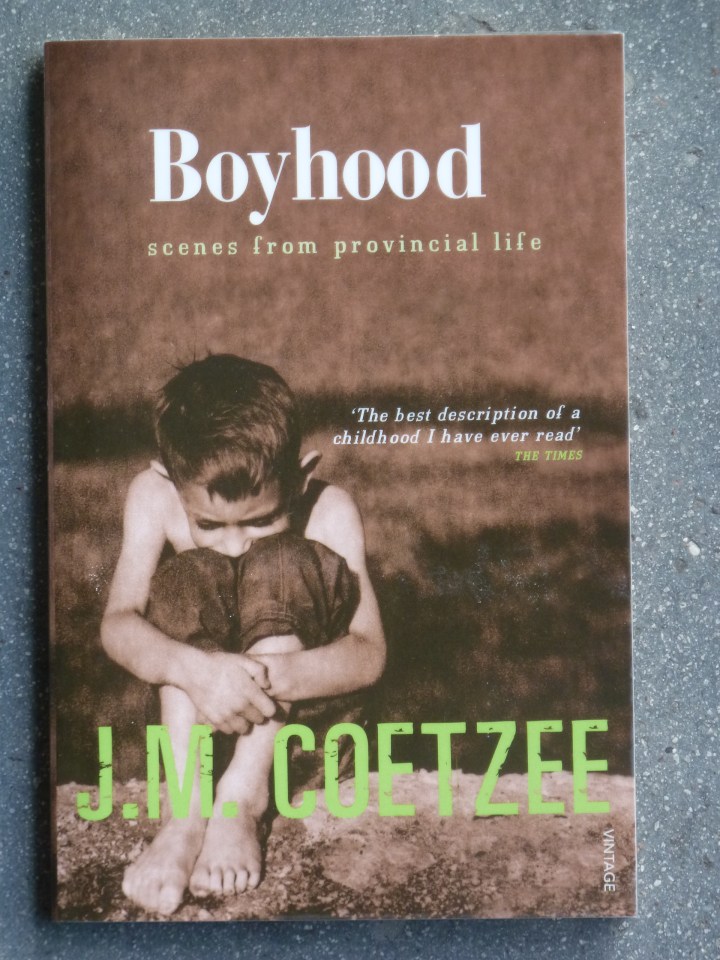


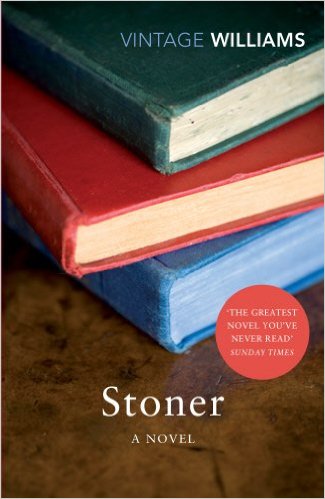
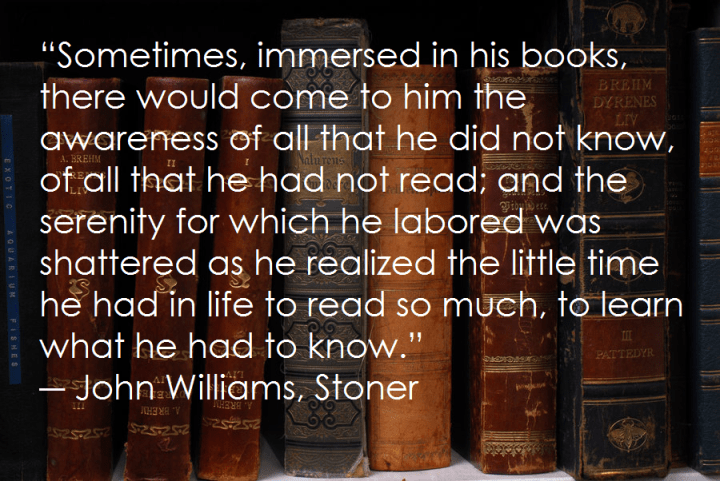









You must be logged in to post a comment.