Hard at work grading Higher Level English papers each July.
I come from a long line of pipe smokers. My Dad smoked the pipe, and from a young age, I wallowed in the wafted aroma of Mick McQuaid, or Condor or Mellow Virginia. My Grandad also smoked the pipe; it was ever-present in his mouth, and I also noticed that he used a cap on his pipe to prolong the smoke. I have to confess, before I go any further, that of all the vices I’ve explored in my lifetime, pipe smoking was my favourite! I began to smoke the pipe at the age of 27 – around the time I got married! In the beginning, before addiction set in, I was an occasional smoker. I smoked a Dutch tobacco called Clan, which was very popular, and it had a beautiful, scented flavour. I was very active at the time, playing football with Newcastle West and hurling with Knockaderry. I continued to rationalise with myself that my pipe smoking had no impact whatsoever on my fitness and, after all, it would have been far worse if I had been smoking cigarettes!
Giving it a try, I entered one of the most compelling, habit-forming subcultures I’d ever found. There are plenty of rabbit holes to go down in life, though few that hold you there so avidly as pipe smoking. Part of it was the tobacco, as different from the cigarette kind as you can imagine. In those early years, I mainly smoked nice light, sometimes aromatic, mellow Virginias. My Aunty Meg spoiled me rotten by bringing me back 16-ounce packets of scented Cherry Brandy flavoured tobacco from her many journeys to New York. I later discovered the time-consuming rituals associated with various plug tobaccos before eventually settling on Yachtsman, my favourite of all. I became an expert mixer of tobaccos and would often add some of my Cherry Brandy mix with my Yachtsman plug to make it go farther. If suppressed memory serves me at all, the mixture was Divine!
Fr. Dan Lane was curate in Newcastle West in the late 80s and early 90s, and we were firm friends. Dan smoked cigarettes mainly, and when he wanted to give them up, which was often, he dabbled with the pipe. Each year, Fr Dan organised a pilgrimage to Lourdes for the Fifth-Year girls in the parishes of NewcastleWest and Abbeyfeale. The pilgrimage set out for Lourdes each year on Easter Sunday and returned a week later. Each year, he would bring copious amounts of tobacco, far exceeding his own Duty Free allowance of cigarettes and pipe tobacco on his return journey.
I remember one evening in 1986, Fr. Dan arrived out to Knockaderry laden down with two Duty-Free bags of pipe tobacco. His doctor had again advised him that he should quit smoking, so he wanted to get rid of the temptation and give his stash a good home. Obviously, I was delighted, and by my estimation, I wouldn’t have to buy tobacco again until Christmas! Later, I went through the treasure trove and found packets of my old favourite Clan, along with pouches of Holland House, Condor, Mellow Virginia, Mick McQuaid, and some tins of Erinmore and Three Nuns. I’m reminded here of Brendan Behan’s joke about the availability of tobacco while he was in prison. He said that the warden’s favourite brand was Three Nuns – none yesterday, none today and none tomorrow!
Gradually, I became an expert, collecting all the necessary paraphernalia: my beloved Kapp and Peterson Numbers 303, 314 or 317 sandblasted briar pipes, a sleek pipe lighter, pipe cleaners, rustic tampers, a pipe pouch, a small penknife, and a leather airtight tobacco pouch. The pipe was the most essential item, however, and I sourced mine and, in later years, my plug tobaccos from the erudite Eleanor at M. Cahill and Sons Tobacco Shop, 47 Wickham Street in Limerick.
Kapp and Peterson, from their famous shop in Nassau Street in Dublin, were then, and still are, the oldest continuously operating briar pipe factory in the world. They had built up a reputation both here and abroad and they were proud of their tradition and their legacy of craftsmanship dating back over 150 years. A Peterson pipe wasn’t just a utilitarian tool; it was a piece of history you carried with you on your travels, a faithful companion to accompany you through all of life’s travails.
My favourite pipe! Eschewing the robust, muscular aesthetic that defines so much of the Kapp and Peterson style, this classic bent Donegal Rocky 80s briar pipe design is an elegant, timeless shape that haunts my frequent tobacco dreams!!
Pipe smoking is a messy business. Oftentimes, stale dottle became wedged in the pipe bowl from a previous smoke, and this required cleaning with a penknife. Tobacco dust and ash permeate everything and everywhere, and often the smoker doesn’t realise that all those in the vicinity can smell smoke fumes from his clothes, from his breath. Pipe smokers are forever fidgety around their pipe; it requires constant attention and frequent relighting, not to mention the endless ceremonial preparation for yet another smoke.
I have a few very serious confessions to make now that I am a reformed smoker. I cringe when I think that I continually smoked the pipe in the car without a care or any consideration for Kate or my two darlings, Mary and Don, who were in the backseat without gasmasks, seatbelts or any of the modern safety methods that had not yet become legal and essential. I smoked while I was carrying them to music lessons, to matches, to training sessions. I smoked in the house after school; I smoked all day in the study during those long summers correcting Leaving Cert English. I smoked in restaurants, in pubs, and in the street, without a thought for anyone other than my own enjoyment and satisfaction.
Eventually, after many false dawns, I gave up smoking the pipe on the 12th of October 2008. There were several factors which precipitated this major decision. I was due to go to Croom in November that year to have a hip replacement, so I told myself that I needed to be fit and healthy! On March 29, 2004, Tánaiste Michéal Martin, representing the Irish government, introduced the first national comprehensive legislation banning smoking in all workplaces, including bars and restaurants. I was beginning to get the message in 2008! In truth, my momentous decision had been hastened by the repeated price hikes in tobacco in successive Budgets, which were making smoking a very, very expensive hobby. I couldn’t justify it any longer, and so, even though I had just purchased a brand-new Peterson on the 1st of October that year, I went ‘cold turkey’ and never looked back.
On that fateful day, I was aware that I was consciously making a decision to exclude myself from an elite club. Pipe smokers had always traditionally been considered different, and membership of this convivial fraternity was considered to be something special. In our heyday, we were seen as wise, contemplative men who sat and smoked and read serious, leather-bound literature, as well as a world of rugged outdoorsmen, canoeists, fly fishermen and clipper ship captains who puffed their pipes as they pored over nautical charts before sailing ‘round the Horn. Those halcyon days, unfortunately, are all now, but a hazy pipe dream in the smoky recesses of treasured memories! I conclude with the immortal words of C.S. Lewis: “A pipe gives a wise man time to think and a fool something to stick in his mouth.”
Éigse stalwart, Vicki Nash, pictured next to the 1971 portrait of Michael Hartnett by artist Edward McGuire, which was on display for the opening ceremony of Éigse 2022.
In academic circles, when poetic legacies, such as that of Michael Hartnett, are thrashed out and explored, there is always, of necessity, a legacy BUT. BUT… he passed away in mid-sentence; his potential was unfulfilled, etc., etc. We leave such debates to the continuing academic interest in Hartnett, but for those of us who love Michael Hartnett, the debate has already been won. His core work, what we see in his numerous collections, his brilliant work as a translator, and his lyrical evocation of a Maiden Street upbringing (‘we were such golden children never to be dust’) and his other mischievous local interventions, are timeless and will stand the test of time – no ifs, ands or buts.
For those of us who are true believers, Michael Hartnett’s legacy as one of the central figures in modern Irish poetry is guaranteed. The Éigse Michael Hartnett festival, held annually throughout the town in schools, the library, the Red Door Gallery, the Desmond Complex, St. Ita’s Hospital, the Longcourt House Hotel, and in the ever-dwindling number of local pubs, celebrates that legacy each year. The festival’s wide-ranging and diverse programme creates an atmosphere of warmth and conviviality, perfect for lively gatherings, easy conversation, and spirited debate.
While his memory still lingers among us, however, the pace of change is relentless. The Newcastle West he wrote so roguishly about has faded into the past, living on only in memory and in his verse. Many of the central characters in these sagas, such as Tony Sheehan, Peg Devine, Tony Roche, Jimmy Deere, John Bourke, Billy the Barber, Pat Whelan, Ned O’Dwyer or Ned Lynch, are no longer readily remembered by the young people of the town. Each year, however, they are recalled, remembered and celebrated in Éigse Michael Hartnett.
The Michael Hartnett Poetry Award is now worth a whopping €8,000, and the list of winners over the past twenty-five years is impressive. Many of those poets have gone on to achieve national prominence. And, in the intervening years since the unveiling of that statue by fellow poet Paul Durcan on April 16th, 2011, Durcan’s hope that the statue would become a meeting place, a rendezvous, for parents and children, for schoolchildren, friends, and lovers has come to be a reality.
Michael Hartnett deserves all these efforts to keep his legacy alive – and, some would argue, the time has come for a more permanent centre to attract tourists and scholars to the town. The Éigse organisers welcome recent efforts to establish a permanent Arts and Cultural Centre in Newcastle West. This town needs to be a centre for the continued study of the poet’s work and a recognised repository for his papers and other materials before they are lost forever. It has been done successfully in Bellaghy and Inniskeen, so why not in Newcastle West?
Hartnett’s eclectic legacy is assured: his poetry in Irish and in English; his translations of modern Irish poets and of Ó’Bruadair, Haicéid and Ó Rathaille; his ‘local’ poems in Newcastle West and Inchicore; his engagement with the thorny issue of Irish nationalism and language at a time in the 70s during great political unrest without introducing any of the usual tribal undertones, will always be respected and applauded.
In recent times, we salute those who ensured that Hartnett’s iconic portrait by artist Edward McGuire was purchased by Limerick City and County Council on behalf of Limerick City Gallery of Art. Like Hartnett himself, the portrait returns after a lengthy exile and will now forever be available to view locally. However, in our continuing efforts to further Hartnett’s legacy, we can and must do more.
The decade from 1975 to 1985 in Glendarragh, Templeglantine, was arguably the most productive of his career. Adharca Broic was published in 1978, followed by An Phurgóid in 1983, Do Nuala: Foighne Crainn in 1984 and his fourth collection in Irish, An Lia Nocht, appeared in 1985. During this period, he also undertook the translation of Daibhi Ó Brudair’s poems, which were published in 1985. In parallel to this ‘serious’ output, he was writing and entertaining the locals with ballads, some serious or semi-serious like ‘A Ballad on the State of the Nation’, which was distributed as a one-page pamphlet like the ballads of old and even included original linocuttings by local artist Cliodhna Cussen. Other ballads were more contentious and even semi-libellous (or fully slanderous!), such as ‘The Balad (sic) of Salad Sunday’ and ‘The Duck Lovers Dance’. These latter creations were written under the very appropriate nom de plume, ‘The Wasp’!
It has to be remembered that at this time, Newcastle West and its West Limerick hinterland were booming. The Alcan plant in Aughinish Island near Askeaton was under construction and every man, woman and child was working there. Added to this, every spare room was occupied as up to 4,000 workers from all over Ireland were involved in the construction phase of the project. The idyll of coming back home to a quiet rural backwater conducive to creativity in West Limerick was shattered by this unexpected and localised economic progress. Ironically, while Michael was enjoying the Klondike atmosphere in the hostelries of Newcastle West, his wife Rosemary was working as the Personal Assistant to the Managing Director of the newly commissioned Alcan Aluminium site.
This surely goes to the heart of the tragedy of what was Michael Hartnett’s life as a poet. The literary and academic world tried in vain to accommodate him, although this help and recognition may have come too late to save him from the clutches of alcoholism. While the annual Éigse sets out to maintain his rich legacy and celebrate his genius, it does tend to sugar-coat his reputation and often the big elephant in the room is ignored. This must be a continuing source of frustration to his wife, Rosemary, his children and his surviving family members in and around Newcastle West.
The sad reality for Michael and his family was that he did not avail himself fully of the many opportunities that were offered to him in the 1970s and later. Rosemary bemoans the fact that while his contemporaries, such as Montague, Durcan, Kennelly and Heaney all wrote poetry, they also managed to earn a salary, whereas her husband ‘spurned all opportunities to do anything except write poetry and drink!’
He was the first recipient of a bursary from the Irish American Cultural Institute in 1974, which allowed him and his wife, Rosemary, to put a deposit on a cottage in the townland of Glendarragh, Templeglantine. In that same year, he was awarded both the Irish American Literature Award and the Arts Council Award. Following his return to West Limerick, he was employed for a brief time as a lecturer in Creative Writing at Thomond College of Physical Education (now the University of Limerick), but his tenure there was patchy and temporary.
Thus, at age 34, one would presume that Michael was free to pursue his calling as a poet and enjoy the countryside ‘out foreign in ‘Glantine’. A good fairy, his wife Rosemary, paid the mortgage and all the bills and dealt with bureaucratic matters. She did it willingly because she believed in him and loved him and because she did not want her children to starve.
Sadly, it seems that his obsession with poetry and drink left very little room for any other relationships to thrive and survive, and this included his marriage to Rosemary. The acclaimed documentary by Pat Collins, A Necklace of Wrens (1999), ends with a very poignant, philosophical reverie as to whether Hartnett saw poetry as a gift or a curse:
It’s very difficult to describe where poetry comes from. It certainly was given to me, but so were my brown eyes and my big ears. They are just part of what I am, to coin a phrase. I believe it’s a gift, certainly, and I’m lucky to have it. But also it’s a curse, so I’m in two moods about it really. I could say I did it all myself, which would be a total lie because there’s an entire three or four thousand years of tradition behind me in many languages. But whether it was given or not, I can’t answer that question. It just turned up and I turned up to meet it and we met at the crossroads and got married and we’re still married.
Michael Hartnett had a great predilection for romantic yarns. If they weren’t true, he was amused by the way they were taken up, including by the media and even sometimes by academics. Most of these myths, created by Hartnett to suit his own nefarious purposes, are trotted out again and again. One example of what passes for analysis:
At the age of three, Hartnett was sent to live with his grandmother, Bridget Halpin, who lived in Camas, a townland in the parish of Templeglantine, west of Newcastle West. He was educated in the local primary school, and then in the well-known and enlightened St. Ita’s secondary school in Tarbert, Co. Kerry, run by the redoubtable Jane Agnes McKenna, a school that would later boast both Gabriel Fitzmaurice and Brendan Kennelly as alumni (McDonagh, Newman 15).
Hartnett, himself a master of misinformation and disinformation, would have been very impressed with the inventive mythmaking in this piece. For the record, Brigid Halpin’s cottage in Camas is situated about a mile from the village of Raheenagh in the parish of Kileedy. While it is true that he spent some time with his grandmother before beginning school and frequently thereafter for short stays at weekends and during school holidays, he attended Primary School in Newcastle West, first in Scoil Iosef and later in the long-established Courtenay Boys’ School. He then attended the very well-known and enlightened St. Ita’s Secondary School in Newcastle West, which was run by Jim Breen and where his English teacher was Billy O’Donnell.
Many of the myths surrounding Hartnett relate to Brigid Halpin, his grandmother. The reality is that she was not a native Irish speaker; he was not ‘fostered out’ to her for long periods in his childhood, and he did not learn Irish in her lowly cottage in Camas. Neither was she born in 1870, as he suggests in the famous Pat Collins documentary. We know from Census records that she was a mere 80 years of age when she died alone in St. Ita’s Hospital, Newcastle West, in 1965. These inaccuracies continue to appear in much of what passes for scholarly research and analysis since he passed away in 1999, and, as I pointed out earlier, some of the biggest culprits are local.
Despite this, Hartnett’s legacy is assured but demands continued and vigorous investigation. While Declan Kiberd lavishes praise on Hartnett for being ‘the greatest translator of Irish-language poetry in the second half of the twentieth century’, he also bemoans the fact that ‘he is also his country’s most underrated poet (Kiberd, 381). From the lofty heights where Heaney declares that Hartnett is the ‘authentic heir to the poets of the Maigue’ to those in the many hostelries he visited who dismissed him as an annoyance, there is the growing realisation of the truth in his son Niall’s observation that, ‘My father was many men to many people’ (McDonagh and Newman, 7). Seamus Heaney remembers the frisson of electric energy which followed a Hartnett book launch – he says it was akin to a ‘power surge’ in the national grid. He continues:
Yet despite that, his achievement was under-noticed. Slight of build and disinclined to flaunt himself on the literary scene, he was always more focused on his creative journey than on career moves. Edward McGuire’s portrait catches this singular intensity, but the response to his writings has been less definitive.’
Hartnett’s son, Niall, in an article in the Sunday Independent, on September 30th, 2024, spells out the current reality:
“His legacy as a poet is hard to gauge. His legacy is still spreading in Ireland, especially through the school system, although slowing in my opinion. But progress internationally is at a snail’s pace, sadly. My hope is that the school-goers of today in Ireland will be the next to carry his torch in the future to a wider audience.”
And as we celebrate the twenty-fifth anniversary of Hartnett’s passing, we can see that time moves on and new poets emerge and are celebrated each year at Éigse Michael Hartnett in Newcastle West, and in Listowel and Dromineer and many other far-flung Literary Festivals whose aim is to foster and nurture and give a platform to the young, vibrant successors of Hartnett.
Twenty-five years on, the judgement of John McDonagh and Stephen Newman made shortly after his passing still holds true:
His body of work is a testament to his lifelong struggle with complacency and a desire to write with honesty and integrity that marks him out as one of the most overlooked yet influential Irish poets of the twentieth century (McDonagh, Newman, 24).
Prophets are never recognised in their own countries. Until, that is, they make themselves irremovable landmarks on our landscapes and streetscapes. The once-banished artist returns as a statue in our most cherished Square, an Éigse Literary and Arts Festival to honour him in perpetuity. Hartnett deserves all these accolades. He was at times painfully honest, very acerbic at other times, but always truthful until it hurt. Emerson had him in mind when, in his famous definition of friendship, he states, ‘Better be a nettle in the side of your friend than his echo’, and he concludes with the admonition: ‘Let him be to thee forever a sort of beautiful enemy, untameable and devoutly revered’.
References:
Collins, Pat. Film documentary A Necklace of Wrens (1999).
Hartnett, Rosemary, in correspondence with the author.
Kiberd, Declan. The Double Vision of Michael Hartnett in After Ireland: Writing the nation from Beckett to the present, Head of Zeus UK, 2017.
McDonagh, J., Newman, S. (eds). Remembering Michael Hartnett, Four Courts Press Ltd., Dublin, 2006.
Michael Hartnett, his wife Rosemary and daughter Lara.
My deafness became a major issue in 2021. Up to that time, there had been the odd rumbling of discontent, mainly from my long-suffering wife. I had up to then been able to successfully argue that I wasn’t really deaf and that I was just a bit heedless. My beloved wife could not understand that if she said something in the bedroom, how it was that I couldn’t hear what she said while I was watching television in the sitting room. My wife is a wonderful woman, and I love her dearly, but her big failing is expecting me to make sense of her muffled mumblings from another room. Anyway, she eventually convinced me that I was deaf after all, and so began the search for a remedy.
I believe that there is a world of difference between being deaf and being heedless. I know in my heart that I have the average hearing loss of a normal 73-year-old. Unfortunately, age has also dulled my eyesight and several other bodily organs and functions, which, because of their delicate nature, I won’t elaborate on here. Suffice it to say that there are times when I become engrossed in reading a good book or watching a compilation video highlighting how Limerick won the All-Ireland in 2018, and then again for good measure in 2020, 2021, 2022 and 2023! Preparing a blog post also takes high levels of concentration and tunnel vision at times.
Anyway, to cut a long story short, it cost me €6,100 to solve my problem! Reluctantly, I joined the Hidden Hearing family. I later learnt that the reason it’s called Hidden Hearing is because there are so many hidden costs associated with the purchase of so-called ‘hidden’ hearing aids. My state-of-the-art hearing aids were of the behind-the-ear variety and were anything but hidden.
First off, I went to a Hidden Hearing clinic for a hearing test. I was asked to bring along someone whose voice I recognised easily from another room, so I brought Kate. The audiologist put pods in my ears and played a series of beeps at various sound frequencies, and if I heard one, I was supposed to press a button. This test was carried out overlooking a busy street in Newcastle West, with car and van noise intruding on my hearing test. In further mitigation, because of COVID-19 restrictions in place at the time, all present wore face masks. I’m sure I missed some beeps because the audiologist’s frown grew more sombre by the second, and eventually, he too convinced me that I was in fact profoundly deaf – especially when he put Kate in an adjacent room and had her read some comments out loud which I was asked to repeat. I failed that test, too, and they both helped convince me that I was indeed a hopeless case and the only solution would be for me to purchase the newest, most scientifically proven hearing aids on the market. I headed straight for the Credit Union.
Once my hearing had been tested, I felt under pressure to purchase from Hidden Hearing and was not told of any other competitors in the hearing aid field. I also felt pressured by the sales assistant to pay more than I could comfortably afford. In hindsight, I often wondered why they didn’t redo the test once the hearing aids had been fitted and adjusted to my particular needs. Surely, I would have passed with flying colours! I was urged to always wear my new hearing aids, or my hearing – the little that was left – would disappear as well. It had something to do with the brain, they said. In the days and weeks that followed, I wore my hearing aids on long walks and found that the Bluetooth was indeed state-of-the-art, far better than my AirPods. To their credit, they were also brilliant when my phone rang, and I found taking calls much easier and clearer in fairness. In my own mind, of course, I was still convinced that my hearing was just fine. I could still hear the birds in the morning without my hearing aids; I could hear the jets seven miles above me as they flew over my house as I lay in bed; I could still hear the comforting soft patter of rain on the windows and on the roof in the dead of night.
Again, because of my advanced years, I use reading glasses to read, and if I mislay my glasses, there is a mini crisis because I’m actually blind without them. As a precaution, I make sure that I have a backup pair of glasses always at hand, just in case. Now, the same was not true for my hearing aids. I failed to notice any improvements in my hearing when I wore them in public, particularly in crowded settings.
I was under the impression that once I had purchased my hearing aids, they would last a lifetime. Foolish me! The particular hearing aids I had purchased carried a three-year warranty, and as that deadline approached, I began receiving increased communication from Hidden Hearing. They informed me that there had been enormous advances since I had last purchased my now antiquated behind-the-ear hearing aids and that I could avail of various special offers as a valued ‘patient’ of Hidden Hearing. They would even allow me €2,000 for my old, outdated hearing aids, even if they were broken (or, in my case, rarely used) when I would trade them in for their new state-of-the-art in-ear upgrade! To add insult to injury, when the warranty lapsed on my old hearing aids, it would cost me €140 per ear for them to examine the hearing aids each time there was a problem. The vultures were circling, and the concept of built-in obsolescence took on a whole new meaning for this naive, deaf person. I wondered if I would have to make another journey to the Credit Union.
I resolved to battle on, to half-hear Fr Raphael, our new Nigerian curate, giving his Sunday homily; to nod sympathetically at another sob story in the crowded pub; to catch the end of a request from Kate as she mumbled away in another room. I even began to believe that the Nile is not just a river in Egypt!
For retirees like us, Ryanair has been our ticket to the sun, allowing us to travel and expand our horizons. Since its establishment in 1984, Ryanair has evolved from a small airline, operating short-haul flights from Waterford to London Gatwick, to become Europe’s largest carrier.
They have revolutionised air travel in many ways, not all for the good. I remember before their arrival turning up at check-in desks with our two big cases full to the brim, ready to cope with all eventualities. Ryanair quickly sorted that one out!
Early days, staff were very abrasive, and hand luggage caused all kinds of problems. Later, your 10kg bag had to fit into a contraption at the boarding gate, and staff would regularly weigh bags to certify that they were within the required limits.
Today, everything has been monetised. Even before you board your flight, you are encouraged to join and avail yourself of Ryanair Prime. Prime members get free reserved seats, free travel insurance and access to 12 member-only seat sales, one each month. Prime members can save €560 per annum, and all this for just €79 per annum! Then, from the moment you book your flight, you are encouraged to spend more money on Priority Boarding, securing your seat, flight insurance, airport transfer, car rental, etc., etc.
However, despite the early growing pains and having to listen to their abrasive CEO, who is even a greater pain, they did what it said on the tin. They got you to your destination from your local airport with minimum fuss or frills. I always marvel at fellow travellers who moan and grumble at the shortcomings of the carrier because they knew exactly what they were signing up for before they ever booked their flights. Another not insignificant reason for my allegiance to Ryanair as our carrier of choice has much to do with the anachronistic concept of ‘the old school tie’. One of my classmates in Secondary School was none other than Michael Cawley, who, for many years, was Deputy Chief Executive of Ryanair. He couldn’t hurl or play football, but in time, he became a great accountant!
The sheer joy and excitement on my granddaughter Maeve’s face during her first Ryanair flight says it all!
I remember one wet Saturday evening in November, sitting in one of the restaurants in Shannon Airport, having gone through security. Kate and I were having a drink before boarding our flight. We were on our way to Lanzarote for a week’s break when, right on cue, an announcement was made that our Ryanair flight would be delayed due to a technical issue with a door on the plane. We were chatting away when a pilot and his first officer asked if they could sit at our table. The pilot was a large, brash American, and his co-pilot was French. We exchanged pleasantries and continued with our conversation. However, it was increasingly difficult to avoid overhearing the pilot as he venomously and vigorously attacked his employer, who was uncaring, untrustworthy, willing to cut corners, expecting him to work ungodly hours and follow crazy schedules. He would much prefer to work for Wells Fargo or DHL or some other cargo carrier than work for that insufferable bastard, Michael O’Leary of Ryanair! We couldn’t help but listen as he continued to berate and belittle his employer. Finally, our flight was called, and we began to gather up our bags, and he asked us where we were headed. We told him we were headed to Porta del Carmen, and he said he hoped we would have a relaxing flight. Furthermore, he informed us that he would be our captain on the flight!
Ryanair’s pricing policy is a total mystery to me. They tell us that those who book early get the lowest fares, but this is patently untrue. I know of no other product to hand whose price fluctuates from hour to hour depending on a secret, unbreakable algorithm. I know of no other transport company that can have 300 people on the same flight and no two of them have paid the same price for their ticket. It’s truly bonkers!
Experience a Ryanair flight delay and every piece of consumer protection law which has been meticulously pored over in the hallowed halls of Brussels and Strasbourg is stretched to breaking point. I have been delayed in the stairwell of any number of airports, twiddling my thumbs and avoiding eye contact with the hordes of disgruntled fellow travellers who know to the minute when compensation kicks in and Michael O’Leary will personally have to pay out. Then, with a familiar beep, a message flashes up on your Ryanair App to inform you that you are now entitled to €4 to be spent in all the Cafés and Burgerking outlets, which, coincidentally, are all on the other side of Passport Control. And because it’s now near midnight in Las Palmas, they’re all now closed anyway! Sometimes that message doesn’t appear until you are home, snuggled up in bed following a five-hour delay to your flight.
Look, it makes perfect sense to me: if some careless baggage handler messes with the cargo hold door and it won’t close properly at 10 o’clock on a Summer’s evening in Nice or Malaga, and the pilot will not take off until the fault is rectified, airport authorities are duty-bound to send for an engineer. Now, at 10 o’clock, most self-respecting engineers are at home or in the pub if it’s a Friday night, and they are not going to come all the way back to the airport for half an hour’s overtime, are they? No, mark my words, that minor little problem will take at least four hours to rectify to everyone’s satisfaction. This rule of thumb, of course, applies to all carriers and not just Ryanair.
And it’s futile to give out or moan or threaten or make a resolution never to fly with Ryanair again. In my long experience, despite the odd hiccup, they’re the best in the business!
Paula Meehan in full flow, delivering her eloquent ‘Letter to Michael Hartnett’ on the Opening Night of Éigse Michael Hartnett, 2025. The photograph is by Dermot Lynch
As part of our preparations for Éigse 2025 we decided to ask Paula Meehan to be our special guest on Opening Night, 2nd of October. Her remit was to ‘speak from the heart about her memories of Michael Hartnett’. She did so by framing her thoughts in the form of ‘A Letter to Michael Hartnett’ – a wonderful prose poem. This was written on the 1st of October 2025, the night before the Éigse in his name opened in his native Newcastle West, County Limerick. The result is truly magnificent and deserves to be shared with Michael’s family, his many friends and ardent followers who didn’t make it to the Library in Newcastle West on that momentous night.
Dearest Michael,
Tomorrow I will rise with the sun and take to the road, and by eight-ish I will stand to speak of you before a crowd of your devotees in your home town where your name will be on everyone’s lips. Being blessed for the most part — but you have to allow, as you’d say yourself: there’s always the one.
The Éigse, founded in your name, will be opened with ceremonials and celebrations through all the arts, on its twenty-fifth birthday. If fate allows, I’ll be there to sing your praises, to sing them to the high heavens, where I hope you reside with the cherubim and seraphim, your ears ringing with their choral magic. I’ll say you were and are of greatness wrought. I’ll offer gratitude for the poems you carried, for the pure music of your shining spirit. So many of us will be gathered in your name and cherishing all you stand for.
I’ll be aware, too, of your black sardonic eye on proceedings somewhere in the otherwhere of elsewhere; aware especially of how you hated poets going on, and on. And weren’t afraid to let them know. Now as I enter my anecdotage and my crankitude, I can hear your voice in my ear:
‘Just tell them I’m not the worst.’
That’s what you whispered one night as I rose to introduce you to students in a small back room, over fifty years ago. After the reading they would have died for you, each and every one of them, so thoroughly had you enchanted them. I remember the joke you told them at the end of your reading: ‘What do you get if you cross a donkey with a bag of onions? A ride that would bring tears to your eyes’.
‘Come to the Éigse,’ said Norma Prendiville, ‘and speak from the heart about Michael for twenty minutes.’ Michael, I’ll speak from the heart you broke. You broke the hearts of all of us who loved you.
You were our purest poet. Our own Orpheus.
Even Eavan Boland, who reckoned there was no Orpheus in Ireland, came to understand the Orphic nature of your lyric. I extract from ‘Irish Poetry’, the poem she dedicated to you, where she tells how over a pot of tea one winter’s evening you —
began to speak of our own gods.
Our heartbroken pantheon:
No Attic light for them and no Herodotus.
But thin rain and dogfish and the stopgap
of the sharp cliffs they spent their winters on.
And the pitch-black Atlantic night. And how the sound of a bird’s wing in a lost language sounded.
You made the noise for me. Made it again. Until I could see the flight of it: suddenly
the silvery, lithe rivers of your south-west
lay down in silence. And the savage acres no one could predict
were all at ease, soothed and quiet and
listening to you, as I was. As if to music, as if to peace.
Eavan, who always referred to you as Mikey, with great fondness.
I first met you, Michael, in Grogan’s Castle Lounge in South William Street in my native city of Dublin. The poet’s horror hole a friend called it, a poet already sober, a rare enough thing in Grogan’s Castle Lounge. In those days fadó, fadó.
It is nineteen eighty-three and I am just back home to Dublin. I have been studying for a Masters of Fine Arts degree, in Washington State in the far Northwest of the United States. I brought two slim volumes with me when I left for the States – poets I had never met in person, but I considered them poetical mother and father to my craft or sullen art.
The books were Eavan Boland’s 1980 volume In Her Own Image and your 1975 volume A Farewell to English. When I met you that first time in Grogans, introduced by Tommy Smith, I told you I had the whole of the title poem, dedicated to Brendan Kennelly, by heart. Go on so, said you, prove it. I did. By heart. With only a few wobbles.
I think you were gobsmacked. You asked to see poems for, you said, I must be a poet. I showed you one I had in my pocket — do young poets still carry new poems on their person? Maybe on their mobile phones ….. I showed you one and you said it wasn’t very good. I showed you another and you said that was much better. The real thing. Of course, I paid no heed to your critique. Isn’t arrogance a protective force when you’re a baby poet?
If I had the whole poem by heart then, I have only fragments now, but it comes back to me when I need it. It gets me through as much as it gets through to me, the beautiful, sustained meditation on our politics. our culture, our colonised minds. Your masterpiece of scorn and hurt and resistance.
In the choppy waves of loneliness in an American university the poems kept me on some kind of even keel. They were part of the reason I came back to Ireland despite the terrible prospects.
‘What are you going home for? Sure all the kids are going the other way?’ ’What are you coming home for. There’s no work here.’
The era of last one to leave the country turn out the lights. The era of redundancies, butter vouchers, dole queues, heroin hitting the poor communities of the inner city like a juggernaut, moving statues, The Kerry Babies, Anne Lovett, The Heavy Gang. The Troubles live on TV every night.
You understood I came home to get the poems I needed to get.
What did we talk of on those walks by the Camac River, that palindromic waterway? Oh, you could fascinate from Akhmatova to Zozimus. You were dazzling in your erudition. You had the names, and the naming and so took possession of every blooming thing, of every wingèd thing and creature of the riparian zone. In two tongues.
I found blessing and curse in every poem. You were countryman. You were cosmopolite. You were ancient. You were avant garde. You were honey. You were vitriol.
Kind. Ferocious. Wicked. Lonely. So lonely, Michael, for your boy and your girl, for Niall and Lara, your beautiful children.
I carried your poem ‘Death of an Irishwoman’ like a holy fire. You understood that the most important culture bearers come in humble guise, like the Zen master scrubbing the kitchen floor of the monastery. Your ‘ignorant’ grandmother Bridget Halpin, who gave you Irish, who handed you the tool you would use to decolonise your mind. Decolonise our minds.
You were the wounded healer.
Death of an Irishwoman
Ignorant, in the sense she ate monotonous food and thought the world was flat, and pagan, in the sense she knew the things that moved at night were neither dogs nor cats but púcas and darkfaced men, she nevertheless had fierce pride. But sentenced in the end to eat thin diminishing porridge in a stone-cold kitchen she clenched her brittle hands around a world she could not understand. I loved her from the day she died. She was a summer dance at the crossroads. She was a card game where a nose was broken. She was a song that nobody sings. She was a house ransacked by soldiers. She was a language seldom spoken. She was a child’s purse, full of useless things.
I carried that poem into workshops, workshops in universities, in prisons (sometimes on the same day). I read it with women prisoners, with the political prisoners in Portlaoise, with the men in Arbour Hill High Security Prison, in recovery programmes. I brought it into art colleges, into classrooms all over the country, into other countries.
Everyone has loved someone from the day they died. Some creature. Some thing.
Only last week at a workshop in Kilmore Quay, I read that poem and there was a gasp, an audible intake of breath on the line, ‘I loved her from the day she died.’ She will never die, your grandmother, bearer of Irish, cultural heroine, your grandmother Bridget Halpin.
Those last few years of your life, your ever faithful friend Tony Curtis would drive myself and Theo (Dorgan) out to Dundrum, where you lived close by what you called The Sentimental Hospital, known to the rest of us as The Central Mental Hospital. You were dying in the loving care of Angela Liston.
The October of your going was radiant and glorious. But the day of your funeral it lashed. Early to the town for the burial, we took shelter in a pub. A man came in and said there’s a fierce crowd in for a funeral. Dinny Hartnett, the postman, his brother the poet is after dying. You would have liked that, Michael. You would like that the woman in the Pound Shop gave us armfuls of umbrellas, all the umbrellas in the shop, and wouldn’t take any money. Sure bring them back when the funeral’s over.
I did a poetry reading in Limerick a while back, in the City Gallery under Eddie Maguire’s magnificent portrait of you, the one on the front of your Collected Poems. Una McCarthy, who has recently retired as Director of the Gallery, had fought a long, hard battle to wrest the funding for it and get it back to Limerick from a private collection in the United States. You hung there, your black eyes boring into me, as intensely as they had in life. You could read minds, an uncanny gift. You were drawn to the wounded in bar or street. I saw people open to you like flowers – they felt your nobility of spirit, your deeply empathetic heart.
Michael, I hope wherever you are that this Éigse energy in the streets of the town of your birth will touch you. Your name is on every tongue. You are cast in bronze in the marketplace. The rain flows down your beautiful face, mingles with the tears you shed for your mother, for your father in his blanket of snow.
I send this letter into the void, dear Michael, in gratitude, devotion and fond memory.
Sincerely,
P. Meehan
Paula Meehan. Photograph by Dermot Lynch
About the Author
Paula Meehan was born in Dublin in 1955, the eldest of six children. She attended a number of primary schools, finishing her primary education at the Central Model Girls’ School off Gardiner Street. She began her secondary education at St. Michael’s Holy Faith Convent in Finglas but was expelled for organising a protest march against the regime of the school. She studied for her Intermediate Certificate on her own and then went to Whitehall House Senior College, to study for her Leaving Certificate.
Outside school, she was a member of a dance drama group, became involved in band culture and, around 1970, began to write lyrics. Gradually composing song lyrics would give way to writing poetry.
At Trinity College, Dublin, (1972–1977) she studied English, History and Classical Civilization, taking five years to complete her Bachelor of Arts degree. This included one year off, spent travelling through Europe. While a student she was involved in street theatre and various kinds of performance.
After college she travelled again, spending long stretches in Greece, Germany, Scotland and England. She was offered a teaching fellowship at Eastern Washington University where she studied (1981–1983) in a two-year programme which led to a Master of Fine Arts degree in Poetry. She returned to Dublin in 1983.
Meehan has also written poetry for film, for contemporary dance companies and for collaborations with visual artists; her poems have been put to music by songwriters (including Christy Moore). Her poetry has been extensively published in translation, including substantial collections in French and German.
The 2015 Poetry Competition ‘A Poem for Ireland’ shortlisted her 1991 poem ‘The Statue of the Virgin at Granard Speaks’ in the final ten poems. She selected poems for and introduced the Candlestick Press anthology Ten Poems from Ireland in 2017. Meehan was a judge for the 2020 Griffin Poetry Prize.
In September 2013, Meehan was installed as the Ireland Professor of Poetry by President Michael D. Higgins.
In 2023, she was elected an honorary fellow of Trinity College Dublin.
One of my favourite, enigmatic sports photos of all time! Mick Mackey (umpire) and Christy Ring have a few words as Ring is forced to leave the fray during the 1957 Munster semi-final.
Reconstructionists
By Michael Hartnett
The GAA decided
the time had come to explain
to very puzzled tourists
the rules of the Hurling Game.
So, as things are quiet in winter,
their decision was to ask
the lads from the Office of Public Works
to help them with their task –
to build an Interpretive Centre;
to unbaffle Icelanders,
Dutchmen, Danes and Turks,
to educate visitors
and not leave them in the dark,
and to site this latest venture –
where else, but in Croke Park!
The day came for unveiling
and there in snow-white ranks
stood shining sheds of limestone,
with Celtic septic tanks
to service all the toilets
with their sparkling tiles and taps;
and there was a lecture room
hung with very detailed maps
to point the way to Thurles
for Libyans, Letts and Lapps;
and a foyer aglow like the Book of Kells
with an undecipherable graph
that’s explained the whole year ‘round
by the full-time staff
of two. And for all the lovely money
a Foreign Currency Exchange
clad in gleaming quartz-stone
left over from Newgrange.
And a genuine Irish siopa té
with genuine soda bread
made brown with genuine turf dust
to sink in your belly like lead
(one slice of that and, d’you know what,
you’ll swear that you’ve been fed!).
The Fathers of the Nation
rejoiced and they were glad
(the Mother of the Nation
Was somewhere west of Chad);
but none of these wise leaders
had foreseen the tiny hitch –
the lads from the Office of Public Works
had built their Temple of Plumbing
in the middle of the pitch!
Note:
This poem, despite its rather enigmatic and unwieldy title, hides a gem of satire underneath! In the poem, Hartnett foresees the building of the Croke Park Museum, which eventually opened its doors to the public in September 1998, just before the poet’s untimely passing in October 1999. In typical Hartnett fashion, he never misses an opportunity to take a wry, satirical sideswipe at the Government and, in this case, its Office of Public Works. Little did he realise that a quarter of a century later, the line Minister for the Office of Public Works would be fellow Newcastle West native, Minister Patrick O’Donovan, whose family once lived next door to Hartnett in Assumpta Park!
Needless to say, today, the Croke Park Museum is a state-of-the-art building and a mecca for locals and tourists alike from diverse locations, including Iceland, Lapland, the Netherlands, Denmark, and Turkey! It is a celebration of the history, development and heritage of Gaelic games and the GAA itself. It houses artefacts related to the Association’s foundation and its most famous players. The museum is home to the original Sam Maguire and Liam MacCarthy Cups.
By the way, his phrase ‘the Mother of the Nation’ is a reference to Mary Robinson, an Irish politician who served as President of Ireland from December 1990 to September 1997. She was this country’s first female President. She has since gone on to work with distinction as an Elder, and she continues to campaign globally on issues of civil rights and climate change.
References
Hartnett, Michael. A Book of Strays, edited by Peter Fallon, Gallery Press, 2002 (reprinted 2015).
A Geohive Hub aerial view of Bridget Halpin’s cottage in Camas taken in 2006.
Camas is a small nondescript townland nestling in the shadow of the nearby village of Ratheenagh in rural West Limerick. In the Author’s Notes to his Collected Poems (2001), Michael Hartnett tells us that, ‘Camas is a townland five miles south of Newcastle West in County Limerick where I spent most of my childhood’. This local townland proved to be a central element in his early development. There, the young impressionable Hartnett was influenced by his people, particularly his grandmother, Bridget Halpin, and their customs and way of life. Indeed, in the mid-70s, when he tired of the Dublin literary milieu, it was to this same rural West Limerick bastion, nearby Glendarragh in Templeglantine, still steeped in Irish music and culture, to which he returned. It was to this place he came to escape Dublin’s incestuous stranglehold and perhaps to write a new chapter “out foreign in ‘Glantine”.
There are up to fifteen poems by Hartnett which could be considered ‘Camas Poems’. These memory poems are all based on his childhood recollections of those happy times in his grandmother’s kitchen. Students of Hartnett’s poetry should consider studying ‘A Small Farm’ (Collected Poems 15) as one of a series of memory poems that he wrote celebrating his grandmother, Bridget Halpin and the townland of Camas where she lived. The most obvious of these Camas Poems is ‘Death of an Irishwoman’ (Collected Poems 139), which he wrote on the passing of his grandmother in 1965. Others include ‘For My Grandmother Bridget Halpin’ (Collected Poems 52), and ‘Mrs Halpin and the Lightning’ Collected Poems 138) and of course ‘An Múince Dreoilíní ‘/ ‘A Necklace of Wrens’ (A Necklace of Wrens 18), a quintessential memory poem from childhood.
Hartnett’s early poetry creates a delicate balance between description and abstraction, the actual and the figurative. The poem ‘A Small Farm’, the first poem of the Collected Poems (2001), a memory poem dating from Hartnett’s teenage years, establishes this. Abstractions, clichés, their representation through language, and the moment where these are drawn into focus, made specific and immediate, are central. The setting of the ‘small farm’ is described en abstracto: ‘All the perversions of the soul / I learnt on a small farm’ (15). In contrast to other contemporary representations of Irish farm homesteads, most obviously Kavanagh’s ‘Inniskeen’, and Heaney’s ‘Anahorish’, there is no naming of place here. The picture of the farm is rather etched out in generalisation and aphorism, and through the accordant clichés of petty hatred and ignorance, ‘how to do the neighbours harm / by magic, how to hate’ (15), before Hartnett brings the glass into focus, employing idiosyncratic detail which establishes the world of the poem itself. In this way, Hartnett’s particular subjectivity, his way of seeing, is established. It would become his poetic currency:
Here were rosary beads,
a bleeding face,
the glinting doors that did encase their cutler needs,
their plates, their knives, the cracked calendars of their lives. (15)
In the final stanza, Hartnett makes an explicit link between his awakening as a perceiver of social interactions and moments of poetic beauty, with a growing knowledge and identification with the natural world:
I was abandoned to their tragedies and began to count the birds,
to deduce secrets in the kitchen cold,
and to avoid among my nameless weeds
the civil war of that household. (15)
The attentive intellect which ‘counts the birds’ has as yet no language to describe or express his experience of the natural world, his ‘nameless weeds’. Still, he is possessive of it, seeing it as distinct from the human society which he can describe, yet does not identify with.
The ‘small farm’ referred to here belonged to his grandmother, Bridget Halpin, and like many other small holdings in Camas, it consisted of a meagre ten acres, three roods and thirteen perches. This woman, Bridget Halpin, would later wield great influence over her young grandson, Michael Hartnett. Indeed, if we are to believe the poet, she was the one who first affirmed his poetic gift when one day he ran into her kitchen in Camas and told her that a nest of young wrens had alighted on his head. Her reply to him was, ‘Aha, you’re going to be a poet!’. (A more detailed genealogy of the Halpin family and the early formative influences on Michael Hartnett can be read here).
Bridget Halpin’s small farm of ten acres, three roods and thirteen perches, which was so vital in the early development of one of our greatest poets. This view is taken from a Geohive Hub aerial view taken in 2006.
Hartnett claimed that he spent much of his early childhood in Bridget Halpin’s cottage in the rural townland of Camas, five miles from his home in nearby Newcastle West. He went on to immortalise this woman in many of his poems, but especially in his beautiful poem, ‘Death of an Irishwoman’. This quiet townland of Camas must therefore be seen as central to his development as a poet, and maybe in time, this early association with Camas will be given its rightful importance, and the little rural townland will vie with Maiden Street or Inchicore as one of Hartnett’s important formative places.
‘Camas Road’, Michael Hartnett’s first ever published work, appeared in the Limerick Weekly Echo on the 18th of June 1955. He was thirteen. The poem describes the rural vista of the West Limerick townland of Camas at evening: ‘A bridge, a stream, a long low hedge, / A cottage thatched with golden straw’ (A Book of Strays 67). Its two eight-line stanzas of alternating rhyme and regular metre contain a litany of natural images, at times idiosyncratically rendered; the ‘timid hare sits in the ditch’, ‘the soft lush hay that grows in fields’. It is a peculiar mix of a poem, apparent images from both the poet’s lived and literary experience, placed side by side. It is contentedly denotative, creating a sense of ease and oneness with the natural world. The movement of sunrise to sunset is perpetually peaceful, its colours oils for the young poet’s palette. The ruminative introspection which elevates Kavanagh’s ‘Inniskeen Road: July Evening’, a poem which can be read in useful parallel to ‘Camas Road’, is not present. At the poem’s turn, as ‘Dark shadows fall o’er land so still’, Hartnett’s only thought and action are of flattened description, the creation of ‘this ode’.
‘Camas Road’ then, though essentially a curiosity which stands outside of Hartnett’s body of work, can be read as a seldom afforded snapshot of Michael Hartnett the poet before he became one. In contrast, his poem ‘A Small Farm’ shows a marked development in his poetic craft. Bridget Halpin, his grandmother, lived there with her son, Denis (Dinny Halpin), in what Hartnett describes as a prolonged state of ‘civil war’,
I was abandoned to their tragedies,
Minor but unhealing.
The word ‘abandoned’ here has many undertones and is important for the poet because he repeats the line twice in the poem. He has told us elsewhere that he was, in effect, ‘fostered out’ by his parents in Maiden Street, Newcastle West, to his grandmother, Bridget Halpin, from a young age and spent much of his childhood in her cottage in Camas. However, there is also the suggestion that while there he was ‘abandoned’ and somewhat neglected as he became an outsider, an unwilling observer of the ‘civil war’ of the household, as Bridget and her son Dinny constantly argued and fought over the minutiae of running a small farm in difficult times in the Ireland of the late 40s and early 50s.
Hartnett saw in his grandmother a remnant of a generation in crisis, still struggling with the precepts of Christianity and still familiar with the ancient beliefs and piseógs of the countryside. For Hartnett, there is also the added heartache that sees his grandmother struggling to come to terms with a lost language that has been cruelly taken from her. This, therefore, is a totally different place when compared to, for example, Kavanagh’s Inniskeen or Heaney’s Mossbawn or Montague’s Garvahey. However, there is an underlying paganism here that is absent from their work, although Montague comes close in his great poem, ‘Like Dolmens Round my Childhood, the Old People’.
For Hartnett, his grandmother represents a generation that lived a life dominated by myth, half-truth, some learning, and limited knowledge of the laws of physics, and therefore, as he points out in ‘Mrs Halpin and the Lightning’,
Her fear was not the simple fear of one
who does not know the source of thunder:
these were the ancient Irish gods
she had deserted for the sake of Christ.
However, Hartnett’s powers of observation and intuition were honed in Camas on Bridget Halpin’s small farm during his frequent visits. He tells us that he learnt much on that small farm during those lean years in the forties and early fifties,
All the perversions of the soul
I learnt on a small farm,
how to do the neighbours harm
by magic, how to hate.
The struggle to make a success and eke out a living was a constant struggle and burden. The begrudgery of neighbours, the ‘bitterness over boggy land’, and the ‘casual stealing of crops’ went side by side with ‘venomous card games’, ‘a little music’ and ‘a little peace in decrepit stables’. The similarities with Kavanagh’s ‘The Great Hunger’ are everywhere, but Hartnett does not name this place; it is an Everyplace. The poem is simply titled, ‘A Small Farm’, so there is no Inniskeen, Drummeril, or Black Shanco here. Still, the harshness and brutality of existence, ‘the cracked calendars / of their lives’ in the 50s in Ireland, is given a universality even more disturbing than the picture we receive from Kavanagh. Yet, it is here in Camas that he first becomes aware of his calling as a poet and, like Kavanagh, it was here that ‘The first gay flight of my lyric / Got caught in a peasant’s prayer’. And so, to avoid the normal household squabbles of his grandmother and her son, he ‘abandons’ them, turns his back on them, and begins to notice the birds and the weeds and the grasses.
The depiction of another agricultural custom is shown in ‘Pigkilling’. The joyful detailing of the killing of a pig at his grandmother’s farm in Camas eschews any characterisation of Hartnett as a simplistically environmental poet, denouncing all human domination over nature. Rather, it depicts the killing as a vital part of the rural community’s relationship with animal-kind, comparable to ritual.
Like a knife cutting a knife
his last plea for life
echoes joyfully in Camas.
This is one of the few Camas Poems that names the place and the central figure of the poem himself uses the pig’s bladder as a plaything: ‘I kicked his golden bladder / in the air’ (Collected Poems 125). Agriculture here is not mechanised but depicted as an ongoing, sustainable facet of rural life: the poem echoes the loss of many of these old rituals and crafts of the past, as Heaney does in his collection, Death of a Naturalist.
The townland of Camas is also central to an episode that the poet recounts for us in his seminal poem, ‘A Farewell to English’ (Collected Poems 141). This encounter hovers somewhere between reality and dream, aisling (the Irish word for a vision) or epiphany. The incident takes place at Doody’s Cross as the poet walks out on a summer Sunday evening from Newcastle West to the cottage in Camas. He is on his way to meet up with his uncle, Dinny Halpin. He sits down ‘on a gentle bench of grass’ to rest his weary feet after his exertions, when he sees approaching him three spectral figures from the Bardic Gaelic past – Andrias Mac Craith, Aodhagán Ó Rathaille, and Daíbhí Ó Bruadair. These ‘old men’ walked on ‘the summer road’ with
sugán belts and long black coats
with big ashplants and half-sacks
of rags and bacon on their backs.
They pose as a rather pathetic group, ‘hungry, snot-nosed, half-drunk’ and they give him a withering glance before they take their separate ways to Croom, Meentogues and Cahirmoyle, the locations of their patronage, ‘a thousand years of history / in their pockets’. Here, Hartnett is situating himself as their direct descendant and the inheritor of their craft, and the enormity of this epiphany occurs at Doody’s Cross in Camas: the enormity of the task that lies ahead also terrifies and haunts him.
Earlier in ‘For My Grandmother, Bridget Halpin’ (Collected Poems 52), he again alludes to the wildness, the paganism, the piseógs that surrounded him during his childhood in Camas. His grandmother’s worldview is almost feral. She looks to the landscape and the birds for information about the weather or impending events,
A bird’s hover,
seabird, blackbird, or bird of prey,
was rain, or death, or lost cattle.
This poorly educated woman reads the landscape and the skies as one would read a book,
The day’s warning, like red plovers
so etched and small the clouded sky,
was book to you, and true bible.
And yet, in his beautiful poem, ‘Bread’ (Collected Poems 53), he evokes and echoes the warmth and nurture of Mary Heaney’s kitchen in Mossbawn. His grandmother’s kitchen in Camas was a comforting place for him, and his early childhood memories are ones of coming home to roost,
and I come here
on tiring wings.
Odours of bread….
The picture we get of the small farm in Camas is rather etched out in generalisation and aphorism, and through the accordant clichés of petty hatred and ignorance, ‘how to do the neighbours harm / by magic, how to hate’, before Hartnett brings the glass into focus, employing idiosyncratic detail which establishes the world of the poem itself. As already mentioned, the cottage on this small farm was a Rambling House, a house where neighbours gathered to tell stories, play music and card games,
venomous card games
across swearing tables
His early poetry, then, creates a delicate balance between description and abstraction, the actual and the figurative. In this way, Hartnett’s particular subjectivity, his way of seeing, is established. In time, it would become his poetic currency. We are invited into the quintessentially old traditional Irish kitchen with its pictures of the Pope, the Sacred Heart, the statue of Our Lady, the Crucifix,
Here were rosary beads,
a bleeding face,
the glinting doors that did encase their cutler needs,
their plates, their knives, the cracked calendars of their lives
In this poem, therefore, Hartnett is following on from Kavanagh in shining a light into the domestic and interior life of rural dwellers not previously considered worthy of attention.
I have to mention one other poem, a quintessential Camas poem, which appears in the collection A Necklace of Wrens, published in 1987 after his return to Dublin. This is a collection of selected poems in Irish with English translations by Hartnett. The poem in question is titled ‘The Country Chapel’, with its Irish translation ‘An Séipéal faoin Tuath’. This memory poem describes the scene outside the country church on any given Sunday. The young, observant Hartnett describes the various characters who have come from the ‘fat meadows’ as ‘sly and happy’. They resemble ‘a set-dance team / by the wall of the old chapel’. They are all strategically placed depending on the various local rows and even their differing sporting and political allegiances, ‘foe avoiding enemy’. This eclectic group of neighbours are beautifully portrayed in the lovely Hartnett metaphor: ‘The congregation is a lonely horse’ who appear to be ‘as awkward as a man /dancing with a nun / on a wedding day’. This may well be a long-lost poetic portrait of the people of Killeedy, Ratheenagh, Ballagh and Kantoher in the mid-40s and 50s.
Bridget Halpin’s ‘small farm’ in Camas may have been small and full of rushes and wild iris, but it helped produce one of Ireland’s leading poets of any century. The influences absorbed in this rural setting, his powers of observation, his knowledge of wildlife and flowers, and his ecocentric bias, are impressive and are all-pervasive in these Camas Poems and, indeed, his poetry in general. Hartnett, the quintessential nature poet, would be delighted and impressed to see the magnificent new Killeedy Eco Park, which has been set up less than a mile from his ‘foster’ home in Camas by the combined efforts of that same local community in Killeedy. It is also significant that the visionary developers of this project have included a Poet’s Corner where Hartnett is remembered, just a stone’s throw from the small farm of his formative years. Here today’s generation in Camas and beyond can now come to ‘count the birds’ and the ‘nameless weeds’.
References
Hartnett, M. Collected Poems, edited by Peter Fallon, Gallery Press, 2001 (Reprinted 2012)
Hartnett, M. A Necklace of Wrens: Poems in Irish and English, The Gallery Press, 1987 (Reprinted 2015).
HARTNETT, M. A Book of Strays, edited by Peter Fallon, The Gallery Press, 2002, (Reprinted 2015).
Statue of a pensive Michael Hartnett in The Square, Newcastle West.
The Irish are a people well-versed in tragedy, suffering, grief and sorrow. Beset by famine, poverty and colonization, the history of Ireland is one that is steeped in immense adversity and sadness. Perhaps this is why the Irish are so particularly adept at mourning the loss of a loved one and saying goodbye. This may explain Hartnett’s fascination with the unique customs and traditions surrounding the Irish Wake, a tradition which is one of the most distinctive and renowned funeral traditions worldwide. Needless to say, alcohol and music, both significant staples of Irish culture, are often heavily featured at a wake. While an Irish Wake is first and foremost a final farewell to the one departed, it can also serve as a potent and bracing reminder to those in attendance that they are still alive and a part of the world. This unique mixture of melancholy and mirth is partly why the Irish Wake is so famous the world over. Such an atmosphere is especially likely if the deceased was elderly or ill for a long period of time. Often the wake of a younger person or a child is a far more sombre affair.
Hartnett’s, Collected Poems, contain several ‘Wake Poems’, including, of course, a wake that he missed, that of his grandmother Bridget Halpin, whom he immortalised in Death of an Irishwoman. He was in Morocco at the time of her death in 1965. There is also his beautiful epitaph for John Kelly; In Memoriam Sheila Hackett, where he laments the passing of an early childhood friend; and reveries on the death of his young infant brother, For Edward Hartnett, ‘All the death room needs …’; and ‘How goes the night boy? …’, in which he plays a ten-year-old Fleance to his father’s Banquo, as they mourn the loss of his sister Patricia in 1951. Both Edward and Patricia died as very young infants, a not unusual occurrence in the late 40s, and early 50s.
At this time in Newcastle West there were over fifty public houses in the town and Maiden Street had its fair share such as Flanagans, McMahons, Cremins, Ahernes, Houghs, O’Gormans, and Flynns. However, custom and culture dictated that when there was a death, what was known as ‘The Corpse House’ became, in effect, another public house for the duration of the funeral obsequies. This explains why the young Hartnett had such ready access to the events surrounding the death of a neighbour in the close-knit community of the Coole and Lower Maiden Street. The death described here stands out because it seems that the young Hartnett arrives in time to witness the old man draw his last breath,
I watched the hand
until a finger moved
and veins above the index knuckle
pulsed.
That was his last movement.
The dead man’s wife is also described, and she comes across as being stoic and somewhat overwhelmed as she has been thrust into the limelight at this public event.
She had a band
of tan tobacco juice
upon her chin.
This poem, Maiden Street Wake, was written in 1968 and so, therefore, it is a memory poem, probably from the late 50s. The young Hartnett was present at this wake, and it may have awakened in him his near obsession with death and wakes and funerals that he revisited many times, especially for his friends in Maiden Street. This wake is reminiscent of the wake that is described so brilliantly in the first sequence of The Retreat of Ita Cagney. In the stage directions for an unpublished dramatic version/libretto of the same story, Hartnett describes the scene, obviously harking back to those wakes he had visited in his youth: ‘There is a sudden confused noise of prayer, glasses clinking, sneezes, melodeon music, a puff of smoke, sobs’. Later, the stage directions relate, ‘The other door opens: smoke, glass-noise, music, sneezes, sobs, rising and falling prayer-sounds’ and again ‘There is the sound of glasses tinkling, praying, sobbing, sneezing. The melodeon takes up the theme, and a puff of blue smoke comes from the doorway’.
Hartnett places this poem, Maiden Street Wake, alongside his poem Prisoners(both written in 1968) as the only two poems in a limited edition (250 copies) joint venture publication between Deerfield Press and Gallery Press that was published in 1977. Both poems are illustrated by Timothy Engelland and all copies are individually signed by the author. It seems that both poems were in his mind as he embarked on writing The Retreat of Ita Cagney / Cúlú Íde, the first major works, along with Farewell to English, undertaken on his return to West Limerick. Both poems celebrate their 50th Anniversary this year!
Maiden Street Wake may be an account of yet another random wake, one of the many wakes that the very young Hartnett witnessed and attended in Maiden Street during his childhood. Whatever the case may be, the old traditional Irish wake, with its old women keeners, flickering candles, music and drink, tobacco and snuff, as well as ‘soft biscuits and lemonade’ for the children, is used by Hartnett to set the scene for us in the poetic version of The Retreat of Ita Cagney. It is obvious that these events made a lasting impression on the young teenage Hartnett and those events fuelled his imagination and gave rise to some of his best poetry.
He describes the scene at ‘The Corpse House’, a mud-walled cabin in Lower Maiden Street. The dead man is laid out in his bedroom, surrounded by ‘women in shawls, and young children from the street in their ‘summer sandals’. His bed, ‘the breeding ground and cot’, is surrounded by ‘penny candles’ and people file by to pay their last respects. The family have made a great effort to cater for the influx of visitors and the best and ‘finest teacups’ have been brought out for the occasion. The poet uses a beautiful simile to describe the corpse, he is like ‘an alabaster Christ’ laid out in the tomb. For the young Hartnett viewing this traditional custom there is a sense of anticlimax at the end: after waiting their turn, they ‘shufffled round’ and were rewarded later in the meagre kitchen with ‘soft biscuits’ and a glass of the famous local soft drink, Nash’s red lemonade.
The Irish wake has long been the subject of poems, songs, films and stage plays. Hartnett has written several poems in which he explores the old custom in a very sympathetic way. These ‘Wake Poems’, his poems such as A Small Farm and the many poems written to honour his grandmother, Bridget Halpin, all attest to a poet exploring the past, its customs and traditions while seeking to enhance their value and importance lest they be lost.
‘Prisoners’ was a limited edition (250 signed copies) jointly published by Gallery Press, Oldcastle, County Meath and Deerfield Press, Massachusetts. Each copy was signed by the author. The edition consisted of two poems, Prisoners and Maiden Street Wake and was illustrated by Timothy Engelland. It was Hartnett’s last collection of poems in English, written before his collection ‘A Farewell To English’ (1975) but not printed until 1977.
This poem, Prisoners has largely been overlooked, but is of vital importance in the Hartnett canon. The poem, written in 1968, dates from his time spent working as a night telephonist in the Posts and Telegraphs Exchange in Exchequer Street, in Dublin. The poet visits and explores a theme close to his heart, which had bubbled to the surface again and which still sparked his interest on his return to his West Limerick base in 1975. Though it is other-worldly, reminiscent and redolent of a medieval setting, there is a close connection between Prisoners and the iconic The Retreat of Ita Cagney / Cúlú Íde. One poem anticipates the other, and both poems are inspired by events that had taken place in his beloved Maiden Street in or around 1958.
Another poem worthy of mention here is Maiden Street Wake. Hartnett’s Collected Poems contains several ‘Wake Poems’, including, of course, a wake that he missed, that of his grandmother Bridget Halpin immortalised in Death of an Irishwoman. His poem, Maiden Street Wake may be an account of yet another random wake, one of the many wakes that the very young Hartnett witnessed and attended in Maiden Street during his childhood. Whatever the case may be, the old traditional Irish wake, with its old women keeners, flickering candles, music and drink, tobacco and snuff, as well as ‘soft biscuits and lemonade’ for the children, is used by Hartnett to set the scene for us in the poetic version of The Retreat of Ita Cagney. This old traditional Irish wake is also constantly in the background throughout the dramatic version (in English) of the same story. It is obvious that these events made a lasting impression on the young teenage Hartnett and those events fuelled his imagination and gave rise to some of the best poetry he has written either in English or in Irish.
Prisoners explores the plight of a young, unnamed woman who is involved in a relationship with a married man, her ‘human Lord’. This arrangement is a source of local scandal and is frowned upon by society and the townspeople. In his Collected Poems, the poet places Prisoners immediately before The Retreat of Ita Cagney, where the same theme is revisited again, but where now the woman is given a name. The poet also published an Irish retelling of the story in the iconic Cúlu Íde. His papers in the National Library also contain fragments in Irish and English of the poet’s efforts to dramatise the story, efforts that eventually came to nought, but they are testament to his obsession with this story. It is interesting to note that in both Prisoners and The Retreat of Ita Cagney, the poet is sympathetic to the woman’s dilemma.
Whereas The Retreat of Ita Cagney has a sequence structure, Prisoners is a much shorter lyric. However, like The Retreat of Ita Cagney, it is a dramatic exploration of a woman’s loneliness and isolation in a callous and hostile society. The Retreat of Ita Cagney (in both its iterations in English and Irish), is undoubtedly Hartnett’s finest achievement. In Prisoners, and especially in The Retreat of Ita Cagney, as fellow Munster poet, Brendan Kennelly pointed out in his review of the latter poem, Hartnett, ‘pays relentless imaginative attention to this woman’s fate, and he presents with admirable dramatic balance her loneliness, independence and state of severed happiness’. In this condition, he states that ‘Ita Cagney becomes a visionary critic of the society that hounds and isolates her’ (Poetry Ireland Review, Issue 15, p. 26).
The Retreat of Ita Cagney is a pained celebration of an enforced privacy as experienced by the woman at the centre of the story; the title of this poem, Prisoners, paints her dilemma in an equally disturbing light. It opens with images of a self-imposed captivity. The man congratulates himself on being able to keep this ‘wild’ young woman, whom he obviously loves, ‘captive’ from the prying eyes of the town.
There are striking similarities between Sequence 2 in The Retreat of Ita Cagney and the way the poet proceeds to describe the woman who has been isolated and shunned by her neighbours in this poem. The images used follow the strict requirements of the Dánta Grá, and like Ita Cagney, the young woman here is described stylistically and is given classical features:
So her face was white as almond
pale as wax for lack of sunlight
blue skin by her eyes in etchings …
She is described here as waif-like and ghostly because she has not been seen outside – she is literally a prisoner in her own home or castle. Her classical features reveal the stresses and tensions of being ostracised by society, and her beauty is now of little consequence anymore because of her self-imposed house arrest.
In the later poem (1975), Hartnett also describes Ita Cagney in similar symbolic language. However, in contrast, Ita comes across as a strong and formidable woman: he describes Ita Cagney’s head from ‘her black hair’ to her throat, which ‘showed no signs of age’. Her hair is black save for a single rib of grey which stands out ‘like a steel filing on a forge floor’. He then describes her brow, her eyebrows, her eyes, ‘her long nose’, ‘her rose-edged nostrils’, her upper lip, her chin and jawline and finally her throat. The reason for this detail is, I think, to give us a sense of the formidable woman at the centre of this poem.
In Prisoners, the female protagonist is obviously loved and revered by her Lord, who arrives home, like a knight errant, a Gearóid Íarla*, on his trusty grey steed. The reason for the couple’s exclusion is hinted at here: she has abandoned the old gods and the old religion of the townspeople, and she now sings ‘to a new god, to the church of her invention’. It seems that she has abandoned organised religion and its laws, edicts and diktats in favour of a more private and personal one. However, this behaviour and lifestyle choice have led to strained relationships with friends and neighbours and have also led to her being seen as a ‘scarlet’ woman in the town. The only comparison between the old religion and the new is her scarlet dress, similar to the bishop’s garb from the old dispensation.
She has made her choice, and she and her partner have brought a son into this ‘secret world’. The poet then gives her a voice (if not yet a name):
… my Lord God is a human Lord,
not Lord of towns, but Lord of white horses, holy
of the hyacinth, the human Lord of light, of rain.
The word ‘Lord’ is repeated here eight times as in a monastic chant. She invokes the hyacinth, often associated with the sun god, Apollo, as a symbol of peace, commitment and beauty, but also of power and pride. The hyacinth is often found in Christian churches as a symbol of happiness and love. She cries out in anguish in the hope that the gods who ‘speak in rain of trees: send your holy fire to heat me’.
The woman and her partner at the centre of the poem have made their choices and are suffering because of the pressure being brought to bear on them. Their townhouse, towerhouse, keep now resembles a fortress, a prison, and those within, prisoners. Of necessity, the doors are bound ‘with iron chains’ and the besieged family are ‘locked safe inside an open moat of water’. The poet is hopeful that their struggle will succeed and, like his later masterpiece, The Retreat of Ita Cagney’, he is quietly proud of the woman’s heroic stand against the threatening and ominous forces that ranged against her. It is interesting to note that in Celtic mythology, the birch tree is associated with the goddess Brigid and symbolises new beginnings and protection. Their house is protected by birches, and the poet’s hope is emphasised by the beautiful final lyrical line:
The birch-hid dove was silk with peace.
There is one final echo of this poem, Prisoners, in the Irish version Cúlú Íde. In the final sequence (Section 9), Ita finds herself besieged in her ‘keep’ as neighbours move around outside ‘as venom breaks in strident fragments / on the slates’. She ‘hears the infantry of eyes advance’ and so she closely guards her child,
ag cosaint a saighdiúirín
ó uaill leaca an sraide
ó shúile dearga an yeos.
Her child, her ‘saighdiúirín’, her little soldier boy, must be protected from the dreaded yeomen, the hated symbol of the oppressor from a troubled colonial past.
Author’s Note:
* Gerald Fitzgerald, the third Earl of Desmond, known as Gearóid Íarla, was famous as a poet and wizard (1339 – 1398). He inherited his earldom, with its vast estates, in 1359. His castle in Newcastle West was one of his main strongholds, and he spent much of his time there. He successfully combined the Norman and the Gaelic Irish cultures, and he wrote his poetry in Irish. In 1398, it is said he mysteriously disappeared while walking in his Newcastle West demesne and was never seen again. Myth has it that he still lives under the enchanted waters of Lough Gur, in County Limerick, and that every seven years he and his hosts rise to the surface and ride their horses over the lake, and that, when the horse’s silver shoes wear out, he will be set free!
Works Cited
Hartnett, Michael. Collected Poems, ed. Peter Fallon. Gallery Books, Oldcastle, County Meath, 2001. Reprinted 2009 and 2012.
her own cloistered psalms, in her bishoped dress of scarlet.
For she built walls to keep God in,
and waiting there from eyes ahide
at night before her tearful face
at calm crossroads her child did raise,
her child into the secret world.
And she involved a secret Lord,
prayed the holy prayers she made herself,
and sang so: my Lord God is a human Lord,
not Lord of towns, but Lord of white horses, holy
of the hyacinth, the human Lord of light, of rain.
Yes, Lord of sacred anguish, hear
me, and speak in rain of trees: send
your holy fire to heat me. I
cry: my Lord of holy pain, hear.
House of slated roof was their house,
daylight knew no way to hound them out of peace:
the door was closed with iron chains
locked safe inside an open moat of water;
secret in their love they lived there:
the birch-hid dove was silk with peace.
– Michael Hartnett
This poem is vital in the Hartnett canon. The poem, which he wrote in 1968, visits and explores a theme close to Hartnett’s heart. It is later included as the title poem in his last collection in English before his now famous Farewell to English. This was a limited-edition (250 copies) joint venture publication between Deerfield Press and Gallery Press that was published in 1977. The publication includes two poems (Prisoners and Maiden Street Wake), and both poems are illustrated by Timothy Engelland.


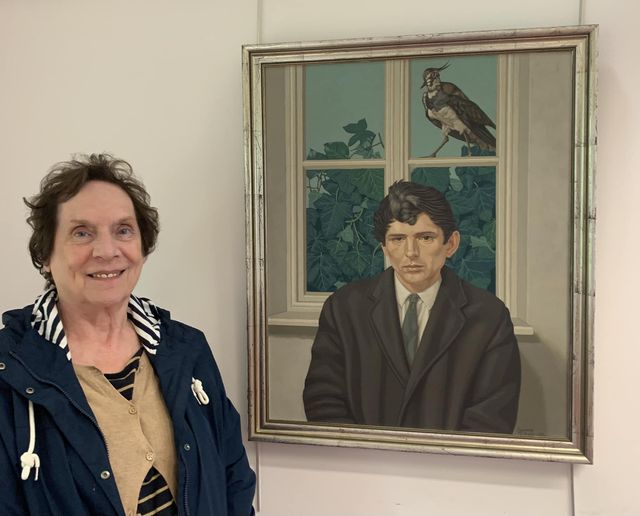






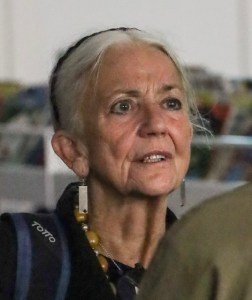


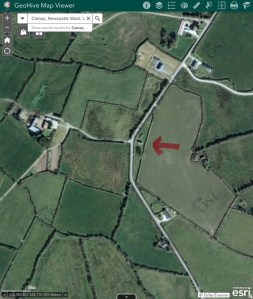
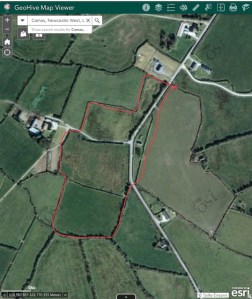


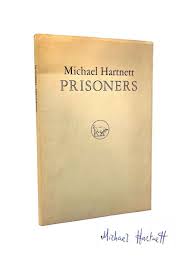


 Reviews Rants and Rambles
You must be logged in to post a comment.