A pensive Hartnett ‘among (his) nameless weeds’. Photographer unknown.
As I have mentioned already in another post here, the decade from 1975 to 1985 in Glendarragh, Templeglantine, was arguably the most productive of Hartnett’s career. Indeed, the output from that little cottage in the shade of ‘Tom White’s green hill’ in Glendarragh was prodigious. The first poems to be published were his collection A Farewell to English, which was published in 1975, and thus began his long-lasting association with Peter Fallon and The Gallery Press. The same year saw the publication of The Retreat of Ita Cagney / Cúlú Íde. Adharca Broic was published in 1978, followed by An Phurgóid in 1983, Do Nuala: Foighne Crainn in 1984 and his fourth collection in Irish, An Lia Nocht, appeared in 1985. During this period, he also undertook the translation of Daibhí Ó Brudair’s poems, which were published in 1985. Many of his better Glendarragh poems are contained in the 1987 collection, A Necklace of Wrens. This collection, following his return to Dublin, contains all poems in Irish with their English translation that Hartnett wanted preserved for posterity, and it was edited by Peter Fallon.
During this decade, 1975 to 1985, in parallel to this ‘serious’ output, he was writing and entertaining the locals with ballads, some serious or semi-serious like ‘A Ballad on the State of the Nation’, which was distributed as a one-page pamphlet like the ballads of old and even included original linocuttings by local artist Cliodhna Cussen. Other ballads were more contentious and even semi-libellous (or fully slanderous!), such as ‘The Balad (sic) of Salad Sunday’ and ‘The Duck Lovers Dance’. These latter creations were written under the very appropriate nom de plume, ‘The Wasp’! His most memorable local work was, of course, ‘Maiden Street Ballad’, a poem he composed for his father as a Christmas present in 1980.
These three intimate family poems were written in Glendarragh, Templeglantine and first appeared in his collection, Adharca Broic, in 1978. Two of the poems are written for his children: Lara, who was born in 1968 and Niall, who was born in 1971. These two poems with English translations also appear in his 1987 collection A Necklace of Wrens. The third poem, Dán do Rosemary, was not included in this collection, and the reason for its exclusion is obvious. As early as 1978, the tensions and stresses which eventually led to their separation in 1985 were beginning to show. They were both navigating the inevitable separation, which eventually led to his departure for Dublin and Inchicore that year. His gift for love poetry is again in evidence, as it had been back in 1968 with the publication of Anatomy of a Cliché. Unfortunately, the clock had come full circle, and his final poem to Rosemary is one of abject apology and regret and wistful hopes for their post-separation lives.
The poem reads as a sad indictment of the way artists were treated in this country in the 70s and 80s. They lead a ‘miserable life’, ‘for our lack of money / scrimping and scraping’. He apologises profusely and admits that their marriage is ‘pitiless, loveless’, which has affected ‘your soft fragile (English) heart’. Their small rural cottage is ‘run-down’, with ‘walls of clay, tear-stained’, ‘the place is falling apart’. He takes full responsibility for their sorry plight and admits that he is ‘blundering, tactless, clueless’. I have said elsewhere that at this time, Newcastle West was booming during the construction phase of the Aughenish Alumina Plant near Askeaton in County Limerick. Newcastle’s twenty-six pubs were doing a roaring trade, and he apologises to his wife because he is ‘always acting the yob in the pub’. If anything, this poem in the original Irish is far more confessional and personal than most of his poetry up to this time.
The poem concludes on a far more positive and hopeful note. He tells Rosemary that he has ‘abandoned English, but I never turned my back on you’. This is a time for reappraisal, and he hopes to ‘relearn my craft from fresh woodland’ – he was living at the time in a townland called Glendarragh – the glen of the oak. He ends on a hopeful note: he hopes that the future will bring Rosemary happiness and that her ‘worth will be appreciated’. The final line is so sad and poignant – he hopes that ‘we both reach our America’. The sadness of this final line arises from the fact that some seven years later, they both parted and went their separate ways.
Cliodhna Cussen, a fellow native of Newcastle West, has an interesting point to make about this poem:
‘Nuair a dhirigh Michéal ar an nGaeilge níor cuireadh aon rófháilte roimhe. Bhí ceisteanna á n-ardú i dtaobh chaighdeán a chuid Gaeilge, ceisteanna a árdaíodh i dtaobh an Riordánaigh 30 bliain níos túisce. Ach léiríonn Michéal a anam, a chuspóir, agus a ghrá sa tseoid sin de dhán, ‘Dán do Rosemary’, ina bhfuil a chumas agus a chroí nochtaithe aige’.
When Michael began writing in Irish, he didn’t receive great encouragement from Gaelgóirí. There were questions about the standard of his Irish, just as there had been about Sean Ó Riordán some thirty years earlier. But in this gem of a poem, ‘Poem for Rosemary’, Hartnett reveals his soul, his motive, his love – indeed, his supreme craft and heart are laid bare.’ (My own translation).
His poem for his son Niall, Dán do Niall, 7 (‘Poem for Niall, 7’), again shows his honesty and courage, although it does tend to descend into cliché at times. Like King Canute and his futile attempts to hold back the tide, he wishes that his son wouldn’t have to leave this safe place in ‘Bird Nest country’, their home in Glendarragh. He tries to warn his son about the many dangers that exist in the outside world and does so by making reference to nature. This advice is somewhat reminiscent of the advice spoken by Polonius to his son Laertes in Shakespeare’s Hamlet: ‘This above all: to thine own self be true, And it must follow, as the night the day, Thou canst not then be false to any man’. This suggests that integrity begins with honesty to oneself, and Hartnett gives us a modern take on this when he advises, ‘Be happy but be tough. ’
There is great poignancy in the final stanza when he states that he will be there for his son ‘in spite of death’. Niall was 28 when his father died in 1999 at the age of 58, and the second line of this stanza adorns the poet’s headstone in Calvary Cemetery in Newcastle West: ‘mar labhraíonn dúch is labhraíonn pár’, ‘for ink speaks and paper speaks’. The poet is saying that he will be present and live on in his body of work even after his death. The reality is that he wasn’t there for many of the landmark celebrations in his son’s life, his graduations, his wedding, the birth of his grandchildren and so the promise he makes, ‘and some day I’ll buy you porter!’ sounds very hollow indeed to a young man who must now take on the onerous mantle of preserving and promoting his father’s rich and varied legacy at such a young age.
Hartnett’s grave in Calvary Cemetery, Churchtown, Newcastle West. The inscription reads: ‘Beadsa ann d’anneoin an bháis, mar labhraíonn dúch is labhraíonn pár’, (‘I will be there in spite of death, for ink speaks and paper speaks.’
His Dán do Lara, 10, (‘Poem for Lara, 10’), is a masterpiece. The sunshine and nature in this poem are at odds with the penury and hardship of the poet’s existence in 1978, nestling below ‘Tom White’s green hill’ in Glendarragh, Templeglantine. Flame-haired Lara is compared to a rowan tree in autumn, her voice disturbing the larks, ‘in the green grass’. She is surrounded by nature in all its glory, ‘a crowd of daisies playing with you, a crowd of rabbits dancing with you’. The blackbird and the goldfinch are there for her amusement and playtime. Then the master of metaphor compares his daughter: ‘You are perfume, you are honey, a wild strawberry.’ The poem ends with the poet’s wish for his young daughter:
Little queen of the land of books
may you be always thus
may you ever be free
from sorrow-chains.
Interestingly, the poet compares his daughter to a queen in ‘the land of books’; this seems to set the seal on Lara’s perfection. Obviously, a poet would value literature and reading, and his choice of this image is significant as it tells us that Lara has another, deeper side to her – she is not just interested in the outdoors and a lover of nature.
His final wish for Lara is that she will grow up to be as beautiful and graceful as her mother, Rosemary. He hopes that she will inherit her mother’s beautiful soul as well as ‘the beauty of her face.’
It is fitting that these three poems, written in that little rural cottage in Glendarragh, feature family and the travails of being a husband and a parent. I have examined many of his papers in the National Library of Ireland on Kildare Street, and it is undeniable that hand-in-hand with arranging his poems and latest projects, there is ample evidence of the presence of young people, Lara and Niall, in the many doodles and scribbles on the margins of those frayed notebooks.
Doodles with Dad – the joys of being a poet with young children!
Note: This poem, along with Dán do Niall, 7, and Dán do Rosemary, Lara’s mother, first appeared in Michael Hartnett’s first collection in Irish, Adharca Broic, in 1978. The poem, along with Dán do Niall, 7, later appeared in A Necklace of Wrens in 1987, with both poems given an English translation by the poet himself. Both collections, Adharca Broic and A Necklace of Wrens (edited by Peter Fallon), were published by The Gallery Press.
Note: This poem to his son, Niall, first appeared in Michael Hartnett’s first collection in Irish, Adharca Broic, which was published in 1978 by Peter Fallon’s Gallery Press. It was published again in the 1987 collection, A Necklace of Wrens, this time with an English translation.
Note: This poem is taken from Michael Hartnett’s first collection in Irish, Adharca Broic, which was published in 1978 by Peter Fallon’s Gallery Press.
An unknown Spailpín Fánach circa 1858. A colourised image by Matt Loughrey from a black and white photograph originally collected by Sean Sexton.
The Last Vision of Eoghan Rua Ó Súilleabháin
The cow of morning spurted Do thál bó na maidine
milk-mist on each glen ceo bainne ar gach gleann
and the noise of feet came is tháinig glór cos anall
from the hills’ white sides ó shleasa bána na mbeann.
I saw like phantoms Chonaic mé, mar scáileanna,
my fellow-workers mo spailpíní fánacha,
and instead of spades and shovels is in ionad sleán nó rámhainn acu
they had roses on their shoulders. bhí rós ar ghualainn chách.
Translated by Michael Hartnett from his original Irish poem.
Commentary
This gem of a poem was first published as part of Hartnett’s first collection in Irish, Adharca Broic, in 1978. The poem also appears in Hartnett’s 1987 collection, A Necklace of Wrens, with an English translation by the poet himself. Of the twenty-three poems in A Necklace of Wrens, thirteen are included from that first collection in Irish, Adharca Broic, with English translations by the poet. Peter Fallon, his publisher and editor, has stated that the poems included in A Necklace of Wrens were the only Irish poems that Hartnett wanted to be preserved after his ten-year sojourn in West Limerick. This collection was followed a year later by Poems to Younger Women, entirely in English. Theo Dorgan tells us that both these collections show ‘a startling return to the power and complexity we might have expected had the poet not turned aside from English in 1975’.
‘The Last Vision of Eoghan Rua Ó Súilleabháin’ offers a modern perspective on the traditional Aisling (vision) poem genre. The poem blends traditional imagery with contemporary twentieth-century realism, transforming the spectral ‘fellow-workers’, the ‘spailpíní fánacha’ of the original, into figures with ‘roses on their shoulders’ instead of spades, suggesting a hopeful, transformed vision of labour and society, rather than the lament for lost Gaelic order typical of historical Aisling poems.
Here, the focus shifts from the old political lament of older Aisling poems to a more modern, grounded, hopeful vision, using the image of the rose, the international symbol of the Labour Movement, of which Hartnett was a card-carrying member. While the original poems lamented historical events like the Flight of the Earls and the hoped-for return of Bonny Prince Charlie and the Stuarts to power, Hartnett’s poem shifts the focus to a contemporary sense of disillusionment and emotional turmoil. Hartnett does use the image of a new day dawning to reinforce the hopeful possibility of better days ahead, however, while Hartnett’s translation adapts the ancient Aisling form in a contemporary context, in my view, this Aisling is heavily laden with irony, if not cynicism, because of Labour’s perceived inability to improve the lot of the working class and its failure to gain long-term popular mainstream support, particularly in the post-World War II era.
The title and the poem itself reference the Aisling genre, a poetic form that developed in Gaelic poetry in the 17th and 18th centuries. Readers familiar with Irish poetry will also be aware that in these old Aisling poems, Ireland was often depicted as a woman: sometimes young and beautiful, sometimes old and haggard. In the final poem in his first collection in Irish, Adharca Broic, Hartnett reprints his iconic poem, Cúlú Íde, in which he portrays Íde (Ita Cagney in the English version) as a strong, formidable woman, and he endows her with many of the traditional characteristics of the spéirbhéan (the spirit woman) from the original Aisling poems. She is depicted as a modern Bean Dubh an Ghleanna, Gráinne Mhaol, Roisín Dubh or Caithleen Ní Houlihan – in effect, a symbolic representation of the new Ireland.
This modern Aisling, ‘The Last Vision of Eoghan Rua Ó Súilleabháin’ also features striking imagery, such as the ‘cow of morning’ that ‘spurted milk-mist on each glen’. The image of the cow, the Droimeann Donn Dílis, was also a stock reference to represent Ireland in Jacobite poetry and the hoped-for return of the Stuart dynasty, which, many at the time believed, would benefit Ireland. This initial image creates a surreal and elemental atmosphere, setting a new tone for the vision. The crucial shift occurs when these workers have ‘roses on their shoulders’ instead of ‘spades and shovels,’ symbolising a transformed, idealised vision of labour, where it is no longer depicted as hardship or indentured slavery but as something beautiful and dignified.
The rose, particularly the red rose, later became a symbol for the Labour Movement through the slogan ‘bread and roses,’ which represents the dual desire for both the means to live (bread) and a life of dignity and fulfilment (roses). This symbol is associated with the fight for social and economic justice and is used by many social democratic and labour parties, such as the Labour Party in Ireland and the UK.
The ‘phantoms’ seen by the speaker are described as ‘fellow-workers’, ‘comrades’ even, transforming traditional imagery of spectral figures into more tangible, relatable characters associated with Labour. The older, traditional variety are the sad spectral figures that accost Hartnett one summer’s evening as he heads from his home in Newcastle West to meet his uncle Dinny Halpin in Camas. The episode is recounted for us in the second section of his iconic poem, ‘A Farewell to English’,
These old men walked on the summer road
sugán belts and long black coats
with big ashplants and half-sacks
of rags and bacon on their backs.
These spectral figures were a pathetic vision, ‘hungry, snotnosed, half-drunk’. These ragged poets, Andrias Mac Craith, also known as An Mangaire Súgach, The Merry Peddlar, (along with his contemporary, Sean Ó Tuama an Ghrinn, who also hailed from Croom, the seat of one of the last ‘courts’ of Gaelic poetry), Aodhagán Ó Rathaille from Meentogues near Rathmore in the Sliabh Luachra area (also the birthplace of Eoghan Rua Ó Súilleabháin), and Dáithí Ó Bruadair, who was on his way from Springfield Castle, the seat of the Fitzgeralds, to Cahirmoyle, the seat of his other great patron, John Bourke), represented the sad remnants of a glorious past.
The ‘phantom’ figures leave Hartnett resting ‘on a gentle bench of grass’, leaving him to ponder his own future as their direct descendant:
They looked back once,
black moons of misery
sickling their eye-sockets,
a thousand years of history
in their pockets.
Eoghan Rua Ó Súilleabháin, the putative author of this Aisling and a real-life spailpín in his own right, lived a life which was the stuff of legend and lore, and, indeed, it has many similarities with Hartnett’s own rakish life. Many of the stories surrounding him may very well be apocryphal, to say the least. However, he and his fellow parishioner, Aodhagán Ó Rathaille, are most famous for their mastery of the Aisling genre.
Eoghan Rua was born in 1748 in Meentogues, in the mountainous Sliabh Luachra area, in southwestern Ireland. By the time of his birth, most of the native Irish in the southwest had been reduced to landless poverty. However, the area boasted of having one of the last ‘classical schools’ of Irish poetry, descended from the ancient, rigorous schools that had trained bards and poets for generations. In these last few remnants of the bardic schools, Irish poets competed for attention and rewards, and learned music, English, Latin and Greek.
Eoghan Rua (the Rua refers to his red hair) was witty and charming but had the misfortune to live at a time when an Irish Catholic had no professional future in his own country because of the anti-CatholicPenal Laws. He also had a reckless character and threw away the few opportunities he was given. For example, at the age of eighteen, he opened his own school; however, we are told that ‘an incident occurred, nothing to his credit, which led to the break-up of his establishment.’
Eoghan Rua then became a spailpín, an itinerant farm worker, until he was 31 years old. He was then conscripted into the British Navy under interesting circumstances. Ó Súilleabháin was then working for the Nagles, a wealthy Anglo-Irish family. They were Catholic and Irish-speaking, and had their seat in Kilavullen along the Blackwater valley near Fermoy, County Cork. (The Nagles were themselves an unusual family. The mother of the Anglo-Irish politician Edmund Burke was one of the Nagles, as was Nano Nagle, the founder of the charitable Presentation order of nuns. She was declared venerable in the Catholic Church on 31 October 2013 by Pope Francis).
Daniel Corkery relates that, ‘I have had it told to myself that one day in their farmyard Eoghan Rua heard a woman, another farm-hand, complain that she had need to write a letter to the master of the house, and had failed to find anyone able to do so. ‘I can do that for you’, Eoghan said, and though doubtful, she consented that he should. Pen and paper were brought to him, and he sat down and wrote the letter in four languages: in Greek, in Latin, in English, and in Irish. ‘Who wrote this letter?’ the master asked the woman in astonishment. The red-headed young labourer was brought before him, questioned, and thereupon set to teach the children of the house. However, again owing to Eoghan Rua’s bad behaviour, he had to flee the house, the master pursuing him with a gun’. Legend says he was forced to flee when he got a woman pregnant: some say that it was Mrs Nagle herself!
Ó Súilleabháin escaped to the British Army barracks in Fermoy, and he soon found himself aboard a Royal Navy ship in the West Indies, ‘one of those thousands of barbarously mistreated seamen’. He sailed under Admiral Sir George Rodney and took part in the famous 1782 sea Battle of the Saintes against French Admiral Comte de Grasse. The British won, and to ingratiate himself with the Admiral, Ó Súilleabháin wrote an English-language poem, Rodney’s Glory, lauding the Admiral’s prowess in battle and presented it to him. Ó Súilleabháin asked to be set free from service, but this request was denied him.
Much of Eoghan Rua’s life is unknown and clouded in mystery and intrigue. He returned after his wartime exploits to his native Sliabh Luachra and opened a school again. Soon afterwards, at 35, he died from a fever that set in after he was struck by a pair of fire tongs in an alehouse quarrel by the servant of a local Anglo-Irish family. ‘The story of how, after the fracas in Knocknagree in which he was killed, a young woman lay down with him and tempted him to make sure he was really dead, was passed on with relish’.
There is some confusion as to where he is buried. Some claim he was buried in midsummer 1784, in Nohoval Daly graveyard (or Nohoval Lower Graveyard), which is located on the Cork side of the River Blackwater on the R582 Knocknagree to Rathmore road. Others claim that he was buried in the cemetery of Muckross Abbey, Killarney, along with two other great Kerry poets, Séafradh Ua Donnchadha, who died in 1677, and Aodhagán Ó Rathaille, who died in 1728. There is a plaque on the wall of Muckross Abbey today that commemorates this event. The plaque also pays tribute to another great Kerry poet, Piaras Feiritéar, who was hanged ‘thall i gCill Áirne’, ‘over in Killarney’, in 1653. The plaque also has an inscription which is attributed to an tAthair Pádraig Ó Duinnín, the great lexicographer, most famous for compiling the Foclóir Gaeilge–Béarla (Irish-English Dictionary), first published in 1904. He, too, was from Meentogues, the birthplace of both Ó Suilleabhán and Ó Rathaille.
The plaque on the wall of Muckross Abbey in Killarney claims that Eoghan Rua is buried in the Abbey cemetery, along with Aodhagán Ó Rathaille and Séafradh Ua Donnchadha.
It was said of Eoghan Rua that,
Perhaps there never was a poet so entirely popular– never one of whom it could be more justly said volitar vivus per ora virum [He soars, alive in the mouths of the people]. His songs were sung everywhere…. Munster was spellbound for generations…. The present generation, to whom the Irish language is not vernacular, in reading these poems should bear in mind that they were all intended to be sung, and to airs then perfectly understood by the people, and that no adequate idea can be informed of their power over the Irish mind, unless they are heard sung by an Irish-speaking singer to whom they are familiar.
There is much to admire in this short poem. Indeed, I feel I am but scratching the surface. However, short and concise as it is, I feel it has relevance to a modern audience eager to bridge the gap to a harrowing era in Irish literary history. Indeed, the poem’s tone is one of elegy, lament, and perhaps a quiet resignation to loss, reflecting the disorienting experience of a changing world.
In his wide-ranging essay, which gives an overview of Hartnett’s work, ‘A Singular Life: The Poet Michael Hartnett’, Theo Dorgan points out that although he never translated the totem figures, Mac Craith and Ó Tuama,
‘he could and did think of himself as the favoured inheritor of a tradition, and also as one obliged to be loyal to that tradition. This sense of obligation would become the sign and signature of his work’.
That life’s work in both languages serves as a bridge between Ireland’s rich poetic past and its modern present. His poetry and translations from the Irish have given him firsthand knowledge of traditional Irish forms, such as the Aisling, and he uses these in very innovative ways in his contemporary poetry. By taking a traditional form such as the Aisling and imbuing it with modern themes, Hartnett allows a new generation to connect with a classical poetic tradition while grappling with the emotional and political undercurrents of their own time.
The startling achievement of this short eight-line poem is that Hartnett manages to crystallise all the tropes and traditions of the Aisling genre while at the same time staying relevant to a modern audience. This Aisling alone proves that he is a worthy successor to the ‘phantoms’, those spectral figures who confronted him at Doody’s Cross, ‘a thousand years of history in their pockets’.
References
Dorgan, Theo. ‘A Singular Life: The Poet Michael Hartnett’, from The Poets and Poetry of Munster: One Hundred Years of Poetry from South Western Ireland, ed. Clíona Ní Ríordáin and Stephanie Schwerter (December 2022/January 2023).
Éigse stalwart, Vicki Nash, pictured next to the 1971 portrait of Michael Hartnett by artist Edward McGuire, which was on display for the opening ceremony of Éigse 2022.
In academic circles, when poetic legacies, such as that of Michael Hartnett, are thrashed out and explored, there is always, of necessity, a legacy BUT. BUT… he passed away in mid-sentence; his potential was unfulfilled, etc., etc. We leave such debates to the continuing academic interest in Hartnett, but for those of us who love Michael Hartnett, the debate has already been won. His core work, what we see in his numerous collections, his brilliant work as a translator, and his lyrical evocation of a Maiden Street upbringing (‘we were such golden children never to be dust’) and his other mischievous local interventions, are timeless and will stand the test of time – no ifs, ands or buts.
For those of us who are true believers, Michael Hartnett’s legacy as one of the central figures in modern Irish poetry is guaranteed. The Éigse Michael Hartnett festival, held annually throughout the town in schools, the library, the Red Door Gallery, the Desmond Complex, St. Ita’s Hospital, the Longcourt House Hotel, and in the ever-dwindling number of local pubs, celebrates that legacy each year. The festival’s wide-ranging and diverse programme creates an atmosphere of warmth and conviviality, perfect for lively gatherings, easy conversation, and spirited debate.
While his memory still lingers among us, however, the pace of change is relentless. The Newcastle West he wrote so roguishly about has faded into the past, living on only in memory and in his verse. Many of the central characters in these sagas, such as Tony Sheehan, Peg Devine, Tony Roche, Jimmy Deere, John Bourke, Billy the Barber, Pat Whelan, Ned O’Dwyer or Ned Lynch, are no longer readily remembered by the young people of the town. Each year, however, they are recalled, remembered and celebrated in Éigse Michael Hartnett.
The Michael Hartnett Poetry Award is now worth a whopping €8,000, and the list of winners over the past twenty-five years is impressive. Many of those poets have gone on to achieve national prominence. And, in the intervening years since the unveiling of that statue by fellow poet Paul Durcan on April 16th, 2011, Durcan’s hope that the statue would become a meeting place, a rendezvous, for parents and children, for schoolchildren, friends, and lovers has come to be a reality.
Michael Hartnett deserves all these efforts to keep his legacy alive – and, some would argue, the time has come for a more permanent centre to attract tourists and scholars to the town. The Éigse organisers welcome recent efforts to establish a permanent Arts and Cultural Centre in Newcastle West. This town needs to be a centre for the continued study of the poet’s work and a recognised repository for his papers and other materials before they are lost forever. It has been done successfully in Bellaghy and Inniskeen, so why not in Newcastle West?
Hartnett’s eclectic legacy is assured: his poetry in Irish and in English; his translations of modern Irish poets and of Ó’Bruadair, Haicéid and Ó Rathaille; his ‘local’ poems in Newcastle West and Inchicore; his engagement with the thorny issue of Irish nationalism and language at a time in the 70s during great political unrest without introducing any of the usual tribal undertones, will always be respected and applauded.
In recent times, we salute those who ensured that Hartnett’s iconic portrait by artist Edward McGuire was purchased by Limerick City and County Council on behalf of Limerick City Gallery of Art. Like Hartnett himself, the portrait returns after a lengthy exile and will now forever be available to view locally. However, in our continuing efforts to further Hartnett’s legacy, we can and must do more.
The decade from 1975 to 1985 in Glendarragh, Templeglantine, was arguably the most productive of his career. Adharca Broic was published in 1978, followed by An Phurgóid in 1983, Do Nuala: Foighne Crainn in 1984 and his fourth collection in Irish, An Lia Nocht, appeared in 1985. During this period, he also undertook the translation of Daibhi Ó Brudair’s poems, which were published in 1985. In parallel to this ‘serious’ output, he was writing and entertaining the locals with ballads, some serious or semi-serious like ‘A Ballad on the State of the Nation’, which was distributed as a one-page pamphlet like the ballads of old and even included original linocuttings by local artist Cliodhna Cussen. Other ballads were more contentious and even semi-libellous (or fully slanderous!), such as ‘The Balad (sic) of Salad Sunday’ and ‘The Duck Lovers Dance’. These latter creations were written under the very appropriate nom de plume, ‘The Wasp’!
It has to be remembered that at this time, Newcastle West and its West Limerick hinterland were booming. The Alcan plant in Aughinish Island near Askeaton was under construction and every man, woman and child was working there. Added to this, every spare room was occupied as up to 4,000 workers from all over Ireland were involved in the construction phase of the project. The idyll of coming back home to a quiet rural backwater conducive to creativity in West Limerick was shattered by this unexpected and localised economic progress. Ironically, while Michael was enjoying the Klondike atmosphere in the hostelries of Newcastle West, his wife Rosemary was working as the Personal Assistant to the Managing Director of the newly commissioned Alcan Aluminium site.
This surely goes to the heart of the tragedy of what was Michael Hartnett’s life as a poet. The literary and academic world tried in vain to accommodate him, although this help and recognition may have come too late to save him from the clutches of alcoholism. While the annual Éigse sets out to maintain his rich legacy and celebrate his genius, it does tend to sugar-coat his reputation and often the big elephant in the room is ignored. This must be a continuing source of frustration to his wife, Rosemary, his children and his surviving family members in and around Newcastle West.
The sad reality for Michael and his family was that he did not avail himself fully of the many opportunities that were offered to him in the 1970s and later. Rosemary bemoans the fact that while his contemporaries, such as Montague, Durcan, Kennelly and Heaney all wrote poetry, they also managed to earn a salary, whereas her husband ‘spurned all opportunities to do anything except write poetry and drink!’
He was the first recipient of a bursary from the Irish American Cultural Institute in 1974, which allowed him and his wife, Rosemary, to put a deposit on a cottage in the townland of Glendarragh, Templeglantine. In that same year, he was awarded both the Irish American Literature Award and the Arts Council Award. Following his return to West Limerick, he was employed for a brief time as a lecturer in Creative Writing at Thomond College of Physical Education (now the University of Limerick), but his tenure there was patchy and temporary.
Thus, at age 34, one would presume that Michael was free to pursue his calling as a poet and enjoy the countryside ‘out foreign in ‘Glantine’. A good fairy, his wife Rosemary, paid the mortgage and all the bills and dealt with bureaucratic matters. She did it willingly because she believed in him and loved him and because she did not want her children to starve.
Sadly, it seems that his obsession with poetry and drink left very little room for any other relationships to thrive and survive, and this included his marriage to Rosemary. The acclaimed documentary by Pat Collins, A Necklace of Wrens (1999), ends with a very poignant, philosophical reverie as to whether Hartnett saw poetry as a gift or a curse:
It’s very difficult to describe where poetry comes from. It certainly was given to me, but so were my brown eyes and my big ears. They are just part of what I am, to coin a phrase. I believe it’s a gift, certainly, and I’m lucky to have it. But also it’s a curse, so I’m in two moods about it really. I could say I did it all myself, which would be a total lie because there’s an entire three or four thousand years of tradition behind me in many languages. But whether it was given or not, I can’t answer that question. It just turned up and I turned up to meet it and we met at the crossroads and got married and we’re still married.
Michael Hartnett had a great predilection for romantic yarns. If they weren’t true, he was amused by the way they were taken up, including by the media and even sometimes by academics. Most of these myths, created by Hartnett to suit his own nefarious purposes, are trotted out again and again. One example of what passes for analysis:
At the age of three, Hartnett was sent to live with his grandmother, Bridget Halpin, who lived in Camas, a townland in the parish of Templeglantine, west of Newcastle West. He was educated in the local primary school, and then in the well-known and enlightened St. Ita’s secondary school in Tarbert, Co. Kerry, run by the redoubtable Jane Agnes McKenna, a school that would later boast both Gabriel Fitzmaurice and Brendan Kennelly as alumni (McDonagh, Newman 15).
Hartnett, himself a master of misinformation and disinformation, would have been very impressed with the inventive mythmaking in this piece. For the record, Brigid Halpin’s cottage in Camas is situated about a mile from the village of Raheenagh in the parish of Kileedy. While it is true that he spent some time with his grandmother before beginning school and frequently thereafter for short stays at weekends and during school holidays, he attended Primary School in Newcastle West, first in Scoil Iosef and later in the long-established Courtenay Boys’ School. He then attended the very well-known and enlightened St. Ita’s Secondary School in Newcastle West, which was run by Jim Breen and where his English teacher was Billy O’Donnell.
Many of the myths surrounding Hartnett relate to Brigid Halpin, his grandmother. The reality is that she was not a native Irish speaker; he was not ‘fostered out’ to her for long periods in his childhood, and he did not learn Irish in her lowly cottage in Camas. Neither was she born in 1870, as he suggests in the famous Pat Collins documentary. We know from Census records that she was a mere 80 years of age when she died alone in St. Ita’s Hospital, Newcastle West, in 1965. These inaccuracies continue to appear in much of what passes for scholarly research and analysis since he passed away in 1999, and, as I pointed out earlier, some of the biggest culprits are local.
Despite this, Hartnett’s legacy is assured but demands continued and vigorous investigation. While Declan Kiberd lavishes praise on Hartnett for being ‘the greatest translator of Irish-language poetry in the second half of the twentieth century’, he also bemoans the fact that ‘he is also his country’s most underrated poet (Kiberd, 381). From the lofty heights where Heaney declares that Hartnett is the ‘authentic heir to the poets of the Maigue’ to those in the many hostelries he visited who dismissed him as an annoyance, there is the growing realisation of the truth in his son Niall’s observation that, ‘My father was many men to many people’ (McDonagh and Newman, 7). Seamus Heaney remembers the frisson of electric energy which followed a Hartnett book launch – he says it was akin to a ‘power surge’ in the national grid. He continues:
Yet despite that, his achievement was under-noticed. Slight of build and disinclined to flaunt himself on the literary scene, he was always more focused on his creative journey than on career moves. Edward McGuire’s portrait catches this singular intensity, but the response to his writings has been less definitive.’
Hartnett’s son, Niall, in an article in the Sunday Independent, on September 30th, 2024, spells out the current reality:
“His legacy as a poet is hard to gauge. His legacy is still spreading in Ireland, especially through the school system, although slowing in my opinion. But progress internationally is at a snail’s pace, sadly. My hope is that the school-goers of today in Ireland will be the next to carry his torch in the future to a wider audience.”
And as we celebrate the twenty-fifth anniversary of Hartnett’s passing, we can see that time moves on and new poets emerge and are celebrated each year at Éigse Michael Hartnett in Newcastle West, and in Listowel and Dromineer and many other far-flung Literary Festivals whose aim is to foster and nurture and give a platform to the young, vibrant successors of Hartnett.
Twenty-five years on, the judgement of John McDonagh and Stephen Newman made shortly after his passing still holds true:
His body of work is a testament to his lifelong struggle with complacency and a desire to write with honesty and integrity that marks him out as one of the most overlooked yet influential Irish poets of the twentieth century (McDonagh, Newman, 24).
Prophets are never recognised in their own countries. Until, that is, they make themselves irremovable landmarks on our landscapes and streetscapes. The once-banished artist returns as a statue in our most cherished Square, an Éigse Literary and Arts Festival to honour him in perpetuity. Hartnett deserves all these accolades. He was at times painfully honest, very acerbic at other times, but always truthful until it hurt. Emerson had him in mind when, in his famous definition of friendship, he states, ‘Better be a nettle in the side of your friend than his echo’, and he concludes with the admonition: ‘Let him be to thee forever a sort of beautiful enemy, untameable and devoutly revered’.
References:
Collins, Pat. Film documentary A Necklace of Wrens (1999).
Hartnett, Rosemary, in correspondence with the author.
Kiberd, Declan. The Double Vision of Michael Hartnett in After Ireland: Writing the nation from Beckett to the present, Head of Zeus UK, 2017.
McDonagh, J., Newman, S. (eds). Remembering Michael Hartnett, Four Courts Press Ltd., Dublin, 2006.
Michael Hartnett, his wife Rosemary and daughter Lara.
This photograph was taken near Old Barna Railway Bridge by Dermot Lynch, Limerick Leader.
The Retreat of Ita Cagney / Cúlú Íde was first published in 1975 by the Goldsmith Press, shortly after Michael Hartnett’s pronouncement from the stage of the Peacock Theatre in Dublin that he would henceforth write only in Irish. Appropriately, the publication contains an Irish version and an English version of the poem, as perhaps befitted the poet’s conflicted state. The Irish version, Cúlú Íde, was published again as the final poem in his first full collection in Irish, Adharca Broic, in 1978 and again, in both Irish and English, in his 1987 collection, A Necklace of Wrens. In effect, this poem serves as a Rubicon: the last English poem he would publish, for the time being at least, and the first of his Irish poems. The poet is in transition and is now back in West Limerick and in this poem, he explores deep and ancient resentments and wrongs. Allan Gregory says that the poem, in its bilingual format, ‘expresses to the reader themes of social and historical oppression, sex, pregnancy and birth, protection, exposure and secrecy, and is the finest poem in this period of Hartnett’s writing’ (McDonagh/Newman 145).
Hartnett has documented the ‘schizophrenia’ associated with this new poetic direction and he has said that this poem, in particular, caused him great distress:
‘The Retreat of Ita Cagney, for example, almost broke my heart and indeed my mind to write, because both languages became so intermeshed. I would sit down and write a few lines of the poem unthinkingly. I’d come back to it and see that it was half in English and half in Irish or a mixture. … One is not a translation of the other. They are two versions of the same poem, but what the original language is I don’t know’ (O’Driscoll 146).
Whatever the mental turmoil generated by the artistic struggles of the poet, the resulting poem is one of Hartnett’s most powerful from this period of his career. In his review of the poem following publication, fellow Munster poet, Brendan Kennelly, says it was,
‘a probing, dramatic exploration of a woman’s loneliness and isolation in a callous and hostile society. This, to my mind, is Hartnett’s finest achievement to date: he pays a relentless imaginative attention to this woman’s fate, and he presents with admirable dramatic balance her loneliness, independence and state of severed happiness. In this condition, Ita Cagney becomes a visionary critic of the society that hounds and isolates her’ (Poetry Ireland Review, Issue 15, p. 26).
The Retreat of Ita Cagney is a pained celebration of a woman’s enforced isolation due to her refusal to conform to the demands of her society. We can surmise that in delving into Ita Cagney’s situation, the poet finds common cause with another rural outcast in light of his own recent ‘retreat’ to Glendarragh to dwell ‘in the shade of Tom White’s green hill / in exile out foreign in ‘Glantine’ (A Book of Strays 41). This lonely cottage in Glendarragh was, for the next ten years, to serve as basecamp for what Declan Kiberd describes as ‘retracing his way to the common source’ (McDonagh/ Newman 37). However, far from being a ‘retreat’ to obscurity, as some of his critics predicted, his return to West Limerick precipitated what was arguably the most productive period of his career. Adharca Broic was published in 1978, followed by An Phurgóid in 1983, Do Nuala: Foighne Crainn in 1984 and his fourth collection in Irish, An Lia Nocht, appeared in 1985. During this period, he also undertook the translation of Daibhi Ó Brudair’s poems, which were published in 1985.
The publication of this dual language version of The Retreat of Ita Cagney / Cúlú Íde in 1975 was a bold step by Hartnett. For added effect, the Irish version was printed in the Old Gaelic script (An Cló Gaelach), which was by then obsolete and no longer being used in schools, as it had been up to the 1960s. This probably also had the effect of further isolating the poet and limiting his audience. However, as he told Elgy Gillespie in an interview in March 1975: ‘Listen, it’s impossible to limit my audience, it’s so small already’ (Gillespie 10). However, academic John Jordon wrote a positive review of Cúlú Íde, suggesting that it was ‘a small-town mini-epic, so redolent of Hardy’ (Jordon 7). Cúlú Íde was again published as part of Hartnett’s first collection in Irish, Adharca Broic, in 1978. This time, he chose Peter Fallon’s Gallery Books, and this new publishing relationship was to last until A Book of Strays was published posthumously by the same publisher in 2002. Adharca Broic received generally positive reviews, and Allan Gregory declared that the twenty-one lyrical poems in the collection ‘oozed with the confidence of a speaker who felt that at last he was being heard’ (McDonagh/Newman 146).
In this analysis, I will focus mainly on the English version of the poem with occasional forays into the Irish version, especially where they diverge. There are some similarities between The Retreat of Ita Cagney and Farewell to English. Both poems have a sequence structure, and The Retreat of Ita Cagney is divided into nine dramatic scenes. Both poems were published in 1975. However, there is one major difference: whereas Farewell to English is a public poem with political overtones, The Retreat of Ita Cagney is an intensely private poem. Though it begins with a quintessential public event, the traditional Irish funeral, it quickly transitions to the act of retreat alluded to in its title. On the face of it, it is a ‘retreat’ from a public event to a more private life, and Hartnett teases out the societal and psychological implications that this act brings about. However, the poem itself may also be read as an act of ‘retreat’ for the poet, away from public pronouncements towards a more private poetry that would focus on his own domestic life. If critics presumed that the blunt polemic of Farewell to English would be a constant in his writing in Irish The Retreat of Ita Cagney would seem to set them straight. As with Ita, Hartnett’s ‘retreat’ was a once-off symbolic gesture and as such, there was no need to repeat the tonic; rather, the wisdom or otherwise of that choice would be borne out by the life retreated to, and of course, for Hartnett, the poems which would come from living that life to its fullest.
The English version is composed in free-verse, while the Irish version is more formal and adheres to the classical conventions of the Dánta Grá (McDonagh/Newman 144). This divergence in styles between the two languages is perhaps a direct reason for the mental turmoil he encountered during the composition of this poem – there is a constant battle raging between the more disordered English version and the more tamed and formalised Irish version.
As well as being a poet of international standing, Hartnett was also a master translator, having translated the Tao, the Gypsy Ballads of Lorca, and later the poems of Ó Haicéad and Ó Bruadair, which will forever stand the test of time. Here we find him ‘translating’ his own work, and the effort induced in him a kind of artistic schizophrenia. Declan Kiberd argues that in this way, Hartnett suffered from a kind of ‘double vision’:
Every poet senses that all official languages are already dead languages. That was why Hartnett said farewell to English while knowing that Irish was itself dead already too. As he wrote himself in ‘Death of an Irishwoman’, ‘I loved her from the day she died’. Likewise, with English – no sooner did Hartnett write it off than he felt all over again its awesome power, for it had become again truly strange to him, as all poetic languages must (McDonagh/Newman 38).
This poem, then, is an initial effort to find his voice – in two languages.
In this, his last poem in English pro tem and his first poem in Irish, the poet very dramatically tells us the story of a recent widow (the Irish version says that she has been married only a year) who leaves her home in the dead of night and goes to live in secret with another man in his West Limerick cottage and bears him a child out of wedlock much to the disapproval of the locals and the Church.
The poem is not set in any recognisable historic timeframe, but maybe there were echoes of some such local ‘scandalous’ incident in the ether when the poet made his return to West Limerick in and around 1975. However, the poem stands on its own, and there doesn’t need to have been any particular incident which inspired the poet to take on this subject matter. Hartnett’s prose writing and poetry show him to be a very insightful social commentator, and it is not hard to find echoes of Kavanagh’s The Great Hunger in this poem. Here, however, the main subject is a formidable woman, which further helps to give the lie to the accepted stereotypes of the day. Readers familiar with Irish poetry will also be aware that in the old Aisling poems, Ireland was often depicted as a woman: sometimes young and beautiful, sometimes old and haggard. In effect, Ita Cagney can be read as a modern Bean Dubh an Ghleanna, Gráinne Mhaol, Roisín Dubh or Caithleen Ní Houlihan – a symbolic representation of Ireland. Hartnett concisely captures a portrait of the society to which he had returned in the 1970s, but crucially chooses to depict Ita’s inner life and not merely as a cypher without agency, whilst also refusing to idealise rural Ireland by showing the repressive and oppressive views which pertained at that time, especially towards women.
The Retreat of Ita Cagney is a more focused portrayal of small-farm Ireland than the broader panorama offered by Patrick Kavanagh’s The Great Hunger. That said, they are very similar and both Ita Cagney and Maguire have to cope with the two conflicting forces of spirituality and sexual mores in the world of their time. Maguire’s idea of sex is deformed, largely due to Church teaching and a repressive society in the Ireland of the 1930s and 40s. In contrast, Ita Cagney’s sexuality liberates her and The Retreat of Ita Cagney is a more recent reminder to all and a typical Hartnett barbed rebuff to De Valera’s notorious St. Patrick’s Day broadcast of 1943 in which he fantasised about a rural Ireland ‘joyous with sounds of industry, the romping of sturdy children, the contests of athletic youths, the laughter of comely maidens; whose firesides would be the forums of the wisdom of serene old age’ (Moynihan 466-9). Whereas Maguire is beaten down and is forced to live within the strictures imposed by the Catholic Church and the 1937 Constitution, in a sense, Ita Cagney benefits from the work of such women as Nell McCafferty, Mary Kenny, and others in bringing about significant change in how young couples lived their married lives as a result of the McGee v. Attorney General Case. This landmark case was heard in the Supreme Court in 1973 (two years before the publication of this poem) and established the right to privacy in marital affairs, giving women the right to avail of contraception, thereby giving them control over their own bodies.
Another factor which may be relevant here also was that while Kavanagh was a bachelor (and almost certainly a virgin) when he wrote The Great Hunger, Michael Hartnett was happily married (at the time) and living with his wife Rosemary and their two young children, Niall and Lara, ‘in exile out foreign in Glantine’. Patrick Kavanagh wrote about the destitution and despair of Irish country life of the 40s and 50s, and though Michael Hartnett knew that world also from his childhood (for example, in A Small Farm), he depicts a changing Ireland in The Retreat of Ita Cagney, an Ireland where women play a more central role.
Section 1
The poem opens in a very dramatic style. We are present at an old-style Irish wake – a scene very common in Hartnett’s poetry (Collected Poems 103). The narrator informs us that ‘their barbarism did not assuage the grief’. These ‘barbarians’ paradoxically are dressed in ‘polished boots’ and ‘Sunday clothes’ and accompanied by the ‘drone of hoarse melodeons’ – all typical features of a traditional Irish wake. It is nighttime, and it is raining. The poet uses rich similes to describe the atmosphere; ‘snuff lashed the nose like nettles’ and the local keeners fulfilled their ‘toothless praising of the dead / spun on like unoiled bellows’. Now we are introduced to Ita Cagney, the dead man’s widow. Her name is a Saint’s name; Ita or Íde is synonymous with West Limerick, particularly West Limerick’s ancient past. Her grief at the death of her husband has taken her by surprise, and she gives a hint as to their relationship when she says, ‘the women who had washed his corpse / were now more intimate with him / than she had ever been.’ This may suggest a great disparity in ages between them, although the Irish version gives a slightly different perspective on her grief when it reveals that they had only been married a year: ‘a bhean chéile, le bliain anois’ (his wife, now for only a year). Now, on a whim, she leaves the raucous wake and beats her hasty retreat. This is emphasised by the metaphor, ‘the road became a dim knife’. She has not planned this move, but ‘instinct neighed around her / like a pulling horse’.
Section 2
The second movement follows the strict requirements of the Dánta Grá, and there are striking stylistic differences between the English and Irish versions. The Irish version consists of eight quatrains, each describing Ita Cagney’s classical appearance. The English version is in free-verse and describes in minute detail Ita Cagney’s head from ‘her black hair’ to her throat, which ‘showed no signs of age’. Her hair is black save for a single rib of grey which stands out ‘like a steel filing on a forge floor’. The poet here is obviously calling on his Maiden Street childhood and scenes from John Kelly’s forge, which he had already immortalised in verse (Collected Poems 104).
He then describes her brow, her eyebrows, her eyes, ‘her long nose’, ‘her rose-edged nostrils’, her upper lip, her chin and jawline and finally her throat. The reason for this detail is to give us a sense of the formidable woman at the centre of this poem. She is described as having an almost aristocratic beauty. Having described her head in exact detail, the final singular line comes as an anti-climax: ‘The rest was shapeless, in black woollen dress’. The overriding sense, however, is of a woman in black as befits a woman in mourning, but a woman nonetheless with a kind of Patrician beauty, a sense of being noble in her bearing beyond her class: ‘Her long nose was almost bone / making her face too severe’. Ironically, from my own limited meetings with Michael Hartnett, he too had this aura of nobility, and even some extant photographs of the poet show that he wore his hair like a Senator of Rome – in my eyes, at least, it is imaginable that he too saw himself as a Patrician character!
I would point out also that there is a difference between the way Hartnett describes Ita Cagney and the way he introduces us to the raven-haired barmaid in the first section of Farewell to English. The barmaid, Mary Donavan, worked behind the bar in Windle’s pub in Glensharrold, a few miles outside Newcastle West. She is described with exaggerated classical phrases such as ‘mánla, séimh, dubhfholtach, álainn, caoin’. Gabriel Fitzmaurice tells us that ‘here we have the poet Michael Hartnett, possessing his locality, his muse, and his lost language’ (Limerick Leader, 1999). Here in this poem, however, Hartnett does not indulge in this kind of hyperbole in his description of Ita Cagney. She is not idealised or clichéd, and Michael Hartnett is at pains to describe her as a real person, and this realism makes the symbolism richer and more complex. Deep unhappiness and sadness have furrowed her brow: ‘One deep line, cut by silent days of hate’. Her first marriage was obviously not a happy one, and there is even a hint that it was an arranged marriage as was the custom in the past: her ‘eyes / that had looked on bespoke love / seeing only to despise’.
Section 3
In this section of the poem, Ita has reached her destination – by accident or design, we do not know. She has turned her back on a society that doesn’t value her, and in a sense, the poem is about breaking with convention – as the poet himself has also recently done. Ita Cagney has rejected the old world of snuff and melodeons and observance of religious rituals, and she is about to embrace a more sensual world. The half-door of this isolated cottage is opened by a man ‘halving darkness bronze’. The ‘bronze’ light of the gaslight gives way to ‘gold the hairs along his nose’. He is wearing classic labourer’s garb, a blue-striped shirt without a collar with a stud at the neck, which ‘briefly pierced a thorn of light’. This chink of light in the dark night echoes Patrick Kavanagh’s ‘Advent’ where he says ‘through a chink too wide there comes in no wonder’. Whereas Kavanagh, in his poetry, comes across as the quintessential 1950s Catholic, Michael Hartnett, in contrast, sees the ‘chink’ or open doorway as a new beginning in Ita Cagney’s life and not something to abstain from.
The poet uses juxtaposition here also to sharply contrast the male-dominated kitchen with its ‘odours of lost gristle / and grease along the wall’ and the arrival of a female whose ‘headscarf laughed a challenge’. The man closes the door on the world and both begin a relationship which will last ‘for many years’. Again, here we are reminded of the parallels that exist between Ita and the poet who had only recently turned his back on the Dublin literary scene and a burgeoning poetic reputation and had moved with his young family to rural West Limerick to follow his own ‘exquisite dream’ (Walsh 100).
Section 4
In this section, the couple have both decided ‘to live in sin’, ignoring the religious and social mores of the time. Their experience has taught them that having a big wedding for the sake of the neighbours ‘later causes pain’. Ita has already learnt to her cost that a very public wedding can, within a year, end ‘in hatred and in grief’. The expenses incurred in buying ‘the vain white dress’, in having to pay ‘the bulging priest’ and endure ‘the frantic dance’ is not for them. For them, it would be akin to undergoing physical torture, as the insincere well-wishes of their neighbours would ‘land / like careful hammers on a broken hand’. Anyway, in this house, organised religion was not important; here, ‘no sacred text was read’. Instead, life was rudimentary and simple: ‘He offered her food: they went to bed’. Here, there was no ‘furtive country coupling’, hiding affections from friends and the priest. Their only sin was that they had chosen ‘so late a moment to begin’.
This is the sensual ideal: their ‘Love’ doesn’t have to be transmuted and elevated to a higher level by the clergy; they don’t seek anyone’s blessing or approval for their actions. However, they are aware that there are consequences to their decision and that their actions will offend the locals and particularly the local clergy: ‘shamefaced chalice, pyx, ciborium / clanged their giltwrapped anger in the room’. The couple have made their bed and now they must lie in it. They have decided to defy society and do their own thing.
Section 5
Section five sees the woman in labour and being taken by donkey and cart (or pony and trap) to the local town to be delivered. It is nighttime and it is raining. She is shielded by her shawl and oilskins to protect her, but all these layers cannot deflect the ‘direct rebuke and pummel of the town’. The couple’s secret intimacy now becomes a public matter as they have to call on outside help with the delivery. Even now, at this delicate moment as Ita prepares to give birth, disapproval is vehement:
and sullen shadows mutter hate
and snarl and debate
and shout vague threats of hell.
However, the ‘new skull’ will not wait, and ‘the new skull pushes towards its morning’, and Ita’s hopes and dreams are for the future as a new beginning and a new dispensation beckons.
Section 6
Section six is both a love song and a lament. Ita Cagney addresses her newborn with love and trepidation. She knows what will be said, and she will try and protect her son from the venom and vitriol which she knows will come because of her actions. Her newborn is described lovingly with his ‘gold hair’ and ‘skin / that smells of milk and apples’. She wishes to cocoon her baby son and protect him from all the wickedness of the outside world as if he were in Noah’s Ark. However, she knows in her heart that just as in the Bible story, ‘a dove is bound to come’ with messages from the outside world, bringing from the people words / and messages of hate’. She knows that the ‘stain’ of what she has done will be passed like a baton of toxic shame, the preferred Irish weapon to ensure conformity, to the next generation:
They will make you wear my life
Like a hump upon your back.
She is also tormented by the fear that her son may come to blame her for the hatred he will be forced to endure, and that he may internalise that hatred and that the cycle of hatred will continue.
Section 7
Section seven has echoes of the Garden of Eden. The child is growing up in splendid isolation in the West Limerick countryside. The language is sensual and earthy, ‘each hazel ooze of cowdung through the toes, / being warm, and slipping like a floor of silk…’. There are echoes here also of earlier Hartnett poems depicting his own idyllic childhood, ‘we were such golden children, never to be dust’ (Collected Poems 102). The young boy grows up and learns the lore of the countryside, gathering mushrooms ‘like white moons of lime’ and working the land with his father. His mother watches him grow ‘in a patient discontent’. The seasons come and go, spring, autumn, harvest, Christmas and their little cottage becomes ‘resplendent with these signs’. There are echoes of an Edenic existence, unspoilt and idyllic, as ‘apples with medallions of rust / englobed a thickening cider on the shelf’.
Section 8
In section eight, Ita speaks in a confessional manner. She is preparing for Christmas and decorating her little cottage with the traditional homemade crepe decorations. She is in a reflective mood, and Hartnett uses a beautiful image to convey her reverie as she watches ‘the candles cry / O salutaris hostia’. There is a potent mix of residual religious imagery in these lines; the Christmas candles remind Ita of the traditional Catholic hymn sung at Benediction. The hymn invites us to ask for God’s help to persevere in our often difficult spiritual journey. The next image is also very traditional, and every small farmhouse in Ireland contained at one time a red Sacred Heart lamp with its flickering flame:
I will light the oil –lamp till it burns
like a scarlet apple
This is clearer in the Irish version and stands as a good example of how both versions complement each other:
Anocht lasfad lampa an Chroí Ró-Naofa
agus chífead é ag deargadh
mar úll beag aibí
We notice here that while Ita Cagney may reject the public rites associated with the Catholic Church, she still maintains elements of the traditional Christian practices. In some sense, I think we are also being given a glimpse of Michael Hartnett’s own views on religion here. Traditional religious symbols and half-forgotten phrases from old Latin hymns are residual echoes of his own early religious experience: and for Michael Hartnett, and for many others of his generation, Catholicism was very much a child’s thing (see ‘Crossing the Iron Bridge’ ).
There then follows Ita’s ‘confession’ where she declares that she has not insulted God but that she has offended the ‘crombie coats and lace mantillas, / Sunday best and church collections’ – she has offended public morality and her chief offence has been that her happiness has not been blessed by the church and condoned by society at large. This is the climax of the drama and encapsulates the enduring tension that exists between the rights of the individual in society and the pressures on that individual to conform to acceptable social mores, especially as it applies to sexual love. As Allan Gregory sees it, ‘The poem shows, with imaginative sympathy and ethical discernment, how Ita Cagney, a widow, lives in a new free union, unblessed by the church and how, because of this, she is feared and loathed by society’ (McDonagh/Newman 145).
Section 9
The final movement in the poem sees the neighbours advance in a concerted ‘rhythmic dance’ to lay siege to Ita’s cottage. The language is violent and carries connotations of evictions carried out in the neighbourhood by the landlord class in the not-too-distant past. We are told that ‘venom breaks in strident fragments / on the glass’ and ‘broken insults clatter on the slates’. The neighbours are described as a ‘pack’, a mob, who ‘skulk’ and disappear into the foothills in order to regroup and to muster their forces for a final onslaught – waiting ‘for the keep to fall’. Ita, a virtual prisoner in her own home, protects ‘her sleeping citizen’ and imagines the final attack ‘on the speaking avenue of stones / she hears the infantry of eyes advance’. The Irish version gives us further food for thought and is even more redolent with echoes of recent Irish history. In the Irish version, the phrase ‘she guards her sleeping citizen’ is rendered as ‘í féin istigh go scanrach / ag cosaint a saighdiúrín’ (herself inside terrified / protecting her little soldier boy’). Furthermore, the final line ‘she hears the infantry of eyes advance’ is translated as ‘ó shúile dearga na yeos’. This word ‘yeos’ refers to the yeomanry, the infamous English Redcoats, and carries very loaded associations in the Gaelic folk memory – they were as hated as the Black and Tans or the Auxiliaries were in more recent history. The use of these words, especially in the Irish version of the poem, emphasises and reinforces again the themes of social and historical oppression which are central to Hartnett’s thesis in this major statement of intent.
Conclusion
This poem was the first to be written by Hartnett during the transitional phase in the mid-seventies after he had set up home in Glendarragh. He realises that little has changed since he wrote ‘A Small Farm’ – all the ‘perversions of the soul’ are still to be found in Camas and Rooska and Sugar Hill and Carrickerry. However, he does seem to hint in this poem that a better way is possible if we are brave enough to take it, like Ita Cagney, like Michael Hartnett himself, and like Mary McGee.
If we accept that Ita Cagney’s ‘retreat’ is a parallel for his own ‘retreat’ from English, then it seems that he is prophesying tough times ahead for himself and his new artistic direction. His ‘retreat’ will not be received well by either side. In earlier poems, he has depicted the old Gaelic world, represented by Brigid Halpin and Camas, as a perverse, pagan and ignorant place. He will have to be as strong-willed and stubborn as Ita Cagney has been in order to survive, but for Hartnett, as for Ita, embracing the life retreated to is worth this sacrifice.
The poem depicts Ita Cagney as the modern-day Saint Ita / Naomh Íde, and an able successor to his grandmother Bridgid Halpin, who, according to Hartnett, never adjusted to the ‘new’ Ireland which emerged in the twentieth century. Hartnett looks towards the hills and the wooded slopes of the Mullach a Radharc Mountains for answers to an age-old torment which has been a blemish on the Irish psyche. And he sees that there is hope – Ita Cagney, a young widow, ‘retreats’ to a new life, and though her union is unblessed by the church, she is prepared to defend her decision despite the disapproval of society. She becomes, as Kennelly suggests, ‘a visionary critic of the society that hounds and isolates her’. In effect, she was, like Hartnett himself, a half-century at least before her time, and she deserves to be feted as the patroness of a more modern and liberated Ireland, which she longed for instinctually. Those instincts beckoned her to forsake her old life of convention and conformity and create a new beginning and a new world for herself where love reigned over hate, victorious.
Works Cited
Fitzmaurice, Gabriel. ‘Let’s drink to the soul of Michael Hartnett’, in The Limerick Leader, October 23rd, 1999.
Hartnett, Michael. The Retreat of Ita Cagney (Cúlú Íde). Dublin: Goldsmith Press, 1975.
Hartnett, Michael. Adharca Broic, Gallery Books, Oldcastle, County Meath, 1978.
Hartnett, Michael. Collected Poems, ed Peter Fallon, Gallery Books, Gallery Press, Oldcastle, County Meath, 2001.
Hartnett, Michael. A Book of Strays, Gallery Books, Oldcastle, County Meath, 2002.
Hartnett, Michael. ‘Why write in Irish?’, Irish Times, (26th August 1975).
Gillespie, Elgy. ‘Michael Hartnett’, The Irish Times, (5th March 1975), p.10
Jordan, J., Review, Irish Independent (3rd February 1979), p.7.
Kennelly, Brendan. reviewing Michael Hartnett, Collected Poems, Volume I, Poetry Ireland Review Issue 15.
O’Driscoll, Dennis. Interview, Metre Magazine, II (2001).
McDonogh, John and / Newman, Stephen. (eds), Remembering Michael Hartnett, Four Courts Press, Dublin, 2006.
Moynihan, Maurice. Speeches and Statements of Eamon de Valera, Dublin, 1980.
Walsh, Pat. A Rebel Act: Michael Hartnett’s Farewell to English, Mercier Press, Cork, 2012.
Other Works Referenced
Patrick Kavanagh, The Great Hunger: A Poem, Cuala, 1942, Irish University Press, 1971.
I would like to acknowledge the considerable assistance given to me by my son, Don Hanley, a Hartnett scholar in his own right, in the preparation and editing of this blog post – one of the many welcome positives emerging from the COVID-19 Lockdown!
Brigid Halpin’s cottage in Camas. The photograph was taken in 2017 before renovations began by the new owners. Photograph by Dermot Lynch, Limerick Leader.
Michael Hartnett in pensive mood by the River Arra in Newcastle West in the 1970s. Photo credit to Limerick Leader Photo Archives
Michael Hartnett arrived back in Newcastle West after nearly fifteen years of ‘exile’, around 1975. He then imposed a further exile on himself by deciding to settle with his wife Rosemary and his two young children, Niall and Lara, ‘out foreign in Glantine’. Thus began one of his most productive periods as a poet – a fact which has been largely overlooked by critics and academics to this very day.
The decade from 1975 to 1985 in Glendarragh, Templeglantine was arguably the most productive of his career. Adharca Broic was published in 1978, followed by An Phurgóid in 1983, Do Nuala: Foighne Crainn in 1984 and his fourth collection in Irish, An Lia Nocht, appeared in 1985. During this period, he also undertook the translation of Daibhi Ó Brudair’s poems which were published in 1985. In parallel to this ‘serious’ output, he was writing and entertaining the locals with ballads, some serious or semi-serious like ‘A Ballad on the State of the Nation’, which was distributed as a one-page pamphlet like the ballads of old and even included original lino cuttings by local artist Cliodhna Cussen. Other ballads were more contentious and even semi-libellous (or fully slanderous!) such as ‘The Balad (sic) of Salad Sunday’ and ‘The Duck Lovers Dance’. These latter creations were written under the very appropriate nom de plume, ‘The Wasp’!
It has to be remembered that at this time Newcastle West and its West Limerick hinterland was booming. The Alcan plant in Aughinish Island near Askeaton was under construction and every man, woman and child were working there. Added to this, every spare room was occupied as up to 4,000 workers from all over Ireland were involved in the construction phase of the project.
In late 1980 Hartnett began work on his best ballad and the one which is most loved and recited to this day, the ‘Maiden Street Ballad’. The ballad stretches out for 47 verses and is a compendium of much of what he had written in prose about Newcastle West in articles for The Irish Times, for Magill magazine and for the local Annual Observer, the annual publication of the Newcastle West Historical Society during the 60s and early 70s. There are also echoes of other local poems such as ‘Maiden Street’ and ‘Epitaph for John Kelly, Blacksmith’ included among the verses of the ballad.
In his own mind, Hartnett had lofty ambitions for the project – the ballad was to be Newcastle West’s own Cannery Row. Indeed, in the Preface to the ballad Hartnett wrote of his affection for his home place:
Everyone has a Maiden Street. It is the street of strange characters, wits, odd old women and eccentrics; also a street of hot summers, of hop-scotch and marbles: in short the street of youth. But Maiden Street was no Tir na nÓg … Human warmth and poverty often go hand in hand … The object of this ballad is to invoke and preserve ‘times past’ and to do so without being too sentimental … But this ballad is not all grimness. I hope it is humorous in spots. It was not written in mockery but with affection – part funny song, part social history.
‘Maiden Street Ballad’ was published by local entrepreneur Davy Cahill and his The Observer Press ‘with the help of members of Newcastle West Historical Society’. Copies of the original are much sought after on eBay and elsewhere to this day. It carried a very eloquent dedication, ‘This ballad was composed by Michael Hartnett in Glendarragh, Templeglantine, County Limerick in the month of December 1980 as a Christmas present for his father Denis Harnett (sic)’. His long-time friend and fellow poet, Gabriel Fitzmaurice is fulsome in his praise for the ‘Maiden Street Ballad’:
… it is unquestionably the best ballad he wrote during this period. It is a celebration of his native place in which he describes mainly the period 1948 – 51, the time of his childhood; it also describes the Newcastle West of the late 1970s during which time he lived in Templeglantine (McDonagh/Newman, p.107).
‘Maiden Street Ballad’ was set to the air of ‘The Limerick Rake’ which Hartnett himself described as ‘the best Hiberno-English ballad ever written in this country’. Hartnett was drawing on a rich tradition of local balladeers ‘like Aherne and Barry before me’, but there are also echoes here of Patrick Kavanagh and such ballads as ‘If Ever You Go to Dublin Town’. It is a matter of record that after early skirmishes in various hostelries in Dublin in the early 60s both Hartnett and Kavanagh came to an understanding and Hartnett tells us, ‘I used to drink with him and indeed back horses for him (he owes me £3-10s for the record)’ (O’Driscoll interview, p.144).
Writing in The Irish Times, June 10, 1969, Hartnett relates a story about his father which may have sown the seeds for the famous virtual pub-crawl which is such a central feature of ‘Maiden Street Ballad’ and which is the focus of this essay. Speaking about his relationship with his father he recalls:
I sat there in the small kitchen-cum-living room, innocently working out the problems my father set me: ‘If it took a beetle a week to walk a fortnight, how long would it take two drunken soldiers to swim out of a barrel of treacle?’ I never worked it out. Or, “How would you get from the top of Church Street to the end of Bridge Street without passing a pub”? He did supply the answer to that, which indeed is the logical answer for any Irishman: “You don’t pass any – you go into them all.”
‘Maiden Street Ballad’ contains a number of autobiographical segments; from his early days in Lower Maiden Street where they rented from Legsa Murphy; then later he eloquently documents the move to the new housing scheme in Assumpta Park. However, the most notorious segment is the ten ribald verses from 27 to 37 which describe a virtual pub crawl of all of Newcastle West’s 26 public houses which were doing business in 1980. These verses portray Hartnett at his best, they are witty, they are caustic, they are slanderous; they poke fun at his friends, and especially at his brothers and cousins. BUT there is also great sadness.
The ‘pub crawl’ begins in Stanza 27 and the poet bemoans the fact that he visits too many pubs. The first pub mentioned is Dinny Pa’s, owned and run by Dinny Pa Aherne. The pub was situated where The Weekly Observer now has its offices. Local lore has it that the pub broke all records in Munster for whiskey sales because Dinny Pa couldn’t pull a pint! In more recent times this pub was owned by another doggie man, Ted Danaher from Knockaderry. By the way, the present pub known as The Forge next door to Dinny Pa’s is not mentioned in the Ballad because it was closed then and has only reopened in recent years. This pub was originally the property of J.J. Hough and his wife Mary (nee Dore). The pub was subsequently bought by John Sullivan from Killarney and he eventually sold it on and it has had a number of incarnations in recent years. Next, he mentions The Silver Dollar in Lower Maiden Street, which was originally owned by Bill Flynn. By the 1970s The Silver Dollar had been passed down to his daughter Margaret and her husband John Kelly who was originally from Broadford and who was at that time a Fine Gael County Councillor. He then takes a big jump to the other side of town and mentions Mike Flynn’s in Churchtown, now The Ballintemple.
In Stanza 28 he mentions four more pubs beginning with McCarthy’s in Maiden Street which was owned by John McCarthy and his wife, Clare Finucane, and was known then as The Tall Ships (today trading as Ned Kelly’s). He then mentions a cluster of three pubs just off The Square, heading up Churchtown. Pat Whelan was by 1980 probably one of the most successful publicans in the town and he ran a very successful pub next door to what was then Crowley’s Drapery. Directly across the road was The Greyhound, owned and run by Lena Barrett. Finally, by all accounts, the poet nearly landed himself in choppy legal waters with the line, ‘and I have been known to peep into Peep Outs’. Seemingly the owner was known to occasionally peep out to see if there were any prospective customers on their way and, like many other unfortunates in the town quickly gained a none-too-complimentary nickname for his troubles. To give his ballad added gravitas Hartnett added some ‘scholarly’ footnotes (to the first 20 verses only) and in one he tells us that, ‘It used to be said that if a stranger walked from Forde’s Corner (now Burke’s Corner at the junction of The Square and Upper Maiden Street) he’d have a nickname before he got to Leslie’s Ating House (where, in recent years, Dickie Liston had his shop in ‘Middle’ Maiden Street)’.
In Stanza 29 he mentions two other pubs who were making waves in the town in the late 70s. Tom Meaney was doing a roaring trade in The Turnpike – also the venue for Zanadu’s Nite Club – and to encourage punters he held quizzes on Sundays in which Des Healy and Joe White excelled. He also mentions Mike Kelly who at that time was running the Ten Knights of Desmond pub in the Square. He was leasing the pub from Jimmy and Mary Lee and the pub is now being run by their son, Joe. Mike Kelly was endeavouring to raise standards and expectations and so had peanuts and cheese available for his ‘better-class clients’ who ‘dine free there on Sundays, the chancers’.
Stanza 30 mentions The Tally-Ho and this was situated across the road from the Carnegie Library which at that time housed St. Ita’s Secondary School, owned and managed by Jim Breen and which, of course, had been Hartnett’s alma mater. Some ruffians in the town claimed that The Tally-Ho was the unofficial staff room for St. Ita’s – but that’s for another day! He tells us he’d ‘go there more often but Mike Cremin sings’. Nearby on the corner was John Whelan’s pub. John was Pat Whelan’s father and was a legend in GAA circles having given a lifetime to Newcastle West, West Board and County Board administration. This was the same John Whelan who had joined the railway service in Newcastle West in 1945 and had worked there until its eventual closure on Friday, October 31st, 1975. Later as Chairperson of The Limerick and Kerry Railway Society in the 80s John and others were instrumental in preserving the railways ‘Permanent Way’ which was initially developed by the visionary Great Southern Trail group and today forms the route for the amazing local amenity, The Limerick Greenway. Having retired from CIE John had moved into the pub business and had purchased the Corner House which was the local of Hartnett’s ‘cousin’ Billy O’Connor, or Billy the Barber as he was better known and who was, in fact, married to Hartnett’s aunt, Kit Harnett.
In Stanza 31 he doesn’t name a pub but I presume he is still in The Corner House with his relations and various ‘cousins’! Hartnett’s brother, Dinny was a postman in town at this time and Michael makes sure to mention Dinny a number of times, and not always in glowing terms. Here he joins his brother, and some of Dinny’s colleagues, Tony Roche and Davy Horan for a session. The Christmas flavour of the ballad is maintained when he says, ‘You can hear Dinny laugh miles up the Cork Road / as he adds up his Christmas donations!’.
Stanza 32 is dedicated to Barry’s Pub in Bridge Street. He describes the pub as being a little above the ordinary. Of course, we must remember, many of these recommendations were given with a view to future free pints, post-publication! However, the opposite could also be the case and after the publication of the infamous, ‘The Balad of Salad Sunday’, Hartnett rather ruefully declared that as a result ‘I was barred from thirteen pubs’.[1] According to the poet, John and Peg Barry ran a classy establishment and ‘if you want to read papers you don’t buy at home’ or if ‘you want a hot whiskey with more than one clove’ then you should give them a call!
Stanza 33 is dedicated to another favourite of Hartnett’s, The Shamrock Bar in South Quay. In the late 70’s Damien Patterson and Tony McCarthy undertook an extensive renovation of Fuller’s Folly, part of the Desmond Castle complex and fronting on to the Arra River near the bridge at the bottom of Bridge Street. Indeed, to add to their conservation work Tony McCarthy and others decided that they would introduce different species of duck to the river to enhance its attractiveness. This project, years ahead of its time, entailed setting up a breeding programme and sourcing young ducklings and, as a consequence, this gave rise to numerous fundraising ventures. The Duck Lovers Committee set up their headquarters in The Shamrock Bar, managed at the time by Tony Sheehan and his wife, Peg (nee Devine), who were both immortalised by Hartnett in his ballad, ‘The Duck Lovers Dance’. The Shamrock was later acquired by George Daly and his wife Breda and Hartnett was a regular there and benefitted from their generosity and patronage. In return, he penned a beautiful song in their honour, ‘Daly’s Shamrock Bar’.
Hartnett had come back home to find and nurture his Gaelic roots and to immerse himself in the language and traditions of the past. Here at home, he was universally known as ‘The Poet’ and this title was bestowed on him as a nickname of honour. However, like the old Gaelic poets such as Ó Brudair, Ó Rathaille, Sean Ó Tuama and Aindreas MacCraith before him, being mentioned by the poet could make you famous for all the wrong reasons. Suffice it to say that sometimes it was an honour to have a poet in your midst during a drinking session but you needed to be on your best behaviour or you could be shamed for life. For example, Hartnett tells us that in The Shamrock, ‘You’ll see Jimmy Deere and he making soft farts, / you’ll see Terry Hunt, he’s a martyr for darts – / he spends every weeknight nearly bursting his arse / to bring home a ham or a turkey.’!
Stanza 34 mentions seven iconic public houses. Many of these were very small premises and they also sold groceries and other items to their loyal patrons. For example, the poet says he usually, but not exclusively, visits Donal Scanlon’s in Upper Maiden Street ‘when the new spuds come in’. It is interesting that in South Quay you had four pubs probably within a hundred metres of each other – Seamus Connolly’s, The Shamrock, Gerry Flynn’s and The Crock of Gold, owned by Moss Dooley. All but one remains today – Gerry Flynn’s is now Clery’s having been owned by Paddy Sammon for a while and then being won in a raffle sometime before the Celtic Tiger began to roar in earnest! He also mentions Walsh’s which was situated on the corner of Lower Bridge Street and North Quay. This imposing pub has recently undergone major renovations but regrettably is not open for business at present. Cremin’s was in Upper Maiden Street where The Dresser now carries on business. This pub had somewhat of a coloured reputation and was run by the Cremin sisters, Nora, Mary, Gretta and their mother. Gretta Cremin was also for many years the church organist in the nearby parish church He also mentions The Heather in Bridge Street which was owned and run by the Duggan family. However, today Hartnett’s statue in The Square points longingly across to Ned Lynch’s, still run by the man himself, the last survivor of the old stagers.
Ned Lynch giving his traditional rendering of ‘The Balad of Salad Sunday’ during Éigse 2018
Stanza 35 mentions two other very well-known pubs – Dan Cronin’s pub in the Square and Cullen’s in Upper Maiden Street. Cullen’s was formerly known as Dolly Musgraves (Gearoid Whelan, son of Pat and grandson of John, carries on the tradition today on this site in a newly refurbished Sports Pub). Dolly Musgraves pub had a special place in Hartnett’s affections because he tells us that it was here (in the company of his great friend and partner in crime, Des Healy) that he had his first pint – no names, no pack drill, but suffice it to say they were barely out of short pants! He also fondly remembers The Sunset Lounge in The Square (later to become the TSB Bank premises and now Ladbrokes Betting Office) which was owned by Bill Hinchy and his wife Kit. Hartnett tells us that he had many fond memories of playing chess there with Bill Buckley. Finally, as if by way of a postscript he mentions the bar in The Motel which was a bit out of the way being situated on the main Limerick – Killarney Road. He tells us that he didn’t frequent this bar too often because of its political links to Fianna Fáil – Mike himself being a tried and trusted paid-up member of The Labour Party!
Stanza 36 mentions the final two bars close to his heart – The Central Hotel which at that time was owned and run by Arthur and Vera Ward. It had been known as Egan’s Hotel at one time and even though the title Hotel still remained it was really only a bar – today it trades simply as The Central Bar. Last but not least he mentions Seamus Connolly’s little pub in South Quay. Hartnett’s fondness for Seamus Ó Conghaile was obvious because he could speak Irish and after his proclamation on the stage of the Peacock Theatre in 1974, Hartnett had returned home with the express intention of henceforth writing only in Irish. He was, therefore, doubly glad of every opportunity to frequent Seamus Connolly’s to imbibe at ease in convivial company and also improve on his Irish language skills.
Stanza 37 ends this section of the Ballad and Hartnett hopes that we won’t consider that he is ‘mad for the drink’! During the virtual tour of all the 26 pubs in town, he has been wistful and rueful, and only his true friends and relations have felt the full brunt of his devilment and ball-hopping. Others elsewhere in the ballad, such as employers and charitable institutions do not escape the cold breeze of his displeasure but here he is among friends and in his element. However, it also has to be said that these verses also tend to paper over the cracks that were beginning to appear in Hartnett’s serious project – to return to his roots in West Limerick and to write only in Irish. He was drinking heavily by this time and his marriage to Rosemary was beginning to show signs of strain. The Ballad is dedicated to his father, Denis Harnett, with love and gratitude. It has to be seen as a poet’s gift, a poet who was penniless with little else to give except his considerable talent as a poet and who was now finally writing ‘a few songs for his people’. His father Denis passed away in 1984 and shortly afterwards his marriage came to its inevitable conclusion and Hartnett left his hometown for good to return to Dublin. So, for me, reading the Ballad today, and despite the jokes and the jibes and the critical social commentary, the overriding emotion is one of sadness.
Anecdotal evidence suggests that there were 56 pubs in Newcastle West in the 40s and 50s. However, the years have passed, the Celtic Tiger has come and gone in Newcastle West and today, instead of the 26 pubs that were doing business in 1980 there are only 11 open for business – and as I mentioned earlier this figure includes The Forge which didn’t feature in Hartnett’s original 26 because it was not trading in 1980! If you wanted to do the ‘Twelve Pubs at Christmas’ in Newcastle West today you’d have to end up in Hanley’s in Knockaderry for your twelfth! Or maybe the Golf Club in Ardagh?
I mentioned earlier his father setting the young Hartnett a riddle: “How would you get from the top of Church Street to the end of Bridge Street without passing a pub”? In 1975 if you were to visit all the pubs from the top of Churchtown to the end of Bridge Street you would have had to visit nine pubs in all, today in 2019 the number has been reduced to three (if you pass by both banks on your way through The Square) – The Ballintemple, recently under new management, The Central in Bridge Street, and last but not least, Ned Lynch’s in The Square! If you take the long way round The Square you can add in Dan Cronin’s and Lee’s!
Alas, Shane Ross, our Minister for Transport, Tourism and Sport, has been instrumental in ensuring that the pub trade in rural Ireland has seen better days and the old dispensation is no more. In a radio interview on WLR 102 on 26th September 2019 to promote the upcoming Éigse, Gabriel Fitzmaurice recalled a journey home to Glendarragh with Michael Hartnett in the late 70s after having visited a number of the hostelries mentioned earlier in this article. Gabriel was acting as a willing chauffeur on this occasion and on their way up Old Bearna, Michael turned to him and said: ‘Gabriel, for God’s sake, take it easy – the future of Irish poetry is in this car’.
‘Maiden Street Ballad’ today stands as a unique piece of social history as well as being a very beautiful, and funny poem, which I would strongly urge you to read or re-read. (The full Ballad, including ‘scholarly’ footnotes, is included in The Book of Strays, published by Gallery Books in 2002 and reprinted in 2015). Many of Hartnett’s prose pieces for The Irish Times and elsewhere in the 70s show him to be an astute and acerbic social commentator and we can also see clear evidence of this in the 47 verses of ‘Maiden Street Ballad’:
And in times to come if you want to dip
back into the past, through these pages flip
and, if you enjoy it, raise a glass to your lips
and drink to the soul of Mike Hartnett!
I would like to acknowledge the encyclopaedic help received from Sean Kelly and his wife Mary in compiling this piece of nostalgia!
Author’s Note: Sadly, since this post was published in December 2019 three of the eleven pubs still surviving have ceased trading – The Forge fell foul of the taxman, The Ballintemple Inn was badly damaged in a fire and Ned Lynch’s didn’t reopen following the first Covid -19 Lockdown of 2020. So, for Christmas 2023 there are only eight of the 26 pubs much beloved of Hartnett in 1980 still trading.
Footnotes
[1] In an interview with James Stack in 1987 as part of James’s thesis for his degree in English from UCG. Audio available in Memories from the Past: Episode 305
Works Cited
McDonagh, J. and Newman, S., Remembering Michael Hartnett. Dublin, Four Courts Press, 2006.
O’Driscoll, Dennis., Interview with Michael Hartnett, in Metre, Issue 11, Winter 2001-2002
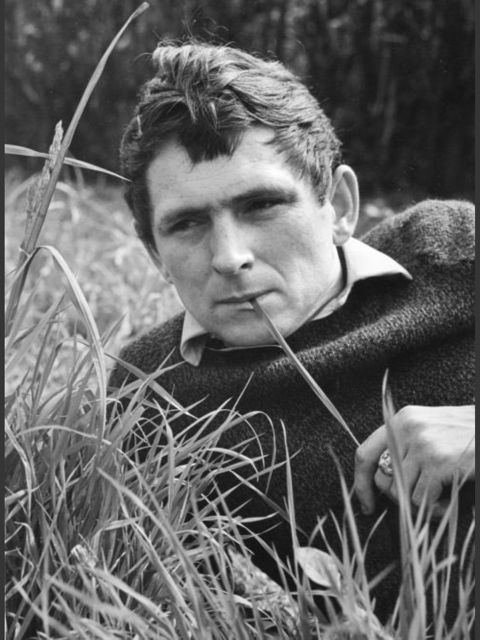


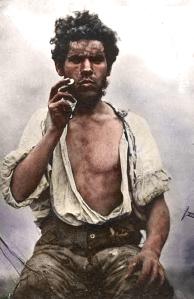
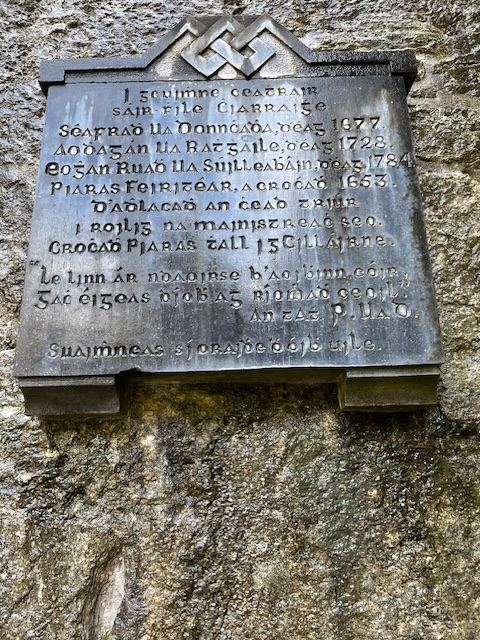
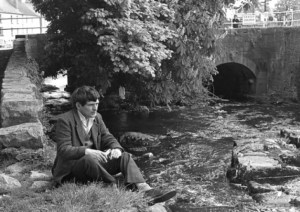
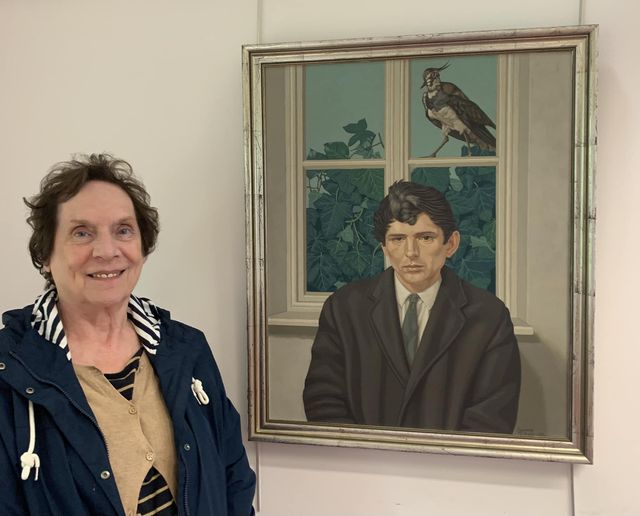


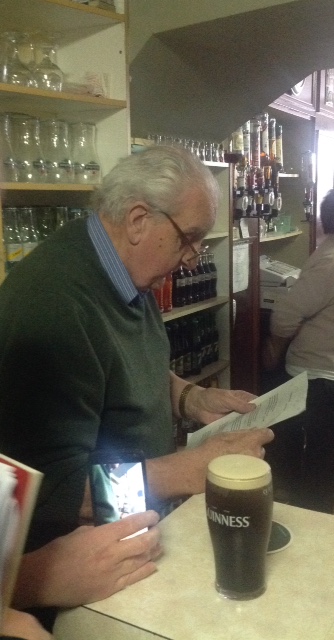

 Reviews Rants and Rambles
You must be logged in to post a comment.