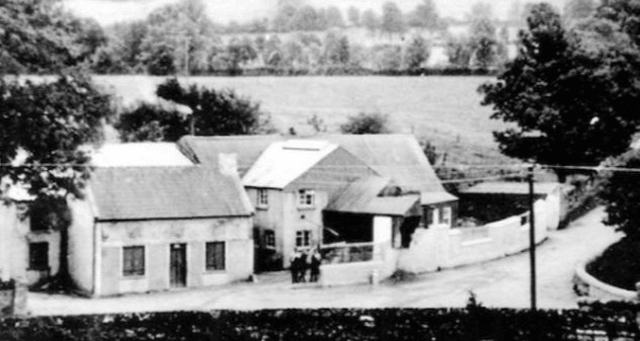
Darragh Creamery opened its doors in 1903 and closed in 1981 after being at the heart
of local life in Glenroe for over 70 years
When I was in Fifth and Sixth Class in Glenroe National School, I had additional and onerous responsibilities before school each morning. Dad was now working in Mitchelstown on the construction of a new cheese factory which produced such well-known varieties as Calvita, Three Counties, and, of course, Galtee, three of the most famous processed cheeses in Ireland from the 1960s through the 1980s. So, I was given the responsibility of going to the creamery each morning before school. We had five or six cows at the time, and they were our only line of credit with Mitchelstown Co-Op. We milked the cows morning and evening, cooled the milk in the milk churns, and each morning, hail, rain or shine, we would tackle up the pony and cart, and I would set off for Darragh early.
I would meet other farmers on the road like Joseph Meade, Mick Quane, Seamus Condon and the Howards. I would try my best to be in Glenroe before Jack Rea pulled out with his big grey dray horse and a cart full of churns. Some farmers like George Fox in Rapala, and Mrs Ryan and Bill Fox in Ballyferode, had recently invested in tractors, and this signalled but one of the many big changes that were on the horizon. My little red pony and cart were being overtaken each morning by the intoxicating TVO exhausts of Fordson Majors, red Massey Fergusons and my favourite, the small grey Ferguson 20, that was surely Ireland’s best-loved tractor at the time; the light, user-friendly machine that finally replaced the horse on Irish farms.
I eventually arrived in Darragh and joined the queue. There I met other suppliers like the immaculately dressed Tony Hackett, the very talkative and loud Jackie Hyland, who usually held forth on the political issues of the day and his neighbour, the quietly spoken Eamonn Coffey from Athphuca Bridge. There was a very definite queuing system in place: one down by the bridge, one coming from the Athphuca side, and you had to be very vigilant and know when to cross over.
When your turn arrived, you pulled up to the stand, the churns were hauled onto the platform, your milk was weighed, the amount was marked in a little book, and you were given a copy. I stood back in awe as big, strong men lifted those heavy churns and placed them back in the pony cart – men like Jerry McCarthy, who was a lovely gentleman. I felt he was always looking out for me.
Our number was Darragh 69, and with it, we could buy butter, four-stone bags of flour, and other supplies from the Co-Op store when needed. Once the milk had been taken in, weighed, and recorded, there was no delay, as I needed to be back home in time for school. Some mornings I would meet some of the early birds going to school, and sometimes I would give one or two a lift to shorten the journey.
It was on that road from Darragh to the school that I came across one morning a number of rabbits acting very strangely. As I approached, they made no attempt to run away as they normally would. Later, I reported this to my Dad, and he said that they probably had been affected by the deadly Myxomatosis virus which was very commonly used to control rabbit populations in the 60s.
Many of those who made the journey to Darragh were young farm labourers working for the local big farmers. These were the ones who hadn’t emigrated yet to England and beyond. I have clear memories of these young men standing tall among the churns on their carts as they galloped their horses or ponies to get to the head of the queue. Some, during the autumn and Winter months, wore their full-length FCA green overcoats to keep them warm. The FCA or the Fórsa Cosanta Áitiúil (FCÁ)—meaning the Local Defence Force—was the part-time land reserve component of the Irish Defence Forces. We youngsters joked among ourselves that FCA stood for Free Clothing Association!
Another young man whom I met each morning was Tom Fox. He was Glenroe’s answer to Christy Mahon, a local hero, a playboy and a rogue. His father, Bill Fox, and my father were firm friends, and he often helped us bring in the hay in summertime, using his trailer and blue Fordson Major tractor. I have vivid memories of Tom, in the era before roll bars or cabs were deemed compulsory items on farm tractors, with my two cousins, Carmel and Brenda Hayes, home from England on holidays, propped precariously on the blue, rusty mudguards of the Fordson Major as he drove with reckless abandon to collect another load of hay.
Each morning, we played a kind of Hare and Tortoise game on our way home from Darragh. On one occasion he passed me out just after Drake’s turn, and I thought no more about it until I came to Tom Lyons’s passage further up the road. There was a 90-degree bend in the road at that juncture, and Tom failed to make the turn; the Fordson went straight through the ditch and into the field. The milk churns were strewn across the intersection and Tom, unscathed, was left scratching his head in disbelief! That morning the Tortoise won the race!
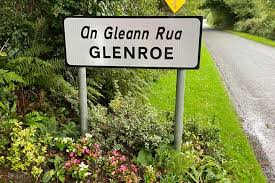
Once I arrived home, my mother would usually see to the pony and cart, and I would set out for school on the bicycle Mom and Dad had got me so I wouldn’t be late. When I think back to the early 60s in my small rural community in South Limerick, another clear memory is of the young AI (1960s style!) men speeding through the narrow country roads, just recently tarred for the first time, in their sleek Ford Escorts – the nearest we got to seeing rally drivers on a day-to-day basis. As we youngsters played hurling on those still-underused roadways, like Hobbits in the Shire, we spied plumes of summer dust approaching and knew it was time to take shelter.
You see the Co-Ops had decided to intervene and provide a vital service for the small farmers, the vast majority of whom were shareholders, and the overall aim was to improve the productivity of the National cow herd. Most small farmers had no bull of their own, and those who had were often unproved or of suspect progeny. The big Co-Ops set up AI stations where farmers could access the finest progeny, and these speeding young men provided the service during spring and early summer in their flying Ford Escorts and VW Beetles. Their official title was Artificial Inseminators (AI to you and me), but we knew them only by their less attractive moniker – ‘The Bullmen’!
Artificial Insemination (AI) in Irish cattle began with early experimental use, was legislated for in 1947, and exploded commercially in the 1950s/60s, led by the Co-Ops who established breeding centres, transitioning from local bulls to superior genetics (like Friesians, then Continentals), and using technologies like liquid nitrogen freezing for widespread genetic improvement, fundamentally changing Irish farming forever. The local hub for their activities was Darragh Creamery
The introduction of Friesian genetics in 1955 marked a major shift, bringing great benefits but also less diversity to Irish farms. Farmers moved away from Dairy Shorthorns, mad Kerry cows, and other rare local breeds, transforming the dairy herd into the black-and-white uniformity we see on our farms today. Then, in the early 1970s, we saw the import of continental beef breeds like Charolais, Limousin, Simmental, and Belgian Blues, diversifying Irish livestock even further.
I also vividly recall the Warble fly infestations in cattle during those long, glorious summers in the 60s. I remember neighbours’ cattle in great distress, stampeding wildly through rushes and felustrums, tails up, breaking through fences, seeking shade and relief from the awful parasitic disease. Eventually, of course, science solved this problem for harried farmers too, through the development of strong, efficient systemic insecticides (pour-on sprays), pasture management, and reporting suspected cases to the Department of Agriculture. This activity was also managed through the local creameries.
I remember one of the great sources of pride and conversation during the early 60s was the fact that one of the suppliers of milk to Darragh, Donal Casey from Tully, had been named Irish Farmer of the Year, a huge accolade and accomplishment. I sensed this pride also, and I felt it put my local place, Glenroe, and Darragh, the local creamery, firmly on the map. This notion that we were finally on the map was copper-fastened in the early 80s when RTÉ named their flagship soap opera, Glenroe, after our small little parish.


You must be logged in to post a comment.