A pensive Hartnett ‘among (his) nameless weeds’. Photographer unknown.
As I have mentioned already in another post here, the decade from 1975 to 1985 in Glendarragh, Templeglantine, was arguably the most productive of Hartnett’s career. Indeed, the output from that little cottage in the shade of ‘Tom White’s green hill’ in Glendarragh was prodigious. The first poems to be published were his collection A Farewell to English, which was published in 1975, and thus began his long-lasting association with Peter Fallon and The Gallery Press. The same year saw the publication of The Retreat of Ita Cagney / Cúlú Íde. Adharca Broic was published in 1978, followed by An Phurgóid in 1983, Do Nuala: Foighne Crainn in 1984 and his fourth collection in Irish, An Lia Nocht, appeared in 1985. During this period, he also undertook the translation of Daibhí Ó Brudair’s poems, which were published in 1985. Many of his better Glendarragh poems are contained in the 1987 collection, A Necklace of Wrens. This collection, following his return to Dublin, contains all poems in Irish with their English translation that Hartnett wanted preserved for posterity, and it was edited by Peter Fallon.
During this decade, 1975 to 1985, in parallel to this ‘serious’ output, he was writing and entertaining the locals with ballads, some serious or semi-serious like ‘A Ballad on the State of the Nation’, which was distributed as a one-page pamphlet like the ballads of old and even included original linocuttings by local artist Cliodhna Cussen. Other ballads were more contentious and even semi-libellous (or fully slanderous!), such as ‘The Balad (sic) of Salad Sunday’ and ‘The Duck Lovers Dance’. These latter creations were written under the very appropriate nom de plume, ‘The Wasp’! His most memorable local work was, of course, ‘Maiden Street Ballad’, a poem he composed for his father as a Christmas present in 1980.
These three intimate family poems were written in Glendarragh, Templeglantine and first appeared in his collection, Adharca Broic, in 1978. Two of the poems are written for his children: Lara, who was born in 1968 and Niall, who was born in 1971. These two poems with English translations also appear in his 1987 collection A Necklace of Wrens. The third poem, Dán do Rosemary, was not included in this collection, and the reason for its exclusion is obvious. As early as 1978, the tensions and stresses which eventually led to their separation in 1985 were beginning to show. They were both navigating the inevitable separation, which eventually led to his departure for Dublin and Inchicore that year. His gift for love poetry is again in evidence, as it had been back in 1968 with the publication of Anatomy of a Cliché. Unfortunately, the clock had come full circle, and his final poem to Rosemary is one of abject apology and regret and wistful hopes for their post-separation lives.
The poem reads as a sad indictment of the way artists were treated in this country in the 70s and 80s. They lead a ‘miserable life’, ‘for our lack of money / scrimping and scraping’. He apologises profusely and admits that their marriage is ‘pitiless, loveless’, which has affected ‘your soft fragile (English) heart’. Their small rural cottage is ‘run-down’, with ‘walls of clay, tear-stained’, ‘the place is falling apart’. He takes full responsibility for their sorry plight and admits that he is ‘blundering, tactless, clueless’. I have said elsewhere that at this time, Newcastle West was booming during the construction phase of the Aughenish Alumina Plant near Askeaton in County Limerick. Newcastle’s twenty-six pubs were doing a roaring trade, and he apologises to his wife because he is ‘always acting the yob in the pub’. If anything, this poem in the original Irish is far more confessional and personal than most of his poetry up to this time.
The poem concludes on a far more positive and hopeful note. He tells Rosemary that he has ‘abandoned English, but I never turned my back on you’. This is a time for reappraisal, and he hopes to ‘relearn my craft from fresh woodland’ – he was living at the time in a townland called Glendarragh – the glen of the oak. He ends on a hopeful note: he hopes that the future will bring Rosemary happiness and that her ‘worth will be appreciated’. The final line is so sad and poignant – he hopes that ‘we both reach our America’. The sadness of this final line arises from the fact that some seven years later, they both parted and went their separate ways.
Cliodhna Cussen, a fellow native of Newcastle West, has an interesting point to make about this poem:
‘Nuair a dhirigh Michéal ar an nGaeilge níor cuireadh aon rófháilte roimhe. Bhí ceisteanna á n-ardú i dtaobh chaighdeán a chuid Gaeilge, ceisteanna a árdaíodh i dtaobh an Riordánaigh 30 bliain níos túisce. Ach léiríonn Michéal a anam, a chuspóir, agus a ghrá sa tseoid sin de dhán, ‘Dán do Rosemary’, ina bhfuil a chumas agus a chroí nochtaithe aige’.
When Michael began writing in Irish, he didn’t receive great encouragement from Gaelgóirí. There were questions about the standard of his Irish, just as there had been about Sean Ó Riordán some thirty years earlier. But in this gem of a poem, ‘Poem for Rosemary’, Hartnett reveals his soul, his motive, his love – indeed, his supreme craft and heart are laid bare.’ (My own translation).
His poem for his son Niall, Dán do Niall, 7 (‘Poem for Niall, 7’), again shows his honesty and courage, although it does tend to descend into cliché at times. Like King Canute and his futile attempts to hold back the tide, he wishes that his son wouldn’t have to leave this safe place in ‘Bird Nest country’, their home in Glendarragh. He tries to warn his son about the many dangers that exist in the outside world and does so by making reference to nature. This advice is somewhat reminiscent of the advice spoken by Polonius to his son Laertes in Shakespeare’s Hamlet: ‘This above all: to thine own self be true, And it must follow, as the night the day, Thou canst not then be false to any man’. This suggests that integrity begins with honesty to oneself, and Hartnett gives us a modern take on this when he advises, ‘Be happy but be tough. ’
There is great poignancy in the final stanza when he states that he will be there for his son ‘in spite of death’. Niall was 28 when his father died in 1999 at the age of 58, and the second line of this stanza adorns the poet’s headstone in Calvary Cemetery in Newcastle West: ‘mar labhraíonn dúch is labhraíonn pár’, ‘for ink speaks and paper speaks’. The poet is saying that he will be present and live on in his body of work even after his death. The reality is that he wasn’t there for many of the landmark celebrations in his son’s life, his graduations, his wedding, the birth of his grandchildren and so the promise he makes, ‘and some day I’ll buy you porter!’ sounds very hollow indeed to a young man who must now take on the onerous mantle of preserving and promoting his father’s rich and varied legacy at such a young age.
Hartnett’s grave in Calvary Cemetery, Churchtown, Newcastle West. The inscription reads: ‘Beadsa ann d’anneoin an bháis, mar labhraíonn dúch is labhraíonn pár’, (‘I will be there in spite of death, for ink speaks and paper speaks.’
His Dán do Lara, 10, (‘Poem for Lara, 10’), is a masterpiece. The sunshine and nature in this poem are at odds with the penury and hardship of the poet’s existence in 1978, nestling below ‘Tom White’s green hill’ in Glendarragh, Templeglantine. Flame-haired Lara is compared to a rowan tree in autumn, her voice disturbing the larks, ‘in the green grass’. She is surrounded by nature in all its glory, ‘a crowd of daisies playing with you, a crowd of rabbits dancing with you’. The blackbird and the goldfinch are there for her amusement and playtime. Then the master of metaphor compares his daughter: ‘You are perfume, you are honey, a wild strawberry.’ The poem ends with the poet’s wish for his young daughter:
Little queen of the land of books
may you be always thus
may you ever be free
from sorrow-chains.
Interestingly, the poet compares his daughter to a queen in ‘the land of books’; this seems to set the seal on Lara’s perfection. Obviously, a poet would value literature and reading, and his choice of this image is significant as it tells us that Lara has another, deeper side to her – she is not just interested in the outdoors and a lover of nature.
His final wish for Lara is that she will grow up to be as beautiful and graceful as her mother, Rosemary. He hopes that she will inherit her mother’s beautiful soul as well as ‘the beauty of her face.’
It is fitting that these three poems, written in that little rural cottage in Glendarragh, feature family and the travails of being a husband and a parent. I have examined many of his papers in the National Library of Ireland on Kildare Street, and it is undeniable that hand-in-hand with arranging his poems and latest projects, there is ample evidence of the presence of young people, Lara and Niall, in the many doodles and scribbles on the margins of those frayed notebooks.
Doodles with Dad – the joys of being a poet with young children!
Inset of New Houses just before occupancy, September 1951. (Courtesy of Dr Pat O’Connor, The New Houses: A Memoir, p.9)
In late 1980, Hartnett began work on his best ballad, which is most loved and recited to this day, the ‘Maiden Street Ballad’. The ballad stretches out for 47 verses and is a compendium of much of what he had written in prose about Newcastle West in articles for The Irish Times, for Magill magazine and for the local Annual Observer, the annual publication of the Newcastle West Historical Society during the 60s and early 70s. There are also echoes of other local poems such as ‘Maiden Street’ and ‘Epitaph for John Kelly, Blacksmith’ included among the verses of the ballad.
‘Maiden Street Ballad’ was published by local entrepreneur Davy Cahill’s The Observer Press ‘with the help of members of Newcastle West Historical Society’. Copies of the original are much sought after on eBay and elsewhere to this day. It carried a very eloquent dedication, ‘This ballad was composed by Michael Hartnett in Glendarragh, Templeglantine, County Limerick in December 1980 as a Christmas present for his father Denis Harnett (sic)’.
‘Maiden Street Ballad’ contains a number of autobiographical segments. The early stanzas tell us about his childhood days where they rented accommodation first in Connolly Terrace and then in nearby Church Street before making the move to Lower Maiden Street where they rented a room from Legsa Murphy.
We rented a mansion down in Lower Maiden Street,
Legsa Murphy our landlord, three shillings a week,
the walls were of mud and the roof it did leak
and our mice nearly died of starvation.
Probably one of the most notorious segments is the ten ribald verses from 27 to 37 which describe a virtual pub crawl of all of Newcastle West’s 26 public houses which were doing business in 1980. (Michael Hartnett’s 26 Pubs at Christmas!) In another significant segment from verses 16 to 23, he eloquently documents the move from Lower Maiden Street to the new housing scheme in Assumpta Park. These verses portray Hartnett at his best, they are witty, caustic, and often slanderous; his use of hyperbole pokes fun at his friends and those neighbours who were part of that mass exodus from the slums of Maiden Street and The Coole.
Hartnett says that the street finally ‘gave up the ghost’ in September 1951 when most of the inhabitants were rehoused in one of the 60 new houses in Assumpta Park. Hartnett describes the operation, likening it to the hazardous Exodus of the Israelites escaping from Egypt to the Promised Land! Unlike the ‘pub crawl’ sequence which describes in great detail the quirks and peccadillos of numerous characters, including many of his own family, there are only two people mentioned in the ‘move to The Park’ sequence – only passing reference is made to Dick Fitz and Mike Hart, two great stalwarts of the area. Rather this segment describes his people, his neighbours, the real old stock of the town in a richly comic and exaggerated way.
In the late 40s and early 50s, the local authority had built up to 60 social houses to relieve the squalor, poverty and slum-like conditions in Maiden Street and The Coole. They were built in an area of the town known as Hungry Hill, although the new development was officially called Assumpta Park. The Hartnett family were but one of the lucky families to be given a new house and they moved into Number 28 in 1951. Hartnett tells us that the ‘old street finally gave up the ghost’ and the mud-walled, galvanised cabins were abandoned down in The Coole and the people were tempted to move ‘to the Hill’s brand new houses’. The ‘New Houses’ stood on a hill high and exposed above the town at the outer edge of a terminal moraine. The original sixty houses were finally allocated on the 15th of September, 1951. Dr Pat O’Connor, the author of ‘The New Houses: A Memoir’, whose family were allocated Number 24, remembers that ‘doors were still without numbers and entrances without gates’. There was no street lighting or footpaths so it must have been a very eerie place to move to.
The relocation is described in almost Biblical terms with a delicious mixed cocktail of the Exodus story and the story of Noah’s Ark:
and some of the ass-cars were like Noah’s Ark
with livestock and children and spouses.
As well as the Bible, Hartnett is also influenced here by the writings of John Steinbeck and his iconic descriptions of the Great Depression in The Grapes of Wrath as well as the writing of Sean O’Casey and Brendan Behan who wrote about the tenements in Dublin and the gradual movement of people from places like Henrietta Street to Crumlin and Cabra in the 1940s, and Ballyfermot and Artane in the 50.
The Park upon first occupancy, September 1951. (O’Connor, 12)
Hartnett is a very astute commentator on the social ills of his day and the Maiden Street Ballad, and this segment in particular, shows the level of poverty and deprivation experienced by the people in that part of the town in the early 50s. They brought with them their ‘flourbags’, ‘their ‘tea chests’ and ‘three-legged stools’ and their ‘jam-crocks in good working order’. At that time many of the households were so poor that they were unable to afford the bare necessities such as cups and saucers. Jam was sold in one-pound and two-pound glass jars and these were used as substitutes for tea cups and milk glasses in most households. Dr Pat O’Connor tells us that the new occupants had come from ‘the tattered tails of the town, where congestion and dereliction were rife, but (where) the sense of neighbourhood intimacy was well defined’. Hartnett describes the move in a very light-hearted way, and he follows up by saying that they also brought their fleas, bed bugs and mice with them because they felt they were almost part of the family. And now that they’ve moved up in the world the fleas also go to Ballybunion each year on holiday with their host families ‘though hundreds get drowned in the waves there’.
Many found it very difficult to make the necessary adjustments to their new surroundings and the poet pokes fun at their efforts to adapt to such new luxuries as piped water, electricity, toilets and bathtubs. The novelty of two-storey houses had also to be grappled with – three bedrooms upstairs and a hallway, kitchen, scullery and bathroom downstairs. Apocryphal stories circulated that one of the legendary early occupants, Forker O’Brien, famously used the bannisters as kindling for the fire! Indeed, Hartnett would have us believe that many continued with the practices that had been commonplace in their former residences:
In nineteen fifty-one people weren’t too smart:
in spite of the toilets, they pissed out the back,
washed feet in the lavat’ry, put coal in the bath
and kept the odd pig in the garden.
They burnt the bannisters for to make fires
and pumped up the Primus for the kettle to boil,
turned on all the taps, left the lights on all night –
but these antics I’m sure you will pardon.
Hartnett continues in his light-hearted vein, and he lists the great improvements that have come about in peoples’ lives in the years following their relocation. They are respected now and indeed have earned the respect of their fellow townspeople, and they have made great strides to better their situation. Many can now boast of having regular employment, and motor cars and many even go on foreign holidays each year ‘in the Canaries’. The poet’s sense of pride in his own local place is very evident in this section of the ballad and he compares other places he has visited in his travels, but none can compare to his native Newcastle West.
I have seen some fine cities in my traveller’s quest.
put Boston and London and Rome to the test,
but I wouldn’t give one foot of Newcastle West
for all of their beauty and glamour.
In those early days access to The Park was very limited and usually meant a long walk down through the Market Yard or Scanlon’s Lane or down New Road (now Sheehan’s Road) if one wanted to visit friends in Maiden Street or go to Mass on a Sunday. Eventually, representations were made to local Councillors and with the second phase of houses being built in 1955 a Mass Path was constructed which gave residents easier access to the old haunts in Maiden Street and also easy access to the parish church, as the name suggests. The residents of Maiden Street and The Coole were accustomed to being looked down on by the more well-to-do residents of the town and even now, as Dr Pat O’Connor points out, even though the residents of Assumpta Park were in a more exalted and elevated location they found that ‘by a curious process of inversion the people of the town (still) looked down on us’!
Detail from the map by Dr Pat O’Connor showing Assumpta Park and the Mass Path in relation to Maiden Street and the church. Note also the three sandpits still in use at the time – Musgraves (now Whelan’s), O’Gorman’s, and Ahern’s.
Stanzas 22 and 23 paint a moving, nostalgic picture with the poet’s rose-tinted lens firmly in place. We are invited to picture an idyllic scene almost straight out of Thomas Gray’s Elegy Written in a Country Churchyard. It is high summer in Assumpta Park and the visibility is so good you can see Rooska to the north and the Galtees forty miles away to the east straddling the Limerick, Tipperary and Cork borders. All is peaceful and neat and tidy and quiet ‘and the dogs lie asleep in the roadway’. The stanza ends with a beautiful echo of a line from Act 3, Scene 2 of Macbeth – “Light thickens, and the crow/ Makes wing to th’ rooky wood.” (I once heard Noel O’Connor, that great unsung hero and fount of wisdom, say that there’s a quote in Macbeth to solve every problem and cover every possible situation and permutation). Hartnett, in a more benign and domesticated mood, gives us his variation on Macbeth’s more bloody intent:
and the crows to the tree tops fly home in black rows
and the women wheel out their new go-cars.
Dr Pat O’Connor believed that making a new home in The Park was hardest on the women. Yet, as usual, they were the quintessential homemakers. In 1951 scarcely any worked outside the home, often supplementing family income by keeping lodgers or by fostering children, many of whom grew up seamlessly within the various families.
Hartnett’s love for this place is nourished by innocent childhood memories. After all, the poem is meant as a Christmas present for his now ailing father and so he paints a picture which we are invited to contrast with the poverty and squalor of earlier childhood. Hartnett is now forty years of age and remembering life as a ten-year-old in his favourite place, his home in 28 Assumpta Park:
when the smell of black pudding it sweetens the air
and the scent of back rashers it spreads everywhere
and the smoke from the chimneys goes fragrant and straight
to the sky in the Park in the evening.
The residents of Assumpta Park, then and now, are indeed lucky to have as their chroniclers Dr Pat J. O’Connor, one of the most pre-eminent human geographers of his generation, and Michael Hartnett one of Ireland’s great twentieth-century poets. Both have left us their differing yet unique perspectives of an era of great change and of a wonderful social engineering project that worked. Hartnett would definitely point to it as an example that the present government should try to emulate!
A group of workers photographed on-site during the building of the second phase of the houses in 1955. Photo courtesy of Newcastle West Olden Times Facebook Page. These houses were built by Edmond Power. Included above: Jack Power (back left), alongside Jackie Brouder, Edmond Power (back right), Mike Harte (front left), Mossy Hurley with child (front right), with Jer Hough and Tommy Fox in line alongside.
Works Cited:
O’Connor, Patrick J. The New Houses: A Memoir. Oidhreacht na Mumhan Books, 2009
Postscript
I came across this little-known poem of Hartnett’s recently which further details the trauma that was involved in the ‘Move to The Park’. There is an Irish version as well.
Off to the New Houses
I was there when the street expired.
When the cabins were put under lock and key;
Gloom and delight were left imprisoned,
The birth-room, the death-room;
And under the floor and on the wall
The mouse and the spider were lonely.
Donkey and trap, wheel-barrow, hand-cart
Safely transporting our ancestral bedding,
My father’s mug, my mother’s sugar-bowl:
We shifted all under cover of night.
And under the floor and on the wall
The mouse and the spider were lonely.
We shifted all that mattered
Except the heart of the old tortured street:
After a pause for porter, my father and his friends went
Believe it or not, Michael Hartnett is not the only poet to hail from Newcastle West! There have always been local balladeers and poets who have pandered to their local audience in the town and in the surrounding parishes. In Hartnett’s brilliant poem Maiden Street Ballad, he mentions two of these troubadours and he takes pride in saying that he intends to hold people to account ‘like Aherne and Barry before me’. He will, therefore, follow in the illustrious footsteps of Jack Aherne from Lower Maiden Street and Danny Barry who was born in Bothar Buí. He will be true to them and speak out like they had done in the generation before him. In the introductory verses of that famous ballad, Hartnett sets out his stall and warns us in advance of what we are to expect from him:
8
Now before you get settled, take a warning from me
for I’ll tell you some things that you won’t like to hear –
we were hungry and poor down in Lower Maiden Street,
a fact I will swear on the Bible.
There were shopkeepers then, quite safe and secure –
seven Masses a week and then shit on the poor;
ye know who I mean, of that I am sure,
and if they like they can sue me for libel.
9
They say you should never speak ill of the dead
but a poet must say what is inside his head;
let drapers and bottlers now tremble in dread:
they no longer can pay men slave wages.
Let hucksters and grocers and traders join in
for they all bear the guilt of a terrible sin:
they thought themselves better than their fellow men –
now the nettles grow thick on their gravestones.
10
So come all you employers, beware how you act
for a poet is never afraid of a fact:
your grasping and greed I will always attack
like Aherne and Barry before me.
My targets are only the mean and the proud
and the vandals who try to make dirt of this town,
if their fathers were policemen they’d still feel the clout
of a public exposure in poetry.
Danny Barry was born in Bothar Buí in 1911 and lived his whole life in Newcastle West. He married Margaret (Peig) Sayers from Ferriter’s Quarter, Dunquin, and together, they had four children: Breda, Mary, Kevin and Dennis. Danny worked as a summons server and pound keeper in Newcastle West. He was known to many as the “Sheriff” and to others as the “Bard of Bothar Buí”.
Danny Barry’s Warrant of Appointment as Summons Server issued by the Circuit Court Office on 15th August 1955
Michael Hartnett believed that Danny Barry of Newcastle West was an example of the local poet at his best. He lived most of his married life at 46 Assumpta Park, just round the corner from Hartnett’s childhood home. He died in 1973 while still in his early 60s. He is still remembered with a shudder by many of the people targeted by his verse. In praise of Danny’s poetry, Hartnett has said ‘he mocked the foolish, the vain, the craw thumper, the jack-in-office, and the bogus patriot’.
Danny’s son Kevin and Kevin’s sons, Dan and Graham Barry have done sterling work collecting the remnants of their grandfather’s poems in recent years. Remember these local poets did not publish their work or expect to have it dissected and analysed in academic circles. They never considered themselves as professional poets in the first place. Their songs and ballads were written for local consumption, to be recited in their homes, in local bars, in local ‘rambling houses’, or occasionally given a public performance in The Square. In a recently unearthed radio documentary entitled ‘Poems Plain’, broadcast by Radio Eireann in 1979 and produced at the time by Donal Flanagan, Michael Hartnett praises the work of these local balladeers and especially the work of Danny Barry:
They seldom publish their work. They write about local events. They’re firmly rooted in 19th-century verse forms. They don’t worry about identity, life, love, or any of the big themes that begin with capital letters. As a result, they’re not accepted by the arbiters of literary taste.
So, if these poets don’t write about the big mainstream issues, ‘life or love’, what do they write about? In the documentary, Hartnett tells his audience that they concentrate on local issues:
They commemorate hurling matches, football matches, disasters and they usually write badly when dealing with these themes. The ballads they produce are virtually interchangeable. Just a few names need to be changed here and there. But when they deal with humorous themes, or when they satirize, they can be brilliant.
In this, Hartnett suggests they form an unbroken line that stretches back into the Gaelic past, especially into the 18th century. The professional poets even then, such as Dáibhí Ó Bruadair, who was lucky and privileged enough to enjoy the patronage of the Fitzgerald family of Springfield Castle in Broadford, County Limerick, despised these local poets, ‘the sráid éigse, he called them, the street poets’.
Thankfully, due mainly to the intervention of Kevin Barry and his sons Dan and Graham and other members of the family much of his best work has been saved for posterity. Along with his other contemporary, the often notorious, Jack Aherne, only the more salubrious of their sound bites are still retained in people’s memories. Some of their surviving verses are still libelous, but as Hartnett says in the documentary, ‘the trouble with poetry is, no matter how vicious, how scandalous, how libelous, it becomes public property once distributed, whether by word of mouth or slipped under people’s doors early in the morning’. Hartnett, like Barry and Aherne before him, was wont to deliver verses to his neighbours in this manner on his return to Newcastle West in 1975, especially for those who had recently passed away. His Epitaph for John Kelly, Blacksmith, and In Memoriam Sheila Hackett are but two such examples of poems written following the death of a friend or neighbour.
Hartnett, who took no prisoners in his role as critic, dismisses some of Danny Barry’s work as weak and overly sentimental:
Like all Irish poets, he was in love with places, and his verses are full of place names. But these poems happen also to be his weakest poems. He fell heavily into an almost cloying sentimentality, made more syrupy by echoes from Robert Service and Thomas Moore.
Barry wrote about local places, Newcastle West, Glenastar, Glenmageen, Rooska Hill, the river Arra but Hartnett tells us that ‘his real strength lay in his satires, or in those poems in which he dealt with people’.
One such poem is The Old School in which he mentions two of the teachers, J.D. Musgrave and George Ambrose, who taught in the old Courtenay School. Master Musgrave was the principal of the school until his retirement in 1915. The poem was probably written around 1955 at the time when the old school was demolished to be replaced by the present building in Gortboy. There are slight echoes of Goldsmith’s The Village Schoolmaster here, but the poem is firmly rooted in the 18th century Anglo Irish ballad tradition, as in such songs as The Limerick Rake.
The Old School
Gone are the days when hearts were young and gay
Gone are the boys from the old school away
Gone are the monks the bright boys and the fool
Gone are the days of the old Courtenay School
If you wander back in memory to the days of long ago
When you were young and happy and worry you did not know
Ducking out to the back alley to play a game of ball
Or trying to jump the highest point of Boody Fitz’s wall
Or mooching in the Majors where the breeze was fresh and cool
And these are the happy memories of the old Courtenay School
Gone is J.D. Musgrave a gentleman was he
A student of prognosis he could tell what was to be
‘Twas often said he was severe he made them face the wall
But he was a man of progress he made scholars of them all
And there was Master Ambrose as George he was better known
For nicknames and for wisdom of superiors he had none
There was no one could afford to miss for he had an awful saying
You had better brush it up me boys cause you have sawdust for a brain
He christened many a pupil from his lofty rostrum stool
And no one knew his own name at the old Courtenay school.
So goodbye old school memories no more your rooms will ring
Of children’s happy voices and the happy songs they sing
My dear old school you are silent now ’cause they took your heart away
No more the tramp of children’s feet soon you will crumble and decay
But I will not forget you and the happy days of yore
Nor will the boys across the seas in far and foreign shore
Our boyhood terms our boyhood joys a lingering memory
That no time or age can yet blot out in our hearts you will always be
For there are many words when spoken cause a tear to dim their eye
But the saddest little word of all is the simple word Goodbye.
Here Danny Barry uses words and misuses words which only a master of verse in the 18th century could have done. He uses the lovely expression, “a student of prognosis” to describe Master Musgrave. Interestingly, his son, Maurice Musgrave later married Dolly McMahon who ran a public house where Gearoid Whelan now has his establishment. She is the Dolly Musgrave that Hartnett immortalises in Maiden Street Ballad:
‘twas in Dolly Musgrave’s I drank my first glass
As is obvious from the poem nicknames have always been synonymous with Newcastle West. Hartnett, himself, in Maiden Street Ballad, describes the many from the town who had to take the emigrant boat to England and elsewhere:
Off went Smuggy and Eye-Tie and Goose-Eye and Dol,
off went Ratty and Muddy and Squealer and Gull;
then the Bullock and Dando and Gallon were gone,
all looking for work among strangers.
The old men who stayed, time soon thinned their ranks –
like Gogga and Ganzie and Dildo and Sank,
and the Major and Bowler felt death’s icy hand;
old Maiden Street went to the graveyard.
Hartnett himself admitted that the list given in the verse above is only a small sample of the nicknames given to the natives of the town. The nickname ‘Smuggy’ is interesting – it’s from the Irish smugach, meaning ‘snotty’!
In his notes for that great ballad, Hartnett tells us that, ‘it used to be said that if a stranger walked from Forde’s Corner (now Bourke’s Corner at the top of Maiden Street) he’d have a nickname before he got to Leslie’s Ating House’ (where Richard (Dickie) Liston had his sweet shop). Also in an article written for The Irish Times on 11th November 1968 entitled ‘Poet’s Progress’, he declared that ‘in small towns in Ireland, unless a man has a nickname (a reputation, good or bad), he hardly exists at all’.
Hartnett himself was simply referred to as ‘The Poet’ and he gave his younger brother John the nickname ‘Wraneen’. In the Maiden Street Ballad, he refers to his brother Denis as ‘Dinny the Postman’. Dinny, who has sadly only recently passed away, was also often referred to as ‘Halpin’. In Danny Barry’s poem The Old School, George Ambrose is credited with giving each student a nickname and, Barry uses the poignant and telling phrase, ‘and no one knew his own name at the old Courtenay school’. I’m sure that this also applied to the teachers!
Hartnett informs us that Barry’s poem, The Christmas Tree, deals with an actual happening. A few men from Maiden Street in Newcastle West decided to erect a Christmas tree in the street. They cut it down in Glenmageen, an area reputed to be haunted by a witch known as Sprid na Barna. Glenmageen is located about four miles south of Newcastle West and people can now visit the townland as they walk or cycle on the new Limerick Greenway. The stories of Sprid na Barna were well known, and the area near the present-day Barna Gardens was greatly feared by the local people. Indeed, it was said that only a few tough men would go home after dark along the road she haunted. Again Hartnett is fulsome in his praise for the poet:
Danny Barry’s simple evocation of Sprid and her victims is extraordinary. Not because it is great poetry, but because he does not question the truth of the event at all. By the way, the Silver Dollar Saloon, which is a strange Hollywood, Western-type name, is a pub in Newcastle West, which was then run by the Flynn family, and is now run by the Kelly family.
The poem is called The Christmas Tree. Again I mention Robert Service, and it’s evident in the meter, even the introduction is pure Service.
The Christmas Tree
A bunch of the boys from Maiden Street, one Wednesday afternoon,
Were drinking and awaiting in the Silver Dollar Saloon,
Waiting for a lorry to convey them to Glenmageen.
And they brought from there a Christmas tree, the finest ever seen.
They put it up in splendour, bedecked with fairy lights.
It was a wonderful tree, a beautiful tree, that lightened the darkest night.
Now, the festive season passed away, but this Christmas tree was there to stay.
In time it became the talk of the town, for none of the boys dared take it down.
They were stricken with a malady the doctors could not say,
And there is one poor chap who now resides at the back of Shaw’s today.
Now, you have heard of Sprid na Barna, that very naughty dame,
That evil maid of Glenmageen, of the haunting ghostly fame.
The clergy had to banish her between the tree and the bark.
No more she would haunt and terrify the neighbours after dark.
Now the moral of this ditty I want you all to know
‘Twas a tree that grew in Glenmageen twenty years ago.
Now what I am trying to tell you will cause you all to frown
That the amadáns from Maiden Street have brought auld sprig* to town.
Now when the blackthorn blooms again and the sheepdogs howl at the full of moon
You could meet auld sprig with a glass of gin in the Silver Dollar Saloon.
*Sprid na Barna was sometimes mispronounced locally as Sprig na Barna
This beautiful video has been produced by Danny Barry’s grandson, Dan Barry. The poem is narrated by the poet Michael Hartnett and it is taken from a radio documentary that he did in 1979 for RTE Radio entitled Poems Plain. The programme was produced by Donal Flanagan. The video contains copyrighted material that is being used for educational purposes under the doctrine of ‘fair use’. The use of this material is not intended to infringe upon the copyright owner’s rights. The material is used here solely for educational and non-commercial purposes.
Danny Barry perhaps wrote a couple of hundred poems, many of them now lost or mouldering in the cupboards of his victims. A handful, between twenty and twenty-five, have been recovered due to the perseverance of Danny’s family, especially his daughter Mary Flanagan, and in recent times by his grandchildren Dan and Graham Barry.
Michael Hartnett believed that the best poem Danny Barry wrote, is a piece called The Eviction. Again, it is based on a natural happening. It is full of irony and humour, and of course, the elemental Irish hate for landlords, sheriffs, and bailiffs is very evident.
The Eviction
My name is Peter Shea, my age is fifty-seven.
The old Dock Road was my abode, a station next to heaven.
I was happy as an angel, with my lot I was content,
But I took the drinking porter, and I could not pay the rent.
So now to all good neighbours, a sad tale I must state.
I was forced to go from my bungalow, beside the Sandpit Gate.
Tom Hartnett was my landlord, and a damn bad one was he.
I only owed him six years’ rent when he kindly summoned me.
I tried to calm his temper, but I could not calm old Tom,
So to ease the situation, I took in sweet Maggie Nom.
Poor Maggie was so gentle and mild in her debate
That she won my heart and I lost my house beside the Sandpit Gate.
It was on a fine September morn, the year was thirty-one,
The sheriff came and flung me out, myself and Maggie Nom.
As he called to his head bailiff, ‘Is there any more to go?’
I said, wait a while your honour, sir, you forgot poor Maggie’s po.
And when he raised the lid off in candour I must state,
I smothered all the neighbours that live around the Sandpit Gate.
So now to finish up my rhyme, there’s one thing I must say
About the smiling face and the charming grace of my darling Gurky Shea.
For when the world frowned at me, she did not hesitate
With me to stay, and perhaps to lay, down by the Sandpit Gate.
Hartnett is effusive in his praise for this poem and as already stated he was by nature a very severe critic. His verdict here is glowing!
If you compare this poem, with the hundreds similar to it, which were written in Munster in the Irish language 200 years ago, it is easy to see the link between, say, Seán Ó Tuama and Danny Barry. The same love of place, of the cherished phrase, of galloping meters and tumbling rhyme, the same disregard for the very thin skins of the fool and of the oppressor, and amazingly enough, they had the same effect.
Danny Barry could frighten his enemies with a threat of public laughter, and yet he achieved what all poets try to achieve. Because of the earlier efforts of Danny Barry and Jack Aherne, Michael Hartnett was very conscious of his local audience, and when he returned to Newcastle West in the mid-70s he wrote many ribald verses for that audience culminating in the publication of Maiden Street Ballad in 1980. Like Hartnett, Danny Barry managed to ‘write a few songs for his people’, he was recognized by them as a poet, he could make his people laugh or sing or tremble, and he was well aware of the fragility of his own meagre attempts in verse. He says in one of his little poems, called Remembrance,
And so it will be when he is gone.
Someone will sing of him in song.
Someone will read what he held dear.
But too late for praise he will not hear.
References and Links:
“Poems Plain – Danny Barry” was a short radio documentary presented by Michael Hartnett on RTE radio in 1979 and produced by Donal Flanagan. All quotations in this article come from a transcript of the documentary. Listen to the full radio documentary by clicking on the link below
The author is indebted in particular to Dan Barry, grandson of Danny Barry, for invaluable background information in the preparation of this blog post. The Barry family has done amazing work in collecting the scattered remnants of their grandfather’s life’s work. They have done us all a great service.
Jack Aherne’s Supermarket in Lower Maiden Street. Jack was also a coal merchant and he also sold sand and gravel from the sandpit behind the store in what was known as Aherne’s Field – now the location for the Lidl Supermarket and the Scanglo factory. When Jack Aherne closed his supermarket the premises were bought by Tom Moran who carried on an electrical business on the site. Jack’s father, also Jack Aherne is the other noted bard and rhymer whom Hartnett refers to in Maiden Street Ballad – ‘like Aherne and Barry before me’. Photograph by Sean Kelly.
Michael Hartnett in pensive mood by the River Arra in Newcastle West in the 1970s. Photo credit to Limerick Leader Photo Archives
Michael Hartnett arrived back in Newcastle West after nearly fifteen years of ‘exile’, around 1975. He then imposed a further exile on himself by deciding to settle with his wife Rosemary and his two young children, Niall and Lara, ‘out foreign in Glantine’. Thus began one of his most productive periods as a poet – a fact which has been largely overlooked by critics and academics to this very day.
The decade from 1975 to 1985 in Glendarragh, Templeglantine was arguably the most productive of his career. Adharca Broic was published in 1978, followed by An Phurgóid in 1983, Do Nuala: Foighne Crainn in 1984 and his fourth collection in Irish, An Lia Nocht, appeared in 1985. During this period, he also undertook the translation of Daibhi Ó Brudair’s poems which were published in 1985. In parallel to this ‘serious’ output, he was writing and entertaining the locals with ballads, some serious or semi-serious like ‘A Ballad on the State of the Nation’, which was distributed as a one-page pamphlet like the ballads of old and even included original lino cuttings by local artist Cliodhna Cussen. Other ballads were more contentious and even semi-libellous (or fully slanderous!) such as ‘The Balad (sic) of Salad Sunday’ and ‘The Duck Lovers Dance’. These latter creations were written under the very appropriate nom de plume, ‘The Wasp’!
It has to be remembered that at this time Newcastle West and its West Limerick hinterland was booming. The Alcan plant in Aughinish Island near Askeaton was under construction and every man, woman and child were working there. Added to this, every spare room was occupied as up to 4,000 workers from all over Ireland were involved in the construction phase of the project.
In late 1980 Hartnett began work on his best ballad and the one which is most loved and recited to this day, the ‘Maiden Street Ballad’. The ballad stretches out for 47 verses and is a compendium of much of what he had written in prose about Newcastle West in articles for The Irish Times, for Magill magazine and for the local Annual Observer, the annual publication of the Newcastle West Historical Society during the 60s and early 70s. There are also echoes of other local poems such as ‘Maiden Street’ and ‘Epitaph for John Kelly, Blacksmith’ included among the verses of the ballad.
In his own mind, Hartnett had lofty ambitions for the project – the ballad was to be Newcastle West’s own Cannery Row. Indeed, in the Preface to the ballad Hartnett wrote of his affection for his home place:
Everyone has a Maiden Street. It is the street of strange characters, wits, odd old women and eccentrics; also a street of hot summers, of hop-scotch and marbles: in short the street of youth. But Maiden Street was no Tir na nÓg … Human warmth and poverty often go hand in hand … The object of this ballad is to invoke and preserve ‘times past’ and to do so without being too sentimental … But this ballad is not all grimness. I hope it is humorous in spots. It was not written in mockery but with affection – part funny song, part social history.
‘Maiden Street Ballad’ was published by local entrepreneur Davy Cahill and his The Observer Press ‘with the help of members of Newcastle West Historical Society’. Copies of the original are much sought after on eBay and elsewhere to this day. It carried a very eloquent dedication, ‘This ballad was composed by Michael Hartnett in Glendarragh, Templeglantine, County Limerick in the month of December 1980 as a Christmas present for his father Denis Harnett (sic)’. His long-time friend and fellow poet, Gabriel Fitzmaurice is fulsome in his praise for the ‘Maiden Street Ballad’:
… it is unquestionably the best ballad he wrote during this period. It is a celebration of his native place in which he describes mainly the period 1948 – 51, the time of his childhood; it also describes the Newcastle West of the late 1970s during which time he lived in Templeglantine (McDonagh/Newman, p.107).
‘Maiden Street Ballad’ was set to the air of ‘The Limerick Rake’ which Hartnett himself described as ‘the best Hiberno-English ballad ever written in this country’. Hartnett was drawing on a rich tradition of local balladeers ‘like Aherne and Barry before me’, but there are also echoes here of Patrick Kavanagh and such ballads as ‘If Ever You Go to Dublin Town’. It is a matter of record that after early skirmishes in various hostelries in Dublin in the early 60s both Hartnett and Kavanagh came to an understanding and Hartnett tells us, ‘I used to drink with him and indeed back horses for him (he owes me £3-10s for the record)’ (O’Driscoll interview, p.144).
Writing in The Irish Times, June 10, 1969, Hartnett relates a story about his father which may have sown the seeds for the famous virtual pub-crawl which is such a central feature of ‘Maiden Street Ballad’ and which is the focus of this essay. Speaking about his relationship with his father he recalls:
I sat there in the small kitchen-cum-living room, innocently working out the problems my father set me: ‘If it took a beetle a week to walk a fortnight, how long would it take two drunken soldiers to swim out of a barrel of treacle?’ I never worked it out. Or, “How would you get from the top of Church Street to the end of Bridge Street without passing a pub”? He did supply the answer to that, which indeed is the logical answer for any Irishman: “You don’t pass any – you go into them all.”
‘Maiden Street Ballad’ contains a number of autobiographical segments; from his early days in Lower Maiden Street where they rented from Legsa Murphy; then later he eloquently documents the move to the new housing scheme in Assumpta Park. However, the most notorious segment is the ten ribald verses from 27 to 37 which describe a virtual pub crawl of all of Newcastle West’s 26 public houses which were doing business in 1980. These verses portray Hartnett at his best, they are witty, they are caustic, they are slanderous; they poke fun at his friends, and especially at his brothers and cousins. BUT there is also great sadness.
The ‘pub crawl’ begins in Stanza 27 and the poet bemoans the fact that he visits too many pubs. The first pub mentioned is Dinny Pa’s, owned and run by Dinny Pa Aherne. The pub was situated where The Weekly Observer now has its offices. Local lore has it that the pub broke all records in Munster for whiskey sales because Dinny Pa couldn’t pull a pint! In more recent times this pub was owned by another doggie man, Ted Danaher from Knockaderry. By the way, the present pub known as The Forge next door to Dinny Pa’s is not mentioned in the Ballad because it was closed then and has only reopened in recent years. This pub was originally the property of J.J. Hough and his wife Mary (nee Dore). The pub was subsequently bought by John Sullivan from Killarney and he eventually sold it on and it has had a number of incarnations in recent years. Next, he mentions The Silver Dollar in Lower Maiden Street, which was originally owned by Bill Flynn. By the 1970s The Silver Dollar had been passed down to his daughter Margaret and her husband John Kelly who was originally from Broadford and who was at that time a Fine Gael County Councillor. He then takes a big jump to the other side of town and mentions Mike Flynn’s in Churchtown, now The Ballintemple.
In Stanza 28 he mentions four more pubs beginning with McCarthy’s in Maiden Street which was owned by John McCarthy and his wife, Clare Finucane, and was known then as The Tall Ships (today trading as Ned Kelly’s). He then mentions a cluster of three pubs just off The Square, heading up Churchtown. Pat Whelan was by 1980 probably one of the most successful publicans in the town and he ran a very successful pub next door to what was then Crowley’s Drapery. Directly across the road was The Greyhound, owned and run by Lena Barrett. Finally, by all accounts, the poet nearly landed himself in choppy legal waters with the line, ‘and I have been known to peep into Peep Outs’. Seemingly the owner was known to occasionally peep out to see if there were any prospective customers on their way and, like many other unfortunates in the town quickly gained a none-too-complimentary nickname for his troubles. To give his ballad added gravitas Hartnett added some ‘scholarly’ footnotes (to the first 20 verses only) and in one he tells us that, ‘It used to be said that if a stranger walked from Forde’s Corner (now Burke’s Corner at the junction of The Square and Upper Maiden Street) he’d have a nickname before he got to Leslie’s Ating House (where, in recent years, Dickie Liston had his shop in ‘Middle’ Maiden Street)’.
In Stanza 29 he mentions two other pubs who were making waves in the town in the late 70s. Tom Meaney was doing a roaring trade in The Turnpike – also the venue for Zanadu’s Nite Club – and to encourage punters he held quizzes on Sundays in which Des Healy and Joe White excelled. He also mentions Mike Kelly who at that time was running the Ten Knights of Desmond pub in the Square. He was leasing the pub from Jimmy and Mary Lee and the pub is now being run by their son, Joe. Mike Kelly was endeavouring to raise standards and expectations and so had peanuts and cheese available for his ‘better-class clients’ who ‘dine free there on Sundays, the chancers’.
Stanza 30 mentions The Tally-Ho and this was situated across the road from the Carnegie Library which at that time housed St. Ita’s Secondary School, owned and managed by Jim Breen and which, of course, had been Hartnett’s alma mater. Some ruffians in the town claimed that The Tally-Ho was the unofficial staff room for St. Ita’s – but that’s for another day! He tells us he’d ‘go there more often but Mike Cremin sings’. Nearby on the corner was John Whelan’s pub. John was Pat Whelan’s father and was a legend in GAA circles having given a lifetime to Newcastle West, West Board and County Board administration. This was the same John Whelan who had joined the railway service in Newcastle West in 1945 and had worked there until its eventual closure on Friday, October 31st, 1975. Later as Chairperson of The Limerick and Kerry Railway Society in the 80s John and others were instrumental in preserving the railways ‘Permanent Way’ which was initially developed by the visionary Great Southern Trail group and today forms the route for the amazing local amenity, The Limerick Greenway. Having retired from CIE John had moved into the pub business and had purchased the Corner House which was the local of Hartnett’s ‘cousin’ Billy O’Connor, or Billy the Barber as he was better known and who was, in fact, married to Hartnett’s aunt, Kit Harnett.
In Stanza 31 he doesn’t name a pub but I presume he is still in The Corner House with his relations and various ‘cousins’! Hartnett’s brother, Dinny was a postman in town at this time and Michael makes sure to mention Dinny a number of times, and not always in glowing terms. Here he joins his brother, and some of Dinny’s colleagues, Tony Roche and Davy Horan for a session. The Christmas flavour of the ballad is maintained when he says, ‘You can hear Dinny laugh miles up the Cork Road / as he adds up his Christmas donations!’.
Stanza 32 is dedicated to Barry’s Pub in Bridge Street. He describes the pub as being a little above the ordinary. Of course, we must remember, many of these recommendations were given with a view to future free pints, post-publication! However, the opposite could also be the case and after the publication of the infamous, ‘The Balad of Salad Sunday’, Hartnett rather ruefully declared that as a result ‘I was barred from thirteen pubs’.[1] According to the poet, John and Peg Barry ran a classy establishment and ‘if you want to read papers you don’t buy at home’ or if ‘you want a hot whiskey with more than one clove’ then you should give them a call!
Stanza 33 is dedicated to another favourite of Hartnett’s, The Shamrock Bar in South Quay. In the late 70’s Damien Patterson and Tony McCarthy undertook an extensive renovation of Fuller’s Folly, part of the Desmond Castle complex and fronting on to the Arra River near the bridge at the bottom of Bridge Street. Indeed, to add to their conservation work Tony McCarthy and others decided that they would introduce different species of duck to the river to enhance its attractiveness. This project, years ahead of its time, entailed setting up a breeding programme and sourcing young ducklings and, as a consequence, this gave rise to numerous fundraising ventures. The Duck Lovers Committee set up their headquarters in The Shamrock Bar, managed at the time by Tony Sheehan and his wife, Peg (nee Devine), who were both immortalised by Hartnett in his ballad, ‘The Duck Lovers Dance’. The Shamrock was later acquired by George Daly and his wife Breda and Hartnett was a regular there and benefitted from their generosity and patronage. In return, he penned a beautiful song in their honour, ‘Daly’s Shamrock Bar’.
Hartnett had come back home to find and nurture his Gaelic roots and to immerse himself in the language and traditions of the past. Here at home, he was universally known as ‘The Poet’ and this title was bestowed on him as a nickname of honour. However, like the old Gaelic poets such as Ó Brudair, Ó Rathaille, Sean Ó Tuama and Aindreas MacCraith before him, being mentioned by the poet could make you famous for all the wrong reasons. Suffice it to say that sometimes it was an honour to have a poet in your midst during a drinking session but you needed to be on your best behaviour or you could be shamed for life. For example, Hartnett tells us that in The Shamrock, ‘You’ll see Jimmy Deere and he making soft farts, / you’ll see Terry Hunt, he’s a martyr for darts – / he spends every weeknight nearly bursting his arse / to bring home a ham or a turkey.’!
Stanza 34 mentions seven iconic public houses. Many of these were very small premises and they also sold groceries and other items to their loyal patrons. For example, the poet says he usually, but not exclusively, visits Donal Scanlon’s in Upper Maiden Street ‘when the new spuds come in’. It is interesting that in South Quay you had four pubs probably within a hundred metres of each other – Seamus Connolly’s, The Shamrock, Gerry Flynn’s and The Crock of Gold, owned by Moss Dooley. All but one remains today – Gerry Flynn’s is now Clery’s having been owned by Paddy Sammon for a while and then being won in a raffle sometime before the Celtic Tiger began to roar in earnest! He also mentions Walsh’s which was situated on the corner of Lower Bridge Street and North Quay. This imposing pub has recently undergone major renovations but regrettably is not open for business at present. Cremin’s was in Upper Maiden Street where The Dresser now carries on business. This pub had somewhat of a coloured reputation and was run by the Cremin sisters, Nora, Mary, Gretta and their mother. Gretta Cremin was also for many years the church organist in the nearby parish church He also mentions The Heather in Bridge Street which was owned and run by the Duggan family. However, today Hartnett’s statue in The Square points longingly across to Ned Lynch’s, still run by the man himself, the last survivor of the old stagers.
Ned Lynch giving his traditional rendering of ‘The Balad of Salad Sunday’ during Éigse 2018
Stanza 35 mentions two other very well-known pubs – Dan Cronin’s pub in the Square and Cullen’s in Upper Maiden Street. Cullen’s was formerly known as Dolly Musgraves (Gearoid Whelan, son of Pat and grandson of John, carries on the tradition today on this site in a newly refurbished Sports Pub). Dolly Musgraves pub had a special place in Hartnett’s affections because he tells us that it was here (in the company of his great friend and partner in crime, Des Healy) that he had his first pint – no names, no pack drill, but suffice it to say they were barely out of short pants! He also fondly remembers The Sunset Lounge in The Square (later to become the TSB Bank premises and now Ladbrokes Betting Office) which was owned by Bill Hinchy and his wife Kit. Hartnett tells us that he had many fond memories of playing chess there with Bill Buckley. Finally, as if by way of a postscript he mentions the bar in The Motel which was a bit out of the way being situated on the main Limerick – Killarney Road. He tells us that he didn’t frequent this bar too often because of its political links to Fianna Fáil – Mike himself being a tried and trusted paid-up member of The Labour Party!
Stanza 36 mentions the final two bars close to his heart – The Central Hotel which at that time was owned and run by Arthur and Vera Ward. It had been known as Egan’s Hotel at one time and even though the title Hotel still remained it was really only a bar – today it trades simply as The Central Bar. Last but not least he mentions Seamus Connolly’s little pub in South Quay. Hartnett’s fondness for Seamus Ó Conghaile was obvious because he could speak Irish and after his proclamation on the stage of the Peacock Theatre in 1974, Hartnett had returned home with the express intention of henceforth writing only in Irish. He was, therefore, doubly glad of every opportunity to frequent Seamus Connolly’s to imbibe at ease in convivial company and also improve on his Irish language skills.
Stanza 37 ends this section of the Ballad and Hartnett hopes that we won’t consider that he is ‘mad for the drink’! During the virtual tour of all the 26 pubs in town, he has been wistful and rueful, and only his true friends and relations have felt the full brunt of his devilment and ball-hopping. Others elsewhere in the ballad, such as employers and charitable institutions do not escape the cold breeze of his displeasure but here he is among friends and in his element. However, it also has to be said that these verses also tend to paper over the cracks that were beginning to appear in Hartnett’s serious project – to return to his roots in West Limerick and to write only in Irish. He was drinking heavily by this time and his marriage to Rosemary was beginning to show signs of strain. The Ballad is dedicated to his father, Denis Harnett, with love and gratitude. It has to be seen as a poet’s gift, a poet who was penniless with little else to give except his considerable talent as a poet and who was now finally writing ‘a few songs for his people’. His father Denis passed away in 1984 and shortly afterwards his marriage came to its inevitable conclusion and Hartnett left his hometown for good to return to Dublin. So, for me, reading the Ballad today, and despite the jokes and the jibes and the critical social commentary, the overriding emotion is one of sadness.
Anecdotal evidence suggests that there were 56 pubs in Newcastle West in the 40s and 50s. However, the years have passed, the Celtic Tiger has come and gone in Newcastle West and today, instead of the 26 pubs that were doing business in 1980 there are only 11 open for business – and as I mentioned earlier this figure includes The Forge which didn’t feature in Hartnett’s original 26 because it was not trading in 1980! If you wanted to do the ‘Twelve Pubs at Christmas’ in Newcastle West today you’d have to end up in Hanley’s in Knockaderry for your twelfth! Or maybe the Golf Club in Ardagh?
I mentioned earlier his father setting the young Hartnett a riddle: “How would you get from the top of Church Street to the end of Bridge Street without passing a pub”? In 1975 if you were to visit all the pubs from the top of Churchtown to the end of Bridge Street you would have had to visit nine pubs in all, today in 2019 the number has been reduced to three (if you pass by both banks on your way through The Square) – The Ballintemple, recently under new management, The Central in Bridge Street, and last but not least, Ned Lynch’s in The Square! If you take the long way round The Square you can add in Dan Cronin’s and Lee’s!
Alas, Shane Ross, our Minister for Transport, Tourism and Sport, has been instrumental in ensuring that the pub trade in rural Ireland has seen better days and the old dispensation is no more. In a radio interview on WLR 102 on 26th September 2019 to promote the upcoming Éigse, Gabriel Fitzmaurice recalled a journey home to Glendarragh with Michael Hartnett in the late 70s after having visited a number of the hostelries mentioned earlier in this article. Gabriel was acting as a willing chauffeur on this occasion and on their way up Old Bearna, Michael turned to him and said: ‘Gabriel, for God’s sake, take it easy – the future of Irish poetry is in this car’.
‘Maiden Street Ballad’ today stands as a unique piece of social history as well as being a very beautiful, and funny poem, which I would strongly urge you to read or re-read. (The full Ballad, including ‘scholarly’ footnotes, is included in The Book of Strays, published by Gallery Books in 2002 and reprinted in 2015). Many of Hartnett’s prose pieces for The Irish Times and elsewhere in the 70s show him to be an astute and acerbic social commentator and we can also see clear evidence of this in the 47 verses of ‘Maiden Street Ballad’:
And in times to come if you want to dip
back into the past, through these pages flip
and, if you enjoy it, raise a glass to your lips
and drink to the soul of Mike Hartnett!
I would like to acknowledge the encyclopaedic help received from Sean Kelly and his wife Mary in compiling this piece of nostalgia!
Author’s Note: Sadly, since this post was published in December 2019 three of the eleven pubs still surviving have ceased trading – The Forge fell foul of the taxman, The Ballintemple Inn was badly damaged in a fire and Ned Lynch’s didn’t reopen following the first Covid -19 Lockdown of 2020. So, for Christmas 2023 there are only eight of the 26 pubs much beloved of Hartnett in 1980 still trading.
Footnotes
[1] In an interview with James Stack in 1987 as part of James’s thesis for his degree in English from UCG. Audio available in Memories from the Past: Episode 305
Works Cited
McDonagh, J. and Newman, S., Remembering Michael Hartnett. Dublin, Four Courts Press, 2006.
O’Driscoll, Dennis., Interview with Michael Hartnett, in Metre, Issue 11, Winter 2001-2002
Maiden Street with ‘its necklace of sandpits’ as seen in one of Patrick J. O’Connor’s beautiful maps of Newcastle West (O’Connor: p43).
Maiden Street is the longest and oldest street in Newcastle West. Sean Kelly, its resident historian, says that it was built piecemeal on the edge of an ancient glacial moraine. This moraine benefited the town and there were at least three working sand pits in production at one time along the street. Sean Kelly states that ‘It was a street renowned for its trades of all kinds; shoemaking and repair; tailoring and dressmaking; printing; baking; coopers; tinsmiths; blacksmiths; and harness-makers to name a few.’ Patrick J. O’Connor who has also written eloquently about the street confirms this. Speaking of the new proprietors who bought out their leases during the sale of the town in 1910 he says that ‘there was colour aplenty in Maiden Street’. These included Michael ‘Boss’ Culhane who traded in ‘hides, skins, feathers and eggs’! He also mentions George Latchford who had launched a family business circa 1874 which later developed into the well-known bakery and cinema. This family business thrived well into the twentieth century under the stewardship of his sons Jackie, Paddy and Willie.
Poverty was rife in Maiden Street – particularly Lower Maiden Street – and Michael Hartnett makes constant reference to this fact in both his prose and poetry:
We rented a mansion down in lower Maiden Street,
Legsa Murphy our landlord, three shillings a week,
the walls were mud and the roof it did leak
and our mice nearly died of starvation.
The etymology of the street name has always posed problems. Again Sean Kelly says that there is no mention of the street name among the earliest known street names going back to 1584-6, although it was in existence by then, ‘what is clear is the street’s graceful, curvilinear form adorning the earliest available town plan, the Moland Survey of 1709’. Patrick O’Connor suggests that the street name may be derived ‘from the medieval cult of Mariology (Sráid na Maighdine Mhuire)’ (O’Connor:56).
The lower part of the street was sometimes known as Dock Road, in accord with the low status attributed to it. The gardens of the houses on the south side abutted on to a track known locally as ‘the back of the Docks’. At intervals, there were ingresses with steps leading down to the River Arra, where the local women came to do their laundry.
Sean Kelly waxes lyrical about this place: ‘Lengthy, capacious and capricious, Maiden Street was – according to the punchline of a popular rhyme – a favoured place for lodgers’. And while the name of the street remains an enduring enigma, its lower appendage, the Coole (cúil, from the Irish meaning corner or nook) poses no interpretative problem whatever. Sean Kelly himself often claims to belong to Middle Maiden Street and from the records, there is evidence of these subtle divisions as far back as 1776. The street had a distinct Upper, Middle and Lower division and was, in effect, a microcosm of the nuanced social divisions also evident elsewhere in the town!
Hartnett, the street’s very own Poet Laureate pokes further fun at the perceived reputation of the street when he writes in the Maiden Street Ballad:
Tis said that in Church Street no church ever stood,
and to walk up through Bishop Street no bishop would,
and tis said about Maiden Street that maidenhood
was as rare as an asses pullover.
In his Preface to that famous ballad, Hartnett says that ‘Everyone has a Maiden Street. It is the street of strange characters, wits, odd old women and eccentrics: also a street of hot summers, of hop-scotch and marbles: in short the street of youth’. However, he also adds a disclaimer saying that ‘Maiden Street was no Tír na nÓg’ and we should not forget that the street was but a ‘memory distorted by time in the minds of all who lived there’. Generations to come will continue to show their gratitude to the poet for his wonderful evocation of the street of his childhood, the nearest Newcastle West will ever come to having its own Steinbeck or, indeed, its own Cannery Row! As he said himself: ‘Ballads about places however bad they may be, unite a community and give it a sense of identity’.
In his shorter poem, Maiden Street (1967), there is a reference to the ‘small voices on the golden road’ and later he says about the days of his childhood, ‘we were such golden children, never to be dust’. This may give us some clues as to the etymology of the name originally given to the street. Maiden Street runs west to east, so the morning sun shines up the street and so a young poet’s imagination turns it into his very own ‘yellow brick road’ and one wonders if the street was ever called Sraid na Maidine or Morning Street?
Many of those family names, synonymous with the street, who bought out their leases in 1910 still have links to the town to this day: Reidy’s, Houlihans, Gormans, Morrisons, Mullanes, Byrnes, Aherns, Nashs, Murphys, Fitzgeralds, Bakers, Hartnetts, Quins, Healys, Hartes, Massys, Moones…..
Hartnett says that the street finally ‘gave up the ghost’ in September 1951 when most of the inhabitants were rehoused in one of the 60 new houses in Assumpta Park. Hartnett describes the operation epically in the Maiden Street Ballad – likening it to the hazardous journey of the Israelites escaping from Egypt to the Promised Land!
XVI
The old street it finally gave up the ghost,
and most of the homes there they got the death-blow
when most of the people were tempted to go
and move to the Hill’s brand new houses.
The moving it started quite soon after dark
and the handcars and wheelbars pushed off to the Park
and some of the asscars were like Noah’s Ark
with livestock and children and spouses.
XVII
For we all took our furniture there when we moved,
our flowerbags and teachests and threelegged stools
and stowaway mice ahide in our boots –
and jamcrocks in good working order.
And our fleas followed after, our own local strain –
they said “We’ll stand by ye whatever the pain,
“for our fathers drew life from yere fathers’ veins”
“and blood it is thicker than water”!
For many, this transition was effortless and opened up a whole new vista while for others the change of location was a step too far and they found it very difficult to settle in their new environs. Again Hartnett puts this very colourfully:
XIX
In nineteen-fifty one people weren’t too smart:
in spite of the toilets they pissed out the back,
washed feet in the lavatory, put coal in the bath
and kept the odd pig in the garden.
They burnt the bannisters for to make fires
and pumped up the Primus for the kettle to boil,
turned on all the taps, left the lights on all night –
but these antics I’m sure you will pardon.
Following their move to the Park residents soon found that there was no ready access back down to Maiden Street other than across often wet fields and down through Musgroves and Gorman’s sandpits. Eventually, after much lobbying of local Councillors, the Mass Path and Mass Steps were constructed. As Patrick O’Connor says, their arrival ‘opened up a vital line of communication to town’. It is interesting that this vital piece of infrastructure was ostensibly procured under the pretext of providing ready access to the church, hence their name, but many would argue that these steps were more often used to visit other old haunts such as Latchfords and The Siver Dollar!
However, as a final footnote, or maybe to add fuel to fire, and totally in keeping with his mischievous nature, Michael Hartnett, in his ‘scholarly’ notes to the Maiden Street Ballad, has his own theory about the etymology of the street’s name. He theorises – and only he would get away with this scurrilous suggestion – that ‘the street was originally called Midden Street’!
Detail from the same map as above showing Assumpta Park and the Mass Path in relation to Maiden Street and the church (O’Connor: p43).
Works Cited
Hartnett, Michael. The Maiden Street Ballad, The Observer Press, 1980.
O’Connor, Patrick J., Hometown: A Portrait of Newcastle West, Co. Limerick. Oireacht na Mumhan Books, 1998.
‘Like many Irish children, I was reared on a diet of folktale, Republicanism and mediocre ballads’.[1]
Éigse Michael Hartnett 2018 has a rich and varied schedule of events which will take place this year from the 12th to the 14th of April. Éigse is proud to welcome John Boyne, Mike McCormack, Declan Kiberd, Emma Langford, Robyn Rowland, and others to Newcastle West for the first time. This year is also special because Michael’s family, his wife Rosemary, son Niall and daughter Lara will be present for the celebrations.
As part of this year’s Éigse, the organisers have included an interesting food element in recognition of the burgeoning food industry in the town and also as a celebration of the town’s rich agricultural hinterland. The event, which will take place in Desmond Complex on Saturday the 14th of April at 12.30pm, and is titled ‘Pulled Pork and Poetry’. It features a cookery demonstration by Tom Flavin, Executive Chef, the Strand Hotel and Pigtown Festival committee member, accompanied by readings from Hartnett’s Collected Poems by Limerick poet and short fiction writer, Edward O’Dwyer. (See Éigse programme for full details). The organisers are indebted to Tom Flavin and Edward O’Dwyer for their enthusiastic support for this venture.
The following blog post seeks to explore the link between Michael Hartnett, food, cooking and the kitchens he survived and graced in Lower Maiden Street, Camas and further afield.
******
Michael Hartnett returned to his native Newcastle West in the mid-1970’s and bought a cottage in the townland of Glendarragh in the parish of Templeglantine. The ‘townie’ lamented that now he was forced to live ‘in exile out foreign in ‘Glantine’. In June 1974 he had made his famous proclamation from the stage of the Peacock Theatre in Dublin that henceforth he would write only in Irish. In the Autumn of 1977, he was commissioned to write a piece for the upcoming Christmas edition of Magill Magazine which was owned and edited at the time by Hartnett’s friend, Vincent Browne, a fellow West Limerick man making a name for himself in publishing circles in Dublin.
The piece was written and published and showed Hartnett to be a very incisive, insightful and acerbic social commentator. It was entitled ‘Christmas in Maiden Street’ and evoked memories of life in Lower Maiden Street in the years immediately after the ending of World War Two and is a chilling reminder of the austerity endured during those years. Poverty and hardship were rife and families struggled to make ends meet. In the article, he recalls that ‘candles and paraffin-lamps did not brighten the darkness in kitchens in Maiden Street’. There were no luxuries and the necessities of life were very scarce: ‘coal was bought by the half-stone, butter by the quarter pound, and tea by the half-ounce’. As Christmas drew near ‘the spectre of Santa Claus loomed malevolently over the slates and thatch’.
For the poor of Maiden Street, the great feast of Christmas was an extra strain. Members of local charitable institutions visited ‘the meagre kitchens’, ‘the nailed-together chairs, the worn oilcloth topped tables, the dead fires’ and were ‘as hated as the rent-man’. He tells us that the Victorian Christmas had not yet arrived in Newcastle West:
‘there was no turkey, no plum pudding, no mince-pies … the very poor managed roast meat, usually mutton. We often rose to two cocks. The goose was common. There was a fruit cake, jelly and custard; the dinner of the year.’
The article ends with the bitter hope that ‘There will never be Christmasses like those again, I hope to God’.
This vein of bittersweet nostalgia culminated in December 1980 with the publication of the Maiden Street Ballad, written as a Christmas present for his father Denis Harnett. This 47 verse poem also contains details of the hardships and austerity suffered by the people who lived in Lower Maiden Street and The Coole.
Nineteen forty-one was a terrible year,
the bread it was black and the butter was dear;
you couldn’t get fags and you couldn’t tea –
we smoked turf-dust and had to drink porter.
He goes on to tell his audience that ‘we were hungry and poor down in Lower Maiden Street / a fact I will swear on the Bible’. Elsewhere he states that his peers ‘were raggy and snot-nosed and needy’. The only relief for the Harnett family came in the form of their grandmother, Bridget Halpin, who lived on a small farm five miles away in Camas.
The day of the pension my Nan came to town
In a flurry of hairpins with her shawl wrapped around,
With a dozen of eggs and maybe a half-crown
And a bag of new spuds in her ass-car.
He goes on to recount his childhood diet and it is clear that most of the produce was grown on that small farm in Camas by his Uncle Dinny Halpin and transported to town in his grandmother’s ass and cart!
We had turnips for dinner, we had turnips for tea,
and half-stones of pandy piled up on our plates;
we feasted on cabbage, we fattened on kale
and a feed of boiled meat if we smelt it!
Later he was to immortalise Bridget Halpin in his beautiful poem ‘Death of an Irishwoman’ using, at times, very unflattering language. He tells us that ‘she ate monotonous food’ such as the rural staples of the time bacon and cabbage. In her final days, he tells us she was reduced to eating ‘thin diminishing porridge / in a stone-cold kitchen’. For the poet, Bridget Halpin represents an Irishness which is out of step with modernity and ambivalent to any aesthetic conceptions of the world, ‘Ignorant, in the sense / she ate monotonous food / and thought the world was flat’, and defined by an intuitive spirituality, ‘pagan, in the sense / she knew the things that moved / at night were neither cats nor dogs’. In an interview with Victoria White published in TheIrish Times, Hartnett embellished this idea, that his close antecedents existed in a pre-modern Ireland where the Irish language still predominated, ‘My grandfather couldn’t speak English, and if you couldn’t, you couldn’t get a good price for a pig. If the pig was worth two and six and you came back with one and six, you got lashed’ (White 14). That Hartnett links the pre-modern sensibility which Irish represents for him with economic loss and subsequent physical pain encapsulates the colonial dynamic which saw the abandonment of Irish as a spoken language more broadly within the country. In this context Hartnett’s assertion at the very point of his departure from writing in English takes on a further resonance:
… I will not see
great men go down
who walked in rags
from town to town
finding English a necessary sin
the perfect language to sell pigs in.
Bridget Halpin’s cold kitchen, which is described so well in his poem ‘A Small Farm’, describes the quintessential Irish rural kitchen of the 1950’s:
Here were rosary beads,
A bleeding face,
The glinting doors
That did encase
Their cutler needs,
Their plates, their knives,
The cracked calendars
Of their lives.
It stands in direct contrast to the warmth of Heaney’s Aunt Mary’s kitchen in Mossbawn and at the same time, Bridget Halpin’s kitchen bears great similarities to Moran’s kitchen in Great Meadow as depicted in John McGahern’s Amongst Women. In the 1940’s and 1950’s country farming society is built on manners, manners which are best seen at the dinner table. Hartnett’s later poetry and his attitude to food and cooking are heavily influenced by his formative years spent in Bridget Halpin’s kitchen in Camas. In his, as yet, limited experience kitchens are seen as scant, depressing places. Food is frugal and evokes a sense of lacking, not plenty.
Rural Camas in the early 1950’s still moved in a slow, seasonal rhythm. The annual ritual of killing the pig is described beautifully in the poem ‘Pigkilling’. Characteristically, Hartnett executes (pun intended!) the poetic tactic emphatically, the human actors in the ritual themselves becoming animalistic, drenched in the animal’s blood:
his smiling head
sees a delicate girl
up to her elbows
in a tub of blood (Collected Poems 125)
Hartnett, the central character in the poem, uses the pig’s bladder as a plaything: ‘I kicked his golden bladder / in the air’. Killing the pig was one of those joyful rituals in the rural community. During the killing of the pig, the blood was collected in a bucket for the making of puddings. The carcass would then be hung from a hook in the shed with a basin under its head to catch the drip, and a potato was often placed in the pig’s mouth to aid the dripping process. After a few days, the carcass would be dissected. The body was washed and then each piece that was to be preserved was carefully salted and placed neatly in a barrel and hermetically sealed. It was customary in parts of the midlands to add brown sugar to the barrel at this stage, while in other areas juniper berries were placed in the fire when hanging the hams and flitches (sides of bacon), wrapped in brown paper, in the chimney for smoking (Sharkey 166). While the killing was predominantly men’s work, it was the women who took most responsibility for the curing and smoking. Black Puddings have always been popular in Irish cuisine. The pig’s intestines were washed well and soaked in a stream, and a mixture of onions, lard, spices, oatmeal and flour were mixed with the blood and the mixture was stuffed into the casing and boiled for about an hour and then allowed to cool. It was customary that neighbours were then given some of this black pudding, fresh pork and sausages in the aftermath of every pigkilling putting into practice the old Irish proverb: Faoi scáth a chéile a mhaireann na ndaoine’ – (we all live in each other’s shadow).
Years later, his friend and fellow poet Tony Curtis noted presciently about Hartnett that, ‘While I couldn’t say he loved eating, he did love cooking’ (Curtis 170). From various interviews and recorded anecdotes regarding his attitude to food (as opposed to drink!) I would guess that food and cooking for Hartnett was a sort of therapy. While cooking for family or friends the metronomic carrying out of simple physical tasks allowed him to turn off the cerebral for a while at least. Dennis O’Driscoll in an interview conducted with Michael Hartnett in the Poetry Ireland offices on 12th December 1986 comments on his eclectic culinary tastes and we get a further glimpse of Hartnett the culinary enthusiast.
Most of my personal encounters with Michael were as random as dreams: chance meetings on the streets around his shopping and drinking haunts in central Dublin… Michael might be carrying a rattlebag of fresh oysters or a newly-minted circle of Lombardian focaccia. His tastes in poetry, as in food, could range far beyond Munster.[2]
Later in the interview, O’Driscoll asks Hartnett if he is content as a writer and if there was something else he would have liked to have been. Hartnett replies:
I am a chef manqué all right; I trained as a chef for a while. Again that involves creation and the poaching of other men’s recipes and ideas. But as I started to write poetry, or verse at least, when I was thirteen years old, any ambitions I had in any other direction were pre-empted by that immediately.[3]
On a totally different level Dermot Bolger who delivered the Michael Hartnett Memorial Lecture during Éigse Michael Hartnett in April 2017 recounted an incident which took place at his local chipshop in Finglas:
It was after midnight when we reached Finglas but Macari’s chipshop remained open on Clune Road. Years later in Inchicore Haiku Michael wrote:
In local chippers
Queueing for carbohydrates
A dwarfed people.
We queued for our late-night carbohydrates. Critics can elaborate on Michael’s gift as a poet and contextualise his work. My interest here is putting down memories for his son and daughter and what struck me was how Michael enthralled the late-night queue and staff in that Finglas chipshop. He wasn’t attention seeking; they were simply drawn into his quiet magnetism. The staff had no idea who he was but afterwards always asked for news of my friend in the countryman’s cap.[4]
In the sonnet ‘The Poet Dreams and Resolves’ he paints the very clichéd image of the artist at work, alone but not lonely. He requires few luxuries only ‘an adequate supply / of stout and spirits (or of stout only) / and some cigarettes, and writing paper, / and a little cheap food, ….’. This (self-perpetuated) image of Hartnett as a frugal monk, requiring only the very basics to live and create mirrors this ascetic existence dwelling ‘in the shade of Tom White’s green hill / in exile out foreign in ‘Glantine’ during the late ‘70’s and early 80’s.
It is clear that Michael Hartnett had a very varied relationship with Irish cuisine from the relatively vulgar turnips and pandy of earlier days in Newcastle West and Camas to the later more urbane ‘rattlebag of oysters’ in central Dublin. Section 3 of ‘A Farewell to English’ centres on Hartnett’s dissatisfaction with the cultural, political, and literary misappropriation and misuse of the Irish language. In it, he rather cheekily attacks W.B Yeats, the most pre-eminent Irish poet and Nobel Laureate of a previous generation, ‘Chef Yeats that master of the use of herbs’. Yeats’s use of Gaelic literary traditions and myth is criticized. However, the main reason I mention it here is because the language and imagery used by Hartnett is that of a master chef – ‘pinch of saga’, ‘soupcon of philosophy’, ‘carefully stirred’, ‘Anglo- Saxon stock’, ‘Cuchulainn’s marrow bones to marinate’, ‘simmered slow’ and Hey Presto, like the witches in Macbeth who dance about their cauldron, we concoct ‘the celebrated Anglo-Irish stew’.
As Éigse Michael Hartnett 2018 draws near we hope to likewise celebrate Hartnett’s genius with good poetry, good food (and some drink!) in the company of his family, friends and myriad followers.
Works Cited
Curtis, Tony. A Life in Poetry, p. 170.
Hartnett, Michael. Collected Poems, Oldcastle: The Gallery Press, 2001.
Hartnett, Michael. ‘Wrestling with Ó Bruadair’, in Mac Reamoinn, S., The Pleasures of Gaelic Poetry (London: Allen Lane, 1982).
Sharkey, Olive. Old Days Old Ways: An Illustrated Folk History of Ireland. Dublin: The O’Brien Press, 1985.
White, Victoria. “Heartbreak in Two Languages” The Irish Times, (15th December 1994).
[1] Hartnett, M., ‘Wrestling with Ó Bruadair’, in Mac Reamoinn, S., The Pleasures of Gaelic Poetry (London: Allen Lane, 1982), p.65.
2. This interview first appeared in Poetry Ireland Review (Autimn 1987).
3. Ibid.
[4] ‘An Enthralling Companion’ – a commemorative article by Dermot Bolger which appeared in The Irish Times on Wednesday, October 12th, 2005. Read the article here
Kelly’s Forge in the 1940’s. L to R: J. O’Kelly, D. Nash, C. McAuliffe, S. O’Kelly. C. Fitzgerald (Information credit Newcastle West in Close Up – Snapshots of an Irish Provincial Town published by Newcastle West Historical Society, 2017)
Epitaph for John Kelly, Blacksmith
By Michael Hartnett
Black clothes do not make mourners:
the cries come out of the heart.
And local men at street corners,
who have stood
and watched grained wood
in horse-hearse and motor-hearse,
white plumes of feathers, blue plumes
of smoke, to the dead man’s part
of town, to the rain-dumbed tombs,
go, talk his life, chapter and verse,
and of the dead say nothing but good.
In Maiden Street
what man will
forget his iron anvil,
in early Monday morning, sweet
as money falling on the footpath flags?
Author’s Note:
I am grateful to Maighread Medbh for the following keen observation from her blog: “The 1985 edition of Michael Hartnett: Collected Poems, Volume 1, (Dublin: Raven Arts Press, Manchester: Carcanet) printed “to” instead of “go” here (… to the rain-dumbed tombs, / to, talk his life …), which I’ve taken as a typographical error. The original printing, in A Farewell to English (Dublin: Gallery Press, 1978), had “go”.
Commentary: This poem was written as a tribute to John Kelly, one of the ‘old stock’[1], one of the characters of Maiden Street and the Coole. The Coole was an area in Newcastle West, which Michael Hartnett referred to as ‘The Claddagh of the town’. It encompassed an area running parallel to Lower Maiden Street, a lane behind what we now know as The Silver Dollar Bar.
Sean Kelly former teacher and local historian and also the last blacksmith in Maiden Street and son of John Kelly the subject of Michae Hartnett’s Epitaph.
In bygone days, Sean Kelly, John Kelly’s son tells us that there were three forges in Maiden Street – Big Sean Kelly’s forge was located in The Coole on the site of the present St. Vincent de Paul Charity Shop and his son, John Kelly, the subject of this epitaph, had a forge which was located in what Sean Kelly calls, ‘middle Maiden Street’. The third forge was O’Dwyer’s Forge and this was owned and worked by Bill O’Dwyer, father of the late Ned O’Dwyer. These forges were a focal point for the street and for the town, they were places where town and country met, where stories and news and gossip were exchanged, and where tall stories grew legs. During a fascinating walkabout during Éigse Michael Hartnett this year (2017), Sean Kelly and John Cussen gave a very interesting history of Maiden Street. Sean told his listeners that another source of industry in the street during the 19th century and early 20th century were the four natural sandpits which were located along the street – the street being fortuitously located at the end of an ice-age moraine. Forges were, however, an essential part of Irish rural life and farmers, in particular, used the services of the blacksmith to shoe their horses and make and repair their ploughs and iron gates and other farm utensils. Indeed in harsher, more troubled times the forge also doubled as an ‘armaments factory’ where ancient pikes, and rudimentary spears and swords were forged and tempered in a clandestine way and often ‘hidden in the thatch’. In a way, not only is Hartnett lamenting the death of a man here but also, like Heaney in many of his poems, he is lamenting the loss of an ancient craft which, with the progress of time, has become redundant.
In the Annual Observer, the journal of the Newcastle West Historical Society, published in July 1979, Lizzie Sullivan, a long time resident of the Coole, referred to John Kelly’s father and his importance to the area:
“I can’t forget our blacksmith, Big Shaun Kelly. He had his forge in a part of the Coole. He was a fine type of a man, big and brave and he had a voice to go with it. Many a day the youths of the Coole spent in his forge. They used to love when they were asked to blow the bellows and Shaun would be singing or telling them stories as they made the sparks fly from the anvil. He used to have them shivering telling them all about Sprid na Bearna and the dead people he met going home on a Winter’s night. They believed every word he used to tell them”.
This epitaph, however, is composed to honour Big Shaun Kelly’s son, John, and like all epitaphs, this poem is short and sweet. In the opening stanza, death and funerals are generalised. Hartnett doesn’t seem to be talking about any particular death but remembers numerous funerals down the years and he refers to the funeral customs observed in the town. Quiet men standing at ‘street corners’ looked on the ‘grained wood’ of the coffin as it passed, either in ‘horse-hearse’ or ‘motor-hearse’, on its way to the old graveyard in Churchtown. There amid ‘the rain-dumbed tombs’ it was customary to speak well of the dead:
go, talk his life, chapter and verse,
and of the dead say nothing but good.
The second stanza presents us with the real epitaph. It is short, personalised and very well crafted. Everyone in Maiden Street will remember the ring of the anvil on a ‘Monday morning’ and Hartnett uses a lovely simile to remember his friend: Heaney uses the image of an ‘unpredictable fantail of sparks’ coming from the anvil in his poem, ‘The Forge’, and here those sparks from John Kelly’s anvil are compared to money falling on the ‘footpath flags’. His exquisite use of assonance and alliteration in these short lines emphasises his poetic craft. The poem is also noted for its use of compound words such as ‘horse-hearse’, ‘motor-hearse’, and ‘rain-dumbed tombs’, which hopefully, in time, will be used as an excellent example of alliterative assonantal onomatopoeia!
In ‘Maiden Street Ballad’, Hartnett similarly remembers with fondness the work of John Kelly:
XXXVIII
I awoke one fine morning down in Maiden Street
to John Kelly’s forge-music ringing so sweet,
saw the sparks flying out like thick golden sleet
from the force of his hammer and anvil:
and the red horse-shoes spat in their bucket of steam
and the big horses bucked and their white eyes did gleam
nineteen forty-nine I remember the year –
the first time I got my new sandals.
There is a strong ‘local’ element to Hartnett’s writing – he tells us in Maiden Street Ballad that,
A poet’s not a poet until the day he
can write a few songs for his people.
This loyalty to his native place and space and the people who live there is admirable and is acknowledged with gratitude by those same locals to this day. Seamus Heaney, in his introduction to John McDonagh and Stephen Newman’s collection of essays on Hartnett, entitled Remembering Michael Hartnett, says that,
Solidarity with the local community and a shoulder to shoulder, eye to eye relationship with local people distinguish Hartnett and make him the authentic heir to the poets of the Maigue.
These local people, John Kelly and his father before him included, had a great influence on the young Hartnett as Heaney also points out in that same introduction:
The young Hartnett rang the bell, and images from the world of the smithy would turn up in some of his most haunting work, as when a rib of grey in a woman’s hair is compared to a fine steel, ‘filing on a forge floor’ (‘The Retreat of Ita Cagney’).
But I’ll leave the last word to Lizzie Sullivan remembering Big Shaun Kelly and his contribution to life in Maiden Street and The Coole :
“When the circus was coming to town, Shaun the Smith would be talking for days before it came… It was lovely to see all the fine horses and ponies. There would be thirty or forty going up to Kelly’s Forge. Then, when the circus was gone away he would be still talking about it for days. He would let Sprid na Bearna rest, and all the other ghosts he used to see. He made many a one happy, especially the young lads listening to him….. God be with the Coole and all the fine people that are gone!”
Town Crier Bill Poster and General Carrier John Lenihan pictured at the left of the door of big Sean Kelly’s house in Maiden Street. Sean Kelly is seen smoking his pipe. Information gleaned from Newcastle West in Close Up – Snapshots of an Irish Provincial Town published by Newcastle West Historical Society (2017).
[1] Hartnett assures us in a footnote to ‘Maiden Street Ballad’ that to qualify as ‘old stock’ a family had to be established in the town for at least three generations. He goes on to say that the phrase can also be very useful if you meet someone in the street and you can’t remember their name!
Works Cited
McDonagh, John and Newman, Stephen eds. Remembering Michael Hartnett, Four Courts Press: Dublin, 2006
Newcastle West Historical Society publishers of ‘Newcastle West in Close Up – Snapshots of an Irish Provincial Town’ (2017).
killing tribes of ragworth that were yellow-browed:
we were such golden children, never to be dust
singing in the street alive and loud:
‘There’s a lady from the mountains
Who she is I cannot tell,
All she wants is gold and silver
And a fine young gentleman’.
Commentary: In the preface to the beautiful, bitter sweet ‘Maiden Street Ballad’, which Hartnett wrote as a Christmas present for his father, Denis Hartnett, in December 1980, he writes:
Everyone has a Maiden Street. It is the street of strange characters, wits, odd old women and eccentrics; in short the street of youth.
This earlier poem published in 1967 is one of Michael Hartnett’s most romantic, sentimental and nostalgic poems about the street where he was reared as a child in the 1940’s. It is a poem brimming with childhood games and activities – all outdoors by the way! The games ‘came in their seasons’, throwing horseshoes, bowling, cracking chestnuts, playing sceilg and then there was street entertainment as they watched ‘the tinkers fight it out’.
Hartnett himself in an article in The Irish Times in the 1970’s explains the games that were played in Maiden Street in his early years:
Old customs survived for a long time. I played ‘Skeilg’ once a year, chasing unmarried girls with ropes through the street, threatening to take them to Skeilg Mhicíl; I lit bonfires along the street on Bonfire Night; I put pebbles in a toisín (a twisted cone of paper in which shopkeepers sold sweets) and threw it on the road. If anyone picked it up and opened it, you lost your warts, a pebble for each one in the paper, and the person who picked up the paper took the warts from me of his own free will.
Each stanza comes to an end with a lyrical, lilting skipping-rope incantation. The poet looks back with nostalgia to a time of childhood innocence and the grinding poverty experienced by all in Lower Maiden Street during the ‘40’s is set aside for a time at least.
While the games and activities mentioned in the first stanza are mainly autumnal, those of the second stanza take place in high summer – similar to Kavanagh’s Canal Bank poems. Here the children play in the road drawing with coloured chalks on the footpath or fishing for minnows or crayfish in the Arra as it flows down North Quay and continues on parallel to Maiden Street. They fished using jam-jars or tin cans and they imagined them to be Spanish ‘galleons’ bobbing in the stream. The imagination of the young children is again highlighted as the young urchins from the ‘golden road’ carry out military-like incursions into the surrounding countryside, with sticks for swords, as they kill ‘tribes of ragworth’, the yellow perennial weeds which were the bane of every farmer’s life in the country. The stanza then ends with the beautiful, poignant phrase:
‘We were such golden children, never to be dust’
Many poets, such as Seamus Heaney and Dylan Thomas, have also romanticised their childhood and maybe its just that human nature has decreed that we look back on our childhood through rose-tinted glasses. However, our memory is never a good witness: Hartnett’s mood here resembles Dylan Thomas in Fern Hill; childhood is forever remembered as high summer and ‘it was all shining, it was Adam and maiden’. There is a fairytale, Garden of Eden, ‘Mossbawn kitchen’ element to this poem also with its lilting chorus and his references to the ‘golden road’ in stanza one and the ‘golden children’ in stanza two.
The object of this poem, and also the much longer ‘Maiden Street Ballad’, is to evoke and preserve ‘times past’ and to do so without being too sentimental and maudlin. Hartnett has said elsewhere that, ‘Maiden Street was no Tír na nÓg’, and he admonishes us that:
Too many of our songs (and poems) gloss over the hardships of the ‘good old days’ and omit the facts of hunger, bad sanitation and child-neglect.
It is quite obvious that he hasn’t taken his own advice when writing this poem! He has written eloquently about the hardship and poverty experienced during those early years, particularly in his prose writing where he shows a great aptitude as an incisive and insightful social commentator. However here in this poem, the poet, now in his twenties, recalls a happy childhood, living in his own imaginative world playing on ‘the golden road’ or along the banks of the Arra River.
‘Such golden children never to be dust….’
Further Reading:
Check out my take on the etymology of the street name here
This piece of incisive and insightful social commentary, written by the poet himself, describing life in Newcastle West in the 1950’s, first appeared in Magill magazine in December 1977 and later in the Journal of the Newcastle West Historical Society, The Annual Observer, in July 1979. Hartnett, the poet, was back in town and the dam burst of memory and nostalgia was beginning, culminating with the bitter sweet Maiden Street Ballad, written as a Christmas present for his father, Denis Hartnett, in December 1980.
Christmas in Maiden Street By Michael Hartnett
A shouting farmer with a shotgun, a few patch-trousered urchins, soaked, snotty and unrepentant, running across wet fields, arms full of holly. The long walk on the railway tracks, the sleepers treacherous and slimy, the dark station, the lamp posts with their glittering circular rainbows. We stopped at the shops’ red windows to admire toys we could never have. A few drunks waltzed by, happy and moronic. An open lorry went by to jeers and obscenities; the pluckers, shawled and snuff-nosed, on their way to a flea-filled poultry store to pluck turkeys at nine pence a head.
Candles and paraffin-lamps did not brighten the darkness in kitchens in Maiden Street – they only made the gloom amber. The purloined holly hung on holy pictures. There were no balloons, no paper chains, no Christmas trees. Coal was bought by the half-stone, butter by the quarter-pound, and tea by the half-ounce. The country people trotted by on donkey and cart or pony and trap with ‘The Christmas’ stones of sugar, pounds of tea. Women in shawls and second-hand coats from America stood at half-doors, their credit exhausted, while the spectre of Santa Claus loomed malevolently over the slates and thatch.
Members of Charitable Institutions distributed turf and boots, God Blessing the meagre kitchens, as hated as the rent-man. They stood well-dressed on the stone floors, were sirred and doffed at. They paid their workers slave wages. They looked without pity at the nailed together chairs, the worn oilcloth-topped tables, the dead fires.
Outside, the rain fell and blew along the street. The tinkers fought. Bonfires died out in the drizzle. We were washed and put to bed, happy and under-nourished. The oldest went to Midnight Mass. The Latin was magic, the organ, the big choir. It always seemed like a romantic time to die.
It was a Christmas of tin soldiers, tin aeroplanes and cardboard gimcracks. We were Cisco, Batman, Johnny McBrown all that day. Our presents – ‘purties’ we called them – seldom lasted longer than that day. It never snowed. There was no turkey, no plum-pudding, no mince-pies. The Victorian Christmas was not yet compulsory. The very poor managed roast meat, usually mutton. We often rose to two cocks. The goose was common. There was a fruit-cake, jelly and custard; the dinner of the year. I never remember drink being in the house. There were never visitors, nor were we encouraged to visit anyone. If the day had been anyway fine, we were to be found on the footpath or in the puddles, knuckles blue.
The Wren’s Day always brought frost. Small warm heads came from under rough blankets to the sound of flutes and banjos and bodhrans far up the street. We donned boot polish and lipstick and old dresses and went out to follow the Wren, tuneless chancers. We sang and giggled our way to a few bob and a glass of lemonade. The back kitchens of the pubs filled up with musicians, the musicians filled up with porter and their wives filled up with apprehension. In a few hours, winter took over again.
There will never be Christmasses like those again, I hope to God.
This piece of incisive and insightful social commentary, describing life in Newcastle West in the 1950’s, first appeared in Magill magazine in December 1977 and later in the Journal of the Newcastle West Historical Society, The Annual Observer, in July 1979. Hartnett,the poet, was back in town and the dam burst of memory and nostalgia was beginning, culminating with the bitter sweet Maiden Street Ballad, written as a Christmas present for his father, Denis Hartnett, in December 1980.
Christmas in Maiden Street By Michael Hartnett
A shouting farmer with a shotgun, a few patch-trousered urchins, soaked, snotty and unrepentant, running across wet fields, arms full of holly. The long walk on the railway tracks, the sleepers treacherous and slimy, the dark station, the lamp posts with their glittering circular rainbows. We stopped at the shops’ red windows to admire toys we could never have. A few drunks waltzed by, happy and moronic. An open lorry went by to jeers and obscenities; the pluckers, shawled and snuff-nosed, on their way to a flea-filled poultry store to pluck turkeys at nine pence a head.
Candles and paraffin-lamps did not brighten the darkness in kitchens in Maiden Street – they only made the gloom amber. The purloined holly hung on holy pictures. There were no balloons, no paper chains, no Christmas trees. Coal was bought by the half-stone, butter by the quarter-pound, and tea by the half-ounce. The country people trotted by on donkey and cart or pony and trap with ‘The Christmas’ stones of sugar, pounds of tea. Women in shawls and second-hand coats from America stood at half-doors, their credit exhausted, while the spectre of Santa Claus loomed malevolently over the slates and thatch.
Members of Charitable Institutions distributed turf and boots, God Blessing the meagre kitchens, as hated as the rent-man. They stood well-dressed on the stone floors, were sirred and doffed at. They paid their workers slave wages. They looked without pity at the nailed together chairs, the worn oilcloth-topped tables, the dead fires.
Outside, the rain fell and blew along the street. The tinkers fought. Bonfires died out in the drizzle. We were washed and put to bed, happy and under-nourished. The oldest went to Midnight Mass. The Latin was magic, the organ, the big choir. It always seemed like a romantic time to die.
It was a Christmas of tin soldiers, tin aeroplanes and cardboard gimcracks. We were Cisco, Batman, Johnny McBrown all that day. Our presents – ‘purties’ we called them – seldom lasted longer than that day. It never snowed. There was no turkey, no plum-pudding, no mince-pies. The Victorian Christmas was not yet compulsory. The very poor managed roast meat, usually mutton. We often rose to two cocks. The goose was common. There was a fruit-cake, jelly and custard; the dinner of the year. I never remember drink being in the house. There were never visitors, nor were we encouraged to visit anyone. If the day had been anyway fine, we were to be found on the footpath or in the puddles, knuckles blue.
The Wren’s Day always brought frost. Small warm heads came from under rough blankets to the sound of flutes and banjos and bodhrans far up the street. We donned boot polish and lipstick and old dresses and went out to follow the Wren, tuneless chancers. We sang and giggled our way to a few bob and a glass of lemonade. The back kitchens of the pubs filled up with musicians, the musicians filled up with porter and their wives filled up with apprehension. In a few hours, winter took over again.
There will never be Christmasses like those again, I hope to God.
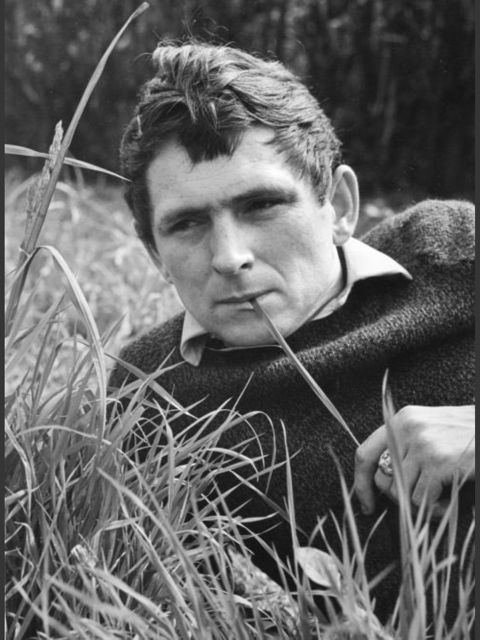


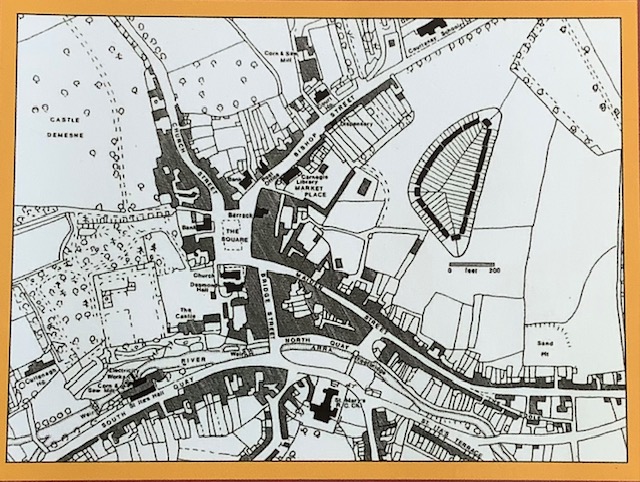

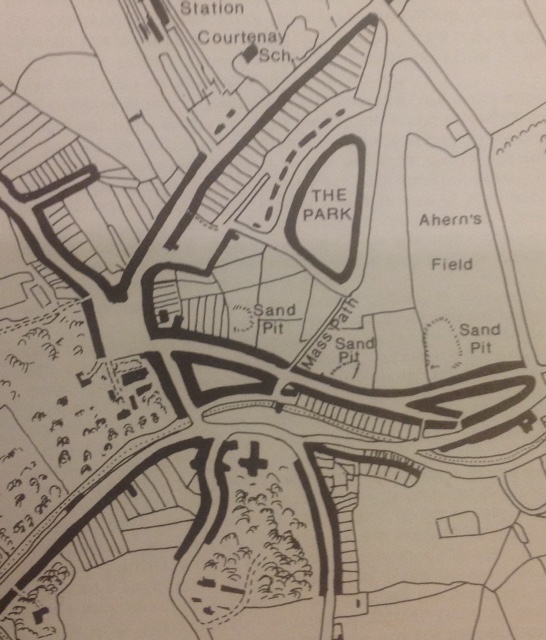


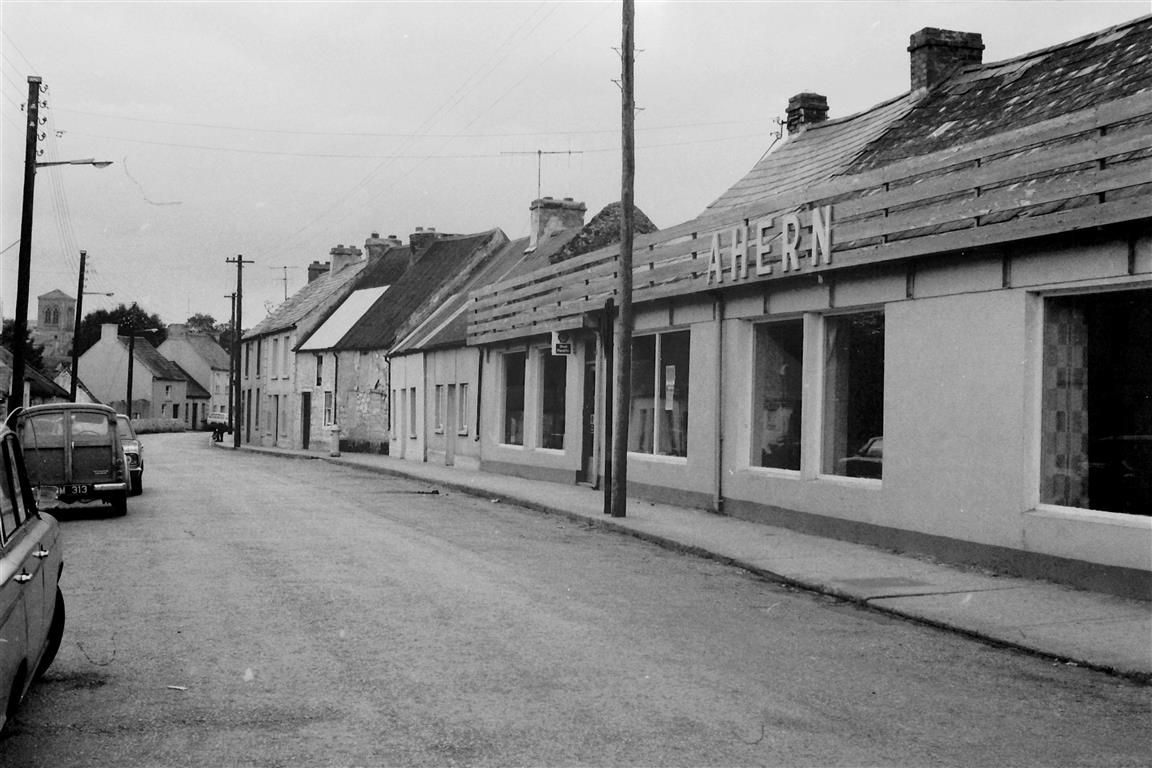

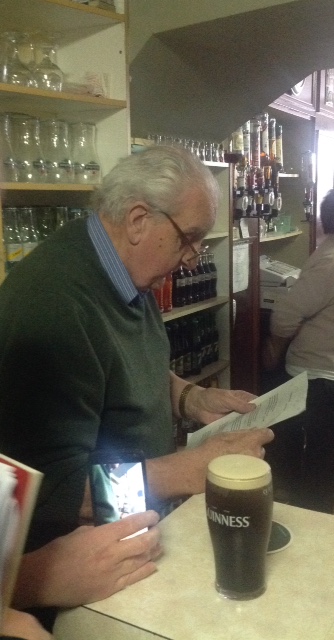


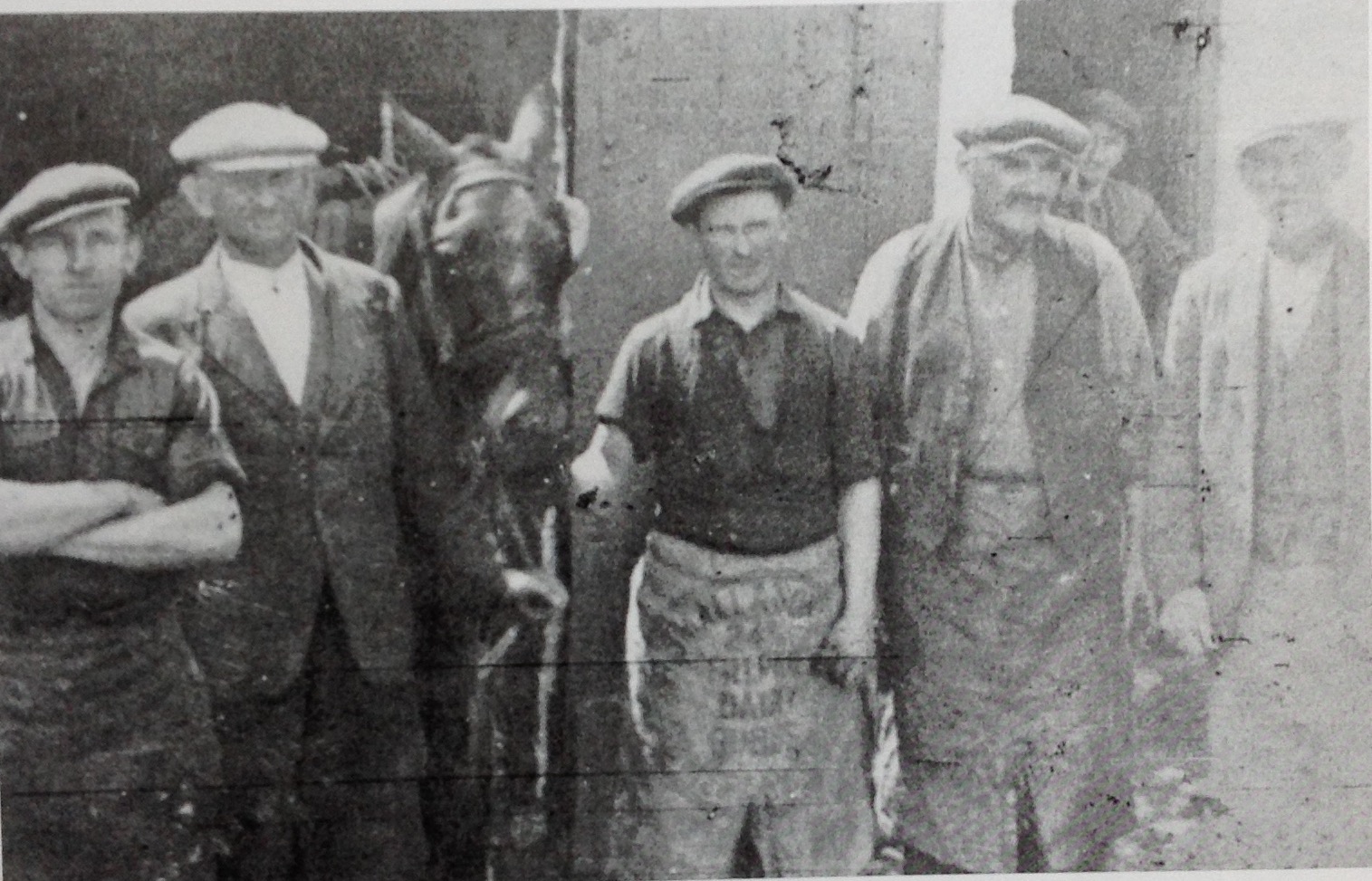


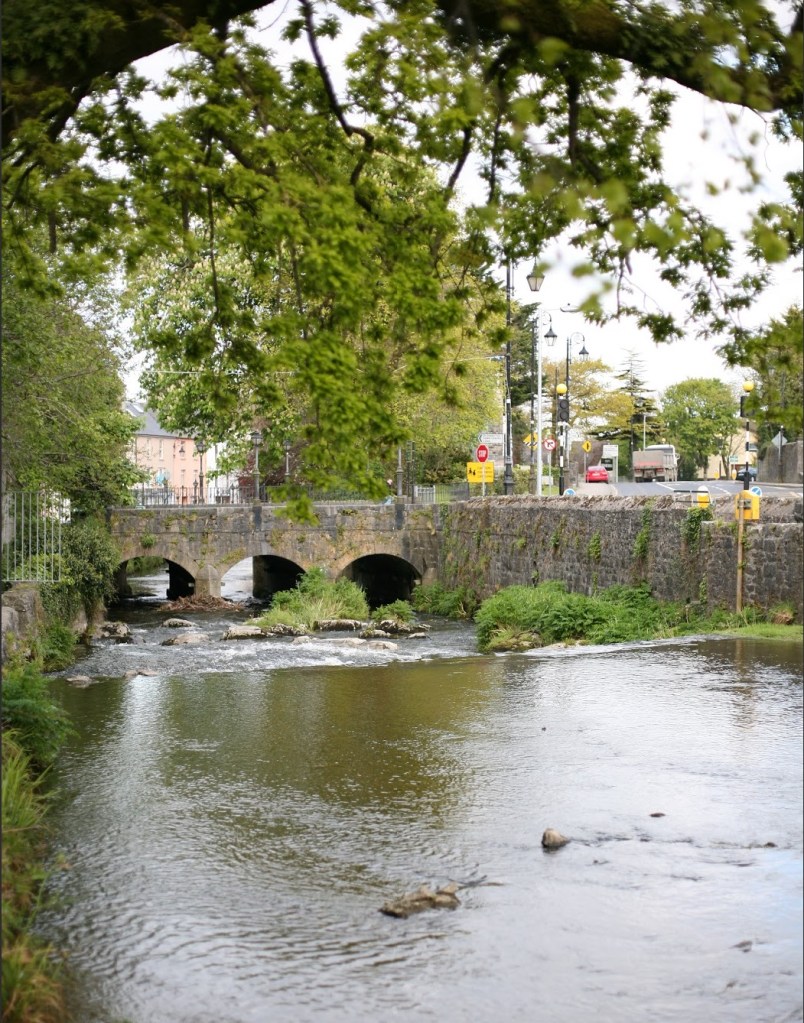

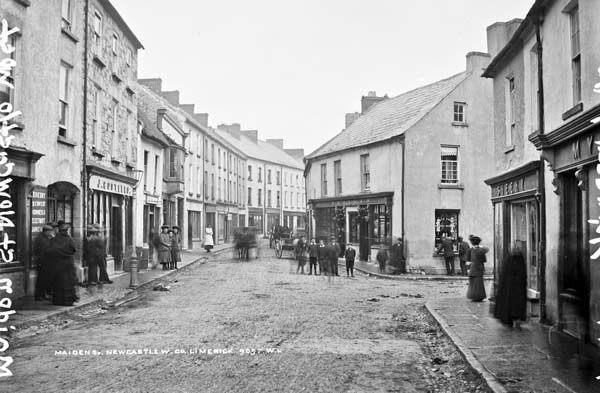
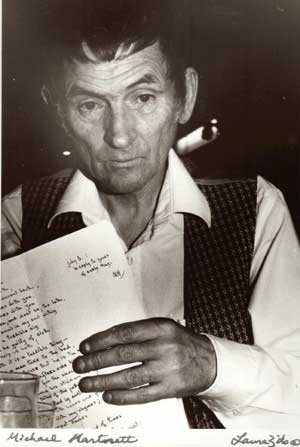

 Reviews Rants and Rambles
You must be logged in to post a comment.