Where did Michael Hartnett get the idea for the title of A Farewell to English?

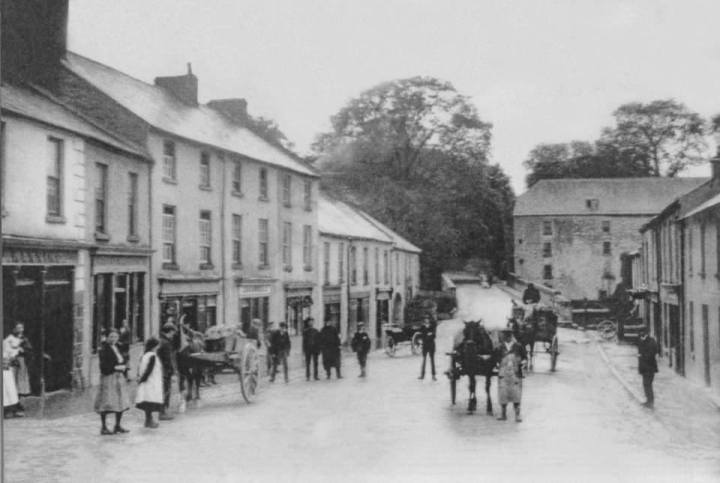
Bridge Street, Croom, taken in 1901. Image source: askaboutireland.ie

Abstract: Where did Michael Hartnett get the inspiration for the title of his collection, A Farewell to English?  We believe that Aindrias Mac Craith’s most iconic song, Slán le Máighe (Farewell to the Maigue), was an influence and reference point for Hartnett’s ‘Farewell’, as well as being the inspiration for both the naming of the title poem of Hartnett’s collection, A Farewell to English,  and, indeed, the naming of the collection itself.

A Christmas Collaboration: Vincent Hanley and Don Hanley

Michael Hartnett’s A Farewell to English caused quite a stir in literary circles back in 1975. It was seen by some as a bold change of direction for Hartnett, by then an established poet in the Irish literary scene and equally it was seen by others as a self-inflicted literary act of seppuku or self-immolation. Famously (infamously!) on June 4th, 1974, Hartnett had walked onto the stage of the Peacock Theatre in Dublin, at an event organised by the Goldsmith Press, and made one of the most intriguing, quixotic statements ever made by an established Irish poet. At that event, Michael Hartnett informed the audience of his resolution to cease writing and publishing in English and, from then on, to write and publish solely in Irish. He said his ‘road towards Gaelic’ had ‘been long and haphazard’ and until then ‘a road travelled without purpose’ but reassured his audience that he had realised and come to terms with his identity while acknowledging that his ‘going into Gaelic simplified things’ for him and provided answers which some considered to be naive but at least gave him ‘somewhere to stand’ (Walsh, 7). The statement was received largely negatively by critics and contemporaries, at best a bizarre misstep soon to be forgotten, at worst an ideologically motivated rebuke to the Irish poets writing in English at the time.

This dramatic ‘Farewell’ has always been somewhat problematic.  Many of his detractors at the time expected him, once he had made this momentous decision, to stick rigidly to his promise as if it had been set in stone. Inevitably, they criticised him and chided him when his ambitious project seemed to peter out in the mid-80s. Perhaps this reaction can be seen as an effort by his critics to finally ‘pigeonhole’ the poet and hold him accountable. However, Michael Hartnett’s variety as a poet – balladeer, satirist, love poet, translator, poet in Irish as well as English, and his complicated bibliography, with numerous compilations, collections and selections, as well as individual volumes from several different publishers, always had the effect of obscuring his achievement or hiding its core elements.

An artist moves from obsession to obsession, from one project to another, and nothing is ever set in stone; ‘Farewells’ are never ‘Adieu’, more ‘Au Revoir’; new beginnings are inevitable.  Hartnett was no different; he shifted from English to Irish and back again, he moved from city to country and back again; from the hillside in Glendarragh to Emmett Road in Inchicore, where, for good measure, he composed an extended haiku sequence in English.  As Peter Sirr points out, this is the ‘kind of creative restlessness that fed Hartnett as a poet but that sometimes made critics scratch their heads’ (Sirr, 294). That said, when assessing Hartnett’s ‘Farewell’, we think it is fair to say it is best realised by the poems and ballads themselves (both in English and Irish), which more fully express the motivating poetic philosophy which led to the theatrical stunt on the Peacock stage, rather than the stunt itself!

To appraise the decision to bid a farewell to English, therefore, we must look to the collection and the title poem of the collection.  If the concluding poem for which the collection is named is to be read as explanation, as well as a statement of intent, it is not a disillusionment with language, but rather with the use of that language in Ireland, and the cultural significance which that use carries. Hartnett’s decision, and the poem itself, are loaded with inferences within a political and postcolonial context. The poem’s significance, however, lies in the fact that it is not a poem against a language, but the political and dogmatic meanings which we have attached to that language.

His poem, ‘A Visit to Croom, 1745’, appears in that 1975 edition of A Farewell to English and is placed immediately before the title poem in the collection.  The poem consists of strikingly vivid imagery and there are a myriad of great historical undertones present; echoes of Séan Ó Tuama’s inn, with its bardic school of poetry is conveyed in bold, flamboyant brush strokes; echoes too of great battles, the Boyne, Athlone, Aughrim, the Siege of Limerick, the ill-fated Treaty of Limerick, Sarsfield and The Wild Geese.  In the poem Hartnett, the travelling spailpín, places himself back in Croom, probably in Ó Tuama’s hostelry, on his lonely journey back into the Gaelic tradition. He has trudged fourteen miles, in the shoes of those phantoms he visualises at Doody’s Cross, ‘in straw-roped overcoat’ to get here and all for nothing.  ‘Five Gaelic faces’ greet him, and all he can hear is ‘a Gaelic court talk broken English of an English king’.  His anger and disappointment are palpable,

It was a long way

to come for nothing.

Then the opening scene in ‘A Farewell to English’ takes place in yet another hostelry, Windle’s Pub in Glensharrold, Carrickerry, a few miles outside Newcastle West, where he introduces us to the raven-haired barmaid, Mary Donovan, who spurs him to verse, ‘her mountainy body tripped the gentle / mechanism of verse’ (Collected Poems, 141).  This imagined segment of the poem is used as a device through which Hartnett comments upon his poetic inspiration and process, as well as his relationship with the Irish language: ‘the minute interlock / of word and word began, the rhythm formed’ (Collected Poems, 141). The weight which the poet gives to ideas of tradition within his creative process is clear here, suggesting the importance which ideas of authenticity play.  Such shibboleths are never treated as unassailable, however, but rather made tangible through tactile imagery of sinking into, and sifting through, the morass of tradition: ‘I sunk my hands into tradition / sifting the centuries for words’ (Collected Poems, 141). However, because of his somewhat faltering Irish, he is forced to resort to age-old cliches to describe the barmaid using well-worn semi-classical phrases, ‘mánla, séimh, dubhfholtach, álainn, caoin’.  Harnett then rebukes himself for doing so – ‘What was I doing with these foreign words?’ (Collected Poems, 141). His project, his new direction, is to find a new poetic voice in Irish, not to rehash old clichés, and by doing so, come to Irish not as a ‘foreigner’ but as a fellow of Aindrias Mac Craith and the Maigue poets and in doing so, make his own contribution to the bardic tradition that has inspired him.

Then in the second section, he describes an encounter on the road which hovers somewhere between reality and dream, aisling (the Irish word for a vision) or epiphany.  The incident takes place at Doody’s Cross as the poet walks out one summer Sunday evening from Newcastle West to the cottage in Camas.  He is on his way to meet up with his uncle, Dinny Halpin.  He sits down ‘on a gentle bench of grass’ to rest his weary feet after his exertions when he sees approaching him three spectral figures from the Bardic Gaelic past – Andrias Mac Craith, Aodhagán Ó Rathaille, and Daíbhí Ó Bruadair.  These ‘old men’ walked on ‘the summer road’ with

sugán belts and long black coats

with big ashplants and half-sacks

of rags and bacon on their backs.

They pose as a rather pathetic group, ‘hungry, snot-nosed, half-drunk’ and they give him a withering glance before they take their separate ways to Croom, Meentogues and Cahirmoyle, the locations of their patronage, ‘a thousand years of history / in their pockets’.  Here, Hartnett is situating himself as their direct descendant and the inheritor of their craft. The enormity of this epiphany occurs at Doody’s Cross in Camas; the enormity of the task that lies ahead also terrifies and haunts him.

One of that pathetic trio at Doody’s Cross in Camas was Aindrias MacCraith (c. 1710 – 1795).  He was well known by his nickname, An Mangaire Súgach (The Merry Pedlar), which had been given to him by his mentor and great friend, Séan Ó Tuama an Ghrinn (c. 1708 – 1775). MacCraith was a roving Hedge School master, setting up school wherever he could find a few pupils, then moving on when numbers fell.  From the accounts that have come down to us, we learn that the Mangaire was a quintessential Limerick Rake; fond of sport, good company and deep drinking, and getting into more than one scrape with the clergy on account of his various indiscretions.

Mannix Joyce, that great local historian and chronicler of The Poets of the Maigue, recalls that,

‘For all his waywardness, he was a gifted singer. That poor wretch of a man, so often seen reeling from the tavern to the miserable hovel he called home, was one of the sweetest poets an age of song was to produce, a man whose poems will endure as long as the Irish language lives. He was a real lyricist, not unlike Burns and in his songs, he gives us an insight into his wild and vagrant life. He had a profound knowledge of the Irish language, and his poetry is full of magic and melody. He belonged to that strange Hidden Ireland of the 18th century, that Ireland that flowered with such profusion of poetry under the blasting winter winds of oppression. If he was careless and intemperate, much of it was due to a hellish code of laws then being enacted for the utter degradation of the old race’ (Limerick Leader, 13th October 1945).

Rake that he was, he could often be found in the company of Séan Clárach Mac Domhnaill, convenor of the Maigue School of Poetry and composer of Mo Ghile Mear, originally from Charleville, who has been described as the ‘chief Jacobite Poet in Ireland’.  Séan Ó Tuama, Fr. Nicholas O’Donnell, and those other poets of the Maigue were often to be found in his company, declaiming the hero-tales of Greece and Rome and discussing current European politics. Again, Joyce acknowledges the great contribution   of those Maigue Poets during the harshest of Penal times:

‘Those remarkable men arose in an age when learning of every kind was banned in Ireland and sprang from a people dubbed as ignorant and illiterate by their oppressors. They were the last guardians of the thousand-year-old ure of the Gael, and with their passing the Irish language, the repository of that ancient ure, faded and died in the rich plains of Limerick’ (ibid).

One of Aindrias McCraith’s best-known songs begins with the line: ‘Slán is céad ón taobh so uaim’. The song is usually referred to by the title: ‘Slán le Máighe’ (‘Farewell to the Maigue’), or ‘Slán Chois Mháighe’ (‘Farewell to Coshma)’, the name of the local Barony.  As mentioned already, Aindrias had a predilection for that dangerous combination of wine, women and song, and after one of many such indiscretions, he was exiled by the parish priest of Croom to Ballyneety, the place where Patrick Sarsfield destroyed the Williamite siege train in 1690.  His sad, poignant lament from there is addressed to his great friend Seán Ó Tuama, who, along with MacCraith, was one of the leading lights of the Court of Poetry which assembled in the village of Croom (‘Cromadh an tSuaicheas’, ‘Croom of the Merriment’), with its headquarters in the inn which was run by Ó Tuama and his wife, Muireann.  (The song is one of the great Irish slow airs and can be sung to the air of ‘The Bells of Shandon’).

Slán is céad ón daobh seo uaim

Cois Máighe na gaor na graobh na gcruach …

 (A hundred and one farewells from this place from me / To Coshma of the berries, the trees, the ricks).

Then there was the pathetic refrain:

Och ochón, is breoite mise,

Can chuid gan chóir gan choip gan chiste.

Gan sult gan seod gan sport gan spionnadh,

O seoladh mé chun uaighnis.

(Alas, alas, sick am I / Without portion, without justice, without company, without money / Without enjoyment, without treasure, without sport, without vigour / Since I was sent away to loneliness).

John O’ Shea and Anna Jane Ryan play Slán le Máighe (Farewell to the Maigue) live at Nun’s Island theatre in Galway.

Only ten miles separate Croom from Ballyneety in County Limerick, yet an important boundary line lies between them. Croom, in County Limerick, is located in the barony of Cois Máighe (Coshma), whereas Ballyneety is located in the barony of Uí Chonaill Gabhra (Connello).  So, the journey from one village to the other involved moving from one Barony to another; the equivalent in those days of moving from one jurisdiction to another. The title of the song (and its associated tune) is usually given in English as ‘Farewell to the Maigue’, as if the poet were saying goodbye to the river itself, which flowed majestically through his beloved place.

MacCraith’s ‘Farewell’, despite its sublime lyrics and haunting slow-air melody, is not meant to be taken at face value; it is meant as a ‘Slán go fóill’, as inconsequential a ‘Farewell’ as a French ‘Au Revoir’. He is, undoubtedly, showing off his great skill as a poet, but the reality is that he is being asked to take a temporary leave-of-absence from Croom until the current controversy abates. By its language and use of form, it is at once intentionally self-serious, theatrical and iconoclastic. Hartnett echoes this tone and mirrors this pose in his ‘Farewell’ – at times theatrical, self-serious, bombastic – but also, in a flash, heartfelt, exposed, human.

Unfortunately, Aindrias MacCraith did eventually have to bid a sad final farewell to his good friend and mentor, Séan Ó Tuama.  It is doubtful if the Mangaire Súgach would ever have written a verse of poetry were it not for the encouragement and friendship of Séan Ó Tuama.  He had written nothing before he came to Croom, and after the death of Ó Tuama, he lapsed into silence again. He left Croom and sang no more. He had outlived Séan Clárach (d. 1754) by almost 40 years and his friend, Séan Ó Tuama, by nearly 20. He had seen the last of the great Maigue School of Poetry, and his declining years were saddened by the decay of the old language in the district where once it flourished.

Of the three phantoms that accost Hartnett at Doody’s Cross in those early magical sections of ‘A Farewell to English’, Hartnett translated the work of Ó Rathaille and Ó Bruadair but not MacCraith, one of his great influences from the old dispensation, the Gaelic bardic past.  However, we believe that MacCraith does play an important role in the naming of Hartnett’s poem, ‘A Farewell to English’.  We know that Hartnett was obsessed with Croom, as the last bastion of the old Gaelic Schools of poetry.  He took great pride in the fact that he was the only modern Irish poet to have been born in Croom – he spent his first few days in St. Stephen’s Maternity Hospital, located in the village!  This near obsession with Croom and the Filí na Máighe (The Maigue Poets) may, therefore, have had some influence on Hartnett’s choice of title for ‘A Farewell to English’.  Our theory is that Hartnett borrowed the title of Aindrias MacCraith’s most iconic and poignant poem, ‘Slán le Máighe’, for his own ‘farewell’ and self-imposed exile in West Limerick, where he had come to ‘court the language of my people’. MacCraith had been forced to move to nearby Ballyneety for a time because of his indiscretions, and in 1974, Hartnett decamped from the Dublin literary scene and set up home in rural West Limerick, ‘in exile out foreign in Glantine’.

Those ten years spent in Glendarragh were among the most productive of his career – it may not have been a permanent ‘Farewell’, but it was a productive one.  It is obvious that this decision to ‘go into the Gaelic’ had been simmering for some time.  Indeed, 1975 saw a flourish of publications, including A Farewell to English but also the iconic Cúlú Íde / The Retreat of Ita Cagney.  Then, probably his most accomplished collection in Irish, Adharca Broic, was published in 1978, followed by An Phurgóid in 1983, Do Nuala: Foighne Crainn in 1984 and his fourth collection in Irish, An Lia Nocht, appeared in 1985.    In parallel to this ‘serious’ output, he was writing and entertaining the locals with ballads, some serious or semi-serious like ‘A Ballad on the State of the Nation’, which was distributed as a one-page pamphlet like the ballads of old and even included original linocuttings by local artist Cliodhna Cussen. Other ballads were more contentious and even semi-libellous (or fully slanderous!), such as ‘The Balad (sic) of Salad Sunday’ and ‘The Duck Lovers Dance’.  These latter creations were written under the very appropriate nom de plume, ‘The Wasp’!  As time passed, Hartnett’s ‘farewell’, similar to MacCraith’s, was seen for what it was, a ‘Slán go fóill’.

During this period, he also undertook the translation of Daibhi Ó Brudair’s poems, which were published in 1985, and his obsession with these seventeenth-century precursors continued with his later translations of Aodhagán Ó Rathaille (1993) and Pádraigín Haicéad (1999).  Finally, following his departure from Glendarragh, the collection A Necklace of Wrens (a collection of poems in Irish with translations in English by the poet himself) was published in 1987.

The inability of critics to pigeonhole Hartnett has been one of the major problems in sustaining his immense legacy.  In turn, Hartnett’s continual search for a spiritual and cultural home has not made it easy.  And his restlessness did not end.   Once back in Dublin, there were more new beginnings, more farewells.  Hartnett seemed to make yet another new beginning with Poems to Younger Women (1988). Then again, in Selected and New Poems (1994), those long poems such as ‘Sibelius in Silence’ or ‘The Man who Wrote Yeats, the Man who Wrote Mozart’, and ‘He’ll to the Moor’ mark still new accomplishments in his overall oeuvre.  The truth, of course, is as Peter Sirr asserts, Michael Hartnett, ‘is the sum of all of these identity shifts, and to consider any one of these aspects in isolation is to miss the overall picture of a complex, restless and rewarding poet’ (Sirr, 294).

A half-century of hindsight allows us to have a clearer perspective.  His very theatrical ‘Farewell’ from the stage of The Peacock Theatre needs to be understood, as he and Aindrias MacCraith meant it to be – merely a ‘Slán go Fóill’ – as inconsequential and as temporary as a French ‘Au Revoir’.

Postscript

Hartnett’s draft of his ‘curse’ on the Féile na Máighe committee. Note these are from 1973, and it is clear that he is already working on a draft of Cúlú Íde / The Retreat of Ita Cagney.

In the late 60s and 70s, there was a very successful festival held annually in Croom, celebrating the work of the Maigue Poets.  I came across this little gem while doing a bit of research in NLI back in February 2025.  Hartnett was mightily peeved that he had not been invited as often as he felt he should.  His papers contain a draft of a curse he put on the organising committee, written in Irish in the old Gaelic script.  It transpired that he hadn’t been invited to the 1973 Féile, nor indeed to the 1972 or 1971 iterations either.  He was not pleased, and so, in true bardic fashion, he placed a poetic curse on the organisers.  Translated, it reads:

Whereas, I was born in Áth Cromadh an tSúbhacais thirty-two years ago, and as I am a poet who is famous the length and breadth of all of Ireland, even in British Ulster, and that I have received invitations to numerous poetry festivals in England and America and since I did not receive an invitation from my own people to the festival in the place of my birth this year or last year or the year before last, I hereby curse that festival – cuirim mo mhallacht orthu agus mallacht mo mhallachta,

Is mise,

Míchéal Ó hAirtnéada

(arna nglaoghtar Michael Hartnett sa Sacsbhearla, Priomhfíle Múmhan)

References:

Hartnett, Michael. A Farewell to English, Oldcastle County Meath, Gallery Press, 1975.

Hartnett, Michael. Cúlú Íde The Retreat of Ita Cagney,  Goldsmith Press, 1975

Hartnett, Michael. Adharca Broic, Oldcastle, County Meath. Gallery Press, 1978

Hartnett,  Michael. An Phurgóid, Coiscéim, 1983.

Hartnett, Michael. Do Nuala, Foidhne Chuainn, Coiscéim, 1984.

Hartnett, Michael. An Lia Nocht,  Coiscéim, 1985.

Hartnett, Michael. Ó Bruadair, Oldcastle: Gallery Press, 1985.

Hartnett, Michael. A Necklace of Wrens: Poems in Irish and English, Oldcastle County Meath,  Gallery Press,  1987.

Hartnett, Michael. Poems to Younger Women, Oldcastle, County Meath, Gallery Press, 1988.

Hartnett, Michael. Haicéad, Oldcastle: Gallery Press, 1993.

Hartnett, Michael. Ó Rathaille: The Poems of Aodhaghán Ó Rathaille, Oldcastle: Gallery Press, 1999.

Hartnett, Michael. Selected and New Poems, Oldcastle,  County Meath,  Gallery Press, 1994.

Hartnett, Michael.  Collected Poems, Oldcastle: The Gallery Press, 2001.

Michael Hartnett Papers, National Library of Ireland, 35,879/1, 35,879/2 (1)

Mannix Joyce / Mainchín Seoighe, folklorist and local historian from Tankardstown, Kilmallock, taken from his weekly column in The Limerick Leader called Odds and Ends, 13th October, 1945.

Sirr, Peter. Michael Hartnett, in Dawe G, ed. The Cambridge Companion to Irish Poets. Cambridge Companions to Literature.  Cambridge University Press; 2017, (Chapter 22: p. 294 – 306).

Walsh, Pat. A Rebel Act: Michael Hartnett’s Farewell to English, Mercier Press, Cork, 2012.
Éigse Michael Hartnett 2022

IMG_4599

We are on the final countdown to the Éigse Michael Hartnett Festival for 2022! There is a wide-ranging programme of events between workshops, poetry readings, music, exhibitions, film, book launches, street entertainment, and even a bus tour!

We’ve had some events already with the young people in the town in the schools and the youth organisations.  Colm Keegan has conducted workshops in creative writing in SMI and in Desmond College and the results of their labours will be on view during the Festival weekend. 

Aileen Nix, a local artist, has been working with the local Foróige group in town to produce lanterns for the opening parade.

Edward O’Dwyer also worked with the Foróige group and their poems will be on display around town.

The idea of the Éigse is to recognise Michael Hartnett’s genius and to celebrate his life and his poetry.  As you know he died in 1999 at the age of 58 and there has been an annual Éigse every year since – even during Covid we went online and kept it going. 

This year we are proud to announce that thanks to the generosity of Limerick City and County Council we have been able to increase the value of the annual Michael Hartnett Poetry Award to €8,000 and we are delighted that Eleanor Hooker from Dromineer on the shores of Lough Derg is this year’s deserving winner of the prestigious award.

We received great news yesterday with the confirmation that the recently acquired portrait of Hartnett by Edward McGuire which is now in the City Gallery will be on display in Newcastle West for the opening of this year’s Éigse.

THURSDAY

We kick things off on Thursday the 6th of October at 7.00pm in the Square with a rousing street performance by The Hit Machine Drummers, a kilted brotherhood of rhythmic warriors who enthrall and entertain with dynamic, captivating drumming. They will lead us in a lantern parade with members of the Foroige Youth Club in Newcastle West. The parade will leave the Square and travel down Hartnett’s beloved Maiden Street to the Council Offices down near the Longcourt House Hotel. There this year’s Éigse will be officially opened by the Lord Mayor, Francis Foley who will present this year’s poetry prize to Eleanor Hooker.  Other special guests on the night will be Gerard Stembridge and music from Brian Hartnett.

FRIDAY

On Friday the 7th we begin bright and early with a poetry reading by Eleanor Hooker which takes place upstairs in Marguerites at 11am.

This is followed by lunch with Mark Patrick Hederman former Abbott and Headmaster in Glenstal at 1.00pm at the Desmond Complex, where a light lunch will be served to accompany a reading from Dr. Hederman’s recently published works including Crimson and Gold: Life as a Limerick.

The evening events at the Longcourt House Hotel start at 6.00pm with a belated book launch that fell victim to Covid in 2020.  Keith McCoy will be reading from his debut novel Hello Larry Barry and from his recently published second novel The Jude Crew.  Both novels are set in Newcastle West although The Jude Crew spreads its wings a bit wider.

At 8pm in The Longcourt House Hotel, we have a fantastic poetry reading by two former Michael Hartnett award winners Kerry Hardie and Peter Sirr who were also our judges this year for the Michael Hartnett Poetry Award. The reading will be followed by live music from cellist Núria Vizcaino Estrada from Barcelona and currently studying for her MA in Classical String Performance in UL.

Also on Friday at 8.00pm you can enjoy two film screenings over at the Desmond Complex in partnership with Newcastle West Film Club and Askeaton Contemporary Arts. Based on the novel Foster by Claire Keegan, An Cailín Ciúin, is the acclaimed award -winning Irish-language film that has broken all Irish box office records this year. This will be followed by Seanie Barron: Only in Askeaton, a short film that dips into the life and work of wood artist Seanie Barron and examples of his work will also be on exhibition at the Red Door Gallery throughout the weekend.

SATURDAY

Saturday the 8th begins at the Desmond Complex with the annual Michael Hartnett Memorial Lecture at 11am. This year the lecture is being given by Historian and former Head of Special Projects at the National Archives of Ireland, Caitriona Crowe. Caitriona will deliver the lecture on: How did Ireland do in its decade of centenaries?  So, the lecture should be very thought-provoking and I’m looking forward to that.

This will be followed at 1.30pm by music and memories of Hartnett from uilleann piper and former RTE producer Peter Browne.  He has some great stories to tell about being on tour with Michael Hartnett back in the 80s.

We are particularly happy this year to be taking the Festival outside NCW  in partnership with the Kileedy Development Association and to acknowledge the wonderful work and community building going on in Raheenagh.  So, at 3 p.m. the Hartnett Bus Tour will depart from the Desmond Complex taking in Camas, home of Michael Hartnett’s grandmother Bridget Halpin, whom he immortalised in his beautiful poem ‘Death of an Irishwoman’.  Then it’s on to the Poet’s Corner at Killeedy Eco-Park and finishing with tea and tunes at the Tigh Cheoil in Ashford. 

Saturday evening’s events will begin with a reading from author Mary Costello at 8.00pm at the Longcourt House. She will be reading from her short story collection, The China Factory (2012), and her two novels Academy Street (2014), and The River Capture (2019) which was shortlisted for many awards.

The reading will be followed by live music from Mick Hanly who needs no introduction to Limerick audiences.   He is one of our foremost singer/songwriters, and of course, Mick was born and reared in Limerick.  We expect a big crowd in The Longcourt House Hotel next Saturday night.

SUNDAY

Salad Sunday is a new addition to the Éigse Michael Hartnett programme for 2022 and celebrates one of Michael Hartnett’s most amusing poems, The Balad of Salad Sunday, which pokes fun at an incident in Newcastle West back in the early 80s.

Salad Sunday is intended as a fun, entertaining event for the community and will take place in the Square, the Red Door Gallery, and the Desmond Complex.  Seamus Hennessy will be the MC for the events in the Square and there should be plenty of buskers and food stalls  – so come along and enjoy the craic – hopefully, the weather holds up!!

Our final two events of the weekend are the launch of two new books:  Gabriel Fitzmaurice is launching the new edition of Farewell to Poetry and Tom Moloney is launching his first collection of short stories called Overcoming the Joy and Other Yearnings.  Both take place at 1.00pm and 1.30pm respectively at the Desmond Complex.

As you can see it’s a full programme with something for everyone young and old, so we hope you can join us over the weekend.

Many of the events are free but some need to be booked on Eventbrite although money will also be taken at the door. Check out our website http://www.eigsemichaelhartnett.ie for up-to-date details of all the events.   

Éigse committee 2022: Vicki Nash, Norma Prendeville, Rachel Lenihan, John Cussen, Rose Liston, Rossa McMahon, Mary Carroll, and Vincent Hanley

082795e82fccaf04fa5bfd20023ca6f84136202c28d2a6c14a22add57f427c2e-rimg-w1200-h1800-gmir

An Analysis of the Poetry of John Montague (1929 – 2016)

Great-Book016C-PMF-John-Montague-poet-no-border
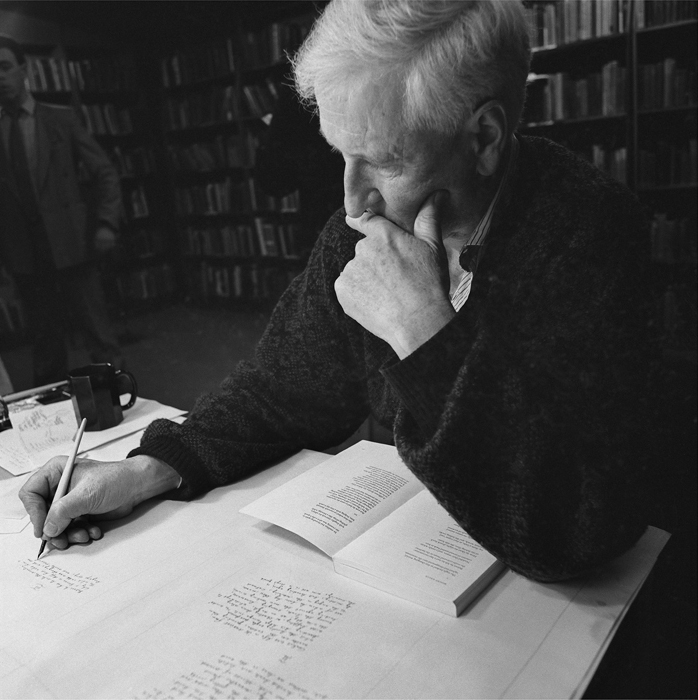
The poet John Montague at work.

THIS IS A PERSONAL REVIEW OF SOME THEMES AND ISSUES WHICH FEATURE IN THE POETRY OF JOHN MONTAGUE. YOU SHOULD CONSIDER THESE IDEAS, THEN RE-EXAMINE THE POEMS MENTIONED FOR EVIDENCE TO SUBSTANTIATE OR CONTRADICT THESE INTERPRETATIONS. IN OTHER WORDS, MAKE YOUR OWN OF THESE NOTES, ADD TO THEM OR DELETE FROM THEM AS YOU SEE FIT.

THE FOLLOWING SELECTION IS SUGGESTED BECAUSE THEY DEAL WITH THE MAJOR THEMES AND STYLISTIC DEVICES WHICH RECUR IN MONTAGUE’S POETRY:
• The Locket (TL)
• The Cage (TC)
• Like Dolmens Round my Childhood the Old People (LDRMC)
• The Wild Dog Rose (TWDR)
• The Same Gesture (TSG)
• Windharp (W)
• A Welcoming Party (AWP)

HE SAID HIMSELF THAT WRITING POETRY WAS ‘LIKE THE DROPPING OF A ROSE PETAL INTO THE GRAND CANYON, A FUTILE ACT’. MAYBE, HOWEVER, YOUR VIEW OF LIFE HAS BEEN CHANGED BY READING HIS POETRY AND MAYBE THE GRAND CANYON IS SWEETER FOR THAT ROSE PETAL AND MAYBE THE WORLD IS A BETTER PLACE BECAUSE OF JOHN MONTAGUE’S POETRY!

YOUR AIM SHOULD BE TO PICK YOUR OWN FAVOURITES FROM THIS SELECTION AND GET TO KNOW THEM VERY WELL.

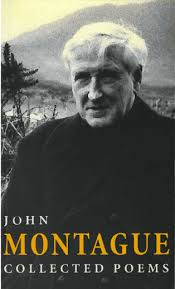
John Montague
Garbh Fhaiche = The Rough Field = Garvahey

Relevant Background

• John Montague was born in Brooklyn, New York early in 1929.
• He was son of James Montague, an Ulster Catholic, from County Tyrone, who had immigrated to America in 1925 after involvement in republican activities.
• His mother was Molly Carney, but she played little part in his life after his birth. Yet she marred John’s life by her absence from it.
• James Montague had the typical exile’s optimistic hope of benefiting from the American Dream.
• But when his wife, Molly, arrived three years later with their two first sons, James could provide nothing better than the Brooklyn slums for their family home.
• Regarding his background, John Montague’s grandfather was a Justice of the Peace, schoolmaster, farmer, postmaster and director of several firms.
• John had a typical Brooklyn kid’s early childhood, playing with coins on tram- lines and seeing early Mickey Mouse movies.
• Because of the economic effects of the Depression era John Montague was shipped back in 1933 at the age of four to his family home at Garvaghey, in County Tyrone.
• John Montague’s mother rejected him after a painful birth. This rejection and marriage problems were contributory causes to the decision to send John to be fostered from the age of four by two aging unmarried aunts.
• Later, when his mother ended her marriage and returned to Ulster, she continued to ignore John, a fact which deeply hurt him and affected both his speech and his ability to socialise with women.
• However, the switch from city kid to country-village boy in Ulster benefited John and proved to be a ‘healing’ as he called it in a poem not on the course.
• With the help of his imagination, he adopted to life on a farm that doubled as the local rural post-office. Because of this he got to know the local characters and gossip very well. We see this in ‘Like Dolmens’ and ‘The Wild Dog Rose’.
• He was first taught in Garvaghey national school.
• For secondary education John went to an austere boarding school run by strict priests in Armagh. There, against his will, John learned about the long tradition of Irish poetry from an influential teacher.
• While studying for his degree in Dublin after World War Two, John found Dublin to be a very old fashioned place, with the atmosphere over-controlled, especially by priests.
• Afterwards he went to work and complete his education in American Universities. He honed his poetic skills while in America.
• John Montague then got married and lived for a time in France where he continued to write poetry and to write short stories. There for a while he became a friend of the renowned Irish playwright, Samuel Beckett.
• He worked as Paris correspondent for The Irish Times for three years. He spent a total of twelve years living in France.
• After journalism, he began a long career as a university lecturer and poet. He has lectured at universities in France, Ireland, Canada, and the United States.
• He is the author of numerous collections of his own poems and editor of anthologies of works of other poets.
• He has received many awards, including the Irish-American Cultural Institute’s Award for Literature, the American Ireland Fund Literary Award and a Guggenheim Fellowship.
• In 1987, Montague was awarded an honorary doctorate by the State University of New York. The State Governor Mario M. Cuomo praised Montague for his outstanding literary achievements and his contributions to the people of New York.
• In 1998, he was named the first Irish Professor of Poetry. This is a position he held for three years, equally divided among The Queen’s University in Belfast, Trinity College Dublin, and University College Dublin.
• He now divides his time between West Cork and France.
• John Montague has a major international reputation as an Irish poet, the first major Northern Irish Catholic poet.
• He is a poet who describes private feelings as well as public themes.
• Much of his poetry centres on his personal family history and the culture and history of Catholics in Northern Ireland, including the twenty-five year long period of the Troubles.
• For example, his greatest poem ‘The Rough Field’ is set on the farm where he was reared from the age of four and was influenced by the people he grew up among. Three course poems e.g. ‘Like Dolmens Round My Childhood’ come from ‘The Rough Field’.
• The Civil Rights Movement in 1960s Northern Ireland also influenced John Montague. His did a public reading of his poem ‘New Siege’ outside Armagh Jail in 1970 to support a jailed civil rights protestor, the nationalist Bernadette Devlin.
• As an adult he spent some time trying to recapture the American experience, a search reflected in some of his poems.
• Separation from his father all his life affected him emotionally as we read in his poem ‘The Cage’.
• The pain of rejection by his mother was even more traumatic for his personal development as we read in the poem ‘The Locket’.
• John Montague is renowned internationally as one of the major Irish poets of the twentieth century.

  • Montague died at the age of 87 in Nice on 10 December 2016 after complications from a recent surgery. He is survived by his wife Elizabeth Wassell, daughters Oonagh and Sibyl and grandchildren Eve and Theo.

john-montague

MAJOR THEMES IN MONTAGUE’S POETRY

Childhood:  Like many poets on our course, Montague is fascinated with the subject of childhood. AWP describes the relative safety and comfort of a childhood in Ireland during the war. While the rest of Europe was plunged into destruction, Ireland remained safely on the ‘periphery of incident’. While young boys were fighting and dying all over Europe the young poet was free to ‘belt a football through the air’. Yet the ‘drama of unevent’ that constituted the war years in Ireland is briefly shattered for the poet when he encounters the newsreel of the death camps and discovers the grim reality of ‘total war’.

What might be described as a darker aspect of childhood is explored in LDRMC. There is a sense in this poem that the Irelands of Montague’s youth was a dark and haunted place, a land where ancient beliefs and superstitions still survived. We get a sense that during his childhood many people still believed in myths and magic, in ghosts, curses and supernatural demons; ‘Ancient Ireland, indeed! I was reared by her bedside, / The rune and the chant, evil eye and averted head/ Fomorian fierceness of family and local feud.’ For an imaginative child growing up in this society, it was easy to believe that magic still existed, that ancient monsters such as the Fomorians still roamed the land, in the dark countryside just beyond the reach of the farmhouse lights.

A similar theme is evident in TWDR where the poet describes his childhood terror of an old woman that lived in his locality. This poor and seemingly quite ugly old woman terrified the young poet with her ‘hooked nose’, her ragged clothes and the pack of dogs that always surrounded her. To him, she seemed a kind of witch, a terrifying supernatural figure who ‘haunted my childhood’. Yet while Montague’s poetry described this ‘Ancient Ireland’ it also records it’s passing away. As the country became more modern and Europeanised the old legends and superstitions no longer exerted the same power. As he grows up he can see the old legends and superstitions for what they were. This is particularly evident in TWDR where he realises that the ‘cailleach’ that so terrified him in his youth is only human after all and he ends up chatting to her by the roadside, reminiscing and gossiping ‘in ease’ about the people of the parish.

Violence: Montague’s work is haunted by the threat and the possibility of violence. This is particularly evident in ‘A Welcoming Party’ (AWP) where the young speaker is left greatly troubled by his encounter with images of the holocaust. He pulls no punches in his depiction of the horrors of war. His description of the holocaust victims here has been described as disgusting, bizarre and disturbing. Their mouths are described as ‘burnt gloves’, their bodies are depicted as nests full of insect eggs and their hands are depicted as begging bowls.

‘The Wild Dog Rose’ (TWDR), meanwhile, presents violence in an Irish context. The depiction of the attempted rape of the old woman is almost as shocking as that of the holocaust victims. The drunken labourer invades the old woman’s home whirling his boots in an attempt to ‘crush the skulls’ of her dogs. There is something truly horrific about the image of him wrestling her to the ground and ‘rummaging’ in her ‘tasteless trunk’ of a body. Yet this violent scene serves an important symbolic function, representing the violence and misery that had been visited upon Ireland over the centuries. The violation of the old woman echoes many ancient Irish songs and poems in which a woman, representing the land of Ireland, is violated by some ruthless villain who represents the foreign oppressor.

The hidden side of human personalities: John Montague contemplates the vulnerable underside of people who may appear harsh on the surface. ‘Maggie Owens… all I could find was her lonely need to deride’ [LDRMC] ‘Mary Moore… a by-word for fierceness… dreamed of gipsy love-rites’ [LDRMC] Montague also senses how a human hurt can deform a life. ‘the cailleach, that terrible figure who haunted my childhood but no longer harsh, a human being merely, hurt by event’ [TWDR] He reveals the real personality behind the public smiles of his father. ‘My father… extending his smile to all sides of the good (all white) neighbourhood… the least happy man I have known’ [TC] Montague is aware of the duality of our gestures in different contexts. An everyday movement of the hand in public, in traffic, that is mechanical in effect, can be deeply intimate in effect in the privacy of lovemaking, ‘changing gears with the same gesture as eased your snowbound heart and flesh’ [TSG]

John Montague is able to forgive his mother for rejecting him because he sees her pain and senses the different personality she had before her life turned harsh. ‘my double blunder… poverty… yarning of your wild young days… the belle of your small town… landed up mournful and chill’ [TL]

The impact of family on his life: As we have discovered, Montague’s family situation was far from ideal. Like thousands of Irish people, his parents were forced to emigrate to America where they struggled to survive in the face of extremely difficult circumstances. The consequences of this struggle are movingly portrayed in ‘The Cage’ (TC). The battle with poverty and the effort to make a home in a new society have clearly scarred the poet’s father who is described as ‘the least happy man I have known’. His deep unhappiness is evident in his alcoholism. Each night he is compelled to drink himself into oblivion as if only this will numb the pain of his existence, ‘the only element he felt at home in any longer: brute oblivion’.

Yet the poet’s mother, it seems, suffered even more. He claims that the brutal circumstances of her life – emigration, poverty, a loveless marriage – damaged her in some fundamental way, leaving her ‘wound’ in a ‘cocoon of pain’. She is unable to bond with her son and eventually sends him back to Ireland – causing great psychological damage to both herself and her son, so much so that in ‘The Locket’ (TL), he refers to her as a ‘fertile source of guilt and pain’.

The harshness of life: John Montague portrays the suffering of lonesome, impoverished locals from the hills around Garvaghey (Garbh Fhaiche = rough field = Garvahey). ‘When he died his cottage was robbed… driving cattle from a miry stable… forsaken by both creeds… Fomorian fierceness of family and local feud’ [LDRMC] He depicted the suffering of his father, a prisoner of poverty in New York. ‘ my father, the least happy man I have known…the lost years… released from his grille… drank neat whiskey until… brute oblivion.’ [TC] Montague spells out the extent of his mother’s physical pain and anguish. ‘ source of guilt and pain… the harsh logic of a forlorn woman’ [TL] He portrays the life-long loneliness and the brutal rape of a seventy-year-old spinster. ‘the cailleach… hurt by event… loneliness, the monotonous voice in the skull that never stops… he rummages while she battles for life bony fingers reaching desperately to push against his bull neck…’ [TWDR] Montague also portrays the horror of concentration camps. ‘From nests of bodies like hatching eggs flickered insectlike hands and legs’ [AWP]

A sense of place: Montague observes and draws the landscape of his childhood. ‘the cottage, circled by trees, weathered to admonitory shapes of desolation…where the dog rose shines in the hedge’ [TWDR] ‘a bend in the road which still shelters primroses’ [TC] ‘ a crumbling gatehouse. Famous as Pisa for its leaning gable’ [LDRMC] ‘From main road to lane to broken path’ [LDRMC] Montague pinpoints the essence of nature’s music as created by the wind in the Irish landscape. ‘seeping out of low bushes and grass, heatherbells and fern, wrinkling bog pools, scraping tree branches…’ [W] Montague evokes the horror of Auschwitz. ‘a welcoming party of almost shades… an ululation, terrible, shy’ [AWP] He also neatly depicts the irrelevance of Ireland geo-politically in the 1960s. ‘to be always at the periphery of incident’. He mentions what would strike an Irish visitor to New York. ‘listening to a subway shudder the earth.’ [TC] Montague sums up the essence of a Brooklyn neighbourhood. ‘(all-white) neighbourhood belled by St Theresa’s church.’ [TC] Montague evokes the intimacy of the marriage bedroom. ‘a secret room of golden light… healing light… gesture … eased your snowbound heart and flesh.’ [TSG]

Isolation and separation: Montague’s parents suffered separation and social isolation. ‘My father… brute oblivion’ [TC] Like his father, his mother suffered from self-imposed oblivion. ‘the harsh logic of a forlorn woman resigned to being alone’ [TL] Montague with great sympathy captures the reason for an odd old lady’s personality. ‘the only true madness is loneliness, the monotonous voice in the skull that never stops because never heard’ [TWDR] Her isolation means that she seeks no redress from the authorities for rape. She suffers with a stoicism born of a folk version of religion. ‘she tells me a story so terrible I try to push it away… I remember the Holy Mother of God and all she suffered.’ [TWDR] Montague captures the isolation of his scattered elderly rural neighbours. ‘Jamie McCrystal sang to himself… Maggie Owens… even in her bedroom, a she-goat cried… Billy Eagleson… forsaken by both creeds… ‘ [LDRMC]

Human love: Montague is quite famous within the literary world as a poet of love. Intense descriptions of erotic love, in particular, recur in many of his poems. We see this in ‘The Same Gesture’ (TSG) where the couple’s lovemaking is unashamedly celebrated: ‘It is what we always were- / most nakedly are’. Lovemaking is presented as something spiritual and holy. The couples’ hands moving on each other’s skin, we’re told, is like something from a religious ceremony: ‘the shifting of hands is a rite’. Love and sexual intimacy are depicted as having a powerful healing quality: ‘Such intimacy of hand / and mind is achieved / under its healing light’. Oneness is also celebrated, the notion that two lovers can somehow forget themselves and blend into one: ‘We barely know our / selves there.’

TSG, too, is intensely aware of the fragility of love. Emotional and sexual intimacy can be a spiritual and ‘healing’ thing. Yet a relationship can also become bitter and sour leading to hatred and even violence. The poem suggests that in this modern age love and intimacy are becoming more and more difficult to maintain. In this busy world where time and space are such a precious commodity, it can be easy to lose sight of what matters. The pressures of ‘work, phone, drive through late traffic’ must not cause us to neglect our relationships. Love, the poem implies, requires private space, a ‘secret room’ if it is to flourish if its ‘healing light’ is to shine. In the modern world, however, such space is increasingly difficult to come by.

Nature: As with other poets like Kavanagh and Frost, Montague’s work is regularly inspired by the natural world. This is very evident in ‘Windharp’ (W), in particular where he lovingly describes the Irish landscape with its ‘heather bells and fern, / wrinkling bog pools’. In this phrase we see Montague’s powers of description at their best: we can easily imagine the ripples on a bog pool resembling wrinkles on a piece of cloth.

A love of the Irish landscape is also evident in LDRMC with its celebration of the folk who live among the mountains and glens of rural County Tyrone. TWDR, too, displays the poet’s love of nature with its meticulous description of the tender wildflowers with their ‘crumbling yellow cup / and pale bleeding lips’. Yet the harsher aspects of nature are also lovingly rendered, such as the old woman’s rough field with its ‘rank thistles’ and ‘leathery bracken’. He observes nature’s beauty in eloquent language, ‘Gulping the mountain air with painful breath’ [LDRMC] ‘weathered to admonitory shapes of desolation by the mountain winds’ [TWDR]

Montague personifies the effects of climate on the Irish landscape as ‘ a hand ceaselessly combing and stroking the landscape’ [W]. He is also aware that not all that is beautiful is strong, ‘dog rose… at the tip of a slender, tangled, arching branch… weak flower, offering its crumbling yellow cup and pale bleeding lips fading to white’ [TWDR]

It is unsurprising, therefore, given Montague’s obvious love of the Irish landscape that he describes it as something ‘you never get away from’. Even when you leave the country, he claims, the sound of the wind through the Irish countryside, that ‘restless whispering’, will still somehow echo in your ears.

CmdOvCqWEAAQrlf
‘Portrait of John Montague’ / 2015-16 / 127x117cm / oil on canvas by Colin Davidson

MAIN ELEMENTS OF MONTAGUE’S STYLE

Form John Montague is a lyric poet. He uses various stanza forms in the poems selected for the Leaving Certificate. He favours a poem of between four and seven stanzas with either six or seven lines per stanza. However, he deviates from this at times. He doesn’t tend to follow a definite rhyming pattern. Many of his poems have rhyme, though he is not strict about this. You are as likely to see half-rhyme as rhyme.

Speaker: In most of Montague’s poems the speaker is the poet himself. Most of his material comes from his lived experience and direct observations. He is a poet of the self, a romantic poet in that sense. He uses poetry to arrive at perceptions about his parents, partners, memories and the impact on him of national and international events.

Tone: Montague’s various tones range from pain to empathy, admiration and wonder. The word which applies to much of his poetry is compassionate. His tone is often one of intelligent detachment. At times he is capable of sarcasm. His tone can sometimes sound haunted, guilty even for the actions of others. He is capable of rueful and frustrated irony as illustrated in the final line of ‘A Welcoming Party’.

Language: Montague’s language is personal and anecdotal. He addresses the reader in conversational English. The need for rhythm and a regular beat may lead to the omission of obvious words or the changing of word order or phrase order. His most striking feature is his use of adjectives, sometimes in a group of three. It is worth commenting on his adjectives and how they convey meaning, express tone and achieve mood. ‘Windharp’ is a very eloquent poem in which to investigate the effect of adjectives. The fourth stanza of ‘The Wild Dog Rose’ is a powerful example of Montague’s talent for selecting adjectives.

Montague’s choice of verb is often apt and evocative. The use of the verb ‘rummages’ in its context in ‘The Wild Dog Rose’ is both horrifying and touching in its graphic violence. A clear example of Montague’s ability to use a pithy phrase is found in ‘A Welcoming Party’ when he refers to Ireland’s remoteness from what matters in the world at large: ‘to be always at the periphery of incident’. He defines the ‘Irish dimension’ of his childhood as ‘drama of unevent’. Montague matches language to meaning.

Imagery: As partly a narrative type of poet, many of Montague’s images are descriptions of actual memories, colourful pictures from his lived experience or the experience of others like Minnie Kearney narrated first to him and then to the reader as a third-person account. A particularly graphic example of the latter is found in ‘The Wild Dog Rose’. The poem contains an uncensored example of violence, a detail of which is the following: ‘the thin mongrels rushing out, but yelping as he whirls with his farm boots to crush their skulls’. The effect of the word ‘yelping’ on the reader is strong here. Consider the locket around his mother’s neck as a graphic image from his life.

Montague also chooses striking comparison images to convey his intelligent perceptions. The image of a cage for his father’s work booth is an example of Montague’s clear but intelligent metaphors. Likewise, his simile of the dolmen is profound and carries many resonances. The detailed image of the dog rose from the third section of ‘The Wild Dog Rose’ is an illustration of Montague’s descriptive powers and of his ability to use an actual image as a symbol of human fragility.

Verbal music: For Montague’s lyrical music you will find various sound repetitions, rhymes and half-rhymes, alliteration, assonance, onomatopoeia, consonance and sibilance in all his poems. For assonance listen to the ‘u’ sounds in ‘A Welcome Party’ especially in lines seven to ten. This enhances the effect of a group wail or lamentation as suggested by the word ‘ululation’.

A useful example of onomatopoeia is found in line two of ‘Windharp’, where the words imitate the breezes in the bushes and grass: ‘ the restless whispering’. This is a case of assonance ‘e’ and sibilance combining to create a musical effect that reinforces meaning.

For a more detailed illustration of verbal music examine the precise examples provided in the notes on three individual poems by John Montague in the Leaving Cert English Ordinary Section on Skoool.ie .

images (3)

SAMPLE ANSWER:  Give your personal response to the poetry of John Montague.

 I am a big fan of John Montague because I find his poetry very emotional and moving.  Much of this emotion comes from the depiction in his poems of human relationships.  In poem after poem, he explores the difficulties that can exist in human relationships.  Several of his poems reveal the tensions and difficulties that can dog even the most successful of romances.  Family pressures, too, are movingly explored in these poems.  Yet what I found most attractive about Montague’s work is its emphasis on the fact that these difficulties can be overcome or reconciled.

 Montague is quite famous within the literary world as a poet of love.  Intense descriptions of erotic love, in particular, recur in many of his poems.  We see this in ‘The Same Gesture’ (TSG) where the couple’s lovemaking is unashamedly celebrated: ‘It is what we always were- / most nakedly are’.  Lovemaking is presented as something spiritual and holy.  The couples’ hands moving on each other’s skin, we’re told, is like something from a religious ceremony: ‘the shifting of hands is a rite’.  Love and sexual intimacy are depicted as having a powerful healing quality: ‘Such intimacy of hand / and mind is achieved / under its healing light’.  Oneness is also celebrated, the notion that two lovers can somehow forget themselves and blend into one: ‘We barely know our / selves there.’

In ‘The Same Gesture’, too, the poet is intensely aware of the fragility of love.  Emotional and sexual intimacy can be a spiritual and ‘healing’ thing.  Yet a relationship can also become bitter and sour leading to hatred and even violence.  The poem suggests that in this modern age love and intimacy are becoming more and more difficult to maintain.  In this busy world where time and space are such a precious commodity, it can be easy to lose sight of what matters.  The pressures of ‘work, phone, drive through late traffic’ must not cause us to neglect our relationships.  Love, the poem implies, requires private space, a ‘secret room’ if it is to flourish if its ‘healing light’ is to shine.  In the modern world, however, such space is increasingly difficult to come by.

One of his most emotional poems is ‘The Locket’, where he describes his difficult relationship with his mother.  He tells us that his mother has been a ‘fertile source of guilt and pain’ for him throughout his life.  According to the poet, his mother regarded his birth as a ‘double blunder’.  The first part of this ‘double blunder’ stemmed from the fact that the poet was born a boy when she really wanted a girl.  Secondly, Montague was turned the wrong way in the womb, making the process of his birth extremely difficult for her.  According to the poem, this ‘double blunder’ caused the mother to reject her son.  She was never really affectionate to him and ‘sent him away’ when he was four years old.  He was sent back to Ireland where he lived with his aunts.

It seems that even in later years the mother could not bear to be around her child.  When she returned to Ireland she did not reclaim her son and instead went to live in a different village a few miles away from where he lived.  As a young man Montague would ‘cycle down’ to visit her, but eventually, she told him to stop coming: ‘I start to get fond of you, John, / and then you are up and gone.’  I found this aspect of the poem extremely moving and felt very sorry for the young Montague.  I felt he had done nothing to deserve this harsh treatment from his mother.  After all, it was not his fault he was born ‘the wrong sex’ and the ‘wrong way round’.  I found the mother’s behaviour somewhat cruel and felt that she had unfairly created feelings of ‘guilt and pain’ for her son.

‘The Cage’ also explores the poet’s feelings of ‘guilt and pain’ and in this case, the negative emotions stem from his difficult relationship with his father.  He describes his father as the ‘least happy man I have known’.  This unhappy man spent his days working in the dark and noise of the New York subway: ‘listening to a subway shudder the earth’.  He was an alcoholic who would drink himself into ‘brute oblivion’.  Only when obviously drunk was he in any way happy.  According to the poem, this was the ‘only element / he felt at home in any longer.’

One of the most moving aspects of Montague’s poetry is his depiction of his reconciliation with his parents.  When his mother dies he discovers that she loved him after all and that for years she had worn a locket that contained his picture: ‘an oval locket / with an old picture in it, / of a child in Brooklyn’.  Similarly, the poet eventually comes to terms with his troubled father and they walk ‘together / across fields of Garvaghey / to see hawthorn on the Summer / hedges’.  I found it very tragic, however, that both reconciliations came too late.  For the poet’s mother was unable to express her love for him while she was alive and it is only after her death that he learns of it.  The poet’s reconciliation with his father also comes too late.  For no sooner has the father returned to Ireland and spent some time with his son than the son himself must depart: ‘when wary Odysseus returns / Telemachus should leave’.  The poet seems to be forever haunted by this unhappy man and his failure to ever really connect with him and still sees his father’s ‘bald head’ when he descends into subway stations.

Another poem that showcases reconciliation is ‘The Wild Dog Rose’.  As a child, the poet was terrified by the old woman who lived near his house, imagining her to be a terrifying witch with a ‘great hooked nose’, her ‘mottled claws’ and her eyes that were ‘ staring blue’ and ‘sunken’.  I really like the way Montague captures the feelings of mystery and terror the boy experiences at the sight of this weird old lady who ‘haunted my childhood’.  As in ‘The Cage’ and ‘The Locket’ there is a focus on reconciliation in this poem when Montague comes back as a fully grown young man to visit the ‘cailleach’.  Now his feelings of ‘awe’ and ‘terror’ have been replaced by ‘friendliness’.  The poet and the old woman stand by the roadside talking about old times: ‘we talk in ease at last, / like old friends’.  Gradually he is reconciled with this old woman that scared him so much: ‘memories have wrought reconciliation between us’.

To sum up, then, the main reason I like Montague’s poetry so much is the convincing way in which it reveals human emotions.  The poems very movingly portray negative emotions such as pain, guilt, fear and sorrow.  Yet they also show how these negative emotions can be healed and overcome through a process of reconciliation.  I find these aspects of his work very moving indeed.


 john-montague

 JOHN MONTAGUE – SOME GRACE NOTES…..

“The only thing unchanging in life is change.”

  • John Montague is a poet of emotion and of place. Memory, love, Ireland and elsewhere play a significant part in his work.  The seven poems highlighted here tell of his fascination with his sense of his past and native place (LDRMC); his father (TC); his mother (TL); an old woman in his native place who tells him of an attempted rape (TWDR); Ireland’s landscape (WH); the complexities of love (TSG); and his awakening boyhood consciousness (AWP).  According to Montague ‘the only thing unchanging in life is change’ (and a very eminent English teacher constantly reminded his class that ‘the only people who welcome change are babies with wet nappies’!) and his poetry is a chronicle of that change in his own life.
  • The poems we have studied chart Montague’s boyhood, schooldays, early love, and relationships.  Unhappiness and hurt feature in many of his poems.  He speaks of himself as ‘An unwanted child, a primal hurt’ and admits that ‘my work is riddled with human pain’.  However, he also writes tenderly and sensitively about landscape and love.  He sees himself as the first poet of Ulster Catholic background since the Gaelic poets of the eighteenth century.
  • Critic, Peter Sirr, describes Montague as ‘Public and private, internationalist and intensely focused on Ireland’.  He says that Montague’s poetry results from ‘a complex and troubled journey’ and his poetry is ‘haunted, edgy and constantly in search of framing structures to make sense of its different worlds.’  That complex and troubled journey began in Brooklyn and moved through Ireland, North and South, later France and America, before returning to Cork and West Cork.  Family and personal history and Ireland’s history became subject matter for the poetry and his poetic techniques were influenced not only by Irish but by French and American poetry.
  • In an 1988 interview with Dennis O’Driscoll, Montague compared the making of poems to fishing, ‘trying to get the fish out on to the bank’ and he likened the making of poems to the dropping of a rose petal into the Grand Canyon.  Many of his poems are intensely personal.  He shares with us his understanding of intimate, private things and he also writes of life’s harshness and disappointments.
  • Frost will always be associated with Vermont and Kavanagh will always be associated with Inniskeen and indeed, Montague will likewise always be associated with Garvahey (from the Irish ‘garbh fhaiche’ meaning ‘rough field’).  It was his adopted place and he has made this place his own.  ‘Among the welter of the world’s voices,’ he says, ‘in the streets, on the airwaves, in the press, you find your own voice, yet this does not isolate you, but restores you in your people.  Across the world the unit of the parish is being broken down by global forces, and from Inniskeen to Garvahey, from Bellaghey to Ballydehob, to the Great Plains of America, an older lifestyle, based on the seasons, is being destroyed.  But it can still be held in the heart and in the head.’
  • In his Inaugural Lecture of the Irish Chair of Poetry on 14 May 1998, John Montague said: ‘So you wander round the world to discover the self you were born with’ and in that same lecture he agrees with Frank O’Connor who ‘argues that the strength of the storyteller often comes from the pressure behind him of a community which has not achieved definition, a submerged population’.
  • In Peter Sirr’s words: ‘The need to unify the different levels of experience, the recognition that the personal and the political are necessarily meshed, are part of what makes Montague valuable’ and Montague identifies Ireland’s ‘three great losses in the nineteenth century’ as defining: ‘First the loss of people.  Ireland had 8 million people in 1840.  A third of those died or left.  Second, the loss of the Irish language.  Those who remained had to learn to speak English and it happened in ten years.  Third, the loss of the music.  Those who played music at the crossroads were driven out to America and there was fifty years of silence.’

Though his poetry contains striking and memorable images of scars and wounds, ‘I think the ultimate function of the poet is to praise’, says Montague.