Cinema Paradiso Reviewed


Cinema Paradiso

CINEMA PARADISO

DIRECTOR: Guiseppe Tornatore


This beautiful film, with its haunting Ennio Morricone  soundtrack, is indeed a classic.  Cinema Paradiso was a critical and box-office success and is regarded by many with a great fondness. It is particularly renowned for the ‘kissing scenes’ montage at the film’s end. Winning the Oscar for Best Foreign Film in 1989, the film is often credited with reviving Italy’s film industry, which later produced Mediterraneo and Life Is Beautiful. Film critic Roger Ebert gave it three stars and a half out of four and four stars out of four for the extended version, declaring, “Still, I’m happy to have seen it–not as an alternate version, but as the ultimate exercise in viewing deleted scenes.”

 Cinema Paradiso was shot mainly in director Guiseppe Tornatore’s hometown of Bagheria, Sicily.  The famous town square is Piazza Umberto I in the village of Palazzo Adriano, about 30 miles to the south of Palermo. The ‘Paradiso’ cinema was built here, at Via Nino Bixio, overlooking the octagonal Baroque fountain, which dates from 1608.  Told largely in flashback  the film tells the story of a successful film director Salvatore beginning with his early childhood love of cinema.  It also tells the story of his return many years later to his native Sicilian village for the funeral of his old friend Alfredo, the projectionist at the local “Cinema Paradiso”. Ultimately, Alfredo serves as a wise father figure to his young friend.  Alfredo only wishes to see him succeed, even if it means breaking his heart in the process.

Seen as an example of “nostalgic postmodernism”, the film intertwines sentimentality with comedy, and nostalgia with pragmaticism. It explores issues of youth, coming of age, and reflections (in adulthood) about the past. The imagery in the scenes can be said to reflect Salvatore’s idealised memories of his childhood.  Cinema Paradiso is also a celebration of films; as a projectionist, young Salvatore (a.k.a. Totò) develops a passion for films that shapes his life path in adulthood.

 THE HISTORICAL/LITERARY BACKGROUND:  The film begins in a Sicilian village in the late 1940’s after World War Two.  It was a time when cinema was just developing, and before the arrival of television.  Cinema made a huge impact on the people of Sicily, who were in many ways socially isolated from the cultural developments of mainland Italy.  The film spans a 30-year period, showing the changes in society and in the history of film itself, but more importantly, it documents the changes in the history of its viewers.  The simplicity of the lives of the Sicilian people alters significantly as the effects of a rapidly changing world impact increasingly on their way of life.

THE STORY:  Salvatore da Vita is the central protagonist or hero of the film.  The film begins with Salvatore as a successful middle-aged man in Rome, receiving a message from his mother in Sicily that someone called Alfredo is dead.  The shock of this news prompts a flashback to Salvatore’s youth and most of the film consists of Salvatore’s memories of his childhood in a small Sicilian village.

As a child, Salvatore (nicknamed Toto) had a fascination for the cinema in his village of Giancaldo, the Cinema Paradiso.  The projectionist was a local man, Alfredo, and Toto befriended him and observed him at his work.  Toto was a quick learner and soon knew how to run the cinema and he was especially interested in the work that went on in the projection room at the back of the cinema.  Alfredo became a father-figure for Toto as his own father had not returned from the Russian Front during the war and Toto had never really known him.  Alfredo taught Toto many things about the cinema, but he often discouraged him from considering it as a career as he could see that Toto was capable of better things.

However, one night, a fire broke out and Alfredo was trapped in the burning building and subsequently lost his sight.  A local man who had won the lottery rebuilt the cinema and Toto became the new projectionist.  Here the film jumps ahead about ten years and Toto is in his late teens and still working in the cinema.  He begins to experiment himself making amateur films and while filming people at random, he filmed a beautiful young girl, Elena, with whom he fell in love.  After persistently waiting under her window for weeks, like the soldier who waited for the princess, in a story told to him by Alfredo, he succeeded in winning her love in the comic ‘confession box scene’.

Alfredo still felt that Toto was wasting his time in Giancaldo and urged him to move away and do something with his life.  Toto and Elena made tentative plans to elope together but these plans come to nothing when through a misunderstanding they fail to meet.  Now Toto realised that there was no reason why he should stay.  He left Giancaldo with Alfredo’s advice not to look back and to forget about him.  We learn that while Toto did succeed materially, and later became a very successful film director in Rome, emotionally he has not found anyone to love.

 The film ends with Toto (now Salvatore) returning home to attend Alfredo’s funeral after 30 years’ absence and noting the changes in his village.  He visits the remains of the cinema and puts his old memories to rest.  Alfredo’s legacy to him contains a reel of film which turned out to be a collection of the censored clips of actors kissing.  He looks at this with a wry smile as he remembers all that this stood for.  They were the times when the local priest, Fr. Adelphio, would censor any hint of intimacy on film, no matter how slight, as far cry from the present, where we see the priest’s influence on Sicilian society is greatly diminished.  Alfredo may also have left the reel of film to remind Salvatore of the importance of love and to tell him to look for happiness in his personal life.

Cinema Paradiso (3)

THEMES AND ISSUES

The Power of the Imagination (Cinema)

The people of Giancaldo and its surrounds are intoxicated by the power of the cinema.  For them, the cinema not only transposes them from their mundane, limited circumstances into a world of excitement and drama, but it introduces them to modern living and all its promises.  They enter into the film as it unfolds and shriek with laughter or gasp with horror at the crisis points.

A clever touch in the film is the way in which we see the boy, who has seen the film many times, watching the audience’s reactions and behaviour.  They become his entertainment, as their responses are what make the projectionist’s job worthwhile.  Alfredo once told him that when the audience were happy, it made him happy too.

The local people were almost in a frenzy to get into the cinema to see the latest film.  The local priest, Fr. Adelphio, felt morally obliged to censor each film before it was shown to the public because he feared the influence of the film’s contents upon them.  Actors’ kissing on screen was completely unacceptable.

However, with the passing of time, the films have become less censored and the excitement of seeing bared flesh and especially scenes with sexual overtones are what attract the audiences now.  The priest has less control now over the content of the films because the cinema has now gone into private ownership.

Sadly, with the competing outdoor film companies (Drive in Movies) and the introduction of television, the cinema loses its customers and falls into disrepair.  When Salvatore returns thirty years later, what was once the centre-point of the village is now in a sorry state.  What was once the most powerful pulse of the locals’ entertainment, has now weakened and is fading away.

The Theme of Isolation

As a child, Toto was isolated from his mother.  He was an intelligent child, who needed to question and explore new things.  His mother was a woman who held the old values dear to her and looked at the changing times with suspicion, so Toto gradually became distant from her.  He lacked a father-figure due to the fact that his father had not returned from the Russian Front so he formed a bond with Alfredo.  This fact furthered his alienation from his mother.  Toto also had a younger sister who rarely features in the film and he seemed to have little in common with her.

Toto spent every spare moment with Alfredo in the projection room of the cinema, so in that respect, they isolated themselves from society.  Alfredo lived for the cinema and seemed distanced even from his wife.  This may be partly due to the fact that his job involved so many anti-social hours.  When he left Giancaldo, Toto seemed to have lived a rather lonely life, despite having no shortage of female companions.  He had never really formed a relationship with anyone since he left his home town.

The Theme of Love

In more than one way, this film could be seen as love story.  It deals with the relationship between Toto and Alfredo, which resembles a father-son relationship.  The fact that Toto’s mother disapproved of it may have drawn them closer together.  Alfredo loved Toto enough to send him away for his own good.  He felt that it was necessary to sever their bond so that Toto would be able to make more progress in the field of cinema than just merely showing films.  This proves to be the case as Toto became a respected film director.

Toto had only ever fallen in love once in his life, with a new girl to the locality who was the bank manager’s daughter.  It was, for him, the type of romantic love story he had seen in films many times – love at first sight.  Despite Alfredo’s reservations on the subject, Toto insisted on pursuing her.  When Elena is taken away by her father to live in an area where she can go to college, Toto’s heart is broken.  He never really recovers from this and cannot maintain a steady relationship with any other woman he meets later.  Every time his mother telephones, a different woman answers the phone.  As only a mother can tell, she says to Salvatore when he returns, that not one person who answers the phone is in love with you.  When Salvatore reruns the old film clip he had of Elena, his mother peeping in at the door understands.  As the film ends with Salvatore viewing the passionate kisses from the old films, he seems to be more at peace with himself and ready to let go of the past.

Cinema Paradiso (2)

CULTURAL CONTEXT

There is a strong emphasis on the changes in the Sicilian way of life from the end of the Second World War up to thirty or more years later.  At first the people are simple and ignorant of modern life and almost worship the power of the cinema with awe.  They take what they see literally and repeatedly view the same films over and over again.  As the cinema develops, so do they and they demand more variety.  The old and rather tame Romances are rejected and a more vibrant genre takes its place.  Now they are watching westerns, thrillers and passionate love stories.

These changes in Sicily, mainland Italy and, indeed, throughout Europe may not be welcomed by all but they are seen to be inevitable.  At the end, as Toto gazes at the old square which he knew as a boy, now filled with cars and noise and bright colours, we can sense his sadness.  The most shocking part occurs when the cinema is knocked down to make way for a car park.  That says it all.  It symbolises the transition from the old way of life to the new.  As the camera looks out from the hearse carrying Alfredo’s coffin to the graveyard it seems that there are two funerals taking place: Alfredo’s and the old way of life.  The cinema, which stood for the old cultural values, is gone.

LITERARY GENRE

Cinema Paradiso fits into the genre of social realism.  It deals with realistic relationships and gives a realistic view of Sicilian society.  It depicts the modernisation of Sicily in the post-war period, emphasising the rapid changes.  It can also be classified as a romance (especially the director’s cut version), but this is only a minor part of the plot.  The only real conflict is within the central character, when he struggles to make his decision to break from Alfredo and leave Sicily.  This film is also biographical, which makes it a narrative story in the form of a film.

STRUCTURE AND STYLE

PLOT:  It is quite a conventional plot at face value: a young boy is fascinated by the cinema in his youth and he leaves his small village to seek his fortune and he becomes a respected film director and then returns to his native village to attend the funeral of his mentor.  There is one main flashback which tells most of the story until the end, with a couple of additional minor flashbacks.  The history of the cinema is presented in sequence, and the progress of the society’s cultural development cleverly parallels this.

SETTING:  Most of the film is set in the cinema or in the square outside.  Toto is occasionally seen in the streets nearby.  Only a few scenes are set in the schoolroom, near Toto’s house, or at the river close by.  Salvatore’s house in Rome features at the beginning and at the end and the only other time the film goes any real distance from the village is when Toto goes away on military service.  There are some brief glimpses of the surrounding countryside and there is also one very significant scene where Toto takes the blind Alfredo to the sea after his return from military service.

VISUALS:  Sicilian architecture features significantly in the film, both outdoors and indoors.  Early on in the film some of the sequences are shot in the church and then they move to the cinema, which closely resembles the church.  The cinema is carefully designed to fit in closely with the buildings of the time and, by implication, its ethos.  Towards the end of the film, the structure of the new cinema deviates from this with its many garish qualities, neon signs, etc., mirroring the modernisation of society.

The stone carving of the lion is striking as it symbolises power and strength (maybe a reference here to the Metro Goldwyn Meyer lion?)  At dramatic points in the film, there is a quick cut to the lion, perhaps to remind us that film is a powerful medium of information and influence for the people.

Two very memorable visuals are the quick flashes of Elena and Salvatore in a bed of greenery, sharing food and love, followed by the lovers running through a cornfield, laughing and calling to each other.  The brevity of the shots may have been intended to emphasise the brevity of the relationship.

CAMERA SHOTS/ANGLES:  Cinema Paradiso has a varied selection of camera shots and angles.  On screen, we are shown the history of film and we can see the development and progression of film techniques in clips from a selection of films.  Within the cinema itself, the audience are viewed by the use of under shots, over shots and side shots often taken at unusual angles.

One feature that stands out is the one where Alfredo is advising Toto to leave Giancaldo and as his hands pass over Toto’s face, Toto becomes a young adult.  We quickly realise that Toto has been the projectionist in the cinema now for many years (since Alfredo’s unfortunate accident) and that nothing has changed.  There is something very unsettling in this, which illustrates how Toto is wasting his life in the confines of the Cinema Paradiso.

At the end of the film, the technique of superimposing one picture over another is used and with brilliant effect, giving the impression of a reflection in a car window as Salvatore looks out on the countryside.

We see a very clever variation on a camera angle at the funeral when the shot is taken from inside the hearse looking out at the mourners.  It resembles a television screen as the rear window of the hearse frames the picture.  (Not only is this Alfredo’s funeral but also a funeral for cinema and the old ways which are being replaced by the new fangled ideas such as television!?)  Towards the end of the film there is a greater variety of camera techniques displayed, showing the viewers that things have really changed and advanced since Salvatore left thirty years ago.  Now everything is presented differently.

(Read the excellent review on Cinema Paradiso by Barbara Poyner – it is very good in this area.)

LIGHTING:  The lighting in Cinema Paradiso is very cleverly manipulated to echo the content of the film.  Lighting constantly changes in this film.  We see it changing within the films themselves shown on screen, and also inside and outside the actual cinema.  Much of the film is set in the small room in the cinema where Alfredo and Toto are either cutting and splicing films or showing them.  The projection room is small and usually dark or shadowy.  One moment we can see Alfredo and Toto in the shadowy reel room and suddenly it changes to the square outside; we almost have to blink to adjust to the change in lighting.  When the cinema becomes modernised and Toto takes over, suddenly the room is bigger and awash with light.  The film begins with Salvatore in his bed, beginning to dream of home in the dark.  At the end we see him in his own private viewing room, in the dark, viewing his legacy from Alfredo – the reel of stolen kisses.

SOUND:  The sound effects in Cinema Paradiso are extremely appropriate.  The outstanding feature in this area is the music of Ennio Morricone which is as much a part of the film as anything else and which does so much to create the emotional responses sought by its director, Tornatore.  The soft music at emotional moments (often deliberately muffled to suggest poor and primitive sound systems) emphasises the strength of the relationship between Alfredo and Toto and between Toto and Elena.  One instance where the music is light-hearted is where Toto is racing from one village to another and back again, against the clock, to get the second part of the film.  The music is racing too, as speed is the important issue here and so the suspense is very well conveyed.

Often, there are silences when something significant happens.  When Salvatore’s mother tries to contact him, silence is used to highlight the tension.  A sound of thunder contrasts with this after Salvatore hears the news that Alfredo is dead.  Also at the funeral, silence is used effectively.

It is interesting to note that the flashback sequences in the film are announced by the sound of chimes or bells and this is a very clever use of sound.

So now, take a break – sit back and luxuriate in the haunting music of the soundtrack!

LANGUAGE:  The whole film is spoken in the Sicilian dialect, and subtitled for English speakers; therefore much of the richness of the language is lost on the non-Italian speaker.  However, the facial expressions of Toto as a child and the tender expressions of Alfredo are all the more meaningful.  A good example of this is the way in which Elena is first presented.  The absence of language makes her appearance more effective.

SYMBOLS:  There are many symbols in the film, some obvious and others partly hidden.  The church and religious images feature quite frequently.  In fact, at the beginning, the church and the cinemas are almost indistinguishable.  At the end, the cinema is transformed into something almost unrecognisable in comparison.  The statue of Mary is present on occasions to remind us of the strength of the Church in all areas of society, but she fades away and is notably absent at the end.  It is interesting to note that when Salvatore manages to speak to Elena in church, she uncannily resembles the statue of Mary.

The symbol of anchors is also very prevalent, especially when Salvatore returns from military service.  He goes with Alfredo to the sea and they speak.  Salvatore nervously tells jokes in an effort to show a brave face.  Alfredo tells him again that he should leave.  Sicily is an island and they are by the seashore surrounded by rusty anchors that seek to keep Salvatore anchored to the island.

The half-hidden symbols include the mother’s ball of wool, which we notice on his return.  She gets up to answer the door and let Salvatore back into their lives and as she does so the knitting begins to unravel signifying the unravelling of the years.


Just a thought …… about Harper Lee’s Maycomb, Alabama and other related settings….

images (8)

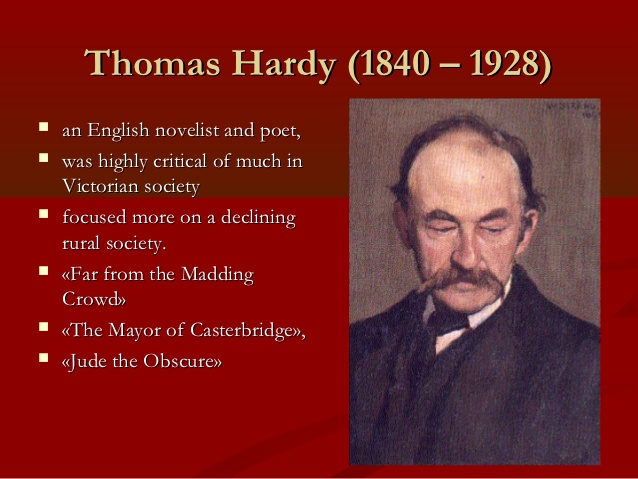
Middle Earth, Narnia, and Wessex are all examples of exotic, or parallel-world settings created by novelists to base their stories in.  Novelists have always created these imaginary worlds for their own purposes.  Middle Earth is the fictional universe created by Tolkien for his best loved works The Hobbit and The Lord of the Rings.  C.S. Lewis goes to great rounds to create another fictional realm for his seven Narnia books which make up his  Chronicles of Narnia.  Thomas Hardy’s Wessex Novels are situated in a ‘partly real, partly dream country’.

Being a Harper Lee fan I’ve been awaiting Go Set  a Watchman with eager anticipation since the old PR machine kicked into gear earlier in the year.  For the purposes of this blog, however, I just want to focus for a little while on the setting of both novels, and novels in general, and it is clear to me that the real life Monroeville, Alabama of her youth becomes the fictional Maycomb, Alabama of her novels.  Lee sets her novels here for a reason: she deliberately selects her setting, and in effect the fictional Maycomb becomes another Narnia or Middle Earth – a microcosm of all that is good and bad in 1930’s America.  She tells us that one went to Maycomb, ‘to have his teeth pulled, his wagon fixed, his heart listened to, his money deposited, his soul saved, his mules vetted’.  She describes it as an isolated place, in effect it is an Everyplace – the town, ‘had remained the same for a hundred years, an island in a patchwork sea of cotton fields and timber land’.  It is, in effect, a remote backwater bypassed by progress, the perfect playground of her youth, and the perfect cauldron for change.

In Go Set a Watchman she says that Maycomb County is, ‘a wilderness dotted with tiny settlements’, it is, ‘so cut off from the rest of the nation that some of its citizens, unaware of the South’s political predilection over the past ninety years, still voted Republican.’  It is so remote, ‘no trains went there’.  In fact Maycomb Junction, ‘a courtesy title’, was located in Abbott County twenty miles away!  However, she tells us that the, ‘bus service was erratic and seemed to go nowhere, but the Federal Government  had forced a highway or two through the swamps, thus giving the citizens an opportunity for free egress.’  However, Lee tells us that few took advantage of this opportunity!  Then in one of those Harper Lee epiphany moments, one of those lightening bolts she releases now and then, she perceptively describes her hometown as a place where, ‘If you did not want much, there was plenty.’

In To Kill a Mockingbird she continues in the same rich vein.  Maycomb is, ‘a tired old town’. People moved slowly, ‘they ambled across the square, shuffled in and out of the stores around it, took their time about everything’.  She tells us that, ‘There was no hurry, for there was nowhere to go, nothing to buy and no money to buy it with, nothing to see outside the boundaries of Maycomb County’, a scenario somewhat reminiscent of modern day Greece!

The setting of George Eliot’s novel, Silas Marner,  has many echoes of Maycomb in Eliot’s fictional depiction of Raveloe.  Eliot tells us that it, ‘was a village where many of the old echoes lingered, undrowned by new voices.’  She further describes it as being, ‘Not …. one of those barren parishes lying on the outskirts of civilization — inhabited by meagre sheep and thinly-scattered shepherds: on the contrary, it lay in the rich central plain of what we are pleased to call Merry England’.  However, like Maycomb it was off the beaten track,  ‘it was nestled in a snug well-wooded hollow, quite an hour’s journey on horseback from any turnpike, where it was never reached by the vibrations of the coach-horn, or of public opinion’.   Much of this abundance is of course meant to contrast with Silas Marner’s previous place of residence in Lantern Yard.  Whereas Lantern Yard had been austere, white-walled, and filled with serious and devout Puritans, Raveloe is a place of lazy plenty, pints at the local tavern, and carefree religion on Sundays.  Chapter One declared it to be a place where bad farmers are rewarded for bad farming!

This description of Raveloe also holds great echoes with The Village as depicted in Jim Crace’s  latest (and last?) novel, Harvest.  The narrator, Walter Thirsk  tells us that, ‘these fields are far from anywhere, two days by post-horse, three days by chariot, before you find a market square.’  Harvest  dramatises one of the great under-told narratives of English history: the forced enclosure of open fields and common land from the late medieval era on, whereby subsistence agriculture was replaced by profitable wool production, and the peasant farmers dispossessed and displaced. “The sheaf is giving way to sheep”, as Crace puts it here, and an immemorial connection between people and their local environment is being broken – their world is crumbling around them.  Great changes are coming and, as everyone knows by now, the only people who welcome change are babies with wet nappies!

Brian Friel’s use of Ballybeg (small town) as the setting for many of his plays and short stories is also similar in vein to these others.  In Philadelphia Here I Come, Gar Public tells us that Ballybeg is, ‘a bloody quagmire, a backwater, a dead-end’.  Friel, like Lee, and Eliot and Crace is deceptive because he is dealing with familiar things and familiar characters – shopkeepers, housekeepers, and parish priests – a very familiar rural Ireland fixed in its own time.  Friel’s use of the alter ego – Public Gar and Private Gar – allows us the opportunity to see behind the superficiality of so much of this world of small-town life.

In many ways Friel’s major theme is the failure of people to communicate with each other on an intimate level.  In this play especially we are introduced to the typically Irish practice of verbal non-communication!  He, like Harper Lee, George Eliot, and Jim Crace, forces us to examine the nature of society.  In Ireland our society in the 40’s and 50’s was dominated by the church, the politician and the schoolmaster.  Ultimately the world that Gar is leaving has failed him and his generation.  But Friel is too subtle to allow us to imagine that the world Gar is about to enter in Philadelphia will be any better.

These meandering rambles are an attempt to place myself at the beginning of a work of fiction, to stand for a moment in the author’s shoes, so to speak, and see the world from their point of view.  From my limited reading it seems to me that many authors deliberately choose a world untrodden, less travelled as the setting for their novel.  I have mentioned some here in this piece but I’m sure this is just the tip of the iceberg and you will be able to reference many examples from your own reading.  Ideally the setting is always remote, secluded, off the map or often off the mainland, cut off from change and advancement.  This microcosm is then filled with characters and fictional dilemmas, action and inaction.  I have always been truly fascinated and overawed by each author’s unique ability and ingenuity in  creating and  imagining these hidden places and thus allowing us the privilege of entering the world of their texts.

images

The Poetry of Gerard Manley Hopkins

maxresdefault

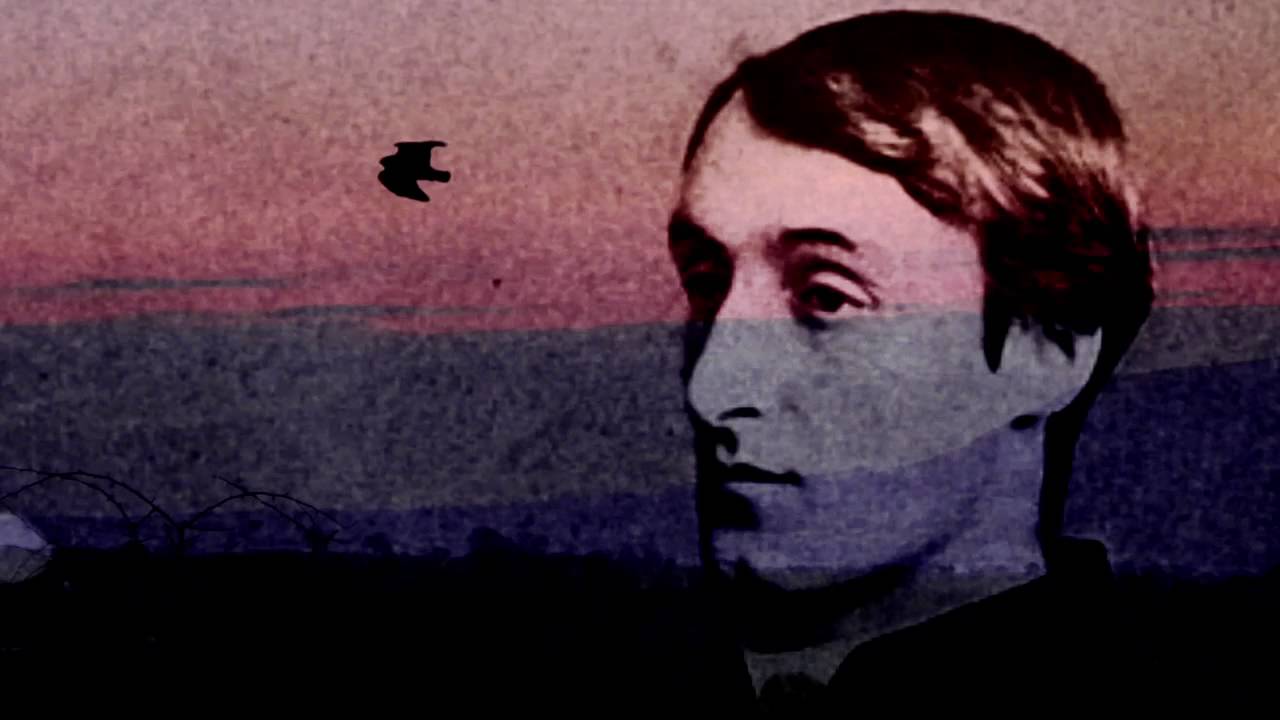
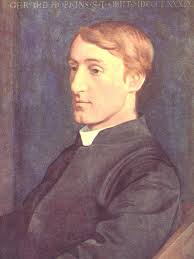
Fr. Gerard Manley Hopkins S.J. can perhaps be best described using Winston Churchill’s barbed attack on Russia, made in a radio broadcast in October 1939. He famously depicted Russia as, ‘a riddle, wrapped in a mystery inside an enigma’.  Studying Hopkins’s poetry can leave us in much the same frame of mind as Churchill!  Hopefully what follows will provide you with a key to help unlock the enigma!

He was born in Stratford, Essex in 1844 and educated at Highgate School and at Oxford, where he became a friend of the poet, Robert Bridges.  He was very influenced by the Oxford Movement and he was drawn towards Newman and eventually, like Newman, he converted and became a Roman Catholic.  Hopkins didn’t do things by halves and he went on to join the priesthood, not just the ‘ordinary priesthood’ either but he joined the Jesuits and was ordained in 1877.

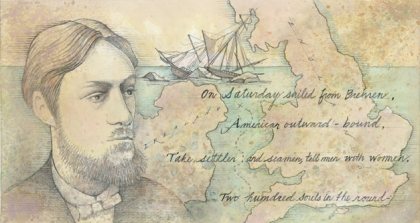
Shortly after joining the Jesuits he resolved not to write any poetry unless asked to do so by his Superiors.  This is in fact what eventually happened: his Rector suggested that he should write a poem to commemorate five Franciscan nuns who had been drowned in a boating accident on the Thames.  The result was his great poem, ‘The Wreck of the Deutschland’, which he completed in 1875.

He wrote steadily for the rest of his life, but made no effort to publish, being content with the opinions of Robert Bridges and a few intimate friends.  Following ordination he worked as a priest in the slums of London, Liverpool and Glasgow, eventually coming to Dublin Catholic University (now UCD) where he was professor of Greek.

He died of typhoid fever in 1889 and he is buried in Glasnevin Cemetery, Dublin.  His work was first collected and published by Robert Bridges in a selected edition in 1918 and he became an overnight success 29 years after his death!  His poetry was swiftly recognised for its great freshness and energy.  So, even though he lived and died in the nineteenth century, Hopkins has become one of the great poets of the twentieth century!

Hopkins was a very original poet.  He abandoned the traditional metres and substituted his own innovative ‘sprung rhythm’, where the stresses responded to the meaning rather than to any mechanical pattern.  He used words in new and startling combinations and frequently dispensed with definite articles, conjunctions and even verbs.  As with all great poets this language was not invented for its own sake, but to get across a deeply personal and passionate response to the world and its Creator.  Since 1918 his reputation has risen steadily, and he is now rightly regarded by many as the greatest of the Victorian poets.

He once said that we should read his poetry with our ears, which seems like an impossibility, but is not, since many of the sounds we hear create images in our mind.  He also said, ‘Perfection is dangerous because it deceives us – because there is no perfection on this earth’.

In Roddy Doyle’s novel The Van, Darren, studying Hopkins’s poetry for the Leaving Cert., reads one of the poems and wonders when Tippex had been invented and concludes, ‘Gerrah Manley Hopkins had definitely been sniffing something.’

C&H (2).tif

MAJOR THEMES IN HOPKINS’S POETRY

NATURE

  • The world of nature pulses with energy because it is charged with the grandeur of God.
  • Spring is a glimpse of what the Garden of Eden must have been like.
  • Everything in existence has its own unique identity and inscape. It is possible to recognise God’s design in every natural object.
  • Contrast (dappled things) and variety set off the beauty of things.
  • Unspoilt nature (the weeds and the wilderness) is a precious resource.
  • Humankind’s sinfulness and the Industrial Revolution have made us insensitive to the beauty and preciousness of the natural world.
  • Despite the destructive activities of humankind, the Holy Ghost protects and renews the natural world.

SUFFERING AND ALIENATION

  • Humankind’s sinfulness brings it suffering and toil.
  • Acceptance of God’s will brings comfort and relief from pain.
  • Spiritual desolation is a bottomless pit of suffering.
  • The worst form of suffering, outside of Hell, is the desolation caused by self-disgust.
  • Suffering is a mystery understood fully by God alone.

RELATIONSHIP BETWEEN PEOPLE AND GOD

  • God makes himself known to us through the world of nature and in the faces of people.
  • He is the ‘dearest freshness’ that permeates the natural world.
  • Only through the submission of our will to the will of God can we truly reveal our inner beauty.
  • God has made us the gift of natural beauty, with all its variety.
  • Humans are insignificant beings who have been rescued from death and oblivion by the sacrifice of Christ on the cross.
  • God’s will is a mystery to us.

MAIN FEATURES OF HOPKINS’S STYLE?

What about some of the following?  Energetic, intense, concentrated in meaning, obscure, tortuous, original, musical, dramatic, oratorical, erudite, demanding………

01d8796bb83aaaa8c9dd03ed13507e28

SOME IDEAS ON THE CONCEPTS OF INSCAPE AND INSTRESS AND SPRUNG RHYTHM


(It is not essential to have an understanding of these concepts to appreciate the poetry of Hopkins.  If your reading of these notes enhances your understanding of the poet’s work, then they are worth reading; otherwise, they are a hindrance.)

 In our modern world we are familiar with the idea of each human being having a unique genetic code or DNA.  Hopkins’s theory was that everything in God’s creation had its own unique characteristics.  If you look closely at an object and if you have the sensitivity to recognise its unique character, the object will reveal its ‘inscape’ or, if you like, its inner landscape.  Finding the object’s form and shape, both external and internal, is the same as finding its inscape.  One of the reasons Hopkins abandoned the idea of being an artist was that he found that he could not ‘capture’ the inscape of things in his drawings.

‘Instress’, according to Hopkins, is the energy of God pulsating through all created things (‘The world is charged with the Grandeur of God’).  It is a coherent force, coherent because it comes from a single source.  He sees the inscape and feels the instress.  ‘All things are upheld by instress and are meaningless without it.’

Essentially, what Hopkins was attempting to do with the words ‘instress’ and ‘inscape’ was to provide a theory on the way in which objects, natural or human, create a reaction in the person who is looking at them.  He believed that what he saw was contained in the object rather than a result of his imaginative interpretation of that object.  He believed that the impact of that object on him was due to the object rather than to his subjective response to it.  ‘I thought how sadly beauty of inscape was unknown and buried away from simple people (like Leaving Cert. Students!) and yet how near at hand it was if they had eyes to see it.’

‘The Windhover’ provides an excellent example of these two concepts.  The effort to describe the bird goes beyond mere description of its physical form or appearance (‘wimpling wing’): there is almost a scientific attempt to ‘capture’ its movements (‘Of the rolling level underneath him steady air’).  This, however, is only part of the process.  The inner form of the bird, its virtues or strengths, are identified (‘Brute beauty and valour and act, oh, air, pride, plume’).  There is more.  The hidden ‘meaning’ or symbolic significance of the falcon is uncovered in a moment of mystical recognition that Joyce would call an ‘epiphany’.  T. S. Eliot called it ‘the intersection of the timeless with time.’  It is the moment when the observer recognises God’s plan for mankind in the action of a bird in flight.

SPRUNG RHYTHM

By the time Hopkins’s poetry was published in 1918, many poets had already begun to dispense with regularity and rules regarding rhythm; nevertheless Hopkins’s revolutionary experiments with rhythm inspired many modern poets to be more daring and unconventional in their approach to composition.  Of ‘The Wreck of the Deutschland’ Hopkins wrote: ‘I had long had haunting my ear the echo of a new rhythm which now I realised on paper.’  He called this new rhythm ‘sprung rhythm’, because it springs naturally.  It has the following characteristics:

  • There is a fixed number of feet (rhythmic units) per line.
  • Each foot has one stressed syllable.
  • The stressed syllable may stand on its own, or may be accompanied by any number of unstressed syllables. Hopkins summed this up very well when he wrote: ‘One stress makes one foot, no matter how many or how few the syllables.’

He developed sprung rhythm because he believed that ‘it is the nearest to the rhythm of prose, that is the native and natural rhythm of speech.’  He added that ‘my verse is less to be read than heard….It is oratorical, that is, the rhythm is so.’

One of the natural consequences of allowing any number of unstressed syllables in a line is that it generates energy.  Unstressed syllables must be uttered quickly.  The more there are in a line, the more energetic the line will be.  This has a clear value for a poet who sees the world of nature as charged with the energy of God.

Sprung rhythm is used most blatantly in ‘As Kingfishers Catch Fire’ and ‘The Windhover’, both of which vibrate with the energy of the natural world.  ‘Felix Randal’ also employs sprung rhythm extensively; other poems contain elements of it.

SUMMARY

To simplify matters, remember this: Hopkins believed in the idea of incarnation.  Christ was both man and God; so, too, the world is a combination of the material and the divine.  Seeing the divine in the world is the same as seeing its inscape.  Feeling the divine presence is the same as feeling its instress.  Sprung rhythm is a poetic device used to reveal the energy of God that pulses through the world.

hopkins_small2

GERARD MANLEY HOPKINS – A GENERAL OVERVIEW

(As a member of the Jesuit order – the same order, it must be remembered, who were responsible for Joyce’s education at Clongowes and later at University – Hopkins was devoted to God and his poetry is a unique record of that devotion.  In the twentieth-century several critics praised his efforts to restore ‘freshness in words’ and others came to recognise in Hopkins one of the most powerful religious poets writing in the English language.)

Though he lived and died in the nineteenth century, Hopkins is frequently considered a twentieth-century poet, not because his poems were not published until 1918 but because of their startling and unique style.  It has been said that Hopkins was a Victorian in that he was serious, scrupulous, hard-working and set himself exacting ideals, but in his remarkable poetic innovations he was ahead of his time.  His poetry was misunderstood, unappreciated, unknown during his lifetime and, even though he had a strong sense of duty and believed in self-sacrifice, he also had an independence of spirit that is evident in his work.  He did not write for an audience nor did he follow the contemporary literary fashion.  Hopkins, says Robert Bernard Martin, ‘is constantly more concerned with putting across his perceptions than with fulfilling customary expectations of grammar … Most persistent readers of his poems learn to abandon their usual demands of convention in language, in order to enjoy a fuller poetic process than would otherwise be possible.’   Coventry Patmore, however, found that Hopkins’s poetry had the effect of ‘veins of pure gold imbedded in masses of unpredictable quartz’.  As mentioned earlier Roddy Doyle in his novel The Van, has Darren, studying Hopkins’s poetry for the Leaving Cert and when he reads one of the poems, wonders when Tippex had been invented and concludes, ‘Gerrah Manley Hopkins had definitely been sniffing something.’

And his poetry, though written in the nineteenth century, had an extraordinarily important influence on twentieth-century poetry.  It was not so much that other poets imitated Hopkins; rather they were empowered to develop and explore their own individuality.  His style was fresh and free and dazzlingly different. (!)  Robert Bridges, Britain’s Poet Laureate, was Hopkins’s contemporary (both were born in 1844) and friend.  It was Bridges who first published Hopkins’s poetry in book form in 1918 and an early reviewer of the poetry said that, ‘You fight your way through the verses yet they draw you on’, that the language, at times, created ‘an effect almost of idiocy, of speech without sense and prolonged merely by echoes’.  But that same reviewer, in 1919, claimed that Hopkins’s poetry contained ‘authentic fragments that we trust even when they bewilder us’.

He always claimed that things are more beautiful in movement, as in the flight of the kingfisher, shooting weeds, the windhover, Felix Randal beating iron out, or the mountain stream ‘His rollrock highroad roaring down’.  And he loved the distinctness in all things; each must be the individual that it is, as in ‘As Kingfishers catch fire’.  He loved the uniqueness of things, the ‘individually distinctive.’   He called this quality INSCAPE.  Another principle, that of INSTRESS was used by him to convey his understanding of the energy which made possible this uniqueness (‘It is the virtue of design, design, pattern, or inscape to be distinctive’ wrote Hopkins in a letter to Bridges).  Michael Schmidt, in his Lives of the Poets, sums it up as follows: ‘Inscape is manifest, instress divine, the immanent presence of the divine in the object.’

Hopkins, says Seamus Heaney, is a poet who brings you to your senses.  The reader sees and hears the ‘hereness-and-nowness’ of the moment but the sounds also match the poem’s tone and mood.  Hopkins believed that ‘my verse is less to be read than heard….it is oratorical, that is the rhythm is so’.

When he looks at nature, his involvement with what he sees is total but it is never a celebration of nature for its own sake; Hopkins saw nature as an expression of God’s grandeur.  His poetry is inspired by his love of God and God’s creation.  He is a poet of extraordinary highs.  The imagination soars in a poem like ‘The Windhover’ but he is also a poet who is capable of writing the bleakest poetry about the depths of despair in The Terrible Sonnets.

images (7)

SAMPLE ANSWER

‘Hopkins’s imagery impresses us with its originality and its range.’  Discuss this view using a selection of poems by Hopkins on your course.

Hopkins is regarded as an innovator.  He innovated in many ways in his poetry and one primary instance of this innovation occurred in his use of language.  The world surrounded Hopkins with visions of God’s glory and the poet responded by capturing those moments in imagery that is ostensibly original and quite remarkable in its range.  Hopkins’s imagery serves one of two main purposes: to record and communicate the beauty of nature and its Creator or to reveal the anguish of a desolate soul that feels isolated from God.  In the early poetry, Hopkins employs imagery to expose God’s glory in nature’s elements while the later poetry gives us dramatic images of desolation and despair.

He opened an early poem of celebration, ‘God’s Grandeur’,  with the line: ’The world is charged with the grandeur of God’ and it seemed it was not too difficult for this sensitive poet to confirm this in the world around him.  In ‘Pied Beauty’ he also praises God for his creation when he says, ‘Glory be to God for dappled things’.  Hopkins, therefore, did not accept nature’s glories in any bland or pedestrian way.  Rather, he responded to them with imagination and freshness to create images that are strikingly original and at times quite inventive.

In ‘The Windhover’, Hopkins uses recurring images of royalty.  The high-flying solitary falcon is a monarch of the sky, surging with the poet’s spirit through the steady air.  The poet uses chivalric terms such as ‘dauphin’, and ‘minion’ to capture the elegant and dignified ‘striding’ falcon, the prince of the daylight.  God, too, is visualised as a ‘chevalier’.  These images carry connotations of medieval romance and chivalry, and perhaps the virtuous struggle of the falcon in the air is symbolic of the Christian knight, Christ the chevalier, overcoming the pervasive threat of evil.  This conflict in the poem is dramatised through imagery that suggests the supremacy of the falcon in flight, and his control and mastery that ‘rebuffed the big wind’.  Another feature of Hopkins’s images here is the way in which they are loaded with possibilities.  It is as if Hopkins intended to create multiple ideas in some of his images, each interesting and valid in its own way.  For example, the image of the falcon on a ‘rein’ may represent the motion of as horse at the end of a trainer’s long rein.  However, the term, being ambiguous, could also suggest the spiral climb of the bird.  Perhaps, Hopkins is encouraging us to ‘Buckle’ several ideas in our engagement with the poem.  What is not in doubt, at any rate, is the powerful and original representation, through the falcon, of Christ’s beauty and nobility.

Hopkins uses a very different image in describing the precision of the falcon’s flight, where he says, ‘As a skate’s heel sweeps smooth on a bow-bend’.  This image also conveys the speed of the bird’s flight.  Other original images include that of ‘blue-bleak embers’ representing self-sacrifice and the ‘plough down sillion’ that evokes the hardship and perhaps tedium of daily labour.  In ‘The Windhover’, therefore, Hopkins employs images of flight, of majesty, of sacrifice and of glory ranging from a ‘dauphin’ to a ‘skate’s heel’, from a ‘fire’ to ‘blue-bleak embers’.  Such remarkable and wide ranging imagery reflects the vivid and precise response of the poet’s imagination to the sight of the falcon at dawn.  More importantly, perhaps, the imagery reveals that the moment created a response of deep spiritual insight.  There is nothing particularly novel in taking a falcon as subject matter.  However, what is original is the way Hopkins engages with the falcon, observes it and concentrates on it in a deeper way and articulates what it revealed to him through an interesting range of original imagery.

However, particularly in his Terrible Sonnets, there is another, more disturbing effect created by Hopkins’s wide ranging use of imagery. We know that he wrestled with doubt, particularly during his final years which he spent teaching in Dublin.  God exists, he is always certain of that, but why does he appear to be so far away, apparently unresponsive and uncaring to a man whose letters are ‘dead’?  Hopkins’s increasingly sinister images explore the bounds of human suffering and despair.  In the sonnet ‘I wake and feel the fell of dark’, for example, the conspicuous absence of daylight reminds us how far the poet has come from the glorious sunshine and colour in ‘Spring’, ‘God’s Grandeur’ or ‘The Windhover’.  There is little evidence of ‘couple-colour’ in ‘the black hours’ Hopkins has spent with his torment, suffering ‘yet longer light’s delay’.  The delay of light represents of course the delay of hope – all is now ‘gall’ and ‘heartburn’.  Quite remarkably, taste is evoked as a description of the poet’s state.  He becomes bitterness itself, borne out of his despair.  Yet, perhaps this is God’s will that he suffer the ‘curse’ with which his ‘bones’ and ‘flesh’ must contend.  But the poet’s tormented spirit is souring dough, which needs to be infused with spiritual ecstasy.

In his sonnet ‘No worst, there is none’, Hopkins outlines the intensity of his pain in the opening quatrain and then proceeds to seek significant comfort, but in vain.  This sonnet is particularly interesting in that many of its images echo through earlier poems where the mood was less despondent.  The poet’s sense of despair is emphasised in quatrain two in an unusual but particularly poignant image of his cries heaving ‘herds-long’, gathering at the gate of heaven perhaps but not being admitted or even acknowledged.  Where is the comfort that Hopkins himself had administered to Felix Randal?  The poet then refers to an ‘age-old anvil’, a sounding board which winces and rings out his pain. This very original image of the anvil reminds us again of Felix and his work in the forge, except on this occasion the poet is the raw material that Christ is beating into shape.  In the sestet, the poet refers to a natural landscape, the mountains.  In earlier poems, ‘wilderness’ filled him with joy.  Here, however, the steep cliffs, a nightmarish metaphor, represent the spiritual torment and physical suffering that the poet has had to endure, day in, day out.  The only comfort is the relief of sleep.  But in ‘I wake and feel the fell of dark’ the poet awakens to the oppressive darkness of night and yearns for the respite of daylight.  The dark night is itself symbolic of dark periods in the poet’s life when hope of spiritual ecstasy may have seemed very distant.

In Hopkins’s poetry, therefore, the range of imagery is certainly quite extensive, his originality unquestioned.  Imagery ignites the poet’s celebration and it ignites his desolation.  In the darkness, there is no flash of colour, of light, no ’dapple-dawn-drawn’ inspiration to lift his thoughts, no sparks, no flashes, no gold.  In 1889, only weeks before his death, Hopkins wrote ‘Thou art indeed just, Lord’.  In the poem images of fertility in nature abound: building, breeding, waking, growing.  The poet, however, is depicted in the sterile image of a ‘eunuch’.  Nonetheless, the concluding appeal, expressed again through a vivid and most appropriate image, is that as Spring renews nature, so God may send his ‘roots rain’.  Where there is prayer, there is hope!

DEVELOP YOUR OWN PERSONAL RESPONSE TO FR. HOPKINS!

  1. What impression of Hopkins the man do you get from his poetry?
  2. Is it necessary to admire the author to admire his work?
  3. Does the poet’s profound faith make it easier or more difficult for you to relate to his work?
  4. If you had the opportunity to interview Hopkins, what questions would you ask him?
  5. What do you like or dislike about the way Hopkins writes poetry?
  6. Do you think that the themes of his poetry have relevance in the modern world?
  7. Put forward an argument why Hopkins’s poetry should be retained on, or removed from, the Leaving Certificate course?

GENERAL QUESTIONS!!!!

  1. WHAT ARE THE CENTRAL THEMES OF HOPKINS’S POETRY?
  2. HOPKINS HAS BEEN CALLED ‘THE POET OF ENERGY’. HOW DOES HE CREATE THIS ENERGY IN HIS POEMS?
  3. ‘NO DOUBT MY POETRY ERRS ON THE SIDE OF ODDNESS’. IS HOPKINS’S POETRY TOO ‘ODD’ TO BE ENJOYABLE?
  4. ‘HOPKINS’S POETRY PRESENTS US WITH A DEEPLY PERSONAL AND PASSIONATE RESPONSE TO THE WORLD AND ITS CREATOR.’

An Analysis of the characters of Christy Mahon, Pegeen Mike and the Widow Quin in The Playboy of the Western World by J.M. Synge

 christy mahon (2)

CHRISTY MAHON

Christy:  At First Weak, Timid

When we first meet Christy it is by way of report.  He is presented as a tramp, “a kind of fellow above in the furzy ditch groaning wicked like a maddening dog”, or a “queer fellow above, going mad — “.   When we first see him he is, according to the stage direction, a ‘slight young man – very fired and frightened and dirty’.  The first impression we get is one of timidity and fear: in short he is a coward but not totally lacking in spirit.  His retort to Michael’s accusation that maybe he is wanted for “robbing and stealing” is given with a flash of family pride: ”And I the son of a strong farmer”.  He relaxes as the others convince him that he is in a house safe from the ‘polis’, and begins to respond to their interest in the curiosity about his origins.  Was he the victim of bailiffs, agents, landlords; did he indulge in alchemy, marry three wives, fight “wars for Kruger”?  Pegeen’s impatient “you did nothing at all” provokes the required confession: “I killed my poor father, Tuesday was a week”.

The “lie” Begins

He is now definitely to be feared and respected, simply by what he has said. The hero in Christy is about to emerge; he is ‘a lad with the sense of Solomon’: “the peelers is fearing him”, he ‘should be great terror when his temper’s roused’, brave enough to “face a foxy divil — on the flags of hell”, and to stand up to “the loosed khaki cut-throats, or the walkin dead”.

The “lie” Takes Effect

Christy can hardly believe his ears: “Well glory be to God!” is all he can exclaim at the character the others are building for him.  When he is left alone with Pegeen who describes him as a “fine, handsome young fellow with a noble brow” his amazed reply is: “Is it me?”.  She further likens him to Owen Roe O’Sullivan (Eoin Ruadh O’Suilleabhain) the greatest of the Kerry poets, ‘a fine fiery fellow with great rages’ and passions.

Synge’s Sympathy For The” Lie”

The local response to Christy’s appearance on the scene highlight for us the drabness of such rural living, where the imagination has been starved, and there is longing for some excitement. Behind the obvious comedy in this scene we see a certain pathos: Synge was most definitely not out of sympathy with such peasant people (After all he had forsaken his own kind for their company).   

Christy Given Romantic Image

Pegeen’s mention of Eoin Ruadh O’Suilleabhain reveals much about her character: he was a rather rakish fellow, a womaniser and an eloquent poet.  She wants excitement and is prepared to defy the ‘priesteen’ and the powers of Rome to get it.  Maybe Christy is a re-incarnation of the poet – that is what she wants to believe.  Self-deception it is but understandable in the circumstances.  She and the others want a hero and Christy wants to be that hero.

So Christy has now progressed from tramp and coward to poetic hero, which brings us to the end of Act 1.  By this stage it is obvious that Synge has created a mock-hero, a parody of the hero of Celtic epic literature.

Christy Settles in To His New Image

At the start of Act II Christy feels quite at home and would be prepared to remain here ‘his whole life talking out with swearing Christians – never a day’s work’.  The emphasis is on talking rather than working.  He is aware now that his talent is verbal with a licence to lie or, at best, to bend and decorate the truth.

Heroes Must Prove Themselves

His status as hero is confirmed at this point by the arrival of the local girls bearing gifts, and by the Widow Quin’s announcement that she has entered him ‘in the sports below for racing, leaping, pitching’.  All heroes must be put to the test: it is a feature of the epic poem that the hero must prove his prowess and strength in epic combat.  For Christy this is to be done in the more humble local sports.

Comedy In Parody

The girls get their reward for bringing presents when Christy once again tells the story of his homicide (‘da-slaying’).  His new found confidence is reflected in the telling.  Now we have mime to enhance the comic absurdity.  There is even comedy in the “weapons” used; a chicken bone and mug replace the mighty weapons of the traditional hero.

Temporary Set Back For Christy

This comic episode ends with the return of Pegeen who bristles at the sight of other women, especially Widow Quin, making free and easy with her man.  They are dismissed imperiously and Christy receives a verbal punishing for his vanity.  “You’ll be shut of no jeopardy no place if you go talking with a pack wild girls”.   This provokes a great outburst of self-pity from Christy which softens the heart of Pegeen, making her realise how lucky she is to have found a lad with “a mighty spirit in him and a gamy heart”.

Power Of The “Lie” Again

Once again she is under the spell of Christy’s poetry, its rhythms and imagery: “it’s a lonesome thing to be passing small towns with the lights shining sideways, when the night is down”, “ drawn to the cities where you’s hear a voice kissing and talking deep love in every shadow of the ditch”, “but I was lonesome all times, and born lonesome, I’m thinking as the moon of dawn”, “the way I’ll not be waking near you another dawn of the year till the two of us do arise to hope or judgement with the saints of God”.

Comedy Of Christy’s Victory’ Over Shawn

Christy is now given and opportunity to act the hero.  Shawn Keogh, that representative of ‘respectability and conformity’, has to be confronted and humiliated.  Our new hero enjoys inflicting this humiliation on Shawn Keogh: he himself had often suffered similarly at the hands of his own father.  At the height of his heroic success Christy is suddenly brought back to earth with a bump when he sees “the walking spirit of my murdered da”, “that ghost of hell”.

Another Side To Christy By His Father

Ironically Christy in hiding has to suffer the humiliation of hearing his father sarcastically describe the real Christy:

“An ugly young streeler with a murderous gob”

“a dirty stuttering lout”

“a lier on walls, a talker of folly, a man you’d see stretched the half of the day in the brown ferns with his belly to the sun”.

“he’d be fooling over little birds – or making mugs at his own self in the bit of glass – – -“.

“if he seen a red petticoat coming swinging over the hill, he’d be off to hide in the sticks… “

“a poor fellow that would get drunk on the smell of a pint”

“the laughing joke of every female woman”

“the loony of Mahon’s”

This is not exactly the character reference that Christy would give and had given to himself! An interesting point to note, however, is that the father has a ‘power’ of words himself!

Christy Becomes ‘The Playboy’

Once again Synge deglamourises the peasant and his lifestyle, reality keeping a firm grip on fantasy.  The cult of the hero needs to be exposed for what it is; gratuitous violence masquerading as bravery.  (Synge was a pacifist and was appalled by the violence of his own day and the false image of Ireland and its people that was being manufactured to support political ideas).  The Widow Quin dubs Christy sarcastically ‘the walking Playboy of the Western World’.  Christy is now in the hands of the Widow Quin and she being the practical person she is cashes in on his fear of exposure.  Since she cannot have him for herself she will demand a fee for his silence: ’give me a right of way I want, and a mountainy ram, and a load of dung at Michaelmas’.  The Act ends with Christy half-reassured that he has bribed the Widow into silence, and off he goes to his greatest test as hero, indeed the traditional test of all heroes.

Christy: Proven Hero At Last without ‘Lies’

In Act III Christy successfully proves himself at the races winning all before him, so when he returns to the Shebeen in triumph he is master of all.  There is no limit to his courage and confidence now.

Pegeen Abandons Herself To His Power

He quite overpowers Pegeen – the first time she has ever softened, she ‘the fright of seven townlands for my biting tongue’.  He raises her to such a level of passion that she is prepared to abandon everything for this ‘raggle-taggle gipsy man’, who according to Father Reilly would ‘capsize the stars’.  Pegeen becomes a ‘heathen daughter’ and renounces her engagement to Shawn Keogh ‘that quaking blackguard’.  Christy obliges by chasing him off and Michael gives his approval and blessing to both Pegeen and Christy.

Fantasy is Finally Driven Out By Reality

At that point Christy’s final test begins.  His father, ‘a raving maniac’, bursts in and attacks Christy with a stick.  The spell, which had mesmerised them all, is suddenly broken.  The hero becomes the victim who is to be sacrificed for the people.  Pegeen dismisses Christy with ‘Quit off from this’.  After he has chased his father outside and apparently killed him, he returns to find that the Widow Quin is the only one who still wants him.  This he passionately rejects with the infamous line – ‘What’d I care if you brought me a drift of chosen females, standing in their shifts’ – (Cue: Riots!).  He mistakenly thinks that the ‘killing’ will restore him to Pegeen’s favour but he soon learns that there is a world of difference between a ‘gallows story and a dirty deed’.  Humiliation, as the women try to put petticoats on him, is followed by final rejection by Pegeen who places the rope on him.  Shawn is triumphant, ‘Come on to the peelers till they stretch you now’.  Respectability, self-interest – the usual social norms return.  Christy now realises that he is finished here, his future is elsewhere and when his father comes back from the dead again, the two are re-united in a new relationship which makes them independent of the society that had made Christy into a hero and a poet.  Like the bard of old he is destined for a higher, if lonelier, existence, one preferable to village respectability.  ‘The thousand blessings upon all that’s here, for you’ve turned me a likely gaffer in the end of all, the way I’ll go romancing through a romping lifetime ….’

The Cuchulainn Parallel

One commentator on Synge, Declan Kiberd, in a very interesting book Synge and the Irish Language, sees a parallel between Christy and his story and the legend of Cuchulainn.  He sees it as mock-heroic satire that the  ‘Godlike Cuchulainn should re-appear in a feckless peasant’.  For Pegeen Christy evokes the ancient world of the poet and its heroic virtues, ‘it’s the poets and your like, fine fiery fellows with great rages ‘;  ‘You with a kind of quality name, the like of what you’d find on the great powers and potentates of France and Spain’; ‘the like of a King of Norway or the Eastern World’.

In youth Cuchulainn was athletic, handsome, articulate, attractive to women, a leader of men.  Christy is the opposite, ‘cowering in a ditch’, ‘a lier on walls’, ‘a slight young man’, ‘a talker of folly’, ‘the laughing joke of every female woman’ – all of which is to change through the power of a lie.

Christy’s father tried to marry him off to the Widow Casey.  The men of Ulster wished to marry off Cuchulainn to protect their own women from him.  Cuchulainn is victorious using the sword of King Conchubair just as Christy is victorious in the borrowed clothes of Shawn Keogh.  Cuchulainn woos Emer against her father’s wishes.  Emer has another suitor just as Pegeen has Shawn Keogh.  Both these suitors retire afraid of their opponents’ strength.  Cuchulainn and Christy triumph at games and win their loved ones.  Christy’s ‘great rages’ echo Cuchulainn’s great battle-rages.  Cuchulainn meets the warrior druidess to advise and prepare him for his struggle; Christy meets the Widow Quin, who also advises for a ‘fee’.

Comedy And Satire In The Parody

But Synge’s purpose is to make a mock-hero of Christy, probably a response on his part to the determined efforts of his contemporaries to manufacture super-peasants for a political ideal.  The only relic of the real hero left is the ‘gift of the gab’ upon which Christy is solely dependent.  The ancient hero is reincarnated in a ‘feckless peasant’ struggling to escape the grinding poverty and dullness of life in the West of Ireland.  For Synge there is no glamour in such harsh reality but a little fantasy can bring humour and escape, if only temporarily, so that not only Christy but the people of Mayo can go ‘romancing’, he for ‘a romping lifetime’, they for a few days at least.

The Widow Quin, Christy and Pegeen Mike. The Widow Quin, Christy and Pegeen Mike.

 PEGEEN MIKE

At First, Realistic and Strong

Like all the other villagers Pegeen is trapped by rural convention which declares self-interest and respectability to be the social norms.  It is ironic that when we first meet her she is preparing for her marriage to Shawn Keogh who most typifies this self-interest and respectability.  She is going to make the best of the world she finds herself in.  From the start we can see that she is strong-willed and dominant.

Latent Romantic

She has no love for Shawn Keogh whom she addresses contemptuously as Shawneen.  Indeed she laments the lack of eligible and romantic young men in the district which can only boast of such as “Red Linahan, has a squint in his eye, the Patcheen has a limp in his heel, or the mad Mulrannies …”  Her idea of a man is one who has the courage to break the law and tell stories of Holy Ireland – a Daneen Sullivan or masrcus Qwuin.  The absence of any romance in her life and the absence of any fire or passion in Shawn Keogh are facts that she had had to live with and, God help her, will have to continue to live with fore the future.  She is hard-headed enough, however, to accept Shawn as a poor substitutue for a real husband but he is better than no man at all.

Character of a Heroine

So the first part of Act I establishes her strength of character and her spirit: she can handle all the men, from her father, Michael, to Shawn Keogh.   She has no fear of authority, ecclesiastical or civil: ‘Stop tormenting me with Father Reilly’ she sneers at Shawn, and ‘Daneen Sullivan knocked the eye from a peeler’ shows her admiration for one with courage enough to stand up to and get the better of authority.

First Meeting With Christy: Contempt Turns to Admiration

Into such a world ruled by self-interest and respectability stumbles Christy, young, tired and frightened.  Their interest is immediately aroused (a ‘strainseir’ is always an object of great curiosity in an Irish village.)  Pegeen’s contempt for men is still evident when she contemptuously challenges Christy: ‘You did nothing at all’, ‘Would you have me knock the head of you with the butt of the broom?’  Christy’s confession that he had killed his ‘poor father’ for striking him takes her aback.  Suddenly her attitude changes: here is a man at last, another Daneen Sullivan or Marcus Quin, who has had the courage to challenge and overcome authority by killing his father.

Pegeen Falls Under Spell of The ‘Lie’: Romance Stirs

Christy’s ‘lie’ begins to work its magic on them all except Shawn Keogh (he isn’t the type that needs some excitement in life so he remains outside the spell).  This gauche, (awkward), young man is beginning to appear as a potential knight-in-shining-armour or hero come to snatch her from the jaws of her fate.  So, unwittingly she becomes an agent in the build-up of Christy into something larger than life.  Fantasy is at work.  The strong-willed, sharp-tongued young woman begins to melt as romance at last enters her life.  All thoughts of self-interest and respectability are abandoned as she loses her head to the stranger.

Pegeen’s Jealousy Evident

It is ironic that Christy is affected differently at first: at the end of Act I and the start of Act II he relishes the new found respectability and comfort.  But this isn’t allowed top last for long.  Pegeen’s jealousy temporarily breaks the spell when she finds other women tampering with Christy, and she sadistically enjoys his terror at her mention of him ‘swaying and swiggling at the butt of a rope – in great anguish, getting your death’.

Romance Continues To Hold Her

The spell re-establishes its hold over her when Christy responds with his self-pitying yet unwittingly passionate poetry: ‘it’s a lonesome thing to be passing small towns’ – ‘the cities where you’d hear a voice kissing and talking deep love in every shadow of the ditch’.  She even further builds up his character, attributing to him ‘a mighty spirit and a gamy heart’, which he shortly afterwards displays before the Widow Quin and Shawn Keogh when the latter comes to bribe him to leave.  ‘For what is it you’re wanting to get shut of me?’ he arrogantly asks Shawn.  Pegeen is not present  to see Christy’s cringing reaction top the appearance of his ‘murdered da’.  This must give Christy the necessary, if subconscious, incentive to prove himself at the sports to consolidate his position with Pegeen.

 Pegeen Abandons Herself To New Christy

After his successes at the sports Christy returns to the Shebeen with Pegeen positively aglow with admiration and love.  In the love sequence that follows she abandons herself completely to Christy’s verbal hypnosis.  She can hardly believe her own ears when she speaks, ‘And to think its me talking sweetly …. Well, the heart’s a wonder – there won’t be our like in Mayo for gallant lovers….’  Even the dispensation ‘in gallous Latin’ can’t dissuade her now – she belongs to the ‘young gaffer who’d capsize the stars’ and who indeed had capsized her world.  To her father she is a ‘heathen daughter’.  In her ecstasy she really enjoys humiliating Shawn Keogh and when Christy chases him out she passionately announces to her father: ‘Bless us now, for I swear to God I’ll wed him, and I’ll not renege’.

Pegeen: The Woman Scorned

With the re-entry of Old Mahon and his claim that all Christy had given him was a ‘tap of a loy’, suddenly Pegeen snaps out of her trance and turns impetuously on Christy, ‘And it’s lies you told, letting on you had him slitted, and you nothing at all’.  Her pride has been hurt and she feels publicly humiliated and in her rage she abandons him to fate.  ‘Take him on from this or I’ll set the young lads to destroy him here’.

Fantasy At The End

Ironically she does not realise that she has just provided Christy with his greatest opportunity yet to prove himself a hero.  Old Mahon’s ‘dying’ yell finally dispels that last trace of fantasy.  Reality returns: the villagers are one again against the intruder that would bring the law and trouble to them.

Pegeen: Tragic Figure

Pegeen must lead in purging the community of this menace and to her eternal shame she realises too late what she had done: she has freed Christy from any last ties that would have impeded his progress ‘to the stars’.  He doesn’t need her now, whereas she does need him, but she has lost and he has won.  She is indeed almost the tragic heroine at this stage; the Dido deserted by her Aeneas.

Note: The character of Pegeen is said to have many of the qualities of Molly Allgood (Maire O’Neill), Synge’s fiancée, with whom he had a rather tempestuous relationship.  She played the part of Pegeen in the first production and, like her, was independent and wayward, temperamental and warm-hearted, restless and very ambitious, and in the end lost her Playboy to death.

The Widow Quin The Widow Quin

THE WIDOW QUIN

The Widow Quin (Is there a Newcastle West connection?!) is presented as a worldly, materialistic woman whose life is governed by shrewd opportunism rather than passion.  Though she does put her eye on Christy it is not passion but rather self-interest that motivates her.  She has ‘buried her children and destroyed her man’ and has few illusions left about life.  She is the least affected by the spell of Christy’s charisma, except for Shawn Keogh of course, who is deaf to the magic of Christy’s words.  For a short while she does fancy herself as a rival to Pegeen, and the only ‘fault’ in her character is that she underestimates the strength of Christy’s love for Pegeen, it is a love to which she could never aspire.

Fit Rival To Pegeen

When we meet her first she is obviously someone to be reckoned with: Pegeen bristles at her entry and feels threatened.  Whereas any of the men in the play would have been easily subdued with a few sharp words from Pegeen, the Widow is impervious to her scorn.  Though Pegeen does best her in their first encounter, the Widow doesn’t leave without a good parting shot that unsettles Pegeen, reminding her in Christy’s presence of her engagement to Shawn Keogh.

Widow As Comic Agent

When we meet her she has Christy to herself with the chorus of village girls.  With a few direct personal questions she has found out from him all about his background, his father, and the reason for the ‘gallous deed’.  Her comic sense encourages Christy to tell his story this time with mime, which puts them all into such good humour that Susan and Sara suggest that he would make a fine second husband for the Widow Quin.

Further Challenge to Pegeen

The comedy abruptly ends when a jealous and frosty-faced Pegeen enters.  Once again as she leaves the Widow Quin has another fine parting shot for Pegeen as she reminds Christy that she, the Widow Quin, and not Pegeen had thought of entering him for the sports.  She certainly has the ability to bring out the worst in Pegeen!

A Woman of Action: Understands Human Nature

She deals with the three principal male characters in one short period: she barters with Shawn Keogh for her services in rescuing Pegeen from Christy, she flatters Christy, and then she coaxes Old Mahon into leaving but not before getting information about Christy from him.  This episode shows what an important role she has in the play: her main function is to initiate action and to keep it going.

  • Her threat to take Christy spurs Pegeen into action thus declaring her interest in Christy.
  • She enters Christy for the sports thus giving him the opportunity to prove himself a hero.
  • She controls Old Mahon thus keeping the action going as she wants it.
  • She manipulates Shawn Keogh which results in Christy looking a fine fellow, and she better off with his bribes.
  • She again sends Old Mahon off as Christy hasn’t yet been fully established as hero.
  • When Christy is finally exposed it is she alone who tries to save him from the anger of the village men and Pegeen, and this is ironic considering her reputation for being self-centred and heartless.

Widow has her Good Points

When Christy describes the Widow Casey in such horrific terms with her ‘limping leg’ and ‘blinded eye’ and her ‘noted misbehaviour’; she is ‘a hag with a tongue on her has the crows and seabirds scattered’, the Widow Quin seems positively angelic by comparison.  Earlier Christy had remarked on the ‘two fine women fighting for the likes of me’.  So the Widow Quin is a very presentable-looking woman even though her character is assassinated by the jealous Pegeen who slanders her with rearing ‘a black ram at her breast’ and ‘shaving the foxy skipper from France for a threepenny bit’.  Never does the Widow’s language take on the venomous tone and brutal imagery of Pegeen’s, though she can hurt when she wants to: Pegeen she says is ‘a girl you’d see itching and scratching – with a stale stink of poteen on her’.  In a way she is proved right in the end – Pegeen is not fit company for the new Christy, and it is Pegeen, not the resourceful Widow, who will tragically weep at his departure.

christy mahon (1)

An Analysis of Stephen Dedalus in A Portrait of the Artist as a Young Man

51DY8lRXVjL


A STUDY OF STEPHEN

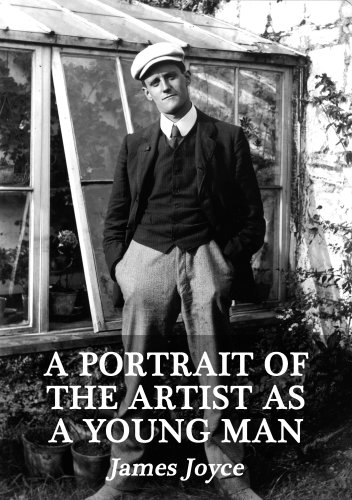
The reader must not identify Stephen with Joyce in every respect.  For instance, Stephen is represented in his days at Clongowes Wood College as a timid boy, conscious of his smallness and weakness, who tries to avoid being involved in the rough and tumble of football.  It is true that the young Joyce disliked fights, but he was keen on hurdling (not hurling!) and cricket and won cups for his prowess.  This practice of taking a certain aspect of his own character and intensifying and exaggerating it when picturing his alter ego, or second self, is typical of Joyce’s method.  The exaggerations often move Stephen a distance from the real Joyce.  Who would guess from A Portrait that Joyce’s cheerful disposition earned him the nickname “Sunny Jim”?

Stephen, then, is not simply a direct self-portrait.  Indeed it is significant that Joyce called his book A Portrait of the Artist and not A Portrait of an Artist.  For Joyce was never content to record particular experiences for the sake of their interesting particularities.  He wanted to achieve universality.  Of his first book of short stories, Dubliners, he wrote: ‘If I can get to the heart of Dublin, I can get to the heart of every city in the world.  In the particular is contained the universal.’  So we may assume that in studying the growth and development of Stephen Dedalus he was not exclusively concerned with getting to the heart of the young James Joyce or an imaginary equivalent, but in getting to the heart of the young artist as such.

In calling his hero ‘Stephen Dedalus’ Joyce consciously combined the name of the first Christian martyr and that of Daedalus, the legendary Athenian craftsman.  Daedalus was credited with making statues that could move.  He constructed the famous labyrinth at Crete.  He made wings from feathers and wax so that he and his son Icarus could escape when Minos imprisoned them in the labyrinth.  Icarus flew too near the sun so that the wax melted and he fell into the sea and was drowned.  In giving his hero these names Joyce gave him symbolic status.  The martyr suffering for his faith and the skilful, inventive artificer are joined in one person.  Daedulus is significant both because he was a cunning craftsman giving life and complexity to his inventions and because he escaped imprisonment by the adventure of flight.

CHAPTER 1

In the presentation of Stephen’s infancy Joyce has compressed a series of references that hint at the larger issues in the child’s future life.  In fact infant memories are the acorn containing a promise in miniature of the future tree.  The bedtime story sets the young hero on the road of life encountering a cow which is a symbol of the Ireland with which he will have to come to terms.  The physical experience of finding relief and warmth in wetting the bed is followed by discomfort: this little miniature of delight seized that has to be paid for in pain, of ecstasy followed by sordidness or agony, sets the tone for many of the coming experiences.  In the memory of Dante’s brushes, representative of Davitt and Parnell, is foreshadowed the Irish political strife that is to ruin the Christmas party and provide a public background which Stephen, the university student, finds suffocating.  The demand that the child should apologise or have his eyes pulled out foreshadows the later full-scale demand for repentance to escape the torments of hell.

The story of Stephen’s development is the story of these contrasts and conflicts magnified.  The child growing to young manhood has to face the impact on his individuality of the forces at large in the world he has entered.  He is subject in turn to the pressures of family, of Church, and of his country, all trying to mould him in a particular way.  The disillusionment experienced after bed-wetting is symptomatic of his maturer experience in this respect.  The first separation from home at Clongowes is a move from the remembered warmth and cosiness of the family circle to a world of physical cold and discomfort and of emotional harassment by others, boys and masters.  A chill caused by bullying brings him to the school sickroom in a shivering delirium.  This is the first crisis of Chapter 1.  The Christmas party to which he has looked forward, and which opens with promise of warmth, good cheer, and family friendliness, turns sour and then erupts into a violent slanging match because the public controversies of Irish history have impinged on the private scene.  This is the second crisis of Chapter 1.  The shock for Stephen is that Parnell is a hero, that priests are good and wise men, that these adults are all for Ireland, and yet tears and rage break up their conviviality.  The third and last crisis of Chapter 1 is caused by the shock of Stephen’s first encounter with flagrant injustice – injustice perpetrated by a priest in authority.  Father Dolan punishes him cruelly when he is innocent.  The injustice stirs him to a brave and spirited bid for his rights.  If Stephen is the loser, by sickness and by family discord, in the first two crises, he is victor in the third.  The hero has protested in the face of the highest authority and has won his case.  His individuality has triumphed over the iniquities of the system.  This, in embryo, is the pattern of the artist’s destiny.

CHAPTER 2

In the period between Clongowes and Belvedere Stephen develops as a normal, healthy young boy who goes shopping with his uncle, and enjoys riding in the milkcart and playing on a farm.  This is accompanied by two stirrings of his inner life: one is the sickening realisation that the family have financial problems, which turns to bitterness when they are forced to move from the comfort of Blackrock to the cheerless house in the city: the other is the romantic dream-life he creates for himself through reading The Count of Monte Cristo and picturing himself the partner of the lovely Mercedes.  The first crisis of Chapter 2 is the shock of failure within himself.  It occurs at the tram-stop with Emma Clery.  Her eyes, her chatter, her way of coming to stand on the step beside him all seem to invite him to hold her and kiss her.  But he does nothing; and the failure fills him with gloom.  When he tries to write a poem to Emma, he empties the incident of reality and precision of detail and transforms it into a mistily conceived dream.  As soon as the poem is written he goes to stare at himself – not to look for Emma.

The second crisis of Chapter 2 also involves self-dramatisation, this time in an actual theatrical performance on stage at Belvedere.  A deep inner disturbance of desire, tenderness, and melancholy is focused on the belief that now, two years later, Emma is to watch him on stage with admiring eyes.  The belief stimulates him to an excited and confident performance, after which he rushes out in wild expectation to his family, only to discover that Emma is not with them.  The shock sends him running through the night streets of Dublin to a filthy corner where rankness and stench quench his inner agony.  Interwoven with this record of emotional development Joyce traces the growing artistic confidence of Stephen’s persistence in championing the rebel Byron against the respectable Tennyson.

The Cork visit serves to detach Stephen irrevocably from his father and his like.  Tagging on behind his father, he recognises the hollowness of his garrulous bonhomie, is ashamed of the way he can be duped by an obsequious college servant, is embarrassed by his cheap flirtatiousness with barmaids, and is disgusted by his excessive drinking.  Shame and humiliation open a chasm between his father’s cronies and himself.  The experience reinforces the humiliation already felt in his ambiguous status at Belvedere – a leading boy whose home background is one of squalor.  And there is no escape to heroic self-confidence because he has become the victim of a restless inner lust and private orgies that fill him with self-loathing.  There is an unbridgeable gap between the real world around him and what transpires in his own angry, impotent, dejected soul.

In the last section of Chapter 2 Stephen makes a desperate attempt to re-establish order in his world and to rebuild effective relationships with his own family.  The money prizes he has won for academic work are spent lavishly and recklessly on giving the family a taste of affluent living and turning himself into their banker and benefactor.  When the money is gone, the whole attempt to stem briefly the tide of squalor and to come to terms with his family seems to have been futile. Meanwhile sexual desire is so strong that he turns innocent girls seen by day into objects of imaginary lustful indulgence in his private dreams at night.  There are still momentary day-dreams of fulfilment in the company of the idealised Mercedes; but the predominant urge is an animal demand to force some girl into sin and to take pride in it.  In this mood he encounters the prostitute who takes him home.  Thus the final crisis of Chapter 2 (like the final crisis of Chapter 1) ends in a kind of triumph, in that Stephen feels release, delight, and a new self-assurance when the prostitute moves into his arms.

CHAPTER 3

As with each epiphany, after the elation there comes deflation!  The effect of sexual release upon Stephan is complex.  His senses are repelled by the vulgarity of the brothels; he is conscious of his sinfulness, and yet too proud to pray, and afflicted with spiritual indifference.  He is certainly not more open to others: on the contrary he finds himself scorning his school-fellows and simple worshippers.  The aesthetic delight in the office (litany) of the Virgin Mary still captivates him.  Stephen has not found a way to self-fulfilment nor to love of others.  The sexual act, which ought to be a means to both, has become one more experience for a would-be artist self-consciously inflating his own ego.  It is in this deeply unsatisfied condition that Stephen is subjected to the retreat sermons.

The first crisis of this (third) chapter occurs when the rector announces the retreat and speaks of the sanctity, self-sacrifice, and heroic achievements of St. Francis Xavier.  Stephen feels an ominous withering of his heart.  Father Arnall’s previous contact with Stephen at Clongowes revives childhood memories, and his sermons are to thrust him back into a state of childlike submission and obedience.  The introductory sermon and the sermons on death and judgement produce a second crisis, a sense of his shamelessness and foulness against which the thought of Emma stands in stark contrast.  The shock of conscious guilt is resolved temporarily by another mental act of self-dramatisation when he pictures himself, hand in hand with Emma, being forgiven and comforted by the Virgin Mary.  This romanticised day-dream is another absurdly extravagant product of the immature artistic mind.  On the third day of the retreat the sermons revolve around the horrors of hell with an emphasis upon the physical torment of the senses and the moral and spiritual torments that accompany it.  Designed to stir the conscience by stimulating fear, they constitute a burlesque of Catholic exhortations.  Joyce emphasises the parallel by making Lucifer’s slogan in rebellion against God (non serviam) Stephen’s own slogan of commitment to his artistic vocation.  Pride, the sin of Lucifer, is the sin which the egotistic young artist cannot recognise in himself.  The final crisis of this chapter brings Stephen to a condition of terrified remorse, which is removed only when he makes his confession and receives absolution.  Even in this act humility and sincerity are infected by self-dramatisation in the role of penitent.  Like the previous chapters, this chapter too ends on a note of ‘triumph’ – again a romanticised triumph, that of the self-consciously cleansed young man receiving the sacrament in the joy of forgiveness.

CHAPTER 4

In Stephen’s next phase he cultivates his soul with elaborate devotional exercises, models his religious raptures on the romantic gestures represented in sacred art, and mortifies his senses with ingenious disciplines. The persistent habit of self-dramatisation is evident in Stephen’s various reflections on the director’s suggestion that he might have a vocation to the priesthood.  The first crisis of Chapter 4 comes when he weighs the call but suddenly realises that his own individuality can never surrender to the claims of such a calling.  He has a ‘pride of spirit’ that makes him ‘a being apart’.  He must learn his own wisdom in his own way and face the world’s snares.  The decision to apply for a university place follows naturally.  But there is a second brief crisis when Stephen meets a band of Christian Brothers who in their work and attitude have all the genuineness of devotion, humility, and charity which he himself lacks, and he feels ashamed and angry with himself in their presence.  This mood is resolved by the sudden assertion of his poetic self and his delight in words.  The final crisis of the chapter, and the climax of the book, occurs when, dreaming of his urge to creative achievement as an artist, and feeling ready to shake off all that impedes him from following his calling, he sees a girl wading in the sea.  Her beauty and her stillness fill him with rapture.  Stephen exclaims, ‘Heavenly God!’ bringing his religious sense into a new context in response to the image of loveliness.  The call of youth, beauty, and creativity throws him into an emotional ecstasy.  The decisive choice of his life has been made.

CHAPTER 5

The final chapter has thus the air of an epilogue.  Yet the first section of it is the longest section in the book, and a good deal of experience is encompassed in Stephen’s thoughts.  The sordid scene at home is in stark contrast to the literary treasures stored in his mind.  Though he scorns the pedantry of the lecture room, he relishes the magic of language with acute sensitivity.  He has an off-hand attitude to the college time-table, and thinks but poorly of the dean of studies with whom he argues half-seriously, half-provocatively.  He sits through the physics lecture in detachment.  There is something of a show-down with fellow students in the entrance hall after the lecture, when he refuses to compromise with the sentimental aspirations of some of his companions and sign their petition.  His cleverness at the expense of other people’s earnest endeavours is bound to irritate and antagonise.  Stephen manages to make himself unlovable by parading unpopular views uncompromisingly and doing so with calculated scorn.   The charges of other students, that he lacks altruism and is a crank, win sympathy with the reader.  Too often he seems to be spoiling for a fight, even with his genuine friends, such as Davin.

Stephen’s long theoretical argument about the character of beauty is sandwiched between Davin’s teasing reference to Emma and Lynch’s whisper, ‘Your beloved is here’.  The contrast between the unrestrained verbalism of Stephen’s talk about beauty and the equivocal, halting reservations that mark his attitude to a living woman is symptomatic of Stephen’s failure to integrate thought and action.  His head is full of theory about emotion and beauty, while his living experience of emotional commitment is confined to the brothel.

The thought that he may have misjudged Emma turns her in his mind, in a flash, into an epitome of natural gaiety and simplicity.  When the poetic inspiration seizes him, his thought transfigures her into an object of devotion to be hymned exaltedly.  The cry of the heart is transmuted into a precious rhetoric, rich and liturgical, but detached from the reality of the true relationship with Emma.  Indeed Stephen’s memories of her, now recalled, suggest a girl interested in him, ready to be responsive, doing her best to communicate, but being rebuffed by cool, oblique replies and the pose of isolation.  Joyce’s irony is never more subtle than here.  Stephen’s jealous anger at Emma’s friendliness with Father Moran seems disproportionate.  It seems to draw nourishment from his hatred of the Church and from his determination to make a priesthood of the artist’s calling, a priesthood to which she ought to turn in frank confession.  Stephen hovers between exaggerated condemnation of her as treacherous and exaggerated idealisation of her.  Finally he conjures up her image as that of the voluptuous, yielding mistress at the point when the finished poem flows through his mind.

In the penultimate section of the book Stephen snaps the ties with home one after another.  When he watches the birds and hears their cries it is the image of his mother’s face and the sound of her weeping that they blot out.  In deciding to fly, he is also consciously forsaking the Ireland of the vulgar barracking of Yeat’s play.  In conversation with Cranly he sums up his rebellious rejection of the Church and of the claims of his suffering mother.  In relation both to his mother and to Emma, Stephen manifests grave deficiency in human sympathy.  The self-righteousness of his attitude is as priggish as the inflated language in which he presents his decision.  In his own eyes his decisions are earthshaking.  He assumes to himself the importance of a future Beethoven or Shakespeare!

The notes from Stephen’s diary suggest that within his divided being the conscious artist has taken over from the man of direct sympathy and unselfconscious action.  The jottings have an artificial literary flavour.  They show a young mind making art out of life.  They sum up people and events with aphoristic dismissiveness.  They employ archaisms, literary allusions, and clever analogies in verbally discarding people who after all have loved Stephen – Emma, Cranly, his mother, his countrymen (‘a race of clodhoppers’), and Davin.  All are summarily treated as material for epigrammatic play by a super-mind.  Meanwhile Stephen’s own role is glamorised, his isolation, his spiritedness, and his resolve wrapped about with overtones of grandeur and heroism.  The element of earnestness in his acceptance of the artistic vocation must not be ignored, but it is expressed here with a pretentiousness and flamboyance that cannot but raise a smile.

In the end Stephen emerges as a proud, rather anti-social person far too much wrapped up in himself.  Cranly’s question, ‘Have you never loved anyone?’ ought to touch a raw nerve.  His lack of common humanity is surely Stephen’s dominant weakness.

egoist_screenshot_vol2_number4_Portrait_of_the_Artist_as_a_Young_Man

Donal Ryan has hit the big time – at last!

image

Donal Ryan has hit the big time with his inclusion in the Leaving Cert syllabus list of texts for the Leaving Cert in 2017.  This recognition is obviously well deserved and students will enjoy his quirky depiction of Celtic Tiger Ireland.  It is amazing, and a source of great pride, how modern and with-it the ‘new’ Leaving Cert Syllabus really is, unlike the ancient ‘dead poet’s society’ attitude of years gone by.  Today, any young aspiring Irish writer who gets  shortlisted (or even long-listed) for the Booker guarantees him/her inclusion in the new course in a very short space of time.

Read more

The Michael Longley Legacy

Michael Longley, one of Ireland’s leading poets, died on Wednesday, January 22nd 2025 in Belfast’s Royal Victoria Hospital following a short illness.

His 13 collections have received many awards, including the Whitbread Prize, the TS Eliot Prize, the Hawthornden Prize, the Irish Times Poetry Prize and the Griffin International Prize. Ash Keys: New Selected Poems was published last July to mark his 85th birthday, bringing together more than 50 years of poetry, from his first collection, No Continuing City (1969), to The Slain Birds (2022).

In 2015 he was awarded the Griffin International Poetry Prize for his collection The Stairwell (Jonathan Cape).  In his acceptance speech in Toronto (June 4th, 2015), Longley said he had been writing since he was 15 years old.  “It’s my life.  It’s my religion.  It’s the way I make sense of the world,” he said.  The jury described Longley’s The Stairwell as ‘a book by a major poet writing at the height of his powers’. What follows here is a selective and subjective analysis and review of the major themes and issues which frequently recur in Longley’s poetry.


img_8552-e1417089640163

Read more

AN ANALYSIS OF THE POETRY OF ROBERT FROST (1874 – 1963)


Vermont in The Fall
Vermont in The Fall

At a dinner in Amherst on the day of his eightieth birthday, Frost said: ‘all I’ve wanted to do is write a few little poems it’d be hard to get rid of’.  He also commented: ‘We rise out of disorder into order and the poems that I make are little bits of order.  It’s as if I made a basket or a piece of pottery or a vase or something and if you suffer any sense of confusion in life the best thing you can do is make little poems.  Or cigarette smoke rings.  Even those have form.’

*******

CAVEAT EMPTOR!

THESE NOTES ARE DESIGNED TO COMPLEMENT THE WORK ALREADY DONE IN PREPARATION FOR LEAVING CERT ENGLISH (HIGHER LEVEL).  HERE YOU WILL FIND A PERSONAL REVIEW OF SOME THEMES AND ISSUES WHICH FEATURE IN THE POETRY OF ROBERT FROST. YOU SHOULD CONSIDER THESE IDEAS, THEN RE-EXAMINE THE POEMS MENTIONED FOR EVIDENCE TO SUBSTANTIATE OR CONTRADICT THESE INTERPRETATIONS.  IN OTHER WORDS, MAKE YOUR OWN OF THESE NOTES, ADD TO THEM OR DELETE FROM THEM AS YOU SEE FIT.

THE FOLLOWING SELECTION IS SUGGESTED BECAUSE THEY DEAL WITH MANY OF THE MAJOR THEMES WHICH RECUR IN FROST’S POETRY:

THE TUFT OF FLOWERS (1913)

AFTER APPLE-PICKING (1914)

OUT, OUT.. (1916)

SPRING POOLS (1928)

ACQUAINTED WITH THE NIGHT (1928)

DESIGN (1936)

PROVIDE, PROVIDE (1936)

________________________________


Frost (8)


BACKGROUND INFLUENCES

Frost studied the classics, had a thorough knowledge of the Bible, and was well-read in European and American literature.  Romantic and Victorian poets played an important role in shaping his poetic theory.

ROMANTIC POETRY (1798 – 1832):  Romantic poetry was written against a background of social, political, economic and religious change, not unlike the changes experienced by American society from the middle of the nineteenth century onwards.  Frost was drawn towards aspects of their poetry when formulating his own distinctive poetic style.

  • Wordsworth, Coleridge, Keats and Shelley, among other Romantic poets, believed that poetry should express the poet’s own mind, imagination and feelings. His emotions, thoughts and experiences should form the central subject in his work.
  • The lyric, written in the first person, became the preferred Romantic form. The ‘I’ is usually the poet himself, not a persona created by the poet.
  • The natural scene, accurately observed, is the primary poetic subject. Nature is not described for its own sake but as a thought-provoking stimulus for the poet, leading him to more insight or revelation.
  • Romantic nature poems are usually meditative poems. The landscape is sometimes personified or imbued with human life.  There is a reaction against a purely scientific view of nature.  Humans are depicted as isolated figures in the landscape.
  • The Romantics subscribed to Wordsworth’s belief that poets should ‘choose incidents and situations from common life’ and write about them in ‘language really spoken by men’ who belong to ‘humble and rustic life’.
  • Wordsworth insisted the poet should use ‘a certain colouring of imagination, whereby ordinary things should be presented to the mind in an unusual aspect’.
  • The poet’s visionary imagination rises above the limited, sense-bound understanding and enables him to see things in a new way.
  • Romantic poetry is concerned with mystery and magic, folklore and superstition. The role of the imagination is related to the importance of instinct, intuition and the emotions of the ‘heart’ as the source of poetry. (This is also very true of Yeats’ poetry.)  According to Coleridge, ‘Deep thinking is attainable only by the man of deep feeling’.  The capacity to imagine permits the poet to enter a higher visionary state and regenerate the world.

 VICTORIAN POETRY:  Frost studied Victorian poetry in great detail.  He cited Thomas Hardy and Robert Browning among his favourite poets.  Three features of this poetry made a particular impression on him:

  • The use of traditional forms, such as the sonnet
  • The revival of the narrative poem, prosaic in style and casually colloquial in tone
  • An abiding awareness of time and its effect on humans.


 Frost (1)

SOME THEMES AND ISSUES IN FROST’S POETRY

The Natural World:  Frost was a keen observer of the natural world.  Plants, insects, geographical features and the seasons have their place in his poetry.

  • Creatures: dimpled spiders, trapped moths, bewildered butterflies.
  • Plants: butterfly weed, blue or white heal-all, yellow leaves, dark pines, apple trees, russet apples, summer forests.
  • The physical world: spring pools, winter snows, the sky, brooks, Vermont mountains.
  • The seasons: autumn and winter are the dominant seasons, with falling leaves, bare trees, snow, ice, chill winds and rain.

The natural world is rarely described for its own sake or as a background against which the action of the poem takes place.  Instead, nature leads the poet to an insight or revelation.  Often a comparison emerges between the natural scene and the psyche, what Frost called ‘inner and outer weather’.

His descriptions of nature are not sentimental.  He describes a world that is bleak, empty and cold, where creatures suffer in silence and humans feel isolated.  His natural world contains blight, darkness and death and therefore can be threatening, hostile or indifferent.

Isolation and communication:  Humans are depicted as figures of isolation in the landscape.  Not only are they isolated but they represent loneliness, and thereby acquire symbolic status.  Loneliness can be seen as a human condition.  Efforts to communicate effectively are at best difficult (‘The Tuft of Flowers’), and are sometimes rebuffed (‘Acquainted with the Night’).

 The role of fate and chance:  Frost is far less affirmative about the universe than other American writers.  Looking at nature, they discerned a benign creator, whereas he saw ‘no expression, nothing to express it’.  In Frost’s world, God is either hostile or indifferent to the plight of helpless creatures, who, like humans, are victims of fate or chance.  (This theme is dealt with very well in Tennyson’s great Victorian poem ‘Choric Song of the Lotus Eaters’).  His poetry records an ever-present, underlying darkness that erupts in a random manner with tragic circumstances. (see ‘Out, out –‘).

Mutability – the effect of time on people and nature:  In Frost’s poetry time is sometimes seen as being destructive:

  • Yesterday’s flowers wither
  • Winter snows melt, spring pools are drained by trees, trees lose their leaves in autumn
  • Time destroys beauty, impoverishes the elderly.

The effect of time can be overcome to some extent by the power of memories and the imagination (‘The Tuft of Flowers’).

The role of the imagination:  The imagination enables the poet to see the world in a new way.  In brief, intense moments he may enter a higher, visionary state.  This allows him to regenerate his imaginative and creative capability and provides him with fresh insights and new inspiration for his poetry.  This state cannot be sustained for long, however, and he must return to the real world.

 FROST (2)

STYLE AND TECHNIQUE: SOME POINTS

 Language:  From his study of Hardy’s writing, Frost learnt how to achieve simplicity in poetry through the use of a few well-chosen words.  He made a conscious effort to use ordinary language in his poems and captured the full range of human emotions, from joy to sorrow and from exaltation to fear, through the use of plain, monosyllabic speech.  He stressed the importance of colloquial language, as it was appropriate to the subject matter in his verse and made his poetry accessible to a wider audience.  Frost played the colloquial rhythms against the formal patterns of line and verse and constrained them within traditional forms, such as the sonnet or dramatic monologue.  The plain diction, natural speech rhythms and simplicity of images contrive to make the poems seem natural and unplanned.

Frost used repetition for effect, to emphasise, and to add to the musical quality of his verse.  He described sound in the poem as ‘the gold in the ore’ and added that ‘the object in writing poetry is to make all poems sound as different as possible from each other’.

Rhyme:  Unlike many American poets in the twentieth century, Frost upheld formal poetic values during changing times, when formal practices were widely abandoned.  He emphasised the importance of rhyme and metrical variety, observed traditional forms and developed his technical skills.  He could claim without fear of contradiction that ‘I am one of the notable craftsmen of my time’.  His poetry is written so that the rhyming ‘will not seem the tiniest bit strained’.  He used terza rima, end-of-line rhymes, and full and half-rhyme.  He also wrote in blank verse.

Frost used a wide variety of verse forms, including the sonnet, dramatic monologue, narrative and lyric.

Imagery:  The imagery in Frost’s poems is deceptively simple.  There are images from the natural and the human worlds.  Some are everyday and ordinary, some are grotesque and macabre.  In a number of poems, such as ‘Spring Pools’, the imagery caries the meaning.  Frost uses precise details to re-create the colour, texture and sounds of the world within the poem.  This makes his poetry richly sensuous.  Yet, using the same technique, he can paint a cold, bleak scene that is chillingly realistic.

His use of similes and metaphors creates layers of meaning in his poems.  In ‘After Apple Picking’, for example, the metaphor used is complex.  On one level it can be read as a nature poem, while at a deeper level it can be read as a study of the creative process.  (And there are other levels in between!).

Tone:  The tone of voice used is vital to the meaning in Frost’s poems.  His poetry displays a great range of tone, and it may vary considerably within a particular poem.  It can be precise and matter-of-fact, sympathetic, sad, relieved, strong and confident, despairing, humorous, dark and ironic, wistful or weary.

First-person narrative:  Frost frequently used the first-person for his narrative.  The reader is permitted a glimpse into the speaker’s life at a specific moment, often during a crisis.  The use of the first person creates a feeling of reliability: the reader is being given a first-hand account of an event, and trusts the accuracy of the narrator.  The authenticity of the story is never doubted in ‘Out, out – ‘, for example.

 Dramatic stories:  A strong narrative structure is apparent in many of Frost’s poems.  The narrator takes the reader through a series of events and actions, which lead to a dramatic conclusion.  These events are often thought-provoking or provide an insight into life.


___________________________________

 FROST (6)

SUMMARY OF PRINCIPAL FEATURES IN FROST’S POETRY

  • Frost wrote in various traditional forms, including the lyric and the sonnet; he is especially noted for his achievements in blank verse encompassing his narrative monologues and dialogues.
  • His themes include the character, people and landscape of New England; fertility and beauty of nature; relationships between individuals and nature, and between individuals themselves; selfhood, love.
  • Style: He writes in the New England dialect; his forms are not experimental but are adapted to the poet’s purpose. Visual images and aural images are significant features of his style.
  • For Frost, ‘the sound of sense’ has an important bearing on meaning; the sound and tone of words, therefore, are significant.
  • Even in so-called nature poems, the person is often to the fore. His focus is nearly always on the individual rather than the community.
  • Colloquial and dramatic idiom is preferred to poetic diction.
  • Simple poems can be symbolic of ideas that are more profound. (Therefore, tread carefully!)


 FROST (3)

*****

AN OVERVIEW OF THE POETRY OF

ROBERT FROST

Frost once said that ‘the four things I most wanted to go into in life were archaeology, astronomy, farming and teaching Latin’, but as we now know he also ‘went in’ for poetry.  ‘I want to reach out to all sorts and kinds’ he said and it would seem that, in his poetry, he succeeded.  As a young man, he was advised by the Reverend William E. Wolcott to write a more heightened, elevated kind of poem.  Wolcott thought that Frost’s poetry was too much like the speaking voice but, in fact, this speaking voice, ordinary speech, poetry that talked, was what Frost preferred.  Years later, Frost was to see that advice as pivotal in his development as a poet,

‘I’m sure the old gentleman didn’t have the slightest idea he was having any effect on a very stubborn youngster who thought he knew what he knew.  But something he said actually changed the whole course of my writing.  It all became purposeful’.

In a letter written in 1914, Frost wrote that ‘Words exist in the mouth not books’ and whenever Frost gave a poetry reading, he used the word ‘say’ rather than ‘read’.  At one such reading in the grand ballroom of the Waldorf-Astoria Hotel in New York, he told his audience: ‘I have a feeling you didn’t understand that poem.  I’ll say it again.’

Frost was always interested in the rhythms of natural speech and he was also very interested in formal patterning and rhyme.  Free verse (unrhymed, irregular verse) was rejected by Frost.  He said that writing free verse was like playing tennis without a net!  In other words, he enjoyed the discipline and restrictions of the net – for example, ‘The Tuft of Flowers’ is written in heroic couplets and he also wrote blank verse and liked the sonnet form (‘Design’).

He chose to write in a language that was close to and inspired by ordinary, everyday speech.  But it was not only the language that made him a popular and accessible poet; it was also his subject matter.  Frost’s poems are rooted in the natural world but he himself was careful to point out that in his poetry man is almost always part of the landscape.  He made New England his own and wrote about ordinary people living ordinary lives.  The subject matter of the poems – turning the hay, spring pools, picking apples, a farmyard accident, a spider, walking at night – is described, but the poems go beyond description.  (This characteristic of his poetry is probably what attracted Heaney to the poetry of Frost.). In ‘The Road Not Taken’ and many other poems the speaker explores moral and philosophical ideas, so that suggestion is as important as what is being described.  Frost said that ‘You don’t want to say directly what you can say indirectly.’  (After all, the reader has to go some part of the journey too!).

The world of Frost’s poetry is beautiful but it is also harsh and uncaring.  Frost wrote that ‘Man has need of nature, but nature has no need of man.’  At a dinner in Frost’s honour in New York on the poet’s eighty-fifth birthday (26th March 1959), Lionel Trilling said Frost’s best poems represented ‘the terrible actualities of life’ and. In an essay published in Partisan Review, Summer 1959, Trilling described the world of Frost’s poetry as a ‘terrifying universe’ and one of loneliness, doubts, disappointment and despair and his biography also reveals that his life was a troubled, anxious, sorrowful one.

However, there is not much evidence of this dark side in the poems on our course – especially in the ones highlighted.  Instead, for the most part, the voice we hear when we read Frost is a warm, inviting, gentle voice.  Lines such as ‘I went to turn the grass once’, ‘I am done with apple-picking now’, ‘I shall be telling this with a sigh’, ‘I have outwalked the furthest city light’ are immediate, even colloquial, in tone.  In 1939 Frost wrote:

‘No tears in the writer, no tears in the reader.  No surprise for the writer, no surprise for the reader.  For me, the initial delight is in the surprise of remembering something I didn’t know I knew …. A poem may be worked over once it is in being, but may not be worried into being.  Its most precious quality will remain its having run itself and carried away the poet with it.  Read it a hundred times: it will forever keep its freshness as a metal keeps its fragrance.  It can never lose its sense of a meaning that once unfolded by surprise as it went.’

***

At a dinner in Amherst on the day of his eightieth birthday, Frost said: ‘all I’ve wanted to do is write a few little poems it’d be hard to get rid of’.  He also commented:

‘We rise out of disorder into order and the poems that I make are little bits of order.  It’s as if I made a basket or a piece of pottery or a vase or something and if you suffer any sense of confusion in life the best thing you can do is make little poems.  Or cigarette smoke rings.  Even those have form.’

At the beginning of many volumes of his poems, and also at the beginning of his Collected Poems, is a poem called ‘The Pasture’.  It serves as both introduction and invitation.  Frost is going out to attend to everyday jobs on the farm but he invites us to look at the world through his eyes, the eye of a poet:

THE PASTURE

I’m going out to clean the pasture spring;

I’ll only stop to rake the leaves away

(And wait to watch the water clear, I may):

I shan’t be long – You come too.

I’m going out to fetch the little calf

That’s standing by the mother.  It’s so young

It totters when she licks it with her tongue.

I shan’t be long  – You come too.

*****


FORST (5)

 *****

SAMPLE ANSWER

“Frost’s poems are ‘little voyages of discovery’.”  Discuss.

Frost’s world is a rural world, a world of nature and trees, soil and crops.  His poetry, like that of Kavanagh, Heaney and others, recreates a local and familiar landscape in which Frost, as a poet and as a person, is in communion.  We sense that he knows nature’s spaces.  We believe that his is a voice of integrity that invites us into fields and orchards and along the brooks of New England.  And we occasionally feel that along the way, we may even discover something of Frost himself.

Frost often shares with us his understanding of the delicate and finely balanced relationships within nature.  He writes of nature with a keen eye and respects her beauty and her peculiar ways.  In ‘Spring Pools’, for example, there are many evocative images of trees, pools and flowers.  The poet observes that the ‘trees have it in their pent-up buds / To darken nature and be summer woods’.  He goes on to personify nature adding that the trees should ‘think twice before they use their powers / to blot out and drink up and sweep away’ the spring pools.  It is a very direct poem, a poem with purpose.

Purpose is also central to ‘The Tuft of Flowers’.  We see the speaker searching through ‘an isle of trees’ before stumbling across ‘A leaping tongue of bloom the scythe had spared’.  The speaker discovers that, when he acknowledges nature’s presence on the farm, he no longer works alone.  In the poem, nature’s ways seem, at first, quite different from man’s.  Man appears initially as a destructive force, with a ‘blade so keen’ that ‘levelled’ the scene.  The butterfly, returning to alight on the flower of yesterday, now discovers that it ‘lay withering on the ground’.  However, nature is resourceful and the butterfly immediately discovers an alternative flower beside ‘a reedy brook’.  Ironically, it has been uncovered by the ‘scythe’.  The butterfly’s simple, though significant discovery is interesting; it suggests the connections, the interdependence within nature, between butterfly and flower or, as in ‘Spring Pools’, between tree and water.  It also suggests the continuity of life, its habitual capacity to survive and regenerate.  At the end of the poem, the speaker and the butterfly are seen in harmony, a link established between them.  Frost has found meaning in nature and understanding in man, ‘Whether they work together or apart’.

Frost, however, also makes somewhat darker discoveries in nature.  At times, these discoveries might be applied to the human space.  In ‘Design’, for example, the macabre picture of the ‘fat and white’ spider on the ‘white’ heal-all, carrying a ‘moth / Like a white piece of rigid satin cloth’ shows the exactness with which Frost can depict nature’s creatures.  From this deadly, pale procession, the poet reflects that the driving force behind the scene of such cruelty is the ‘design of darkness’.  Who is to say that such is not the case in human society and in human community?

Interestingly, though, there is a conspicuous absence of community in his work.  Even where the poet comes into the arena of human society, in a poem such as ‘Acquainted with the Night’, there is no sense of contact, of community between people who live along the ‘saddest city’ lanes.  It is a place where people drop their ‘eyes’, unwilling to engage, abandoning themselves to insular and isolated lives.  The Frost who walks through country paths in ‘The Road Not Taken’ seems much more at ease than the Frost who ‘stood still’ in the city rain.

Nevertheless, in the countryside, Frost himself tends to work ‘alone’, he walks alone, and plays alone, being ‘too far from town to learn baseball’.  His main concern, it would appear, is not with community but with the individual identity – of pools, of apples, and of himself.  Through his poems, we imagine a man who values self-sufficiency and individualism.  He chooses the road ‘less travelled’.  He can be seen turning, not outward towards community but inward towards his inner self in ‘After Apple-Picking’ where he reflects that ‘I am over-tired / Of the great harvest I myself desired’.  His inward quest is also balanced by his outward journey towards familiar things in nature, giving his verse a reflective and meditative quality, whether he speaks of himself or of nature.

We can, therefore, make little voyages of discovery through Frost’s verse.  The poet reveals his interesting and personal insights into nature while he also appears to us, the readers, as sensitive, tender, at times humorous, but especially reflective man.  He can be detached from his subject or quite sympathetic to it.  In all, we have discovered a poet who is emotionally honest to us, to nature and to himself.

 FROST (7)

Some personal thoughts on ‘The Road not Taken’

‘The Road not Taken’ has always been a very popular poem.  It is a lyric, a first-person narrative tale of a key moment in the poet’s life.  In the poem, the speaker, whom we can assume is Frost, is faced with a choice that appears quite suddenly as he walks along a forest track.  At this moment, the route on which he has travelled diverges into two separate paths.  The speaker faces a difficult decision that has to be made for the moment, yet may have repercussions that last a lifetime.  This is what makes the decision so difficult.

If you consider, briefly, some decisions you make in your own life, you know that you might make hundreds of choices in any one day, most without even noticing!  Deciding where to go for lunch is usually not too difficult; however, a much more difficult decision is the career to follow after your Leaving Cert.  Your choice may affect your life for many years and so you tend to take time and effort in arriving at that decision.

So, Frost comes to a fork in the road.  If taken on a literal level, the choice is simply the path along which to continue.  However, if these paths are seen in a symbolic way, then the choice is more challenging.  Our poetry course has thrown up many examples of where life is seen in terms of a journey on which we will meet many twists and turns.  The moment in the poem could be such a moment in anyone’s life.

The poet considers his options carefully.  He looks down both paths, ‘as far as I could’ in an attempt to see what they might offer.  But his view is limited by the bend as the track veers into the undergrowth.  It is, in other words, impossible to foresee what future may lie ahead – and Frost did not seem to have the luxury of a Change-of-Mind slip!  At first, each alternative is equally appealing or ‘just as fair’.  Similarly, both roads diverge into ‘a yellow wood’.  The first path, however, is a more popular route, while the other less-travelled path is overgrown and ‘wanted wear’.  The choice is clear but not at all simple: the common, easy path or the unusual, more challenging path?  The first road might prove more reliable, even reassuring, for others have gone that way.  The more difficult road, however, may produce a less predictable outcome yet perhaps a more fulfilling and individual one.

The poet is aware that the minor difference between the paths at this time will become major differences as the paths diverge further into the woods and into the future.  Each path is attractive and alluring in its own way, but he cannot travel both.  You can’t have your cake and eat it!  This he regrets.  Nonetheless, he decides.

Even as he travels his chosen path he still wonders about the path he has rejected and hopes to keep ‘the first for another day’.  Yet, he knows in his heart that ‘way leads on to way, /I doubted if I should ever come back’.  The poem, in this way, suggests that we can only hope to explore a very limited number of life’s possibilities.  Finally, the poet ‘sighs’, happy with his choice, yet wondering what if…..?  What experiences might have occurred along the other path?  Certainly, his choice has ‘made all the difference’.  That is gratifying; the decision has had a positive effect on his life and he is thankful for that and overall seems pleased with the road he has chosen.

This poem reminds us that important decisions in life are not exact predictions.  We base our choice on reflection of what might be encountered along the way.  Like Frost, we all hope that our major decisions will make ‘all the difference’ in our lives.  We need to believe they will.

Frost believed that each poem was a ‘little voyage of discovery’; a path to something else, rather than an end in itself.  Perhaps, the road not taken is just such a voyage?

THAT ONE ABSOLUTELY BEAUTIFUL THING……..THE MUNSTER HURLING CHAMPIONSHIP!

please archive - christy ring saves ib goalmouth - ref, 542/129 THE BLOODY WATERFORD GOALIE SAVES, THAT'S WHO, NOT CHRISTY RING. ONE OF THE GREATEST SPORTING PICTURES IN HISTORY, WOULD WE EVEN KNOW. CORK V WATERFORD cleaned up version
This is one of the greatest sports pictures ever taken!  Goalmouth ‘shamozzle’ in Thurles during the 1962 semi-final between Cork and Waterford on July 8th.  Ned Power saves despite the close attention of Christy Ring.  Also in the picture Tom Cunningham (Waterford0, Austin Flynn (Waterford,  partially hidden),  and Liam Dowling (Cork, partially hidden).    Ringey only scored (0 – 3) having scored (3 – 4)  in their 1961 encounter only a few months shy of his 42nd birthday.  It was to be his last Championship appearance for Cork – and I was there!

I have many different passions but there’s a special one that rages in my middle-aged heart. Many people may think I am mad but it is the idealism of the majestic, elusive Munster Hurling Championship that makes my heart beat faster day after day.

Close your eyes …. Think of summer. What do you see? I see midges swooping and dancing through a languid sunset. I see heatdrenched Limerick jerseys shuffling through the streets of Thurles where bellows of banter waft along with the whiff of cider that floats from the open doors of packed pubs in Liberty Square. Inside DD Corbett’s a bitter alcoholic draws tears from the crowd with a soft, sweet rendition of ‘Slievenamon’. On a street corner a humming chipvan mumbles its invitation to giddy children as the June sun beats down. The Pecker Dunne sits, perched on a flat stone wall, plucking and strumming, twanging banjo chords as he winks at those who pass. A smile broadens his foggy beard as coins glint and twinkle from the bottom of his banjo case. Hoarse tinkers flog melted chocolate and paper hats on the brow of a humpbacked bridge as we move closer to the field of legends. The rattle and drone of kettle-drums and bagpipes rise from the Sean Treacy Pipe Band as they parade sweat-soaked warriors around the green hallowed sod. A whistle rings on high, ash smacks on ash and the sliothar arrows between the uprights. A crash of thunder and colour erupts from the terraces …… I see the Championship!!!

The Championship is something special. What else has such a choking grasp on an Irishman’s heart? What else has the power to cram Knockaderry Church on a Saturday night and leave it sleeping on Sunday Championship mornings? What else draws the likes of Mike Quilty and Mike Wall and sits them among roaring, red-faced lunatics in the shadow of the crowded Old Stand? What else exists that plucks the cranky farmer from the milking parlour and flings him into a concrete cauldron eighty miles across the province? There are those who swear the Apocalypse would not have the same effect….

Some of my earliest memories are of ‘The Championship’. I remember travelling with my father in Tom Howard’s black Morris Minor for the Munster semi-final in 1962 to see Ringy and the Rebels take on the might of Tom Cheasty, Ned Power and Frankie Walsh’s Waterford. Another day in Cork ‘down the Park’, saw me crammed like a sardine behind the city goal as I watched Cregan and Grimes emerge to mesmerise the Premier County. Another vivid memory is of Glenroe’s own Mike O’Brien with blood streaming from his temple, raising a fist to the crowd, ‘Waterford are bate and Limerick are in the All Ireland!’

….. But oh to be a hurler …. To sprint from the tunnel in Limerick like a greyhound from the traps. To hear the eruption from forty thousand sunburnt fans, to see the swish of flags among a sea of faces.

The Championship is more precious than life for many. I’ve seen grey-haired men gazing into half empty pints reeling off the names of the great ones, like prayers. I’m afraid I too follow suit. Ask me who’s the Minister for Finance and your question will be greeted with indifference. I simply couldn’t care less. But ask me where Carlow senior hurlers play and instantly I say, ‘Dr. Cullen Park … to the left at Church Street, up Clarke Street and half a mile out the Tower Road’. Monaghan? ‘Pairc Ui Tieghernan .. on the slope of George’s Hill, overlooking the County town’. Where do Sligo play? ‘Markievicz Park in the heart of Sligo town’. ‘Bless me father, for I’m a fanatic!’

…. But oh to be a hurler…  If the truth be known I couldn’t hurl spuds to ducks. The boss of my hurley has seen the arse of a Friesian cow more often than it has the crisp leather stitching of an O’Neill’s sliothar! Okay, I’ve had my own All Irelands up against the gable end and in and around the mother’s flower beds but that’s as far as it went for me. My dad was the same but come May and the chirp of the sparrow, you can be guaranteed we’d be stuck in that long snake of traffic, as it slithered its way to Cork, Limerick, Thurles and other far flung fields. The terrace is where the real nectar of hurling comes to a head – when every Joe Soap in the country stands together on the same patch of cement with their eyes fixed on the same lush, green carpet…..

Open your eyes again…. The hazes of summer lie in distant days as the chilled weathergods spit and splutter their wintry flu over the land.  And there’s that sodden Minister for Finance, Michael Noonan, on the box waffling about stability, and growth, and austerity and ….Oh for God’s sake roll on the Championship!!

Because for me, and thousands like me, the ‘one absolutely beautiful thing’
 ….. IS THE MUNSTER HURLING CHAMPIONSHIP!
Mick Mackey and Christy Ring
One of my favourite, enigmatic sports’ photos of all time!  Mick Mackey (umpire) and Christy Ring have a few words as Ring is forced to leave the fray during the 1957 Munster semi-final.

An Analysis of the Poetry of Thomas Hardy (1840 – 1928)


the-british-culture-of-19th-century-30-638

Nowadays May is my favourite month – not many students would say that! – and my favourite lines from the poetry of Thomas Hardy are the following lines taken from ‘Afterwards’:

And the May month flaps its glad green leaves like 

wings;

Delicate-filmed as new spun silk….

Also by way of introduction to the poetry of Thomas Hardy, the English composer Edward Elgar and Hardy share the same birthday, 2nd June, 1840.  Both were country lads and both contributed greatly in giving us an idea of what life was like in the late nineteenth century.  Listen to Elgar’s Cello Concerto in E minor (YouTube) and if Hardy’s poems are ever made into a Hollywood blockbuster (very unlikely!) wouldn’t that be a beautiful soundtrack!

Helpful Background Information

  • Thomas Hardy, English novelist and poet, was born near Dorchester in England. He was one of the great English writers of the 19th and early 20th century.
  • Hardy’s father was a stonemason and influenced Thomas to take up a career as an architect. Gothic architecture influenced Hardy’s poetry. It provided a powerful model for artistic unity and complexity in his works.
  • Hardy derived a love of music from his father and a devotion to literature from his mother. She introduced him to all the folk songs and legends of the Dorchester region as well as to Latin poets and French Romances.
  • He learned French, German, and Latin, sometimes self-taught.
  • Hardy could not afford to study at university. Instead he was apprenticed to a church architect and worked at this trade until he was 34.
  • Hardy wrote continually during the architect phase of his life. He wrote unpublished poems which idealized the rural life. He wrote serialised novels.
  • Success with serialised novels allowed him to give up the architect trade in 1874 and to marry the same year.
  • Over the next 22 years Hardy wrote many novels, all set in the interesting and historic Dorset landscape. He disguised Dorchester as Wessex in his novels and poetry.
  • Beginning at the age of 58, Hardy published many volumes of poetry-over 900 poems in all.
  • His poetry is straight to the point [spare and unadorned]. Though some consider his poetry to be unromantic, Hardy was imaginative and explored interesting feelings, just like the Romantic poets did.
  • Hardy’s most common theme is humanity’s struggle against fate. Hardy is pessimistic in the way he portrays humanity’s futile struggle against cosmic forces. His work has a tragic vision; a sense that human life has to be endured. Hardy’s vision is said to be stoical as it involves an acceptance of fate.
  • Hardy had a vision of a post religious society. He grew up in an era of narrow religious values and certainties. These ideas were beginning to disappear during his mature years as a poet. Instead of the traditional ways of understanding, Hardy realised that science had reshaped humanity’s vision of itself.
  • Hardy favoured the lyric and ballad forms of poetry.
  • Hardy’s poetry explores the themes of rural life and nature, love and loss, cosmic indifference, the ravages of time, the inevitability of death and the inhuman ironies of war.
  • Hardy’s poetry is characterised by fatalistic pessimism, earthy realism, and abstract philosophising. Hardy’s poetry contains great moral conviction.
  • Hardy was fascinated by transience, change, mortality, time, human vanity, war, power, nature, human cruelty and the past.
  • Hardy’s tone is typically ironic. He sees the unexpected twists and surprises that life throws at people.
  • His work provides keen psychological insights. Hardy uses original images that appeal to the reader’s intelligence
  • Hardy’s tone is often bleak and communicates a sense of loss. He is also nostalgic, idealising and longing for the past. Yet he can sometimes view a memory in an ironic or realistic way.
  • A lot of Hardy’s poetry is relatively simple and yet skilful. Yet, some of his poetic writing can be difficult due to old-fashioned words and phrases
  • Some of his poems are regarded as deliberately obscure. Hardy claimed that he often tried to hide his art or craft behind awkwardness. The poems on the course are relatively straight-forward.
  • Hardy’s poems tend to be descriptive, lyrical, and regular in form. He does not tend to experiment with form.

images (5)

THE POETRY OF THOMAS HARDY (1840 – 1928)

 These notes are meant to assist those studying English (Higher Level) for the Leaving Certificate but obviously they can be used by all lovers of poetry – even those who studied Hardy’s poetry in Soundings long ago!  For those studying for the Leaving Cert in June you need to become very familiar with at least six of Thomas Hardy’s poems.  I would recommend that you concentrate on the poems which illustrate his ideas on life, the past, nature and God.  The following is my personal selection (a baker’s half-dozen!):

  • The Darkling Thrush, (TDT)
  • Drummer Hodge, (DH)
  • Channel Firing, (CF)
  • The Convergence of the Twain, (TCOTT)
  • During Wind and Rain, (DWAR)
  • Afterwards, (A)
  • When I set out for Lyonesse. (WISOFL)

Health Warning!!

The points made here in these notes represent one interpretation of his work.  It is important that you develop your own response to each poem; where this differs from the suggestions given here, trust your own judgement!  Become familiar with the poems and with the major themes running through Hardy’s poetry.


 images (4)

Major Themes in Hardy’s Poetry

Time/The Past:  Hardy is keenly aware that civilisations and political arrangements last a limited time, pass and are replaced. Equally he knows that childhood and youth make way for a different future. Hardy frequently glorifies the past in order to emphasise its passing or to contrast it with the present. Sometimes Hardy ironically suggests people don’t learn from the past.

– ‘The Century’s corpse’ [TDT]
– ‘The world is as it used to be:/ All nations striving strong to make/ Red war yet redder’ [CF]
– ‘Again the guns disturbed the hour/Roaring their readiness to avenge, As far inland as    Stourton Tower/And Camelot, and starlit Stonehenge’ [CF]
– ‘Ah, no; the years, the years’ [DWAR]
– ‘He hears it not now, but used to notice such things’ [A]

Fate:  Hardy believes that human lives and events are predestined, though we don’t foresee the outcome. He has a vision that death, decay and mistakes are inevitable in human life. The retrospective view of history is not the only way of understanding events -there are hidden forces that shape our future, long before the destined events occur. Though destiny is inevitable, humans cannot figure it out in advance. Unknown outcomes reshape the plans that people have for themselves. Tragedy, though unforeseen, is never far away. More rarely, Hardy depicts a happy turn of events.

– ‘The Immanent Will that stirs and urges everything Prepared a sinister mate for her-so gaily great-A Shape of Ice’ [TCOTT]
– ‘Alien they seemed to be: No mortal eye could see The intimate welding of their later history’ [TCOTT]
– ‘They were bent by paths coincident On being anon twin halves of one August event’ [TCOTT]
– ‘The Spinner of the Years said “Now” ‘ [TCOTT]
– ‘They are blithely breakfasting all… Ah, no; the years O!’ [DWAR]
– ‘When the Present has latched its postern behind my tremulous stay’ [A]
– ‘No prophet durst declare/Nor did the wisest wizard guess What would bechance at Lyonnesse’ [WISOFL]

Transience/Change:  Hardy shows an awareness of mutability in politics and human affairs. The present differs from the past, often regrettably. Hardy often displays nostalgia for childhood or for a more innocent time. Yet, one thing that doesn’t change in his view is the stupidity of war and human vanity. Sometimes nature illustrates change through its cycles. At other times, forces of nature represent permanence, in contrast to human feelings and prosperity.

– ‘The ancient pulse of germ and birth was shrunken hard and dry’ [TDT]
– ‘It’s gunnery practice out at sea/…The world is as it used to be’ [CF]
– ‘Ah, no; the years O! How the sick leaves reel down in throngs!’ [DWAR]
– ‘He was a man who used to notice such things’ [A]

Family and Relationships:  Though Hardy is often an estranged observer of life, he cherishes intimacy and a sense of belonging. He recognises that these provide human identity. To him, they are essential and universal traits. He idealises family, community and marriage while persisting with his guise as the lone gazer or observer. When Hardy is the speaker, he sometimes seems to be a sensitive individual who internalises his experiences of life through recorded observation and reflection. Sometimes he uses dialogue to dramatise memories of family life. He alters or reworks moments of belonging or intimacy from the past in a romantic way, implying they were sweetly harmonious or more innocent than the present. He glorifies the beginning of his failed marriage as a moment from a medieval romance. He pictures an unknown peasant soldier [a drummer for a war machine] as homely and full of rural family values.

– ‘Young Hodge the Drummer – fresh from his Wessex home’ [DH]
– ‘They are blithely breakfasting all–Men and maidens–yea, Under the summer tree’ [DWAR]
– ‘My radiance rare and fathomless/When I came back from Lyonnesse With magic in my    eyes!’ [WISOFL]

Mortality:  Hardy focuses a lot on death, sometimes to a. morbid extent. Hardy implies that his fellow humans are not conscious of death, though he is always conscious that death is imminent

– ‘They throw in Drummer Hodge, to rest uncoffined’ [DH]
– ‘Foreign constellations west/ Each night above his mound. Young Hodge the Drummer  never knew -/ Fresh from his Wessex home’ [DH]
– ‘They sing their dearest songs-He, she, all of them-yea’ – ‘Ah, no; the years, the years; Down  their carved names the raindrop plows’ [DWAR]
– ‘When my bell of quittance is heard in the gloom’ [A]

Human vanity:  Hardy despises human pride and presumption. He refers with relish to events that show the futility of human schemes. Hardy is didactic in the way he uses mishaps and failures as lessons in the stupidity of human presumption. Hardy mocks the inability of religion to prevent war or better the human condition. He portrays the Christian God as a joker who converses with cows and skeletons. However, he is an enthusiastic advocate of the existence of superior forces or laws in the universe. For Hardy these are scientific rather than theological. These forces show that our grandiose displays of power are frivolous. Hardy delights in narrating reversals to human purpose and above all to smugness. Our hidden destinies frustrate or negate our intentions.

– ‘His homely Northern breast and brain/Grow to some Southern tree ‘ [DH]
– ‘In a solitude of the sea deep from human vanity, And the Pride of Life that planned her,  stilly couches she’ [TCOTT]
– ‘Over the mirrors meant to glass the opulent The sea-worm crawls — grotesque, slimed,  dumb, indifferent’ [TCOTT]
– ‘What does this vaingloriousness down here?’ [TCOTT]
– ‘God cried… they’d have to scour/Hell’s floor for so much threatening’ [CF]
– ‘Instead of preaching forty year/ my neighbour Parson Thirdly said “I wish I had stuck to  pipes and beer”.’ [CF]
– ‘And brightest things that are theirs…. Ah, no; the years, the years’ [DWAR]

War:  Hardy feels war is irrational and cruel. It is not heroic. Individual personality and family identity, two opposites cherished equally by Hardy, have no place in military life. He portrays the disposal of a soldier’s corpse in undignified terms. Hardy regards human being as always ready to participate in the game of warfare, without ever learning a lesson from past wars. Innocents, like the boy Drummer Hodge, are sacrificed meaninglessly. Hardy imagines modern warfare as the apocalypse. He mocks warfare by having God describe warfare as insane. He uses Dorset peasants to create his perspective on war.

– ‘They throw in Drummer Hodge, to rest /uncoffined- just as found’ [DH]
– ‘His homely Northern breast and brain grow to some Southern tree’ [DH]
– ‘We thought it was the Judgement-day’ [CF]
– ‘The world is as it used to be /All nations striving strong to make/ red war yet redder. Mad  as hatters’ [CF]
– ‘Again the guns disturbed the hour, roaring their readiness to avenge’ [CF]

Nature:  Hardy felt a mysterious power and presence in Nature. Hardy was conscious of awesome cosmic forces, the dread power of nature, the ominous signs of nature’s disasters and the amazing beauty of nature.

– ‘And strange-eyed constellation reign’ [DH]
– ‘Winter’s dregs made desolate the weakening eye of day’ [TDT]
– ‘The wind his death-lament’ [TDT]
– ‘Such ecstatic sound’ [TDT]
– ‘Some blessed Hope, whereof he knew and I was unaware’ [TDT]
– ‘In a solitude of the sea’ [TCOTT] ‘In shadowy silent distance grew the Iceberg too’  [TCOTT]
– ‘The only prime/ and real love-rhyme/ that I know by heart, ‘And the May month flaps its  glad green leaves like wings, Delicate-filmed as new-spun silk’ [A]
– ‘The dewfall-hawk comes crossing the shades to alight Upon the wind-warped upland  thorn’ [A]
– ‘He was one who had an eye for such mysteries’ [A]

Hardy’s Style

  • Form
    Hardy writes in a variety of tightly structured forms with well-defined rhyme schemes. Many of his poems are arranged in regular stanzas, with set line length. The course poems show that he mainly favours a line of three beats, sometimes alternating with a four beat line. He relies mainly on varieties of lyric form, sometimes achieving a song-like effect with his refrains and striking rhyme patterns. Hardy’s poems have a strong final line, bringing closure to the lyric through a declaration or a reversal.
  • Speaker
    Hardy is sometimes the autobiographical speaker, though he also uses an abstract observer as the speaker. Hardy also favours dramatic dialogue in some poems, where he uses multiple speakers. He sometimes favours a question and answer format.
  • Tone
    Hardy’s tone ranges from awe to despair. Images of nature are frequently accompanied by a tone of amazement, while images of human foolishness are usually conveyed in a bitter or hopeless tone. In his role of detached observer, Hardy’s tone is frequently full of knowing irony.
  • Irony
    Hardy delights in contrasting human expectation or vanity with fate and reversal. Frequently, Hardy illustrates the cruel irony of people’s lives. Occasionally the reversal in a poem is a happy one, though this is not usually the case. When dealing with war or human pretence, the irony is sarcastic.
  • Language
    There is a lot of variety to Hardy’s use of language. Frequently, Hardy uses archaic or rustic diction and syntax. Sometimes he capitalise words mid-line to emphasise a moral point or an irony. Hardy often uses capital letters for his abstract nouns, a traditional habit of English Poets. Sometimes Hardy uses unusual compound words. Often, Hardy describes a scene or event in a series of adjectives.
  • Imagery
    A lot of Hardy’s imagery is descriptive and real though it is interspersed with figurative imagery. Hardy uses metaphorical language frequently. Some of his images are symbolic of ruin or decay. Hardy often uses nature as a symbol of the passing of time. He sometimes contrasts permanent natural forces with images of change in human life. Hardy also uses certain images ambiguously. He also uses personification.
  • Verbal music
    Hardy uses the typical poetic devices of line rhyme, internal rhyme, alliteration, consonance, sibilance and assonance to beautify his subject or to enhance meaning and tone. He also uses onomatopoeia to create sound effects. He produces both euphony and cacophony to deepen meaning through musical effect. Search the poems and you will find many examples of these traits.

 *****

far-from-the-madding-crowd-by-thomas-hardy-10-728

My Personal Response to the Poetry of Thomas Hardy

Thomas Hardy is unusual in that he was also a very successful novelist, writing such masterpieces as Far From the Madding Crowd, The Mayor of Casterbridge and Tess of the D’Urbervilles and Jude the Obscure.  However, he regarded poetry as a higher form of art and was only drawn to writing novels because it paid better.  He has a very unusual and individual outlook on life and it is often cynical, pessimistic and depressing.

He was born in 1840 and so inherited the mantle of the Romantics but his outlook on nature is often far from ‘romantic’.  As a young man he read a recently published book by Charles Darwin entitled The Origin of the Species.  In this groundbreaking work, which continues to define how we understand the world in which we live, Hardy first became familiar with the theory, which utterly disputed the notion that God created man as a special being in His own likeness.  Darwin’s theory was that the development of all species, including man, was the result of competition among and within each species, which weeds out the less fit.

Because of these new scientific theories, nature began to be viewed differently.  It was no longer really possible to see the natural world as a happy one of co-existence amongst all God’s creatures.  Darwin’s world-picture was different: ‘We behold the face of nature bright with gladness’, he writes in The Origin of the Species, but ‘We forget that the birds which are idly singing round us mostly live on insects or seeds, are thus constantly destroying life; or we forget how largely these songsters, or their eggs, or their nestlings, are destroyed by birds or beasts of prey’.  Hardy was someone, who from a young age was sensitive to the natural world as a place of struggle.  A friend remarked that he was a writer who was ‘sorry for Nature, who feels the earth and the roots, as if he has sap in his veins rather than blood, and could get closer than any other man to the things of the earth’.  Therefore, Darwin’s theory meshed perfectly with Hardy’s own naturally gloomy outlook on life.  He had always thought Nature a cruel thing and in this he differed greatly from Wordsworth and the major poets of the Romantic period who liked to think that the natural world contained a powerful moral force that could raise the spirits and better anyone who took the time to appreciate it.  Instead Hardy spoke of ‘the chronic melancholy which is taking hold of the civilised races with the decline in belief of a beneficent Power’.  As the nineteenth century drew to its close, man was becoming more and more confident in his abilities to shape the world around him.  Darwin basically signalled the demise of religion and the rise of science in the Western world.  Hardy appreciated the optimism that came from these changes, but he was more inclined to write about the grim fact that man was also abandoned on the face of the earth and ultimately at the indifferent mercy of passing time!

As a person and a poet Hardy was obsessed with the past.  He was acutely aware of the passage of time and the changes it visited upon people and the world around them.  ‘During Wind and Rain’ conjures up a golden past, sketching four beautiful images from a family’s past life.  What all these images have in common, and what makes each of them so special, is that they feature a moment of togetherness, a time when the family are gathered close and engaged in some mutual activity, whether it be singing, telling stories or eating breakfast.  This poem provides us with Hardy’s most moving lament for time’s ravages.  The passage of time, we’re told, strips away the family’s happiness just as ‘a rotten rose is ript from the wall’.  (See also ‘The Oxen’ and ‘The Self Unseeing’)

‘When I set out for Lyonesse’ is another poem based around a memory of the past.  Here he writes about one of his most precious memories, the occasion of his first meeting with his first wife Emma Gifford.  Unlike the other memory poems, however, Hardy does not explicitly lament the passage of time.  The poem is straightforwardly happy, with the poet moving from a state of ‘lonesomeness’ to ‘radiance’ thanks to his encounter with this beautiful woman.  This poem also celebrates England’s mythic past, for Lyonesse, according to legend, was associated with King Arthur and his knights.

This respect for England’s past is also evident in ‘Drummer Hodge’ where Hardy uses the old term ‘Wessex’ for the area of England that Hodge is from.  (Many of his novels are also set in this imaginary place).  Ancient England is also mourned in ‘Channel Firing’ where Hardy concludes the poem by listing sites associated with myth and legend: Stourton Tower, Camelot and Stonehenge.  He implies here that the glory and nobility of bygone days has passed out of the world.  Modern man, in comparison, is a debased and violent creature who strives to make ‘red war yet redder’.  ‘The Darkling Thrush’, too, laments the passing of a golden age, in this case the great era of Romantic poetry.  Hardy seems to suggest that as the twentieth century dawns, with its science and machines, the great age of art and literature is sliding into oblivion.  Poetry, he suspects, will have little place in the new technological age.

Hardy’s views on God and religion were constantly changing.  There is very little evidence of an afterlife in his work and this gives it a very pessimistic, even atheistic, outlook.  In ‘Afterwards’ the poet considers what will become of him after his death and he hopes to live on in his neighbours’ memories.  We receive no impression, however, that the poet expects to be welcomed into heaven (or hell, for that matter) once he leaves this world behind.  ‘Drummer Hodge’, too, deals directly with an individual’s death and once more there is no sense that Hodge’s soul will live on after his body has decayed.  The only ‘afterlife’ Hodge experiences is the mingling of his corpse with the South African landscape where he is buried: ‘Yet portion of that unknown plain / Will Hodge forever be’.

In ‘The Darkling Thrush’ Hardy comes across as a conventional scientific atheist.  He seems to lament the fact that scientific discoveries have made it harder and harder for a rational person to believe in God.  The bleakness and coldness in this poem, it has been suggested, spring from its somewhat grim atheistic world-view.  It presents us with a universe that has no God and no afterlife, nothing beyond our tiny human lives.  In ‘The Convergence of the Twain’ Hardy replaces God with something he describes as ‘the Immanent Will’, a cruel and vengeful spirit that rules the universe with an iron fist.  This view is even bleaker than that expressed in ‘The Darkling Thrush’.  The Immanent Will is presented as a particularly nasty piece of work that brings the Titanic to its ruin with the loss of so many lives.  A universe ruled by the Immanent Will, therefore, is an unpleasant place to be.  God does make an appearance in ‘Channel Firing’.  It is important to note, however, that this is by no means a conventional spiritual view of God as a kind and loving father.  Instead Hardy seems to poke fun at Him, presenting him almost as a pantomime character engaged in a bit of banter with the skeletons of the dead.  God complains about humanity almost in the same way as your grandmother sometimes goes on about ‘the youth of today’!!!  In ‘Channel Firing’, then, we find Hardy gently poking fun at a god he can no longer believe in.

Hardy, in keeping with his bleak, pessimistic view of the universe, had a fairly low opinion of humanity as a race.  Mankind’s war-like tendencies, in particular, disgusted him.  He was not a pacifist, however, and he believed that war was necessary in certain circumstances.  What he despised was needless bloodshed caused by human vanity, by each nation’s pointless striving to be the greatest.  The kingdoms of the world, Hardy felt, squabbled like kids in a playground, except that these were quarrels that cost thousands of lives.  His low opinion of mankind is very evident in ‘Channel Firing’, where man’s history is depicted as one endless attempt to make ‘Red war yet redder’.  ‘Drummer Hodge’, meanwhile, depicts how in war it is inevitably poor young men who are sacrificed to further their leaders’ dreams of glory.  ‘The Convergence of the Twain’, too, deals with human vanity, detailing how man dared to defy nature by attempting to create a ship that could not be sunk.  In this case, as is so often the case, mankind’s pride comes before his fall.

‘He was one who had an eye for such mysteries’.