I like to spend my lazy days in the garden. When Kate and I set up home in Knockaderry in 1979, we inherited a garden and a red setter called Kelly. Then there was the recently acquired three-quarters of an acre, which was a very overgrown, forbidding blank canvas. The previous owners had made some effort and had put in a new bed of floribunda roses – the variety was Peace. There were other older roses there also, from previous owners, right back to Miss Airey, the original owner of the house. Miss Airey was a teacher in the old national school in Ahalin, and she built the house in 1935 and lived there with her companion, Mrs Sheehy. There were two or three Queen Elizabeth roses holding pride of place, which had been planted in 1952 to commemorate Queen Elizabeth’s coronation that year. They were still hale and hearty when we arrived in September 1979, and they are still going strong today!
Kelly helped us settle in. He was a beautiful Red Setter who had come all the way from Scarborough with the previous owners, the O’ Rourkes. He slept in the back bedroom, and he ruled the roost. Each afternoon, he escorted the school kids to the bend in the road on their way home from school, at a time when school kids still walked to school. One evening, Frank Moore called to fix our phone, and he rang the doorbell to discover that both Kate and I were still at work. Kelly soon discovered the intruder, and he came and sat in his sitting position, strategically blocking Frank’s escape. He emitted the odd low growl until we arrived home at five o’clock, and Frank was glad to be released from his captivity. Until recently, and especially when Mary and Don were young and still at home, we always had a dog. We had numerous red setters, Susie the Old English Sheepdog, a Lassie-type collie, a Cocker Spaniel named Robbie (Fowler), and a Golden Retriever from hell called Oatie!
However, to be brutally honest, when we took up residence, the garden, like the house, was somewhat of a shambles! I remember distinctly going into the Bank of Ireland branch in Newcastle West in April 1979 to cash my monthly pay cheque, which you had to do in those days. The assistant manager of the bank, Eamonn Mellett, called me over for a chat, and during the conversation, he casually asked me if I was still interested in buying ‘that house out in Knockaderry’! I told him that I was, and he said that if that was the case, the bank would be willing to provide a mortgage for the property. Believe me, that’s how business was done in those days!
Huge amounts of time, effort and study went into planning and developing our garden. I knew that I needed to study up on shrubs, especially roses, or they would surely die! Fair to say I researched the topic to Master’s degree level! I had many favourite textbooks, but my favourites were: The Wisely Book of Gardening published by The Royal Horticultural Society, Be Your Own Rose Expert by Dr D.G. Hessayon, The Gardener’s Book of Hardy Herbaceous Plants by Wendy Carlile, and A Garden for All Seasons published by The Reader’s Digest. Having done all this research, however, long before Google took hold, I finally realised that, unlike many other less finicky shrubs and plants, it’s almost impossible to kill a rose!
There are two great advantages of having gardening as a hobby – it is great therapy and a very humbling experience. Despite the optimistic messages in the glossy magazines, not everything grows, and one always has to take into account that fourth dimension, the fact that some shrubs and trees grow too big, too fast. Today, I look back in wonder at the improvements made over the years and the huge changes that have occurred on our once overgrown and neglected piece of land over the past forty-five years. I have a photo somewhere of a tiny birch sapling that my daughter Mary brought home from school when she was in First Class, and today that birch proudly dominates our driveway in Kiltanna. This is one of the advantages of gardening: we plant seeds and shrubs and trees knowing that another generation will shelter under their magnificent branches in years to come.
Mary’s sapling birch has grown to dominate the driveway in Kiltanna
The second therapeutic value of gardening is especially useful for those who like to be in control of things. Work and relationships may seem at times to be hopelessly beyond our control, but our garden can give us a semblance of control over this small patch of the universe. We can mow and clip and prune and spray and fertilise to our heart’s content and imagine that we are at least the masters of all we survey if we so wish. All is right with the world within the neat borders of our own Eden. This thought has largely been responsible for me maintaining my sanity over the years!
During the COVID pandemic in 2020, I undertook a fairly big project, and between the 9th of May and the 9th of August that year, I constructed a fire pit in the already existing scree garden up the back. I had great help because Don was working from home at the time.
May is my favourite month in the garden. For others, May is a month spoiled by exams and the crippling anxieties associated with school and college, but for me, retired like Charles Lamb of old, I stroll leisurely about – not to and from – admiring my newly budded beech trees, the grasses, the weeds, the purple Aubretia, and marvel, as Thomas Hardy does in his poem, Afterwards:
When the Present has latched its postern behind my tremulous stay,
And the May month flaps its glad green leaves like wings,
Delicate-filmed as new-spun silk, will the neighbours say,
“He was a man who used to notice such things”?
I think it was George Bernard Shaw who wisely said that ‘the best place to find God is in a garden. You can dig for him there’. Indeed, working in a garden brings us close to creation itself – it is an instrument of grace. Earlier, I mentioned that a man has made at least a start on discovering the meaning of human life when he plants shade trees under which he knows full well he will never sit. I consider myself blessed to have sat in the shade of many such trees, including the few surviving Knockaderry oaks on Quilty’s Hill, because someone planted those trees a long, long time ago.
Finally, time spent in the garden is never wasted. Wisdom is given to those who meditate in the garden; the wisdom to realise that no two gardens are the same, and thankfully, no two days are the same in any garden. Like Robert Louis Stevenson, we quickly realise that we shouldn’t judge each day by the harvest we reap but by the seeds that we sow.
The house and garden in Kiltanna, resplendent with the red Dublin Bay climbers. ‘You can’t kill a rose’!
This is a detail from the 1840 historic map showing the sculpted and structured gardens surrounding Knockaderry House, the birthplace of Sophie Peirce, and the nearby Chesterfield House. It was unusual that two ‘Great Houses’ like these would be in such close proximity to each other.
Glenroe, my native place, sits on the border between Limerick and Cork and hurling and athletics were always very strong in the area. In Canon Sheehan’s famous novel, Glenanaar, there is a fabulous account of a hurling match between neighbouring border rivals which took place in or around 1840. The game, which attracted a huge crowd, was played between the Cork side, known as The Shandons, and the Limerick side, known as The Skirmishers. The game is being fiercely contested until the captain of The Skirmishers is taken ill, and he can play no further part in the battle. There is a famous intervention by a local, known as The Yank, who has recently returned to his native place after spending many years in the USA. The Yank agrees to replace the injured captain of The Skirmishers, and he saves the day and a hard-fought victory is won. After the heroics of The Yank, an onlooker is heard to say that ‘there was nothing seen like that since Terence Casey single-handedly bate the parishes of Ardpatrick and Glenroe’.
********
Knockaderry, too, has flirted with fiction. Séan Ó Faoláin was one of the most influential figures in 20th-century Irish culture. A short-story writer of international repute, he was also a leading commentator, critic and novelist. He was the son of Bridget Murphy from Loughill East and Denis Whelan, an RIC constable who had been stationed in the RIC barracks in the village of Knockaderry in the 1890s. Every summer until he was 17, the young Ó Faoláin came to Rathkeale, to Knockaderry and to Loughill East on his holidays. He wrote with great passion about these local places in his autobiography, Vive Moi – and his first novel, in 1933, A Nest of Simple Folk, was based on that disputed territory over the hill betweenà Knockaderry village and Rathkeale, encompassing the landmarks and characters of Loughill East, Balliallinan Kilcolman, Duxtown and as far as Wilton Hill. Ó Faoláin called his home in Killiney, Co. Dublin, Knockaderry.
**********
Glenroe and Knockaderry have long been central to my life. When I left Glenroe to go to boarding school in 1965, I really didn’t intend ever to return there unless I had a very good reason. Yet, fate played a hand, and my daughter Mary met and married Mike O’Brien, and they set up a home which nestles halfway between the parish church and the school. So, in recent years, I have come to cherish the second chance that I have been given. Likewise, I quickly fell in love with Knockaderry when I arrived there in 1977 to take up my first real teaching job in nearby Newcastle West. Both places hold a special place in my heart. Both places would be perfect settings for a good novel!
I love reading, and as a teacher of English literature, I have been doubly blessed in having the honour of introducing my students to some of the great fictional works written. Being a Harper Lee fan, I remember waiting for the much-anticipated publication of Go Set a Watchman in 2015. Written before her only other published novel, the Pulitzer Prize-winning To Kill aMockingbird (1960), Go Set a Watchman was initially promoted as a sequel by its publishers. It is now accepted that it was a first draft of To Kill a Mockingbird, with many passages in that book being used again. The title alludes to Jean Louise Finch’s view of her father, Atticus Finch, as the moral compass (“watchman”) of Maycomb, Alabama, and has a theme of disillusionment, as she discovers the extent of the bigotry in her home community. Go Set a Watchman tackles the racial tensions brewing in the South in the 1950s and delves into the complex relationship between father and daughter. It includes treatments of many of the characters who appear in To Kill a Mockingbird.
I had already formed a mustard seed theory in my brain that the real-life Monroeville, Alabama, of her youth became the fictional Maycomb, Alabama, of her novels. To me, Maycomb didn’t seem too different to my own special places. Lee had set her novels here for a reason: she deliberately selected her setting, and in effect, the fictional Maycomb becomes another Narnia or Middle Earth – a microcosm of all that is good and bad in 1930s America. She tells us that one went to Maycomb, ‘to have his teeth pulled, his wagon fixed, his heart listened to, his money deposited, his soul saved, his mules vetted’. She describes it as an isolated place; in effect, it is an Everyplace – the place, ‘had remained the same for a hundred years, an island in a patchwork sea of cotton fields and timber land’. It is, in effect, a remote backwater bypassed by progress, the perfect playground of her youth, the perfect setting for a novel and the perfect cauldron for change.
In Go Set a Watchman, she says that Maycomb County is ‘a wilderness dotted with tiny settlements’; it is, ‘so cut off from the rest of the nation that some of its citizens, unaware of the South’s political predilection over the past ninety years, still voted Republican.’ It is so remote, ‘no trains went there’. In actual fact, Maycomb Junction, ‘a courtesy title’, was located in Abbott County, twenty miles away! However, she tells us that the ‘bus service was erratic and seemed to go nowhere, but the Federal Government had forced a highway or two through the swamps, thus giving the citizens an opportunity for free egress.’ However, Lee tells us that few took advantage of this opportunity! Then, in one of those Harper Lee epiphany moments, one of those lightning bolts she releases now and then, she perceptively describes her hometown, and, indeed, my own home place, whether it be Glenroe or Knockaderry, as a place where, ‘If you did not want much, there was plenty.’
In To Kill a Mockingbird, she continues in the same rich vein. Maycomb is a ‘tired old town’. People moved slowly, ‘they ambled across the square, shuffled in and out of the stores around it, took their time about everything’. She tells us that, ‘There was no hurry, for there was nowhere to go, nothing to buy and no money to buy it with, nothing to see outside the boundaries of Maycomb County’, a scenario somewhat reminiscent of modern-day Knockaderry or Glenroe!
Similar to Maycomb, the setting of George Eliot’s novel, SilasMarner, has many similar echoes. The Raveloe described by Eliot is reminiscent of my beloved Knockaderry! She tells us that it ‘was a village where many of the old echoes lingered, undrowned by new voices.’ She further describes it as being, ‘Not …. one of those barren parishes lying on the outskirts of civilisation —inhabited by meagre sheep and thinly-scattered shepherds: on the contrary, it lay in the rich central plain of what we are pleased to call Merry England’. However, like Maycomb and Knockaderry and Glenroe, it was off the beaten track, ‘it was nestled in a snug well-wooded hollow, quite an hour’s journey on horseback from any turnpike, where it was never reached by the vibrations of the coach-horn, or of public opinion’. In Chapter One, Eliot declared it to be a place where bad farmers are rewarded for bad farming!
This description of Raveloe also holds great echoes with The Village as depicted in Jim Crace’s (supposedly last?!) novel, Harvest. The narrator, Walter Thirsk, tells us that, ‘these fields are far from anywhere, two days by post-horse, three days by chariot before you find a market square.’ Harvest dramatises one of the great under-told narratives of English history: the forced enclosure of open fields and common land from the late medieval era on, whereby subsistence agriculture was replaced by profitable wool production, and the peasant farmers were gradually dispossessed and displaced. ‘The sheaf is giving way to sheep’, as Crace puts it here, and an immemorial connection between people and their local environment is being broken – their world is crumbling around them. Great changes are coming and, as everyone knows by now, the only people who welcome change are babies with wet nappies!
Brian Friel’s use of Ballybeg (small town) as the setting for many of his plays and short stories is also similar in vein to these others. In ‘Philadelphia Here I Come!’, Gar Public tells us that Ballybeg is, ‘a bloody quagmire, a backwater, a dead-end’. Friel, like Lee, Eliot, and Crace, is deceptive because he is dealing with familiar things and familiar characters – shopkeepers, housekeepers, and parish priests – a very familiar rural Ireland fixed in its own time. Friel’s use of Public Gar’s alter ego – Private Gar – allows us the opportunity to see behind the superficiality of so much of this world of small-town life.
In many ways, Friel’s major theme is the failure of people to communicate with each other on an intimate level. In his play, ‘Philadelphia, Here I Come!’, we are introduced to the typically Irish practice of verbal non-communication! He, like Harper Lee, George Eliot, and Jim Crace, forces us to examine the nature of society. In Ireland, our society in the 40’s and 50’s was dominated by the church, the politician, and the schoolmaster. Ultimately, the world that Gar is leaving has failed him and his generation. But Friel is too subtle to allow us to imagine that the world Gar is about to enter in Philadelphia will be any better.
These meandering rambles are an attempt to place myself at the beginning of a work of fiction, to stand for a moment in the author’s shoes, so to speak, and see the world from their point of view. From my limited reading, it seems to me that many authors deliberately choose a world untrodden, less travelled as the setting for their novels and plays. I have mentioned some here in this piece, but I’m sure this is just the tip of the iceberg, and you will be able to reference many examples from your own reading.
Ideally, the setting for all these classics is always remote, secluded, off the map, and cut off from change and advancement. This microcosm is then filled with characters and fictional dilemmas, action and inaction. I have always been truly fascinated and awed by each author’s unique ability and ingenuity in creating and imagining these hidden worlds in their heads, and thus allowing us to enter the world of their texts. Knockaderry and Glenroe, apart from their initial flirtations with Séan Ó Faoláin and Canon Sheehan in past centuries, patiently await their twenty-first-century novelist to arrive!
Believe me, the characters are there!
… and it seems that a twenty-first-century novelist has arrived to put Knockaderry on the map! June O Sullivan’s second novel tells the amazing tale of Knockaderry woman, Sophie Peirce, the first true female trailblazer in aviation. The novel, soon to be published, recounts Sophie’s epic solo flight from Cape Town to London in 1928.
One of the greatest GAA photos of all time. Goalmouth ‘shemozzle’ from that Munster semi-final in Thurles in 1962. Waterford’s Ned Power saves despite the close attention of Christy Ring. Also in the picture are Tom Cunningham (W), Austin Flynn (W), and Liam Dowling (C). The scene is brilliantly captured by photographer Louis MacMonagle. Photo courtesy of the Irish Examiner archive.
Some like Anfield, some prefer Wembley or the Camp Nou or Santiago Bernabéu; some prefer Thomond Park or Cardiff Arms, but my favourite ‘field of dreams’ is Semple Stadium in Thurles, County Tipperary, where the GAA was founded over 140 years ago. It has been at the heart of hurling since its opening in 1910. Tipperary people, harking back to long-gone glory days in the 60s, refer to it as the Field of Legends, but I’d say Limerick people would have something to say about that after our recent run of success since 2018!
Close your eyes …. Think of summer. What do you see? I see midges swooping and dancing through a languid sunset. I see heat-drenched Limerick jerseys shuffling through the streets of Thurles, where bellows of banter waft along with the whiff of cider that floats from the open doors of packed pubs in Liberty Square. Inside D D Corbett’s, a bitter alcoholic draws tears from the crowd with a soft, sweet rendition of ‘Slievenamon’.
Anyway, I have been travelling to this Mecca since I was ten years of age. My first visit was on a beautiful Sunday, the 8th of July in 1962. My mother and father, along with most of my brothers and sisters at the time, were walking home from second Mass in Glenroe when Tom and Mick Howard stopped in their black Morris Minor and asked Dad and me if we’d like to go to Thurles with them to see Ringy and the Rebels take on the might of Tom Cheasty, Ned Power and Frankie Walsh’s Waterford. It was Ring’s last hurrah, and it was appropriate that his last Championship game in the ‘blood and bandages’ of his native Cork should have been in Thurles. It was here that, for two decades previously, he had adorned the ancient game with his unique and exceptional talent. I count myself lucky that I was able to sit there with my Dad, a loyal Cork man, and my hurling mad neighbours, the Howard brothers, on the recently creosoted railway sleepers on the embankment that is now the Old Stand. However, it was Waterford’s day, and they won by 4 – 10 to 1 – 16.
On astreet corner, a humming chip van mumbles its invitation to giddy children as the June sun beats down. The Pecker Dunne sits, perched on a flat stone wall, plucking and strumming, twanging banjo chords as he winks at those who pass. A smile broadens his foggy beard as coins glint and twinkle from the bottom of his banjo case.
I have witnessed other great games there down the years, and I have seen great hurlers adorn the venue. Let’s be blunt – Thurles is the best place to go to see a hurling match, and hurling people also know that if you can’t hurl in Thurles, you won’t hurl anywhere. I remember listening to Michéal O’Hehir commentate on the 1960 Munster Final in Thurles between an ageing Cork team and Tipperary, who were emerging as a force to be reckoned with. There’s a story told by John Harrington about the speech Christy Ring gave in the dressing room before the game that day. He delivered a rousing speech that brought the blood of his teammates to boiling point. However, his words did not find favour with Fr Carthach McCarthy, who was also in the dressing room at the time. “You didn’t find those words in the Bible, Christy”, said Fr. McCarthy, in as disapproving a tone as he could muster. Ring cast a jaundiced eye at the man of the cloth and replied, “No, Father. But the men who wrote the Bible never had to play Tipperary.” Despite his exhortations, Cork lost on the day, 4 -13 to 4 -11.
Hoarse tinkers flog melted chocolate and paper hats on the brow of a humpbacked bridge as we move closer to the field of legends. The drone of kettledrums and bagpipes rises from the Sean Treacy Pipe Band as they parade sweat-soaked warriors around the green, hallowed sod.
John D Hickey, one of the great sports writers of the 50s and 60s, coined the phrase ‘Hell’s Kitchen’ to describe the general vicinity of the Tipperary goalmouth, which Michéal O Hehir, the greatest GAA commentator of all time, referred to as ‘the parallelogram’, or what we today refer to as ‘the square’! This area of the pitch was patrolled in the mid-60s by the Tipperary full-back line at the time, Michael Maher at full-back, flanked by John Doyle and Kieran Carey – probably the greatest full-back line in the history of the game. As the name suggests, they usually generated the sort of heat that suffocated most full-forward lines, who generally struggled to cope with their unique blend of physicality, hurling skill and a generous helping of the dark arts. Their dominance continued until the emergence of the youthful Eamonn ‘Blondy’ Cregan and Eamonn Grimes and company, who in 1966 destroyed that Tipp team that were All-Ireland winners in ’61, ’62, ’64, and ‘65. Suffice it to say that Limerick put a stop to Tipperary’s gallop that sunny Sunday, and the young ‘Blondy’ Cregan scored 3 goals and 5 points in a 4 – 12 to 2 – 9 defeat of Tipperary. That day still stands as one of my all-time treasured sporting memories.
A whistlerings on high, ash smacks on ash and the sliothar arrows between the uprights. A crash of thunder and colour erupts from the terraces at the Killinan End and the Town End (the Limerick end!)…… I see the Munster Championship!!
I’ve been in Thurles as a Limerick supporter, as an uninvolved spectator, and I’ve also been there with skin in the game as Don played Minor, Under 21, and Intermediate hurling for Limerick. Limerick have been lucky in this place. A few Munster Senior titles, including 1973, five Under 21 titles in this Millennium alone, and a Centenary Minor title after a replay at the same venue against Kilkenny. Paddy Downey, writing in The Irish Times, said of the replayed minor final that, ‘it is probably true to say that there never has been a better minor All-Ireland final’.
The 1973 Munster Final was special, and of course, it ended in controversy. As the final seconds ticked down and the teams were level, Eamonn Grimes won a disputed seventy for Limerick. The referee, Mick Slattery from Clare, told Richie Bennis that he had to score direct, as the time was up. Richie held his nerve, the sliothar headed goalwards, the umpire raised the white flag, and the rest is history. Every Tipperary man there that day swears that the ball was wide, but it mattered little; the game was up. In my view, it was Ned Rea who broke Tipperary hearts that day with his three goals and not Ritchie Bennis with his last gasp point. Sadly, it was the final swansong for that great Tipperary team. They stole an All-Ireland in ’71 when they beat Limerick in the rain in Killarney, but they didn’t emerge again as a hurling force until 1989. That day also marked the legendary Jimmy Doyle’s last appearance in a Tipperary jersey.
The Championship is more precious than life for many. I’ve seen grey-haired men gazing into half-empty pints, reeling off the names of the great ones, like prayers. I’m afraid I too follow suit. Ask me who the Minister for Finance is, and your question will be greeted with indifference. I simply couldn’t care less. But ask me where Carlow senior hurlers play and instantly I say, ‘Dr. Cullen Park … to the left at Church Street, up Clarke Street and half a mile out on Tower Road’. Monaghan? ‘Pairc Ui Tieghernan .. on the slope of George’s Hill, overlooking the County town’. Where do Sligo play? ‘Markievicz Park in the heart of Sligo town’. ‘Bless me, father, for I’m a fanatic!’
The major hurling powers took a bit of a break in the mid-90s and allowed the minnows, like Limerick, Clare and Offaly and Wexford, to have their fling. Don and I were in the New Stand – Árdán Ó Riain – for the ’95 Munster Final on the 9th of July. It was one of those glorious Thurles days – despite the outcome. In the end, Clare claimed their first Munster championship since 1932, and only their fourth ever. I remember Davy Fitz scoring a penalty before half-time, crashing the sliothar high into the town net, before sprinting back to his own goal line. Despite our disappointment, especially after the humiliating defeat in the All-Ireland Final the previous year to Wexford, you had to give credit to this Clare team. One could sense the ghosts of 63 years and the curse of Biddy Early evaporating before our eyes. The release of emotion when Anthony Daly received the cup had to be seen to be believed. I remember the ‘Shout’ ringing out from the Killinan End and then Tony Considine taking the microphone for his rendition of ‘My Lovely Rose of Clare’.
What else draws the likes of Mike Quilty and Mike Wall, setting them down among roaring, red-faced lunatics in the shadow of the crowded Old Stand? What else exists that plucks the cranky farmer from the milking parlour and flings him into a concrete cauldron eighty miles across the province? Some swear the Apocalypse would not have the same effect….
We waited nearly a full year to gain our revenge – on June 16th, in Limerick this time. We had been away for a holiday in Carnac in Brittany and came back the day before the game. All of Limerick had been convulsed by the recent killing of Detective Garda Jerry McCabe, who had been shot and killed in the village of Adare by members of the Provisional IRA on June 7th, during an attempted robbery of a post office van. His colleague, Ben O’Sullivan, had also been seriously injured in the incident. Being away when tragedy strikes so close is unnerving and surreal. I spent most of that Saturday hunting for tickets for the fanatics in my household and eventually secured terrace tickets at the City End of Pairc na nGael from Charley Hanley in Croagh, who was Liaison Officer with the Limerick team at the time. The following day, in glorious sunshine, we took our sunburnt revenge. Hurling legend Ciarán Carey of Patrickswell scored one of the greatest ever winning points in the history of Gaelic Games, in front of an attendance of 43,534. Result: Limerick 1-13, Clare 0-15.
May and the chirp of the sparrow, you can be guaranteed we’d be stuck in that long snake of traffic, as it slithered its way to Cork, Limerick, Thurles and other far-flung fields.
The modern Munster championship has changed many an inherited dynamic. The regularity with which Limerick now go to Semple Stadium to play Tipperary is a very modern phenomenon. There was a time when if you played two Munster rivals, you would be through to an All-Ireland semi-final – not anymore. Now you must beat all the Munster counties at least once in the Munster Round Robin Pool of Death. Limerick have won five All-Irelands in this way since 2018. Two Munster counties in an All-Ireland Final is no longer a rarity.
.… But oh to be a hurler… If the truth be known, I couldn’t hurl spuds to ducks. The boss of my hurley has seen the arse of a Friesian cow more often than it has the crisp leather stitching of an O’Neill’s sliothar! Okay, I’ve had my own All-Irelands up against the gable end and in and around the mother’s flower beds, but that’s as far as it went for me.
What is most amazing about Thurles is that no matter who is playing, they all seem to troop back into the town and mingle in the Square in the shade of Hayes’s Hotel for hours afterwards. As Kevin Cashman, that Prince of Sportswriters from my generation, remarked, ‘the pubs of Thurles on a big match day have something that no other pubs can give. It has been called ‘atmosphere’, ‘bond’, ‘fraternity’, and much more – it’s magic in the air’. The ghosts of Mackey, Clohessy, the Doyles, John Keane, Jimmy Smyth, and Ring become as real as what you have just witnessed. And now we have new heroes like Nickie Quaid, Declan Hannon, Cian Lynch, Barry Nash, Kyle Hayes, Patrick Horgan, Tony Kelly, Shane O’Donnell, the Mahers, and Austin Gleeson to keep the flame alight for future generations. As Kevin Cashman puts it, ‘This is their Elysian field and the turf, and the grass and even the steel and the concrete of this place are the keepers of their youth and the youth of all of us, who shaped them’.
The terrace is where the real nectar of hurling comes to a head – when every Joe Soap in the country stands together on the same patch of cement with their eyes fixed on the same lush, green carpet…..
References
Harrington, John, Doyle: The Greatest Hurling Story Ever Told (2011).
Highly Recommended
O’Donnchú, Liam. Semple Stadium: Field of Legends, Dublin: O’Brien Press, 2021
In or around 1973, I participated in one of the great social engineering experiments ever conducted by the emerging Sociology Department in UCC. This experiment had its epicentre in that den of iniquity known as the Kampus Kitchen. The aim of the experiment was to discover if a whole cohort of Munster’s finest could survive on nothing other than copious quantities of Yoplait yoghurt with added orange peel during the course of an academic year.
The Kampus Kitchen was a student restaurant and multi-purpose venue at University College Cork (UCC), located in what is now known as the Kane Building. It was a popular space for students, serving as a restaurant, exam hall, study area, and even a live music venue in the 1970s. Construction of the building was finished in 1971, and the Kampus Kitchen was a beloved student spot for many years after. All student life was present and, if my memory serves me right, it was always full. There, would-be student politicians faced the wrath of a rebellious student body, while eager Third Eng and Second Year Commerce made hasty battle plans before taking to the ‘field’ for their Quarry Cup game.
The Quarry Cup at University College Cork (UCC) was an historic inter-class soccer competition that was named after an actual hollowed out limestone quarry and a natural amphitheatre at the heart of the college. The Quarry was to UCC what the Colosseum was to the ancient Romans, a place for heroics and for heroes to display their skill, their bravery and their greatness. This oval-shaped field, with elevated banks, attracted large crowds on game days. The competition began in 1952, making it UCC’s oldest and most successful inter-class soccer competition. To call it a soccer competition was a great disservice to the Beautiful Game because, depending on how the game was going, various elements of Gaelic Football, Rugby Union, and even American Football were often called into play. Most Quarry Cup games were fiercely contested, with up to 40 faculty teams taking part in the nine-a-side knockout competition. Games invariably ended in mud-bath conditions. Alas, the Quarry and its associated cup are now a piece of UCC’s history, with the new imposing Boole Library built right on top of that ‘field of dreams’. For the record, the last team to win the Quarry Cup was a Med. team captained by John Lynch.
Yoplait was the new culinary delight in those halcyon days. It had begun in France in 1965 when six dairy co-ops merged to market their yoghurt products under one brand. The brand launched with the six-petaled flower logo, each petal representing an original co-op.
Yoplait’s first international expansion was through a franchising agreement with Switzerland in 1969. The brand reached the United States and Canada in 1971. In 1973, Yoplait began to be marketed in Ireland under a franchise agreement.
Yoplait initially produced plain-flavoured yoghurt and cream but released its first fruit-flavoured yoghurts in 1967. By 1973, the marketing gurus had decided to give their product away as a kind of first-ever loss-leader to hungry hordes of University students, knowing that when they graduated and got jobs in 1980s Ireland, Yoplait would be on everyone’s shopping list. Sure enough, today they have become the leading kids brand, as Petits Filous fly off the supermarket shelves as Mum’s and kids’ favourite fromage frais.
Sure enough, by 1978, yoghurt had rightfully taken its place as one of our staple dairy products. For my sins, after my first full year teaching in Newcastle West, I applied for and was allowed to correct Intermediate Certificate Geography. Now, where exam scripts are concerned, it never failed to amaze me the chances chancers will take when rote learning hits the cold reality of the North face of The Eiger! That fateful summer, I learnt that the name of the shipyard in Belfast was Harland and Wolff Tone and that, along with cheese and butter and Yoplait yoghurt, Milk of Magnesia was from now on also to be considered a dairy product!
However, my stint as an examiner that year ended in total disaster! I had learnt the ropes of being an Examiner during those hazy six weeks in June and July, and despite what would be considered today as abysmal postal and telephone communication, I managed to keep my Advising Examiner happy. When I had finished my work, I was meant to take my bag of scripts to the nearest train station for dispatch back to Athlone. I duly delivered my heavy bag of scripts in my trusty Ford Capri to Limerick Junction train station, and I brought my young impressionable brother, Thomas, and one or two of my sisters along for the drive.
Now, car aficionados will know that my top-of-the-range Ford Capri with its 1.6 overhead cam petrol engine, which had languished at the very back of Murphy’s garage in Cahirciveen until it had been recently rescued by my brother Mike, had four pedals instead of the usual three. The fourth pedal, a wonder of Ford ingenuity and engineering, was used to work the intermittent wipers.
Anyway, as we were nearing the Milk Woman’s Cross on our return journey, I began to mess with the pedals and lo and behold, to Thomas’s amazement, the wipers came on by some magic, even though it wasn’t even raining at the time. I repeated this trick a few times and then turned in the gate to our home. Not only had I totally confused Thomas, but unfortunately, I had also confused myself, and instead of pressing on the brakes, I foolishly pressed the accelerator and drove my lovely Capri into the cast-iron stanchion at the butt of our haybarn, doing untold damage to my pride and joy in the process. I earned a grand total of £178 for my correcting efforts that Summer, and Mike McCoy, our local panel beater in Knockaderry, charged me £250 to fix my wounded pride!
The Yoplait Experiment may not have been the only one to thrive in that magical place. I’m not a great conspiracy theorist, but it strikes me now as too much of a coincidence that there were a number of payphones on campus – in those days of no communications – that could be tampered with so that all calls home were free of charge. My home number was Kilfinane 126. Don’t ask me how the scam worked – or was allowed to work – or how I managed to get through to home – but on one occasion, I remember getting my sister, Eileen, who was busy studying for her Leaving Cert, to transcribe a full English essay over that phone line without interruption. I stood there on a glorious exam swotting May evening, reading my hastily cobbled together essay. If I remember correctly, the title of that essay was: ‘In the land of the blind, the one-eyed man is king’!
I’m tempted to indulge in just one final conspiracy theory here! I’m convinced that that essay was surreptitiously’harvested’ by that fledgling Sociology Department in UCC, and when the time was ripe, years later, now working from the dungeon-like basement in the new Boole Library, built over that Quarry where once the famous Quarry Cup was played out, they used it as a blueprint for their first global experiment. It wasn’t the Russians who interfered with those elections in that faraway land of free and brave men, it was nerdy boffins from the Sociology Department in UCC! They even added a very ingenious subplot: not only was this newly elected King one-eyed, but he had no clothes!
Typical Quarry Cup conditions – not for the faint-hearted!
An epiphany is that moment when the penny drops, when the scales fall away from your eyes; that ‘light bulb moment’ when the mystery is solved; when the poem gives up its secret; that Eureka Moment when you realise you’ve been conned for most of your life.
The Bible has many such moments, from Eve and the apple in Genesis to Paul’s conversion on his way to Damascus in the New Testament. As Christians, we celebrate the Feast of the Epiphany each year on January 6th, which focuses on the moment Christ is revealed to the non-Jewish world; when the Magi, guided by a star, come from the East to visit their Redeemer.
Epiphanies are mental moments when we are given instant clarity, which can turn into motivation to change and charge forward. But not all epiphanies are created equally. Some demand a deep inward search, while others fly in and out of our lives swiftly, silently, almost unnoticed.
It’s great to have an epiphany, but what you do with that new clarity is what matters most. Most of our habits are so ingrained in our lives that changing behaviour is very difficult. Most epiphanies force us to see situations and ourselves in a new light. The next step takes great courage; taking that step to live out your epiphany is when real transformation happens. In my own life, I have had some powerful moments. So, here are a few examples of some of my totally random light bulb moments…..
I normally don’t do conspiracy theories, BUT I firmly believe the young Viet Cong soldier who tortured American Vietnam hero and veteran, John McCain, for seven years, when made redundant, went back to the fledgling Hoi ChiMinh University and did a doctoral thesis on the benefits of manually induced electro muscle therapy – this was then picked up in Austria or Switzerland and sanitised. Today, it’s known as DRY NEEDLING. IMHO, the overuse of dry needling by overzealous, sadistic physiotherapists will be the rock that modern physiotherapy will perish on.
Donald Trump has never, ever put America first. Indeed, most politicians of all nationalities and all political hues invariably put themselves first. However, a stopped clock is right at least twice a day, and Donald Trump was spot-on when he coined the phrase, Fake News.
In a related epiphany, have you ever noticed that all the major News Corporations are now owned by billionaire oligarchs and moguls? I wonder why. I have come to realise that much of what passes for news in today’s world is fake – atrocity after atrocity goes unreported, and not just because all the journalists have been killed by sniper fire – those who sit at home back in the studio have their hands tied behind their backs for fear they might incur the wrath of the current government.
On a slightly lighter note, did you ever notice that shampoo bottles are designed so that you will always use more than you need? You only realise this when the bottle is nearly empty.
The Catholic Church in Ireland provided an education and health system for Irish people a century before the fledgling state was formed – they deserve to be cut some slack by the newly canonised neo-liberals. That Church, to which I belong, has been under persistent attack for most of this century.
There are 756 steps between Oscar’s Restaurant and Servitar Puerto Azul Apartments in Puerto Rico, Gran Canaria!
Last year, for the first time since we settled in Knockaderry back in 1979, we had no swallows nesting in our garage by the road. In years past, we’ve had multiple pairs, but last year, 2024, was the first year we had no nest. It struck me then that swallows are the modern version of the canary down the mine. Thankfully, this year, after a very nervous wait, a lone pair arrived on May 20th – five weeks behind schedule. They built their nest and hatched four beautiful chicks for us to admire and cherish. The world is very fragile but not yet fully broken!
Global Warming never came to Knockaderry – but Climate Change is a real problem!
I’ve always contended that common sense wasn’t that common, but now I’m convinced that logic is irreparably damaged, and Warmongers now see themselves as Peacekeepers. There’s one who has financed and supplied most of the munitions for an ongoing genocide who claims to have brokered peace in nine global conflicts this year alone. Give that man the Nobel Peace Prize now, or else!!
Your role as a parent is never done. There is never a time, in good times and in bad, when you have full peace of mind, when you no longer need to worry. In reality, as a parent, you are only ever as happy as your saddest child.
Your career as a politician or as the manager of your local hurling team always ends in failure! No matter how successful you’ve been at winning championships or leagues or simply avoiding dreaded relegation, the time will come when you lose the dressing room. The people have spoken, and you must inevitably bow to the tyranny of the ballot box or your local GAA AGM!
Modern democracy is as fragile as a wasp’s nest, papery and brittle, and in my lifetime, it has been emasculated by billionaires and Russian oligarchs for their own ends.
Your health is your wealth. It is a universal truth that we take too much for granted, like being able to put on your socks or pull up your pants or get out of bed in the morning.
Cork GAA and its supporters are so well-served by the quality of their sports journalists. No other county can claim to have writers who, week in week out, report the club scene and the intercounty scene in hurling and football to such a high standard. Names like Tony Leen, John Fogarty, Maurice Brosnan, Michael Moynihan, Eoghan Cormican, Paul Rouse, Kieran Shannon and Cathal Dennehy are among my favourites. And all of those stand on the shoulders of the giants who went before them in the old Cork Examiner: Jim O’Sullivan, Michael Ellard, the great P.D. Mehigan, better known as Carbery, and my own favourite word wizard, Kevin Cashman. In my book, he was one of hurling’s finest ever writers who prized exactitude and calm knowledge, in the same way he esteemed seeing a hurler’s correct technique create lethal elegance.
Finally, to put some order on this randomness, here are eight epiphanies that have certainly changed my life for the better, and maybe they can help you in your own journey.
You aren’t what people say you are.
What matters most is what you say and feel about yourself. You get to choose. You can let others define you and tell you who you are, or you can show them who you are. Be you. The world needs you as you are.
Plan B is often better than Plan A.
The most freeing moment in your life is when you let go of what you think is best for you. Stop holding on to what is no longer working: that job, that relationship, that dream. If it feels like hard work and is causing you more pain than gain, it is time to let go.
You are not the number on the scale.
At the end of your life, after all those weight struggles, food wars, the obsession with new diets, and trying to look a certain way, it will have no relevance. You are more than a set of grades. The only thing that matters is what is in your heart. How you make people feel and how you make YOU feel is more important than how you look.
The journey is more important than the goal.
Setting and reaching goals is important, but the actual process of becoming, growing, learning, and morphing into who we need to become is the real sweet stuff that makes for a wonderful life. Enjoy the journey as much as the reward.
Being alone doesn’t mean you will be lonely.
The fear of being alone strikes the heart and makes many people panic. But when you learn to love your own company, you will see that you are never really lonely.
It will never be all done.
The to-do lists, the chores, and the things we race around to get done will never be done. It is called life. Situations, chores, and to-do lists will always unfold. Instead of focusing on the end result, be in the process and celebrate what you have accomplished, as our wonderful Limerick Hurling team does.
Emotional pain, indeed, all pain, shows up to point out to us what we need to change.
Sadness, depression, and heartache are gentle reminders to probe deeper into our lives. In the Summer of 2024, I had six weeks of agony inflicted on me by an inflamed bursa in my left hip from climbing ladders and clipping hedges. So, look at what is not working and be open to living your life in new ways. No more climbing ladders for me!
Finally, if you’re lucky, you don’t have to find your purpose; it will find you.
The transition period between who you are and where you are going can be painful, but on your journey of finding purpose, recognise that there is purpose in the pain. Each step you take is helping you carve out more of who you really are.
‘Brandon Creek, West of Dingle’ by Liam O’Neill/Morgan O’Driscoll.
The title of this blog is ‘Reviews, Rants and Rambles’ and since 2015, there have been many reviews and rambles but very few rants – so here’s one: We are living through the craziest of times. Like Macbeth after his confrontation with the witches, ‘ Nothing is but what is not, ’ and global leaders have taken their chainsaws to the truth. Irony is everywhere: billionaires and huge multinational corporations try with all their ingenuity to destroy all borders so that their profits are maximised, while at the same time their political buddies stoke nationalistic fervour and division and demonise immigrants and those who cross borders to a better life. Globalism is the buzzword, but global efforts to combat impending Doomsday scenarios and pandemics have been seen to be pathetic attempts at cooperation. Rant over.
The summer of 2024 was yet another Climate Change paradox in Ireland. The Jetstream seemed to be stuck in some Groundhog Day cycle during June, July and most of August. There were no two days the same; no long sunny spells, rain was never far away, although rainfall amounts were below normal levels. Towards the end of August, a temporary high moved in over Ireland and Kate and I decided to take full advantage. On Friday, August 30th, Don’s birthday, we decamped to Dingle.
On Saturday morning, we decided to head out west towards Baile na nGall, and on the way, we stopped off at Brandon Creek to explore this unheralded and largely forgotten gem on the Wild Atlantic Way. On that morning, it was indeed sensational, and a revelation and my words are inadequate to describe the beauty and tranquillity of the place. We parked our car in an unofficial grassy layby near the top of the narrow roadway leading to the Creek and the neglected pier. The narrow single-lane path descended to a very rustic bridge over the creek. The solitude was magical and eerie. I couldn’t help but think that in another era, this narrow roadway would have been used to collect guns and other contraband smuggled into this isolated cove in the dead of night.
Maybe this scenario from bygone days was prompted by the many rebel songs and ballads and stirring sea shanties we had listened to the night before from the marvellous local group, Tintéan, in Murphy’s pub in Dingle. They had entertained a very diverse and varied audience with a two-and-a-half-hour session of rousing rebel songs, some of which even the Wolf Tones wouldn’t include on their concert playlist for fear of offending someone! The Irish diaspora was there in force from Ohio, Connecticut, and Washington; I even had trouble distinguishing between the Canadian and South Florida accents! Then there were couples from Spain, Germany, and Sweden and holidaymakers from Derry, Tipperary, Limerick and Kerry.
As we walked down the steep incline to the pier, there was much evidence of neglect and some evidence that, at one time, the now rusty winch had been used to haul the local currachs with their catches up onto the pier. I walked to the end of the pier and could hear the quiet, rhythmic gurgling of seawater in the hollow caverns at its base. I imagined what it would be like in the throes of an Atlantic storm. It was hard to believe that it was from this very location around 600 AD that Saint Brendan the Navigator was reputed to have set out and discovered America.
There is much talk today, especially across the water, about the problems caused by small boats precariously being used to bring immigrants to Britain’s shores. St. Brendan and his hardy crew of monks not only made it to Iceland and probably Newfoundland and Labrador, but they also made it home again! There is some anecdotal evidence and much more scientific evidence that the people living today in those far-off regions carry West Kerry genes, so the monastic concept of celibacy must have been an optional requirement in those early days!
I also remembered that in the 1970s, the explorer, writer and filmmaker, Tim Severin, tried to recreate St. Brendan’s voyage in an effort to prove that the 6th-century Irish saint could have reached the Americas 900 years before Columbus.
On May 17th, 1976, Severin and his three fellow crewmen rowed out of this same Brandon Creek to begin what would prove to be a 7,200km epic journey. I remember avidly following their progress as Severin and his crew first sailed to the Aran Islands and from there to Iona, the Hebrides, and the Faroe Islands, before sailing on to Iceland and Greenland and from Greenland to Newfoundland.
On June 26th, 1977, some 13 months after leaving Brandon Creek, Severin and his crew sailed into Musgrave Harbour on Peckford Island, Newfoundland and were welcomed as heroes by the locals who fully appreciated the navigational feat. Amazingly, there is nothing on the pier in Brandon Creek today to remember those heroic feats of yesteryear.
Kate and I made our return journey up the steep, narrow incline with visions of the stormy gunrunning scene from Ryan’s Daughter playing in my head. As we reached our car after the slow climb, I noticed what seemed like a half-hidden art installation surrounded by low walls of local stonework. At first, I took it to be yet another of the numerous shrines and grottos that lie scattered all over this Gaeltacht region, but this was different. While I was exploring this very unobtrusive, unflagged surprise, Kate had struck up a conversation with a woman whose car was also parked nearby. I continued on my way and came upon a copper-green sculpture depicting a lone sailor navigating between two standing stones, which, I presume, were meant to represent the perils encountered on an ocean voyage. The sailor seemed to be sailing blind as his view forward was blocked by the fragile sail on his lowly currach. I presume the sculpture was meant to depict the voyage of St. Brendan in his frail craft all those centuries ago. There was an inscription in Irish on a red sandstone flag nearby, which read ‘Ná ligamís ár maidí le sruth’. I wanted to remember this, so I took a note of it on my phone.
I returned to the car where Kate was waiting, and she told me of her conversation with the woman she had met. The woman had set out that morning at 6 a.m. on her own and had climbed the nearby Mount Brandon. It had taken her three hours to climb to the summit and three hours to make her descent. Because she was muddy and splattered from the climb, she had decided to go for a swim down in Brandon Creek before heading home. Needless to say, we were both in awe of this woman’s achievements. This hardy soul epitomised for us the strength and resilience of the locals in this almost-forgotten outpost of our country. I then told Kate what I had got up to and the marvellous discovery I had come across, something not mentioned in any of the Bord Fáilte brochures in nearby cosmopolitan Dingle. I told her about the inscription I had come across and translated the hopeful message as best I could.
Sometimes when we begin to doubt our ability to solve personal or global issues like climate change, the inscription from that beautiful, wild and neglected place has, for me, the feel of a powerful call to arms:
Wet and windy Status Yellow weather with wintry showers on the way!
I have grown accustomed to the slow, relaxed rhythm of the seasons changing in Knockaderry. I look out from my front door at a verdant tree-filled valley with its rim of hills on the horizon, stretching from Barna to Broadford and Freemount and beyond. The people in these border regions of Limerick, Cork and Kerry are prone to exaggeration, so the hills are known locally as The Mullaghareirk Mountains. This is from the old Irish, which translates as ‘the hills with the view’. The area is also known as Sliabh Luachra, which translates as ‘the hills of the rushes’, famous for its poets, polkas and slides, its sets, and half sets. The valley that I look out on is also an ancient valley with an equally ancient name, Mágh Ghréine, ‘the valley of the sun’.
Any discussion of Irish weather risks the odd cloudburst of cliche, often fuelled by naive American tourists who believe everything they read in their Aer Lingus in-flight magazine. However, we have to admit that in Ireland we have weather, while every other place on the face of the planet has a climate. Proof of this is the recent European Commission’s decision to stop talking about Global Warming and focus instead on the term Climate Change – albeit only when they realised that Global Warming didn’t apply to Ireland. Here in Ireland, it’s either Baltic or the sun is splitting the stones, usually on the same day.
The main problem here is that most of us don’t welcome rain like the people in sub-Saharan Africa would a deluge. Our inner weathervane says things like, ‘It looks like rain’, or ‘It’s trying to rain’, or ‘It’s boiling for rain’, or ‘It’s a soft day’, or even better, ‘It’s a grand soft day’ if you’re an American tourist in Adare. We say, ‘It’s lashing rain’, ‘The heavens opened’, ‘Twas bucketing rain’, ‘Twas pissing rain’, and when it rains when you’re just going to bale the hay, we say, ‘Twas only a sun shower’, just perfect rainbow weather!
I have looked out from my porch on many an April evening and admired the sheets of rain being blown towards Ahalin across Stack’s big field. I’m also reminded of Austin Clarke, my favourite Irish weather poet, who talks of ‘the mist becoming rain’. In my opinion, our biggest problem in Ireland is when we get a settled period of very fine Summer weather, the farmers invariably start praying for rain on day three, and everyone knows the strength of their lobbying power with the Man Above!
For years, my weather watching was linked to my job, just like farmers and fishermen and such. You’d hear people talking about ‘Exam Weather’ each June, and ‘Back-to-School Weather’, which always consisted of a mini heatwave in September. Invariably, the farmers were also using this long-awaited window of opportunity to literally make hay while the sun shone.
Each year for thirty-odd years in June and July, I undertook a mini-Purgatory for my sins by correcting Leaving Cert exam papers. The six or seven-week period was usually filled with sunshine and heatwaves and Munster Finals in Thurles and holidays in Ballybunion for some, while I feverishly tried to meet completely unrealistic deadlines set by mandarins in far-off Athlone. That left August to eke out a wet week in Schull, with the prospect of torrential floods from burnt-out hurricanes in the Caribbean scorching in from the Atlantic while we diligently painted smooth stones which we had earlier retrieved from the beaches in Glandore or Ballydehob, while it lashed rain from leaden skies. Since those days, I always, for some morbid reason, expect news reports in August to announce the annual destruction and flooding caused by the monsoon season in India and Bangladesh.
May has always been my favourite month. It’s probably because of my love of gardening, but May puts on a great show in the garden before the harsh wind and rain wreak havoc with those delicate leaves, shoots and grasses. I’m always reminded of Thomas Hardy’s lines in his poem, ‘Afterwards’:
And the May month flaps it’s glad green leaves like wings,
Delicate-filmed as new-spun silk …….
I have a May Garden, and by late April or early May, the climbing Dublin Bay red roses are abloom by the south-facing front door, and the bluebells and the Aubretia are cascading as they do. I marvel at the delicate new leaves on the beech trees that I got as a present from a dear cousin back in the 80s. My two oak trees, which we bought in Van Veen’s Nursery, are late as usual, and the sycamore that grew from a tiny seedling dominates the plot. Even though we continually moan about our Irish Weather, we also rely on it to supply us with a variety of joyful vitamins and feel-good hormones. Because of our unique weather, we have endless green fields, flowers, forests, lakes and pastures. And I love that special time when the thunder and lightning strike after one of those rare Azores Highs, when you can breathe in the calm smell of rain! Sunshine is delicious, rain is refreshing, wind braces us, and snow is exhilarating; there is really no such thing as bad weather in Ireland, only an endless variety of different kinds of good weather.
All poets are singular, in the sense that we are all singular, each of us bearing the burden of one life and one life only, but also in the sense that no poet can be comfortably placed in a definite lineage, presented to us as a manifestation in one particular line of tradition. Michael Hartnett was more singular than most. He was of Munster, and he acknowledged Munster forebears, but if this was the place he started from, he was unpredictable and cosmopolitan in his tastes and in the company he would keep; nothing in his background could have predicted or predetermined the poetry he would make, the arc his life would take.
Birth and a people
He was born in 1941, in Croom, County Limerick; he grew up in Newcastle West, in a time of close horizons, small expectations and apparently narrow minds. In those days, for the children of the poor, the prospects were few; the best hope was emigration, offering what the country could not – work and a living, however diminished. For the waywardly gifted, however, there is always the opportunity to carve out one’s own niche, albeit at the sacrifice of comfort and social place as generally understood. The State was barely thirty years old and had already abandoned the revolutionary promise to cherish its children equally when Michael Hartnett stepped outside the boundaries of class and predestiny to discover himself a poet.
He published his first work in a local paper at the age of thirteen, his first poem in The Irish Times when he was still a schoolboy. From the day he left school, he thought of himself first and always as a poet.
A poet of and from a particular place
In an interview with Dennis O’Driscoll, Hartnett says: ‘I’m the only ‘recognised’ living Irish poet who was born in Croom, County Limerick, which was the seat of one of the last courts of poetry in Munster: Seán Ó Tuama and Aindrias Mac Craith. When I was quite young, I became very conscious of these poets, and, so, read them very closely indeed.’[1]
In small places, folk memory runs deep, and a certain cachet endured in the title ‘poet’, with connotations of ‘other’, ‘different’, ‘gifted’, and ‘dangerous’. With the niche already prepared, so to speak, one sees the attraction for a curious young mind, already verbally adept and quick: poetry offered place, ancestry, a degree of acceptance for the chosen path and open horizons for a young man who had already discovered the power of words.
It is hardly uncommon, in a young poet, that she or he would first begin to grow in the shelter of some chosen poet mentor, whose sensibility, or technique, or more usually some amalgam of both, opened a road forward in the craft. When Hartnett first sought such a precursor, he looked at his immediate local context and backwards into another time and another language. What he found there would make no discernible impact on his craft (he never translated the totem figures, Mac Craith or Ó Tuama) but they furnished him with a particular kind of warrant – he could and did think of himself as the favoured inheritor of a tradition, and also as one obliged to be loyal to that tradition. This sense of obligation would become the sign and signature of his work.
Few Irish poets writing in English would own fealty to the tradition of Irish language poetry in the way that Hartnett did; his contemporaries and near-contemporaries chose figures who were perhaps as close to home but were certainly nearer in time, in language and in their themes and subjects. His Irish at the time was meagre, mostly acquired through overhearing Bridget Halpin, his grandmother, speak at late night firesides when the child had been safely put to bed. Much of his childhood was spent in her Camas cottage. He would later claim that she was one of the last native speakers of Irish in the district. While there are grounds for doubting this, his grandmother had a formative influence on the poet’s imagination – he would say that once she saw him with a necklace of wrens circling around his head, leading her to proclaim him a poet. He relished this atavistic sense of recognition, and would celebrate his grandmother in one of his most famous poems, ‘Death of an Irishwoman’[2]:
It is a far more cold-eyed tribute than the earlier, more conventional ‘For my Grandmother, Bridget Halpin’, a sign that Hartnett is willing to acknowledge ancestry but also to strike out in his own particular direction.
Elected Company
Poets will gather about themselves, by elective affinity, those ancestors and companions that they need, not those wished upon them. We are more likely to understand them when we allow them to fly free in their chosen company.
Hartnett’s chosen companions were both eclectic and wayward, the company he chose as he pursued his life in poetry but also formed a consistory to whom he felt himself bound in loyalty and comradeship. Thus, in ‘A Farewell to English’ (and the indefinite article here is significant), these lines:
The plangent concluding lines of Antoine Ó Raifteirí’s poem ‘Cill Aodáin’ are these: ‘S dá mbeinn-se i mo sheasamh i gceartlár mo dhaoine/ D’imeodh an aois díom is bheinn arís óg.” A working translation: “And were I standing right at the heart of my people/ Age would go from me and I would be young again.”
I invoke these lines because to understand Michael Hartnett, it is of the first importance to recognise that ‘mo dhaoine’, ‘my people’, gives us both provenance of the man, and hence of the work, and also the mandate that governed and guided his trajectory on this earth, from first to last.
Hartnett, throughout his life, referred back to his sense of a people, defined and redefined that community to encompass family, neighbours and friends, antecedent poets, and that tribe of audience and influence, an intelligible company chosen by elective affinity. He wrote always for his place and for his people, sometimes as if in a guided trance, but always aware of the bond as both necessary and inescapable. If he was sometimes at home in and sometimes estranged from both place and people, if this community was sometimes balm and sometimes bane, nevertheless, this was the territory in which he lived out his life and to which he felt honour bound.
The territory encompassed by his native Newcastle West and neighbouring Camas and Templeglantine, extending outwards to the province of Munster and on to Dublin, touching on Spain and the Classical world in its farthest rippling, while vertically, so to speak, reaching back for Ó Tuama, Ó Bruadair, Ó Rathaille, Sor Juana Iñes de la Cruz and Federico García Lorca.
He would show a lifelong fidelity to his birthplace, but he had no illusions about the soul-cramping truth of a small place where ambition was suffocated in the cradle. The early poem, ‘A Small Farm’, begins:
The early poems are mannered, veering close to the Symbolism of the Russian Silver Age, marking a territory of savagery, death, and disappointment in a stylised language that only rarely swerves into the high plain speech that would become his signature music.
We hear this true note first and best in Anatomy of a Cliché (1968).[6] There are birds here, but there is also ‘cold rain glisten/hung on each shocked feather’, the feel of the actual intensely experienced, even if birds are sometimes co-opted as metaphor, as in poem XI,
Hartnett had been five years in Dublin when this collection appeared, but as Michael Smith points out: ‘Michael arrived in Dublin as an already published poet who was not looking for, nor needing any, teachers in the art of poetry.’ [8]
Smith tells us that Hartnett enrolled as a student in UCD, thanks to patronage from James Liddy, but ‘Michael almost never attended a lecture’. He found the University congenial, not so much for its teaching, but because it placed him in a company of young poets, including Macdara Woods, Smith, Eamon Grennan, Brian Lynch and, importantly, Paul Durcan. Hartnett and Durcan shared a common belief in poetry as a high calling that demanded surrender, devotion, and a single-mindedness, elevating it above all other duties. It is no reflection on their contemporaries to say that Hartnett and Durcan considered it something of a sacred moral imperative to stand at a slant to the shared social world, to embrace a certain kind of high loneliness. In Hartnett’s case, this high loneliness would be tuned to a keener pitch when, in 1975, he made the momentous decision to switch from writing in English to writing in Irish.
Farewell to English
A Farewell to English,[9] published in that year, was a watershed book for Hartnett. Much of the attention this collection continues to draw is focused on the title poem, at the expense of the complex array of signalling in the poems that lead up to it. There is the acknowledgement of the toxic, particular nexus of alcohol and poverty in ‘The Buffeting’ and in ‘Early One Morning’, self-excoriating poems that are both clinical and merciless in their impact. There is the archetype of the fated and fatal victim in ‘The Oat Woman’, a figure to equal anything Graves, or Pasternak, can conjure, and there is its twin poem, ‘Death By The Santry River’ – both poems are stalked by terror. There is that ferocious political poem ‘USA’, and there are the poems that circle back to the home place – ‘Mrs. Halpin and the Lightning’, ‘Pig Killing’, ‘A Visit to Croom 1745’. Hartnett may be seen to be preparing his case for the title sequence, reaching back to his first circle of belonging, then nodding towards his second circle of elective affinities (in ‘Struts’, for example, with its ‘We are climbing upwards into time/and climbing backwards into tradition’), before he plunges forward into the Grand Declaration. Before we get there, we should take a long, cool look at ‘A Visit to Castletown House’.
The great Palladian mansion, Ireland’s first and still its finest, was built to consolidate and further the social and political designs of William Conolly, speaker of the Irish House of Commons. Begun in 1722, completed in 1727, it was both a residence and a symbol of Irish achievement and ambition. The political congresses envisioned by Conolly never took place there, but the house did come to represent a phase in the evolution of a new kind of politics in Ireland, and much of the thinking about quasi-independence from direct British rule was fostered there. Of course, Castletown House was also a centre of dominance as far as the poorer classes were concerned, a ‘Big House’ carrying all the complex baggage that term implies.
Set in lush countryside on the banks of the wide, slow-moving Liffey, Castletown stood as a monument to what might be called the aristocratic pastoral. Hartnett’s poem moves through that pastoral landscape to an acknowledgement of the building in the “mere secreting wood”, overthrown at the cost of knuckles that bled and bones that broke, to a sharper focus on the pretensions of the nouveaux riches and on to the precise bitterness of the closing five lines:
I stepped into the gentler evening air
and saw black figures dancing on the lawn,
Eviction, Droit de Seigneur, Broken Bones:
and heard the crack of ligaments being torn
and smelled the clinging blood upon the stones. [10]
The poem may be read as a prologue to the title sequence of the collection. The relentless drive to its pitiless conclusion, the brief rehearsals of what were already central themes in the poet’s work, are interrupted by stanza four, introducing a new theme that will manifest with increasing power in later poems such as ‘Sibelius in Silence’: Hartnett’s deep insight into music as a high art.
It would be simplistic to read Hartnett’s turning away into Irish as atavism, as an arbitrary and wilful gesture. He was already an assured presence as a poet in English, a distinctive, recognised and recognisable voice. If he had an inherited sense of the rightful grievances of the poor, the landless and powerless, and the political acumen to understand the power relations that had evolved through Ireland’s colonised history, he had also a cool and sophisticated grasp of high art, as evidenced in this fourth stanza:
Here, on the point of turning away from a language he had already mastered, Hartnett is sounding what will surface as a powerful strain in his later work: his deep understanding of and affinity with a broad European aesthetic. Sections (iii) and (iv) of ‘A Farewell to English’ are satires, in the Gaelic tradition of the ‘aor’, a form of invective that holds up its target to a savage form of ridicule. Dennis O’ Driscoll misses the point when he dismisses these sections as “philistine nonsense”; I think he misses the humour of these sections, the delicate and deliberate brio of exaggeration which Hartnett artfully deploys his point, as he says himself in the interview with O’ Driscoll, is that he was infuriated by the neglect of, and the lip service paid to, the Gaelic language and the Gaelic poetic tradition. In taking a deliberately hyperbolic swipe at the guardians of what had become State culture, he is making a subtler point: you cannot make all-encompassing claims for Irish identity and Irish poetry when what you mean is Irish poetry in English, an Irish identity that manifests only in English. The argument is made most pointedly in section vi), where the second stanza is brutally dismissive of “our Governments”, and follows hard on the heels of the last two lines in the first stanza: “For Gaelic is our final sign that/ we are human, therefore not a herd”. [12]
Sections iii), iv) and vi) are best thought of as a flourish of the matador’s cape, a heightening of the dramatic temperature to mask sober and serious business. Hartnett experienced poetry as a calling; he felt himself bound by an imperative from elsewhere that was a cloudy blend of local tradition in folklore and literature, a sense of his duty to speak for his class, his wide and miscellaneous reading and the imperatives he drew from that reading. He himself offered various reasons for turning away from English, which may be summarised as a reluctance to see the language go down into the dark. But consider, he had little Irish himself, there were already contemporaries such as Caitlín Maude, Nuala Ní Dhomhnaill, Michael Davitt and others who were effectively driving a mini-renaissance in Irish language poetry – the survival of the language did not depend on Hartnett’s frail and hesitant voice, and he was intelligent enough to know this:
We should not forget that the long decay of the Irish language as a vernacular, and as a literary language, was neither an organic nor an unavoidable phenomenon. The former colonial power had an explicit and effective policy for the extirpation of the language, and this, coupled with the brute post-Famine necessity to privilege English to find a foothold in the English-speaking lands towards which forced emigration was inevitably directed, drove what we might call an evolutionary adaptation.
Hartnett, meagre though his store of Irish was, felt impelled to stand for the lost civilisation, the neglected and imperilled element that he thought crucial to Irish identity. How much of his argument was deeply felt, how much was post-hoc rationalisation, will be argued for a long time but need not detain us, since there was a deeper imperative at work. To put it as simply as possible, it is not so much that Hartnett chose Irish as that Irish chose him. The words came “like grey slabs of slate breaking from/an ancient quarry, mánla, séimh, dubhfholtach, álainn, caoin”.[14]
Out of nowhere, the words came to him, and he felt himself summoned:
It was the words themselves, as they drifted into his consciousness, that prompted this radical departure from ‘the gravel of Anglo-Saxon’. He does not suggest that he followed unquestioningly:
What was I doing with these foreign words?
I, the polisher of the complex clause,
wizard of grasses and warlock of birds
midnight-oiled in the metric laws?
Section ii) offers two further imperatives: he sets out to walk to Camas, “half-afraid to break a promise” made to his uncle Dinny Halpin, and on the way he encounters ghosts, “black moons of misery/ sickling their eye-sockets/ a thousand years of history / in their pockets.” These apparitions are walking to “Croom, Meentogues and Cahirmoyle”, which Hartnett glosses: “Croom: area in Co. Limerick associated with Aindrias Mac Craith (d.1795); also, seat of the last ‘courts’ of Gaelic poetry; also, my birthplace. Meentogues: birthplace of Aodhagán Ó Rathaille. Cahirmoyle: site of the house of John Bourke (fl. 1690), patron of Dáibhí Ó Bruadair.” Bracketed by these calls on his fealty, to place, to people and to poetry, he considered he had no choice but to turn to Irish. Many years later he would write: “…I have poems at hand:/ It’s words I cannot find…” [16]
For all the enmeshments of his situation in history, Hartnett turned to Irish primarily because he heard the words that found him out. That this was due to his particular conception of a poet’s proper duty is both clear and unambiguous – but the consequences of his decision were severe. He moved, with his wife Rosemary and their two children, to a small cottage in Templeglantine, the parish of his grandmother. We find again this wish, to situate himself as a poet among his inherited and chosen people, but if Hartnett expected sustenance and a charge of energy, personal and poetical, from this radical dislocation, it cannot be said that his hopes were fulfilled.
Working through Irish
His first publication after the move was in both Irish and English, Cúlú Íde and The Retreat of Ita Cagney.[17] The English text is the stronger of the two, a reflection of the fact that Hartnett’s vocabulary and perhaps grasp of syntactical possibilities in Irish lagged behind his highly developed skills in English, but the bilingual reader will also find a hesitancy in the unfolding of ‘Cúlú Íde’ that is not found in the English version. We should observe here that the English is a version of the Irish, and not a translation.
The Templeglantine years were years of hardship, financial and emotional, for all concerned. Of the work that was produced in that small house, it is likely that only Adharca Broic[18] will stand the test of time. Individual poems still have a luminous clarity (for example, ‘Dán do Lara’), but it is doubtful that Hartnett’s work in Irish can be compared in achievement to that of Nuala Ní Dhomhnaill, for instance, or Biddy Jenkinson, Liam Ó Muirthile or Gabriel Rosenstock. This is hardly to denigrate the work but rather serves to make the point that Hartnett’s poems in English are for the most part of a higher order than his poems in Irish – and he was too good a poet, and too honest with himself, not to recognise this.
Return to English
One might have expected that when he returned to writing in English, he might have taken up where he left off. Instead, his next collection of poems would make use of a form few, if any, have mastered in English, the haiku. Deceptively simple as a form, the haiku relies on triggering a moment of insight in its reader, or a leap into empathetic understanding that is rarely, if ever, an obvious product of the ostensible narrative. Appearing in 1985, the same year as his translations of the great Dáibhí Ó Bruadair, Hartnett’s Inchicore Haiku[19] is a sequence marked by the modesty of its ambitions and of its ostensible subjects. He had always a keen eye for the natural world, but the cumulative impact of this book-length sequence comes from its accumulation of mood and tone – accusing and self-accusing, rueful, sad, disillusioned, occasionally celebratory, the poems mark a quiet, unshowy, return to the notionally abandoned language. No rhetorical flourish, still less an apology for having been away, there is no backward look here, but neither is there the dexterity, the dance with form and thought, that had marked the poems prior to 1975. This is a subdued Hartnett, defeated in his marriage, in retreat from his retreat. He found a new village in Inchicore, and in a sense, a new people with whom he could feel at home, recognised and accepted for himself. Haikus 86 and 87 are instructive:
Not for the first time, Hartnett’s self-identification with the poor and powerless gives him his milieu, his chosen audience and his set of subjects, but now the environment is not West Limerick, but a proletarian quarter of the capital city where dreams and promises come to die:
Very few of these 87 short poems work as classical haiku – they are mostly too direct and declarative. Then again, the Japanese form relies on linguistic resources in Japanese that do not exist in European languages; perhaps it’s best to think of Hartnett’s haiku as simply short poems in a form approximating to the haiku. The energy of the sequence comes from the juxtaposition of deeply felt personal loneliness with a landscape of low expectations, diminished nature, and disempowerment.
Fresh Poems, fresh powers and visions
Two years later came the bilingual A Necklace of Wrens,[25] followed by Poems to Younger Women[26]entirely in English. There is a startling return to the power and complexity we might have expected had the poet not turned aside from English in 1975. There are dark energies, some cruelty and vitriol, some tenderness, a measure of hard-won self-knowledge and graceful tributes, but above all there is a powerful surge of life and ambition in the verse making – the “polisher of the complex clause, /wizard of grasses and warlock of birds/midnight-oiled in the metric laws” is back, and with heightened powers. If the prevailing note is a kind of bleak celebration of endurance, nevertheless, there is brio, too, the brio of the toreador, resigned to danger and even to death, not quite courting it but aware that it is factored into the dance.
There had always been a visionary streak in the poems. With The Killing of Dreams[27] (1992), a note that is dramatically and defiantly struck, and which finds perhaps its most perfect expression in ‘A Falling Out’, where the muse figure is not just inspiratrix but also the pitiless withholder of the gift.
She comes from a familiar, homely environment of “overcoats and caps”, of “porter taps”, and battering hobnail boots, from
…the cobbles of the market square,
where toothless penny ballads rasped the air,
there among spanners, scollops, hones, and pikes,
limp Greyhound cabbage, mending-kits for bikes…[28]
the familiar small town territory where “she tricked from me my childish, sacred vow.” The first stanza recapitulates Hartnett’s first stepping out into poetry, and the second rehearses his immersion in the written tradition, the variousness and wild range of what has been prompted by this powerful muse figure. Hartnett offers as her territory a landscape where ultimately all poets are doomed victims of the urge to create: she takes, and then dismisses, out of hand/ the men and women that she most does bless.[29] Sacred capriciousness is one of the qualities Graves attributes to his White Goddess, but where Graves sees the poet as inescapably bound to her rule, heroically stoic, waiting for when the next bright blow may fall, Hartnett, radically, dismisses his muse:
…at dawn I give her bed a gentle shove
and amputate the antennae of love
and watch the river carry her away
into the silence of a senseless bay
where light ignores the facets of her rings
and where the names are not the names of things.[30]
The poem has the air of a poetic suicide note, opening on initiation, closing on repudiation of the gift, and might well have served to close out the poet’s life and work – but perhaps we might read it better as a gambler’s bluff, a kind of dare? In ‘Didactic’ he tells us, bluntly, “the imagination has no limits./ Art has”. [31]
The eye has turned inward, the poet considers whether or not he has outlived his allotted span, ‘… he flounders out of bounds,/ his panacea mocked by a disease/ it was never meant to cure’.[32] Life as a painful site of anguish has been a subdominant theme since Inchicore Haiku. By now it is coming to dominate his imagination, and in poem after poem we find a casting about for release:
For all that, there is something redemptive in the seven-part sequence ‘Mountains, Fall on Us’, a sustained and unflinching set of poems where the suffering man transcends his “list of childish woes”, and faces the hard facts of his life, as man and poet, with stoic acceptance. In the first part we are given a vulnerable figure, a gay man with aesthetic instincts at the mercy of cruel Spanish Catholicism, its ‘jeering trumpets’ redeemed by ‘some kindly waiter’ who ‘kindly dabbed/the distraught mascara from his face’. The second part evokes the poet’s ‘fatal childish dream’ of the life of ease marked out for him; the third section evokes a muse figure whom we might well trace back, to his Grandmother, whose ‘milestones are novenas for the dead’; in the fourth, we find a frank admission that he sits ‘in a soul I do not want’, living ‘this life which has no joy in it’, and in the fifth section the Alexandrian Cavafy is evoked, whose ‘real poems told of real pain’.
This trying on of roles, of lives, of identities, figures the possibilities open to the imagination which has no limits, but is true to the limits of art. In the final two sections, there is a resolute dismissal of all avenues of escape. In the end, he must hang ‘on the great loneliness/of his forgotten cross’, the outcast and thief who ‘asked for mercy and was snubbed by Christ’.
A man without a people.
In 1991, he translated John of the Cross into Irish.[34] In 1993, he published his lucid translations of Haicéad,[35] and his definitive, nuanced, and sensitive, translation of Aodhagán Ó Rathaille[36] was completed in advance of his death in 1999. Two magisterial poems were left in him; they appeared in Selected and New Poems[37](1994), ‘He’ll to the Moors’; and ‘Sibelius in Silence’. New Poems (1990-1999) added a slight afterthought to the life’s work – followed by the posthumous A Book of Strays in 2002 – but to all intents and purposes, these two long poems wrote the finis.
The slant towards death and silence
In a bravura keynote address to Éigse Michael Hartnett[38] in 2009, Paul Durcan suggested that Hartnett was possessed of a mediaeval Catholic imagination. ‘He’ll to the Moors’ traces the life of the mystic Ramon Lull, from his beginnings as a troubadour and lover, observer of birds and the ordinary minutiae of the natural world, to the polemicist for Christ who found no rest in the world until he was stoned to death in Tunisia. Durcan argues that this ostensible biography is in fact a species of cloaked autobiography; it traces the arc of Hartnett’s life in parallel to that of its subject, from insouciant celebrant of the small things, through the harrowed fields of desire and disputation until, at the end, he achieves the martyrdom that was always his destiny and his apotheosis. Durcan recruited the poet Michael Coady to his characterisation of Hartnett’s imagination:
‘At heart he was perhaps a classically Irish mix of tidal faith and fatalism – intuitively in touch with a deeply buried Mediterranean impulse in the Irish psyche and native language, but one historically and climatically done down by the fateful alliance of puritan incursions from the east and constant troughs of low pressure from the west…’
[Michael Coady’s Sleeve Notes for the Claddagh Records CD of Hartnett reading his own work]
The CD was issued by Claddagh Records, and in the notes we find Coady’s suggestive claim that “as with all true poets, a mysterious potency of verbal enchantment was at the core of his gift.” The shifts in register, the command of the inscape and outscape of his matter, the baffled and heartbroken humanity of the poem, show a poet in full command of a what is still a considerable gift.
At this point, in the full grip of alcoholism and its attendant furies, Hartnett was much occupied with gathering in the threads of his life, as if rehearsing and preparing an exit he felt drawing inexorably closer. He would write poems yet, short lyrics of uneven quality, but before he came to the desolate child’s cry of ‘A Prayer for Sleep’, the final poem in the 2001 Collected Poems, came the panoramic, cold splendour of ‘Sibelius in Silence’. In this poem, Hartnett revisits the handful of themes that haunted him all his life: the artist’s responsibility to the gift, to tradition and to his own people, and then the struggle to be at home in world and nation, self-doubt and the courage to outlast silence, the quarrel with history, and above all the sense that the lone sensibility cannot hope to overcome the brute weight of the world’s indifference. The chosen extended silence of Sibelius echoes Hartnett’s earlier “I have poems to hand/it’s words I cannot find.” Both poet and composer know that, to be true to the strictures of the art, one must find the discipline and courage to seek and withstand the silence out of which everything comes, into which everything must go.
Hartnett was fascinated by the elected silence the composer sought, until he emerged with what he considered the voice itself of the place itself, speaking itself:
I offer you here cold, pure water –
as against the ten-course tone poems,
the indigestible Mahlerian feasts;
as against the cocktails; many hues,
all liquors crammed in one glass –
pure, cold water is what I offer.
(Collected Poems p. 227)
The question is to what degree Hartnett conflates himself with Sibelius. Is Sibelius a mask he put on in order to confront himself, or is the poem intended as an homage, of one troubled soul acknowledging unresolvable ambiguity, in this question that can only be answered with “it is both and neither”.
When we consider the place of the poem in Hartnett’s long contribution to poetry, there is something heartbreakingly final about the concluding lines to what is, in effect, Hartnett’s farewell to poetry:
…that which was part of me has not left me yet –
however etherialised, I still know when it’s there.
I get up at odd hours of the night
or snap from a doze deep in a chair;
I shuffle to the radio, switch on the set,
and pluck, as I did before, Finlandia out of the air.
(p. 228)
He is far from Castletown house, and the plangent evocation of Tortellier; far, too, from the ballads and company of Maiden Street pubs, far from the poems of his Gaelic predecessors, from Lorca, from the austerity of Pasternak and the dark meditations of John of the Cross. One last great effort, a tour de force, and he lays down his pen, as “Into my room across my music-sheets/ sail black swans on blacker rivers”.
[1] Dennis O’Driscoll, The Outnumbered Poet (Loughcrew: The Gallery Press, 2013, P. 199
[2] Michael Hartnett, Collected Poems, ed. Peter Fallon (Loughcrew: The Gallery Press, 2001) p. 139
[34] Michael Hartnett, Dánta Naomh Eoin na Croise (Baile Átha Cliath: Coiscéim, 1991)
[35] Michael Hartnett, Haicéad (Loughcrew: The Gallery Press, 1993)
[36] Michael Hartnett, Ó Rathaille: The Poems of Aodhagán Ó Rathaille (Loughcrew: The Gallery Press, 1999)
[37] Michael Hartnett, Selected and New Poems, (Loughcrew: The Gallery Press, 1994
[38] Paul Durcan, ‘He’ll to the Moors’ (originally given as ‘Michael Hartnett’s Way of the Cross – the Final Quest’, keynote address at Eigse Michael Hartnett, Newcastle West, April 2009).
About the Author:
The poet Theo Dorgan. Source: Fingal Poetry Festival
Theo Dorgan is an Irish poet, writer and lecturer, translator, librettist and documentary screenwriter. He lives in Dublin with his wife, the poet and playwright Paula Meehan.
Dorgan was born in Cork in 1953 and was educated in North Monastery School. He completed a BA in English and philosophy and an MA in English at University College Cork, after which he tutored and lectured at that university, while simultaneously being literature officer at the Triskel Arts Centre in Cork.
After Dorgan’s first two poetry collections, The Ordinary House of Love and Rosa Mundi, went out of print, Dedalus Press reissued these two titles in a single volume, What This Earth Cost Us. He has also published selected poems in Italian, La Case ai Margini del Mundo (Faenza, Moby Dick, 1999).
He has edited The Great Book of Ireland (with Gene Lambert, 1991); Revising the Rising (with Máirín Ní Dhonnachadha, 1991); Irish Poetry Since Kavanagh (Dublin, Four Courts Press, 1996); Watching the River Flow (with Noel Duffy, Dublin, Poetry Ireland/Éigse Éireann, 1999); The Great Book of Gaelic (with Malcolm Maclean, Edinburgh, Canongate, 2002); and The Book of Uncommon Prayer (Dublin, Penguin Ireland, 2007).
He has been the series editor of the European Poetry Translation Network publications and director of the collective translation seminars from which the books arose.
A former director of Poetry Ireland, Dorgan has worked as a broadcaster of literary programmes on both radio and television. He was the presenter of Poetry Now on RTÉ Radio 1, and later for RTÉ Television’s books programme, Imprint. He was the scriptwriter for the television documentary series Hidden Treasures. His Jason and the Argonauts, set to music by Howard Goodall, was commissioned by and premiered at the Royal Albert Hall in London in 2004. A series of text pieces by Dorgan feature in the dance musical Riverdance; he was specially commissioned to create them for the theatrical show. His songs have been recorded by a number of musicians, including Alan Stivell, Jimmy Crowley and Cormac Breathnach.
Dorgan was awarded the Listowel Prize for Poetry in 1992 and the O’Shaughnessy Prize for Irish Poetry in 2010. A member of Aosdána, he was appointed as a member of the Arts Council (An Chomhairle Ealaíon) from 2003 to 2008. He also served on the board of Cork European Capital of Culture 2005.
He was awarded the 2015 Poetry Now Award for Nine Bright Shiners.
Hard at work grading Higher Level English papers each July.
I come from a long line of pipe smokers. My Dad smoked the pipe, and from a young age, I wallowed in the wafted aroma of Mick McQuaid, or Condor or Mellow Virginia. My Grandad also smoked the pipe; it was ever-present in his mouth, and I also noticed that he used a cap on his pipe to prolong the smoke. I have to confess, before I go any further, that of all the vices I’ve explored in my lifetime, pipe smoking was my favourite! I began to smoke the pipe at the age of 27 – around the time I got married! In the beginning, before addiction set in, I was an occasional smoker. I smoked a Dutch tobacco called Clan, which was very popular, and it had a beautiful, scented flavour. I was very active at the time, playing football with Newcastle West and hurling with Knockaderry. I continued to rationalise with myself that my pipe smoking had no impact whatsoever on my fitness and, after all, it would have been far worse if I had been smoking cigarettes!
Giving it a try, I entered one of the most compelling, habit-forming subcultures I’d ever found. There are plenty of rabbit holes to go down in life, though few that hold you there so avidly as pipe smoking. Part of it was the tobacco, as different from the cigarette kind as you can imagine. In those early years, I mainly smoked nice light, sometimes aromatic, mellow Virginias. My Aunty Meg spoiled me rotten by bringing me back 16-ounce packets of scented Cherry Brandy flavoured tobacco from her many journeys to New York. I later discovered the time-consuming rituals associated with various plug tobaccos before eventually settling on Yachtsman, my favourite of all. I became an expert mixer of tobaccos and would often add some of my Cherry Brandy mix with my Yachtsman plug to make it go farther. If suppressed memory serves me at all, the mixture was Divine!
Fr. Dan Lane was curate in Newcastle West in the late 80s and early 90s, and we were firm friends. Dan smoked cigarettes mainly, and when he wanted to give them up, which was often, he dabbled with the pipe. Each year, Fr Dan organised a pilgrimage to Lourdes for the Fifth-Year girls in the parishes of NewcastleWest and Abbeyfeale. The pilgrimage set out for Lourdes each year on Easter Sunday and returned a week later. Each year, he would bring copious amounts of tobacco, far exceeding his own Duty Free allowance of cigarettes and pipe tobacco on his return journey.
I remember one evening in 1986, Fr. Dan arrived out to Knockaderry laden down with two Duty-Free bags of pipe tobacco. His doctor had again advised him that he should quit smoking, so he wanted to get rid of the temptation and give his stash a good home. Obviously, I was delighted, and by my estimation, I wouldn’t have to buy tobacco again until Christmas! Later, I went through the treasure trove and found packets of my old favourite Clan, along with pouches of Holland House, Condor, Mellow Virginia, Mick McQuaid, and some tins of Erinmore and Three Nuns. I’m reminded here of Brendan Behan’s joke about the availability of tobacco while he was in prison. He said that the warden’s favourite brand was Three Nuns – none yesterday, none today and none tomorrow!
Gradually, I became an expert, collecting all the necessary paraphernalia: my beloved Kapp and Peterson Numbers 303, 314 or 317 sandblasted briar pipes, a sleek pipe lighter, pipe cleaners, rustic tampers, a pipe pouch, a small penknife, and a leather airtight tobacco pouch. The pipe was the most essential item, however, and I sourced mine and, in later years, my plug tobaccos from the erudite Eleanor at M. Cahill and Sons Tobacco Shop, 47 Wickham Street in Limerick.
Kapp and Peterson, from their famous shop in Nassau Street in Dublin, were then, and still are, the oldest continuously operating briar pipe factory in the world. They had built up a reputation both here and abroad and they were proud of their tradition and their legacy of craftsmanship dating back over 150 years. A Peterson pipe wasn’t just a utilitarian tool; it was a piece of history you carried with you on your travels, a faithful companion to accompany you through all of life’s travails.
My favourite pipe! Eschewing the robust, muscular aesthetic that defines so much of the Kapp and Peterson style, this classic bent Donegal Rocky 80s briar pipe design is an elegant, timeless shape that haunts my frequent tobacco dreams!!
Pipe smoking is a messy business. Oftentimes, stale dottle became wedged in the pipe bowl from a previous smoke, and this required cleaning with a penknife. Tobacco dust and ash permeate everything and everywhere, and often the smoker doesn’t realise that all those in the vicinity can smell smoke fumes from his clothes, from his breath. Pipe smokers are forever fidgety around their pipe; it requires constant attention and frequent relighting, not to mention the endless ceremonial preparation for yet another smoke.
I have a few very serious confessions to make now that I am a reformed smoker. I cringe when I think that I continually smoked the pipe in the car without a care or any consideration for Kate or my two darlings, Mary and Don, who were in the backseat without gasmasks, seatbelts or any of the modern safety methods that had not yet become legal and essential. I smoked while I was carrying them to music lessons, to matches, to training sessions. I smoked in the house after school; I smoked all day in the study during those long summers correcting Leaving Cert English. I smoked in restaurants, in pubs, and in the street, without a thought for anyone other than my own enjoyment and satisfaction.
Eventually, after many false dawns, I gave up smoking the pipe on the 12th of October 2008. There were several factors which precipitated this major decision. I was due to go to Croom in November that year to have a hip replacement, so I told myself that I needed to be fit and healthy! On March 29, 2004, Tánaiste Michéal Martin, representing the Irish government, introduced the first national comprehensive legislation banning smoking in all workplaces, including bars and restaurants. I was beginning to get the message in 2008! In truth, my momentous decision had been hastened by the repeated price hikes in tobacco in successive Budgets, which were making smoking a very, very expensive hobby. I couldn’t justify it any longer, and so, even though I had just purchased a brand-new Peterson on the 1st of October that year, I went ‘cold turkey’ and never looked back.
On that fateful day, I was aware that I was consciously making a decision to exclude myself from an elite club. Pipe smokers had always traditionally been considered different, and membership of this convivial fraternity was considered to be something special. In our heyday, we were seen as wise, contemplative men who sat and smoked and read serious, leather-bound literature, as well as a world of rugged outdoorsmen, canoeists, fly fishermen and clipper ship captains who puffed their pipes as they pored over nautical charts before sailing ‘round the Horn. Those halcyon days, unfortunately, are all now, but a hazy pipe dream in the smoky recesses of treasured memories! I conclude with the immortal words of C.S. Lewis: “A pipe gives a wise man time to think and a fool something to stick in his mouth.”
My deafness became a major issue in 2021. Up to that time, there had been the odd rumbling of discontent, mainly from my long-suffering wife. I had up to then been able to successfully argue that I wasn’t really deaf and that I was just a bit heedless. My beloved wife could not understand that if she said something in the bedroom, how it was that I couldn’t hear what she said while I was watching television in the sitting room. My wife is a wonderful woman, and I love her dearly, but her big failing is expecting me to make sense of her muffled mumblings from another room. Anyway, she eventually convinced me that I was deaf after all, and so began the search for a remedy.
I believe that there is a world of difference between being deaf and being heedless. I know in my heart that I have the average hearing loss of a normal 73-year-old. Unfortunately, age has also dulled my eyesight and several other bodily organs and functions, which, because of their delicate nature, I won’t elaborate on here. Suffice it to say that there are times when I become engrossed in reading a good book or watching a compilation video highlighting how Limerick won the All-Ireland in 2018, and then again for good measure in 2020, 2021, 2022 and 2023! Preparing a blog post also takes high levels of concentration and tunnel vision at times.
Anyway, to cut a long story short, it cost me €6,100 to solve my problem! Reluctantly, I joined the Hidden Hearing family. I later learnt that the reason it’s called Hidden Hearing is because there are so many hidden costs associated with the purchase of so-called ‘hidden’ hearing aids. My state-of-the-art hearing aids were of the behind-the-ear variety and were anything but hidden.
First off, I went to a Hidden Hearing clinic for a hearing test. I was asked to bring along someone whose voice I recognised easily from another room, so I brought Kate. The audiologist put pods in my ears and played a series of beeps at various sound frequencies, and if I heard one, I was supposed to press a button. This test was carried out overlooking a busy street in Newcastle West, with car and van noise intruding on my hearing test. In further mitigation, because of COVID-19 restrictions in place at the time, all present wore face masks. I’m sure I missed some beeps because the audiologist’s frown grew more sombre by the second, and eventually, he too convinced me that I was in fact profoundly deaf – especially when he put Kate in an adjacent room and had her read some comments out loud which I was asked to repeat. I failed that test, too, and they both helped convince me that I was indeed a hopeless case and the only solution would be for me to purchase the newest, most scientifically proven hearing aids on the market. I headed straight for the Credit Union.
Once my hearing had been tested, I felt under pressure to purchase from Hidden Hearing and was not told of any other competitors in the hearing aid field. I also felt pressured by the sales assistant to pay more than I could comfortably afford. In hindsight, I often wondered why they didn’t redo the test once the hearing aids had been fitted and adjusted to my particular needs. Surely, I would have passed with flying colours! I was urged to always wear my new hearing aids, or my hearing – the little that was left – would disappear as well. It had something to do with the brain, they said. In the days and weeks that followed, I wore my hearing aids on long walks and found that the Bluetooth was indeed state-of-the-art, far better than my AirPods. To their credit, they were also brilliant when my phone rang, and I found taking calls much easier and clearer in fairness. In my own mind, of course, I was still convinced that my hearing was just fine. I could still hear the birds in the morning without my hearing aids; I could hear the jets seven miles above me as they flew over my house as I lay in bed; I could still hear the comforting soft patter of rain on the windows and on the roof in the dead of night.
Again, because of my advanced years, I use reading glasses to read, and if I mislay my glasses, there is a mini crisis because I’m actually blind without them. As a precaution, I make sure that I have a backup pair of glasses always at hand, just in case. Now, the same was not true for my hearing aids. I failed to notice any improvements in my hearing when I wore them in public, particularly in crowded settings.
I was under the impression that once I had purchased my hearing aids, they would last a lifetime. Foolish me! The particular hearing aids I had purchased carried a three-year warranty, and as that deadline approached, I began receiving increased communication from Hidden Hearing. They informed me that there had been enormous advances since I had last purchased my now antiquated behind-the-ear hearing aids and that I could avail of various special offers as a valued ‘patient’ of Hidden Hearing. They would even allow me €2,000 for my old, outdated hearing aids, even if they were broken (or, in my case, rarely used) when I would trade them in for their new state-of-the-art in-ear upgrade! To add insult to injury, when the warranty lapsed on my old hearing aids, it would cost me €140 per ear for them to examine the hearing aids each time there was a problem. The vultures were circling, and the concept of built-in obsolescence took on a whole new meaning for this naive, deaf person. I wondered if I would have to make another journey to the Credit Union.
I resolved to battle on, to half-hear Fr Raphael, our new Nigerian curate, giving his Sunday homily; to nod sympathetically at another sob story in the crowded pub; to catch the end of a request from Kate as she mumbled away in another room. I even began to believe that the Nile is not just a river in Egypt!


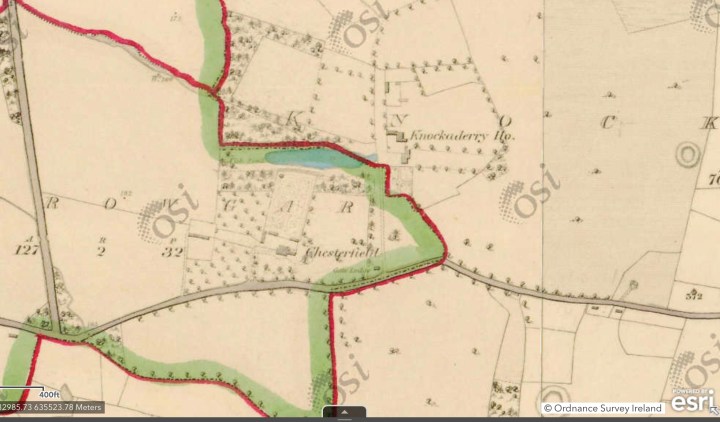

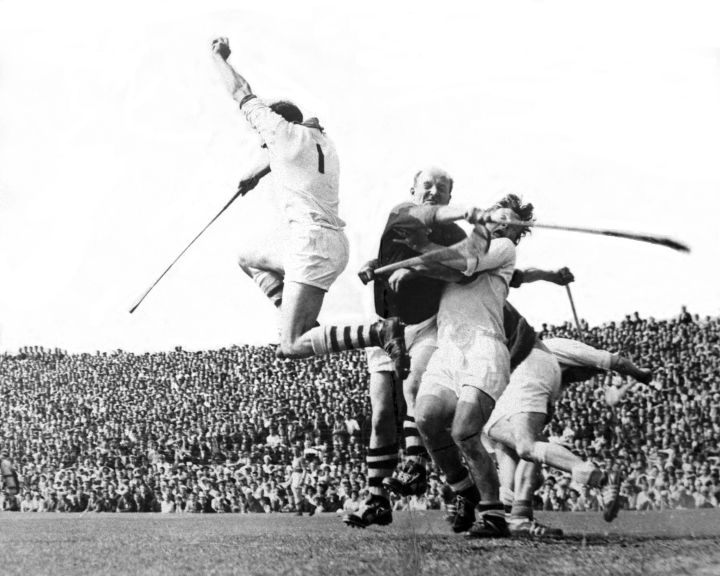

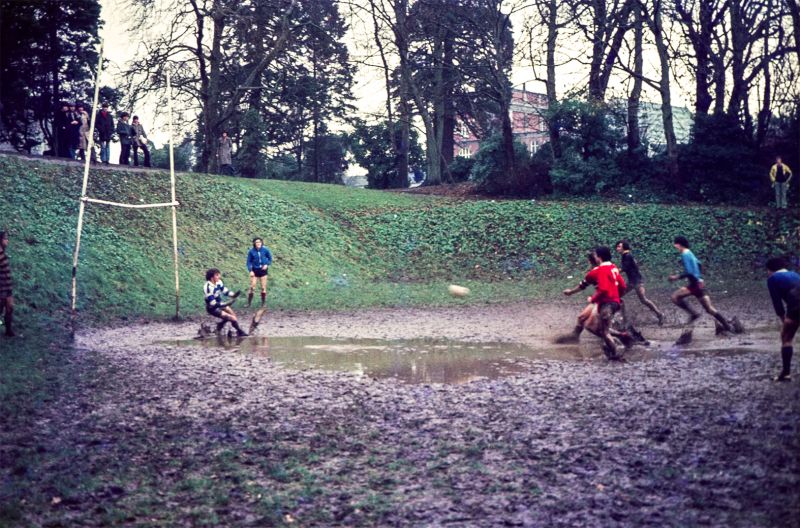


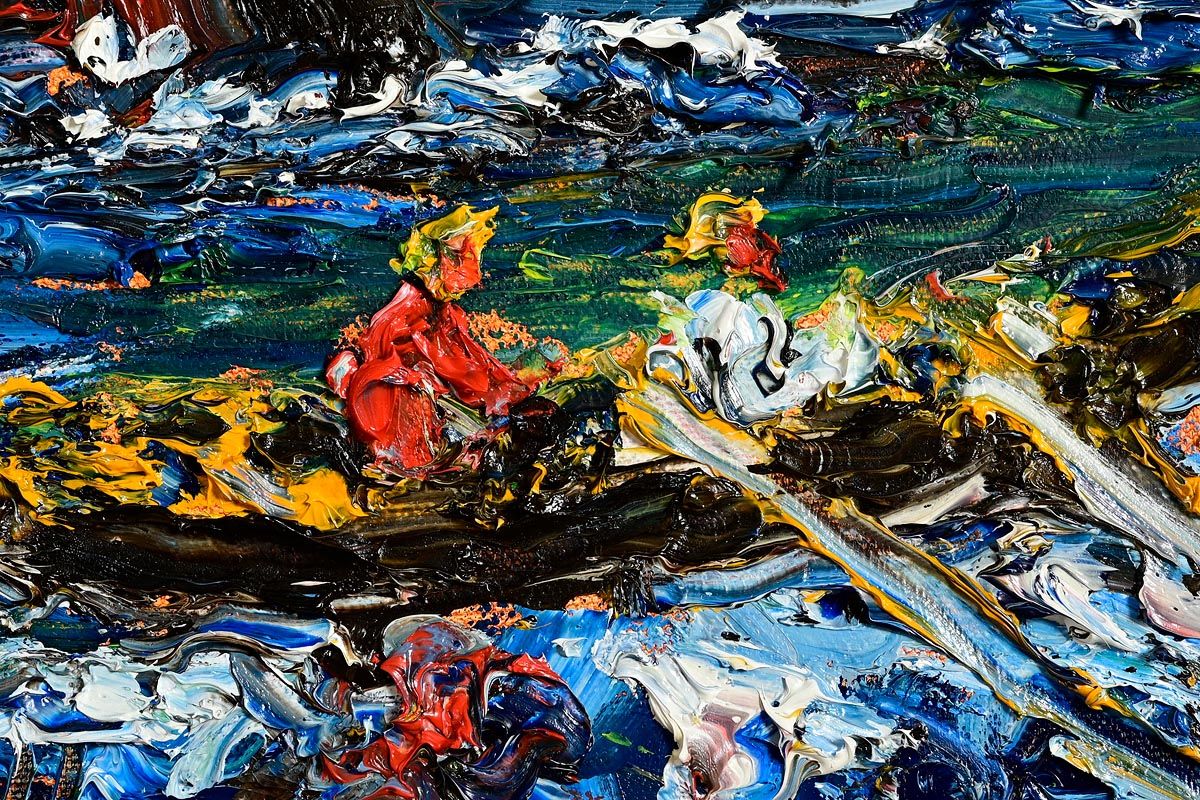
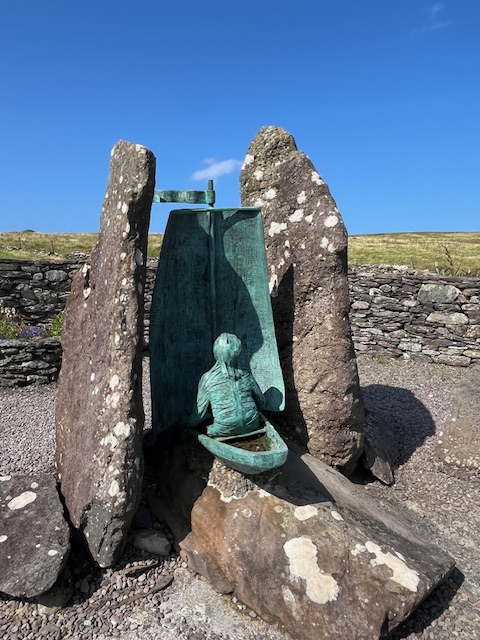


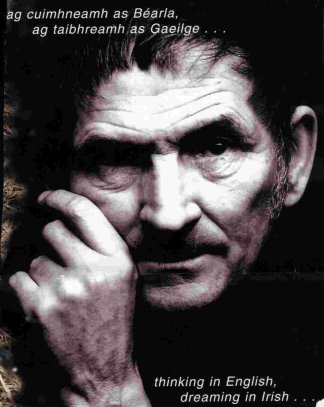





You must be logged in to post a comment.