There is great irony in the fact that I am putting the finishing touches to this blog post the morning after the dreadful terrorist attack on Paris on Friday 13th November 2015. The great sense of outrage and helplessness described in this poem after the events of 17th May 1974 transcends time and place. All Irish thoughts and prayers are with the innocent victims of this barbaric premeditated attack on the people of France.
Child of our Time
For Aengus
Yesterday I knew no lullaby
But you have taught me overnight to order
This song, which takes from your final cry
Its tune, from your unreasoned end its reason;
Its rhythm from the discord of your murder
Its motive from the fact you cannot listen.
We who should have known how to instruct
With rhymes for your waking, rhythms for your sleep,
Names for the animals you took to bed,
Tales to distract, legends to protect
Later an idiom for you to keep
And living, learn, must learn from you dead,
To make our broken images, rebuild
Themselves around your limbs, your broken
Image, find for your sake whose life our idle
Talk has cost, a new language. Child
Of our time, our times have robbed your cradle.
Sleep in a world your final sleep has woken.
– Eavan Boland
BACKGROUND NOTE
‘The Troubles’ began in Northern Ireland in the Summer of 1969 and during the early Seventies the violence escalated. It was a time when, as Eavan Boland herself says, ‘the sounds of death from the television were heard almost daily’. Attitudes in the Irish Republic were at best ambivalent, with many remaining detached and turning a blind eye while others became involved and active.
On the 17th May, 1974 a coordinated series of four car bombs were detonated during rush hour traffic in Dublin and Monaghan, killing 34 civilians including two infants and a full term unborn child and its mother. In all, 27 died in Dublin as a result of the three car bombs detonated there and 7 died as a result of the Monaghan bomb. This poem, ‘Child of our Time’, from the collection The War Horse (1975), is Eavan Boland’s response to this barbaric event.
Eavan Boland herself describes the genesis of the poem:
I wrote it inspired – and I use the words with care – by a photograph I saw two days later on the front of a national newspaper whose most arresting feature was the expression on the face of the fireman who lifted that child, an expression of tenderness as if he were lifting his own child from its cradle to its mother’s breast.
Further on in this article entitled ‘The Weasel’s Tooth’ (Irish Times, 7th June, 1974), she writes of, ‘that greatest of obscenities, the murder of the innocents’ and refers to the poem as, ‘one among many other statements of outrage’.
The infant victims of the bombings include Anne Marie O’Brien (5 months) and her sister Jacqueline (17 months) along with their parents John (24) and Anna (22) – the entire family killed in the Parnell Street explosion. Baby Doherty, was the full term unborn child of Talbot Street bomb victim, Collette Doherty. Three months later in August, 1974, Baby Martha O’Neill, the stillborn daughter of Edward (39) and Martha O’Neill was delivered. Edward was killed, and his two sons seriously injured in the Parnell Street bombing.
So, it is obvious that there is heartbreak and unbearable loss at the centre of the poem and to further expand this notion of bereaved families, the poet dedicates this beautiful poem to Aengus, a friend’s child, the victim of a cot death. So, although the poem is rooted in the conflict in Northern Ireland and the overspill of that conflict south to Dublin and Monaghan, the poem is addressed to all families who suffer loss and it highlights the damage inflicted on children in all wars and all situations and obviously from a casual look at our local and international news stories today, it is as relevant now as it was then in 1974.
COMMENTARY
This is a beautifully constructed formal lament or elegy and because the victim is a child it is couched in the language of a lullaby, suitable for a young child. The words used eloquently pinpoint this: it is a ‘song’, ‘a lullaby’ which has a ‘rhythm’ and a ‘tune’. Bedtime is that sacred time which Boland refers to in many of her poems when parent and child are never closer. Here bedtime is conjured up with ‘rhymes’, and ‘tales’ and ‘legends’. Despite the focus on musical terms the poet wants to point out the horrible juxtaposition of the child’s ‘final cry’. The poet’s outrage at this meaningless terrorist act is stated unambiguously at the end of the fifth line with her use of the word ‘murder’ which jolts us into outrage as well. Death is final and the child cannot ‘listen’ anymore to our feeble justifications for political violence.
The second stanza evokes a stereotypical happy childhood lived in a secure home, safe in the natural ‘rhythms’ of life, waking and sleeping, playing with favoured soft toys. The child is protected by language, ‘tales to distract, legends to protect’ – indeed much of the poem is couched very cleverly in language terminology. Indeed it is normally the adults, the parents, who develop and teach the young a language they can use to explain the world that surrounds them. This natural cycle has been subverted here and it is now the child who instructs us:
And living, learn, must learn from you, dead.
The sound patterns and structure of the poem illustrate the chaos and confusion that reigns within the poet after such an atrocity and tries to mirror the immediate aftermath of a car bomb explosion in a busy rush hour street. The poet manages this by creating opposing tensions within the poem: waking/sleeping, adults/child, the ‘living’/’dead’, ‘song’/‘cry’, ‘tune’/’discord’. The poet struggles to impose some sort of order on the chaotic aftermath and so there are three stanzas with six lines in each. Each stanza seems to represent a phase, a stage in the process of coming to terms with the awful events which have occurred:
Stanza 1: This death is meaningless
Stanza 2: We are responsible
Stanza 3: There is an urgent lesson to be learnt
The poem can, and should, be read as a comment on the failure of communication. The only way forward from this conflict and violence is described as a ‘new language’. Our ‘idle talk’ about Nationalism and Unionism, North and South has given us this ‘broken image’ of a dead baby being carried from the carnage of a street bomb by a fireman and used the following morning in the newspapers to encapsulate the tragedy. The dead child becomes, for the poet, an emblem of hope as her eternal sleep is juxtaposed with the world waking up to the absurdity of indiscriminate violence. The poet ends with an exquisite metaphor of ‘robbing the cradle’, an image that sharply contrasts violence and the innocence of childhood. ‘Our times’ have done this, we are all responsible. Our ‘tales’ and ‘legends’ and our interpretations of history have created quarrels and division and the hopeful plea from the poet is that the child’s needless death will encourage us to ‘wake up’ and think differently.
As I said at the beginning this poem is an elegy and traditionally the functions of an elegy were to lament, to praise and to console. The tone of the poem oscillates between tenderness and outrage throughout. There is also another important dimension to this poem which is also in-keeping with an elegy and that is its political dimension. In hindsight, this powerful poem has become, like Longley’s “Ceasefire”, a clarion call for change. The poet’s anger is not directed at the bombers but at society in general who have allowed this situation to develop and fester and get out of control.
This is why we need poets like Boland to act as our trailblazers and as Mark Hederman has so eloquently put it, ‘to express what they perceive in a prophetic and irresistible rhythm, shape and form.’ Our poets and artists are forever busy, whether in their studios or their nurseries, ‘writing the icon of our future face, preparing the skins that can carry the new wine, digging the trenches into which the waters can flow…’ Boland wrote these game changing verses in her suburban home where she was busy raising her young family. However, it still took some time for her voice to be heard, for the critical mass to tip things in favour of peace; it took an Enniskillen, a Shankill and an Omagh atrocity for the penny to drop that we in Ireland needed ‘a new language’, a new way of communicating with one another that does not include violence and murder of innocent children and pregnant women. From her suburban vantage point, this woman has done the state and our republic some service.
Works Cited:
Hederman, Mark P., (2001), The Haunted Inkwell: Art and our Future, The Columba Press, Dublin.
The scene in Talbot Street shortly after the explosion.
Eavan Boland talks to Eileen Battersby about her work, marginalised by the Irish poetic tradition which has little space for the realities of women’s lives.
This interview was first published in The Irish Times on the 22nd of September, 1998
When she was 14 and living in New York, Eavan Boland met the poet Padraic Colum, then a very old man at a party her parents were giving. She asked him had he known Padraic Pearse. “Yes, I did,” he said. It was the answer she wanted. Boland’s work and her life has been shaped by the need to establish and question identities and relations. The role of the poet within his or her country is crucial to her. So, too, is defining a woman’s place and most problematically, the rights of the woman poet and the tensions between those words. “There seems to be no difficulty in being perceived as a woman poet. The trouble appears to lie in being fully accepted as an Irish poet”, she says.
Having left Ireland aged five to live in London during her father’s ambassadorship and then moved on to New York, she found her return home as a teenager left her feeling deprived of the dialect and nuances of belonging. Aware of being different, she saw of herself that “like a daughter in a legend, I had been somewhere else”.
Diplomat father’s daughter, artist mother’s daughter, she has always been an outsider, Boland’s poetry, was born of a fierce intellectual determination. Her first collection, New Territory, was published at 22, her first poem at 17; her apprenticeship was cerebral. As a university student, she had worked at her craft, engaging in the poet’s business of debate and argument. She was part of an emerging poetic movement. Above all, she was an equal. By her mid 20s, however, she was married and had moved to the suburbs. This began the process which as always set her outside the ruling body of Irish male poets.
“I’m not a separatist – I’ve never believed women poets can walk away from the body of poetry that exists. In the powerful debate which exists in and out of the academy, I agree with those who think the real opportunities for women in poetry lie in destabilising the canon, not separating themselves from it. Besides, I have lived in the ambiguity as a woman poet of deeply honouring the work of male poets while at the same time wishing to contest ‘some of the assumptions around that work”.
Nor is she a post-feminist. “I don’t accept that womanhood is a state we can somehow historically transcend. It is a human condition, not a historic one and as such is a very rich central part of imagination, not only of social consciousness.” Though a feminist, she is not a feminist poet: “Poetry begins where the certainties end. I would have to say as someone who has benefited from, and is honoured to consider themselves a feminist, that literature must not be bend out of shape to accommodate an ethical position. Freedom is single. Women writers have struggled to be heard in this century and it is very important they are not part of silencing anyone else.”
Boland has often been attacked on ideological grounds. “It’s important not to silence the written text. On the other hand it is also crucial to prevent the literary discourse of a small country from becoming a higher form of exclusion”.
Celebrated in the United States, her work has been, and continues to be, criticised in Ireland for her concentration on the domestic. The business of poetry, however, is to capture a moment and the freeze-frame of a child’s smile, the private conspiracy of a night feed or the memory of an abandoned bike are a s real as battles or love affairs. “When I was young, I think, there was a hidden struggle over subject matter going on in Irish poetry which I blundered into. I was aware that it was easier to have a political murder as the subject of an Irish poem than a baby or a washing machine.”
Boland turned 56 on 24th September 2000 and she is now Professor of English and director of the Stegner Creative Writing Course at Stanford University in California. Her eight volume of poetry, The Lost Land, was published in 1998, while there have also been two volumes of selected work including Outside History (1990), An Origin Like Water – Collected Poems 1967 – 1987 and an outstanding memoir Object Lessons (1995) which is as much a powerfully argued evocatively-written poetic manifesto as autobiography.
No one is more aware than she – and no one has argued as convincingly and combatively – of the dilemma facing the woman poet, particularly the Irish woman poet. “We have a powerful tradition here of the male poet. Irish poetry was male and bardic in ethos. Historically the woman is the passive object of poetry. We aren’t supposed to write poems, we are supposed to be in them.”
“Sean O’Riordain wrote a poem in Irish in the 1940’s, in which the opening line read, ‘A woman can be a poem, she can never be a poet’ – I’m not saying that male poets support that position. But there is a reluctance to welcome the new energies that are being brought into Irish poetry by a whole range of younger woman poets.”
“Challenge” is a word which appears frequently in her conversation, so does “responsibility”. Few major contemporary Irish writers have been as dismissively treated, none have juxtaposed the intellectual and abstract with the routine as effectively. For all her intensity, her poetry is not without humour: “for all time / as far as history goes? We were never / on the scene of the crime” (From ‘It’s a Woman’s World’, Night Feed, 1982).
Long recognised as a formidable critical intelligence, Boland is highly articulate, logical, even patrician. Her opinions are presented with an often rhetorical articulation and precise textual references. She exudes an awkward rigour. Interestingly, her spoken voice is very close to her poetic one. In many ways a traditional lyric poet, her language is exact, deliberate and measured.
Her work is personal without being confessional. “Who is the poet?” and how is that identity constructed are the questions she seems to be addressing, and what are the issues poetry should explore? By focusing on the real, the realisation of the loss of a child – “I turned around. / I turned around. / She was gone. Grown. No longer ready / to come with me, whenever / a dry Sunday / held out its promises / of small histories. Endings.” (From ‘The Necessity for Irony’, The Lost Land, 1998) – she has been marginalised by poets and readers far more prepared to see the heroism in a stolen kiss than to acknowledge the pain which accompanies a mother’s realisation that her child no longer needs her.
Boland’s poetry consistently expresses the relentless passage of time, “A child / shifts in a cot / No matter what happens now / I’ll never fill one again.” (From ‘Endings’, in the ‘Domestic Interior’ sequence, Night Feed, 1982). “I think these small moments are immensely important and have their place in poetry. I think, and I have to be careful here, but it should be said, I know so many men who sneer at the suburban life and yet it is the very life their wives and their daughters have led and are leading. And not to see through its circumstances to its vision and power and importance seems to me to be both wrong and illogical.”
Moving to Dundrum in the early 70’s, she saw “town and country at each other’s throat” (From ‘Suburban Woman’, The War Horse, 1975) but she also witnessed a village becoming a city suburb, “a real communal adventure”. She has no regrets about living there. “We have the same neighbours. I love living there.”
In Object Lessons she writes: “It could be a shelter; it was never a cloister. Everywhere you looked there were reminders – a child’s bicycle thrown sideways on the grass, a single roller skate, a tree in its first April of blossoms – that lives were not lived here in any sort of static pageant but that they thrived, waned, changed, began and ended there.” She remembers a conversation with a neighbour whose children were teenagers while hers were still babies. “Hers is the life mine will become, while mine is the life she has lost.”
From assertive young Trinity published poet, to suburban housewife and mother, to Stanford professor, Boland has taken part in many debates. For her, the most important and the one that became the most clouded by bitterness involved the under-representation of women in The Field Day Anthology in 1992. “I feel it has the making of a worthwhile debate. It is at the heart of Irish literature now. No post-colonial project, however distinguished, can sustain itself if it continues the exclusions for which it reproaches the original colony. I felt this was a post-colonial anthology which was not sufficiently alert to that contradiction. There were 28 sections; not one was edited by a woman.”
One of only three female poets among 34 male, Boland is well represented, “yet I felt it would have been extremely wrong not to try to challenge these contradictions. Ireland is a small country. It is hard to have these arguments without everything becoming personal. But I don’t despair of these arguments being addressed.”
Colonies and identities, fictional lands and how we make and unmake them continue to haunt her. Of The Lost Land she says: “This is the book in which I think place and history and time and the ageing body which is the cypher of these categories – all of these run together like the colours in a child’s drawing.”
The purpose of these notes is to guide you in your exploration of the poetry of Eavan Boland. The notes are structured as a series of ‘thinking points’ ranging over the main themes and issues evident in her work. They are not exhaustive and neither are they ‘carved in stone’. They should be altered, added to or deleted as you develop your own understanding of the poet’s work.
You are expected to study six poems by Eavan Boland from your Anthology. The poems we will concentrate on are:
‘Child of Our Time’,
‘This Moment’,
‘Famine Road’,
‘Outside History’,
‘The War Horse’,
‘The Black Laced Fan My Mother Gave Me’
Boland’s view of Irish history and her idea of nation
Boland deals with the reality of Irish history, the familiar story of oppression, defeat and death (‘The Famine Road’). The sense of national identity that comes across from ‘The Famine Road’ speaks of victimisation, being downtrodden and living out pointless lives; see also the suffering in ‘Outside History’.
Opposed to that view is the male-created myth, involving heroic struggle, battle, and glorious defeat: see the image of the dying patriot immortalised by art in ‘An Old Steel Engraving’. The woman poet feels excluded from that cultural tradition – ‘One of us who turns away.’
Boland resists the myths imposed on us by our history (and the way it was taught!!) and she insists on the necessity of confronting the reality, facing the unburied dead of history and laying them to rest (‘Outside History’).
She shows concern for the unrecorded history, for the significance of lives lived on the margins of history, away from the centre of power, far from the limelight of action. She mourns the forgotten lives in ‘That the Science of Cartography is Limited’.
In her prose writings Boland explores the idea of nation and the difficulties it produces for her as a woman poet. In Object Lessons she says:
So it was with me. For this very reason, early on as a poet, certainly in my twenties, I realised that the Irish nation as an existing construct in Irish poetry was not available to me. I would not have been able to articulate it at that point, but at some preliminary level I already knew that the anguish and power of that woman’s gesture on Achill, with its suggestive hinterland of pain, were not something I could predict or rely on in Irish poetry. There were glimpses here and there; sometimes more than that. But all too often, when I was searching for such an inclusion, what I found was a rhetoric of imagery which alienated me: a fusion of the national and the feminine which seemed to simplify both.
It was not a comfortable realisation. There was nothing clear-cut about my feelings. I had tribal ambivalences and doubts, and even then I had an uneasy sense of the conflict which awaited me. On the one hand, I knew that as a poet I could not easily do without the idea of a nation. Poetry in every time draws on that reserve. On the other, I could not as a woman accept the nation formulated for me by Irish poetry and its traditions. At one point it even looked to me as if the whole thing might be made up of irreconcilable differences. At the very least it seemed to me that I was likely to remain an outsider in my own national literature, cut off from its archive, at a distance from its energy. Unless, that is, I could repossess it. This proposal is about that conflict and that repossession and about the fact that repossession itself is not a static or single act. Indeed, the argument which describes it may itself be no more than a part of it.
Violence in society
‘The War Horse’ explores suburban, middle-class attitudes to political violence. It is really a psychological exploration of the theme ‘how we respond to violence’.
Race memory and the old antagonisms to English colonial rule still exist just beneath the surface (‘The War Horse’).
The real human consequences of political violence are portrayed in ‘Child of Our Time’. The poet here acts as the conscience of our society.
Violence is seen as the result of a failure of language, an inability to communicate (‘Child of Our Time’).
The significance of myth
While in much of her poetry myth is seen as a positive thing, Boland often challenges the image of woman in mythology (also in art in mythology), particularly when it shows woman as marginalised, silenced, subservient to her husband the hero, as in ‘Love’.
For her our history (indeed all history) is laced with myths. The unreality, the coldness and the distance of myth from real lives is symbolised in the stars of ‘Outside History’.
The experience of being a woman
Boland’s strong feminine perspective lends an extra dimension of insight to all her themes. But she also considers specific issues relating to the portrayal and the treatment of women.
The sufferings of women are equated with the oppression of the nation (‘The Famine Road’)
The traditional role of woman is validated in such poems as ‘This Moment’, which show woman as mother. That maternal gesture of catching the child in her arms is the key to the poem. The protectiveness of mothers features also in ‘The Pomegranate’. Also her wisdom is displayed in allowing the daughter freedom to learn for herself.
Woman as lover features in ‘The Black Laced Fan My Mother Gave Me’ and ‘Love’.
Suburban woman features in many of the poems: ‘The War Horse’ and ‘This Moment’.
The puzzling relationship between men and women features in ‘The Black Laced Fan My Mother Gave Me’: the mistimings, the tempests of love, the sensual allure. Love diminishes in time, like the importance of the fan. This makes an interesting alternative view to the blinkered one of idyllic romance.
Boland challenges the patriarchal tradition of Irish poetry. In Object Lessons she elaborated on her objections to the images of women in literature:
The majority of Irish male poets depended on women as motifs in their poetry. They moved easily, deftly, as if by right among images of women in which I did not believe and of which I could not approve. The women in their poems were often passive, decorative, raised to emblematic status. This was especially true where the woman and the idea of the nation were mixed: where the nation became a woman and the woman took on a national posture. (Note: This is very obvious in the poetry of Yeats where he refers almost obsessively to Maud Gonne).
The trouble was [that] these images did good service as ornaments. In fact, they had a wide acceptance as ornaments by readers of Irish poetry. Women in such poems were frequently referred to approvingly as mythic, emblematic. But to me these passive and simplified women seemed a corruption. For they were not decorations, they were not ornaments. However distorted these images, they had their roots in a suffered truth.
What had happened? How had the women of our past – the women of a long struggle and a terrible survival – undergone such a transformation? How had they suffered Irish history and rooted themselves in the speech and memory of the Achill woman, only to re-emerge in Irish poetry as fictive queens and national sibyls?
The more I thought about it, the more uneasy I became. The wrath and grief of Irish history seemed to me, as it did to many, one of our true possessions. Women were part of that wrath, had endured that grief. It seemed to me a species of human insult that at the end of all, in certain Irish poems, they should become elements of style rather than aspects of truth.
Poetry in the suburbs
A good deal of her poetry is set in the suburbs, a setting not associated traditionally with poetic inspiration.
The fragile nature of the beauty and order created in the suburbs is brought out in ‘The War Horse’.
The toy-house neatness of suburbia is no match for the wild, elemental attractions of nature in ‘White Hawthorn in the West of Ireland’.
In the later poems we encounter a romantic evocation of a suburban twilight (‘This Moment’). Nature has colonised the suburbs (‘Stars rise / Moths flutter’, ‘one window is yellow as butter’).
But the real bleakness of the suburban street is not hidden: ‘The rain is cold. The road is flint-coloured’ – ‘The Pomegranate’.
Portrait of Eavan Boland as a child by her mother, the painter Frances Kelly
Michael Hartnett was an esteemed poet from a young age, but his assurance about his creative destiny had its dangers. In the following edited essay, first published in The Irish Times on February 16th, 2009, MICHAEL SMITH recalls a significant artist whose early death at 58 on the 13th of October, 1999 can be viewed as an accident of time and place.
The author, Michael Smith himself, poet and Aosdána member, passed away in November 2014. His contribution to the arts as a teacher, poet, editor, translator and publisher cannot be overstated. He had a profound impact on the Irish literary scene.He has been described as a classical modernist, a poet of modern life. Born in Dublin in 1942, Michael Smith was the founder of New Writers’ Press in 1967 and had been responsible for the publication of over 100 books and magazines. He was keen to promote the modernist tradition in Irish poetry, publishing the work of Thomas MacGreevy, Brian Coffey, Denis Devlin, Anthony Cronin, and Michael Hartnett, among others.
******************
As with many relationships, even the most intimate, it is often extremely difficult to pinpoint the original meeting. I can only say that it was in the early stage of our enrolment in UCD that I first met Michael Hartnett. I cannot recall the circumstances of that first meeting. I can’t even remember what academic subjects Michael had chosen. What I do remember is that James Liddy (and perhaps John Jordan) had agreed to pay his first year’s fees. So the lad from Newcastle West in Co Limerick was indeed going to receive some patronage. This patronage was bestowed purely on the strength of his poetry. Michael was recognised as a gifted poet from a relatively early age, and quite rightly so.
Michael almost never attended a lecture, so far as I recall. I was little better myself. The whole novelty of being university students was more than enough for both of us. Study was for others. Unlike Michael, I was deeply rooted in my Dublin working-class background, whereas, for Michael, Dublin was a kind of playground, despite his Limerick working-class background. But that working-class background was something we shared.
I think Michael had no other ambition than to be a poet. I think he gave little thought to how he would survive financially in the future. Was he feckless in this regard? Probably. Did he come to Dublin with the naivety of Kavanagh, expecting wonderful things? I doubt it. He didn’t have that innocence. On the other hand, he wasn’t cynical. John Jordan and James Liddy had accepted him as a gifted poet. The future was in the lap of the Muse.
What memories I have of him are selective, like all memories, I suppose. Often we would walk home together after a drinking session in McDaid’s, where we were usually treated to drinks by James Liddy and his friend, Patrick Clancy. Patrick Kavanagh was still holding vociferous court there at the time. Michael had already had his first confrontation with Kavanagh in the Bailey at the launch of the first issue of Poetry Ireland, edited by John Jordan and published by the Dolmen Press. That confrontation is too notorious to need detailed repetition. Michael made an adverse comment on Kavanagh’s poem (to Kavanagh himself, although Michael didn’t know who he was) that begins: “I am here in a garage in Monaghan.” Kavanagh’s reaction was violent, upturning a table full of drinks.
Michael was living in digs in a cul-de-sac off the North Strand, so our walk home often overlapped. I recall him voicing his strong disapproval of Kavanagh’s raucous behaviour in McDaid’s, saying that if anyone in Newcastle West behaved like that, he would be barred from the pub, and why should a poet be made an exception of.
He had great admiration for Yeats, though, oddly, not so much as a poet but as a businessman. He admired Yeats’s business acumen.
In his digs, under the bed, Michael had a small brown cardboard suitcase which he opened for me once to show me a huge quantity of beautifully scripted poems. I sometimes wonder what happened to all of this material.
There were, of course, other young poets in UCD at the time: Paul Durcan, Macdara Woods, Brian Lynch, Eamon Grennan, Malachy Higgins, to mention just a few names that come to mind.
In the case of the first three, and including myself, James Liddy was undoubtedly the extraordinarily generous mentor, with John Jordan a reserved encourager.
Of all of us, it was Michael who was held in the highest esteem by both John and James. And that esteem was well-deserved, for Michael arrived in Dublin as an already accomplished poet who was not looking for, nor needing any, teachers in the art of poetry. Much has been made of Lorca’s influence on Michael, largely because of his later version of Lorca’s Romancero Gitano, but really it has more to do with the precocity of the early work of both poets.
I have never met any poet who was more assured of himself as a poet than Michael was. It was his destiny. All else seemed of secondary importance. But however impressed by that I was, I sensed a danger in it, recalling Wordsworth’s lines in his poem “Resolution and Independence”:
We poets in our youth begin in gladness;
But thereof come in the end, despondency and madness.
I knew, and indeed Michael knew, that there was no money in poetry (Kavanagh had learnt that years before) and that he would have to earn his living at some stage in the future – but he seemed unconcerned by this. Writing poetry was a lifetime’s work, regardless. I sometimes think that a lot of Michael’s problems of later years came from that dedication. Yes, he did later earn his living in the international telephone exchange on Andrews Street, but he found it boring and was only too glad to escape from it (even during working hours) and head for O’Neill’s of Suffolk Street to drink pints with some other of his escapee colleagues from the exchange.
And Michael was good company, a wonderful raconteur, witty, and possessing a fund of knowledge of all sorts of arcane subjects. He had an extraordinary memory. Yet always it was as the poet that he was treated, in whatever company he found himself. That was the identity he had chosen or had been chosen for him. I think he never abandoned that. And therein lay a danger, the same sort of danger that beset Dylan Thomas, for one cannot always be a poet. There has to be a life apart from being a poet, at least for poets without personal financial resources or the resources of a generous benefactor. Ezra Pound had his wife’s money behind him, and also financial support from his doting father. Neither Michael nor Dylan Thomas had anything of the sort.
For Thomas there was the horrible scrounging and, later, the equally horrible American readings. For Michael, after his stint in the exchange, there was very little, and he seemed to live a hand-to-mouth existence, even when later he returned to Newcastle West with his wife, Rosemary, and their two children. Later, a cnuas from Aosdána came in useful, and some prizes he won and some royalties he managed to squeeze out of publishers.
To attempt to be a professional poet in Ireland in the late 1960s and early 1970s was a recipe for trouble. The days of the literary salons, such as Æ’s, were well and truly over. That left the pub, which unfortunately became Michael’s court, where he met his admirers who provided him with the kind companionship he needed, treating him to drinks and accepting him as a poet.
Was there anything else he might have done, any alternative? There was not at the time any such thing in Ireland as a poet in residence. So Michael made do with what was available.
A poet is not like a novelist who must toil daily and for long hours if he or she is to be productive. For the poet, the Muse is fickle and her visits are not on demand. So the poet must wait, never sure what the future holds for his work. When his own lyrical gift began to fail (though not until he had written some of the best poems written by an Irish poet in his time), Michael turned to translations from the Irish, translation always being a good means of keeping one’s skills honed.
Why did Michael turn to writing his own poetry in Irish? I think that this, too, was part of his attempt to be accepted socially as a professional poet. After all, in the old Gaelic order there had been such an acceptance. That order, however, was long gone and could never be recovered. After his early-evening court sessions in Doheny and Nesbitt’s, his admirers (often cultivated and literary civil servants) would head off to their respectable homes in the suburbs, leaving Michael as an abandoned court jester (which, in due course, he was becoming). Let it be said that there was no malice in this among those who patronised Michael with drink and small loans of money. But they had families at home and a job to do the next day.
Michael’s early death, whatever the medical causes, can be viewed as an accident of time and place. In a sense, he was a martyr to poetry. Gifted, even a genius, but nonetheless a martyr. If only . . . It’s useless now to ponder such possibilities.
“I felt a sense of being in the presence of a man who, while an integral part of the small community he loved, was also marked apart as special.”
Dermot Bolger movingly remembers his friend the poet Michael Hartnett who died 16 years ago this month. This is an edited version of a commemorative piece which appeared in The Irish Times on Wednesday, October 12th 2005.
In Ireland there is nothing better for making new friends than an early death and, because in death Michael Hartnett has acquired so many friends, I should firstly say that I didn’t know him well enough to claim any special friendship. I was far younger than him and even though I edited and published three of his books I never lost my awestruck sense of being privileged to be in his company. I was a sensation I felt as a young man on the first night we met and a sensation I still experienced on the last morning he phoned me some weeks before his death on October 13th 1999.
The first book of poems I bought, while still a schoolboy, was the small New Writers Press 1970 edition of Michael’s Selected Poems. On the cover he looks little more than a schoolboy himself. That book had a huge effect on me and remains among my most precious possessions. I first met Michael around 1980 when I ran literature events in the ramshackle building housing Dublin’s Grapevine Art Centre. John F Deane had bravely established a new organisation called Poetry Ireland, and Michael travelled from Limerick to give a benefit reading for it. his opening words to me were to inquire if I knew of a bed for the night, and my opening words to somebody whom I viewed as a hero was to offer him one in Finglas.
It was after midnight when we reached Finglas but Macari’s chipshop remained open on Clune Road. Years later in Inchicore Haiku Michael wrote:
In local chippers
Queueing for carbohydrates
A dwarfed people.
We queued for our late-night carbohydrates. Critics can elaborate on Michael’s gift as a poet and contextualise his work. My interest here is putting down memories for his son and daughter and what struck me was how Michael enthralled the late-night queue and staff in that Finglas chipshop. He wasn’t attention seeking; they were simply drawn into his quiet magnetism. The staff had no idea who he was but afterwards always asked for news of my friend in the countryman’s cap.
In 1984 I wound up sitting in a pub between Michael and Michael Smith, who had published that earlier Selected Poems. Both Michaels became emphatic that not only should I re-issue the long out-of-print Selected Poems, but that the new volume should include every English language poem he had written up to and including his Farewell to English. Michael Hartnett assured me not to worry about copyright issues, he would take care of that. I was young and naïve, but even in my innocence I should have been slightly worried when he explained how he cleared copyright permission for his wonderful translations of Lorca’s Gypsy Ballads. He phoned Lorca’s brother in New York, explained that he was once deported from Franco’s Spain and after he had read aloud one translation the voice at the other end said, “Spread the word”!
Within a few months I was sitting down in his small cottage in Glendarragh, Templeglantine, near Newcastle West in Limerick going through old suitcases of poems with Michael and discovering material either never published or published once in magazines and then forgotten. I spent two of the most memorable days of my life there working on Volume 1 of his Collected Poems and still like to recall Michael as he was then.
After the executions of the Easter Rising leaders in 1916, a British Army officer declared that while they all died like men, Thomas McDonagh died like a prince. Wandering with Michael through Newcastle West or sitting down to eat with his family, I felt a similar sense of being in the presence of a man who, while an integral part of the small community which he loved and understood, was also marked apart as special.
But soon the world that I had glimpsed in Newcastle West was to implode. Alone in Ireland while his family visited Australia, Michael seemed to drift irredeemably into the engulfing tide of alcohol that had always been a problem. Aware that he had the proofs for me of some translations, I tracked his progress across Ireland and finally located him and the proofs in Dublin. He handed me the proofs carried for weeks in his inside pocket and, ever the optimist, asked if by any chance I could loan him €5,000.
At that time the entire assets of Raven Arts Press consisted of a leaking gas heater and a cat, so I brought him for lunch instead and then to a double-bill of afternoon films. The first – Ruben Ruben – was a comedy about a poet with a drink problem on a reading tour in America. Michael chuckled through it. The second – Francis Ford Coppola’s Rumblefish – was shot entirely in moody black and white. The only object filmed in colour was a solitary fighting fish in a glass tank. Leaving the cinema and knowing that I could keep him from the pub no longer, I commented to Michael on this cinematic trick. Michael gripped my arm and, with the relief of a man who had known the delusional tricks of delirium tremens, whispered, “Oh thank God, you saw the fish too.”
Soon he was living in a bedsit in Inchicore with his marriage over. His face, which had never aged, was suddenly old. His chief defence against fate remained his sense of humour. I brought him over some small sum of money for something. There were virtually no possessions in that room where he had started writing the Haiku sequence that broke his silence in English. But his sense of hospitality would not let me leave empty-handed. He asked if I possessed a copy of the tiny 1969 edition of his poem The Hag of Beare and insisted on giving me the only copy he still possessed – Number 1 of that precious numbered edition.
He brought the manuscript of Inchicore Haiku to my small office in Phibsborough, driven over by two new Inchicore friends with impenetrable Dublin accents. We launched it in the Richmond House in Inchicore, a whirlwind night. But if that was a celebratory night in a crowded pub, which cloaked his personal pain displayed in the book, I saw far less happy occasions for him in Dublin pubs in the following years. I know of nothing romantic about drink and the damage it does. I do know that his new partner, Angela Liston, prolonged his life and brought some stability to a man now gripped by addiction.
His publishing affairs became complicated and so I drew up a contract between us, giving him back all rights to his work on condition that I acquired non-exclusive rights to his cheese-grater joke: “A man gives his blind friend a cheese-grater for Christmas, meets him in January and asks if he liked his present. ‘No’, the friend replied, “I tried to read it but it was just too violent.’”
Occasionally after that, he would phone for a chat. On the last morning he phoned, he told me how he had recently visited one of the men who drove him to my office years before. The man was dying of cancer, his mouth covered by an oxygen mask, and he grew upset because the words he kept trying to say were indistinguishable.
Michael leaned over and said: “I know you’re upset because you’re dying and I can’t understand what you are saying, but I must tell you that with your accent, even when you were well I could never understand a word you said anyway.”
The man gave up trying to speak and laughed instead. It takes courage to make a dying man laugh, but Michael Hartnett had courage in spades. Courage, stubbornness and demons. I had no idea he was soon to die, but something made me tell him that one of the proudest moments of my life – something I could unreservedly look back on as truly worthwhile – was editing his Collected Poems.
He accepted the compliment, told me his latest joke and then recited an extraordinary raw and heart-felt poem he had written for Angela Liston. It was the last time I heard his voice and I can hear it still, with his laugh at the end which contained all that pain, humanity and unbroken dignity:
I have been kicked around the place
Been mocked and been pissed on
But I find my way home to you, Angela Liston
And my wrinkled, anxious forehead
Amazingly has been kissed on
And I am blessed by you Angela Liston.
He died on October 13th, 1999. His Complete Poems and Translations have since been superbly edited and published by Peter Fallon and The Gallery Press. When I last passed through Newcastle West I stopped at dawn in Maiden Street where he was reared. It was deserted but every shop window had a poster for Éigse Michael Hartnett, with his haunting quizzical eyes staring out. Those eyes and that voice haunt me still.
Patricia Coughlan*, in a very thought-provoking article, finds two opposing but possibly complimentary representations of sex roles in Heaney’s poetry:
A dominant masculine figure who explores, describes, loves and has compassion for a passive feminine figure, and
A woman who ‘dooms, destroys, puzzles and encompasses the man, but also assists him to his self-discovery: the mother stereotype, but merged intriguingly with the spouse.’
It is easy enough to identify the first representation as the speaker of the poems. Coughlan traces male activities and attitudes of the speakers in Heaney’s first book, Death of a Naturalist – ploughing, digging, and its equivalent, writing – as well as significant male attitudes, such as the importance of following in the footsteps of ancestors and imitating their prowess, in poems such as ‘Digging’, ‘Follower’, and ‘Ancestral Photograph’. She traces the development of male identity in such poems as ‘Death of a Naturalist’ and ‘An Advancement of Learning’, where the young boy passes a test of male courage in facing up to a rat. The identification of the speaker with the natural maleness of creatures such as the bull and the trout (‘Outlaw’ and ‘The Trout’) is noticed in the second volume, Door into the Dark.
Heaney views the creative process as a particularly male activity in ‘The Forge’ – the violence of the activity, the archetypal maleness of the protagonist, leading to the suggestion that the truth of art is forged out of violence and brute strength. But the poetic process of ‘seeing things’ in the later poetry is a more spiritual, even intuitive practice. The image of the poet changes to one of seer, or mediator between states of awareness (‘Field of Vision’, ‘Lightenings VIII’, ‘St. Kevin and the Blackbird’.
Something of the prowess of ancestors is present in the speaker’s celebration of his father’s gift in ‘The Harvest Bow’. It is a quintessentially male prowess (‘lapped the spurs on a lifetime of game cocks’), yet the skill involved in making the bow exhibits an understanding of the spirit and a delicate craftsmanship. Indeed plaiting the bow is a female art form, at least in traditional thinking. So perhaps sex roles are not so clear-cut here, as the male ancestor is celebrated for his prowess at a feminine craft.
The representation of woman in the poems on the Leaving Cert. course leads to the consideration of a number of issues.
WOMAN AS LOVER
Consider ‘Twice Shy’ and ‘Valediction’. In ‘Twice Shy’ woman is the love object; perhaps there is even a suggestion in the imagery of being victim to the male (‘tremulously we held / As hawk and prey apart’). But this is balanced just after this by an equality of rights, by the mutual recognition that each had a past and that each had a right to be cautious, even timorous, in the new relationship (‘Our juvenilia / Had taught us both to wait’).
In ‘Valediction’, roles are reversed. Not only is the woman the source of stability in the speaker’s life but she is in complete control of the relationship, ‘Until you resume command / Self is in mutiny’. Nevertheless the image of woman here is traditional and somewhat stereotyped: an object of beauty, defined by dress and pretty, natural allusions such as the frilled blouse, the smile, and the ‘flower-tender voice’. So in these poems there seems to be a traditional visual concept of woman, combined with a more varied understanding of role, both as love object and as controlling force.
Woman in ‘The Skunk’ is very much sex object, alluring, exciting in a primitive, animal way:
stirred
By the sootfall of your things at bedtime,
Your head-down, tail-up hunt in a bottom drawer
For the black plunge-neck nightdress.
Here she is an object of desire, observed with controlled voyeurism by the speaker.
WOMAN AS MOTHER
In ‘Mossbawn: 1. Sunlight’ the female figure is associated with traditional domestic skills, in this instance baking. The mother figure (in this case, his aunt, Mary Heaney) is one of the central props in Heaney’s ideal picture of rural life. His aunt is characterised as being ‘broad-lapped’ signifying her warm and loving nature and her kitchen is a womb of security for the young boy, radiating warmth, nurture, and love, as well as being a forger of identity, offering links with tradition and values mediated by the female figures.
A feminist critique would argue that this representation is denying women the freedom to develop fully, by giving them fixed roles within the domestic environment and by associating them with what is maternal rather than with any intellectual activity. As Patricia Coughlan says: ‘Woman, the primary inhabiter and constituent of the domestic realm, is admiringly observed, centre stage but silent.’
THE EARTH AS FEMALE
Nature – the earth and both the physical territory and the political spirit of Ireland – is viewed as feminine by Heaney. There was a hint of this in the soft, preserving, womb-like quality of the earth in ‘Bogland’. This feminine aspect becomes explicitly sexual in such poems as ‘Rite of Spring’ and ‘Undine’. But the female principle is destructive to man in such poems as ‘The Tollund Man’, where the male is sacrificed to the goddess, who is female lover, killer, and principle of new life and growth, all at once.
She tightened her torc on him
And opened her fen,
Those dark juices working
Him to a saint’s kept body.
Coughlan feels that the female energy here is represented as ‘both inert and devouring’ and that if the poem is understood, ‘as a way of thinking about women rather than about Irish political murder, it reveals an intense alienation from the female.’ But can it be divorced from its political context? And was not Caitlín Ní hUallacháin always the femme fatale of Irish political revolutionaries? And hadn’t this fatalistic attraction almost a frisson of sexual passion about it, coupled with maternal devotion? The poem reveals the danger of the attraction, but surely it was a willing consummation? The poet envies Tollund Man ‘his sad freedom’, so perhaps the poem reveals less an intense alienation than a fatalistic attraction to the female.
The feminist critique certainly throws some light on central aspects of Heaney’s writing – among them a very traditional view of woman – but there is too much complexity in his vision to allow us to view the encounter of the sexes in his poetry as simply antagonistic.
Portrait of Seamus Heaney by Paul McCloskey. (www.paulmccloskeyart.com)
* ‘Bog Queens’: The Representation of Women in the Poetry of John Montague and Seamus Heaney by Patricia Coughlan, in Theorising Ireland, ed. Clare Connolly, pages 41-60. NY: Palmgrove, 2003.
When we first meet Christy it is by way of report. He is presented as a tramp, “a kind of fellow above in the furzy ditch groaning wicked like a maddening dog”, or a “queer fellow above, going mad — “. When we first see him he is, according to the stage direction, a ‘slight young man – very fired and frightened and dirty’. The first impression we get is one of timidity and fear: in short he is a coward but not totally lacking in spirit. His retort to Michael’s accusation that maybe he is wanted for “robbing and stealing” is given with a flash of family pride: ”And I the son of a strong farmer”. He relaxes as the others convince him that he is in a house safe from the ‘polis’, and begins to respond to their interest in the curiosity about his origins. Was he the victim of bailiffs, agents, landlords; did he indulge in alchemy, marry three wives, fight “wars for Kruger”? Pegeen’s impatient “you did nothing at all” provokes the required confession: “I killed my poor father, Tuesday was a week”.
The “lie” Begins
He is now definitely to be feared and respected, simply by what he has said. The hero in Christy is about to emerge; he is ‘a lad with the sense of Solomon’: “the peelers is fearing him”, he ‘should be great terror when his temper’s roused’, brave enough to “face a foxy divil — on the flags of hell”, and to stand up to “the loosed khaki cut-throats, or the walkin dead”.
The “lie” Takes Effect
Christy can hardly believe his ears: “Well glory be to God!” is all he can exclaim at the character the others are building for him. When he is left alone with Pegeen who describes him as a “fine, handsome young fellow with a noble brow” his amazed reply is: “Is it me?”. She further likens him to Owen Roe O’Sullivan (Eoin Ruadh O’Suilleabhain) the greatest of the Kerry poets, ‘a fine fiery fellow with great rages’ and passions.
Synge’s Sympathy For The” Lie”
The local response to Christy’s appearance on the scene highlight for us the drabness of such rural living, where the imagination has been starved, and there is longing for some excitement. Behind the obvious comedy in this scene we see a certain pathos: Synge was most definitely not out of sympathy with such peasant people (After all he had forsaken his own kind for their company).
Christy Given Romantic Image
Pegeen’s mention of Eoin Ruadh O’Suilleabhain reveals much about her character: he was a rather rakish fellow, a womaniser and an eloquent poet. She wants excitement and is prepared to defy the ‘priesteen’ and the powers of Rome to get it. Maybe Christy is a re-incarnation of the poet – that is what she wants to believe. Self-deception it is but understandable in the circumstances. She and the others want a hero and Christy wants to be that hero.
So Christy has now progressed from tramp and coward to poetic hero, which brings us to the end of Act 1. By this stage it is obvious that Synge has created a mock-hero, a parody of the hero of Celtic epic literature.
Christy Settles in To His New Image
At the start of Act II Christy feels quite at home and would be prepared to remain here ‘his whole life talking out with swearing Christians – never a day’s work’. The emphasis is on talking rather than working. He is aware now that his talent is verbal with a licence to lie or, at best, to bend and decorate the truth.
Heroes Must Prove Themselves
His status as hero is confirmed at this point by the arrival of the local girls bearing gifts, and by the Widow Quin’s announcement that she has entered him ‘in the sports below for racing, leaping, pitching’. All heroes must be put to the test: it is a feature of the epic poem that the hero must prove his prowess and strength in epic combat. For Christy this is to be done in the more humble local sports.
Comedy In Parody
The girls get their reward for bringing presents when Christy once again tells the story of his homicide (‘da-slaying’). His new found confidence is reflected in the telling. Now we have mime to enhance the comic absurdity. There is even comedy in the “weapons” used; a chicken bone and mug replace the mighty weapons of the traditional hero.
Temporary Set Back For Christy
This comic episode ends with the return of Pegeen who bristles at the sight of other women, especially Widow Quin, making free and easy with her man. They are dismissed imperiously and Christy receives a verbal punishing for his vanity. “You’ll be shut of no jeopardy no place if you go talking with a pack wild girls”. This provokes a great outburst of self-pity from Christy which softens the heart of Pegeen, making her realise how lucky she is to have found a lad with “a mighty spirit in him and a gamy heart”.
Power Of The “Lie” Again
Once again she is under the spell of Christy’s poetry, its rhythms and imagery: “it’s a lonesome thing to be passing small towns with the lights shining sideways, when the night is down”, “ drawn to the cities where you’s hear a voice kissing and talking deep love in every shadow of the ditch”, “but I was lonesome all times, and born lonesome, I’m thinking as the moon of dawn”, “the way I’ll not be waking near you another dawn of the year till the two of us do arise to hope or judgement with the saints of God”.
Comedy Of Christy’s Victory’ Over Shawn
Christy is now given and opportunity to act the hero. Shawn Keogh, that representative of ‘respectability and conformity’, has to be confronted and humiliated. Our new hero enjoys inflicting this humiliation on Shawn Keogh: he himself had often suffered similarly at the hands of his own father. At the height of his heroic success Christy is suddenly brought back to earth with a bump when he sees “the walking spirit of my murdered da”, “that ghost of hell”.
Another Side To Christy By His Father
Ironically Christy in hiding has to suffer the humiliation of hearing his father sarcastically describe the real Christy:
“An ugly young streeler with a murderous gob”
“a dirty stuttering lout”
“a lier on walls, a talker of folly, a man you’d see stretched the half of the day in the brown ferns with his belly to the sun”.
“he’d be fooling over little birds – or making mugs at his own self in the bit of glass – – -“.
“if he seen a red petticoat coming swinging over the hill, he’d be off to hide in the sticks… “
“a poor fellow that would get drunk on the smell of a pint”
“the laughing joke of every female woman”
“the loony of Mahon’s”
This is not exactly the character reference that Christy would give and had given to himself! An interesting point to note, however, is that the father has a ‘power’ of words himself!
Christy Becomes ‘The Playboy’
Once again Synge deglamourises the peasant and his lifestyle, reality keeping a firm grip on fantasy. The cult of the hero needs to be exposed for what it is; gratuitous violence masquerading as bravery. (Synge was a pacifist and was appalled by the violence of his own day and the false image of Ireland and its people that was being manufactured to support political ideas). The Widow Quin dubs Christy sarcastically ‘the walking Playboy of the Western World’. Christy is now in the hands of the Widow Quin and she being the practical person she is cashes in on his fear of exposure. Since she cannot have him for herself she will demand a fee for his silence: ’give me a right of way I want, and a mountainy ram, and a load of dung at Michaelmas’. The Act ends with Christy half-reassured that he has bribed the Widow into silence, and off he goes to his greatest test as hero, indeed the traditional test of all heroes.
Christy: Proven Hero At Last without ‘Lies’
In Act III Christy successfully proves himself at the races winning all before him, so when he returns to the Shebeen in triumph he is master of all. There is no limit to his courage and confidence now.
Pegeen Abandons Herself To His Power
He quite overpowers Pegeen – the first time she has ever softened, she ‘the fright of seven townlands for my biting tongue’. He raises her to such a level of passion that she is prepared to abandon everything for this ‘raggle-taggle gipsy man’, who according to Father Reilly would ‘capsize the stars’. Pegeen becomes a ‘heathen daughter’ and renounces her engagement to Shawn Keogh ‘that quaking blackguard’. Christy obliges by chasing him off and Michael gives his approval and blessing to both Pegeen and Christy.
Fantasy is Finally Driven Out By Reality
At that point Christy’s final test begins. His father, ‘a raving maniac’, bursts in and attacks Christy with a stick. The spell, which had mesmerised them all, is suddenly broken. The hero becomes the victim who is to be sacrificed for the people. Pegeen dismisses Christy with ‘Quit off from this’. After he has chased his father outside and apparently killed him, he returns to find that the Widow Quin is the only one who still wants him. This he passionately rejects with the infamous line – ‘What’d I care if you brought me a drift of chosen females, standing in their shifts’ – (Cue: Riots!). He mistakenly thinks that the ‘killing’ will restore him to Pegeen’s favour but he soon learns that there is a world of difference between a ‘gallows story and a dirty deed’. Humiliation, as the women try to put petticoats on him, is followed by final rejection by Pegeen who places the rope on him. Shawn is triumphant, ‘Come on to the peelers till they stretch you now’. Respectability, self-interest – the usual social norms return. Christy now realises that he is finished here, his future is elsewhere and when his father comes back from the dead again, the two are re-united in a new relationship which makes them independent of the society that had made Christy into a hero and a poet. Like the bard of old he is destined for a higher, if lonelier, existence, one preferable to village respectability. ‘The thousand blessings upon all that’s here, for you’ve turned me a likely gaffer in the end of all, the way I’ll go romancing through a romping lifetime ….’
The Cuchulainn Parallel
One commentator on Synge, Declan Kiberd, in a very interesting book Synge and the Irish Language, sees a parallel between Christy and his story and the legend of Cuchulainn. He sees it as mock-heroic satire that the ‘Godlike Cuchulainn should re-appear in a feckless peasant’. For Pegeen Christy evokes the ancient world of the poet and its heroic virtues, ‘it’s the poets and your like, fine fiery fellows with great rages ‘; ‘You with a kind of quality name, the like of what you’d find on the great powers and potentates of France and Spain’; ‘the like of a King of Norway or the Eastern World’.
In youth Cuchulainn was athletic, handsome, articulate, attractive to women, a leader of men. Christy is the opposite, ‘cowering in a ditch’, ‘a lier on walls’, ‘a slight young man’, ‘a talker of folly’, ‘the laughing joke of every female woman’ – all of which is to change through the power of a lie.
Christy’s father tried to marry him off to the Widow Casey. The men of Ulster wished to marry off Cuchulainn to protect their own women from him. Cuchulainn is victorious using the sword of King Conchubair just as Christy is victorious in the borrowed clothes of Shawn Keogh. Cuchulainn woos Emer against her father’s wishes. Emer has another suitor just as Pegeen has Shawn Keogh. Both these suitors retire afraid of their opponents’ strength. Cuchulainn and Christy triumph at games and win their loved ones. Christy’s ‘great rages’ echo Cuchulainn’s great battle-rages. Cuchulainn meets the warrior druidess to advise and prepare him for his struggle; Christy meets the Widow Quin, who also advises for a ‘fee’.
Comedy And Satire In The Parody
But Synge’s purpose is to make a mock-hero of Christy, probably a response on his part to the determined efforts of his contemporaries to manufacture super-peasants for a political ideal. The only relic of the real hero left is the ‘gift of the gab’ upon which Christy is solely dependent. The ancient hero is reincarnated in a ‘feckless peasant’ struggling to escape the grinding poverty and dullness of life in the West of Ireland. For Synge there is no glamour in such harsh reality but a little fantasy can bring humour and escape, if only temporarily, so that not only Christy but the people of Mayo can go ‘romancing’, he for ‘a romping lifetime’, they for a few days at least.
The Widow Quin, Christy and Pegeen Mike.
PEGEEN MIKE
At First, Realistic and Strong
Like all the other villagers Pegeen is trapped by rural convention which declares self-interest and respectability to be the social norms. It is ironic that when we first meet her she is preparing for her marriage to Shawn Keogh who most typifies this self-interest and respectability. She is going to make the best of the world she finds herself in. From the start we can see that she is strong-willed and dominant.
Latent Romantic
She has no love for Shawn Keogh whom she addresses contemptuously as Shawneen. Indeed she laments the lack of eligible and romantic young men in the district which can only boast of such as “Red Linahan, has a squint in his eye, the Patcheen has a limp in his heel, or the mad Mulrannies …” Her idea of a man is one who has the courage to break the law and tell stories of Holy Ireland – a Daneen Sullivan or masrcus Qwuin. The absence of any romance in her life and the absence of any fire or passion in Shawn Keogh are facts that she had had to live with and, God help her, will have to continue to live with fore the future. She is hard-headed enough, however, to accept Shawn as a poor substitutue for a real husband but he is better than no man at all.
Character of a Heroine
So the first part of Act I establishes her strength of character and her spirit: she can handle all the men, from her father, Michael, to Shawn Keogh. She has no fear of authority, ecclesiastical or civil: ‘Stop tormenting me with Father Reilly’ she sneers at Shawn, and ‘Daneen Sullivan knocked the eye from a peeler’ shows her admiration for one with courage enough to stand up to and get the better of authority.
First Meeting With Christy: Contempt Turns to Admiration
Into such a world ruled by self-interest and respectability stumbles Christy, young, tired and frightened. Their interest is immediately aroused (a ‘strainseir’ is always an object of great curiosity in an Irish village.) Pegeen’s contempt for men is still evident when she contemptuously challenges Christy: ‘You did nothing at all’, ‘Would you have me knock the head of you with the butt of the broom?’ Christy’s confession that he had killed his ‘poor father’ for striking him takes her aback. Suddenly her attitude changes: here is a man at last, another Daneen Sullivan or Marcus Quin, who has had the courage to challenge and overcome authority by killing his father.
Pegeen Falls Under Spell of The ‘Lie’: Romance Stirs
Christy’s ‘lie’ begins to work its magic on them all except Shawn Keogh (he isn’t the type that needs some excitement in life so he remains outside the spell). This gauche, (awkward), young man is beginning to appear as a potential knight-in-shining-armour or hero come to snatch her from the jaws of her fate. So, unwittingly she becomes an agent in the build-up of Christy into something larger than life. Fantasy is at work. The strong-willed, sharp-tongued young woman begins to melt as romance at last enters her life. All thoughts of self-interest and respectability are abandoned as she loses her head to the stranger.
Pegeen’s Jealousy Evident
It is ironic that Christy is affected differently at first: at the end of Act I and the start of Act II he relishes the new found respectability and comfort. But this isn’t allowed top last for long. Pegeen’s jealousy temporarily breaks the spell when she finds other women tampering with Christy, and she sadistically enjoys his terror at her mention of him ‘swaying and swiggling at the butt of a rope – in great anguish, getting your death’.
Romance Continues To Hold Her
The spell re-establishes its hold over her when Christy responds with his self-pitying yet unwittingly passionate poetry: ‘it’s a lonesome thing to be passing small towns’ – ‘the cities where you’d hear a voice kissing and talking deep love in every shadow of the ditch’. She even further builds up his character, attributing to him ‘a mighty spirit and a gamy heart’, which he shortly afterwards displays before the Widow Quin and Shawn Keogh when the latter comes to bribe him to leave. ‘For what is it you’re wanting to get shut of me?’ he arrogantly asks Shawn. Pegeen is not present to see Christy’s cringing reaction top the appearance of his ‘murdered da’. This must give Christy the necessary, if subconscious, incentive to prove himself at the sports to consolidate his position with Pegeen.
Pegeen Abandons Herself To New Christy
After his successes at the sports Christy returns to the Shebeen with Pegeen positively aglow with admiration and love. In the love sequence that follows she abandons herself completely to Christy’s verbal hypnosis. She can hardly believe her own ears when she speaks, ‘And to think its me talking sweetly …. Well, the heart’s a wonder – there won’t be our like in Mayo for gallant lovers….’ Even the dispensation ‘in gallous Latin’ can’t dissuade her now – she belongs to the ‘young gaffer who’d capsize the stars’ and who indeed had capsized her world. To her father she is a ‘heathen daughter’. In her ecstasy she really enjoys humiliating Shawn Keogh and when Christy chases him out she passionately announces to her father: ‘Bless us now, for I swear to God I’ll wed him, and I’ll not renege’.
Pegeen: The Woman Scorned
With the re-entry of Old Mahon and his claim that all Christy had given him was a ‘tap of a loy’, suddenly Pegeen snaps out of her trance and turns impetuously on Christy, ‘And it’s lies you told, letting on you had him slitted, and you nothing at all’. Her pride has been hurt and she feels publicly humiliated and in her rage she abandons him to fate. ‘Take him on from this or I’ll set the young lads to destroy him here’.
Fantasy At The End
Ironically she does not realise that she has just provided Christy with his greatest opportunity yet to prove himself a hero. Old Mahon’s ‘dying’ yell finally dispels that last trace of fantasy. Reality returns: the villagers are one again against the intruder that would bring the law and trouble to them.
Pegeen: Tragic Figure
Pegeen must lead in purging the community of this menace and to her eternal shame she realises too late what she had done: she has freed Christy from any last ties that would have impeded his progress ‘to the stars’. He doesn’t need her now, whereas she does need him, but she has lost and he has won. She is indeed almost the tragic heroine at this stage; the Dido deserted by her Aeneas.
Note: The character of Pegeen is said to have many of the qualities of Molly Allgood (Maire O’Neill), Synge’s fiancée, with whom he had a rather tempestuous relationship. She played the part of Pegeen in the first production and, like her, was independent and wayward, temperamental and warm-hearted, restless and very ambitious, and in the end lost her Playboy to death.
The Widow Quin
THE WIDOW QUIN
The Widow Quin (Is there a Newcastle West connection?!) is presented as a worldly, materialistic woman whose life is governed by shrewd opportunism rather than passion. Though she does put her eye on Christy it is not passion but rather self-interest that motivates her. She has ‘buried her children and destroyed her man’ and has few illusions left about life. She is the least affected by the spell of Christy’s charisma, except for Shawn Keogh of course, who is deaf to the magic of Christy’s words. For a short while she does fancy herself as a rival to Pegeen, and the only ‘fault’ in her character is that she underestimates the strength of Christy’s love for Pegeen, it is a love to which she could never aspire.
Fit Rival To Pegeen
When we meet her first she is obviously someone to be reckoned with: Pegeen bristles at her entry and feels threatened. Whereas any of the men in the play would have been easily subdued with a few sharp words from Pegeen, the Widow is impervious to her scorn. Though Pegeen does best her in their first encounter, the Widow doesn’t leave without a good parting shot that unsettles Pegeen, reminding her in Christy’s presence of her engagement to Shawn Keogh.
Widow As Comic Agent
When we meet her she has Christy to herself with the chorus of village girls. With a few direct personal questions she has found out from him all about his background, his father, and the reason for the ‘gallous deed’. Her comic sense encourages Christy to tell his story this time with mime, which puts them all into such good humour that Susan and Sara suggest that he would make a fine second husband for the Widow Quin.
Further Challenge to Pegeen
The comedy abruptly ends when a jealous and frosty-faced Pegeen enters. Once again as she leaves the Widow Quin has another fine parting shot for Pegeen as she reminds Christy that she, the Widow Quin, and not Pegeen had thought of entering him for the sports. She certainly has the ability to bring out the worst in Pegeen!
A Woman of Action: Understands Human Nature
She deals with the three principal male characters in one short period: she barters with Shawn Keogh for her services in rescuing Pegeen from Christy, she flatters Christy, and then she coaxes Old Mahon into leaving but not before getting information about Christy from him. This episode shows what an important role she has in the play: her main function is to initiate action and to keep it going.
Her threat to take Christy spurs Pegeen into action thus declaring her interest in Christy.
She enters Christy for the sports thus giving him the opportunity to prove himself a hero.
She controls Old Mahon thus keeping the action going as she wants it.
She manipulates Shawn Keogh which results in Christy looking a fine fellow, and she better off with his bribes.
She again sends Old Mahon off as Christy hasn’t yet been fully established as hero.
When Christy is finally exposed it is she alone who tries to save him from the anger of the village men and Pegeen, and this is ironic considering her reputation for being self-centred and heartless.
Widow has her Good Points
When Christy describes the Widow Casey in such horrific terms with her ‘limping leg’ and ‘blinded eye’ and her ‘noted misbehaviour’; she is ‘a hag with a tongue on her has the crows and seabirds scattered’, the Widow Quin seems positively angelic by comparison. Earlier Christy had remarked on the ‘two fine women fighting for the likes of me’. So the Widow Quin is a very presentable-looking woman even though her character is assassinated by the jealous Pegeen who slanders her with rearing ‘a black ram at her breast’ and ‘shaving the foxy skipper from France for a threepenny bit’. Never does the Widow’s language take on the venomous tone and brutal imagery of Pegeen’s, though she can hurt when she wants to: Pegeen she says is ‘a girl you’d see itching and scratching – with a stale stink of poteen on her’. In a way she is proved right in the end – Pegeen is not fit company for the new Christy, and it is Pegeen, not the resourceful Widow, who will tragically weep at his departure.
The reader must not identify Stephen with Joyce in every respect. For instance, Stephen is represented in his days at Clongowes Wood College as a timid boy, conscious of his smallness and weakness, who tries to avoid being involved in the rough and tumble of football. It is true that the young Joyce disliked fights, but he was keen on hurdling (not hurling!) and cricket and won cups for his prowess. This practice of taking a certain aspect of his own character and intensifying and exaggerating it when picturing his alter ego, or second self, is typical of Joyce’s method. The exaggerations often move Stephen a distance from the real Joyce. Who would guess from A Portrait that Joyce’s cheerful disposition earned him the nickname “Sunny Jim”?
Stephen, then, is not simply a direct self-portrait. Indeed it is significant that Joyce called his book A Portrait of the Artist and not A Portrait of an Artist. For Joyce was never content to record particular experiences for the sake of their interesting particularities. He wanted to achieve universality. Of his first book of short stories, Dubliners, he wrote: ‘If I can get to the heart of Dublin, I can get to the heart of every city in the world. In the particular is contained the universal.’ So we may assume that in studying the growth and development of Stephen Dedalus he was not exclusively concerned with getting to the heart of the young James Joyce or an imaginary equivalent, but in getting to the heart of the young artist as such.
In calling his hero ‘Stephen Dedalus’ Joyce consciously combined the name of the first Christian martyr and that of Daedalus, the legendary Athenian craftsman. Daedalus was credited with making statues that could move. He constructed the famous labyrinth at Crete. He made wings from feathers and wax so that he and his son Icarus could escape when Minos imprisoned them in the labyrinth. Icarus flew too near the sun so that the wax melted and he fell into the sea and was drowned. In giving his hero these names Joyce gave him symbolic status. The martyr suffering for his faith and the skilful, inventive artificer are joined in one person. Daedulus is significant both because he was a cunning craftsman giving life and complexity to his inventions and because he escaped imprisonment by the adventure of flight.
CHAPTER 1
In the presentation of Stephen’s infancy Joyce has compressed a series of references that hint at the larger issues in the child’s future life. In fact infant memories are the acorn containing a promise in miniature of the future tree. The bedtime story sets the young hero on the road of life encountering a cow which is a symbol of the Ireland with which he will have to come to terms. The physical experience of finding relief and warmth in wetting the bed is followed by discomfort: this little miniature of delight seized that has to be paid for in pain, of ecstasy followed by sordidness or agony, sets the tone for many of the coming experiences. In the memory of Dante’s brushes, representative of Davitt and Parnell, is foreshadowed the Irish political strife that is to ruin the Christmas party and provide a public background which Stephen, the university student, finds suffocating. The demand that the child should apologise or have his eyes pulled out foreshadows the later full-scale demand for repentance to escape the torments of hell.
The story of Stephen’s development is the story of these contrasts and conflicts magnified. The child growing to young manhood has to face the impact on his individuality of the forces at large in the world he has entered. He is subject in turn to the pressures of family, of Church, and of his country, all trying to mould him in a particular way. The disillusionment experienced after bed-wetting is symptomatic of his maturer experience in this respect. The first separation from home at Clongowes is a move from the remembered warmth and cosiness of the family circle to a world of physical cold and discomfort and of emotional harassment by others, boys and masters. A chill caused by bullying brings him to the school sickroom in a shivering delirium. This is the first crisis of Chapter 1. The Christmas party to which he has looked forward, and which opens with promise of warmth, good cheer, and family friendliness, turns sour and then erupts into a violent slanging match because the public controversies of Irish history have impinged on the private scene. This is the second crisis of Chapter 1. The shock for Stephen is that Parnell is a hero, that priests are good and wise men, that these adults are all for Ireland, and yet tears and rage break up their conviviality. The third and last crisis of Chapter 1 is caused by the shock of Stephen’s first encounter with flagrant injustice – injustice perpetrated by a priest in authority. Father Dolan punishes him cruelly when he is innocent. The injustice stirs him to a brave and spirited bid for his rights. If Stephen is the loser, by sickness and by family discord, in the first two crises, he is victor in the third. The hero has protested in the face of the highest authority and has won his case. His individuality has triumphed over the iniquities of the system. This, in embryo, is the pattern of the artist’s destiny.
CHAPTER 2
In the period between Clongowes and Belvedere Stephen develops as a normal, healthy young boy who goes shopping with his uncle, and enjoys riding in the milkcart and playing on a farm. This is accompanied by two stirrings of his inner life: one is the sickening realisation that the family have financial problems, which turns to bitterness when they are forced to move from the comfort of Blackrock to the cheerless house in the city: the other is the romantic dream-life he creates for himself through reading The Count of Monte Cristo and picturing himself the partner of the lovely Mercedes. The first crisis of Chapter 2 is the shock of failure within himself. It occurs at the tram-stop with Emma Clery. Her eyes, her chatter, her way of coming to stand on the step beside him all seem to invite him to hold her and kiss her. But he does nothing; and the failure fills him with gloom. When he tries to write a poem to Emma, he empties the incident of reality and precision of detail and transforms it into a mistily conceived dream. As soon as the poem is written he goes to stare at himself – not to look for Emma.
The second crisis of Chapter 2 also involves self-dramatisation, this time in an actual theatrical performance on stage at Belvedere. A deep inner disturbance of desire, tenderness, and melancholy is focused on the belief that now, two years later, Emma is to watch him on stage with admiring eyes. The belief stimulates him to an excited and confident performance, after which he rushes out in wild expectation to his family, only to discover that Emma is not with them. The shock sends him running through the night streets of Dublin to a filthy corner where rankness and stench quench his inner agony. Interwoven with this record of emotional development Joyce traces the growing artistic confidence of Stephen’s persistence in championing the rebel Byron against the respectable Tennyson.
The Cork visit serves to detach Stephen irrevocably from his father and his like. Tagging on behind his father, he recognises the hollowness of his garrulous bonhomie, is ashamed of the way he can be duped by an obsequious college servant, is embarrassed by his cheap flirtatiousness with barmaids, and is disgusted by his excessive drinking. Shame and humiliation open a chasm between his father’s cronies and himself. The experience reinforces the humiliation already felt in his ambiguous status at Belvedere – a leading boy whose home background is one of squalor. And there is no escape to heroic self-confidence because he has become the victim of a restless inner lust and private orgies that fill him with self-loathing. There is an unbridgeable gap between the real world around him and what transpires in his own angry, impotent, dejected soul.
In the last section of Chapter 2 Stephen makes a desperate attempt to re-establish order in his world and to rebuild effective relationships with his own family. The money prizes he has won for academic work are spent lavishly and recklessly on giving the family a taste of affluent living and turning himself into their banker and benefactor. When the money is gone, the whole attempt to stem briefly the tide of squalor and to come to terms with his family seems to have been futile. Meanwhile sexual desire is so strong that he turns innocent girls seen by day into objects of imaginary lustful indulgence in his private dreams at night. There are still momentary day-dreams of fulfilment in the company of the idealised Mercedes; but the predominant urge is an animal demand to force some girl into sin and to take pride in it. In this mood he encounters the prostitute who takes him home. Thus the final crisis of Chapter 2 (like the final crisis of Chapter 1) ends in a kind of triumph, in that Stephen feels release, delight, and a new self-assurance when the prostitute moves into his arms.
CHAPTER 3
As with each epiphany, after the elation there comes deflation! The effect of sexual release upon Stephan is complex. His senses are repelled by the vulgarity of the brothels; he is conscious of his sinfulness, and yet too proud to pray, and afflicted with spiritual indifference. He is certainly not more open to others: on the contrary he finds himself scorning his school-fellows and simple worshippers. The aesthetic delight in the office (litany) of the Virgin Mary still captivates him. Stephen has not found a way to self-fulfilment nor to love of others. The sexual act, which ought to be a means to both, has become one more experience for a would-be artist self-consciously inflating his own ego. It is in this deeply unsatisfied condition that Stephen is subjected to the retreat sermons.
The first crisis of this (third) chapter occurs when the rector announces the retreat and speaks of the sanctity, self-sacrifice, and heroic achievements of St. Francis Xavier. Stephen feels an ominous withering of his heart. Father Arnall’s previous contact with Stephen at Clongowes revives childhood memories, and his sermons are to thrust him back into a state of childlike submission and obedience. The introductory sermon and the sermons on death and judgement produce a second crisis, a sense of his shamelessness and foulness against which the thought of Emma stands in stark contrast. The shock of conscious guilt is resolved temporarily by another mental act of self-dramatisation when he pictures himself, hand in hand with Emma, being forgiven and comforted by the Virgin Mary. This romanticised day-dream is another absurdly extravagant product of the immature artistic mind. On the third day of the retreat the sermons revolve around the horrors of hell with an emphasis upon the physical torment of the senses and the moral and spiritual torments that accompany it. Designed to stir the conscience by stimulating fear, they constitute a burlesque of Catholic exhortations. Joyce emphasises the parallel by making Lucifer’s slogan in rebellion against God (nonserviam) Stephen’s own slogan of commitment to his artistic vocation. Pride, the sin of Lucifer, is the sin which the egotistic young artist cannot recognise in himself. The final crisis of this chapter brings Stephen to a condition of terrified remorse, which is removed only when he makes his confession and receives absolution. Even in this act humility and sincerity are infected by self-dramatisation in the role of penitent. Like the previous chapters, this chapter too ends on a note of ‘triumph’ – again a romanticised triumph, that of the self-consciously cleansed young man receiving the sacrament in the joy of forgiveness.
CHAPTER 4
In Stephen’s next phase he cultivates his soul with elaborate devotional exercises, models his religious raptures on the romantic gestures represented in sacred art, and mortifies his senses with ingenious disciplines. The persistent habit of self-dramatisation is evident in Stephen’s various reflections on the director’s suggestion that he might have a vocation to the priesthood. The first crisis of Chapter 4 comes when he weighs the call but suddenly realises that his own individuality can never surrender to the claims of such a calling. He has a ‘pride of spirit’ that makes him ‘a being apart’. He must learn his own wisdom in his own way and face the world’s snares. The decision to apply for a university place follows naturally. But there is a second brief crisis when Stephen meets a band of Christian Brothers who in their work and attitude have all the genuineness of devotion, humility, and charity which he himself lacks, and he feels ashamed and angry with himself in their presence. This mood is resolved by the sudden assertion of his poetic self and his delight in words. The final crisis of the chapter, and the climax of the book, occurs when, dreaming of his urge to creative achievement as an artist, and feeling ready to shake off all that impedes him from following his calling, he sees a girl wading in the sea. Her beauty and her stillness fill him with rapture. Stephen exclaims, ‘Heavenly God!’ bringing his religious sense into a new context in response to the image of loveliness. The call of youth, beauty, and creativity throws him into an emotional ecstasy. The decisive choice of his life has been made.
CHAPTER 5
The final chapter has thus the air of an epilogue. Yet the first section of it is the longest section in the book, and a good deal of experience is encompassed in Stephen’s thoughts. The sordid scene at home is in stark contrast to the literary treasures stored in his mind. Though he scorns the pedantry of the lecture room, he relishes the magic of language with acute sensitivity. He has an off-hand attitude to the college time-table, and thinks but poorly of the dean of studies with whom he argues half-seriously, half-provocatively. He sits through the physics lecture in detachment. There is something of a show-down with fellow students in the entrance hall after the lecture, when he refuses to compromise with the sentimental aspirations of some of his companions and sign their petition. His cleverness at the expense of other people’s earnest endeavours is bound to irritate and antagonise. Stephen manages to make himself unlovable by parading unpopular views uncompromisingly and doing so with calculated scorn. The charges of other students, that he lacks altruism and is a crank, win sympathy with the reader. Too often he seems to be spoiling for a fight, even with his genuine friends, such as Davin.
Stephen’s long theoretical argument about the character of beauty is sandwiched between Davin’s teasing reference to Emma and Lynch’s whisper, ‘Your beloved is here’. The contrast between the unrestrained verbalism of Stephen’s talk about beauty and the equivocal, halting reservations that mark his attitude to a living woman is symptomatic of Stephen’s failure to integrate thought and action. His head is full of theory about emotion and beauty, while his living experience of emotional commitment is confined to the brothel.
The thought that he may have misjudged Emma turns her in his mind, in a flash, into an epitome of natural gaiety and simplicity. When the poetic inspiration seizes him, his thought transfigures her into an object of devotion to be hymned exaltedly. The cry of the heart is transmuted into a precious rhetoric, rich and liturgical, but detached from the reality of the true relationship with Emma. Indeed Stephen’s memories of her, now recalled, suggest a girl interested in him, ready to be responsive, doing her best to communicate, but being rebuffed by cool, oblique replies and the pose of isolation. Joyce’s irony is never more subtle than here. Stephen’s jealous anger at Emma’s friendliness with Father Moran seems disproportionate. It seems to draw nourishment from his hatred of the Church and from his determination to make a priesthood of the artist’s calling, a priesthood to which she ought to turn in frank confession. Stephen hovers between exaggerated condemnation of her as treacherous and exaggerated idealisation of her. Finally he conjures up her image as that of the voluptuous, yielding mistress at the point when the finished poem flows through his mind.
In the penultimate section of the book Stephen snaps the ties with home one after another. When he watches the birds and hears their cries it is the image of his mother’s face and the sound of her weeping that they blot out. In deciding to fly, he is also consciously forsaking the Ireland of the vulgar barracking of Yeat’s play. In conversation with Cranly he sums up his rebellious rejection of the Church and of the claims of his suffering mother. In relation both to his mother and to Emma, Stephen manifests grave deficiency in human sympathy. The self-righteousness of his attitude is as priggish as the inflated language in which he presents his decision. In his own eyes his decisions are earthshaking. He assumes to himself the importance of a future Beethoven or Shakespeare!
The notes from Stephen’s diary suggest that within his divided being the conscious artist has taken over from the man of direct sympathy and unselfconscious action. The jottings have an artificial literary flavour. They show a young mind making art out of life. They sum up people and events with aphoristic dismissiveness. They employ archaisms, literary allusions, and clever analogies in verbally discarding people who after all have loved Stephen – Emma, Cranly, his mother, his countrymen (‘a race of clodhoppers’), and Davin. All are summarily treated as material for epigrammatic play by a super-mind. Meanwhile Stephen’s own role is glamorised, his isolation, his spiritedness, and his resolve wrapped about with overtones of grandeur and heroism. The element of earnestness in his acceptance of the artistic vocation must not be ignored, but it is expressed here with a pretentiousness and flamboyance that cannot but raise a smile.
In the end Stephen emerges as a proud, rather anti-social person far too much wrapped up in himself. Cranly’s question, ‘Have you never loved anyone?’ ought to touch a raw nerve. His lack of common humanity is surely Stephen’s dominant weakness.
Michael Longley, one of Ireland’s leading poets, died on Wednesday, January 22nd 2025 in Belfast’s Royal Victoria Hospital following a short illness.
His 13 collections have received many awards, including the Whitbread Prize, the TS Eliot Prize, the Hawthornden Prize, the Irish Times Poetry Prize and the Griffin International Prize. Ash Keys: New Selected Poems was published last July to mark his 85th birthday, bringing together more than 50 years of poetry, from his first collection, No Continuing City (1969), to The Slain Birds (2022).
In 2015 he was awarded the Griffin International Poetry Prize for his collection The Stairwell (Jonathan Cape). In his acceptance speech in Toronto (June 4th, 2015), Longley said he had been writing since he was 15 years old. “It’s my life. It’s my religion. It’s the way I make sense of the world,” he said. The jury described Longley’s The Stairwell as ‘a book by a major poet writing at the height of his powers’. What follows here is a selective and subjective analysis and review of the major themes and issues which frequently recur in Longley’s poetry.
THIS IS A PERSONAL REVIEW OF SOME THEMES AND ISSUES WHICH FEATURE IN THE POETRY OF W.B. YEATS. YOU SHOULD CONSIDER THESE IDEAS, THEN RE-EXAMINE THE POEMS MENTIONED FOR EVIDENCE TO SUBSTANTIATE OR CONTRADICT THESE INTERPRETATIONS. IN OTHER WORDS MAKE YOUR OWN OF THESE NOTES, ADD TO THEM OR DELETE FROM THEM AS YOU SEE FIT.
THE FOLLOWING SELECTION IS SUGGESTED BECAUSE THEY DEAL WITH THE MAJOR THEMES WHICH RECUR IN YEATS’ POETRY: ‘SEPTEMBER 1913’, ‘EASTER 1916’, ‘SAILING TO BYZANTIUM’, ‘THE SECOND COMING’, ‘IN MEMORY OF EVA GORE-BOOTH AND CON MARKIEWICZ’, ‘THE WILD SWANS AT COOLE’, ‘A STARE’S NEST BY MY WINDOW’, ‘THE LAKE ISLE OF INNISFREE’.
HE SAID HIMSELF THAT HIS POETRY WAS ‘BUT THE CONSTANT STITCHING AND RESTITCHING OF OLD THEMES’. CHECK THIS OUT FOR YOURSELF!
YOUR AIM SHOULD BE TO PICK YOUR OWN FAVOURITES FROM THIS SELECTION AND GET TO KNOW THEM VERY WELL.
YEATS AND THE NATIONAL QUESTION
Among the issues explored by the poet are:
The heroic past; patriots are risk-takers, rebels, self-sacrificing idealists who are capable of all that ‘delirium of the brave’ (see ‘September 1913’).
How heroes are created, how ordinary people are changed (‘Easter 1916’).
The place of violence in the process of political change; the paradox of the ‘terrible beauty’ (see ‘September 1913’, ‘Easter 1916’).
The place of ‘fanaticism’ and the human effects of it – the ‘stone of the heart’ (see ‘Easter 1916’, ‘September 1913’).
The force of political passion (see ‘Easter 1916’).
YEATS’S NOTIONS OF THE IDEAL SOCIETY
The vital contribution that both the aristocracy and artists make to society; the importance of the Anglo-Irish tradition in Irish society (see ‘September 1913’, ‘In Memory of Eva Gore-Booth and Con Markiewicz’).
His contempt for the new middle class and the new materialism (see ‘September 1913’).
Aesthetic values and the place of art in society (see ‘Sailing to Byzantium’)
The yearnings for order and the fear of anarchy (see ‘The Second Coming’).
His views on the proper contribution of women to society (see ‘Easter 1916’).
THEORIES OF HISTORY, TIME AND CHANGE
His notion of thousand-year eras, ‘gyres’, etc. (see ‘The Second Coming’).
The world and its people in constant change and flux (see ‘The Second Coming’, ‘Easter 1916’).
Personal ageing, the transience of humanity (see ‘The Wild Swans at Coole’, ‘Sailing to Byzantium’).
The yearning for changelessness and immortality (see ‘The Wild Swans at Coole’, ‘Sailing to Byzantium’).
The timelessness of art, or the possibility of it (see ‘Sailing to Byzantium’).
CONFLICTS AT THE CENTRE OF THE HUMAN BEING
The conflict between physical desires and spiritual aspirations (see ‘Sailing to Byzantium’).
The quest for aesthetic satisfaction (see ‘Sailing to Byzantium’).
The search for wisdom and peace, which is not satisfied here (see ‘The Lake Isle of Innisfree’).
A persistent sense of loss or failure; loss of youth and passion (see ‘The Wild Swans at Coole’); the loss of poetic vision and insight (see ‘An Acre of Grass’).
W. B. YEATS – AN OVERVIEW OF HIS POETRY
Two poets, one American, one Irish, dominated English Literature during the first half of the twentieth-century: T.S. Eliot and W.B. Yeats. So powerful is Yeats’s distinctive poetic voice that his poetry has been described as ‘magisterial’, ‘authoritative’, ‘commanding’, ‘formidable’, ‘compelling’, ‘direct’, ‘exhilarating’, and even ‘overbearing’. Before he died Yeats arranged for an epitaph to be cut in stone ‘by his command’ – and as Seamus Heaney has pointed out ‘command’ is the operative word here! But there is also in Yeats the voice of the dreamer, the idealist. We see it in ‘The Lake Isle of Innisfree’, which he began when he was twenty-three. The life imagined on Innisfree is simple, beautiful and unrealistic and this longing for the ideal is also found in the sixty-one year old Yeats when he sails in his imagination, to Byzantium.
Yeats (like Joyce and others) lived in a time of extraordinary change. A world war was fought and Ireland fought for and attained its Independence and went through the scourge of civil war; his poetry charts the political turmoil of those times. Yeats writes about aspects of his private and his public life and sometimes those two aspects of his life overlap. He is a public poet in a poem such as ‘September 1913’, where he becomes a self-elected spokesman in his condemnation of small-mindedness and the absence of vision. He played a public role, was committed to Ireland (he refused a knighthood in 1915) and was made a Senator in 1922; one of his early ambitions says Michael Schmidt, was ‘to reconcile the courteous Protestant heritage with the martyred, unmannerly Roman Catholic tradition in Ireland towards a political end’. In ‘In Memory of Eva Gore-Booth and Con Markiewicz’ he touches on these themes. ‘All his life’, writes Augustine Martin, ‘Yeats sought for a harmonious way of life as well as a perfect form of art and he re-invents himself several times during the course of his life and work’.
While it is obvious to us, having studied a selection of his poems, that many similar themes recur in his poetry, it is also evident that he rarely repeated himself. In Irish Classics, Professor Declan Kiberd identifies this aspect of Yeats’s poetry and comments: ‘The greatness of Yeats lay in his constant capacity to adjust to ever-changing conditions….As the years passed, he grew simpler in expression, using shorter lines dominated by monosyllables, with more nouns and fewer adjectives. He said himself that a poet should think like a wise man, but express himself as one of the common people’.
Poets frequently write on similar themes. (Need I mention David Gray? Morrissey? Eva Cassidy even?). When he writes about nationalism, his preoccupation with the passing of time and the reality of growing old, his belief in the extraordinary power of art, it could be said that these themes are not startlingly unusual, but it is the way he writes on such topics that makes him unique.
Imagery, especially his use of symbol, is another striking aspect of his work. Powerful, memorable images remain with the reader, such as the ‘purple glow’ of noon; the fumbling in ‘a greasy till’; ‘the hangman’s rope’; the nine-and-fifty swans ‘Upon the brimming water’ and the ‘bell-beat of their wings’; the stone in the midst of’ the living stream’; a creature ‘somewhere in sands of the desert / A shape with lion body and the head of a man’; ‘sages standing in god’s holy fire’; ‘the bees build in the crevices / Of loosening masonry’; ‘Two girls in silk kimonos’, etc., etc.
In ‘Under Ben Bulben’, written five months before he died, he praised the well-made poem and scorned and condemned the shapeless, badly made one. All his life he valued form and his mastery of rhythm, rhyme and the stanza are testimony to this. Yeats is intensely personal: he names names and writes about events and happenings that are recorded in newspapers and history books, but he knew that ‘all that is personal soon rots, it must be packed in ice and salt’. His poems speak to us with great immediacy and directness but they do so in elaborate and musical forms.
‘My poetry is generally written out of despair’ says Yeats. As he grew older, he searched for ways to overcome his weakening body. He raged against old age, wrote about it with great honesty and accepted the inevitability of death. His poetry reminds us of the immortality of art, that ‘Man can embody truth but cannot know it’ and that ‘we begin to live when we have conceived life as a tragedy’.
SAMPLE ANSWER
‘Yeats’s poetry examines a powerful series of tensions between youth and age, and order and chaos.’ Discuss this statement and use a selection of poems from your course to support your answer.
I fully agree with this assessment of Yeats’s work. Indeed, it is easy to find evidence for the opinion that he is ‘a poet of opposites’. His poetry explores many diverse conflicts at both a personal and national level. One of the strongest impressions created by his poetry is that of searching. Sometimes he searches for a means of escape, sometimes for a solution, but the presence of numerous rhetorical questions throughout his poetry reveals a man who was sensitive to the world around him, encountered it with intellectual vigour while remaining true to his heart.
One of the major conflicts in his work is that of youth and age. Yeats can become melancholic in his awareness of life’s brevity as we see in ‘The Wild Swans at Coole’ where he reflects rather dolefully that ‘The nineteenth autumn has come upon me’. Time refuses to stand still for a poet who realises that ‘All’s changed since …. Trod with a lighter tread’ along the autumnal shores of the lake at Coole Park. A similar acceptance of time’s inexorable progress occurs in ‘Easter 1916’ where horses, birds, clouds and streams ‘Minute by minute they change.’ In the opening stanza of ‘Sailing to Byzantium’ Yeats presents a dramatic affirmation of youth where the young are ‘in one another’s arms’ mesmerised by the ‘sensual music’ of love. This poem establishes powerful conflicting claims between the younger generations who live in the sensual world and the more sedate singing of the old scarecrow, reincarnated into an eternal art form of the golden bird. The bird has transcended the decay and infirmities of the transitory world; it may claim to be superior to the ‘Fish, flesh, or fowl’ who have been ‘begotten, born’ but must also die. However, the rather cold, mechanical song of the golden, immortal bird does not quite match the passionate, vibrant music of the young. And yet, they too are the ‘dying generations’. In ‘Sailing to Byzantium’ the old poet, a figure of fun in his own country, leaves the sensual world for the changeless world of Byzantium that is beyond time and passion. His appeal is to be reincarnated.
A second significant conflict in Yeats’s work is that between order and chaos. Yeats admired the aristocratic tradition in eighteenth-century Ireland. The world of the Great House was aligned to his own sense of identity with that particular class. He felt at home in Lady Gregory’s house at Coole Park and in his poem ‘The Wild Swans at Coole’ he remembers in the opening stanza the tranquil, serene and orderly world of that eighteenth-century estate. The graceful living of Lisadell is beautifully evoked in the opening images of ‘In memory of Eva Gore-Booth and Con Markievicz’ as he describes ‘The light of evening, Lisadell, / Great windows open to the south, / Two girls in silk kimonos, both /Beautiful, one a gazelle’. Using an image of nature, Yeats makes the transition from the refined, elegant youth of the girls to their turbulent adult lives when he says ‘a raving autumn shears / Blossoms from the summer’s wreath’. The remainder of the poem seems to lament the passing of such an ideal world of youth in the women’s futile attempt to find ‘Some vague Utopia’ that aged their beauty until it was ‘skeleton-gaunt’. The references to conflagration at the end of the poem point to the destruction of the traditional values that were cradled in places such as Lisadell.
In place of such values Yeats presents the birth of ‘mere anarchy’ in the poem ‘The Second Coming’. This poem is a stark and terrifying vision of disintegrating social order and ominous evil that has been born and ‘loosed upon the world’. Images of the ‘blood-dimmed tide’ and a ‘rough beast’ slouching towards Bethlehem show how troubled the poet is by the increasing violence and the annihilation of cultural and aristocratic values. The conflict between order and chaos is the focus of more local manifestations of violence and murder in ‘A Stare’s nest by my Window’. In the poem, which details the negative impact of civil war, the poet fights his own inner battle against chaos in calling for renewal, rebirth and regeneration in ‘the empty house of the stare’. However, the hope of a return to some order is filled with ‘uncertainty’; the predominant images in the poem are of destruction where ‘A man is killed, or a house burned’. The house could well have been a Lisadell or a Coole Park.
Yeats did attempt to resolve some conflicts in his poems but in many cases he had to accept that such a synthesis was not always possible let alone probable. But he did remain in contact with the world, however imperfect it seemed, and encountered it with his complex temperament that could whisper of grace, youth and beauty or clamour against injustice, old-age and decay. Perhaps we should be grateful that many conflicts were never resolved, for it was they that evoked his most difficult struggles and his most poignant poetry in granting him ‘an old man’s frenzy’.
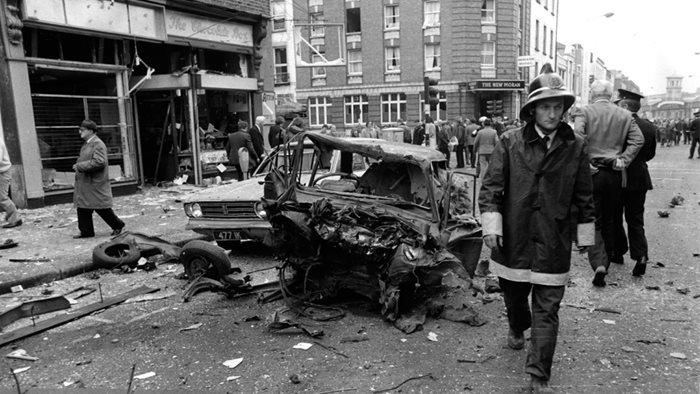


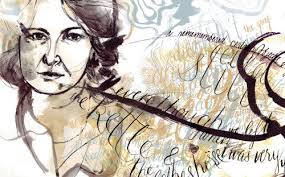

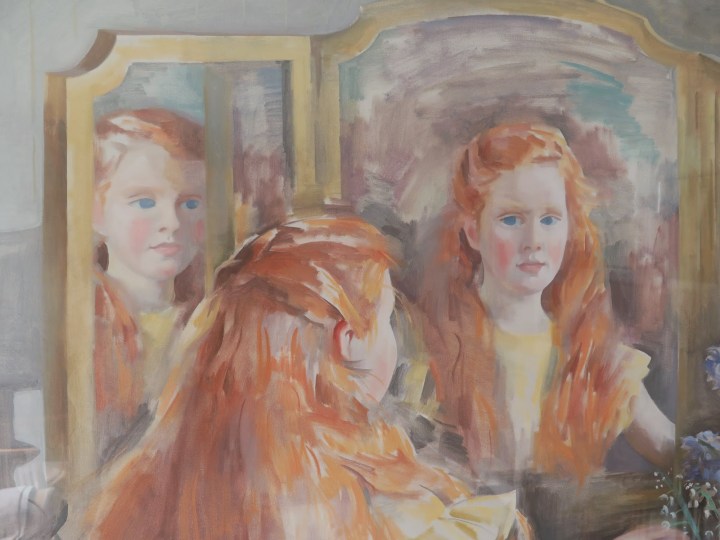

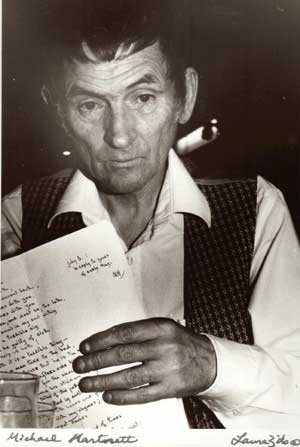

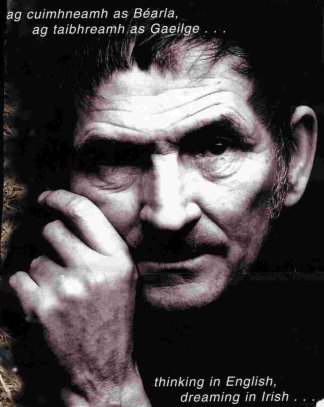


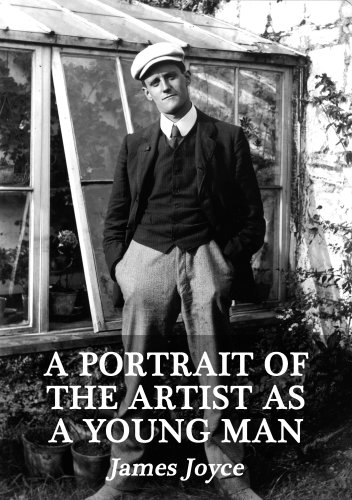


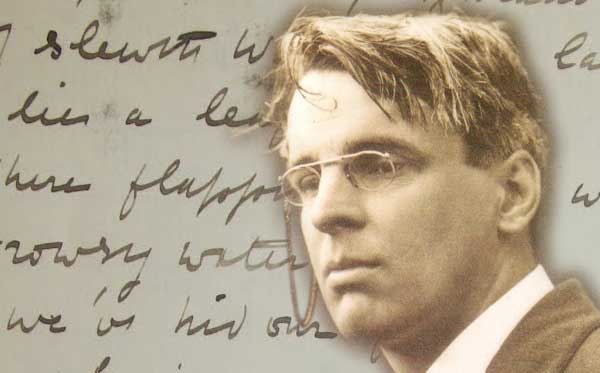


You must be logged in to post a comment.