Just a thought …… about Harper Lee’s Maycomb, Alabama and other related settings….

images (8)

Middle Earth, Narnia, and Wessex are all examples of exotic, or parallel-world settings created by novelists to base their stories in.  Novelists have always created these imaginary worlds for their own purposes.  Middle Earth is the fictional universe created by Tolkien for his best loved works The Hobbit and The Lord of the Rings.  C.S. Lewis goes to great rounds to create another fictional realm for his seven Narnia books which make up his  Chronicles of Narnia.  Thomas Hardy’s Wessex Novels are situated in a ‘partly real, partly dream country’.

Being a Harper Lee fan I’ve been awaiting Go Set  a Watchman with eager anticipation since the old PR machine kicked into gear earlier in the year.  For the purposes of this blog, however, I just want to focus for a little while on the setting of both novels, and novels in general, and it is clear to me that the real life Monroeville, Alabama of her youth becomes the fictional Maycomb, Alabama of her novels.  Lee sets her novels here for a reason: she deliberately selects her setting, and in effect the fictional Maycomb becomes another Narnia or Middle Earth – a microcosm of all that is good and bad in 1930’s America.  She tells us that one went to Maycomb, ‘to have his teeth pulled, his wagon fixed, his heart listened to, his money deposited, his soul saved, his mules vetted’.  She describes it as an isolated place, in effect it is an Everyplace – the town, ‘had remained the same for a hundred years, an island in a patchwork sea of cotton fields and timber land’.  It is, in effect, a remote backwater bypassed by progress, the perfect playground of her youth, and the perfect cauldron for change.

In Go Set a Watchman she says that Maycomb County is, ‘a wilderness dotted with tiny settlements’, it is, ‘so cut off from the rest of the nation that some of its citizens, unaware of the South’s political predilection over the past ninety years, still voted Republican.’  It is so remote, ‘no trains went there’.  In fact Maycomb Junction, ‘a courtesy title’, was located in Abbott County twenty miles away!  However, she tells us that the, ‘bus service was erratic and seemed to go nowhere, but the Federal Government  had forced a highway or two through the swamps, thus giving the citizens an opportunity for free egress.’  However, Lee tells us that few took advantage of this opportunity!  Then in one of those Harper Lee epiphany moments, one of those lightening bolts she releases now and then, she perceptively describes her hometown as a place where, ‘If you did not want much, there was plenty.’

In To Kill a Mockingbird she continues in the same rich vein.  Maycomb is, ‘a tired old town’. People moved slowly, ‘they ambled across the square, shuffled in and out of the stores around it, took their time about everything’.  She tells us that, ‘There was no hurry, for there was nowhere to go, nothing to buy and no money to buy it with, nothing to see outside the boundaries of Maycomb County’, a scenario somewhat reminiscent of modern day Greece!

The setting of George Eliot’s novel, Silas Marner,  has many echoes of Maycomb in Eliot’s fictional depiction of Raveloe.  Eliot tells us that it, ‘was a village where many of the old echoes lingered, undrowned by new voices.’  She further describes it as being, ‘Not …. one of those barren parishes lying on the outskirts of civilization — inhabited by meagre sheep and thinly-scattered shepherds: on the contrary, it lay in the rich central plain of what we are pleased to call Merry England’.  However, like Maycomb it was off the beaten track,  ‘it was nestled in a snug well-wooded hollow, quite an hour’s journey on horseback from any turnpike, where it was never reached by the vibrations of the coach-horn, or of public opinion’.   Much of this abundance is of course meant to contrast with Silas Marner’s previous place of residence in Lantern Yard.  Whereas Lantern Yard had been austere, white-walled, and filled with serious and devout Puritans, Raveloe is a place of lazy plenty, pints at the local tavern, and carefree religion on Sundays.  Chapter One declared it to be a place where bad farmers are rewarded for bad farming!

This description of Raveloe also holds great echoes with The Village as depicted in Jim Crace’s  latest (and last?) novel, Harvest.  The narrator, Walter Thirsk  tells us that, ‘these fields are far from anywhere, two days by post-horse, three days by chariot, before you find a market square.’  Harvest  dramatises one of the great under-told narratives of English history: the forced enclosure of open fields and common land from the late medieval era on, whereby subsistence agriculture was replaced by profitable wool production, and the peasant farmers dispossessed and displaced. “The sheaf is giving way to sheep”, as Crace puts it here, and an immemorial connection between people and their local environment is being broken – their world is crumbling around them.  Great changes are coming and, as everyone knows by now, the only people who welcome change are babies with wet nappies!

Brian Friel’s use of Ballybeg (small town) as the setting for many of his plays and short stories is also similar in vein to these others.  In Philadelphia Here I Come, Gar Public tells us that Ballybeg is, ‘a bloody quagmire, a backwater, a dead-end’.  Friel, like Lee, and Eliot and Crace is deceptive because he is dealing with familiar things and familiar characters – shopkeepers, housekeepers, and parish priests – a very familiar rural Ireland fixed in its own time.  Friel’s use of the alter ego – Public Gar and Private Gar – allows us the opportunity to see behind the superficiality of so much of this world of small-town life.

In many ways Friel’s major theme is the failure of people to communicate with each other on an intimate level.  In this play especially we are introduced to the typically Irish practice of verbal non-communication!  He, like Harper Lee, George Eliot, and Jim Crace, forces us to examine the nature of society.  In Ireland our society in the 40’s and 50’s was dominated by the church, the politician and the schoolmaster.  Ultimately the world that Gar is leaving has failed him and his generation.  But Friel is too subtle to allow us to imagine that the world Gar is about to enter in Philadelphia will be any better.

These meandering rambles are an attempt to place myself at the beginning of a work of fiction, to stand for a moment in the author’s shoes, so to speak, and see the world from their point of view.  From my limited reading it seems to me that many authors deliberately choose a world untrodden, less travelled as the setting for their novel.  I have mentioned some here in this piece but I’m sure this is just the tip of the iceberg and you will be able to reference many examples from your own reading.  Ideally the setting is always remote, secluded, off the map or often off the mainland, cut off from change and advancement.  This microcosm is then filled with characters and fictional dilemmas, action and inaction.  I have always been truly fascinated and overawed by each author’s unique ability and ingenuity in  creating and  imagining these hidden places and thus allowing us the privilege of entering the world of their texts.

images

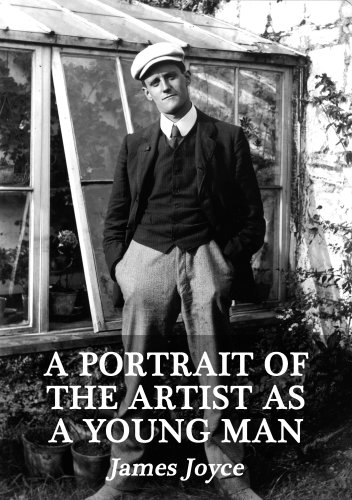
An Analysis of Stephen Dedalus in A Portrait of the Artist as a Young Man

51DY8lRXVjL


A STUDY OF STEPHEN

The reader must not identify Stephen with Joyce in every respect.  For instance, Stephen is represented in his days at Clongowes Wood College as a timid boy, conscious of his smallness and weakness, who tries to avoid being involved in the rough and tumble of football.  It is true that the young Joyce disliked fights, but he was keen on hurdling (not hurling!) and cricket and won cups for his prowess.  This practice of taking a certain aspect of his own character and intensifying and exaggerating it when picturing his alter ego, or second self, is typical of Joyce’s method.  The exaggerations often move Stephen a distance from the real Joyce.  Who would guess from A Portrait that Joyce’s cheerful disposition earned him the nickname “Sunny Jim”?

Stephen, then, is not simply a direct self-portrait.  Indeed it is significant that Joyce called his book A Portrait of the Artist and not A Portrait of an Artist.  For Joyce was never content to record particular experiences for the sake of their interesting particularities.  He wanted to achieve universality.  Of his first book of short stories, Dubliners, he wrote: ‘If I can get to the heart of Dublin, I can get to the heart of every city in the world.  In the particular is contained the universal.’  So we may assume that in studying the growth and development of Stephen Dedalus he was not exclusively concerned with getting to the heart of the young James Joyce or an imaginary equivalent, but in getting to the heart of the young artist as such.

In calling his hero ‘Stephen Dedalus’ Joyce consciously combined the name of the first Christian martyr and that of Daedalus, the legendary Athenian craftsman.  Daedalus was credited with making statues that could move.  He constructed the famous labyrinth at Crete.  He made wings from feathers and wax so that he and his son Icarus could escape when Minos imprisoned them in the labyrinth.  Icarus flew too near the sun so that the wax melted and he fell into the sea and was drowned.  In giving his hero these names Joyce gave him symbolic status.  The martyr suffering for his faith and the skilful, inventive artificer are joined in one person.  Daedulus is significant both because he was a cunning craftsman giving life and complexity to his inventions and because he escaped imprisonment by the adventure of flight.

CHAPTER 1

In the presentation of Stephen’s infancy Joyce has compressed a series of references that hint at the larger issues in the child’s future life.  In fact infant memories are the acorn containing a promise in miniature of the future tree.  The bedtime story sets the young hero on the road of life encountering a cow which is a symbol of the Ireland with which he will have to come to terms.  The physical experience of finding relief and warmth in wetting the bed is followed by discomfort: this little miniature of delight seized that has to be paid for in pain, of ecstasy followed by sordidness or agony, sets the tone for many of the coming experiences.  In the memory of Dante’s brushes, representative of Davitt and Parnell, is foreshadowed the Irish political strife that is to ruin the Christmas party and provide a public background which Stephen, the university student, finds suffocating.  The demand that the child should apologise or have his eyes pulled out foreshadows the later full-scale demand for repentance to escape the torments of hell.

The story of Stephen’s development is the story of these contrasts and conflicts magnified.  The child growing to young manhood has to face the impact on his individuality of the forces at large in the world he has entered.  He is subject in turn to the pressures of family, of Church, and of his country, all trying to mould him in a particular way.  The disillusionment experienced after bed-wetting is symptomatic of his maturer experience in this respect.  The first separation from home at Clongowes is a move from the remembered warmth and cosiness of the family circle to a world of physical cold and discomfort and of emotional harassment by others, boys and masters.  A chill caused by bullying brings him to the school sickroom in a shivering delirium.  This is the first crisis of Chapter 1.  The Christmas party to which he has looked forward, and which opens with promise of warmth, good cheer, and family friendliness, turns sour and then erupts into a violent slanging match because the public controversies of Irish history have impinged on the private scene.  This is the second crisis of Chapter 1.  The shock for Stephen is that Parnell is a hero, that priests are good and wise men, that these adults are all for Ireland, and yet tears and rage break up their conviviality.  The third and last crisis of Chapter 1 is caused by the shock of Stephen’s first encounter with flagrant injustice – injustice perpetrated by a priest in authority.  Father Dolan punishes him cruelly when he is innocent.  The injustice stirs him to a brave and spirited bid for his rights.  If Stephen is the loser, by sickness and by family discord, in the first two crises, he is victor in the third.  The hero has protested in the face of the highest authority and has won his case.  His individuality has triumphed over the iniquities of the system.  This, in embryo, is the pattern of the artist’s destiny.

CHAPTER 2

In the period between Clongowes and Belvedere Stephen develops as a normal, healthy young boy who goes shopping with his uncle, and enjoys riding in the milkcart and playing on a farm.  This is accompanied by two stirrings of his inner life: one is the sickening realisation that the family have financial problems, which turns to bitterness when they are forced to move from the comfort of Blackrock to the cheerless house in the city: the other is the romantic dream-life he creates for himself through reading The Count of Monte Cristo and picturing himself the partner of the lovely Mercedes.  The first crisis of Chapter 2 is the shock of failure within himself.  It occurs at the tram-stop with Emma Clery.  Her eyes, her chatter, her way of coming to stand on the step beside him all seem to invite him to hold her and kiss her.  But he does nothing; and the failure fills him with gloom.  When he tries to write a poem to Emma, he empties the incident of reality and precision of detail and transforms it into a mistily conceived dream.  As soon as the poem is written he goes to stare at himself – not to look for Emma.

The second crisis of Chapter 2 also involves self-dramatisation, this time in an actual theatrical performance on stage at Belvedere.  A deep inner disturbance of desire, tenderness, and melancholy is focused on the belief that now, two years later, Emma is to watch him on stage with admiring eyes.  The belief stimulates him to an excited and confident performance, after which he rushes out in wild expectation to his family, only to discover that Emma is not with them.  The shock sends him running through the night streets of Dublin to a filthy corner where rankness and stench quench his inner agony.  Interwoven with this record of emotional development Joyce traces the growing artistic confidence of Stephen’s persistence in championing the rebel Byron against the respectable Tennyson.

The Cork visit serves to detach Stephen irrevocably from his father and his like.  Tagging on behind his father, he recognises the hollowness of his garrulous bonhomie, is ashamed of the way he can be duped by an obsequious college servant, is embarrassed by his cheap flirtatiousness with barmaids, and is disgusted by his excessive drinking.  Shame and humiliation open a chasm between his father’s cronies and himself.  The experience reinforces the humiliation already felt in his ambiguous status at Belvedere – a leading boy whose home background is one of squalor.  And there is no escape to heroic self-confidence because he has become the victim of a restless inner lust and private orgies that fill him with self-loathing.  There is an unbridgeable gap between the real world around him and what transpires in his own angry, impotent, dejected soul.

In the last section of Chapter 2 Stephen makes a desperate attempt to re-establish order in his world and to rebuild effective relationships with his own family.  The money prizes he has won for academic work are spent lavishly and recklessly on giving the family a taste of affluent living and turning himself into their banker and benefactor.  When the money is gone, the whole attempt to stem briefly the tide of squalor and to come to terms with his family seems to have been futile. Meanwhile sexual desire is so strong that he turns innocent girls seen by day into objects of imaginary lustful indulgence in his private dreams at night.  There are still momentary day-dreams of fulfilment in the company of the idealised Mercedes; but the predominant urge is an animal demand to force some girl into sin and to take pride in it.  In this mood he encounters the prostitute who takes him home.  Thus the final crisis of Chapter 2 (like the final crisis of Chapter 1) ends in a kind of triumph, in that Stephen feels release, delight, and a new self-assurance when the prostitute moves into his arms.

CHAPTER 3

As with each epiphany, after the elation there comes deflation!  The effect of sexual release upon Stephan is complex.  His senses are repelled by the vulgarity of the brothels; he is conscious of his sinfulness, and yet too proud to pray, and afflicted with spiritual indifference.  He is certainly not more open to others: on the contrary he finds himself scorning his school-fellows and simple worshippers.  The aesthetic delight in the office (litany) of the Virgin Mary still captivates him.  Stephen has not found a way to self-fulfilment nor to love of others.  The sexual act, which ought to be a means to both, has become one more experience for a would-be artist self-consciously inflating his own ego.  It is in this deeply unsatisfied condition that Stephen is subjected to the retreat sermons.

The first crisis of this (third) chapter occurs when the rector announces the retreat and speaks of the sanctity, self-sacrifice, and heroic achievements of St. Francis Xavier.  Stephen feels an ominous withering of his heart.  Father Arnall’s previous contact with Stephen at Clongowes revives childhood memories, and his sermons are to thrust him back into a state of childlike submission and obedience.  The introductory sermon and the sermons on death and judgement produce a second crisis, a sense of his shamelessness and foulness against which the thought of Emma stands in stark contrast.  The shock of conscious guilt is resolved temporarily by another mental act of self-dramatisation when he pictures himself, hand in hand with Emma, being forgiven and comforted by the Virgin Mary.  This romanticised day-dream is another absurdly extravagant product of the immature artistic mind.  On the third day of the retreat the sermons revolve around the horrors of hell with an emphasis upon the physical torment of the senses and the moral and spiritual torments that accompany it.  Designed to stir the conscience by stimulating fear, they constitute a burlesque of Catholic exhortations.  Joyce emphasises the parallel by making Lucifer’s slogan in rebellion against God (non serviam) Stephen’s own slogan of commitment to his artistic vocation.  Pride, the sin of Lucifer, is the sin which the egotistic young artist cannot recognise in himself.  The final crisis of this chapter brings Stephen to a condition of terrified remorse, which is removed only when he makes his confession and receives absolution.  Even in this act humility and sincerity are infected by self-dramatisation in the role of penitent.  Like the previous chapters, this chapter too ends on a note of ‘triumph’ – again a romanticised triumph, that of the self-consciously cleansed young man receiving the sacrament in the joy of forgiveness.

CHAPTER 4

In Stephen’s next phase he cultivates his soul with elaborate devotional exercises, models his religious raptures on the romantic gestures represented in sacred art, and mortifies his senses with ingenious disciplines. The persistent habit of self-dramatisation is evident in Stephen’s various reflections on the director’s suggestion that he might have a vocation to the priesthood.  The first crisis of Chapter 4 comes when he weighs the call but suddenly realises that his own individuality can never surrender to the claims of such a calling.  He has a ‘pride of spirit’ that makes him ‘a being apart’.  He must learn his own wisdom in his own way and face the world’s snares.  The decision to apply for a university place follows naturally.  But there is a second brief crisis when Stephen meets a band of Christian Brothers who in their work and attitude have all the genuineness of devotion, humility, and charity which he himself lacks, and he feels ashamed and angry with himself in their presence.  This mood is resolved by the sudden assertion of his poetic self and his delight in words.  The final crisis of the chapter, and the climax of the book, occurs when, dreaming of his urge to creative achievement as an artist, and feeling ready to shake off all that impedes him from following his calling, he sees a girl wading in the sea.  Her beauty and her stillness fill him with rapture.  Stephen exclaims, ‘Heavenly God!’ bringing his religious sense into a new context in response to the image of loveliness.  The call of youth, beauty, and creativity throws him into an emotional ecstasy.  The decisive choice of his life has been made.

CHAPTER 5

The final chapter has thus the air of an epilogue.  Yet the first section of it is the longest section in the book, and a good deal of experience is encompassed in Stephen’s thoughts.  The sordid scene at home is in stark contrast to the literary treasures stored in his mind.  Though he scorns the pedantry of the lecture room, he relishes the magic of language with acute sensitivity.  He has an off-hand attitude to the college time-table, and thinks but poorly of the dean of studies with whom he argues half-seriously, half-provocatively.  He sits through the physics lecture in detachment.  There is something of a show-down with fellow students in the entrance hall after the lecture, when he refuses to compromise with the sentimental aspirations of some of his companions and sign their petition.  His cleverness at the expense of other people’s earnest endeavours is bound to irritate and antagonise.  Stephen manages to make himself unlovable by parading unpopular views uncompromisingly and doing so with calculated scorn.   The charges of other students, that he lacks altruism and is a crank, win sympathy with the reader.  Too often he seems to be spoiling for a fight, even with his genuine friends, such as Davin.

Stephen’s long theoretical argument about the character of beauty is sandwiched between Davin’s teasing reference to Emma and Lynch’s whisper, ‘Your beloved is here’.  The contrast between the unrestrained verbalism of Stephen’s talk about beauty and the equivocal, halting reservations that mark his attitude to a living woman is symptomatic of Stephen’s failure to integrate thought and action.  His head is full of theory about emotion and beauty, while his living experience of emotional commitment is confined to the brothel.

The thought that he may have misjudged Emma turns her in his mind, in a flash, into an epitome of natural gaiety and simplicity.  When the poetic inspiration seizes him, his thought transfigures her into an object of devotion to be hymned exaltedly.  The cry of the heart is transmuted into a precious rhetoric, rich and liturgical, but detached from the reality of the true relationship with Emma.  Indeed Stephen’s memories of her, now recalled, suggest a girl interested in him, ready to be responsive, doing her best to communicate, but being rebuffed by cool, oblique replies and the pose of isolation.  Joyce’s irony is never more subtle than here.  Stephen’s jealous anger at Emma’s friendliness with Father Moran seems disproportionate.  It seems to draw nourishment from his hatred of the Church and from his determination to make a priesthood of the artist’s calling, a priesthood to which she ought to turn in frank confession.  Stephen hovers between exaggerated condemnation of her as treacherous and exaggerated idealisation of her.  Finally he conjures up her image as that of the voluptuous, yielding mistress at the point when the finished poem flows through his mind.

In the penultimate section of the book Stephen snaps the ties with home one after another.  When he watches the birds and hears their cries it is the image of his mother’s face and the sound of her weeping that they blot out.  In deciding to fly, he is also consciously forsaking the Ireland of the vulgar barracking of Yeat’s play.  In conversation with Cranly he sums up his rebellious rejection of the Church and of the claims of his suffering mother.  In relation both to his mother and to Emma, Stephen manifests grave deficiency in human sympathy.  The self-righteousness of his attitude is as priggish as the inflated language in which he presents his decision.  In his own eyes his decisions are earthshaking.  He assumes to himself the importance of a future Beethoven or Shakespeare!

The notes from Stephen’s diary suggest that within his divided being the conscious artist has taken over from the man of direct sympathy and unselfconscious action.  The jottings have an artificial literary flavour.  They show a young mind making art out of life.  They sum up people and events with aphoristic dismissiveness.  They employ archaisms, literary allusions, and clever analogies in verbally discarding people who after all have loved Stephen – Emma, Cranly, his mother, his countrymen (‘a race of clodhoppers’), and Davin.  All are summarily treated as material for epigrammatic play by a super-mind.  Meanwhile Stephen’s own role is glamorised, his isolation, his spiritedness, and his resolve wrapped about with overtones of grandeur and heroism.  The element of earnestness in his acceptance of the artistic vocation must not be ignored, but it is expressed here with a pretentiousness and flamboyance that cannot but raise a smile.

In the end Stephen emerges as a proud, rather anti-social person far too much wrapped up in himself.  Cranly’s question, ‘Have you never loved anyone?’ ought to touch a raw nerve.  His lack of common humanity is surely Stephen’s dominant weakness.

egoist_screenshot_vol2_number4_Portrait_of_the_Artist_as_a_Young_Man

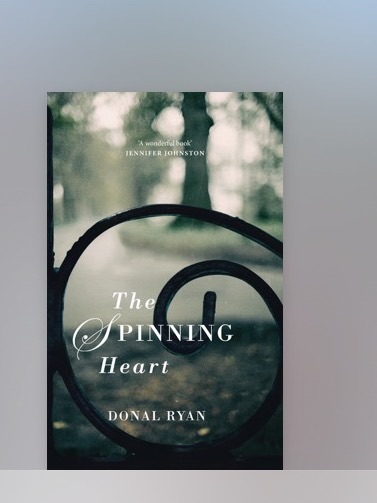
Donal Ryan has hit the big time – at last!

image

Donal Ryan has hit the big time with his inclusion in the Leaving Cert syllabus list of texts for the Leaving Cert in 2017.  This recognition is obviously well deserved and students will enjoy his quirky depiction of Celtic Tiger Ireland.  It is amazing, and a source of great pride, how modern and with-it the ‘new’ Leaving Cert Syllabus really is, unlike the ancient ‘dead poet’s society’ attitude of years gone by.  Today, any young aspiring Irish writer who gets  shortlisted (or even long-listed) for the Booker guarantees him/her inclusion in the new course in a very short space of time.

Read more

My favourite Novel of all Time… Reading in the Dark by Seamus Deane

download

STUDY NOTES

ON

READING IN THE DARK *

BY SEAMUS DEANE
*Page references are from the Vintage, 1997 edition

This has to be one of my favourite novels of all time – definitely the best book never to win The Booker!  There you go – I’ve put my cards on the table for all to see.  This incredibly well-crafted novel is set in Derry over a 16-year period from 1945 to 1961, the book presents a child’s view of the tensions in the city during that time.  Throughout the book we are reminded of the conflict that surrounds the narrator.

An example of the narrator’s direct involvement is shown in the story of the St. Patrick’s Day riot where the police baton-charged a march and were enticed down a long street where half a barrel of oil was poured onto the street as they approached.  Two police cars skidded sharply under a hail of stones and one burst into flames.  Here the writer emphasises the hazards and dangers of the time and shows the children’s thrill at getting the better of the police.

The reader learns to piece the story together of a tense historical period, where secrets about past deeds are buried and rarely, if ever, revealed even to those who are closest to those who participated in them.  Few direct references are made to the actual events of the time, with the exception of the 12th of July celebrations, commemorating the triumph of the Protestant armies at the Battle of the Boyne; the Apprentice Boys march on the 12th of August, celebrating the liberation of the city of Derry from a besieging Catholic army in 1689; and the 18th of December, the burning of Lundy’s effigy.  These are briefly mentioned and used as landmarks to guide the structure of the book.  Deane also refers to the church festivities on the 15th of August which were turned into a political event as time went on.  With knowledge of these events, many aspects of the boy’s story are more meaningful to the reader who can then understand the significance of many apparently general comments.

The unnamed narrator is a young boy, who describes the years of his growing up in Derry in the 1940s and ‘50s.  He is the third oldest of seven children in a working-class Catholic family.  The story traces the family’s complicated history which reveals many secrets surrounding the mysterious disappearance of Eddie, his father’s brother. Eddie had been accused of being a police informer and had been unable to prove his innocence.  He was executed by the IRA in a remote farmhouse under the orders of the narrator’s maternal grandfather.  However, it emerged later that the real informer had been McIlhenny, his aunt Kate’s husband, and therefore Eddie had been killed in error.

The boy’s mother knew this, and when she found out she warned McIlhenny in time for him to escape to America.  She did this because she had had a relationship with him in the past before he married her sister.  Her husband did not know this.  He was unaware that his brother had not been an informer and dies at the end of the novel, grieving for the trouble he thought his brother had brought upon the family.

The boy’s mother has had to endure her husband’s suffering, unable to tell him the awful truth.  When she learns that it was her own father who organised Eddie’s execution, she cannot cope with what she knows.  She becomes emotionally crippled with guilt and helplessness and begins to disintegrate emotionally and psychologically.  Now only the boy knows the full story and like his mother he is bound to silence.  He uncovers the truth bit by bit but it is a large burden of knowledge for a young boy to carry.

 THEMES AND ISSUES

The Theme of Secrecy:  A well-known saying in the North of Ireland is, ‘Whatever you say, say nothing’.  This saying reflects the troubled times in the North.  Seamus Heaney used the phrase as the title and the theme of one of his most impressive poems on the Northern Troubles which raged from 1969 until 1998.

There is a natural reserve built in to any discussion about politics or about happenings where there may be conflict.  This is very much the case in many novels written about the Northern situation, and Deane’s novel is no exception.  There is very little direct discussion about what has happened to Eddie.   Much of the information comes to the boy in a vague, roundabout way and it takes the boy’s perceptive abilities to link the threads together.

Secrets abound in the novel, and as the human mind is naturally curious, the boy is determined to find out what is obviously being hidden from him.  The boy knows that his grandfather is a possible source of information, especially now that his health is deteriorating and he appears close to death.  The boy is often sent in to sit with his grandfather and eventually, he tells him that Eddie was executed as an informer, but that there was more to it,  ‘He shut his eyes and he told me, he told me.  He, Grandfather, had ordered the execution.  But he was wrong.  Eddie had been set up.  He had not been an informer at all’ (p. 126).

Meanwhile, unaware that the boy already knows something, it takes quite some time before the boy’s father can bring himself to tell his sons the truth, as he understands it, about his own brother.  In a quiet country church, he finally managed to do it.  ‘Eddie was never killed in that shoot-out,’ he said suddenly and looked away from us immediately … ‘No, he wasn’t killed in the distillery.  He was an informer.  His own people killed him.’  Now he had said it all, and a great shame and sorrow was weighing his head down towards the front of the pew’ (p. 133).

To be an informer was one of the worst possible crimes that any person could commit – to inform on your own people for a few pounds was unforgivable.   Families who had informers in their ranks could never be trusted and life could be and was often made a misery for anyone related to an informer.

‘He was talking all the time, forcing it out of himself, and Liam’s face was white as a star beside him.  Informer.  Betrayed his companions.  Why he did it could not be known.  His brother.  Thank God his parents were not alive to see it.  It was so stale a secret, like a gust of bad breath, and the way the three of us were crouched together in the middle pew of the church, like conspirators, with the sun beginning to warble again, it was like a false relief, as though the church were a machine that had stopped throbbing to let the world come in again around its becalmed silence’  (p. 134).

The boy’s mother is also very protective of the awful secrets that she has to carry and she is determined not to reveal them to any other person.  Again, secrecy is vital, as the revelation of what she has done would do irreparable damage to her husband and to her sister.  The boy can see this worry in her because he shares some, but not all of what she knows.

‘We were pierced together by the same shaft.  But she didn’t know that.  Nor was I going to say anything unless she did.  And even then, when it had all been told, I had the sense of something being held back, something more than she knew, something Grandfather had cut out’ (p. 127).

It is this desperate clinging onto awful secrets which fuels the whole novel.  As the plot unfolds, the enormity of the secrets is impressed upon the reader.  The action of the novel escalates and this keeps the reader turning the pages to find out if a secret will be told.  Feelings, which accompany secrecy, intensify as the story goes on.  Fear, intense shame, guilt and helplessness are all present.

The Theme of Family Relationships:  One of the main themes of this book is the topic of family relationships, which are under strain partly due to the times they live in.  The boy’s relationship with each parent changes as the story unfolds.  He rarely asks questions yet he is given information from various sources.  By piecing the fragments together he realises that neither parent knows exactly what happened, yet he is prevented from interfering and informing them by an awareness of the pain that this would cause them.

Each piece of the jigsaw puzzle he finds causes further alterations in the boy’s relationship with both parents.  Sometimes one parent will tell him a little, giving him the impression that they trust him.  At other times, he learns something from outside the family, which draws him away and makes him more reserved with them.  It is only when his grandfather tells him on his deathbed that he had ordered Eddie’s execution and that Eddie had been set up, that things begin to change radically for the boy, ‘I left him and went straight home, where I could never talk to my father or my mother properly again’ (p. 126).

The boy knows that his mother is struggling to live with the knowledge that her husband is unaware that his innocent brother was murdered under her father’s instructions as punishment for a crime that he had not committed.  She has also had a relationship with McIlhenny, her sister’s husband, and her husband is unaware of this too.  McIlhenny was, in fact, the informer who had framed Eddie, her husband’s brother, and she was the one who had alerted him before he escaped to Chicago.  As a result of her actions she is tortured by a mixture of guilt and grief.

It does not help when she realises that her son knows the truth.  This heightens the strain between mother and son.  Instead of sharing the burden, they become isolated from and wary of each other.  The father cannot understand why their relationship has suddenly deteriorated.  Near the end of the book, the boy’s mother finds the strain of keeping this secret too much for her, and she begins to disintegrate emotionally.  Even though he did his best to reassure her that he would never say anything, she wished he were not there,  ‘Why don’t you go away?’ she asked me.  ‘Then maybe I could look after your father properly for once, without your eyes on me’ (p. 224).

Father and son do not have a particularly close relationship: there are many unspoken barriers between them.  His father is bitterly ashamed of having an informer in the family and rarely speaks about his brother Eddie.  A few brief glimpses into the past show that as children, the boy’s father and Eddie had been close friends, which made the blow even harder when Eddie was accused of betraying the family.  At one point, he is unable to prevent himself from hitting his son when he speaks disrespectfully of Eddie.  He was angry with his son for antagonising the police and challenging him.

‘Was there something amiss with me?  No, I told him, there’s something amiss with the family.  The police were on top of us long before I was born.  If he wanted to blame someone, let him blame Eddie, not me.  He hit me so fast, I saw nothing.  My shoulder felt hot and broken.  I got up, hating him, although I could feel the tears coming as the pain increased through the numbness’ (p. 102).

Another piece of the family history which adds further strain to family relationships, is the fact that his mother’s father killed a policeman in his youth in retaliation for a close friend’s death.  Unshakable alibis enabled him to escape the punishment.  This is something that the family must live with and they are constantly reminded of it in subtle and not so subtle ways whenever they come into contact with the police.  One incident is the repeated persecution of the boy’s mother by Sergeant Burke when the children are at school.  As a family living with the guilt of murders committed or organised by other members, they have difficulty maintaining steady or open relationships due to the burden of secrecy imposed on them.  Like Macbeth and Lady Macbeth, who had blood on their hands and troubled consciences, this family, even though the main members concerned did not actually commit the crime, are tainted by it and must live with the consequences.

Deane depicts the family in a very credible manner.  The absence of significant conversation and the conveying of information through a child’s thoughts and reflections show all too clearly how the family structure is being worn down.  Yet, at the same time, the family shows a resilience and a determination to keep going despite all that has happened and is happening, perhaps because of some inner strength, never acknowledged.

The Theme of Growing Up:  This novel is narrated in the form of an autobiography and it shows a progressive change in the boy’s outlook on life from the time he discovers what has happened to his family in the past.

Here the main character’s development is rather a painful one as the boy begins to realise the extent of the tragic happenings in his family and he has to try and accept that they are irredeemable.  His uncle cannot be resurrected and his grandfather has always had two murders on his conscience.  His mother has been betrayed in love and his father believes he has been betrayed by his own brother.

All of the above have a significant impact on the boy.  As an observer from the outside, the boy watches his parents and because he cannot do anything to heal their wounds he simply retreats into himself.  ‘But knowing what I did separated me from them both.’  For much of the time he is alone, alienated by what he knows and unable to confide in anyone, least of all in a family member.  Isolation from those around him is a noticeable part of his growing up (as it is in our other texts).  At no point does he relate an in-depth conversation with any member of his family about his family.  He is very much on his own with his thoughts and with his efforts to link up the things he knows by using his own initiative.

He is an avid reader and often reads late into the night, finding solace in books,

‘I’d switch off the light, get back in bed, and lie there, the book still open, re-imagining all that I had read, the various ways the plot might unravel, the novel opening into endless possibilities in the dark’ (p. 20).

Reading was for him a way of opening the doors of his imagination and allowing it to run free.  As a child he had the ability to think things out in detail.  This ability helped him piece the truth together from the flimsy snippets of information he had acquired.

As he grows up, he becomes more and more distant from his parents because this is the only way with which he could cope with what he knows,

‘I went away to university in Belfast, glad to have so mishandled everything that I had created a distance between my parents and myself that had become my only way of loving them’ (p. 22).

In a sense, this attempt was successful as ten years on, much of what had once been clear in his mind had become more vague.  The years passed and the memories began to become so confused and muddled, that he wondered at times if he had dreamt it all.

The novel ends in 1971 with the musings of a young adult who is home again for his father’s funeral.  It is a desperately sad ending as the family’s grief is for more than just the loss of a member; the father dies still unaware of the dreadful truth.  The chief mourners, his wife and son, have a lot to lament.  It is left to the reader to surmise how the young man is now feeling; relief that his father dies without knowing that his brother had died in error, anger that he could never be told, or guilt that he knew all along?  Or is it just an intense, heartbreaking sadness?  Deane deliberately ends the story with a sparse use of language. What is left unsaid speaks volumes, we are left as Seamus Heaney says in “Harvest Bow”, ‘gleaning the unsaid off the palpable’.   Isn’t this always the case?

LITERARY GENRE

Type: Social Realism/Autobiography/Memoir:  In Reading in the Dark, fiction and fact, myth and history combine to create a hybrid between two modes of writing, autobiography and fiction.  If the reader did not know it was a novel, he or she might be forgiven for assuming that it was purely autobiographical.  For the narrator, there are two worlds: the city of Derry and its haunting secrets of the past and the wealth of legends that haunt his childhood.  Both worlds, real and unreal, are cleverly intertwined in the novel, which gives strength to the impact of the book.

In some respects, it also takes the form of a detective novel, if the suspense of finding out the truth about the real murderer and the real informer are taken into consideration.  However, it would be insulting to the author to dismiss it as such, because it contains far more than that.  Much of what happens to the family is a glimpse into the fabric of life in Northern Ireland at the time, and it is based on real happenings.  It is therefore socially realistic.  It is also a novel with a tragic ending, yet it does not completely fit the general definition of tragedy.

Essentially then, Reading in the Dark combines two genres, a socially realistic novel and tragic fiction, with a hint of a detective novel and political thriller thrown in for good measure!

The Structure of the Novel:  The book is written as a first person narrative.  A complex situation is presented from a young boy’s point of view and he comments on each happening ass it occurs.  The plot is clearly drawn and extremely well ordered.  It is written chronologically and meticulously dated.  This is important as part of the plot hangs on the accuracy of dates when the boy is trying to figure out who knows what and when.  This also emphasises the clarity of the boy’s memories.  Each chapter is sub-divided into different sections, which are short and condensed, and each section has its own significant link with the overall plot of the novel.

While the novel takes us through a 16-year period from 1945 to 1961, it does refer back to a period twenty years earlier to when Eddie disappeared in 1922 after the attack on the distillery, to 1926 when McIlhenny left for Chicago, to when his parents first met in 1930 and to when they got married in 1935.  This period is mentioned a number of times to remind the reader that this was a turbulent time, both for the family and for the province.  With this technique, Deane controls the plot so that the reader’s curiosity is aroused in the first few pages and maintained throughout.  Answers are given bit by bit, moving from the present to the past and back again.  The plot twists and turns as the true story gradually emerges.  The reader is challenged to work out what is happening each time that the boy gathers a new piece of information.

Old stories and fables are included at strategic points, which adds to the fictional aspect of the novel.  The child finds it hard to know what to believe as the legends of the past spill over into reality.  It becomes difficult to distinguish between truths and untruths as many of the family secrets are hazy and vague and take on the ghostly qualities of legends.  The chapter, Field of the Disappeared, illustrates this perfectly.  The boy is unsure whether the old tale is true or not, but it is here that Eddie is linked up with a ghostly legend.

Ghosts haunt the story from the very first page.  The boy’s mother is transfixed in the stairway watching a ghost she believes to be inhabiting the family’s house.  Her conscience torments her and memories of her past come back to haunt her.  Ghostly spirits are woven through the stories which the boy hears from adults and the ghostly memories of dead family members echo through the pages.  Yet for the narrator at the end of the novel, things are not as vague as they seem,

‘Hauntings are, in their way, very specific.  Everything has to be exact, even the vaguenesses.  My family’s history was like that too.  It came to me in bits, from people who rarely recognised all they had told’ (p. 225).

In the chapter,  All of It? (p. 182) everything finally comes to light (see p. 187), and the boy assembles all that he knows.  The enormity of what he has to carry becomes evident to the reader.  This chapter is appropriately placed close to the end of the novel, which unifies its structure.

The Style of the Novel:  Deane uses a beautifully poetic style of writing to create a tightly written story.  His writing is primarily clear and direct.  The opening lines of the novel illustrate this:

‘On the stairs there was a clear plain silence.  It was a short staircase, fourteen steps in all, covered in lino from which the original pattern had been polished away to the point where it had the look of a faint memory’ (p. 5).

The writing can be very factual and distant at the most emotional times, for example in the Pistol chapter when he is severely beaten.  ‘So they beat us too, Liam and me, across the table from him.  I remember the sweat and rage on his face as he looked’ (p. 28).  The description of the beating is related in a very matter of fact way.  In Roses the boy rips up the back garden coldly, methodically, almost in a trance or in a frenzy.  The incident is again presented in a factual way with emotions well disguised or hidden.  Yet this is what makes it all the more effective,

‘But as the nausea and dread died in me and I saw the broken roses hanging down in the choking dust, I gave up and stood there in a trance, hearing the front door open and my mother’s voice and the children babbling and running’ (p. 105).

Often a memorable image will follow on from what is presented in a factual manner,

‘Walking on that concreted patch where the bushes had been was like walking on hot ground below which voices and roses were burning, burning’ (p. 108).

Deane also generates suspense extremely well at intervals.  There is a great sense of excitement here:

‘The police and B Specials raced down after us, under a hail of stones thrown at the cars and the jeeps they rode in or ran alongside.  Advertising hoardings at the side of the street took the first volley of our missiles as the two leading cars hit the oil.  A giant paper Coca-Cola bottle was punctured, along with the raised chin of a clean-shaven Gilette model.  The cars swung and hurtled into the side walls, shredding stones from them like flakes of straw.  The oil glittered in the sudsy swathe of the tyres, and one car lit up in a blue circle of flames as the police ran from it.  The whole street seemed to be bent sideways, tilted by the blazing hoardings into the old Gaelic football ground’ (p. 36).

This notion of the street bending sideways extends the chaotic picture even further.

Some striking images are used to convey conflict to the reader:

‘It was a city of bonfires …………….. The night sky reddened around the rising furls of black tyre-smoke that exploded every so often in high soprano bursts of paraffined flame.  The acrid odour would gradually give way to the more fragrant aroma of soft-burning trees that drifted across the little houses in their serried slopes, gravelled streets falling down from the asphalted Lone Moor Road that for us marked the limit between the city proper and the beginning of the countryside that spread out into Donegal four miles away’ (p. 33).

This is a beautiful piece of sensual writing: the sounds, sights and smells reach across to the reader.

Another memorable image in which Derry is brought vividly to life in this way is, ‘the shadows on the gable wall shrivelled as the fires burnt low to their red intestines’ (p.  34) and another example, ‘The dismembered streets lay strewn all around the ruined distillery where Uncle Eddie had fought, aching with a long, dolorous absence’ (p. 34).

There are many haunting descriptions in the book.  Katie’s story especially is an excellent example of this:

‘The greenish light came into  the room in mid-air and spread all over it, and with that came this whispering of voices, a man’s and a woman’s, whispering, whispering, furious, almost as if they were spitting in anger, except that the voices were dry, whipped up like swirlings of dust in a wind’ (p. 69).

In many ways, it is this haunting quality of the book which remains in the reader’s mind long after the book has been put down.  (Warning: Katie’s Story should not be read late at night!  Be warned!).

Deane also has an accurate way of describing people.  Crazy Joe, the local crackpot, ‘had a sculpted, clean appearance.  His medallion face fronted his large head like a mask, and the head itself, perched on his tiny body, swung and vibrated all the time like an insect’s’ (p. 81).

There is little use of direct speech in the novel, and when it is used, it is as a vehicle for important parts of the story, for example when the boy’s father tells him what he believes really happened to Eddie.  It is well used when Katie is telling the children a story and commenting on it, as this makes it more immediate.  Deane is particularly economical in his use of dialogue, which serves to emphasise Northern reticence about sensitive issues – Remember, ‘Whatever you say, say nothing’.

CULTURAL CONTEXT

This novel is essentially a child’s account of growing up in a world of conflict.  In Derry during ‘the Troubles’, your religion, your family history in ‘The Troubles’ and your own behaviour all ‘labelled’ you.  Religion is rarely mentioned directly but this does not mean that it was unimportant.  We know that it was a huge cultural factor at the time.  Often what is left unsaid is more powerful than what is said, as much may be implied.  In the chapter Fire it is pointed out that Protestants had more excuses to celebrate than Catholics – this is only one of a few direct reference to Protestants in the book.  Priests make a brief appearance, for example Fr. O’Neill, when he marched the boy down to the local police station to ‘apologise’ for throwing a stone at a police car.  There are other references to priests, such as Fr. Nugent, the Spiritual Director who knows all about the facts of life, Fr. Gildea, the Maths teacher and Fr. Moran who comes to hear his grandfather’s confession before he dies.

Family history, however, was a significant factor in the way in which people were treated in the community.  People were judged by their connections.  This family had a cousin in gaol because of connections in the IRA, an uncle who was ‘known’ to be an informer and a grandfather who managed to escape punishment for murdering a policeman.  Therefore they were a ‘marked’ family and the boy was often treated more harshly because of this ‘history’.  There were a number of incidents involving Sergeant Burke.

One clear incident was where the boy was foolish enough to throw a stone at a police car to escape being beaten by bullies.  As a result he was taken by the police and for punishment, deliberately classed as an informer, to embarrass him by public humiliation.  This was particularly difficult for him, because his father’s brother was widely believed to have been an informer, making it even harder for him to disprove the rumour.  It was a clever ruse by the police who knew what would hurt most – to disgrace the family by bringing up the sins of the past.  Sergeant Burke had a strong reason for his intense dislike and ruthless persecution of the family.  The policeman, Billy Mahon, who had been killed by the boy’s maternal grandfather, was his colleague and close friend.

The small, closely-knit community also magnified the errors people made.  The boy’s mother once told him something worth thinking about: ‘People in small places make big mistakes.  Not bigger than the mistakes of other people.  But that there is less room for big mistakes in small places.  She smiled ironically’ (p. 211).  Here she may have been referring to mistakes in love, but the saying applies to the disappearance of Eddie and McIlhenny, as well.

A strong feature of the culture of the time is people’s belief in old tales and stories.  One story is told of a local couple who married and the husband went away to sea and was presumed dead.  The sailor’s spirit comes back to torment his wife who had taken up with another man while he was away.  The priest drove the spirit out, yet at night, the image of a child in pain could be seen in the window.  The house concerned was a local one, so people continued to tell that story and the boy is entranced by it.

Another story was about an enchanted field, known as ‘The Field of the Disappeared’.  Here the souls of all those from the area who had drowned or disappeared came together three or four times a year on certain holy days to cry like birds and look down on the fields where they had been born.  Any human who entered the field would suffer the same fate.  Birds did not fly over the field.  The boy’s father told his sons this story as they looked across the field.  This reminded the boy of his uncle Eddie whom he knew was on his father’s mind – perhaps his lost soul may come here too?

Katie’s story was told to him by his aunt, his mother’s sister.  A young woman was looking after two orphans, a boy and a girl, who both became possessed by some spirit and were never seen again.  The woman reported this, but she was not believed by the local priest who suspected that she was going mad and seeing things until he saw it himself.  Stories such as these show the resilient beliefs in the supernatural that were in the community, and they come up frequently in Deane’s book.

GENERAL VISION/VIEWPOINT

Overall, this book is a product of Derry’s troubled times and it is not unique.  It is not a completely hopeless view of life at the time, but the book has a tragic and traumatic outcome and there is little present to alleviate it.  In the last section of the book his father dies, and his mother remains haunted by what she has done.  A young English soldier was shot dead outside their door by a sniper during a street search, bringing the conflict literally onto their doorstep.  Ironically, the barricades are beginning to come down as his father’s funeral is about to go ahead.  Sadly the family barricades never did come down, and this makes it even more tragic when the actual political barricades are lifted.

Deane parallels the personal story with the political developments that are taking place in the community. The secrets and mistaken beliefs that divide a family are symbolic of the secrets and divisions that divide a whole people.  The author is not a detached observer: the gap between Seamus Deane and the narrator is so narrow as to be almost indistinguishable.  The reader is invited to sympathise with the boy in the unique position he finds himself in.  We, the readers, are expected to do our fair share of ‘reading in the dark’ also!


A Word About the Author Seamus Deane
Born in Derry, Northern Ireland, in 1940, Deane was brought up as part of a Catholic nationalist family. He attended St. Columb’s College in Derry, where he befriended fellow-student Seamus Heaney, Queen’s University Belfast (BA and MA) and Pembroke College, Cambridge University (PhD). He is a member of the Royal Irish Academy and a founding director of the Field Day Theatre Company.
seamus deane Reading in the Dark (published in 1996) was his first novel and it  won the 1996 Guardian Fiction Prize and the 1996 South Bank Show Annual Award for Literature, is a New York Times Notable Book, won the Irish Times International Fiction Prize and the Irish Literature Prize in 1997, besides being shortlisted for the Booker Prize in 1996.   The novel has been translated into more than 20 languages.  Since the publication  of Reading in the Dark in 1996 Deane has garnered for himself the reputation of being one of Ireland’s pre-eminent academic scholars and literary critics and has also edited the very influential Field Day Anthology of Irish Writing.


Knockaderry Clouncagh Drama Group’s Production of “The Loves of Cass McGuire” Reviewed

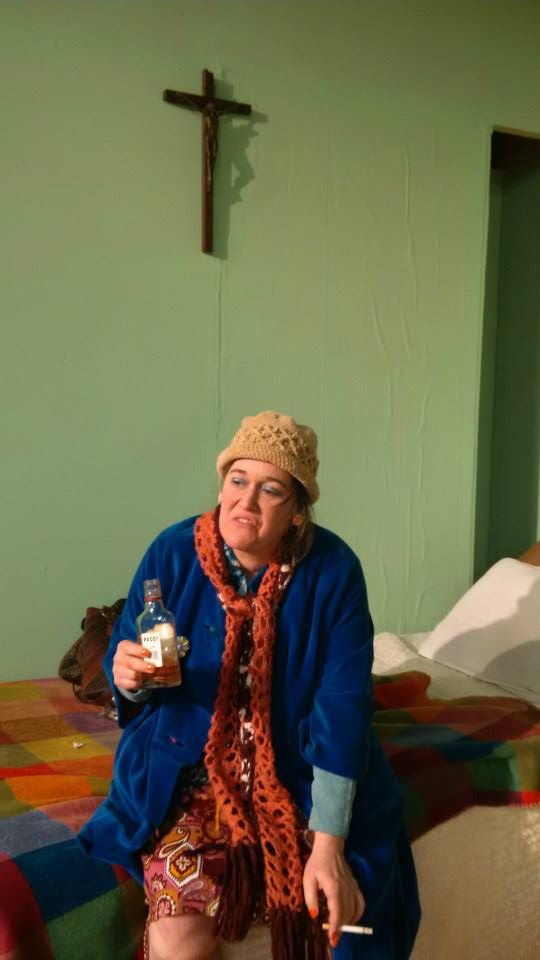
Sue Mullins as Cass McGuire

Following their  hugely successful production of Jim Nolan’s ‘Moonshine’ last year, the Knockaderry Clouncagh Drama Group, directed by Johnny Corkery, are back once again, this time with yet another poignant Irish play, Brian Friel’s ‘The Loves of Cass McGuire’.  The audience  were  highly entertained but were also at times brought close to tears at the opening performance in The Resource Centre, Knockaderry  of this powerful and deeply moving production of Brian Friel’s play. The play tells the sad delusional story of Cass, (played magnificently by Sue Mullins pictured above),  who is a tired and tipsy woman, who has spent  fifty two years working in a ‘speakeasy’ – a bar of sorts, a block from Skid Row, among downbeats, bums and washed up people in New York city.

Cass McGuire returns to Ireland after all those years in America and her remaining family – a brother (and his family) and her mother – welcome her back but then place her in a nursing home, Eden House, when she gets too difficult to handle. The play focusses on and explores the psychology of Cass as she returns from her emigration and exile and her search for ‘home’.   Gripping, often humorous, but steeped in compassion, Friel scripts a rich and complex portrait of a marginalised emigrant returning home.   We are only too aware of the different perceptions our relatives in America, ‘the Yanks’, have of ‘the ould sod’; the land of leprechauns, Arran sweaters and thatched cottages. We can, therefore, easily empathise with Cass’s dilemma.  She has returned to a world she cannot recognise and the play explores the difficulties she has in coming to terms with a life not as she imagined and the exclusions society now imposes upon her.  Whereas  Friel’s, Philadelphia Here I Come dealt with Gar’s physical act of emigration, this play deals with the psychology of returning and this  marks it out as a very relevant work – indeed, it can be said of Cass, like many a returning exile, she comes back to a home that does not exist except in her fantasy.

The ‘loves’ referred to in the title of the play meanwhile are not love affairs, but rather the love Cass has for people in her life.  Among them Cass’s mother played by Mary Angela Downes, her brother Harry (Colman Duffy), his wife  Alice (Rachel Lenihan) and four children to whom down the years she has sent money and presents and cards,  doing what ‘the Yank’, was expected to do.  She believes her sacrifice for her family will be appreciated, and she dreams of a happy homecoming, but sadly finds she has been deluding herself.   The reality was much different, however, and she wasn’t much thought about in her absence and when she came home, she was seen as a bawdy, loud, embarrassment and put into a home,  the ironically named Eden House.  Eventually this loveless scenario is replaced by a fantasy world of make-believe where a new vision of happiness is constructed from her past.  Cass and the other residents, particularly Trilbe Costelloe (Mary Geaney) and Mr. Ingram (Paddy Mulcahy),  begin rhapsodising about a past that never happened – they lay their dreams before us and ask us to thread softly..  The play, therefore, combines pathos, humour and truth – it is tragic but there is also scope for humour and, typical of Friel, and this production at times, the humour and comedy is of the type that brings the audience to the verge of tears.

This production gives full voice and exposure to the myriad of theatrical devices and innovations used by Friel to push the boundaries of theatre.  In this play Friel plays with conventions of theatre and memory. Cass, (Sue Mullins at her mischievous best),  breaks through the ‘fourth wall’ constantly, emerging on to the stage from the body of the audience.  Furthermore, she  refers directly to the author and title of the play, and she works hard to deny memories of how she got into her current situation, repelling the eerie draw of the other patrons of Eden House, superbly captured in the performances of Mary Geaney and Pat Mulcahy in particular.   My only genuine regret on the night was that Friel was not present to see the production for himself!

Sue Mullins was amazing as Cass and her shouts of bawdy joy and puzzled moments of stillness as she peered out into the audience and a deserted banquet hall, were all part of a memorable tour de force.   Colman Duffy was splendid as the weak but well-meaning Harry and he was well supported by Rachel Lenihan, recently returned from her successful trip to The Globe Theatre in London.  Paddy Mulcahy as Mr. Ingram  and especially Mary Geaney as Trilbe were essential and excellent in establishing and maintaining the poetic mood of this play and in easing Cass’s adjustment to Eden House ‘truth’.  John Young brought much needed laughter (if ironic and knowing) to the story as Pat Quinn.  Owen McMahon as Dom and Alison Lenihan, (in her first live role for the Drama Group),  brought the innocence and dreams of youth to the production.

This production by the Knockaderry Clouncagh Drama Group  gives full rein to a cast lead by strong, forceful female characters, especially the lonely, isolated figure of Cass McGuire played with aplomb by Sue Mullins.   This role and the role of Madge in Philadelphia Here I Come, foreshadows  Friel’s later success with the Mundy sisters in Dancing at Lughnasa – actually if Knockaderry Drama Goup are considering a production for next year’s drama circuit they could do worse than turn to Dancing at Lughnasa – casting would not be a problem anyway!

This is a very powerful play, both humorous and sad, but ultimately uplifting. The play deals with identity, the notion of truth and communication, and how memories both public and private enable us to ride the highs and lows of life. Throughout the play, images from the past flood into Cass’s head and the story unfolds when, she returns to an Ireland and family which have changed utterly from what she had imagined all those years ago. To save herself from these changes, she eventually shares her life, work and experiences with us and those around her – continuously bursting through Friel’s  ‘Fourth Wall’ to engage the audience.  We also meet her brother and family who have remained at home, and we hear their stories. On her entry to Eden House, a “rest home” for older people, Cass encounters Trilbe Costellooe, Mr. Ingram and the new arrival Mrs. Butcher (played by Betty O’Sullivan), who help her see her way to survival.   Those sad stories and memories of other days came home with me after this production.  This is a  powerful and engaging production, not to be missed. Directed deftly by Johnny Corkery,  it combines excellent stage craft, a classic Friel set and a vibrant cast which  brings Friel’s characters to life.

 Rachel Lenihan as AliceMr. Ingram, Trilbe Costelloe and Cass

Some ‘Grace Notes’ on Macbeth

The term ‘Grace Note’ comes to us from the world of Irish Traditional music where they are used as embellishments, added extras to further personalise the tune.  Here they are used in a similar fashion – maybe becoming the difference between a H1 and an H2!

macbeth-and-lady-macbeth-dee-timm

Throughout the play Macbeth there is almost a grotesque obsession with violent and unnatural images of children and babies (as well as apparitions of a bloody child and of a child crowned), for instance:

Come to my women’s breasts…….I have given suck, and know

How tender ‘tis to love the babe that milks me….

None of woman born shall harm Macbeth..

There are also many images of barrenness, for instance:

Upon my head they placed a fruitless crown

And put a barren sceptre in my grip,

Thence to be wrenched with an unlineal hand,

No son of mine succeeding.

Even though Macbeth is obsessed at the thought of the children of another man succeeding him, he himself does not have any children (Macduff states that he cannot properly avenge the murder of his own children, since Macbeth ‘has no children’).  Lady Macbeth mentions that she has ‘given suck’, but here she may be referring to children from a previous marriage – or maybe any children the Macbeths have had are now dead.  With this in mind, the voices of the witches that he hears could almost be those of his children that have died or possibly the voices of his imaginary children whom he wants to inherit the throne.  (In some productions of the play the witches have been played by children.  This is not too farfetched – after all, nowadays, when we think of witches, an image of an eccentric woman on a broomstick or a child dressed up in a pointy hat and cloak at Halloween readily comes to mind.)

IMAGES OF TIME AND SPEED

By Shakespeare’s standards, Macbeth is a short play.  There are no major sub-plots, and the events of the central story unfold at an alarmingly fast pace.  Macbeth returns home in Act 1 to prepare for the arrival of the king at very short notice, while Lady Macbeth summons him to ‘Hie thee hither’ and a messenger who has already travelled so quickly is ‘almost dead for breath’.  The images of travel, speed and breathlessness create a sense of unbearable urgency in the play.  Characters are obsessed by time passing – Macbeth himself seems to realise how Time ultimately is in control of his actions, when he addresses Time:

 Time, thou anticipatest my dread exploits.

Later he refers to Murder as something which moves with        ‘stealthy pace’     and he acknowledges that

Come what come may,

               Time and the hour runs through the roughest day.

Macbeth’s reaction of distant resignation to the death of his wife begins with the famous deliberation on time,

Tomorrow, and tomorrow, and tomorrow…….

IMAGES OF BLOOD

In Macbeth, the word ‘blood’ is mentioned 24 times, and ‘bloody’ is mentioned 15 times!  Once blood has been shed, there is quite a gothic obsession with it, as Macbeth and his wife are haunted by images of blood.  This horrified reaction to the blood they have shed is altered, when Macbeth realises that he cannot turn the clock back, saying –

I am in blood

Stepp’d in so far that, should I wade no more

Returning were as tedious as go o’er.

This image of wading through blood which creeps up your body surely has influenced countless Hollywood directors down the years e.g. in films such as The Shining.

Lady Macbeth might have control over her husband in the early stages of the play, but she cannot control her own mind which is plagued with bloody images, washing her hands of invisible blood, and saying –

Yet who would have thought the old man

               To have had so much blood in him.

Perhaps most selflessly and poignantly, Macduff refers to the decline of Scotland with a different use of blood imagery when he says –

Bleed, bleed, poor country.

IMAGES OF SLEEP

In the middle of the night (with its ‘bloody and invisible hand’). The Macbeths murder Duncan, taking his sleep from him.  Ironically, sleep is also taken from them, as Macbeth hears the words

Macbeth shall sleep no more.

For not only has Duncan been murdered in h is sleep, but sleep itself has been slain

Macbeth does murder sleep – the innocent sleep,

              Sleep that knits up the ravelled sleeve of care,

The death of each day’s life, sore labour’s bath,

              Balm of hurt minds, great nature’s second course,

              Chief nourisher in life’s feast.

In Act 3 Scene 2, Macbeth lives in ‘restless ecstasy’ and sees life as a ‘fitful fever’, while in Act 3 Scene 4, one of the last things Lady Macbeth says to her husband before she loses her reason is  ‘you lack the season of all natures, sleep’.  In the same scene, when asked, ‘What is the night?’, she can only reply, ‘Almost at odds with morning, which is which’ – life has become one long waking nightmare for her.

Macbeth has murdered sleep, and the next time we see Lady Macbeth, she cannot sleep as she wanders about trying to clean her ‘bloodstained’ hands.  It seems that the murdering of sleep by Macbeth results directly in his wife’s inability to find peace or repose.

In Macbeth, Shakespeare is so fascinated by night-time and darkness, he uses the word ‘night’ 38 times and ‘sleep’ 26 times!

THE MACBETHS’ MARRIAGE

In Macbeth, Lady Macbeth is stronger initially, but cannot cope after Duncan is murdered; while this first murder is difficult for her husband, subsequent murders hardly cost him a thought.  We know from life and literature (and the tabloids!) that in the aftermath of any major tragic event, the relationships of those involved can either grow stronger or break down – Shakespeare seems to be interested in how the latter situation can come about in this play.

Their separation seems to start in Act 3 Scene 1, when Macbeth gets rid of Lady Macbeth so that he can talk to the murderers, then she returns to see why her husband is spending so much time alone and brooding.  She seems happy to have achieved her goal – the crown, while Macbeth is obsessed by trying to prevent another’s offspring from succeeding him.  Once their aims are different, they grow apart, which suggests theirs is a marriage based on shared political intrigue and desire, rather than love.  As the play progresses, there are very few terms of endearment or fond words expressed (unlike the early scenes).  In fact, Lady Macbeth only refers to Macbeth as her ‘husband’ once (just after the murder of Duncan) – perhaps since she is vulnerable and in need of support at that point.  Also, Lady Macbeth’s constant jibes at her husband’s lack of manhood and inability (as she sees it) to follow through on his desires could refer to more than just his political manoeuvres – if you catch my drift!

 POLITICS

As Macbeth establishes his dictatorship, and his enemies subsequently try to destroy it, political manoeuvres and cunning manipulation abound.  A number of observations about how characters deal with each other are interesting to note:

  • Note how Macbeth persuades the murderers to kill Banquo
  • How Ross tries to find out how Macduff will respond after Duncan is murdered
  • How Malcolm (when he is approached by Macduff in England) pretends not to have any interest in the throne (or, indeed, to be at all suited to it), in order to put Macduff’s loyalty to the test (showing just how paranoid and untrusting everyone has become during Macbeth’s reign of terror).
  • How Ross does not tell Lady Macduff everything and then later seems to withhold information from Macduff about his family – possibly because he wants to enrage him so much to ensure that Macduff will fight against Macbeth? (In the Second Age Production we saw it was interesting that Ross was depicted as the third murderer who comes to help the witches’ prophesy be fulfilled, by helping Fleance to flee.)

In Macbeth, it is Duncan – the King – who seems most notably deceived by show (as, indeed, in many of his plays, Shakespeare is intrigued by appearances which hide reality).  Duncan is a bad judge of character – he had placed great faith in the previous Thane of Cawdor –

He was a gentleman on whom I built

               An absolute trust.

Then almost immediately he makes the very same mistake with Macbeth and his wife, not noticing the serpent under the ‘innocent flower’.  He is oblivious to Macbeth’s potential for evil and unable to see below the surface or to realise Macbeth’s ability to hide with a ‘false face’ what ‘the false heart doth know’.

Banquo, on the other hand, becomes suspicious of his friend, as he starts to see through the façade Macbeth has tried to create for himself, and then realises Macbeth has ‘played most foully’ for his achievements.

HERO OR VILLAIN?

This is the great on-going debate.  For Elizabethan audiences there was but one answer.  For modern-day audiences things are not so clear-cut.  However, in his defence, despite the fact that Macbeth does not seem to mind whom he destroys – surely the sign of a villain – he does have many (initial) crises of conscience which may just about redeem him and allow him the dignified status of ‘tragic hero’.  His sense of regret and awareness of what he has lost can be seen in Act 5 Scene 3, when he has been abandoned by all but a handful of employees, and is without ‘honour, love, obedience, troops of friends’.

Arena-Illustration-Euan-Cook-Macbeth-03

The Homesick Garden by Kate Cruise O’Brien

The Homesick Garden

Reviewed by Mary Hanley

The Homesick Garden is a very unusual masterpiece. Antonia’s voice carries us through the novel and her unpretentiously clear way of looking at things evokes a complex mixture of admiration, despair and delight! The novel is a chronicle of life, charting Aunt Grace’s unexpected pregnancy and the way various members of Antonia’s family cope with this bombshell. At times Antonia’s view on life can be agonised but overall her no-nonsense approach is uplifting, “I liked the house silent and calm and bare without the angry little noises made by two people disliking each other.” This is Antonia’s critical view on her parent’s relationship!

 The significance of the title in this novel is not by any means extremely relevant. The Homesick Garden is mentioned in the third chapter, “The second rule is ….. the second rule is my homesick garden.”  More importantly however is the  “homesick-garden-time” when Antonia’s  “Mum went off for a week. She’d been doing a lot of crying around that time. ‘I can’t cope!’ she would shriek.” This time obviously affected Antonia greatly and the homesick garden was never used again ‘after that summer’.

 We meet various zany characters during the course of the novel. Antonia is the watchful young narrator. The novel is literally smattered with theories on life. These theories are brought to the reader through Antonia. I felt that when I reached the end of the novel the trivial pieces of information faded into oblivion while Antonia’s ‘theories’ will certainly stay etched in my memory. This, I feel, is the legacy Antonia leaves us with.

 “Schools do label people because they’re brisk, convenient places and labels are brisk, convenient things. Once you’ve got a label, it sticks. So I was Clever Antonia and Stephen was Odd. If I had won Miss Ireland and Stephen had been declared All-Rounder of the Year, I don’t suppose it would have made much difference at school.”

 Antonia grows during the course of the novel. An example of this is her contrasting views on relationships at both the start and end of the novel, “At my worst, well at my worst I know that I can’t go out with boys”. While, in the concluding paragraph of the novel, Antonia woefully declares that, “As for Stephen, I think I’ll be an old, old woman before he does more than hold my hand in public and he’ll be an older man before I reach out and touch him”!!!   I enjoyed Antonia as a character throughout the novel and even though she didn’t add as she said herself “oomph” to the novel, I believe, she added a whole lot more.

 Elizabeth and Grace are the other main characters and they add an extra dimension to The Homesick Garden. They are interesting in the different methods they use in coping with the same situation. Elizabeth is the classic victim, “Mum has a pretty good figure when she sits up straight but something about Grandma’s biscuity voice makes her round her shoulders and cringe her arms over her front, defending herself again, poor Mum.” She also has a tendency to brush things under the carpet. Firstly, she treats Grace as if “her pregnancy had never been”.  She deals with her problems through the therapeutic method of cleaning with the dastardly Mini Maids and frail window cleaners in tow!  “Cleaning is”, after all, ”better than any other exercise.”

 Grace, on the other hand, aired everything out in the open and when she caused as much uproar in everyone’s life as she possibly could, she just vanished and hibernated for nine months. Grace is a very frank and earthy person and “she just loses her shape in her draperies” and, of course, “She was passionate about privacy”.  She literally let everything go to hell and buried her head in the sand while Elizabeth had to be there to pick up the pieces.

 The major themes running through this novel include the issue of maturation, the problem of abuse is also highlighted, while cleanliness is, yet another theme. The theme of relationships is intricately woven throughout the novel.  At the end of the novel we discover the reason for Elizabeth’s lack of self-confidence in relation to Grandma and the poor relationship she has with Antonia’s father. She had been physically abused by Quentin- a pompous young teenager whose family, the Thompson’s “hob-nobbed” with Grandma. Through Elizabeth, we receive a heart-rending and unsettling account of something that happened over thirty years ago but was still affecting her everyday life, “I was so frightened of it that I kept on forgetting about it. Until the next time.” “Did you get over it? ”, Antonia asked.  ” Maybe I’d have got over it, if I hadn’t trivialised it, made some sort of wrong sense of it, if I’d tried to remember it more often. But I sliced it off, put it in a separate compartment in my mind.” This voice of experience is coming from the Elizabeth who used to “shake and tremble whenever anyone is cross with her”. Ironically, this is a ‘coming to terms with’ novel for Elizabeth, while it is a ‘coming of age’ novel for Antonia.

 Cleanliness, is a strange but relevant theme throughout the novel. Antonia’s father plays an important role in this area. Unfortunately, this poor individual is not given a name! ”Dad is always pompous when he’s nervous”.  He is a very prim and proper man who, “doesn’t even answer the door in an emergency unless he’s shaved and has his socks on, armed to meet the world”!  Well, we all have our problems in life!!! Cleaning can have very peculiar effects on people’s personalities. For Antonia’s father, he just could not stand the Mini Maids working for him, even though he is,  “never very clear about why he can’t put up with them”. For Antonia, ”the kitchen transformed me from Florence Nightingale into Pioneering Woman”!

 I liked this novel. Even though it appeared to be ‘a light read’ it dealt with some important issues. Although The Homesick Garden is Kate’s first novel she already has a renowned track record as the author of many collections of short stories. Kate, I believe, has a natural story telling ability and a knack of engaging the reader with the issues she chooses to explore, “I wish I could say that everything changed, changed utterly, after Mum’s revelation’s and that a terrible beauty was born”. Nothing mind shattering occurred during the course of this novel, yet it was a pleasure to get to know Antonia and her family. I came across a definition for reading today- ‘the intimate act of opening a book and getting lost within the covers’. I feel I accomplished that while reading this enchanting novel.


 About the author….

 Kate Cruise O'BrienKate Cruise O’Brien was born in Dublin in 1948.   She was the youngest daughter of the politician, historian and diplomat Conor Cruise O’Brien and his first wife, Derry born Christine Foster.

Kate studied English in Trinity.  Her first short story, Henry Died, was published in New Irish Writing and won the Hennessy Award in 1971 when she was only 22.  The same year she married Joseph Kearney and they had one son, Alexander.

Her first book, A Gift Horse and Other Stories was published in 1979.  It won the Rooney Prize for Irish Literature.  She worked as a columnist with The Irish Independent during the ’80’s and her second book, The Homesick Garden was published in 1991.

Kate Cruise O’Brien died suddenly in March 1998 and she is buried in Glasnevin Cemetery.


2014 in Review

The WordPress.com stats helper monkeys prepared a 2014 annual report for this blog.

Here’s an excerpt:

A San Francisco cable car holds 60 people. This blog was viewed about 450 times in 2014. If it were a cable car, it would take about 8 trips to carry that many people.

Click here to see the complete report.

Christmas in Maiden Street – ‘in the good old days’!

Vincent Hanley's avatarReviews Rants and Rambles

 This piece of incisive and insightful social commentary, describing life in Newcastle West in the 1950’s, first appeared in Magill magazine in December 1977 and later in the Journal of the Newcastle West Historical Society, The Annual Observer, in July 1979. Hartnett,the poet, was back in town and the dam burst of memory and nostalgia was beginning, culminating with the bitter sweet Maiden Street Ballad, written as a Christmas present for his father, Denis Hartnett, in December 1980.

Christmas in Maiden Street
By Michael Hartnett

image

A shouting farmer with a shotgun, a few patch-trousered urchins, soaked, snotty and unrepentant, running across wet fields, arms full of holly. The long walk on the railway tracks, the sleepers treacherous and slimy, the dark station, the lamp posts with their glittering circular rainbows. We stopped at the shops’ red windows to admire toys we could never have. A few drunks waltzed by, happy…

View original post 463 more words

Christmas in Maiden Street – ‘in the good old days’!


 This piece of incisive and insightful social commentary, describing life in Newcastle West in the 1950’s, first appeared in Magill magazine in December 1977 and later in the Journal of the Newcastle West Historical Society, The Annual Observer, in July 1979. Hartnett,the poet, was back in town and the dam burst of memory and nostalgia was beginning, culminating with the bitter sweet Maiden Street Ballad, written as a Christmas present for his father, Denis Hartnett, in December 1980.

Christmas in Maiden Street
By Michael Hartnett

image


A shouting farmer with a shotgun, a few patch-trousered urchins, soaked, snotty and unrepentant, running across wet fields, arms full of holly. The long walk on the railway tracks, the sleepers treacherous and slimy, the dark station, the lamp posts with their glittering circular rainbows. We stopped at the shops’ red windows to admire toys we could never have. A few drunks waltzed by, happy and moronic. An open lorry went by to jeers and obscenities; the pluckers, shawled and snuff-nosed, on their way to a flea-filled poultry store to pluck turkeys at nine pence a head.

Candles and paraffin-lamps did not brighten the darkness in kitchens in Maiden Street – they only made the gloom amber. The purloined holly hung on holy pictures. There were no balloons, no paper chains, no Christmas trees. Coal was bought by the half-stone, butter by the quarter-pound, and tea by the half-ounce. The country people trotted by on donkey and cart or pony and trap with ‘The Christmas’ stones of sugar, pounds of tea. Women in shawls and second-hand coats from America stood at half-doors, their credit exhausted, while the spectre of Santa Claus loomed malevolently over the slates and thatch.

Members of Charitable Institutions distributed turf and boots, God Blessing the meagre kitchens, as hated as the rent-man. They stood well-dressed on the stone floors, were sirred and doffed at. They paid their workers slave wages. They looked without pity at the nailed together chairs, the worn oilcloth-topped tables, the dead fires.

Outside, the rain fell and blew along the street. The tinkers fought. Bonfires died out in the drizzle. We were washed and put to bed, happy and under-nourished. The oldest went to Midnight Mass. The Latin was magic, the organ, the big choir. It always seemed like a romantic time to die.

It was a Christmas of tin soldiers, tin aeroplanes and cardboard gimcracks. We were Cisco, Batman, Johnny McBrown all that day. Our presents – ‘purties’ we called them – seldom lasted longer than that day. It never snowed. There was no turkey, no plum-pudding, no mince-pies. The Victorian Christmas was not yet compulsory. The very poor managed roast meat, usually mutton. We often rose to two cocks. The goose was common. There was a fruit-cake, jelly and custard; the dinner of the year. I never remember drink being in the house. There were never visitors, nor were we encouraged to visit anyone. If the day had been anyway fine, we were to be found on the footpath or in the puddles, knuckles blue.

The Wren’s Day always brought frost. Small warm heads came from under rough blankets to the sound of flutes and banjos and bodhrans far up the street. We donned boot polish and lipstick and old dresses and went out to follow the Wren, tuneless chancers. We sang and giggled our way to a few bob and a glass of lemonade. The back kitchens of the pubs filled up with musicians, the musicians filled up with porter and their wives filled up with apprehension. In a few hours, winter took over again.

There will never be Christmasses like those again, I hope to God.


MichaelHartnett