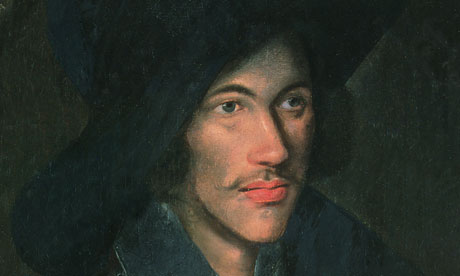
Major Themes in Eavan Boland’s Poetry


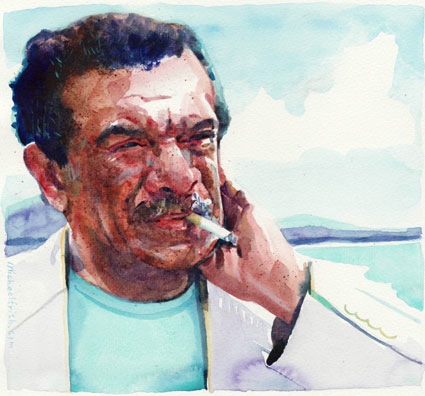
www.irishtimes.com - illustrator Dearbhla O'Kelly
http://www.irishtimes.com – illustrator Dearbhla Kelly

The purpose of these notes is to guide you in your exploration of the  poetry of Eavan Boland.  The notes are structured as a series of ‘thinking points’ ranging over the main themes and issues evident in her work.  They are not exhaustive and neither are they ‘carved in stone’.  They should be altered, added to or deleted as you develop your own understanding of the poet’s work.

 You are expected to study six poems by Eavan Boland from your Anthology.  The poems we will concentrate on are: 

  • ‘Child of Our Time’,
  • ‘This Moment’,   
  • ‘Famine Road’,
  • ‘Outside History’,
  • ‘The War Horse’,
  • ‘The Black Laced Fan My Mother Gave Me’

Boland’s view of Irish history and her idea of nation

  • Boland deals with the reality of Irish history, the familiar story of oppression, defeat and death (‘The Famine Road’). The sense of national identity that comes across from ‘The Famine Road’ speaks of victimisation, being downtrodden and living out pointless lives; see also the suffering in ‘Outside History’.
  • Opposed to that view is the male-created myth, involving heroic struggle, battle, and glorious defeat: see the image of the dying patriot immortalised by art in ‘An Old Steel Engraving’. The woman poet feels excluded from that cultural tradition –  ‘One of us who turns away.’
  • Boland resists the myths imposed on us by our history (and the way it was taught!!) and she insists on the necessity of confronting the reality, facing the unburied dead of history and laying them to rest (‘Outside History’).
  • She shows concern for the unrecorded history, for the significance of lives lived on the margins of history, away from the centre of power, far from the limelight of action. She mourns the forgotten lives in ‘That the Science of Cartography is Limited’.
  • In her prose writings Boland explores the idea of nation and the difficulties it produces for her as a woman poet. In Object Lessons she says:

So it was with me.  For this very reason, early on as a poet, certainly in my twenties, I realised that the Irish nation as an existing construct in Irish poetry was not available to me.  I would not have been able to articulate it at that point, but at some preliminary level I already knew that the anguish and power of that woman’s gesture on Achill, with its suggestive hinterland of pain, were not something I could predict or rely on in Irish poetry.  There were glimpses here and there; sometimes more than that.  But all too often, when I was searching for such an inclusion, what I found was a rhetoric of imagery which alienated me: a fusion of the national and the feminine which seemed to simplify both.

It was not a comfortable realisation.  There was nothing clear-cut about my feelings.  I had tribal ambivalences and doubts, and even then I had an uneasy sense of the conflict which awaited me.  On the one hand, I knew that as a poet I could not easily do without the idea of a nation.  Poetry in every time draws on that reserve.  On the other, I could not as a woman accept the nation formulated for me by Irish poetry and its traditions.  At one point it even looked to me as if the whole thing might be made up of irreconcilable differences.  At the very least it seemed to me that I was likely to remain an outsider in my own national literature, cut off from its archive, at a distance from its energy.  Unless, that is, I could repossess it.  This proposal is about that conflict and that repossession and about the fact that repossession itself is not a static or single act.  Indeed, the argument which describes it may itself be no more than a part of it.

Violence in society

  • ‘The War Horse’ explores suburban, middle-class attitudes to political violence. It is really a psychological exploration of the theme ‘how we respond to violence’.
  • Race memory and the old antagonisms to English colonial rule still exist just beneath the surface (‘The War Horse’).
  • The real human consequences of political violence are portrayed in ‘Child of Our Time’. The poet here acts as the conscience of our society.
  • Violence is seen as the result of a failure of language, an inability to communicate (‘Child of Our Time’).

The significance of myth

  • While in much of her poetry myth is seen as a positive thing, Boland often challenges the image of woman in mythology (also in art in mythology), particularly when it shows woman as marginalised, silenced, subservient to her husband the hero, as in ‘Love’.
  • For her our history (indeed all history) is laced with myths. The unreality, the coldness and the distance of myth from real lives is symbolised in the stars of ‘Outside History’.

The experience of being a woman

Boland’s strong feminine perspective lends an extra dimension of insight to all her themes.  But she also considers specific issues relating to the portrayal and the treatment of women.

  • The sufferings of women are equated with the oppression of the nation (‘The Famine Road’)
  • The traditional role of woman is validated in such poems as ‘This Moment’, which show woman as mother.  That maternal gesture of catching the child in her arms is the key to the poem.  The protectiveness of mothers features also in ‘The Pomegranate’.  Also her wisdom is displayed in allowing the daughter freedom to learn for herself.
  • Woman as lover features in ‘The Black Laced Fan My Mother Gave Me’ and ‘Love’.
  • Suburban woman features in many of the poems: ‘The War Horse’ and ‘This Moment’.
  • The puzzling relationship between men and women features in ‘The Black Laced Fan My Mother Gave Me’: the mistimings, the tempests of love, the sensual allure. Love diminishes in time, like the importance of the fan.  This makes an interesting alternative view to the blinkered one of idyllic romance.
  • Boland challenges the patriarchal tradition of Irish poetry. In Object Lessons she elaborated on her objections to the images of women in literature:

The majority of Irish male poets depended on women as motifs in their poetry.  They moved easily, deftly, as if by right among images of women in which I did not believe and of which I could not approve.  The women in their poems were often passive, decorative, raised to emblematic status.  This was especially true where the woman and the idea of the nation were mixed: where the nation became a woman and the woman took on a national posture.  (Note: This is very obvious in the poetry of Yeats where he refers almost obsessively to Maud Gonne).

The trouble was [that] these images did good service as ornaments.  In fact, they had a wide acceptance as ornaments by readers of Irish poetry.  Women in such poems were frequently referred to approvingly as mythic, emblematic.  But to me these passive and simplified women seemed a corruption.  For they were not decorations, they were not ornaments.  However distorted these images, they had their roots in a suffered truth.

What had happened?  How had the women of our past – the women of a long struggle and a terrible survival – undergone such a transformation?  How had they suffered Irish history and rooted themselves in the speech and memory of the Achill woman, only to re-emerge in Irish poetry as fictive queens and national sibyls?

The more I thought about it, the more uneasy I became.  The wrath and grief of Irish history seemed to me, as it did to many, one of our true possessions.  Women were part of that wrath, had endured that grief.  It seemed to me a species of human insult that at the end of all, in certain Irish poems, they should become elements of style rather than aspects of truth.

Poetry in the suburbs

  • A good deal of her poetry is set in the suburbs, a setting not associated traditionally with poetic inspiration.
  • The fragile nature of the beauty and order created in the suburbs is brought out in ‘The War Horse’.
  • The toy-house neatness of suburbia is no match for the wild, elemental attractions of nature in ‘White Hawthorn in the West of Ireland’.
  • In the later poems we encounter a romantic evocation of a suburban twilight (‘This Moment’). Nature has colonised the suburbs (‘Stars rise / Moths flutter’, ‘one window is yellow as butter’).
  • But the real bleakness of the suburban street is not hidden: ‘The rain is cold. The road is flint-coloured’ – ‘The Pomegranate’.


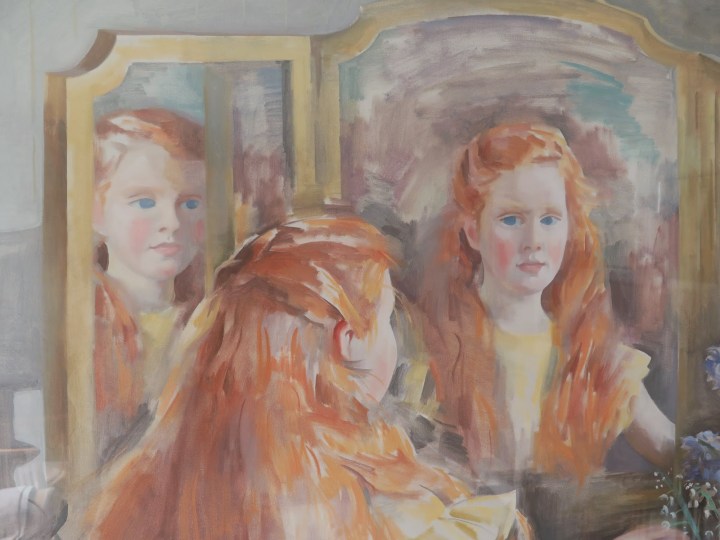
Portrait of Eavan Boland as a child by her mother, the painter Frances Kelly


An Introduction to Metaphysical Poetry

1887_1_8

The arrival of the Renaissance and the Church Reformation and the humanism that followed paralleled the advent of the Metaphysical period in poetry.  This period also coincided with the death of Elizabeth I and the subsequent weakening of the strong monarchy of the Tudors.

The Metaphysical poets were few in number.  They reacted against the Elizabethan literary style and ideas.  They rejected the conventional ideal of love held by Elizabethan poets and their indifference to real experience.  Where the Elizabethans saw love as a romantic pleasure to be described in general terms the Metaphysicals attempted to analyse personal and intimate experiences of love (and indeed other experiences) on particular occasions.  The emphasis was on the experience – things happening now, and so, immediacy was a particular characteristic of their poetry.

They rebelled against accepted ideas, e.g. the deification of nature and the notion of the greatness of kings.  Their themes were usually serious, and often satirical.  Religion was a constant topic because there was an uncertainty as to what was the true religion.  There was little reference to contemporary matters, political or otherwise, but the problems of the time were often reflected in the poetry, especially the religious issues.

The poems were not aimed at a ‘public’ readership, but rather at the intellect of their own closely-knit group.

metaphysical-poem-4-638

STYLE

With the reaction against Elizabethan ideas and techniques, the old rhetorical contrived style gave way to a more condensed style, following more closely the wording and rhythms of everyday speech; and to Metaphysical  ‘wit’ (not necessarily funny or amusing, but an awareness, an intelligence, an application of learning); and to the ‘conceit’ (a figure of speech with a fanciful image, or an unusual comparison between two very dissimilar things based on something alike in the two)

There was a variety of tone and imagery in a single poem.  The style was argumentative and logically worked out, but often there was no relation between the start of the poem and the finish.  The form, i.e. the technique of a poem was less important than the content, the meaning.  There was often a dramatic approach, an abruptness of phrase, a question, a dramatic use of punctuation.

SINCERE FEELING

T.S. Eliot wrote that in the last 250 years brainwork and emotion have tended to become separate in poetry, to its loss.  This is worth remembering when we discuss ‘sincere feeling’.  In Elizabethan and Renaissance poetry the first person was used, but since the lyric poetry of the time was linked with the music, the ‘I’ was ambiguous: it might have been as sincere as the ‘I’ of the Romantics, but also as insincere as the conventional ‘I’ of contemporary ‘Pop’ music.  Even the devotional poems of Vaughan are not certain to be sincere.  Yet the conventions of the poetry of the time were important, and ‘wit’ (with its cryptic ‘crossword puzzle’ approach) was as important as emotion, sensibility, or piety in poetry.  So while spontaneous cries from the heart may have been lacking, so also were self-pity and sentimentality.  There was no question of ‘sincere feeling’ being essential to a poem if the imagined feeling was well created.  It is essential to understand that our own experiences are often recounted and ‘‘adorned’’ in the retelling; yet the original emotion is nonetheless sincere for this.

This also applies to humour in Metaphysical poetry.  We sometimes fail to realise that a dry humour may accompany some great crisis in our lives, and that sometimes people die with a joke on their lips.  The Metaphysicals often deliver spectacular philosophical ideas, and set out highly emotional situations in an off-hand way, and accompany them with humour and sometimes with paradox.

Finally, Samuel Johnson suggested that the Metaphysical poets were clever men, anxious to show off their cleverness, who had little real ability or interest in poetry.  “There is”,  he writes, “no freshness of thought or accuracy of description, nor are their words chosen carefully.”  It is a point of view!

8414478

Further Reading: You might also like to read on this blog:

“An Analysis of Some of my Favourite Poems by John Donne” 

John Donne and Metaphysical Poetry

An Analysis of Some of my Favourite Poems by John Donne

 John Donne

THE POETRY OF JOHN DONNE

John Donne was a convert to the Established Church from Catholicism and was eventually persuaded to become a clergyman by James I, and also by the fact that he had no job!  Even then he had doubts as to what was the one true Church, and this is reflected in some of his religious poetry.  His death, too, obsessed him throughout his life, and many of his poems deal directly with death and the terror which the sense of his own sins inspires in him, e.g. “What if this present were the world’s last night?” and “I dare not move my dim eyes any way, / Despair behind, and death before doth cast, / Such terror.”  But he is always conscious of God’s mercy.  This is seen in “A Hymne to God the Father.”  It is believed that he stopped writing poetry when he entered the Church as there is no evidence of a ‘conversion’ in his poetry, and the ‘Holy Sonnets’ were written beforehand.  He published very little of his verse, but hand-written copies of his ‘Songs and Sonnets’ had been circulating in the literary world for years.

Much of his poetry reflects the tension between spiritual and fleshly impulses: he was tormented by the idea that passion, even in marriage, was a forbidden thing.  In spite of this his poetry can be very passionate, e.g. ‘The Good Morrow’  and The Holy Sonnets.  He is often flippant, e.g. ‘A Hymne to God the Father’, but there is a seriousness and earnestness underlying all he writes, and it is this as well as his tone of the spoken word that gives the impression that he is talking to us personally.  His qualification, second thoughts and new twists to an idea are perhaps a portrayal of his confusion.

LOVE

There is a touch of arrogance in his love poems, and a lack of formality, and he seems obsessed with the problems of unity: the sense in which the lovers become one – and also the sense in which the soul is united with God.  Frequently the union of the lovers becomes an image of the union with God, e.g. ‘Batter My Heart’.  His special marks are the repeated use of the religion/love association, as well as his constant reference to the lovers’ world and to death.  He said, “All Divinity is Love or Wonder”.

A frequent notion in the ‘Songs and Sonnets’ is that lovers are a complete world to each other.  They are everything that matters in the world, therefore they are the world, e.g. ‘The Good Morrow’.  Here, as in other poems, he airs the view that all the lovers’ experience was an immature preparation for this; that every previous ‘affair’ was only a partial anticipation of this.  But the attachment must be shared; a one-sided love is not love at all.  This love is always exempt from time, e.g. ‘The Anniversarie’.

A METAPHYSICAL

Donne uses the conventional images associated with the Metaphysicals – Science, alchemy, and travel.  He is a master of paradox.  Ben Jonson said of him, “Donne for not being understood, will perish”.  But maybe it is because of these same paradoxes that he has assumed a new importance.  Rupert Brooke wrote of “that wider home which Donne knew better than any of the great English poets, the human heart.”  He also said “Donne could combine either the light or grave aspects of love with this lack of solemnity that does but heighten the sharpness of the seriousness.”  W.B. Yeats remarked “Donne could be as metaphysical as he pleased and yet never seemed inhuman and hysterical…because he could be as physical as he pleased.”

Apart from his imagery his poetry is characterised by a consistent use of the first person, dramatic and conversational tones, and the irregularities in the verse, which in fact fit in with the dramatic emotions involved in his poetry.  One of the exciting things in his work is the element of drama.  Part of this came from his use of the words and speech rhythms which people were using every day.  Speech rhythms are identified by run-on lines, internal pauses, questions, and exclamation marks.  It has been said of his poetry that it offers us “the rhythms of thought itself.”

His variety of mood (and so of tone) has often been compared to that of Prince Hamlet – but it is not certain if all his poems are representative of his feelings.  This does not necessarily mean that some of his poetry is insincere – not if the imagined feeling is well created.

His use of the first person involves the reader in Donne’s private experience and in his self-analysis, and creates a sense of being present, as if Donne is writing as he experiences – this is the sense of immediacy.  Contrast this with Wordsworth’s idea of ’emotion recollected in tranquillity’.  This immediacy adds to the dramatic effect of all of Donne’s poetry.

Earth-donkeyhotey-596x596

At the Round Earth’s Imagined Corners

Some knowledge of metaphysical poetry is necessary before we can fully appreciate the sonnets of John Donne.  This term was, of course, first used by Dr. Johnson in his famous discussion of Donne, Herbert, Vaughan and Marvell.  He observed that, “about the beginning of the seventeenth century appeared a race of writers that may be termed the Metaphysical poets.”  Since then the term has acquired a current usage, and it implies a type of poetry that has definite characteristics.

  • The first characteristic of metaphysical poetry is its concentration. Poems in this category tend to be brief, and very closely woven.  This tendency is plainly seen in this sonnet where a list of human woes are strung together giving the verses a slow and heavy movement:

“All whom war, death, age, agues, tyrannies

Despair, law, chance hath slain…”

  • A second characteristic is the vividly dramatic quality of metaphysical poetry, particularly of the opening lines. This poetry belongs to the great era of English drama and many of the qualities more natural to drama came to be used in writing poems.  Donne was, we are told, “a great frequenter of plays” in his youth.  The rhythms of his verse, so misunderstood by many readers, are closer to the ordinary speech found in Shakespeare’s plays than to that of most lyrical poems.  The sextet of At the Round Earth’s Imagined Corners, for example, adopts a very colloquial tone:

“But let them sleep, Lord, and me mourn a space.”

  • A third characteristic of metaphysical poetry is the use of wit. This term has undergone a remarkable transformation in meaning in modern English.  However, it still bears the important implication of intelligence and originality.  Metaphysical poets tried to present brilliant or arresting things, to surprise the reader by means of unexpected thoughts or expressions.  This tendency led in turn to the development of conceits.  A conceit is a comparison between things which at first sight seem to have little or nothing in common; it is a comparison which is more striking than correct.  For example:

“At the round earth’s imagined corners blow

Your trumpets, angels and arise, arise….”

Indeed the first four lines of this sonnet are impressive and appeal through the apparent contradiction suggested in the first line as well as the immensity of life’s history presented in the third (“You numberless infinities…”)

  • A fourth characteristic of metaphysical poets is that many of their poems are taken up with arguments or with clamorous, passionate addresses. Remarkable illustrations of this technique can be seen everywhere in Donne (“arise, arise from Death..”; “to your scattered bodies go…”;  “let them sleep Lord…”;  “teach me how to repent.”)  Sometimes he cannot refrain from arguing with God, to whom he sometimes addresses outrageous paradoxes: “That I may rise, and stand o’erthrow me, and bend Your force, to break, blow, burn, and make me new”. (Batter My Heart).
  • A fifth characteristic is the striking use of imagery and tone. Throughout the seventeenth century love poetry and religious poetry often sprang from a common basis of inspiration.  In metaphysical poetry in particular a tradition was soon established whereby imagery taken from Elizabethan love poetry was transferred into poems which expressed love of God.  Donne’s thinking on spiritual love is influenced by this tradition.  In Batter My Heart the speaker’s search for love is powerfully illuminated by the imagery in the sextet: here, the harmonising of apparently different elements, the reconciliation of religious and earthly love is supremely accomplished in the paradoxical images (“for I…never shall be free/Nor ever chaste, except you ravish me”).

With these characteristics in mind one is better able to appreciate the technique Donne employs in his sonnets.   The first five lines of At the Round Earth’s Imagined Corners build up with increasing intensity to culminate in a shattering list of destructions at the end of the octave.  The style is clamorous and rhetorical – an impassioned outburst that cannot be read calmly.  The formal devices of metaphysical poetry are made to serve an express purpose: the octave attempts to create the atmosphere of clamour and confusion which Donne imagines will precede the end of the world.  The imagery bears many similarities to traditional Christian representations of the last day, particularly as expressed in medieval theology.  Indeed the octave of this sonnet is in accord with many aspects  of contemporary thought and sensibility, besides constituting a remarkable expression of Donne’s own speculation, scepticism and melancholy.  There is a marked division between octave and sextet.  The grand awakening of the opening lines gives way to a gentle sadness; the pitch is suddenly lowered to a simpler level.  This sudden variation in tone is a marked characteristic of Donne’s best sonnets.  In the sextet the voice is lowered, and the poet’s desire for a revelation changes to a sense of humility.  There is a movement from complexity to simplicity, and the bold theological references are replaced by a simple Christian faith.  In contrast to the rhetoric presented in the octave, there is a definite sense of human interest about the last lines, particularly in the poet’s personal petition for God’s forgiveness: “Here on this lowly ground/Teach me how to repent.”  The poet’s speculation on the Day of Judgement allows him to indulge his imagination somewhat and to use his wide store of religious images.  However, when the frame of reference shifts to the poet himself – to his spiritual needs and condition – he speaks with simplicity about his true feelings.

However, there have some major criticisms of this poem and these focus on five main areas:

  • Poetic rhythm and harmony seem to be totally lacking, and the poem could have been written in prose;
  • In structure the passage is defective;
  • Particularly displeasing are the fifth, sixth and seventh lines;
  • The first eight lines seem to have nothing whatever to do with the last six;
  • The confusion in thought has failed to establish communication, or even comprehension.

BATTER MY HEART

Batter my Heart

This is a religious poem set in secular terms of love and physical passion.  It might be said that such a relationship with God is a true reflection of the poet’s commitment to God as well as his own unworthiness.

The theme might be the paradox that to be a prisoner to God’s will is the only true freedom.  It is a poem of action, but the action is only an image.  It is highly dramatic and he expresses his mental conflict in violent terms that show his inner torment.  The verbs are violent: “Batter”, “O’erthrow”, “bend your force”, “Break”, “imprison”, “ravish”.  It is interesting to note that Donne’s own title for this poem was “Prayer for Violence”.

Dr. Johnson’s objection to metaphysical poetry was that “the most heterogeneous ideas are yoked by violence together.”  Most modern critics would admit to the heterogeneous aspect of Donne’s wit, but deny that “yoked by violence” was a fair description of the general effect.  Batter My Heart is a good example of a metaphysical poem which relies on the use of conceits to present a unified experience.  The sonnet contains two extreme comparisons: the poet imagines himself to be a town under siege, in the octave; then the imagery changes and he compares himself to a married woman, in the sextet.  Let us examine these images in turn.

The poem begins as a prayer to the Trinity, expressed in military terms: “Batter my heart.”  To each member of the Trinity he assigns a separate request: “breathe” (Father), “shine” (Spirit), “seek to mend” (Christ).  The third line introduces a metaphysical paradox i.e. a statement which on the surface seems self-contradictory but which turns out, on close examination, to have a valid meaning.  The image presented is of a town or castle under attack.  Donne wishes to be “overthrown” in order that he may “rise”.  Suddenly in line 4  the imagery changes: “break, blow, burn, and make me new”.  Here he wishes God to destroy his former self and to create for him a more spiritual personality.  This line makes demands on the reader’s knowledge of alchemy: as the alchemist breaks down base matter in his furnace (“burn” and “blow”) and transforms it into gold, so God will work on the darkness of the poet’s soul and transform it into his own likeness.  The imagery of a captured town continues in the simile of line 5.  Furthermore, reason – personified in this context as an intermediary between God and man – is also ineffective and has deserted his real function.  Once again in the sextet the imagery changes.  The speaker becomes a woman who wishes to be loved by God.  She is, however, married to God’s enemy and wishes that this marriage bond may be broken.  As in the opening lines, Donne expresses his desire for a union with God in very emphatic terms: “Take me to you….enthrall me.”  The violent sexual union depicted in the last lines represents the poet’s desire to be overcome and united spiritually with God.  Donne attempts to express his meaning through vivid use of paradox: he will never be free until he is imprisoned by God; he will never understand Christian purity until God has ravished him.

The chief advantage of the conceits Donne uses in this sonnet is the quality of inclusiveness they make possible.  They are a way of bringing effectively into poetry all his interests, activities and speculations.  No part of his experience is regarded as intrinsically unpoetical.  Indeed, a marked characteristic of his style in this sonnet is the depictment of religious experience largely in secular terms.  There was, of course, a traditional Christian frame of reference which Donne might have used in composing this sonnet.  However, he prefers to engage our attention not through expected images and associations, but through unusual ideas and comparisons.  Whatever poetic licences are taken, the general effect is to reinforce, modify and generally heighten the reader’s response to each sonnet.  In this regard, the imagery of Batter My Heart has always impressed readers by his range and variety, as well as by its avoidance of the conventionally ornamental.  It was to the endings of his sonnets, however, that Donne attached particular importance.  In one of his unfortunately rare comments on the art of poetry he says: ”In all metrical composition…the force of the whole piece is for the most part left to the end; the whole frame of the poem is a beating out of a piece of gold, but the last clause is as the impression of the stamp, and that is what makes it current.”  Significantly, therefore, Batter My Heart ends with two tremendous paradoxes.

O, MY BLACK SOUL

O, My Blacl Soul

This is another of the Holy Sonnets structured on the Jesuit method of mental prayer.  Here he conjures up the image of his deathbed and supports it with comparisons and then begins to pray.  It is a true meditation.

The theme may be his fear of punishment that can only be avoided by his repentance which can only come from God’s grace which can accomplish anything.

Many religious poems are important only to religious sympathisers.  Some such works may arouse the interest of historians and scholars once the writings are sufficiently dated.  Others remain confined to a small literary audience.  Donne’s religious sonnets, however, have gained more attention than any other English works in that genre, and while the interest in the poet himself accounts for a good deal of that popularity, it is hardly the only reason for his being called “the greatest writer of religious verse in seventeenth-century England.”  Of particular interest is the fact that Donne’s religious sonnets have attracted the attention of readers of different religious persuasions.

Part of the popularity of the religious sonnets rests on Donne’s ability to depict religious attitudes through secular imagery and comparisons.  An intensely secular excitement marks all his devotional works.  He had the power of experiencing keenly his own religious attitudes and of reviewing them against a wider background.  O, My Black Soul, for example, explores the theme of the poet’s sinfulness with images gathered from different sources.  A literal reading of the first two lines reveals much of the nature and content of each sonnet.  Here, the poet returns to the idea of death and judgement, describing again his own lack of readiness to meet God.  Death and sickness are both personified: sickness is death’s “herald and champion”, this image referring to a challenge or duel, and is also contained in the word “summoned”.  Personification of abstract ideas is an old device, common to many poets.  Death and sickness take on human features and are invested with specific powers, thus giving them a dramatic immediacy.  Many seventeenth-century poets describe their terror and fear at the approach of death, often using personification to heighten the effect.  Hamlet, for example, speaks the following line as he lies dying at the end of the play: “this fell (foul, evil) sergeant, death,/Is strict in his arrest.”  An important element in Donne’s personifications is a kind of poetic aptness.  In this context the reference to the poet’s two enemies, who summon him to engage in a trial of strength, makes him turn in the sextet to Christ for courage and support.  The two striking similes in the octave are meant to create the idea of the poet’s terror, as well as of his isolation: he is wandering alone in an unknown foreign land afraid to turn back to God because of the many sins (“treason”) he has committed.  Similarly, the next simile expresses an insoluble predicament: he has complained about his sickness and wishes for death, but now that his moment of execution has arrived, he wants to cling to life for a little while longer.

Until this point the tone of the sonnet is dramatic, and its statements command attention.  As so often in Donne’s poetry, however, the tone suddenly changes.  The emphasis now shifts from fear to optimism: he is not done after all.  What he needs is the grace to repent for his sins, a grace which is only given by God after certain conditions have been met.  The poet must “mourn” for his transgressions, he must “blush” with shame at what he has done.  Only in this manner can he share in Christ’s plan of Redemption which is powerfully evoked in the imagery of the last two lines: “wash thee in Christ’s blood, which hath this might/That being red, it dyes red souls to white.”  This conceit is part of the special language of the period.  Donne’s awareness of the mystical power of Christ’s blood is clearly evident in these lines which rest upon a common alchemical concept, that of the tincture.  This was an enormously strong colouring agent, made during the chemical experiment, which had the power of transforming substances.  Donne uses this image of the tincture to describe the power of Christ to save both body and soul.  Christ, he says, can turn even a black sinful soul into a state of perfection.  Indeed, this sonnet is notable for its colour symbols.  The black for mourning is conventional (as are the black blotches left on the soul by sin), but the use of red for both repentance and sin is a conceit and is carried on in the idea of washing in Christ’s blood which by mixing with the red of sin and shame paradoxically turns red to white.
The Good Morrow

This poem works out the development of love from childish unawareness to mature consciousness, and points out where the difference lies.  It shows what love means to the lovers, its relation to ordinary experience and how its continuance is assured.  It is, in fact, Donne’s concept of true love as a shared experience, a returned love.

The theme may be the unifying of two souls in one, and the conquest by love of all things – even space and time.  But each of the lovers is a person, and the poem flickers between this individualness and union.

Metaphysical poetry is renowned for its striking use of imagery and tone and The Good Morrow is a good example of this.  The poem begins with a realistic description of a morning bedroom.  The poet is waking up beside his mistress and he therefore uses words and images which suggest sleep (“snorted”, “sleepers”, “dream”).  In his initial meditation on love there is a strong emphasis on physical activities (“weaned”, “sucked”, “country pleasures”).  He freely admits that he has had mistresses in the past (“If ever any beauty I did see / Which I desired and got,”) but indicates that the pleasures he experienced with them were inadequate (“pleasures fancies”).  One can see immediately how this stanza with its strong emphasis on sexual fulfilment must have come as something of a shock to Donne’s contemporaries (and  Leaving Cert. Students alike!)  who were used to a completely different, more refined type of love-poetry!

The Good Morrow has always impressed readers with its range and variety of imagery.  From the ordinary activities of breast-feeding and heavy sleeping, Donne passes to the exotic activities of explorers, geographers and philosophers.  However, the sea-discoverers with all their topical glamour and novelty are introduced only to be dismissed as lacking in true exploration compared with the relationship he is describing.  Nevertheless they continue to be present in the poem and lead to the image of ‘sharpe north’ and ‘declining west’.  The image at the beginning of the third stanza is a simple presentation of the fact that people gazing into each other’s eyes can see themselves reflected there.   It is made more complicated  and more meaningful by the line that leads up to it (“And true plain hearts do in the faces rest”).  The titles of Donne’s poems generally suggest the central image around which the poem revolves.  Thus, The Good Morrow deals with awakening and with discovery.

The Good Morrow has always impressed modern critics by the range and variety of his references, as well as by its avoidance of ornamental language.  Throughout the poem Donne refers to the familiar processes of suckling and weaning, snoring, dreaming and waking, but also to voyages, maps and hemispheres, scholarly theories about the nature of matter (“whatever dies, was not mix’d equally”) and general philosophical speculations about our experience of space (“and makes one little room an everywhere”).

Donne’s use of concentration is very evident in The Good Morrow where references to his own life are combined with geographical discoveries and with contemporary developments in science and astronomy.  In The Good Morrow, therefore, we see not only Donne’s love of learning, but also his inclination for using it out of context, applying many references to serve his own purposes in the poem.  The greatest concentration of language is confined to the second stanza.  Man, Donne suggests, is concerned with broadening his physical horizons, but is neglecting to expand his knowledge in a spiritual direction.  Love, in the end, binds all things together and allows man to attain his true destiny.  Suggested in this poem is the idea of the fundamental, and not accidental, limitations of our knowledge.  Science can explain the physical, but not the spiritual universe.  Astronomers may spend their lives studying the heavens but they are always fearful of what they might find.  Similarly, geographical discoveries have brought to man’s attention objects of experience that are not always pleasant (“sharp north”, “declining west”), and the progress of science cannot experiment enough to conquer death (“whatever dies, was not mix’d equally”).  Connected to each of these images is the idea of isolation and lack of real purpose: the lonely astronomer forever watchful, the explorer who spends his life going round the world only to arrive back where he started, the scientist alone in his laboratory making many discoveries, none of which effect the real destiny of mankind.  Donne, therefore, sees the world outside as a symbol of man’s weakness and isolation.  In contrast to this he presents his own rational theory which is itself the result of considerable previous study.  The only true art, he suggests, is the art of love which requires knowledge, patience and effort, which overcomes death and prepares man for eternity.

THE ANNIVERSARIE
download

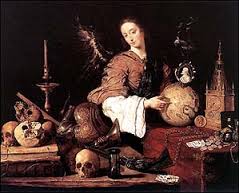
This is not unlike The Good Morrow.  There is the same personal approach; no address to love, but directly to his wife – the intimacy and immediacy of the metaphysical poet.

The theme is that their love on earth is unique, but that, since happiness in heaven is shared by all, they must preserve their earthly love as long as they live.  It has been described as a selfish poem – but lovers are traditionally selfish and like to think that their love is unique.

The Anniversarie depends for its success upon our recognising the presence of an individual speaker.  It is a very contemplative poem.  The speaker is not so much intent on displaying the great depth of his knowledge as in arguing his ideas with simple wisdom.  Despite the fact that he sometimes appears to be frivolous and insincere, Donne always wished to express universal truths in his poetry.  Like Shakespeare, when he expresses something profound, Donne often does it quite simply.

The subject of universal destruction is another of the themes of The Anniversarie, and the death of princes is used to symbolise it.  Indeed, the references to princes, kings, and courtly life bring this poem very close to the underlying theme of Shakespeare’s tragedies, all of which “tell sad stories of the death of kings” (Richard II).  The dramatic impact of the opening lines depends upon the emphasis suggested by the word all:

                     All kings and all their favourites,

                             All glory of honours, beauties, wits…

                             All other things to their destruction draw,

The grandeur of princes must inevitably pass away; kings must live in fear of misfortune, treason and death.  It is true to say, therefore, that the major image suggested by The Anniversarie is royal and heraldic: groups of words appear in each stanza which relate to kings, princes and courtly life.

We know by now that concentration of language is an essential characteristic of metaphysical poetry and The Anniversarie is a perfect example of this.  In the opening stanza Donne introduces groups of associated images drawn from the royal courts and palaces to suggest the transience of earthly glory:

All kings, and all their favourites,

                             All glory of honours, beauties, wits,

                             The sun itself, which makes time, as they pass,

                             Is elder by a year now than it was

                             When thou and I first one another saw.

Throughout his poems, as already stated, Donne manifests a curiously ambiguous attitude towards kings, princes and courtly life.  These opening lines refer to this idea.  What need has he of kings and princes when they are inconstant and subject to decay?  Even the sun which appears to measure time, is itself subject to destruction, while love has the power to outlive these mortal things.  Behind this opening stanza, therefore, there is immense personal feeling.  This anniversary represents a permanent moment: it is not an anniversary in the ordinary sense, a looking back on something past.  It is rather an “an everlasting day” which is not affected by the passage of time.  So while man’s world and the world of nature are slowly growing old, the people in the poem enjoy forever the vitality and permanence of love.

Donne’s love poems have as their basic theme the problems of human love in a physical world dominated by change and death.  In The Anniversarie we are treated to a splendid affirmation of the immortality of true love and friendship.  Like all metaphysical poets he makes great use of paradox and these sometimes serve the same purpose as the rhyming couplet of Shakespeare’s sonnets: a sort of clinching device which upholds and strengthens his argument.  The first stanza of The Anniversarie ends with an important paradox which expresses the permanence of love in a world of change:

                             Running it never runs from us away,

                             But truly keeps his first, last, everlasting day.

From the start of his career Donne declared his independence as a poet.  Independence, however, is not the same as isolation, and throughout this love-poetry Donne affirms his belief in the fundamental bond between one person and another.  The nature of true love is that it makes demands, establishes principles, and expresses the totality which man is striving for.  This idea that love unites people in a spiritual bond which even transcends death is expressed throughout The Anniversarie.

A HYMN TO GOD THE FATHER

DONNE- a Hymn to God the Father

Among the many divine poems that Donne composed A Hymn to God the Father stands out as his own particular favourite.  He had it set to music and it was sung during services At St. Paul’s Cathedral where Donne had been Dean.  We can see this from the following excerpt from his prose writings:

The words of this Hymn have restored me to the same thoughts of joy that possessed my soul in my sickness when I composed, ‘And O! the joy and power of Church music!’  That harmony added to it has raised the affections of my heart and quickened my graces of zeal and gratitude; and I observe that I always return from paying this public duty of prayer and praise to God with unexpected tranquillity of mind, and a willingness to leave the world. (The Poems of John Donne, p. 253).

Many points of contrast are immediately evident in this simple but outstanding poem.  In The Anniversarie, and particularly in The Good Morrow, Donne is constantly striving to display his learning by extending his frame of reference over many different subjects.  This leads to a high concentration of language, a marked dependence on unusual contexts, and an extensive use of imagery.  However, what strikes one most forcefully about A Hymn to God the Father is its simple sincerity.  The inspiration for this short poem came from the poet’s personal feelings rather than from his wide learning.  Throughout his Holy Sonnets and his Divine Poems, Donne limits himself to one subject: his own relationship with God.

Though he never doubted the truth of Christianity, his lack of complete conviction  concerning his own salvation persisted.  There is much evidence to suggest that he endured a prolonged religious crisis which he has recorded in a group of sonnets and shorter lyrics which belong to the best group of religious poetry in the English language.  At times the vision of divine punishment comes to his mind more easily than the vision of God’s love.  In A Hymn to God the Father he is striving to reassure himself of this love which, in spite of his own unworthiness, might still be freely given by God.  Throughout the seventeenth-century love poetry and religious poetry sprang from a common basis of inspiration.  In metaphysical poetry particularly, a tradition was soon established whereby ideas taken from Elizabethan love poetry was transferred to poems which expressed love of God.  Donne’s meditation on spiritual love was greatly influenced by this tradition.  In this poem the theme of unrequited love is placed in a spiritual context as a means of discussing the relationship between God and man.

The greatest single characteristic of this poem is its profound tone of sincerity, as the poet confesses at length his own sinfulness. This dependence on sincerity reduces poetic devices to a minimum: a person who is confessing his sins cannot at the same time consider clever things to say to God.  The tone of the poem is both humble and sincere and emphasises the important question of forgiveness, which is repeated at length. (“Wilt Thou forgive that sin where I begun…?”, “Wilt Thou forgive that sin by which I won/Others to sin?”)  In this penitential lyric Donne strives to dramatise the penitent’s position.  He does this by using a ‘plain style’.  The speaker does not wish to cover up in any measure the immensity or frequency of his sins.  He deplores his condition and realises its seriousness.  He expresses himself in direct statements and unadorned language, presenting his simple wisdom with realistic, concrete detail.  His metaphors are few but apt: he has opened the door to sin for other people while wallowing in his own sinfulness.  As the poem progresses, and the stanzas develop greater complexity, the poet continues to concentrate upon the reality of sin in a language of direct statement.  Indeed, throughout the poem Donne insists on simplicity, directness and passionate humility.  There is of course an implied pun on the poet’s name in the interesting paradox that ends the first two stanzas:

                   When Thou has done, Thou hast not done,

                   For I have more.

The third stanza contains the principal request towards which the poem leads.  For the first time in the poem Donne visualises the moment of death in his contemplation of the last voyage:

                   I have a sin of fear, that when I have spun

                   My last thread, I shall perish on the shore

The fear and love which are identified as the themes of this Hymn are referred to elsewhere by Donne as essential elements of contrition: “The love of God begins in fear, and the fear of God ends in love; and that love can never end, for God is love,” (Sermons of John Donne, p. 113). His greatest sin is, therefore, his lack of faith in God’s forgiveness.

It may be interesting to note that most scholars agree that this was the last poem Donne wrote before his death.

********************

12155192_f248


Further Reading: You might also like the read on this blog:

“An Introduction to Metaphysical Poetry”.

John Donne and Metaphysical Poetry


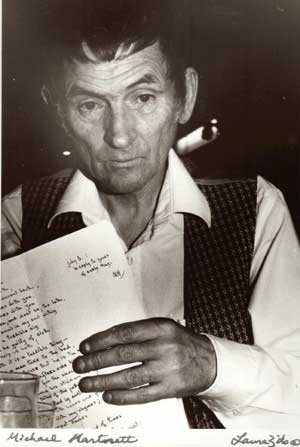
Remembering Michael Hartnett

Hartnett by the Bridge in Newcastle West

Michael Hartnett was an esteemed poet from a young age, but his assurance about his creative destiny had its dangers.  In the following edited essay, first published in The Irish Times on February 16th, 2009,  MICHAEL SMITH recalls a significant artist whose early death at 58 on the 13th of October, 1999 can be viewed as an accident of time and place.  

The author, Michael Smith himself, poet and Aosdána member, passed away in November 2014. His contribution to the arts as a teacher, poet, editor, translator and publisher cannot be overstated.  He had a profound impact on the Irish literary scene. He has been described as a classical modernist, a poet of modern life. Born in Dublin in 1942, Michael Smith was the founder of New Writers’ Press in 1967 and had been responsible for the publication of over 100 books and magazines. He was keen to promote the modernist tradition in Irish poetry, publishing the work of Thomas MacGreevy, Brian Coffey, Denis Devlin, Anthony Cronin,  and Michael Hartnett, among others.

******************

As with many relationships, even the most intimate, it is often extremely difficult to pinpoint the original meeting. I can only say that it was in the early stage of our enrolment in UCD that I first met Michael Hartnett. I cannot recall the circumstances of that first meeting. I can’t even remember what academic subjects Michael had chosen. What I do remember is that James Liddy (and perhaps John Jordan) had agreed to pay his first year’s fees. So the lad from Newcastle West in Co Limerick was indeed going to receive some patronage. This patronage was bestowed purely on the strength of his poetry. Michael was recognised as a gifted poet from a relatively early age, and quite rightly so.

Michael almost never attended a lecture, so far as I recall. I was little better myself. The whole novelty of being university students was more than enough for both of us. Study was for others. Unlike Michael, I was deeply rooted in my Dublin working-class background, whereas, for Michael, Dublin was a kind of playground, despite his Limerick working-class background. But that working-class background was something we shared.

I think Michael had no other ambition than to be a poet. I think he gave little thought to how he would survive financially in the future. Was he feckless in this regard? Probably. Did he come to Dublin with the naivety of Kavanagh, expecting wonderful things? I doubt it. He didn’t have that innocence. On the other hand, he wasn’t cynical. John Jordan and James Liddy had accepted him as a gifted poet. The future was in the lap of the Muse.

What memories I have of him are selective, like all memories, I suppose. Often we would walk home together after a drinking session in McDaid’s, where we were usually treated to drinks by James Liddy and his friend, Patrick Clancy. Patrick Kavanagh was still holding vociferous court there at the time. Michael had already had his first confrontation with Kavanagh in the Bailey at the launch of the first issue of Poetry Ireland, edited by John Jordan and published by the Dolmen Press. That confrontation is too notorious to need detailed repetition. Michael made an adverse comment on Kavanagh’s poem (to Kavanagh himself, although Michael didn’t know who he was) that begins: “I am here in a garage in Monaghan.” Kavanagh’s reaction was violent, upturning a table full of drinks.

Michael was living in digs in a cul-de-sac off the North Strand, so our walk home often overlapped. I recall him voicing his strong disapproval of Kavanagh’s raucous behaviour in McDaid’s, saying that if anyone in Newcastle West behaved like that, he would be barred from the pub, and why should a poet be made an exception of.

He had great admiration for Yeats, though, oddly, not so much as a poet but as a businessman. He admired Yeats’s business acumen.

In his digs, under the bed, Michael had a small brown cardboard suitcase which he opened for me once to show me a huge quantity of beautifully scripted poems. I sometimes wonder what happened to all of this material.

There were, of course, other young poets in UCD at the time: Paul Durcan, Macdara Woods, Brian Lynch, Eamon Grennan, Malachy Higgins, to mention just a few names that come to mind.

In the case of the first three, and including myself, James Liddy was undoubtedly the extraordinarily generous mentor, with John Jordan a reserved encourager.

Of all of us, it was Michael who was held in the highest esteem by both John and James. And that esteem was well-deserved, for Michael arrived in Dublin as an already accomplished poet who was not looking for, nor needing any, teachers in the art of poetry. Much has been made of Lorca’s influence on Michael, largely because of his later version of Lorca’s Romancero Gitano, but really it has more to do with the precocity of the early work of both poets.

I have never met any poet who was more assured of himself as a poet than Michael was. It was his destiny. All else seemed of secondary importance. But however impressed by that I was, I sensed a danger in it, recalling Wordsworth’s lines in his poem “Resolution and Independence”:

We poets in our youth begin in gladness;

But thereof come in the end, despondency and madness.

I knew, and indeed Michael knew, that there was no money in poetry (Kavanagh had learnt that years before) and that he would have to earn his living at some stage in the future – but he seemed unconcerned by this. Writing poetry was a lifetime’s work, regardless. I sometimes think that a lot of Michael’s problems of later years came from that dedication. Yes, he did later earn his living in the international telephone exchange on Andrews Street, but he found it boring and was only too glad to escape from it (even during working hours) and head for O’Neill’s of Suffolk Street to drink pints with some other of his escapee colleagues from the exchange.

And Michael was good company, a wonderful raconteur, witty, and possessing a fund of knowledge of all sorts of arcane subjects. He had an extraordinary memory. Yet always it was as the poet that he was treated, in whatever company he found himself. That was the identity he had chosen or had been chosen for him. I think he never abandoned that. And therein lay a danger, the same sort of danger that beset Dylan Thomas, for one cannot always be a poet. There has to be a life apart from being a poet, at least for poets without personal financial resources or the resources of a generous benefactor. Ezra Pound had his wife’s money behind him, and also financial support from his doting father. Neither Michael nor Dylan Thomas had anything of the sort.

For Thomas there was the horrible scrounging and, later, the equally horrible American readings. For Michael, after his stint in the exchange, there was very little, and he seemed to live a hand-to-mouth existence, even when later he returned to Newcastle West with his wife, Rosemary, and their two children. Later, a cnuas from Aosdána came in useful, and some prizes he won and some royalties he managed to squeeze out of publishers.

To attempt to be a professional poet in Ireland in the late 1960s and early 1970s was a recipe for trouble. The days of the literary salons, such as Æ’s, were well and truly over. That left the pub, which unfortunately became Michael’s court, where he met his admirers who provided him with the kind companionship he needed, treating him to drinks and accepting him as a poet.

Was there anything else he might have done, any alternative? There was not at the time any such thing in Ireland as a poet in residence. So Michael made do with what was available.

A poet is not like a novelist who must toil daily and for long hours if he or she is to be productive. For the poet, the Muse is fickle and her visits are not on demand. So the poet must wait, never sure what the future holds for his work. When his own lyrical gift began to fail (though not until he had written some of the best poems written by an Irish poet in his time), Michael turned to translations from the Irish, translation always being a good means of keeping one’s skills honed.

Why did Michael turn to writing his own poetry in Irish? I think that this, too, was part of his attempt to be accepted socially as a professional poet. After all, in the old Gaelic order there had been such an acceptance. That order, however, was long gone and could never be recovered. After his early-evening court sessions in Doheny and Nesbitt’s, his admirers (often cultivated and literary civil servants) would head off to their respectable homes in the suburbs, leaving Michael as an abandoned court jester (which, in due course, he was becoming). Let it be said that there was no malice in this among those who patronised Michael with drink and small loans of money. But they had families at home and a job to do the next day.

Michael’s early death, whatever the medical causes, can be viewed as an accident of time and place. In a sense, he was a martyr to poetry. Gifted, even a genius, but nonetheless a martyr. If only . . . It’s useless now to ponder such possibilities.

MichaelHartnett

An Enthralling Companion….

"I felt a sense of being in the presence of a man who, while an integral part of the small community he loved, was also marked apart as special."
“I felt a sense of being in the presence of a man who, while an integral part of the small community he loved, was also marked apart as special.”


Dermot Bolger movingly remembers his friend the poet Michael Hartnett who died 16 years ago this month.  This is an edited version of a commemorative piece which appeared in The Irish Times on Wednesday, October 12th 2005.

In Ireland there is nothing better for making new friends than an early death and, because in death Michael Hartnett has acquired so many friends, I should firstly say that I didn’t know him well enough to claim any special friendship.  I was far younger than him and even though I edited and published three of his books I never lost my awestruck sense of being privileged to be in his company.  I was a sensation I felt as a young man on the first night we met and a sensation I still experienced on the last morning he phoned me some weeks before his death on October 13th 1999.

The first book of poems I bought, while still a schoolboy, was the small New Writers Press 1970 edition of Michael’s Selected Poems.  On the cover he looks little more than a schoolboy himself.  That book had a huge effect on me and remains among my most precious possessions.  I first met Michael around 1980 when I ran literature events  in the ramshackle building housing  Dublin’s Grapevine Art Centre.  John F Deane had bravely established a new organisation called Poetry Ireland, and Michael travelled from Limerick to give a benefit reading for it. his opening words to me were to inquire if I knew of a bed for the night, and my opening words to somebody whom I viewed as a hero was to offer him one in Finglas.

It was after midnight when we reached Finglas but Macari’s chipshop remained open on Clune Road.  Years later in Inchicore Haiku Michael wrote:

In local chippers

Queueing for carbohydrates

A dwarfed people.

We queued for our late-night carbohydrates.  Critics can elaborate on Michael’s gift as a poet and contextualise his work.  My interest here is putting down memories for his son and daughter and what struck me was how Michael enthralled the late-night queue and staff in that Finglas chipshop.  He wasn’t attention seeking; they were simply drawn into his quiet magnetism.  The staff had no idea who he was but afterwards always asked for news of my friend in the countryman’s cap.

In 1984 I wound up sitting in a pub between Michael and Michael Smith, who had published that earlier Selected Poems.  Both Michaels became emphatic that not only should I re-issue  the long out-of-print Selected Poems, but that the new volume should include every English language poem he had written up to and including his Farewell to English.  Michael Hartnett assured me not to worry about copyright issues, he would take care of that.  I was young and naïve, but even in my innocence I should have been slightly worried when he explained how he cleared copyright permission for his wonderful translations of Lorca’s Gypsy Ballads.  He phoned Lorca’s brother in New York, explained that he was once deported from Franco’s Spain and after he had read aloud one translation the voice at the other end said, “Spread the word”!

Within a few months I was sitting down in his small cottage in Glendarragh, Templeglantine, near Newcastle West in Limerick going through old suitcases of poems with Michael and discovering material either never published or published once in magazines and then forgotten.  I spent two of the most memorable days of my life there working on Volume 1 of his Collected Poems and still like to recall Michael as he was then.

After the executions of the Easter Rising leaders in 1916, a British Army officer declared that while they all died like men, Thomas McDonagh died like a prince.  Wandering with Michael through Newcastle West or sitting down to eat  with his family, I felt a similar sense of being in the presence of a man who, while an integral part of the small community which he loved and understood, was also marked apart as special.

But soon the world that I had glimpsed in Newcastle West was to implode.  Alone in Ireland while his family visited Australia, Michael seemed to drift irredeemably into the engulfing tide of alcohol that had always been a problem.  Aware that he had the proofs for me of some translations, I tracked his progress across Ireland and finally located him and the proofs in Dublin.  He handed me the proofs carried for weeks in his inside pocket and, ever the optimist, asked if by any chance I could loan him €5,000.

At that time the entire assets of Raven Arts Press consisted of a leaking gas heater and a cat, so I brought him for lunch instead and then to a double-bill of afternoon films.  The first – Ruben Ruben – was a comedy about a poet with a drink problem on a reading tour in America.  Michael chuckled through it.  The second – Francis Ford Coppola’s Rumblefish – was shot entirely in moody black and white.  The only object filmed in colour was a solitary fighting fish in a glass tank.  Leaving the cinema and knowing that I could keep him from the pub no longer, I commented to Michael on this cinematic trick.  Michael gripped my arm  and, with the relief of a man who had known the delusional tricks of delirium tremens, whispered, “Oh thank God, you saw the fish too.”

Soon he was living in a bedsit in Inchicore with his marriage over.  His face, which had never aged, was suddenly old.  His chief defence against fate remained his sense of humour.  I brought him over some small sum of money for something.  There were virtually no possessions in that room where he had started writing the Haiku sequence that broke his silence in English.  But his sense of hospitality would not let me leave empty-handed.  He asked if I possessed a copy of the tiny 1969 edition of his poem The Hag of Beare and insisted on giving me the only copy he still possessed – Number 1 of that precious numbered edition.

He brought the manuscript of Inchicore Haiku to my small office in Phibsborough, driven over by two new Inchicore friends with impenetrable Dublin accents.  We launched it in the Richmond House in Inchicore, a whirlwind night.  But if that was a celebratory night in a crowded pub, which cloaked his personal pain displayed in the book, I saw far less happy occasions for him in Dublin pubs in the following years.  I know of nothing romantic about drink and the damage it does.  I do know that his new partner, Angela Liston, prolonged his life and brought some stability to a man now gripped by addiction.

His publishing affairs became complicated and so I drew up a contract between us, giving him back all rights to his work on condition that I acquired non-exclusive rights to his cheese-grater joke: “A man gives his blind friend a cheese-grater for Christmas, meets him in January and asks if he liked his present.  ‘No’, the friend replied, “I tried to read it but it was just too violent.’”

Occasionally after that, he would phone for a chat.  On the last morning he phoned, he told me how he had recently visited one of the men who drove him to my office years before.  The man was dying of cancer, his mouth covered by an oxygen mask, and he grew upset because the words he kept trying to say were indistinguishable.

Michael leaned over and said: “I know you’re upset because you’re dying and I can’t understand what you are saying, but I must tell you that with your accent, even when you were well I could never understand a word you said anyway.”

The man gave up trying to speak and laughed instead.  It takes courage to make a dying man laugh, but Michael Hartnett had courage in spades.  Courage, stubbornness and demons.  I had no idea he was soon to die, but something made me tell him that one of the proudest moments of my life – something I could unreservedly look back on as truly worthwhile – was editing his Collected Poems.

He accepted the compliment, told me his latest joke and then recited an extraordinary raw and heart-felt poem he had written for Angela Liston.  It was the last time I heard his voice and I can hear it still, with his laugh at the end which contained all that pain, humanity and unbroken dignity:

                                    I have been kicked around the place

                                    Been mocked and been pissed on

                                    But I find my way home to you, Angela Liston

                                    And my wrinkled, anxious forehead

                                    Amazingly has been kissed on

                                    And I am blessed by you Angela Liston.

He died on October 13th, 1999.  His Complete Poems and Translations  have since been superbly edited and published by Peter Fallon and The Gallery Press.  When I last passed through Newcastle West I stopped at dawn in Maiden Street where he was reared.  It was deserted but every shop window had a poster for Éigse Michael Hartnett, with his haunting quizzical eyes staring out.  Those eyes and that voice haunt me still.

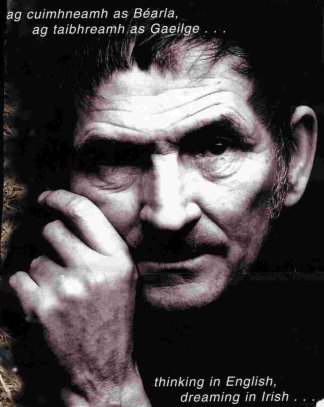
".. those haunting quizzical eyes staring out."
“.. those haunting quizzical eyes staring out.”

An Overview of the Poetry of Emily Dickinson

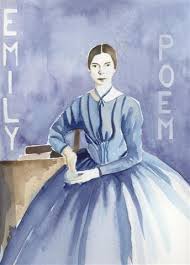
woman-of-inspiration-emily-dickinson1

BACKGROUND NOTE

Very little is known about Emily Dickinson (1830 – 1886) other than that she had a normal rearing in a Calvinist, New-England background; that at school she formed some extravagant attachments, and, at the age of 23 she cut herself off from the outside world, except for some correspondence with a few friends.  She spent years without putting her foot outside the grounds of her house and yet, like Hopkins, she made a huge contribution to the world of literature after her death.  With her contemporary, Walt Whitman, she helped to usher in a new age of poetry.  No one is sure why she resorted to live a life of seclusion; some say, without much proof, that she had an unhappy love affair; perhaps she did so from choice.  Judgement of her work is often made in an atmosphere of wonder, similar to that of judges of Shakespeare’s work: ‘How could this country boy from Stratford have written such plays?’  However, having studied her work, I’m sure you’ll agree that she had a unique perspective on life, death, love, nature and friendship.  She didn’t use titles for her poems, she didn’t need them because her lines spoke volumes and  still speak volumes to us today.

She was a Calvinist, living in a narrow New England society, but she did not accept the Puritan idea of a frightening, punishing god: she was rather a mixture of Puritan and free-thinker, but she never doubts an after-life, although she is terrified of its nature.  Indeed, the number of her poems about death is remarkable.  She was terrified of its uncertainties.  In spite of the Calvinism in her upbringing she could say, ‘That bare-headed life under grass worries me like a wasp.’  She had, despite her reclusive nature, a morbid passion (obsession?) for writing letters of condolence and was always probing into the morbid details as to how a person died.  She was obsessed by death, ‘goings away’.  At times she seems to be looking at her own death in anticipation.  But all the time she writes as an observer.  But this pre-occupation, with its horrible uncertainties and its doubts about immortality, gave us her best works.

images (1)

Read more

The Treatment of Women in Seamus Heaney’s Poetry – a feminist critique.

"Seamus Heaney in Toner's Bog" by Liam O'Neill
“Seamus Heaney in Toner’s Bog” by Liam O’Neill


Patricia Coughlan*, in a very thought-provoking article, finds two opposing but possibly complimentary representations of sex roles in Heaney’s poetry:

  • A dominant masculine figure who explores, describes, loves and has compassion for a passive feminine figure, and
  • A woman who ‘dooms, destroys, puzzles and encompasses the man, but also assists him to his self-discovery: the mother stereotype, but merged intriguingly with the spouse.’

It is easy enough to identify the first representation as the speaker of the poems.  Coughlan traces male activities and attitudes of the speakers in Heaney’s first book, Death of a Naturalist – ploughing, digging, and its equivalent, writing – as well as significant male attitudes, such as the importance of following in the footsteps of ancestors and imitating their prowess, in poems such as ‘Digging’, ‘Follower’, and ‘Ancestral Photograph’.  She traces the development of male identity in such poems as ‘Death of a Naturalist’ and ‘An Advancement of Learning’, where the young boy passes a test of male courage in facing up to a rat.  The identification of the speaker with the natural maleness of creatures such as the bull and the trout (‘Outlaw’ and ‘The Trout’) is noticed in the second volume, Door into the Dark.

Heaney views the creative process as a particularly male activity in ‘The Forge’ – the violence of the activity, the archetypal maleness of the protagonist, leading to the suggestion that the truth of art is forged out of violence and brute strength.  But the poetic process of ‘seeing things’ in the later poetry is a more spiritual, even intuitive practice.  The image of the poet changes to one of seer, or mediator between states of awareness (‘Field of Vision’, ‘Lightenings VIII’, ‘St. Kevin and the Blackbird’.

Something of the prowess of ancestors is present in the speaker’s celebration of his father’s gift in ‘The Harvest Bow’.  It is a quintessentially male prowess (‘lapped the spurs on a lifetime of game cocks’), yet the skill involved in making the bow exhibits an understanding of the spirit and a delicate craftsmanship.  Indeed plaiting the bow is a female art form, at least in traditional thinking.  So perhaps sex roles are not so clear-cut here, as the male ancestor is celebrated for his prowess at a feminine craft.

The representation of woman in the poems on the Leaving Cert. course leads to the consideration of a number of issues.

WOMAN AS LOVER

Consider ‘Twice Shy’ and ‘Valediction’.  In ‘Twice Shy’ woman is the love object; perhaps there is even a suggestion in the imagery of being victim to the male (‘tremulously we held / As hawk and prey apart’).  But this is balanced just after this by an equality of rights, by the mutual recognition that each had a past and that each had a right to be cautious, even timorous, in the new relationship (‘Our juvenilia / Had taught us both to wait’).

In ‘Valediction’, roles are reversed.  Not only is the woman the source of stability in the speaker’s life but she is in complete control of the relationship, ‘Until you resume command / Self is in mutiny’.  Nevertheless the image of woman here is traditional and somewhat stereotyped: an object of beauty, defined by dress and pretty, natural allusions such as the frilled blouse, the smile, and the ‘flower-tender voice’.  So in these poems there seems to be a traditional visual concept of woman, combined with a more varied understanding of role, both as love object and as controlling force.

Woman in ‘The Skunk’ is very much sex object, alluring, exciting in a primitive, animal way:

stirred

By the sootfall of your things at bedtime,

Your head-down, tail-up hunt in a bottom drawer

For the black plunge-neck nightdress.

Here she is an object of desire, observed with controlled voyeurism by the speaker.

WOMAN AS MOTHER

In ‘Mossbawn: 1.  Sunlight’ the female figure is associated with traditional domestic skills, in this instance baking.  The mother figure (in this case, his aunt, Mary Heaney) is one of the central props in Heaney’s ideal picture of rural life.  His aunt is characterised as being ‘broad-lapped’ signifying her warm and loving nature and her kitchen is a womb of security for the young boy, radiating warmth, nurture, and love, as well as being a forger of identity, offering links with tradition and values mediated by the female figures.

A feminist critique would argue that this representation is denying women the freedom to develop fully, by giving them fixed roles within the domestic environment and by associating them with what is maternal rather than with any intellectual activity.  As Patricia Coughlan says: ‘Woman, the primary inhabiter and constituent of the domestic realm, is admiringly observed, centre stage but silent.’

 THE EARTH AS FEMALE

Nature – the earth and both the physical territory and the political spirit of Ireland – is viewed as feminine by Heaney.  There was a hint of this in the soft, preserving, womb-like quality of the earth in ‘Bogland’.  This feminine aspect becomes explicitly sexual in such poems as ‘Rite of Spring’ and ‘Undine’.  But the female principle is destructive to man in such poems as ‘The Tollund Man’, where the male is sacrificed to the goddess, who is female lover, killer, and principle of new life and growth, all at once.

She tightened her torc on him

And opened her fen,

Those dark juices working

Him to a saint’s kept body.

Coughlan feels that the female energy here is represented as ‘both inert and devouring’ and that if the poem is understood, ‘as a way of thinking about women rather than about Irish political murder, it reveals an intense alienation from the female.’  But can it be divorced from its political context?  And was not Caitlín Ní hUallacháin always the femme fatale of Irish political revolutionaries?  And hadn’t this fatalistic attraction almost a frisson of sexual passion about it, coupled with maternal devotion?  The poem reveals the danger of the attraction, but surely it was a willing consummation?  The poet envies Tollund Man ‘his sad freedom’, so perhaps the poem reveals less an intense alienation than a fatalistic attraction to the female.

The feminist critique certainly throws some light on central aspects of Heaney’s writing – among them a very traditional view of woman – but there is too much complexity in his vision to allow us to view the encounter of the sexes in his poetry as simply antagonistic.


Portrait of Seamus Heaney by Paul McCloskey. (www.paulmccloskeyart.com)

 *  ‘Bog Queens’: The Representation of Women in the Poetry of John Montague and Seamus Heaney by Patricia Coughlan, in Theorising Ireland, ed. Clare Connolly, pages 41-60. NY: Palmgrove, 2003.


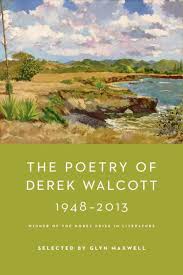
Study Notes on the Poetry of Derek Walcott

walcott (9) 

THIS IS A PERSONAL REVIEW OF SOME THEMES AND ISSUES WHICH FEATURE IN DEREK WALCOTT’S POETRY. YOU SHOULD CONSIDER THESE IDEAS, THEN RE-EXAMINE THE POEMS MENTIONED FOR EVIDENCE TO SUBSTANTIATE OR CONTRADICT THESE INTERPRETATIONS.  IN OTHER WORDS MAKE YOUR OWN OF THESE NOTES, ADD TO THEM OR DELETE FROM THEM AS YOU SEE FIT.

THE FOLLOWING SELECTION IS SUGGESTED BECAUSE THEY DEAL WITH THE MAJOR THEMES WHICH RECUR IN HIS POETRY:

Letter from Brooklyn,

Endings,

To Norline,

The Young Wife,

St. Lucia’s First Communion,

 Pentecost.

W. B. YEATS ONCE SAID THAT HIS POETRY WAS ‘BUT THE CONSTANT STITCHING AND RESTITCHING OF OLD THEMES’.  CHECK THIS OUT FOR YOURSELF IN RELATION TO WALCOTT AND ALL THE OTHER POETS ON YOUR COURSE!

YOUR AIM SHOULD BE TO PICK YOUR OWN FAVOURITES FROM THIS SELECTION AND GET TO KNOW THEM VERY WELL.

derek-walcott (8)  

BIOGRAPHICAL TRIVIA

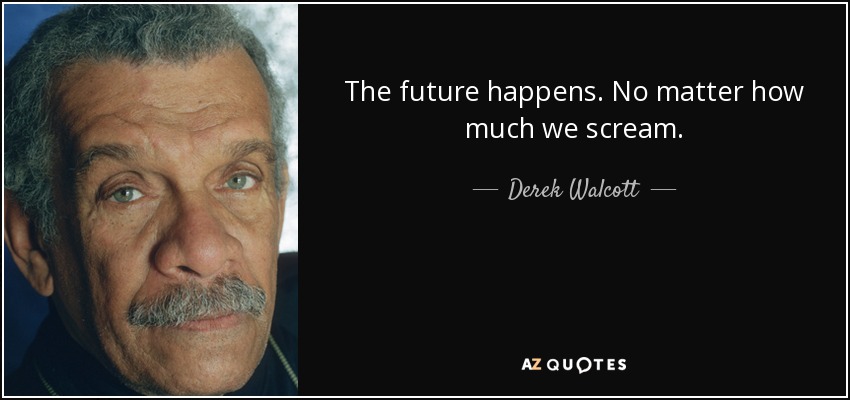
  • Derek Walcott is a Caribbean poet who was born in 1930 in Castries on the island of St. Lucia, one of the Windward Islands in the Lesser Antilles.
  • Both his grandmothers were said to have been the descendants of slaves.
  • He was born into a Methodist, English-speaking family although the dominant tradition on the island was Catholic and French speaking.
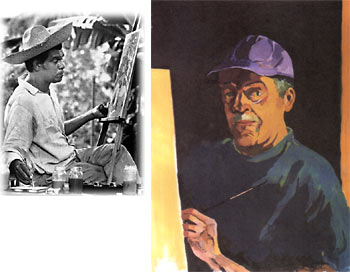
  • His father, described in the poem “A Letter from Brooklyn”, was a civil servant and painter who died at the age of 34 when Derek was only one year old.
  • He began writing poems at the age of fourteen and plays at the age of sixteen.
  • After studying at St. Mary’s College, a school run by the Irish Presentation Brothers in St. Lucia and at the University of the West Indies in Jamaica where he graduated with an Arts Degree in English, French and Latin, he moved in 1953 to Trinidad, where he worked as a theatre and art critic.
  • In 1954 he married Faye Moyston. They separated in 1956 and divorced the following year.
  • He founded the Trinidad Theatre Workshop in 1959, which has produced his plays (and others) since that time, and he remains active with its Board of Directors.
  • At the age of 18, he made his debut with his first collection 25 Poems in 1948, but his breakthrough came with the collection of poems, In a Green Night, in 1962. That same year he married his second wife, Margaret Maillard.
  • In the 1960’s his Selected Poems was a publishing success and he was awarded a substantial grant by the Rockefeller Foundation.
  • In 1970 his best known play, Dream on Monkey Mountain, was published and later performed with great success in New York.
  • He has learned his poetic craft from the European tradition, but he remains mindful of West Indian landscapes and experiences.
  • In 1973 he published Another Life, a long narrative book-length poem, offering autobiographical details and opinions.
  • In 1976 he published a collection Sea Grapes (including the poem “Endings”) which dealt with changing phases – beginnings and endings – of his life.
  • After a break with the Trinidad Theatre Workshop in 1976, Walcott directed his attention increasingly to the United States, where he has held a number of teaching positions, including a long-standing appointment at Boston University.
  • In 1979 Saint Lucia achieved independence following the collapse of the West Indian Federation.
  • In 1979 he published The Star-Apple Kingdom, a very successful collection containing the long poem, “The Schooner Flight”.
  • He founded the Boston’s Playwright’s Theatre at Boston University in 1981 hoping to create a home for new plays in Boston. That same year he was granted an award by the American MacArthur Foundation worth over $250,000.
  • In 1982 he published a collection of poems called The Fortunate Traveller and, that same year, married Norlene Metivier, his third wife.
  • In 1986 his Collected Poems were published and sold remarkably well.
  • His 1988 collection of poems, The Arkansas Testament, written about his life in Saint Lucia, (dealt with in part one entitled “Here”) and his life in America (dealt with in part two entitled “Elsewhere”) contained the following poems: “To Norline”,  “Saint Lucia’s First Communion”, “Pentecost”, “The Young Wife”, “For Adrian” and “Summer Elegies”.
  • In 1989 he was awarded the Queen’s Gold Medal for Poetry, the first non-English writer to be granted the award.
  • Omeros (modern Greek for Homer) was published in 1990, just after his sixtieth birthday, and is Walcott’s most ambitious work to date, a book-length poem that places his beloved West Indies in the role of the ancient bard’s Cyclades.  Gods and heroic warriors do not inhabit this retelling of the Odyssey, but simple Caribbean fishermen, whose Greek names register their hybrid identities.
  • In 1992 he became the first Caribbean writer to win the Nobel Prize for Literature.
  • With his artistic and financial success he bought a house on Saint Lucia and spent more and more of his time on the island.
  • In 1997 he brought out a new collection, The Bounty, which dealt with themes such as  old age and death.
  • In 1998 he co-wrote a Broadway musical, The Capeman, with the singer/songwriter Paul Simon. Unfortunately it proved to be the biggest flop in the history of Broadway musicals closing with losses of $11 million.
  • In 2000 he published the long poem Tiepolo’s Hound, a biographical study of the Impressionist painter Camille Pisarro.
  • That same year his twin brother, Roderick, died.
  • In 2004, at the age of 74, The Prodigal, his sixteenth book of poetry was published.
  • In 2009, Walcott began a three-year distinguished scholar-in-residence position at the University of Alberta.
  • In 2010, he became Professor of Poetry at the University of Essex.
  • He now divides his time between his home in the Caribbean and New York City.


Walcott (10)

 A BRIEF THEMATIC GUIDE TO THE POETRY OF

DEREK WALCOTT

A Letter from Brooklyn

  • The poem deals with the influences that were important in Walcott’s life and career as an artist.
  • Religion, particularly the Methodist religion, was an important part of his father’s life and has also influenced his own poetry in both substance and style.
  • The artistic example of his father is celebrated in this poem.
  • The belief that poetry is a divine gift is exemplified in the story of his father’s life and death

Endings

  • This is a short one-sentence poem on the theme of transience.
  • The poem offers examples of things that fade and end.
  • Even love is seen as transient.
  • The idea of Beethoven’s hearing ending offers a deeper meaning and a deeper image.
  • See also For Adrian which deals with the same theme of transience

To Norline

  • This is a brief meditation on lost love and the power of memory.
  • The poem also considers the evocative and memorable power of poetry.
  • The theme of the sea and its fluctuating status is important in Derek Walcott’s poetry.

The Young Wife

  • This is a poem written to comfort a husband who has lost his wife.
  • The poem explores the complex processes of grief, including guilt, despair and comfort.
  • There is a contrast evident between how grief affects a husband and how grief affects their children.
  • The poem concludes by asserting the primacy of love over death.

Saint Lucia’s First Communion

  • The poem describes one of the most important religious festivals on the island of Saint Lucia.
  •  At first the poem describes the communicants.
  • It sees the religious ceremony as akin to a form of slavery.
  • The poet wishes to liberate the children to find their own way to heaven.

 Pentecost

  • This is primarily a poem about the nature of belonging.
  • The theme is the power of the Caribbean landscape to affect the poet’s very soul.
  • There is a strong contrast between the constrictions of city life in winter and the freedom of the sea in Saint Lucia.


 Walcott (1)

MAJOR THEMES IN WALCOTT’S POETRY

Religion

  • Derek Walcott was brought up in the Methodist religion.  His father’s religious faith and the influence that had on both his father’s life and on his own life is dealt with in the poem A Letter from Brooklyn. In that poem the simple faith of the old lady restores the poet’s faith in God.
  • He offers a critical perspective on the traditional religious practices of Catholicism in Saint Lucia’s First Communion where he sees the children as innocent victims of an institutionalised religion. But the poem does have a positive religious perspective as he imagines the children flying heavenward beyond prejudice and evil.
  • Pentecost has not only a religious title but also a religious conclusion as it celebrates the sense of a soul finding itself in a natural seaside environment away from the soulless city.

Love and the End of Love

  • Derek Walcott was married three times and many of his poems deal with themes of love.
  • That love has a powerful but temporal influence on human life is acknowledged in Endings where love’s “lightening flash” has no “thunderous end.”
  • The dissolution of his marriage to his third wife, Norline Metivier, is treated with metaphoric brilliance in To Norline, a poem that charts the end of a relationship.
  • Death can also end a relationship but in The Young Wife Walcott explores the manner in which love can overcome death and the ending of life.

Death/Bereavement

  • Derek Walcott’s father died when the poet was only one year old but his death had a profound effect on his poetry. This is explored in A Letter from Brooklyn.
  • That positive view is also expressed in another poem on death and grief, The Young Wife, where a sense of hope evolves out of the devastation of grief.

painting


 AN ANALYSIS OF WALCOTT’S STYLE

Style

  • Derek Walcott uses a variety of poetic forms in the poems on the course.
    • There is a loose, relaxed narrative form, using dialogue and description, in the poem A Letter from Brooklyn.
  • There is a complex use of couplets in the poem  Endings.  In this brief poem  the couplets are short, pithy and, like “the silence that surrounds Beethoven’s head”, imbued with a sense of power and mystery.
  • The most common form evident in these poems is the four-line quatrain, influenced to some extent in the Methodist hymns Walcott learned in his childhood. The themes, as well as the form, often reflect a religious content, perhaps not in To Norline, but certainly  in Saint Lucia’s First Communion, Pentecost, and The Young Wife.

Language

  • Derek Walcott was born into an English speaking family in the predominantly French-speaking island of Saint Lucia. His use of English belongs to the English poetic tradition but it is also influenced by the religious language of his Methodist up-bringing and also by the traditional patois of Creole English.
  • He has a very fine ear for dialogue as is evident in the manner in which he captures the old-fashioned religious language of the elderly correspondent in  A Letter from Brooklyn. There is an astute religious sensibility present in many of the poems. Pentecost uses religious terminology as does Saint Lucia’s First Communion.
  • The poetic sensibility of this modern poet is revealed in his constant and varied use of metaphor and simile (see below).

Metaphor and Simile

  • From the beginning Derek Walcott has used both metaphor and simile with great inventiveness and originality.
  • The metaphor of a spider’s web runs throughout A Letter from Brooklyn and helps to unify the different strands of this complex, sensitive treatment of old age, art and death.
  • In Endings the “silence that surrounds Beethoven’s head” becomes a metaphor for the mysterious of endings and beginnings while the poem is bolstered by the clever use of similes.
  • To Norline,  although very brief, has a subtle mixture of metaphor (in the opening stanza where the wave’s surf is seen as a sponge erasing lines and love) and simile in the second stanza (where the poet’s memory of his sleeping beside his wife is compared to a coffee mug warming his palm) and in the third stanza (where the sight of a salt-sipping tern is compared to a memorable line of poetry.)
  • At other times the use of metaphor and simile reveals a wonderfully visual imagination as in Saint Lucia’s First Communion where a caterpillar is compared to an accordion and communion girl’s compared to candles.

 The Sound of Poetry – Rhyme, Assonance and Alliteration

  • Although Derek Walcott uses a variety of poetic forms in the poems on the course, his use of rhyme is more subtle than regular, more attuned to the off-beat sounds of the Caribbean than to any formal pattern.
  • An early poem like  A Letter from Brooklyn uses rhyme more regularly than is evident in the latter poems. There are many rhyming couplets in this narrative poem and it ends with a distinctive rhyme in the concluding couplet: believe/grieve.
  • Another poem using couplets, this time very short-lined couplets, is  Endings. In this poem, although none of the couplets rhyme, there are subtle echoes throughout the poem involving off-rhymes ( flesh/flash,  sand/end/sound) assonance  (fail/fade) and alliteration (fades from the flesh, flowers fading like the flesh, sweating pumice stone, silence that surrounds).
  • Five of the poems are written in quatrains but none of these employ regular rhyme schemes. To Norline is the closest to an ABAB rhyme scheme with its half-rhymes and assonantal echoes. The rhymes are purposely faint: dawns/sponge, come/palm, house/yours, tern/turn. This poem also uses alliteration cleverly, particularly on the “s” sounds to convey the sound of the surf on the beach: slate, surf, sponge, someone, still-sleeping, salt-sipping and some.
  • The rhyming scheme in Saint Lucia’s First Communion varies from a loose ABAB in most stanzas to AABB in the third stanza and ABBA in the fourth stanza. There are assonantal patterns throughout the poem (cotton frock, cotton stockings, pink ribboned missals, caterpillars accordion).
  • Pentecost uses rhyme more regularly than in any of the other quatrain poems: concrete/street, show/snow, roof/proof, shoal/soul. As in many of the other poems, the use of alliteration, particularly on the “s” sounds, is very evocative: slow scriptures of sand/that sends, not quite a seraph.
  • Contrast:  Many of the poems use a form of contrast to emphasise their thematic concerns.
  • Pentecost comes from a book, The Arkansas Testament, which is divided into two contrasting sections entitled “Here” and “Elsewhere”. The poem contrasts the soulless, winter, lost city where he works with “the slow scriptures of sand” he finds in his warm Caribbean home. There is a stark contrast between the dead and the living in the poem, The Young Wife. In this poem the contrast is overcome by the sense of love that accompanies the end of the poem.

Bucknell University. (Photos by Timothy D. and Nicole M. Sofranko)
Bucknell University. (Photos by Timothy D. and Nicole M Sofranko)

COMMENTS ON WALCOTT’S POETRY

Derek Walcott on Derek Walcott

“There is a continual sense of motion in the Caribbean – caused by the sea and a feeling that one is always travelling through water and not stationary.”

“My calling as a poet is votive, sacred… it was a cherished vow taken in my young dead father’s name, and my life is to honour that vow.”

“Throughout my whole youth, that was happening. It was the experience of a whole race renaming something that had been named by someone else and giving that object its own metaphoric power.”

“I had a sound colonial education
I have Dutch, nigger, and English in me,
And either I am nobody, or I am a nation.”

“I come from a backward place: your duty is supplied by life around you. One guy plants bananas; another plants cocoa; I’m a writer, I plant lines. There’s the same clarity of occupation, and the sense of devotion.”

“I think of myself as a carpenter, as one making frames, simply and well. I’m working a lot in quatrains… and I feel there is something in that that is very ordinary… I find myself wanting to write very simply cut, very contracted, very speakable and very challenging quatrains in rhyme.”

“Well, when I write
this poem, each phrase go be soaked in salt;
I go draw and knot every line as tight
as ropes in this rigging; in simple speech
my common language go be the wind…”

“History and elemental awe are always our early beginning, because the fate of poetry is to fall in love with the world, in spite of History.”

“This island is heaven.”

“Visual surprise is natural in the Caribbean; it comes with the landscape, and faced with its beauty, the sigh of History dissolves.”

“It takes a West Indian a long time to say who he is”

“People who praised classical Greek, if they were there then, would consider the Greek’s tastes vulgar, lurid….All the purple and gold – that’s what I’m saying is very Caribbean, that same vigour and elation of an earlier Greece.”

“The easiest thing to do about colonialism is to refer to history in terms of guilt or punishment or revenge, or whatever. Whereas the rare thing is the resolution of being where one is and doing something positive about that reality.”

“The romanticised, pastoral vision of Africa that many black people hold can be an escape from the reality around us. In the West Indies, where all the races live and work together, we have the beginnings of a great and unique society. The problem is to recognise our African origins but not to romanticise them.”


 Walcott (6)


Critical Comments on Derek Walcott by the Critics

“What moves me in Walcott is his refusal of simplifications.”
Paul Breslin

“It was the Metaphysicals technique of using metaphor as the prime vehicle of shape and meaning in their poetry that seems to have so greatly impressed Walcott, who has always …” moved in metaphor as in his natural element.”
Stewart Brown

“Walcott is a model of ripened ambivalence that makes impossible demands of the heart, tears it to pieces by a contradiction of origins, and finally offers it to the dubious consolation of despair.”
George Lamming

“Naming is central to Walcott’s claims for an ‘Adamic’ New World poetics. The act of naming takes the natural world into the cultural domain while grounding language in the domain of the natural. And the choice of a name reveals much about the consciousness of the namer, the degree to which it has become Adamic by exorcising ‘the pain of history words contain.’ ”
Paul Breslin

“Omeros attempted to shrink the Iliad and the Odyssey into the tiny sins and squabbles of some Caribbean fishermen and bewildered colonials”
William Logan


 ***********************************

 Walcott (7)


Sample Answer:  Write a personal response to the poetry of Derek Walcott.

Of all the poets on the Leaving Cert course, Derek Walcott, in my opinion, is the one who has most to say about the ‘big issues’, about life, the universe, and everything.  I would recommend his poetry to anyone who has lost someone close to them, or to anyone who finds themselves wondering about man’s place in the universe.

There are three aspects of Walcott’s poetry in particular that appeal to me: his approach to the notion of ‘endings’, his poems about lost love, and his poems about bereavement.  I’m not saying that Derek Walcott has the answers to all the questions that surround these issues; just that he asks them in a very beautiful and enlightened way.

One aspect of Walcott’s poetry that really hit home with me was his focus on the way everything in this world is moving slowly but surely toward its end.  ‘Endings’, for example, depicts how things ‘do not explode, / they fail, they fade’.  Everything, the poem maintains, is disappearing, but too quietly for us to notice.  Things fade away as gently and subtly, ‘as the sunlight fades from the flesh / as the foam drains quick in the sand’.  We no more notice most things disappearing than we do the water draining into the sand at the beach.  Reading his poetry, we are constantly reminded, of the fragility and preciousness of all things.  His work reminds us to enjoy what we have while it lasts.

For me, one of the finest aspects of Walcott’s work is his depiction of lost love.  ‘To Norline’, is filled with a melancholy longing for a love that has been and will never be again.  This poem paints a sad portrait of the poet walking along an empty beach remembering his lost love.  He seems certain that ‘someone else’ instead of him will soon be enjoying Norline’s affections.  His poetry is always keenly aware of the fact that love inevitably fades away.  As he puts it in ‘Endings’, ‘love’s lightning flash / has no thunderous end’.  Love, like everything else, fades away quietly, without us even noticing, ‘it dies with the sound / of flowers fading’.  We can no more notice love fading away than we can hear a flower withering.  All in all, then, I would recommend the poetry of Derek Walcott to anyone who has had their ‘heart broken’!  His writing provides real solace and comfort for anyone whose relationship has just ended.

Bereavement is one of Walcott’s most recurring themes and he deals with it magnificently.  He never shrinks from depicting the true horror of bereavement.  ‘The Young Wife’, for example, is a moving depiction of great loss.  This poem is about a man whose wife has just died from cancer.  He must mourn her quietly so as not to upset their children, ‘the muffled sobbing / the children must not hear’.  The house he lives in is haunted by memories of his departed partner.  There are certain drawers in the house which he ‘dare not open’ because the objects they contain would remind him too painfully of her.  Despite this obvious emotion and pain, however, his poems invariably contain an element of hope.  In this case, the wife may have been claimed by cancer at a tragically young age but she somehow lives on in her children.  When her husband sees their children laugh he is reminded so strongly of her that she may as well be in the room, ‘They startle you `when they laugh. / She sits there smiling’.

‘A Letter from Brooklyn’ is another poem that offers hope to the bereaved.  Mabel Rawlins, a friend of the family, writes to the poet about his dead father.  She is convinced that this man, who died twenty-eight years ago, is at God’s side in heaven, ‘he was called home, / And is, I’m sure, doing greater work’.  Mabel’s unquestioning faith helps to overcome the poet’s own doubts about the existence of God and ‘restores’ his belief in the afterlife, ‘I believe. / I believe it all, and for no man’s death I grieve’.

Just as I would recommend Walcott’s poetry to anyone who has had his or her heart broken by the break-up of a relationship so too would I recommend it to anyone who has been bereaved.  His poetry presents us with a full picture of the sorrow and pain of bereavement.  Yet it also suggests that maybe, just maybe, there is hope.

Derek Walcott receives his Nobel Prize for Literature from the King of Sweden King Karl XVII Gustaff - in December 1992.
Derek Walcott receives his Nobel Prize for Literature from the King of Sweden King Karl XVII Gustaff – in December 1992.

The Poetry of Philip Larkin (1922 – 1985)

Philip Larkin

Larkin’s worth and relevance as a poet is constantly under review. The most recent biography by his friend and former colleague at Hull University, James Booth, was published in 2015 entitled, Philip Larkin: Life Art and Love.  Booth sees himself as keeper of the Larkin flame and is at pains to debunk much of the negative publicity which has surrounded Larkin in the decades since his death.  Booth’s main motto seems to be: judge the poems, not the poet.

All good biography should send us back to the poet’s work and in this Booth succeeds admirably.  He also makes Larkin more likable – we are made to wonder how it was that this miserable, self-hunted man managed to produce such great, enduring work.

Larkin was born in Coventry in August 1922. He has described his childhood, with his domineering father and timid mother, as a “forgotten boredom”.  Tall and shortsighted, he grew up self-conscious and shy, developing a stammer at an early age. He did well in school and went to study English at Oxford, where his interest in writing and his love of jazz were nurtured.

On leaving Oxford with flying colours, he took up a post as librarian in a small village in Shropshire, and it was here that he began to write more extensively. He went on to work as a librarian in various colleges and universities, including Queen’s University in Belfast and the University of Hull, and he won increasing recognition as a writer.

There were many significant women in his life, but despite a yearning for love and intimacy his relationships seem to have been blighted by fear and indecision, and he appears to have resigned himself to the idea that marriage was not for him. He remained alone and became something of a recluse in later years, growing increasingly melancholic.

In June 1985, he was diagnosed with cancer and he died that same year, on December 2nd. He left behind him a body of work that has won him the accolade of being one of England’s finest post-war poets.

(skoool.ie)

WHAT FOLLOWS IS A PERSONAL REVIEW OF SOME THEMES AND ISSUES WHICH FEATURE IN THE POETRY OF LARKIN. YOU SHOULD CONSIDER THESE IDEAS, THEN RE-EXAMINE THE POEMS MENTIONED FOR EVIDENCE TO SUBSTANTIATE OR CONTRADICT THESE INTERPRETATIONS.  IN OTHER WORDS MAKE YOUR OWN OF THESE NOTES, ADD TO THEM OR DELETE FROM THEM AS YOU SEE FIT.

THE FOLLOWING SELECTION IS SUGGESTED BECAUSE THEY DEAL WITH THE MAJOR THEMES WHICH RECUR IN LARKIN’S POETRY:

  • At Grass, 
  • Wedding Wind, 
  • Church Going, 
  • An Arundel Tomb, 
  • Ambulances, 
  • Cut Grass, 
  • The Whitsun Weddings

YEATS ONCE SAID THAT HIS POETRY WAS ‘BUT THE CONSTANT STITCHING AND RESTITCHING OF OLD THEMES’.  CHECK THIS OUT FOR YOURSELF IN RELATION TO LARKIN AND THE OTHER POETS ON YOUR COURSE!

YOUR AIM SHOULD BE TO PICK YOUR OWN FAVOURITES FROM THIS SELECTION AND GET TO KNOW THEM VERY WELL.  MAKE NOTES FOR YOURSELF, TOGETHER WITH QUOTATIONS AND REFERENCES.

philip-larkin-quotes-3

MAJOR THEMES AND PREOCCUPATIONS IN LARKIN’S POETRY

Larkin’s awareness of modern society:  When asked if writers should be concerned with political and social issues, Larkin said: ‘The imagination is not the servant of the intellect and social conscience.’  But while his poetry may not be directly motivated by specific social themes, Larkin was always alert to social behaviour, and many important aspects of modern society are reflected in his poetry:

  • The bleakness of urban living is explored in ‘Ambulances’ with its references to traffic, accidents, frightened people.
  • The random nature of social bonds is also explored: ‘the random blend of families and fashions’ is mentioned in ‘Ambulances’.
  • The vanity and empty glitter of our fashionable functions is explored in ‘At Grass’:

Numbers and parasols: outside

Squadrons of empty cars, and heat,

And littered grass.

  • The society Larkin writes about is a post-religious one (see ‘Church Going’ which can be read as charting the stages in the breakdown of faith – from scepticism, to superstition, to disbelief).
  • The function of churches in an age of disbelief is considered: they supply ceremonies that provide unity in our lives and mark significant points, places where ‘all our compulsions meet, / Are recognised, and robed as destinies’ (‘Church Going’)

Love and Marriage

  • In general, Larkin yearns for the ideal of love as a solution to human isolation.
  • In ‘An Arundel Tomb’ he toys with the vain hope that love might transcend death:

to prove

Our almost-instinct almost true:

What will survive of us is love

  • He deals with the fragile nature of human happiness and love in ‘The Wedding Wind’ when he compares the fragility of the newly married woman’s joy to ‘a thread carrying beads’.
  • Also in ‘Wedding Wind’ he deals with sexual fulfilment, happiness and joy from the woman’s point of view: ‘Our kneeling as cattle by all-generous waters’.
  • Complete happiness is never achieved for Larkin: as far as he is concerned there is an untruth at the heart of the love statement in ‘An Arundel Tomb’; love is qualified, as the speaker is still sad that she cannot share her happiness, in ‘Wedding Wind’.

Death

  • Larkin is obsessed with the passage of time in many of his poems. He doesn’t make any heroic attempts to defeat Time as other poets like Shakespeare or Keats have done, rather he records the different faces of death and finds the odd crumb of comfort along the way!
  • In ‘At Grass’ death is seen as the culmination of life. Death is seen as natural and gentle, yet it is essentially lonely: ‘And not a fieldglass sees them home’.
  • In ‘Ambulances’ the bleaker side of death is introduced. Here death is seen as capricious (‘children strewn on steps or road’), it is impersonal, alarming, the final loosening of all bonds, utterly comfortless, ‘so permanent and blank and true’.
  • Larkin sees death as the meaning of life: ‘the solving emptiness / That lies just under all we do’. (‘Ambulances’)
  • In ‘Cut Grass’, death in nature is seen as something beautiful; death and beauty exist side by side:

It dies in the white hours

Of young-leafed June

With chestnut flowers

Nature

  • Larkin is constantly aware of nature in his poetry. In our selection all but ‘Ambulances’ use nature as a backdrop.
  • For Larkin, nature is the one constant, the only survivor, outlasting many institutions, ideas, etc. In ‘Church Going’ he says, ‘And what remains when disbelief has gone? Grass, weedy pavement, brambles, buttress, sky’.
  • Nature imagery is used by Larkin to express human emotions: ‘perpetual morning shares my bed’, ‘all-generous waters’ (‘Wedding Wind’).
  • Death is acceptable, less threatening, natural in the context of the seasons (‘At Grass’, ‘Cut Grass’)

Larkin’s Philosophy of Life

  • Many critics find a deep sense of disillusionment and pessimism in Larkin’s poetry:  Eric Homberger describes it  as, ‘the saddest heart in the post-war supermarket’, while Charles Tomlinson says of Larkin’s writing that it shows, ‘a tenderly nursed sense of defeat’ (Charles Tomlinson)
  • The main areas of disillusionment for Larkin were:
  • the lack of religious faith, which means that he has not got the comfort of that absolute in his life (‘Church Going’)
  • his very bleak view of the end of life is given full expression in ‘Ambulances’ when he speaks of, ‘the solving emptiness that lies just under all we do’.
  • the pointlessness of the struggle and the irony of all the effort, ‘not a fieldglass sees them home’ (‘At Grass’)
  • We also find that his perpetual awareness of death colours all his attempts to celebrate life. For example, ‘At Grass’ celebrates the success of life, but it is a life that is over.  Even the celebration of nature’s beauty and abundant growth is qualified by the presence of death (‘Cut Grass’).
  • Larkin himself denied that he was a completely pessimistic poet: ‘The impulse for producing a poem is never negative; the most negative poem in the world is a very positive thing to have done’. Would you agree?


 5y55p3

SAMPLE ANSWERS ON LARKIN – FOR THE OPTIMISTS AND PESSIMISTS AMONGST US! TAKE YOUR PICK!

(1) Sample Answer Specially Written for Pessimists!:  ‘The realities of his own society and life, explored through a variety of traditional techniques, is characteristic of the poetry of Philip Larkin.’ 

 In many of Philip Larkin’s poems we are presented with situations in a society that is post-war, increasingly materialistic, decreasingly spiritual, often alienating and occasionally meaningless.  In this society we see ordinary people struggling to realise their ideals, dreams and hopes, grasping at an illusive happiness, which for many will remain unattainable and remote.  This contrast between the ideal and the ordinary is central to Larkin’s view of the life and society within which he worked.

In ‘At Grass’, the narrator recalls the brief moments of fame enjoyed by the horses and their trainers.  The poem is carefully structured into five stanzas, each of six lines with a regular rhythm and the rhyme scheme abcabc.  Most of the lines are of equal length and of eight syllables, which is suited to a poem that is ponderous and sad in tone.  The horses are closely observed in the poem and their retirement in the ‘unmolesting meadows’ suggests how short-lived fame or notoriety is, and just as short, perhaps, for humans as for these horses.  They enjoy a temporary freedom from the flash bulbs and public glare before being called to the stables, symbolic of the inevitable submission to death.

The idea of death disturbed Larkin.  In ‘Church Going’ he confesses to being a non-believer in a church which has frequently left him ‘at a loss’.  Through the argument of the poem, Larkin discovers his purpose in these frequent visits to churches.  It is a desire to fulfil, ‘A hunger in himself to be more serious’, to be, perhaps, important, significant, or simply a desire to matter and to make a difference.  This desire to be important underpins several poems by Larkin which deal with love.  In ‘Wedding Wind’, the speaker, in this case a young bride, delights in her happiness, despite, or perhaps in spite of, being left by her husband to feel, ‘Stupid in candlelight’.  Her joy is tempered only by her reflection on those less fortunate than herself who ‘lack the happiness’  she anticipates and perhaps expects to enjoy in her married life.  However, Larkin is not so convinced and in the second stanza the newly-weds have once again been parted by the domestic rituals that will demand attention and disrupt the ideal of shared married life.  It is notable that the rhyme patterns are less than regular in this poem.  In the last four lines of stanza one, a pattern emerges as the bride speaks of her joy and contentment but this pattern is not continued into the second stanza, the tone of which is certainly more anxious and uncertain.

In ‘The Whitsun Weddings’ Larkin deals with several marriages that occur on the same Saturday in June in a landscape that is quintessentially English, ‘wide Farms’ are observed from the train and as the journey continues south the poet speaks of  ‘Canals with floatings of industrial froth’ and of new towns which were ‘nondescript …. with acres of dismantled cars’.  Gradually the poet’s curiosity draws his vision to the wedding parties where women wore ‘nylon gloves and jewellery substitutes, / The lemons, mauves, and olive-ochres’ and ‘girls, gripping their handbags tighter’.  The speaker’s increasing involvement with those married couples who have boarded the train is suggested when the personal pronoun ‘I’ is replaced by ‘we’ in the final stanza.  The sense of ‘swelling’ of hope and of possibility in the future is with all of those who step from the train in London.  The poem is meticulously crafted over eight stanzas each of ten lines and with a regular rhythm.  The rhyming scheme mirrors the speed of the train – slow at first and then gradually picking up speed as it leaves each station.

Not all – in fact, very few – of Larkin’s poems show such optimism! While there are moments of joy and happiness, and surprise in Larkin’s poetry, the overriding sensation which remains with the reader, having read his poetry, is disillusionment.  In ‘Ambulances’ the clamour of the sirens which ‘Brings closer what is left to come, / And dulls to distance all we are’, is a striking reminder of the inevitable fate we await in death.

Larkin’s poetry reflects the experiences and impulses that were common to many people living in England in the immediate post-war era.  Some of these experiences he shares, if not physically, then emotionally.  He may at first stand as an observer, but he often becomes less detached and removed from the scene he observes in order to identify himself with those who live and breathe and ‘grow old’ before him and with him.

Larkin

(2) Sample Answer Specially Written for the Optimists among us – for those who see the bright side of everything!:  Write an essay in which you outline your reasons for liking and/or not liking the poetry of Philip Larkin. 

Of all the poets I studied as part of my Leaving Cert course it was Philip Larkin who really struck a chord with me.  When I think now why I liked his poetry so much I think of his moving elegiac accounts of the passing of time in poems such as ‘At Grass’.  Then there are the poems rich with philosophical ideas and considerations that give rise to many questions without pretending to know the answers.  ‘Church Going’ and ‘An Arundel Tomb’ offer a fascinating perspective on how values and meanings change over time without resorting to unnecessary obfuscating language.  Larkin’s poetry also gives us a view of life that is ‘permanent and blank and true’.  However, whereas some readers may find the poetry of Larkin to be bleak, at the heart of many of these poems lies a beautiful sensitivity to the bonds and moments of love that come to define our lives.  This is particularly the case with ‘Ambulances’, a poem that deals unflinchingly with mortality.  Finally, and perhaps most importantly, it is the language that Larkin uses.  Every poem contains exquisite lines of poetry that are a joy to read.

‘At Grass’ is a perfect example of Larkin’s ability to evoke the past and the heart-aching melancholy that comes with the passing of time.  The poem is an elegy to a lost world – the world of the summer races, Ascot, the Derby: ‘Silks at the start: against the sky / Numbers and parasols: outside / Squadrons of empty cars, and heat’.  However, there is a very interesting and moving ending to this poem.  Having described the exciting world of the races he brings us back to the scene of two horses alone in a field, their racing days now long over.  Capturing perfectly the melancholic sadness of life drawing to its close, Larkin describes how now that the world of the races has vanished, ‘Only the groom, and the groom’s boy, / With bridles in the evening come’.  This final detail achieves a powerfully poignant melancholy.

This awareness of the passage of time and its consequences also lies at the heart of ‘Church Going’ and ‘An Arundel Tomb’, two poems I found particularly stimulating.  Each poem considers how an object, though it might physically remain the same, comes to have different value and significance over the course of time.  In ‘An Arundel Tomb’, the poet considers the representation in stone of an ‘earl and countess’ upon their tomb.  Using sharp observation the poem raises many fascinating questions about the changes that time effects.  Those buried in the tomb could never have imagined how the world would change around their frozen image:

                        They would not guess how early in

                        Their supine stationary voyage

                        The air would change to soundless damage,

                        Turn the old tenantry away;

                        How soon succeeding eyes begin

                        To look, not read.

In ‘Church Going’ the poet raises equally fascinating questions about the significance of the churches that lie at the centre of every town in the country.

What I particularly liked about ‘Church Going’ was the way Larkin draws the reader into the poem.  Using the register of the ‘Bored, uninformed’ tourist, the poet charms the reader with his observations (‘From where I stand the roof looks almost new – / Cleaned, or restored?  Someone would know: I don’t’) and humour (Hatless I take off / My cycle-clips in awkward reverence’) before raising some very important questions about the gradual demise of the church in modern society.  The church ultimately becomes a ‘serious place on serious earth’, a place, ‘In whose blent air all our compulsions meet, / Are recognised, and robed as destinies’.  That the church does this seems an invaluable thing and Larkin rightly wonders what institution will take its place when it no longer exists.

Wherever Larkin’s poems start from, they most often end with the inescapability of death.  ‘Church Going’ contemplates the importance of churches in our lives but cannot help but notice in the end that ‘so many dead lie around’ them.  In ‘Cut Grass’, something as ordinary and everyday as mown grass becomes a powerful symbol for the great sadness and finality of death:

                                               Cut grass lies frail:

                                                Brief is the breath

                                                Mown stalks exhale.

                                                Long, long the death

It is ‘Ambulances’, however, that provides us with the bluntest depiction of human mortality, with its vivid descriptions of illness and death.  The poem exposes ‘the solving emptiness / That lies just under all we do’.  However, even in this bleakest of poems Larkin remains keenly aware of the small things that come to define our lives and invest them with value and meaning – ‘the unique random blend / Of families and fashions’ and ‘the exchange of love’.

And that is what lies at the heart of Larkin’s poetry – his attention to the intimate details that define our everyday lives.  He was not a poet who needed to travel to exotic places in order to find inspiration for his poetry.  His truths are the simple truths of life and death and as a poet Larkin stuck with what he knew and like Frost’s, ‘The Road Not Taken’, that has made all the difference for me!

******************************

This one is a bonus – however, it is not on the Leaving Cert course – maybe for obvious reasons!


Elizabeth Bishop: The Poet’s Poet

bishop-bio

Elizabeth Bishop has garnered the reputation of being one of the finest, one of the most formally perfect, poets of the second half of the twentieth century.  Irish poets Seamus Heaney and Paul Muldoon have testified in lectures and in essays on her poetry, to the unchallengeable subtlety of her work.  And if she has been called a poet’s poet she is also pre-eminently a reader’s poet, and a poet whom it is always a serious joy to teach – students come alive when asked to discuss her work, partly because she communicates with an eager, unforced directness, partly because of the wit, the sheer pizazz and style with which she writes.

In the 1980s, there was a serious resistance to her work: she never came out as a lesbian, refused to appear in all-women anthologies, guarded her privacy and did not take direct political stances like her friend Robert Lowell.  She was seen as insufficiently political, a misreading of her work, which identifies with black Americans, and with the struggle of the poor and oppressed in South America.  But she, wisely, does not draw attention to those themes.  She designs beautiful cadences, perfect shapes, and then she runs a counter-theme against them: ugliness, bad taste, rough or unbroken surfaces and sounds infiltrate her paradise of pure form and make it both more ideal and more real.

In ‘Cape Breton’, she draws our attention to the “weaving water”, and then offsets it with “hackmatack”, the name of a hard American spruce much admired by Walt Whitman.  She also introduces an “irregular nervous saw-tooth edge”, and a “rough-adzed pole”.  A gifted amateur painter, she designs a composition which plays the rough against the smooth, and allows a coded unhappiness and anxiety to disturb the surface of her art.

Bishop’s personal life – like many other poets – was often unhappy – two lovers committed suicide – and she became an alcoholic as a young woman.  Behind the formal façade of her poems, there is a homeless, orphaned imagination, whose loneliness was expressed in her insatiable letter-writing and in late-night phone calls to friends.

She was born in Worcester, Massachusetts, on February 11th, 1911.  Her mother was from Nova Scotia, her father, who was half Canadian, half American, died in 1911, eight months after she was born.  Her mother became deeply disorientated over the next five years, was diagnosed as permanently insane in 1916 and died in a public sanatorium in Nova Scotia in 1934.  Bishop lived alternately with her grandparents in Nova Scotia and New England, and later with an aunt.  She suffered poor health and hadn’t much formal education until she was fifteen.  In 1930 she attended Vassar College and joined a brilliant generation there.

Bishop impressed everyone she met – she was musical, very well read, and was also a painter with a great knowledge of the visual arts.    She was a compulsive traveller, who manages to avoid all the pitfalls of tourist verse.

The roots of Bishop’s art can be traced to her undergraduate years at Vassar, and rather unusually it is to a single academic essay that we must turn to understand her idea of form and beauty.  As an undergraduate she read a famous essay by the distinguished scholar, M. W. Croll.  It was called ‘The Baroque Style in Prose’ and is one of the classic essays on prose style (it can be found in a collection of essays called The English Language, edited by George Watson).  Croll’s concept of baroque style – ‘not a thought, but a mind thinking’ – spoke to Bishop like a vocation.  She quoted Croll’s essay in letters to friends, because what she admired in the baroque was the “ardour” and dramatic energy and immediacy of an idea as it was formulated and experienced.  The result is a poetry of intense visual and vocal power, where the play of rhythm, rhyme, spoken inflection and carefully composed, sometimes abraded images, has a spontaneity and deft authority whose perfect cadences create that “unique feeling of timeliness” which she sought and admired in poetry.

We can see this in ‘Cape Breton’ where she places against the rapid movement of the song-sparrow songs as they float upward “freely, dispassionately, through the mist” – the sudden short, heavily stressed line “in brown-wet, fine, torn fish-nets”.  It’s this difference of movement and texture that makes Bishop such a continuously interesting and alive poet.

We can see her delight in rapidly changing tones and surfaces in one of her wittiest and most painterly poems, ‘Seascape’, where she describes “white herons got up as angels,/flying as high as they want”.  She is making the picture baroque, and her delicate ear starts a run of ee sounds: the herons fly “in tiers and tiers of immaculate reflections”.  In the next line the word “region” picks up the ee sound, then hands it on to bright green leaves edged neatly with bird-droppings”.

The reason why Bishop appeals so strongly to fellow poets can be seen in the sudden uncomfortable word “edged”, which brings in the idea of a margin and the marginal, as it abruptly breaks the pair of ee sounds in “green leaves”, before letting the sound come back with emphasis in “neatly”.  The two ds in “edged” are echoed in “bird droppings” to design an uncomfortable, deliberately bad-taste moment.  That moment of unease frays against the aesthetic surface she is designing, a surface she reasserts by transforming their faecal randomness into “illumination in silver”.  This use of images of discomfort and unease also suffuses Seamus Heaney’s poetry from Death of a Naturalist on – it is as though he has developed the ontological anxiety in her poetry into a form of social and political anxiety.

In Bishop, this tension between the aesthetic and a type of anti-aesthetic effect is one expression of her puritan upbringing – it introduces an anxiety into the delineation of a beautiful image, and this discomfiting effect then helps strengthen and make more flexible the particular aesthetic moment.

Bishop was also a gifted short story writer (her collected prose has been published), and she was also a marvellous translator. Many of her translations came out of the fifteen years she spent in Brazil, where she moved in 1952 to live with Lota de Macedo Soares.  She moved back to New York in 1967, and it was there that Lota committed suicide later that year.

Though Bishop continued to travel, she based herself in Boston and died there on October 6th, 1979.  She is one of the greatest American poets of the last century, and is the subject of many books, essays and academic dissertations; 35 years after her death, her work is revered and admired more than ever.

Edited extracts from an essay by Tom Paulin first published in The Irish Times, Saturday, September 11th 2004.


The Cabot Trail, Cape Breton, Nova Scotia