The Poetry of Sylvia Plath

6564_97d3_600

The legend of Plath as a dark and driven and unstable young woman is a tremendous simplification of her work.  Her work will endure where poetry endures.

The trouble for us who come to study her work in depth at Leaving Cert or A Level is that we already know the ending – a bit like watching a film of The Titanic!  We know that Plath died by suicide in mid-sentence, so to speak,  at the age of thirty one.  Studying this arbitrary selection of her poems here should impress on us her vast and vital legacy.  She is, in my view, a very essential poet.

There is unfortunately a widespread tendency to interpret Plath’s work as autobiographical, to read her poems as if they tell her life story.  While it is quite obvious – and probably inevitable – that a writer’s life will influence what she writes, it is important to understand that poetry is art.  Writing about this issue, Ted Hughes pointed out that the reader must learn, ‘to distinguish between a subjective work that was trying to reach an artistic form using a real event as its basis, and a documentary of some event that did happen.’

Some critics read her later poems exclusively in the light of her suicide.  They argue that she signals her suicide (intentionally or otherwise) in a number of her last poems, through various references to despair, rage, loss, separation, or death.  This is by no means as obvious as these critics claim and after all hindsight has always been the great tormentor of those left bereaved and bereft after a suicide.   Many of these poems are the work of a woman who is coming into her own, recognising her own needs, using her own voice, finding her true self.  Look, for example, at ‘The Arrival of the Bee Box’.  This is about facing and releasing the fears that are hidden beneath the surface – not about a woman who is contemplating death.

So therefore, it is important to read the poems as they stand.  Looking for signs of what was to happen afterwards in her life is to predetermine how the poems should be read, not actually attending to the poems themselves.

Note:  To help you prepare for your Leaving Cert you need to become very familiar with at least six of Sylvia Plath’s poems.  I would recommend that you concentrate on her later poems (from 1960 to her death) because of their power and honesty.  The following selection will be dealt with in some depth here:

  • ‘Morning Song’ (19th February, 1961),
  • ‘Finisterre’ (29th September, 1961),
  • ‘Mirror’ (23rd October, 1961),
  • ‘Pheasant’ (7th April, 1962),
  • ‘Elm’ (19th April, 1962),
  • ‘The Arrival of the Bee Box’, (4th October, 1962),
  • ‘Child’ (28th January, 1963).

The points made here represent one interpretation of her work.  It is important that you develop your own response to each poem; where this differs from the suggestions given here, trust your own judgement!  Become familiar with the poems and with the major themes running through Plath’s poetry.

Plath (2)

BACKGROUND

Plath wrote incessantly during her short life: poetry, short stories, articles, essays, and one semi-autobiographical novel, The Bell Jar.  Her writings were first published in magazines on both sides of the Atlantic; later they appeared in book form.

She considered poems written before 1956 as ‘juvenilia’.  Her first published book, The Colossus, includes only poems written after this date.  Her remaining poems were published after her death in three collections: Ariel and Other Poems, Crossing the Water, and Winter Trees.

Her last poems are generally seen as Plath’s outstanding achievement and that is why we concentrate on them here in this review.  Here she truly found her voice, expressing herself in a distinctive, unique style.  She was aware of this herself: while writing them she informed her mother, ‘I am a writer…. I am a genius of a writer; I have it in me.  I am writing the best poems of my life; they will make my name…. (Letters Home, 16th October 1962).

Her husband, Ted Hughes, describes these poems equally glowingly:

‘Her real self showed itself in her writing … When a real self finds language and manages to speak, it is surely a dazzling event’   (The Journals of Sylvia Plath, 1982).

Plath (3)

MAJOR THEMES IN PLATH’S POETRY

Motherhood:  Plath wrote many poems dealing with all aspects of pregnancy, childbirth, and motherhood, at a time when writers, especially poets, rarely touched on such topics.  Her best-known work on the theme, ‘Poem for Three Voices’, evokes powerfully the variety of emotions experienced by women around pregnancy, miscarriage, motherhood, and adoption.  Her poems on this theme are remarkable for their lyricism (their song-like quality), depth of feeling, and tenderness.

                   What did my fingers do before they held him?

                   What did my heart do, with its love?

However, being a realist, she also reflected the other side of being a mother: the drudgery, the anxieties, and the level to which a mother is bound to her child:

                   I have never seen a thing so clear …

                   It is a terrible thing to be so open: it is as if my heart

                   Put on a face and walked into the world.

Both attitudes are seen in ‘Morning Song’.  The mother’s life is shadowed by the child’s arrival, but is enriched by the joy of love.  ‘Child’ also reflects the simple pleasure she derives from her child; his eye is the one absolutely beautiful thing that she longs to fill with the beauty of the world.  But there is also an underlying threat to the child’s safety, which distresses her.

Identity:  Plath frequently returned to the issue of double identity in her writing.  The subject of her undergraduate thesis in Smith College was: ‘The Magic Mirror: A Study of the Double in Dostoevsky Novels’.  Her interest in what appears on the surface and what is hidden is reflected in ‘Mirror’.  Here, the depths hide something frightening and sinister; something the woman would prefer to avoid but cannot escape.

‘Elm’ also deals with doubleness: the apparent calm of the elm in the opening stanzas, and the hidden terrors that surface as she talks.  A similar preoccupation is at the heart of ‘The Arrival of the Bee Box’.  The practical, square box is a simple container: apparently there are no mysteries here.  However, it conceals something sinister, but also fascinating.

Nature:  Plath’s abiding interest in the world around her, her interest in nature, is reflected in many poems.  Her descriptions are remarkable for their concrete, precise detail.

‘Finisterre’ paints a graphic picture of the scene before her eyes, conveying the harshness of the sea, the bleakness of the rocks, the delicacy of the flowers on the cliff, and the effect of the mist.

Her painterly style creates graphic images in ‘Pheasant’: the bird itself, the flowers, the hill and elm in the background, the earlier scene where the snow was marked with the ‘crosshatch’ footprints of various birds.  This poem also reflects her stance against the destruction of nature, a concern that features in many of her poems.

Psychic landscapes/Mindscapes:  While her descriptions of landscapes and seascapes are very striking, the scene is at times simply the backdrop to the mood of the speaker.  In ‘Finisterre’, the place is identified by the title.  The landscape is captured in a series of wonderful images.  Many of these are personified: cliffs are ‘admonitory’, rocks hide their grudges, the sea wages war, and mists are without hope.  The place assumes an atmosphere that is oddly human.

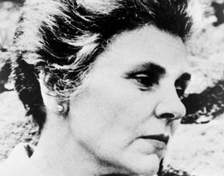
Plath with husband Ted Hughes

 PLATH’S TECHNIQUE

 Style:  Plath’s style changed considerably during her career – unlike, say, Hopkins.  However, there are certain features that mark all her work:

  • Her remarkable use of language
  • Unusual and striking imagery

Language:  Plath’s ‘crackling verbal energy’ is apparent in her poems’ biting precision of word and image.  Her writing has been variously praised for its tactile quality, power, incisiveness, control, taut originality, and luminosity.  Joyce Carol Oates observed that, ‘the final memorable poems (‘Elm’, and ‘The Arrival of the Bee Box’ among others) … read as if they’ve been chiselled with a fine surgical implement out of arctic ice.’  In her Journals, Plath constantly urges herself to develop ‘diamond-edged’, ‘gem-bright’ style.  This she certainly achieved.  Part of her technique was to reuse certain words in many poems, which thus took on an almost symbolic meaning: smiles, hooks, element, dissatisfaction, vowels, shriek, horse, sea.

‘Pheasant’ is a good example of her skilled control of descriptive language.  The form here is less dominant, and the poet’s feelings are reflected in the personal voice that speaks throughout.  The words are simple, the descriptions are vivid, and the poem is crystal clear – a good example of Plath’s descriptive powers at their best.

‘Elm’ shows her powerful response to loss, pain and terror.  The feeling of despair, for example, is conveyed through a number of highly charged nouns and verbs.

 Imagery:  Certain images recur in Plath’s poetry, taking on a symbolic meaning that gains added force through repeated use.

  • The moon symbolises barrenness, coldness, and the negation of life. in ‘Elm’ it is merciless, cruel, and barren, associated with pain and suffering.
  • The mirror often symbolises the hidden alter ego (the ‘other self’), as in ‘Mirror’.
  • The horse is a symbol of vitality. In ‘Elm’, love gallops off like a horse.
  • The sea is often associated with undefined menace or hidden threat, as is so graphically evident in ‘Finisterre’.

She uses many other images, however, that are not symbolic, images that add to the vividness and immediacy of what she is describing.  One of the most distinctive features of her work is her use of metaphors, many of which are visual.

Examples abound:

  • Mists are ‘souls’, which ‘bruise the rocks out of existence’ (‘Finisterre’).
  • The pheasant is ‘brown as a leaf’, a ‘little cornucopia’ (‘Pheasant’).
  • The bee box is ‘square as a chair’, a ‘midget’s coffin’ (‘The Arrival of the Bee Box’).
  • Bees are like ‘African hands, / Minute and shrunk for export’ (‘The Arrival of the Bee Box’).
  • The baby’s mouth opens ‘clean as a cat’s’ (‘Morning Song’).
  • Her crying is ‘a handful of notes’, which rise ‘like balloons’ (‘Morning Song’).

Plath attached great importance to colours, often identifying them with specific attributes.  The repeated use of colour to suggest certain qualities links her poems to one another, giving added force to her meaning.

  • Red signifies vitality, life force: the pheasant’s vitality is envisaged largely through its vivid colouring.
  • Green too signifies the positive, creativity, life force: the pheasant is red and green.
  • Black is associated with death, anger, depression, aggression, and destruction: the black headland that opens ‘Finisterre’ underlines the sinister mood.
  • Surprisingly, white too is sinister: the white faces of the dead, the white mists in ‘Finisterre’.


In Summary then…

Sylvia Plath was a lyric poet in the Romantic tradition.  She wrote poems that drew on her own experience of life and explored a range of emotions from love and joy to terror and despair.  Like the Romantics, she looked inwards rather than outwards; her experience is gauged by what she has lived through.

‘Elm’ is perhaps the most striking example of this.  It is one of a number of poems she wrote around the same time, expressing agonising emotions.  Some of these emotions were quite ‘acceptable’, provided they were not shown too openly: the grief and loneliness expressed in ‘Elm’, for example.  However, less acceptable was the intensity with which she voiced these; it was considered ‘over the top’, too revealing.

The writer and critic Joyce Carol Oates sees in these poems the seeds of Plath’s eventual suicide.

Her poems have that heart-breaking quality about them that has made Sylvia Plath our acknowledged Queen of Sorrows, the spokeswoman for our most private, most helpless nightmares, her poetry is as deathly as it is impeccable; it enchants us almost as powerfully as it must have enchanted her.

Not everyone agrees with this estimate, however.  Janice Markey sees Plath’s writings as life-affirming:

‘The enduring success and greatness of Plath’s work lies in its universal appeal and in an innovative, effective presentation.  Plath was the first writer in modern times to write about women with a new aggressive confidence and clarity, and the first to integrate this confidence and clarity in a sane, honest and compassionate vision’.

_____________________
 Plath (7)

SYLVIA PLATH – AN AMAZING POET

One of the problems when reading poetry is how much do we need to know about the poet’s life and background.  The poet Thom Gunn argues that the making of poems is not like turning out clay pots; poems are rooted in and tell directly or indirectly of a life.  People who have never read a Sylvia Plath poem know that she killed herself at thirty one and therefore, her death has come to overshadow and dominate the life.  In Plath’s case, probably more so than the other poets on our course, her life is so emotionally complicated and complex that a fuller understanding and appreciation of the poems are possible when they are read against the life.  That life was in Sylvia Plath’s own words, ‘magically run by two electric currents’ and these she named ‘joyous positive and despairing negative’; her poetry reflects those charged polar opposites.

The seven poems that we have chosen here were written in the space of two years – the last one, ‘Child’ two weeks before she died.  Her poems describe the natural world and the domestic world but, whether she is writing about a pheasant, an elm tree, bees, or her child, she is primarily writing about herself.

Her poetry is always very urgent and intense.  That poetry has sometimes been described as hysterical and self-dramatising but such descriptions ignore the clear-sighted understanding she has of a situation.  She very often courageously writes of troubled emotions, the darker side of life, her own experiences.  Ted Hughes once told Eavan Boland that Sylvia Plath’s face changed in absolutely every single moment of expression.  She did experience extremes and, if her work is more pessimistic than optimistic, more shaded than light, she herself defended it as follows:

Don’t talk to me about the world needing cheerful stuff!  What the person out of Belsen – physical or psychological – wants is nobody saying that the birdies still go tweet-tweet, but the full knowledge that somebody else has been there and knows the worst, just what it is like.  It is much more help for me, for example, to know that people are divorced and go through hell, than to hear about happy marriages  (Letter to her mother, 21st October, 1962).

‘Morning Song’, ‘Finisterre’, ‘Mirror’, ‘Pheasant’, ‘Elm’, and ‘The Arrival of the Bee Box’, in Seamus Heaney’s words, reveal, ‘the terrible stresses of her own psychological and domestic reality’.  If she writes about a dramatic landscape, as she does in ‘Finisterre’, we see that landscape as Plath sees it.  She brings to it, just as every viewer would, her own preconceptions and concerns.  Anne Stevenson, in her book Bitter Fame: A Life of Sylvia Plath, writes that Plath’s, ‘raw-edged response to personal sorrows and joys, her apprehensions of the world’s horrors and injustices, as well as its beauty, were excessive to an unusual degree.’

Asked once about the importance of poetry, Plath said:

‘I am not worried that poems reach relatively few people.  As it is, they go surprisingly far – among strangers, around the world, even.  Farther than the words of a classroom teacher or the prescriptions of a doctor; if they are very lucky, farther than a lifetime.’

She wanted her poetry to mirror the life lived, its ordinariness and its extraordinariness, so much so that Plath once famously said that she wanted to get a toothbrush into a poem and that she was interested in writing about, ‘The real world.  Real situations, behind which the great gods play the drama of blood, lust and death’.

Her mother, Aurelia Plath, said that Sylvia Plath, ‘made use of everything and often transmitted gold into lead …… These emotions in another person would dissipate with time, but with Sylvia they were written at the moment of intensity to become ineradicable as an epitaph engraved in a tombstone’.  But on the page the thoughts and feelings are shaped and crafted.  Eavan Boland speaks of Plath’s, ‘great elan, her handling of the line, her very unusual take on language and image – all of those things have become coded into the poetry that we now have.  Robert Lowell speaks of Plath’s, ‘perfect control, like the control of a skier who avoids every death-trap until reaching the final drop’ and Michael Schmidt says of her poetry that it ‘is hard to imagine a poetry more forcefully stamped with a personality and voice’.

Therefore, it is clear that the legend of Plath as a dark and driven and unstable young woman is a tremendous simplification of her work.  Her work will endure where poetry endures.
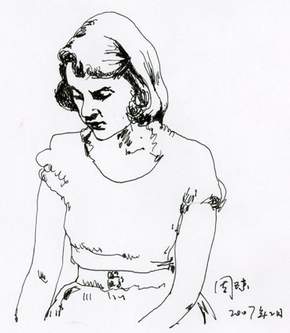
Plath (6)

SAMPLE ANSWER:  Nature imagery in the poetry of Sylvia Plath.

Sylvia Plath was a very ambitious writer.  In 1958, before the publication of her first volume of poetry, she wrote in her journal: ‘I think I have written lines which qualify me to be The Poetess of America ….. I am eager, chafing, sure of my gift.’  Plath dedicated much of her short life to writing and developed several features that became characteristic of her style.  One of the most interesting and accomplished features is her depiction of nature in her work.

Plath shows a very keen eye for detail in her fine and striking portrayals of nature.  It is easy to picture the ‘Black admonitory cliffs’ in ‘Finisterre’ and she can also recreate the beauty of nature’s creatures as we see in ‘Pheasant’ where she marvels at ‘the wonder of it, in that pallor / Through crosshatch of sparrows and starling’.  She manages to capture the beauty and richness and ‘rareness’ of the pheasant in one remarkably apt image: ‘It’s a little cornucopia’.  Imagery, of course, adds a new dimension to Plath’s descriptions of nature.  She uses imagery in a way that sends echoes of suggestion, of splendour, of menace through a poem and invites interpretations from the reader.

Much of her imagery is of a visual kind, in itself emphasising the importance of ‘seeing’ and ‘reflecting’ in her work.  One of her common images from nature, very like Heaney, is water.  In ‘Finisterre’, for example, Plath recreates the sights and sounds of land’s end in a dramatic evocation of the sea as it explodes, ‘Whitened by the faces of the drowned’.  The sea ‘cannons’ to the dead, suggesting that for Plath, it represents a destructive force that humans can only hope to oppose in their unheard prayers to ‘Our Lady of the Shipwrecked’.  The scene at the sea cliffs is a grim one.  Nature is unforgiving; it is a receptacle of death, ‘Leftover soldiers from old, messy wars’, and it holds potential for more evil where ‘rocks hide their grudges under the water’.  Certainly, it is not a benevolent force, not a nostalgic, romantic or sentimental place.  Plath’s vivid and perhaps unexpected images have created a disturbing ‘Bay of the Dead’.

However, a further development occurs in Plath’s imagery when she begins to use it, not merely to create a vivid picture of external reality, but as a device to suggest the inner reality of her own mind.  In this way, Plath uses imagery as an expression of landscape but also as a reflection of her own inner mindscape.  (Hopkins does this also in his Terrible Sonnets).  In other words, Plath succeeds in fusing external events with her own inner feelings.  In the poem ‘Elm’ the poet creates a dark, disturbing and surreal world where love is ‘a shadow’, sunset an ‘atrocity’, where winds are violent, the moon ‘merciless’, and the tree/woman is ‘terrified by this dark thing / That sleeps in me’.  The poem concludes with death that seems, rather than being final, to be ongoing.  The external landscape of the tree may indeed express the inner turmoil and disturbances of Plath’s mind, that has become ‘inhabited by a cry’ that ‘Nightly … flaps out / Looking with its hooks, for something to love’.  The poet is ‘terrified by this dark thing’ that ‘petrifies the will’.

Imagery, therefore, captures various states of emotional distress.  Often this unexpected power of her images originates in objects that at first appear commonplace, such as the elm tree or, in ‘The Arrival of the Bee Box’, the bees.  Nonetheless, the echoes that emanate from such commonplace objects are unexpected and startling.  The bees in the bee box, for example, are variously described ‘a Roman mob’, ‘maniacs’, who speak ‘unintelligible syllables’.  However, the poet has to ‘live with’ them overnight.  Such imagery certainly animates the bees in the poem, but it could also evoke the inner turmoil and chaos within the poet’s mind.  Her inner voices are like the bees: she can’t control them, can’t understand them, they remain ‘dark, dark’.  She also sees them as ‘Black on black, angrily clambering’ and their shriek ‘appals’ her.  In the poem she decides, hesitantly, to ‘set them free’ from her mind, which up to now has remained a ‘coffin’, a locked up box with ‘no exit’.  The poet, dressed in her ‘moon suit and funeral veil’ both wishes for and fears their release.  But the conclusion is more hopeful than that in ‘Elm’, for tomorrow she will ‘set them free’.

(As an interesting exercise, you might examine the poem ‘Mirror’ with some of these ideas in mind.  Stanza two of that poem should reward you with some thoughtful insights!  Another worthwhile study would be Plath’s use of colour and what it might symbolise in her poetry.)

It is clear, therefore, that Plath’s striking metaphors and startling similes are usually central to a poem’s development.  Her images can evoke vivid descriptions of the external world, the poet’s feelings for that world, and at times she has the ability to fuse these feelings to the emotional insecurities of her inner world.

A must read - if you can find the time!
A must read – if you can find the time!

Aere Perrenius … more lasting than bronze …

Hartnett bronze by artist Rory Breslin in The Square, Newcastle West.

There is a very telling little poem by Michael Hartnett tucked away  in A Book of Strays called ‘Aere Perrenius’.   In it the poet recounts early encounters with Patrick Kavanagh after Hartnett had made his way to Dublin, ‘fresh from Newcastle West  / at twenty, with a sheaf of verse / tucked into my belt’.  It is really a very gentle admonition by the very prescient Hartnett who was already garnering academic interest.  He is saying to those who are required, as part of their academic studies, to rummage through the entrails of a poet’s work to be gentle in their excavations.

The Latin phrase aere perrenius comes to us from Horace.  In the final poem in his third book of Odes, Horace boasts that his poetry will outlive any man-made monument: “Exegi monumentum aere perennius.” (“I have made a monument more lasting than bronze.”). Hartnett would probably have been first  introduced to the  beauty and wisdom of Horace by Dave Hayes, erudite classics scholar and teacher of Latin at St. Ita’s Secondary School, Newcastle West where Hartnett studied for his Leaving Cert in 1950’s.

Hartnett’s poem ‘Aere Perrenius’, is therefore, really a poetic warning to young aspiring academics not to ‘tamper with the facts’ of his verse – or indeed Kavanagh’s verse either!  He mentions these, ‘dull strangers with degrees / who prune, to fit conceptions’.  These aspiring scholars build their theories on fragile ground, ‘give you ancestors and heirs’ and try to ‘bring you into line / with academic aims, / number all your bones / and make false claims.’

Would-be academics who undertake such necessary work should be aware, however, of the poet’s sensitivities.  Hartnett is adamant that he can live with being forgotten but not with being misunderstood or misinterpreted:

It is easy to forgive

a world that forgets

but not a world that changes

with subtle sentences

a life that was and is.

Both Hartnett and Kavanagh have had their fair share of being misunderstood – and for those who are familiar with the ‘history’ of their friendship, many will find Hartnett’s appeal on behalf of his ‘mentor’ very commendable!  He claims to understand Kavanagh, for all his rough edges, ‘the smokescreen of your talk / about fillies, about stallions’. His intimate knowledge of the man from Inniskeen is encapsulated in that uniquely Irish form of the ultimate trusting relationship: ‘I sometimes placed your bets.’

He declares that the bronze statue by the Grand Canal in Dublin’s  Baggott Street is best described by Kavanagh’s own word ‘banal’!  He, unsuccessfully as it happens, hopes that he will never suffer a similar fate.  He issues an appeal to all young, and not so young, aspiring academics to thread softly when they come to investigating and exploring the work  of any poet:

                                                            I’d rather be forgotten out of hand

than wronged in bronze:

let the sad facts stand.

Patrick Kavanagh's bronze commemorative seat near Baggott Street Bridge in Dublin
Patrick Kavanagh’s bronze commemorative seat near Baggott Street Bridge in Dublin

Themes and Issues in the Poetry of Elizabeth Bishop

 Bishop (2)

The main purpose of these notes is to assist you in forming an overview of Bishop’s work.  For this reason the material is structured as a series of ‘thinking points’, grouped under general headings.  These cover the poet’s main preoccupations and methods, but they are not exhaustive.  Neither are they ‘carved in stone’, to be memorised: ideally they should be altered, added to or deleted as you develop your own set of notes.  This priceless pearl of wisdom can be applied to the poetry of Elizabeth Bishop but it equally applies to all the other poets on your course as well!

The poems that we will analyse are: The Fish, Filling Station, The Prodigal.  (These are also on the Ordinary Level Course.) and also First Death in Nova Scotia,  In the Waiting Room, At the Fishhouses and Questions of Travel.

Bishop (3)

Major Themes in Bishop’s Poetry

Childhood

  • Many of her poems have their roots in childhood memories, indeed are based on her own childhood (‘First Death in Nova Scotia’, ‘In the Waiting Room’).
  • The perspective is mostly that of adult reminiscence (‘In the Waiting Room’), but occasionally the child’s viewpoint is used (‘First Death in Nova Scotia’).
  • The lessons of childhood are chiefly about pain and loss (‘First Death in Nova Scotia’, ‘In the Waiting Room’).
  • There is a strong tension between the need to return to childhood and the need to escape from that childhood (‘In the Waiting Room’, ‘At the Fishhouses); she even returns in dreams in a poem called ‘The Moose’.
  • Perhaps this is based on the notion of childhood as the completion of the self, and the poems are a search for the self? (Don’t mind me I’m just showing off!)
  • We know she attended counselling to find the origins of her alcoholism and depression. Yet her reconstructions of childhood do not seem to function as Freudian therapy.  She doesn’t seem to alter her direction or attitudes as a result of drawing her past into the conscious, though she does seem to find a deal of comfort and a greater acceptance in the later poem, ‘The Moose’.  She is not trying to apportion blame, neither is she trying to be forgiving or sympathetic.  In general she seems neutral and detached (‘First Death in Nova Scotia’).
  • She also deals with the end of childhood and the awakening to adulthood (‘In the Waiting Room’).

Her life was her subject matter

Bishop was ‘a poet of deep subjectivity’, as Harold Bloom said.  She wrote out of her own experience, dealing with such topics as

  • Her incompleteness (‘In the Waiting Room’)
  • Alcoholism (‘The Prodigal’)
  • Achieving adulthood and the confusion of that (‘In the Waiting Room’)
  • Travel, her wanderlust (‘Questions of Travel’), her favourite places (‘At the Fishhouses’)
  • Even her hobbies, such as fishing (‘The Fish’).

The poet and travel

  • As her own wanderings show, she was a restless spirit, constantly on the move: Nova Scotia, Florida, Brazil, Europe, New York, San Francisco, Harvard.
  • Many of the places she visited (Nova Scotia, the Straits of Magellan, the Amazon Estuary, Key West, Florida) stand at the boundary between land and sea.   There is a tension between land and sea in the poetry of Elizabeth Bishop (‘At the Fishhouses’, ‘Questions of Travel’), with the sea viewed as a strange, indifferent, encircling power (‘At the Fishhouses’).  Perhaps this is a metaphor for the conflict between the artist and life?  Quite a few of her poems are set at this juncture between land and sea (‘At the Fishhouses’, ‘The Fish’).
  • She seemed to be fascinated by geographical extremities: straits, peninsulas, wharves; mountains, jungle, outback (‘Questions of Travel’). Perhaps she was attracted to the near-isolation of these places.  They are almost isolated in her poems.  One critic viewed these as the sensual organs of a living earth, ‘fingers of water or land that are the sensory receptors of a large mass.’  The poet is seen as making sensuous contact with the living earth.
  • Bishop has an eye for the exotic and the unusual (‘Questions of Travel’) but also for the ordinary (‘Filling Station’).
  • She dwells on the difficulty of ever really knowing another culture (‘Questions of Travel’), but this did not prevent her trying!
  • Travel and journeying can be seen as a metaphor for discovery of truth in some poems (‘Questions of Travel’).

Bishop and the natural world

  • Nature is central to her poetry, either as an active element central to the experience of the poem or by making an intrusion into the domestic scene (in a minority of poems such as ‘Filling Station’, ‘First Death in Nova Scotia’, and ‘In the Waiting Room’).
  • The experience of really looking at and encountering the natural is central to her poetic process (‘The Fish’, ‘Questions of Travel’).
  • Our ability to understand the natural is sometimes limited, yet there are great moments of awe and insight in our encounters with the otherworldly spirit of nature (‘The Fish’).
  • Bishop is always aware of the sheer beauty of nature (‘Questions of Travel’) and this is obviously tied in with her fascination with travel and her already mentioned interest in the exotic.
  • She tends to domesticate the strangeness of nature through language and description (see ‘The Prodigal’).
  • You should also consider again some of the points already made, such as how geographical extremes fascinated her, her beloved places, and the significance of journeys for her.

The domestic and the strange

  • The importance of the domestic is also a central ground in her poetry. Domesticity is one of the unifying principles of life.  It gives meaning to our existence (‘Filling Station’).
  • The comfort of people, of domestic affections, is important (‘Filling Station’).
  • Yet the heart of the domestic scene can sometimes be enigmatic. This strangeness, even at the centre of the domestic, is a powerful element in human life (‘First Death in Nova Scotia’, ‘In the Waiting Room’).  One can be ambushed by the strange at any time, even in the security of the domestic scene (‘In the Waiting Room’)

Bishop’s philosophy as revealed in the poems

  • Bishop’s is a secular (non-religious) world view: there is no sense of ultimate purpose, and in this she relates to modernist American poets like Frost and Stevens.
  • Hers is very much a here-and-now, existential philosophy: the experience is everything. There is some sense of tradition or linear movement in her life view, but tradition is just an accumulation of experience.  The transience of knowledge (‘At the Fishhouses’) and the limits to our knowing (‘Questions of Travel’) contribute to this outlook.
  • Her ecological outlook is at the basis of her philosophy, as we have seen: humans communing with nature, discovering, encountering, not domineering (‘The Fish’).
  • She demonstrates the importance of the domestic (‘Filling Station’).
  • Her view of the human being is as fractured and incomplete (‘Chemin de Fer’). This duality has been described by Anne Newman (in Elizabeth Bishop: Modern Critical Views, edited by Harold Bloom) as follows: ‘She sees the ideal and the real, permanence and decay, affirmation and denial in both man and nature’; a sort of ’fractured but balanced’ view of humanity’.  Examine ‘Filling Station’ and ‘In the Waiting Room’ for signs of this.
  • A person may not always be entirely free to choose her location (‘Questions of Travel’), yet she can make a choice about how her life is spent. Life is not totally determined (‘The Prodigal’).
  • The bleaker side of life is often stressed, the pain, loss and trauma (‘The Prodigal’, ‘First Death in Nova Scotia’, ‘In the Waiting Room’), yet she is not without humour (‘At the Fishhouses’, ‘Filling Station’).
  • She believes we need to experience our dreams (‘Questions of Travel’).
  • Is her overall view of humankind that of the eternal traveller, journeying? And is the journey all?
  • She expresses the unknowable strangeness of death (‘First Death in Nova Scotia’).
  • Yet there is a sort of heroism evident in her poems. Many of the poems feature a crisis or conflict of some sort, with which the narrator deals courageously, often learning in the process (‘The Fish’, ‘In the Waiting Room’).

Bishop and Women’s Writing

  • Are you conscious of the femininity of the speaker in Bishop’s poems? Some critics have argued that the importance of the domestic principle in her philosophy (‘Filling Station’) and the attitudes of care and sympathy in the poems (for the fish, the prodigal, the animals and birds) and even the occupational metaphors, for example of housekeeping (‘Filling Station’) and dressmaking and map colouring in other poems, all indicate a strong feminine point of view in her poetry.
  • Other critics have argued that her rhetoric is completely asexual, that the poet’s persona is neutral, the Bishop ‘I’ is the eye of the traveller or the child recapturing an innocence that avoids sex roles altogether, an asexual self that frees her from any sex-determined role.  Examine ‘Questions of Travel’ and ‘First Death in Nova Scotia’ in this regard.
  • We have already encountered something of her treatment of her own sexuality and her attitude as a child to female sexuality (‘In the Waiting Room’ and other poems).

Bishop (4)

Style and Technique

Variety of verse forms

  • Though she was not often attracted to formal patterns, there are a variety of verse forms found in Bishop’s poetry: sonnet, sestina, villanelle, etc. (‘The Prodigal’, ‘Sestina’).
  • She used a variety of metres but often-favoured trimeter lines (resulting in those long thin poems!).
  • She was happiest using free verse (‘Questions of Travel’. ‘At the Fishhouses’).

Her descriptions

  • The surface of a Bishop poem is often deceptively simple.
  • A favourite technique is ‘making the familiar strange’ (‘Questions of Travel’).
  • Her detailed descriptions function as repossession or domestication of the object by the artist. This is how she gradually apprehends her subject, through the accumulation of detail (‘The Fish’).
  • Bishop often insisted on the truth of her descriptions, but the reality is more complex than that. Her descriptions are both recreation and creation, creating veracity but also using poetic licence (‘In the Waiting Room’).
  • Her similes and metaphors are often surprising, like conceits. They can be both exciting and exact.

Control and feeling

  • Many of her poems deal with emotive subjects (‘In the Waiting Room’).
  • There is an element of spontaneity and naturalness in the tone. Consider the opening of ‘In the Waiting Room’ and ‘Filling Station’.  ‘The sense of the mind actively encountering reality, giving off the impression of involved immediate discovery, is one of Bishop’s links to the Romantics,’ as the critic Penelope Laurans put it.
  • The matter-of-fact tone avoids sentimentality. The use of understatement controls feeling (‘In the Waiting Room’).

The absence of moralising

  • Her dislike of didacticism is well documented. She disliked ‘modern religiosity and moral superiority’, and so she avoids overt moralising in her poems.  The scenes offer up their wisdom gradually, ass the descriptions help us to understand the object or place (‘At the Fishhouses’, ‘Questions of Travel’).

Bishop as a dramatic poet

Consider:

  • Scenes of conflict or anger
  • Moments of dramatic encounter
  • Dramatic monologue structure in many of the poems.

Bishop (7)

MAKING THE STRANGE FAMILIAR: FORGING A PERSONAL UNDERSTANDING OF BISHOP’S POETRY

Think about the following points, and make notes for yourself.

  • Which of her poems made the deepest impression on you?
  • Which passages would you wish to read and reread?
  • What are her principal issues or concerns?
  • Did you find that reading Bishop gave you any insights into human beings or the world? What did you discover?
  • Think about the landscapes and places that attracted her. What do they suggest about the poet and poetry?
  • What do you notice about the people featured in her poetry?
  • Do you find her poetry different in any way from other poetry you have read?
  • Why should we read Bishop?
  • What questions would you like to ask her about her poetry?

BISHOP’S LINKS TO THE ROMANTICS

The Romantic Movement held sway at the beginning of the nineteenth century.  It was at its height between 1800 – 1830 and the main architects of this movement were Wordsworth, Keats and Coleridge.

There follows a list of some of the main distinguishing features of Romanticism.  Consider Elizabeth Bishop’s poetry in the light of some or all of these statements.

  • Romanticism stressed the importance of the solitary individual voice, often in rebellion against tradition and social conventions.
  • In place of orthodox religious values the individual looks for value and guidance in intense private experience.
  • Nature often provides this intense experience, hence the notion of nature as the great teacher and moral guide as in Wordsworth’s ‘Tintern Abbey’ (or even ‘The Daffodils’!).
  • Romanticism can show a divided view of the individual. The individual is often pulled in opposite directions – for example solitariness versus sociability, lonely pursuit of an ideal versus community fellowship.
  • It is anti-rational. Feelings, instinctive responses, unconscious wisdom and passionate living are valued more than rational; thought.
  • Dreams and drug-enhanced experiences are especially valued. Children, primitive people, outcasts, even the odd eccentric figure are regarded as having special insight and wisdom.
  • ‘Bishop explored typical Romantic themes, such as problems of isolation, loss, and the desire for union beyond the self.’ Explore the poetry in the light of this statement.
  • It has been said that Bishop’s practice of poetry follows Wordsworth’s advice that poetry should embody controlled passion. For Wordsworth, (and for Bishop also), poetry was ‘the spontaneous overflow of powerful feelings’ and many of his great poems embody the notion of ‘emotion recollected in tranquillity.’ Would you agree with this assessment of her poetry?
  • Finally, as a little test of your new-found expertise, examine ‘At the Fishhouses’ as an example of a great Romantic poem.

Bishop (1)

ELIZABETH BISHOP – AN OVERVIEW

The poems by Elizabeth Bishop on our course reveal many of the most striking characteristics of her work: her eye for detail, her interest in travel and different places, her apparently conversational tone, her command of internal rhyme, her use of repetition, her interest in strict poetic forms (the sonnet and the sestina), childhood memories, identity, loss.

The world, which Bishop describes in her poetry, is vivid and particular.  She is so intent on accurate description that often the detail is qualified and clarified within the poem.  In Michael Schmidt’s words, ‘the voice affirms, hesitates, corrects itself; the image comes clear to us as it came clear to her, a process of adjusting perception until the thing is seen.  Or the feeling is released.’  For example, in ‘The Fish’ she tells us:

                       While his gills were breathing in

the terrible oxygen

– the frightening gills,

fresh and crisp with blood,

that can cut so badly –

Another example would be where she describes the eyes of the fish.  She says that they ‘shifted a little’ and then she clarifies this further with the more precise observation that, ‘it was more like the tipping / of an object towards the light’.

Bishop is a sympathetic observer and it has been said of her that she asks us ‘to focus not on her but with her’.  She looks at the fish, imagines its insides – ‘the coarse white flesh / packed in like feathers, / the big bones and the little bones … ; she sings hymns to the seal in ‘At the Fishhouses’; she finds love is present in the unlikely setting of a dirty filling station.  When Bishop uses ‘I’ in her poetry it is never alienating or distancing.  Somehow she makes the reader feel at ease.  The poems as we read them are working something out.

Her poetry is not always strictly autobiographical but Bishop, an outsider for much of her life, writes indirectly in ‘The Prodigal’ of the outsider and later, in the explicitly autobiographical ‘In the Waiting Room’, she names herself (‘you are an Elizabeth’) and charts the sense of her child’s mind realising her uniqueness and identity.  ‘Sestina’ is also autobiographical, in that it tells of a home without a mother and father.  She only wrote of her childhood experiences late in life: ‘Sestina’, ‘First Death in Nova Scotia’ and ‘In the Waiting Room’ all date from when she was in her fifties.  In these poems she captures the confusion and complexities of childhood, its terror, panic and alienation.  In ‘First Death in Nova Scotia’, she pieces together, as a child’s mind would, the details in order to understand them: ‘Arthur’s coffin was / a little frosted cake, / and the red-eyed loon eyed it / from his white, frozen lake.’

It has been said that Bishop preferred geography to history and it is significant that she remembers reading National Geographic in ‘In the Waiting Room’.  The title of her first book, North and South, contains the idea of opposites but opposites that co-exist.  Yet her descriptions of place are never just descriptions of place.  Morality, history and politics are also evident in Bishop’s landscapes.  In ‘Questions of Travel’, Brazil and its otherness prompt Bishop to ask if it’s right to watch strangers in another country.  She dwells on the country’s traditions (‘In another country the clogs would all be tested’), religious influences (‘a bamboo church of Jesuit baroque’), history (‘the weak calligraphy of songbirds’ cages’).

In her poetry there is self-discovery, a sense of difference, moments of heightened awareness (epiphanies), a strong sense of here and now, an absence of any religious belief but a belief in the mystery of knowledge ‘flowing and flown’.  In ‘At the Fishhouses’ what begins as accurate and gradual description of landscape gives way to a downward movement towards the dark cold centre of meaning, here imagined as deep beneath the ocean surface and something that we can never know or understand fully.

In Bishop the act of writing and the art of writing bring shape and order to experience.  In ‘Questions of Travel’ she describes the traveller taking a notebook and writing.  The use of ‘we’ in the poem and the way in which every traveller is contained in ‘the traveller’ allows everyone to enter into the experience.  This record of thought and feeling is what Bishop herself does in her poems.  She was interested in form: the sonnet and the sestina are very formal, but in other poems where the structure and rhythm may not be obvious at first there is often a very fine command and control.

***

In one of her finest poems, ‘Crusoe in England’, she imagines Robinson Crusoe lonely for his island and his friend Friday; and remembering his time there, she writes:

                   The sun set in the sea; the same odd sun

                   rose from the sea,

                   and there was one of it and one of me.

Here we have the voice of Robinson Crusoe, and the voice of Elizabeth Bishop, and the voice of all other lonely, observing, travellers.  It is significant that Bishop was attracted to the figure of Robinson Crusoe, an isolated figure, someone ill at ease having returned to society.  Her sexuality and her struggle with alcohol were part of her own sense of isolation.  In a letter written in 1948 to Robert Lowell she said, ‘When you write my epitaph, you must say I was the loneliest person who ever lived.’  Her later work suggests a happier Elizabeth Bishop, but her life was never uncomplicatedly happy.

Bishop’s The Complete Poems 1927 – 1972 contains just over 140 poems and some thirty of these are translations from French, Spanish, and Portuguese.  She wrote very slowly, very carefully, sometimes pinning bits of paper on her walls, leaving blank spaces (‘with gaps / and empties for the unimagined phrases’ is how Robert Lowell described it in a poem for her), waiting for the right word.  Some of her poems were several years in the making.  She worked on ‘The Moose’ for over twenty-five years, yet it seems effortless as all good poetry does.  She writes a poetry that echoes the rhythms of natural speech and her rhymes are not always easy to detect.  End rhymes and cross rhymes or slant rhymes create a special and effective music.  And what Yeats says of all true poetry is true of Bishop:

                             ‘A line will take us hours maybe;

                             Yet if it does not seem a moment’s thought,

                             Our stitching and unstitching has been naught.’


words-in-air-robert-lowell-and-elizabeth-bishop1 

Sample Answer:

‘Bishop’s poems are constructed around movement and reflection.  She is a meticulous writer who effectively combines precise observations with striking imagery’.

In the words of famous American poet, Robert Lowell, ‘I don’t think anyone alive has a better eye than she has’ – there is ample evidence in her poems on the course of the truth of this statement.

Each of her poems, from ‘The Fish’ to ‘First Death in Nova Scotia’, throbs with movement and reflection.  Bishop is a poet who seems preoccupied with the passion of movement, yet never strains in her ability to capture its beauty, strangeness or intricacies in imagery which can be dramatic, and at times almost outrageous, in its originality.  In ‘The Fish’, she describes how the fish hung ‘a grunting weight’ while his eyes ‘shifted a little’.  Through the poem, Bishop reflects on its suffering movements before she finally ‘let the fish go’.  Further activity is observed in ‘At the Fishhouses’ including the motion of wheelbarrows, the sea that considers ‘spilling over’, the standing seals and ‘forever flowing water’, all elements within a sea of change.

‘Filling Station’ has dirty monkey suits, wickerwork baskets and dogs, bringing to vivid life the ordinary, mundane scenes of a petrol station.  The observations here are precise, honest and real, ‘a dirty dog’, ‘a big dim doily’ … (‘Embroidered in daisy stitch / with marguerites, I think, / and heavy with grey crochet’.); the comic books which provide ‘the only note of colour’.  Much description, little movement it seems, until the observer moves outside where ‘high-strung automobiles’ fill up with gas as they impatiently prepare to depart the scene.

Movement is never described for its own sake or in isolation.  It expands on a theme, a tone, a mood that the poem is trying to reflect on.  The repentant wastrel in ‘The Prodigal’ mentions ‘pigs’ eyes’ following him, while the farmer comes at dark to inspect his labourer.  These images are used to emphasise to us the misery and remorse of the prodigal, a lonely emigrant worker in a foreign land at the soul-destroying job of pig-herding.

In her later poems, Bishop’s reflection on what she observes becomes a theme in itself.  In ‘Questions of Travel’, for example, there are ‘too many waterfalls … and the pressure of so many clouds on the mountaintops / makes them spill over the sides in soft slow-motion’.  Bishop feels a pang of guilt as the scene unfolds and asks, ‘Is it right to be watching strangers in a play / in this strangest of theatres?’  It is noteworthy too, that in describing the skies of Brazil she imports her imagery from Nova Scotia in saying, ‘the mountains look like the hulls of capsized ships, / slime-hung and barnacled’.  However, some things she observes will always be ‘inexplicable and impenetrable’ and can only be pondered on ‘blurr’dly and inconclusively’.

In all her poems, Bishop describes and defines movement, reflecting on landscape, animals and on people who work in and traverse that landscape.  No detail seems too trivial for her to note in her observations.  She paints striking pictures with imagery which is surprising, unusual and captivating – all the more so because many images depict ordinary, everyday scenes.  Bishop was a meticulous worker, whose attention to detail shows she had a reflective mind and was a keen observer.  Her craft, like her knowledge, is ‘flowing and flown’.

Bishop (5)

The Poetry of Gerard Manley Hopkins

maxresdefault

Fr. Gerard Manley Hopkins S.J. can perhaps be best described using Winston Churchill’s barbed attack on Russia, made in a radio broadcast in October 1939. He famously depicted Russia as, ‘a riddle, wrapped in a mystery inside an enigma’.  Studying Hopkins’s poetry can leave us in much the same frame of mind as Churchill!  Hopefully what follows will provide you with a key to help unlock the enigma!

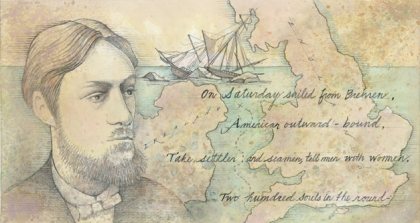
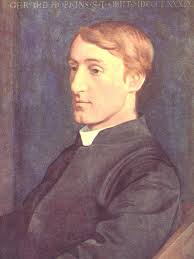
He was born in Stratford, Essex in 1844 and educated at Highgate School and at Oxford, where he became a friend of the poet, Robert Bridges.  He was very influenced by the Oxford Movement and he was drawn towards Newman and eventually, like Newman, he converted and became a Roman Catholic.  Hopkins didn’t do things by halves and he went on to join the priesthood, not just the ‘ordinary priesthood’ either but he joined the Jesuits and was ordained in 1877.

Shortly after joining the Jesuits he resolved not to write any poetry unless asked to do so by his Superiors.  This is in fact what eventually happened: his Rector suggested that he should write a poem to commemorate five Franciscan nuns who had been drowned in a boating accident on the Thames.  The result was his great poem, ‘The Wreck of the Deutschland’, which he completed in 1875.

He wrote steadily for the rest of his life, but made no effort to publish, being content with the opinions of Robert Bridges and a few intimate friends.  Following ordination he worked as a priest in the slums of London, Liverpool and Glasgow, eventually coming to Dublin Catholic University (now UCD) where he was professor of Greek.

He died of typhoid fever in 1889 and he is buried in Glasnevin Cemetery, Dublin.  His work was first collected and published by Robert Bridges in a selected edition in 1918 and he became an overnight success 29 years after his death!  His poetry was swiftly recognised for its great freshness and energy.  So, even though he lived and died in the nineteenth century, Hopkins has become one of the great poets of the twentieth century!

Hopkins was a very original poet.  He abandoned the traditional metres and substituted his own innovative ‘sprung rhythm’, where the stresses responded to the meaning rather than to any mechanical pattern.  He used words in new and startling combinations and frequently dispensed with definite articles, conjunctions and even verbs.  As with all great poets this language was not invented for its own sake, but to get across a deeply personal and passionate response to the world and its Creator.  Since 1918 his reputation has risen steadily, and he is now rightly regarded by many as the greatest of the Victorian poets.

He once said that we should read his poetry with our ears, which seems like an impossibility, but is not, since many of the sounds we hear create images in our mind.  He also said, ‘Perfection is dangerous because it deceives us – because there is no perfection on this earth’.

In Roddy Doyle’s novel The Van, Darren, studying Hopkins’s poetry for the Leaving Cert., reads one of the poems and wonders when Tippex had been invented and concludes, ‘Gerrah Manley Hopkins had definitely been sniffing something.’

C&H (2).tif

MAJOR THEMES IN HOPKINS’S POETRY

NATURE

  • The world of nature pulses with energy because it is charged with the grandeur of God.
  • Spring is a glimpse of what the Garden of Eden must have been like.
  • Everything in existence has its own unique identity and inscape. It is possible to recognise God’s design in every natural object.
  • Contrast (dappled things) and variety set off the beauty of things.
  • Unspoilt nature (the weeds and the wilderness) is a precious resource.
  • Humankind’s sinfulness and the Industrial Revolution have made us insensitive to the beauty and preciousness of the natural world.
  • Despite the destructive activities of humankind, the Holy Ghost protects and renews the natural world.

SUFFERING AND ALIENATION

  • Humankind’s sinfulness brings it suffering and toil.
  • Acceptance of God’s will brings comfort and relief from pain.
  • Spiritual desolation is a bottomless pit of suffering.
  • The worst form of suffering, outside of Hell, is the desolation caused by self-disgust.
  • Suffering is a mystery understood fully by God alone.

RELATIONSHIP BETWEEN PEOPLE AND GOD

  • God makes himself known to us through the world of nature and in the faces of people.
  • He is the ‘dearest freshness’ that permeates the natural world.
  • Only through the submission of our will to the will of God can we truly reveal our inner beauty.
  • God has made us the gift of natural beauty, with all its variety.
  • Humans are insignificant beings who have been rescued from death and oblivion by the sacrifice of Christ on the cross.
  • God’s will is a mystery to us.

MAIN FEATURES OF HOPKINS’S STYLE?

What about some of the following?  Energetic, intense, concentrated in meaning, obscure, tortuous, original, musical, dramatic, oratorical, erudite, demanding………

01d8796bb83aaaa8c9dd03ed13507e28

SOME IDEAS ON THE CONCEPTS OF INSCAPE AND INSTRESS AND SPRUNG RHYTHM


(It is not essential to have an understanding of these concepts to appreciate the poetry of Hopkins.  If your reading of these notes enhances your understanding of the poet’s work, then they are worth reading; otherwise, they are a hindrance.)

 In our modern world we are familiar with the idea of each human being having a unique genetic code or DNA.  Hopkins’s theory was that everything in God’s creation had its own unique characteristics.  If you look closely at an object and if you have the sensitivity to recognise its unique character, the object will reveal its ‘inscape’ or, if you like, its inner landscape.  Finding the object’s form and shape, both external and internal, is the same as finding its inscape.  One of the reasons Hopkins abandoned the idea of being an artist was that he found that he could not ‘capture’ the inscape of things in his drawings.

‘Instress’, according to Hopkins, is the energy of God pulsating through all created things (‘The world is charged with the Grandeur of God’).  It is a coherent force, coherent because it comes from a single source.  He sees the inscape and feels the instress.  ‘All things are upheld by instress and are meaningless without it.’

Essentially, what Hopkins was attempting to do with the words ‘instress’ and ‘inscape’ was to provide a theory on the way in which objects, natural or human, create a reaction in the person who is looking at them.  He believed that what he saw was contained in the object rather than a result of his imaginative interpretation of that object.  He believed that the impact of that object on him was due to the object rather than to his subjective response to it.  ‘I thought how sadly beauty of inscape was unknown and buried away from simple people (like Leaving Cert. Students!) and yet how near at hand it was if they had eyes to see it.’

‘The Windhover’ provides an excellent example of these two concepts.  The effort to describe the bird goes beyond mere description of its physical form or appearance (‘wimpling wing’): there is almost a scientific attempt to ‘capture’ its movements (‘Of the rolling level underneath him steady air’).  This, however, is only part of the process.  The inner form of the bird, its virtues or strengths, are identified (‘Brute beauty and valour and act, oh, air, pride, plume’).  There is more.  The hidden ‘meaning’ or symbolic significance of the falcon is uncovered in a moment of mystical recognition that Joyce would call an ‘epiphany’.  T. S. Eliot called it ‘the intersection of the timeless with time.’  It is the moment when the observer recognises God’s plan for mankind in the action of a bird in flight.

SPRUNG RHYTHM

By the time Hopkins’s poetry was published in 1918, many poets had already begun to dispense with regularity and rules regarding rhythm; nevertheless Hopkins’s revolutionary experiments with rhythm inspired many modern poets to be more daring and unconventional in their approach to composition.  Of ‘The Wreck of the Deutschland’ Hopkins wrote: ‘I had long had haunting my ear the echo of a new rhythm which now I realised on paper.’  He called this new rhythm ‘sprung rhythm’, because it springs naturally.  It has the following characteristics:

  • There is a fixed number of feet (rhythmic units) per line.
  • Each foot has one stressed syllable.
  • The stressed syllable may stand on its own, or may be accompanied by any number of unstressed syllables. Hopkins summed this up very well when he wrote: ‘One stress makes one foot, no matter how many or how few the syllables.’

He developed sprung rhythm because he believed that ‘it is the nearest to the rhythm of prose, that is the native and natural rhythm of speech.’  He added that ‘my verse is less to be read than heard….It is oratorical, that is, the rhythm is so.’

One of the natural consequences of allowing any number of unstressed syllables in a line is that it generates energy.  Unstressed syllables must be uttered quickly.  The more there are in a line, the more energetic the line will be.  This has a clear value for a poet who sees the world of nature as charged with the energy of God.

Sprung rhythm is used most blatantly in ‘As Kingfishers Catch Fire’ and ‘The Windhover’, both of which vibrate with the energy of the natural world.  ‘Felix Randal’ also employs sprung rhythm extensively; other poems contain elements of it.
SUMMARY

To simplify matters, remember this: Hopkins believed in the idea of incarnation.  Christ was both man and God; so, too, the world is a combination of the material and the divine.  Seeing the divine in the world is the same as seeing its inscape.  Feeling the divine presence is the same as feeling its instressSprung rhythm is a poetic device used to reveal the energy of God that pulses through the world.
hopkins_small2

GERARD MANLEY HOPKINS – A GENERAL OVERVIEW

(As a member of the Jesuit order – the same order, it must be remembered, who were responsible for Joyce’s education at Clongowes and later at University – Hopkins was devoted to God and his poetry is a unique record of that devotion.  In the twentieth-century several critics praised his efforts to restore ‘freshness in words’ and others came to recognise in Hopkins one of the most powerful religious poets writing in the English language.)

Though he lived and died in the nineteenth century, Hopkins is frequently considered a twentieth-century poet, not because his poems were not published until 1918 but because of their startling and unique style.  It has been said that Hopkins was a Victorian in that he was serious, scrupulous, hard-working and set himself exacting ideals, but in his remarkable poetic innovations he was ahead of his time.  His poetry was misunderstood, unappreciated, unknown during his lifetime and, even though he had a strong sense of duty and believed in self-sacrifice, he also had an independence of spirit that is evident in his work.  He did not write for an audience nor did he follow the contemporary literary fashion.  Hopkins, says Robert Bernard Martin, ‘is constantly more concerned with putting across his perceptions than with fulfilling customary expectations of grammar … Most persistent readers of his poems learn to abandon their usual demands of convention in language, in order to enjoy a fuller poetic process than would otherwise be possible.’   Coventry Patmore, however, found that Hopkins’s poetry had the effect of ‘veins of pure gold imbedded in masses of unpredictable quartz’.  As mentioned earlier Roddy Doyle in his novel The Van, has Darren, studying Hopkins’s poetry for the Leaving Cert and when he reads one of the poems, wonders when Tippex had been invented and concludes, ‘Gerrah Manley Hopkins had definitely been sniffing something.’

And his poetry, though written in the nineteenth century, had an extraordinarily important influence on twentieth-century poetry.  It was not so much that other poets imitated Hopkins; rather they were empowered to develop and explore their own individuality.  His style was fresh and free and dazzlingly different. (!)  Robert Bridges, Britain’s Poet Laureate, was Hopkins’s contemporary (both were born in 1844) and friend.  It was Bridges who first published Hopkins’s poetry in book form in 1918 and an early reviewer of the poetry said that, ‘You fight your way through the verses yet they draw you on’, that the language, at times, created ‘an effect almost of idiocy, of speech without sense and prolonged merely by echoes’.  But that same reviewer, in 1919, claimed that Hopkins’s poetry contained ‘authentic fragments that we trust even when they bewilder us’.

He always claimed that things are more beautiful in movement, as in the flight of the kingfisher, shooting weeds, the windhover, Felix Randal beating iron out, or the mountain stream ‘His rollrock highroad roaring down’.  And he loved the distinctness in all things; each must be the individual that it is, as in ‘As Kingfishers catch fire’.  He loved the uniqueness of things, the ‘individually distinctive.’   He called this quality INSCAPE.  Another principle, that of INSTRESS was used by him to convey his understanding of the energy which made possible this uniqueness (‘It is the virtue of design, design, pattern, or inscape to be distinctive’ wrote Hopkins in a letter to Bridges).  Michael Schmidt, in his Lives of the Poets, sums it up as follows: ‘Inscape is manifest, instress divine, the immanent presence of the divine in the object.’

Hopkins, says Seamus Heaney, is a poet who brings you to your senses.  The reader sees and hears the ‘hereness-and-nowness’ of the moment but the sounds also match the poem’s tone and mood.  Hopkins believed that ‘my verse is less to be read than heard….it is oratorical, that is the rhythm is so’.

When he looks at nature, his involvement with what he sees is total but it is never a celebration of nature for its own sake; Hopkins saw nature as an expression of God’s grandeur.  His poetry is inspired by his love of God and God’s creation.  He is a poet of extraordinary highs.  The imagination soars in a poem like ‘The Windhover’ but he is also a poet who is capable of writing the bleakest poetry about the depths of despair in The Terrible Sonnets.

images (7)

SAMPLE ANSWER

‘Hopkins’s imagery impresses us with its originality and its range.’  Discuss this view using a selection of poems by Hopkins on your course.

Hopkins is regarded as an innovator.  He innovated in many ways in his poetry and one primary instance of this innovation occurred in his use of language.  The world surrounded Hopkins with visions of God’s glory and the poet responded by capturing those moments in imagery that is ostensibly original and quite remarkable in its range.  Hopkins’s imagery serves one of two main purposes: to record and communicate the beauty of nature and its Creator or to reveal the anguish of a desolate soul that feels isolated from God.  In the early poetry, Hopkins employs imagery to expose God’s glory in nature’s elements while the later poetry gives us dramatic images of desolation and despair.

He opened an early poem of celebration, ‘God’s Grandeur’,  with the line: ’The world is charged with the grandeur of God’ and it seemed it was not too difficult for this sensitive poet to confirm this in the world around him.  In ‘Pied Beauty’ he also praises God for his creation when he says, ‘Glory be to God for dappled things’.  Hopkins, therefore, did not accept nature’s glories in any bland or pedestrian way.  Rather, he responded to them with imagination and freshness to create images that are strikingly original and at times quite inventive.

In ‘The Windhover’, Hopkins uses recurring images of royalty.  The high-flying solitary falcon is a monarch of the sky, surging with the poet’s spirit through the steady air.  The poet uses chivalric terms such as ‘dauphin’, and ‘minion’ to capture the elegant and dignified ‘striding’ falcon, the prince of the daylight.  God, too, is visualised as a ‘chevalier’.  These images carry connotations of medieval romance and chivalry, and perhaps the virtuous struggle of the falcon in the air is symbolic of the Christian knight, Christ the chevalier, overcoming the pervasive threat of evil.  This conflict in the poem is dramatised through imagery that suggests the supremacy of the falcon in flight, and his control and mastery that ‘rebuffed the big wind’.  Another feature of Hopkins’s images here is the way in which they are loaded with possibilities.  It is as if Hopkins intended to create multiple ideas in some of his images, each interesting and valid in its own way.  For example, the image of the falcon on a ‘rein’ may represent the motion of as horse at the end of a trainer’s long rein.  However, the term, being ambiguous, could also suggest the spiral climb of the bird.  Perhaps, Hopkins is encouraging us to ‘Buckle’ several ideas in our engagement with the poem.  What is not in doubt, at any rate, is the powerful and original representation, through the falcon, of Christ’s beauty and nobility.

Hopkins uses a very different image in describing the precision of the falcon’s flight, where he says, ‘As a skate’s heel sweeps smooth on a bow-bend’.  This image also conveys the speed of the bird’s flight.  Other original images include that of ‘blue-bleak embers’ representing self-sacrifice and the ‘plough down sillion’ that evokes the hardship and perhaps tedium of daily labour.  In ‘The Windhover’, therefore, Hopkins employs images of flight, of majesty, of sacrifice and of glory ranging from a ‘dauphin’ to a ‘skate’s heel’, from a ‘fire’ to ‘blue-bleak embers’.  Such remarkable and wide ranging imagery reflects the vivid and precise response of the poet’s imagination to the sight of the falcon at dawn.  More importantly, perhaps, the imagery reveals that the moment created a response of deep spiritual insight.  There is nothing particularly novel in taking a falcon as subject matter.  However, what is original is the way Hopkins engages with the falcon, observes it and concentrates on it in a deeper way and articulates what it revealed to him through an interesting range of original imagery.

However, particularly in his Terrible Sonnets, there is another, more disturbing effect created by Hopkins’s wide ranging use of imagery. We know that he wrestled with doubt, particularly during his final years which he spent teaching in Dublin.  God exists, he is always certain of that, but why does he appear to be so far away, apparently unresponsive and uncaring to a man whose letters are ‘dead’?  Hopkins’s increasingly sinister images explore the bounds of human suffering and despair.  In the sonnet ‘I wake and feel the fell of dark’, for example, the conspicuous absence of daylight reminds us how far the poet has come from the glorious sunshine and colour in ‘Spring’, ‘God’s Grandeur’ or ‘The Windhover’.  There is little evidence of ‘couple-colour’ in ‘the black hours’ Hopkins has spent with his torment, suffering ‘yet longer light’s delay’.  The delay of light represents of course the delay of hope – all is now ‘gall’ and ‘heartburn’.  Quite remarkably, taste is evoked as a description of the poet’s state.  He becomes bitterness itself, borne out of his despair.  Yet, perhaps this is God’s will that he suffer the ‘curse’ with which his ‘bones’ and ‘flesh’ must contend.  But the poet’s tormented spirit is souring dough, which needs to be infused with spiritual ecstasy.

In his sonnet ‘No worst, there is none’, Hopkins outlines the intensity of his pain in the opening quatrain and then proceeds to seek significant comfort, but in vain.  This sonnet is particularly interesting in that many of its images echo through earlier poems where the mood was less despondent.  The poet’s sense of despair is emphasised in quatrain two in an unusual but particularly poignant image of his cries heaving ‘herds-long’, gathering at the gate of heaven perhaps but not being admitted or even acknowledged.  Where is the comfort that Hopkins himself had administered to Felix Randal?  The poet then refers to an ‘age-old anvil’, a sounding board which winces and rings out his pain. This very original image of the anvil reminds us again of Felix and his work in the forge, except on this occasion the poet is the raw material that Christ is beating into shape.  In the sestet, the poet refers to a natural landscape, the mountains.  In earlier poems, ‘wilderness’ filled him with joy.  Here, however, the steep cliffs, a nightmarish metaphor, represent the spiritual torment and physical suffering that the poet has had to endure, day in, day out.  The only comfort is the relief of sleep.  But in ‘I wake and feel the fell of dark’ the poet awakens to the oppressive darkness of night and yearns for the respite of daylight.  The dark night is itself symbolic of dark periods in the poet’s life when hope of spiritual ecstasy may have seemed very distant.

In Hopkins’s poetry, therefore, the range of imagery is certainly quite extensive, his originality unquestioned.  Imagery ignites the poet’s celebration and it ignites his desolation.  In the darkness, there is no flash of colour, of light, no ’dapple-dawn-drawn’ inspiration to lift his thoughts, no sparks, no flashes, no gold.  In 1889, only weeks before his death, Hopkins wrote ‘Thou art indeed just, Lord’.  In the poem images of fertility in nature abound: building, breeding, waking, growing.  The poet, however, is depicted in the sterile image of a ‘eunuch’.  Nonetheless, the concluding appeal, expressed again through a vivid and most appropriate image, is that as Spring renews nature, so God may send his ‘roots rain’.  Where there is prayer, there is hope!

DEVELOP YOUR OWN PERSONAL RESPONSE TO FR. HOPKINS!

  1. What impression of Hopkins the man do you get from his poetry?
  2. Is it necessary to admire the author to admire his work?
  3. Does the poet’s profound faith make it easier or more difficult for you to relate to his work?
  4. If you had the opportunity to interview Hopkins, what questions would you ask him?
  5. What do you like or dislike about the way Hopkins writes poetry?
  6. Do you think that the themes of his poetry have relevance in the modern world?
  7. Put forward an argument why Hopkins’s poetry should be retained on, or removed from, the Leaving Certificate course?

GENERAL QUESTIONS!!!!

  1. WHAT ARE THE CENTRAL THEMES OF HOPKINS’S POETRY?
  2. HOPKINS HAS BEEN CALLED ‘THE POET OF ENERGY’. HOW DOES HE CREATE THIS ENERGY IN HIS POEMS?
  3. ‘NO DOUBT MY POETRY ERRS ON THE SIDE OF ODDNESS’. IS HOPKINS’S POETRY TOO ‘ODD’ TO BE ENJOYABLE?
  4. ‘HOPKINS’S POETRY PRESENTS US WITH A DEEPLY PERSONAL AND PASSIONATE RESPONSE TO THE WORLD AND ITS CREATOR.’

The Michael Longley Legacy

Michael Longley, one of Ireland’s leading poets, died on Wednesday, January 22nd 2025 in Belfast’s Royal Victoria Hospital following a short illness.

His 13 collections have received many awards, including the Whitbread Prize, the TS Eliot Prize, the Hawthornden Prize, the Irish Times Poetry Prize and the Griffin International Prize. Ash Keys: New Selected Poems was published last July to mark his 85th birthday, bringing together more than 50 years of poetry, from his first collection, No Continuing City (1969), to The Slain Birds (2022).

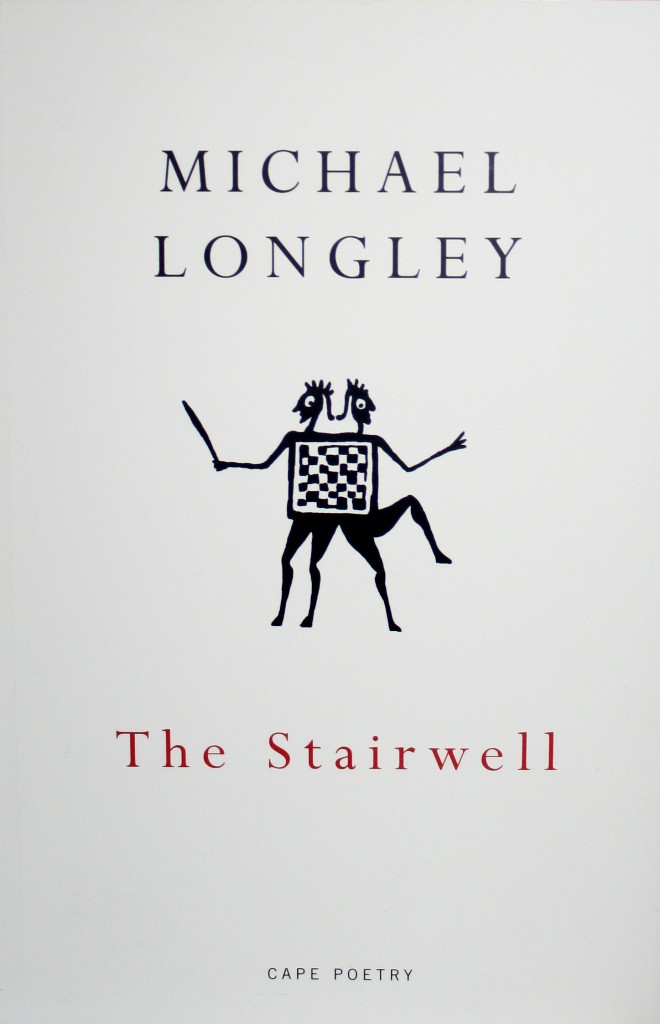
In 2015 he was awarded the Griffin International Poetry Prize for his collection The Stairwell (Jonathan Cape).  In his acceptance speech in Toronto (June 4th, 2015), Longley said he had been writing since he was 15 years old.  “It’s my life.  It’s my religion.  It’s the way I make sense of the world,” he said.  The jury described Longley’s The Stairwell as ‘a book by a major poet writing at the height of his powers’. What follows here is a selective and subjective analysis and review of the major themes and issues which frequently recur in Longley’s poetry.


img_8552-e1417089640163

Read more

AN ANALYSIS OF THE POETRY OF ROBERT FROST (1874 – 1963)


Vermont in The Fall
Vermont in The Fall

At a dinner in Amherst on the day of his eightieth birthday, Frost said: ‘all I’ve wanted to do is write a few little poems it’d be hard to get rid of’.  He also commented: ‘We rise out of disorder into order and the poems that I make are little bits of order.  It’s as if I made a basket or a piece of pottery or a vase or something and if you suffer any sense of confusion in life the best thing you can do is make little poems.  Or cigarette smoke rings.  Even those have form.’

*******

CAVEAT EMPTOR!

THESE NOTES ARE DESIGNED TO COMPLEMENT THE WORK ALREADY DONE IN PREPARATION FOR LEAVING CERT ENGLISH (HIGHER LEVEL).  HERE YOU WILL FIND A PERSONAL REVIEW OF SOME THEMES AND ISSUES WHICH FEATURE IN THE POETRY OF ROBERT FROST. YOU SHOULD CONSIDER THESE IDEAS, THEN RE-EXAMINE THE POEMS MENTIONED FOR EVIDENCE TO SUBSTANTIATE OR CONTRADICT THESE INTERPRETATIONS.  IN OTHER WORDS, MAKE YOUR OWN OF THESE NOTES, ADD TO THEM OR DELETE FROM THEM AS YOU SEE FIT.

THE FOLLOWING SELECTION IS SUGGESTED BECAUSE THEY DEAL WITH MANY OF THE MAJOR THEMES WHICH RECUR IN FROST’S POETRY:

THE TUFT OF FLOWERS (1913)

AFTER APPLE-PICKING (1914)

OUT, OUT.. (1916)

SPRING POOLS (1928)

ACQUAINTED WITH THE NIGHT (1928)

DESIGN (1936)

PROVIDE, PROVIDE (1936)

________________________________


Frost (8)


BACKGROUND INFLUENCES

Frost studied the classics, had a thorough knowledge of the Bible, and was well-read in European and American literature.  Romantic and Victorian poets played an important role in shaping his poetic theory.

ROMANTIC POETRY (1798 – 1832):  Romantic poetry was written against a background of social, political, economic and religious change, not unlike the changes experienced by American society from the middle of the nineteenth century onwards.  Frost was drawn towards aspects of their poetry when formulating his own distinctive poetic style.

  • Wordsworth, Coleridge, Keats and Shelley, among other Romantic poets, believed that poetry should express the poet’s own mind, imagination and feelings. His emotions, thoughts and experiences should form the central subject in his work.
  • The lyric, written in the first person, became the preferred Romantic form. The ‘I’ is usually the poet himself, not a persona created by the poet.
  • The natural scene, accurately observed, is the primary poetic subject. Nature is not described for its own sake but as a thought-provoking stimulus for the poet, leading him to more insight or revelation.
  • Romantic nature poems are usually meditative poems. The landscape is sometimes personified or imbued with human life.  There is a reaction against a purely scientific view of nature.  Humans are depicted as isolated figures in the landscape.
  • The Romantics subscribed to Wordsworth’s belief that poets should ‘choose incidents and situations from common life’ and write about them in ‘language really spoken by men’ who belong to ‘humble and rustic life’.
  • Wordsworth insisted the poet should use ‘a certain colouring of imagination, whereby ordinary things should be presented to the mind in an unusual aspect’.
  • The poet’s visionary imagination rises above the limited, sense-bound understanding and enables him to see things in a new way.
  • Romantic poetry is concerned with mystery and magic, folklore and superstition. The role of the imagination is related to the importance of instinct, intuition and the emotions of the ‘heart’ as the source of poetry. (This is also very true of Yeats’ poetry.)  According to Coleridge, ‘Deep thinking is attainable only by the man of deep feeling’.  The capacity to imagine permits the poet to enter a higher visionary state and regenerate the world.

 VICTORIAN POETRY:  Frost studied Victorian poetry in great detail.  He cited Thomas Hardy and Robert Browning among his favourite poets.  Three features of this poetry made a particular impression on him:

  • The use of traditional forms, such as the sonnet
  • The revival of the narrative poem, prosaic in style and casually colloquial in tone
  • An abiding awareness of time and its effect on humans.


 Frost (1)

SOME THEMES AND ISSUES IN FROST’S POETRY

The Natural World:  Frost was a keen observer of the natural world.  Plants, insects, geographical features and the seasons have their place in his poetry.

  • Creatures: dimpled spiders, trapped moths, bewildered butterflies.
  • Plants: butterfly weed, blue or white heal-all, yellow leaves, dark pines, apple trees, russet apples, summer forests.
  • The physical world: spring pools, winter snows, the sky, brooks, Vermont mountains.
  • The seasons: autumn and winter are the dominant seasons, with falling leaves, bare trees, snow, ice, chill winds and rain.

The natural world is rarely described for its own sake or as a background against which the action of the poem takes place.  Instead, nature leads the poet to an insight or revelation.  Often a comparison emerges between the natural scene and the psyche, what Frost called ‘inner and outer weather’.

His descriptions of nature are not sentimental.  He describes a world that is bleak, empty and cold, where creatures suffer in silence and humans feel isolated.  His natural world contains blight, darkness and death and therefore can be threatening, hostile or indifferent.

Isolation and communication:  Humans are depicted as figures of isolation in the landscape.  Not only are they isolated but they represent loneliness, and thereby acquire symbolic status.  Loneliness can be seen as a human condition.  Efforts to communicate effectively are at best difficult (‘The Tuft of Flowers’), and are sometimes rebuffed (‘Acquainted with the Night’).

 The role of fate and chance:  Frost is far less affirmative about the universe than other American writers.  Looking at nature, they discerned a benign creator, whereas he saw ‘no expression, nothing to express it’.  In Frost’s world, God is either hostile or indifferent to the plight of helpless creatures, who, like humans, are victims of fate or chance.  (This theme is dealt with very well in Tennyson’s great Victorian poem ‘Choric Song of the Lotus Eaters’).  His poetry records an ever-present, underlying darkness that erupts in a random manner with tragic circumstances. (see ‘Out, out –‘).

Mutability – the effect of time on people and nature:  In Frost’s poetry time is sometimes seen as being destructive:

  • Yesterday’s flowers wither
  • Winter snows melt, spring pools are drained by trees, trees lose their leaves in autumn
  • Time destroys beauty, impoverishes the elderly.

The effect of time can be overcome to some extent by the power of memories and the imagination (‘The Tuft of Flowers’).

The role of the imagination:  The imagination enables the poet to see the world in a new way.  In brief, intense moments he may enter a higher, visionary state.  This allows him to regenerate his imaginative and creative capability and provides him with fresh insights and new inspiration for his poetry.  This state cannot be sustained for long, however, and he must return to the real world.

 FROST (2)

STYLE AND TECHNIQUE: SOME POINTS

 Language:  From his study of Hardy’s writing, Frost learnt how to achieve simplicity in poetry through the use of a few well-chosen words.  He made a conscious effort to use ordinary language in his poems and captured the full range of human emotions, from joy to sorrow and from exaltation to fear, through the use of plain, monosyllabic speech.  He stressed the importance of colloquial language, as it was appropriate to the subject matter in his verse and made his poetry accessible to a wider audience.  Frost played the colloquial rhythms against the formal patterns of line and verse and constrained them within traditional forms, such as the sonnet or dramatic monologue.  The plain diction, natural speech rhythms and simplicity of images contrive to make the poems seem natural and unplanned.

Frost used repetition for effect, to emphasise, and to add to the musical quality of his verse.  He described sound in the poem as ‘the gold in the ore’ and added that ‘the object in writing poetry is to make all poems sound as different as possible from each other’.

Rhyme:  Unlike many American poets in the twentieth century, Frost upheld formal poetic values during changing times, when formal practices were widely abandoned.  He emphasised the importance of rhyme and metrical variety, observed traditional forms and developed his technical skills.  He could claim without fear of contradiction that ‘I am one of the notable craftsmen of my time’.  His poetry is written so that the rhyming ‘will not seem the tiniest bit strained’.  He used terza rima, end-of-line rhymes, and full and half-rhyme.  He also wrote in blank verse.

Frost used a wide variety of verse forms, including the sonnet, dramatic monologue, narrative and lyric.

Imagery:  The imagery in Frost’s poems is deceptively simple.  There are images from the natural and the human worlds.  Some are everyday and ordinary, some are grotesque and macabre.  In a number of poems, such as ‘Spring Pools’, the imagery caries the meaning.  Frost uses precise details to re-create the colour, texture and sounds of the world within the poem.  This makes his poetry richly sensuous.  Yet, using the same technique, he can paint a cold, bleak scene that is chillingly realistic.

His use of similes and metaphors creates layers of meaning in his poems.  In ‘After Apple Picking’, for example, the metaphor used is complex.  On one level it can be read as a nature poem, while at a deeper level it can be read as a study of the creative process.  (And there are other levels in between!).

Tone:  The tone of voice used is vital to the meaning in Frost’s poems.  His poetry displays a great range of tone, and it may vary considerably within a particular poem.  It can be precise and matter-of-fact, sympathetic, sad, relieved, strong and confident, despairing, humorous, dark and ironic, wistful or weary.

First-person narrative:  Frost frequently used the first-person for his narrative.  The reader is permitted a glimpse into the speaker’s life at a specific moment, often during a crisis.  The use of the first person creates a feeling of reliability: the reader is being given a first-hand account of an event, and trusts the accuracy of the narrator.  The authenticity of the story is never doubted in ‘Out, out – ‘, for example.

 Dramatic stories:  A strong narrative structure is apparent in many of Frost’s poems.  The narrator takes the reader through a series of events and actions, which lead to a dramatic conclusion.  These events are often thought-provoking or provide an insight into life.


___________________________________

 FROST (6)

SUMMARY OF PRINCIPAL FEATURES IN FROST’S POETRY

  • Frost wrote in various traditional forms, including the lyric and the sonnet; he is especially noted for his achievements in blank verse encompassing his narrative monologues and dialogues.
  • His themes include the character, people and landscape of New England; fertility and beauty of nature; relationships between individuals and nature, and between individuals themselves; selfhood, love.
  • Style: He writes in the New England dialect; his forms are not experimental but are adapted to the poet’s purpose. Visual images and aural images are significant features of his style.
  • For Frost, ‘the sound of sense’ has an important bearing on meaning; the sound and tone of words, therefore, are significant.
  • Even in so-called nature poems, the person is often to the fore. His focus is nearly always on the individual rather than the community.
  • Colloquial and dramatic idiom is preferred to poetic diction.
  • Simple poems can be symbolic of ideas that are more profound. (Therefore, tread carefully!)


 FROST (3)

*****

AN OVERVIEW OF THE POETRY OF

ROBERT FROST

Frost once said that ‘the four things I most wanted to go into in life were archaeology, astronomy, farming and teaching Latin’, but as we now know he also ‘went in’ for poetry.  ‘I want to reach out to all sorts and kinds’ he said and it would seem that, in his poetry, he succeeded.  As a young man, he was advised by the Reverend William E. Wolcott to write a more heightened, elevated kind of poem.  Wolcott thought that Frost’s poetry was too much like the speaking voice but, in fact, this speaking voice, ordinary speech, poetry that talked, was what Frost preferred.  Years later, Frost was to see that advice as pivotal in his development as a poet,

‘I’m sure the old gentleman didn’t have the slightest idea he was having any effect on a very stubborn youngster who thought he knew what he knew.  But something he said actually changed the whole course of my writing.  It all became purposeful’.

In a letter written in 1914, Frost wrote that ‘Words exist in the mouth not books’ and whenever Frost gave a poetry reading, he used the word ‘say’ rather than ‘read’.  At one such reading in the grand ballroom of the Waldorf-Astoria Hotel in New York, he told his audience: ‘I have a feeling you didn’t understand that poem.  I’ll say it again.’

Frost was always interested in the rhythms of natural speech and he was also very interested in formal patterning and rhyme.  Free verse (unrhymed, irregular verse) was rejected by Frost.  He said that writing free verse was like playing tennis without a net!  In other words, he enjoyed the discipline and restrictions of the net – for example, ‘The Tuft of Flowers’ is written in heroic couplets and he also wrote blank verse and liked the sonnet form (‘Design’).

He chose to write in a language that was close to and inspired by ordinary, everyday speech.  But it was not only the language that made him a popular and accessible poet; it was also his subject matter.  Frost’s poems are rooted in the natural world but he himself was careful to point out that in his poetry man is almost always part of the landscape.  He made New England his own and wrote about ordinary people living ordinary lives.  The subject matter of the poems – turning the hay, spring pools, picking apples, a farmyard accident, a spider, walking at night – is described, but the poems go beyond description.  (This characteristic of his poetry is probably what attracted Heaney to the poetry of Frost.). In ‘The Road Not Taken’ and many other poems the speaker explores moral and philosophical ideas, so that suggestion is as important as what is being described.  Frost said that ‘You don’t want to say directly what you can say indirectly.’  (After all, the reader has to go some part of the journey too!).

The world of Frost’s poetry is beautiful but it is also harsh and uncaring.  Frost wrote that ‘Man has need of nature, but nature has no need of man.’  At a dinner in Frost’s honour in New York on the poet’s eighty-fifth birthday (26th March 1959), Lionel Trilling said Frost’s best poems represented ‘the terrible actualities of life’ and. In an essay published in Partisan Review, Summer 1959, Trilling described the world of Frost’s poetry as a ‘terrifying universe’ and one of loneliness, doubts, disappointment and despair and his biography also reveals that his life was a troubled, anxious, sorrowful one.

However, there is not much evidence of this dark side in the poems on our course – especially in the ones highlighted.  Instead, for the most part, the voice we hear when we read Frost is a warm, inviting, gentle voice.  Lines such as ‘I went to turn the grass once’, ‘I am done with apple-picking now’, ‘I shall be telling this with a sigh’, ‘I have outwalked the furthest city light’ are immediate, even colloquial, in tone.  In 1939 Frost wrote:

‘No tears in the writer, no tears in the reader.  No surprise for the writer, no surprise for the reader.  For me, the initial delight is in the surprise of remembering something I didn’t know I knew …. A poem may be worked over once it is in being, but may not be worried into being.  Its most precious quality will remain its having run itself and carried away the poet with it.  Read it a hundred times: it will forever keep its freshness as a metal keeps its fragrance.  It can never lose its sense of a meaning that once unfolded by surprise as it went.’

***

At a dinner in Amherst on the day of his eightieth birthday, Frost said: ‘all I’ve wanted to do is write a few little poems it’d be hard to get rid of’.  He also commented:

‘We rise out of disorder into order and the poems that I make are little bits of order.  It’s as if I made a basket or a piece of pottery or a vase or something and if you suffer any sense of confusion in life the best thing you can do is make little poems.  Or cigarette smoke rings.  Even those have form.’

At the beginning of many volumes of his poems, and also at the beginning of his Collected Poems, is a poem called ‘The Pasture’.  It serves as both introduction and invitation.  Frost is going out to attend to everyday jobs on the farm but he invites us to look at the world through his eyes, the eye of a poet:

THE PASTURE

I’m going out to clean the pasture spring;

I’ll only stop to rake the leaves away

(And wait to watch the water clear, I may):

I shan’t be long – You come too.

I’m going out to fetch the little calf

That’s standing by the mother.  It’s so young

It totters when she licks it with her tongue.

I shan’t be long  – You come too.

*****


FORST (5)

 *****

SAMPLE ANSWER

“Frost’s poems are ‘little voyages of discovery’.”  Discuss.

Frost’s world is a rural world, a world of nature and trees, soil and crops.  His poetry, like that of Kavanagh, Heaney and others, recreates a local and familiar landscape in which Frost, as a poet and as a person, is in communion.  We sense that he knows nature’s spaces.  We believe that his is a voice of integrity that invites us into fields and orchards and along the brooks of New England.  And we occasionally feel that along the way, we may even discover something of Frost himself.

Frost often shares with us his understanding of the delicate and finely balanced relationships within nature.  He writes of nature with a keen eye and respects her beauty and her peculiar ways.  In ‘Spring Pools’, for example, there are many evocative images of trees, pools and flowers.  The poet observes that the ‘trees have it in their pent-up buds / To darken nature and be summer woods’.  He goes on to personify nature adding that the trees should ‘think twice before they use their powers / to blot out and drink up and sweep away’ the spring pools.  It is a very direct poem, a poem with purpose.

Purpose is also central to ‘The Tuft of Flowers’.  We see the speaker searching through ‘an isle of trees’ before stumbling across ‘A leaping tongue of bloom the scythe had spared’.  The speaker discovers that, when he acknowledges nature’s presence on the farm, he no longer works alone.  In the poem, nature’s ways seem, at first, quite different from man’s.  Man appears initially as a destructive force, with a ‘blade so keen’ that ‘levelled’ the scene.  The butterfly, returning to alight on the flower of yesterday, now discovers that it ‘lay withering on the ground’.  However, nature is resourceful and the butterfly immediately discovers an alternative flower beside ‘a reedy brook’.  Ironically, it has been uncovered by the ‘scythe’.  The butterfly’s simple, though significant discovery is interesting; it suggests the connections, the interdependence within nature, between butterfly and flower or, as in ‘Spring Pools’, between tree and water.  It also suggests the continuity of life, its habitual capacity to survive and regenerate.  At the end of the poem, the speaker and the butterfly are seen in harmony, a link established between them.  Frost has found meaning in nature and understanding in man, ‘Whether they work together or apart’.

Frost, however, also makes somewhat darker discoveries in nature.  At times, these discoveries might be applied to the human space.  In ‘Design’, for example, the macabre picture of the ‘fat and white’ spider on the ‘white’ heal-all, carrying a ‘moth / Like a white piece of rigid satin cloth’ shows the exactness with which Frost can depict nature’s creatures.  From this deadly, pale procession, the poet reflects that the driving force behind the scene of such cruelty is the ‘design of darkness’.  Who is to say that such is not the case in human society and in human community?

Interestingly, though, there is a conspicuous absence of community in his work.  Even where the poet comes into the arena of human society, in a poem such as ‘Acquainted with the Night’, there is no sense of contact, of community between people who live along the ‘saddest city’ lanes.  It is a place where people drop their ‘eyes’, unwilling to engage, abandoning themselves to insular and isolated lives.  The Frost who walks through country paths in ‘The Road Not Taken’ seems much more at ease than the Frost who ‘stood still’ in the city rain.

Nevertheless, in the countryside, Frost himself tends to work ‘alone’, he walks alone, and plays alone, being ‘too far from town to learn baseball’.  His main concern, it would appear, is not with community but with the individual identity – of pools, of apples, and of himself.  Through his poems, we imagine a man who values self-sufficiency and individualism.  He chooses the road ‘less travelled’.  He can be seen turning, not outward towards community but inward towards his inner self in ‘After Apple-Picking’ where he reflects that ‘I am over-tired / Of the great harvest I myself desired’.  His inward quest is also balanced by his outward journey towards familiar things in nature, giving his verse a reflective and meditative quality, whether he speaks of himself or of nature.

We can, therefore, make little voyages of discovery through Frost’s verse.  The poet reveals his interesting and personal insights into nature while he also appears to us, the readers, as sensitive, tender, at times humorous, but especially reflective man.  He can be detached from his subject or quite sympathetic to it.  In all, we have discovered a poet who is emotionally honest to us, to nature and to himself.

 FROST (7)

Some personal thoughts on ‘The Road not Taken’

‘The Road not Taken’ has always been a very popular poem.  It is a lyric, a first-person narrative tale of a key moment in the poet’s life.  In the poem, the speaker, whom we can assume is Frost, is faced with a choice that appears quite suddenly as he walks along a forest track.  At this moment, the route on which he has travelled diverges into two separate paths.  The speaker faces a difficult decision that has to be made for the moment, yet may have repercussions that last a lifetime.  This is what makes the decision so difficult.

If you consider, briefly, some decisions you make in your own life, you know that you might make hundreds of choices in any one day, most without even noticing!  Deciding where to go for lunch is usually not too difficult; however, a much more difficult decision is the career to follow after your Leaving Cert.  Your choice may affect your life for many years and so you tend to take time and effort in arriving at that decision.

So, Frost comes to a fork in the road.  If taken on a literal level, the choice is simply the path along which to continue.  However, if these paths are seen in a symbolic way, then the choice is more challenging.  Our poetry course has thrown up many examples of where life is seen in terms of a journey on which we will meet many twists and turns.  The moment in the poem could be such a moment in anyone’s life.

The poet considers his options carefully.  He looks down both paths, ‘as far as I could’ in an attempt to see what they might offer.  But his view is limited by the bend as the track veers into the undergrowth.  It is, in other words, impossible to foresee what future may lie ahead – and Frost did not seem to have the luxury of a Change-of-Mind slip!  At first, each alternative is equally appealing or ‘just as fair’.  Similarly, both roads diverge into ‘a yellow wood’.  The first path, however, is a more popular route, while the other less-travelled path is overgrown and ‘wanted wear’.  The choice is clear but not at all simple: the common, easy path or the unusual, more challenging path?  The first road might prove more reliable, even reassuring, for others have gone that way.  The more difficult road, however, may produce a less predictable outcome yet perhaps a more fulfilling and individual one.

The poet is aware that the minor difference between the paths at this time will become major differences as the paths diverge further into the woods and into the future.  Each path is attractive and alluring in its own way, but he cannot travel both.  You can’t have your cake and eat it!  This he regrets.  Nonetheless, he decides.

Even as he travels his chosen path he still wonders about the path he has rejected and hopes to keep ‘the first for another day’.  Yet, he knows in his heart that ‘way leads on to way, /I doubted if I should ever come back’.  The poem, in this way, suggests that we can only hope to explore a very limited number of life’s possibilities.  Finally, the poet ‘sighs’, happy with his choice, yet wondering what if…..?  What experiences might have occurred along the other path?  Certainly, his choice has ‘made all the difference’.  That is gratifying; the decision has had a positive effect on his life and he is thankful for that and overall seems pleased with the road he has chosen.

This poem reminds us that important decisions in life are not exact predictions.  We base our choice on reflection of what might be encountered along the way.  Like Frost, we all hope that our major decisions will make ‘all the difference’ in our lives.  We need to believe they will.

Frost believed that each poem was a ‘little voyage of discovery’; a path to something else, rather than an end in itself.  Perhaps, the road not taken is just such a voyage?

An Analysis of the Poetry of Thomas Hardy (1840 – 1928)


the-british-culture-of-19th-century-30-638

Nowadays May is my favourite month – not many students would say that! – and my favourite lines from the poetry of Thomas Hardy are the following lines taken from ‘Afterwards’:

And the May month flaps its glad green leaves like 

wings;

Delicate-filmed as new spun silk….

Also by way of introduction to the poetry of Thomas Hardy, the English composer Edward Elgar and Hardy share the same birthday, 2nd June, 1840.  Both were country lads and both contributed greatly in giving us an idea of what life was like in the late nineteenth century.  Listen to Elgar’s Cello Concerto in E minor (YouTube) and if Hardy’s poems are ever made into a Hollywood blockbuster (very unlikely!) wouldn’t that be a beautiful soundtrack!

Helpful Background Information

  • Thomas Hardy, English novelist and poet, was born near Dorchester in England. He was one of the great English writers of the 19th and early 20th century.
  • Hardy’s father was a stonemason and influenced Thomas to take up a career as an architect. Gothic architecture influenced Hardy’s poetry. It provided a powerful model for artistic unity and complexity in his works.
  • Hardy derived a love of music from his father and a devotion to literature from his mother. She introduced him to all the folk songs and legends of the Dorchester region as well as to Latin poets and French Romances.
  • He learned French, German, and Latin, sometimes self-taught.
  • Hardy could not afford to study at university. Instead he was apprenticed to a church architect and worked at this trade until he was 34.
  • Hardy wrote continually during the architect phase of his life. He wrote unpublished poems which idealized the rural life. He wrote serialised novels.
  • Success with serialised novels allowed him to give up the architect trade in 1874 and to marry the same year.
  • Over the next 22 years Hardy wrote many novels, all set in the interesting and historic Dorset landscape. He disguised Dorchester as Wessex in his novels and poetry.
  • Beginning at the age of 58, Hardy published many volumes of poetry-over 900 poems in all.
  • His poetry is straight to the point [spare and unadorned]. Though some consider his poetry to be unromantic, Hardy was imaginative and explored interesting feelings, just like the Romantic poets did.
  • Hardy’s most common theme is humanity’s struggle against fate. Hardy is pessimistic in the way he portrays humanity’s futile struggle against cosmic forces. His work has a tragic vision; a sense that human life has to be endured. Hardy’s vision is said to be stoical as it involves an acceptance of fate.
  • Hardy had a vision of a post religious society. He grew up in an era of narrow religious values and certainties. These ideas were beginning to disappear during his mature years as a poet. Instead of the traditional ways of understanding, Hardy realised that science had reshaped humanity’s vision of itself.
  • Hardy favoured the lyric and ballad forms of poetry.
  • Hardy’s poetry explores the themes of rural life and nature, love and loss, cosmic indifference, the ravages of time, the inevitability of death and the inhuman ironies of war.
  • Hardy’s poetry is characterised by fatalistic pessimism, earthy realism, and abstract philosophising. Hardy’s poetry contains great moral conviction.
  • Hardy was fascinated by transience, change, mortality, time, human vanity, war, power, nature, human cruelty and the past.
  • Hardy’s tone is typically ironic. He sees the unexpected twists and surprises that life throws at people.
  • His work provides keen psychological insights. Hardy uses original images that appeal to the reader’s intelligence
  • Hardy’s tone is often bleak and communicates a sense of loss. He is also nostalgic, idealising and longing for the past. Yet he can sometimes view a memory in an ironic or realistic way.
  • A lot of Hardy’s poetry is relatively simple and yet skilful. Yet, some of his poetic writing can be difficult due to old-fashioned words and phrases
  • Some of his poems are regarded as deliberately obscure. Hardy claimed that he often tried to hide his art or craft behind awkwardness. The poems on the course are relatively straight-forward.
  • Hardy’s poems tend to be descriptive, lyrical, and regular in form. He does not tend to experiment with form.

images (5)

THE POETRY OF THOMAS HARDY (1840 – 1928)

 These notes are meant to assist those studying English (Higher Level) for the Leaving Certificate but obviously they can be used by all lovers of poetry – even those who studied Hardy’s poetry in Soundings long ago!  For those studying for the Leaving Cert in June you need to become very familiar with at least six of Thomas Hardy’s poems.  I would recommend that you concentrate on the poems which illustrate his ideas on life, the past, nature and God.  The following is my personal selection (a baker’s half-dozen!):

  • The Darkling Thrush, (TDT)
  • Drummer Hodge, (DH)
  • Channel Firing, (CF)
  • The Convergence of the Twain, (TCOTT)
  • During Wind and Rain, (DWAR)
  • Afterwards, (A)
  • When I set out for Lyonesse. (WISOFL)

Health Warning!!

The points made here in these notes represent one interpretation of his work.  It is important that you develop your own response to each poem; where this differs from the suggestions given here, trust your own judgement!  Become familiar with the poems and with the major themes running through Hardy’s poetry.


 images (4)

Major Themes in Hardy’s Poetry

Time/The Past:  Hardy is keenly aware that civilisations and political arrangements last a limited time, pass and are replaced. Equally he knows that childhood and youth make way for a different future. Hardy frequently glorifies the past in order to emphasise its passing or to contrast it with the present. Sometimes Hardy ironically suggests people don’t learn from the past.

– ‘The Century’s corpse’ [TDT]
– ‘The world is as it used to be:/ All nations striving strong to make/ Red war yet redder’ [CF]
– ‘Again the guns disturbed the hour/Roaring their readiness to avenge, As far inland as    Stourton Tower/And Camelot, and starlit Stonehenge’ [CF]
– ‘Ah, no; the years, the years’ [DWAR]
– ‘He hears it not now, but used to notice such things’ [A]

Fate:  Hardy believes that human lives and events are predestined, though we don’t foresee the outcome. He has a vision that death, decay and mistakes are inevitable in human life. The retrospective view of history is not the only way of understanding events -there are hidden forces that shape our future, long before the destined events occur. Though destiny is inevitable, humans cannot figure it out in advance. Unknown outcomes reshape the plans that people have for themselves. Tragedy, though unforeseen, is never far away. More rarely, Hardy depicts a happy turn of events.

– ‘The Immanent Will that stirs and urges everything Prepared a sinister mate for her-so gaily great-A Shape of Ice’ [TCOTT]
– ‘Alien they seemed to be: No mortal eye could see The intimate welding of their later history’ [TCOTT]
– ‘They were bent by paths coincident On being anon twin halves of one August event’ [TCOTT]
– ‘The Spinner of the Years said “Now” ‘ [TCOTT]
– ‘They are blithely breakfasting all… Ah, no; the years O!’ [DWAR]
– ‘When the Present has latched its postern behind my tremulous stay’ [A]
– ‘No prophet durst declare/Nor did the wisest wizard guess What would bechance at Lyonnesse’ [WISOFL]

Transience/Change:  Hardy shows an awareness of mutability in politics and human affairs. The present differs from the past, often regrettably. Hardy often displays nostalgia for childhood or for a more innocent time. Yet, one thing that doesn’t change in his view is the stupidity of war and human vanity. Sometimes nature illustrates change through its cycles. At other times, forces of nature represent permanence, in contrast to human feelings and prosperity.

– ‘The ancient pulse of germ and birth was shrunken hard and dry’ [TDT]
– ‘It’s gunnery practice out at sea/…The world is as it used to be’ [CF]
– ‘Ah, no; the years O! How the sick leaves reel down in throngs!’ [DWAR]
– ‘He was a man who used to notice such things’ [A]

Family and Relationships:  Though Hardy is often an estranged observer of life, he cherishes intimacy and a sense of belonging. He recognises that these provide human identity. To him, they are essential and universal traits. He idealises family, community and marriage while persisting with his guise as the lone gazer or observer. When Hardy is the speaker, he sometimes seems to be a sensitive individual who internalises his experiences of life through recorded observation and reflection. Sometimes he uses dialogue to dramatise memories of family life. He alters or reworks moments of belonging or intimacy from the past in a romantic way, implying they were sweetly harmonious or more innocent than the present. He glorifies the beginning of his failed marriage as a moment from a medieval romance. He pictures an unknown peasant soldier [a drummer for a war machine] as homely and full of rural family values.

– ‘Young Hodge the Drummer – fresh from his Wessex home’ [DH]
– ‘They are blithely breakfasting all–Men and maidens–yea, Under the summer tree’ [DWAR]
– ‘My radiance rare and fathomless/When I came back from Lyonnesse With magic in my    eyes!’ [WISOFL]

Mortality:  Hardy focuses a lot on death, sometimes to a. morbid extent. Hardy implies that his fellow humans are not conscious of death, though he is always conscious that death is imminent

– ‘They throw in Drummer Hodge, to rest uncoffined’ [DH]
– ‘Foreign constellations west/ Each night above his mound. Young Hodge the Drummer  never knew -/ Fresh from his Wessex home’ [DH]
– ‘They sing their dearest songs-He, she, all of them-yea’ – ‘Ah, no; the years, the years; Down  their carved names the raindrop plows’ [DWAR]
– ‘When my bell of quittance is heard in the gloom’ [A]

Human vanity:  Hardy despises human pride and presumption. He refers with relish to events that show the futility of human schemes. Hardy is didactic in the way he uses mishaps and failures as lessons in the stupidity of human presumption. Hardy mocks the inability of religion to prevent war or better the human condition. He portrays the Christian God as a joker who converses with cows and skeletons. However, he is an enthusiastic advocate of the existence of superior forces or laws in the universe. For Hardy these are scientific rather than theological. These forces show that our grandiose displays of power are frivolous. Hardy delights in narrating reversals to human purpose and above all to smugness. Our hidden destinies frustrate or negate our intentions.

– ‘His homely Northern breast and brain/Grow to some Southern tree ‘ [DH]
– ‘In a solitude of the sea deep from human vanity, And the Pride of Life that planned her,  stilly couches she’ [TCOTT]
– ‘Over the mirrors meant to glass the opulent The sea-worm crawls — grotesque, slimed,  dumb, indifferent’ [TCOTT]
– ‘What does this vaingloriousness down here?’ [TCOTT]
– ‘God cried… they’d have to scour/Hell’s floor for so much threatening’ [CF]
– ‘Instead of preaching forty year/ my neighbour Parson Thirdly said “I wish I had stuck to  pipes and beer”.’ [CF]
– ‘And brightest things that are theirs…. Ah, no; the years, the years’ [DWAR]

War:  Hardy feels war is irrational and cruel. It is not heroic. Individual personality and family identity, two opposites cherished equally by Hardy, have no place in military life. He portrays the disposal of a soldier’s corpse in undignified terms. Hardy regards human being as always ready to participate in the game of warfare, without ever learning a lesson from past wars. Innocents, like the boy Drummer Hodge, are sacrificed meaninglessly. Hardy imagines modern warfare as the apocalypse. He mocks warfare by having God describe warfare as insane. He uses Dorset peasants to create his perspective on war.

– ‘They throw in Drummer Hodge, to rest /uncoffined- just as found’ [DH]
– ‘His homely Northern breast and brain grow to some Southern tree’ [DH]
– ‘We thought it was the Judgement-day’ [CF]
– ‘The world is as it used to be /All nations striving strong to make/ red war yet redder. Mad  as hatters’ [CF]
– ‘Again the guns disturbed the hour, roaring their readiness to avenge’ [CF]

Nature:  Hardy felt a mysterious power and presence in Nature. Hardy was conscious of awesome cosmic forces, the dread power of nature, the ominous signs of nature’s disasters and the amazing beauty of nature.

– ‘And strange-eyed constellation reign’ [DH]
– ‘Winter’s dregs made desolate the weakening eye of day’ [TDT]
– ‘The wind his death-lament’ [TDT]
– ‘Such ecstatic sound’ [TDT]
– ‘Some blessed Hope, whereof he knew and I was unaware’ [TDT]
– ‘In a solitude of the sea’ [TCOTT] ‘In shadowy silent distance grew the Iceberg too’  [TCOTT]
– ‘The only prime/ and real love-rhyme/ that I know by heart, ‘And the May month flaps its  glad green leaves like wings, Delicate-filmed as new-spun silk’ [A]
– ‘The dewfall-hawk comes crossing the shades to alight Upon the wind-warped upland  thorn’ [A]
– ‘He was one who had an eye for such mysteries’ [A]

Hardy’s Style

  • Form
    Hardy writes in a variety of tightly structured forms with well-defined rhyme schemes. Many of his poems are arranged in regular stanzas, with set line length. The course poems show that he mainly favours a line of three beats, sometimes alternating with a four beat line. He relies mainly on varieties of lyric form, sometimes achieving a song-like effect with his refrains and striking rhyme patterns. Hardy’s poems have a strong final line, bringing closure to the lyric through a declaration or a reversal.
  • Speaker
    Hardy is sometimes the autobiographical speaker, though he also uses an abstract observer as the speaker. Hardy also favours dramatic dialogue in some poems, where he uses multiple speakers. He sometimes favours a question and answer format.
  • Tone
    Hardy’s tone ranges from awe to despair. Images of nature are frequently accompanied by a tone of amazement, while images of human foolishness are usually conveyed in a bitter or hopeless tone. In his role of detached observer, Hardy’s tone is frequently full of knowing irony.
  • Irony
    Hardy delights in contrasting human expectation or vanity with fate and reversal. Frequently, Hardy illustrates the cruel irony of people’s lives. Occasionally the reversal in a poem is a happy one, though this is not usually the case. When dealing with war or human pretence, the irony is sarcastic.
  • Language
    There is a lot of variety to Hardy’s use of language. Frequently, Hardy uses archaic or rustic diction and syntax. Sometimes he capitalise words mid-line to emphasise a moral point or an irony. Hardy often uses capital letters for his abstract nouns, a traditional habit of English Poets. Sometimes Hardy uses unusual compound words. Often, Hardy describes a scene or event in a series of adjectives.
  • Imagery
    A lot of Hardy’s imagery is descriptive and real though it is interspersed with figurative imagery. Hardy uses metaphorical language frequently. Some of his images are symbolic of ruin or decay. Hardy often uses nature as a symbol of the passing of time. He sometimes contrasts permanent natural forces with images of change in human life. Hardy also uses certain images ambiguously. He also uses personification.
  • Verbal music
    Hardy uses the typical poetic devices of line rhyme, internal rhyme, alliteration, consonance, sibilance and assonance to beautify his subject or to enhance meaning and tone. He also uses onomatopoeia to create sound effects. He produces both euphony and cacophony to deepen meaning through musical effect. Search the poems and you will find many examples of these traits.

 *****

far-from-the-madding-crowd-by-thomas-hardy-10-728

My Personal Response to the Poetry of Thomas Hardy

Thomas Hardy is unusual in that he was also a very successful novelist, writing such masterpieces as Far From the Madding Crowd, The Mayor of Casterbridge and Tess of the D’Urbervilles and Jude the Obscure.  However, he regarded poetry as a higher form of art and was only drawn to writing novels because it paid better.  He has a very unusual and individual outlook on life and it is often cynical, pessimistic and depressing.

He was born in 1840 and so inherited the mantle of the Romantics but his outlook on nature is often far from ‘romantic’.  As a young man he read a recently published book by Charles Darwin entitled The Origin of the Species.  In this groundbreaking work, which continues to define how we understand the world in which we live, Hardy first became familiar with the theory, which utterly disputed the notion that God created man as a special being in His own likeness.  Darwin’s theory was that the development of all species, including man, was the result of competition among and within each species, which weeds out the less fit.

Because of these new scientific theories, nature began to be viewed differently.  It was no longer really possible to see the natural world as a happy one of co-existence amongst all God’s creatures.  Darwin’s world-picture was different: ‘We behold the face of nature bright with gladness’, he writes in The Origin of the Species, but ‘We forget that the birds which are idly singing round us mostly live on insects or seeds, are thus constantly destroying life; or we forget how largely these songsters, or their eggs, or their nestlings, are destroyed by birds or beasts of prey’.  Hardy was someone, who from a young age was sensitive to the natural world as a place of struggle.  A friend remarked that he was a writer who was ‘sorry for Nature, who feels the earth and the roots, as if he has sap in his veins rather than blood, and could get closer than any other man to the things of the earth’.  Therefore, Darwin’s theory meshed perfectly with Hardy’s own naturally gloomy outlook on life.  He had always thought Nature a cruel thing and in this he differed greatly from Wordsworth and the major poets of the Romantic period who liked to think that the natural world contained a powerful moral force that could raise the spirits and better anyone who took the time to appreciate it.  Instead Hardy spoke of ‘the chronic melancholy which is taking hold of the civilised races with the decline in belief of a beneficent Power’.  As the nineteenth century drew to its close, man was becoming more and more confident in his abilities to shape the world around him.  Darwin basically signalled the demise of religion and the rise of science in the Western world.  Hardy appreciated the optimism that came from these changes, but he was more inclined to write about the grim fact that man was also abandoned on the face of the earth and ultimately at the indifferent mercy of passing time!

As a person and a poet Hardy was obsessed with the past.  He was acutely aware of the passage of time and the changes it visited upon people and the world around them.  ‘During Wind and Rain’ conjures up a golden past, sketching four beautiful images from a family’s past life.  What all these images have in common, and what makes each of them so special, is that they feature a moment of togetherness, a time when the family are gathered close and engaged in some mutual activity, whether it be singing, telling stories or eating breakfast.  This poem provides us with Hardy’s most moving lament for time’s ravages.  The passage of time, we’re told, strips away the family’s happiness just as ‘a rotten rose is ript from the wall’.  (See also ‘The Oxen’ and ‘The Self Unseeing’)

‘When I set out for Lyonesse’ is another poem based around a memory of the past.  Here he writes about one of his most precious memories, the occasion of his first meeting with his first wife Emma Gifford.  Unlike the other memory poems, however, Hardy does not explicitly lament the passage of time.  The poem is straightforwardly happy, with the poet moving from a state of ‘lonesomeness’ to ‘radiance’ thanks to his encounter with this beautiful woman.  This poem also celebrates England’s mythic past, for Lyonesse, according to legend, was associated with King Arthur and his knights.

This respect for England’s past is also evident in ‘Drummer Hodge’ where Hardy uses the old term ‘Wessex’ for the area of England that Hodge is from.  (Many of his novels are also set in this imaginary place).  Ancient England is also mourned in ‘Channel Firing’ where Hardy concludes the poem by listing sites associated with myth and legend: Stourton Tower, Camelot and Stonehenge.  He implies here that the glory and nobility of bygone days has passed out of the world.  Modern man, in comparison, is a debased and violent creature who strives to make ‘red war yet redder’.  ‘The Darkling Thrush’, too, laments the passing of a golden age, in this case the great era of Romantic poetry.  Hardy seems to suggest that as the twentieth century dawns, with its science and machines, the great age of art and literature is sliding into oblivion.  Poetry, he suspects, will have little place in the new technological age.

Hardy’s views on God and religion were constantly changing.  There is very little evidence of an afterlife in his work and this gives it a very pessimistic, even atheistic, outlook.  In ‘Afterwards’ the poet considers what will become of him after his death and he hopes to live on in his neighbours’ memories.  We receive no impression, however, that the poet expects to be welcomed into heaven (or hell, for that matter) once he leaves this world behind.  ‘Drummer Hodge’, too, deals directly with an individual’s death and once more there is no sense that Hodge’s soul will live on after his body has decayed.  The only ‘afterlife’ Hodge experiences is the mingling of his corpse with the South African landscape where he is buried: ‘Yet portion of that unknown plain / Will Hodge forever be’.

In ‘The Darkling Thrush’ Hardy comes across as a conventional scientific atheist.  He seems to lament the fact that scientific discoveries have made it harder and harder for a rational person to believe in God.  The bleakness and coldness in this poem, it has been suggested, spring from its somewhat grim atheistic world-view.  It presents us with a universe that has no God and no afterlife, nothing beyond our tiny human lives.  In ‘The Convergence of the Twain’ Hardy replaces God with something he describes as ‘the Immanent Will’, a cruel and vengeful spirit that rules the universe with an iron fist.  This view is even bleaker than that expressed in ‘The Darkling Thrush’.  The Immanent Will is presented as a particularly nasty piece of work that brings the Titanic to its ruin with the loss of so many lives.  A universe ruled by the Immanent Will, therefore, is an unpleasant place to be.  God does make an appearance in ‘Channel Firing’.  It is important to note, however, that this is by no means a conventional spiritual view of God as a kind and loving father.  Instead Hardy seems to poke fun at Him, presenting him almost as a pantomime character engaged in a bit of banter with the skeletons of the dead.  God complains about humanity almost in the same way as your grandmother sometimes goes on about ‘the youth of today’!!!  In ‘Channel Firing’, then, we find Hardy gently poking fun at a god he can no longer believe in.

Hardy, in keeping with his bleak, pessimistic view of the universe, had a fairly low opinion of humanity as a race.  Mankind’s war-like tendencies, in particular, disgusted him.  He was not a pacifist, however, and he believed that war was necessary in certain circumstances.  What he despised was needless bloodshed caused by human vanity, by each nation’s pointless striving to be the greatest.  The kingdoms of the world, Hardy felt, squabbled like kids in a playground, except that these were quarrels that cost thousands of lives.  His low opinion of mankind is very evident in ‘Channel Firing’, where man’s history is depicted as one endless attempt to make ‘Red war yet redder’.  ‘Drummer Hodge’, meanwhile, depicts how in war it is inevitably poor young men who are sacrificed to further their leaders’ dreams of glory.  ‘The Convergence of the Twain’, too, deals with human vanity, detailing how man dared to defy nature by attempting to create a ship that could not be sunk.  In this case, as is so often the case, mankind’s pride comes before his fall.

‘He was one who had an eye for such mysteries’.

Study Notes on the Poetry of W.B. Yeats

images

THIS IS A PERSONAL REVIEW OF SOME THEMES AND ISSUES WHICH FEATURE IN THE POETRY OF W.B. YEATS. YOU SHOULD CONSIDER THESE IDEAS, THEN RE-EXAMINE THE POEMS MENTIONED FOR EVIDENCE TO SUBSTANTIATE OR CONTRADICT THESE INTERPRETATIONS.  IN OTHER WORDS MAKE YOUR OWN OF THESE NOTES, ADD TO THEM OR DELETE FROM THEM AS YOU SEE FIT.

 THE FOLLOWING SELECTION IS SUGGESTED BECAUSE THEY DEAL WITH THE MAJOR THEMES WHICH RECUR IN YEATS’ POETRY: ‘SEPTEMBER 1913’, ‘EASTER 1916’, ‘SAILING TO BYZANTIUM’, ‘THE SECOND COMING’, ‘IN MEMORY OF EVA GORE-BOOTH AND CON MARKIEWICZ’, ‘THE WILD SWANS AT COOLE’, ‘A STARE’S NEST BY MY WINDOW’, ‘THE LAKE ISLE OF INNISFREE’.

HE SAID HIMSELF THAT HIS POETRY WAS ‘BUT THE CONSTANT STITCHING AND RESTITCHING OF OLD THEMES’.  CHECK THIS OUT FOR YOURSELF!  

 YOUR AIM SHOULD BE TO PICK YOUR OWN FAVOURITES FROM THIS SELECTION AND GET TO KNOW THEM VERY WELL. 

YEATS AND THE NATIONAL QUESTION

Among the issues explored by the poet are:

  •    The heroic past; patriots are risk-takers, rebels, self-sacrificing idealists who are capable of all that ‘delirium of the brave’ (see ‘September 1913’).
  •    How heroes are created, how ordinary people are changed (‘Easter 1916’).
  •    The place of violence in the process of political change; the paradox of the ‘terrible beauty’ (see ‘September 1913’, ‘Easter 1916’).
  •    The place of ‘fanaticism’ and the human effects of it – the ‘stone of the heart’ (see ‘Easter 1916’, ‘September 1913’).
  •    The force of political passion (see ‘Easter 1916’).

YEATS’S NOTIONS OF THE IDEAL SOCIETY 

  • The vital contribution that both the aristocracy and artists make to society; the importance of the Anglo-Irish tradition in Irish society (see ‘September 1913’, ‘In Memory of Eva Gore-Booth and Con Markiewicz’).
  • His contempt for the new middle class and the new materialism (see ‘September 1913’).
  • Aesthetic values and the place of art in society (see ‘Sailing to Byzantium’)
  • The yearnings for order and the fear of anarchy (see ‘The Second Coming’).
  • His views on the proper contribution of women to society (see ‘Easter 1916’).

THEORIES OF HISTORY, TIME AND CHANGE

  •  His notion of thousand-year eras, ‘gyres’, etc. (see ‘The Second Coming’).
  •  The world and its people in constant change and flux (see ‘The Second Coming’, ‘Easter 1916’).
  • Personal ageing, the transience of humanity (see ‘The Wild Swans at Coole’, ‘Sailing to Byzantium’).
  • The yearning for changelessness and immortality (see ‘The Wild Swans at Coole’, ‘Sailing to Byzantium’).
  • The timelessness of art, or the possibility of it (see ‘Sailing to Byzantium’).

 CONFLICTS AT THE CENTRE OF THE HUMAN BEING

  • The conflict between physical desires and spiritual aspirations (see ‘Sailing to Byzantium’).

  • The quest for aesthetic satisfaction (see ‘Sailing to Byzantium’).

  • The search for wisdom and peace, which is not satisfied here (see ‘The Lake Isle of Innisfree’).
  • A persistent sense of loss or failure; loss of youth and passion (see ‘The Wild Swans at Coole’); the loss of poetic vision and insight (see ‘An Acre of Grass’).

wb-yeats-poetry

W. B. YEATS – AN OVERVIEW OF HIS POETRY

Two poets, one American, one Irish, dominated English Literature during the first half of the twentieth-century: T.S. Eliot and W.B. Yeats.  So powerful is Yeats’s distinctive poetic voice that his poetry has been described as ‘magisterial’, ‘authoritative’, ‘commanding’, ‘formidable’, ‘compelling’, ‘direct’, ‘exhilarating’, and even ‘overbearing’.  Before he died Yeats arranged for an epitaph to be cut in stone ‘by his command’ – and as Seamus Heaney has pointed out ‘command’ is the operative word here!  But there is also in Yeats the voice of the dreamer, the idealist.  We see it in ‘The Lake Isle of Innisfree’, which he began when he was twenty-three.  The life imagined on Innisfree is simple, beautiful and unrealistic and this longing for the ideal is also found in the sixty-one year old Yeats when he sails in his imagination, to Byzantium.

Yeats (like Joyce and others) lived in a time of extraordinary change.  A world war was fought and Ireland fought for and attained its Independence and went through the scourge of civil war; his poetry charts the political turmoil of those times.  Yeats writes about aspects of his private and his public life and sometimes those two aspects of his life overlap.  He is a public poet in a poem such as ‘September 1913’, where he becomes a self-elected spokesman in his condemnation of small-mindedness and the absence of vision.  He played a public role, was committed to Ireland (he refused a knighthood in 1915) and was made a Senator in 1922; one of his early ambitions says Michael Schmidt, was ‘to reconcile the courteous Protestant heritage with the martyred, unmannerly Roman Catholic tradition in Ireland towards a political end’.  In ‘In Memory of Eva Gore-Booth and Con Markiewicz’ he touches on these themes.  ‘All his life’, writes Augustine Martin, ‘Yeats sought for a harmonious way of life as well as a perfect form of art and he re-invents himself several times during the course of his life and work’.

While it is obvious to us, having studied a selection of his poems, that many similar themes recur in his poetry, it is also evident that he rarely repeated himself.  In Irish Classics, Professor Declan Kiberd identifies this aspect of Yeats’s poetry and comments: ‘The greatness of Yeats lay in his constant capacity to adjust to ever-changing conditions….As the years passed, he grew simpler in expression, using shorter lines dominated by monosyllables, with more nouns and fewer adjectives.  He said himself that a poet should think like a wise man, but express himself as one of the common people’.

Poets frequently write on similar themes.  (Need I mention David Gray?  Morrissey? Eva Cassidy even?).  When he writes about nationalism, his preoccupation with the passing of time and the reality of growing old, his belief in the extraordinary power of art, it could be said that these themes are not startlingly unusual, but it is the way he writes on such topics that makes him unique.

Imagery, especially his use of symbol, is another striking aspect of his work.  Powerful, memorable images remain with the reader, such as the ‘purple glow’ of noon; the fumbling in ‘a greasy till’; ‘the hangman’s rope’; the nine-and-fifty swans ‘Upon the brimming water’ and the ‘bell-beat of their wings’; the stone in the midst of’ the living stream’; a creature ‘somewhere in sands of the desert / A shape with lion body and the head of a man’; ‘sages standing in god’s holy fire’; ‘the bees build in the crevices / Of loosening masonry’; ‘Two girls in silk kimonos’, etc., etc.

In ‘Under Ben Bulben’, written five months before he died, he praised the well-made poem and scorned and condemned the shapeless, badly made one.  All his life he valued form and his mastery of rhythm, rhyme and the stanza are testimony to this.  Yeats is intensely personal: he names names and writes about events and happenings that are recorded in newspapers and history books, but he knew that ‘all that is personal soon rots, it must be packed in ice and salt’.  His poems speak to us with great immediacy and directness but they do so in elaborate and musical forms.

‘My poetry is generally written out of despair’ says Yeats.  As he grew older, he searched for ways to overcome his weakening body.  He raged against old age, wrote about it with great honesty and accepted the inevitability of death.  His poetry reminds us of the immortality of art, that ‘Man can embody truth but cannot know it’ and that ‘we begin to live when we have conceived life as a tragedy’.

yeats

SAMPLE ANSWER

 ‘Yeats’s poetry examines a powerful series of tensions between youth and age, and order and chaos.’  Discuss this statement and use a selection of poems from your course to support your answer.

I fully agree with this assessment of Yeats’s work.  Indeed, it is easy to find evidence for the opinion that he is ‘a poet of opposites’.  His poetry explores many diverse conflicts at both a personal and national level.  One of the strongest impressions created by his poetry is that of searching.  Sometimes he searches for a means of escape, sometimes for a solution, but the presence of numerous rhetorical questions throughout his poetry reveals a man who was sensitive to the world around him, encountered it with intellectual vigour while remaining true to his heart.

One of the major conflicts in his work is that of youth and age.  Yeats can become melancholic in his awareness of life’s brevity as we see in ‘The Wild Swans at Coole’ where he reflects rather dolefully that ‘The nineteenth autumn has come upon me’.  Time refuses to stand still for a poet who realises that ‘All’s changed since ….  Trod with a lighter tread’ along the autumnal shores of the lake at Coole Park.  A similar acceptance of time’s inexorable progress occurs in ‘Easter 1916’ where horses, birds, clouds and streams ‘Minute by minute they change.’  In the opening stanza of ‘Sailing to Byzantium’ Yeats presents a dramatic affirmation of youth where the young are ‘in one another’s arms’ mesmerised by the ‘sensual music’ of love.  This poem establishes powerful conflicting claims between the younger generations who live in the sensual world and the more sedate singing of the old scarecrow, reincarnated into an eternal art form of the golden bird.  The bird has transcended the decay and infirmities of the transitory world; it may claim to be superior to the ‘Fish, flesh, or fowl’ who have been ‘begotten, born’ but must also die.  However, the rather cold, mechanical song of the golden, immortal bird does not quite match the passionate, vibrant music of the young.  And yet, they too are the ‘dying generations’.  In ‘Sailing to Byzantium’ the old poet, a figure of fun in his own country, leaves the sensual world for the changeless world of Byzantium that is beyond time and passion.  His appeal is to be reincarnated.

A second significant conflict in Yeats’s work is that between order and chaos.  Yeats admired the aristocratic tradition in eighteenth-century Ireland.  The world of the Great House was aligned to his own sense of identity with that particular class.  He felt at home in Lady Gregory’s house at Coole Park and in his poem ‘The Wild Swans at Coole’ he remembers in the opening stanza the tranquil, serene and orderly world of that eighteenth-century estate.  The graceful living of Lisadell is beautifully evoked in the opening images of ‘In memory of Eva Gore-Booth and Con Markievicz’ as he describes ‘The light of evening, Lisadell, / Great windows open to the south, / Two girls in silk kimonos, both /Beautiful, one a gazelle’.  Using an image of nature, Yeats makes the transition from the refined, elegant youth of the girls to their turbulent adult lives when he says ‘a raving autumn shears / Blossoms from the summer’s wreath’.  The remainder of the poem seems to lament the passing of such an ideal world of youth in the women’s futile attempt to find ‘Some vague Utopia’ that aged their beauty until it was ‘skeleton-gaunt’.  The references to conflagration at the end of the poem point to the destruction of the traditional values that were cradled in places such as Lisadell.

In place of such values Yeats presents the birth of ‘mere anarchy’ in the poem ‘The Second Coming’.  This poem is a stark and terrifying vision of disintegrating social order and ominous evil that has been born and ‘loosed upon the world’.  Images of the ‘blood-dimmed tide’ and a ‘rough beast’ slouching towards Bethlehem show how troubled the poet is by the increasing violence and the annihilation of cultural and aristocratic values.  The conflict between order and chaos is the focus of more local manifestations of violence and murder in ‘A Stare’s nest by my Window’.  In the poem, which details the negative impact of civil war, the poet fights his own inner battle against chaos in calling for renewal, rebirth and regeneration in ‘the empty house of the stare’.  However, the hope of a return to some order is filled with ‘uncertainty’; the predominant images in the poem are of destruction where ‘A man is killed, or a house burned’.  The house could well have been a Lisadell or a Coole Park.

Yeats did attempt to resolve some conflicts in his poems but in many cases he had to accept that such a synthesis was not always possible let alone probable.  But he did remain in contact with the world, however imperfect it seemed, and encountered it with his complex temperament that could whisper of grace, youth and beauty or clamour against injustice, old-age and decay.  Perhaps we should be grateful that many conflicts were never resolved, for it was they that evoked his most difficult struggles and his most poignant poetry in granting him ‘an old man’s frenzy’.


An Analysis of the Poetry of John Montague (1929 – 2016)

Great-Book016C-PMF-John-Montague-poet-no-border
The poet John Montague at work.

THIS IS A PERSONAL REVIEW OF SOME THEMES AND ISSUES WHICH FEATURE IN THE POETRY OF JOHN MONTAGUE. YOU SHOULD CONSIDER THESE IDEAS, THEN RE-EXAMINE THE POEMS MENTIONED FOR EVIDENCE TO SUBSTANTIATE OR CONTRADICT THESE INTERPRETATIONS. IN OTHER WORDS, MAKE YOUR OWN OF THESE NOTES, ADD TO THEM OR DELETE FROM THEM AS YOU SEE FIT.

THE FOLLOWING SELECTION IS SUGGESTED BECAUSE THEY DEAL WITH THE MAJOR THEMES AND STYLISTIC DEVICES WHICH RECUR IN MONTAGUE’S POETRY:
• The Locket (TL)
• The Cage (TC)
• Like Dolmens Round my Childhood the Old People (LDRMC)
• The Wild Dog Rose (TWDR)
• The Same Gesture (TSG)
• Windharp (W)
• A Welcoming Party (AWP)

HE SAID HIMSELF THAT WRITING POETRY WAS ‘LIKE THE DROPPING OF A ROSE PETAL INTO THE GRAND CANYON, A FUTILE ACT’. MAYBE, HOWEVER, YOUR VIEW OF LIFE HAS BEEN CHANGED BY READING HIS POETRY AND MAYBE THE GRAND CANYON IS SWEETER FOR THAT ROSE PETAL AND MAYBE THE WORLD IS A BETTER PLACE BECAUSE OF JOHN MONTAGUE’S POETRY!

YOUR AIM SHOULD BE TO PICK YOUR OWN FAVOURITES FROM THIS SELECTION AND GET TO KNOW THEM VERY WELL.

John Montague
Garbh Fhaiche = The Rough Field = Garvahey

Relevant Background

• John Montague was born in Brooklyn, New York early in 1929.
• He was son of James Montague, an Ulster Catholic, from County Tyrone, who had immigrated to America in 1925 after involvement in republican activities.
• His mother was Molly Carney, but she played little part in his life after his birth. Yet she marred John’s life by her absence from it.
• James Montague had the typical exile’s optimistic hope of benefiting from the American Dream.
• But when his wife, Molly, arrived three years later with their two first sons, James could provide nothing better than the Brooklyn slums for their family home.
• Regarding his background, John Montague’s grandfather was a Justice of the Peace, schoolmaster, farmer, postmaster and director of several firms.
• John had a typical Brooklyn kid’s early childhood, playing with coins on tram- lines and seeing early Mickey Mouse movies.
• Because of the economic effects of the Depression era John Montague was shipped back in 1933 at the age of four to his family home at Garvaghey, in County Tyrone.
• John Montague’s mother rejected him after a painful birth. This rejection and marriage problems were contributory causes to the decision to send John to be fostered from the age of four by two aging unmarried aunts.
• Later, when his mother ended her marriage and returned to Ulster, she continued to ignore John, a fact which deeply hurt him and affected both his speech and his ability to socialise with women.
• However, the switch from city kid to country-village boy in Ulster benefited John and proved to be a ‘healing’ as he called it in a poem not on the course.
• With the help of his imagination, he adopted to life on a farm that doubled as the local rural post-office. Because of this he got to know the local characters and gossip very well. We see this in ‘Like Dolmens’ and ‘The Wild Dog Rose’.
• He was first taught in Garvaghey national school.
• For secondary education John went to an austere boarding school run by strict priests in Armagh. There, against his will, John learned about the long tradition of Irish poetry from an influential teacher.
• While studying for his degree in Dublin after World War Two, John found Dublin to be a very old fashioned place, with the atmosphere over-controlled, especially by priests.
• Afterwards he went to work and complete his education in American Universities. He honed his poetic skills while in America.
• John Montague then got married and lived for a time in France where he continued to write poetry and to write short stories. There for a while he became a friend of the renowned Irish playwright, Samuel Beckett.
• He worked as Paris correspondent for The Irish Times for three years. He spent a total of twelve years living in France.
• After journalism, he began a long career as a university lecturer and poet. He has lectured at universities in France, Ireland, Canada, and the United States.
• He is the author of numerous collections of his own poems and editor of anthologies of works of other poets.
• He has received many awards, including the Irish-American Cultural Institute’s Award for Literature, the American Ireland Fund Literary Award and a Guggenheim Fellowship.
• In 1987, Montague was awarded an honorary doctorate by the State University of New York. The State Governor Mario M. Cuomo praised Montague for his outstanding literary achievements and his contributions to the people of New York.
• In 1998, he was named the first Irish Professor of Poetry. This is a position he held for three years, equally divided among The Queen’s University in Belfast, Trinity College Dublin, and University College Dublin.
• He now divides his time between West Cork and France.
• John Montague has a major international reputation as an Irish poet, the first major Northern Irish Catholic poet.
• He is a poet who describes private feelings as well as public themes.
• Much of his poetry centres on his personal family history and the culture and history of Catholics in Northern Ireland, including the twenty-five year long period of the Troubles.
• For example, his greatest poem ‘The Rough Field’ is set on the farm where he was reared from the age of four and was influenced by the people he grew up among. Three course poems e.g. ‘Like Dolmens Round My Childhood’ come from ‘The Rough Field’.
• The Civil Rights Movement in 1960s Northern Ireland also influenced John Montague. His did a public reading of his poem ‘New Siege’ outside Armagh Jail in 1970 to support a jailed civil rights protestor, the nationalist Bernadette Devlin.
• As an adult he spent some time trying to recapture the American experience, a search reflected in some of his poems.
• Separation from his father all his life affected him emotionally as we read in his poem ‘The Cage’.
• The pain of rejection by his mother was even more traumatic for his personal development as we read in the poem ‘The Locket’.
• John Montague is renowned internationally as one of the major Irish poets of the twentieth century.

  • Montague died at the age of 87 in Nice on 10 December 2016 after complications from a recent surgery. He is survived by his wife Elizabeth Wassell, daughters Oonagh and Sibyl and grandchildren Eve and Theo.

john-montague

MAJOR THEMES IN MONTAGUE’S POETRY

Childhood:  Like many poets on our course, Montague is fascinated with the subject of childhood. AWP describes the relative safety and comfort of a childhood in Ireland during the war. While the rest of Europe was plunged into destruction, Ireland remained safely on the ‘periphery of incident’. While young boys were fighting and dying all over Europe the young poet was free to ‘belt a football through the air’. Yet the ‘drama of unevent’ that constituted the war years in Ireland is briefly shattered for the poet when he encounters the newsreel of the death camps and discovers the grim reality of ‘total war’.

What might be described as a darker aspect of childhood is explored in LDRMC. There is a sense in this poem that the Irelands of Montague’s youth was a dark and haunted place, a land where ancient beliefs and superstitions still survived. We get a sense that during his childhood many people still believed in myths and magic, in ghosts, curses and supernatural demons; ‘Ancient Ireland, indeed! I was reared by her bedside, / The rune and the chant, evil eye and averted head/ Fomorian fierceness of family and local feud.’ For an imaginative child growing up in this society, it was easy to believe that magic still existed, that ancient monsters such as the Fomorians still roamed the land, in the dark countryside just beyond the reach of the farmhouse lights.

A similar theme is evident in TWDR where the poet describes his childhood terror of an old woman that lived in his locality. This poor and seemingly quite ugly old woman terrified the young poet with her ‘hooked nose’, her ragged clothes and the pack of dogs that always surrounded her. To him, she seemed a kind of witch, a terrifying supernatural figure who ‘haunted my childhood’. Yet while Montague’s poetry described this ‘Ancient Ireland’ it also records it’s passing away. As the country became more modern and Europeanised the old legends and superstitions no longer exerted the same power. As he grows up he can see the old legends and superstitions for what they were. This is particularly evident in TWDR where he realises that the ‘cailleach’ that so terrified him in his youth is only human after all and he ends up chatting to her by the roadside, reminiscing and gossiping ‘in ease’ about the people of the parish.

Violence: Montague’s work is haunted by the threat and the possibility of violence. This is particularly evident in ‘A Welcoming Party’ (AWP) where the young speaker is left greatly troubled by his encounter with images of the holocaust. He pulls no punches in his depiction of the horrors of war. His description of the holocaust victims here has been described as disgusting, bizarre and disturbing. Their mouths are described as ‘burnt gloves’, their bodies are depicted as nests full of insect eggs and their hands are depicted as begging bowls.

‘The Wild Dog Rose’ (TWDR), meanwhile, presents violence in an Irish context. The depiction of the attempted rape of the old woman is almost as shocking as that of the holocaust victims. The drunken labourer invades the old woman’s home whirling his boots in an attempt to ‘crush the skulls’ of her dogs. There is something truly horrific about the image of him wrestling her to the ground and ‘rummaging’ in her ‘tasteless trunk’ of a body. Yet this violent scene serves an important symbolic function, representing the violence and misery that had been visited upon Ireland over the centuries. The violation of the old woman echoes many ancient Irish songs and poems in which a woman, representing the land of Ireland, is violated by some ruthless villain who represents the foreign oppressor.

The hidden side of human personalities: John Montague contemplates the vulnerable underside of people who may appear harsh on the surface. ‘Maggie Owens… all I could find was her lonely need to deride’ [LDRMC] ‘Mary Moore… a by-word for fierceness… dreamed of gipsy love-rites’ [LDRMC] Montague also senses how a human hurt can deform a life. ‘the cailleach, that terrible figure who haunted my childhood but no longer harsh, a human being merely, hurt by event’ [TWDR] He reveals the real personality behind the public smiles of his father. ‘My father… extending his smile to all sides of the good (all white) neighbourhood… the least happy man I have known’ [TC] Montague is aware of the duality of our gestures in different contexts. An everyday movement of the hand in public, in traffic, that is mechanical in effect, can be deeply intimate in effect in the privacy of lovemaking, ‘changing gears with the same gesture as eased your snowbound heart and flesh’ [TSG]

John Montague is able to forgive his mother for rejecting him because he sees her pain and senses the different personality she had before her life turned harsh. ‘my double blunder… poverty… yarning of your wild young days… the belle of your small town… landed up mournful and chill’ [TL]

The impact of family on his life: As we have discovered, Montague’s family situation was far from ideal. Like thousands of Irish people, his parents were forced to emigrate to America where they struggled to survive in the face of extremely difficult circumstances. The consequences of this struggle are movingly portrayed in ‘The Cage’ (TC). The battle with poverty and the effort to make a home in a new society have clearly scarred the poet’s father who is described as ‘the least happy man I have known’. His deep unhappiness is evident in his alcoholism. Each night he is compelled to drink himself into oblivion as if only this will numb the pain of his existence, ‘the only element he felt at home in any longer: brute oblivion’.

Yet the poet’s mother, it seems, suffered even more. He claims that the brutal circumstances of her life – emigration, poverty, a loveless marriage – damaged her in some fundamental way, leaving her ‘wound’ in a ‘cocoon of pain’. She is unable to bond with her son and eventually sends him back to Ireland – causing great psychological damage to both herself and her son, so much so that in ‘The Locket’ (TL), he refers to her as a ‘fertile source of guilt and pain’.

The harshness of life: John Montague portrays the suffering of lonesome, impoverished locals from the hills around Garvaghey (Garbh Fhaiche = rough field = Garvahey). ‘When he died his cottage was robbed… driving cattle from a miry stable… forsaken by both creeds… Fomorian fierceness of family and local feud’ [LDRMC] He depicted the suffering of his father, a prisoner of poverty in New York. ‘ my father, the least happy man I have known…the lost years… released from his grille… drank neat whiskey until… brute oblivion.’ [TC] Montague spells out the extent of his mother’s physical pain and anguish. ‘ source of guilt and pain… the harsh logic of a forlorn woman’ [TL] He portrays the life-long loneliness and the brutal rape of a seventy-year-old spinster. ‘the cailleach… hurt by event… loneliness, the monotonous voice in the skull that never stops… he rummages while she battles for life bony fingers reaching desperately to push against his bull neck…’ [TWDR] Montague also portrays the horror of concentration camps. ‘From nests of bodies like hatching eggs flickered insectlike hands and legs’ [AWP]

A sense of place: Montague observes and draws the landscape of his childhood. ‘the cottage, circled by trees, weathered to admonitory shapes of desolation…where the dog rose shines in the hedge’ [TWDR] ‘a bend in the road which still shelters primroses’ [TC] ‘ a crumbling gatehouse. Famous as Pisa for its leaning gable’ [LDRMC] ‘From main road to lane to broken path’ [LDRMC] Montague pinpoints the essence of nature’s music as created by the wind in the Irish landscape. ‘seeping out of low bushes and grass, heatherbells and fern, wrinkling bog pools, scraping tree branches…’ [W] Montague evokes the horror of Auschwitz. ‘a welcoming party of almost shades… an ululation, terrible, shy’ [AWP] He also neatly depicts the irrelevance of Ireland geo-politically in the 1960s. ‘to be always at the periphery of incident’. He mentions what would strike an Irish visitor to New York. ‘listening to a subway shudder the earth.’ [TC] Montague sums up the essence of a Brooklyn neighbourhood. ‘(all-white) neighbourhood belled by St Theresa’s church.’ [TC] Montague evokes the intimacy of the marriage bedroom. ‘a secret room of golden light… healing light… gesture … eased your snowbound heart and flesh.’ [TSG]

Isolation and separation: Montague’s parents suffered separation and social isolation. ‘My father… brute oblivion’ [TC] Like his father, his mother suffered from self-imposed oblivion. ‘the harsh logic of a forlorn woman resigned to being alone’ [TL] Montague with great sympathy captures the reason for an odd old lady’s personality. ‘the only true madness is loneliness, the monotonous voice in the skull that never stops because never heard’ [TWDR] Her isolation means that she seeks no redress from the authorities for rape. She suffers with a stoicism born of a folk version of religion. ‘she tells me a story so terrible I try to push it away… I remember the Holy Mother of God and all she suffered.’ [TWDR] Montague captures the isolation of his scattered elderly rural neighbours. ‘Jamie McCrystal sang to himself… Maggie Owens… even in her bedroom, a she-goat cried… Billy Eagleson… forsaken by both creeds… ‘ [LDRMC]

Human love: Montague is quite famous within the literary world as a poet of love. Intense descriptions of erotic love, in particular, recur in many of his poems. We see this in ‘The Same Gesture’ (TSG) where the couple’s lovemaking is unashamedly celebrated: ‘It is what we always were- / most nakedly are’. Lovemaking is presented as something spiritual and holy. The couples’ hands moving on each other’s skin, we’re told, is like something from a religious ceremony: ‘the shifting of hands is a rite’. Love and sexual intimacy are depicted as having a powerful healing quality: ‘Such intimacy of hand / and mind is achieved / under its healing light’. Oneness is also celebrated, the notion that two lovers can somehow forget themselves and blend into one: ‘We barely know our / selves there.’

TSG, too, is intensely aware of the fragility of love. Emotional and sexual intimacy can be a spiritual and ‘healing’ thing. Yet a relationship can also become bitter and sour leading to hatred and even violence. The poem suggests that in this modern age love and intimacy are becoming more and more difficult to maintain. In this busy world where time and space are such a precious commodity, it can be easy to lose sight of what matters. The pressures of ‘work, phone, drive through late traffic’ must not cause us to neglect our relationships. Love, the poem implies, requires private space, a ‘secret room’ if it is to flourish if its ‘healing light’ is to shine. In the modern world, however, such space is increasingly difficult to come by.

Nature: As with other poets like Kavanagh and Frost, Montague’s work is regularly inspired by the natural world. This is very evident in ‘Windharp’ (W), in particular where he lovingly describes the Irish landscape with its ‘heather bells and fern, / wrinkling bog pools’. In this phrase we see Montague’s powers of description at their best: we can easily imagine the ripples on a bog pool resembling wrinkles on a piece of cloth.

A love of the Irish landscape is also evident in LDRMC with its celebration of the folk who live among the mountains and glens of rural County Tyrone. TWDR, too, displays the poet’s love of nature with its meticulous description of the tender wildflowers with their ‘crumbling yellow cup / and pale bleeding lips’. Yet the harsher aspects of nature are also lovingly rendered, such as the old woman’s rough field with its ‘rank thistles’ and ‘leathery bracken’. He observes nature’s beauty in eloquent language, ‘Gulping the mountain air with painful breath’ [LDRMC] ‘weathered to admonitory shapes of desolation by the mountain winds’ [TWDR]

Montague personifies the effects of climate on the Irish landscape as ‘ a hand ceaselessly combing and stroking the landscape’ [W]. He is also aware that not all that is beautiful is strong, ‘dog rose… at the tip of a slender, tangled, arching branch… weak flower, offering its crumbling yellow cup and pale bleeding lips fading to white’ [TWDR]

It is unsurprising, therefore, given Montague’s obvious love of the Irish landscape that he describes it as something ‘you never get away from’. Even when you leave the country, he claims, the sound of the wind through the Irish countryside, that ‘restless whispering’, will still somehow echo in your ears.

CmdOvCqWEAAQrlf
‘Portrait of John Montague’ / 2015-16 / 127x117cm / oil on canvas by Colin Davidson

MAIN ELEMENTS OF MONTAGUE’S STYLE

Form John Montague is a lyric poet. He uses various stanza forms in the poems selected for the Leaving Certificate. He favours a poem of between four and seven stanzas with either six or seven lines per stanza. However, he deviates from this at times. He doesn’t tend to follow a definite rhyming pattern. Many of his poems have rhyme, though he is not strict about this. You are as likely to see half-rhyme as rhyme.

Speaker: In most of Montague’s poems the speaker is the poet himself. Most of his material comes from his lived experience and direct observations. He is a poet of the self, a romantic poet in that sense. He uses poetry to arrive at perceptions about his parents, partners, memories and the impact on him of national and international events.

Tone: Montague’s various tones range from pain to empathy, admiration and wonder. The word which applies to much of his poetry is compassionate. His tone is often one of intelligent detachment. At times he is capable of sarcasm. His tone can sometimes sound haunted, guilty even for the actions of others. He is capable of rueful and frustrated irony as illustrated in the final line of ‘A Welcoming Party’.

Language: Montague’s language is personal and anecdotal. He addresses the reader in conversational English. The need for rhythm and a regular beat may lead to the omission of obvious words or the changing of word order or phrase order. His most striking feature is his use of adjectives, sometimes in a group of three. It is worth commenting on his adjectives and how they convey meaning, express tone and achieve mood. ‘Windharp’ is a very eloquent poem in which to investigate the effect of adjectives. The fourth stanza of ‘The Wild Dog Rose’ is a powerful example of Montague’s talent for selecting adjectives.

Montague’s choice of verb is often apt and evocative. The use of the verb ‘rummages’ in its context in ‘The Wild Dog Rose’ is both horrifying and touching in its graphic violence. A clear example of Montague’s ability to use a pithy phrase is found in ‘A Welcoming Party’ when he refers to Ireland’s remoteness from what matters in the world at large: ‘to be always at the periphery of incident’. He defines the ‘Irish dimension’ of his childhood as ‘drama of unevent’. Montague matches language to meaning.

Imagery: As partly a narrative type of poet, many of Montague’s images are descriptions of actual memories, colourful pictures from his lived experience or the experience of others like Minnie Kearney narrated first to him and then to the reader as a third-person account. A particularly graphic example of the latter is found in ‘The Wild Dog Rose’. The poem contains an uncensored example of violence, a detail of which is the following: ‘the thin mongrels rushing out, but yelping as he whirls with his farm boots to crush their skulls’. The effect of the word ‘yelping’ on the reader is strong here. Consider the locket around his mother’s neck as a graphic image from his life.

Montague also chooses striking comparison images to convey his intelligent perceptions. The image of a cage for his father’s work booth is an example of Montague’s clear but intelligent metaphors. Likewise, his simile of the dolmen is profound and carries many resonances. The detailed image of the dog rose from the third section of ‘The Wild Dog Rose’ is an illustration of Montague’s descriptive powers and of his ability to use an actual image as a symbol of human fragility.

Verbal music: For Montague’s lyrical music you will find various sound repetitions, rhymes and half-rhymes, alliteration, assonance, onomatopoeia, consonance and sibilance in all his poems. For assonance listen to the ‘u’ sounds in ‘A Welcome Party’ especially in lines seven to ten. This enhances the effect of a group wail or lamentation as suggested by the word ‘ululation’.

A useful example of onomatopoeia is found in line two of ‘Windharp’, where the words imitate the breezes in the bushes and grass: ‘ the restless whispering’. This is a case of assonance ‘e’ and sibilance combining to create a musical effect that reinforces meaning.

For a more detailed illustration of verbal music examine the precise examples provided in the notes on three individual poems by John Montague in the Leaving Cert English Ordinary Section on Skoool.ie .

images (3)

SAMPLE ANSWER:  Give your personal response to the poetry of John Montague.

 I am a big fan of John Montague because I find his poetry very emotional and moving.  Much of this emotion comes from the depiction in his poems of human relationships.  In poem after poem, he explores the difficulties that can exist in human relationships.  Several of his poems reveal the tensions and difficulties that can dog even the most successful of romances.  Family pressures, too, are movingly explored in these poems.  Yet what I found most attractive about Montague’s work is its emphasis on the fact that these difficulties can be overcome or reconciled.

 Montague is quite famous within the literary world as a poet of love.  Intense descriptions of erotic love, in particular, recur in many of his poems.  We see this in ‘The Same Gesture’ (TSG) where the couple’s lovemaking is unashamedly celebrated: ‘It is what we always were- / most nakedly are’.  Lovemaking is presented as something spiritual and holy.  The couples’ hands moving on each other’s skin, we’re told, is like something from a religious ceremony: ‘the shifting of hands is a rite’.  Love and sexual intimacy are depicted as having a powerful healing quality: ‘Such intimacy of hand / and mind is achieved / under its healing light’.  Oneness is also celebrated, the notion that two lovers can somehow forget themselves and blend into one: ‘We barely know our / selves there.’

In ‘The Same Gesture’, too, the poet is intensely aware of the fragility of love.  Emotional and sexual intimacy can be a spiritual and ‘healing’ thing.  Yet a relationship can also become bitter and sour leading to hatred and even violence.  The poem suggests that in this modern age love and intimacy are becoming more and more difficult to maintain.  In this busy world where time and space are such a precious commodity, it can be easy to lose sight of what matters.  The pressures of ‘work, phone, drive through late traffic’ must not cause us to neglect our relationships.  Love, the poem implies, requires private space, a ‘secret room’ if it is to flourish if its ‘healing light’ is to shine.  In the modern world, however, such space is increasingly difficult to come by.

One of his most emotional poems is ‘The Locket’, where he describes his difficult relationship with his mother.  He tells us that his mother has been a ‘fertile source of guilt and pain’ for him throughout his life.  According to the poet, his mother regarded his birth as a ‘double blunder’.  The first part of this ‘double blunder’ stemmed from the fact that the poet was born a boy when she really wanted a girl.  Secondly, Montague was turned the wrong way in the womb, making the process of his birth extremely difficult for her.  According to the poem, this ‘double blunder’ caused the mother to reject her son.  She was never really affectionate to him and ‘sent him away’ when he was four years old.  He was sent back to Ireland where he lived with his aunts.

It seems that even in later years the mother could not bear to be around her child.  When she returned to Ireland she did not reclaim her son and instead went to live in a different village a few miles away from where he lived.  As a young man Montague would ‘cycle down’ to visit her, but eventually, she told him to stop coming: ‘I start to get fond of you, John, / and then you are up and gone.’  I found this aspect of the poem extremely moving and felt very sorry for the young Montague.  I felt he had done nothing to deserve this harsh treatment from his mother.  After all, it was not his fault he was born ‘the wrong sex’ and the ‘wrong way round’.  I found the mother’s behaviour somewhat cruel and felt that she had unfairly created feelings of ‘guilt and pain’ for her son.

‘The Cage’ also explores the poet’s feelings of ‘guilt and pain’ and in this case, the negative emotions stem from his difficult relationship with his father.  He describes his father as the ‘least happy man I have known’.  This unhappy man spent his days working in the dark and noise of the New York subway: ‘listening to a subway shudder the earth’.  He was an alcoholic who would drink himself into ‘brute oblivion’.  Only when obviously drunk was he in any way happy.  According to the poem, this was the ‘only element / he felt at home in any longer.’

One of the most moving aspects of Montague’s poetry is his depiction of his reconciliation with his parents.  When his mother dies he discovers that she loved him after all and that for years she had worn a locket that contained his picture: ‘an oval locket / with an old picture in it, / of a child in Brooklyn’.  Similarly, the poet eventually comes to terms with his troubled father and they walk ‘together / across fields of Garvaghey / to see hawthorn on the Summer / hedges’.  I found it very tragic, however, that both reconciliations came too late.  For the poet’s mother was unable to express her love for him while she was alive and it is only after her death that he learns of it.  The poet’s reconciliation with his father also comes too late.  For no sooner has the father returned to Ireland and spent some time with his son than the son himself must depart: ‘when wary Odysseus returns / Telemachus should leave’.  The poet seems to be forever haunted by this unhappy man and his failure to ever really connect with him and still sees his father’s ‘bald head’ when he descends into subway stations.

Another poem that showcases reconciliation is ‘The Wild Dog Rose’.  As a child, the poet was terrified by the old woman who lived near his house, imagining her to be a terrifying witch with a ‘great hooked nose’, her ‘mottled claws’ and her eyes that were ‘ staring blue’ and ‘sunken’.  I really like the way Montague captures the feelings of mystery and terror the boy experiences at the sight of this weird old lady who ‘haunted my childhood’.  As in ‘The Cage’ and ‘The Locket’ there is a focus on reconciliation in this poem when Montague comes back as a fully grown young man to visit the ‘cailleach’.  Now his feelings of ‘awe’ and ‘terror’ have been replaced by ‘friendliness’.  The poet and the old woman stand by the roadside talking about old times: ‘we talk in ease at last, / like old friends’.  Gradually he is reconciled with this old woman that scared him so much: ‘memories have wrought reconciliation between us’.

To sum up, then, the main reason I like Montague’s poetry so much is the convincing way in which it reveals human emotions.  The poems very movingly portray negative emotions such as pain, guilt, fear and sorrow.  Yet they also show how these negative emotions can be healed and overcome through a process of reconciliation.  I find these aspects of his work very moving indeed.


 john-montague

 JOHN MONTAGUE – SOME GRACE NOTES…..

“The only thing unchanging in life is change.”

  • John Montague is a poet of emotion and of place. Memory, love, Ireland and elsewhere play a significant part in his work.  The seven poems highlighted here tell of his fascination with his sense of his past and native place (LDRMC); his father (TC); his mother (TL); an old woman in his native place who tells him of an attempted rape (TWDR); Ireland’s landscape (WH); the complexities of love (TSG); and his awakening boyhood consciousness (AWP).  According to Montague ‘the only thing unchanging in life is change’ (and a very eminent English teacher constantly reminded his class that ‘the only people who welcome change are babies with wet nappies’!) and his poetry is a chronicle of that change in his own life.
  • The poems we have studied chart Montague’s boyhood, schooldays, early love, and relationships.  Unhappiness and hurt feature in many of his poems.  He speaks of himself as ‘An unwanted child, a primal hurt’ and admits that ‘my work is riddled with human pain’.  However, he also writes tenderly and sensitively about landscape and love.  He sees himself as the first poet of Ulster Catholic background since the Gaelic poets of the eighteenth century.
  • Critic, Peter Sirr, describes Montague as ‘Public and private, internationalist and intensely focused on Ireland’.  He says that Montague’s poetry results from ‘a complex and troubled journey’ and his poetry is ‘haunted, edgy and constantly in search of framing structures to make sense of its different worlds.’  That complex and troubled journey began in Brooklyn and moved through Ireland, North and South, later France and America, before returning to Cork and West Cork.  Family and personal history and Ireland’s history became subject matter for the poetry and his poetic techniques were influenced not only by Irish but by French and American poetry.
  • In an 1988 interview with Dennis O’Driscoll, Montague compared the making of poems to fishing, ‘trying to get the fish out on to the bank’ and he likened the making of poems to the dropping of a rose petal into the Grand Canyon.  Many of his poems are intensely personal.  He shares with us his understanding of intimate, private things and he also writes of life’s harshness and disappointments.
  • Frost will always be associated with Vermont and Kavanagh will always be associated with Inniskeen and indeed, Montague will likewise always be associated with Garvahey (from the Irish ‘garbh fhaiche’ meaning ‘rough field’).  It was his adopted place and he has made this place his own.  ‘Among the welter of the world’s voices,’ he says, ‘in the streets, on the airwaves, in the press, you find your own voice, yet this does not isolate you, but restores you in your people.  Across the world the unit of the parish is being broken down by global forces, and from Inniskeen to Garvahey, from Bellaghey to Ballydehob, to the Great Plains of America, an older lifestyle, based on the seasons, is being destroyed.  But it can still be held in the heart and in the head.’
  • In his Inaugural Lecture of the Irish Chair of Poetry on 14 May 1998, John Montague said: ‘So you wander round the world to discover the self you were born with’ and in that same lecture he agrees with Frank O’Connor who ‘argues that the strength of the storyteller often comes from the pressure behind him of a community which has not achieved definition, a submerged population’.
  • In Peter Sirr’s words: ‘The need to unify the different levels of experience, the recognition that the personal and the political are necessarily meshed, are part of what makes Montague valuable’ and Montague identifies Ireland’s ‘three great losses in the nineteenth century’ as defining: ‘First the loss of people.  Ireland had 8 million people in 1840.  A third of those died or left.  Second, the loss of the Irish language.  Those who remained had to learn to speak English and it happened in ten years.  Third, the loss of the music.  Those who played music at the crossroads were driven out to America and there was fifty years of silence.’

Though his poetry contains striking and memorable images of scars and wounds, ‘I think the ultimate function of the poet is to praise’, says Montague.

‘Hands’ by Michael Hartnett

Hartnett by the Bridge in Newcastle West

Hands

By Michael Hartnett
Some white academy of grace
Taught her to dance in perfect ways:
Neck, as locked lily, is not wan
On this great, undulating bird.
 
Are they indeed your soul, those hands,
As frantic as lace in a wind,
Forever unable to fly
From the beauty of your body.
 
And if they dance, your five white fawns,
Walking lawns of your spoken word,
What may I do but let linger,
My eyes on each luminous bone?
 
Your hands are music, and phrases
Escape your fingers as they move,
And make the unmappable lands
Quiet orchestra of your limbs.
 
For I have seen your hands in fields
And called them fluted flowers
Such as the lily is, before
It unleashes its starwhite life:
I have seen your fingernail
Cut the sky
And called it the new moon.

This beautiful love poem was written by Michael Hartnett in 1966 around the time he had met his future wife Rosemary Grantley (whom he married on 4th April, 1966).  It appears in his collection Selected Poems published by New Writer’s Press in 1970 although it was meant for publication in his first collection, Anatomy of a Cliché published by Liam Millar’s Dolmen Press in 1968.  Many of the poems in that collection are dedicated to and inspired by his relationship with Rosemary.   In ‘Hands’, it is obvious that he is trying to impress her with his poetic prowess and yet he appears to be trying to downplay his poetic skills and be nonchalant at the same time!  Those who knew him need no reminding, those who didn’t should be aware that he was a rogue!

 Commenting on the poem the poet himself  has written:

“This is one of the few of my poems that I can say in full.  It is a love poem and was written in 1966.  I like it for reasons both sentimental and professional.  The hands are my wife’s hands: the poem is their equivalent in words.   I avoided the use of obvious rhymes such as wan/swan and used less expected words to finalise the stanzas, but the more usual rhymes can be inferred.”

 The poem opens with a powerful metaphor – Hartnett’s forte – where his wife is compared to a swan, the perennial symbol of faithfulness in Irish poetry.  The poem is titled ‘Hands’ but here he focuses on her neck and compares it to the swan’s.  There is also a simile used to make the comparison and beautiful use of alliteration, ‘locked lily’.  He downplays the importance of keeping a precise rhyming scheme and uses ‘undulating bird’ instead of the more obvious ‘undulating swan’ in the last line of this first stanza.

There is a hint of fragility and nervous tension throughout and in the second stanza he uses the delicate simile, ‘as frantic as lace in a wind’ to describe his wife’s hands.  He uses another powerful metaphor in the third stanza where her  fingers are compared to  ‘five white fawns’.  There is a very distinctive Celtic ethereal quality to the poem and this is emphasised here by his use of internal rhyme where ‘fawns’ rhymes with ‘lawns’ in the middle of the next line.  Again the rhyme is corrupted at the end and the poet uses ‘bone’ instead of the obvious ‘finger’ to end the stanza.

The fourth stanza contains an extended metaphor where the hands are compared to music – ‘phrases escape your fingers as they move’.  He uses the word ‘orchestra’ here also to continue the comparison.  The stanza ends with another example of corrupted rhyming scheme where he has ‘lands’ rhyming with ‘limbs’ instead of the more obvious ‘hands’.

This extended metaphor ends beautifully in the final stanza with his alliterative allusion to ‘fluted flowers’.   The final tour de force metaphor is exquisite: he compares her fingernail to a sliver of new moon in the night sky.

Hartnett’s gift of observation, his closeness to nature and his searing honesty and genius are evident in abundance here in this amazing love poem.  The delicate, fragile images and almost balletic, musical rhythm are echoed in many of his poems  and also in such poems as ‘Poem for Lara, 10’.

Statue of Michael Hartnett in The Square