
As part of our preparations for Éigse 2025 we decided to ask Paula Meehan to be our special guest on Opening Night, 2nd of October. Her remit was to ‘speak from the heart about her memories of Michael Hartnett’. She did so by framing her thoughts in the form of ‘A Letter to Michael Hartnett’ – a wonderful prose poem. This was written on the 1st of October 2025, the night before the Éigse in his name opened in his native Newcastle West, County Limerick. The result is truly magnificent and deserves to be shared with Michael’s family, his many friends and ardent followers who didn’t make it to the Library in Newcastle West on that momentous night.
Dearest Michael,
Tomorrow I will rise with the sun and take to the road, and by eight-ish I will stand to speak of you before a crowd of your devotees in your home town where your name will be on everyone’s lips. Being blessed for the most part — but you have to allow, as you’d say yourself: there’s always the one.
The Éigse, founded in your name, will be opened with ceremonials and celebrations through all the arts, on its twenty-fifth birthday. If fate allows, I’ll be there to sing your praises, to sing them to the high heavens, where I hope you reside with the cherubim and seraphim, your ears ringing with their choral magic. I’ll say you were and are of greatness wrought. I’ll offer gratitude for the poems you carried, for the pure music of your shining spirit. So many of us will be gathered in your name and cherishing all you stand for.
I’ll be aware, too, of your black sardonic eye on proceedings somewhere in the otherwhere of elsewhere; aware especially of how you hated poets going on, and on. And weren’t afraid to let them know. Now as I enter my anecdotage and my crankitude, I can hear your voice in my ear:
‘Just tell them I’m not the worst.’
That’s what you whispered one night as I rose to introduce you to students in a small back room, over fifty years ago. After the reading they would have died for you, each and every one of them, so thoroughly had you enchanted them. I remember the joke you told them at the end of your reading: ‘What do you get if you cross a donkey with a bag of onions? A ride that would bring tears to your eyes’.
‘Come to the Éigse,’ said Norma Prendiville, ‘and speak from the heart about Michael for twenty minutes.’ Michael, I’ll speak from the heart you broke. You broke the hearts of all of us who loved you.
You were our purest poet. Our own Orpheus.
Even Eavan Boland, who reckoned there was no Orpheus in Ireland, came to understand the Orphic nature of your lyric. I extract from ‘Irish Poetry’, the poem she dedicated to you, where she tells how over a pot of tea one winter’s evening you —
began to speak of our own gods.
Our heartbroken pantheon:
No Attic light for them and no Herodotus.
But thin rain and dogfish and the stopgap
of the sharp cliffs
they spent their winters on.
And the pitch-black Atlantic night.
And how the sound
of a bird’s wing in a lost language sounded.
You made the noise for me.
Made it again.
Until I could see the flight of it: suddenly
the silvery, lithe rivers of your south-west
lay down in silence.
And the savage acres no one could predict
were all at ease, soothed and quiet and
listening to you, as I was.
As if to music, as if to peace.
Eavan, who always referred to you as Mikey, with great fondness.
I first met you, Michael, in Grogan’s Castle Lounge in South William Street in my native city of Dublin. The poet’s horror hole a friend called it, a poet already sober, a rare enough thing in Grogan’s Castle Lounge. In those days fadó, fadó.
It is nineteen eighty-three and I am just back home to Dublin. I have been studying for a Masters of Fine Arts degree, in Washington State in the far Northwest of the United States. I brought two slim volumes with me when I left for the States – poets I had never met in person, but I considered them poetical mother and father to my craft or sullen art.
The books were Eavan Boland’s 1980 volume In Her Own Image and your 1975 volume A Farewell to English. When I met you that first time in Grogans, introduced by Tommy Smith, I told you I had the whole of the title poem, dedicated to Brendan Kennelly, by heart. Go on so, said you, prove it. I did. By heart. With only a few wobbles.
I think you were gobsmacked. You asked to see poems for, you said, I must be a poet. I showed you one I had in my pocket — do young poets still carry new poems on their person? Maybe on their mobile phones ….. I showed you one and you said it wasn’t very good. I showed you another and you said that was much better. The real thing. Of course, I paid no heed to your critique. Isn’t arrogance a protective force when you’re a baby poet?
If I had the whole poem by heart then, I have only fragments now, but it comes back to me when I need it. It gets me through as much as it gets through to me, the beautiful, sustained meditation on our politics. our culture, our colonised minds. Your masterpiece of scorn and hurt and resistance.
In the choppy waves of loneliness in an American university the poems kept me on some kind of even keel. They were part of the reason I came back to Ireland despite the terrible prospects.
‘What are you going home for? Sure all the kids are going the other way?’ ’What are you coming home for. There’s no work here.’
The era of last one to leave the country turn out the lights. The era of redundancies, butter vouchers, dole queues, heroin hitting the poor communities of the inner city like a juggernaut, moving statues, The Kerry Babies, Anne Lovett, The Heavy Gang. The Troubles live on TV every night.
You understood I came home to get the poems I needed to get.
What did we talk of on those walks by the Camac River, that palindromic waterway? Oh, you could fascinate from Akhmatova to Zozimus. You were dazzling in your erudition. You had the names, and the naming and so took possession of every blooming thing, of every wingèd thing and creature of the riparian zone. In two tongues.
I found blessing and curse in every poem. You were countryman. You were cosmopolite. You were ancient. You were avant garde. You were honey. You were vitriol.
Kind. Ferocious. Wicked. Lonely. So lonely, Michael, for your boy and your girl, for Niall and Lara, your beautiful children.
I carried your poem ‘Death of an Irishwoman’ like a holy fire. You understood that the most important culture bearers come in humble guise, like the Zen master scrubbing the kitchen floor of the monastery. Your ‘ignorant’ grandmother Bridget Halpin, who gave you Irish, who handed you the tool you would use to decolonise your mind. Decolonise our minds.
You were the wounded healer.
Death of an Irishwoman
Ignorant, in the sense
she ate monotonous food
and thought the world was flat,
and pagan, in the sense
she knew the things that moved
at night were neither dogs nor cats
but púcas and darkfaced men,
she nevertheless had fierce pride.
But sentenced in the end
to eat thin diminishing porridge
in a stone-cold kitchen
she clenched her brittle hands
around a world
she could not understand.
I loved her from the day she died.
She was a summer dance at the crossroads.
She was a card game where a nose was broken.
She was a song that nobody sings.
She was a house ransacked by soldiers.
She was a language seldom spoken.
She was a child’s purse, full of useless things.
I carried that poem into workshops, workshops in universities, in prisons (sometimes on the same day). I read it with women prisoners, with the political prisoners in Portlaoise, with the men in Arbour Hill High Security Prison, in recovery programmes. I brought it into art colleges, into classrooms all over the country, into other countries.
Everyone has loved someone from the day they died. Some creature. Some thing.
Only last week at a workshop in Kilmore Quay, I read that poem and there was a gasp, an audible intake of breath on the line, ‘I loved her from the day she died.’ She will never die, your grandmother, bearer of Irish, cultural heroine, your grandmother Bridget Halpin.
Those last few years of your life, your ever faithful friend Tony Curtis would drive myself and Theo (Dorgan) out to Dundrum, where you lived close by what you called The Sentimental Hospital, known to the rest of us as The Central Mental Hospital. You were dying in the loving care of Angela Liston.
The October of your going was radiant and glorious. But the day of your funeral it lashed. Early to the town for the burial, we took shelter in a pub. A man came in and said there’s a fierce crowd in for a funeral. Dinny Hartnett, the postman, his brother the poet is after dying. You would have liked that, Michael. You would like that the woman in the Pound Shop gave us armfuls of umbrellas, all the umbrellas in the shop, and wouldn’t take any money. Sure bring them back when the funeral’s over.
I did a poetry reading in Limerick a while back, in the City Gallery under Eddie Maguire’s magnificent portrait of you, the one on the front of your Collected Poems. Una McCarthy, who has recently retired as Director of the Gallery, had fought a long, hard battle to wrest the funding for it and get it back to Limerick from a private collection in the United States. You hung there, your black eyes boring into me, as intensely as they had in life. You could read minds, an uncanny gift. You were drawn to the wounded in bar or street. I saw people open to you like flowers – they felt your nobility of spirit, your deeply empathetic heart.
Michael, I hope wherever you are that this Éigse energy in the streets of the town of your birth will touch you. Your name is on every tongue. You are cast in bronze in the marketplace. The rain flows down your beautiful face, mingles with the tears you shed for your mother, for your father in his blanket of snow.
I send this letter into the void, dear Michael, in gratitude, devotion and fond memory.
Sincerely,
P. Meehan
About the Author
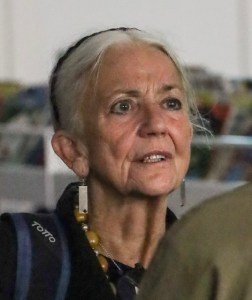
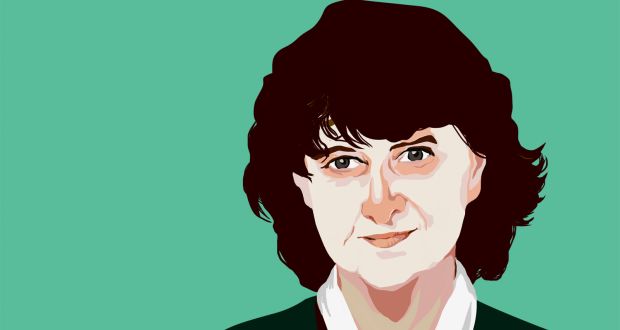
Paula Meehan was born in Dublin in 1955, the eldest of six children. She attended a number of primary schools, finishing her primary education at the Central Model Girls’ School off Gardiner Street. She began her secondary education at St. Michael’s Holy Faith Convent in Finglas but was expelled for organising a protest march against the regime of the school. She studied for her Intermediate Certificate on her own and then went to Whitehall House Senior College, to study for her Leaving Certificate.
Outside school, she was a member of a dance drama group, became involved in band culture and, around 1970, began to write lyrics. Gradually composing song lyrics would give way to writing poetry.
At Trinity College, Dublin, (1972–1977) she studied English, History and Classical Civilization, taking five years to complete her Bachelor of Arts degree. This included one year off, spent travelling through Europe. While a student she was involved in street theatre and various kinds of performance.
After college she travelled again, spending long stretches in Greece, Germany, Scotland and England. She was offered a teaching fellowship at Eastern Washington University where she studied (1981–1983) in a two-year programme which led to a Master of Fine Arts degree in Poetry. She returned to Dublin in 1983.
Meehan has also written poetry for film, for contemporary dance companies and for collaborations with visual artists; her poems have been put to music by songwriters (including Christy Moore). Her poetry has been extensively published in translation, including substantial collections in French and German.
The 2015 Poetry Competition ‘A Poem for Ireland’ shortlisted her 1991 poem ‘The Statue of the Virgin at Granard Speaks’ in the final ten poems. She selected poems for and introduced the Candlestick Press anthology Ten Poems from Ireland in 2017. Meehan was a judge for the 2020 Griffin Poetry Prize.
In September 2013, Meehan was installed as the Ireland Professor of Poetry by President Michael D. Higgins.
In 2023, she was elected an honorary fellow of Trinity College Dublin.
- information sourced from Wikipedia





 Reviews Rants and Rambles
You must be logged in to post a comment.