Stephen chooses exile from his native land mainly because of his growing disenchantment with Irish society on many levels. Indeed, his final decision to fly the nets which are impeding his development as an artist is achieved following a series of struggles with authority from which he ultimately decides to flee. His sense of injustice is first stirred when he is a young schoolboy. When Wells asks him if he kisses his mother at bedtime, he discovers that whether he should say Yes or No he will be laughed at. Wells has already shouldered him into the ditch, and this first experience of school bullying makes him ill. Christmas at home, which is expected to be all warmth and friendship and happiness after the chilly misery at school, turns out to be a time of angry political quarrels among adults who are all supposed to be devoted to Ireland. When Stephen returns to school after suffering the misfortune of having his glasses broken he suffers the injustice of being punished for it. Priests are supposed to be good, he thinks, but they get angry and behave cruelly. To make things worse, he later discovers that his bold protest against injustice becomes a subject for laughter among those responsible for the injustice.
Stephen’s confidence in the moral authority of the powers-that-be in Clongowes is thus undermined and this is also accompanied by the undermining in his respect for his father. The visit to Cork reveals Mr Dedalus as a boastful, flattery-loving, gas-bag and feckless drunkard, drinking and boasting while all the time his financial affairs are deteriorating and the home is getting more squalid. Stephen’s boyish attempt, when he gets his prize money, to stem the tide of sordid poverty that seems to be sweeping over his family proves absurdly inadequate. His attempt, after confession, to remodel himself on the pattern of perfection taught by the church, leads to extravagant feats of self-discipline that deny his most powerful aspirations towards life and beauty. When the suggestion is made that he should consider a vocation to the priesthood, an instinctive inner conviction assures him that his future cannot be in subjection to an ordered system like that of the Church. The vision of the wading girl stirs the religious outburst, ‘Heavenly God!’ and we recognise in the way the landscape calls up in him poetic phrases that satisfy his thirst for harmony between the outer world and his inner emotional life, that he is to be a future artist and not a future priest.
It is from a sordid scene at home and past the mad cries from a nunnery that Stephen makes his symbolic progress across Dublin to the university, where study opens up a world of exciting philosophical thought. But even here there is no prospect of ultimate life-long satisfaction. He quickly comes to realise that the university teachers are also limited and unimaginative, and the students’ enthusiasm is stirred by causes with which Stephen cannot sympathise. The idealistic support for the Czar’s peace initiative strikes him as sentimental. He feels unable to commit himself to corporate demands or protests. The enthusiasm of students such as Davin for the cause of national independence, the revival of native culture, the enmity against England seems to require a commitment that mortgages life in advance of living it. Stephen senses his own Irish inheritance, not as a great blessing, but as a series of fetters imposed by history willy-nilly on his generation. Moreover, he knows from the past that Irish nationalist movements tend to lead, not to victorious achievements by the leaders, but to their betrayal and martyrdom.
Stephen himself demands of life, above all, freedom in which he can work creatively as an artist. Closely associated with the demand for freedom is his sensitive responsiveness to beauty in the spoken and written word. He has found in his home an increasing sordidness and crudity that are the antithesis of beauty. He has found in the Church a cruelty hostile to justice and freedom, for the caning with the pandybat at Clongowes is of a piece with the horrendous torments pictured in Father Arnell’s sermons as the future eternal lot of millions of fellow human beings. He has found in the political life of Ireland a collection of inherited attitudes and passions that embitter family relationships, which turn young students into obsessed fanatics, and that claim people’s thoughts and energies before they have had time to develop their own individualities.
The upshot is that Stephen turns the rebellious slogan of Lucifer, in turning against God, ‘I will not serve’, into his own motto in rejecting the demands of home, fatherland, and Church, and dedicating himself to the task of expressing himself freely as an artist.
The decision takes shape in his mind in association with thoughts of the career of his mythical ‘ancestor, Daedalus, who found escape in flight from imprisonment in a labyrinth. Stephen has often trod the maze of Dublin streets seeking escape of one kind or another, whether in the confessional or the brothel. Only when he crosses the bridge to Bull Island and stares out to sea does he glimpse the vision of true fulfilment. He cannot find this fulfilment without flight. His mother prays, he says, that, ‘I may learn in my own life and away from home and friends what the heart is and what it feels.’ So he sets out, ‘to encounter for the millionth time the reality of experience and to forge in the smithy of my soul the uncreated conscience of my race.’ His final prayer is not directed to God but to his role model, Daedalus. He prays: ‘Old father, old artificer, stand me now and ever in good stead.’
In 1904 the magazine DANA made an important contribution to world literature by rejecting a short story by a then-unknown Irishman called James Joyce. Joyce sought the advice of George Russell (AE), who suggested that he should rewrite it as a novel. Joyce took his advice so seriously that he eventually produced a huge work of fiction which he titled Stephen Hero. This book was never published during his lifetime; most of it was destroyed by its dissatisfied author who decided to try again, reworking and reducing the material into five chapters. Twenty publishers rejected this new version before it finally appeared in 1916. Joyce gave his first novel the same title as that of the rejected short story: A Portrait of the Artist as a Young Man. In 1944 three years after his death, the surviving fragment of the original novel was published as Stephen Hero.
Brief Bio of James Joyce
Since A Portrait of the Artist as a Young Man is largely autobiographical, it is worth knowing something of the life and works of its author. James Joyce was born in Dublin in 1882, the eldest of eleven children. His father, John Joyce, came from a wealthy Cork family and had inherited a small private income. He was an ardent admirer of Charles Stewart Parnell, for whom he had worked as an election agent. He was rewarded with the post of Tax Collector in Dublin, a lucrative position which allowed him and his growing family to live in considerable comfort and send his eldest son to Clongowes College. However, his fecklessness, his extravagance and his fondness for drink cost him his job and reduced his family to poverty. James was withdrawn from Clongowes and sent to Belvedere College, also run by the Jesuits. He proved a hard-working student, winning a number of scholarships, which in a manner typical of his father he squandered on expensive family outings.
From 1898 to 1902 Joyce was a student at University College Dublin, then run by the Jesuit order. When he graduated with a degree in languages he decided to continue studying as a medical student. However, unhappy at UCD, he went to Paris but returned to Ireland when he received news of his mother’s imminent death. To provide himself with a livelihood he took up a teaching post.
Then he met Nora Barnacle and his life was transformed. He persuaded her to elope with him to Trieste where he worked as a teacher of languages. There his children, Giorgio and Lucia, were born. His brother, Stanislaus, joined them in 1905, giving Joyce invaluable financial and moral support.
Joyce returned to Dublin on two occasions. On his first visit, he tried to set up the first cinema in Ireland, but the project failed. In 1914 he came home again to publish Dubliners, but once again his trip was in vain. Bitterly disappointed at his treatment, Joyce vowed never to set foot in his native land again. He was true to his word.
In 1914 Joyce took his family to Zurich, remaining there for the duration of the Great War. He then returned to Trieste but soon left for Paris, where he was to live until the Second World War forced him to move back to safety in neutral Zurich.
Meanwhile, in 1916 Dubliners was finally published, followed soon afterwards by A Portrait of the Artist as a Young Man. Then on his fortieth birthday, his masterpiece, Ulysses, appeared, and almost immediately established his reputation as the foremost writer of his time.
Joyce’s great success as an author was marred by personal tragedy. His daughter Lucia’s mental health deteriorated to the point where Joyce could not care for her himself and had to have her committed to an institution. In 1931 his father died. All this time his eyesight was weakening, and though he underwent many painful operations, his sight continued to fail until he was almost blind. Having returned to Zurich on the outbreak of the Second World War he continued to write, working on his great experimental novel Finnegan’s Wake. His health continued to decline and he eventually died on 13th January 1941 of a perforated ulcer.
A Note on the Structure of the Novel
The novel, A Portrait of the Artist as a Young Man is a carefully constructed novel divided into five chapters or episodes. Each of these sections deals with an important stage in the development of the hero, Stephen Dedalus, from early childhood to adulthood.
In Chapter One we meet Stephen as a baby-talking infant. We learn of his first years in Clongowes College, where he is unjustly caned by Father Dolan. An important event is the Christmas dinner, during which a bitter argument between Dante and Mr Casey reflects the troubled state of Ireland after the Parnell Split.
In Chapter Two, Stephen’s family suffers a decline in living standards due to Mr Dedalus’ feckless ways and is forced to move from Bray to Blackrock. Young Stephen is taken out of Clongowes and sent to Belvedere College. Important incidents are the encounter with Emma Cleary, the school play, and Stephen’s visit to Cork with his father, Simon. This chapter ends with Stephen’s sexual awakening as seen in the episode with the prostitute.
Chapter Three is largely concerned with religion. Filled with sexual guilt, Stephen listens to the famous sermon on Hell. He resolves to end his sinful life and seeks grace through confession and self-mortification. As a result, he achieves peace of mind and inner calm.
Chapter Four sees Stephen invited to become a Jesuit when his piety is noticed by his teachers. He rejects the call, opting instead for Art. This turning away from religion and back to the world is symbolised by the girl on the beach at the end of this section.
In Chapter Five, Stephen is now a student at University College Dublin. Through his discussions with fellow students, we discover his rejection of nationalism and the nationalistic art that was then in vogue. He expounds for us his theory of aesthetics. The novel ends with his defiant refusal to serve God or country. Instead, he will seek through exile to find the freedom he needs to create his own art.
Major Themes in the Novel
Joyce’s first novel is concerned to show the stages in the development of the artist. We are presented with the hero Stephen Dedalus first as a child, then as a schoolboy, later as a devout Catholic, and finally as a university student. Family, teachers, sex, religion, and country, forge fetters for the would-be artist; to create he must break free and become his own person. This he achieves in the end with his famous declaration: “Non serviam” (I shall not serve), thereby turning his back on his family, his country, and his religion to devote himself totally to his new religion of Art.
Johnston 21 – Double Portrait of James Joyce
Style and Technique in A Portrait of the Artist as a Young Man
A Portrait of the Artist as a Young Man is a naturalistic novel narrated by an invisible author who remains aloof and apparently removed from his tale. However, the viewpoint through which we see things is clearly Stephen’s. This not only makes him the focus of our attention but it also invites us to sympathise with him throughout. The language is also used to reflect Stephen’s central role and importance. Thus in the opening chapter, we read the prattle of childhood as the infant Stephen tries to come to terms with his surroundings. Later the schoolboy slang reveals his perceptions of life in a boarding school. At all times the language is suited to whatever stage Stephen is then at.
Religious symbols and liturgical terms abound in Chapter Three. They also help in the final chapter to elevate the tone and solemnise the young artist’s preoccupation with aesthetics at that stage. Even though Joyce is at great pains to reject his Catholic faith he displays here a deep appreciation of Catholic rituals. His friend Cranley points out this apparent inconsistency:
It is a curious thing, do you know, how your mind is supersaturated with the religion in which you say you disbelieve.
This accusation, which could also be levelled at many other Irish novelists, is very relevant. They, including James Joyce, seem determined to reject Catholicism because it seems at variance with their artistic imagination. Yet, as Eamon Maher states ‘they cannot avoid being ‘supersaturated’ with its vestiges’.[1]
Symbols, including religious ones, are important to Joyce as a method of heightening his themes and maintaining links throughout the narrative. For example, Stephen’s name reminds us of St. Stephen, the first Christian martyr, and the significance of this is seen in the young man’s willingness to sacrifice all for the sake of his art. His surname, Dedalus, evokes the labyrinth-maker, the inventor, the flier who dared to aspire too high. Other symbols used by Joyce in this novel are water, representing death, cleansing and renewal; the Church as mother; Ireland as the ‘sow that eats her farrow’.
To create a real and convincing background for Stephen, there is a painstaking attention to detail. Names of actual places are numerous in the text, e.g. Clongowes, Belvedere, Lower Mount Street. Real people are also introduced, such as Parnell, and Michael Davitt, W.S. Gilbert. The squalor of Stephen’s home life is vividly captured in Joyce’s description of the meal table. He is not content just to appeal to our sense of sight. We hear the sound of cricket balls hitting bats in Clongowes; we smell horse’s urine, and while we listen to the sermon on Hell in Chapter Three we feel the horrific torments of the Damned.
Walter Pater, the author of Renaissance, who had such an enormous influence on Oscar Wilde and the Aesthetic Movement, also affected Joyce in his attitude to Art. Pater and the followers of the Aesthetic Movement believed that art should be of paramount importance. That Joyce was especially sympathetic to this view is most apparent in the final section of the novel. Another writer much admired by Joyce was Cardinal Newman, the founder of University College Dublin whose style he sought to emulate.
A Detailed Analysis of a Sample Passage from the Novel
“He looked northward to Howth. The sea had fallen below the line of seawrack on the shallow side of the breakwater and already the tide was running out fast along the foreshore. Already one long oval bank of sand lay warm and dry amid the wavelets. Here and there warm isles of sand gleamed above the shallow tides and about the isles and around the long bank and amid the shallow currents of the bridge were lightclad figures, waving and delving.
In a few moments he was barefoot, his stockings folded in his pockets, and his canvas shoes dangling by their knotted laces over his shoulders and picking a pointed salteaten stick out of the jetsam among the rocks, he clambered down the slope of the breakwater.
There was a long rivulet in the strand and as he waded slowly up its course, he wondered at the endless drift of seaweed. Emerald and black and russet and olive, it moved beneath the current, swaying and turning. The water of the rivulet was dark with endless drift and mirrored the highdrifting clouds.
The clouds were drifting above him silently and silently the seatangle was drifting below him; and the grey warm air was still: and a new wild life was singing in his veins.”
Commentary:
This fine piece of writing, which occurs at a crucial point towards the end of Chapter Four, illustrates many of the features of Joyce’s writing style.
Firstly, we notice his attention to detail; e.g.: ‘the pointed salteaten stick’. The word ‘salteaten’, like ‘jetsam’, ‘lightclad’, ‘seatangle’ shows the author’s fondness for coining new words.
Secondly, we view the scene through Stephen’s eyes, and so his feelings as he observes the seascape are subtly revealed, while the narrator himself remains invisible and aloof.
Repetition is another device to concentrate our minds and create connections in the writing. Notice how often we meet the words ‘warm’, ‘silently’, ‘clouds’ and ‘drifting’.
Symbolism is everywhere. The clouds are the difficulties of the past, now seen drifting away; the rivulet is a new life beginning; the sky is the greatness the young artist seeks and aspires to, as well as being associated in our minds with Dedalus.
There is also a sense throughout the piece that we are building towards a climax. The feelings of Stephen are conveyed by words like ‘warm and dry’, ‘new wild life’ and ‘singing’. The final mood is one of joyous freedom.
Sound is also important, as we would quickly realise were we to read the passage aloud. Its lyricism is enhanced by alliteration (‘salteaten stick’) and assonance (‘wild life’). Stephen has arrived at a crucial moment in his life. His decision not to become a Jesuit has just been made, and now he sees his future as an artist calling him like a vocation. It is the turning of the tide for him. He is exhilarated by the prospects ahead: he has now freed himself from the restraints of family, country, and religion. That is why he feels ‘a new wild life was singing in his veins’.
CONCLUSION
Having completed A Portrait of the Artist as a Young Man, Joyce too had arrived at a new stage in his development. He was now forever finished with conventional fiction. Already his mind was preoccupied with the book that was to become his great masterpiece. Ulysses was about to be born, and with its birth, the young exile from Dublin would be hailed as the greatest novelist of the century and one of the greatest innovators of all time.
However, Stephen Dedalus had survived and it is the same Stephen we meet on the first page of Ulysses. However, he is not the hero this time; that role is reserved for Leopold Bloom, but Stephen is second only in importance to him. Thus Joyce links together two of the finest works of fiction ever written. The hero of the rejected short story lived on in the imagination of his creator for more than twenty years to become one of the best known and most written about characters of all time.
[1] Eamon Maher writing in The Ticket in The Irish Times, ‘The half-life and death of the Irish Catholic novel’, Saturday, December 23rd, 2017.
You might also like to read a more detailed character sketch of Stephenhere
Kazuo Ishiguro’s recent elevation as Nobel Laureate will surely prompt avid readers to explore his repertoire further. They could do worse than lose themselves in this offering from 2015. The novel took me back to my undergraduate days in UCC in the 1970’s studying classics like Sir Gawain and the Green Knight and Beowulf. Ishiguro’s tale sets out to be a classic Arthurian fable depicting Sir Gawain himself, and others on various quests. Ishiguro exploits the avalanche of recent interest in this genre as seen in Peter Jackson’s cinematic telling of Tolkien’s Lord of the Rings saga. While the novel may not lend itself to a film blockbuster, it does have all the attributes for one of those all-consuming RPG’s (an acronym I’ve just newly acquired!) in which you work your way through various adventures and levels and perils on your journey to eventually achieving your Holy Grail.
The novel is set at a certain indistinct time after the death of the legendary Arthur. Britons and Saxons enjoy a fragile peace: the first tentative steps being taken to assimilate both opposing forces in villages and communities throughout the realm. However, we soon learn that this peace is maintained only because each community is afflicted by a collective loss of memory surrounding their horrendous war-torn past. The she-dragon Querig is said to be responsible for this collective amnesia by the spreading of a mysterious mist which envelops the countryside and the hamlets. Indeed, the novel explores the rather vexed issue of memory, and race memory in particular, in maintaining peace in a fractured – and fractious – post-war political landscape. This idea, of memory and its loss, is dealt with by Ishiguro on two fronts – the geopolitical and the personal.
The novel has a number of narrators, principally Axl and Beatrice – but others including Sir Gawain, Sir Wistan and the various boatmen also provide necessary insights, observations and reveries as the story unfolds. The early chapters introduce us to Axl and Beatrice, his princess. They are Britons who live in an underground, warren-like community, surrounded by monsters and ogres and never-ending mists blowing in from the mountains and fens. They live ‘on the edge of a vast bog’, where ‘the past was rarely discussed’ because ‘it had faded into a mist as dense as that which hung over the marshes’. However, they are being increasingly marginalised by their elders in the Great Chamber and eventually decide to leave to seek out their son who has left for some forgotten reason. Thus begins the great adventure.
Early in their journey, they come upon a mysterious boatman. Their conversation with him lays the foundation for their fears that restored memory will bring disaster and a possible end to their solid, loving relationship.
We meet Sir Gawain who has been given a quest by Arthur to slay the she-dragon Querig. He has spent his life wandering the hills getting to know her ways and her guile, so much so, that he eventually becomes her protector. He is mocked by the women for his inactivity in fulfilling his quest, and we find him wandering the foothills on his trusted warhorse Horace, a rather pathetic figure of ridicule – a forlorn relic of a chivalrous past.
We also encounter the warrior, Wistan, and his young protégé Edwin, who it is feared has been affected by a dragon bite. We learn that Wistan has been sent by his Saxon king in the eastern fens, to seek out Querig and slay her. The motivation behind this seems to be that once Querig has been slain and the people’s memory fully restored, the long-suppressed divisions and hatreds will resurface to aid the king in his quest to gain Saxon control over the kingdom.
Axl and Beatrice continue their journey, accompanied by Sir Gawain and the young boy Edwin. They detour to visit the wise Father Jonus who lives in a monastery in the mountains, on the pretext of receiving a cure for Beatrice’s mysterious ailment. The monastery, once a Saxon citadel, holds further dangers for the party as they are forced to escape through secret passages to freedom. They continue relentlessly upward to the Giant’s Cairn, where Querig reputedly has her lair. Once Sir Gawain and Querig have been slain by Sir Wistan, Beatrice and Axl are made aware of the tragic consequences which will follow: memory will soon be fully restored and the dogs of war loosed again, with devastating consequences. Once again Britons will be set upon by their Saxon neighbours, ushering in another period of war and unrest, the fragile peace put in place by King Arthur shattered forever.
Axl and Beatrice make their way from the dragon’s former lair and again meet another boatman. Beatrice reveals – her memory now restored – that in fact, their son is dead and is buried on a nearby offshore island. They undergo the dreaded solitary test administered by the boatman and the novel ends in sadness, as Axl is left on the shore, while the boatman ferries the ever-weakening Beatrice to the mysterious island.
In this novel Ishiguro provides us with a thinly veiled modern allegory – his thesis seems to be that a collective loss of memory is necessary in the various trouble spots around the world where untold savagery and genocide have been unleashed if reconciliation is to take place. We can only imagine the difficulties that daily face communities which were once suffused with hatred and division. The situation in Northern Ireland obviously springs to mind. We see regularly on our televisions and newspapers the efforts made to normalise peace in these communities after almost a quarter of a century of atrocity, a process which requires a near Orwellian stretching of credibility on our behalf. In fact, we may wonder has Ishiguro’s mist been replaced there with the modern version – sterling, euro and dollar? We may also remember other recent trouble-spots such as Israel/Palestine, South Africa, Bosnia, Rwanda, and Syria and question: how can normality be restored, how can society pick up the pieces again? Can Humpty Dumpty ever be put back together again?
As well as the geopolitical implications Ishiguro applies the same thesis to the more private area of marital love. The touching tenderness and faithfulness exhibited by Axl and Beatrice belie the difficulties they have had to face in their long lives together. This has included a period of infidelity by Axl which has been glossed over, and also, the death of their only son. Surely, this mysterious yet fortuitous amnesia has been a Godsend to them in maintaining their closeness and their touching intimacy. Surely their relationship would not have otherwise endured but for the benign balm of amnesia.
Consider then the gargantuan achievement of Ishiguro in The Buried Giant: it is a masterpiece about characters who all suffer from various degrees of memory loss, and yet we as readers are able to piece the story together, to read between the lines…. It is, however, an allegory in wishful thinking. In reality, there are no quick fixes to help us cope with our post-traumatic stresses. We cannot rely on the temporary balm of forgetfulness. If anything, in our world we are left to deal with generation after generation of bequeathed toxic memory. Atrocity on the world stage or infidelity on a personal relationship level are not so easily forgotten, nor forgiven.
Joe Dowling, who directed productions of ‘Philadelphia Here I Come!’ at the Abbey and Gaeity Theatres has said that the play deals primarily, ‘with the failure of people to communicate with each other on an intimate level. It also makes us examine the nature of Irish society dominated by the church, the politician and the schoolmaster’. Gar is being forced to leave Ballybeg because Ballybeg (and Ireland) has failed him and his generation. However, Friel is too subtle to allow us to imagine that the world Gar is about to enter in Philadelphia will be any better.
One of Brian Friel’s most important and most visited themes is that of communication. We are all familiar with the phrase ‘non-verbal communication’ and whether we are watching the referee demonstrate that he wants the TMO to view an incident at a rugby match or whether we empathise with Patrick Kavanagh as he visualises the ‘wink and elbow language of delight’ in Billy Brennan’s Barn, we can see its value. Friel, however, introduces us to a wholly different type of communication in his plays, and especially here in ‘Philadelphia Here I Come!’. This type of communication, almost exclusively Irish in origin, is what I would call ‘verbal non-communication’!
There are many striking examples of this throughout the play, probably best encapsulated by S.B. in such phrases as ‘Sure, you know I never take a second cup’ during his unchanging evening routine and also ‘Did you set the rat traps?’ or ‘How many coils of barbed-wire came in on the mail-van this evening?’. There are also many examples, as Gar Private reaches sensory overload, when he regresses and recites a rather quaint and obscure mantra which he obviously learnt in school during English class!: “It is now sixteen or seventeen years since I saw the Queen of France, then the Dauphiness, at Versailles”. This oft-repeated phrase has no context or meaning within the play as a whole and its only function is as a perfect example of verbal non-communication!
The principal theme in ‘Philadelphia Here I Come!’ is, therefore, the breakdown of communication between Gar and his father, S.B.O’Donnell. This theme is the centre around which the entire play revolves. At times it is presented very directly and forcefully. On other occasions, it is hinted at indirectly and very subtly. In all cases, however, it is the principal focus of attention in the play.
The communication theme is presented very dramatically in the description of Gar’s relationship with his father. In Episode One, we saw the following exchange of dialogue between Gar and Madge:
MADGE: He said nothing since I suppose?
PUBLIC: Not a word.
PRIVATE: The bugger.
MADGE: But he hasn’t paid you your week’s wages?
PUBLIC: £3.15S – that’ll carry me far.
MADGE: He’ll have something to say then, you’ll see and maybe he’ll slip you a couple of extra pounds.
PUBLIC: Whether he says goodbye to me or not, or whether he slips me a few miserable quid or not, it’s a matter of total indifference to me, Madge.
In this short dialogue, certain essential items of information are communicated to the audience. S.B. has not yet appeared in the play, so it is necessary that we get some preliminary description of his character. The picture that emerges here is of a person that is cold, uncommunicative, and slightly (!) miserly. Also, we get the first indication of the conflict between Gar’s outward behaviour and inward thoughts. While outwardly Gar pretends that his father’s lack of communication is a ‘matter of total indifference’ to him, his inward comments express anger and bitterness. Madge arouses Gar’s expectations, and those of the audience as well, when she says, ‘He’ll have something to say….you’ll see’. This is precisely the climax to which the whole play is directed. The audience’s attention is engaged from the outset.
This theme becomes more obvious as the play progresses. Its first emphatic expression is during the tea-time routine – a perfect example of what we have referred to earlier as verbal non-communication. S.B. enters from the shop and goes through his nightly routine. He hangs up the shop keys, he looks at his pocket watch and checks its time with the clock on the wall, he takes off his apron, folds it carefully and leaves it on the back of his chair. Then he sits down to eat. During all these ponderous jobs Private keeps up an endless chatter. As the meal commences Private says, ‘ Now for a little free conversation’ (p 39.). The tone of this is ironic, but with a touch of bitterness and sarcasm. What we get is not, ‘a little free conversation’ at all, but precisely the opposite. S.B. converses sporadically on boring impersonal topics. He directs no personal remarks at Gar, nothing whatever that is even slightly intimate – this on the night before he leaves for Philadelphia, possibly forever. As the scene continues all trace of humour fades from Private’s voice, and he makes a direct plea for communication (‘So tonight d’you know what I want you to do? I want you to make one unpredictable remark…Go on Say it! Say it! Say it!). This scene gives the first prolonged description of Gar and S.B. together. What should be an occasion for communication and contact becomes, in fact, a series of embarrassing moments. In this scene and elsewhere in the play Friel uses stage silence very skilfully. This use of silence, of intermittent conversation only, is somewhat missed in reading the play, but it would be an important ingredient in the play’s performance. During a performance, we would notice how the tea-time scene is punctuated by long silences – silences that are filled by Private’s comments or by the tick of the clock in the background. This would serve to underscore the communication theme in a dramatic way by drawing attention to the large gaps in the tea-time conversation. It also explains Madge’s ironic comments to S.B. and Gar, ‘The chatting in this place would deafen a body. Won’t the house be quiet soon enough – long enough?’ (P. 41).
The first of Gar’s attempts to bridge the gap between himself and his father is made in this scene, though in a slight and hesitant way. It also meets with the usual rejection from S.B. After a slight contention about money Gar tries to extend a hand of friendship to his father by offering him more tea. This meets with the following, predictable, remark: ‘Sure you know I never take a second cup’ (p. 41). Gar accepts this rejection and thinks, ‘You can’t teach new tricks to an old dog’. Following this, Private launches into a long speech that is full of obvious humour, but which has an important serious core: ’Let me communicate with someone… communicate.. pour out your pent-up feelings into a sympathetic ear. So all I ask for the moment is that you listen – just listen to me…’ (p. 43). By means of such comments as these, Friel keeps the theme of communication to the forefront of our attention.
We next see S.B. and Gar together at the start of Episode Three, during the rosary sequence, and the game of draughts that follow it. There is an interesting juxtaposition of past and future events in this scene. As the rosary is being said Gar’s mind wanders. He thinks of the future in America, and characteristically, his ideas are all exaggerated and somewhat unreal: ‘Swaggering down 56th Street… with this big blonde nuzzling up to you. You’d need to be careful out there boy; some of those Yankee women are dynamite…’ (p.87-8). The reverie continues with statements comparable to this. Things of this sort are, however, remote from Gar’s experience and for this reason they fail to engage his feelings. The real interest of Private’s speech here, is his surmising on a life in America without intimacy or friendship: ‘But you’ll never marry; never; bachelor’s written all over you. Fated to be alone, a man without intimates; something of an enigma’ (p.88).
From here, Gar’s mind wanders back to previous incidents in the past, and his feelings are engaged more fully. In this part of the speech, Gar’s boyhood affection for this father is the centre of interest: ‘Do you ever dream of the past, Screwballs, of that wintry morning in Bailtefree, and the three days in Bundoran? ‘ (p. 89). Gar goes on to give the first of many descriptions in the play of the fishing trip with S.B. He doesn’t, he admits, remembers every detail, ‘but some things are as vivid as can be’. This occasion recalls to Gar’s mind the former sympathy between himself and his father, which is described in highly emotive terms: ‘between us at that moment there was this great happiness, this great joy – you must have felt it too – it was so much richer than a content – it was a great, great happiness, and active, bubbling joy…’ (p. 80-90).
Following this magnificent speech, one of the most poetic in the play, Gar decides to force the issued by asking S.B. if he remembers this fishing trip also. He adopts his usual nonchalant tone as if the matter was one of indifference to him, when in fact, it’s his most precious memory: ‘‘Whatever happened to that aul boat on Lough na Cloc Cor… an old blue thing – do you remember it? (p.9). This hesitant attempt at communication is interrupted by the Canon’s entrance. During the draughts game, Gar slips into the background. Only one passing comment is directed at him (‘It’s getting near your time, Gareth’). Here again, Friel makes use of silence to underline the communication theme. Apart from the chatter of Private, the Canon and S.B. sit in almost total silence making only sporadic, predictable remarks about insignificant topics. Private, meanwhile, hovers in the background commenting on the scene from his usual witty perspective. But always in his speeches, there is an explicit earnestness that points to wider issues: ‘there’s an affinity between me and Screwballs that no one, literally, no one could understand…….’ (p.96). As the Canon and S.B. sit motionless and in silence, oblivious to Gar’s presence, Private relates again the story of the fishing trip. As often in the play, music excites Gar’s memory, reminding him of previous occasions, so also in the touching speech that ends this scene: ‘Listen! Listen! Listen! D’you hear it? D’you know what the music says? It says that once upon a time, a boy and his father sat in a blue boat on a lake on an afternoon in May, and on that afternoon a great beauty happened, a beauty that has haunted the boy ever since..’ (p.98). For Gar, time is slowly running out. He has patiently, waited for S.B. to make some sort of gesture towards him, some small demonstration of affection. But as the play moves into its final scenes, the lack of communication is still firmly established.
In the last episode of the play Gar makes one final effort to reach out to his father. Throughout the play, their spoken comments to each other have been impersonal and superficial. Now, in ‘the small hours of the morning’, Gar takes up the issue of the fishing trip in a final attempt to provoke a reaction. Gar and S.B. are surprised and slightly embarrassed to be in each other’s company. At the start, their conversation falls back onto the usual impersonal topics. They talk about fencing posts, plug tobacco, tinker’s cans, ‘cookers and ranges and things’. All personal issues are carefully avoided. Also, we notice the same irritable behaviour on S.B.’s part. When Gar asked him will he have more tea, S.B. gives his typical response: ’Sure you know I never take a second cup’ (p.101). Yet there is some slight hint of affection in S.B. at this point. Here, as so often in the play, Friel is a master of understatement, and in this scene, his description of S.B. is delicately and skilfully drawn. S.B. is unable to sleep, and though we are never told why, the implication is that he is disturbed by Gar’s departure. He awkwardly tells Gar the day’s weather forecast and he has at least enough interest in his welfare to advise him to ‘sit at the back’ of the plane, in case there was ‘an accident or anything’. Gar notices the slight affection suggested by these remarks and he tries once again to introduce the subject of the fishing trip and the blue boat. For a short space, their conversation takes on a new dimension. Gar describes his memories with growing enthusiasm and S.B. listens attentively. Then comes the final important question, and the inevitable let-down: ‘D’you remember?… No.. No.., then, I don’t.. ‘(p.105). Here Friel raises our hopes slightly so that he can demolish them again. This is the final appearance together of Gar and his father in the play. The same communication problems, the same misunderstandings are apparent up to the end.
Throughout the play, S.B. is depicted as a cold, uncommunicative character. This is the picture that emerges from his initial entrance, and this picture of him lasts throughout the play. Lizzy Sweeney’s comments in Episode Two contain brief but appropriate reference to S.B.: ‘That was the kind of us Gallagher girls wasn’t it…either laughing or crying….you know, sorta silly and impetuous, shooting our big mouths off, talking too much, not like the O’Donnell’s – you know – kinda cold…’ (p. 64). But before the end of the play, Friel gives one last look at S.B. which shows him up in a different perspective, and which arouses the audience’s sympathy for him in a way that was not done in the rest of the play. Indeed, S.B.’s comments in his conversation with Madge are all the more pathetic because they are unexpected.
In this final scene (pp. 106 – 108) S.B. is shown to be very human. Because of Gar’s departure, he will have a lot more work to do himself, but he insists that he’ll ‘manage rightly’. Suddenly we see the extra chores which Gar had to do (p. 16) in a different perspective. In Gar’s absence, a lot more responsibility falls on S.B.’s shoulders, but he still doesn’t go against Gar’s wishes by asking him to stay. There is also a slight hint that S.B.’s business is going into decline, ‘It’s not like in the old days when the whole countryside did with me; I needed the help then, but it’s different now…’ (p. 107). In this matter also S.B. looks to Madge for reassurance, ‘I’ll manage by myself now. Eh? I’ll manage fine, eh?’
The most striking reversal of sympathy for S.B. comes about through the description he gives of Gar’s first day at school. S.B.’s memories of this event are as sharp in focus as Gar’s remembrance of the fishing –trip. S.B. describes how he and Gar went ‘hand in hand’ to school, ‘as happy as larks, and him dancing and chatting beside me…’ (p. 107). Their easy spontaneous communication in this scene from the past is in sharp contrast to their predicament in the play as a whole: ‘You wouldn’t get a word in edgeways with all the chatting he used to go through…’. S.B. is aware of the sad decline in their relationship, but he places all the blame on his own side: ’Maybe, Madge, maybe it’s because I could have been his grandfather, eh?….I was too old….’. S.B.’s last words in the play again refer to Gar, in another image of happier days: ‘In the wee sailor suit – all the chatting he used to go through…’ Both Gar and S.B., so unlike in many ways, have one common characteristic: they both hold memories of the past and of each other, but unfortunately they are different ones. The contrast in the play is not between depth of feeling on the one hand and absence of feeling on the other. Communication is the real problem in this play, namely the channels through which personal feelings are expressed. Gar wrongly assumes that S.B.’s failure to remember the fishing trip suggests a lack of feeling or affection. In fact, S.B. has his own private memories that Gar knows nothing of. The tragedy of the play is that they are unable to communicate these memories to one another.
The communication theme of the play is principally expressed through the relationship of Gar and his father. But it is also seen in the presentation of other episodes and characters. A close look at the language of the play reveals an interesting feature of Friel’s use of dialogue. Conversation is difficult for the play’s characters. Communication of personal feelings is almost totally impossible. The most prolonged dialogue in the play is that between Gar and his private self. Dialogue with other people is much more difficult to achieve. In fact, what Friel presents us with in the play is not really dialogue at all, but a series of monologues. Characters who start talking to each other usually end up talking to, or about, themselves, and what they say is usually untrue. We can see examples of this interesting technique on two important occasions in the play.
The first of these is in the scene with Master Boyle. Ostensibly, the Master has called to pay his farewell to Gar. But after a brief mention of Gar’s departure, ‘Tomorrow morning, isn’t it?’ (p. 44), Boyle’s conversation is completely given over to matters concerning himself. He talks about his controversy with the Canon, about his poems and his own possible emigration to America. He is also slightly formal and ill-at-ease, though we detect that unspoken feelings lurk just below the surface. The problem of self-expression, so dominant throughout the play, is evident here also. After a very awkward handshake and quick embrace, Boyle makes a hasty exit from the stage.
We notice a comparable use of dialogue and self-expression in ‘The Boys’ scene. Here again what we get is not so much a dialogue but a series of short monologues punctuated by silence. Gar’s friends speak loudly and enthusiastically about insignificant matters. They relate stories and episodes (mostly untrue) in which the principal characters are themselves. When they are not engaged in these personal monologues, embarrassing silences develop, which they desperately try to fill by even louder and more exaggerated accounts of their adventures. These silences occur ‘like regular cadences’, and to defeat them, someone always introduces a fresh theme. However, when the time comes to say good-bye to Gar, they are all pathetically stuck for words. Tom leaves without any word of good-bye at all, whereas Ned’s farewell is embarrassed and awkward. He stands casually at the door and says, ‘So long, Gar’ (p. 75). He then throws his parting gift – the belt with the big brass buckle – across the room to Gar. Despite all the loud talk about his exploits, Ned is incompetent when it comes to real displays of affection. Here again, the problem is not that he feels no affection for Gar, but that he is unable to communicate it properly. Joe, the youngest member of the group, makes the only sort of proper farewell to Gar. When the others have left, Joe stays behind as a gesture of his friendship. But even his final words to Gar are casual and superficial: ‘Send us a card, Gar, Sometime, Eh?…..Lucky bloody man….so long….’ (pp. 77-78).
The communication theme can also be seen in the episode describing Gar’s visit to Senator Doogan. Here the theme is placed in a slightly wider context. The scene in Doogan’s house describes not only the breakdown in communication between individuals but also between different social classes. (Is this similar to Patrick Kavanagh’s ‘thick-tongued mumble’ in his poem, ‘Stony Grey Soil’?). The conversation with Senator Doogan is presented as a monologue. Doogan wanders on about his personal successes and his important family connections. He also wants the same successes and connections for Katie. Consequently, Gar is excluded from this upper-class world.
The most extended ‘monologue’ in the play, however, is Lizzy Sweeney’s prolonged description of the events that brought about Gar’s decision to emigrate. Like other characters in the play, Lizzie is garrulous and she is also the centre of her own conversation. She wanders through her story about her past life, speaking incoherently, and often losing her train of thought. She is also irritated when someone interrupts her, and even casual interjections cause her annoyance. While she speaks, the other characters sit quietly. Eventually, she breaks down, starts to cry, and stumbles into silence.
What makes Gar O’Donnell’s situation so tragic then is not so much that he is so publicly inarticulate towards his father but that he fails to allow for a similar complexity in his father! All the lines uttered by Private on Gar’s behalf might just as easily have been said on behalf of his father. As Declan Kiberd has said, ‘Language is what comes between Gar and his freedom of expression – his education has left him fluent but not articulate and so his skill with words is greatly in excess of his emotional development’.
Friel’s concern with communication is, therefore, central to this play. Gar has this crazy notion that language and talking and dreaming about something is the equivalent to living life. On the one hand, Friel presents us with characters who speak too much, and on the other hand with those who speak too little. Gar’s mistake is that he foolishly equates emotion with its expression: if a feeling isn’t stated by his father, he won’t believe it’s there at all. This has impeded their relationship and so genuine communication is virtually impossible and the end result is tragic. The final words of both Gar and S. B. – “I don’t know” – captures their shared bewilderment and the sad fact that it is precisely this bewilderment that both connects and separates them.
You might also like to read “Characters and Relationships in ‘Philadelphia Here I Come!'”here
You might also like to read ‘The Theme of Escape in Philadelphia Here I Come!‘here
Modern definitions of the word tragedy don’t help when trying to explain the niceties of Shakespearean tragedy. Our sensationalist news channels such as Sky and CNN are very quick to bring us the latest tragedy; a passenger jet crashes with the loss of all on board; a bridge collapses causing mayhem for home-bound commuters; a school is in lock-down after a young student kills his teacher and many of his fellow students before turning his gun on himself. Our modern definition of ‘tragedy’, therefore, is usually synonymous with the word ‘disaster’; or an event causing great suffering, destruction, and distress, such as a serious accident, crime, or natural catastrophe.
These modern definitions do not help us greatly when trying to describe the action in one of Shakespeare’s tragedies. The good news is that Shakespeare is clearly following a template, one laid down centuries earlier by Aristotle and others – in fact, it can be said that he invented the sequel! So, therefore, if you have studied one tragedy well, you have a huge advantage when you come to study the next one! However, the sad news for all you aspiring young actors is that all Shakespeare’s tragic heroes are men and secondly, if you happen to be playing the title role in one of these tragedies, then universally you will meet a rather gruesome end.
Shakespeare, the consummate businessman, tended to rotate his dramas, so he knew the audience could only take so much comedy, or history or tragedy in any one season. As opposed to his Comedies or Histories, his Tragedies always dealt with tragic events and always had an unhappy ending i.e. the tragic hero dies.
Spoiler Alert! Sometimes, however, Shakespeare’s genius is evident as in Macbeth when the tragic hero suffers a gruesome beheading at the end (sad ending!) but the audience leave the theatre with the knowledge that order has been restored in the kingdom and so Scotland has been rescued from a murderous tyrant (happy ending!).
So, to summarise, no one tragedy fits perfectly any one definition, but the conventions of tragedy require certain tragic elements. Aristotle considered tragedy to be ‘the fall of princes’. Macbeth falls into this category: he is a thane and he becomes king. Generally, in Shakespearean Tragedy, the tragic hero sets out on a course of action but because of a flaw in his character evil enters and is the cause of the catastrophe. Shakespeare believed that his tragedies, including Macbeth, depicted the struggle between good and evil in the world.
The notion of the tragic hero is also problematic. It seems, at face value, to be a paradoxical term, an oxymoron like Groucho Marx’s famous ‘military intelligence’. Our dramas today, in our cinemas, in particular, give us loads of suited heroes from Spiderman, to Superman, to Batman and these modern heroes always win. Tragic heroes, on the other hand, always die!
Shakespeare’s tragic heroes all possess definite characteristics and hopefully, the extreme sexism of the following statements will be understood by members of my female audience! After all, we have to realise that Shakespeare was writing in the late 1500’s and early 1600’s so, inevitably, his tragic hero is always a man of exceptional nature, a great man such as a King or a great General or a Prince, with a more powerful consciousness, deeper emotions and a more splendid imagination than mere ordinary mortals. He is a sensitive being with a spiritual bias. He has a divided soul, he is torn by an internal struggle. However, this tragic hero has some weakness, some fatal flaw that contributes to his downfall. Aristotle called this internal weakness of the hero the ‘hamartia’, the tragic flaw, an essential element in tragedy. Macbeth’s tragic flaw is his ambition. He succumbs to this powerful failing in his nature and is destroyed by it. His ambition pushes him into a sequence of action which inevitably leads to his death. Macbeth attempts the impossible, to usurp the lawful king, and because the means he employs are evil and against the natural law, the inevitable consequences of his actions work themselves out and the result is tragedy.
Aristotle’s criterion for good tragedy was that the members of the audience should experience ‘catharsis’, that is, pity and terror for the tragic hero. The sensitive, conscience-stricken, tortured Macbeth inspires pity, and the tyrannical Macbeth, ‘in blood stepp’d in so far’ inspires terror.
Therefore, Shakespeare, in Macbeth, does a wonderful balancing act between the audience having sympathy for Macbeth while also recognising the reality that evil must be destroyed and good must triumph in the end and order must be restored to the kingdom.
This review and notes are based on the Merchant Ivory Film of A Room with a View, which was directed by James Ivory and produced in 1986. It is based on the novel of the same name, which was written by E.M. Forster in the early 1900s and set in 1907, at the end of the Edwardian era. This was a moment in British history when Britain was still an imperial power. It is an old love story with a happy ending (much like Pride and Prejudice). The film was shot on location in Tonbridge Wells, Kent and in Florence, Italy. In 1987 the film won three Oscars (and a further six nominations) and also won five BAFTA Awards and one Golden Globe.
THE STORY
Lucy Honeychurch, a young English lady, is on a visit to Florence in Italy, chaperoned by her cousin Miss Charlotte Bartlett. They had been led to believe that they would have a wonderful view at the Pensione Bertolini, but this is not the case when they arrive. Another couple, a father and son, overhear them when they express their dissatisfaction and they promptly offer to exchange rooms. Charlotte is offended at this presumption for her young cousin’s sake, especially when the young man is dangerously attractive. However, the Reverend Beebe, the rector of Lucy’s parish at home in England, happens to be staying there as well. He offers to act as an intermediary and the rooms are exchanged without further ado.
The next morning, Charlotte tours the city with Eleanor Lavish, a lady novelist whom she had met at dinner the night before. Lucy goes for a walk alone and she witnesses a violent street fight where a young man is seriously injured. She becomes weak and faints from the shock. Luckily, George Emerson, the young man she had met in the Pensione, is there to help her back to her room.
The following day, the visitors in the Pensione arrange to go sightseeing as a group and the Emersons also are part of the group. George and Lucy become separated from the others and he kisses her in a cornfield. Charlotte witnesses what happened between them and after they return to the city she arranges for them to leave their rooms the next day. The women agree not to tell anyone what has happened to Lucy.
Back in England, Lucy accepts a proposal of marriage from Mr. Cecil Vyse, who is a rather pompous, arrogant snob. By a chance arrangement, the Emersons take a house in the area, close to the Honeychurch residence. Lucy’s brother Freddy, and the Rector, Mr. Beebe, invite George to go swimming in a nearby ‘lake’ on his first day in Summer Street. The men are quite spirited, and they chase each other around the lake for fun. Unfortunately, this occurs at the same time as the ladies are taking their afternoon walk in the woods and they see the men in all their naked glory!
Now that George has arrived and Freddy befriends him, he is invited to the Honeychurch home regularly to play tennis. Lucy is perturbed by George’s renewed proximity. The contrast between George and the stuffy Cecil is very obvious and this unsettles Lucy.
When Charlotte comes to stay with the family, she is very concerned for Lucy in case the presence of George will do harm to her engagement to Cecil. One day, Cecil is reading and criticising what he considers to be a dreadful novel and both Lucy and George are listening. The book happens to be by Eleanor Lavish, the woman who stayed in the same pensione in Florence as they did. The novel is set in Florence and Cecil reads a paragraph describing exactly where and when George kissed Lucy. On the way back into the house, George kisses Lucy again out of sight of the others.
Lucy is upset by this and hurt that Charlotte has told Eleanor Lavish after they had agreed not to tell anyone about what had occurred in Italy. Lucy asks George in the presence of Charlotte to leave. George gives a passionate account of his love for her and tries to make her see that Cecil only cares for her as he would a prize possession. Lucy denies the fact that she may love George, but all the same, she breaks off her engagement with Cecil soon after this.
When George sees that Lucy will not have him, he decides to leave Summer Street because he cannot bear to be near her. Lucy is surprised and shocked to see the furniture being removed from the house. Mr. Emerson talks to her and makes a heartfelt plea to her to stop denying the truth. Realisation dawns on her that she does love George after all and the film ends with the two lovers on their honeymoon back in the Pensione Bertolini in Florence. They kiss passionately at the window of A Room with a View.
THEMES
The themes which we will consider and touch on here are: Love versus hatred, The importance of social class and self-deception and self-realisation.
A Room with a View, deals with the discovery that real love is a powerful and regenerative force: essentially it is a love story with a happy ending. In the film, Lucy Honeychurch experiences a transition from a superficial understanding of love to a full understanding of its power and potential. The film uses many devices to illustrate this change:
The language of the characters
Their actions and gestures
The symbolic use of landscape and flowers
The metaphor of a room with a view.
Unlike a play and a novel, which rely heavily on the reader’s ability to interpret the subtlety and significance of images or references made in the texts, A Room with a View can guide the viewer to their meaning by using effective cinematography.
In the opening sequence of the film, the courtyard view which Lucy has from her window is very disappointing. She was expecting a spectacular view of Florence and this indicates to the viewer Lucy’s desire for new experiences. The room with a view becomes a metaphor for Lucy’s desire to live an exciting and full life.
Lucy’s disappointment with the restricted view is captured by the close-up camera shot of her face. This is intensified by her costume and by the incessant chatter of her cousin Charlotte.
In the dinner sequence, the camera focuses on a large question mark which George Emerson has arranged with the food on his plate. He deliberately shows this question mark to Lucy so that it becomes a symbolic representation for the viewer of their quest to find a meaningful and passionate existence.
The film clearly shows, even in the opening sequences, that the conventions which govern English society are useless in Italy. This is reflected in the open and direct manner of Mr. Emerson who offers Lucy and Charlotte the opportunity to change rooms. Mr. Emerson’s passionate plea that they should have a view indicates his emotional nature and affinity with the workings of the human heart: ‘I don’t care what I see outside. My vision is within. Here is where the birds sing; here is where the sky is blue.’
To emphasise Emerson’s passionate nature even further, the camera focuses on his face, which changes from a look of congeniality when he first suggests the switch, to a rising colour in his cheeks and a pleading look in his eyes. The shot also captures his emphatic gesture of beating his chest with his fork as he speaks, to indicate that his heart is where he feels life most powerfully.
The dialogue between Lucy, Charlotte, Mr. Beebe and the Misses Alan, as they discuss Mr. Emerson’s proposal, illustrates the conflict between the dictates of society and individual free will. Miss Catherine Alan’s opinion, that things which are indelicate can sometimes be beautiful, is a philosophy which Lucy adopts for her stay in Italy.
When Charlotte accepts the Emerson’s offer, she takes the larger of the two rooms for herself, explaining to Lucy that it belonged to George: ‘In my small way I am a woman of this world and I know where things can lead to.’
The ambiguity of this statement is apparent and hints at the physical attraction which exists between Lucy and George. It is also quite a pathetic statement, and though the viewer is not prone to like Charlotte at this stage in the film because of her ramrod stature, her severe hairstyle and her irritating personality, it does evoke a sense of empathy with her for her repressed emotions.
This shot is followed by the image of Lucy lying on the bed the next morning with a vertical strip of sunlight partly illuminating her face and body. This sensual image is enhanced when she rises from the bed and opens the window onto a panoramic view of Florence.
These images of Lucy along with her passionate piano playing indicate her desire to be free to experience all aspects of life and also to be free from the constraints and petty rules of society.
The sequence of shots in Santa Croce illustrates the Emersons rejection of social norms and the religious hypocrisy of people like the Rev. Cuthbert Eager. Mr. Emerson even makes fun of Giotto’s frescoes because he sees no truth in them. While this statement might appear like ignorance to art historians or religious zealots, it is not meant to be blasphemous; rather it reflects his belief that spirituality alone, faith without emotion, cannot sustain the human heart.
The close-up camera shots which move rapidly from fresco to fresco illustrates their disproportion to real life figures. These shots can be contrasted with the opening of this sequence where, through a high camera angle, Lucy wanders through the vast space of the church on her own. This contrast emphasises Lucy’s individualistic nature, which instinctively reacts against society’s expectations. This point is also highlighted in her dialogue with Mr. Emerson who pleads with her to help his son to stop brooding: ‘I don’t require you to fall in love with my boy but please try to help him’.
The ambiguity of this exchange is further emphasised by Mr. Emerson’s reference to the ‘everlasting why’ which he says George is trying to answer and also to his belief that there is ‘a yes and a yes and a yes’ which lies at the side of the everlasting why. These statements reflect an inner sensibility in Emerson to recognise an openness to love and passion in his son and most importantly a recognition of these qualities when he finds them in Lucy. Emerson’s riddles are comparable to the cryptic language of the Fool in King Lear, the purpose of which is to provoke deep, soul-searching contemplation and honest interaction between characters.
While the Santa Croce sequence is taking place, Miss Lavish is leading Charlotte on a tour of the ‘real’ Italy. The camera follows them down little alleys and side streets, soaking up the atmosphere of Florence. As they pass down one side street, three local Italian men try to catch their attention. The individual responses of the women are interesting. Miss Lavish seems to be oblivious to them but the camera focuses on Charlotte’s face, which reflects a sense of repulsion and scorn. This reaction illustrates Charlotte’s inability to cope with raw passion and desire. Miss Lavish, on the other hand, seems to have a rather lax attitude towards the rules which govern society. They both try to be individualistic, self-sufficient and daring and both are opinionated and headstrong. There is, however, a sense of innocence about them, as though they know the theory about love but have little actual experience of it. This is illustrated by the over-sentimentalised love story which Miss Lavish writes, using Lucy and George as her protagonists. Her philosophy that ‘one has always to be open, wide open to physical sensation’, is applied to Lucy when she describes her as a ‘young English girl transfigured by Italy’.
The irony of this statement is emphasised in the next sequence which catapults Lucy into this very ‘transfiguration’. The camera, having cut to Lucy, follows her across the piazza, widening into a high angle shot so that the frame encompasses the width and breadth of the square and Lucy is swallowed up into the crowd. The camera then focuses on close up shots of various sculptures of classical figures holding decapitated heads and figures bearing swords and clubs, engaged in various acts of barbarity. These shots, accompanied by ominous background music, are indicative of the terrible violence which Lucy is about to witness. What looks like a fist fight between two young Italian men, suddenly turns to murder when one of them is stabbed. The stabbing indicates the evil nature of humanity when passion overrides moral judgement. It is juxtaposed with Lucy’s discovery of real love and thus serves to contrast the struggle between the destructive power of hatred and the transforming power of love.
After the brawl in the piazza there is a low camera angle and close up shot of the victim’s face, so that the frame encompasses his mouth which is covered in blood and his eyes which reflect the horror of his attack. The impact of this scene on Lucy is captured in the slow camera movement which lingers on the victim’s face in a moment of tension and drama, indicated by the swell of dramatic music in the background. It is as if the blood which drains from the young man’s body is also being drained from Lucy, and the high camera angle which captures her fainting spell illustrates the subconscious impact which the event will evoke in her. When George Emerson rescues Lucy from the frenzied crowd, the camera cuts back and forth between the victim’s predicament and Lucy’s attempt to disengage herself, both mentally and physically, from George. Her awkwardness at this point reflects the intimacy that has occurred between them, an intimacy which would be frowned upon by society.
Her attempt at aloofness fails because he tells her that something tremendous has happened between them. Lucy’s notion that after the upheavals experienced by people in their lives, they return to their old life is rejected by George, who tells her that this is not so with him. His words are graphically illustrated by their close proximity to each other on the bridge and when he throws her pictures, which are covered in the victim’s blood, into the river. The camera follows the pictures as they are swept away by the swift flowing waters, metaphorically representing the passion which has been ignited between them. From this moment onwards every time Lucy and George encounter each other, the viewer is aware of the attraction that lies between them. This is evident in their gestures and interactions with each other and most particularly in the amorous eye contact made between them. All these relationships are highly charged with dramatic tension because of their forbidden nature. They illustrate very effectively the possibility of desire creating strong characters or contemptible individuals.
In the sequence where the company drive out in two carriages to see a view, the theme of love versus hatred is evident. As they drive, Rev. Eager reprimands Phaethon, the young Italian coachman, for his intimacy with the young girl who accompanies him. Their display of affection conflicts with Eager’s clinical unemotive personality and his patronising attitude to Lucy. Ironically, while he points out various buildings and houses which he recognises, the driver and his companion continue to caress each other and it is obvious that Lucy finds their actions much more interesting than Rev. Eager’s conversation.
Her curiosity is illustrated when the camera focuses on her as she spies on the lovers through Miss Lavish’s binoculars. In this interesting shot the camera allows the viewer to see Lucy’s point of view. The frame is confined to the close-up of the lovers’ kiss. This emphasis on Lucy’s curiosity parallels her desire to experience passion and prepares the viewer for her climactic encounter with George later on in the sequence.
Later George and Lucy encounter each other in a secluded part of the view and finally succumb to their desires and they embrace passionately. Their abandonment of proper etiquette is reflected in the scenery, which is untamed and surrounded by luscious greenery. Ironically, it was Phaethon, the young Italian driver, who guided Lucy to George. The paralleling of the Italian and his lover with George and Lucy emphasises the importance of love in the film. The comparison between the Italian’s relaxed image in the carriage when Lucy comes upon him and her sensuous image in bed at the beginning of the film, reiterates her latent desire.
When Charlotte finds George and Lucy embracing, the look of repulsion on her face symbolises her suppression of emotion but when compared to her earlier conversation with Miss Lavish about a woman marrying a lover ten years younger than her, this seems contradictory. The tone of the lovers’ conversation infers the scandalous nature of such behaviour but it also illustrates the emptiness of Charlotte’s existence; she can only talk about such passion while Lucy actually experiences it with George. However liberating this experience is for Lucy, it becomes a burden which she must hide from her own conscience, her family and the other guests in the pensione.
It is interesting that after this episode, Charlotte continually orders Lucy away from the window in her room, but symbolically Lucy is drawn back to it again. It is as if having once experienced such passion she is ensnared by it and wants to explore it more fully.
The sequence which takes place in England allows the viewer to contrast the dull conventionalism of English society with the open and unpretentious society of Italy. This contrast is reinforced by the formality of Cecil Vyse’s proposal to Lucy. The stylised position of their bodies as he proposed illustrates the emotional distance between them and is emphasised by the camera movement out through the drawing-room window to give the viewer Mrs. Honeychurch’s point of view of the setting. The dialogue between Lucy and Cecil cannot be heard because the dialogue Mrs. Honeychurch has with her son has precedence. Their dialogue implies Freddy’s dislike of Cecil’s pomposity and unsuitability for Lucy. Her acceptance of Cecil’s proposal is her attempt to purge herself of the memory of George Emerson.
Cecil’s unsuitability for Lucy is reflected very well in Mr. Beebe’s face when Cecil tells him about the engagement. The camera holds on Mr. Beebe and the viewer witnesses the mingling of his shock and sadness.
Subconsciously Cecil is probably aware of his unsuitability for Lucy because it is inferred when he suggests that she is more comfortable with him in a room than in the open countryside. It is most definitely evident in the way he kisses her. This shot reflects his inexperience and sexual indifference to her, while Lucy displays an avid desire for a passionate embrace. Lucy’s disappointment with Cecil is reflected by the close-up camera shot of Lucy’s face, which highlights her bewilderment at expressing so much unrequited passion. It is also evident in the dissolving of this frame into the sequence in the Italian countryside where George Emerson first kissed her.
In the London sequence when Cecil and his mother talk about Lucy it is in the tone of having acquired a possession. This attitude is highlighted when Mrs. Vyse watches the reactions of her guests to Lucy’s piano playing. The claustrophobic room where this sequence takes place also illustrates that the acquisition of objects is more important to the Vyses than self-knowledge or real feelings.
The shot which focuses on the faces of Cecil and his mother captures their conspiratorial gaze and also forces Mrs. Vyse to look up at Cecil while he is talking. This inference of Cecil’s superior attitude is reflected in his dialogue about the education of his children in the future. The sense of confined space in this frame, suggested by the vast array of ornaments in the room, is paralleled to Lucy’s encounter with Cecil on the landing before she retires to bed. The sense of awkward anticipation in her gestures underlines her inner frustration with Cecil’s lack of passion. Their incompatibility is carried into the next sequence which contrasts the Vyses’ home with the Honeychurch’s’ sprawling house and gardens and the horseplay of Freddy and Lucy.
The arrival of the Emersons in Summer Street propels the theme of love into the foreground of this sleepy, contented little place. The first suggestion of the upheaval which their arrival will bring about is the swimming sequence. The close camera shots of Freddy, Mr. Beebe and George Emerson frolicking and carousing about the place naked is symbolic of the raw and primitive passion which exists in human beings and which must find expression. The seclusion of the frame with the three men surrounded by bushes and trees is contrasted with the long-distance shot of Cecil, Mrs. Honeychurch and Lucy.
When Lucy, Cecil and Mrs. Honeychurch come face to face with George and Freddy, their reactions are typical. Only Lucy, who makes a tentative effort to shield her eyes with her umbrella, finds the episode humorous, while Cecil attempts to beat an escape route through the undergrowth with his cane, in order to avoid confrontation.
Constantly in this film Cecil is used as a medium through which the upper classes are ridiculed and this is obvious in his self-delusion and his blindness about what is really going on around him. He becomes a source of fun and is ridiculed. This is illustrated in the sequence where Lucy and George embrace in the garden while Cecil reads Miss Lavish’s book about their first encounter in Italy. Cecil is incapable of seeing things as they really are. He is content in his delusion but outside influences force him to suffer for his ignorance. Cecil is very pompous, dismissive and critical of other people.
Lucy finally breaks off her engagement with Cecil. This sequence takes place at night and Lucy’s delivery of the bad news, while she tidies the drawing room, begins politely but increases in vehemence.
The final sequence of the film reiterates the symbolic importance of a room with a view. The close-up camera shot of George and Lucy, framed by the open window, against the backdrop of Florence in the distance, captures their love for each other. The evils which exist in A Room with a View, therefore, are found in the repression of society, the snobbery of class distinction and the inability to express openly the passions of the heart.
LITERARY GENRE
This film is a classic romance, a love story with a happy ending. Before the end, however, both Lucy and George Emerson must overcome obstacles to their love and in the end, they are happily reunited once again.
The viewer is expected to suspend disbelief concerning the numerous rather extravagant coincidences in the plot – the initial confusion over the room, meeting with George at the street fight, the great coincidence that there was a novelist present to enshrine the illicit kiss in fiction, and the even greater coincidence when that novel is read by Cecil in the presence of Lucy and George, etc. ….. !
PLOT
The plot of the film is straightforward. The heroine and hero meet in a hotel in Florence and are attracted to one another. The hero falls in love immediately but the heroine will not allow herself to do so. They meet again in England and eventually marry despite their social backgrounds.
SETTING
The film is set in Florence and Summer Street in England. It begins and ends in Florence, and it begins and ends with the view from the hotel window as the main focus. The rest of the film is set in England. There is only one brief visit to London when Lucy goes to stay with Cecil’s family.
VISUALS
The Florentine scene with the view as the main focus is a striking part of the film. When the tourists go on their day trip the attractions of the Italian countryside are emphasised. Art is an important topic and there are many shots of the architecture of Florence. The stone carvings on the streets and the inside of a church, Santa Croce, are examined. Pictures in the Art Gallery in London feature and Cecil compares Lucy to a Leonardo painting. George and Lucy kiss in a beautiful cornfield and later on in a green countryside. The colour green is evident everywhere. The lush landscape of England is seen in the season of swimming and tennis parties.
CAMERA SHOTS/ANGLES
There is nothing unusual about the camera shots or angles: they reinforce and aid the leisurely flow of the story. There is one flashback sequence when Cecil is clumsily venturing to kiss Lucy on the mouth and she cannot help remembering George’s passionate embrace in Italy. This is shown briefly on screen accompanied by passionate music. This is a very effective device as the difference between the two men is revealed and from here on in the film, the audience become alienated from Cecil.
There is clever use of camera shots in the cathedral in Florence. An obedient crowd of tourists rotate their heads in the required direction when their guide indicates an important feature of its architecture. The camera switches to the particular feature and back to the crowd in readiness for the next swivel of heads. This happens a few times and it arouses the viewer’s curiosity.
When the men are bathing in the lake near Summer Street their enjoyment of the afternoon is clearly established in the viewers’ minds before the ladies and Cecil are introduced. The camera changes from the men to the women a couple of times to heighten the suspense of the approaching discovery.
LIGHTING
There are no major changes in the lighting in the film. Italy and England in the summer time are awash with light. England indoors is often in shadow, this sometimes varies depending on the scene. When Lucy is breaking up with Cecil the room is particularly dark. Most of the shadowy lighting reflects their relationship.
MUSIC
The music varies with the scenes. When emotional scenes are being shown, it is often subtle, and particularly romantic when Lucy and George are kissing. There is a strong beat which heightens the drama when the fight occurs. Near the conclusion, the music reaches a crescendo when Lucy realises who she really loves.
LANGUAGE
The accents of the actors are clearly distinguished. Cecil Vyse, in particular, has what he considers to be a superior accent. His speeches are in a haughty tone and this is more exaggerated when he is criticising or demeaning someone. His affected language makes him both sound and look ridiculous. Mr. Emerson speaks with a plain and unadorned accent to indicate a more honest character who speaks his mind. He stands out in contrast to Cecil, and in particular to the company he meets in Florence and in England.
SYMBOLS
The piano is a key symbol in the film. Lucy plays it regularly, expressing her strongest emotions through her playing. It is Mr. Beebe who is struck by the fact that her personality does not match the way she plays. He makes the point that if Lucy lives as she plays, ‘it will be very exciting for us, and for her’. He suspects that she will break out someday and, ‘One day music and life will mingle.’
CULTURAL CONTEXT
Society is a central issue in the film. For the Edwardians, social position was everything. English hypocrisy and pretentiousness is highlighted here. Social snobbery is rife. Charlotte’s attitude towards Mr. Emerson in the pensione is a striking example of this. The Miss Alans, an elderly couple, also illustrate this. They both sympathise with Charlotte and Lucy for having to endure Mr. Emerson’s insistence on exchanging rooms. Cecil is depicted as an insufferable snob, who sneers at everything that does not match his standards. Ironically he shows how social standings and gentility do not always go together. He is quite rude about Lucy’s brother Freddy because he is not an academic. He also makes Lucy’s mother feel that she is not good enough for him.
Social snobbery at its worst is evident when Lucy visits Cecil’s home. When Cecil and his mother discuss Lucy’s potential, it is as if they are discussing the potential of a new household acquisition. In the end, however, Lucy has the courage to overcome the social barriers that divide her and George and she decides to follow her instincts. Much of the film concentrates on Lucy’s emancipation from the restrictions imposed upon her by the society that surrounds her.
The culture of England and Italy are also contrasted in the film. The English visitors are restrained by their code of behaviour. The Italians, who are only briefly introduced, are uninhibited, and are puzzled and slightly amused by the prudish behaviour of the English. Charlotte Bartlett typifies this particularly English approach. The rector, Mr. Eager, is also easily horrified at what he considers to be a blatant show of sexuality when he sees the young Italian driver embracing his girlfriend.
Therefore the viewer is presented with two very different cultures in this film: upper-class England and Florence. England is emotionally restricted, bourgeois and staid. Certain codes of behaviour are rigidly adhered to and women have to travel with a chaperone. The stiffness and formality of this lifestyle is represented in the clothes of the time, manners, language and physical movement. Florence, on the other hand, is rich, relaxed and flamboyant. The social atmosphere is open and bright with streets full of life and endlessly fascinating. The viewer sees the beautiful, airy streets and squares, stunning monuments and impressive architecture.
The colour and variety of the Italians engage the viewer, and the contrast between the social mores of the English visitors is marked. The Italians chat easily to foreigners and just as easily get caught up in violent street fights.
And so, in the end, realisation dawns on Lucy that she does love George after all and the film ends with the two lovers on their honeymoon back in the Pensione Bertolini in Florence. They kiss passionately at the window of A Room with a View – and like all good love stories, they both live happily ever after!
Two roads diverged in a yellow wood,
And sorry I could not travel both
And be one traveler, long I stood
And looked down one as far as I could
To where it bent in the undergrowth;
Then took the other, as just as fair,
And having perhaps the better claim,
Because it was grassy and wanted wear;
Though as for that the passing there
Had worn them really about the same,
And both that morning equally lay
In leaves no step had trodden black.
Oh, I kept the first for another day!
Yet knowing how way leads on to way,
I doubted if I should ever come back.
I shall be telling this with a sigh
Somewhere ages and ages hence: Two roads diverged in a wood, and I—
I took the one less traveled by,
And that has made all the difference.
‘The Road not Taken’ has always been a very popular poem and despite 21st Century developments such as Google Maps and iPhones and Sat Navs it still bears a relevance for the modern reader. Then again not all journeys are easily mapped and some take place off-road! This lyric poem, a first-person narrative tale, describes a key moment in the poet’s life. In the poem, the speaker, whom we can assume is Robert Frost himself, is faced with a choice that appears quite suddenly as he walks along a forest track. Imagine walking through beautiful woodland in upstate New York or Vermont as the Fall takes hold and imagine at this moment, the route on which you travel diverges into two separate paths. This mirrors the poet’s dilemma in the poem and he faces a difficult decision that has to be made for the moment, yet may have repercussions that last a lifetime. This is what makes the decision so difficult.
If you consider, briefly, some decisions you make in your own life, you know that you might make hundreds of choices in any one day, most without even noticing! Deciding where to go for lunch is usually not too difficult; however, a much more difficult decision is the career to follow after your Leaving Cert or A Levels. Your choice may affect your life for many years and so you tend to take time and effort in arriving at that decision.
So, Frost comes to a fork in the road. If taken on a literal level, the choice is simply the path along which to continue. However, if these paths are seen in a symbolic or allegoric way, then the choice is more challenging. Great poetry and literature have always given us many examples where life is seen in terms of a journey on which we will meet many twists and turns. So, therefore, the moment described so beautifully in the poem could be such a moment in anyone’s life.
The poet considers his options carefully. He looks down both paths, ‘as far as I could’ in an attempt to see what they might offer. But his view is limited by the bend as the track veers into the undergrowth. It is, in other words, impossible to foresee what future may lie ahead – and Frost did not seem to have the luxury of a Change-of-Mind slip! At first, each alternative is equally appealing or ‘just as fair’. Similarly, both roads diverge into ‘a yellow wood’ – Vermont in all its Autumnal glory! The first path, however, is a more popular route, while the other less-traveled path is overgrown and ‘wanted wear’. The choice is clear but not at all simple: the common, easy path or the unusual, more challenging path? The first road might prove more reliable, even reassuring, for others have gone that way. The more difficult road, however, may produce a less predictable outcome yet perhaps a more fulfilling and individual one.
The poet is aware that the minor difference between the paths at this time will become major differences as the paths diverge further into the woods and into the future. Each path is attractive and alluring in its own way, but he cannot travel both. You can’t have your cake and eat it! This he regrets. Nonetheless, he decides.
Even as he travels his chosen path he still wonders about the path he has rejected and hopes to keep ‘the first for another day’. Yet, he knows in his heart that ‘way leads on to way, / I doubted if I should ever come back’. The poem, in this way, suggests that we can only hope to explore a very limited number of life’s possibilities. Finally, the poet ‘sighs’, happy with his choice, yet wondering what if…..? What experiences might have occurred along the other path? Certainly, his choice has ‘made all the difference’. That is gratifying; the decision has had a positive effect on his life and he is thankful for that and overall seems pleased with the road he has chosen.
This poem reminds us that important decisions in life are not exact predictions. We base our choice on reflection of what might be encountered along the way. Like Frost, we all hope that our major decisions will make ‘all the difference’ in our lives. We need to believe they will.
Frost believed that each poem was a ‘little voyage of discovery’; a path to something else, rather than an end in itself. Perhaps, the road not taken is just such a voyage?
This novel lays claim to being (probably) the most memorable fictional evocation of America of the ‘roaring twenties’, the jazz-age America which came to such a devastating end with the Wall Street Crash at the end of that crazy decade. Gatsby, Fitzgerald’s finest achievement, is interesting as the record of an era and of the disillusionment felt by thoughtful, sensitive people with established institutions and beliefs and in their sense of moral chaos in America after the Great War of 1914-1918.
Such was Fitzgerald’s success in expressing what was widely regarded as the spirit of the twenties that he was virtually credited with inventing the period. It was inevitable that he should be honoured with such dubious titles of distinction as ‘the laureate of the jazz age’ and ‘the novelist of the American dream’. It is true that he is remarkably successful in rendering some of the essential features of an exciting time. Sometimes it seems that Gatsby captures the moment and renders a more convincing account of the ‘Roaring Twenties’ than many a historical document.
The fragile, rich, drifting world of the twenties was the emotional heart of Fitzgerald’s life, the source of his happiness as well as his misery. Gatsby is a reflection of his passionate involvement in the issues of his day, but also of his ambivalent attitude to what he saw and experienced. It is, however, more than that. In 1950, the critic Lionel Trilling remarked that The Great Gatsby was still as fresh and as relevant as when it first appeared in 1925, and that it had even gained in stature and relevance, something that could be said of few American novels of its time. Sixty five years after Trilling’s comment, there is little evidence that interest in the novel has in any way declined. Indeed, its popularity has been enhanced by Hollywood film producers who have brought the novel and the era to the silver screen with great success and acclaim.
The American Dream
The Great Gatsby is, like many American novels, about an American dream, one dreamed by the romantic, wealthy bootlegger who gives the book its title. Gatsby’s dream begins when, as a poor young man, he falls in love with Daisy, a girl whose charm, youth and beauty are coloured and made glamorous in his eyes by a lifetime of wealth, whose very voice, he notes, ‘is full of money’. His dream that Daisy may become accessible to one of his class and background is nourished by two circumstances: the war makes him an officer, and his post-war activities elevate him to riches. Gatsby must, however, learn that such things will not bring Daisy wholly within his reach and that however ardently he may pursue it, his dream cannot be realised simply because he wills it.
Class differences
In Gatsby, Fitzgerald is dealing with an important social theme. He is fascinated by class distinctions and their relationship with the possession of wealth. This places him firmly in the tradition of the great classical novelists. The English novel originated in an age (the early eighteenth century) when class structures were drastically disturbed. Most of the major English novelists have since continued to be absorbed by class differences, and to draw heavily on these and their influences on human behaviour and attitudes. Think of the dominance of class and money in the novels of Jane Austen. Although there is an evident ambiguity in Fitzgerald’s attitude to those who possess great wealth, the established rich, they still represent what Lionel Trilling calls, ‘the nearest thing to an aristocracy that America could offer him’. Fitzgerald deals with the trappings and symbols of this American aristocracy, the great one being money. In one of his stories, The Rich Boy, there is this telling comment:
Let me tell you about the very rich. They are different from you and me. They possess and enjoy early, and it does something to them.
Readers of Gatsby will recognise that it is mainly about what money does to those who possess it in abundance.
There are, of course, two main versions of wealth in The Great Gatsby, dramatically contrasted throughout. This contrast gives the book much of its interest. Gatsby himself is the newly-rich tycoon, the boy from Dakota who thought he had to get rich quickly to win the love of a rich girl. His wealth gives him a vulgar neo-Gothic mansion, an incredible car, and garish clothes; it causes him to assume uncharacteristic stances and attitudes, including ‘an elaborate formality of speech’. All of these things placed side by side with the grace and ease associated with the representatives of the established rich, Daisy and Tom Buchanan, appear ludicrous. Gatsby is, from one point of view, a vulgar upstart who purchases his standing in society by giving mammoth parties patronised by all and sundry. (Check out Fitzgerald’s descriptions of these parties). His great wealth, for all his efforts, cannot imitate the effects produced by that of the Buchanans.
The world of the Buchanans
But the contrast is not entirely, or even mainly, in favour of the established rich. Gatsby, for all his lavish vulgarity, turns out all right in the end in the eyes of the reader; the Buchanans do not. Gatsby is using his money as an instrument with which to achieve something, to further his aim of enriching his life; he has a capacity for wonder, for excitement, not shared by the Buchanans. Their wealth and that of their associate Jordan Baker is sterile, which induces a tired, bored attitude to life. “We ought to plan something,” yawns Jordan, ‘sitting down at the table as if she were getting out of bed’; and again, “You see I think everything’s terrible anyhow … Everybody thinks so.”
What Fitzgerald establishes in the scenes involving the Buchanans is that their money has drained away their emotions. Daisy’s pattern of living, based as it has always been on the security of possession, has given her the habit of retreating in the face of responsibility into ‘their money or their vast carelessness’. This aspect of the mentality of the established rich is more than once contrasted with Gatsby’s heroic, if ludicrous, romantic idealism. He watches outside the Buchanan house after the accident, seeking to shelter Daisy from its unpleasant consequences. She is seated with Tom over a plate of cold chicken and two bottles of ale (‘an unmistakable air of natural intimacy about the picture’) when Nick arrives. Gatsby looks at the latter ‘as though his presence marred the sacredness of the vigil’. The vulgar tycoon can also be the chivalrous, incorruptible upholder of ideals, however, mistaken these may be.
Gatsby’s world
The superficial beautiful world of Tom and Daisy is just as ludicrous in its way as the one Gatsby creates around himself. Gatsby’s world is, of course, a pathetic attempt to reproduce that of people like the Buchanans; by aping its surface, he fondly imagines that he can capture its heart. His provision for himself of an acceptable background is part of the elaborate, absurd pretence. As he reveals these fictional details, his speech becomes stiff and stilted, he chokes and swallows on the phrases:
I am the son of some wealthy people in the Middle west – all dead now. I was brought up in America but educated at Oxford, because all my ancestors have been educated there for many years. It is a family tradition.
Almost all of this is false, of course, the truth being less flattering: ‘An instinct towards his future glory had led him to the small Lutheran college of St Olaf’s in Southern Minnesota’. His stay at Oxford is short and undistinguished. But the attitudes of the Buchanans are exposed by Fitzgerald to as pitiless a scrutiny. Here is a sample of what passes for thinking among them on ‘serious’ issues:
This idea is that we’re all Nordics. I am, and you are, and you are, and – After an infinitesimal hesitation he included Daisy with a slight nod, and she winked at me again – And we’ve produced all the things that go to make civilisation – oh, science and art and all that. Do you see?
The narrator Nick caraway remarks at the beginning that one of the things his father told him was that ‘a sense of the fundamental decencies is parcelled out unequally at birth.’ It is, oddly enough, in the socially deprived Gatsby rather than the long-established Buchanans that the ‘fundamental decencies’ are most in evidence.
Balancing two worlds in the novel
‘The test of a first-class intelligence,’ Fitzgerald remarked, ‘is the ability to hold two opposed ideas in the mind at the same time and still retain the ability to function.’ In The Great Gatsby, he holds contrasting ideas simultaneously on some major aspects of his material and successfully integrates opposing arguments and points of view. The most obvious instance of this is when he oscillates between imaginative identification with the splendours of rich society and a recurring tendency towards objective analysis of its limitations. The boredom, limited emotional range and narrowness of mind of the Buchanan set is very cleverly conveyed in the dialogue, but against this, he can also convey in a very sensuous way the attractions of being very wealthy:
All night the saxophones wailed the hopeless comment of the ‘Beale Street Blues’; while a hundred pairs of golden and silver slippers shuffled the shining dust. At the grey tea hour there were always rooms that throbbed incessantly with the low, sweet fever, while fresh faces drifted here and there like rose petals blown by the sad horns around the floor.
But a more significant tension is that between the responses called forth by the two sides of Gatsby’s nature, as they are revealed in a few critical episodes and mediated to us through the play of Nick’s judgement of the events and his responses to them. The central passage of the novel, taken in conjunction with Gatsby’s own account of his background, provides a good example of the ambivalence with which the hero is regarded by his creator:
I suppose he’d had the name ready for a long time, even then. His parents were shiftless and unsuccessful farm people – his imagination had never really accepted them as his parents at all. The truth was that Jay Gatsby of West Egg, Long Island, sprang from his Platonic conception of himself. He was a son of god – a phrase which, if it means anything, means just that – and he must be about His Father’s business, the service of a vast, vulgar, and meretricious beauty. So he invented just the sort of Jay Gatsby that a seventeen-year-old boy would like to invent, and to this conception, he was faithful to the end.
The obscene, gargantuan vulgarity of his weekend parties is evoked with sober irony:
Every Friday, five crates of oranges and lemons arrived from a fruiterer in New York – every Monday these same oranges and lemons left his back door in a pyramid of pulpless halves. There was a machine in the kitchen which could extract the juice of two hundred oranges in half an hour if a little button was pressed two hundred times by a butler’s thumb!
Gatsby as a tragic figure
If this were all there was to Gatsby, we would read the novel as a satire on contemporary manners. Fitzgerald’s first publishers did, indeed, call the book a satire, but it is only incidentally so: principally in the contribution of the minor characters, and in the occasional comment on the incongruous activities of the major ones. But the story and the main character are tragic. The tragic implications of story and character arise chiefly from Gatsby’s redeeming qualities. Like Fitzgerald himself, Gatsby is a romantic, and in the end meets the fate of all romantics: disillusion, a sense of inadequacy in the face of experience, a deeply felt sense of failure. His romantic dream is centred on Daisy, an unworthy object as he finds out too late.
Gatsby’s romanticism is stressed throughout the book. It sometimes involves an endearingly childlike attitude to experience, a sentimental attachment to anything associated with those he loves, not found in any of the other characters. ‘If it wasn’t for the mist,’ he tells Daisy, ‘we could see your house across the bay. You always have a green light that burns all night at the end of your dock.’ This green light acquires a symbolic force. In a famous passage at the close of the novel, we are reminded of the sense of wonder Gatsby experienced when he first noticed the light at the end of daisy’s dock; it comes to stand as a memorial to his romantic idealism:
Gatsby believed in the green light, the orgastic future that year by year recedes before us. It eluded us then, but that’s no matter – to-morrow we will run faster, stretch out our arms farther … And one fine evening – So we beat on, boats against the current, borne back ceaselessly into the past.
A sense of the past
Gatsby has the characteristic romantic preoccupation with the past. This is beautifully evoked by Fitzgerald in a telling passage, which reveals some of the hidden springs of his failure and of his tragedy. His great delusion is a sad and common one: that the past can be restored and duplicated, and the effects of the passage of time erased. Gatsby wants Daisy to abandon Tom Buchanan so that, after she is free, she may go back with him to Louisville to be married from her house, ‘just as if it were five years ago’. When caraway tells him he can’t repeat the past like this he can see no reason whatever why: ‘I’m going to fix everything just as it was before.’ His longing to do so is perfectly comprehensible. His life has been disordered since his parting with Daisy: he wants to ‘recover something, some idea of himself, perhaps, that had gone into loving Daisy’. He returns in his poignant day-dream to a starting place, to a scene with Daisy, described in heightened, poetic, emotionally-charged language, that can make sober realities pale into unimportance. The incident takes on almost an absolute value, for us readers as well as for Gatsby. Little wonder that he wants to begin again from such a point:
One autumn night, five years before, they had been walking down the street when the leaves were falling, and they came to a place where there were no trees and the sidewalk was white with moonlight. They stopped here and turned toward each other. Now it was a cool night with that mysterious excitement in it which comes at the two changes of the year …
His vain hope of recapturing such a past is finally extinguished by Tom Buchanan’s exposure of his activities during the intervening years. The romantic cavalier is mercilessly stripped of his glamour: ‘He and Wolfstein bought up a lot of side-street drug stores here and in Chicago and sold grain alcohol over the counter … I picked him for a bootlegger the first time I saw him.’ Tom reduces Gatsby’s thrilling aspirations to the level of the sordid: ‘I think he realises that his presumptuous little flirtation is over.’ The end of the quest for lost happiness is tellingly rendered:
But with every word she was drawing further and further into herself, so he gave that up, and only the dead dream fought on as the afternoon slipped away, trying to touch what was no longer tangible, struggling unhappily, undespairingly, towards that lost voice across the room.
Fitzgerald the moralist
Scott Fitzgerald was at heart a moralist. He once gave as his reason for writing fiction ‘a desire to preach at people in some acceptable form’. Moralists often find their natural outlet in satire, and Fitzgerald was gifted with a keen satiric eye and a keen sense of the absurdities of human nature. Tom’s defence of ‘civilisation’ against the ‘inferior’ races provides a good example. There are more good satiric portraits of minor figures like Catherine and Mr. McKee:
Her eyebrows had been plucked and then drawn on again at a more rakish angle, but the efforts of nature toward the restoration of the old alignment gave a blurred air to her face … He informed me that he was in ‘the artistic game’, and I gathered later that he was a photographer and had made a dim enlargement of Mrs. Wilson’s mother which hovered like an ectoplasm on the wall. His wife was shrill, languid, handsome and horrible.
But these, and the description of the massive vulgarity of the Gatsby residence are isolated patches; Fitzgerald was much more attracted to the affirmation of what he saw as the good than to the denunciation of the bad. The positives celebrated in The Great Gatsby are the simple virtues: the hopeful, wondering, questioning attitudes of mid-Western America, o the ‘broad, sprawling, swollen towns beyond the Ohio’, over against which, in rich contrast, is the urban sophistication, culture, boredom and corruption of the jaded East.
Flaws in the novel
The significance of the title of the book in relation to all this is often missed. Gatsby is great is so far as he stands for the simplicity of heart Fitzgerald identified with the mid-West; he is a vulgar, contemptible figure in so far as he revels in the notoriety that his worldly success lends to his name. He is, of course, a man of limited understanding, failing at once to appreciate his own real claims to recognition (his idealism, his high romantic aspirations) and to recognise his error in thinking that he really belongs to the world he has entered. In its way, too, the novel is limited in its treatment of its central figure. After all, we are expected to find the supreme value of the story and its hero in its romantic aspirations, in his ‘heightened sensitivity to the promises of life’. There is no voice in the novel, no point of view which seems to question the adequacy of this attitude. To many readers, it must seem a poor enough one in face of the complexities of actual living. What is perhaps more disturbing is that the novelist himself seems to find Gatsby’s romantic stance entirely adequate. A remark of his seems to bear this out:
That’s the whole burden of the novel, the loss of those illusions that give such colour to the world so that you don’t care whether things are true or false as long as they partake of the magical glory.
If this is the best that can be set over against the amoral world of the established rich, many readers will leave the book down with a sense of disappointment.
Merits of The Great Gatsby
Against this, however, one must stress the considerable virtues of The great Gatsby: its poetic quality (Fitzgerald was a devoted reader of T.S. Eliot, who influenced him here), its almost flawless structure, Fitzgerald’s mastery of technique. His use of detail to suggest symbolic meaning is particularly impressive. Here it is interesting to note that one of the best symbols in the book, the grotesque eyes of T.J. Eckleburg’s billboard came to him by chance. His publisher had a dust jacket designed for The Great Gatsby, a poor quality picture intended to suggest, by means of two enormous eyes, Daisy brooding over an amusement-park version of New York. Fitzgerald’s brilliant reworking of this in the book is a tribute to his intuitive skill. Again, the slow, gradual presentation of Gatsby is a tour de force. We are more than half-way through the book before we know the important things about him. The evocation of atmosphere and background is memorable and utterly satisfying; a detail or two will often suffice to fix indelibly a scene, a character or a mood:
With an effort Wilson left the shade and support of the doorway, and, breathing hard, unscrewed the cap of the tank. In the sunlight his face was green.
One must not ignore the intelligent use by Fitzgerald of Carraway as narrator; a good deal of the colour and subtlety of the novel arises from the response of the narrator’s judgement and feelings to the events he describes.
Finally, the power and impact of the book are greatly enhanced by Fitzgerald’s concentration of his story and theme into a relatively few telling scenes.
About the Author....
Francis Scott Key Fitzgerald (September 24, 1896 – December 21, 1940), known professionally as F. Scott Fitzgerald, was an American novelist and short story writer, whose writing gives us a memorable fictional evocation of America of the ‘roaring twenties’ and of the Jazz Age. He is widely regarded as one of the greatest American writers of the 20th century. Fitzgerald is considered a member of the “Lost Generation” of the 1920s. He finished four novels: This Side of Paradise, The Beautiful and Damned, The Great Gatsby (his best known), and Tender Is the Night. A fifth, unfinished novel, The Love of the Last Tycoon, was published posthumously. Fitzgerald also wrote numerous short stories, many of which treat themes of youth and promise, and age and despair (Wikipedia).
Those who have commented on the structure of Hamlet have all made the point that it is a play of contrasting situations, rather like a system of mirrors, in which the same problem is in turn reflected from different points of view. We are meant to examine the differing approaches of individual characters and Shakespeare assumes we can distinguish which one acts honourably and which one is immoral! In this play three sons have lost their fathers; Hamlet and Ophelia are afflicted with differing kinds of madness, feigned and real. The idea of vengeance is seen from several angles; Hamlet, Laertes and Fortinbras have similar missions which they fulfil in differing ways. Claudius and Polonius conduct parallel investigations into the cause of Hamlet’s behaviour; there are several variations on the son-father theme. Characters move towards their objects by various kinds of indirection (and ‘by indirection find direction out’). So, therefore, Polonius uses Reynaldo to find the truth about Laertes; Claudius acts through such intermediaries as Rosencrantz and Guildenstern; Polonius uses Ophelia to sound out Hamlet.
THE AVENGERS
It can easily be forgotten that Hamlet is not the only avenger in this revenge tragedy. Laertes, Fortinbras and Pyrrhus all have wrongs to avenge: Laertes the deaths of his father and sister; Fortinbras the death of his father at the hand’s of Hamlet’s father and the loss of Norwegian territory to Denmark, and Pyrrhus the death of his father at the hands of Priam. The common theme, as Claudius says in another context, is ‘death of fathers’. Shakespeare presents all three avengers in sharp contrast to Hamlet, and their predicaments echo his. The Dido play reminds him of his own situation. Hecuba weeping profoundly for her slain husband Priam must inevitably invite comparison and contrast with Gertrude, who, ‘all tears’, followed King Hamlet’s body, but dried her tears all too soon and married Claudius.
PYRRHUS THE AVENGER
Pyrrhus, the ‘hellish’ avenger who slays Priam, is presented as an evil man, ‘dread and black’, steeped ‘in the blood of fathers, mothers, daughters, sons’. He is ‘a painted tyrant’, who enjoys ‘mincing with his sword’ the limbs of Priam. Pyrrhus kills an old man, the ‘reverend Priam’, in a dubious act of vengeance. The contrast between him and Hamlet is plain. Hamlet finds it difficult to kill the man who has secretly murdered his father and destroyed his mother’s honour. There is even a circumstantial parallel between Pyrrhus as avenger and Hamlet as would-be-avenger. Pyrrhus suspends his sword momentarily over his victim, and ‘like a neutral to his will and matter’, does nothing, but soon, ‘aroused vengeance sets him new awork’. Hamlet stands behind the kneeling Claudius in the Prayer Scene, but unlike Pyrrhus, leaves his sword unused. Morally, Hamlet emerges with credit from this contrast with Pyrrhus.
FORTINBRAS AS AVENGER
The contrast between Hamlet and the other avenger, Fortinbras, is not as sharp, at least on the surface. Hamlet praises Fortinbras as ‘a delicate and tender prince’, and even names him as his successor. In one of his soliloquies, he invokes the decisive action of Fortinbras as a reproach to his own inaction, and uses his activities to illustrate a general principle of which he approves, and which he himself would like to embody:
Rightly to be great
Is not to stir without great argument
But greatly to find quarrel in a straw
When honour’s at the stake
(IV, iv, 53)
The Hamlet-Fortinbras contrast is, however, an ambivalent one. In the earliest references to him, Fortinbras appears as a reckless adventurer at the head of a band of brigands, having ‘shark’d up a list of lawless resolutes’ (I, i, 98). His war with Poland is one of aggression, Hamlet’s comments to the captain show his disgust at the adventure; he sees the Polish was as a disease, ‘the imposthume of much wealth and peace / That inward breaks’ (IV, iv, 26). In the light of this, the praise he accords Fortinbras in the soliloquy (a ‘spirit with divine ambition puff’d’) is, to say the least, ambiguous. Fortinbras, to judge from his activities, may be puffed up with ambition and dreams of honour, but unlike Hamlet, he pays very little attention to the injustice or otherwise of his cause. What Hamlet clearly admires in Fortinbras is his absolute dedication to his role. His motives for action, and the nature of the action itself, are another matter. In these, he cannot stand comparison with Hamlet, whose developed awareness of ethical issues is a major feature of his character.
LAERTES AS AVENGER
Laertes is the most obvious foil to Hamlet, and this is made explicit by hamlet himself when he tells Horatio that ‘by the image of my cause I see / The portraiture of his’, and again, just before the fencing match, ‘I’ll be your foil, Laertes’ (V, ii, 247). Like hamlet, Laertes has every motive for revenge. But there the resemblance ends. When Laertes hears of this father’s death, he quickly raises a rebellion against Claudius. Moral considerations do not trouble him, as they do Hamlet; he is prepared to cast the moral law aside: ‘To hell, allegiance! Vows to the blackest devil / Conscience and grace to the profoundest pit’ (IV, v, 117). When Claudius asks him how far he would go to show himself a true son of his father, he answers ‘To cut his throat in the church’ (IV, vii, 127), which is Shakespeare’s comment on Hamlet’s failure to do the same to Claudius when he finds him at prayer. The King points to another contrast between Hamlet and Laertes when, proposing the use of an unbated foil, he feels that Hamlet, being ‘Most generous and free from all contriving / Will not peruse the foils’ (IV, vii, 136) the full force of Laertes’ moral degeneracy becomes evident in his plan to kill Hamlet by stealth, and in his revelation that he has procured poison in case he might find use for it: ‘And for that purpose, I’ll anoint my sword / I bought an unction of a mountebank’ (IV, vii, 141).
The function of Laertes in the play seems clear from all of this. Shakespeare uses him to show the character of the classic avenger of primitive revenge tragedy, an avenger of the kind that Hamlet, by nature, is unable to be. The audience must be glad that Hamlet is strongly differentiated from the coarse-grained, unreflective, shallow Laertes. When critics castigate Hamlet for not proceeding more quickly against Claudius, they can scarcely wish him to duplicate the attitudes and proceedings of Laertes, whose moral depravity throws Hamlet’s scrupulousness into welcome relief.
SUMMARY
The three avengers then, Pyrrhus, Fortinbras and Laertes, are all foils to Hamlet. All have lost their fathers, all of them have motives for revenge, though none as powerful as Hamlet has. In spite of this, all three proceed with their task undeterred by moral qualms. Hamlet is constantly troubled by doubts and hesitations. Hamlet pays generous tribute to Fortinbras and the ‘very noble youth’ Laertes, tributes which are not really deserved; and which highlight Hamlet’s own generous nature.
HORATIO AS A FOIL TO HAMLET
Horatio is also used as a foil to Hamlet. The most interesting thing about Horatio is not his character as we observe it in the play (he is a vague, shadowy, contradictory figure for much of it) but the noble tribute paid to him by Hamlet. In this tribute he is the stoical man par excellence, ‘a man that Fortune’s buffets and rewards / Hast taken with equal thanks’ (III, ii, 65). The part of the tribute most relevant to Hamlet’s own situation seems to be the following lines:
and blest are those
Whose blood and judgement are so well comeddled
That they are not a pipe for fortune’s finger
To sound what stop she please. Give me that man
That is not passion’s slave, and I will wear him
In my heart’s core….. (III, ii, 66)
This, presumably, is to be read as a comment on Hamlet’s own unstable temperament and conduct, his intense frustration, melancholy, despair and liability to sudden anger and rash action. He is, what Horatio is not, ‘passion’s slave’. The contrast between Horatio, who can bear the buffets and rewards of fortune with equal thanks and self-control, and Hamlet, who is shaken to the core by circumstances and by the new career as avenger which is thrust on him, is extreme.
CLAUDIUS AS FOIL TO HAMLET
Claudius is also part of the large pattern of contrasts and oppositions involving hamlet and other characters in the play. Hamlet recognises his uncle as a formidable antagonist, finding satisfaction in the thought of Rosencrantz and Guildenstern being caught in the great conflict between Claudius and himself:
Tis dangerous when the baser nature comes
Between the pass and fell incensed points
Of mighty opposites…. (V, ii, 60).
The contrast between Hamlet’s agonised indecision and the efficient, swift plotting of Claudius scarcely needs underlining. Hamlet is, as the king recognises, ‘most generous, and free from all contriving’ (IV, vii, 135). Claudius himself is an expert contriver. But in Hamlet, the hidden forces shaping the course of things do not ultimately favour the shrewd contrivers. Instead these contrivers (Claudius, Polonius, Rosencrantz and Guildenstern, Laertes) are themselves victims of their own contrivances, their ‘purposes mistook, fallen on the inventors’ heads’ (V, ii, 388). And Hamlet, who contrives nothing against Claudius except the Play Within The Play, has the opportunity for vengeance unwittingly provided for him by Claudius, whose deep plots overreach themselves!
There must be a strong temptation for actors to play Polonius as a foolish old man, the comic victim of Hamlet’s sharp wit, even as a buffoon. Samuel Johnson’s account of the character is worth repeating for its emphasis on some important features:
‘Polonius is a man bred in courts, exercised in business, stored with observation, confident in his knowledge, proud of his eloquence, and declining into dotage. His mode of oratory is truly represented as designed to ridicule the practice of those times, of prefaces that made no introduction, and of method that embarrassed rather than explained. This part of his character is accidental, the rest is natural. Such a man is positive and confident, because be knows that his mind was once strong, and knows not that it is become weak. Such a man excels in general principles, but fails in the particular application… while he depends upon his repositories of knowledge, he utters weighty sentences, and gives useful counsel; but as the mind in its enfeebled state cannot be kept long busy and intent, the old man is subject to sudden dereliction of his faculties, he loses the order of his ideas, and entangles himself in his own thoughts, till he recovers the leading principle, and falls again into his former train. The, idea of dotage encroaching upon wisdom, will solve all the phenomena of the character of Polonius’.
There is no doubt that the aspects of the character to which Johnson draws attention can be illustrated from the play. Hamlet sees him as Johnson does, as one of ‘those tedious old fools’, and ‘that great baby……not yet out of his swaddling clothes’. There are, too, the longwindedness, the impressive openings that meander into fatuity, and sometimes jolt into embarrassing frankness, as in the business of communicating his diagnosis of Hamlet’s madness’ (11,ii,92-165). He wins easy laughs, sees himself as something of a sage, if an absentminded one. He himself reminds us of another of his powers, that of detection: ‘I will find where truth is hid, though it were hid indeed / within the centre’ (11,ii,158). He gets three character testimonials in the course of the play. One is solicited, and is from Claudius, who describes him as ‘a man faithful and honourable’. Two are unsolicited. Claudius declares that the throne of Denmark is at his command, and Gertrude calls him ‘the unseen good old man’ after his death. This epitaph contrasts oddly with Hamlets reference to the ‘wretched, rash, intruding fool’, who was in life ‘a foolish prating knave’.
Johnson’s account is accurate enough as far as it goes, but neither his nor many of the other popular interpretations of the character do justice to the darker and more sinister sides of his personality. What is attractive about Polonius belongs to the outward man, who can claim a certain indulgence for his foibles. But beneath the mask lurks a treacherous plotter, with a gravely retarded moral sense. He trusts his children so little that he sets spies on them, and he dies as a spy in the Queen’s bedroom. He cannot see his fellow-human beings as other than puppets, and has no respect for privacy. He forces Ophelia against her better interests to act in his nasty drama involving Hamlet, and manipulates her like a doll: ‘Ophelia, walk you here…read on the book’. He pries into other people’s lives without apology or embarrassment. He can sacrifice his daughter’s feelings and her reputation to his own limited, self-centred concerns, and his choice of words to describe his procedures underlines their, and his, nastiness: ‘At such a time. I’ll loose my daughter to him’ (11,ii, 165). He cynically misunderstands Hamlet’s attention to Ophelia, and debases the office of Chancellor by converting it to a spying agency. His insensitive intrusion into the Hamlet-Gertrude relationship shows his blindness to the intense feeling that many underline such relationships, as well as his lack of respect for the privacy that should surround them. He will have Gertrude provoke Hamlet to a violent outburst: ‘Let his Queen-mother all alone entreat him / To show his grief; let her be round with him’. He even takes a perverse delight in anticipating what he feels will be almost an entertaining spectacle for him, but his final instructions to Gertrude, in which he urges her to be ‘round’ with Hamlet, shows no understanding of the kind of response such behaviour on her part will arouse. It is ironical that he should meet his death in a production staged by himself, and with himself as director. We remember his earlier lines:
I did enact Julius Caesar. I was killed i ‘the Capitol.
Brutus kill’d me…(111,ii,101)
LAERTES
Laertes functions as a foil to Hamlet. He is a conventional revenge hero, and consequently represents a standard of measurement for Hamlet. Like his father, he is given to conventional moralising, giving Ophelia some serious and misleading advice on her relationship with Hamlet, just as Polonius will do. Her quiet response anticipates the course his life will take. He is one of those who can show others the right way, but who will not follow it himself, who ‘recks not his own rede’. On his return to Denmark after his father’s death, his decisive action contrasts with Hamlet’s indecision. He has enough courage to face Claudius alone, but his words are those of a melodramatic villain rather than of a wronged son and brother:
To hell, allegiance! Vows, to the blackest devil!
Conscience and grace, to the profoundest pit!
I dare damnation…(IV,v,117))
Worse is to follow. Laertes forgets all the edifying moral principles he so freely shared with Ophelia when he expresses a willingness to cut Hamlet’s throat ‘in the church’. Even more damaging is the fact that he has come to Denmark with the means of practising treachery on an enemy (‘I bought an unction of a mountebank). He is able to add a poisoned weapon to Claudius’ plan to use an unbated foil. Hamlet can be emotionally unstable, but is not morally unstable; Laertes is emotionally stable enough, but morally quite unstable. His interview with Claudius brings one’s mind back to the advice tendered to him by Polonius:
This above all – to thine own self be true
And it must follow, as the night the day
Thou canst not then be false to any man…1,iii,77).
In the event, he proves totally untrue to any decent conception he may have of himself. The king has little difficulty in exploiting his weak moral sense. He employs flattery, a false show of sympathy, a clever challenge to pride, ‘what would you undertake / To show yourself in deed your father’s son / More than in words’. Laertes is blackmailed into a treacherous partnership with Claudius, which he lacks the moral strength to break. His shallowness is underlined when, before the fencing-match, he repents too late and only when his own life is ebbing away. He does, however, make sure that Claudius is trapped (‘The king, the king’s to blame’).
OPHELIA
Character-studies of Ophelia are liable to sound rather tame, and can easily lapse into sentimentality. There is a pathetic beauty about her death, and a charming innocence about her activities during life. She is, as her father says, ‘a green girl’, childlike, inexperienced, frightened by Hamlet’s odd behaviour, totally obedient to her father. She is, of course, one of the classic examples of the innocent sufferer in tragedy, the pathetic victim of a process set in motion by forces beyond her control and over whose course she has no influence. She pays the penalty for the crimes of others. In many tragedies there is an appalling disproportion between the offences committed by the participants and the sufferings they endure. In Ophelia’s case one might go even further, since she is the guiltless victim of the evil that surrounds her, and must endure bereavement and die in madness as a consequence. In the case of Polonius and Laertes there is at least the satisfaction of being able to rationalise their deaths as the outcome of crime or rashness. Laertes sees some justice in his fate, and Hamlet finds an absurd appropriateness in that of Polonius. But no such ‘meaning’ can be extracted from what happens to Ophelia.
For a long time critics could find little enough meaning in Hamlet’s treatment of her in the ‘nunnery scene’ (111,I,90-150). There is, of course, the obvious general point that Gertrude’s sin has had a profound effect on Hamlet’s attitude to all women (‘Frailty thy name is woman’) and that his disgust at his mother taints his mind against even the innocent Ophelia. Elements of this are present in the scene (‘I say we will have no more marriage; those that are married already, all but one shall live…’). In one of the most influential observations on the play, Dover Wilson, the renowned Shakespearean scholar, argued that at 11,ii,160, Hamlet overhears the King and Polonius as they plan the encounter between Ophelia and himself, and that his anger against Ophelia is largely inspired by his view of her in the role of fellow-conspirator with Claudius and Polonius against him. This suggestion would also help to make some sense of Hamlet’s odd and insulting exchanges with Polonius in 11,ii 174 beginning ‘Excellent well, you are a fishmonger’ (a slang term for our word pimp) which otherwise seems inexplicable, at least in this contest. If Shakespeare did not really arrange matters as Dover Wilson thinks he did, then perhaps he ought to have!
However, as we have discussed in class, an alternative theory is that yes he is aware that she is being used by ‘the lawful espials’ in the court and he wants to save her further hurt and so pushes her away for her own safety. However, like many other of his plans, this one does not work either!
Sample Answer:
‘Ophelia is the guiltless victim of the evil that surrounds her, and must endure bereavement and die in madness as a consequence’ Discuss.
Ophelia is isolated in a man’s world. She is used in many conspiracies against Hamlet. She is not cherished for herself, except when she is grieved over:
I lov’d Ophelia. Forty thousand brothers could not make up my sum.
Laertes and Polonius forbid her to develop a relationship with Hamlet because of their resentment towards him. Laertes suggests to his sister that her marriage to Hamlet would endanger the Danish state:
For on his choice depends the safety and health of this whole state.
What is a sensitive young woman to make of this? Yet Gertrude declares at Ophelia’s funeral:
I hop’d thou shouldst have been my Hamlet’s wife.
Laertes gets it wrong. But what effect does this interference have on the emotional state of a young woman who ‘sucked the honey of his music vows’? After all it turns out that Hamlet has treated her sweetly and showered gifts on her with ‘words of so sweet breath compos’d, as made the things more rich.’
Laertes imputes motives of lust to Hamlet even though he is just back from his studies at the famous reformation university of Wittenberg and has shown a profound sincerity of grief for his father:
A toy in blood; a violet in the youth of primy nature, forward, not permanent.
Her brother teaches her to distrust Hamlet’s advances and fear love:
Your chaste treasure open to his unmaster’d importunity.
Fear it, Ophelia, fear it.
Polonius forcefully dismisses her as ‘a green girl’. Hamlet is portrayed as a seductive opportunist, using his charm as ‘springs to catch woodcocks!’ She obediently denies herself her one means of happiness.
In the Nunnery Scene she is exploited in a game of espionage against Hamlet. The Queen is looking for an explanation of Hamlet’s ‘wildness’:
I do wish that your good beauties be the happy cause of Hamlet’s wildness.
She is, therefore, a pawn in a fatal game of intrigue, believing as the Queen does that in the accidental meeting, ‘her virtues’ may bring back Hamlet’s ‘wonted ways’ or sanity. But in truth this is only a pretext to ‘sugar o’er the devil’ and assist Hamlet’s two enemies. Suspecting the worst, Hamlet abuses Ophelia terribly in order to intimidate the King:
Get thee to a nunnery! Why wouldst thou be a breeder of sinners?
Hamlet ironically echoes Claudius’ guilty remark about the ‘harlot’s cheek, beautied with plastering art’ – as if he had overheard their plans to uncover his mask of madness:
I have heard of your paintings too.
She is devastated for both of them: ‘Oh help him you sweet heavens’ and she refers to ‘sweet bells jangled’. Her despair for herself follows swiftly:
‘Ands I, of ladies most deject and wretched’.
When Hamlet leaves, she seems to break down in her speech, ending with:
‘Oh woe is me / to have seen what I have seen, see what I see’.
Ophelia’s world is beginning to collapse. So far in her life, she has been under the continual direction of three men: her father, her brother and her lover. Her brother has gone to Paris. Her lover is insane and abuses her. When her father dies at the hands of the man she loves, there is no one to direct her. In Act I, Scene iii, Polonius told her to ‘think yourself a baby’, and tells her to stop believing what Hamlet has said and believe what he says instead. She succumbed to this and is now, therefore, totally isolated. Ophelia has never had to make her own mind up and has been dissuaded from doing so. It might be fair to say that she does not have a mind of her own. What happens when that infant mind is left to fend with the loss of everyone who is important to her?
This impression of Ophelia is strengthened, I think, in the Play Scene. Hamlet embarrasses and confuses her publicly. She is almost completely incapable of responding. She has never been spoken to like this before and does not have the personality to cope:
That’s a fair thought to lie between maids’ legs.
It is important to consider what Ophelia’s songs can tell us about her state of mind and what Ophelia’s madness adds to our understanding of madness in the play. At the beginning of Act IV, Scene v, the unnamed gentleman tells us that Ophelia is mad. At this point the Queen, full of her own troubles refuses to see Ophelia. Her isolation is complete. The gentleman says she speaks much of her father and that much of her speech is meaningless, but its chaotic state makes those who hear it try to make sense of it. They are amazed by her speech and make the words fit their own interpretation. (Very little has changed over the intervening four hundred years!). This statement seems to be crucial to understanding how madness is presented in this play. When Hamlet and Ophelia are thought to be insane, their observers try to interpret the reasons for their insanity. The reasons they come up with always reflect the preoccupations of the observers.
In the case of Hamlet, Claudius thinks he has a deep hidden secret since he himself has a hidden secret:
There’s something in his soul o’er which his melancholy sits on brood.
Rosencrantz and Guildenstern think that Hamlet’s ambition is the cause of his madness since they themselves are ambitious. Similarly with Ophelia, Laertes thinks she is trying to tell him to take revenge for her father because this is a course he has already decided on:
By heaven, thy madness shall be paid by weight.
Therefore, it can be said that in Hamlet, madness is a mirror.
A close analysis of the songs Ophelia sings can also be enlightening. She sings three songs to the Queen in Act IV, Scene v, and two more later in the scene after Laertes arrives. Her first song is about an absent lover, the second is probably a lament for her father, while the third song, ‘Tomorrow is St. Valentine’s Day’, is a story of how a young girl is duped into sleeping with a man who promises to marry her and doesn’t. The first two don’t create much of a problem: after all, she has an absent lover and a dead dad! The third song, more bawdy, is a little trickier. Hamlet has not been unfaithful to Ophelia; in fact the opposite is true. He has, however, been very unpleasant towards her and this has obviously disturbed her. She may be mourning the loss of her virginity, for she may have made love to Hamlet but the bottom line is that we don’t know enough to make a definite judgement.
It is plausible, going on the evidence of these five songs, to assume that Ophelia’s madness was caused by the death of her father, the loss of Hamlet and her confusion at his sarcastic remarks to her. She probably feels a deep sense of loss for his love and companionship. It is clear that by the end of Act IV that Ophelia had attained two dark finalities that Hamlet had either faked or at least meditated on: madness and suicide. One bizarre aspect of this story is that the Queen seems to be aware of Ophelia’s mental state yet she does nothing to save her.
Ophelia dies near the ‘weeping willow’, which suggests that she died of grief. The brook is also described as a ‘weeping brook’. Another thing to note are the other plants that are mentioned. She has been associated with flowers throughout the play. She’s an ‘infant of the spring’ in Act I, Scene ii and in Act IV, Scene v, Laertes describes her as a ‘rose of May’, where she also hands out flowers to the Court. At her funeral, Laertes imagines violets springing from her grave and the Queen strews her grave with flowers, which may signify her innocence, beauty, youth and fragility.
In Act IV though the flowers are weeds: crow-flowers, nettles, long-purples and daisies. Perhaps these are a symbol of Ophelia’s decline, madness, or her disillusionment with the Danish Court. Indeed, it has been suggested that it was in fact this Court that killed her. She was, in effect, ‘a guiltless victim of the evil that surrounds her’.

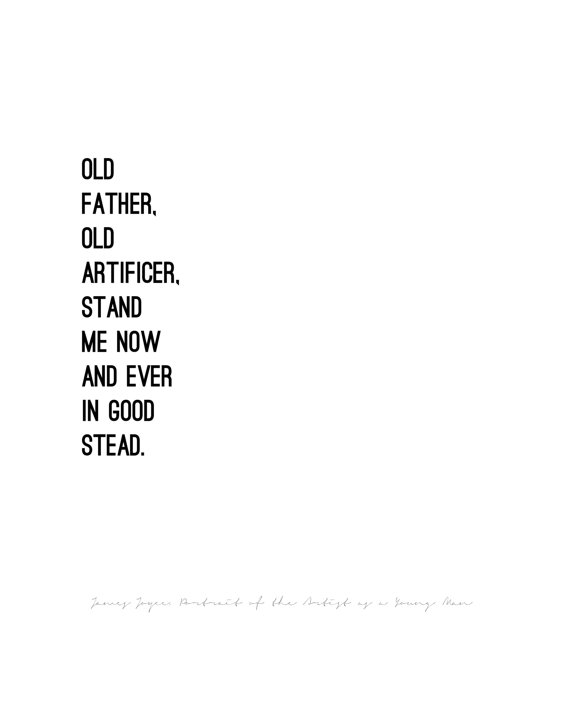

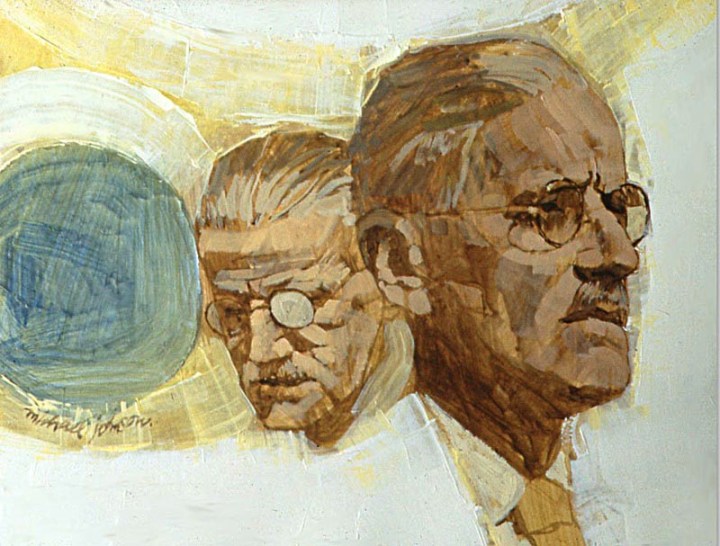
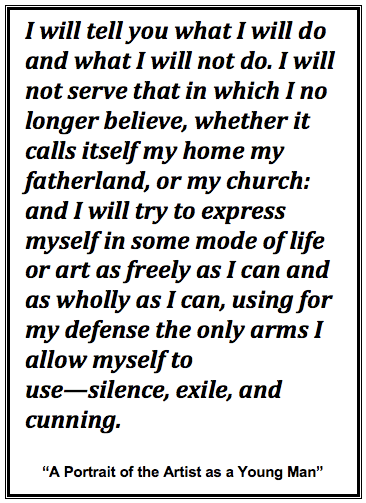





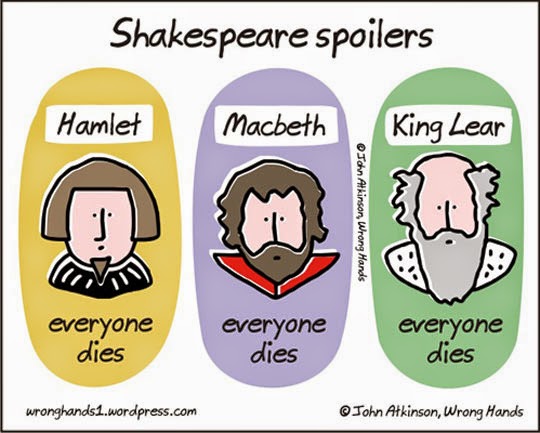

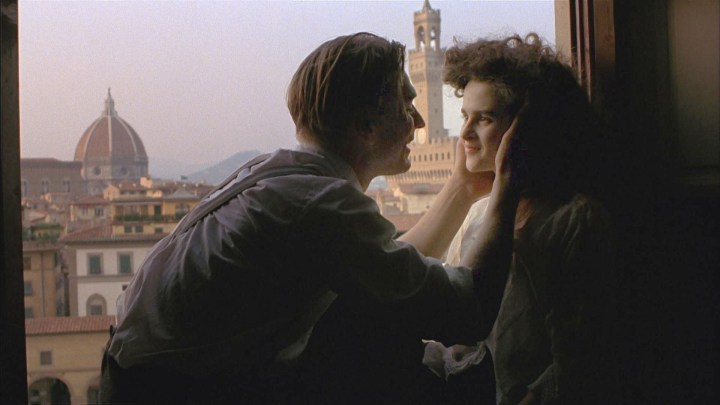




 Reviews Rants and Rambles
You must be logged in to post a comment.