The Poetry of Seamus Heaney: Some Recurring Themes


poetrycornerseamus

The main purpose of these notes is to assist you in forming an overview of Heaney’s work.  For this reason, the material is structured as a series of ‘thinking points’, grouped under general headings.  These cover the poet’s main preoccupations and methods, but they are not exhaustive.  Neither are they ‘carved in stone’, to be memorised: ideally, they should be altered, added to or deleted as you develop your own set of notes.  This priceless pearl of wisdom is relevant for Heaney BUT it equally applies to all the other poets on your course as well!

The following ‘grace notes’ presuppose a basic knowledge of the following poems by Heaney on your Leaving Cert Poetry Syllabus:

  • Sunlight
  • The Forge
  • Bogland
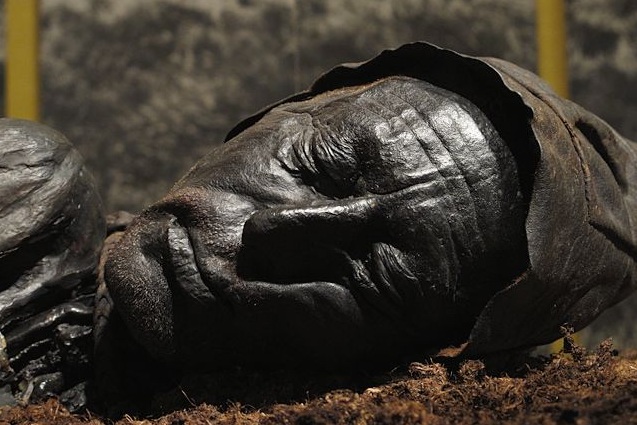
  • The Tollund Man
  • A Constable Calls
  • The Harvest Bow
  • Lightenings VIII
  • Postscript

IRISHNESS – HISTORY, MYTHS, POLITICS

  • In his early poems, Heaney was preoccupied with local history, with communicating the experience of his own place with its numerous customs, rituals and ancient rural crafts (See ‘Sunlight’ and ‘The Forge’).
  • Then he began to think of history as landscape, exploring downwards, finding evidence of history in the bogs and the very contours of the land, exploring what myth and prehistoric evidence revealed about Irishness (See ‘Bogland’)
  • Exploring back in time, he makes historical connections between the Iron Age and the present. He draws parallels between ancient human sacrifices and the contemporary violence which was engulfing his native Ulster at the time.  He seems to be saying that violence is indeed endemic in all societies throughout history, that human sacrifice is necessary for the integrity of territory, that myths, however savage, are an integral part of the creation of the identity of a people (See ‘The Tollund Man’).
  • Overall, Heaney’s position has been seen as ambivalent and has been misunderstood by many. His poetry constantly explores the divisions tearing present-day Ulster apart.  His position has often met with criticism from all sides regarding his treatment of recent Ulster history.  Some critics say he has too much politics in his poetry, while others say he should stand up for his people and take sides.  He has been accused of obscuring the horrors of sectarian killings; of endorsing a ‘tribal’ position, or of not endorsing it enough; he has also been accused of evading the issues and being non-committal in his writing.

For many critics, like Elmer Andrews, Heaney doesn’t go far enough: ‘Heaney’s art is fundamentally an art of consciously and carefully cultivated non-engagement’.  Do you agree?  Is Heaney completely uncritical of his own side? (See ‘Bogland’, ‘The Tollund Man’, ‘A Constable Calls’).

OLYMPUS DIGITAL CAMARA
A traditionally crafted Harvest Bow

PLACE AND LANDSCAPE

  • Like Patrick Kavanagh, who is synonymous with his native Inniskeen, Heaney too has immortalised his native place and Mossbawn and Anahorish are mentioned often, especially in those poems which deal with childhood. ‘Sunlight’ presents us with a picture of an idealised childhood, his aunt Mary Heaney’s kitchen is depicted as enveloping him in a womb-like security.  His earlier poems, especially those from his collections Death of a Naturalist (1966), Door into the Dark (1969), North (1975), and Field Work (1979), focus very much on home and family, his relationship with his father and mother and the need for continuity between the generations (See ‘Sunlight’, ‘The Harvest Bow’)
  • Anybody who has read ‘Blackberry Picking’ or ‘Death of a Naturalist’ and other such poems by Heaney will need no convincing that he is a fine descriptive nature poet. Terence Brown says that he has an ‘extraordinary gift in realising the physical world freshly and with vigorous exact economy.  Heaney can bring everyday natural events before the readers’ eyes with such telling precision that his images are both recognition and revelation’ (See any of his poems!).
  • Landscape for Heaney is more than just a subject to be painted: it is a living presence, an ever-present force, a sort of third party to human activity in the poems. This is the same immediate personal presence that we also find in Kavanagh and Wordsworth (See ‘Postscript’, ‘Bogland’, ‘The Tollund Man’).
  • He shows us differing aspects, different faces, of the landscape: from the life force (‘spirit of the corn’) to the threatening, menacing aspect (‘the bottomless bog’). When writing about the farming traditions of his community he also presents us with the juxtaposing ideas of growth and decay.
  • Heaney believes that people have a human and a religious relationship with the landscape (See ‘Bogland’, ‘The Tollund Man’, ‘The Harvest Bow’).
  • The landscape is seen as essentially female, often with erotic associations in its relationship with man (Examine ‘The Tollund Man’ closely).
  • Heaney’s landscape is dominated by the earth rather than the sky, with the bog providing a metaphor for Irish consciousness (See ‘Bogland’, ‘The Tollund Man’).
  • ‘The landscape for me is an image and it’s almost an element to work with as much as it is an object of admiration or description’. Heaney often uses nature metaphors to express his feelings of frustration and loneliness.  For example, in ‘The Harvest Bow’ he describes his frustrating attempts at communicating with his father like this: ‘your stick / Whacking the tops off weeds and bushes / Beats out of time, and beats, but flushes / Nothing’ (See also ‘Postscript’).
  • Driving out west along the now famous Wild Atlantic Way, along by Flaggy Shore near Ballyvaughan on the West Coast of Clare, the poet explores the beauty of the Irish landscape as a tourist would.  Heaney describes the beauty of the landscape and the changing light and the feelings it will inspire.  It is a journey poem where the poet finds himself caught between wild things and settled things, between things earthed and things in flight.  The sonnet-like structure of the poem gives it a postcard quality  ending with simple and powerful words: ‘And catch the heart off guard and blow it open’ (‘Postscript’)
  • Above all, the landscape for Heaney is a source of creativity and insight: ‘poems … come up … like bodies out of the bog of my own imagination’ (See ‘Bogland’, ‘The Tollund Man’).
DAN_tollundmanden_1_face_c (1)
Listen to Heaney read ‘The Tollund Man’ below:

TRADITION AND IDENTITY

  • For Heaney, an awareness of one’s tradition is fundamental to a sense of identity. He explains and explores his own roots, celebrating the ancient skills and crafts that sustained the farming community that nurtured him and his family for generations: the digging, the ploughing, the water-divining, the bread-making, the skills of the farmer, the blacksmith, etc.  These skills are described in a reverential way as if they were sacred rituals. (See ‘Sunlight’, ‘The Forge’).
  • Sometimes he still hankers back to the womb-like security of that life of early childhood. Some interpret these poems describing his Aunt Mary’s kitchen in Mossbawn as a form of regression or escapism from the daily horrors of life in Northern Ireland in the Seventies and Eighties (See ‘Sunlight’).  Sometimes he needs to re-forge, reinterpret and understand his links with family in order to rediscover his identity (See ‘The Harvest Bow’ where he says, ‘I tell and finger it like braille’).
  • ‘Our sense of the past, our sense of the land and perhaps even our sense of identity are inextricably interwoven,’ according to Heaney (The Irish Press, June 1st 1974). Therefore, finding and maintaining a sense of continuity is vital to Heaney: family, traditions, customs and values come to him as memories in his poetry and reassure and comfort him amidst the mayhem and uncertainty of daily atrocities in his home place (See ‘Sunlight’, ‘The Harvest Bow’).
  • He explores his Catholic roots too, as set against the other traditions. According to Robert Welch: ‘Heaney is engaged upon a cultural and tribal exploration; he is testing out his cultural inheritance to see where the significant deposits are located; but he is not engaged upon a mindless submission to the old tradition of the goddess or whatever.’ (See ‘Sunlight’, ‘The Harvest Bow’, ‘Bogland’, ‘The Tollund Man’).
  • There are times in his writing when his personal identity has overtones of victimhood about it. He certainly seems to identify with victims: ‘something of this sad freedom … should come to me.’  (See ‘The Tollund Man’, ‘A Constable Calls’).
images (5)
The Forge, situated on the Hillhead Road, near Castledawson and dates from the 19th Century. (www.georgemcintyre.tripod.com)

IDENTITY AND POETRY

  • Heaney’s identity as a poet is inextricably linked in with his historical and cultural identity. The autographical voice we encounter in his first collection, Death of a Naturalist, becomes the spokesperson of his people in the later collection, Door into the Dark  (See ‘Bogland’).
  • He identifies with the bog – he takes on board the implied insult that he is ‘a bogman’ and he owns it! The bog, with all its implications, becomes a kind of subconscious racial memory for him, providing him with inspiration for his poetry.  The Danes weren’t the only ones to bury their dead in the bog – there were numerous victims of violence ‘disappeared’ during ‘The Troubles’ and buried in remote, windswept locations on this island too (See ‘The Tollund Man’, ‘Bogland’).
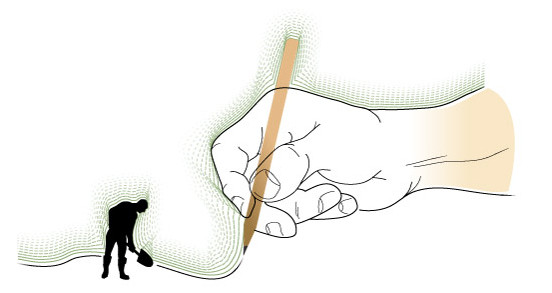
  • Elmer Andrews describes Heaney’s method in this way: ‘He is proposing an idea of poetry which combines psychic investigation with historical enquiry’. In an essay  entitled ‘Feeling into Words’, Heaney himself spoke of ‘poetry as divination, poetry as revelation of the self to the self, as restoration of the culture to itself; poems as elements of continuity, with the aura of authenticity of archaeological finds, where the buried shard has an importance that is not diminished by the importance of the buried city; poetry as a dig, a dig for finds that end up being plants’ (Preoccupations, 1980) (See also ‘The Tollund Man’, ‘Bogland’).
  • Heaney sees the craft of poetry not just as something mechanical but rather a ‘combination of imagination and skill. He uses a brilliant analogy to describe a poem as ‘a completely successful love act between the craft and the gift’ (See ‘The Forge’).
  • Heaney’s voice in his poems is often indecisive, timid and ambiguous, his position is that of a hesitant observer on the fringes of the scene. For example, in The Forge he is outside looking in, afraid of the darkness within.
  • Heaney and other Northern poets such as Montague, Mahon, and Longley have come to prominence because of their efforts to make poetry relevant in a difficult political backdrop. He feels at times that poetry may be powerless to influence politics but nevertheless, it is vital to a sense of identity.
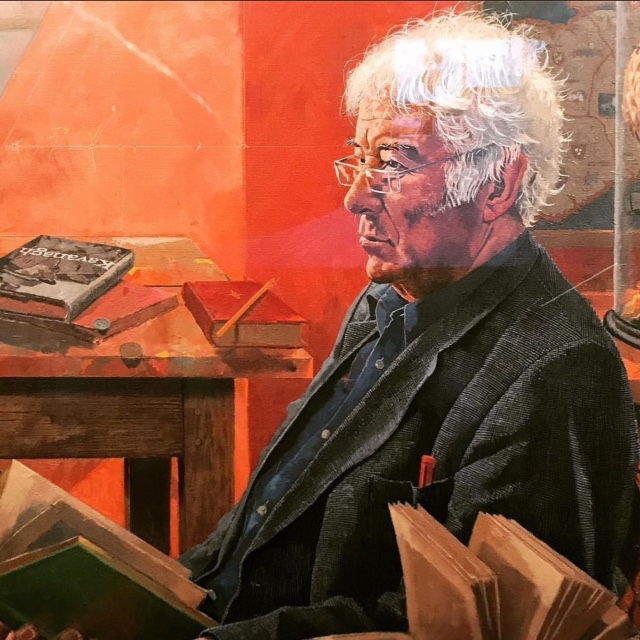
FullSizeRender (13)
“In the Attic”, a portrait of Seamus Heaney by the artist Jeffrey Morgan now hanging in the HomePlace Centre in Bellaghy, Co. Derry.

SAMPLE ANSWER: What are the recurring themes in the poetry of Seamus Heaney?

Heaney’s poetry brings us to our senses!  There is a tactile, sensuous quality to his poetry and his poetry is often multi-layered.  When he says that he will ‘dig’ with his pen he is referring to how layer after layer of meaning can be revealed in the act of writing.  In ‘The Forge’ he records a changing way of life as the horse and car make way for the motorcar, but the poem also reveals a growing awareness of the mystery of the creative process.  It becomes, therefore, a poem about poetry.

His poetry often draws on childhood memories of growing up on a farm in Co. Derry.  In ‘Sunlight’ and ‘A Constable Calls’ he presents us with two contrasting memories, one beautifully tranquil, the other troubled and uneasy.  Place is of vital importance, as in Kavanagh’s poetry, but so too are the people associated with that place: the exhumed Tollund man, his Aunt Mary in the family kitchen, his father ‘making tillage returns /In acres, roods and perches’, and his father making the harvest bow.

There is, therefore, a preoccupation with the past and a fascination with it.  In both ‘Bogland’ and ‘The Tollund Man’ Heaney, like the ‘pioneers’ who keep ‘striking / Inwards and downwards’, prompts us to think across thousands of years.  ‘Bogland’ speaks of how our ancestors’ lives are recorded and contained within the bog.  ‘The Tollund Man’, though it also speaks of a bog find, is a more complex poem in that it relates a violent death that took place two thousand years ago in Jutland to the violent deaths which occurred almost daily in Northern Ireland from 1969 until the signing of the Belfast Agreement on Good Friday in 1998.  Though Heaney writes about contemporary events, he does so sometimes at a tangent.  Heaney himself has said that he has searched for ‘images and symbols adequate to our predicament’.  And despite what some of his critics say, he never shirks or avoids the savage reality of violence: in ‘The Tollund Man’ he writes with stark realism of how the mutilated bodies of four young brothers were dragged along the train tracks, their skin and teeth flecking the railway sleepers.

Heaney’s lyric voice is often straightforward.  Lines can be plain, unadorned, and deceptively simple: ‘His bicycle stood at the windowsill’, but these opening lines open up and at the same time deepen our understanding of a particular experience.  In Heaney’s own words a poem preserves an experience, but ‘it should also open experience up and move it along … so that, first of all, the poet and then the reader, hopefully, gets carried away a little.’

‘So’ is a key word in Heaney’s poetry.  It signals a clear-sighted focus on the scene before.  For example, in ‘Sunlight’ he says, ‘So her hands scuffled / over the bakeboard’.  By his use of this simple word, he achieves an immediate, direct, warm tone in his poetry.  Also in ‘Sunlight’, we can see how his use of a shift in tense from past to present indicates how memory or a remembered event can be given a living quality within the poem.  The poem begins in the past – ‘There was a sunlit absence’ – but ends in the present – ‘Now she dusts the board … now sits broad-lapped …

And here is love

like a tinsmith’s scoop

sunk past its gleam

in the meal-bin.

Throughout his career, Heaney was very interested in poetic form and structure.  ‘The Forge’ is a sonnet and other poems on our course reveal a mastery of many forms – a variety of line lengths and differently shaped stanzas.  In ‘The Harvest Bow’ the intricacies of the making of the bow is mirrored in the intricacies of the poem itself: in a line such as ‘brightens and tightens twist by twist’, with its perfect example of internal rhyme and repetition.

Heaney’s poetry is both sensitive and sympathetic.  He identifies and understands others.  Relationships are at the heart of his poetry, his relationships with loved ones, family, and also his relationship with significant places such as Mossbawn and later Glanmore.  He recognises what is good and he cherishes and celebrates it.  In his poems he is capable of delight and astonishment; the ordinary becomes marvellous, and such moments are conveyed with wonder, humility and gratitude.

Further Reading

You might also like to read some of the following:

  • a comprehensive analysis of ‘The Forge’ here
  • an analysis of ‘The Harvest Bow’ here
  • an analysis of ‘The Blackbird of Glanmore’ here
  • an analysis of ‘Follower’ here
  • a brief analysis of ‘Death of a Naturalist’ here
  • a discussion on the treatment of women in Heaney’s poetry here
  • another sample essay on Heaney’s poetry here
 Digging

 Works Cited

Andrews, Elmer (ed). The Poetry of Seamus Heaney: Essays, Articles, Reviews. Columbia University Press (Icon Books Limited), 1998.

Brown, Terence. The Literature of Ireland: Culture and Criticism. Cambridge University Press, 2010.

Heaney, Seamus. The Government of the Tongue, Faber and Faber, 1989.

Heaney here scrutinizes the work of several poets, British and Irish, American and European, whose work he considers might call into question the rights of poetic utterance. The author asks whether the voice of the poet should be governed, or whether it should be the governor.

Heaney, Seamus. Preoccupation: Selected Prose 1968 – 1978,  Faber and Faber 1980.

Nobel laureate Seamus Heaney’s first collection of prose, Preoccupations, begins with a vivid account of his early years on his father’s farm in Northern Ireland and his coming of age as a student and teacher in Belfast. Subsequent essays include critical work on Gerard Manley Hopkins, William Wordsworth, John Keats, Robert Lowell, William Butler Yeats, John Montague, Patrick Kavanagh, Ted Hughes, Geoffrey Hill, and Philip Larkin.

Welch, Robert (ed).  Irish Writers and Religion, Rowman and Littlefield, 1992
September Rambles in Puerto Rico

IMG-0886
Ready to descend the 756 steps!

“I have two doctors, my left leg and my right” – G.M. Trevelyan

I have recently spent a glorious week in Puerto Rico in Gran Canaria rambling up hill and down dale, so to speak.  This place is challenging enough and rambles in the early morning or after five in the evening are recommended.  I hope I’m never there during an earthquake!

We have been coming here now for the past ten years and each visit uncovers new delights, improved pathways, steps and roadways. Our favourite walk is the Cliff Walk between Puerto Rico beach and the man-made Amadores Playa.  This is an easy ramble and often a preamble to more strenuous excursions.

We invariably book accommodation on the lower level, Corona Cedral would be our favourite place of all but we have also stayed in Monte Verde, Letitia del Mar, Maracaibo,  Canaima and also Rio Piedras with its terracotta terraces overlooking the beach.  All these are very central – near the main Shopping Centre and also the beach and its many restaurants.

Our favourite restaurants are all on the beachfront.  We’ve been evangelists for Oscar’s  Restaurant for years and recently it seems to have amalgamated with its near neighbour Restaurante Aguaviva but I’m glad to report that  the standards haven’t slipped – the most fantastic prawn cocktail, salmon, fillet steak, Crepes Suzette and all washed down with copious amounts of Marques de Caceres Crianza!  The nearby El Greco apartment complex also has three restaurants which are worth a visit, especially La Cantina which is the best of the three El Greco options.  The new kid on the block is Frank’s Gourmet Restaurant and after our one visit on this trip, it is guaranteed to keep the others on their toes!

The only drawback I find with Puerto Rico is its distance from the airport – approximately 40 kilometres.  However, Gran Canaria has a first class public transport system and once free of Arrivals and the terminal building you can go to the bus terminal and get the 91 bus to Puerto Rico for €5.45 – as opposed to €50 for a taxi.  Alternatively, Ryanair and others provide reasonably priced shuttle services to and from the airport.

As one becomes familiar with the area one becomes more confident in foraging out new trails, loops and challenging treks.  The one thing to notice is that there are steps everywhere linking the various levels.  The local authority has done fabulous work in the past five years building a series of steps from the beach to the high point near Puerto Azul apartments.  In all, there are 756 steps in this series – individually counted! – and depending on your exertions you can decide to descend the 756 or take on the more daunting challenge and ascend – or even decide to work both into your evening ramble!

FullSizeRender (12)

I am reminded that numerous philosophers and novelists have also wandered and wondered. Kierkegaard did so in the countryside near Copenhagen, and suggested that it might be good for his niece, Jette, to do likewise. Prompting her in 1847, he came up with a notion I repeat on my own travels:

“Above all, do not lose your desire to walk.  I walk myself into a state of wellbeing and walk away from every illness.  I have walked myself into my best thoughts, and I know of no thought so burdensome that one cannot walk away from it” (A Letter to Henrietta Lund from Søren Kierkegaard, 1847,  trans. Henrik Rosenmeier, 1978).

I haven’t read many of HG Wells’ novels, but there’s another mantra from one of the non-fiction works, Modern Utopia, that I’ll happily take to my deathbed: “There will be many footpaths in Utopia.”

And whether I’m rambling in the Ballyhouras or in the hills above Bormes Les Mimosas or in Puerto Rico my favourite nugget of wisdom  is, of course, T.S. Eliot’s evocative words from The Waste Land (1922), surely one of the most beautiful poetic lines ever written,

“In the mountains, there you feel free.”

In conclusion, I am often reminded of the lovely Latin phrase,  Solvitur ambulando –   ‘it is solved by walking’ – sometimes attributed to St. Jerome or  Diogenes, or St. Augustine, maybe even Thoreau or Chatwin, inter alia…..

So, put your best foot forward!

IMG-0799
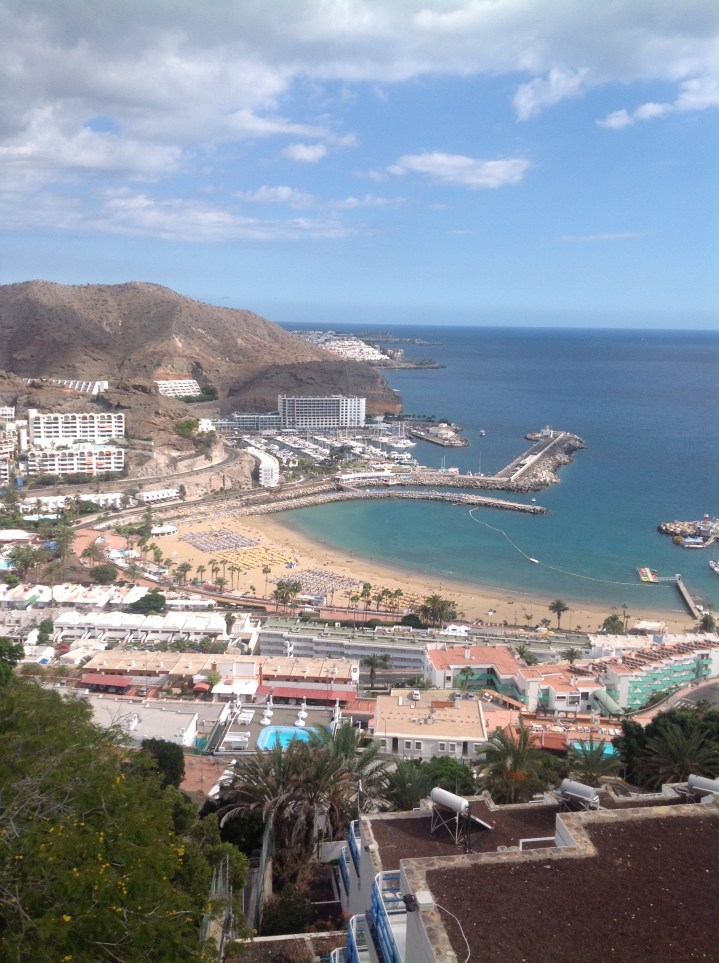
A panoramic view of  Puerto Rico beach and marina from on high!

Treasured Father-Son Memories Recounted at Opening of Éigse Michael Hartnett 2018

FullSizeRender (12) Niall Hartnett

Michael Hartnett’s son Niall gives the keynote speech on the first night of this year’s festival. “Poetry is my life and my life is poetry,” the words poet Michael Hartnett wrote in a letter to his son, Niall in 1998, the year before Michael died.


Niall read excerpts from that treasured letter on the opening night (Thursday 12 April 2018) of Éigse Michael Hartnett, the literary and arts festival which takes place each year in his father’s hometown of Newcastle West, Co. Limerick.

In a keynote speech which took its title from a line of Michael’s, The Possibility we have overlooked is the future, Niall Hartnett spoke movingly about his father and his work:

“He could weave a tapestry of a small town or an epic struggle at the highest level so seamlessly, you could not always tell which was which. Neither could he, I suspect, and did not see the point in separating the two: there is as much drama in Salad Sunday as there is in Sibelius! As much intrigue in Maiden Street as there was in Inchicore.”

“We need to honour this son of Newcastle West and the road less travelled he took to bridge many worlds early on. I feel we can best do this by encouraging ourselves and especially the young to choose unpredictable paths and unexpected destinies. Break the mould and proudly show others that you did. Invite the young, your family and friends to this festival and encourage them to nurture this legacy which will someday will be theirs. The future belongs to the young and they will carry all of this on we hope, but only if we engage them now! As the poet himself said: the Possibility we have Overlooked is the Future!” Niall added.

Officially opening the festival Mayor of the City and County of Limerick Cllr Stephen Keary said: “It is heart-warming to see that Michael is being celebrated in his hometown. Michael was loved by everyone in Newcastle West, who knew him through his words, as the poet, and I’m delighted that his son Niall is here this evening giving us an account of Michael as a father. There are many sides to people, such as Michael and it’s invaluable that we get an insight into these so that we can understand and appreciate the works of Michael Hartnett even more.”

Creative Writing Workshop
Creative Writing Workshop with Dr Robyn Rowland (Picture by Dermot Lynch)

The opening night of Eigse also saw the joint winners of this year’s Michael Hartnett Poetry Award honoured: Macdara Woods for Music from the Big Tent (Dedalus Press 2016) and Mary O’Malley for Playing the Octopus (Carcanet 2016).

“Music from the Tent is a superb orchestra of verbal melodies, a Big Top in which free verse, ballads and haiku sing and cavort,” the judges Jo Slade and James Harpur said in their citation.

In accepting his award Macdara Woods said: “It is delightful to share with Mary O’Malley an award given in memory of my old and dear friend, Michael Hartnett. We had many wild times, and some quiet times, and adventures together, from Dublin to London to Kilkee, but what remains most clearly, and has become even more apparent with the passing of time, is his genius for poetry and the translation of poetry. I intend to take this award as a personal nudge from Michael.”

His fellow award winner Mary O’Malley added: “I am delighted to receive the Michael Hartnett Award, I too knew Michael and he had kind things to say about my young poems, he has remained a touchstone for me.”

Mary O’Malley’s Playing the Octopus was described by the judges as “a beautiful collection of rare gems that sparkle and seduce.” This is a collection that balances beauty and harmony, the poems are restrained but deeply felt, the voice assured, meaning is revealed slowly like an uncovering of essence, something essential and elemental.”

Éigse Michael Hartnett also highlighted readings by authors John Boyne and Mike McCormack, who has just been shortlisted for the 2018 International Dublin Literary Award and young Limerick poet Edward O’Dwyer.

Professor Declan Kiberd delivered the Michael Hartnett Memorial Lecture on Saturday 14th, entitled, Honey I shrunk the kids, in which he raised the question of whether there is a children’s literature, or whether the classic works from Alice in Wonderland to Harry Potter are written by adults, published by adults, often to promote adult agendas.

“It will then raise an even deeper question–whether childhood, as we know it through literature, is an invention of recent centuries, perhaps even an image constructed in the age of print and now fast disappearing with the spread of electronic and digital media. These are troubling questions,” Professor Kiberd said.

Declan Kiberd
Dr Declan Kiberd delivering the Michael Hartnett Memorial Lecture entitled ‘Honey I shrunk the Kids!’ – Is there a children’s literature? (Picture by Dermot Lynch)

Éigse takes place each year in Newcastle West, Co. Limerick, Hartnett’s home-town and is supported by the Arts Council and Limerick City and County Council.  The continuing support received from Sheila Deegan and her team of Aoife Potter Cogan, Dr Pippa Little and ‘the real boss’ Lizanne Jackman was acknowledged at the opening ceremony.  The local organising committee is Vicki Nash, Norma Prendeville, John Cussen Rachel Lenihan, Rossa McMahon and Vincent Hanley.

The Michael Hartnett Poetry Award is awarded in alternate years to books of poetry in the Irish and English language.

For full details of the 2018 programme please check out www.eigsemichaelhartnett.ie

Norma Prendeville
Norma Prendeville at the launch of Gabriel Fitzmaurice’s Milking the Sun – Ag Crú na Gréine (with illustrations by Gabriel’s wife Brenda). The book is a translation of Gabriel’s favourite poems by Sean Ó Riordáin from the Irish.(Picture by Dermot Lynch)


Shared with the permission of Limerick City and County Council  Newsroom

The Michael Hartnett Poetry Prize 2018 – The Citations

FullSizeRender
Mary O’Malley joint winner of the Michael Hartnett Poetry Prize 2018

Mary O’Malley

Playing the Octopus

Mary O’Malley’s new collection, Playing the Octopus is a wonderful book of finely wrought, delicately woven poems that seduce and excite. The poet has created a world that sustains us, that we recognise and can inhabit. This is a collection that balances beauty and harmony, the poems are restrained but deeply felt, the voice assured, meaning is revealed slowing like an uncovering of essence, something essential and elemental. There is a playfulness and joy in language that at times produces a magical quality – light bounces and refracts – musical intonations interweave with the lyric voice – what is achieved is a virtuoso performance.

This poet is an assured guide through the geography of earth, of body, of soul and she takes us on a journey from her beloved west coast of Ireland to America’s east coast but always beneath an ever-changing sky and always awaiting the hoped-for revelation of light.

There are poems in memory of friends who have died: Firs, for Michael Hartnett where the poet references “Sibelius in Silence”, “From Michael’s book the green gold came: / The name I call them is not their name.” Both poets cherish their native language and music and it is the love of these unique sounds that informs their work.

There are deeply felt, reflective poems: January Aubade, a wonderful meditation on light and life.

“Uilleann”, that takes stories heard and transforms them into a metaphor for life: ‘He has heard the story / Of the octopus who was locked into a room / For a week to practice. / When they let him out the pipes had learned / To play the octopus.”

Women are strong, able, intelligent heroines and Mary celebrates them. There is no hesitation in this poet’s voice, her authority is enhanced by their presence. She has a wry eye that cuts through to the bone, the language is clear and unambiguous, as in: “The Bad Mother Or Bellini’s Pieta”, where the poet states: “She knew the joy he brought / Was mortgaged from the start.”

This is a beautiful collection of rare gems that sparkle and seduce.

************************

FullSizeRender (11)
Macdara Woods joint winner of the Michael Hartnett Poetry prize 2018

Macdara Woods

Music from the Big Tent


Macdara Woods has honoured poetry throughout his life, consistently rendering the weals and woes of the human condition into poems that sometimes ring from the rooftops, and sometimes whisper with deft subtlety; poems that mix wise and rare insights with a generous heart and an open mind – qualities dear to Michael Hartnett.

Music from the Big Tent is a superb orchestra of verbal melodies, a Big Top in which free verse, ballads and haiku sing and cavort. There are poems that x-ray the body of homo sapiens and reveal the poor, bare, forked animal within; poems that laud the depth and variety of European culture and topography; poems that encapsulate the mysterious beauty of nature – ‘Long dark winter but / See the plum tree in the rain / A sudden whiteness’; poems that never forget the ten thousand things of the city, specifically Dublin, with its smell of ‘Georgian drains’ and where ‘Self serious pigeons / Posture and strut’. And poems that mourn the dead, lament the ailing body, but celebrate the beauty of the human form and the endurance of love.

As, in medieval legend, the minstrel Blondel went from castle to castle singing a song he hoped would be heard and responded to by the imprisoned Richard the Lionheart, so Macdara Woods continues to beat paths along the old green tracks of Europe, a hardy troubadour singing out his enchanting lyrics to the imprisoned imagination.

Note: The judges for the Michael Hartnett Poetry Prize in 2018 were Jo Slade and James Harpur (both former winners of this prestigious prize).

Hartnett bronze by Rory Breslin
Hartnett bronze by artist Rory Breslin in The Square, Newcastle West.

Pulled Pork and Poetry at Éigse Michael Hartnett 2018

Éigse 2018

‘Like many Irish children, I was reared on a diet of folktale, Republicanism and mediocre ballads’.[1]

Éigse Michael Hartnett 2018 has a rich and varied schedule of events which will take place this year from the 12th to the 14th of April. Éigse is proud to welcome John Boyne, Mike McCormack, Declan Kiberd, Emma Langford, Robyn Rowland, and others to Newcastle West for the first time.  This year is also special because Michael’s family, his wife Rosemary, son Niall and daughter Lara will be present for the celebrations.

As part of this year’s Éigse, the organisers have included an interesting food element in recognition of the burgeoning food industry in the town and also as a celebration of the town’s rich agricultural hinterland. The event, which will take place in Desmond Complex on Saturday the 14th of April at 12.30pm,  and is titled ‘Pulled Pork and Poetry’.  It features a cookery demonstration by Tom Flavin, Executive Chef, the Strand Hotel and Pigtown Festival committee member, accompanied by readings from Hartnett’s Collected Poems by Limerick poet and short fiction writer, Edward O’Dwyer. (See Éigse programme for full details).  The organisers are indebted to Tom Flavin and Edward O’Dwyer for their enthusiastic support for this venture. 

The following blog post seeks to explore the link between Michael Hartnett, food, cooking and the kitchens he survived and graced in Lower Maiden Street, Camas and further afield.

 ******

Michael Hartnett returned to his native Newcastle West in the mid-1970’s and bought a cottage in the townland of Glendarragh in the parish of Templeglantine.  The ‘townie’ lamented that now he was forced to live ‘in exile out foreign in ‘Glantine’.  In June 1974 he had made his famous proclamation from the stage of the Peacock Theatre in Dublin that henceforth he would write only in Irish.  In the Autumn of 1977, he was commissioned to write a piece for the upcoming Christmas edition of Magill Magazine which was owned and edited at the time by Hartnett’s friend, Vincent Browne, a fellow West Limerick man making a name for himself in publishing circles in Dublin.

The piece was written and published and showed Hartnett to be a very incisive, insightful and acerbic social commentator.  It was entitled ‘Christmas in Maiden Street’ and evoked memories of life in Lower Maiden Street in the years immediately after the ending of World War Two and is a chilling reminder of the austerity endured during those years.  Poverty and hardship were rife and families struggled to make ends meet.  In the article, he recalls that ‘candles and paraffin-lamps did not brighten the darkness in kitchens in Maiden Street’.  There were no luxuries and the necessities of life were very scarce: ‘coal was bought by the half-stone, butter by the quarter pound, and tea by the half-ounce’.  As Christmas drew near ‘the spectre of Santa Claus loomed malevolently over the slates and thatch’.

For the poor of Maiden Street, the great feast of Christmas was an extra strain.  Members of local charitable institutions visited ‘the meagre kitchens’, ‘the nailed-together chairs, the worn oilcloth topped tables, the dead fires’ and were ‘as hated as the rent-man’.  He tells us that the Victorian Christmas had not yet arrived in Newcastle West:

‘there was no turkey, no plum pudding, no mince-pies … the very poor managed roast meat, usually mutton.  We often rose to two cocks.  The goose was common.  There was a fruit cake, jelly and custard; the dinner of the year.’

The article ends with the bitter hope that ‘There will never be Christmasses like those again, I hope to God’.

This vein of bittersweet nostalgia culminated in December 1980 with the publication of the Maiden Street Ballad, written as a Christmas present for his father Denis Harnett.  This 47 verse poem also contains details of the hardships and austerity suffered by the people who lived in Lower Maiden Street and The Coole.

Nineteen forty-one was a terrible year,

the bread it was black and the butter was dear;

you couldn’t get fags and you couldn’t tea –

we smoked turf-dust and had to drink porter.

He goes on to tell his audience that ‘we were hungry and poor down in Lower Maiden Street / a fact I will swear on the Bible’.  Elsewhere he states that his peers ‘were raggy and snot-nosed and needy’.  The only relief for the Harnett family came in the form of their grandmother, Bridget Halpin, who lived on a small farm five miles away in Camas.

The day of the pension my Nan came to town

In a flurry of hairpins with her shawl wrapped around,

With a dozen of eggs and maybe a half-crown

And a bag of new spuds in her ass-car.

He goes on to recount his childhood diet and it is clear that most of the produce was grown on that small farm in Camas by his Uncle Dinny Halpin and transported to town in his grandmother’s ass and cart!

We had turnips for dinner, we had turnips for tea,

and half-stones of pandy piled up on our plates;

we feasted on cabbage, we fattened on kale

and a feed of boiled meat if we smelt it!

Later he was to immortalise Bridget Halpin in his beautiful poem ‘Death of an Irishwoman’ using, at times, very unflattering language.  He tells us that ‘she ate monotonous food’ such as the rural staples of the time bacon and cabbage.  In her final days, he tells us she was reduced to eating ‘thin diminishing porridge / in a stone-cold kitchen’.  For the poet, Bridget Halpin represents an Irishness which is out of step with modernity and ambivalent to any aesthetic conceptions of the world, ‘Ignorant, in the sense / she ate monotonous food / and thought the world was flat’, and defined by an intuitive spirituality, ‘pagan, in the sense / she knew the things that moved / at night were neither cats nor dogs’.   In an interview with Victoria White published in The Irish Times, Hartnett embellished this idea, that his close antecedents existed in a pre-modern Ireland where the Irish language still predominated, ‘My grandfather couldn’t speak English, and if you couldn’t, you couldn’t get a good price for a pig.  If the pig was worth two and six and you came back with one and six, you got lashed’ (White 14). That Hartnett links the pre-modern sensibility which Irish represents for him with economic loss and subsequent physical pain encapsulates the colonial dynamic which saw the abandonment of Irish as a spoken language more broadly within the country.  In this context Hartnett’s assertion at the very point of his departure from writing in English takes on a further resonance:

… I will not see

great men go down

who walked in rags

from town to town

finding English a necessary sin

the perfect language to sell pigs in. 

Bridget Halpin’s cold kitchen, which is described so well in his poem ‘A Small Farm’, describes the quintessential Irish rural kitchen of the 1950’s:

Here were rosary beads,

A bleeding face,

The glinting doors

That did encase

Their cutler needs,

Their plates, their knives,

The cracked calendars

Of their lives.

 It stands in direct contrast to the warmth of Heaney’s Aunt Mary’s kitchen in Mossbawn and at the same time, Bridget Halpin’s kitchen bears great similarities to Moran’s kitchen in Great Meadow as depicted in John McGahern’s Amongst Women.  In the 1940’s and 1950’s country farming society is built on manners, manners which are best seen at the dinner table.  Hartnett’s later poetry and his attitude to food and cooking are heavily influenced by his formative years spent in Bridget Halpin’s kitchen in Camas.  In his, as yet, limited experience kitchens are seen as scant, depressing places.  Food is frugal and evokes a sense of lacking, not plenty.

Rural Camas in the early 1950’s still moved in a slow, seasonal rhythm.  The annual ritual of killing the pig is described beautifully in the poem ‘Pigkilling’.  Characteristically, Hartnett executes (pun intended!) the poetic tactic emphatically, the human actors in the ritual themselves becoming animalistic, drenched in the animal’s blood:

his smiling head

sees a delicate girl

up to her elbows

in a tub of blood (Collected Poems 125)

Hartnett, the central character in the poem, uses the pig’s bladder as a plaything: ‘I kicked his golden bladder / in the air’.  Killing the pig was one of those joyful rituals in the rural community.  During the killing of the pig, the blood was collected in a bucket for the making of puddings. The carcass would then be hung from a hook in the shed with a basin under its head to catch the drip, and a potato was often placed in the pig’s mouth to aid the dripping process. After a few days, the carcass would be dissected.  The body was washed and then each piece that was to be preserved was carefully salted and placed neatly in a barrel and hermetically sealed.    It was customary in parts of the midlands to add brown sugar to the barrel at this stage, while in other areas juniper berries were placed in the fire when hanging the hams and flitches (sides of bacon), wrapped in brown paper, in the chimney for smoking (Sharkey 166). While the killing was predominantly men’s work, it was the women who took most responsibility for the curing and smoking. Black Puddings have always been popular in Irish cuisine. The pig’s intestines were washed well and soaked in a stream, and a mixture of onions, lard, spices, oatmeal and flour were mixed with the blood and the mixture was stuffed into the casing and boiled for about an hour and then allowed to cool.  It was customary that neighbours were then given some of this black pudding, fresh pork and sausages in the aftermath of every pigkilling putting into practice the old Irish proverb: Faoi scáth a chéile a mhaireann na ndaoine’ – (we all live in each other’s shadow).

Years later, his friend and fellow poet Tony Curtis noted presciently about Hartnett that, ‘While I couldn’t say he loved eating, he did love cooking’ (Curtis 170).  From various interviews and recorded anecdotes regarding his attitude to food (as opposed to drink!) I would guess that food and cooking for Hartnett was a sort of therapy.  While cooking for family or friends the metronomic carrying out of simple physical tasks allowed him to turn off the cerebral for a while at least.  Dennis O’Driscoll in an interview conducted with Michael Hartnett in the Poetry Ireland offices on 12th December 1986 comments on his eclectic culinary tastes and we get a further glimpse of Hartnett the culinary enthusiast.

Most of my personal encounters with Michael were as random as dreams: chance meetings on the streets around his shopping and drinking haunts in central Dublin… Michael might be carrying a rattlebag of fresh oysters or a newly-minted circle of Lombardian focaccia.  His tastes in poetry, as in food, could range far beyond Munster.[2]

Later in the interview, O’Driscoll asks Hartnett if he is content as a writer and if there was something else he would have liked to have been.  Hartnett replies:

I am a chef manqué all right; I trained as a chef for a while.  Again that involves creation and the poaching of other men’s recipes and ideas.  But as I started to write poetry, or verse at least, when I was thirteen years old, any ambitions I had in any other direction were pre-empted by that immediately.[3]

On a totally different level Dermot Bolger who delivered the Michael Hartnett Memorial Lecture during Éigse Michael Hartnett in April 2017 recounted an incident which took place at his local chipshop in Finglas:

It was after midnight when we reached Finglas but Macari’s chipshop remained open on Clune Road.  Years later in Inchicore Haiku Michael wrote:

In local chippers

Queueing for carbohydrates

A dwarfed people.

We queued for our late-night carbohydrates.  Critics can elaborate on Michael’s gift as a poet and contextualise his work.  My interest here is putting down memories for his son and daughter and what struck me was how Michael enthralled the late-night queue and staff in that Finglas chipshop.  He wasn’t attention seeking; they were simply drawn into his quiet magnetism.  The staff had no idea who he was but afterwards always asked for news of my friend in the countryman’s cap.[4]

In the sonnet ‘The Poet Dreams and Resolves’ he paints the very clichéd image of the artist at work, alone but not lonely.  He requires few luxuries only ‘an adequate supply / of stout and spirits (or of stout only) / and some cigarettes, and writing paper, / and a little cheap food, ….’.  This (self-perpetuated) image of Hartnett as a frugal monk, requiring only the very basics to live and create mirrors this ascetic existence dwelling ‘in the shade of Tom White’s green hill / in exile out foreign in ‘Glantine’ during the late ‘70’s and early 80’s.

It is clear that Michael Hartnett had a very varied relationship with Irish cuisine from the relatively vulgar turnips and pandy of earlier days in Newcastle West and Camas to the later more urbane ‘rattlebag of oysters’ in central Dublin.  Section 3 of ‘A Farewell to English’ centres on Hartnett’s dissatisfaction with the cultural, political, and literary misappropriation and misuse of the Irish language.  In it, he rather cheekily attacks W.B Yeats, the most pre-eminent Irish poet and Nobel Laureate of a previous generation, ‘Chef Yeats that master of the use of herbs’.  Yeats’s use of Gaelic literary traditions and myth is criticized.  However, the main reason I mention it here is because the language and imagery used by Hartnett is that of a master chef – ‘pinch of saga’, ‘soupcon of philosophy’, ‘carefully stirred’, ‘Anglo- Saxon stock’, ‘Cuchulainn’s marrow bones to marinate’, ‘simmered slow’ and Hey Presto, like the witches in Macbeth who dance about their cauldron, we concoct ‘the celebrated Anglo-Irish stew’.

As Éigse Michael Hartnett 2018 draws near we hope to likewise celebrate Hartnett’s genius with good poetry, good food (and some drink!) in the company of his family, friends and myriad followers.

Works Cited

Curtis, Tony. A Life in Poetry, p. 170.

Hartnett, Michael. Collected Poems, Oldcastle: The Gallery Press, 2001.

Hartnett, Michael. ‘Wrestling with Ó Bruadair’, in Mac Reamoinn, S., The Pleasures of Gaelic Poetry (London: Allen Lane, 1982).

Sharkey, Olive. Old Days Old Ways: An Illustrated Folk History of Ireland. Dublin: The O’Brien Press, 1985.

White, Victoria. “Heartbreak in Two Languages” The Irish Times, (15th December 1994).

https://www.irishtimes.com/newspaper/archive/1994/1215/Pg014.html#Ar01400

Footnotes

[1] Hartnett, M., ‘Wrestling with Ó Bruadair’, in Mac Reamoinn, S., The Pleasures of Gaelic Poetry (London: Allen Lane, 1982), p.65.

2.  This interview first appeared in Poetry Ireland Review (Autimn 1987).

3.   Ibid.

[4] ‘An Enthralling Companion’ – a commemorative article by Dermot Bolger which appeared in The Irish Times on Wednesday, October 12th, 2005. Read the article here

image

Sinead O’ Connor : The Butcher Boy (A Parade of Posts for St Patrick 2)

A Parade of Posts for St. Patrick’s Day from The Immortal Jukebox

Thom Hickey's avatarThe Immortal Jukebox

Today for your delight:

A Song by Sinead O’Connor

A Poem by Geraldine Plunkett Dillon

A Painting by William Orpen

The song today is featured in Neil Jordan’s wonderful Film from 1997, ‘The Butcher Boy’ adapted from Patrick McCabe’s astonishing novel.

In my view Sinead O’Connor has shamanistic gifts as a singer and performer (with all the blessings and trials imposed by such gifts).

A performer like Sinead comes along about as often as apples grow on an ivy tree.

If you want to imagine what it might be to die for Love and have a strong heart surrender to Sinead’s incandescent performance here.

In Dublin Town where I did dwell ….

The Butcher Boy

In Dublin town where I did dwell
A butcher boy I loved so well
He courted me, my life away
And now with me he will not stay

I wish I wish but I wish…

View original post 396 more words

Luke Kelly : Raglan Road (A Parade of Posts for St Patrick 1)

Well worth checking out Thom Hickey’s The Immortal Jukebox in the lead up to St Patrick’s Day.

Thom Hickey's avatarThe Immortal Jukebox

For the week that’s in it The Immortal Jukebox series A Parade of Posts for St Patrick celebrates Ireland’s glorious heritage in Song, Poetry and Painting.

It seems to me that the, ‘Secret Sign’ has been revealed to generations of Irishmen and Irishwomen and that in response they have blessed us with inspiring voices and visions that will always echo through stone and time.

Today:

A Song from Luke Kelly

A Poem by Flann O’ Brien performed by Eamon Morrissey

A Painting by Jack B Yeats

Staff in hand let’s set off with Luke Kelly’s magisterial performance of Poet Patrick Kavanagh’s great, ‘Raglan Road’.

Luke Kelly was born to Sing.

Born to Sing.

In his singing there is passion pledged.

In his singing there is grief and rue.

In his singing there is enchantment.

In his singing there is Love and the whisper of old ghosts.

In his singing there is…

View original post 679 more words

‘Crossing the Iron Bridge’ by Michael Hartnett

GN4_DAT_9088199.jpg--the_restored_151_year_old_bridge_which_has_been_reopened_to_pedestrians_in_the_county_town__below__the_footbridge_as_seen_in_a_national_library_of_ireland_photograph
The restored 151-year-old bridge which has been reopened to pedestrians in Newcastle West. Picture: Marie Keating, Limerick Leader

The Iron Bridge referred to here is a commemorative footbridge spanning the Arra River.  it has been used for generations to facilitate Mass goers making their way on foot to the parish church in Newcastle West from Maiden Street and in more recent times from Assumpta Park, via The Mass Steps.  The bridge was erected by the Devon Estate in 1866 to commemorate Edward Curling JP who had been the local agent for the Estate in Newcastle West in the nineteenth century.  It is often referred to locally as the Curling Bridge and following recent restoration, the iconic bridge has once again been restored to its former glory.

Crossing the Iron Bridge

By Michael Hartnett

‘My dear brethren, boys and girls, today is a glorious day!  Here we have a hundred lambs of our flock, the cream of the town, about to receive the Body and Blood of Christ, about to become Children of God, and to enter into a miraculous Union with Jesus ….’

Into the cobweb-coloured light,

my arms in white rosettes,

I walked up Maiden Street

across the Iron Bridge

to seek my Christ.

 ‘It will be a wonderful moment when the very Body and Blood of Our Lord Jesus Christ is placed upon your tongues – what joy there will be in Heaven!  So many valuable little souls safely into the Fold!  Look behind the Altar!  There will be angels there, ascending and descending, singing songs of joy…’

Into the incense-coloured light,

my arms in white rosettes,

I walked the marbled floor

apast parental eyes

to seek my Christ.

‘Christ will be standing there in all His Glory, His Virgin Mother will smile and there will be a great singing in Heaven…’

 Under the gilded candlelight,

my arms in white rosettes,

my mouth enclosed my God,

I waited at the rail

to find my Christ.

‘There will be the glow of God in your veins, your souls will be at one with Heaven: if you were to die today, angels would open the Gates of Paradise, and with great rejoicing bear you in …’

Back to the human-hampered light,

my arms in white rosettes,

I walked: my faith was dead.

Instead of glory on my tongue

there was the taste of bread.

Commentary

This is a memory poem and the poet – now an adult – remembers his First Holy Communion Day which probably took place in 1948 or so.  From an early age, we can see that the young Hartnett is not overly impressed by the flowery hyperbole, the sense of ceremony and ritual in his local parish church in Newcastle West.  He tells us that instead of feeling ‘the glow of God in (his) veins’, he says very simply, without any adornment that ‘my faith was dead’.

There are two contrasting voices in this poem – the eloquent words of the priest who speaks in grandiose, biblical phrases and the very sparse, repetitive voice of a young boy of seven.  The poem traces the young poet’s journey from his home in Maiden Street, across the Iron Bridge, up the aisle of the church to the altar rails.  The poet, like a painter or photographer, notices the differing lights as he progresses: ‘cobweb-coloured light’, ‘incense-coloured light’, ‘gilded candlelight’, and finally ‘human-hampered light’.

The priest’s homily is worthy of our attention.  Firstly, we have to remember that for the young listeners and their parents, family and friends these are the only words that they would have understood on this special day because Latin would have been used by the priest for the remainder of the ceremony.  Secondly, while the majority of the homily uses classical biblical symbolism the poet impishly has him mix his metaphors here: ‘Here we have a hundred lambs of our flock, the cream of the town’.   It is highly unlikely that the priest would have used the phrase ‘the cream of the town’ in this context.   However, the allusion to ‘a hundred lambs’ is taken directly from the New Testament parable of the Lost Sheep or The Good Shepherd.  Ironically, in the context of the poem the priest is already down to ninety-nine.  The poet at seven casts himself as The Lost Sheep of the parish.  Little wonder then that later in his seminal poem, ‘A Farewell to English’ he would boldly declare:

Poets with progress

make no peace or pact.

The act of poetry

is a rebel act.

As the poem develops, the exaggerated, formulaic words of the priest are interspersed with the young poet’s reactions – in a word, he is not impressed.  The exaggerated language, the sense of ceremony, the ‘white rosettes’ on the sleeves of his good clothes all fail to impress.  For months now he had been led to believe that as this day unfolded he would not only ‘seek’ but ‘find’ his Christ.  As the ceremony ends his sense of disappointment and anti-climax is palpable.

Instead of glory on my tongue

there was the taste of bread.

As he makes his way on foot with his family across the iron bridge in the early morning he is conscious of the ‘cobweb-coloured light’.   This is soon replaced for the young, observant First Communicant by scenes of grandeur in the church with ceremonial incense wafting through sunlight beams and ‘gilded candlelight’.  As he makes his return journey, deflated and unmoved by the experience in the church, he is aware of the troubling juxtaposition.  Once more he leaves the church, crosses the road and the iron bridge again on his homeward journey to Lower Maiden Street, ‘Back to human-hampered light’.

The poem could be interpreted as Hartnett’s equivalent of Stephen Dedalus’s ‘Non Serviam’ in A Portrait of the Artist as a Young Man; his retrospective rejection of organised religion.  Stephen had often trod the maze of Dublin streets seeking escape of one kind or another, and it is only when he crossed the bridge to Bull Island and stared out to sea that he finally glimpses the vision of true fulfilment.  He cannot find this fulfilment without flight.  So Stephen sets out, ‘to encounter for the millionth time the reality of experience and to forge in the smithy of my soul the uncreated conscience of my race.’  Hartnett also seeks to escape and in ‘A Farewell to English’ we read his own declaration of intent:

I have made my choice

and leave with little weeping:

I have come with meagre voice

to court the language of my people.

So Hartnett, too, rejects the nets which confine and constrict him and in an article written for The Irish Times[1] in 1975 where he endeavoured to explain his reasons for changing to Gaelic, he declared that ‘I have no interest in Conradhs, Cumanns or churches’ – rejecting at one fell swoop well-meaning Irish language organisations, all political parties and the Catholic Church. Years later, in December 1986 in an interview with Dennis O’Driscoll[2] he makes the rather bold, even outrageous, tongue-in-cheek assertion:

I was never a Catholic …… I was fortunate to be born in a house where my father was not a Catholic.  He was a socialist with Taoist leanings – though to say this is to talk with hindsight; like all poets, I can foretell the past.

Indeed, his poetry and other writing often contain unflattering references to the Catholic clergy, long before this became de rigueur.  In Section 7 of his great poem ‘A Farewell to English,’ he confides in us that his voice is ‘nothing new’.  He is not alone in trying to hew out a place for culture ‘in the clergy-cluttered south’.  However, for those familiar with his poetry it has to be said that he reserves an even greater opprobrium for bishops!

In St. Michael’s Church

a plush bishop in his frock

confirms poverty.

On his homeward journey after the First Communion ceremony the young Lost Sheep again crosses the Iron Bridge and for him, it is akin to crossing his first Rubicon. Even then at that tender age of seven, like Stephen Dedalus, he has already decided to fly the nets of organised religion and in crossing the iron bridge he symbolically turns his back on all that this entails.

[1] Michael Hartnett. Why Write in Irish?  The Irish Times (26th August 1975).

[2] The interview first appeared in Poetry Ireland Review (Autumn 1987).

The iconic Iron Bridge
The Iron Bridge (Curling’s Bridge) as seen in a National Library of Ireland photograph from 1903.

Memories of the Past – Episode 80 filmed by the late John Joe Harrold – First Communion Day in Newcastle West.

Macduff’s Character Explored

macduff

Shakespeare uses the character of Macduff largely as a foil to show the shortcomings of his tragic hero Macbeth. He is a man of great integrity yet he is portrayed as very one-dimensional in the play. He is also a man of ‘high degree’, a Thane and as such he represents a role of freely given allegiance and service to his King. He is without any vestige of personal ambition and is simply content to loyally serve Duncan, his King.

It is Macduff who is the first of the innocent bystanders to discover the fact that Duncan has been murdered. His reaction is one of horror at the sight of Duncan’s body and it conveys clearly his profound sense of the sacredness of majesty, of that ‘divinity that doth hedge a king.’ This emphasises for us the enormity of what has just happened and that the murder of a king is no ordinary crime. To Macduff, Duncan’s murder seems like the ‘great doom’s image’, it signals the end of the world as he had known it.

‘Confusion now hath made his masterpiece!
Most sacrilegious murder has broke ope
The lord’s anointed temple, and stole thence
The life o’ the building.’

We realise from the beginning that Macduff would never be capable of the equivocation that Macbeth has already begun the master following the death of Duncan. This sense of integrity and loyalty is further ratified when we learn that he will not make the journey to Scone to see Macbeth crowned. It is clear that he is already suspicious of the man who is going to succeed Duncan as king, and that he is not prepared to feign a loyalty he does not feel.

‘Well may you see things well done there…
Lest our old robes sit easier than our new’.

An important aspect of Macduff’s role is now already becoming clear at this stage of the play: he is to be seen as the principled dissenter, too honest and too sincerely concerned with Scotland’s welfare to be capable of giving unquestioning allegiance to the new regime under Macbeth. Macduff’s moral courage and ‘manliness’ is shown in the fact that he takes a stance against Macbeth at a time when even Banquo has remained silent.
The next time we hear about Macduff in the play is when he goes to England to interview Malcolm who is Duncan’s son and rightful heir to the throne of Scotland. Lennox tells us in Act IV Scene i that ‘Macduff is fled to England’. He goes there to plead with Malcolm to return to Scotland and restore order and legitimate rule there. It is clearly evident that Macduff’s role has become much more significant in terms of the play’s plot. He is emerging as a pivotal character, a king-maker, in mobilising the forces for good against Macbeth’s corrupt rule. As Act IV progresses, we begin to realise that Macbeth is threatened by the existence of Macduff because he is a respected and mature figure among the Scottish Thanes. The issue of manliness is an important one here. Shakespeare seems to want us to understand, through the principled stance of Macduff, that a single brave man’s opposition can have an effect even in the face of the barefaced exercise of tyrannical power.

Macbeth, it is clear, is not surprised when the first apparition tells him ‘to beware Macduff’, and he comments ‘Thou has harped my fear aright.’ When he hears of Macduff’s flight to England, in an act of temper and fury, he decides to wipe out his enemy’s family as a proxy for Macduff himself. Thus, in a fit of insanely misdirected violence, Macbeth commits a crime against the innocent and uninvolved. In this act of gratuitous violence, he alienates the audience from himself as no other of his earlier crimes have done.

Macduff in deciding to go to England has had to choose between the safety of his family and the safety of his country. Thus Macduff, in being true to Scotland, seems, to his own wife, to be a traitor.

‘To leave his wife, his babes … in a place
From whence himself does fly?
He loves us not, he wants the natural touch.’

Later on, Macduff himself will exclaim with a bitter sense of guilt:

‘Sinful Macduff! They were all struck for thee.’

When we encounter Macduff in England in Act IV Scene iii we again see him in the role of practical patriot seeking to encourage Malcolm to take up arms against Macbeth:

‘Hold fast the mortal sword …
Bestride our downfall’n birthdom.’

In this powerful scene Shakespeare also seems to use Macduff as a spokesperson for suffering Scotland:

‘Each new morn
New widows howl, new orphans cry; new sorrows
Strike heaven on the face… ‘

Macduff’s patriotism is severely tested by Malcolm. Despite the false catalogue of sins which Malcolm claims to have committed, Macduff is too honest and too principled a man to be able to take any more, ‘Fit to govern?’ he exclaims angrily and concludes ‘No, not to live.’ Turning away in misery and despair his thoughts turn towards Scotland:

‘O nation miserable, with an untitled tyrant bloody-sceptered
When shalt thou see thy wholesome days again?’

Once again, it has been made clear in the play that Macduff’s dominant quality is his blunt honesty. This man could never have hung about Macbeth’s court paying him ‘mouth honour’ as many have been doing up to now. The equivocation and hypocrisy associated with the world of evil would always have been alien to this man’s nature.
When he learns shortly after this about the death of his wife and all his children Macduff is shown at his most affectingly human and paradoxically also at his most manly. He cries out in agony:

‘All my pretty ones? O hell kite
Did you say all? All?
What all my pretty chickens and their dam
At one fell swoop?’

When Malcolm tells him to ‘Dispute it like a man,’ he replies in a tone of quiet dignity and telling rebuke:

‘I shall do so
But I must also feel it as a man
I cannot but remember such things were
That were most precious to me.’

Here, at this point, we cannot but recall Lady Macbeth’s words earlier and of her resolve to dash her baby’s brains out rather than be forsworn. Here, through Macduff, Shakespeare is reminding us that true manliness is not divorced from feelings or diminished by tears.

What follows is Macduff’s determination to bring Macbeth to justice:

‘Front to front
Bring on this fiend of Scotland and myself
Within my sword’s length; if he ‘scape
Heaven forgive him too.’

Macduff is now aware of only one solemn religious duty which is the elimination of Macbeth. When he and Macbeth finally meet, it becomes obvious that we are intended to see Macduff as the instrument of divine retribution. His sense of duty is uppermost in his mind right up to the end:

‘If thou beest not slain and with no stroke of mine
My wife and children’s ghosts will haunt me still.’

The irony of Macbeth’s end is that he is killed by a man whose birth was rationally impossible; Macduff was from his mother’s womb ‘untimely ripp’d.’ Yet the man confronting Macbeth is undeniably real and undeniably ‘manly’. It is therefore appropriate that Macbeth would be ‘unmanned’ by what he has just heard:

‘It hath cowed my better part of man.’
Only now does he realise that the witches were truly ‘juggling fiends that palter with us in a double sense.’

Macbeth’s death at the hands of Macduff now becomes inevitable, as he himself and the audience are fully aware. It is appropriate that at the play’s conclusion it should be left to Macduff the unswerving and selfless patriot, the unassuming manly warrior, the man of absolute integrity to proclaim Malcolm as rightful king and announce at last that Scotland is liberated from tyranny:

‘The time is free.’

In the case of Macduff, Shakespeare has ensured that at every stage in the plot Macduff is credibly human. This was important in the context of this play’s emphasis on the terrifying and real power of evil. Shakespeare reminds us here through his depiction of Macduff that even when a country is enslaved to tyranny and subjected to a reign of terror, a single honest man by his refusal to compromise and by his principled and morally courageous dissent can be seen for what he is, and can certainly make a difference.

6th-grade-class-macbeth-quotes-8-728

Analysis of ‘Water Baby’ by Michael Hartnett

Bartholomew's bell
St. Bartholomew’s Church of Ireland in Ballsbridge, Dublin:

Water Baby


By Michael Hartnett

Already the chestnuts, each a small green mace,

fall in the rusted chainmail leaves.  The swifts,

like black harpoons, fail against the whaleskin sky.

Wasps in this skyless summer have no place,

small quarrels swell to great and flooded rifts;

lime trees, prematurely old, decide to die.

The heavy steel-wool curtain never lifts.

Many cling to rafts of music but I,

I am not happy with the human race

aching for its sun-god – he kills as well –

I skip dripping in the shining rain

and feel the minute fingers tap my face

and breathing in St. Bartholomew’s bell

I look up to the sky and kiss the rain.

Commentary:

This sonnet appears in Hartnett’s 1988 collection Poems to Younger Women published three years after Inchicore Haiku which signalled Michael Hartnett’s  return to Dublin from the fastnesses of West Limerick.  It is a troubled and troubling collection of love poems which appeared after the breakup of his marriage to Rosemary Grantley.  John McDonagh, co-editor with Stephen Newman of the commemorative collection of essays entitled Remembering Michael Hartnett,  states that,

The collection displays all the emotional contradictions of Hartnett’s poetry, visceral images of separation, rejection and isolation juxtaposed with the indescribable delicateness and beauty of the natural world. [1]

On the back cover of the collection published by The Gallery Press, Hartnett tells us that ‘in the main, they were written out of love’.

Knowing what we know, it has to be said that it is very difficult to find signs of lost love, separation, regret and recrimination in any first reading of this poem.  Maybe what we eventually find is a poet finally coming to terms with the new reality in his life and a poet becoming more at peace with himself.  The sonnet begins with a beautiful evocation of September weather – a virtual tour de force by the ever observant poet.  The chestnuts are falling to the ground ‘each a small green mace’; they fall on the soft brown cushion of ‘rusted chainmail leaves’.  Already in the first septet we are given the image of a medieval armour-suited Knight of Desmond patrolling the autumnal chestnut trees in the Castle Demesne in the poet’s native Newcastle West.  What imagery, what a metaphor!!  Then the simile – ‘the swifts / like black harpoons’ – is unleashed.  What follows is a superb description of the autumnal sky – ‘the whaleskin sky’.  The juxtaposing of ‘harpoons’ and ‘whaleskin’ is masterful, a masterclass in three lines!  This, indeed, is a perfect example of the ‘indescribable delicateness and beauty of the natural world’ to which McDonagh refers to.

The poet is surrounded by intimations of mortality and loss – the leaves are falling, the wasps are dying and the ‘skyless summer’ doesn’t help them have their final fling.  There are other images of death and decay and the lime trees too ‘decide to die’.  The poet is grieving the breakup of his closest relationship and all that it entails.  The poet remembers how a throwaway word or phrase has mushroomed out of proportion and led to another great argument or marital row:

small quarrels swell to great and flooded rifts;

The grey autumnal weather is depressing the poet’s mood and in a return to the earlier imagery he concludes that ‘the heavy steel-wool curtain never lifts’.

The sonnet form is inverted here by the poet and instead of the usual octet followed by sestet we have a septet followed by another septet.  The grey gloom of an Irish autumn is perfectly depicted in the opening septet and replaced by a qualified joy and exhilaration of sorts in the closing septet. Ironically, this may coincide with the poet’s return to the city because while there are clues that the earlier lines could well have been written in or about Newcastle West the final lines refer to ‘Bartholomew’s bell’, the historic bells of St Bartholomew’s Church in Ballsbridge, Dublin.  So he finds himself at sea, alone, forlorn; his life now governed by the relentless, metronomic pealing of bells.

There is also an egocentric focus in the closing septet – ‘I’ is mentioned four times.  There is no ‘we’ or ‘us’.  The earlier depressing mood has been lifted somewhat but it is still raining!  The poet suggests that to relieve the September blues many turn to music or head for the sun but he instead skips ‘dripping in the shining rain’.  There is one last troubling thought about the passing of time as he breathes in the tolling of ‘St. Bartholomew’s bell’ which chimes every fifteen minutes to remind the hearers of their mortality.  Indeed, there is a lovely association of thought in the final three lines between the ‘minute fingers’ of the rain and the pealing of those church bells.  The poem ends with the poet, as in a Hollywood movie, singing in the rain or maybe crying in the rain.  Despite this very clichéd ending the sonnet manages to capture the poet’s mood by focusing, like Austin Clarke, on the Irish weather.  The season of Autumn is evoked by broad brush strokes and lightning strikes of epiphany – autumn leaves, grey skies, and rain are used to signify new beginnings, and Summer endings.

This whole underrated collection again shows off Hartnett’s technical mastery.  Again, John McDonagh has high words of praise for the collection:

It certainly stands as one of the most overlooked of his collections but it equally holds its own in any interpretation of his life’s work, a testament to the honesty of his difficult and troubling emotional responses to life as well as a fearless determination to face down the innumerable demons that haunted him throughout that life. [2]

The poet is back in Dublin trying to come to terms with the two great recent upheavals in his life – the breakup of his marriage and separation from his two children and the abandoning of his great experiment announced back in June 1974 from the stage of the Peacock Theatre.  These poems, including Water Baby, are therefore a form of therapy, a catharsis of sorts.  The collection itself helps explain further the brilliant and gifted and complicated poet that was Michael Hartnett.  We also have his reassurance that in spite of the evident turmoil and upheaval in his life ‘in the main they (the poems) were written out of love’.

Author’s Note:  I have to say I’m at a loss as to the significance of the title, ‘Water Baby’.  Firstly, I’m not sure if the title originated with the poet or was it added by the editors in The Gallery Press?  Anyway, it is beyond a literary allusion which I’m missing – is there a connection to Charles Kingsley’s The Water Babies (1862)?  Ironically, Brendan Kenneally wrote the rather pompous ‘The Man Made of Rain’ in 1998.  All your suggestions and explanations gratefully received!


Works Cited

McDonagh, John., and Stephen Newman, (editors), Remembering Michael Hartnett (Dublin, Four Courts Press, 2006).

 Footnotes

[1] McDonagh John. (2006) ‘No Longer Afraid’: Michael Hartnett’s Poems to Younger Women. (Book Chapter) PDF. p.43.

[2] Ibid p.52