The function of imagery in everyday speech or writing is, primarily, to explain some point, or to make more vivid an idea or sentiment. Imagery helps to heighten the atmosphere and to develop a theme. Many of these images may symbolise for the author some significant occasion or thought that is not so easy to grasp by the reader. The following ideas may help in developing a deeper understanding of the events and characters which make up this novel.
NATURE IMAGERY
In ‘Silas Marner’ nature imagery is used extensively. Eliot compares the Lantern Yard sect and its interminable discussions on salvation to ‘young, winged things fluttering forsaken in the twilight’. It is a vivid image of the misguided young people who seek without success a way to God.
Silas’s life in Raveloe is compared to a spider weaving ‘from pure impulse, without reflection’. This conjures up a vision of a creature in mental semi-darkness working to a fixed pattern without joy or without understanding of what he is doing. Later, his life is described as an ‘insect-like existence’: he sits weaving ‘towards the end of his web’. The spider image suggests an unlived-in, musty, dusty, soul-less house. In the Rainbow Inn the farrier tells him that his eyes are like an insect’s so that he can’t see much at a time.
Godfrey, should the Squire disinherit him, would be ‘as helpless as an uprooted tree’. We are given the idea of dead wood, useless for anything but burning, unable to grow or develop.
In Chapter II Eliot contrasts the rich world of Raveloe with the frugality of Lantern Yard: ‘orchards looking lazy with neglected plenty’, ‘careless abundance’.
Silas’s love of his earthenware pot shows that ‘the sap of affection is not all gone’. He gives life to the pot; it has been ‘his companion’, ‘always lending its handle to him’, wearing an expression of ‘willing helpfulness’. This personification sadly emphasises how starved of human affection Silas is.
The presence of a wife and mother in the home is described as ‘the fountain of wholesome love and fear in parlour and kitchen’. This suggests the continuous outpouring of love and fear of God given as a kind of nourishing food.
Nancy Lammeter is equated with the sun – the Lammeter household is ‘sunned’ by her smile. She would have drawn Godfrey safe to the green banks where it was easy to step firmly, but he allows himself to be dragged back ‘into the mud and slime’ by his association with Molly. The contrast is vivid.
The loss of Silas’s gold left his soul ‘like a forlorn traveller on an unknown desert’. The desert may be associated by contrast with the plant images – growth and fruitfulness – that occur regularly in the story.
In relation to Silas’s first visit to the Rainbow Inn and his involvement with the villagers, Eliot says, ‘Our consciousness rarely registers the beginning of a growth within us any more than without us; there have been many circulations of the sap before we detect the smallest sign of the bud.’
In connection with Godfrey’s reliance on Chance, Eliot says of Chance that ‘the evil principle deprecated in that religion (i.e. Chance) is the orderly sequence by which the seed brings forth a crop after its kind’. This is an image of the Biblical notion that bad seed brings forth bad fruit.
Eliot introduces the notion of Eppie’s mind growing into knowledge and Silas’s mind growing into memory. This is a striking image of the future and the past growing towards one another; she clings to him, he to her.
The Squire’s anger is compared to ‘fiery volcanic matters that cool and harden into rock’. It is an excellent image of a man who decides explosively in anger and will not change his decisions even though reason tells him he is wrong.
In spite of Dolly’s efforts to befriend him, Silas is still the ‘shrunken rivulet’ with only this difference, ‘that its little groove of sand was blocked up, and it wandered confusedly against dark obstruction’. This is an excellent image as it helps us to see him in terms of the rise and fall of a river. It also points to the flood that will be released with Eppie’s coming.
The story of Eppie’s arrival and Silas’s new relations with the villagers is shown by Dolly in the imagery of Nature: ‘…..It’s like the night and the morning, the sleeping and the waking, and the rain and the harvest – one goes and the other comes, and we know nothing how or where.’
In Chapter XVII when Nancy’s attention has been drawn to the people heading towards the Stone-pit, she looks out on the churchyard. Her uneasiness is compared to the raven ‘flapping its slow wing across the sunny air’. It is a realistic image; the raven is a symbol of death and disaster.
There are some remarkably descriptive nature images in the novel, e.g. in Chapter II there is the picture of the Raveloe world. In Chapter X there is a striking picture of Christmas Day.
IMAGERY OF GOLD
The image of gold is important. As money it represents the downfall of Silas; in the form of Eppie’s golden hair it brings about his salvation. The story commences with the theft of the money from Lantern Yard and Silas’s loss of faith in God and his fellow-men. In Raveloe his future is all dark: ‘the little light he possessed spread its beam so narrowly, that frustrated belief was a curtain broad enough to create for him the blackness of night’. Later we read that his future was all dark, for ‘there was no unseen love that cared for him’. This darkness will be replaced by the shining life of his new God – gold! ‘How the guineas shone!’ When he loses his new god he will be dark again until the real gold – Eppie – will save him. He loves his gold for itself, not for what he can buy. When it is stolen he has nothing left. It had given him a purpose; it had been a ‘clinging life’.
There is an image of a locked casket with its treasure inside to describe Silas before the theft. Now the casket is empty and the lock broken. A casket keeps things in and his heart is imprisoned with his gold. The empty casket shows that his love has fled, but it also leaves a way open for his love for Eppie.
His first sight of Eppie is startling. Before his fit he has been thinking of his gold; the first thing he sees when he recovers is gold. ‘Gold! – his own gold brought back to him as mysteriously as it had been taken away!’ A contrast is made between the soft warm curls of the child and the hard coins. He believes that the child has come instead of the gold – that the gold has turned into the child.
Later, Eliot contrasts the dead world of Silas with his gold and Eppie’s living gold which forces his thoughts onwards. The gold demanded that he should stay increasingly longer at his monotonous weaving; Eppie calls him from it. Money is no longer important since Eppie has replaced it.
The finding of the gold in the quarry infects Godfrey and Nancy with such a feeling of shame that Dunstan has been a thief. It has already caused Dunstan’s death.
Silas admits to Eppie that, at times, he had missed the gold, but that now it means nothing, so when Godfrey tries to use it as a lever to persuade Silas to surrender Eppie, he is doomed to failure on this point.
It is only at the end Godfrey realises that he himself had rejected the most precious gold of all.
IMAGERY OF LIGHT AND DARKNESS
Light and darkness have a symbolic meaning in the novel. The symbolism is uncomplicated. It first appears in Eliot’s description of the young men in Lantern Yard as young birds ‘fluttering forsaken in the twilight’ – people who have lost their way in the semi-darkness. In Lantern Yard the blackness of the night may symbolises Silas’s ‘frustrated belief’ – suggesting a kind of hell on earth. Even the future is all dark because, paradoxically, there is no Unseen Love that cares for him.
The description of Squire Cass’s parlour with the fading grey light falling dimly on the walls may symbolise the decadence of the Cass family and the absence of the guiding hand of a mother and wife.
Eliot prepares us for the theft of Silas’s gold by her description of the mist turning to rain. Dunstan’s dark deed is in contrast to the bright fire in Silas’s cottage. The darkness will hide him, but it will also make his way so hazardous that he will slip. The light from the cottage may symbolise the gold that has tempted him. Light will later save Silas from his greed.
When the child, Eppie, crawls towards the light in Silas’s cottage she is leaving the blackness of Molly’s life as well as the darkness outside. She may symbolise the light she will bring to Silas so that he, too, can leave his darkness. The end of the snowfall and the parting of the clouds may symbolise the beginning of the break in the clouds that have overhung his life.
Dolly says of Eppie’s coming – ‘it’s like the night and the morning’ – the one goes, the other comes and ‘we know nothing how or where’. Eliot contrasts the dead world of Silas and his gold with Eppie’s m world of life – the former has been hidden in the darkness and the latter loves sunshine. There is also a contrast between the brightness in Silas’s eye and the light of the candle that falls on the gold (after the gold has been found). The light in his eye is an inner light; the candle-light is dim by comparison.
On the visit to Lantern Yard, Eppie is uneasy at the darkness of the place. This may also symbolise the lack of spiritual light there. When they return to Raveloe, Silas says that he has had ‘light enough to trusten by’. Light has overcome darkness.
SYMBOLISM
Some of the characters and many of the things in the story may have a symbolic function, e.g. the broken piece of pottery that Silas puts together may symbolise the spark of affection that still exists within him. We have already dealt with light and darkness as symbols.
Among the characters, Eppie may symbolise salvation. Dunstan – evil; Squire Cass – the decadence of the landed gentry; Dolly Winthrop – faith. The villagers in the Rainbow Inn may symbolise certain types in our own world.
Lantern Yard may represent the gloom in the lives of the members of the sect. The proximity of their place of worship to the jail may also stand for the restrictions and lack of freedom there.
When the child, Eppie, is carried to the Red House by Silas there is a symbolic and prophetic rejection of Godfrey by the child and an acceptance of Silas when she looks away from Godfrey and slowly turns to Silas.
The furze-bush where her mother had been found is a symbol to Eppie of her own past and also perhaps of her mother. The furze is thorny, as Molly’s life had been.
Religion, in various forms, plays a major part in Silas Marner. It dominates the early part of the novel and influences the course of events in a decisive way. It has a significant part to play in the lives and attitudes of the people of Raveloe. George Eliot presents us with a variety of attitudes to religion in the course of the novel and there is always the implied contrast between the differing versions of religious faith and practice presented throughout the novel.
Our first glimpse of organised religion is given to us in the account of the church at Lantern Yard. It is not a flattering account. The doctrines shared by the congregation there are Calvinist in origin. The church is described as ‘a narrow religious sect’. It is inward-looking and very restrictive. Indeed, the whole account of lantern yard is an unsparing look by George Eliot at a variety of Protestant religion of which she was intimately familiar. Some would say that Lantern Yard had little to do with real Christianity and amounted to a serious perversion of religion. This is best illustrated in the drawing of lots, ‘they resolved on praying and drawing lots’. This method yields up a lie and an innocent man must suffer.
The other form of religious practice seen in the novel is that practised by the villagers in Raveloe. Whereas Lantern Yard people took their religious practices with deadly seriousness, those in Raveloe, on the other hand, are much less concerned with the externals of religious practice at any rate. Indeed, such is their anxiety not to appear too righteous some avoid going to church every Sunday! Their attitude to religion is treated with mild humour by George Eliot: the people are not ‘severely regular’ and even the ‘good livers’ go to church with ‘moderate frequency’.
The essential point to make About the form of religion practised in Raveloe is that in spite of its thinness on the side of doctrine and theology, even its closeness to mere superstition, its effects on the lives of the people is generally beneficial. Dolly Winthrop, if questioned on the subject, would probably find it difficult to articulate her religious beliefs, but fundamentally Christian practices come easily to her: ‘We must be going home now. And so I wish you goodbye, Master Marner; and if ever you feel anyways bad in your inside, as you can’t fend for yourself, I’ll come and clean up for you, and get a bit of victual, and willing’.
In contrast, Nancy Lammeter’s outlook on religion is totally different from Dolly’s. Unlike Dolly, Nancy is able to read the Bible; she is presented as usually sitting, on Sundays, with her Bible before her and in many ways, her attitude is nearly as narrow as that of the congregation in Lantern Yard.
His Lantern Yard experience has shaken Silas to the core, and shaken is genuinely held religious beliefs. Towards the end, he decides to revisit Lantern Yard with Eppie to find out if his name has been cleared and to see whether Mr Paston might enlighten him about the practice of the drawing of lots. He finds that Lantern Yard has been swept away, and he, therefore, will never get the answers to his troubling questions: ‘It’s dark to me; I doubt it’ll be dark to the last’. He will never now be fully satisfied with the wrong done to him, but his last years will be lived in a spirit of trust, thanks to the charity of real friends.
Theme of Redemption
This theme may be divided into two parts, (a) the salvation of Silas Marner from the mental and spiritual disintegration which is taking place within him because of his disillusionment with and rejection of God, and because of his miserliness and withdrawal from society, and (b) the salvation of Godfrey Cass from spiritual destruction because of his secret marriage to Molly Farren and, later, his decision to disown his own child.
There is the notion of the purging of a tragic hero through suffering in the case of both of these characters, but one of them – Godfrey – is, in the end, denied what he demands most. Yet both of them come to acquire self-knowledge. Silas says, ‘I’ve had light enough to trusten by; and now she says she’ll never leave me, I think I shall trusten till I die.’ Godfrey, too, has consolation, ‘And I got you Nancy, in spite of all, and yet I’ve been grumbling and uneasy because I hadn’t something else – as if I deserved it.’
Eliot may be trying to point out that, without contact with other human beings, the heart dries up. Silas rejects the notion of a loving God and of belief in his fellow-man as a result of his experiences in Lantern Yard. God turned from him in the drawing of the lots; William Dane and Sarah betrayed him at the human level.
In Raveloe ‘there was nothing that called out his love and fellowship toward the strangers he had come amongst, and the future was all dark, for there was no Unseen Love that cared for him.’ Even his simple impulse to help Sally Oates rebounds on him, and he becomes more isolated. Money now becomes his new God. What affection he has left is bestowed on inanimate things – a small brown pot and his gold. He becomes a miser.
The theft of his gold is the beginning of his salvation. It brings the sympathy of the villagers – especially Dolly Winthrop. He feels conscious of ‘dependence on their goodwill.’ The coming of Eppie (perhaps an Act of God) brings him consolation for his suffering. He begins again to trust a human. He accepts Dolly’s advice that Eppie should be christened, although he does not know what this means. With Eppie he lives again. When he brings her to the village he is met with ‘smiling faces and cheerful questioning.’ She has replaced his gold. He has been out of touch with Nature as he was in Lantern Yard. It is Eppie who brings him back to it. There is no more betrayal. When Godfrey asks Eppie to come with him, she stands with Silas.
Godfrey’s faults are the result of his weakness of character. He has a ‘natural irresolution’, ‘moral cowardice’, and is ‘indecisive’. His marriage to Molly is a result of weakness but also of pity for her. His motives for concealing the marriage are selfish – fear of discovery, his father’s anger, the loss of his inheritance and of Nancy.
His silent reaction to the news that Molly is dead is a sinful fear that she may not be dead. His rejection of Eppie is a spoken one. He disowns his moral and paternal obligations and lacks the moral courage to give up Nancy. He is now living a lie and tries to justify it by assuring himself that he is thinking only of Nancy’s happiness. He is punished by a childless marriage. He has, however, a conscience about Eppie and almost accepts his childlessness as a punishment. Further punishment and suffering come with the shame of Dunstan’s theft, but he accepts God’s will for the first time and admits his secret to Nancy. He bitterly realises that Nancy would have gladly accepted Eppie had she known the situation. He is further punished by Eppie’s rejection of him. His redemption comes in his realisation of the truth that ‘there’s debt we can’t pay like money debts.’ He has suffered, but recognises the injustice of it. He, too, has some consolation in Nancy.
Theme of Social Isolation and Communication
The degrees of isolation and communication through which the central character – Silas – passes are extreme. One might divide his life into four distinct parts – distinct because he is subject to a change of disposition each time.
There is his period in Lantern Yard.
Then his first fifteen years in Raveloe during which he becomes dedicated to his gold and so more isolated.
Next comes the short period after the theft of his gold when he is deprived of any comfort and has only limited communication with the people of Raveloe.
Finally, Eppie arrives and Silas is no longer isolated.
In Lantern Yard he is immersed in the life of the sect. He shares the rigid, Calvinistic society of his fellow-believers, the companionship of William Dane and the company of Sarah. His self-doubting is offset by William’s certainty – although in the end of this period God seems to desert him. William falsely accuses him of theft and Sarah deserts him, he has been relatively contented.
When he arrives in Raveloe he is a stranger and, so an object of suspicion. He hates ‘the thought of the past’; there is ‘nothing that calls out his love and fellowship towards the strangers in the village.’ He contributes to his own isolation in his failure to invite anyone to visit him and his failure to mix with others except on business. The riches of Nature are in contrast with the narrow, frugal life (physical and spiritual) of Lantern Yard. There is no ‘Unseen Love’ that cares for him. The children fear him and the villagers wonder at his solitary isolation. The results of his impulsive desire to help Sally Oates are disastrous. He refuses to exploit the villagers and they drive him back to isolation. His attempt to establish a relationship has, through no fault of his own, driven a wedge between the villagers and him. Money now becomes his god. He still retains a spark of affection but it is for inanimate things like his broken pot. When his gold is stolen, the disaster seems worse than that of Lantern Yard. His soul is ‘like a forlorn traveller on an unknown desert.’ Yet his impulse is to go for help. He goes to the Rainbow Inn. It is here that he communicates with others.
Afterwards the neighbours try to ‘get through’ to him. He is not yet one of them, but is affected by their anxiety to help. He feels that people might help him. Their kindness may spring from their recognition of suffering – ‘pain and mishap present a far wider range of possibilities than gladness and enjoyment.’ Although he still feels desolate he is now aware that he depends on others. Yet he is not cheered by Dolly as ‘human love and divine faith have not yet been released in him.’
The coming of Eppie changes everything. It makes the villagers more actively sympathetic. She unlocks the door to his happiness within the community when he determines to meet the neighbours for her sake. He acquires knowledge of life from his new acquaintances. As he grows older, his eyes ‘seem to have gathered a longer vision as is the way with eyes that have been short-sighted in life.’ This may be symbolic of his spiritual outlook. Eliot says that a sense of presiding goodness and human trust come with all pure peace and joy. The human trust is important; he had lost it after Lantern Yard.
He has a bad moment when Eppie speaks of marriage. Is his gold again being stolen? But she reassures him. His final trial comes when Godfrey arrives to ask for Eppie. Silas’s decision not to stand in her way is heroic, but he has no need to fear; he will never again be isolated.
Godfrey Cass may be included as one whose failure to communicate contributes to his unhappiness. The Red House atmosphere is not conducive to communication, as love does not exist within it. His lack of true communication with Nancy prevents him getting to know her until it is almost too late. He is afraid to tell Squire Cass of his marriage to Molly, a social inferior, because he fears the Squire’s reaction and because he feels that he will lose Nancy. He again fails to communicate when he denies knowledge of Molly and then rejects his child. When he finally tells Nancy of the marriage, she tells him that she would have accepted Eppie. He now realises that his reticence has been for nothing.
Again, when he calls Silas to surrender Eppie, he shows his inability to understand Silas by speaking in terms of bodily warts and money and by painting Eppie’s future as a lady and contrasting it with the rough life before her if she remains with Silas. It is only when he faces the truth and accepts the justice of his punishment that he is saved. He now knows himself and is rewarded when Nancy’s eyes and his ‘meet in trust’.
Theme of Chance
In Chapter XI Eliot personally intervenes to comment on Chance – ‘In this point of trusting to some throw of fortune’s dice, Godfrey can hardly be called old-fashioned. Favourable Chance is the god of all men who follow their own devices instead of obeying a law they believe in.’ she personifies Chance as a deity, ‘the mighty creator of success and its worship is a religion of these people.’
Godfrey is always hopeful that something will turn up to save a dangerous situation. As a result he finds it hard to make a decision about anything. So he falls back on ‘casualties’ (accidental happenings). He fails to admit his marriage to Molly Farren because he feels that, the longer the interval before revelation, the more chances there are of deliverance from some of the unpleasant consequences to which he may have subjected himself. When Dunstan fails to return from the sale of Wildfire, Godfrey asks himself why he should cut off his hopes by his own admission of his misdeeds. If Dunstan fails to return soon everything may blow over. When the Squire tells him to propose to Nancy with the half-threat that the Squire may himself speak to Nancy’s father he flies to ‘his usual refuge, that of hoping for some unforeseen turn of fortune, some favourable chance which would save him from unpleasant consequences – perhaps even justify his insincerity by manifesting its prudence’. Not until Eppie rejects him does he face the truth and accept the consequences.
Silas Marner, too, at one stage leans on Chance. He, like the Lantern Yard brethren, believes that Chance in the form of ‘trial by lot’, reflects God’s judgement. When his innocence is not borne out, he rejects God. Later, after Eppie’s coming, he agrees with Dolly that there is good in the world. He feels that the ‘lots’ were compensated for by Eppie. ‘There’s dealings with us – there’s dealings.’ Eppie, too, has arrived by Chance.
Theme of Love
Love runs through the novel as a recurring motif. It is associated with other themes. Its absence may be noted in Lantern Yard where the devotees have been taught that they are miserable sinners so that they are prepared to believe in the sinfulness of their brethren and to punish it without an impulse of charity or human pity. Each thinks only of his own salvation. Lantern Yard also suppresses Silas’s love of Nature.
Yet, in Raveloe, Silas feels ‘a rush of pity’ for Sally Oates. He also shows grief for his broken pot, but his affection is for inanimate things. At first the villagers in Raveloe, because of their superstition, contribute to Silas’s loveless life by withholding whatever neighbourliness they might normally bestow on a fellow-human. His miserliness saps his love for other human beings; gold is his true love.
His love is rekindled, albeit slowly when his gold is stolen. He feels pity for Jem Rodney whom he accuses of the theft, realising the injustice of the accusation. (This is an echo of what befell himself in Lantern Yard). His apology is, in effect, a gesture of love. The kindness of the villagers to someone in trouble is an indication that love is there if he can meet it half-way. Dolly Winthrop is in the vanguard of human compassion; she is ‘mild and patient’ and helps those who need help. This is true love.
The coming of Eppie brings true love into Silas’s life; not alone the love she gives to him and the love which he bestows on her, but also the friendship and sympathy of the villagers. Her pranks and naughtiness make him realise that love makes claims on him, yet he cannot really find it within himself to punish her. After sixteen years with her, he has acquired the ‘mild, passive happiness of love-crowned age in his face.’ Eliot says that, because of his love and the seclusion of his cottage, she has been preserved from the coarseness of village talk and habits, so that she has a touch of refinement. In the end, his love for her is repaid by her declaration of love for him and her rejection of Godfrey. He now asserts his trust in God.
Godfrey and Dunstan have been deprived of love since their mother’s death. Their father is weak in character and self-indulgent. He rules his household by fear. He lacks courtesy and makes no attempt to understand his sons. Dunstan has no saving graces; he is entirely lacking in love. Godfrey shows his weakness in marrying Molly Farren, but he is conscious of the harm he has done to her. He loves Nancy Lammeter and sees her as his loving wife, but even in his love, he has no real knowledge of her and so postpones admitting to her his unfortunate marriage.
Eliot says ‘…..the yoke a man creates for himself by wrong-doing will breed hate in the kindliest nature’, and that the affectionate-hearted Godfrey is becoming bitter and subject to cruel wishes (presumably for the early death of Molly). When he hears that she is dead, his fear is that she may not really be dead. He then rejects his own child – Eppie. This is the antithesis of love. There is happiness and love in his marriage to Nancy, although it may be asked if Nancy falls short of love in her refusal to adopt the child. When Godfrey finally admits to his marriage to Molly, their eyes meet ‘ with awe in them, as at a crisis which suspended affection.’ Is there a temporary cessation of love here on Nancy’s part? She speaks of a chance lost of having a child to love her. After their abortive attempt to persuade Eppie to live with them, they again look into one another’s eyes. It is now that, although Eppie has rejected him, he knows that Nancy truly loves him, ‘And I got you, Nancy, in spite of all.
Theme of Nature
Eliot believed that Nature is an influence in developing the human person. Silas rejects Nature in Lantern Yard, briefly returns to it to aid Sally Oates and then, under the influence of Eppie, finally returns. Eppie’s wish is for a garden. This may indicate her simplicity and that Nature is sufficient for her. It is also possible to discuss human nature under this theme. (See further notes on Nature Imagery here.)
The Theme of Knowledge
The theme of Knowledge has some importance in the novel. There is a suggestion that knowledge of oneself and others, or the lack of it, plays an important part in both characterisation and plot. Eliot, speaking of the Lantern Yard sect with its constant discussions on the possibility of salvation, says it resembles ‘young winged things fluttering forsaken in the twilight.’ This suggests a misdirected search for knowledge that is in contrast with Dolly Winthrop’s certain trust in ‘Them above’.
The superstition of the villagers in Raveloe that helps keep Silas in isolation is a result of their fear that Silas possesses knowledge that they do not have and their belief that knowledge and skill come from the devil. When his gold is stolen, the villagers see him as without knowledge and so, godly.
With the coming of Eppie, Silas acquires knowledge from his now sympathetic neighbours. His discussions with Dolly also help him towards religious contentment. He also gains self-knowledge when Godfrey cannot begin to understand why Silas might not wish to part with Eppie. Yet Eliot says that it is only the want of sufficient knowledge that allows him to be deliberately unkind.
Godfrey also undergoes a journey towards self-knowledge. You might try to map this journey yourself using the incidents in the novel.
Taking recent political events in America into account, especially the election of Donald Trump to the White House for a second term and with his incessant sabre-rattling in the inter-regnum period after his election, this poem seems to me to be one whose time has finally come round again! In 1938, as another war threatened to engulf the world, Elizabeth Bishop stopped off in Key West for almost a decade on her slow, leisurely migration South. In 1941, shortly after the tragic events of Pearl Harbour, she produced this classic poem, a poem which many claim depicts American chauvinism at its worst and a poem that was read with interest by millions of returning soldiers and marines as they undertook the challenging reintegration back into civilian life after its publication in 1946 as part of her collection North and South – a collection of quintessential Bishop poems about waking up and the sea.
It is one of her ‘long narrow poems’ (44 stanzas), yet Colm Tóibín in his analysis of the poem states rather controversially that, ‘it is important to insist that the poem “Roosters” is about roosters’. He further insists that ‘more exactly, it is about roosters in Key West’. This may be so but even a cursory reading, in these revisionist times, will no doubt point up the presence of many other important sub-themes which are scrutinised and analysed here by the poet, such as militarism, male/female roles, war-mongering, forgiveness, and waking up to reality. However, her treatment of the roosters is generally subtle, though not always so, and I have to agree with Tóibín’s final assessment that, ‘she managed to write one of the great poems about power and cruelty by not doing so.’
The poem was written at a time when the navy was gearing up for a war in Europe and other far-flung theatres of war. Key West had been chosen as a new navy base and she was at one stage, much to her annoyance, forced to rent her beloved property to navy personnel. In other areas of Key West, property was being purchased compulsorily and some houses were being demolished. Therefore, it is no wonder that the poem has been read as an anti-war poem and a poem condemning arbitrary authority, ‘what right have you to give / commands and tell us how to live.’
The poem opens in Key West with the town waking to a morning light which she characterises as militarised, the morning is ‘gun-metal blue dark’. The poet and her lover, the ‘we’ of the opening stanza, are rudely awakened from their slumbers by a martial rooster. This initial call is soon echoed by others and within a short time, there is a cacophony of strident roosters calling the sleepy Key West community to face a new day. In a letter to Marianne Moore, Bishop wrote that she wanted the opening to represent the baseness of military warfare, and had in mind, too, Picasso’s Guernica. From the weaponized colour of dawn to the macho “first crow of the first cock,” Bishop lures us into the poem as if from sleep, from non-consciousness, and forces us to face our own new (political) reality post the November election!!
The macho roosters, symbolic of American chauvinism, ready themselves for another day of domination, of seeing off rivals, and indulging in some megaphone diplomacy. They are depicted as ‘stupid’, using their ‘traditional cries’ and she personifies their behaviour, ‘their protruding chests’, ‘their green-gold medals dressed’; she ridicules their efforts ‘to command and terrorise the rest’. One of the many things that makes Bishop’s anti-war argument in “Roosters” so interesting is her rare lack of reticence to disclose the struggles of women to survive against the rhythms of male competition, rivalry, discord, the taking up of arms and combat. She is anything but subtle here and, in my opinion, it is one of the times when her customary reticence and use of understatement goes out the window. This is very evident in her unflattering depiction of the roosters’ wives:
The many wives
Who lead hens’ lives
Of being courted and despised;
She uses the traditional image of the ‘tin rooster’ as a weather vane on ‘our little wooden northern houses’ to introduce the concept of militarism again. She uses military imagery to depict their battles and skirmishes. The roosters make ‘sallies’, setting out their territory, ‘marking out maps’, and the image of a great operations centre with maps ‘like Rand McNally’s’ with ‘glass-headed pins’ and military uniforms is created with imagery like ‘oil-golds and copper greens’. The roosters are compared to the ‘scarlet majors’ in Sassoon’s anti-war poem, ‘Base Details’, who send their “glum heroes up the line to death”. Again they are personified, they are ‘screaming’ at the inhabitants of Key West to ‘Get up! Stop dreaming!’. The poet refers to the idea that the Greeks used these ‘very combative’ birds for their cock fighting spectacles.
There follows more imagery of roosters fighting, flying, dying – the blood has gone to their heads, which are ‘charged with all your fighting blood’. She disapproves of their ‘virile presence’ and their paradoxical ‘vulgar beauty’. Bishop is playing with us here: is she not saying, ‘Whatever else we say about these roosters, they’re not chicken’!
All my adult life I have been aware of America as having a predisposition to enter conflicts all over the world. My memories of the ’60s and ’70s are of harrowing television clips from Vietnam, Cambodia, and Laos. In recent years, especially since 2003, America has been mired in military intervention, military deployments and full-blown wars which seem to be unwinnable despite the seeming one-sided nature of the contests. Even now in 2025, there are Trumpian rumours of expansionism towards Canada, Panama, Greenland, and even lowly Mexico. Nothing, Bishop’s poem reminds us, is ever won from war. This poem is a perfect example of her honesty and here she shows her nerve to review human nature honestly and she also portrays a steely resistance to duplicity and coercion.
Bishop, up to this point, has looked at roosters from many different angles but now she focuses on an association between the rooster and St. Peter in the Gospel account of the denial of Jesus before his Crucifixion:
And Peter remembered the word of Jesus, which said unto him, Before the cock crow, thou shalt deny me thrice.And he went out, and wept bitterly.
In the Latin version of the Bible “gallus canit” means “the cock crowed,” and “flet Petrus” means “Peter wept.” So this is one of the reasons why roosters are so often used ‘on basilica and barn’ to depict, not so much Peter’s denial and humanity’s overall frailty, but the unconditional forgiveness offered by Christ. The climax of the poem is beautifully rendered as we witness the literally “cocky” roosters subside in the last part of the poem to become an image of peace, ‘The cocks are now almost inaudible’. Morning has returned, with immense hope, to the world. By the poem’s end, the rooster crows and Peter weeps as the poem shifts from remorse to salvation to inescapable hope—like a re-enactment of civilisation’s transformation from militancy to humility—so that the rooster’s call is a symbol of forgiveness.
The final five stanzas take us back to the beginning – morning has broken and the master craftswoman uses beautiful slender ‘l’ sounds to depict a new dawn, a new beginning:
In the morning
A low light is floating
In the backyard and gilding
Colm Tóibín so rightly asserts that ‘In ‘Roosters’, she … managed to produce one of the great poems about the morning’. ‘The sun climbs in’ and transforms ‘the broccoli leaf by leaf’ and ‘the tiny floating swallow’s belly’. She uses the beautiful simile ‘like wandering lines in marble’ to depict the creeping rays of sunshine. The only discordant note to this otherwise idyllic, hopeful ending is the ambiguous role played by the sun – it can be seen as either an ‘enemy’ or a ‘friend’.
This literary tour de force broke new ground in its attitude to, and treatment of, war and pacifism on the one hand and the sometimes fraught relations between men and women in a post-war world on the other. If there is hope, and the poem ends with a new dawn, then Bishop is bold enough to suggest that it lies with women. She sees a future America where hope lies in the power of women to seize a greater share in mapping out the future destiny of the nation and wrestle it away from stubborn, war-mongering men. I said at the beginning of this piece of commentary that I thought this was a poem whose time had come again – I hope America has not lost their chance to carry out Bishop’s manifesto with the recent defeat of another strong female candidate in the Presidential Election. Time will tell but it adds to the cachet of this poem that it has had the power to continue to shape America from its first publication in 1941 until the present day.
Works Cited:
Bishop, Elizabeth. The Complete Poems, 1927 – 1979. New York: Farrar, Strauss and Giroix, 1983
Tóibín, Colm. On Elizabeth Bishop, Princeton and Oxford: Princeton University Press, 2015. Digital
The roaring alongside he takes for granted, And that every so often the world is bound to shake. He runs, he runs to the south, finical, awkward, In a state of controlled panic, a student of Blake.
The beach hisses like fat. On his left, a sheet
Of interrupting water comes and goes And glazes over his dark and brittle feet. He runs, he runs straight through it, watching his toes.
– Watching, rather, the spaces of sand between them Where (no detail too small) the Atlantic drains Rapidly backwards and downwards. As he runs, He stares at the dragging grains.
The world is a mist. And then the world is
Minute and vast and clear. The tide
Is higher or lower. He couldn’t tell you which. His beak is focussed; he is preoccupied,
Looking for something, something, something. Poor bird, he is obsessed! The millions of grains are black, white, tan, and gray Mixed with quartz grains, rose and amethyst.
A “music video” treatment of the Elizabeth Bishop poem, “Sandpiper” produced by Pink Dog Productions
Commentary: This exquisitely constructed poem sees the poet compare herself in an extended analogy to the lowly sandpiper. The poem is inspired by observations made on a return visit to Nova Scotia in 1965 and in it she personifies the bird, giving it human characteristics and eccentricities. She tells us that ‘he’ is ‘a student of Blake’, referring to the great English poet and painter, William Blake, who famously celebrated seeing ‘a World in a Grain of Sand / And a Heaven in a Wild Flower’ in his poem, ‘Auguries of Innocence’, which, by the way, is a poem from one of his notebooks now known as The Pickering Manuscript.
We sense the continuous, nervous movement of the bird as ‘he runs to the south’, searching, exploring, discovering. The bird is ‘finical’ or finicky and ‘awkward’ as it ceaselessly searches for the perfect grain, the discarded morsel. The movement ‘south’ in turn mimics Bishop’s own migration south from Nova Scotia to Boston to Key West and later further south to Rio de Janeiro and Brazil.
Colm Tóibín in his effortlessly scholarly work, On Elizabeth Bishop, mentions that the ‘search for pure accuracy in her poems forced Bishop to watch the world helplessly, as though there was nothing she could do’. She shares this trait with many other poets and artists. This debilitating feature is also evident in Hemingway and Hopkins, this ceaseless search for the perfect word or phrase, and also features and is dramatised in the content and unique structure of Emily Dickinson’s poems with her use of dashes and capitalisation and other structural tricks to highlight the honing and triple distillation of each poem. It also reminds me of something my son wrote very honestly in one of his blogs, writing about his own writing process and that famous Irishman, Jack O’Metty!:
I’m the type of person who makes casual reference to Alberto Giacometti in everyday conversations. I have a vivid childhood memory of watching a Euronews cultural vignette which outlined the great sculptor’s methods: starting from a large scale he would pare down and reduce his sculptural figures until almost nothing remained save only the most minimal of features which could be said to represent man. Giacometti’s problem was knowing when to stop before his clay figures, once larger than himself, disappeared to nothingness. I use this as a metaphor for my own critical thought. I consider and consider and pare and reduce until sometimes nothing remains. The trick is to create some academic content before this happens. I don’t always succeed. https://nicholasstreet.wordpress.com.
Many of the places she visited (Nova Scotia, the Straits of Magellan, the Amazon Estuary, Key West, Florida) stand at the boundary between land and sea and this tension between land and sea is very evident here in ‘Sandpiper’ and also in such poems as ‘At the Fishhouses’, ‘Questions of Travel’ and ‘The Fish’, with the sea viewed as a strange, indifferent, encircling power. In this poem, the sandpiper patrols that dividing line between sea and land and perhaps this is a metaphor for the conflict between the artist and life.
Bishop is fascinated by geographical extremities: straits, peninsulas, promontories, wharves, bights, mountains, jungle, outback, attracted to the near-isolation of these places. Colm Tóibín makes the very astute observation that she, ‘made her homes on a single line of longitude, or close to one: Massachusetts, Nova Scotia, New York, Key West, Rio de Janeiro, Boston’.
In 1976, three years before she died, she wrote:
All my life I have lived and behaved very much like that sandpiper – just running along the edges of different countries ‘looking for something’. I have always felt I couldn’t possibly live very far inland, away from the ocean; and I have always lived near it, frequently in sight of it …. timorously pecking for subsistence along coastlines of the world.
The second stanza opens with the domestic simile, ‘the beach hisses like fat’ and the caesura which follows is meant to demarcate the dividing line between left and right, sea and land, north and south. A feature of her style is her continuous self-correction and search for exactness and greater precision in her description of the scene:
He runs, he runs straight through it, watching his toes.
– Watching, rather, the spaces of sand between them
Where (no detail too small) the Atlantic drains
Rapidly backwards and downwards.
This is immediately followed by another feature of her poetic work and craft: contradiction and deeper clarification of what has gone before:
The world is a mist. And then the world is
Minute and vast and clear. The tide
Is higher or lower. He couldn’t tell you which.
The poem ends with the poet again personifying the bird and it is clear to us that if we but simply change the gender, she could be talking about herself and the poetic process, just as Heaney does so eloquently in such poems as ‘Digging’ and ‘The Forge’:
His beak is focussed; he is preoccupied,
Looking for something, something, something.
Poor bird, he is obsessed!
Perhaps we can say, ‘Poor bird, (s)he is obsessed!’ with the impossibility of the task which she has undertaken as a poet: It’s as if the sandpiper who has been looking for ‘something, something, something’ suddenly sees the drab beach (with its millions of differing grains of sand as opposed to Blake’s one grain) transformed into a dazzling bejewelled walkway glistening with diversity and riches,
The millions of grains are black, white, tan, and gray
Mixed with quartz grains, rose and amethyst.
Works Cited:
Bishop, Elizabeth. The Complete Poems, 1927 – 1979. New York: Farrar, Strauss and Giroix, 1983
Tóibín, Colm. On Elizabeth Bishop, Princeton and Oxford: Princeton University Press, 2015. Digital
See also Reviews Rants and Rambles: https://vinhanley.com/2015/08/28/themes-and-issues-in-the-poetry-of-elizabeth-bishop/
In his Terrible Sonnets, Hopkins’s shows off his wide-ranging use of imagery. We know that he wrestled with doubt, particularly during his final years which he spent teaching in University College Dublin. In his attempts to express clearly his meaning it can be said he transformed almost every known literary device used by poets: dramatic opening lines, imagery, irony, ambiguity, puns. He also invented a few of his own: sprung rhythm, compound adjectives, and his use of foreign, colloquial and archaic words. The best we can say about his sonnets is that they demonstrate his almost complete disregard for sonnet conventions!
All of his poems, and especially the Terrible Sonnets, were directly inspired by his experiences as a Jesuit priest, and his sonnets are attempts to elaborate his central themes: the value of sacrifice, the transience of mortal beauty, the permanence of evil in an unchristian world and the deep spiritual anguish and desolation which characterises two sonnets in particular: ‘No Worst, there is None’ and ‘I Wake and Feel the Fell of Dark’. Critics would have us believe that these ‘terrible sonnets’ plumb the depths of despair but yet I believe that despite his battles with desolation and near despair, his sonnets always contain signs of hope, no matter how slender. After all, despair, in his Catholic catechism was one of the Seven Deadly Sins and I believe that these often harrowing sonnets are dramatisations of the darkness and spiritual anguish which comes with ‘the dark night of the soul’ often mentioned in Ignatian and John of the Cross spirituality.
Therefore, it is my view that while the Terrible Sonnets sometimes plumb the depths of despair they never actually reach rock bottom and each sonnet ends on the slightest sliver of hope. We must remember again that Fr. Hopkins is a priest, not only that but he is a Jesuit priest, one of Christ’s Storm Troopers, crack SAS commandoes, and so despair is not an option!
In his sonnet ‘No Worst, there is None’, Hopkins outlines the intensity of his pain in the opening quatrain and then proceeds to seek significant comfort, but in vain. This sonnet is particularly interesting in that many of its images echo through earlier poems where the mood was less despondent. The poet’s sense of despair is emphasised in quatrain two in an unusual but particularly poignant image of his cries heaving ‘herds-long’, gathering at the gate of heaven perhaps but not being admitted or even acknowledged. Where is the comfort that Hopkins himself had administered to Felix Randal? The poet then refers to an ‘age-old anvil’, a sounding board which winces and rings out his pain. This very original image of the anvil reminds us again of Felix and his work in the forge, except on this occasion the poet is the raw material that Christ is beating into shape. In the sestet, the poet refers to a natural landscape, the mountains. In earlier poems, ‘wilderness’ filled him with joy. Here, however, the steep cliffs, a nightmarish metaphor, represent the spiritual torment and physical suffering that the poet has had to endure, day in, day out. The only comfort is the relief of sleep. However, as the poem comes to an end, there is slender hope because while the lost souls are as he is, they are worse off because they are dead and at least he is still alive and has time before he dies to repent and live a better life. This in turn makes him realise that he is not so badly off after all. The title also, believe it or not, contains a tiny nugget of reassurance: here, he is not saying that this is the worst, but that there IS no worst – as we all know from sometimes bitter experience, things can always get worse!
In ‘I Wake and Feel the Fell of Dark’ the poet awakens to the oppressive darkness of night and yearns for the respite of daylight. The dark night is itself symbolic of dark periods in the poet’s life when hope of spiritual ecstasy may have seemed very distant. So where then is our sliver of hope here in this sonnet? Well, there are a number of sightings! For example, when he says, ‘Comforter, where, where is your comforting?’, this is merely echoing Christ’s words on the cross. ‘My God, My God, why have you forsaken me?’ and while it may appear at times in his imagery that Hopkins is literally hanging by his fingernails over the pit and the abyss, yet he does not despair.
In The Terrible Sonnets, he constantly uses numerous tricks to gain our attention and his opening lines are often very dramatic and effective:
‘No worst, there is none. Pitched past pitch of grief’
‘I wake and feel the fell of dark, not day.’
The Terrible Sonnets, in particular, specialise in short, hurried, phrases and in the repetition of certain thematic words: ‘Pitched past pitch of grief’; ‘More pangs will, schooled at forepangs’; ‘Let me be fell’; ‘I wake and feel the fell of dark’; ‘O the mind, mind has mountains’; ‘What hours, O what black hours’; ‘Fall, gall themselves, and gash’; ‘I am gall’.
His schooling and studies in theology have convinced him that God exists, he is always certain of that, so why then has He forsaken him and why does he appear to be so far away, apparently unresponsive and uncaring to a man whose letters are ‘dead’? Hopkins’s increasingly sinister images explore the bounds of human suffering and despair. In the sonnet ‘I wake and feel the fell of dark’, for example, the conspicuous absence of daylight reminds us how far the poet has come from the glorious sunshine and colour in ‘Spring’, ‘God’s Grandeur’ or ‘The Windhover’. There is little evidence of ‘couple-colour’ in ‘the black hours’ Hopkins has spent with his torment, suffering ‘yet longer light’s delay’. The delay of light represents, of course, the delay of hope – all is now ‘gall’ and ‘heartburn’. Quite remarkably, taste is evoked as a description of the poet’s state. He becomes bitterness itself, borne out of his despair. Yet, perhaps this is God’s will that he suffer the ‘curse’ with which his ‘bones’ and ‘flesh’ must contend. But the poet’s tormented spirit is souring dough, which needs to be infused with spiritual ecstasy.
To conclude, in Hopkins’s poetry, therefore, the range of imagery is certainly quite extensive, his originality unquestioned. Imagery ignites the poet’s celebration and it ignites his desolation. In the darkness, there is no flash of colour, of light, no ’dapple-dawn-drawn’ inspiration to lift his thoughts, no sparks, no flashes, no gold. In 1889, only weeks before his death, Hopkins wrote another sonnet, often linked with the Terrible Sonnets, ‘Thou art indeed just, Lord’. This sonnet is a hurt protest by the good and devout priest that God allows the wicked to prosper while Hopkins, who has devoted his whole life to the service of God in the slums of cities such as Liverpool and Glasgow and Dublin, suffers the tortures of the damned. In the poem images of fertility in nature abound: building, breeding, waking, growing. The poet, however, is depicted in the sterile image of a ‘eunuch’. Nonetheless, the concluding appeal expressed again through a vivid and most appropriate image, is that as Spring renews nature, so God may send his spiritual ‘roots rain’: surely if he can still pray he is not in despair. Where there is prayer, there is hope!
The accompanying film clip records the parishioners from Knockaderry and Clouncagh gathering for the Confirmation ceremony which took place in St. Mary’s Church in Clouncagh in 1963. The ceremony was conducted by the Very Rev. Henry Murphy, Bishop of Limerick and he was assisted by Rev. Fr. Costello P.P.
The occasion was filmed by John Joe Harrold and we are grateful to jdtvideo for uploading the very historic footage to You Tube for our enjoyment.
Girls Confirmation Photo 1963
Included in photo is Bishop Henry Murphy, Bishop of Limerick, and Canon Costelloe. The teachers are Miss Margaret Droney and Mrs. Eilish Hickey.
Back row: (left to right): Marie Sheehy, Eileen Lynch, Mary Cregan, Ann Quaid, Margaret Cregan, Violet Hennessy, Kathleen Chawke.
Front Row: Nora O’Gorman, Bridget Downes, Bridie Chawke, Catherine Butler, Jacinta Scanlan, Margaret Sheehy, Christina Quaid, Mary Curtin, Mary Noonan, Mary Chawke.
Boys Confirmation Photo 1963
Canon Costelloe is at the left at the back, Bishop Murphy is in the centre at the back and on the extreme right is Master Micheál de Búrca.
Back row: (left to right): John Guiry (R.I.P.), John Wall, Patsy Downes, John Collum, David Noonan (R.I.P.), William Hickey, Michael Moloney, Donie O’Sullivan, Michael Dowling.
Third row: David Downes, Jack Hennessy, Eddie Liston, John O’Gorman, Paddy Curtin, Philip Hickey, Liam O’Sullivan, William O’Connor, Jerry Hennessy, Eddie O’Connor.
Second row: Ted O’Gorman (R.I.P.), Diarmuid O’Sullivan, Paddy Walsh, David Guiry (R.I.P.), Bernard Mackessy, Jimmy Dowling, Eddie Dillon, Harry Maune, Gerard Moloney (R.I.P.), Tom Scanlan.
Front row: Michael Cunningham, Thomas Butler, Michael Dowling, Liam Doherty, Noel O’Gorman, David Collum, Joe Dowling, Christopher McCabe.
Sources: Knockaderry Clouncagh Christmas Annual 1986 and Kno0ckaderry Clouncagh Annual 1990. Thanks to jdtvideo for making footage available on You Tube.
Holy Wells and Shrines have been renowned places of worship in Ireland from the earliest times, all dedicated to some particular saint. The Knockaderry Marian Shrine was built in 1963 on a natural base of rock, on an elevated site beside Saint Munchin’s Church in the village. The beautiful Carrara marble statue of Our Lady was purchased from a firm in Rome.
On the Feast of the Immaculate Conception the shrine was blessed and unveiled by the Parish Priest of Knockaderry, Very Rev. Fr. T. Costello, assisted by Rev. J. Sheehy, CC, Knockaderry, and Rev. T. Greene, CC, Feoghanagh. To mark the occasion a special sermon was preached by the Very Rev. Archdeacon Carroll, PP, VF, Rathkeale, and a very large number of parishioners were present at the ceremony.
All the work on the Shrine was done voluntarily under the guidance of the local guild of Muintir na Tire. The railings and wrought iron canopy was the work of local craftsman, Denis O’Sullivan.
In 1978 the Shrine underwent a facelift. the large granite stones were removed and replaced by Liscannor flags. The existing railing was removed and replaced by a brick frontage. Flower beds were introduced on both sides of the path. Kerbing was also laid.
Further restoration was carried out in 2013 under the guidance of Pat Quilty and a beautiful stone backing and canopy was constructed to protect the statue. On November 22nd 2013 the Shrine was again blessed and reconsecrated by Bishop Brendan Leahy, Bishop of Limerick, assisted by Rev. Fr. Edwin Irwin, PP, Knockaderry and by Mons. Liam Boyle.
The work of construction and the dedication and blessing of the shrine was filmed and captured for posterity by John Joe Harrold on his own cine camera.
I recently came across this fascinating footage of the Official Opening of Scoil Mhuire, Ahalin (Achadh Lín) in 1963. The filming was done by local parishioner and filmmaking enthusiast John Joe Harrold. In recent weeks up to 45 short videos, many filmed in the early 1960’s, have been uploaded to You Tube and are now finally available for all to see. As you can see this short film is Episode 38 of this series, which is entitled Memories of the Past.
The “New School” in Ahalin was built on a site purchased from Mr. James Cantillon, commanding a fine view southwards towards Kilmeedy. The first intake of pupils took place in September 1963 when all existing pupils from the old school in Ahalin relocated to their new state of the art Primary School. The school was officially opened on 21st October 1963 and, as can be seen in the film clip, it was an occasion of great celebration for the parish of Knockaderry Clouncagh and for the School Manager, Rev. Canon Costelloe P.P.
Master Micheál de Búrca, who features prominently in the film clip, was the first Principal of the new school and he continued in this role until his retirement in 1970. He died in 1973 and is remembered by many for his commitment to the promotion of the Irish language and for his work in promoting Drama within the school and parish.
Sources: Knockaderry and Clouncagh Annual 1990 and jdtvideo and You Tube.
The film, Strictly Ballroom, was released in 1992. The screenplay was based on an earlier thirty-minute stage play developed by Luhrmann in the National Institute of Dramatic Art (NIDA) in 1985. It was first screened at the Cannes Film Festival and went on to win the ‘Prix de Jeunnes’ there. Various Australian Film Institute awards were followed by two BAFTA awards, a Golden Globe nomination, and prizes from the Sydney, Melbourne and Chicago Film Festivals.
PLOT SUMMARY
This story is about the Hastings family who are Australian and who take part in ballroom dancing competitions. Scott, the young son, is participating in the Waratah Dance Championship. He is determined to be creative in his style of dancing and not adhere to the conventional steps. Barry Fife is the manager of the Pan Pacific Dancing Competition and controls all entries and all styles of dance. In addition, Scott’s mother Shirley is determined that Scott will win this competition. Scott loses his partner Liz who is frustrated at his innovativeness.
Later, Scott encounters a young girl called Fran. Fran is keen to become Scott’s partner and dance along with his style. They practice secretly and improve their steps greatly. At the same time, we see Scott’s father Doug practicing his own style of dance. As the story develops, we learn that Doug was banned by the Federation for attempting to dance according to his own style. This makes Scott and Fran even more determined to dance and to win the competition.
They enter the competition in spite of the huge opposition from Fife and Shirley. Fife’s bullying and corrupt methods are overturned at the conclusion. Scott and Fran dance to the music of Love is in the Air and are joined on the ballroom floor by the whole audience. Scott’s efforts have not only helped him win the competition but it has vindicated the reputation of his father.
LITERARY GENRE
The film is a romantic comedy/musical that tells the story of how Scott Hastings manages to find a way to buck the system, dance his own steps, and find true love in the form of his unlikely dancing partner, Fran. It uses parody in the ‘mockumentary’ about ballroom dancing in the opening sequences. Here Shirley is satirized frequently when she intervenes to inform the audience about the proceedings. There are undertones of hysteria in these documentary-style interventions. It also uses elements of farce and caricature to mock certain figures and poke fun at institutions such as Barry Fife’s Federation. It satirizes the glitzy artificiality of the ballroom competition circuit by contrasting it with the much simpler and genuine approach to dance taken by Fran’s family.
Fran and Scott must cross the bridge between these two worlds and find the freedom to grow into people who are not afraid to express themselves in the way they themselves choose. There is more than a touch of the fairy-tale about it. Its origins as a piece of theatre are signalled in the many features of drama that occur throughout the film. For example, the film opens with the curtains being drawn back as in a theatre. The action moves from the district to the state championships and on to the Pan-Pacific Grand Prix.
The film constructs its own unique world where the characters exist only to dance and win competitions. Normal routines of family life and social life take second place to the demands of dancing. It is a world where tradition is in conflict with innovation and change. This conflict is further heightened by the clash of cultural traditions of the old world and the new, the influence of Spanish dance versus those of the ballroom tradition. The conflict is resolved in the final dance sequence where the new steps which draw on both traditions are seen to win. A new equilibrium is established which respects the best of both worlds.
We need to be aware that this is a film (!) and films use various ‘tricks’ and techniques to tell their story. The whole point of this Comparative Section is to make you more aware of these techniques and of the underlying symbolism in the story being presented before us. Much of the imagery of a film (or a play or novel, for that matter) may only emerge after a number of viewings. In the opinion of many, this is what makes a film great, the fact that you can watch it again and again, not just on a literal level, on the level of the story, but on a deeper metaphorical level as well.
The Musical Score
When you listen to the music in this film you will begin to see that certain tunes become associated with certain characters or groups. The Blue Danube Waltz is constantly linked with the Federation and the hold that it has over its members. Once you hear this tune, even though there is no mention of Barry Fife and his organisation, you begin to realise that the power of the organisation over the individual is being asserted. So the music acts as a symbol. Likewise with the percussion-driven music that Scott dances to as Fran peeps in at him, and the music that Doug dances to in secret. We have here the basic music of the individual dancer and the elaborate orchestral score of the Strauss waltz being juxtaposed. This points up one of the major themes of the film – how an organisation can stifle individual flair and initiative. The Flamenco music also comes to stand for something more than itself. It symbolises the whole culture of Fran’s people, who find themselves living on the edge of Scott’s world, on the other side of the tracks, trying to keep their traditions alive in a foreign environment.
The use of the Spanish language and dance also take on symbolic significance when they are used to assert group identity and exclude outsiders. Fran is an outsider trying to use dance to break into Scott’s world. Scott enters Fran’s world first by trying to work out the Spanish proverb and then by using dance.
Settings
The differences and similarities between these two worlds are referred to symbolically in the settings used in the film. There are four distinct locations within the film:
The competition venues
Scott’s home
Kendall’s School of Dance
Fran’s home
The characters must move between each one and adapt to their changing conditions. Each setting is distinct and separate, which helps to underline the symbolic differences between them.
Certain aspects of the settings take on extra meaning e.g. the officials sit at tables that literally look down on the competing dancers. The worlds of Scott and Fran are separated by a bridge symbolising the distance between them. Les Kendall’s studio has three main areas – the dance floor, the basement and the roof. The basement is a place that Doug uses to hide away the things of his past. The roof-top might be a symbol of the freedom that comes with dancing one’s own steps outside the confines of the rulers and regulations of the Federation. (No doubt this is one of the reasons why Coco Cola chose this spot for their ‘product placement’ coup!)
Lighting
The spotlight in Les’ studio acts symbolically to set Doug, Scott and Fran apart from the rest of the characters in this story. The lighting is used throughout the film to show characters in a good or bad light. Barry Fife and Shirley are constantly shown in light that distorts their features. The effect is added to by the close-up use of the camera.
Fairy-Tale motif
In the dressing room scene, we are expected to be able to make the connection between what is happening here and our knowledge of fairy-tales. We are expected to be able to recognize the Evil Stepmother and the Ugly Sisters and we are reminded of an earlier scene of Fran working, sprinkling the floor of the studio, as everyone else dances around the floor. She is represented here as a Cinderella figure who does all the work. She finally meets Prince Charming and becomes a dazzling beauty at the ball at the film’s end!
Costume
Items of dress, spectacles, hairpieces and hair styles all form part of the imagery of the film and take on symbolic meaning to back up the characterisation and themes of the film. Barry Fife’s hair-piece may signify his attempt to cover up what he really is, or to put it another way, his attempts to appear to be something that he is not. Fran’s increasing confidence is symbolised by the gradual change in her costume and ‘look’ as the film progresses. She graduates from the sloppy white t-shirt to the elegance of her mother’s Flamenco dress (the Ugly Duckling becomes a Swan!). This dress and Rico’s jacket may represent the continuation of the traditional Flamenco dancing in an environment that is, on the face of it, an alien one.
Cinematic Props
Various props assume symbolic significance as we get more familiar with the film. Doug’s camera is old-fashioned in this Netflix age. This hints that Doug himself is somehow locked into the past. The shop sign reading ‘closed’ may indicate the attitude of Fran’s people to those who come from ‘the other side of the tracks’. All the photographs and trophies take on symbolic significance in the building up of character and theme. The only thing Shirley lives for is to win trophies. These are knocked over and cast down at the end of the film, an image of the way Scott and Fran have brought about a revolution in the world of the Australian Dance Federation.
THEMES AND ISSUES
Although Strictly Ballroom may seem to be a light romantic comedy on first viewing, there are several serious themes being explored throughout the film.
Prominent themes in Strictly Ballroom include:
Relationships
Self-expression/Self-identity
Power/Corruption
RELATIONSHIPS
The most important relationships in the story revolve around Scott and Fran. You need to examine the parent/child relationship between Scott and Fran and their parents.
Another relationships theme you could look for is ‘The individual and society’, examining the relationship between Scott and Fran and the Federation.
Many of the relationships treated in this film centre on the dancing world. Scott is at odds with Barry Fife and his mother because of his refusal to conform to the particular style of dancing required by the Pan Pacific Competition. When he meets Fran their relationship flourishes through their strong dancing partnership. As a result of this Scott’s father who is originally seen as a type of outcast in his own family is seen to be a heroic figure.
However, the main relationship, the one that gives the film its romantic thrust, is the one between Fran and Scott. She is in love with Scott from the start but he is blind to her true worth. She lacks confidence in herself. In the second half of the film true love wins out and we close with the lovers in each other’s arms. This plot line is typical of the genre we call ‘Romance’.
The relationship between young people and their parents is explored in some detail in the film and the manner in which young people have to challenge their parents’ values rather than simply accept them is also explored. There is also the added dimension that the parents in this tale are using their children to achieve what they themselves have failed to achieve.
Scott tells us that he has been training to win the Pan Pacific competitions since he was six years old. Obviously, it was his parents who decided on this goal for him. Part of Scott’s struggle involves him challenging the path his parents have laid out for him. Fran too has to challenge her father and the control he tries to exert on her life.
SELF-EXPRESSION/SELF-IDENTITY
In Strictly Ballroom, identity is being explored on two levels. On one level we have the struggle for personal identity, which all the main characters have to endure before the film’s narrative is resolved. On another level we have a conflict of cultural as well as group identity against which the individual characters must seek to define themselves.
Initially, identity is defined in terms of insider and outsider. As the film opens, the world of ballroom dancing is a closed and competitive world. Within this world Scott, Shirley, Les, Barry and Liz are some of the key insiders. They are known in terms of their success and expertise as dancers. They have reputations and are looked up to by other people.
Doug and Fran, on the other hand, are the outsiders and are generally ignored by everyone else. Fran has been a beginner for two years and still has no partner. Doug, even though he is Scott’s father, is treated as something of a fool by his wife Shirley and others.
It is obvious from the way Fran is treated that this is a difficult world to break into. When she first approaches Scott, he tries to dismiss her as ‘only a beginner’ who has no right to approach an ‘open amateur’. He turns on her for trying to break the ‘rules’ and it is only when she points out to him how he is trying to change the rules, that he begins to realise that they have something in common.
As the film’s narrative progresses we discover the reason for Doug’s isolation from the group. He had tried to dance his own steps, thereby breaking the rules, and was ostracised by the rest of the ballroom dancing world. This detail establishes how strong the group identity is and how ruthless it can be to those who challenge the established order. In the beginning Scott was unaware of the fact that his father had already tried to cultivate an individual style of dance and self-expression. However, through Scott’s sustained efforts and with the help of Fran both characters succeed where he had failed and they go on to cultivate their own unique style of dance and triumph over the corruption of the system personified by Barry Fife and his Federation.
As a balance to the tightly controlled world of ballroom dancing the film takes us into the world of Fran’s family. This is a world of outsiders in a cultural sense. Their outsider status is shown through the location of their home close to the bridge and the railway tracks, both of which signify travel and distance (as well as the old cliché about being born on ‘the wrong side of the tracks’!). It is also underlined by the family’s use of Spanish and the need for subtitles so that the audience can follow what they are saying.
Unlike the world of dance whose members are kept together and gain their identity from the rules they follow, the world of Fran’s family is bound by a common language and a tradition of values and friendship. It too is a world which is slow to accept outsiders, as Scott discovers, but once he shows them that he understands and appreciates their values and traditions he is accepted by them.
The struggle between the two worlds is resolved in the final dance sequence of the film. To the accompaniment of ‘Love is in the Air’, dancers, parents and audience take to the floor and mingle. They are not dancing to the strict movements of either side but are developing a closer, more intimate style. In a sense, a new, more inclusive identity is being created out of the old order.
Likewise, Scott and Fran’s struggle for their own personal identity is resolved by their successful challenge to the rules of ballroom dancing and their acceptance by the audience at the championships.
POWER/CORRUPTION
The film explores the nature of power and the manner in which corrupt individuals can have a controlling influence on an organisation. In many ways Barry Fife is portrayed as a comic figure. The constant use of close-up shots exaggerates his features and tends to make him look grotesque rather than natural.
However, there is nothing comical about the way he exerts control over the Australian Dance Federation or the manner in which he turns this control to his own ends. At every event Barry is placed above the dancers, judging and controlling their performance. The halls are full of reminders of his influence in the form of photographs and display stands for his videos.
He moves in a world of shadows from where he issues his orders. He also manipulates the weaker characters such as Wayne Burns or Ken Railings in order to achieve his ends. He is the ‘evil’ force against which the hero, Scott, must struggle.
In this way, the film can be read as a traditional fairy-tale narrative in which the forces of ‘good’ as personified by Scott and Fran must struggle against the forces of ‘evil’ as personified by Barry Fife.
GENERAL VISION AND VIEWPOINT
The ability to withstand pressure and to fight for what one believes in becomes evident throughout the film. Scott is forced to take a stance against his family and suffer rejection, like his father before him, in order to stand up for what he believes is right. Fran also, is forced to confront her family and fight for her relationship with Scott. The strength of conviction and its capacity to expose lies and deceit becomes evident as the story unfolds and the corrupt maneuverings of Fife becomes evident to everyone.
In Strictly Ballroom the director creates a fairy-tale world in which the ‘good’ characters must struggle to overcome the ‘evil’ ones. The film identifies with Scott’s point of view. It is the story of his struggle to achieve his ambition of dancing his own steps. All the other characters are judged in relation to Scott.
As an audience, we have a privileged viewpoint. At all points in the film we, as audience, know more about what is happening than any of the characters. Although there may be surprises for the characters, there is none for us until the final sequence when Doug’s intervention allows Scott and Fran to finish their dance.
It is a point of view that allows us to relax and enjoy the spectacle of the film with its dancing set pieces without any disturbing elements of suspense or danger. The story opens in flashback to set up the conflict between Scott and Barry Fife, which drives the narrative. It is a film in which action, i.e. the dance set pieces, dominates character development.
NOW VIEW THE FILM AGAIN BELOW! MICROWAVE THAT POPCORN!
This review and notes are based on the Merchant Ivory Film of A Room with a View, which was directed by James Ivory and produced in 1986. It is based on the novel of the same name, which was written by E.M. Forster in the early 1900s and set in 1907, at the end of the Edwardian era. This was a moment in British history when Britain was still an imperial power. It is an old love story with a happy ending (much like Pride and Prejudice). The film was shot on location in Tonbridge Wells, Kent and in Florence, Italy. In 1987 the film won three Oscars (and a further six nominations) and also won five BAFTA Awards and one Golden Globe.
THE STORY
Lucy Honeychurch, a young English lady, is on a visit to Florence in Italy, chaperoned by her cousin Miss Charlotte Bartlett. They had been led to believe that they would have a wonderful view at the Pensione Bertolini, but this is not the case when they arrive. Another couple, a father and son, overhear them when they express their dissatisfaction and they promptly offer to exchange rooms. Charlotte is offended at this presumption for her young cousin’s sake, especially when the young man is dangerously attractive. However, the Reverend Beebe, the rector of Lucy’s parish at home in England, happens to be staying there as well. He offers to act as an intermediary and the rooms are exchanged without further ado.
The next morning, Charlotte tours the city with Eleanor Lavish, a lady novelist whom she had met at dinner the night before. Lucy goes for a walk alone and she witnesses a violent street fight where a young man is seriously injured. She becomes weak and faints from the shock. Luckily, George Emerson, the young man she had met in the Pensione, is there to help her back to her room.
The following day, the visitors in the Pensione arrange to go sightseeing as a group and the Emersons also are part of the group. George and Lucy become separated from the others and he kisses her in a cornfield. Charlotte witnesses what happened between them and after they return to the city she arranges for them to leave their rooms the next day. The women agree not to tell anyone what has happened to Lucy.
Back in England, Lucy accepts a proposal of marriage from Mr. Cecil Vyse, who is a rather pompous, arrogant snob. By a chance arrangement, the Emersons take a house in the area, close to the Honeychurch residence. Lucy’s brother Freddy, and the Rector, Mr. Beebe, invite George to go swimming in a nearby ‘lake’ on his first day in Summer Street. The men are quite spirited, and they chase each other around the lake for fun. Unfortunately, this occurs at the same time as the ladies are taking their afternoon walk in the woods and they see the men in all their naked glory!
Now that George has arrived and Freddy befriends him, he is invited to the Honeychurch home regularly to play tennis. Lucy is perturbed by George’s renewed proximity. The contrast between George and the stuffy Cecil is very obvious and this unsettles Lucy.
When Charlotte comes to stay with the family, she is very concerned for Lucy in case the presence of George will do harm to her engagement to Cecil. One day, Cecil is reading and criticising what he considers to be a dreadful novel and both Lucy and George are listening. The book happens to be by Eleanor Lavish, the woman who stayed in the same pensione in Florence as they did. The novel is set in Florence and Cecil reads a paragraph describing exactly where and when George kissed Lucy. On the way back into the house, George kisses Lucy again out of sight of the others.
Lucy is upset by this and hurt that Charlotte has told Eleanor Lavish after they had agreed not to tell anyone about what had occurred in Italy. Lucy asks George in the presence of Charlotte to leave. George gives a passionate account of his love for her and tries to make her see that Cecil only cares for her as he would a prize possession. Lucy denies the fact that she may love George, but all the same, she breaks off her engagement with Cecil soon after this.
When George sees that Lucy will not have him, he decides to leave Summer Street because he cannot bear to be near her. Lucy is surprised and shocked to see the furniture being removed from the house. Mr. Emerson talks to her and makes a heartfelt plea to her to stop denying the truth. Realisation dawns on her that she does love George after all and the film ends with the two lovers on their honeymoon back in the Pensione Bertolini in Florence. They kiss passionately at the window of A Room with a View.
THEMES
The themes which we will consider and touch on here are: Love versus hatred, The importance of social class and self-deception and self-realisation.
A Room with a View, deals with the discovery that real love is a powerful and regenerative force: essentially it is a love story with a happy ending. In the film, Lucy Honeychurch experiences a transition from a superficial understanding of love to a full understanding of its power and potential. The film uses many devices to illustrate this change:
The language of the characters
Their actions and gestures
The symbolic use of landscape and flowers
The metaphor of a room with a view.
Unlike a play and a novel, which rely heavily on the reader’s ability to interpret the subtlety and significance of images or references made in the texts, A Room with a View can guide the viewer to their meaning by using effective cinematography.
In the opening sequence of the film, the courtyard view which Lucy has from her window is very disappointing. She was expecting a spectacular view of Florence and this indicates to the viewer Lucy’s desire for new experiences. The room with a view becomes a metaphor for Lucy’s desire to live an exciting and full life.
Lucy’s disappointment with the restricted view is captured by the close-up camera shot of her face. This is intensified by her costume and by the incessant chatter of her cousin Charlotte.
In the dinner sequence, the camera focuses on a large question mark which George Emerson has arranged with the food on his plate. He deliberately shows this question mark to Lucy so that it becomes a symbolic representation for the viewer of their quest to find a meaningful and passionate existence.
The film clearly shows, even in the opening sequences, that the conventions which govern English society are useless in Italy. This is reflected in the open and direct manner of Mr. Emerson who offers Lucy and Charlotte the opportunity to change rooms. Mr. Emerson’s passionate plea that they should have a view indicates his emotional nature and affinity with the workings of the human heart: ‘I don’t care what I see outside. My vision is within. Here is where the birds sing; here is where the sky is blue.’
To emphasise Emerson’s passionate nature even further, the camera focuses on his face, which changes from a look of congeniality when he first suggests the switch, to a rising colour in his cheeks and a pleading look in his eyes. The shot also captures his emphatic gesture of beating his chest with his fork as he speaks, to indicate that his heart is where he feels life most powerfully.
The dialogue between Lucy, Charlotte, Mr. Beebe and the Misses Alan, as they discuss Mr. Emerson’s proposal, illustrates the conflict between the dictates of society and individual free will. Miss Catherine Alan’s opinion, that things which are indelicate can sometimes be beautiful, is a philosophy which Lucy adopts for her stay in Italy.
When Charlotte accepts the Emerson’s offer, she takes the larger of the two rooms for herself, explaining to Lucy that it belonged to George: ‘In my small way I am a woman of this world and I know where things can lead to.’
The ambiguity of this statement is apparent and hints at the physical attraction which exists between Lucy and George. It is also quite a pathetic statement, and though the viewer is not prone to like Charlotte at this stage in the film because of her ramrod stature, her severe hairstyle and her irritating personality, it does evoke a sense of empathy with her for her repressed emotions.
This shot is followed by the image of Lucy lying on the bed the next morning with a vertical strip of sunlight partly illuminating her face and body. This sensual image is enhanced when she rises from the bed and opens the window onto a panoramic view of Florence.
These images of Lucy along with her passionate piano playing indicate her desire to be free to experience all aspects of life and also to be free from the constraints and petty rules of society.
The sequence of shots in Santa Croce illustrates the Emersons rejection of social norms and the religious hypocrisy of people like the Rev. Cuthbert Eager. Mr. Emerson even makes fun of Giotto’s frescoes because he sees no truth in them. While this statement might appear like ignorance to art historians or religious zealots, it is not meant to be blasphemous; rather it reflects his belief that spirituality alone, faith without emotion, cannot sustain the human heart.
The close-up camera shots which move rapidly from fresco to fresco illustrates their disproportion to real life figures. These shots can be contrasted with the opening of this sequence where, through a high camera angle, Lucy wanders through the vast space of the church on her own. This contrast emphasises Lucy’s individualistic nature, which instinctively reacts against society’s expectations. This point is also highlighted in her dialogue with Mr. Emerson who pleads with her to help his son to stop brooding: ‘I don’t require you to fall in love with my boy but please try to help him’.
The ambiguity of this exchange is further emphasised by Mr. Emerson’s reference to the ‘everlasting why’ which he says George is trying to answer and also to his belief that there is ‘a yes and a yes and a yes’ which lies at the side of the everlasting why. These statements reflect an inner sensibility in Emerson to recognise an openness to love and passion in his son and most importantly a recognition of these qualities when he finds them in Lucy. Emerson’s riddles are comparable to the cryptic language of the Fool in King Lear, the purpose of which is to provoke deep, soul-searching contemplation and honest interaction between characters.
While the Santa Croce sequence is taking place, Miss Lavish is leading Charlotte on a tour of the ‘real’ Italy. The camera follows them down little alleys and side streets, soaking up the atmosphere of Florence. As they pass down one side street, three local Italian men try to catch their attention. The individual responses of the women are interesting. Miss Lavish seems to be oblivious to them but the camera focuses on Charlotte’s face, which reflects a sense of repulsion and scorn. This reaction illustrates Charlotte’s inability to cope with raw passion and desire. Miss Lavish, on the other hand, seems to have a rather lax attitude towards the rules which govern society. They both try to be individualistic, self-sufficient and daring and both are opinionated and headstrong. There is, however, a sense of innocence about them, as though they know the theory about love but have little actual experience of it. This is illustrated by the over-sentimentalised love story which Miss Lavish writes, using Lucy and George as her protagonists. Her philosophy that ‘one has always to be open, wide open to physical sensation’, is applied to Lucy when she describes her as a ‘young English girl transfigured by Italy’.
The irony of this statement is emphasised in the next sequence which catapults Lucy into this very ‘transfiguration’. The camera, having cut to Lucy, follows her across the piazza, widening into a high angle shot so that the frame encompasses the width and breadth of the square and Lucy is swallowed up into the crowd. The camera then focuses on close up shots of various sculptures of classical figures holding decapitated heads and figures bearing swords and clubs, engaged in various acts of barbarity. These shots, accompanied by ominous background music, are indicative of the terrible violence which Lucy is about to witness. What looks like a fist fight between two young Italian men, suddenly turns to murder when one of them is stabbed. The stabbing indicates the evil nature of humanity when passion overrides moral judgement. It is juxtaposed with Lucy’s discovery of real love and thus serves to contrast the struggle between the destructive power of hatred and the transforming power of love.
After the brawl in the piazza there is a low camera angle and close up shot of the victim’s face, so that the frame encompasses his mouth which is covered in blood and his eyes which reflect the horror of his attack. The impact of this scene on Lucy is captured in the slow camera movement which lingers on the victim’s face in a moment of tension and drama, indicated by the swell of dramatic music in the background. It is as if the blood which drains from the young man’s body is also being drained from Lucy, and the high camera angle which captures her fainting spell illustrates the subconscious impact which the event will evoke in her. When George Emerson rescues Lucy from the frenzied crowd, the camera cuts back and forth between the victim’s predicament and Lucy’s attempt to disengage herself, both mentally and physically, from George. Her awkwardness at this point reflects the intimacy that has occurred between them, an intimacy which would be frowned upon by society.
Her attempt at aloofness fails because he tells her that something tremendous has happened between them. Lucy’s notion that after the upheavals experienced by people in their lives, they return to their old life is rejected by George, who tells her that this is not so with him. His words are graphically illustrated by their close proximity to each other on the bridge and when he throws her pictures, which are covered in the victim’s blood, into the river. The camera follows the pictures as they are swept away by the swift flowing waters, metaphorically representing the passion which has been ignited between them. From this moment onwards every time Lucy and George encounter each other, the viewer is aware of the attraction that lies between them. This is evident in their gestures and interactions with each other and most particularly in the amorous eye contact made between them. All these relationships are highly charged with dramatic tension because of their forbidden nature. They illustrate very effectively the possibility of desire creating strong characters or contemptible individuals.
In the sequence where the company drive out in two carriages to see a view, the theme of love versus hatred is evident. As they drive, Rev. Eager reprimands Phaethon, the young Italian coachman, for his intimacy with the young girl who accompanies him. Their display of affection conflicts with Eager’s clinical unemotive personality and his patronising attitude to Lucy. Ironically, while he points out various buildings and houses which he recognises, the driver and his companion continue to caress each other and it is obvious that Lucy finds their actions much more interesting than Rev. Eager’s conversation.
Her curiosity is illustrated when the camera focuses on her as she spies on the lovers through Miss Lavish’s binoculars. In this interesting shot the camera allows the viewer to see Lucy’s point of view. The frame is confined to the close-up of the lovers’ kiss. This emphasis on Lucy’s curiosity parallels her desire to experience passion and prepares the viewer for her climactic encounter with George later on in the sequence.
Later George and Lucy encounter each other in a secluded part of the view and finally succumb to their desires and they embrace passionately. Their abandonment of proper etiquette is reflected in the scenery, which is untamed and surrounded by luscious greenery. Ironically, it was Phaethon, the young Italian driver, who guided Lucy to George. The paralleling of the Italian and his lover with George and Lucy emphasises the importance of love in the film. The comparison between the Italian’s relaxed image in the carriage when Lucy comes upon him and her sensuous image in bed at the beginning of the film, reiterates her latent desire.
When Charlotte finds George and Lucy embracing, the look of repulsion on her face symbolises her suppression of emotion but when compared to her earlier conversation with Miss Lavish about a woman marrying a lover ten years younger than her, this seems contradictory. The tone of the lovers’ conversation infers the scandalous nature of such behaviour but it also illustrates the emptiness of Charlotte’s existence; she can only talk about such passion while Lucy actually experiences it with George. However liberating this experience is for Lucy, it becomes a burden which she must hide from her own conscience, her family and the other guests in the pensione.
It is interesting that after this episode, Charlotte continually orders Lucy away from the window in her room, but symbolically Lucy is drawn back to it again. It is as if having once experienced such passion she is ensnared by it and wants to explore it more fully.
The sequence which takes place in England allows the viewer to contrast the dull conventionalism of English society with the open and unpretentious society of Italy. This contrast is reinforced by the formality of Cecil Vyse’s proposal to Lucy. The stylised position of their bodies as he proposed illustrates the emotional distance between them and is emphasised by the camera movement out through the drawing-room window to give the viewer Mrs. Honeychurch’s point of view of the setting. The dialogue between Lucy and Cecil cannot be heard because the dialogue Mrs. Honeychurch has with her son has precedence. Their dialogue implies Freddy’s dislike of Cecil’s pomposity and unsuitability for Lucy. Her acceptance of Cecil’s proposal is her attempt to purge herself of the memory of George Emerson.
Cecil’s unsuitability for Lucy is reflected very well in Mr. Beebe’s face when Cecil tells him about the engagement. The camera holds on Mr. Beebe and the viewer witnesses the mingling of his shock and sadness.
Subconsciously Cecil is probably aware of his unsuitability for Lucy because it is inferred when he suggests that she is more comfortable with him in a room than in the open countryside. It is most definitely evident in the way he kisses her. This shot reflects his inexperience and sexual indifference to her, while Lucy displays an avid desire for a passionate embrace. Lucy’s disappointment with Cecil is reflected by the close-up camera shot of Lucy’s face, which highlights her bewilderment at expressing so much unrequited passion. It is also evident in the dissolving of this frame into the sequence in the Italian countryside where George Emerson first kissed her.
In the London sequence when Cecil and his mother talk about Lucy it is in the tone of having acquired a possession. This attitude is highlighted when Mrs. Vyse watches the reactions of her guests to Lucy’s piano playing. The claustrophobic room where this sequence takes place also illustrates that the acquisition of objects is more important to the Vyses than self-knowledge or real feelings.
The shot which focuses on the faces of Cecil and his mother captures their conspiratorial gaze and also forces Mrs. Vyse to look up at Cecil while he is talking. This inference of Cecil’s superior attitude is reflected in his dialogue about the education of his children in the future. The sense of confined space in this frame, suggested by the vast array of ornaments in the room, is paralleled to Lucy’s encounter with Cecil on the landing before she retires to bed. The sense of awkward anticipation in her gestures underlines her inner frustration with Cecil’s lack of passion. Their incompatibility is carried into the next sequence which contrasts the Vyses’ home with the Honeychurch’s’ sprawling house and gardens and the horseplay of Freddy and Lucy.
The arrival of the Emersons in Summer Street propels the theme of love into the foreground of this sleepy, contented little place. The first suggestion of the upheaval which their arrival will bring about is the swimming sequence. The close camera shots of Freddy, Mr. Beebe and George Emerson frolicking and carousing about the place naked is symbolic of the raw and primitive passion which exists in human beings and which must find expression. The seclusion of the frame with the three men surrounded by bushes and trees is contrasted with the long-distance shot of Cecil, Mrs. Honeychurch and Lucy.
When Lucy, Cecil and Mrs. Honeychurch come face to face with George and Freddy, their reactions are typical. Only Lucy, who makes a tentative effort to shield her eyes with her umbrella, finds the episode humorous, while Cecil attempts to beat an escape route through the undergrowth with his cane, in order to avoid confrontation.
Constantly in this film Cecil is used as a medium through which the upper classes are ridiculed and this is obvious in his self-delusion and his blindness about what is really going on around him. He becomes a source of fun and is ridiculed. This is illustrated in the sequence where Lucy and George embrace in the garden while Cecil reads Miss Lavish’s book about their first encounter in Italy. Cecil is incapable of seeing things as they really are. He is content in his delusion but outside influences force him to suffer for his ignorance. Cecil is very pompous, dismissive and critical of other people.
Lucy finally breaks off her engagement with Cecil. This sequence takes place at night and Lucy’s delivery of the bad news, while she tidies the drawing room, begins politely but increases in vehemence.
The final sequence of the film reiterates the symbolic importance of a room with a view. The close-up camera shot of George and Lucy, framed by the open window, against the backdrop of Florence in the distance, captures their love for each other. The evils which exist in A Room with a View, therefore, are found in the repression of society, the snobbery of class distinction and the inability to express openly the passions of the heart.
LITERARY GENRE
This film is a classic romance, a love story with a happy ending. Before the end, however, both Lucy and George Emerson must overcome obstacles to their love and in the end, they are happily reunited once again.
The viewer is expected to suspend disbelief concerning the numerous rather extravagant coincidences in the plot – the initial confusion over the room, meeting with George at the street fight, the great coincidence that there was a novelist present to enshrine the illicit kiss in fiction, and the even greater coincidence when that novel is read by Cecil in the presence of Lucy and George, etc. ….. !
PLOT
The plot of the film is straightforward. The heroine and hero meet in a hotel in Florence and are attracted to one another. The hero falls in love immediately but the heroine will not allow herself to do so. They meet again in England and eventually marry despite their social backgrounds.
SETTING
The film is set in Florence and Summer Street in England. It begins and ends in Florence, and it begins and ends with the view from the hotel window as the main focus. The rest of the film is set in England. There is only one brief visit to London when Lucy goes to stay with Cecil’s family.
VISUALS
The Florentine scene with the view as the main focus is a striking part of the film. When the tourists go on their day trip the attractions of the Italian countryside are emphasised. Art is an important topic and there are many shots of the architecture of Florence. The stone carvings on the streets and the inside of a church, Santa Croce, are examined. Pictures in the Art Gallery in London feature and Cecil compares Lucy to a Leonardo painting. George and Lucy kiss in a beautiful cornfield and later on in a green countryside. The colour green is evident everywhere. The lush landscape of England is seen in the season of swimming and tennis parties.
CAMERA SHOTS/ANGLES
There is nothing unusual about the camera shots or angles: they reinforce and aid the leisurely flow of the story. There is one flashback sequence when Cecil is clumsily venturing to kiss Lucy on the mouth and she cannot help remembering George’s passionate embrace in Italy. This is shown briefly on screen accompanied by passionate music. This is a very effective device as the difference between the two men is revealed and from here on in the film, the audience become alienated from Cecil.
There is clever use of camera shots in the cathedral in Florence. An obedient crowd of tourists rotate their heads in the required direction when their guide indicates an important feature of its architecture. The camera switches to the particular feature and back to the crowd in readiness for the next swivel of heads. This happens a few times and it arouses the viewer’s curiosity.
When the men are bathing in the lake near Summer Street their enjoyment of the afternoon is clearly established in the viewers’ minds before the ladies and Cecil are introduced. The camera changes from the men to the women a couple of times to heighten the suspense of the approaching discovery.
LIGHTING
There are no major changes in the lighting in the film. Italy and England in the summer time are awash with light. England indoors is often in shadow, this sometimes varies depending on the scene. When Lucy is breaking up with Cecil the room is particularly dark. Most of the shadowy lighting reflects their relationship.
MUSIC
The music varies with the scenes. When emotional scenes are being shown, it is often subtle, and particularly romantic when Lucy and George are kissing. There is a strong beat which heightens the drama when the fight occurs. Near the conclusion, the music reaches a crescendo when Lucy realises who she really loves.
LANGUAGE
The accents of the actors are clearly distinguished. Cecil Vyse, in particular, has what he considers to be a superior accent. His speeches are in a haughty tone and this is more exaggerated when he is criticising or demeaning someone. His affected language makes him both sound and look ridiculous. Mr. Emerson speaks with a plain and unadorned accent to indicate a more honest character who speaks his mind. He stands out in contrast to Cecil, and in particular to the company he meets in Florence and in England.
SYMBOLS
The piano is a key symbol in the film. Lucy plays it regularly, expressing her strongest emotions through her playing. It is Mr. Beebe who is struck by the fact that her personality does not match the way she plays. He makes the point that if Lucy lives as she plays, ‘it will be very exciting for us, and for her’. He suspects that she will break out someday and, ‘One day music and life will mingle.’
CULTURAL CONTEXT
Society is a central issue in the film. For the Edwardians, social position was everything. English hypocrisy and pretentiousness is highlighted here. Social snobbery is rife. Charlotte’s attitude towards Mr. Emerson in the pensione is a striking example of this. The Miss Alans, an elderly couple, also illustrate this. They both sympathise with Charlotte and Lucy for having to endure Mr. Emerson’s insistence on exchanging rooms. Cecil is depicted as an insufferable snob, who sneers at everything that does not match his standards. Ironically he shows how social standings and gentility do not always go together. He is quite rude about Lucy’s brother Freddy because he is not an academic. He also makes Lucy’s mother feel that she is not good enough for him.
Social snobbery at its worst is evident when Lucy visits Cecil’s home. When Cecil and his mother discuss Lucy’s potential, it is as if they are discussing the potential of a new household acquisition. In the end, however, Lucy has the courage to overcome the social barriers that divide her and George and she decides to follow her instincts. Much of the film concentrates on Lucy’s emancipation from the restrictions imposed upon her by the society that surrounds her.
The culture of England and Italy are also contrasted in the film. The English visitors are restrained by their code of behaviour. The Italians, who are only briefly introduced, are uninhibited, and are puzzled and slightly amused by the prudish behaviour of the English. Charlotte Bartlett typifies this particularly English approach. The rector, Mr. Eager, is also easily horrified at what he considers to be a blatant show of sexuality when he sees the young Italian driver embracing his girlfriend.
Therefore the viewer is presented with two very different cultures in this film: upper-class England and Florence. England is emotionally restricted, bourgeois and staid. Certain codes of behaviour are rigidly adhered to and women have to travel with a chaperone. The stiffness and formality of this lifestyle is represented in the clothes of the time, manners, language and physical movement. Florence, on the other hand, is rich, relaxed and flamboyant. The social atmosphere is open and bright with streets full of life and endlessly fascinating. The viewer sees the beautiful, airy streets and squares, stunning monuments and impressive architecture.
The colour and variety of the Italians engage the viewer, and the contrast between the social mores of the English visitors is marked. The Italians chat easily to foreigners and just as easily get caught up in violent street fights.
And so, in the end, realisation dawns on Lucy that she does love George after all and the film ends with the two lovers on their honeymoon back in the Pensione Bertolini in Florence. They kiss passionately at the window of A Room with a View – and like all good love stories, they both live happily ever after!







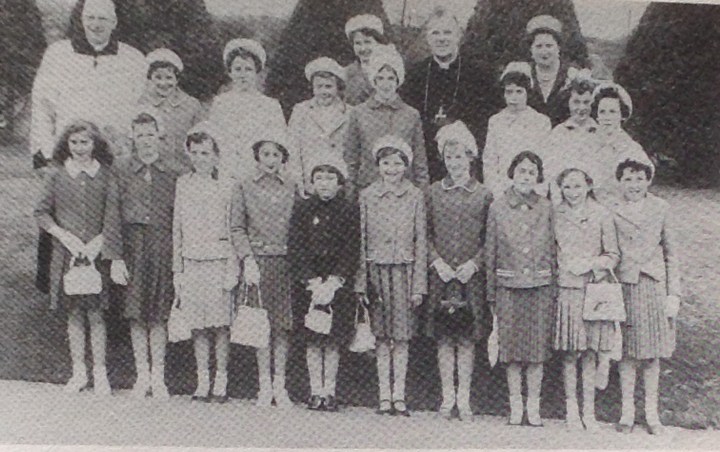
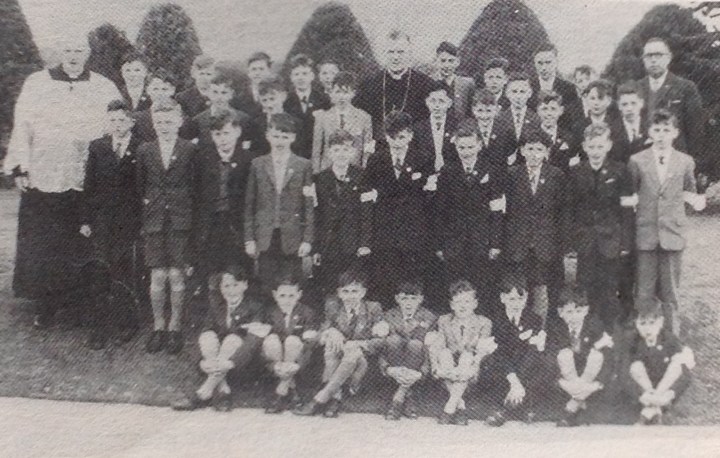


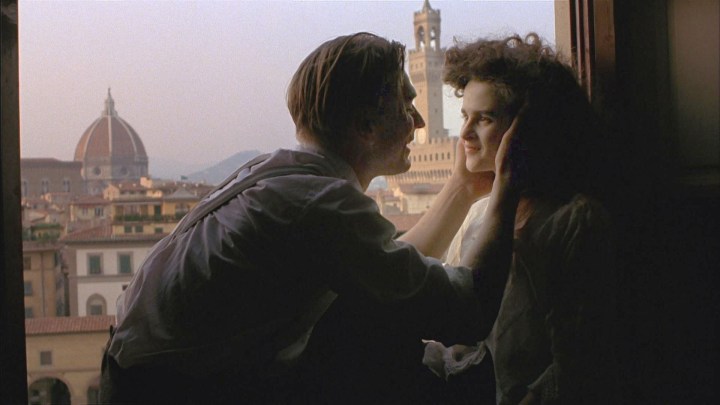


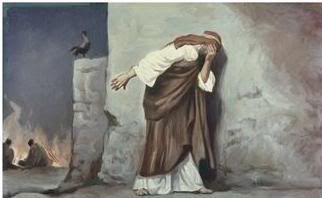
You must be logged in to post a comment.