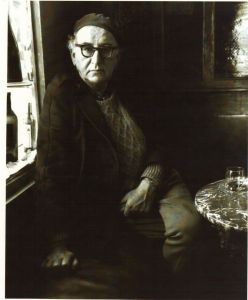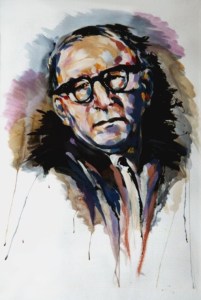
The Early Poetry of Thomas Kinsella

thomas-kinsella (2)

The Early Poetry of Thomas Kinsella

(with particular focus on ‘Another September’ and ‘Mirror in February’)

In the years after Yeats there was a general change in the direction of Anglo-Irish poetry.  In his desire to establish an Irish poetic tradition, Yeats had confined himself, for the most part, to subjects of Irish interest, and poets who directly succeeded him were very influenced by his poetry and the underlying philosophy of cultural nationalism which he espoused.  Thus, an older poet like Austin Clarke is very obviously an imitator of Yeats both in his subject choice and in his treatment of it.  Indeed, Clarke’s subject matter is principally confined to three main areas and may be summarised as follows: his judgements on the old heroic Ireland of the past (‘The Blackbird of Derrycairn’), his response to the general contemporary issue of Ireland itself (‘The Lost Heifer’), and his perceptive, lyrical treatment of the theme of love (‘The Planter’s Daughter’).

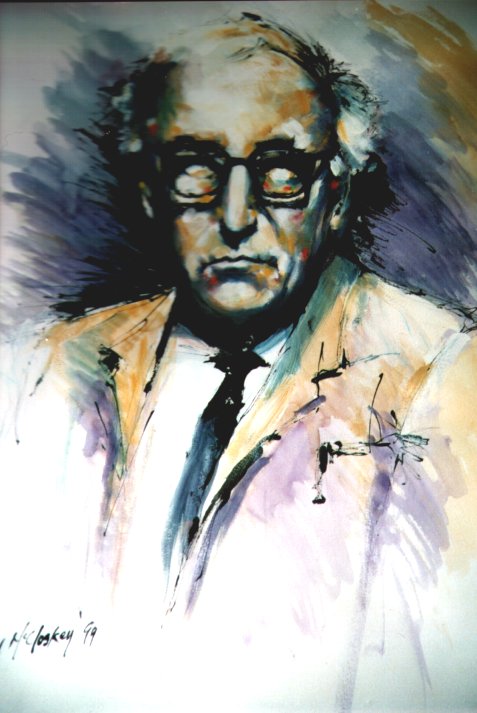
In the 1950’s, however, a new generation of Irish poets began to emerge.  Born in 1928, Thomas Kinsella belongs to this generation of writers; unlike Clarke, his main concern as a poet was not to limit himself to Irish topics but to explore a wider range of ideas and themes.  In 1892 Yeats had called for the creation of a national literature which would be distinct from all other literatures written in the English language.  Consequently, poets who succeeded Yeats found a constant need to express themselves as being fundamentally Irish, and the nature of their relationship with Ireland was one of their dominant concerns.  By 1950, however, Anglo-Irish poetry had found a permanent place for itself in modern English literature.  The new generation of writers were therefore not restricted to the old stances.  They did not feel it necessary to constantly assert allegiance to subjects of Irish interest, nor were they emotionally involved with dead leaders and causes as Yeats and Clarke had been.  Indeed, their most vivid memories were not of Wolfe Tone or the Fenian, John O’Leary, but of the contemporary holocaust in Europe, and the futile hero-worship of the modern world.  With Thomas Kinsella, therefore, we have one of the first to move into this different area of awareness and exploration.

Kinsella’s considerable talent as a poet has been well documented in many recent studies (e.g. Andrew Fitzsimons, The Sea of Disappointment: Thomas Kinsella’s Pursuit of the Real. UCD Press, 2008). His early work shows his skill at exploring states of feeling, especially feelings that are painful or acute.  His early poems also contain some moment of illumination, or epiphany, as he increases his awareness of some thought, idea, or reality he has previously overlooked.  This emphasis on reflection gives his poems many of the qualities of meditations: they are often, as he called them himself, ‘detailed explorations of private miseries’.  In these poems he usually begins with some simple situation which he advances towards complexity and which he attempts to incorporate into a coherent personal philosophy.

In both ‘Another September’ and ‘Mirror in February’ the speaker is presented as a solitary, humble figure who is confronted with an overwhelming significance in some simple aspect of life.  Though many of Kinsella’s poems deal explicitly with members of his own family he is essentially a poet of abstract ideas and concepts.  Also, throughout his early works nature always figures prominently.  He is conscious of the passing of time and of the seasons, the birth, death and decay of all life, even his own.

In ‘Mirror in February’ he connects his realisation of the decay inherent in modern man with his personal understanding of nature, while in ‘Another September’ he expresses his work as a poet in simple rural terms, ‘this … consciousness that plants its grammar in her yielding weather’.  Both these poems reveal certain similarities; each shares a common effort to find meaning and direction, and both are portraits of a defeated personality.  In ‘Another September’ the speaker is plunged into the bizarre, disorientated and isolated world of his wife’s past.  He is concerned with her immediate rural background, with the ways and customs of the people who still live there, with the culture they have formed from which he is excluded.  But beyond these reflections lie considerations about truth and justice, especially in the idea of a spectral woman who haunts him throughout the poem.  In ‘Mirror in February’ the poet’s self-portrait is made up of naturalistic and personal details through which he contemplates his muted, tragic story.  He experiences a sudden crisis of identity; there is a sense of loss in the feeling that his hold on youth is frail and tenuous.  In the end there is a gallant expression of hope as a faint optimism hesitantly breaks through.  Both poems succeed through a close attention to detail and through the use of natural images to expose the unpleasant and pitiful details of the poet’s life.

The material of each poem is different but the method is the same.  A theme is projected through the narrator, who alternates between apprehension of his immediate surroundings and memories or ideas that impinge upon his mind.  His recurring theme is the gulf between appearance and reality.  In ‘Mirror in February’ he regrets the loss of his youth: but the loss he is even more painfully aware of involves what he appears to be and what he actually is, ‘For they are not made whole that reach the age of Christ’.  The poem moves towards the acceptance of his condition even though his relationship with the world is one of steady and unavoidable decay.  Similarly, ‘Another September’ attempts to find some meaning in chaos.  This poem is also a projection of a state of feeling: the chaos is trivial in a wider sense, but is endowed with significance within the context of the poem.  The theme has possibly a wider application than ‘Mirror in February’, which deals with the poet’s immediate awareness of time.  In ‘Another September’, on the other hand, the initial meditation on his wife’s past gives rise to a meditation on women in general, and then to a consideration of the serious moral concepts that are usually represented as women, ‘Down the lampless darkness they came, moving like women: Justice, Truth, such figures’.  No firm conclusions are made in this poem: it is not ‘rounded off’ with a simple assertion as ‘Mirror in February’ is.  Indeed, the poem ends not with conclusions but with images, the meaning of which are not completely understood by the poet.  The theme of ‘Mirror in February’ is clear enough.  In ‘Another September’, however, the poet is presented with half-formed, shadowy ideas which trouble his consciousness and on which no firm judgements can be pronounced.

‘Another September’ describes an incident of particular importance in Kinsella’s life.  He has returned with his wife to the country house in which she grew up, and the opening stanza gives the poem a particular rural setting: ‘Dreams fled away, this country bedroom…’.  The time is early morning, just after dawn on a damp autumn day, and the poet wakes up in unfamiliar surroundings.  He first becomes conscious of the coldness (‘raw with the touch of dawn’), then of the silence (‘Nearer the river sleeps St. John’s’).  Nature, too, is still sleeping: the garden draws, ‘long pitch black breaths’, and the orchard exhales ‘rough sweetness’.  The poem is set in autumn, a time of ‘minor peace’; for the hard-working country people when the chores of summer are over and the fruits of their labour can be enjoyed.  The harvest is strongly suggested in this opening stanza, and the images provide a sense of simple rural abundance.  The trees are ripe with pears and apples, the rough soil is ‘windfall-sweetened’, the people are momentarily free from labour and secure from all intruders, ‘Locked fast inside a dream with iron gates’.  Being a Dubliner, it is as though Kinsella is experiencing these things for the first time.  This country scene is completely new to him, and he tends to see it in poetic terms.

The presence of autumn is strongly suggested in the images of the first stanza: in the second, it is personified as a domestic animal which, ‘rubs her kind hide against the bedroom wall’.  This sort of imagery is very common in modern poetry.  T.S. Eliot, in particular, specialised in far-fetched, arresting images, which have much of the impact of extended metaphysical conceits.  There is indeed a strong comparison between Kinsella’s description of autumn in this poem and Eliot’s description of the fog in the second section of ‘The Love Song of J. Alfred Prufrock’, ‘The yellow fog that rubs its back upon the window-pane’.  In Kinsella’s poem the image is meant to suggest friendliness and familiarity.  Country people live close to nature; they measure time not by the clock but by the seasons.  As such, autumn represents another aspect of their lives and is ‘long used to handling’ by them.  For Kinsella on the other hand – a city dweller for whom the seasons have no real significance – autumn is seen, prosaically, as ‘weather’.

The main topic of the poem is introduced here. The farm-house and the surrounding countryside are familiar features of his wife’s past; the life they represent belongs to his wife, not to him.  In the first stanza the farm is quiet and peaceful, safe from all intruders.  Here, however, Kinsella begins to realise that he himself is an intruder; he feels isolated and estranged in these new surroundings.  He is only ‘half-tolerated’ by the autumn morning, personified here as a friendly domestic animal which only ‘half-tolerates’ the caresses of a stranger.  The comparisons suggested here are difficult but comprehensible: it is as though a large domestic animal has entered the room sensing that an old forgotten friend has returned after many years’ absence.  Immediately, it is confronted by a stranger who tries to win favour by a vain display of friendship.  However, the poet’s overtures of friendship are ignored: it is not for his sake but for his wife’s, ‘this unspeaking daughter’ that the morning dawns so beautifully.  This use of personification in the poem is meant to suggest a sense of drama.  Indeed, what is difficult in the second stanza is not so much what the poet has to express, but the manner in which he expresses it.  He could just as easily have said that he felt out of place in the small rural community where his wife grew up, but this unremarkable statement would lack the strong sense of urgency that Kinsella wishes to suggest.  Also, by introducing characters in the second stanza Kinsella not only makes us see his personal situation in terms of drama – almost like a short scene from a play – but he also prepares for the important characterisations at the end of the poem.  He continues for the moment with simple poetic description:

                   Wakeful moth-wings blunder near a chair,

                   Toss their light shell at the glass, and go

                   To inhabit the living starlight.

At this point his attention is suddenly directed back to his wife who seems remote and unfamiliar in these strange surroundings.  Almost at once his image of her fades, ‘wanes’, and is replaced by other threatening images, ‘bearing daggers and balances’.

The ending to the poem presents some difficulty of interpretation but its meaning is usually explained as follows: Kinsella’s visit to the house where his wife grew up makes him conscious of those aspects of her life that had previously been ignored.  The poem represents, as it were, a moment of insight into her past which he had never before considered.  Following this epiphany he realises how women’s achievements in general, and their contribution to history, have also frequently been ignored.  Throughout the poem his wife is presented in quiet, placid descriptions: ‘a fragrant child’, ‘unspeaking daughter’, ‘stranded hair stirs on the still linen’.  The final feminine images, however, suggest vigour and movement, representing that part of womanhood which is characterised by energy and endurance.  Down through history, ‘down the lampless darkness’, the deeds of women have been unknown and unrecognised.  Kinsella therefore sees the images as threatening him with retribution, ‘bearing daggers and balances’, and seeking recognition for their personal deeds and achievements.

The situation described at the start of ‘Mirror in February’ is somewhat similar to that of ‘Another September’.  Indeed, both poems are composed of certain personal details and are in some sense autobiographical.  Again Kinsella relies on simple rural description in an effort to create a sense of atmosphere.  It is a damp spring morning; outside the upturned soil is ready for the seed; the trees are dark and still leafless.  The poet is going about the familiar morning chore of dressing and shaving, his mind occupied ‘by some compulsive fantasy’, when suddenly he notices his reflection in the mirror.  In the cold light of morning he is brought back to reality and he considers his advancing years.  His features reveal the relentless progress of time: his eyes are dark and exhausted; his mouth is dry and down-turned.

This moment of revelation, this epiphany, is extended into the second stanza.  The poem is set in springtime, the start of another year.  It is time to look to the future, to take stock, a time to ‘learn’.  In the second line of this stanza the cyclical nature of life is represented in an interesting paradox, ‘this untiring, crumbling place of growth’.  Life and death, he realises, are part of the great system of creation.  Things mature and die in an endless process of death and destruction.  Within the context of the poem, however, this realisation is the cause of some concern for the poet.  The slow, relentless progress of time has not brought him to perfection as it has in the case of Christ.  Instead he has achieved little, apart from a comfortable mediocrity.  The phrase ‘and little more’ is deliberately ambiguous.  The obvious meaning is that he is a ‘little more’ than the age of Christ, and the poem describes a moment of painful revelation for a person who suddenly realises that the best years of his life have slipped away and middle-age is approaching.  Another possible meaning to the phrase is suggested by Maurice Harmon.  What this critic suggests is not so much the idea of time passing, but of time lost: the poet laments that he has merely ‘looked’ his last on youth, almost like an observer, and done ‘little more’ to accomplish anything of importance.  This interpretation certainly fits in with the general tone of the second and third stanzas where the idea of worthwhile achievement is suggested in the extreme comparison with Christ’s life.  In contrast to Christ’s supreme achievements the poet has accomplished little, and he strays into the middle years of his life with little hope of attaining anything of note.  At this point he generalises about life: ‘they are not made whole / That reach the age of Christ’.  In the second stanza life is visualised in terms of sacrifice, and the idea implied is that it only becomes meaningful when seen in goal-directed terms.

In the third stanza this idea is repeated and is made more explicit in the striking references to nature.  Looking through the window the poet sees that the fruit trees have been severely pruned.  He uses this simple observation from nature as the occasion for an important comment on life.  The trees in the garden have withstood these brutal attacks upon them so that they may bear more and better fruit.  The basic idea expressed here is that nothing worthwhile is accomplished  without sacrifice, and that suffering contributes in a mysterious way to the perfection of a person’s character.  Just as Christ attained his destiny through suffering, and just as trees are pruned to make them more productive, so men too must suffer ‘mutilations’ if they wish their lives to be meaningful and enriched.  Unlike Christ, however, man does not submit to suffering willingly: he avoids hardships at each opportunity and cowers, ‘quails’, under every blow of fortune.

One aspect of the kind of suffering Kinsella imagines is described in this poem.  In his moment of anguish he tries to make light of the serious thoughts that weigh upon his mind.  He folds his towel with as much grace as he can manage.  He is no longer young, and unlike the trees he is not ‘renewable’, but he takes comfort in the fact that everybody shares in the same fate.  Life is continuous and irreversible: in the last line, therefore, he attempts to face up to his predicament with courage and conviction.

Kinsella (1)

Exploring the Poetry of Adrienne Rich (1929 – 2012)

 Adrienne Rich (1)

THIS IS A PERSONAL REVIEW OF SOME THEMES AND ISSUES WHICH FEATURE IN THE POETRY OF ADRIENNE RICH. YOU SHOULD CONSIDER THESE IDEAS, THEN RE-EXAMINE THE POEMS MENTIONED FOR EVIDENCE TO SUBSTANTIATE OR CONTRADICT THESE INTERPRETATIONS.  IN OTHER WORDS MAKE YOUR OWN OF THESE NOTES, ADD TO THEM OR DELETE FROM THEM AS YOU SEE FIT.

THE FOLLOWING SELECTION IS SUGGESTED BECAUSE THEY DEAL WITH THE MAJOR THEMES WHICH RECUR IN RICH’S POETRY:

  • Storm Warnings,
  • The Uncle Speaks in the Drawing Room,
  • Living in Sin,
  • The Roofwalker,
  • Trying to Talk to a Man,
  • Diving into the Wreck,
  • From a Survivor.

YEATS SAID OF HIS POETRY THAT IT WAS ‘BUT THE CONSTANT STITCHING AND RESTITCHING OF OLD THEMES’.  CHECK THIS OUT FOR YOURSELF IN RELATION TO ADRIENNE RICH!  

YOUR AIM SHOULD BE TO PICK YOUR OWN FAVOURITES (THREE OR FOUR) FROM THIS SELECTION AND GET TO KNOW THEM VERY WELL. 


Adrienne Rich (2)

_______________ o __________________


MAJOR THEMES IN RICH’S POETRY


Relationships

Rich is best known as a feminist writer and many of her poems deal with the oppression of women by men.  Marriage, in particular, is seen as a tool by which women are kept under the thumb of men.  ‘From a Survivor’ emphasises how women can be mastered or controlled by their husbands.  The speaker suggests that her husband’s body was ‘the body of a God’ and that it had ‘power’ over her life.

Similarly, in ‘Trying to Talk to a Man’, the speaker again suggests that her husband might have dominated her life: ‘Your dry heat feels like power / your eyes are stars of a different magnitude’.  ‘Living in Sin’, too, touches on this topic although here the couple are simply living together.  Here it is the woman in the relationship who does all the work (What’s new?), who makes the bed and tidies the apartment: she ‘pulled back the sheets and made the bed and found / a towel to dust the tabletop’.  The man with whom she’s living, meanwhile, seems to contribute little to the upkeep of the household.  This can be taken as yet another instance, therefore, of a woman being dominated or controlled by man.  It is another poem in which Rich emphasises the fundamental inequality of marriage and of relationships between men and women.

‘The Roofwalker’ is another poem that presents marriage in a negative light.  In this poem the speaker realises that her marriage has been a terrible mistake, that she has wasted a great deal of time and energy creating a life that is not suited to her: ‘Was it worthwhile to lay / with infinite exertion / a roof I can’t live under?’  The life she has made for herself, this seemingly comfortable existence that centres on a happy marriage and healthy children, is a life she was pressured into: ‘A life I didn’t choose / chose me’.  Now she is prepared to leave this life behind, to abandon the comfortable structure of her marriage and brave the world beyond this comfortable shell.  She will become, she says, ‘like naked man fleeing / across the roofs’.

It is important to note, however, that Rich can also be positive about marriage and relationships.  There is also room in her poetry for straightforward romance and love.  In ‘From a Survivor’, for instance, she emphasises that her husband’s body is ‘as vivid to me / as it ever was’ suggesting the deep love she felt for this man who is now tragically dead.  ‘Trying to Talk with a Man’ also stresses the deep emotional bond that existed between Rich and her husband with its deeply moving litany of memories and intimate moments that the couple shared; ‘whole LP collections, films we starred in / playing in the neighbourhoods, bakery windows / full of dry, chocolate-filled Jewish cookies/ the language of love-letters……’

The Personal and the Political

One of the best-known aspects of Rich’s poetry is the way it blends political and personal concerns.  Again and again she finds unexpected parallels between her personal traumas and political events that take place in the wider world.  This technique is used in an especially moving way in ‘Trying to Talk with a Man’.  The disintegration of the couple’s relationships is depicted against the backdrop of the violence and fury of a nuclear test in the Nevada desert: ‘Out here in the desert we are testing bombs / that’s why we came here’.  As we read the poem we realise that external violence of the nuclear test is a metaphor for the internal or emotional violence of the couple’s break-up: ‘talking of the danger / as if it were not ourselves / as if we were testing anything else’.

Women in a Patriarchal Society

The poetry of Adrienne Rich (like the poetry of Boland and Plath) documents the struggles and difficulties that women endure in the modern world.  Many of these difficulties are the result of the nature of the society in which we live.  Rich suggests fairly forcefully that we live in a man’s world.  The consequence of this for women is that they are never given the opportunities to achieve and optimise their potential or even communicate their true feelings and desires.  In ‘Diving into the Wreck’, Rich uses the dive into the dark depths of the sea to symbolise her efforts to penetrate the murky waters of history in order to see what lies at the bottom.  She has read about what might be there in a ‘book of myths’ but she wants to find out for herself.  What she finds is a ‘wreck’, an old ship that is battered and broken, but ‘whose silver, copper, vermeil cargo lies / obscurely inside barrels’.  It seems that this ship is a symbol of the origins of who we are and how we understand ourselves.  Down here with the wreck the speaker of the poem seems to lose all solid notions of what it means to be a woman.  Her gender becomes ambiguous and gender definitions become fluid and vague.  (Could you tell if a diver in a wet suit is male or female from a distance under water?)  The suggestion seems to be that the roles of men and women in society have a history, they are not established in fact, are not absolutely intrinsic to who we are.  If we can get back to the origins, to the beginning, when these definitions were first established we might be able to re-define and re-determine roles.  Why, the poet asks, should we live our lives according to definitions that we had no role in creating, that were established way back before we were even born.  ‘Diving into the Wreck’ suggests that there may be possibilities of rediscovering and re-learning who we are, if we are willing to try:

                               We are, I am, you are

by cowardice or courage

the one who find our way

back to this scene

carrying a knife, a camera

a book of myths

in which

our names do not appear

Forces for Change

The idea of an outside force, something that is potentially dangerous and capable of affecting our lives, is present in a number of Rich’s poems.  In many of her earlier poems Rich gives the impression that she is at the mercy of elements that she can’t quite control.  In ‘Storm Warnings’, for example, Rich portrays the weather as a powerful force for change that threatens her fragile home.  All she can do is close the windows and lock the doors against the storm that is brewing outside.  As the poem points our, even with our fancy new-fangled technologies and our weather reports, we are unable to control the weather.  We might be able to predict what is going to happen, but we are powerless to prevent it happening.  Time and darkness are two other forces that we are unable to control.  She also seems to suggest that there are elements of our own lives that we are powerless to change also.  As Rich points out: ‘Weather abroad / And weather in the heart alike come on / Regardless of prediction’.  By this she seems to be talking about the depression and other moods that we suffer from throughout our lives.

The notion of an external force is also at play in ‘The Uncle Speaks in the Drawing Room’ which contains the speech of a rich man whose lifestyle is put under threat by the presence of an angry mob at his gate.  We are not aware of the mob’s grievance but its presence remains a potent and ominous force in the poem.  Again there is a suggestion that the world contains elements that are beyond our control, no matter how wealthy and powerful we might be.  As I have said on many occasions, change is a fact of life, and the only people who welcome change are babies with wet nappies.  The speaker in this poem, the uncle seems oblivious to the reality of the growing social unrest that is taking place around him.  One could say that he’s in denial – and as I often say the Nile is not just a river in Egypt!!!!!

Roofwalker - Adrienne Rich (3)

Sample Answer:

‘The poetry of Adrienne Rich shows us the relationship between men and women in all their glory and despair’.

With reference to the above statement say whether the poetry of Rich appealed to you.


Adrienne Rich was the poet on the Leaving Cert course whose work most appealed to me.  There were several reasons for this.  For me the most important aspect of Rich’s work was her depiction of relationships in a way that seemed very real.  Her poems take account of the fact that love so often goes wrong yet they also offer hope that the anguish of a failed relationship can be overcome.  I also enjoyed the feminist aspect of Rich’s work.  Her depiction of women being dominated by the men in their lives is as relevant today as it was when Rich first presented it.

In my opinion, too many poems and pop songs present an idealistic or overly romantic view of love.  Rich, however, is having none of this.  She is fully aware that all too often relationships don’t work out the way we want them to.  As she puts it in ‘From a Survivor’, every couple believes they are ‘special’: ‘Like everybody else we thought of ourselves as special’.  Yet no couple is immune to the ‘failure of the race’.  Every relationship will experience turbulence and difficulty.  In ‘The Roofwalker’ for instance, the speaker invests a great deal of time and energy in a relationship only to realise that she does not really belong with this man.  The life they have created together is not for her.  ‘Was it worth while’, she asks to ‘lay – / with infinite exertion – / a roof I can’t live under?’  This tragic waste of time and effort in the  cause of a failed relationship was something I could really relate to.

I could also identify somewhat with the situation depicted in ‘Living in Sin’.  This poem also shows us a woman whose relationship has not worked out as she expected.  This young woman believed she would have a perfect life with her lover in their studio apartment.  She imagined there would be ‘no dust upon the furniture of love’.  However, life in the studio has turned out to be quite miserable.  The apartment is dirty and unpleasant; ‘Half-heresy, to wish the taps less vocal, / the panes relieved of grime’.  Her lover appears distant and uncaring, and hardly speaks to her each morning before going ‘out for cigarettes’.  It is hardly unsurprising, therefore, that this young woman is filled with mental anguish, is haunted by the ‘minor demons’ of sorrow and disappointment.

Yet Rich’s most moving account of a relationship in crisis is surely ‘Trying to Talk with a Man’.  What impresses me most about this poem is the way it captures just how difficult it can be to communicate at the end of a relationship, with Rich brilliantly describing the lovers ‘surrounded by a silence … that came with us /and is familiar’.  This silence expands like a cancer at the heart of the couple’s relationship, forcing them to ‘give up’ the things they shared, such as  ‘the language of love-letters’ and ‘afternoons on the riverbank / pretending to be children’.

A strong belief in women’s liberation is also central to Rich’s poetry as she developed as a writer.  Many of her poems, including ‘Living in Sin’, focus on the inequality between women and men that exists at the heart of so many relationships.  The young woman in this poem seems to do all the housework while her boyfriend lounges about the place uselessly.  Though he is allegedly an artist of some kind he appears to do little artistic work, only sounding a ‘dozen notes upon the keyboard’ before heading ‘out for cigarettes’

However, Rich’s poetry also offers a lot of hope.  In both ‘The Roofwalker’ and ‘From a Survivor’ she shows that it is possible for a woman to reverse bad decisions and escape a relationship or way of life that is unsuitable to her.  In ‘From a Survivor’ the speaker has ‘made the leap’ and escaped her failing marriage.  Now her husband is no longer like a god to her and her new life is like a ‘succession of brief, amazing moments’.  ‘The Roofwalker’ also deals with this possibility of escape and shows the speaker desiring to leave behind a life she ‘didn’t choose’.  Yet this poem stresses how unnerving and intimidating it can be to leave a stable relationship behind.  To do so is to be exposed and vulnerable as ‘a naked man /fleeing across the roofs’.  I thought this was one of Rich’s finest images, brilliantly capturing feelings of vulnerability and isolation in an image that is both moving and amusing.

While Rich’s philosophy is important, it is her use of images, in my opinion, that makes her truly great as a poet.  Her use of metaphors is very eye-catching and there is a lovely example of this in ‘Living in Sin’ where a beetle is described as ‘an envoy from the moldings’.  There is also another excellent metaphor in this poem where the morning is compared to a ‘relentless milkman coming up the stairs’.  I found both of these images amusing but they also filled me with a certain unease and discomfort.  There is also a startling set of metaphors in ‘The Roofwalker’ that really appealed to me, where builders on a roof are described as sailors on a deck; the sky is depicted as ‘a torn sail’, and the night as a black wave about to descend.

To sum up, then, my admiration for Rich’s poems stems from the fact that she is not afraid to confront unpleasant realities such as the heartbreak that accompanies the failure of a relationship and the oppression of women.  Yet she is not a poet who is content to simply dwell on the negative.  Her work also offers hope, hope that the anguish of failed love can be overcome, that women can escape the traps in life they set for themselves and that they can gain power all of their own.

image

Sample Answer:

‘Adrienne Rich’s poetry is interesting both for its themes and its language’.  Discuss.

 I am in complete agreement with this statement.  Rich is one of the most important and provocative voices in modern day literature.  Her themes are always relevant and she often challenges us with her ideas on, for example,  male-female relationships and the role of women in society.  While her feminist perspective means that her work has an obvious attraction for a female audience, her appeal is not confined to one gender.  Her language is generally clear and direct and her images striking and memorable.

An idea that she often explores is the complex reality of male-female relationships.  ‘Living in Sin’ is interesting primarily because of its realistic depiction of male-female relationships.  Most people could relate to the experience of the woman who finds that the reality of living with her partner in a small studio apartment falls short of the romantic dream.  In her naivety, the woman had given no thought to the mundane realities of day-to-day life with her partner.  This idea is expressed in everyday language, ‘She had thought the studio would keep itself’.  Inevitably, harsh reality reveals the unglamorous truth: noisy dripping taps, grimy windows, scraps of leftover food and empty bottles.  Worst of all, she encounters a beetle among the saucers – the beetle is described in a memorably humorous image as an ‘Envoy from a village in the moldings’.  Aside from the grim physical environment, the woman has to cope with her partner’s lethargy and general indifference.  He seems to be a musician or composer, but lacks the motivation to practice his music, ‘sounded a dozen notes upon the keyboard, / declared it out of tune, shrugged at the mirror, /rubbed at his beard, went out for cigarettes’.  The shrugging image perfectly captures her partner’s apathetic attitude.  This poem provides us with an insight into sexual stereotyping – the man makes no attempt to tackle any domestic tasks and it is the woman who cleans the apartment.  Despite her disillusionment, the woman does not leave her indifferent boyfriend and the depressing apartment, ‘By evening she was back in love again’.  However, the next phrase (‘though not as wholly’) qualifies this statement, reminding us that her initial optimism about the relationship is beginning to fade away gradually.

Anyone of us who have found ourselves in a relationship, which is falling apart, will easily relate to ‘Trying to Talk with a Man’.  In this poem the speaker and her partner have gone into the desert ostensibly to witness (and protest about) the detonation of a nuclear bomb – however, we get the impression that the underlying purpose of this journey is to take stock of their relationship.  An excellent visual image suggests how the woman is growing in insight, ‘Sometimes I feel an underground river / forcing its way between deformed cliffs / an acute angle of understanding’.

This poem also highlights Rich’s effective use of metaphor and imagery to convey her themes.  The images of a ghost town and the desert effectively suggest the silent, barren nature of the couple’s relationship.  While the troubled lovers are ‘surrounded by a silence’ that sounds like the silence of the deserted town, the poet realises that the silence has come with them – it is ‘a familiar’ silence. The speaker acknowledges the extent of their problems in language that is admirably simple and direct, ‘Out here I feel more helpless / with you than without you’.    What I found interesting about this poem was the man’s unwillingness to discuss the problems at the heart of the relationship.  He talks only of external events such as the danger of nuclear testing, making no attempt to address the danger surrounding the relationship, ‘Talking of the danger / as if it were not ourselves’.  This poem stands out in my mind because it underlines an almost universal truth – women are more emotionally aware and more emotionally honest than men.

‘From a Survivor’ is a deeply personal poem describing the poet’s failed marriage.  What I found interesting – and indeed uplifting – about this poem was the affectionate nature of the poet’s reflection on her late husband and the fact that her brave ‘leap’ away from her marriage enabled her to find true joy.  The conversational language employed by Rich gives this poem a wonderful sense of immediacy, ‘I don’t know who we thought we were / that our personalities / could resist the failures of our race’.  The poet reminds us of the optimism that attends the early stages of romantic relationships, ‘Like everybody else, we thought of ourselves as special’.  She never anticipated that their marriage, like so many others, would not stand the test of time.  Despite the tensions of their marriage, the poet’s affection for her late husband endures, ‘Your body is as vivid to me / as it ever was’.  It was also encouraging to learn that, having come through a difficult period, the poet retains the capacity to find joy in life – she speaks of having experienced ‘a succession of brief amazing moments’.  Another aspect of this poem that I found interesting was the insight it provided into the changing nature of male-female relationships.  Social and cultural changes brought about largely by the active feminist movement mean that the poet now has a clearer perspective on her marriage.  When she married, marriage was an intrinsically unequal institution (and who wants to live in an institution….!), with the woman expected to be obedient to her husband.  In the past the poet had seen her husband as ‘a god / …with power over my life’.  As Rich grew as a person and as a poet, she ‘no longer’ viewed her husband as god-like.

In conclusion, Rich’s poetry is interesting both for its ideas and the way in which these ideas are expressed.  She explores issues that are relevant to the modern reader in language that is generally clear and accessible, making very effective use of imagery to express her themes.


 adrienne-rich-(4)


The End and the Beginning – Wislawa Szyborska

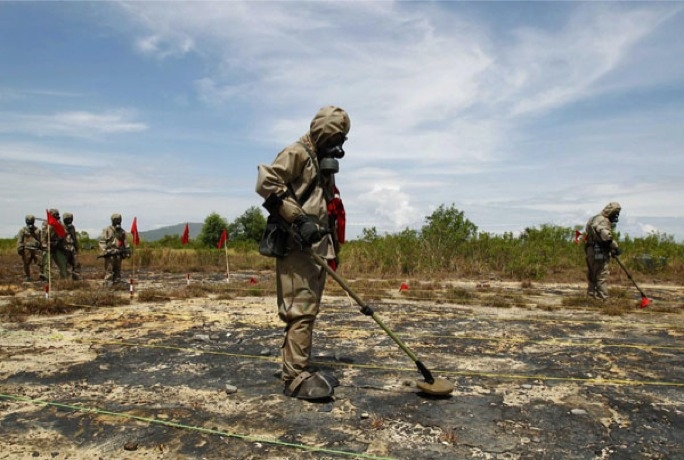
us-to-clean-herbicide-from-vietnam-37-years-after-war-20120809

The End and

The Beginning


After every war

someone must do the cleaning-up.

Because the minimum of order

cannot be done without someone.

Someone must clear back the rubble

from the sides of roadways

so that the cars full of corpses

are able to pass.

Someone must go down into

the wet earth and the ash

into the sofa springs

into the shattered glass

and the bloodstained linen.

Someone must drag over the beam

that is going to prop up the wall,

set the pane in the window

and the door on its hinges.

It’s not photogenic

and it takes years.

All the cameras have already left

for another war.

It needs – new bridges

and railway stations.

Sleeves will soon be in tatters

From rolling them up.

Someone, a broom in hand,

still remembers how it was.

Someone listening

Nods his head that was not ripped off.

Somewhere in the vicinity

people are beginning to protest already

that this work is going to bore.

Someone from time to time

unearths from under a bush

arguments eaten away by rust

and sets them on a pile of debris.

Those who knew

what happened here

Have to leave room for those

who know very little.

Then for those who know even less.

Finally for those who know nothing.

In the grass that grew over

the causes and the consequences

someone must daydream

a wheat stem between their teeth

watching the clouds pass.


                                       Wislawa Szyborska

About the Poet…………

w_szymborska (2)

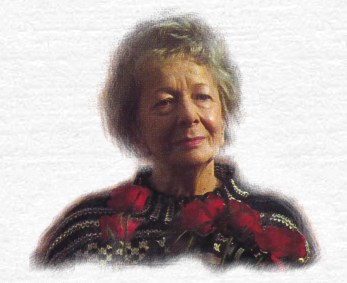
Maria Wisława Anna Szymborska (1923 – 2012) was a Polish poet, essayist, translator and recipient of the 1996 Nobel Prize in Literature. Born in Prowent, which has since become part of Kórnik, she later resided in Kraków until the end of her life. Wikipedia


‘Of Mice and Men’: Brief Analysis of Characters, Metaphors and Themes.


Courtesy of carra-lucia - books .co.uk
Courtesy of carra-lucia – books .co.uk

The title that Steinbeck finally chose for his novel emphasises the unpredictable nature of existence as well as its promise, George and Lennie’s blasted dream to ‘live of the fatta the lan’.  Taken from a poem by Robert Burns, the Scottish poet, the novel’s title suggests the transitory quality of even ‘best laid schemes’.  Burns’s poem tells of an unfortunate field mouse whose home is flattened by a plough:

But Mousie, thy art no thy lane,

In proving foresight may be vain:

The best laid schemes o’ mice an’ men

Gang aft a-gley

An’ lea’e us nought but grief an’ pain

For promised joy.

___________________________________________

Steinbeck 

CHARACTER PROFILES

GEORGE: George is the story’s main protagonist, a small, quick man with well-defined features.  A migrant ranch worker, George dreams of one day saving enough money to buy his own place and be his own boss, living off the land.  The hindrance to his objective is his mentally handicapped companion, Lennie, with whom he has travelled and worked since Lennie’s Aunt Clara, whom George knew, died.  The majority of George’s energy is devoted to looking after Lennie, whose blunders prevent George from working toward his dream, or even living the life of a normal rancher.  Thus, George’s conflict arises in Lennie, to whom he has the ties of long-time companionship that he so often yearns to break in order to live the life of which he dreams.  This tension strains George into demonstrating various emotions, ranging from anger to patience to sadness to pride and to hope.

LENNIE:  George’s companion, the source of the novel’s conflict.  Lennie, enormous, ungainly, and mentally slow, is George’s polar opposite both mentally and physically. Lennie’s ignorance and innocence and helplessness, his childish actions, such as his desire to pet soft things, contrast his physical bulk, making him likeable to readers.  Although devoid of cruel intentions, Lennie’s stupidity and carelessness cause him to unwittingly harm animals and people, which creates trouble for both him and George.  Lennie is tirelessly devoted to George and delights in hearing him tell of the dream of having a farm, but he does not desire the dream of the American worker in the same way that George does.  His understanding of George’s dream is more childish and he grows excited at the possibility of tending the future rabbits, most likely because it will afford him a chance to pet their soft fur as much as he wishes.  Nevertheless, a dream is a dream, different for everyone, and George and Lennie share the similar attribute of desiring what they haven’t got.  Lennie, however, is helpless to attain his dream, and remains a static character throughout, relying on George to fuel his hope and save him from trouble.

CANDY:  He is the old, one-handed swamper who is the first to befriend George and Lennie at Soledad.  He is humble and weary and seems to be at the end of his line after Carlson shoots his last possession and companion, his old, blind, dog.  ‘When they can me here I wisht somebody’d shoot me’, Candy confesses to George and Lennie, hoping for a similar fate as his dog.  But when he hears the two talking of their little place, Candy offers all his money and his meagre services to be in on the dream.  His substantial sum of money and the fact that he knows of a place make it impossible for George to refuse him.  Candy clings to this hope of a future as a drowning man would to a piece of driftwood.  It rekindles life within him, but it also becomes an obsession, and in his excitement and indignation, he lets the secret slip to both Crooks and Curley’s wife.  And when Lennie kills Curley’s wife and shatters the reality of the dream, Candy becomes hopeless and full of anguish, the broken shell of a man.

CURLEY:  He is the boxer, the son of the boss, the angry and hot-headed obstacle to George’s attempt to keep Lennie out of trouble at Soledad.  Insecure because of his size and over-protective of his wife, Curley is eager to fight anyone he perceives as a threat to his self-image.  Lennie unwittingly incurs Curley’s antagonism simply because of his size, and the reader immediately braces for future confrontation.  Curley remains undeveloped, forever little and forever mean, poking his head in at various points in the novel, either to look for his wife or to stir up trouble on account of her.

CURLEY’S WIFE:  Nameless and flirtatious, Curley’s wife is perceived by Candy to be the cause of all that goes wrong at Soledad: ‘Ever’body knowed you’d mess things up.  You wasn’t no good’, he says to her dead body in his grief.  The workers, George included, see her as having ‘the eye’ for every guy on the ranch, and they cite this as the reason for Curley’s insecurity and hot-headed temperament.  But Curley’s wife adds complexity to her own characterisation, confessing to Lennie that she dislikes Curley because he is angry all the time and saying that she comes around because she is lonely and just wants someone to talk to.  Like George and Lennie, she once had a dream of becoming an actress and living in Hollywood, but it went unrealised, leaving her full of self-pity, married to an angry man, living on a ranch without friends, and viewed as a trouble-maker by everyone.

CROOKS:  called such because of a crooked spine, Steinbeck does not develop Crooks, the Negro stable buck, until Chapter Four, describing him as a ‘proud, aloof man.  He kept his distance and demanded that other people keep theirs’.  Crooks is bitter, indignant, angry, and ultimately frustrated by his helplessness as a black man in a racist culture.  Wise and observant, Crooks listens to Lennie’s talk of the dream of the farm with cynicism.  Although tempted by Candy, Lennie and George’s plan to buy their own place, Crooks is constantly reminded (in this case by Curley’s wife) that he is inferior to whites and, out of pride, he refuses to take part in their future farm.

SLIM:  The tall, jerkline skinner whom Steinbeck describes as something of a living legend: ‘He moved with a majesty only achieved by royalty and master craftsmen.  He was a jerkline skinner, the prince of the ranch, capable of driving ten, sixteen, even twenty mules with a single line to the leaders.  He was capable of killing a fly on the wheeler’s butt with a bull whip without touching the mule.  There was gravity in his manner and a quiet so profound that all talk stopped when he spoke ….. His hatchet face was ageless.  He might have been thirty-five or fifty.  His ear heard more than was said to him, and his slow speech had overtones not of thought, but of understanding beyond thought.’  Slim lingers in the shadow of this overwhelming description throughout the novel.  He serves as the fearless, decision-maker when conflicts arise among the workers and wins the confidence of George, offering advice, comfort, and quiet words of wisdom.

______________________________________

Speed Read 'Of Mice and Men' (Courtesy of www.irisreading.com)

 METAPHOR ANALYSIS

 CANDY’S DOG:  ‘A dragfooted sheepdog, gray of muzzle, and with pale, blind old eyes’, Candy’s dog is a far cry from his sheepherding days.  Carlson says to Candy, in regard to the dog: ‘Got no teeth, he’s all stiff with rheumatism.  He ain’t no good to you, Candy. An’ he ain’t no good to himself.  Why’n’t you shoot him, Candy?  And Candy is left with no other option, but to shoot his longtime companion.  This sub-plot is an obvious metaphor for what George must do to Lennie, who proves top be no good to George and no good to himself.  Steinbeck re-emphasises the significance of Candy’s dog when Candy says to George that he wishes someone would shoot him when he’s no longer any good.  And when Carlson’s gun goes off, Lennie is the only other man not inside the bunk house, Steinbeck having placed him outside with the dog, away from the other men, his gun shot saved for the novel’s end.

THE CRIPPLES:  Four of Steinbeck’s characters are handicapped: Candy is missing a hand, Crooks has a crooked spine, Lennie is mentally slow, and Curley acquires a mangled hand in the course of the novel.  They are physical manifestations of one of the novel’s major themes: the schemes of men go awry.  Here, to reiterate the point, Steinbeck has the actual bodies of his characters go awry.  It is as if nature herself is often doomed to errors in her scheme.  And whether they be caused at birth, or by a horse, or by another man, the physical deformities occur regardless of the handicapped person’s will or desire to be otherwise, just as George and Lennie’s dream goes wrong despite how much they want it to be fulfilled.

 SOLITAIRE:  George is often in the habit of playing solitaire, a card game that requires only one person, while he is in the bunk house.  He never asks Lennie to play cards with him because he knows that Lennie would be incapable of such a mental task.  Solitaire, which means alone, is a metaphor for the loneliness of the characters in the novel, who have no one but themselves.  It is also a metaphor for George’s desire to be ‘solitaire’, to be no longer burdened with Lennie’s company, and his constant playing of the game foreshadows his eventual decision to become a solitary man.

THE DEAD MOUSE AND THE DEAD DOG: These two soft, furry creatures that Lennie accidentally kills are both metaphors and foreshadowing devices.  As metaphors, they serve as a physical representation of what will happen to George and Lennie’s dream: they (Lennie in particular) will destroy it.  Lennie never intends to kill the thing he loves, the soft things he wants more than anything, but they die on him nonetheless.  The dead mouse is also an allusion to the novel’s title – Of Mice and Men, a reminder that dreams will go wrong, even the desire to pet a mouse.  And because bad things come in threes, Lennie’s two accidental killings of animals foreshadow the final killing of Curley’s wife, an accident that seals his fate and ruins the dream for him, George and Candy.

___________________________________

Steinbeck 6

THEME ANALYSIS

When discussing the various themes in Steinbeck’s novel, we would do well to first examine the title, which is an allusion to a line from one of Robert Burns’s poems: ‘The best laid schemes o’ mice an’ men gang aft aglay.’  Translated into modern English, this line reads: ‘The best laid schemes of mice and men often go awry.’  This cynical statement is at the heart of the novel’s action and serves as a foreshadowing prophecy of all that is to come.  For, indeed, the novel’s two main characters do have a scheme, a specific dream of changing their current way of life in order to have their own place and work only for themselves.  The tragedy, of course, lies in the fact that no matter how elaborately our heroes plan, regardless of how intensely they hope and dream, their plan does not find fulfilment.

This is a novel of defeated hope and the harsh reality of the American Dream.  George and Lennie are poor homeless migrant workers, doomed to a life of wandering and toil in which they are never able to reap the fruits of their labour.  Their desires may not seem so unfamiliar to any other American: a place of their own, the opportunity to work for themselves and harvest what they sow with no one to take anything from them or give them orders.  George and Lennie desperately cling to the notion that they are different from other workers who drift from ranch to ranch because, unlike the others, they have a future and each other.  But characters like Crooks and Curley’s wife serve as reminders that George and Lennie are no different from anyone who wants something of his or her own.

All the characters (all the ones that Steinbeck has developed, at least) wish to change their lives in some fashion, but none are capable of doing so; they all have dreams, and it is only the dream that varies from person to person.  Curley’s wife has already had her dream of being an actress pass her by and now must live a life of empty hope.  Crooks’ situation hints at a much deeper oppression than that of the white worker in America – the oppression of the black people.  Through Crooks, Steinbeck exposes the bitterness, the anger, and the helplessness of the black American who struggles to be recognised as a human being, let alone have a place of his own.  Crooks’ hopelessness underlies that of George and Lennie’s and Candy’s and Curley’s wife.  But all share the despair of wanting to change the way they live and attain something better.  Even Slim, despite his Zen-like wisdom and confidence, has nothing to call his own and will, by every indication, remain a migrant worker until his death.  Slim differs from the others in the fact that he does not seem to want something outside of what he has, he is not beaten by a dream, he has not laid any schemes.  Slim seems to have somehow reached the sad conclusion indicated by the novel’s title, that to dream leads to despair.

Another key element is the companionship between George and Lennie.  The two men are not unique for wanting a place and a life of their own, but they are unique in that they have each other.  Their companionship contrasts with the loneliness that surrounds them – the loneliness of the homeless ranch worker, the loneliness of the outcast black man, the loneliness of Curley’s wife, the loneliness of the old, helpless cripple – and it arouses curiosity in the characters that they encounter, Slim included.  And indeed, the reader becomes curious as to their friendship as well.  And can we call it friendship?  Lennie would call George a friend, but George would perhaps be hard-pressed to admit the same of Lennie.  As he tells Slim, he has simply become so used to having Lennie around that he, ‘can’t get rid of him’.  Despite his annoyance, George also demonstrates protectiveness, patience, and pride when it comes to Lennie.  He is perhaps motivated to stay with Lennie by a sense of guilt, or responsibility, or pity, or a desire to not be alone himself.  Most likely it is a combination of all these motivations.  Yet it seems strange that George would choose to remain with Lennie, given the danger that Lennie poses for the both of them.  George is not blind to the fact that life would be easier without Lennie, and he often yearns for independence when Lennie becomes troublesome, creating a major source of tension in the novel.  This tension is not resolved until the final gunshot by the riverside, when the strain of Lennie’s company makes it impossible for George to survive with his companion.

By killing Lennie, George eliminates a monumental burden and a threat to his own life (Lennie, of course, never threatened George directly, but his actions endangered the life of George, who took responsibility for him).  The tragedy is that George, in effect, is forced to shoot both his companion, who made him different from the other lonely workers, as well as his own dream, and he is forced to admit that it has gone hopelessly awry.  His new burden is now hopelessness and loneliness, the life of the homeless ranch worker.  Slim’s comfort at the end (‘You hadda George’), indicates the sad truth that one has to surrender one’s dream in order to survive, not the easiest thing to do in America, the Land of Promise, the land of the Free and the Home of the Brave.

Courtesy of www.slideshare.net
(Courtesy of http://www.slideshare.net)

Stony Grey Soil by Patrick Kavanagh

Patrick Kavanagh - Stony Grey Soil (1)

Stony Grey Soil

by Patrick Kavanagh

O stony grey soil of Monaghan
The laugh from my love you thieved;
You took the gay child of my passion
And gave me your clod-conceived.

You clogged the feet of my boyhood
And I believed that my stumble
Had the poise and stride of Apollo
And his voice my thick tongued mumble.

You told me the plough was immortal!
O green-life conquering plough!
The mandril stained, your coulter blunted
In the smooth lea-field of my brow.

You sang on steaming dunghills
A song of cowards’ brood,
You perfumed my clothes with weasel itch,
You fed me on swinish food

You flung a ditch on my vision
Of beauty, love and truth.
O stony grey soil of Monaghan
You burgled my bank of youth!

Lost the long hours of pleasure
All the women that love young men.
O can I stilll stroke the monster’s back
Or write with unpoisoned pen.

His name in these lonely verses
Or mention the dark fields where
The first gay flight of my lyric
Got caught in a peasant’s prayer.

Mullahinsa, Drummeril, Black Shanco-
Wherever I turn I see
In the stony grey soil of Monaghan
Dead loves that were born for me.

Kavanagh spent the first half of his life farming ‘the stony grey soil’ of his native Monaghan.  In Ireland in the 1930’s and ‘40’s this usually meant a life of dull, hard work.   He recalls the hardship, misery and austerity in this poem and also, of course, in his major opus, ‘The Great Hunger’.  In ‘Stony Grey Soil’ Kavanagh regrets having wasted his youth in a barbarous, bleak place.  The very title, ‘Stony Grey Soil’ suggests a hard, harsh, dull, unimaginative world – not an ideal environment for a poet.

In this poem, Kavanagh sees himself as a victim who was deprived, deceived, lied to, cheated and robbed by his homeplace and the way of life it imposed on him.  The poem is an outpouring of anger and accusations against Monaghan for what it did to the poet.  The soil of Monaghan is personified in the poem in very unflattering terms.  Because he is personifying Monaghan, he has to use metaphor extensively.  The soil is represented as a thief, a cheat, a depriver, a liar, a burglar; it is seen as one who ‘flung a ditch’ on his vision; as one who weighed down his feet to prevent his flight into the world of poetic imagination.

In harsh metaphor after harsh metaphor, he pours out a sustained and strident angry tirade against the place where he feels his youth was wasted and his potential inhibited and stunted.  Monaghan and the farming way of life is a thief, ‘the laugh from my love you thieved’.  It is a cheat, it dealt falsely with him, ‘you took the gay child of my passion and gave me your clod conceived’.  It gave him poison for perfume, ‘you perfumed my clothes with weasel-itch’.  It is a liar, ‘you told me the plough was immortal’.  The soil and the rural way of life are seen as a robber, ‘you burgled my bank of youth’.  It tried to blind his vision and limit his potential, ‘you flung a ditch on my vision of beauty love and truth’.

To summarise, Kavanagh is bitterly attacking and blaming Monaghan and the drudgery of farm life.  It stole the fun and humour of his youth and gave him instead the ‘clod-conceived’, which suggests perhaps, practical, pragmatic ideas about crops and cattle.  His ambition and self-belief were ruined.  He was aware of his own potential; he believed that he had ‘the stride of Apollo’ but Monaghan dragged him down and ‘clogged the feet of my boyhood’.

Monaghan flung a ditch on his vision.  It limited and confined him, instead of providing inspiration it fed him ‘on swinish food’.  This is a particularly harsh metaphor, suggesting that the whole atmosphere of farming life was totally without any aesthetic dimension.  The people among whom he lived his life are represented as ‘cowards’ brood’.  This seems to suggest that they were slave-minded and without the courage to break out of their dull, drab routine.  Hardly fit company for a poet!

We have seen how Kavanagh’s bitterness is shown in the harsh metaphors which he uses to describe his victimisation.  The tone of the poem – in particular the first five stanzas – is extremely bitter.  Perhaps it could best be described as accusatory.  Notice the recurring accusations in the repeated ‘you’: ‘you thieved’, ‘you took’, ‘you clogged’, ‘you told’, ‘you fed’, ‘you perfumed’, ‘you flung’, ‘you burgled’.  We all know that if you want to start an argument the best word to use to begin it is ‘you’!

However, the poet is unable to sustain this tirade to the bitter end and in the final three stanzas he relents and his great love for his native place surfaces at last.  The accusatory ‘you’ occurs no more and now he is sadly reflective, almost nostalgic (which suggests that the poem is written from a distance in both time and place).  He mentions the hallowed place names of his native place with reverence, almost as if in a religious litany: ‘Mullahinsha, Drummeril, Black Shanco’.  He is, after all, mourning what might have been.  At a very human level he is regretting the romances that never formed part of his young manhood.  Wherever he looks in Monaghan he sees ‘dead loves’ that were born for him.  These represent not only the romantic loves that never happened in that barren place but also all his unfulfilled potential as a poet.

‘Oh, can I still stroke the monster’s back or write with unpoisoned pen…’

Inniskeen Road: July Evening

Inniskeen road (1)
Bikes on the Road to Billy Brennan’s Barn, Inniskeen – courtesy of http://www.fisherbelfast.wordpress.com

Inniskeen Road: July Evening


By Patrick Kavanagh

The bicycles go by in twos and threes –

There’s a dance in Billy Brennan’s barn tonight,

And there’s the half-talk code of mysteries

And the wink-and-elbow language of delight.

Half-past eight and there is not a spot

Upon a mile of road, no shadow thrown

That might turn out a man or woman, not

A footfall tapping secrecies of stone.


I have what every poet hates in spite

Of all the solemn talk of contemplation.

Oh, Alexander Selkirk knew the plight

Of being king and government and nation.

A road, a mile of kingdom. I am king

Of banks and stones and every blooming thing.


Copyright © Estate of Katherine Kavanagh

In his early poems Kavanagh experimented with a dreamy, transcendental sort of poetry.  He seemed to want to escape from his own real world.  He didn’t feel that his own world was a fit subject for poetry, or that poetic thought could be expressed in ordinary language.  All this has changed when he comes to write ‘Inniskeen Road: July Evening’ in 1936.

This is one of the first examples of realism in Kavanagh’s poetry.  For the first time he has found the courage to use his own specific world and his own position within that world as the subject matter for poetry.  In this poem he writes about his own local place – a world in which he was both an insider and an outsider.  He belongs because he was born there and lives there.  He doesn’t belong because, as a poet, he is isolated, he is different.  In this poem he writes eloquently about this anomaly.

This poem is about a local and personal experience.  It’s the first time that Kavanagh uses actual place names and personal names in his poetry.  There is a specific place, Inniskeen Road, and a specific time, July Evening at half-past-eight and the centre of local activity is Billy Brennan’s Barn.  It’s the first time that Kavanagh’s own local world comes to life in his poetry and marks a major watershed in his poetry where from now on realism is at the heart of all his work.  He writes about his own real, personal situation in the real world of Inniskeen Road during a summer barn dance.  To make the poem even more real, he uses the present tense throughout – it’s as if the action is happening as he speaks.

THEME:  This poem is about the isolation of the poet.  A poet is different from other people: he is not interested in material matters such as the price of cattle, the progress of crops or the results of football matches.  The poet lives in the world of imagination and because of this he is often considered as an outsider; he is isolated – a loner – he does not fit in to ordinary society.  So the price the poet pays for his gift of poetry is the pain of isolation.

This poem recounts a local barn dance and the whole neighbourhood has gone for an evening’s enjoyment. Kavanagh has not gone – perhaps for fear of being laughed at.  The tone of the octet (first 8 lines)is thoughtful as well as being bitter.  There is a sense of loneliness in it – ‘and there is not a spot upon a mile of road…’ He feels a palpable sense of being excluded by the other young people’s ‘half-talk code of mysteries’ and by their ‘wink and elbow language of delight’.

In the sestet (final 6 lines) the tone is again very bitter when he considers his own isolation and compares his lot (similar to Elizabeth Bishop in ‘Crusoe in England’) with that of Alexander Selkirk, the prototype for Daniel Defoe’s Robinson Crusoe – ‘Oh, Alexander Selkirk knew the plight…’.  Listen to the bitterness of the final line: ‘I am king of banks and stones and every blooming (God damned) thing’.

LANGUAGE:  Kavanagh is the poet of ordinary language.  He has no place for poetic diction or flowery language.  Instead he uses ordinary, colloquial language.  This use of ordinary speech is part of his simplicity; he does not try to impress; he is not looking over his shoulder at the literary critics.  Here he is content with himself and with his language: there is a country barn dance in ‘Billy Brennan’s barn’, ‘the bicycles go by in twos and threes’, there is ‘the half talk code of mysteries’ and also he notices ‘the wink and elbow language of delight’, capturing perfectly the closely-knit peasant atmosphere of the local dance.

STRUCTURE:  In the first quatrain (4 lines) Kavanagh focuses on the togetherness, the closely-knit community spirit of the place – the cyclists going along the stony road to the local dance.  They are so closely-knit they don’t even have to speak to be understood, they wink, use ‘half-code’, and nudge each other in an excited way – they communicate in code, they gesture and signal each other.  This creates a huge obstacle for the reticent, isolated poet.

In the second quatrain the road is deserted.  We sense the poet who has probably noticed all the earlier excitement from a safe distance, hidden from view, now is overcome with a sense of isolation and the silence on the roadway is unbearable, ‘not a footfall tapping secrecies of stone’ – he might as well be on a deserted island.

In the sestet Kavanagh further contemplates his own situation and his plight as a poet. The break between the octet and the sestet on the page symbolises Kavanagh’s separateness from the community.  For him, the price he must pay for being a poet is to be considered an outsider.  This notion is typically Irish and goes back many years when the Bardic poets had great standing and power in the community: they could make or break a lord or lady and were often paid to praise a patron or denigrate an enemy.  This is the price Kavanagh must pay for his poetic gift and he calls this state a ‘plight’.  He makes the comparison with Alexander Selkirk, a man who was marooned on a deserted island.  Of course, Selkirk was set ashore voluntarily, so Kavanagh is not totally a reluctant loner.  But he is honest; honest enough to admit that poetic solitude is not some grandiose, blessed, exalted state.  He rejects the ‘solemn talk of contemplation’.  Here he is distancing himself from pretentious phoney literary attitudes and poses.

RHYMING SCHEME: This is a Shakespearean sonnet and therefore it has the classic Shakespearean rhyming scheme: ABAB CDCD EFEF GG.  However, Kavanagh is experimenting here and even though the sonnet has a Shakespearean rhyming scheme, the sonnet is laid out in the classic Petrarchan pattern of octet followed by sestet.  As we have referred to earlier he cleverly uses the break between octet and sestet to show his own separateness and isolation from the community; to show his plight as an outsider.

SUMMARY:

  • First published in 1936
  • First published example of Kavanagh’s realism
  • Poetry could be written about the local and the ordinary
  • This is a personal poem – Kavanagh’s own situation – his plight as poet – insider and outsider
  • Honesty – ‘solemn talk of contemplation’ – distances himself from phoney literary attitudes and posing
  • Ordinary world – a road, bicycles, a barn dance
  • Conversational tone – ordinary diction can be used in poetry
Inniskeen road (2)
Platform Dance http://www.newryjournal.co.uk

An Overview of Patrick Kavanagh’s Poetry

Those hungry hills....
Those hungry hills….


In Chapter 3 of his novel Tarry Flynn, Kavanagh describes a summer sunset and, though sunsets have often been written about, when Kavanagh does it, like all true artists, he makes it his own:

‘The summer sun was going down in a most wonderful yellow ball behind the hills of Drumnay.  It turned the dirty upstairs windows of Cassidy’s house into stained glass.’

Here the beauty of the evening sun is captured with all the simplicity of a child’s painting: the sun is ‘a most wonderful yellow ball’; the local place and people are named and the ordinariness of dirty windows is put before us.  But Kavanagh’s way of setting the world has transformed those windows into beautiful things of praise.

It is important to note that almost all the poems by Kavanagh on the Leaving Cert Syllabus contain references to place and the people who make those places special.  As Michael Schmidt puts it, in Kavanagh’s poetry, ‘Naming of places and things is of almost magical significance’.  He writes in praise and celebration, for the most part, but in the extract from ‘The Great Hunger’, a darker relationship with place is explored.  In Sean O’Brien’s words, ‘The Great Hunger’ depicts farming as, ‘hard labour and the bachelor male condition as sexually frustrated’.  By contrast, in ‘Epic’ and ‘Advent’ the countryside is written about with affection and the rural images in his city poem, ‘Canal Bank Walk’, are happy, summery images of grass, trees, breezes and birds.  Harry Clifton thinks that ‘In Kavanagh’s finest work, it is almost always high summer’ – for example ‘Inniskeen Road’ and the Canal Bank Sonnets are gloriously set in mid-July.

In many of Kavanagh’s poems, he is the outsider and the speaker in the poem is aware that this has advantages and disadvantages.  He himself felt that:

‘A poet is never one of the people.  He is detached, remote, and the life of small-time dances and talk about football would not be for him.  He might take part but could not belong.’

‘Inniskeen Road’ and ‘Epic’ are poems which highlight the position of the poet; he feels cut off, at a remove from his neighbours, and yet the poems hint at how he is also content with his lot.  In ‘Raglan Road’, the painful memories of unrequited love give way to the poet’s own belief in himself and yet, in ‘Lines Written…’, he chooses what has been described by Antoinette Quinn as, ‘an unegotistical tomb, a monument to his poetics rather than to his person’ where, ‘future visitors are asked to sit with their backs to the memorial description, reading instead the scene before them’.

Kavanagh’s own experience of life is at the heart of a Kavanagh poem.  He writes directly out of his own experience – rural life, farming, childhood memories, unrequited love, illness and convalescence, his love of nature, his gratitude to God.  When he writes ‘I’, he is almost always writing in his own voice and, even when he writes in the third person, as when he writes about Patrick Maguire and what Kavanagh called ‘the prison of a farmer’s life’ in ‘The Great Hunger’, he also includes the voice of a concerned, involved narrator which creates a closer link between the harsh, bleak world of the poem and the reader.

But the world of Kavanagh’s poetry is above all celebratory.  Poems such as ‘Advent’, ‘The Hospital’ and the Canal Bank sonnets are all love poems to place.  Here when Kavanagh looks, he sees ‘the newness that was in every stale thing’ and he delights in the ordinary, the natural, the physical world ‘of bog-holes, cart tracks, old stables’, ‘dreeping hedges’, ‘square cubicles in a row’, ‘The main gate that was bent by a heavy lorry, / The seat at the back of a shed that was a suntrap’, the trapped stick, the grass, canal water ‘stilly / Greeny at the heart of summer’.  In a lecture entitled ‘Man and Poet’, Kavanagh said:

‘We are in too great a hurry.  We want a person or thing to yield their pleasures and their secrets to us quickly for we have other commitments.  But it is the days when we are idle, when nothing appears to be happening, which provide us when no one is looking with all that is memorable’.

The Canal Bank sonnets are unhurried poems in which Kavanagh’s idleness yields precious, unforgettable experiences.

Anthony Cronin has described Patrick Kavanagh as an intensely private man who lived his life in public places, a man who thought mediocrity the enemy of genius, the enemy of life.  He did live a public life as journalist and man about town but Kavanagh also claimed that ‘the only subject that is of any great importance – Man-in-this-world-and-why’.  He also believed that, ‘Parochialism is universal; it deals with the fundamentals’ and that great beauty and profound truths can be discovered in apparently ordinary places.

John McGahern tells of how the forty-one-year-old Patrick Kavanagh once pointed out a particular grass and said: ‘I love that grass.  I’ve known it since I was a child.  I’ve often wondered if I’d be different if I had been brought up to love better things’.  In the end, though, he did believe in Ballyrush and Gortin, in ordinary things, for it was in the ordinary that not only meaning could be found but that Kavanagh discovered the extraordinary.  He had, in the end, come to the discovery that, ‘The material itself has no special value; it is what our imagination and our love does to it’.

Kavanagh is capable of great lyrical intensity.  There is great lyrical, gentle but impassioned quality in lines such as ‘O unworn world enrapture me’ or ‘Feed the gaping need of my senses’ and a sense of being totally at ease.  Kavanagh’s language can be what Patrick Crotty calls ‘grittily realistic’ (especially in ‘The Great Hunger’) but there is also a colloquial rhythm in such lines as ‘There’s a dance in Billy Brennan’s barn tonight’ or ‘That was the year of the Munich bother’ and there is also a great lyrical quality in ‘Canal Bank Walk’ where ‘pouring’ and ‘overflowing’ seem to describe the poem’s rhythm and mood:

‘For this soul needs to be honoured with a new dress woven

From green and blue things and arguments that cannot be proven.’

Kavanagh has an extraordinary ability to create fresh, surprising images

  • ‘the wink-and-elbow language of delight’;
  • ‘a footfall tapping secrecies of stone’;
  • ‘I am king / Of banks and stones and every blooming thing’;
  • ‘The sleety winds fondle the rushy beards of Shancoduff’;
  • ‘Mass-going feet / Crunched the wafer-ice on the pot-holes’;
  • ‘The wind leans from Brady’s, and the coltsfoot leaves are holed with rust’;
  • ‘And Christ comes with a January flower’;
  • ‘we tripped lightly along the ledge / Of the deep ravine’;
  • ‘Homer’s ghost came whispering to my mind’; ‘the inexhaustible adventure of a gravelled yard’;
  • ‘a bird gathering materials for the nest for the Word’;
  • ‘A swan goes by head low with many apologies’.

Kavanagh’s poetry is a record of a journey that brought him from Monaghan to the banks of the Grand Canal, a journey of discovery and exploration in which he reveals himself as one who found the ordinary, extraordinary, and that ‘the things that really matter as casual, insignificant little things’.  He offers us a version of himself in his poem ‘If Ever You Go To Dublin Town’:  ‘If ever you go to Dublin town / In a hundred years or so’ he says, ‘Inquire for me in Baggot Street / And what I was like to know’ and he goes on to tell us that he was ‘a queer one’, ‘dangerous’, ‘a nice man’, ‘eccentric’, ‘a proud one’, ‘a vain one’, ‘slothful’ and it ends:

He knew that posterity had no use

 For anything but the soul,

 The lines that speak the passionate heart,

 The spirit that lives alone.

 O he was a lone one

Fol dol the di do,

Yet he lived happily

I tell you.


from “The Great Hunger” by Patrick Kavanagh

Study Notes on ‘King Lear’

larryavisbrown.homestead.com

These notes are directed mainly at those Leaving Cert students (Higher Level) who are undertaking the study of King Lear as a Comparative Text

HISTORICAL/LITERARY BACKGROUND

Shakespeare’s King Lear was written around the year 1605 and basically sets good (as represented by Cordelia, Edgar and Kent and later Lear) and evil (represented by Goneril, Regan, Cornwall and Edmund) in opposition.  The play has invited its fair share of controversy.  Some critics have called it the finest of Shakespeare’s plays, others have accused the play of being too pessimistic even for a tragedy. Shakespeare’s Elizabethan world (shortly before and after 1600) reflects, in some respects, a very different society to the many other societies and cultures depicted in your other Comparative Texts.

Shakespeare’s tragedy reflects the concerns and aspirations of Elizabethan society.  It also conforms to the conventions of the theatre of this period.  The publication date of King Lear in 1605 places it among the later works of Shakespeare and it must be said that this was a period of rapid change and expansion, ruled over by Elizabeth I, who ascended the throne in 1558 and James I who succeeded her in 1603.

The reign of Elizabeth brought about great change in England which resulted partly from her vibrant personality.  She made the monarchy as lavish a spectacle as Shakespeare made his theatre.  Like Queen Victoria in the 19th. century, Elizabeth’s aim was to make the monarchy a popular and powerful institution.  Unlike Victoria, however, Elizabeth was an exhibitionist who believed in dazzling her subjects with her regal splendour.  Her lavishly decorated dresses (Remember Dame Judy Dench in Shakespeare in Love?), magnificent coach and enormous troupe of servants provided a sense of pageantry for the population who lined the streets hoping to catch a glimpse of her as she made her way to the provincial towns and cities.

The Elizabethan court set new trends in style, art, literature and drama but the main concern of Elizabeth was to create a politically stable and united country.  This concern is illustrated in the desperate measures she took to secure her position on the throne, for example the execution of Mary Queen of Scots in 1587, and the defeat of the Spanish Armada in 1588 and the suppression of the Geraldine Rebellion in Munster and the subsequent beheading of our own Earl of Desmond!

When Elizabeth died in 1603 her successor, James IV of Scotland, was also a keen supporter of the theatre and he bestowed on Shakespeare’s company the privileged title of the ‘King’s Men’.  This privilege ensured the acceptance of Shakespeare and his company within the Royal Court and his continued prosperity as a playwright.

The tragic nature of King Lear is not entirely at odds with the real events which were unfolding in the court of James I.  James was the first monarch to rule (however briefly) over the United Kingdom of England, Scotland and Wales and he was very fond of feasting, drinking, hunting, and the splendid trappings of monarchy.  These examples of James’s character are evident in Lear who is willing to leave the affairs of state in the hands of Goneril and Regan while he enjoys feasting, drinking, hunting and riding with his knights.

www.slideshare.net
http://www.slideshare.net

THE STORY

Lear is an old man when the play opens.  He decides to divide up his kingdom by means of a childish love-test based on words.  When Cordelia refuses to co-operate she is stripped of her dowry and banished to France.  Goneril and Regan, his other two daughters, take over the kingship.  These are shrewd operators who have assessed Lear’s flaws fully.  They plot together so that they will not suffer from his senile unpredictability.  Shortly after Lear has abdicated his throne, he moves to Goneril’s house with one hundred knights.  This was one of the conditions of the agreement between them.  Here he has a violent confrontation with Goneril about the number of knights he actually needs.  Regan arrives and the love-test scene is ironically parodied; the two daughters haggling over the number of his knights is a grotesque mimicry of the love test.  Lear is cast out into the storm with his Fool and Kent.

In the parallel plot, the Earl of Gloucester has two sons.  One of them, Edmund, is illegitimate.  Edmund deceives Gloucester about Edgar, his real son, and convinces him he is a villain who is ready to murder him.  Edgar is forced to go on the run and play the role of a mad beggar.  He meets with Lear on the heath in the storm and together they reach some profound insights into human nature.  Later on, Gloucester is blinded by Cornwall, the husband of Regan, for helping Lear.  Gloucester becomes filled with despair and wanders to Dover to commit suicide.  He is saved by Edgar who discloses his identity to him shortly before Gloucester dies, presumably from a heart attack.

Lear becomes reconciled with Cordelia who returns to Britain with an army from France to save him.  Both Lear and Cordelia are imprisoned by Edmund who leads the British army against the King of France.  Cordelia is hanged and Lear dies of a broken heart.

Goneril and Regan become consumed by a passionate lust for Edmund and they kill one another.  Edmund is slain by Edgar.  Only Albany, the husband of Regan, and Edgar survive to sustain and restore order to the gory state of Britain at the conclusion.

shakespeare-lovers.deviantart.com

THEMES AND ISSUES

Love versus Hatred

King Lear deals with the theme of love versus hatred.  Love, in many of the texts texts on the Comparative Course, is a redemptive force and achieved only through suffering and many trials and tribulations.  Cordelia, Lear’s youngest daughter, suffers the contempt and abuse of her sisters who vie for their father’s power and kingdom.

Lear’s oldest daughters, Goneril and Regan, have the same ignoble and cruel nature as many other characters iwe come across on the Comparative Course.  They are jealous of Cordelia because she is her father’s favourite child, a fact which Lear does not try to conceal.  Cordelia is very forthright in her manner.  She believes in love but not at the cost of truth and decency.  When Lear establishes his love test to divide his kingdom, Cordelia is faced with two choices.  Either she lies to her father and tells him she loves him to the exclusion of everyone and everything in the world, or, she tells him the truth, that she loves him as a daughter should love her father, with duty and respect.

She decides to tell the truth, arguing, ‘I love your Majesty according to my bond no more nor less’ (Act I, Scene I).  The word love is used many times and in different contexts in this first scene.  It is obvious that Goneril and Regan abuse the term and take advantage of their father’s desperate need for love.  Lear’s over-indulgent behaviour to his older daughters make them despise him and think only of themselves and how they might prosper at his demise. So Cordelia is banished by her father for speaking the truth.  She acknowledges that had she ‘a still soliciting eye, and such a tongue’ (Act I, Scene I) as her sisters have, she would have benefited from the division of the kingdom.

It is interesting that Cordelia is forced to uproot herself from her home and seek whatever solace she can with strangers, in a strange environment.  Cordelia is immediately betrothed to France, who instantly recognises her virtues.  His intention is to make her Queen of France and he argues that his love for her encompasses his respect for her actions.  However, Cordelia’s trials are only beginning.  The love she bears for her father will be tested later in the play, as will her compassion and forgiveness.

The evil and cruel natures of Goneril and Regan become obvious as soon as Cordelia leaves the court.  Their language is suddenly cruel and vindictive.  They jeer their father for his approaching senility and feebleness of age.  The significance of Regan’s observation that her father had ‘ever but slenderly known himself’ (Act I, scene I) is now apparent to the reader because of his banishment of Cordelia and Kent.

The sub-plot in King Lear is also important in highlighting this theme and we see the deception of Edmund who takes advantage of his father’s kindness and genuine affection, for his own corrupt desires.  He is incapable of love and his references to love in the play are always debased and carnal.  His character is without any moral code.  His desire is to ultimately destroy whatever is good and pure.  His corruption of the purity of love almost destroys the characters closest to him in the play.

Edmund deceives his father and brother by pretending to be a good son and brother.  He deludes both Goneril and Regan, pretending to love them, but caring about neither.  In fact he enjoys watching these women scheme and plot against each other to win his love.

The marriages of Goneril and Regan are symbolic of their unloving and primitive natures.  Goneril’s husband, Albany, is a weak character at the beginning of the play and seems completely overshadowed by his wife’s hunger for power.  However, as the play progresses, Albany’s function changes from that of mere observer of his wife’s actions to a critic of her unnatural behaviour.  Regan and Cornwall’s marriage is based on Regan’s willingness to be as vicious as her husband.  Her love of power is insatiable and she confuses love with sexual intrigue, which is evident in her behaviour towards Edmund.

The unrestrained passions of Goneril and Regan present fascinating character portrayals for the audience of the play.  Goneril and Regan are presented in highly dramatic sequences on stage.  The visual impact of their actions is overwhelming.

Lear experiences hatred initially in his contact with Goneril.   She is indifferent to him and she instructs her servant Oswald to be as negligent of her father as he wishes.  Lear reacts with a terrible anger.  His language is full of hatred and revenge.  Words like ‘thwart’, ‘torment’, and ‘contempt’ are all used against Goneril.  Lear’s anger springs from his sense of injustice at the treatment meted out to him.  Having given everything to his daughters, they turn on him.  The language and images used by Lear indicate their inability either to give or understand love.  They are described as ‘wolves with flaying nails’, ‘serpents’, ‘foxes’, ‘crabs’, ‘vultures’, ‘a boil’, ‘a plague sore’, and ‘an embossed carbuncle’.  These images deprive the daughters of their humanity but, more importantly, they deny their maternal instincts, traditionally associated with nurturing and love.  The ferocious nature of these images prepares the reader for the cruelty of Goneril, Regan, Cornwall and Edmund later in the play.

Eventually Lear rejects Goneril and Regan and sets out on a journey of self-discovery.  It is vital for Lear that he rejects his two cruel daughters if he is to learn that love cannot be bought, that it is not a commodity.  He is helped to make this discovery by some very noble and good characters such as Cordelia, Kent and Edgar who represent the virtues of love and goodness, loyalty and truth.

Gloucester’s rash banishment of Edgar also clearly illustrates that his understanding of love is as shallow as Lear’s.  This flaw in his character means he is at the mercy of his unscrupulous son, Edmund.  The gouging out of Gloucester’s eyes in Act III, scene vii, is particularly violent, but highly dramatic for the audience.  The blinding scene allows the audience to see, on stage, the distinction between sight and insight, truth and pretence.  Gloucester must lose his sight in order to gain insight and once this has happened he is reunited with Edgar, his legitimate son, who loves him.

The ‘mock trial’ which takes place between Lear, the Fool and Edgar in Act III, Scene vi, is very important in the context of helping us understand and analyse the unnatural actions of Goneril and Regan against their father.  It highlights Lear’s inability to accept that the ‘professed’ love of Goneril and Regan in Act I, Scene I, was mere pretence.  Here we see three human beings at their lowest ebb and this pathetic scene helps us to realise what the world would be like without love.  The ‘mock trial’ also allows Edgar to vent his frustration at the corruption of his treacherous brother Edmund.  It helps to contrast those in the play, who love, as Othello says, ‘not wisely but too well’, with those who debase love and seem to prosper by its abuse.

The return of Kent and particularly of Cordelia is very important for the regeneration of Lear.  Kent, having returned in disguise, to serve Lear, suffers the abuse of Lear’s daughters and servants.  Ultimately, however, it is the return of Cordelia that changes Lear.  He is astounded by her forgiveness and overwhelmed by her love for him.

The change in Lear’s character is obvious.  His hysteria has subsided and he speaks with a voice full of conviction and strength.  The audience is roused by the sense of pathos in his actions and language when Cordelia dies.  Carrying her from the place of execution, he lays her before the audience, trying in vain to find evidence of her breathing.  His grief is evident when he admits to killing the ‘slave’ who hanged her.

With her death, Lear’s only source of love is gone, and unable to bear his separation from her for a second time, he dies.  Interestingly Albany, Goneril’s husband, survives the mayhem and corruption of the evil characters in the play.

The shocking demise of Goneril and Regan emphasises their fiendish nature and the fact that they are the personification of evil as it exists in the world.  They prey upon each other and become victims of their own hatred and greed.  Both must die at the end of the play because, like Edmund and Cornwall, they have nothing to offer humanity.  They love only what benefits themselves and destroys others.

rwkaz.deviantart.com

CULTURAL CONTEXT

Britain and the Medieval Renaissance Court form the primary cultural background of this play.  The play deals with the culture of Kingship and Monarchy at that time.  The characters are drawn from the aristocracy or nobility.  These characters are public figures whose actions and subsequent sufferings become universalised.

The plot of the play deals with inter-family relationships and ensuing intrigue, rivalry and conflict.  Lear makes a fatal error regarding the nature of kingship at the beginning of the play: he believes he can abdicate the duties of King and merely retain, ‘the name and addition of a King’.

Lear has been King of Britain for many years, he has no male heir and so roles change and he hands over his authority to Goneril, Regan and their husbands.  In this act of abdication Lear disrupts the social order and causes a general anarchy in his kingdom.

The blinding of Gloucester is a barbaric act which coexists with the Christian insights expressed by Lear in some of the Storm Scenes and at the conclusion of the play.  In prison with Cordelia he sees them both as ‘God’s spies’, taking upon themselves the mystery of things.

The play refers to particular things such as clothes and courtly manners that are an innate part of this cultural environment.  Lear sheds these symbols of wealth – rich clothes and fine speech – in his movement towards truth.  The play shows the human being reaching truth when these false adornments of culture have been stripped away.  Lear sheds his sanity and descends to a state of physical and emotional nakedness before he is finally clothed in the truth.

www.bloggingshakespeare.com
bloggingshakespeare.com

THE GENERAL VISION AND VIEWPOINT

 The term, general vision and viewpoint, may be understood by candidates to mean the broad outlook of the authors of the texts (or of the texts themselves) as interpreted and understood by the reader  – excerpt from Marking Scheme, 2003.

The main thing to remember when discussing this text in relation to others on your Comparative Course is that this is a Shakespearean Tragedy, and hard though it may be to believe, King Lear is the one and only tragic hero of this text.  Traditionally, the conventions of tragedy require certain tragic elements.  Aristotle considered tragedy to be ‘the fall of princes’ and King Lear falls into this category: he is a great king – all kings were great back then – and in the course of the play, because of his foolishness, he makes a great mistake.  Generally, in Shakespearean tragedy, evil is the cause of the catastrophe.  He believed that his tragedies, including King Lear, depicted the struggle between good and evil in the world.

Shakespeare’s tragic heroes all possess definite characteristics.  His tragic hero is always a man of exceptional nature, a great man with a more powerful consciousness, deeper emotions and a more splendid imagination than ordinary men.  He is a sensitive being with a spiritual bias.  He has a divided soul, he is torn by an internal struggle.  However, this tragic hero has some weakness, some flaw that contributes to his downfall.  Aristotle called this internal weakness of the hero the ‘hamartia’, the tragic flaw, an essential element in tragedy.  Lear’s flaw is his gullibility and his pride.  He succumbs to this powerful failing in his nature and is destroyed by it.  His ambition pushes him into a sequence of action which inevitably leads to his death.  Lear attempts the impossible, to give up his kingship and yet he tries to retain the trappings of power, his retinue of knights, the pomp and ceremony that goes with majesty.  However, the inevitable consequences of his actions work themselves out and the result is tragedy.

Aristotle’s criterion for good tragedy was that the members of the audience should experience ‘catharsis’, that is, pity and terror for the tragic hero.  The sensitive, conscience-stricken, tortured King Lear we are introduced to on the heath inspires pity, and we do leave the theatre terrified at the tragic results of Lear’s actions.

Shakespeare, in King Lear and Macbeth and Hamlet, does a wonderful balancing act between the audience having sympathy for the tragic hero while also recognising the reality that evil must be destroyed and good must triumph in the end and order must be restored to the kingdom.

This, therefore, was Shakespeare’s vision for this and all his other great tragedies.  It doesn’t  always sit well with modern audiences because we have differing definitions for ‘heroes’ and indeed for ‘tragedy’ as well.

 King Lear (8)


LITERARY GENRE

As we have already stated above, King Lear is a Shakespearean tragedy.  The general sequence of a tragic work is the story of a hero who is endowed with a fatal flaw.  This flaw causes suffering, the loss of everything and finally death.

In the context of this play, Lear’s main flaw consists of an overbearing pride and blindness to human nature.  Shortly after he has abdicated his kingship he suffers a violent confrontation with Goneril and Regan and he is forced to accept their terms or face humiliation and poverty out on the heath.

In an extreme state of degradation and suffering throughout the storm scenes he learns the meaning of life and grows in humility and self-knowledge.  All of this occurs with the help of his Fool who plays a key role here.

Likewise Gloucester is blind to the reality of human nature and fails to see through the wickedness of his son Edmund.  Ironically it is only when he is physically blinded that he attains a real insight into the truth of things.  Both characters acknowledge their earlier flaws and both develop and learn to see the real truth about people and about themselves.

THE STRUCTURE OF THE PLAY

This play is made up of two plots which echo one another in theme – we get two plays for the price of one!.  The deliberate parallels that are set up between the two plots add to their realism, by giving credibility to a play where the characters and events would be otherwise incredible.  Another effect of this deliberate repetition is to universalise and broaden such themes as filial ingratitude and evil.

The story and theme of the sub-plot is repeated in the main plot.  Two credulous fathers are betrayed by selfish and unscrupulous children.  Both are victims of false appearance.  Both are weak, gullible and poor judges of character.  Both lack sound judgement, both are old men.  The Fool teaches Lear while Edgar teaches Gloucester.

The Fool plays a central role in the structure of the play.  This role is primarily paradoxical – the supposedly wise King is being taught lessons of wisdom and folly by a fool.  We see this mainly in the storm scenes.  He is a foil for Lear and also a form of relief.  He counters Lear’s madness and is used almost like a chorus as he harps all the time on Lear’s transgressions.  So, his role is a curious mixture of faithful service and severe condemnation.  He offers relief to the gloom of the tragedy.

The Fool represents the voice of reality for Lear.  The Fool appears in Act I, Scene iv when Kent has just manifested his loyalty for Lear by attacking Oswald, Goneril’s cunning servant.  Lear is about to pay Kent for his action when the Fool enters and mockingly offers Kent his coxcomb.  The implication here is that Lear is a fool if he thinks he can repay people with money now that he has handed over everything to his wicked children.  The play is full of comments like this, where the Fool mocks Lear’s self-deceit, and essential blindness to human nature.  The Fool is not only Lear’s teacher but he echoes Lear’s conscience.  It is significant that Lear is given few soliloquies in the play; the implication here could be that the Fool articulates all his insights.

The relationship between Lear and his Fool is part of the tragic movement of the play; the movement downwards towards that ultimate exposure and defeat when the King is degraded to the status of the meanest of his servants.  We watch the royal sufferer being progressively stripped, first of his extraordinary power, then of ordinary human dignity, then of the very necessities of life where he is more helpless and abject than any animal.  However, there is a more dreadful consummation than this reduction to physical nakedness.  Lear hardly feels the storm because he is struggling to maintain his mental integrity, his knowledge and his reason which for him are the essential marks of humanity itself.  From the time when his agony begins and he feels his sanity threatened, he gradually becomes aware of the suffering of others: ‘Poor Fool I have one part of my heart that’s sorry for thee yet’.

In the role of the Fool we are confronted with the paradoxical reversal of wisdom and folly.  At the beginning of the play Lear and Gloucester are both blind fools.  When Lear loses his sanity his vision is enlarged; as his wits begin to leave him he begins to see the truth about himself; when they are wholly gone he begins to have spasmodic flashes of insight in which he sees the truth about the world.  The Fool prophetically exclaims that Lear would make a good Fool.  When he loses everything – his kingdom, his sanity, his honour, when he becomes an outcast from society – he attains truth.

In the hour of Lear’s helplessness during the storm on the heath, King and Fool, master and slave, become something different – the bond between them grows deeper.  In the process of madness we become aware of a relationship comprised of opposites – that of wise man and fool.  The essence of this relationship consists in a reversal of accepted values: the supposedly wise man of the opening scenes, the Lear who was in a position to have his slave whipped and exercise his own will without contradiction, has become the fool.  Through his behaviour and language, the Fool offers advice all of which is based on a practical wisdom.  The Fool, therefore, is an all-powerful auxiliary for both the main plot and the sub-plot.

When the Fool leaves the play in the last storm scene, Act IV, Scene vi, we can assume that Lear has grown in moral awareness and it remains for him to be reconciled with Cordelia.

The soliloquy is a fundamental part of the structure of a Shakespearean tragedy.  Shakespeare uses both the public and the private soliloquy in his plays and each type has a different function.  Much of Lear’s soliloquies are public and in them he articulates his condemnation of humankind.  In the Storm Scene, Act III, Scene iv, he becomes aware for the first time in his life of the full reality of poverty within his kingdom, and acknowledges that he has done nothing to remedy the situation.  Likewise Edgar, Edmund and Kent use the public soliloquy to give reasons for the way they are acting.  Edmund is the character who has the most soliloquies and these serve to indicate how he will manipulate events and use opportunities to his own advantage.  All of his soliloquies show him to be exceptionally intelligent, cynical and unprincipled.  Edgar’s three soliloquies serve different functions.  He gives us an insight into the quality of life in the kingdom as it existed under Lear, the Bedlam Beggar who was pelted in the villages and looked upon as mad.  He also plays the role of moraliser or preacher of good and evil in his soliloquies.

THE STYLE OF THE PLAY

LANGUAGE IMAGERY: Shakespeare’s style is richly poetic.  In his plays the important characters speak in verse, while the minor characters use prose.  Language and imagery become an avenue of understanding in the plays of Shakespeare.  A wide variety of images and language patterns are used, largely to communicate the central message and themes of the playwright.

NATURE AND STORM SCENES:  The storm scenes are symbolic of moral discord.  They are five in total.  The storm dovetails personal conflict and external convulsion well.  The storm which has broken out in Lear’s mind is admirably fused with the description of the warring elements.   The external storm is itself a projection of his inner state which is expressed in the form of a single poetic reality.  Throughout the storm scenes Lear bears the main weight of suffering.  He is surrounded by human beings who are each used in a different way to illustrate and illuminate some aspect of his central character.  The Fool, Kent and Edgar bear some of his tragic burden: they show an insight into part of his tragic situation.  Gloucester also shows a parallel fate in his suffering and fall in fortunes.  During the storm, there is a profound sense of man’s infirmity, set against the power and violence of the elements.

It is within the Storm Scenes, in the company of three different types of mad people, that Lear penetrates through to the essential truth of human nature when it is stripped of the false trappings of sophistication.  In the half-naked Edgar he finds the image of ‘Unaccommodated man’.

Certainly, the Storm Scenes are the most dramatic in the play.  Here, the Fool leaves the play and Lear goes mad.  The paradox of the play ‘reason in madness’ is enacted in the storm scenes.

Gloucester’s first stage in moral growth occurs when he goes out into the storm to offer comfort and consolation to Lear.  It is this action which costs him his eyes.

ANIMAL OR BESTIAL IMAGERY:  There is the recurrent idea in the play of animals preying upon one another like monsters of the deep.  The animal or bestial imagery points us to the reality of human beings exploiting and destroying another for their own wicked ends.

Man and woman are continually referred to as beasts or monsters.  Goneril is referred to as ‘a sea monster’, ‘a serpent’, ‘a wolf’, ‘a vulture’, ‘a kite’.  In act III, Scene iv, Lear refers to the sisters as ‘pelican daughters’ who are feeding on their father’s blood.  Edgar calls his brother a ‘toad spotted villain’.

All this type of imagery suggests that when possessed by evil humans lose all trace of their humanity and become as beasts.

IMAGES OF SIGHT AND BLINDNESS: Much of the symbolism or imagery reflect two of the central ideas in the play – sight and blindness.  Since both protagonists begin at a stage of moral blindness with regard to the true nature of their children and of human nature in general, this type of imagery plays a hugely symbolic role in the play.

Shakespeare makes use of irony to dramatise the relationship between moral and physical blindness.  Irony serves several functions in the play.  It illustrates the profound discrepancy between the real nature of things and the mere appearance.  Irony is used to indicate blindness in characters.  Certain characters such as Gloucester, Lear and Edgar are essentially blind to the truth about themselves and others.  So as Lear banishes Kent, his loyal servant and the only person who will tell him the truth, he ironically prays to Apollo, the god of light.

Edmund uses a false letter to frame his brother, then adopts the role of confidante to Edgar by advising him to stay out of Gloucester’s way.  Edgar is blind to the existence of evil and corruption in nature and particularly in his brother Edmund’s nature and so we hear him ironically telling Edmund how, ‘Some villain has done me wrong’ (Act I, Scene ii).

The play is full of ironic reversals: Gloucester gains full insight only after he has been physically blinded; Lear, King of Britain, learns his wisest lessons on human nature and on life, in the context of extreme degradation and in the company of The Fool.

Irony functions as a moral commentary on the wicked characters and is another means of illustrating in a graphic manner the profoundly destructive quality of evil.

dateyvs.com


The Poetry of Patrick Kavanagh

Patrick Kavanagh by Paul McCloskey
Patrick Kavanagh by Paul McCloskey.  http://www.paulmccloskey.ie

Kavanagh was born on the 21st. of October 1904, in the village of Inniskeen, Co. Monaghan.  His father was a shoemaker and had a small farm of land.  Kavanagh received only primary school education and at the age of thirteen, he became an apprentice shoemaker.  He gave it up 15 months later, admitting that he didn’t make one wearable pair of boots!  For the next 20 years Kavanagh would work on the family farm, before moving to Dublin in 1939.  From his early years on, he was a man who was out of place.  When in Monaghan Kavanagh was a dreamer in a world of realists who were concerned with what seemed to him to be the mundane and banal aspects of life.  In Dublin he stood out as the man up from the bog, who didn’t understand the complexities of city life.  He was seen as gauche and unrefined.  Ironically in Monaghan he was seen as effeminate for having an interest in poetry.

Kavanagh’s interest in literature and poetry marked him out as different from other people in his local place.  In a society that was insular and agricultural, a man’s worth was measured by the straightness of the furrow he could plough, rather than the lines of poetry he could write.  Kavanagh’s first attempts to become a published poet resulted in the publication of some poems in a local newspaper in the early 1930’s, and in the publishing of his autobiographical novel, Tarry Flynn, in 1939.  Urged on by his brother Peter, who was a Dublin-based teacher, Kavanagh moved to the city to establish himself as a writer.  At that time, the Dublin Literary Society was dominated by an educated Anglo-Irish group with whom Kavanagh had nothing in common; among them were Oliver St. John Gogarty and Douglas Wylie.  They saw Kavanagh as a country bumpkin and referred to him as ‘that Monaghan boy’.

His early years in Dublin were unproductive as he struggled for recognition.  In 1947 his first major collection, ‘Soul for Sale’, was published.  These poems were the product of his Monaghan youth.  In the early 1950’s Kavanagh and his brother Peter published a weekly newspaper called ‘Kavanagh’s Weekly’; it failed because the editorial viewpoint was too narrow.  In 1954 Kavanagh became embroiled in an infamous court case.  He accused ‘The Leader’ newspaper of slander.  The newspaper decided to contest the case and employed the former Taoiseach, John A. Costello, as their defence counsel; Kavanagh decided to prosecute the case himself, and he was destroyed by Costello.  The court case dragged on for over a year and Kavanagh’s health began to fail.  In 1955 he was diagnosed as having lung cancer and had a lung removed; he survived, and the event was a major turning point in his life and career.  In 1958 he published ‘Come Dance with me Kitty Stobling’.  In 1959 he was appointed by John A. Costello to the faculty of English in UCD.  His lectures were popular, but often irrelevant to the course.  In the early 1960’s he visited Britain and the USA; in 1965 he married Katherine Maloney.  He died in 1967 from an attack of bronchitis.

Kavanagh’s reputation as a poet is based on the lyrical quality of his work, his mastery of language and form and his ability to transform the ordinary and the banal into something of significance.  He is an acute observer of things and situations, and this allows him to make things that may seem ordinary and unimportant into something deserving of a place in poetry.

He is constantly using his work to make sense of the natural world, be it in Dublin or Monaghan.  More importantly, Kavanagh is always trying to assess his own place in this world.  He often approaches a poem from a point of doubt, where he is unsure about where he belongs, and uses the poem to come to a resolution.  The best example of this is in the poem ‘Epic’.  He is also trying to praise God and nature in his poems.  Indeed his Monaghan poems are not so much about the area, but about how it effects him and his work.  It would not be unfair to say that Kavanagh is very self-obsessed.  But in his defence it surely can be said that because of this he is writing about what he knows best!

www.arthurspub.ie
http://www.arthurspub.ie

KAVANAGH’S TECHNIQUE AND STYLE

Language:  In attempting to create a sense of the mystery and magic of a child’s mind, Kavanagh’s use of language is a vital ingredient in his work.  He uses words in a new fashion.  He fuses words together, such as ‘clay-minted’ and most famously ‘leafy-with-love’.  These phrases and words give extras energy to his poetry and provide it with vigour.

Imagery:  Kavanagh’s use of imagery is a very important aspect of his language.  In ‘Advent’ he alludes to the Nativity: ‘…  old stables where time begins’.  In ‘Inniskeen Road’ he refers to Alexander Selkirk.  Colloquial language is an intrinsic element of Kavanagh’s style.  His phrasing is conversational and many of his phrases owe their origin to his Monaghan background: ‘Among simple decent men too who barrow dung’; ‘every blooming thing’.

Structure – Form:  The poems on our course display Kavanagh’s ability in the sonnet form, which is a structural feature of ‘Inniskeen Road’, ‘Advent’, ‘Lines Written….’, and ‘Canal Bank Walk’.  In ‘Inniskeen Road’, Kavanagh combines features of the Petrarchan and Shakespearean forms.  The sonnet is divided into an octet and a sestet like the Petrarchan sonnet.  In the octet the poet paints a picture and the problems are posed.  The poet’s personal response is contained in the sestet.  However, the opening stanza can be subdivided into two quatrains following the Shakespearean form, each containing a separate picture of Monaghan life.  The sestet also can be divided into a quatrain and a rhyming couplet, therefore mirroring the Shakespearean division into three quatrains followed by a rhyming couplet. The rhyme scheme of the poem is also Shakespearean: abab,  cdcd,  efef,  gg.

In ‘Advent’ Kavanagh also experiments with the sonnet form.  The poem is an amalgam of two sonnets, but the stanza pattern is neither Petrarchan nor Shakespearean.  The opening two stanzas each contain seven lines, and are meant to represent the period of advent, before Christmas. The third stanza representing an entire sonnet is meant to represent the changes which will follow after this period of penance (advent)  has ended.

‘Canal Bank Walk’ is written in the traditional 14-line sonnet form.  In this poem, Kavanagh combines both the Petrarchan and Shakespearean sonnets, using the same methods as in ‘Inniskeen Road’.

‘Lines Written… ‘ is fashioned completely in the Petrarchan style.  Both the thought pattern and the rhyming scheme follow an octet-sestet pattern.

Patrick Kavanagh in O'Brien's Bar, Dublin. www.tcd.ie
Patrick Kavanagh in O’Brien’s Bar, Dublin. http://www.tcd.ie

MAJOR THEMES

Religion

Religion is a dominant feature in Kavanagh’s poetry, both as a theme and as a source of imagery.  Religion features thematically in ‘Advent’, ‘Canal Bank Walk’,  and ‘A Christmas Childhood’.  ‘Advent’ uses religion both as a theme and as its main source of imagery.  The theme of the poem is penance-forgiveness-grace, which reflects the theology surrounding the Catholic church’s season of Advent and the Nativity.  He desires to return to the state of childish innocence.  His reasons are twofold: he will become a better Christian and he will also become a better poet if he can look at the world through the eyes of a child.  This theme is followed up in ‘Canal Bank Walk’ where the idea of redemption is introduced, as Kavanagh draws analogies between the waters of baptism and the water of the canal.

Rural and Urban

Although Kavanagh arrived in Dublin in 1939, leaving between behind the sixteen acres of stony grey Monaghan soil, it was not until the mid-50’s that his adopted city provided him with material for his poetic genius.  The summer of 1955 and the banks of the Grand Canal in Dublin are the time and place which moved Kavanagh to write ‘Canal Bank Walk’ and ‘Lines Written…’.

Kavanagh’s attitude to the environment changed dramatically following his operation for lung cancer.  He said: ‘As a poet I was born in or about 1955, the place of my birth being the banks of the Grand Canal’.  This new appreciation of the environment, his vision of Eden, is evident in his novel ‘Tarry Flynn’, (1939) where he wrote: ‘O the rich beauty of the weeds in the ditches, Tarry’s heart cried: the lush Nettles and Docks and tufts of grass.  Life pouring out in critical abundance’.  In the novel he also wrote: ‘Without ambition, without desire, the beauty of the world pared in thought his unresting mind.’  These two sentences describe exactly the mood of Kavanagh in ‘Canal Bank Walk’ and ‘Lines Written…’.  Here the environment is glorified in a pantheistic manner.  Kavanagh (not unlike Wordsworth before him) uses hyperbole to demonstrate the magnificence of Nature, as experienced by the innocent mind of a child or of the poet reformed to the state of grace.  The opposing attitudes expressed by Kavanagh to the environment of Monaghan and Dublin reflect more on his state of mind than on the environments themselves.  In 1963 he did recognise the beauty of the Monaghan countryside when he wrote:

‘Thirty-years before, Shank Duff’s water-fill could have done the trick for me, but I was too thick to realise it.’

Another portrait of Kavanagh by Paul McCloskey. www.paulmccloskeyart.com
Another portrait of Kavanagh by Paul McCloskey. http://www.paulmccloskey.ie

A Summary of Features found in Kavanagh’s Poetry

  • Kavanagh presents a realistic portrayal of rural life and resists any idealised depiction of peasant culture or customs.
  • He is a very accomplished celebrant of the ordinary and the commonplace.
  • In his poetry, the past is his past and the present is that of his immediate environment as he lives it.
  • One of his main themes is the authentic engagement with his own people and his native place.
  • His work after 1950 centres on the poet’s watching over ordinary things with affection and love.
  • He makes use of conversational rhythms and everyday colloquial phrases but can combine these with literary and biblical allusions.
  • For Kavanagh, community experiences, places and events serve as viable and valuable subjects on which to work with his imagination.
  • A tone of celebration and a sense of wonder and mystery pervade much of his later poems such as the ‘Canal Bank’ sonnets.
  • However, some of the earlier poems evoke a sense of loss and loneliness, coupled with resentment and occasional despair. This is especially evident in his long poem, ‘The Great Hunger’.
  • Kavanagh’s imagery is richly suggestive, often colourful, evocative and vibrant.
  • He also makes interesting use of hyperbole, paradox and irony in his work.
  • There is a wonderful sense of clarity and assurance in his later sonnets. The light is brilliant and the language is sacramental.


Enjoy the voices of Kavanagh and the great Luke Kelly sing one of the great love songs of all time! (Put together by Peter Doherty).

2015 in review

The WordPress.com stats helper monkeys prepared a 2015 annual report for this blog.

Here’s an excerpt:

The concert hall at the Sydney Opera House holds 2,700 people. This blog was viewed about 16,000 times in 2015. If it were a concert at Sydney Opera House, it would take about 6 sold-out performances for that many people to see it.

Click here to see the complete report.