This piece of incisive and insightful social commentary, written by the poet himself, describing life in Newcastle West in the 1950’s, first appeared in Magill magazine in December 1977 and later in the Journal of the Newcastle West Historical Society, The Annual Observer, in July 1979. Hartnett, the poet, was back in town and the dam burst of memory and nostalgia was beginning, culminating with the bitter sweet Maiden Street Ballad, written as a Christmas present for his father, Denis Hartnett, in December 1980.
Christmas in Maiden Street By Michael Hartnett
A shouting farmer with a shotgun, a few patch-trousered urchins, soaked, snotty and unrepentant, running across wet fields, arms full of holly. The long walk on the railway tracks, the sleepers treacherous and slimy, the dark station, the lamp posts with their glittering circular rainbows. We stopped at the shops’ red windows to admire toys we could never have. A few drunks waltzed by, happy and moronic. An open lorry went by to jeers and obscenities; the pluckers, shawled and snuff-nosed, on their way to a flea-filled poultry store to pluck turkeys at nine pence a head.
Candles and paraffin-lamps did not brighten the darkness in kitchens in Maiden Street – they only made the gloom amber. The purloined holly hung on holy pictures. There were no balloons, no paper chains, no Christmas trees. Coal was bought by the half-stone, butter by the quarter-pound, and tea by the half-ounce. The country people trotted by on donkey and cart or pony and trap with ‘The Christmas’ stones of sugar, pounds of tea. Women in shawls and second-hand coats from America stood at half-doors, their credit exhausted, while the spectre of Santa Claus loomed malevolently over the slates and thatch.
Members of Charitable Institutions distributed turf and boots, God Blessing the meagre kitchens, as hated as the rent-man. They stood well-dressed on the stone floors, were sirred and doffed at. They paid their workers slave wages. They looked without pity at the nailed together chairs, the worn oilcloth-topped tables, the dead fires.
Outside, the rain fell and blew along the street. The tinkers fought. Bonfires died out in the drizzle. We were washed and put to bed, happy and under-nourished. The oldest went to Midnight Mass. The Latin was magic, the organ, the big choir. It always seemed like a romantic time to die.
It was a Christmas of tin soldiers, tin aeroplanes and cardboard gimcracks. We were Cisco, Batman, Johnny McBrown all that day. Our presents – ‘purties’ we called them – seldom lasted longer than that day. It never snowed. There was no turkey, no plum-pudding, no mince-pies. The Victorian Christmas was not yet compulsory. The very poor managed roast meat, usually mutton. We often rose to two cocks. The goose was common. There was a fruit-cake, jelly and custard; the dinner of the year. I never remember drink being in the house. There were never visitors, nor were we encouraged to visit anyone. If the day had been anyway fine, we were to be found on the footpath or in the puddles, knuckles blue.
The Wren’s Day always brought frost. Small warm heads came from under rough blankets to the sound of flutes and banjos and bodhrans far up the street. We donned boot polish and lipstick and old dresses and went out to follow the Wren, tuneless chancers. We sang and giggled our way to a few bob and a glass of lemonade. The back kitchens of the pubs filled up with musicians, the musicians filled up with porter and their wives filled up with apprehension. In a few hours, winter took over again.
There will never be Christmasses like those again, I hope to God.
(The purpose of these brief notes is to assist you in forming an overview of the poet’s work. For this reason the material is presented as a series of ‘thinking points’, grouped under general headings. These cover the poet’s main preoccupations and methods, but they are not exhaustive. Neither are they engraved in stone: they should be altered, added to or deleted as you make your own notes.
Remember, these brief notes are meant to send you back to the poems for further study, to reflect, to reassess, to find supporting quotations and references!).
In the late 1500’s, it was fashionable for English gentlemen authors to write sequences of sonnets. Some sonnet sequences followed a narrative pattern that was autobiographical in varying degrees. For this reason, scholars have tried to learn about Shakespeare’s life from his sonnets but with little real success.
Scholars generally do agree, however, that Shakespeare addressed the first 126 sonnets to a young nobleman and that the next 26 concentrate on a woman. But they have not been able to definitely identify either person. Also scholars have long debated over the nature of Shakespeare’s relationship with the young man and have come to no general conclusion. Many scholars believe that Shakespeare had a passionate but somewhat reluctant love affair with the woman. Because the poems describe the woman as a brunette, she has become known as the ‘Dark Lady’ of the sonnets.
THE SONNETS DOCUMENT THE VARIOUS STAGES OF A RELATIONSHIP
The sonnets explore falling in love, being in love, and facing reality about the beloved:
In Sonnet 18 we see the first fascination and we see the poet beginning to write about love. The sonnet, praising the looks and temperament of the Friend, asserts the power of verse to give immortality. This novel idea of living on beyond death challenges us but we soon realise that this immortality is achieved, not in procreation, but in the very poem being written, ‘this gives life to thee.’
In Sonnet 23 we see that Shakespeare is somewhat tongue-tied and unable to express his feeling of love – the stage fright, the stumbling words, the lack of self-confidence – and by implication, it also transmits something of the intensity of this emotion, which is difficult to express.
In Sonnet 30 we see the poet as a moody person when alone but he changes when he remembers his love. He also talks about the pain of separation. The memory of his Friend restores all the poet’s emotional losses, and sorrow is banished.
The sonnets also show the insecurity of the poet – the fear that it will not last; the fear that time will destroy beauty and youth; attempts to cheat time in verse (Sonnet 60). This sonnet deals above all with the ravages of time: time’s inescapable forward motion, its destruction of youth and beauty, and its fearsome ravaging of the very best in humankind and in nature. It is against this background that Shakespeare sets his poetry, trusting that it will survive the years and so preserve his Friend.
In some of the sonnets Shakespeare shows a commitment to the beloved, even when life is getting him down; love is a reason for living, for going on, even when one is depressed and tired of life (Sonnet 73). The theme of loss is probably even more significant in the poem – loss of youth, but also loss of creativity (‘where late the sweet birds sang’) and loss of energy and vitality (‘the glowing of such fire’). The fire is now reduced to the ‘ashes of his youth’ and ‘consumed with that which it was nourished by.’ And so Shakespeare acknowledges the essential paradox of life: that by living we die. However, despite this bleak outlook there is a somewhat hopeful assumption that love is constant even in the face of death and while the poet acknowledges that death will separate him from his friend, knowing this strengthens and deepens one’s love for the other.
Shakespeare makes attempts to define true love (Sonnet 116). Essentially this sonnet is about ideal love, which the poet feels is a spiritual love or ideal friendship, ‘a marriage of true minds’ that would survive all difficulties and outlast the decline of physical beauty and even the ravages of time. The poem is an expression of total conviction. The poet believes in the highest form of love, an ideal, steadfast love. Maybe there is a hint that his young Friend doesn’t believe this?
SUMMARY
The sonnets, therefore, contain vivid imagery which speak to a universal audience: lofty trees barren of leaves, a summer’s day, an inperfect actor on the stage, the waves making toward the pebbled shore, boughs which shake against the cold, rosy lips and cheeks…..
Shakespeare in these sonnets is serious and meditative; there is no great evidence of lightheartedness or playfulness. The poet’s serious themes and the reflective mood, though expressed in only fourteen lines, give the reader a sense of having read a much longer poem, so effective is the complexity and compression of thought in a Shakespearean sonnet.
SONNET THEMES
FEAR OF TIME
There are many faces of time revealed through the rich, versatile imagery of the sonnets: time is seen as relentless, cruel, mean; as the Grim Reaper, etc. (see Sonnets 18, 60, 116).
Explore the tone of his remarks to Time in Sonnet 60.
How confident is he really that time can be resisted? (see Sonnets 60, 116).
Note the poet’s attitude to ageing in Sonnet 73.
THE EVER-PRESENT SHADOWY FIGURE OF DEATH
The personality of death: as braggart (Sonnet 18), its cruelty (Sonnet 60), easeful death (Sonnet 73).
THE VALUE OF POETRY
As communication: how effective is it as a medium for communication? (Sonnet 23)
Confers immortality: how confident is the poet that poetry will provide a bulwark against time, that poetry confers immortality and so can defeat time? (Sonnets 18, 60).
THE PERSONALITY OF THE POET IN THE SONNETS
A great variety of moods is revealed in the poems. About each of the following you might consider what caused it and how deep an emotion it is:
hopeful and confident (Sonnets 18, 116)
uncertain, diffident (Sonnet 23)
depressed and lacking in self-confidence (Sonnets 30, 73)
frightened, afraid of deterioration and death (Sonnet 60)
WHAT ARE THE ATTRACTIONS OF SHAKESPEARE’S SONNETS?
Consider the following statements:
The sonnets are autobiographical to some degree. We are very much aware that there is real drama involved, real conflict, real emotions and real people.
They are very honest poems, going far beyond the conventional. They are critical, incisive, often emotionally naked.
Yet they are very well crafted, with precisely structured arguments.
The imagery can be startling and unexpected, as well as appropriate to the theme.
‘If Shakespeare had written nothing but his sonnets … he would … have been assigned to the class of cold, artificial writers who have no genuine sense of nature or passion.’ (Hazlitt).
The importance of this poem cannot be overstated. It is, in a way, the Gospel, according to Wordsworth and he is an evangelist for Pantheism – seeing the Divine in Nature. The poem consists of five sections and these represent his developing relationship with Nature. The poem, therefore, illustrates better than any other his rather strange relationship with Nature, which was more personal and intense than his relationship with any person.
Tintern Abbey is a reflective ode written in blank verse. It is set in Tintern Abbey on the banks of the Wye, which Wordsworth had revisited with his sister, Dorothy, after an interval of five years. As I have said already it is concerned with the revelations of the Divine in Nature (or perhaps the Divinity in Nature). It is a double revelation; that which he experienced five years previously, and that which he experiences in the present. He compares the sort of man he was on both occasions. (Can you detect here a connection with Yeats’ poem, The Wild Swans at Coole?).
ANALYSIS BY VERSE PARAGRAPHS
Lines 1 – 22: A Word Picture of the Wye Valley
He describes here the place that was the source of his inspiration simply and with touches that suggest mystery. This is a formal philosophic statement of the presence of the Divine in Nature. This verse-paragraph is a painting in words, but at the same time we are kept at a distance, the recollections are only ‘half-remembered’. The word-picture is very effective in its colour and implied colour, and in the sounds that reflect the images he creates for us, the waters ‘rolling from their mountain springs / With a soft inland murmur’, and the silence of the place emphasised by the sibilants in ‘wild secluded scene impress / Thoughts of more deep seclusion’. There is a breath-catching pause as he tries to recollect the hedgerows, ‘hardly hedgerows, little lines / Of sportive wood run wild’. The final five lines of the paragraph again emphasise the silence with a magnificent use of sibilants. The repetition of ‘once again’ lends a distancing effect underlining the passage of time.
Lines 23 – 50: Emotion Recollected in Tranquillity
These lines are a perfect example to us of what Wordsworth meant by the phrase, ‘Emotion recollected in tranquillity’ – which he uses in the Preface to the Lyrical Ballads. He first states his doctrine: the memory of this scene has been not only soothing and healing, but has aroused feelings of pleasure, which have resulted in impulses of kindness and love. He lists the gifts he has received from this scene in order of their occurrence: ‘tranquil restoration’ – refreshment not only of intellect but also of the soul; the moral benefit; and lastly, ‘the serene and blessed mood’ – the emotions begin the process and then all is left behind and the soul is naked. Here we get glimpses of this new religion – his Pantheism, in which his love of Nature leads to his love for man – ‘feelings too … of kindness and of love’. He refers here, too, to poetic inspiration which comes and helps us solve the mysteries of life: ‘While with an eye …. We see into the life of things’. He sees through the eye, not with it; he has moved into a spiritual world. He does not explain or defend his doctrines; but merely states it as an experience.
Despite his efforts to speak in the language of ordinary men, his diction here is complicated and he cleverly creates a tension between the heavy, weary and unintelligible world and this serene and blessed mood; between the body and the soul, between the din of the cities and the quiet of harmony. Although this passage is reflective he uses images for his emotions and the things that give rise to them: ‘as is a landscape to a blind man’s eye (indicating his awareness), ‘In which the affections gently lead us on’ (the notion of a blind person being guided by a good and kindly friend). There is frequent use of parallelisms (repetition of an idea using different words) so characteristic of his work, ‘slight or trivial’, ‘the burthen’ and ‘the heavy and the weary weight’.
Lines 51 – 59: Apostrophe to the Wye (In Praise of The Wye)
These lines are written in the classical style and are in praise of the Wye. He praises it as the soother of the tribulations of life. Again there is the contrast between the fever of the world and the tranquil wanderings of the Wye. Darkness and joyless daylight are equated. The alliteration in ‘fretful stir / Unprofitable, and the fever of the world’ links the ‘fretful’ and ‘fever’ in the notion of a heartsick patient.
Lines 60 – 113: The Three Stages of Response
This section is the central part of the poem in which he goes on to show the stages through which his response to nature has passed: first, ‘the glad animal movements’ with their unthinking animal pleasure; secondly, in youth, the visual delight he took in nature – ‘the sounding cataract’; finally, in maturity, the intense union with nature. In the first two he accepted nature as a sensation, almost as an appetite. His recollection is uncertain – ‘half-extinguished thought’, ‘recognition dim and faint’, ‘sad perplexity’. All these have given way to a new reflective attitude to Nature; an intense and spiritual union with her.
But while he abruptly sweeps away the past with, ‘That time is past’, there is a sense of loss, a nostalgia for the ‘aching joys and dizzy raptures’, the ecstasy of his youthful days. The past has not really been compensated for by the ‘abundant recompense’. The words ‘faint’ and ‘murmur’ and ‘mourns’ are stressed; they are emotional and are opposed by the stilted reason of ‘I would believe …’. The ‘still sad music of humanity’ also suggests a sense of personal loss. But the loss is not tragic; it is the universal sense of loss when youth passes. The compensations are in his intellectual response to Nature; the awareness of a religious feeling provoked by, ‘a presence that disturbs me with the joy / Of elevated thoughts’. He still has an affinity with Nature; it merely differs in texture.
Wordsworth was concerned with the unity of the mental and physical worlds (unlike Yeats who tried to sail away from the ugliness of the physical world to the world of Byzantium). Here he emphasises this unity by listing real and abstract things side by side: ‘the light of setting suns’, ‘the round ocean’, ‘the living air’, ‘the blue sky’, ‘the mind of man’. Note too the synonyms, ‘a presence’, ‘s scene’, ‘something’, ‘a motion’, ‘a spirit’, and the repetition of ‘all’ – again emphasising this unity. In this verse paragraph he attempts to bring all his experiences together, perhaps to create for himself a deity to whom he can offer these experiences. There is no doubting the religious nature of these lines ‘a sense sublime’, ‘a presence’ – a realisation of something of deeper significance. In the final lines he praises his God in a litany of images, which stress his close relationship with nature. Nature, for him, is the ‘anchor of my purest thoughts’, ‘nurse’, ‘guide’, ‘guardian of my heart’, ‘soul of all my moral being’.
Lines 114 – 162: Address to Dorothy
These lines are addressed to his sister Dorothy much in the same way as St. Paul sent epistles to the early Christian communities in Rome or Antioch or Corinth! They advise and admonish her to place her trust in Nature. This section is another good example of Wordsworth’s ‘emotion recollected in tranquillity’. He urges her to rely on Nature in her trials and tribulations. It is an impassioned appeal and he is very sincere, and his language underlines this. It is a tribute to Nature as a teacher and as a friend. Here he returns to his own first relationship with Nature, which he sees in Dorothy’s eyes, and he underlines the religious aspect of his present attitude to Nature by making a prayer to Nature to protect her, and to guide her to his own present state. But there is a sadness in his wish that she will remember him when she too will return to Tintern Abbey. He returns again to the contrast between the ‘evil tongues, rash judgements, nor the sneers of selfish men’ and ‘Nature never did betray the heart that loved her’. The sense of loss is here also, as he almost hungrily points to his ‘former pleasures’ reflected in her ‘wild eyes’. But he also balances against it the ‘sober pleasures’ that will parallel his own ‘sense sublime’; her mind will also be a ‘mansion’ for her memories. Nature will be a ‘nurse’ to her also with its ‘healing thoughts’.
One feels that Wordsworth has perhaps introduced his sister to this landscape and meditation merely to prolong his own deep feeling and attitudes to Nature.
The movement of the poem is conversational (he uses the rhythms of everyday speech), sometimes to the extent that there is a tendency to run into prose (see last five lines).
Note: You might also like to read a broader look at Wordsworth’s poetry in ‘Wordsworth’s Poetry’ in the Archives of this blog.
Wordsworth was a poet who had a huge influence, not only on poetry, but on the whole thought of the 19th century and beyond. His avowed aim was to make poetry out of the commonest experiences of life and in the language of the common man. The essential part of his poetic work is almost entirely comprised in the period 1797 – 1807. He believed that his poetry was not an immediate response to the stimulus of beauty, but the welling up of feeling long stored in the heart, and brooded over, resulting in the ‘spirit of a landscape rather than the detail’. His poems were ‘delayed action’.
(He attempts to explain his theory of poetry and to defend it in the Preface to the Lyrical Ballads. Below are some extracts from this, but it would be worth your while to read the Preface for yourself to obtain a greater understanding of his work.)
Wordsworth was one of the earliest of the Romantic poets. He was one of a number of poets who composed in a new way and who treated subjects that had previously been shunned in poetry. The Romantic poets sought to reject artificiality; they appear to be sincere to themselves and to their readers. Wordsworth, unlike his predecessors, sought out his subject matter in the simplicity of rustic life, which he had grown to love as a child.
Wordsworth rejected, therefore, the traditions of the Augustan poets that preceded him. Poets such as Alexander Pope had composed poetry with an emphasis on elegant expression and emotional restraint. For the Romantic poet, imagination rather than reason, became central in shaping poetry. Freshness and spontaneity were the new key ‘buzz words’ at the beginning of the 19th. Century
Wordsworth’s Lyrical Ballads (1798!) marked the beginning of the Romantic Movement in English poetry. The work met with critical hostility and so Wordsworth added his famous Preface to the second edition, which was published in 1801. He intended the Preface as a defense of his unconventional theory on poetry. The main assertion of the Preface was that the source of poetic truth was in the direct experience of the senses. This theory went completely against poetry of the day, which was very intellectual in approach and tended to shun personal emotion. The critics, however, were unconvinced by Wordsworth’s methods, and their opposition to his principles continued until the 1820’s, when his reputation began to grow.
EXTRACTS FROM PREFACE TO THE LYRICAL BALLADS
‘The principal object, then, proposed in these Poems was to choose incidents and situations from common life, and to relate or describe them, throughout, as far as possible in a selection of language really used by men, and, at the same time, to throw over them a certain colouring of imagination, whereby ordinary things should be presented to the mind in an unusual aspect; and further, and above all, to make these incidents and situations interesting by tracing in them the primary laws of our nature: chiefly, as far as regards the manner in which we associate ideas in a state of excitement.’ In other words, he does not invent imaginary worlds; rather he directs our attention back to the real world in which we all live.
‘For all good poetry is the spontaneous overflow of powerful feelings: and though this be true, poems to which any value may be attached were never produced on any variety of subjects but by a man who, being possessed of more than usual organic sensibility, had also thought long and deeply. For our continued influxes of feeling are modified and directed by our thoughts, which are indeed the representatives of our past feelings.’
‘Poetry is the image of man and nature.’ Nature was to him a living soul that reveals herself in the movements of the stars, the yearnings of the heart, the sleep of a great city, or the decay of a flower. His poetry makes no division between man and the world in which he lives. He thinks of all created things, human and inanimate, as part of one great whole, filling their appointed place, moving in their established order. He wanted to open up to the reader the ‘loveliness and the wonders’ of nature and to write poetry that would ‘interest mankind permanently’. He wanted to encourage people to look at nature, and at themselves, in a new way.
‘I have said that poetry is the spontaneous overflow of powerful feelings: it takes its origin from emotion recollected in tranquility: the emotion is contemplated till, by a species of reaction, the tranquility disappears, and an emotion, kindred to that which was before the subject of contemplation, is gradually produced, and does itself actually exist in the mind. In this mood successful composition generally begins, and in a mood similar to this it is carried on; but the emotion, of whatever kind, and in whatever degree, from various causes, is qualified by various pleasures, so that in describing any passions whatsoever, which are voluntarily described, the mind will, upon the whole, be in a state of enjoyment.’
To a greater or lesser degree within individual poems, Wordsworth’s subject matter and his style conform to these principles. Tintern Abbey, for example, certainly justifies the conception of poetry as ‘the spontaneous overflow of powerful feelings,’ a kind of poetry that takes its origin in ‘emotion recollected in tranquility’. However, there are passages of language in the poem that are nothing like that of ordinary men. Nonetheless, Tintern Abbey also includes conversational language and phrasing. If you read the poem aloud you should be able to hear the way his language moves in eddies, as it would in conversation – there are moments of certainty, moments of hesitancy, pauses to reflect or to doubt, backward reflections and forward glances. These are as much features of conversational language today as they were 200 years ago.
WILLIAM WORDSWORTH – THE OVERVIEW
Much of Wordsworth’s poetry was composed out of doors. He often composed while walking, speaking the words aloud, but he rarely wrote as a tourist. He felt that he belonged to or lived in the places he describes and celebrates in his poetry and his poetry was startlingly original in its day. ‘Wordsworth was a revolutionary in that his writings ultimately changed the way in which most of us now perceive the natural world’, argues Ronald Sands. Dorothy Wordsworth, his sister, said of her brother that ‘starlight walks and winter winds are his delight’ and Wordsworth’s love of nature marked a significant change from the preceding age, during which Dr. Samuel Johnson pronounced that, ‘The man who is tired of London is tired of life’. For Wordsworth, however, ‘High mountains are a feeling, the hum of cities torture’.
Wordsworth belongs to what is now known as the Romantic Age and the age preceding it was known as the Augustan Age. In Augustan England people wore wigs and dressed elaborately and social life centred on the city. The countryside was preferred when eventually it had been tamed, arranged, controlled, ordered; buildings were ornate and landscaped gardens were very popular. The Augustan poets favoured heroic couplets while Wordsworth frequently wrote in blank verse, as in Tintern Abbey and The Prelude. The Romantic poets focused on rugged, wild, untamed nature. They also focused on the imagination and, in Wordsworth’s case, on how in nature we can discover our own nature. The Augustans, on the other hand, preferred to view nature through their drawing room window!
For Wordsworth, the poet is ‘a man speaking to men’. He deliberately chose ‘incidents and situations from common life, and wanted to relate or describe them … in a selection of language really used by men.’ and yet Wordsworth is not an ‘easy’ poet by any stretch of the imagination, not even in his language, as he sometimes liked to think. By and large his poetry can be described as Pastoral, a poetry celebrating the countryside and rural life. He writes about shepherds, beggars and ordinary people living ordinary lives in a fresh and original way.
In Wordsworth’s poetry we are not only reminded of how nature affords us great pleasure but it also allows us to understand ourselves as creatures living in time and place. Nature, for him, is the great teacher. Tintern Abbey documents how his relationship with nature has grown and developed over time. First there was the physical response and boyish delight, then ‘the aching joys’ and ‘dizzy raptures’ of the young man and finally the combination of the senses and the intellect. Indeed growth can be said to be a central theme in his poetry and his wife subtitled The Prelude – Growth of a Poet’s Mind.
Wordsworth has also been credited with being the poet of childhood but this description, a view encouraged by the Victorians (late 19th Century), does not do him justice. He was more interested in the development of the adult mind, the adult moral sense. Seamus Heaney puts it very well when he points out that Wordsworth, more than any writer before him, established how truly ‘the child is father to the man’ – in other words, our early life often determines how we will live as adults.
Dr. Samuel Johnson (1709 – 1784) defined the poet as ‘an inventor; an author of fiction; a writer of poems; one who writes in measure’. Wordsworth’s definition saw the poet as comforter, moral guide, prophet. He believed that poetic, creative minds ‘build up greatest things / From least suggestions’. Thus the poet is an observer, a watcher and Wordsworth definitely fits this bill because he was a poet who kept his eyes open and he wanted to hear what people had to tell. He was, in Robert Woof’s words, ‘a poet who listened’ and he is also a poet who shares with the reader his understandings and insights.
SAMPLE ANSWER:
‘There are many wide-ranging attitudes to nature in Wordsworth’s poetry’. Discuss.
One of the principal concerns in Wordsworth’s poetry is nature. In reading his poetry, it becomes apparent that he explored nature from a number of different perspectives. Certainly, he celebrates its beauty; it is often also a source of delight and joy. In other poems, nature is presented as a great teacher. He also examines the way in which nature acts as a comforter. Finally, Wordsworth, in his more mature relationship with nature, sees it as a means of developing his own visionary insight, when nature’s almost divine presence seems to awaken a spiritual wisdom within the poet.
Wordsworth’s love of nature had been nurtured in his early childhood, when he swam in the local rivers and lakes and walked through woods and over hills. There are numerous sketches and portraits of nature’s beauty in his work. In To My Sister, the poet celebrates the ‘first mild day of March’ which awakens in him the desire to leave the indoors and immerse himself in nature, to ‘Come forth and feel the sun’. In Tintern Abbey, the poet sees again those ‘steep and lofty cliffs’ and other ‘beauteous forms’ such as ‘plots of cottage-ground’, ‘orchard tufts’, and ‘sportive wood’. His account of his escapade on the lakes in Boating includes several very evocative and quite beautiful descriptions of nature, such as the movement of his small boat out onto the lake, ‘Leaving behind her still on either side, / Small circles glittering idly in the moon, / Until they melted all into one track / Of sparkling light.’
In Wordsworth’s poetry, however, nature is not merely a landscape, a background or setting. It also becomes a source of sustenance and comfort. In Tintern Abbey, he touches on several aspects of nature and his relationship with it. He seems convinced in this poem that a communion with nature can restore well-being and provide hope to those who have endured moments of despair and disillusionment. In the poem he proposes a deeply held conviction that nature and humankind can and should exist in a form of partnership, out of which inner peace and calm may be attained. While the poem opens with scenes of beautifully visualised landscape, it soon becomes clear that Wordsworth is keen to explore the effect of these surroundings upon his own inner well-being. The poet reflects on how memories of the scene have comforted him during times of dejection and restored his more tranquil state of mind, when ‘oft, in lonely rooms, and mid the din / Of towns and cities, I have owed to them, / In hours of weariness, sensations sweet.’ Paradoxically, in his poem about London, Upon Westminster Bridge, the glory of a summer’s morning veils the city with a beauty that fills the poet with awe, and prompts him to remark that he never before ‘saw, never felt, a calm so deep!’
In his Preface to the Lyrical Ballads, Wordsworth wrote that ‘Every great poet is a teacher.’ Wordsworth believed that his poetry could be instructive to people. He is often the solitary thinker, alive to his feelings and thoughts and sincere in his convictions. However, although the experiences he describes in his work are very local and arise from particular circumstances in his own life, the conclusions he draws from those experiences, feelings and thoughts are intended to have universal significance. The idea of nature as teacher is quite evident in Tintern Abbey and also in To My Sister. This poem is an explicit statement of the poet’s belief in the power of feeling over reason as the ultimate source of truth. In the poem the speaker calls on his sister to forego her chores and her studies. He encourages her to enjoy the beauty of a spring day, in which, ‘One moment now may give us more / Than years of toiling reason’.
A further development in Wordsworth’s perspective on nature occurs when he avows that the landscape has also shaped his moral development. One childhood experience that shows the beginning of this development is recalled in his poem The Stolen Boat. Here, the slightly troubled boy rows from the shore in the stolen boat only to see the mountains loom before him, dark and threatening. In the boy’s imagination, nature is admonishing him for his theft. The terrified boy returns the boat to its mooring-place and crosses the meadows towards home ‘in grave / And serious mood’.
Nature as moral guide is very evident in Tintern Abbey. Here, Wordsworth explains that in gaining pleasure from nature he has been enabled to enter into a ‘serene and blessed’ mood, which culminates in his seeing beyond the superficial and into the ‘life of things’. Nature has, therefore, facilitated the development of the poet’s understanding of things that previously remained unintelligible. It is very clear in this poem that nature is not merely an object of love; it has become an inspiration, a provider of moral and spiritual guidance. The poet seems deeply indebted to nature which has become, ‘The anchor of my purest thoughts, the nurse, / The guide, the guardian of my heart, and soul / Of all my moral being’.
In the final section of Tintern Abbey the poet prays to nature to be a similar source of guidance to Dorothy, his sister. He is confident that nature will bestow on her similar gifts of understanding and trust, ‘Knowing that Nature never did betray / The heart that loved her’. (This invocation is very similar to The Memorare, a prayer addressed to Mary, Mother of God, ‘And never was it known that anyone to fled to thy protection, implored thy help or sought thy intercession was left unaided …. ). Wordsworth reminds Dorothy of nature’s power: he tells her it can ‘lead from joy to joy’, ‘can so inform the mind’, ‘so impress with quietness and beauty’ and ‘so feed with lofty thoughts’ that she can be assured that even the ‘dreary intercourse of daily life’ shall not destroy her ‘cheerful faith’.
Wordsworth, therefore, presents nature from a number of perspectives. It is a delight to the senses and a source of aesthetic beauty and its pleasures can be evoked through memory to fortify the poet at times of distress in the ‘din’ of towns and cities. It is a comforter to those in despair, and it can enrich our physical well-being and restore mental health. It can teach us lessons about our humanity, and it can inspire a fellow-feeling for humankind, so that we too might respond with ‘acts / Of kindness and of love’.
Note: You might also like to have a look at ‘Tintern Abbey – An Analysis’ in my Archives for a more detailed exploration of that poem. Read it here
The Forge, situated on the Hillhead Road, near Castledawson and dates from the 19th Century. (www.georgemcintyre.tripod.com)
The Forge
by Seamus Heaney
All I know is a door into the dark. Outside, old axles and iron hoops rusting; Inside, the hammered anvil’s short-pitched ring, The unpredictable fantail of sparks Or hiss when a new shoe toughens in water. The anvil must be somewhere in the centre, Horned as a unicorn, at one end and square, Set there immoveable: an altar Where he expends himself in shape and music. Sometimes, leather-aproned, hairs in his nose, He leans out on the jamb, recalls a clatter Of hoofs where traffic is flashing in rows; Then grunts and goes in, with a slam and flick To beat real iron out, to work the bellows.
“The Forge” appears in Seamus Heaney’s second volume of poetry, Door into the Dark (1969), and the title of the collection is taken from the first line of this poem. Like many other poems by Heaney this poem explores and glorifies country crafts, many of which are now redundant. This, in time, may pose problems for those younger generations who come to explore the poems of Heaney and other great poets: few of our young people have reason to visit the forge today, fewer still know what a diviner did and in these ecological times turf is no longer our default fuel! However, not too long ago, the forge was an essential part of Irish rural life and farmers, in particular, used the services of the blacksmith to shoe their horses and make and repair their ploughs and iron gates and other farm utensils. Indeed in harsher, more troubled times the forge also doubled as an ‘armaments factory’ where ancient pikes, and rudimentary spears and swords were forged and tempered in a clandestine way and often ‘hidden in the thatch’!
Many of his earlier poems evoke, “a hard, mainly rural life with rare exactness,” according to critic Michael Wood[1]. These early poems use descriptions of rural labourers digging, turf-cutting, divining for water, purging unwanted farm animals, and their many and varied other tasks and contemplations of natural phenomena — and they are filtered through childhood and adulthood.
‘The Forge’ was owned and worked by local blacksmith Barney Devlin and it had been handed down to him by his father before him. Heaney used to pass by this mysterious cornucopia of scrap metal, farm machinery and the obligatory three or four strong farm horses on his way to school at Hillhead near Bellaghy, in rural County Derry. Heaney’s boyhood fascination with the mysterious goings on at the local forge is compounded by the eerie darkness of its interior. Later when he began to write, he uses the forge and the work of the blacksmith as an extended analogy or metaphor for his own artistic development and creations – as he does also in “Digging” and other poems.
‘The Forge’ is a sonnet with a clear division into an octave (the first eight lines) and a sestet (the final six lines). While the octave, apart from its initial reference to the narrator, focuses solely on the inanimate objects and occurrences inside and outside the forge, the sestet describes the blacksmith himself, and what he does. Interestingly, the transition from the octave to the sestet is a run-on or enjambment containing one of the key metaphors of the poem, the anvil as altar:
Set there immovable: an altar
Where he expends himself in shape and music.
The poem can be read as elegy to the past, and a lament to the lost tradition of the blacksmith. The anvil is constructed as an altar, and the blacksmith is beating out “real iron”, which the world in 1969, was beginning to dispense with, as cars and tractors began to whizz by ‘flashing in rows’ to the few and far between main dealers!
In one of the many other ways of reading this poem, the blacksmith figure can also be compared to the creative role of the poet as one who opens “door[s] into the dark”, “expends himself in shape and music”, and who “grunts” with the exertion of forging his poems. Heaney drags us back into the earliest reaches of civilization. The blacksmith, after all, was one of the most important members of the agricultural community – he kept horses shod, he kept ploughshares sharp after having cast them in the first place; he was able to transmute iron and other metals into the tools humans needed to build civilization.
Heaney’s blacksmith evokes Vulcan, the Roman God of the forge. He doesn’t speak – he only “grunts”, and is described as “leather-aproned, hairs in his nose,” like a caricature from Chaucer. He is powerful as well, able “to beat real iron out.” It’s also wonderful the way Heaney compares the blacksmith’s forge to a church. The anvil sits in the centre, “immoveable: an altar / Where he expends himself in shape and music.” And yet, this is all pretty subtle in the poem. It’s not overtly religious; it allows the reader to stick to a literal interpretation about a man whose job is disappearing as the world changes around him, while also allowing a reader who wants to grasp those deeper images another path into the poem.
We have focussed much on the forge and the blacksmith so far but it is essential that we also concentrate on the wordsmith and his craftsmanship at work here also. One effect of this is to enable us to experience the anvil or altar as a magical point of transition between the material and immovable world of objects and the fluid, musical world of human consciousness. We have already mentioned that this is a sonnet, but even here the poet is experimenting and the rhyme scheme of the sonnet is: abba cddc efgfef, which is a departure from the standard Shakespearean (abab cdcd efef gg) or Petrarchan (abba abba cde cde).
Heaney uses the extended analogy of the forge as a centre of creativity and he posits the thesis that the blacksmith’s work is synonymous with the creative work of the poet. He uses the beautiful simile “horned as a unicorn” to compare the anvil at the centre to the mythical ancient unicorn. He also cleverly introduces the metaphor of the anvil as altar, comparing the poet’s devotion to the creation of a poem to religious worship or prayer. The poet uses juxtaposition to contrast the exterior of the forge, which may symbolise the mundane, unpoetic world of modern life (“the traffic is flashing in rows”), which the blacksmith/poet seems to scorn in favour of the remembered past (“recalls a clatter of hoofs”) and the supposedly more real activity of beating “real iron out” inside the forge, i.e. poetic activity. There is also the sharp contrast made between the old and the new – the “clatter of hoofs” and “traffic .. flashing in rows”. The poem abounds with examples of alliteration and assonance, “a door into the dark”, “outside, old axles”. Another grace note used by the poet is the combination of repeated long syllables with assonance, as in “new shoe” and “beat real iron out”. The noisy, boisterous forge is brought to life also by numerous examples of onomatopoeia: “hiss”, “clatter”, “grunt”, “slam”, “flick”. In truth, whether one is a wordsmith or a blacksmith, a playwright or a wheelwright, one has to stand amazed at the sensual delights conjured up by phrases like, “the hammered anvil’s short-pitched ring”, or “the unpredictable fantail of sparks”.
For me the satisfaction of reading Seamus Heaney’s work is the way in which he leads you from the local, from the parish of Anahorish, from his homestead in Mossbawn, or later Glanmore, outwards in space and time, proving Kavanagh’s theory that the local is universal. In Ireland, our greatest poets are poets of place and they depict the people who live in those places ‘warts and all’, and despite some criticism that Heaney labours the analogy here in this poem, I agree wholeheartedly with P.R. King [2] when he states:
The precise and unadorned diction of the poem represents as honest a piece of craftsmanship as the subject he describes … (The Forge) is accurate, it comes alive as it records the last moments of a dying craft, and after it has been read it lingers in the mind.
Barney Devlin (95), the inspiration for this poem, in his home with a prized painting of himself and the poet, Seamus Heaney. (www.breakingnews.com)
[2] King, Peter R., Nine Contemporary Poets: A Critical Introduction, London: Methuen, 1979. (Selections from the work of Philip Larkin, Charles Tomlinson, Thom Gunn, Ted Hughes, Sylvia Plath, Seamus Heaney, Douglas Dunn, Tom Paulin, and Paul Mills).
Mahon’s poetry does not flinch from exposing human inadequacy, especially, but not exclusively, the pathology of the Northern Protestant people. Oates’s heroic gesture in ‘Antarctica’, the naked aggression in ‘As It Should Be’, the narrow bigotry in ‘Ecclesiastes’, and Bruce Ismay’s self-absorption in ‘After the Titanic’ – all are testament to human shortcomings. However, while Mahon deplores the ‘stiff rhetorical intransigence’ of his people (as Seamus Deane puts it), he also sympathises with them in their isolation and fading presence.
For Mahon poetry is essentially an artistic activity: it is more concerned with shape and form than with content or politics. Like the great modernist poets T.S. Eliot and W.B. Yeats, he takes pleasure in and is consoled by the order and formality of poetry – an order that is notably absent from many of the livers he describes. This might suggest that his poetry is removed from everyday concerns, and indeed he sometimes yearns for what he calls poetry’s ‘palace and porcelain’ – a place or state that is elegant, decorative, and decorous.
However, this desire is only one of the warring instincts within him. Mahon has also suggested that poetry is capable of improving humankind. He has invoked Shelley’s claim that poetry enlarges the circumference of the imagination, which is ‘the great instrument of moral good.’ Looked at in this way, poetry is an unacknowledged legislator of the world, not isolated from it.
In the opinion of one critic, Gerald Dawe, Mahon’s primary concern is to understand the imagination and find a place for it in the modern world. Mahon himself maintains that poetry can contribute to the creation of a life that is nearer the ideal. ‘A good poem is a paradigm (model or example) of good politics,’ he has written – ‘of people talking to each other, with honest subtlety, at a profound level. It is a light to lighten the darkness.’
Seamus Deane remarks that Mahon’s poetry ‘expresses a longing to be free from history’; but his poems on civility and barbarity (the greatest of which is probably ‘A Disused Shed in County Wexford’) contradict that longing. He has had good reason to yearn to be ‘through with history,’ since he belongs to a country that has violently enacted its versions of history, with deadly effect. However, history is not his only preoccupation. His themes also include the age-old conflict between the individual and his community. In Mahon’s case, poetry is also especially a statement about what it means to be a poet today, distanced from, but implicated in, the historical world. So he does not escape from history; instead it is incorporated or woven into the oasis of peace and aesthetic order that is each poem.
What are the main characteristics of his style? He displays a combination of brevity and detail, and this is achieved with a cadenced precision. How effective and economical a description is ‘a writhing glimmer of fish’ in ‘Day Trip to Donegal’, for example! In addition, his elegant and playful rhymes and adroit control of assonance are impressive. He endorses traditional poetic forms, such as the sonnet and the villanelle, and yet subverts them. His pared-down vernacular idiom is combined with a prodigious learning, which Mahon wears lightly and which makes an oblique and understated appearance in the poems.
The voices of his poems – and they are many – are sophisticated yet possessed of a heartfelt, if weary, empathy with their subjects. They are often still, small voices, educated but understated, learned but not pedantic, always self-aware and often self-mocking. They are the voices of men of conscience who are implicated in the guilt of being human beings. (Women figure only in a small, marginal way in the selection of poems by Mahon on the modern Leaving Cert course, for example.) Their agonised intelligence is often close to despair, but they still go on. The critic Terence Brown uses the phrase ‘terminal pathos’ to describe this distinctive note in Mahon’s poetry, which can also be found, incidentally, in the work of Samuel Beckett. Brown is referring to that quality of poetic speech that can excite in the reader extreme pity or sorrow.
However, the poems are not all delivered in a tone of mortal sadness. Central to Mahon’s poetry is the use of irony. Often his meanings have a different or opposite tendency to that expressed by the words used. When he rails against bigotry and hatred in ‘Ecclesiastes’, and against violence in ‘Rathlin’, he is severely critical, but his gentle mockery in ‘Grandfather’ is impish and mischievous. He tempers the cruel precision of his observations with compassion, amusement, and pain. Witty and darkly humorous, he relishes the absurd and the lyrical simultaneously, as this extract from ‘After the Titanic’ illustrates:
a pandemonium of
Prams, pianos, sideboards, winches,
Boilers, bursting and shredded ragtime.
The settings for his poems range from the readily identifiable Portrush and Belfast to the metaphorical sites of past political failures and violence, like Kinsale and Rathlin Island, and the psychic wasteland of Antarctica. Harshness predominates. Surfaces are unyielding, climates are bracing. Even cities may be empty, as in ‘Ecclesiastes’, or their citizens voluntarily withdraw into isolation, as in ‘Grandfather’. We sense that, although the poems are set ‘in one place only’, the feelings they evoke are universal. Always there is a consciousness of the vastness of the universe and the limitations of human struggle. The reader is aware that, whatever the setting of a particular poem, it engages in dialogue with or provides a foil to, that desperate, barren place, Belfast, which so informs Mahon’s imagination.
Frequently places are viewed from elsewhere, from a distance that may be historical, geographical, or ironic. The titles of the first and last books from which the poems on the Leaving Cert course are taken, Night-Crossing and Antarctica testify to his shifting ground. Frequently too the speaker is a traveller, a tourist or a reporter, traversing difficult country. The unyielding terrain becomes a metaphor for the existential, regional or global anxieties from which he suffers.
In certain poems there is an inkling of an ‘elsewhere’ that is nearer the ideal state than that now inhabited. That place or state is suggested by, for example, post-historical Rathlin Island, now a bird sanctuary, or by the glimpse of Co. Donegal beyond the shores from Portrush, or by those faraway places where a thought might grow. It is beyond reach, and the speaker is often aware of its fictional nature, as he is in ‘The Chinese Restaurant in Portrush’.
Estranged loners crowd the poems. In works such as ‘After the Titanic’ and ‘Rathlin’ their distance from other humans, whether temporal or spatial, gives some idea of the extent of their isolation. Sometimes, as in ‘Day Trip to Donegal’ and ‘A Disused Shed’, their alienation is suggested by his comparing them to fish or fungi.
Mahon holds a special affection for scapegoats and failures, such as the murdered dreamer in ‘As It Should Be’, or Bruce Ismay in ‘After the Titanic’, seeing in their particular brand of failure a kind of successful avoidance of the mundane. As he writes in a 1997 poem, ‘The greatest men fail, or seem to have failed.’
A distinctively Mahon outsider is the detached observer, at one remove from reality yet part of it. He is to be found, for instance, in ‘A Chinese Restaurant in Portrush’, ‘Day Trip to Donegal’, and ‘A Disused Shed in County Wexford’. His role is to interpret and comment on the poem’s action, as would the chorus of a classic Greek play, or to lament man’s inhumanity, as did Old Testament prophets such as Jeremiah. Unlike a Greek chorus, however, Mahon’s outsider is implicated in the conditions and predicaments the poems express. His watchful presence also ignites an inquiry into the relationship between the poet and the historical world around him.
Mahon has a special gift for selecting telling images of the commonplace, material world and investing them with resonance. Tied-up swings, Peruvian mines, burnt-out hotels, a red bandana – the images are acutely visual and activate a series of associations in our minds. Mahon is at pains to catch the quality of light that falls on his landscapes and has a visual artist’s awareness of shape and colour. ‘The Chinese Restaurant in Portrush’, for example, is replete with precise visual detail – such as open doors, the girl swinging her bag, the chow mein, the photograph of Hongkong, the yacht – which he then invests with significance.
Derek Mahon is one of the most important poets writing in Ireland today. His poetry is memorable because his technical excellence, contemporary idiom and serious subject matter combine with an urbane yet passionate sensitivity.
‘There must be three things in combination, I suggest, before the poetry can happen: soul, song and formal necessity’ writes Mahon, and his own work most surely meets these requirements. Mahon’s poetry has the sensibility of a thinking, feeling self, a music and a mastery of construction; ‘Grandfather’ is a sonnet, ‘Antarctica’ a villanelle and, in general, his organisation of his stanzas, his line length and rhyme are very impressive. He is a formalist, he believes in pattern and structure and has said: ‘Look at rap – that’s the best poetry being written in America at the moment; at least it rhymes.’
Derek Mahon writes about landscape, seascape; he writes about what Edna Longley calls the ‘conflict between poetry and the ethos of Protestant Ulster’ (this is very evident in ‘Ecclesiastes’). He is very much a poet of place (Donegal, Co. Wexford, Portrush, Rathlin, Antarctica, Kinsale), he is also a philosophical poet, a poet of ideas and a poet with a broad literary background. The literary, philosophical aspect of his work can be seen in his poem ‘Heraclitus on Rivers’, when he writes:
The very language in which the poem
Was written, and the idea of language,
All these will pass away in time.
‘For Mahon, the past is significantly present’ says Thomas Kinsella and this can be seen particularly in ‘Rathlin’ and ‘A Disused Shed in Co, Wexford’. His sympathetic nature is evident in ‘After the Titanic’, ‘The Chinese Restaurant in Portrush’, and ‘Antarctica’. In these three poems Mahon demonstrates his ability to enter into the lives of others. In one he speaks in the voice of Bruce Ismay; in another he imagines what the owner of the restaurant is thinking, feeling, dreaming and in ‘Antarctica’ he recreates a scene from an Antarctic expedition where an individual makes an extraordinary choice for the benefit of others. He is drawn to solitary, forgotten figures and in his poetry Mahon often reveals himself to be a solitary, observing figure.
Sean O’Brien points out that, ‘For the most part Mahon’s world exists outdoors’ and the, ‘wide-open spaces are, naturally enough, rather thinly populated, but even when Mahon writes about the city … it is somewhere whose population is hardly to be seen.’ Belfast, for example, in ‘Ecclesiastes’, is ‘the / dank churches, the empty streets, / the shipyard silence. The tied-up swings’. There is also, however, a sense of beauty and celebration in Mahon’s response to the physical world, as in his description of Donegal, (‘the nearby hills were a deeper green / Than anywhere in the world’) or Kinsale (‘sky-blue slates are steaming in the sun’).
He is a very visual poet, as captured in such details as
‘the grave / Grey of the sea’,
‘the empty streets, / The shipyard silence, the tied-up swings’,
‘a pandemonium of /Prams, pianos, sideboards, winches / Boilers bursting’,
‘Between ten sleeping lorries / And an electricity generator’,
‘a flutter / Of wild flowers in the lift-shaft’,
‘one / By one the gulls go window shopping’,
‘The whole island a sanctuary where amazed / Oneiric species whistle and chatter’,
‘The tent recedes beneath its crust of rime’,
‘yachts tinkling and dancing in the bay’.
‘The strongest impression made on me when I read any poem by Derek Mahon’ says Eamon Grennan, ‘is the sense that I have been spoken to; that the poem has established its presence in the world as a kind of speech … What I hear in these poems is a firm commitment to speech itself, to the act of civil communication enlivened, in this case, by poetic craft’. The poems on our course speak to us in a voice that is calm, reflective, self-aware and never self-important. The speaker sometimes uses ‘I’, sometimes ‘we’ or ‘us’, and all the time the reader is invited into the poem. Mahon’s poems ask us to reflect on a range of themes:
the dispossessed and neglected in ‘A Disused Shed in Co. Wexford’,
loneliness and longing in ‘The Chinese Restaurant in Portrush’,
history’s legacy in ‘Rathlin’,
the solitary selflessness in ‘Antarctica’,
changing times viewed optimistically in ‘Kinsale’,
from an individual’s mystery and elusiveness in ‘Grandfather’,
uncertainty and failure in ‘Day Trip to Donegal’,
guilt and suffering in ‘After the Titanic’,
cultural inheritance and community in ‘Ecclesiastes’,
threat and violence in ‘As it Should Be’.
His best known poem, seen by many as his greatest masterpiece, is ‘A Disused Shed in Co. Wexford’. There the mushrooms become a symbol of lost voices struggling to be saved and the poems references to Peru, India, Treblinka and Pompeii allow the poem a huge historical and cultural framework and create what Hugh Haughton calls ‘a wonderful long perspective of historical time’. When Declan Kiberd says that Mahon ‘has the mind of a conscience-stricken anthropologist’, we can see what he means when we read this particular poem.
*******
In his recent poetry (not on the course!), especially in The Yellow Book, Mahon casts a cold eye on our consumer driven society and our image-obsessed world. He writes of how now ‘Everywhere aspires to the condition of pop music, / the whole noise of late-century consumerism’ and of how our lives are affected by ‘road rage / spy cameras, radio heads, McDonalds, rowdytum, / laser louts and bouncers, chat shows, paparazzi, / stand up comedians and thug journalists’. But the same poet can also write a poem called ‘Everything Is Going To Be Alright’ where he offers the following heartening lines:
The sun rises in spite of everything
And the far cities are beautiful and bright.
In the 1991 Field Day Anthology of Irish Writing, Declan Kiberd describes Derek Mahon as ‘the most underrated Irish poet of the century’ and Michael Schmidt, in his Lives of the Poets, says that Mahon’s work has been ‘consistently undervalued for fifty years, not that neglect has seemed to bother or inhibit him.’ Derek Mahon is more interested in his poetry than in his reputation. He knows that,
The lines flow from the hand unbidden
And the hidden source is the watchful heart.
Derek Mahon by Anthony Palliser from Portraits d’Irlande
SAMPLE ANSWER:
‘Derek Mahon’s imagery is vivid, evocative and striking.’
Discuss this statement using some of the poetry you have studied to support or refute this viewpoint.
In his poetry, Derek Mahon engages with the ordinary, sometimes the unique, always the actual experiences of life. His observations are of real places and real people; he refers to real events in an outdoor world of shorelines, rocks, hills, moorland, and island.
Mahon is a very imaginative and perceptive poet. He responds to objects and landscapes in ways that are surprising and at times remarkable. Usually he communicates his very personal observations in imagery that is vivid, evocative and striking. In his poems, however, the use of landscape transcends the mere descriptive. Landscape and seascape frequently reflect the poet’s insight, his hope, his frustration and his despair. Much of this deeper resonance is achieved through imagery.
Mahon is a very visual writer. His images vary from the domestic, where his grandfather bangs ‘around the house like a four-year old’, to the sublime where ‘A thousand mushrooms crowd to a keyhole. / This is the one star in their firmament’. One of the principal functions of his imagery is to evoke moments of private and public suffering that have been ignored or forgotten. On of the most striking images in his poems is that in ‘A Disused Shed in Co. Wexford’ where mushrooms wait ‘in a foetor / Of vegetable sweat since civil war days’. For those who have not yet shed their ‘pale flesh’ into the earth, their long, tortuous existence, has almost destroyed their hope of ever being heard, ‘so long / Expectant that there is left only the posture’. The extended image encompasses words such as ‘nightmares’, ‘prisoners’, ‘rached by drought’, to portray the chilling misery and despair of thousands who have died or survived in squalor. These vivid images also evoke the terrible realisation that the poet is speaking of human suffering and torment, displacing their lives and their hurt on to the mushrooms in a striking association of men and object. The power of the image is unquestionable, for it leaves us with diverse feelings of revulsion and of guilt for what has occurred in our history, the history of humankind, and for the unforgivable way in which the plight of the innocents has been forgotten.
This ability to use natural objects, such as mushrooms, to represent the human experiences and the poet’s own feelings and perspectives on those experiences, is also evident where Mahon evokes the elements of the Irish landscape. In ‘Rathlin’, the poet once again recalls historical violence on an island that is now a ‘sanctuary’ of peace and ‘through with history’. However, this refuge also witnessed ‘unspeakable violence’ and ‘screams of the Rathlin women’ when blood was shed in territorial battles. Mahon connects the past with the present, and Rathlin with Belfast in the image of the bombs that ‘doze in the housing estates’. It is a chilling reminder that violence has shattered the ‘dream-time’, the lives of men, women and children.
Mahon’s concern for the future helps us to understand his frustration in ‘Ecclesiastes’ when he witnesses ‘tied-up swings’, and listens to Godspeak from people who ‘love the January rains’ when people ‘darken the dark doors’ of ‘dank churches’. Mahon deplores those who can ‘promise nothing under the sun’. These vivid images of a bleak, oppressive urban landscape reflect the poet’s desolation, and his anger that ‘people still await’ understanding, forgiveness, and encouragement to embrace the ‘heat of the world’. Sadly, the elemental rain beats down relentlessly.
Or does it? In one of his later poems, ‘Kinsale’, there is a welcome and long-awaited moment of light and hope. The poet himself seems to savour the parting of clouds in the opening lines when he says, ‘The kind of rain we knew is a thing of the past – / Deep-delving, dark, deliberate.’ The image of the yachts ‘tinkling and dancing’ is not only striking in its beauty but it is also positively uplifting. There is a renewal of energy, of possibility. It has come as a welcome respite, and not just to the reader, for the poet too utters his relief in the phrase ‘at last’. The sun, that eternal image of hope, promises ‘a future forbidden to no-one’.
Derek Mahon is, therefore, a poet with a precise and imaginative eye. He is capable of creating imagery that is vivid, evocative and striking. His images reveal for us the bleak condition of society and of man yet the final note is more hopeful. Like his mushrooms, perhaps, Mahon’s poems ‘have come so far in darkness’; but ‘contemplate at last / shining windows, a future forbidden to no one’.
FINAL WORDS ON MAHON’S POETRY
His Themes include the darker side of life where Mahon reveals private and public suffering, pain, and violence. He also examines landscapes and seascapes and the way people interact with such places. Alienation is another recurring theme. Some poems also explore the area of personal sacrifice while in ‘Kinsale’ a belief in the future concludes the selection on a more hopeful note.
Mahon can explore subjects that are not usually considered material for poetry, such as mushrooms, a derelict shed and a Chinese restaurant. His observations are very precise without being pretentious. He also delves into the mindset of those who suffer, those who fail, and those who are fanatical in their politics or their religion.
Mahon employs a range of poetic forms. He can create very precise short stanza forms or longer, quite formal stanzas. In the poems on our course he uses the couplet, tercet, quatrain, sonnet and villanelle. Many of his longer stanzas are written in blank verse.
Rhyme is often internal although end-rhyme is also used. Mahon can make very effective use of alliteration and assonance.
The atmosphere that emerges from his poems is threatening, violent, and intimidating but there is also a definite feeling of love, sincerity and hope in other poems.
Mahon’s imagery shows his precise observations and gives a painterly quality to his poetry. Images are frequently related to the poet’s own experiences. Colloquial language is another feature of his style.
There is great irony in the fact that I am putting the finishing touches to this blog post the morning after the dreadful terrorist attack on Paris on Friday 13th November 2015. The great sense of outrage and helplessness described in this poem after the events of 17th May 1974 transcends time and place. All Irish thoughts and prayers are with the innocent victims of this barbaric premeditated attack on the people of France.
Child of our Time
For Aengus
Yesterday I knew no lullaby
But you have taught me overnight to order
This song, which takes from your final cry
Its tune, from your unreasoned end its reason;
Its rhythm from the discord of your murder
Its motive from the fact you cannot listen.
We who should have known how to instruct
With rhymes for your waking, rhythms for your sleep,
Names for the animals you took to bed,
Tales to distract, legends to protect
Later an idiom for you to keep
And living, learn, must learn from you dead,
To make our broken images, rebuild
Themselves around your limbs, your broken
Image, find for your sake whose life our idle
Talk has cost, a new language. Child
Of our time, our times have robbed your cradle.
Sleep in a world your final sleep has woken.
– Eavan Boland
BACKGROUND NOTE
‘The Troubles’ began in Northern Ireland in the Summer of 1969 and during the early Seventies the violence escalated. It was a time when, as Eavan Boland herself says, ‘the sounds of death from the television were heard almost daily’. Attitudes in the Irish Republic were at best ambivalent, with many remaining detached and turning a blind eye while others became involved and active.
On the 17th May, 1974 a coordinated series of four car bombs were detonated during rush hour traffic in Dublin and Monaghan, killing 34 civilians including two infants and a full term unborn child and its mother. In all, 27 died in Dublin as a result of the three car bombs detonated there and 7 died as a result of the Monaghan bomb. This poem, ‘Child of our Time’, from the collection The War Horse (1975), is Eavan Boland’s response to this barbaric event.
Eavan Boland herself describes the genesis of the poem:
I wrote it inspired – and I use the words with care – by a photograph I saw two days later on the front of a national newspaper whose most arresting feature was the expression on the face of the fireman who lifted that child, an expression of tenderness as if he were lifting his own child from its cradle to its mother’s breast.
Further on in this article entitled ‘The Weasel’s Tooth’ (Irish Times, 7th June, 1974), she writes of, ‘that greatest of obscenities, the murder of the innocents’ and refers to the poem as, ‘one among many other statements of outrage’.
The infant victims of the bombings include Anne Marie O’Brien (5 months) and her sister Jacqueline (17 months) along with their parents John (24) and Anna (22) – the entire family killed in the Parnell Street explosion. Baby Doherty, was the full term unborn child of Talbot Street bomb victim, Collette Doherty. Three months later in August, 1974, Baby Martha O’Neill, the stillborn daughter of Edward (39) and Martha O’Neill was delivered. Edward was killed, and his two sons seriously injured in the Parnell Street bombing.
So, it is obvious that there is heartbreak and unbearable loss at the centre of the poem and to further expand this notion of bereaved families, the poet dedicates this beautiful poem to Aengus, a friend’s child, the victim of a cot death. So, although the poem is rooted in the conflict in Northern Ireland and the overspill of that conflict south to Dublin and Monaghan, the poem is addressed to all families who suffer loss and it highlights the damage inflicted on children in all wars and all situations and obviously from a casual look at our local and international news stories today, it is as relevant now as it was then in 1974.
COMMENTARY
This is a beautifully constructed formal lament or elegy and because the victim is a child it is couched in the language of a lullaby, suitable for a young child. The words used eloquently pinpoint this: it is a ‘song’, ‘a lullaby’ which has a ‘rhythm’ and a ‘tune’. Bedtime is that sacred time which Boland refers to in many of her poems when parent and child are never closer. Here bedtime is conjured up with ‘rhymes’, and ‘tales’ and ‘legends’. Despite the focus on musical terms the poet wants to point out the horrible juxtaposition of the child’s ‘final cry’. The poet’s outrage at this meaningless terrorist act is stated unambiguously at the end of the fifth line with her use of the word ‘murder’ which jolts us into outrage as well. Death is final and the child cannot ‘listen’ anymore to our feeble justifications for political violence.
The second stanza evokes a stereotypical happy childhood lived in a secure home, safe in the natural ‘rhythms’ of life, waking and sleeping, playing with favoured soft toys. The child is protected by language, ‘tales to distract, legends to protect’ – indeed much of the poem is couched very cleverly in language terminology. Indeed it is normally the adults, the parents, who develop and teach the young a language they can use to explain the world that surrounds them. This natural cycle has been subverted here and it is now the child who instructs us:
And living, learn, must learn from you, dead.
The sound patterns and structure of the poem illustrate the chaos and confusion that reigns within the poet after such an atrocity and tries to mirror the immediate aftermath of a car bomb explosion in a busy rush hour street. The poet manages this by creating opposing tensions within the poem: waking/sleeping, adults/child, the ‘living’/’dead’, ‘song’/‘cry’, ‘tune’/’discord’. The poet struggles to impose some sort of order on the chaotic aftermath and so there are three stanzas with six lines in each. Each stanza seems to represent a phase, a stage in the process of coming to terms with the awful events which have occurred:
Stanza 1: This death is meaningless
Stanza 2: We are responsible
Stanza 3: There is an urgent lesson to be learnt
The poem can, and should, be read as a comment on the failure of communication. The only way forward from this conflict and violence is described as a ‘new language’. Our ‘idle talk’ about Nationalism and Unionism, North and South has given us this ‘broken image’ of a dead baby being carried from the carnage of a street bomb by a fireman and used the following morning in the newspapers to encapsulate the tragedy. The dead child becomes, for the poet, an emblem of hope as her eternal sleep is juxtaposed with the world waking up to the absurdity of indiscriminate violence. The poet ends with an exquisite metaphor of ‘robbing the cradle’, an image that sharply contrasts violence and the innocence of childhood. ‘Our times’ have done this, we are all responsible. Our ‘tales’ and ‘legends’ and our interpretations of history have created quarrels and division and the hopeful plea from the poet is that the child’s needless death will encourage us to ‘wake up’ and think differently.
As I said at the beginning this poem is an elegy and traditionally the functions of an elegy were to lament, to praise and to console. The tone of the poem oscillates between tenderness and outrage throughout. There is also another important dimension to this poem which is also in-keeping with an elegy and that is its political dimension. In hindsight, this powerful poem has become, like Longley’s “Ceasefire”, a clarion call for change. The poet’s anger is not directed at the bombers but at society in general who have allowed this situation to develop and fester and get out of control.
This is why we need poets like Boland to act as our trailblazers and as Mark Hederman has so eloquently put it, ‘to express what they perceive in a prophetic and irresistible rhythm, shape and form.’ Our poets and artists are forever busy, whether in their studios or their nurseries, ‘writing the icon of our future face, preparing the skins that can carry the new wine, digging the trenches into which the waters can flow…’ Boland wrote these game changing verses in her suburban home where she was busy raising her young family. However, it still took some time for her voice to be heard, for the critical mass to tip things in favour of peace; it took an Enniskillen, a Shankill and an Omagh atrocity for the penny to drop that we in Ireland needed ‘a new language’, a new way of communicating with one another that does not include violence and murder of innocent children and pregnant women. From her suburban vantage point, this woman has done the state and our republic some service.
Works Cited:
Hederman, Mark P., (2001), The Haunted Inkwell: Art and our Future, The Columba Press, Dublin.
The scene in Talbot Street shortly after the explosion.
Eavan Boland talks to Eileen Battersby about her work, marginalised by the Irish poetic tradition which has little space for the realities of women’s lives.
This interview was first published in The Irish Times on the 22nd of September, 1998
When she was 14 and living in New York, Eavan Boland met the poet Padraic Colum, then a very old man at a party her parents were giving. She asked him had he known Padraic Pearse. “Yes, I did,” he said. It was the answer she wanted. Boland’s work and her life has been shaped by the need to establish and question identities and relations. The role of the poet within his or her country is crucial to her. So, too, is defining a woman’s place and most problematically, the rights of the woman poet and the tensions between those words. “There seems to be no difficulty in being perceived as a woman poet. The trouble appears to lie in being fully accepted as an Irish poet”, she says.
Having left Ireland aged five to live in London during her father’s ambassadorship and then moved on to New York, she found her return home as a teenager left her feeling deprived of the dialect and nuances of belonging. Aware of being different, she saw of herself that “like a daughter in a legend, I had been somewhere else”.
Diplomat father’s daughter, artist mother’s daughter, she has always been an outsider, Boland’s poetry, was born of a fierce intellectual determination. Her first collection, New Territory, was published at 22, her first poem at 17; her apprenticeship was cerebral. As a university student, she had worked at her craft, engaging in the poet’s business of debate and argument. She was part of an emerging poetic movement. Above all, she was an equal. By her mid 20s, however, she was married and had moved to the suburbs. This began the process which as always set her outside the ruling body of Irish male poets.
“I’m not a separatist – I’ve never believed women poets can walk away from the body of poetry that exists. In the powerful debate which exists in and out of the academy, I agree with those who think the real opportunities for women in poetry lie in destabilising the canon, not separating themselves from it. Besides, I have lived in the ambiguity as a woman poet of deeply honouring the work of male poets while at the same time wishing to contest ‘some of the assumptions around that work”.
Nor is she a post-feminist. “I don’t accept that womanhood is a state we can somehow historically transcend. It is a human condition, not a historic one and as such is a very rich central part of imagination, not only of social consciousness.” Though a feminist, she is not a feminist poet: “Poetry begins where the certainties end. I would have to say as someone who has benefited from, and is honoured to consider themselves a feminist, that literature must not be bend out of shape to accommodate an ethical position. Freedom is single. Women writers have struggled to be heard in this century and it is very important they are not part of silencing anyone else.”
Boland has often been attacked on ideological grounds. “It’s important not to silence the written text. On the other hand it is also crucial to prevent the literary discourse of a small country from becoming a higher form of exclusion”.
Celebrated in the United States, her work has been, and continues to be, criticised in Ireland for her concentration on the domestic. The business of poetry, however, is to capture a moment and the freeze-frame of a child’s smile, the private conspiracy of a night feed or the memory of an abandoned bike are a s real as battles or love affairs. “When I was young, I think, there was a hidden struggle over subject matter going on in Irish poetry which I blundered into. I was aware that it was easier to have a political murder as the subject of an Irish poem than a baby or a washing machine.”
Boland turned 56 on 24th September 2000 and she is now Professor of English and director of the Stegner Creative Writing Course at Stanford University in California. Her eight volume of poetry, The Lost Land, was published in 1998, while there have also been two volumes of selected work including Outside History (1990), An Origin Like Water – Collected Poems 1967 – 1987 and an outstanding memoir Object Lessons (1995) which is as much a powerfully argued evocatively-written poetic manifesto as autobiography.
No one is more aware than she – and no one has argued as convincingly and combatively – of the dilemma facing the woman poet, particularly the Irish woman poet. “We have a powerful tradition here of the male poet. Irish poetry was male and bardic in ethos. Historically the woman is the passive object of poetry. We aren’t supposed to write poems, we are supposed to be in them.”
“Sean O’Riordain wrote a poem in Irish in the 1940’s, in which the opening line read, ‘A woman can be a poem, she can never be a poet’ – I’m not saying that male poets support that position. But there is a reluctance to welcome the new energies that are being brought into Irish poetry by a whole range of younger woman poets.”
“Challenge” is a word which appears frequently in her conversation, so does “responsibility”. Few major contemporary Irish writers have been as dismissively treated, none have juxtaposed the intellectual and abstract with the routine as effectively. For all her intensity, her poetry is not without humour: “for all time / as far as history goes? We were never / on the scene of the crime” (From ‘It’s a Woman’s World’, Night Feed, 1982).
Long recognised as a formidable critical intelligence, Boland is highly articulate, logical, even patrician. Her opinions are presented with an often rhetorical articulation and precise textual references. She exudes an awkward rigour. Interestingly, her spoken voice is very close to her poetic one. In many ways a traditional lyric poet, her language is exact, deliberate and measured.
Her work is personal without being confessional. “Who is the poet?” and how is that identity constructed are the questions she seems to be addressing, and what are the issues poetry should explore? By focusing on the real, the realisation of the loss of a child – “I turned around. / I turned around. / She was gone. Grown. No longer ready / to come with me, whenever / a dry Sunday / held out its promises / of small histories. Endings.” (From ‘The Necessity for Irony’, The Lost Land, 1998) – she has been marginalised by poets and readers far more prepared to see the heroism in a stolen kiss than to acknowledge the pain which accompanies a mother’s realisation that her child no longer needs her.
Boland’s poetry consistently expresses the relentless passage of time, “A child / shifts in a cot / No matter what happens now / I’ll never fill one again.” (From ‘Endings’, in the ‘Domestic Interior’ sequence, Night Feed, 1982). “I think these small moments are immensely important and have their place in poetry. I think, and I have to be careful here, but it should be said, I know so many men who sneer at the suburban life and yet it is the very life their wives and their daughters have led and are leading. And not to see through its circumstances to its vision and power and importance seems to me to be both wrong and illogical.”
Moving to Dundrum in the early 70’s, she saw “town and country at each other’s throat” (From ‘Suburban Woman’, The War Horse, 1975) but she also witnessed a village becoming a city suburb, “a real communal adventure”. She has no regrets about living there. “We have the same neighbours. I love living there.”
In Object Lessons she writes: “It could be a shelter; it was never a cloister. Everywhere you looked there were reminders – a child’s bicycle thrown sideways on the grass, a single roller skate, a tree in its first April of blossoms – that lives were not lived here in any sort of static pageant but that they thrived, waned, changed, began and ended there.” She remembers a conversation with a neighbour whose children were teenagers while hers were still babies. “Hers is the life mine will become, while mine is the life she has lost.”
From assertive young Trinity published poet, to suburban housewife and mother, to Stanford professor, Boland has taken part in many debates. For her, the most important and the one that became the most clouded by bitterness involved the under-representation of women in The Field Day Anthology in 1992. “I feel it has the making of a worthwhile debate. It is at the heart of Irish literature now. No post-colonial project, however distinguished, can sustain itself if it continues the exclusions for which it reproaches the original colony. I felt this was a post-colonial anthology which was not sufficiently alert to that contradiction. There were 28 sections; not one was edited by a woman.”
One of only three female poets among 34 male, Boland is well represented, “yet I felt it would have been extremely wrong not to try to challenge these contradictions. Ireland is a small country. It is hard to have these arguments without everything becoming personal. But I don’t despair of these arguments being addressed.”
Colonies and identities, fictional lands and how we make and unmake them continue to haunt her. Of The Lost Land she says: “This is the book in which I think place and history and time and the ageing body which is the cypher of these categories – all of these run together like the colours in a child’s drawing.”
The purpose of these notes is to guide you in your exploration of the poetry of Eavan Boland. The notes are structured as a series of ‘thinking points’ ranging over the main themes and issues evident in her work. They are not exhaustive and neither are they ‘carved in stone’. They should be altered, added to or deleted as you develop your own understanding of the poet’s work.
You are expected to study six poems by Eavan Boland from your Anthology. The poems we will concentrate on are:
‘Child of Our Time’,
‘This Moment’,
‘Famine Road’,
‘Outside History’,
‘The War Horse’,
‘The Black Laced Fan My Mother Gave Me’
Boland’s view of Irish history and her idea of nation
Boland deals with the reality of Irish history, the familiar story of oppression, defeat and death (‘The Famine Road’). The sense of national identity that comes across from ‘The Famine Road’ speaks of victimisation, being downtrodden and living out pointless lives; see also the suffering in ‘Outside History’.
Opposed to that view is the male-created myth, involving heroic struggle, battle, and glorious defeat: see the image of the dying patriot immortalised by art in ‘An Old Steel Engraving’. The woman poet feels excluded from that cultural tradition – ‘One of us who turns away.’
Boland resists the myths imposed on us by our history (and the way it was taught!!) and she insists on the necessity of confronting the reality, facing the unburied dead of history and laying them to rest (‘Outside History’).
She shows concern for the unrecorded history, for the significance of lives lived on the margins of history, away from the centre of power, far from the limelight of action. She mourns the forgotten lives in ‘That the Science of Cartography is Limited’.
In her prose writings Boland explores the idea of nation and the difficulties it produces for her as a woman poet. In Object Lessons she says:
So it was with me. For this very reason, early on as a poet, certainly in my twenties, I realised that the Irish nation as an existing construct in Irish poetry was not available to me. I would not have been able to articulate it at that point, but at some preliminary level I already knew that the anguish and power of that woman’s gesture on Achill, with its suggestive hinterland of pain, were not something I could predict or rely on in Irish poetry. There were glimpses here and there; sometimes more than that. But all too often, when I was searching for such an inclusion, what I found was a rhetoric of imagery which alienated me: a fusion of the national and the feminine which seemed to simplify both.
It was not a comfortable realisation. There was nothing clear-cut about my feelings. I had tribal ambivalences and doubts, and even then I had an uneasy sense of the conflict which awaited me. On the one hand, I knew that as a poet I could not easily do without the idea of a nation. Poetry in every time draws on that reserve. On the other, I could not as a woman accept the nation formulated for me by Irish poetry and its traditions. At one point it even looked to me as if the whole thing might be made up of irreconcilable differences. At the very least it seemed to me that I was likely to remain an outsider in my own national literature, cut off from its archive, at a distance from its energy. Unless, that is, I could repossess it. This proposal is about that conflict and that repossession and about the fact that repossession itself is not a static or single act. Indeed, the argument which describes it may itself be no more than a part of it.
Violence in society
‘The War Horse’ explores suburban, middle-class attitudes to political violence. It is really a psychological exploration of the theme ‘how we respond to violence’.
Race memory and the old antagonisms to English colonial rule still exist just beneath the surface (‘The War Horse’).
The real human consequences of political violence are portrayed in ‘Child of Our Time’. The poet here acts as the conscience of our society.
Violence is seen as the result of a failure of language, an inability to communicate (‘Child of Our Time’).
The significance of myth
While in much of her poetry myth is seen as a positive thing, Boland often challenges the image of woman in mythology (also in art in mythology), particularly when it shows woman as marginalised, silenced, subservient to her husband the hero, as in ‘Love’.
For her our history (indeed all history) is laced with myths. The unreality, the coldness and the distance of myth from real lives is symbolised in the stars of ‘Outside History’.
The experience of being a woman
Boland’s strong feminine perspective lends an extra dimension of insight to all her themes. But she also considers specific issues relating to the portrayal and the treatment of women.
The sufferings of women are equated with the oppression of the nation (‘The Famine Road’)
The traditional role of woman is validated in such poems as ‘This Moment’, which show woman as mother. That maternal gesture of catching the child in her arms is the key to the poem. The protectiveness of mothers features also in ‘The Pomegranate’. Also her wisdom is displayed in allowing the daughter freedom to learn for herself.
Woman as lover features in ‘The Black Laced Fan My Mother Gave Me’ and ‘Love’.
Suburban woman features in many of the poems: ‘The War Horse’ and ‘This Moment’.
The puzzling relationship between men and women features in ‘The Black Laced Fan My Mother Gave Me’: the mistimings, the tempests of love, the sensual allure. Love diminishes in time, like the importance of the fan. This makes an interesting alternative view to the blinkered one of idyllic romance.
Boland challenges the patriarchal tradition of Irish poetry. In Object Lessons she elaborated on her objections to the images of women in literature:
The majority of Irish male poets depended on women as motifs in their poetry. They moved easily, deftly, as if by right among images of women in which I did not believe and of which I could not approve. The women in their poems were often passive, decorative, raised to emblematic status. This was especially true where the woman and the idea of the nation were mixed: where the nation became a woman and the woman took on a national posture. (Note: This is very obvious in the poetry of Yeats where he refers almost obsessively to Maud Gonne).
The trouble was [that] these images did good service as ornaments. In fact, they had a wide acceptance as ornaments by readers of Irish poetry. Women in such poems were frequently referred to approvingly as mythic, emblematic. But to me these passive and simplified women seemed a corruption. For they were not decorations, they were not ornaments. However distorted these images, they had their roots in a suffered truth.
What had happened? How had the women of our past – the women of a long struggle and a terrible survival – undergone such a transformation? How had they suffered Irish history and rooted themselves in the speech and memory of the Achill woman, only to re-emerge in Irish poetry as fictive queens and national sibyls?
The more I thought about it, the more uneasy I became. The wrath and grief of Irish history seemed to me, as it did to many, one of our true possessions. Women were part of that wrath, had endured that grief. It seemed to me a species of human insult that at the end of all, in certain Irish poems, they should become elements of style rather than aspects of truth.
Poetry in the suburbs
A good deal of her poetry is set in the suburbs, a setting not associated traditionally with poetic inspiration.
The fragile nature of the beauty and order created in the suburbs is brought out in ‘The War Horse’.
The toy-house neatness of suburbia is no match for the wild, elemental attractions of nature in ‘White Hawthorn in the West of Ireland’.
In the later poems we encounter a romantic evocation of a suburban twilight (‘This Moment’). Nature has colonised the suburbs (‘Stars rise / Moths flutter’, ‘one window is yellow as butter’).
But the real bleakness of the suburban street is not hidden: ‘The rain is cold. The road is flint-coloured’ – ‘The Pomegranate’.
Portrait of Eavan Boland as a child by her mother, the painter Frances Kelly
The arrival of the Renaissance and the Church Reformation and the humanism that followed paralleled the advent of the Metaphysical period in poetry. This period also coincided with the death of Elizabeth I and the subsequent weakening of the strong monarchy of the Tudors.
The Metaphysical poets were few in number. They reacted against the Elizabethan literary style and ideas. They rejected the conventional ideal of love held by Elizabethan poets and their indifference to real experience. Where the Elizabethans saw love as a romantic pleasure to be described in general terms the Metaphysicals attempted to analyse personal and intimate experiences of love (and indeed other experiences) on particular occasions. The emphasis was on the experience – things happening now, and so, immediacy was a particular characteristic of their poetry.
They rebelled against accepted ideas, e.g. the deification of nature and the notion of the greatness of kings. Their themes were usually serious, and often satirical. Religion was a constant topic because there was an uncertainty as to what was the true religion. There was little reference to contemporary matters, political or otherwise, but the problems of the time were often reflected in the poetry, especially the religious issues.
The poems were not aimed at a ‘public’ readership, but rather at the intellect of their own closely-knit group.
STYLE
With the reaction against Elizabethan ideas and techniques, the old rhetorical contrived style gave way to a more condensed style, following more closely the wording and rhythms of everyday speech; and to Metaphysical ‘wit’ (not necessarily funny or amusing, but an awareness, an intelligence, an application of learning); and to the ‘conceit’ (a figure of speech with a fanciful image, or an unusual comparison between two very dissimilar things based on something alike in the two)
There was a variety of tone and imagery in a single poem. The style was argumentative and logically worked out, but often there was no relation between the start of the poem and the finish. The form, i.e. the technique of a poem was less important than the content, the meaning. There was often a dramatic approach, an abruptness of phrase, a question, a dramatic use of punctuation.
SINCERE FEELING
T.S. Eliot wrote that in the last 250 years brainwork and emotion have tended to become separate in poetry, to its loss. This is worth remembering when we discuss ‘sincere feeling’. In Elizabethan and Renaissance poetry the first person was used, but since the lyric poetry of the time was linked with the music, the ‘I’ was ambiguous: it might have been as sincere as the ‘I’ of the Romantics, but also as insincere as the conventional ‘I’ of contemporary ‘Pop’ music. Even the devotional poems of Vaughan are not certain to be sincere. Yet the conventions of the poetry of the time were important, and ‘wit’ (with its cryptic ‘crossword puzzle’ approach) was as important as emotion, sensibility, or piety in poetry. So while spontaneous cries from the heart may have been lacking, so also were self-pity and sentimentality. There was no question of ‘sincere feeling’ being essential to a poem if the imagined feeling was well created. It is essential to understand that our own experiences are often recounted and ‘‘adorned’’ in the retelling; yet the original emotion is nonetheless sincere for this.
This also applies to humour in Metaphysical poetry. We sometimes fail to realise that a dry humour may accompany some great crisis in our lives, and that sometimes people die with a joke on their lips. The Metaphysicals often deliver spectacular philosophical ideas, and set out highly emotional situations in an off-hand way, and accompany them with humour and sometimes with paradox.
Finally, Samuel Johnson suggested that the Metaphysical poets were clever men, anxious to show off their cleverness, who had little real ability or interest in poetry. “There is”, he writes, “no freshness of thought or accuracy of description, nor are their words chosen carefully.” It is a point of view!
Further Reading: You might also like to read on this blog:

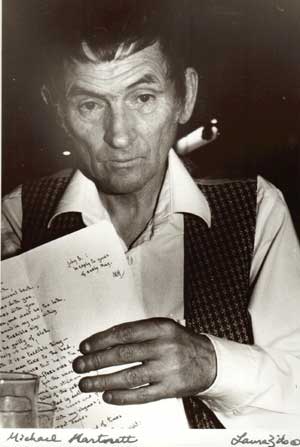


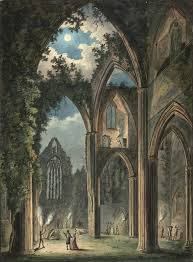
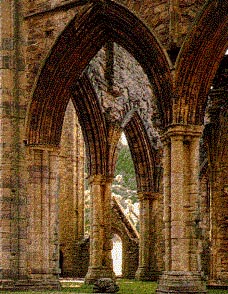
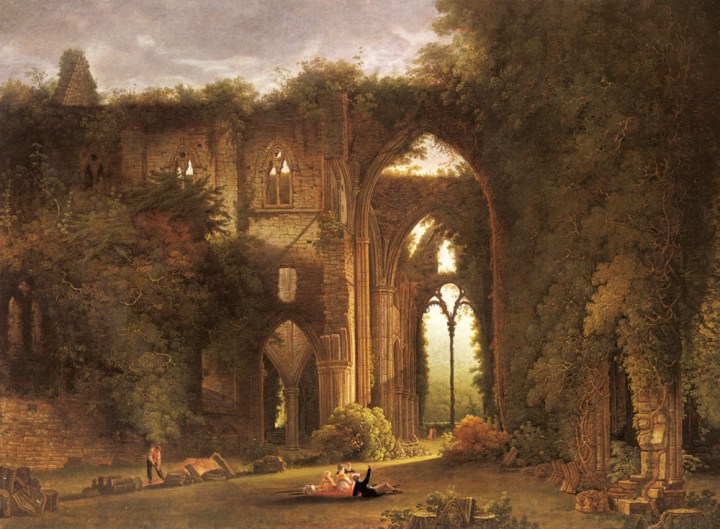


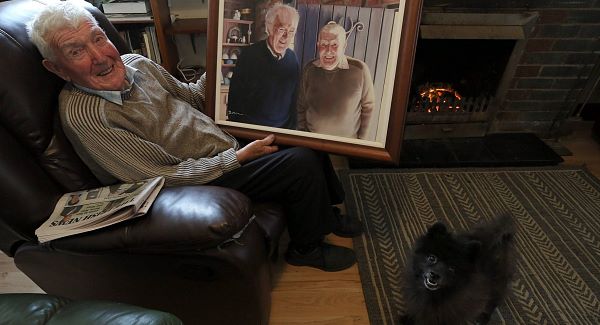
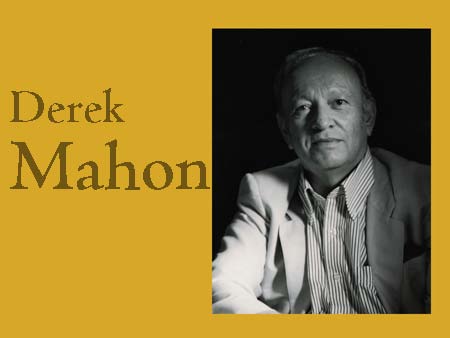
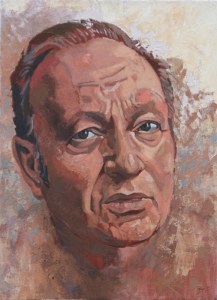
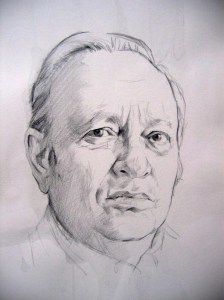

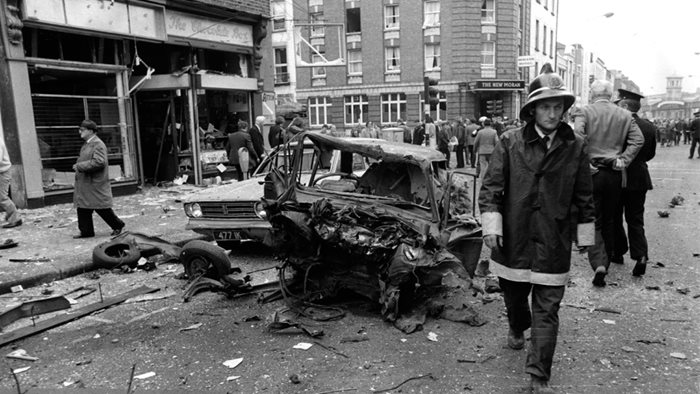


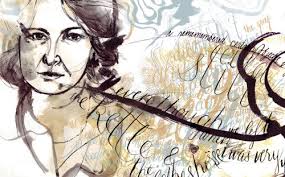

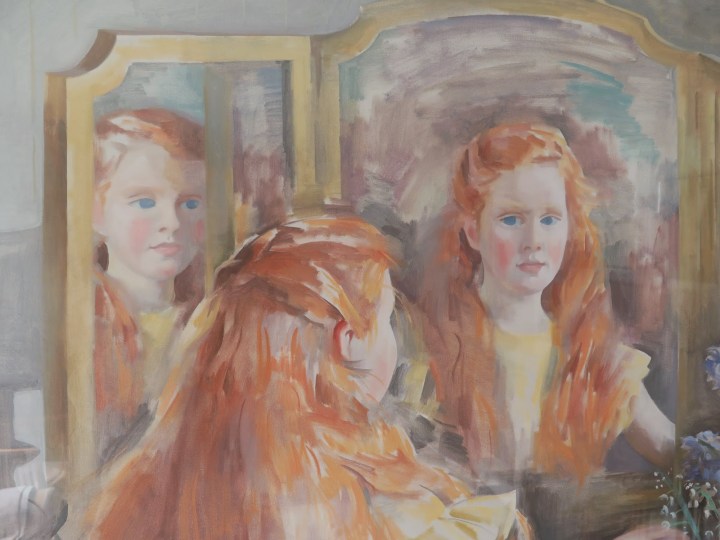


You must be logged in to post a comment.