like black harpoons, fail against the whaleskin sky.
Wasps in this skyless summer have no place,
small quarrels swell to great and flooded rifts;
lime trees, prematurely old, decide to die.
The heavy steel-wool curtain never lifts.
Many cling to rafts of music but I,
I am not happy with the human race
aching for its sun-god – he kills as well –
I skip dripping in the shining rain
and feel the minute fingers tap my face
and breathing in St. Bartholomew’s bell
I look up to the sky and kiss the rain.
Commentary:
Some day I hope to write a fitting analysis of this beautiful sonnet – a commentary that will do it justice. In the meantime, I have to agree with my son Don who has suggested that this is Michael Hartnett’s best sonnet and a poem for which Hartnett deserves acclaim and greater recognition. Leaving Cert English Poetry course developers please note!
Finally got round to doing an analysis of ‘Water Baby’! You can read it here.
Kavanagh is very adept at reflecting the common, everyday occurrences in the rural area of Monaghan in which he grew up. He writes in a direct way about his own experience with the land. He celebrates the beauty of nature’s commonplace things. And yet, a sense of loss also pervades much of his poetry.
In one of Kavanagh’s earlier poems, ‘Inniskeen Road: July Evening’, he stands on his mile of kingdom, insisting with pride, or perhaps defiance, that he is king of ‘banks and stones and every blooming thing’. The poem explores the nature of being a poet and in this regard, Kavanagh acknowledges the reality of his ‘plight’, in spite of the grandiose notion of poetic ‘contemplation’. The poet shares with us his deep sense of loss. It is a loss of companionship as others rush past him in ‘Twos and threes’. Other young men and women make no attempt to communicate with the poet who stands alone on the roadside. At the dance, he imagines their own coded communications, from which, once again, he is excluded. The hurt is felt as the poet stands in solitude, isolated from his community, with ‘no shadow thrown / That might turn out a man or woman’. Kavanagh has been reduced to being a spectator and he sees that this is the high price he must pay for his poetic gift. The bustle of the dance is in stark contrast to the silence of the mile of road where not even a ‘footfall’ can be expected.
The exploration of the loss of companionship is further developed in ‘The Great Hunger’. In this poem, Kavanagh explores and also explodes many of the romantic images of the simple, contented rural peasant in Ireland. He exposes the inadequacies of a social system which stifles the emotional and sexual needs of Patrick Maguire, who becomes entrapped by his clay bride, the land. Similar to the poet in ‘Inniskeen Road’, Maguire is unable to communicate his needs to others; his only reason for shouting at his farm labourers is to extend his orders for the day. He is bogged down in empty promises: ‘Who was it promised marriage to himself / Before apples were hung from the ceilings for Halloween’. He attempts to console himself for his loss of fertility, without wife, without children, pretending to his soul ‘That children are tedious in hurrying fields of April’.
In this society, the lie that ‘Clay is the word’ is perpetuated and so Maguire ‘lives that his little fields may stay fertile’. In moments of frustration and despair he cries out ‘if I had been wiser!’ but he knows he can never escape ‘the grip of irregular fields’. Tragically, Maguire’s cries are unheard and unheeded.
A further exploration of loss is evident in ‘Advent’. In this poem, the concern is with the loss of innocence and wonder. Kavanagh employs religious association to suggest his yearning to return to a state of innocence in which the ordinary and the commonplace are ‘spirit-shocking’. It is a poem that declares the poet’s regret at having been corrupted by experience – ‘we have tested and tasted too much’. Although the poem details the poet’s loss, it does not plummet into despair. The loss is balanced by the uplifting mood of hope in the third stanza that after Christmas the poet will once again take possession of that ‘luxury’ he had previously lost, ‘And Christ comes with a January flower’.
Kavanagh’s verse is usually self-revealing. In ‘On Raglan Road’ yet another aspect of loss is related to us. Once more Kavanagh opens his mind and heart with honesty, cautioning in the first line of the lyric that his love’s ‘dark hair would weave a snare’. Despite his awareness of the ‘danger’, the poet begins his courtship and enthusiastically woos his friend with gifts ‘of the mind’ such as poems. A major concern of the poem, however, is lost love, and so despite the poet’s attempts to win his friend’s trust and love, the courtship fails. Loss of faith in women is replaced with loss of faith in the land in the poem ‘Shancoduff’. Hills which are looked upon with affection and some pride, are re-evaluated in light of the cattle-drovers’ denouncement that they are ‘hungry’ and ‘forsaken’.
It is abundantly clear, therefore, that in his poetry Kavanagh speaks his mind in praise and in condemnation. In his subjective verse, his feelings run very deep. Certainly, he may share with us his celebrations but he does not ignore his sense of loss and isolation. He records his resentment at being an outcast in his own community in ‘Inniskeen Road’. He denounces the privation of opportunity and fulfilment in ‘The Great Hunger’. He yearns for his lost innocence and wonder in ‘Advent’ and he agonises over his lost love and lost faith in ‘On Raglan Road’ and in ‘Shancoduff’.
‘Oh, can I still stroke the monster’s back or write with unpoisoned pen…’
There is a major religious element to Kavanagh’s poetry. Kavanagh is clearly deeply influenced by his early Catholic upbringing and all that this entails. He finds inspiration in the liturgical seasons such as Advent. His poems contain references to Genesis in the Old Testament and to the sacrament of Baptism. Examples of this orthodox Catholic theology is clearly evident in such poems as ‘Advent’ and ‘Canal Bank Walk’, ‘A Christmas Childhood’ and many more.
In the poem ‘Advent’, Kavanagh feels that he has been corrupted by the whole process of living. He has ‘tested and tasted too much’. By ‘testing’ and ‘tasting’, of course, he means that he has indulged in pleasure for the mind and pleasure for the body. Kavanagh feels too that he has lost the wonder of things, ‘through a chink too wide there comes in no wonder’.
In order to purify himself, Kavanagh is going to use traditional religious methods: ’the dry black bread and the sugarless tea of penance’. He wants to win back lost innocence, to ‘charm back the luxury of a child’s soul’. He is going to make a new spiritual beginning; he is going to leave the apple of sin back on the tree and start again in innocence: ‘We’ll return to Doom the knowledge we stole but could not use’.
In this poem, Kavanagh feels that the world has grown sour and stale. He wants to reawaken the newness that was once in the world for him before he lost wonder and innocence. This newness and spiritual renewal is to be achieved through penance and self-denial.
Once he has been purified and spiritually regenerated, the ordinary world around him will be new. It will be new because he will have been spiritually renewed. He will now find newness and wonder in the ordinary ‘banal’ things – in something as common as the sound of a churning, in the very ordinary almost clichéd sight of the village boys ‘lurching’ at the street corner or in the sight of decent men ‘barrowing dung in gardens under trees’.
Now Kavanagh will be rich – spiritually rich: ‘Won’t we be rich, my love and I’. And he vows that he will not destroy his new-found wonder and innocence by analysis, by questioning, by intellectualising. He will not ask for ‘reason’s payment’. He will not ask the ‘why’ of things. He will be content to wonder. As he says in another poem, ‘to look on is enough in the business of love’.
Kavanagh has now discarded his old self – the self that ‘tested’ and ‘tasted’, the self that was obsessed with the worthless pursuit of pleasure and knowledge: ‘We have thrown into the dust-bin the clay-minted wages of pleasure, knowledge and the conscious hour’. There is going to be a new beginning: ‘And Christ comes with the January flower’.
The poem, ‘Canal Bank Walk’ is equally religious. The year is 1955 and Kavanagh has recently emerged from hospital having undergone a sort of religious experience or spiritual renewal. The natural world around him is wonderful. The canal banks are ‘leafy with love’ and the canal water has taken on a religious significance. It is now Baptismal; water, baptising the poet’s new-born soul.
From now on Kavanagh is going to do the will of God and God’s will is that he steep himself in the ordinary world, ‘wallow in the habitual, the banal’. God’s will is that he go back to that state of oneness with nature which he had in the innocence of childhood. He must ‘grow with nature’ again. For Kavanagh the very breeze takes on a personal dimension: it is adding a third party to the couple kissing on an old seat; it is making up a threesome.
In this poem, Kavanagh’s view is deeply religious. A bird preparing to build a nest is no longer just a bird building a nest. It has taken on a religious dimension. The bird is, in a spiritual sense, preparing a place for the Word to be made flesh. In Kavanagh’s new-found spiritual view of the world, all new life is a manifestation of God. It is God Himself visible in physical terms. The bird is ‘gathering materials for the nest for the Word’.
Kavanagh now wants to live in total oneness with God’s creation, with nature. He will live life at the level of the senses. There will be no more intellectualising. He wants to be trapped forever in the world of sight and sound: ‘enrapture me in a web of fabulous grass and eternal voices by a beech’. He seems to feel that he has lived too long and too much in the world of questioning, testing and analysis. He has neglected the world of sensual contact with nature; ‘feed the gaping need of my senses’.
Finally, in this poem, Kavanagh wants to return to the innocence and simplicity of childhood where he could pray without inhibition: ‘Give me ad lib to pray unselfconsciously with overflowing speech’. He wants his new-born soul to be dressed in green and blue things. This is the green of the earth and the blue of the sky, the totality of nature, of God’s creation. There will be no searching for answers. He will settle for ‘arguments that cannot be proven’.
Kavanagh then, in the poems ‘Advent’ and ‘Canal Bank Walk’, is deeply religious. He is religious in two ways; he is spiritually renewed personally and nature itself takes on a very religious significance. He wants, as it were, to begin again in innocence – to be, in effect, the very first Born-Again-Christian in 1950’s Catholic Ireland!
Patrick Kavanagh’s bronze commemorative seat near Baggott Street Bridge in Dublin
An important element in Kavanagh’s poetry is his obvious honesty, integrity and simplicity. According to Kavanagh, simplicity is the ability to be content and satisfied with oneself no matter how ridiculous or silly or commonplace one may appear to others. A simple man is not a poser; he has no need to look over his shoulder to see what others think; there is no desire to seek the approval of the experts or of one’s peers. To have simplicity is to have what Kavanagh called ‘the philosophy of not caring’.
Kavanagh manifests simplicity in his poetry in three ways:
First, we have the simplicity of subject matter or theme.
Secondly, he writes about things and experiences that other poets might be ashamed to write about.
Thirdly, there is simplicity of language and technique, in his rhymes and in his rhythms.
The simplicity in his subject matter and themes is easily seen. He writes unashamedly about the ordinary, commonplace world around him; he does not search for lofty, intellectual themes. He writes about ‘whins’, ‘bogholes’, ‘cart-tracks’, barn dances, farming, ‘men.. who barrow dung in gardens under trees’. He draws from the ordinary but authentic world of his own experience. He tells us of the awful loneliness of being a poet in a peasant community, about being ‘king of banks and stones and every blooming thing’. He recalls bitterly how he, as a poet, had been ‘soul destroyed’ by an uninspiring environment, how Monaghan ‘burgled his bank of youth’, how it ‘flung a ditch on my vision’. He tells too of his deep human need for love and romance, ‘lost the long hours of pleasure, all the women that loved young men’. This is all the ‘stuff’ of reality and ordinary reality at that. It may not be a great heroic world, it’s not earth-shattering, but it is the world of authentic experience and he is content with it. That’s simplicity.
In his poetry, Kavanagh writes about things and experiences that other poets might be ashamed to write about. He finds wonder in a barge coming up the canal, in a swan going by ‘head low with many apologies’, in ’the bright stick trapped’, in the light which comes ‘through the eye of bridges’. Everywhere he is satisfied with his world, he does not need to go searching for a theme, they are all around him. He finds a message in ‘the whispered argument of a churning’ or in the street ‘where the village boys are lurching’. He finds his God being revealed in incidents as ordinary as a bird building a nest or in decent men ‘who barrow dung in gardens under trees’.
This same simplicity is to be found in his language and diction. He has little time for poetic diction or flowery pompous language. He uses ordinary everyday colloquial language, ‘the bicycles go by in twos and threes, there’s a dance in Billy Brennan’s barn tonight.’ There’s nothing very poetic about that! Other examples of his ordinary language are numerous: ‘Every old man I see reminds me of my father’, ‘Commemorate me where there is water, canal water preferably’. Etc. etc. etc. There is nothing pretentious about this poetic voice, rather it is honest. He is content with his own language, however ordinary, and doesn’t care how he is perceived by the literary ‘purists’.
We can also see examples of his simplicity in his rhythms and rhymes – his technique. His rhymes are often imperfect. For example he rhymes ‘water’ with ‘brother’, ‘roars’ with ‘prose’, ‘silence’ with ‘islands’, ‘bridges’ with ‘courageous’, ‘lover’ with ‘wonder’, ‘weather’ with ‘father’, ‘musician’ with ‘London’, and ‘web’ with ‘lib’. These rhymes would not, I’m sure, meet with the approval of the ‘experts’. But Kavanagh is not concerned. He is content with himself, he is not trying to be polished. After all, he is simply an honest peasant poet writing about ordinary, unsophisticated, personal things. Over-polished rhyming would surely be out of place here, it would be seen as less authentic
His rhythms are often, too, coarse and rugged. This is only to be expected since, as I have already stated, he is not using poetic diction but ordinary, colloquial language which is not always musical. Listen to a few examples: ‘O commemorate me where there is water..’, ‘I have what every poet hates, in spite of all this solemn talk of contemplation’, ‘that man I saw on Gardner Street was one’. All these lines have the ruggedness of ordinary speech. Kavanagh is, however, content with them. He has discovered in his life the ability to be satisfied with himself no matter how others may come to regard him. That’s honesty. That’s integrity. That’s simplicity.
The Grand Canal in Dublin. Image by Kaihsu Tai via Wikimedia Commons.
Kavanagh writes about the ordinary world around him; about a world of ‘whins’ and ‘bogholes’ and ‘cart-tracks’ and ‘old stables’. He has learnt anew to look at the ordinary in an extraordinary way. This is part of Kavanagh’s greatness as a poet: he is content with his own world, his own reality. It may not be a sophisticated world, but no matter. This willingness and ability to be faithful to himself and his world is part of his simplicity. Simplicity, after all, is just the ability to be satisfied with oneself, no matter how ridiculous one may seem to others.
All through his poetry, Kavanagh has a respect for the commonplace, the ordinary. He wants to ‘wallow in the habitual’. In ‘Inniskeen Road: July Evening’ he tells us what it was like to be a poet in a peasant community where he was an outsider. It’s a July evening and all the locals are celebrating at the local barn dance. Kavanagh is alone on the road. He knows now the price that is to be paid for his gift of poetry; the price is isolation and loneliness. Poet or no, he has human needs, the need for human contact, the need for romance. He dismisses the pretentiousness of the intellectuals, ‘I have what every poet hates in spite of all the solemn talk of contemplation’. This is the ordinary, it is the authentic voice of the outsider who yearns to be loved.
In his poem ‘Advent’, he feels that he may perhaps have lost some of the wonder that lies in the ordinary. He may be beginning to lose respect for the everyday world because of over-familiarity, ‘we have tested and tasted too much…..’ he sets out to recapture that fascination that he once found in the ordinary. He is going to renew himself through suffering during the penitential season of Advent by eating only ‘the dry black bread and the sugarless tea of penance’. He has decided to regain his state of childish innocence and then he will once again revel in the ordinary, in ‘the whins, the bogholes, the cart-tracks, old stables …’ the ordinary will once again be wonderful, a ‘black slanting Ulster hill’ will be spirit shocking’; it will touch his soul. The boring chat of an old fool will no longer be tedious. It will again have a newness; it will contain ‘prophetic astonishment’. The common everyday world will fascinate him; there will be wonder in the ‘whispered argument of a churning’. From now on his interest will be ‘wherever life pours ordinary plenty’. He is going to settle for the ordinary, ‘the banal’. Instead, he will now no longer over-analyse the world of the senses, ‘please God we shall not ask for reason’s payment’. He won’t ask the ‘why’ of things, ‘nor analyse God’s breath in common statement’.
There is nothing pompous or pretentious about Kavanagh. He respects the commonplace, whether it is in the Monaghan of his youth or in the canal area around Baggot Street of later years. He enthuses about the swan going by ‘head low’ or the fantastic light ‘that looks through the eyes of bridges’, or again the common sight (in Kavanagh’s day) of a barge on the canal. When he dies he wants no ‘hero courageous tomb’. He’ll settle for something much more humble, ‘just a canal bank seat for the passer-by’ – for the ordinary man in the street.
There is more to be said about Kavanagh’s treatment of the ordinary: he often takes the ordinary and elevates it to a new level; he gives it a heroic dimension. The little waterfall on the canal becomes Niagara Falls. Even the little patch of grass at Baggot Street Bridge becomes his Mount Parnassus, his place of inspiration. The barge on the canal is also given legendary status. It is bringing ‘mythologies’ from afar like Jason’s Argos no doubt. The barge men, too, will have yarns to tell in Dublin pubs, these yarns may be just well-made lies about strange sights they claim to have seen in that world beyond Sallins! Kavanagh elevates these events and now they become ‘mythologies’. Athy may be a not-very-important little town some forty miles from Dublin but it is elevated by Kavanagh to the status of heroic places like Athens and Rome. Athy becomes a ‘far-flung’ place.
Elsewhere in his poems, we have the same elevation of the ordinary. His own humble plight as a lonely soul becomes equated with that of Alexander Selkirk. A bird building a nest is an ordinary sight but in his poem ‘Canal Bank Walk’ it takes on a greater significance. In that nest, new life will be born and through that new life God will reveal himself; in that nest, the Word will be made Flesh. In this poem we also see that the canal water is no longer mere canal water; it is now elevated to the Jordan (where Christ is baptised by John), ‘the green waters of the canal pouring redemption for me’. In ‘Advent’ he can see Christ in a January flower and the ‘decent men who barrow dung to gardens under trees’ are engaged in great work, they are helping God to continue the work of ongoing creation. They are, he proposes, co-creators with the Almighty.
Finally, we come to Kavanagh’s language and diction. His language is not strictly poetical, not pompous, not sophisticated. It is the language of every day, it is colloquial. We don’t find Kavanagh resorting to poetic diction. He uses the phrasing and rhythms of ordinary speech. The result, of course, is that his poetry has often been adversely criticised for its rugged rhythms. Kavanagh would not be over-concerned about this. He had, he said, developed ‘the philosophy of not caring’. ‘The bicycles go by in twos and threes, there’s a dance in Billy Brennan’s barn tonight’ – that’s a perfect example of ordinary, colloquial language. Examples like these occur everywhere in Kavanagh’s poetry. This ordinary diction conveys the simplicity, integrity and total lack of pretension in Kavanagh. He is, indeed, a poet of the ordinary.
Patrick Kavanagh’s bronze commemorative seat near Baggott Street Bridge in Dublin
Bridget Halpin’s cottage in Camas as it is today. Photograph is by Dermot Lynch.
Death of an Irishwoman
Ignorant, in the sense she ate monotonous food and thought the world was flat, and pagan, in the sense she knew the things that moved at night were neither dogs nor cats but púcas and darkfaced men, she nevertheless had fierce pride. But sentenced in the end to eat thin diminishing porridge in a stone-cold kitchen she clenched her brittle hands around a world she could not understand. I loved her from the day she died. She was a summer dance at the crossroads. She was a card game where a nose was broken. She was a song that nobody sings. She was a house ransacked by soldiers. She was a language seldom spoken. She was a child’s purse, full of useless things.
Púcas: This was the Irish (Gaelic) term for pookas, hobgoblins, fairies. In the Irish language a man of African descent is described as a fear ghoirm, a “blue man”. In Irish, “an fear dubh” (“the black man”) exclusively denotes the devil, therefore, the reference to “darkfaced men” in this poem does not have any racial connotations!
A wake was a social gathering associated with death, usually held before a funeral. Traditionally, a wake took place in the house of the deceased with the body present.
In 1965 Michael Hartnett was in Morocco when his grandmother, Bridget Halpin, died at the age of 80. Hartnett had spent his formative years in Halpin’s simple, meagre cottage in Camas soaking up the stories and folklore of the area as she entertained her cronies in the mid to late 1940’s. She had a great array of Irish words in her vocabulary, many related to the animals of the countryside and life on the farm, although she and the family didn’t use Irish in everyday conversation. Nevertheless, her knowledge of Irish had an immense influence on the young Hartnett, who would go on to became as fluent in Irish as he was in English.
Camas is a hugely important place for Hartnett. It was there that his poetic gift was first recognised and cultivated, particularly by his grandmother. His first ever published poem was called ‘Camas Road’ and was published in The Limerick Weekly Echo on 18th June 1955. Hartnett was thirteen. This present poem, ‘Death of an Irishwoman’, is his effort at an apology for not being there at her funeral – ‘I loved her from the day she died’.
Hartnett, probably the finest poet of his generation in the Republic, returned to his West Limerick roots in the mid-1970’s having made his famous declaration from the stage of the Peacock Theatre at an event organised by Goldsmith Press on June 4th, 1974. At that event, Michael Hartnett informed the audience of his resolution to cease writing and publishing in English, stating that his “road towards Gaelic” had “been long and haphazard” and until then “a road travelled without purpose”. He reassured his audience that he had realised and come to terms with his identity while acknowledging that his “going into Gaelic simplified things” for him and provided answers which some considered to be naive but at least gave him “somewhere to stand”. Hartnett, similar to what Sean Ó Riada had done in the 1960s, left Dublin and found refuge in rural West Limerick. (Ó Riada had forsaken Dublin for Baile Bhúirne in West Cork). According to Fintan O’Toole these flights,
“were driven by a deep pessimism: there was no authentic way of being Irish in the cities, in the English language, in a European modernist tradition. The only future lay in the past, in a reconnection with the real people, the more rural the better “(O’Toole, 189).
Rediscovering and reinventing himself and the long forgotten echoes of his Gaelic past was, therefore, a central project during those years in the 1970’s.
Bridget Halpin and her small farm in Camas were central symbols in Hartnett’s search for authenticity. In Harnett’s mind, she symbolised all that was lost in the traumatic early years of the Twentieth Century in Ireland. In Hartnett’s view one of the many precious things which was lost, ignored, and abandoned was the Irish language itself and so the poem can be read as a post-colonial lament. According to Census returns for Camas in 1911, Bridget Halpin was 26, living with her husband Michael, ten years her elder. This would mean she was born in 1885, a time of cultural revival, coinciding with the founding of the Gaelic League and the Gaelic Athletic Association. Hartnett always considered her to be a woman ‘out of her time’. She never came to terms with the New Ireland of the 1920’s, 1930’s, and though her life spanned two centuries she was, in his eyes, still living in the past, ‘Television, radio, electricity were beyond her ken entirely’ (Walsh 13). To her, ‘the world was flat / and pagan’, and in the end,
she clenched her brittle hands around a world she could not understand.
There is a strong sense of regret for a lost generation in this poem and this is particularly in evidence in the poignancy of the line:
I loved her from the day she died.
What follows is a masterclass of poetic skill, the poet cherishes the memory of his lost muse with an epitaph made up exclusively of metaphors:
She was a summer dance at the crossroads. She was a card game where a nose was broken. She was a song that nobody sings. She was a house ransacked by soldiers. She was a language seldom spoken. She was a child’s purse, full of useless things.
These metaphors conjure up an almost forgotten rural idyll: dances at the crossroads on summer evenings, the hustle and bustle of the rambling house with its card games and music sessions, slow airs and sean nós singing, sets and half-sets. Hartnett also veers into the political sphere with reference to The Black and Tans and the fraught Irish language question, which he sees as having been abandoned and neglected by successive governments since the foundation of the State, ‘Our government’s attitude is hostile and apathetic by turns’ (Walsh 126). His final metaphor:
She was a child’s purse, full of useless things.
captures the futility and frustration felt both by his grandmother and the poet himself at the relentless pace of change. Safia Moore, in her excellent blog, Top of the Tent, says of this metaphor that it encapsulates the notion of his grandmother as ‘being out of step with the utilitarian, modern world’.
In effect, Hartnett is not only writing the epitaph for his grandmother but for a unique and precious culture which he sees drifting towards oblivion through neglect. During these years in Newcastle West and in his cottage in nearby Glendarragh, Templeglantine, Hartnett wrote many such epitaphs for local people and their dying country crafts. This is a facet of Hartnett’s work which began with his grandmother, Mrs Halpin. (See Epitaph for John Kelly, Blacksmith as one example of this). Therefore, in a way, not only is Hartnett lamenting the death of Mrs Halpin here but also, like Heaney in many of his poems, he is lamenting the loss of ancient crafts and customs which, with the progress of time, have become redundant. He has returned home to find things falling apart and that Time has thinned the ranks of the stalwarts of the town. His local poetry, in particular, takes on a nostalgic retrospection and features poems about those who have died, such as ‘Maiden Street Wake’, where he describes one such wake:
We shuffled round and waited. Our respects were paid. And then we ate soft biscuits and drank lemonade.
This period in his life is, therefore, best depicted as a period of intense creativity and a series of well-documented farewells, best characterised by this poignant line from the ‘Maiden Street Ballad’ where he ruefully declares:
old Maiden Street went to the graveyard.
Author’s Note: Students of Hartnett and aspiring academics will readily verify that Harnett, whether deliberately or mischievously, was a master of misinformation. The Youtube clip above is a perfect example of this. As he begins to introduce the poem, ‘Death of an Irishwoman’ he states that his grandmother, Bridget Halpin was born in 1870 when, in fact, we know through Census returns for 1911 that she was born in 1885. He also says that she was 93 when she died when, in fact, if the Census returns are to believed, she was a mere 80! Bridget Halpin, immortalised by her grandson, Michael Hartnett, is buried with her daughter Ita Halpin (Dore) in the grounds of the old abbey in Castlemahon Cemetery. Hartnett declares poignantly in the poem: I loved her from the day she died’.
Bridget Halpin’s grave in Castlemahon Cemetery. She is buried with her youngest daughter Ita Dore (nee Halpin). Her husband Michael, her son Denis and her sister Mary Kiely (nee Halpin) are also remembered on the headstone.
Further Reading
You might like to have a read of a more detailed exploration of Bridget Halpin’s obvious influence on her grandson, Michael Hartnett, here.
Bibliography
Collins, Pat. ‘A Necklace of Wrens’ (Film). Harvest Films. 1999.
O’Toole, Fintan. We Don’t Know Ourselves: A Personal History of Ireland since 1958, London: Head of Zeus, 2021.
Walsh, Pat. A Rebel Act: Michael Hartnett’s Farewell to English, Cork: Mercier Press, 2012
As you plaited the harvest bow
You implicated the mellowed silence in you
In wheat that does not rust
But brightens as it tightens twist by twist
Into a knowable corona,
A throwaway love-knot of straw.
Hands that aged round ashplants and cane sticks
And lapped the spurs on a lifetime of game cocks
Harked to their gift and worked with fine intent
Until your fingers moved somnambulant:
I tell and finger it like braille,
Gleaning the unsaid off the palpable,
And if I spy into its golden loops
I see us walk between the railway slopes
Into an evening of long grass and midges,
Blue smoke straight up, old beds and ploughs in hedges,
An auction notice on an outhouse wall—
You with a harvest bow in your lapel,
Me with the fishing rod, already homesick
For the big lift of these evenings, as your stick
Whacking the tips off weeds and bushes
Beats out of time, and beats, but flushes
Nothing: that original townland
Still tongue-tied in the straw tied by your hand.
The end of art is peace
Could be the motto of this frail device
That I have pinned up on our deal dresser—
Like a drawn snare
Slipped lately by the spirit of the corn
Yet burnished by its passage, and still warm.
Commmentary: This beautiful tender poem is taken from Heaney’s collection Field Work (1979). In a way it is fitting that I’m publishing this blog post on Father’s Day because this poem explores the close relationship between Seamus Heaney the poet and Patrick Heaney his father. Heaney’s Mossbawn poems contain numerous references to family members; his mother, his Aunt Mary, his grandfather, his brother and his father who is mentioned most notably in the poem ‘Digging’ but also in ‘Follower’ and other poems.
Heaney’s poetry contains many references to dying rural crafts and traditions and the harvest bow in one such tradition. The bow was fashioned from freshly cut straw and often given by the maker as a token of love. Here it is silently fashioned by the father and given to his son, ‘a throwaway love-knot of straw’.
Patrick Heaney emerges as a strong, no-nonsense, unsentimental country man who strides through his fields ‘whacking the tips off weeds and bushes’. He is a man of few words, a man ‘tongue-tied’ who prefers to express himself in actions rather than words. Like Barney Devlin in ‘The Forge’ or the ploughman in ‘Follower’ or his grandfather in ‘Digging’, who ‘cut more turf in a day/ than any other man on Toner’s bog’, Heaney sees his father as a craftsman teaching the young poet-to-be that the artist expresses himself through his work. Heaney sees in his father’s attention to detail the attitude he wishes to bring to his own work as a poet.
The poem is a tender exploration of the father/son relationship and it is clear that an unspoken understanding grows between them and is expressed through the gift of the harvest bow, which is being fashioned by the father as they both stroll together through the fields of stubble on an Autumn evening. The poet fingers the harvest bow and reads it ‘like braille … gleaning the unsaid off the palpable’. He then translates what he has read for us and puts it into words which he fashions and plaits and weaves into a poem. This is reminiscent of the poet’s conclusions in ‘Digging’ – he wants to follow in his father’s footsteps but instead of digging with a spade he will use his pen.
This poem was published in 1979 at the height of the Northern ‘Troubles’ and it sees Heaney retreating again to a happy childhood memory to erase the pain of the daily catalogue of shootings and bombings. The motto used at the beginning of the final stanza, ‘The end of art is peace’, therefore, is rich in meaning and open to many interpretations. The obvious one is that father and son have achieved a moment of peace and harmony via their respective crafts and of course it has wider political implications also in the context of the continuing conflict in Northern Ireland. Many commentators at the time accused Heaney of not taking sides, of not highlighting the atrocities of those dark days. Maybe they have not delved deeply enough into his Mossbawn poems and elsewhere? (There’s a thesis there for some enterprising young scholar!)
The harvest bow is a symbol of the love and understanding that has developed between the father and son, it is a ‘love-knot’ which joins them together. The poet remembers those evening rambles with his father through the cornfields and we are struck by the juxtaposition offered us: the young eager poet striding towards his future while the father clings to the traditions and ways of the past:
And if I spy into its golden loops I see us walk between the railway slopes Into an evening of long grass and midges, Blue smoke straight up, old beds and ploughs in hedges, An auction notice on an outhouse wall—
The harvest bow can also be seen as an emblem of rural life and agricultural labour. As I’ve mentioned earlier this poem was written during the ‘Troubles’ in his home place and this has a deep, disturbing effect on the poet. Time and time again he retreats to the safety and womb-like comfort of his Aunt Mary’s kitchen in Mossbawn in an effort to seek some solace and comfort. There is something deeply psychological and human about this regression of the poet. He leaves us with this sharp contrast. The harvest bow is an endearing and enduring symbol of love, a vestige of a long tradition that has been handed down through the generations, yet the poet is forced to live in a society riven with sectarianism and divisions and the annual ‘harvest’ of the dreaded Marching Season, year in year out.
In ‘Sunlight’ he returns to his Aunt Mary’s warm kitchen for consolation while here he looks to his father and the love and understanding that has grown between them as a source of comfort at a time of personal and public upheaval and distress.
The end of art is peace Could be the motto of this frail device
Kelly’s Forge in the 1940’s. L to R: J. O’Kelly, D. Nash, C. McAuliffe, S. O’Kelly. C. Fitzgerald (Information credit Newcastle West in Close Up – Snapshots of an Irish Provincial Town published by Newcastle West Historical Society, 2017)
Epitaph for John Kelly, Blacksmith
By Michael Hartnett
Black clothes do not make mourners:
the cries come out of the heart.
And local men at street corners,
who have stood
and watched grained wood
in horse-hearse and motor-hearse,
white plumes of feathers, blue plumes
of smoke, to the dead man’s part
of town, to the rain-dumbed tombs,
go, talk his life, chapter and verse,
and of the dead say nothing but good.
In Maiden Street
what man will
forget his iron anvil,
in early Monday morning, sweet
as money falling on the footpath flags?
Author’s Note:
I am grateful to Maighread Medbh for the following keen observation from her blog: “The 1985 edition of Michael Hartnett: Collected Poems, Volume 1, (Dublin: Raven Arts Press, Manchester: Carcanet) printed “to” instead of “go” here (… to the rain-dumbed tombs, / to, talk his life …), which I’ve taken as a typographical error. The original printing, in A Farewell to English (Dublin: Gallery Press, 1978), had “go”.
Commentary: This poem was written as a tribute to John Kelly, one of the ‘old stock’[1], one of the characters of Maiden Street and the Coole. The Coole was an area in Newcastle West, which Michael Hartnett referred to as ‘The Claddagh of the town’. It encompassed an area running parallel to Lower Maiden Street, a lane behind what we now know as The Silver Dollar Bar.
Sean Kelly former teacher and local historian and also the last blacksmith in Maiden Street and son of John Kelly the subject of Michae Hartnett’s Epitaph.
In bygone days, Sean Kelly, John Kelly’s son tells us that there were three forges in Maiden Street – Big Sean Kelly’s forge was located in The Coole on the site of the present St. Vincent de Paul Charity Shop and his son, John Kelly, the subject of this epitaph, had a forge which was located in what Sean Kelly calls, ‘middle Maiden Street’. The third forge was O’Dwyer’s Forge and this was owned and worked by Bill O’Dwyer, father of the late Ned O’Dwyer. These forges were a focal point for the street and for the town, they were places where town and country met, where stories and news and gossip were exchanged, and where tall stories grew legs. During a fascinating walkabout during Éigse Michael Hartnett this year (2017), Sean Kelly and John Cussen gave a very interesting history of Maiden Street. Sean told his listeners that another source of industry in the street during the 19th century and early 20th century were the four natural sandpits which were located along the street – the street being fortuitously located at the end of an ice-age moraine. Forges were, however, an essential part of Irish rural life and farmers, in particular, used the services of the blacksmith to shoe their horses and make and repair their ploughs and iron gates and other farm utensils. Indeed in harsher, more troubled times the forge also doubled as an ‘armaments factory’ where ancient pikes, and rudimentary spears and swords were forged and tempered in a clandestine way and often ‘hidden in the thatch’. In a way, not only is Hartnett lamenting the death of a man here but also, like Heaney in many of his poems, he is lamenting the loss of an ancient craft which, with the progress of time, has become redundant.
In the Annual Observer, the journal of the Newcastle West Historical Society, published in July 1979, Lizzie Sullivan, a long time resident of the Coole, referred to John Kelly’s father and his importance to the area:
“I can’t forget our blacksmith, Big Shaun Kelly. He had his forge in a part of the Coole. He was a fine type of a man, big and brave and he had a voice to go with it. Many a day the youths of the Coole spent in his forge. They used to love when they were asked to blow the bellows and Shaun would be singing or telling them stories as they made the sparks fly from the anvil. He used to have them shivering telling them all about Sprid na Bearna and the dead people he met going home on a Winter’s night. They believed every word he used to tell them”.
This epitaph, however, is composed to honour Big Shaun Kelly’s son, John, and like all epitaphs, this poem is short and sweet. In the opening stanza, death and funerals are generalised. Hartnett doesn’t seem to be talking about any particular death but remembers numerous funerals down the years and he refers to the funeral customs observed in the town. Quiet men standing at ‘street corners’ looked on the ‘grained wood’ of the coffin as it passed, either in ‘horse-hearse’ or ‘motor-hearse’, on its way to the old graveyard in Churchtown. There amid ‘the rain-dumbed tombs’ it was customary to speak well of the dead:
go, talk his life, chapter and verse,
and of the dead say nothing but good.
The second stanza presents us with the real epitaph. It is short, personalised and very well crafted. Everyone in Maiden Street will remember the ring of the anvil on a ‘Monday morning’ and Hartnett uses a lovely simile to remember his friend: Heaney uses the image of an ‘unpredictable fantail of sparks’ coming from the anvil in his poem, ‘The Forge’, and here those sparks from John Kelly’s anvil are compared to money falling on the ‘footpath flags’. His exquisite use of assonance and alliteration in these short lines emphasises his poetic craft. The poem is also noted for its use of compound words such as ‘horse-hearse’, ‘motor-hearse’, and ‘rain-dumbed tombs’, which hopefully, in time, will be used as an excellent example of alliterative assonantal onomatopoeia!
In ‘Maiden Street Ballad’, Hartnett similarly remembers with fondness the work of John Kelly:
XXXVIII
I awoke one fine morning down in Maiden Street
to John Kelly’s forge-music ringing so sweet,
saw the sparks flying out like thick golden sleet
from the force of his hammer and anvil:
and the red horse-shoes spat in their bucket of steam
and the big horses bucked and their white eyes did gleam
nineteen forty-nine I remember the year –
the first time I got my new sandals.
There is a strong ‘local’ element to Hartnett’s writing – he tells us in Maiden Street Ballad that,
A poet’s not a poet until the day he
can write a few songs for his people.
This loyalty to his native place and space and the people who live there is admirable and is acknowledged with gratitude by those same locals to this day. Seamus Heaney, in his introduction to John McDonagh and Stephen Newman’s collection of essays on Hartnett, entitled Remembering Michael Hartnett, says that,
Solidarity with the local community and a shoulder to shoulder, eye to eye relationship with local people distinguish Hartnett and make him the authentic heir to the poets of the Maigue.
These local people, John Kelly and his father before him included, had a great influence on the young Hartnett as Heaney also points out in that same introduction:
The young Hartnett rang the bell, and images from the world of the smithy would turn up in some of his most haunting work, as when a rib of grey in a woman’s hair is compared to a fine steel, ‘filing on a forge floor’ (‘The Retreat of Ita Cagney’).
But I’ll leave the last word to Lizzie Sullivan remembering Big Shaun Kelly and his contribution to life in Maiden Street and The Coole :
“When the circus was coming to town, Shaun the Smith would be talking for days before it came… It was lovely to see all the fine horses and ponies. There would be thirty or forty going up to Kelly’s Forge. Then, when the circus was gone away he would be still talking about it for days. He would let Sprid na Bearna rest, and all the other ghosts he used to see. He made many a one happy, especially the young lads listening to him….. God be with the Coole and all the fine people that are gone!”
Town Crier Bill Poster and General Carrier John Lenihan pictured at the left of the door of big Sean Kelly’s house in Maiden Street. Sean Kelly is seen smoking his pipe. Information gleaned from Newcastle West in Close Up – Snapshots of an Irish Provincial Town published by Newcastle West Historical Society (2017).
[1] Hartnett assures us in a footnote to ‘Maiden Street Ballad’ that to qualify as ‘old stock’ a family had to be established in the town for at least three generations. He goes on to say that the phrase can also be very useful if you meet someone in the street and you can’t remember their name!
Works Cited
McDonagh, John and Newman, Stephen eds. Remembering Michael Hartnett, Four Courts Press: Dublin, 2006
Newcastle West Historical Society publishers of ‘Newcastle West in Close Up – Snapshots of an Irish Provincial Town’ (2017).
One of Ireland’s most widely read authors John McGahern was born on November 12th, 1934. The family lived in Leitrim until his mother’s death in 1945, when they moved to their father’s home at the police barracks in Cootehall, County Roscommon. In his early twenties McGahern worked as a teacher and wrote an unpublished novel, The End and the Beginning of Love. His first published novel, The Barracks (1963), won the AE Memorial Award and earned him an Arts Council Macauley Fellowship. His next novel, The Dark (1965), was widely praised and drew comparisons to James Joyce, but it also offended the Archbishop of Dublin and the state censor, who banned the book and he was also sacked from his teaching position.
He refused, however, to capitalise on this notoriety, instead continuing to publish quietly. Three novels followed – The Leavetaking (1974), The Pornographer (1979), and Amongst Women (1990; winner of the Irish Times Award and short-listed for the Booker Prize). McGahern’s four volumes of short stories were published in The Collected Stories in 1992.
His final novel That They May Face the Rising Sun (published in the United States as By the Lake) is an elegiac portrait of a year in the life of a rural lakeside community. McGahern himself lived on a lakeshore and drew on his own experiences whilst writing the book. Lyrically written, it explores the meaning in prosaic lives. He claimed that “the ordinary fascinates me” and “the ordinary is the most precious thing in life”. The main characters have – just like McGahern and his second wife, Madeline Green – returned from London to live on a farm. Most of the violence of the father-figure has disappeared now, and life in the country seems much more relaxed and prosperous than in The Dark or Amongst Women.
During his writing career, he served as a visiting professor at Colgate University and the University of Victoria, British Columbia, and he was writer-in-residence at Trinity College, Dublin in 1989. He died from cancer in the Mater Hospital in Dublin on 30 March 2006, aged 71. He is buried in St Patrick’s Church Aughawillan alongside his mother.
Historical and Literary Background
This novel is set in Ireland in the years following the Irish War of Independence. We hear references to reviving Monaghan Day, which is obviously a tradition of the time. The story is set in the country and outlines the position of the family of the time. It may be worth mentioning that Patrick Kavanagh’s The Great Hunger was written about rural life in Ireland about this time also. Are there any similarities between Moran and the character of Paddy Maguire?
During these years, post War of Independence and pre World War II, McGahern tells us family bonds were strong. The Moran family is united, in spite of their father’s erratic temperament. Luke is the only exception to this happy picture of family solidarity.
Women married securely in this society. Secure jobs such as the civil service were recommended. Study at the university was not financially possible for Sheila. The profession of doctor is also not acceptable within this family because the doctors had emerged as the bigwigs in the country that Moran had fought for during the war.
We also see the faithful practice of the rosary. This is a prayer that is said by the family every night. Moran makes use of this to assert his dominance over the family while refusing to face his own shortcomings.
One of Moran’s big fears is being poor. For this reason he is miserly with money and even though he eventually gets two pensions he still exerts a tight control over the finances. He also takes pride in the land he owns. He uses the land as a refuge, many times escaping from the house to work furiously at hay-making or reaping whenever he loses control of himself.
At the end, on his death, Moran is given the typical Republican burial with the tricolour draped over his coffin. (Check the front cover of the novel!)
Dr. John McGahern by Zaan Claassens
THE STORY
The story is based on the Moran family who live in Mohill, Co. Leitrim. The house is called Great Meadow. The story is told in flashback and is framed at beginning and end with Moran in a depressed state and wishing for death. Moran is an old Republican who was a guerrilla leader in the War of Independence. His wife is dead and he is left to bring up their five children; three girls and two boys. Luke is the oldest and he has gone to work in London because he will not tolerate his father’s violent behaviour. Moran can never forget the authority he wielded during the war and tries to behave in the same way within his household. He continually uses the rosary to regain control and power over his family. Moran marries a girl called Rose Brady when he is beginning to get old. Initially Rose is very idealistic about the marriage, but she soon discovers the true nature of Moran and his capacity for violence and dark moods.
Rose is a very selfless person who clearly loves Moran in spite of his strong character and difficult temperament. She encourages the girls to become independent and achieve the best they can in life. Maggie settles in London and eventually marries, as does Sheila. Mona gets a good job in the civil service and remains single. Michael, the youngest, leaves and marries. Luke’s refusal to return to Great Meadow, the family home, frustrates and angers Moran greatly. All the rest of the family visit him regularly in spite of the fact that he has been domineering and violent. They are all happy together and have learned to accept Moran’s peculiar temperament. Moran dies at the conclusion. Everyone except Luke turns up at his funeral and acclaim him as a truly great and heroic man
LITERARY GENRE
This is a novel of social realism, which is written in the third person omniscient narrative voice. It can, therefore, be classed as a social document that is set in Ireland in the period following the War of Independence. There are no official chapters; the narrative is broken into sections separated by a short space. Much of the story is told through dialogue, which gives a vivid insight into the various characters. The first section is written towards the conclusion of the story when Moran becomes sick. The rest of the story gives an extended account in flashback about the life of the Moran family in Great Meadow.
There is a great similarity between Amongst Women and William Shakespeare’s great tragedy, King Lear. By insisting that each of his daughters proclaim her love for him to win her share of his kingdom, Lear sets in motion a plot that reveals the complex dynamic at work among an elderly patriarch and his three daughters. Like King Lear, Amongst Women investigates the love between a father and his children, the struggle to maintain strength in advancing age, and the difficulty of negotiating between independence and an identity tied to family roots.
THEMES AND ISSUES
There are a number of themes and issues raised in the novel. The main themes dealt with here are:
Power/Control/Patriarchy
The Family
The Role of Women
Power/Control/Patriarchy
Moran has been a guerrilla fighter in the War of Independence. He never got used to the failure of that war, and so he tries all his life to master his family and dominate them. It is only when he feels he is in control and the centre of things that he can manage to deal with issues in life. Much of his power is achieved through violence and physical abuse. He also uses the rosary as a weapon to establish his control in the house. When he marries Rose Brady things change slowly but subtly. He verbally abuses her several times but her firm reaction chastens him and shows him the need for self-control. When there are difficulties with young Michael who begins to drink and womanise, Moran threatens to use physical violence to control him, as he had once done with Luke. Michael runs away to England and gets a job. Moran is left on his own with Rose and simply becomes more introverted and depressed. As an old man he loses the ability to exert control through his mood swings and violence. He changes and writes a letter of apology to his oldest son Luke who has left him a long time ago.
***
Amongst Women can be seen as a critique of patriarchy. McGahern connects nationalism, Catholicism and patriarchy in an unholy trinity. In the novel McGahern is turning away from the Big House novel, that had played such a big part in earlier Irish fiction, to what might be termed the small house novel, portraying rural Catholic family life. In the novel death frames the novel, but the intervening narrative is an extended flashback to family life in Great Meadow with Moran bestriding his little kingdom as a crusty, would-be Colossus. The relationship between him and his wife and children is the principal focus of this plotless novel. The focus is on scenes in which some or all of the family are assembled and the narrative moves in and out of the consciousness of various members of the group. In this novel, for the first time in his writing, the subject of patriarchy assumes a central theme.
‘Only women could live with Daddy,’ Moran’s alienated son, Luke, comments, and the novel, to some extent, endorses this viewpoint. Moran is first encountered ‘amongst women’, an ailing old man fussed over by his wife and three daughters. The theme of the relationship between power and gender is announced in the opening sentence. Moran’s physical weakness has transformed relations between him and his womenfolk to one of fear on his part and dominance on theirs. However, even at his most physically incapacitated, Moran has still not lost his hold over his daughters: he ‘was so implanted in their lives, that they had never left Great Meadow’ (p.1).
The narrative pulse of Amongst Women is one of homecoming and leave-taking: welcomes and farewells at the train station; cars turning in the open gate of Great Meadow under the poisonous yew; children leaving home to embark on their adult lives, all but one drawn back with increasing frequency as the years pass; happy family reunions and the sad final reunion at Moran’s funeral. Initially the rhythm is homecoming, and the verb ‘come’ is repeated seven times on the first page. The reader is being drawn into this world where Moran is at the centre. By the end of the second paragraph we have been introduced to its setting and principal characters: the ‘once powerful’ Moran, his second wife, Rose, his three daughters, Maggie, Mona, and Sheila, his younger son, Michael, and the eldest, Luke, distinguished from the rest by his refusal to come back to Great Meadow.
Patriarchy in Amongst Women can be seen to derive to a great extent from patriotism. Moran is the hero of the War of Independence, who has failed to make a successful career in the Irish army in peacetime, directs his frustrated drive for power into a diminished form of home rule. His status as a former guerrilla fighter is repeatedly emphasised at the outset by the device of juxtaposing two episodes which celebrate his youthful exploits as leader of a flying column, thereby ensuring that all his subsequent conduct is ‘placed’ in the light of this wartime experience. Monaghan Day, a fair day in late February when he received an annual visit from McQuaid, his former lieutenant, and the two reminisced over their youthful heroics, is Moran’s equivalent of Remembrance Day. The novel opens with his daughters’ revival of Monaghan Day when Moran is old and ill. On this occasion he deglamourises his role as freedom fighter and refers to his flying column as ‘a bunch of killers’ (p.5). That he has never lost his own killer instinct is demonstrated next morning when he rises from his sickbed to shoot a jackdaw. His targets may have diminished, but he is still prepared to resort to violence to assert his limited power. The incident rather pathetically demonstrates his present impotence, yet he himself uses it to illustrate his connection between intimacy and mastery:
The closest I ever got to any man was when I had him in the sights of my rifle and I never missed. (p.7)
Moran is at pains to tell his wife and daughters that his flying column did not shoot women or children, treating both categories as minors or inferiors.
Beginning on P. 8 we are given another flashback to the last Monaghan Day. In this episode Moran’s bullying of his teenage daughters is contrasted with his inability to gain power over McQuaid. He terrorises his daughters, so that in his presence they ‘sink into a beseeching drabness, cower as close to being invisible’ (p.8) as possible, but it is obvious now that his power does not extend outside his own family. McQuaid, who has long outstripped Moran in terms of worldly achievement, is happy to indulge in war memories for an evening, but he is unwilling to perpetuate his former role of junior officer. His visit brings something of the secular, commercial outlook of modern Ireland into the pious, traditional world of Great Meadow. Here again the rhythms of arrival and departure are evident as the annual ritual of Monaghan Day is brought to an end with McQuaid’s abrupt exit. Henceforth, the cars that turn ‘into the open gate under the yew tree’ will convey returning Morans. From here on Great Meadow becomes a house hospitable only to its own family.
As has been said already, Amongst Women offers a penetrating critique of patriarchy. McGahern goes even further and shows that patriarchy as a refuge of the socially ill-adjusted and emotionally immature man and asks probing questions about the cult of family. Moran has transformed his inadequacies into a show of strength by making his home his castle. Denied a role as founding father in the Irish state he sets up his own dominion. Actually, Great Meadow, bought with his redundancy pay from the army, should be a monument to Moran’s failure to live up to his youthful promise. Though it is not an ancestral home it becomes, under his regime, a family seat, more cut off from the life of the surrounding village than any Big House. Because of an inability to relate to his fellow-villagers, Moran turns his family into a closed community and the absence of any outside contacts further strengthens his own paternal supremacy. He successfully indoctrinates his children with the idea that such reclusiveness denotes exclusiveness, that to be ‘proud’ and ‘separate’ is a mark of distinction, to be friendly and extroverted a sign of commonness. House and family are connected in exhortations to his daughters: ‘Be careful never to do anything to let yourselves or the house down.’ (p. 82). He thus forges an association between family and farmstead, roots his children in a ‘perpetual place’. As the founder of a new dynasty Moran acts as if he were self-propagated and never refers to his own parents. His cult of family does not include any filial loyalties which might conflict with the prior claim of being a Moran of Great Meadow, so he actively discourages his wife’s visits to her family home.
Moran’s family is an extension, a ‘larger version’ of himself. When he promotes the values of home and family he is obliquely bolstering his own self-importance. The ‘good of the family’ provides him with a virtuous, unselfish motivation for suiting himself. When he is about to remarry, for instance, he tells his daughter Maggie that he is doing so in the best interests of the family, though it has just been revealed to the reader that his only motive is his own future welfare. He also repeatedly stresses that all his children are equal, further emphasising his own unique superiority. The ex-officer promotes esprit de corps, though his theatre of operations is a hayfield and not a battlefield: ‘Together we can do anything.’ Such affirmation of solidarity and de-emphasising of individual differences serve to bind the family into ‘something very close to a single presence.’
In view of the novel’s critique of patriarchy it is interesting to note the effect this has on his daughters at the end of the novel. Turning the page at the end of the novel, we are given a glimpse of what ‘becoming Daddy’ means. A reversal of gender roles takes place as brother and husbands, seen from a patriarchal perspective, are transformed into wives. It is obvious that Moran’s honorary male daughters have inherited his contempt for the feminine, which they associate with levity and amusement:
‘Will you look at the men. They’re more like a crowd of women,’ Sheila said, remarking on the slow frivolity of their pace. ‘The way Michael, the skit, is getting Sean and Mark to laugh you’d think they were coming from a dance’ (p. 184)
Their exclusiveness as Morans of Great Meadow is such that it does not even embrace their own husbands and children.
It is also worthwhile to consider here the links between Catholicism and patriarchy. These links are forged in the novel by its most repetitive narrative ritual and the family prayer from which it derives its title. Moran’s devotion to the rosary is explained on familial and patriarchal grounds. ‘The family that prays together stays together,’ he observes, quoting the Rosary-crusader priest, Father Peyton. As in many Irish homes, (in the past?) the rosary in the Moran household is a public prayer that reinforces a hierarchical social structure: it is presided over by the head of the family and the five decades are allocated from eldest to youngest in descending order of importance. Though the rosary repeatedly pronounces Mary as ‘Blessed … amongst women’, because she was chosen to be the mother of Christ, in the Moran household, the character, blessed amongst women, is Moran himself. He even manages to die ‘amongst women’, since his son Michael is temporarily absent! The Rosary is peculiarly identified with Moran and it is a very clever device used by McGahern to emphasise the narrative repetitiveness, which is a feature of this novel. Over and over again the newspapers are spread on the floor, Moran spills his beads from his little black purse, and all kneel in prayer. The stability conferred by ritual and repeated phraseology underscores the disruptions and changes that the passage of time brings to Great Meadow.
Yet we should not be over negative in our assessment of Moran and his little kingdom. He does exhibit some inherent attractive qualities. Indeed his portrait is the most imaginatively generous picture of a father in McGahern’s many novels and short stories. He radiates enormous energy and this surely can be seen as a redeeming feature. He also shows great anguish for the son who is lost to him and he also shows a certain bafflement and frustration in the face of oncoming death. In particular he is associated with the annual haymaking, an activity shared by the whole family. From distant London or Dublin, Great Meadow in summer appears a therapeutic, pastoral world: ‘The remembered light on the empty hayfields would grow magical, the green shade of the beeches would give out a delicious coolness as they tasted again the sardines between slices of bread: when they were away the house would become the summer light and shade above their whole lives’ (p.85). Such memories turn Moran’s children into true Romantics, sustained ‘amid the din of town and cities’ by images of their fatherland.
Therefore, McGahern manages to balance the attractive and the repellent aspects of patriarchy in this novel. The glorious revolution that brought about the Irish State is so remote by the time of Moran’s death that the fellow revolutionary who tends to the faded tricolour on the coffin seems as old as Fionn or Oisín. Nevertheless, the legacy of the War of Independence, seen by some as a triumphalist, masculine ethic of dominance, has been passed on to the next generation.
Irish people everywhere seem to have an often inexplicable affection for their country, whether they be urban, suburban, rural or living in Boston. This love for ‘the ould sod’ is turned on its head here in this novel in McGahern’s examination of home, farm and fatherland. Idyllic though Great Meadow often appears, access to it involves passing under ‘the poisonous yew.’
The Family
In Amongst Women we see the powerful bond of the family and how it can withstand so many difficulties. Even though Moran is stubborn and mercurial in temperament, the family remain strongly bound together. Together they feel invincible in the face of the outside world, and when they gather together at Great Meadow, each member feels bound by this strong family unit.
The novel pulls us into a tight family circle with its first sentence – ‘As he weakened, Moran became afraid of his daughters’ (p.1). A ‘once powerful man’ (p.1), Michael Moran was an officer in the Irish War of Independence in the 1920’s. He was intelligent, fierce and deadly, but like many soldiers after a war, he felt displaced, unwilling to continue in the military during peacetime and unable to make a good living in any other way. ‘The war was the best part of our lives,’ Moran asserts. ‘Things were never so simple and clear again’ (p.6). While the army provided the security of structure, rules, and clear lines of power, Moran’s life after the war has consisted of raising two sons and three daughters on a farm and scraping out a living with hard manual labour. A widower, Moran confuses his identity with the communal identity of his family in a gesture that divides and conquers. Moran’s daughters are ‘a completed world’ separate from ‘the tides of Dublin and London’ (p.2). As such, he can control them, as when he discourages one from accepting a university scholarship. No longer powerful, Moran is repeatedly described as withdrawing into himself ‘and that larger self of family’ (p.12) in order to channel his aggressions into a shrunken realm he attempts to control. He can be tender with his children, but he also berates and beats them. His adjustment from guerrilla fighter to father is never complete, and the question of how to maintain authority over children while allowing them room to grow is central to the novel.
Nowhere is this struggle between dependence and independence more pronounced than in the character of Luke, the oldest son who runs away from Moran’s overbearing authority, never to return. Rejecting his father, Ireland, and all of the violence and provincialism he associates with both, Luke flees to England. He ignores all but one of Moran’s many letters, and he doesn’t return to Ireland except at the end of the novel when his sister gets married. ‘Please don’t do anything to upset Daddy,’ one of the sisters pleads, typically trying to placate her father. ‘Of course not I won’t exist today,’ Luke replies (p.152). His best weapon against Moran’s control is absence. Whereas the daughters, ‘like a shoal of fish moving within a net’ (p.79), find individuality painful compared to the protection of their familial identity, Luke gains strength in departure. ‘I left Ireland a long time ago’ (p.155), Luke announces gravely. As it does for Stephen Dedalus in James Joyce’s A Portrait of the Artist as a Young Man, life in Ireland seems like imprisonment.
‘I’m afraid we might all die in Ireland if we don’t get out fast’ (p.155-156), says Moran’s younger son, Michael. Like other Irish writers, McGahern asks whether exile offers the only hope for freedom and individuality. How does the political turmoil which has long suffused Irish history affect the smaller unit of the family? How do other elements of Irish life contribute to familial dysfunction? In the claustrophobic world McGahern portrays, escape proves sustaining for a character like Luke, but it is not an unequivocal good. Luke is strong but cruel like his father. His sisters, on the other hand, not only fail to break away from the family, but by the time of their father’s death, ‘each of them in their different ways had become Daddy’ (p.183). Their identification with and loyalty to Moran threatens to subsume them, but it also gives them a kind of strength, as Michael seems to understand: ‘In the frail way that people assembled themselves he, like the girls, looked to Great Meadow for recognition, for a mark of his continuing existence’ (p.147).
The Role of Women
(This theme has obviously to be examined in the light of what has already been said about Patriarchy.)
With the exception of Moran and his young son Michael, this story centres on many women characters. Rose Brady is the main character who makes life bearable for everyone in Great Meadow. At every stage she is deeply loyal to Moran and never allows herself to criticise him or his fickle actions in front of the others. She loves him deeply and when he treats her badly she is quick to assert her rights. She does this in a quiet but strong way. She becomes a strong moral power in the house, and through this strength she manages to control Moran and get him to change his bad temperament subtly.
When Moran marries Rose it is obvious that he never intended a marriage of equals. She is to serve as a loyal and devoted second in command and at some future date, when his children have departed, to become his sole subordinate. Rose, a woman in her late thirties at the time of her marriage, is ideally suited to the role of compliant wife and surrogate mother. Her previous profession has been that of valued servant: a children’s nursemaid, and the valet her former master would have chosen had his wife permitted it. She has acquired the social skills that please employers, learned to indulge their whims. That she is good at ironing takes on a metaphorical significance, since she has spent much of her married life ‘smoothing’ out household difficulties. She is attracted by Moran’s aloofness and, ironically, she sees marriage as an opportunity to become mistress of her own establishment. For all his local notoriety as a strategist in the war, Moran doesn’t seem to be able to exercise much control in the matter of his marriage. He is continually out-manoeuvred by Rose, who mounts a shrewd, tactical campaign to get her way when he would prefer to retreat or delay.
Once married, Rose proves to be an angel of the house: a kind, caring, capable homemaker, whose warmth and good humour contrast sharply with Moran’s sudden rages and unpredictable mood swings. Her genuine interest in each child’s welfare contrasts with Moran’s inability to value his children’s individual identity and autonomy. However, it must be said that Rose colludes in perpetuating Moran’s patriarchal regime. She is unfailingly loyal to him and she refuses to entertain his children’s criticism of his petulant behaviour. In his children’s presence she always refers to Moran as ‘Daddy’, the title by which he himself insists that they address him.
Rose’s strategy is to become indispensable to the household. The tea-ceremony on her first evening is very revealing of the future status quo. She takes on the role of a kind of superior servant, co-opting the girls as helpers, and humouring her disgruntled husband by treating him ‘like a lord’:
Rose and the girls smiled as the tea and the plates circled around him. They were already conspirators. They were mastered and yet they were controlling together what they were mastered by. (p.46)
Later on this is viewed in a more negative way:
Then, like a shoal of fish moving within a net, Rose and the girls started to clear the table. (p. 79)
Here the women are seen as victims, trapped in the tense atmosphere which Moran generates. A shift in power relations has occurred and Rose is no longer in control. Her status is now equal with that of Moran’s children.
The power struggle between Rose and her husband centres on two episodes. In the first he is compelled to apologise and she is rewarded with a mini-honeymoon, but she has been made aware of his ‘darkness’ and decides to concentrate her strategy on diverting his attacks – cutting him off at the pass, so to speak. In the second episode he embarks on a prolonged campaign to crush her and she attempts to conciliate and pacify him, until she discovers that she can ‘give up no more ground and live’ (p.71). Her tactic now is to threaten to leave him, a shrewd stroke; since she knows that Moran is already obsessed with Luke’s departure. This power struggle between the two is several times alluded to in military terms. It is a ‘hidden battle’ from which she, apparently, emerges victorious, her objective having been to ensure her ‘place in the house could never be attacked or threatened again’ (p73). What she has settled for, however, is the limited right to be treated like a member of Moran’s family, to swim like a fish in his net.
Moran’s daughters adapt to life by avoiding confrontation. Indeed, there seem to be very limited options in counteracting Moran’s dominance. Compliance, continual confrontation, or departure are the three choices facing Moran’s household. The strategy of the womenfolk, at least, is to ‘slip away’ or try to appear invisible. Such evasion is a tactical manoeuvre, a recognition of their own defencelessness. Beneath their cringing exterior, Mona and Sheila each conceals a forceful character. Mona is ‘unnaturally acquiescent’, ‘full of hidden violence’; Sheila, even as a young child, knows better than ‘to challenge authority on poor ground’. They bide their time until their jobs in the Civil Service set them free from Moran’s daily oppression, though Sheila comes near to confrontation before surrendering her opportunity to attend university. They show their attitude to parental domination in their advice to Michael, to make the best of it until he has finished school and is in a position to choose a career of his own.
In view of their unhappy childhood why do Moran’s children, with the exception of Luke, turn Great Meadow into a place of pilgrimage and their father into a cult figure? What McGahern presents in Amongst Women is the charisma of patriarchy, which consists in its exercise of sole and absolute authority, the power to approve or disapprove, endorse or withdraw support, affirm or reject, and thereby, to nurture an emotional dependency. Though in their last years at home, the Moran children flourish under Rose’s benign dispensation, their primary relationship is with their father. Because his second marriage does not occur until his daughters are in their teens, Rose’s advent does not alter Moran’s status as a dominant single parent, the permanent emotional focus of their lives. They never allude to their dead mother, and the novel ignores the ‘umbilical debt’, according her no influence whatever on their upbringing.
A large part of the fascination the handsome Moran holds for Rose and for his daughters is sexual. Rose loves him; his daughters also experience an ‘oedipal’ attachment. He is their ‘first man’. He looks on their husbands and male friends as rivals and is content when these prove ‘no threat’ to his primal place in their affections. Neither Maggie nor Sheila marry dominant men, and Mona resists marriage altogether. Sheila is the only one to violate this ‘incestuous’ relationship with her father when she leaves him in the hayfield to go indoors and makes love to Sean.
As the novel ends the reader’s sympathies are drawn towards the ailing and dying Moran, so that we share the family’s grief at his death. His corpse is taken to the church on a ‘heartbreakingly lovely May evening’ and buried on a morning when the ‘Plains were bathed in sunshine’ and ‘the unhoused cattle were grazing greedily on the early grass’ (p.182). The sadness of this final parting from the fertile spring world is rendered all the more poignant by the baffled love Moran experiences for his own land in old age. He is shown walking it, ‘field by blind field’, ‘like a blind man trying to see’. In his last month he repeatedly escapes from his sickbed to stare at the beauty of his meadow. At the end of his life Moran eventually arrives at a deep appreciation of the ‘amazing glory he is part of’ (p.179). Maybe this final epiphany is the blessing he always craved and was unable to receive, a blessing hinted at in the name Rose?
John McGahern, oil on canvas, by Barrie Cooke, 1997/8.
GENERAL VISION AND VIEWPOINT
This is a realistic novel, which traces the history of an Irish rural family in the early twentieth century. McGahern focuses on one family and one house and we follow the subtle changes that take place in the comings and goings of various members of the family. He has created a microcosm in Great Meadow from which to view and comment on the changes which have come about after the War of Independence. Even though there is a timeless quality to the novel and no dates are mentioned we are being asked to pass judgement on the new State that has emerged and was beginning to find its feet under the influence of the 1937 Constitution. De Valera’s vision of this New Ireland eulogised the role of women as mothers and home-makers and he painted an idealised picture of life in the Irish countryside:
A land whose countryside would be bright with cosy homesteads, whose fields and villages would be joyous with sounds of industry, the romping of sturdy children, the contests of athletic youths, the laughter of comely maidens; whose firesides would be the forums of the wisdom of serene old age.
McGahern in Leitrim and Kavanagh in Monaghan both knew that the realities of life for poor, farm families were radically different from this version offered by de Valera.
McGahern shows that the power of family bonds to withstand all difficulties is clearly evident throughout every aspect of this story. At the centre of this story is Moran and his wielding of mesmeric power over his children but it obvious also that Rose Brady is truly the moral centre of the novel. It is she who silently manages to improve things within the Moran household, and by doing this she controls a good deal of the violence latent in Moran. It is her undoubted love and loyalty to Moran and her spirit of self-sacrifice in the household, which creates this extraordinary bond of strength which each of the members feel among themselves.
The implication at the conclusion is that Moran’s family is stronger than ever in their love and allegiance to one another. They truly recognise that Moran played a central part in all their lives. Their attendance at his funeral strengthens this bond between them even more. They realise that each one of them, in different ways, has truly imbibed Moran’s beliefs and values. They remain loyal to his person and beliefs in spite of everything. Only Luke remains obstinate in his decision not to return home – a reminder that even he has inherited a great deal of stubbornness and pride from his father.
BIBLIOGRAPHY
Sampson, Denis. 1993, Outstaring Nature’s Eye – The Fiction of John McGahern. The Lilliput Press, Dublin.
Quinn, Antoinette. 1991, A Prayer For My Daughters: Patriarchy in Amongst Women in The Canadian Journal of Irish Studies (Special Issue on John McGahern), Volume 17, Number 1, July, 1991
Read also ‘Close Analysis of John McGahern’s ‘That They May Face the Rising Sun’here
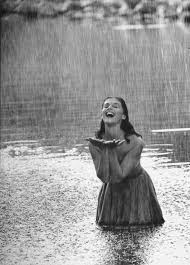
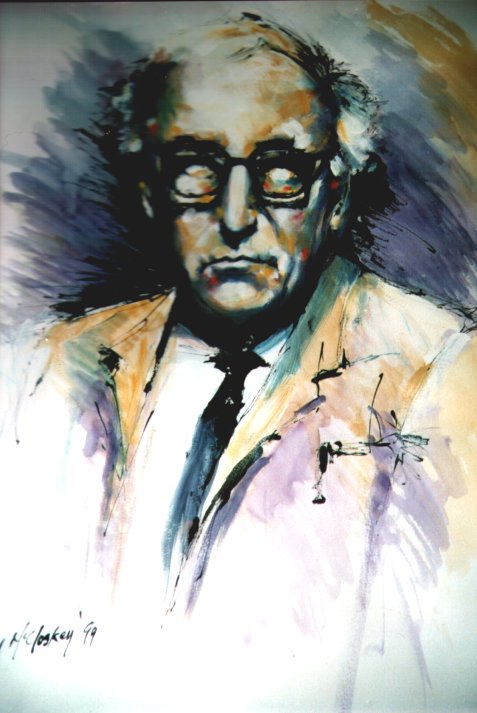

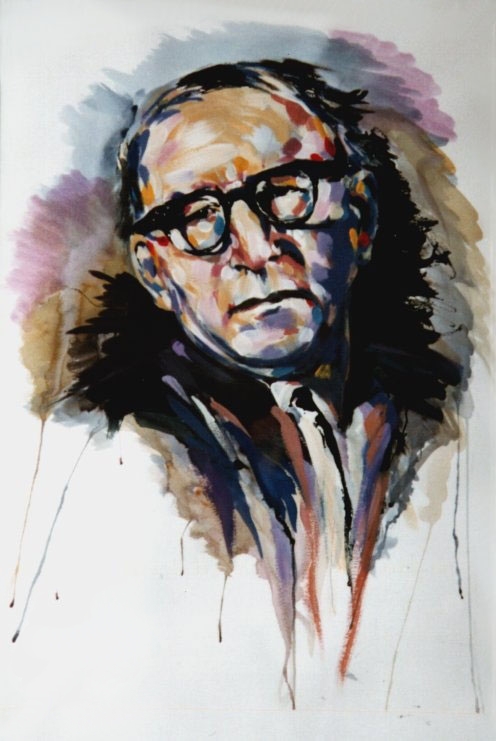

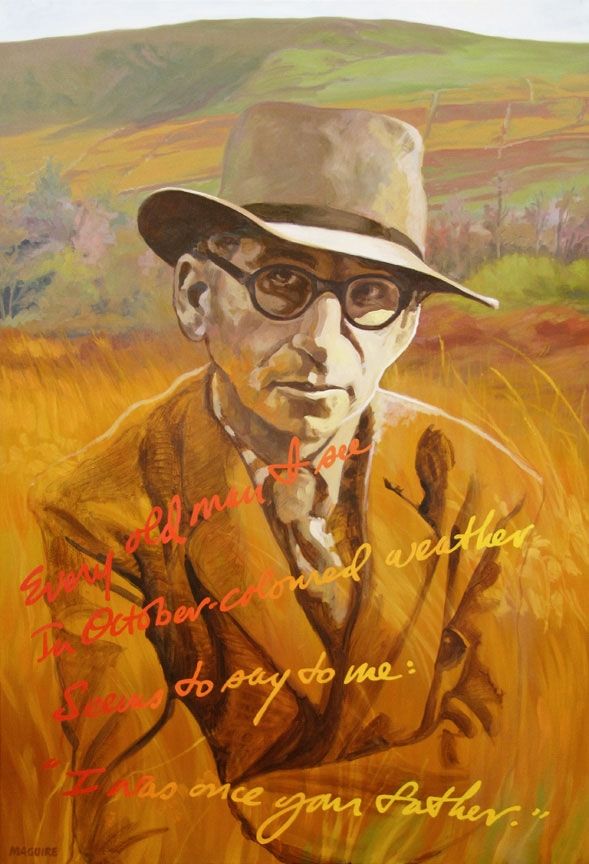


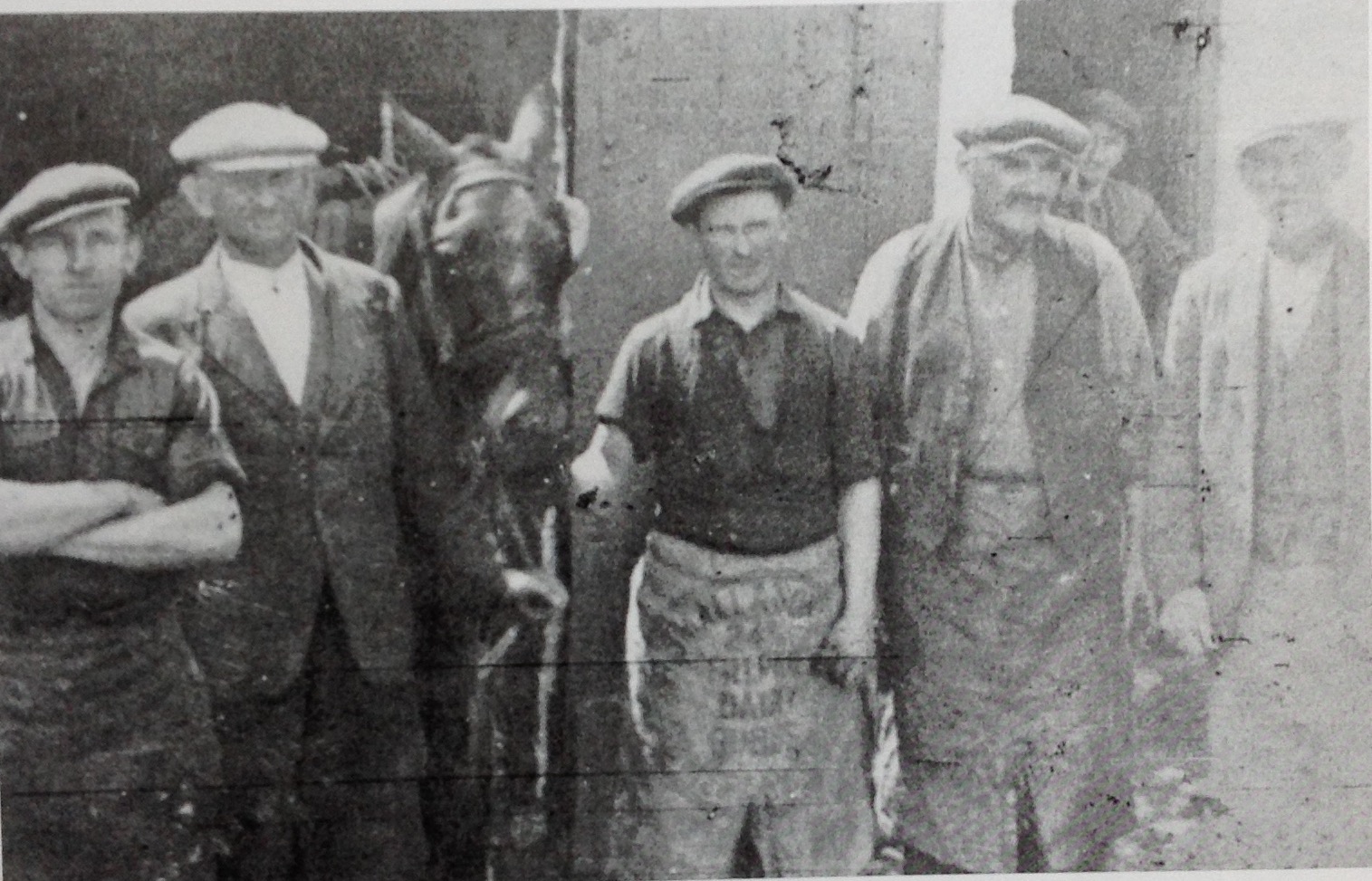


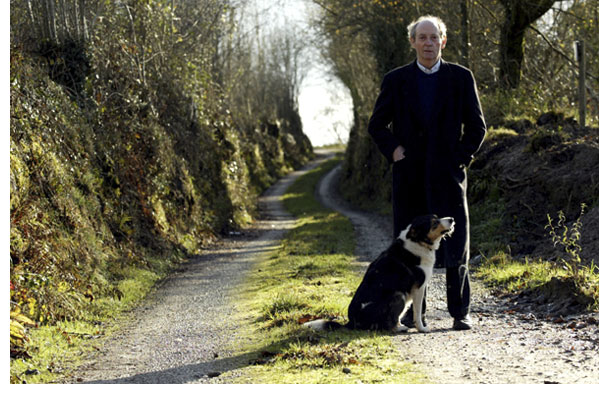
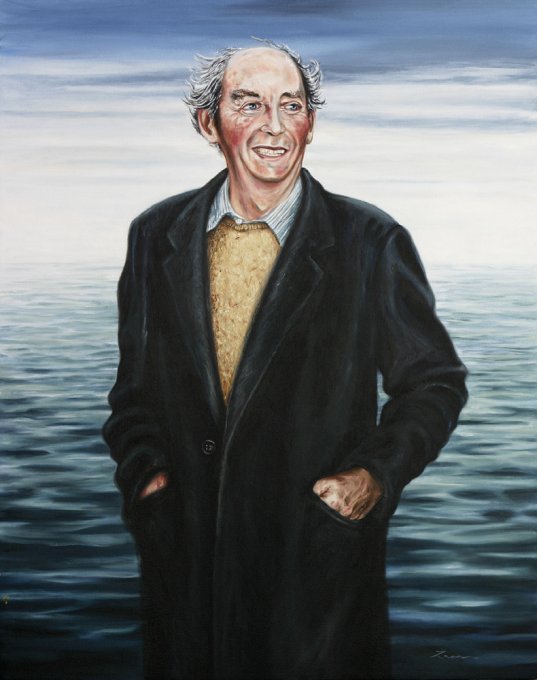
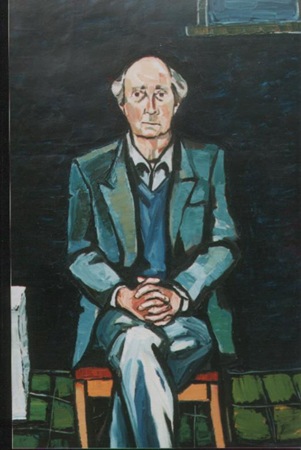
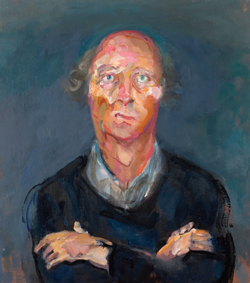
 Reviews Rants and Rambles
You must be logged in to post a comment.