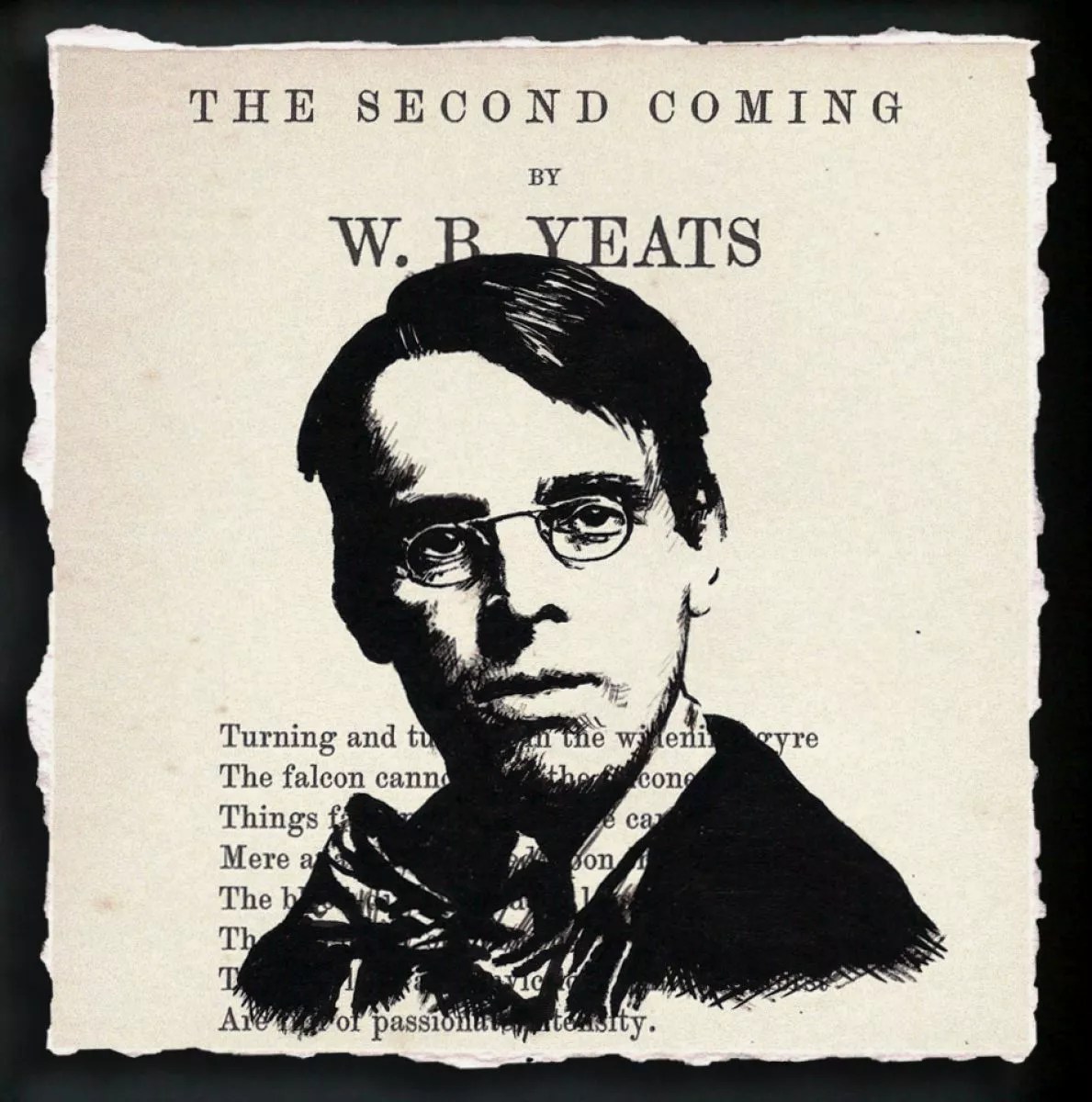
Analysis of Robert Lowell’s Skunk Hour

cover-500

Skunk Hour

Nautilus Island’s hermit
heiress still lives through winter in her Spartan cottage;
her sheep still graze above the sea.
Her son’s a bishop. Her farmer
is first selectman in our village;
she’s in her dotage.

Thirsting for
the hierarchic privacy
of Queen Victoria’s century,
she buys up all
the eyesores facing her shore,
and lets them fall.

The season’s ill—
we’ve lost our summer millionaire,
who seemed to leap from an L. L. Bean
catalogue. His nine-knot yawl
was auctioned off to lobstermen.
A red fox stain covers Blue Hill.

And now our fairy
decorator brightens his shop for fall;
his fishnet’s filled with orange cork,
orange, his cobbler’s bench and awl;
there is no money in his work,
he’d rather marry.

One dark night,
my Tudor Ford climbed the hill’s skull;
I watched for love-cars.   Lights turned down,
they lay together, hull to hull,
where the graveyard shelves on the town. . . .
My mind’s not right.

A car radio bleats,
“Love, O careless Love. . . .” I hear
my ill-spirit sob in each blood cell,
as if my hand were at its throat. . . .
I myself am hell;
nobody’s here—

only skunks, that search
in the moonlight for a bite to eat.
They march on their soles up Main Street:
white stripes, moonstruck eyes’ red fire
under the chalk-dry and spar spire
of the Trinitarian Church.

I stand on top
of our back steps and breathe the rich air—
a mother skunk with her column of kittens swills the garbage pail
She jabs her wedge-head in a cup
of sour cream, drops her ostrich tail,
and will not scare.


Glossary:

hull to hull – the speaker sees the cars as boats, next to one another as if on a river, maybe the river Styx from Greek mythology, associated with the final crossing of the soul?

hill’s skull – a suggestion of Golgotha, or Calvary which was the hill Christ was crucified on.  Both words, Golgotha (from Hebrew) and Calvary (from Latin) translate as ‘skull’.

spar spire – mastlike spire

Tudor Ford – Ford luxury car


Commentary

Skunk Hour is a confessional poem written in 1957. It depicts a man at a moment of crisis in his life.  It was the last poem in an important volume of poetry titled Life Studies (1959), one of Lowell’s most influential publications.  This is a dark and thought-provoking poem, with religious anxieties surfacing, and it raises issues that are universal and relevant for us today. The speaker admits to secretly watching lovers in their cars at night and this makes him feel bad. He confesses to being a type of voyeur – a victim of a modern, uncaring, materialistic community, a depressed loner who will resort to spying on young couples for titillation.

The first four verses of Skunk Hour focus on several prominent inhabitants of Nautilus Island, Maine:  the ‘hermit heiress’, the ‘summer millionaire’, and the ‘fairy decorator’. Brief descriptions set the scene until the main protagonist, the sad, lonely speaker, begins his rather pathetic confession.  Lowell once remarked, ‘The first four stanzas are meant to give a dawdling more or less amiable picture of a declining Maine sea town’.

In fact, as Scott Edward Anderson tells us, ‘he wrote the poem “backwards,” the final stanzas before the opening four, but did it with such seeming ease that the opening reads as almost a laconic warm-up exercise or scene-setter’.  In truth, however, the opening four verses are masterful: the weight of his forthcoming confession weighs so heavily upon him that he delays and obfuscates because of the enormity of it.  Lowell is human, after all.

The scene is set by first introducing the old and frail heiress of the island who is a stickler for tradition, a conservative, a fading aristocrat landowner with a bishop for a son, and ruins for the future.  The poet’s diction reflects this refusal to move on by using the word still twice to emphasize the longevity of her reign. She clings on through the winter, and the sheep go on grazing. Even her farmer (more likely her gardener) is a traditional local administrator (selectman) in the speaker’s own village.

The tone is one of mild desperation at this stage in the poem, the heiress thirsting for a return to the glorious days of old Queen Victoria, when the great and good ruled supreme and everyone knew their place.  Basically, she’s living in the past and as derelict buildings come on the market, she buys them up ‘and lets them fall’, presumably to protect her privacy, as well as to reclaim some semblance of what the place resembled in the previous golden era.

The line, ‘she’s in her dotage’, echoes ‘the world is in its dotage’ from Oliver Goldsmith’s The Vicar of Wakefield (1766).  Note the way the poet uses end half-rhyme (slant or near or imperfect rhyme) in cottage/village/dotage which suggests that things are not making full sense, and there is little harmony.  These combine to endorse the idea that on this island things are falling into a state of disrepair, which doesn’t bode well for the future.

Skunk Hour is a free verse poem of eight sestets (six-line stanzas).   There is no set rhyme scheme but there are interesting end rhymes and some internal rhymes that help our understanding.  These sounds, a variation on a theme of ill, are half-rhymes and produce an echo that keeps the reader in touch with the voice of the speaker, alive in a season that is itself ill.  This is illustrated by the demise of ‘our summer millionaire’ who despite putting on a fashionable outward appearance falls ill and dies and his yawl ‘was auctioned off to lobstermen’.   Lowel’s use of words like lost, leap, and auctioned off all point to a person permanently not returning, his boat now belonging to locals who will put it to better use. The stanza ends with the enigmatic line, ‘A red fox stain covers Blue Hill’.  Lowell reassures us that the line ‘was merely meant to describe the rusty reddish colour of autumn on Blue Hill, a Maine mountain near where we were living’.

In stanza four the plot thickens, and we are introduced to the “fairy decorator,” actually, “our fairy decorator,” because every summer village from Massachusetts to Bangor, Maine, had one! He appropriates the tools of the local fishing and lobstering trade to decorate the windows of his shop, and would “rather marry,” presumably an heiress, since there’s “no money in his work” and without any prospect of marrying someone of his own sex for at least another half-century. Of course, this was before the arrival of political correctness! Lowell would no doubt be challenged by his characterization here were he writing today. The full-end rhyme fall/awl and half-rhymes cork/work and fairy/marry help tie up this stanza, a near-comic portrayal of a guy making the best out of a sorry situation. Wedlock would seem to be a way out of a life destined for a peculiar kind of sad, island loneliness.  In these four stanzas, Lowell has masterfully built up a vivid portrait of a threadbare New England village and its archetypes.

Stanza five offers us some clues as  to what the poet is wrestling with in his own darkness, his own crisis point: the stanza opens with “One dark night,”  and he ends the stanza with, “My mind’s not right.” ‘One Dark Night’ as well as being a good opening for a scary story told at Halloween also has echoes of ‘The Dark Night of the Soul’ as depicted by St. John of the Cross, a Spanish mystic monk and poet from the 16th century.  In a talk ‘On Skunk Hour’, Lowell stated,

‘I hoped my readers would remember St John of the Cross’s poem.  My night is not gracious, but secular, puritan, and agnostic.  An existentialist night.’

The speaker’s dark troubled secret is revealed in this stanza, giving the poem its confessional nature.  He climbs into his Ford Tudor sedan and drives up to a quiet graveyard on a hill overlooking the town and he watches the young couples necking in their cars, windows steaming in the late summer night – it is late August, early September. He remembers the anecdote related to him by Elizabeth Bishop of Walt Whitman in his old age being driven by horse and buggy to witness the hillside lovers in a bygone era and imagines the internal satisfaction that that poet felt from seeing young people in love.  Lowell was continually influenced by Elizabeth Bishop’s work and, apparently, the Bishop poem that inspired Lowell’s Skunk Hour and helped unlock his new, freer style, was The Armadillo which was written in Brazil in the mid-fifties at the height of the Cold War. ‘Armadillo is one of your absolutely top poems, your greatest quatrain poem,’ Lowell writes to Bishop late in 1958. ‘I mean it has a wonderful formal-informal grandeur – I see the bomb in it in a delicate way.’  It was originally published in The New Yorker in June of 1957 and she later dedicated the poem to Lowell when it appeared in Questions of Travel in 1965.  Lowell, in turn, dedicated Skunk Hour to Bishop.

So, in stanza five the speaker is revealed to us at last; having ‘hidden’ behind the first four stanzas he finally reveals his dark secret: he has come here to this Golgotha to spy, like some Judas, on couples having sex in their cars:

I watched for love-cars. Lights turned down,

they lay together, hull to hull,

And that line about the graveyard is a powerful hint – it ‘shelves’ or slopes down and so the island’s dead are looking in on this love-making too, just like the speaker. The four dots at the end of this line are poignant and pregnant with possibility. The stanza ends in self-reflection with yet another confession: ‘My mind’s not right’.

In the sixth stanza, the speaker is so close to the cars on the hill he can hear music from one of the radios. He hears snippets of Fats Domino singing “Careless Love,” and this depresses him even further and he realizes he is on a fool’s mission: he won’t find what he is looking for here either. He heads back down the hill, noticing off to his left, that autumn has already arrived on  Blue Hill, and in the fading light, the hill is turning ‘fox red’, as the first trees and the low shrubs start to turn. He admits that his “mind’s not right.” He needs to get home. When he reaches the house, he enters through the back porch so as not to disturb his wife and three-month-old child.

At this point, the speaker feels completely alone, in sharp juxtaposition to the lovers in their cars on the nearby hill.  Some have argued that Lowell was feeling suicidal here, or more likely he was coming to the realization that he was on the verge of another manic episode. (He’d been free of such episodes for three years but in December 1957 he was again admitted to Boston State Hospital).

Ascending the back stairs, he is startled by a noise from the garbage cans behind the house. A mother skunk and her kittens are nosing around in the spilled contents which include a cup of sour cream that the mother skunk jabs her nose into with abandon. Nature comes to his rescue in the form of the instinctive skunk, a mother with her young in tow out looking for food. The speaker seems almost relieved as he watches this family go about their business of surviving in an urban environment, an unnatural one for these animals.

The last two stanzas bring some redemption for the sad speaker, whose meaningless existence in a Maine backwater is put on hold temporarily by the simple act of witnessing a lowly skunk scavenging with her young kittens.

Skunk Hour and the other poems Lowell wrote late in 1957 turned increasingly inward only to emerge into an outward flourish of personal expression that critics came to call “confessional.” The overall tone of Skunk Hour is pessimistic, even depressing – there is an atmosphere of doubt, failure, and poverty of spirit, relieved temporarily by the actions of the courageous if slightly disgusting, skunks.  Only they seem to live brightly in the here and now of Nautilus Island. It’s not a fun place to exist in according to the speaker; there is a sickness pervading, and he seems to be a victim of it, admitting that ‘my mind’s not right’.  He probably sensed another manic bout in the offing and, sure enough, by December 1957 Lowell was again hospitalized due to bipolar disorder, the mental condition then known as “manic depression”.    While bipolar disorder was often a great burden to the writer and his family, it also provided the subject matter for some of Lowell’s most influential poetry, such as Skunk Hour and the other poems included in his prize-winning volume, Life Studies (1959).

References:

Anderson, Scott Edward. The Nautilus of Robert Lowel’s Skunk Hour, in  http://www.svjlit.com/

MECastineSeenfromNautilusIsland1905

Listen to Robert Lowell read Skunk Hour

In Memory of Danny Barry – Newcastle West’s Other Poet

Danny Barry 'The Bard of Bothar Buí'
Danny Barry ‘The Bard of Bothar Buí’

Believe it or not, Michael Hartnett is not the only poet to hail from Newcastle West!  There have always been local balladeers and poets who have pandered to their local audience in the town and in the surrounding parishes.  In Hartnett’s brilliant poem Maiden Street Ballad, he mentions two of these troubadours and he takes pride in saying that he intends to hold people to account ‘like Aherne and Barry before me’.  He will, therefore, follow in the illustrious footsteps of Jack Aherne from Lower Maiden Street and Danny Barry who was born in Bothar Buí.  He will be true to them and speak out like they had done in the generation before him.  In the introductory verses of that famous ballad, Hartnett sets out his stall and warns us in advance of what we are to expect from him:

8

Now before you get settled, take a warning from me

for I’ll tell you some things that you won’t like to hear –

we were hungry and poor down in Lower Maiden Street,

a fact I will swear on the Bible.

There were shopkeepers then, quite safe and secure –

seven Masses a week and then shit on the poor;

ye know who I mean, of that I am sure,

and if they like they can sue me for libel.


9

They say you should never speak ill of the dead

but a poet must say what is inside his head;

let drapers and bottlers now tremble in dread:

they no longer can pay men slave wages.

Let hucksters and grocers and traders join in

for they all bear the guilt of a terrible sin:

they thought themselves better than their fellow men –

now the nettles grow thick on their gravestones.

10

So come all you employers, beware how you act

for a poet is never afraid of a fact:

your grasping and greed I will always attack

like Aherne and Barry before me.

My targets are only the mean and the proud

and the vandals who try to make dirt of this town,

if their fathers were policemen they’d still feel the clout

of a public exposure in poetry.

Danny Barry was born in Bothar Buí in 1911 and lived his whole life in Newcastle West. He married Margaret (Peig) Sayers from Ferriter’s Quarter, Dunquin, and together, they had four children: Breda, Mary, Kevin and Dennis. Danny worked as a summons server and pound keeper in Newcastle West. He was known to many as the “Sheriff” and to others as the “Bard of Bothar Buí”.

Danny Barry Warrant (1)
Danny Barry’s Warrant of Appointment as Summons Server issued by the Circuit Court Office on 15th August 1955

Michael Hartnett believed that Danny Barry of Newcastle West was an example of the local poet at his best. He lived most of his married life at 46 Assumpta Park, just round the corner from Hartnett’s childhood home. He died in 1973 while still in his early 60s. He is still remembered with a shudder by many of the people targeted by his verse.  In praise of Danny’s poetry, Hartnett has said ‘he mocked the foolish, the vain, the craw thumper, the jack-in-office, and the bogus patriot’.

Danny’s son Kevin and Kevin’s sons, Dan and Graham Barry have done sterling work collecting the remnants of their grandfather’s poems in recent years.  Remember these local poets did not publish their work or expect to have it dissected and analysed in academic circles.  They never considered themselves as professional poets in the first place.  Their songs and ballads were written for local consumption, to be recited in their homes, in local bars, in local ‘rambling houses’, or occasionally given a public performance in The Square.  In a recently unearthed radio documentary entitled ‘Poems Plain’, broadcast by Radio Eireann in 1979 and produced at the time by Donal Flanagan, Michael Hartnett praises the work of these local balladeers and especially the work of Danny Barry:

They seldom publish their work. They write about local events. They’re firmly rooted in 19th-century verse forms. They don’t worry about identity, life, love, or any of the big themes that begin with capital letters. As a result, they’re not accepted by the arbiters of literary taste.

So, if these poets don’t write about the big mainstream issues, ‘life or love’, what do they write about?  In the documentary, Hartnett tells his audience that they concentrate on local issues:

They commemorate hurling matches, football matches, disasters and they usually write badly when dealing with these themes. The ballads they produce are virtually interchangeable. Just a few names need to be changed here and there. But when they deal with humorous themes, or when they satirize, they can be brilliant.

In this, Hartnett suggests they form an unbroken line that stretches back into the Gaelic past, especially into the 18th century. The professional poets even then, such as Dáibhí Ó Bruadair, who was lucky and privileged enough to enjoy the patronage of the Fitzgerald family of Springfield Castle in Broadford, County Limerick, despised these local poets, ‘the sráid éigse, he called them, the street poets’.

Thankfully, due mainly to the intervention of Kevin Barry and his sons Dan and Graham and other members of the family much of his best work has been saved for posterity. Along with his other contemporary, the often notorious, Jack Aherne, only the more salubrious of their sound bites are still retained in people’s memories. Some of their surviving verses are still libelous, but as Hartnett says in the documentary, ‘the trouble with poetry is, no matter how vicious, how scandalous, how libelous, it becomes public property once distributed, whether by word of mouth or slipped under people’s doors early in the morning’.  Hartnett, like Barry and Aherne before him, was wont to deliver verses to his neighbours in this manner on his return to Newcastle West in 1975, especially for those who had recently passed away.  His Epitaph for John Kelly, Blacksmith, and In Memoriam Sheila Hackett are but two such examples of poems written following the death of a friend or neighbour.

Hartnett, who took no prisoners in his role as critic, dismisses some of Danny Barry’s work as weak and overly sentimental:

Like all Irish poets, he was in love with places, and his verses are full of place names. But these poems happen also to be his weakest poems. He fell heavily into an almost cloying sentimentality, made more syrupy by echoes from Robert Service and Thomas Moore.

Barry wrote about local places, Newcastle West, Glenastar, Glenmageen, Rooska Hill, the river Arra but Hartnett tells us that ‘his real strength lay in his satires, or in those poems in which he dealt with people’.

One such poem is The Old School in which he mentions two of the teachers, J.D. Musgrave and George Ambrose, who taught in the old Courtenay School.  Master Musgrave was the principal of the school until his retirement in 1915.  The poem was probably written around 1955 at the time when the old school was demolished to be replaced by the present building in Gortboy.  There are slight echoes of Goldsmith’s The Village Schoolmaster here, but the poem is firmly rooted in the 18th century Anglo Irish ballad tradition, as in such songs as The Limerick Rake.

The Old School

Gone are the days when hearts were young and gay

Gone are the boys from the old school away

Gone are the monks the bright boys and the fool

Gone are the days of the old Courtenay School

If you wander back in memory to the days of long ago

When you were young and happy and worry you did not know

Ducking out to the back alley to play a game of ball

Or trying to jump the highest point of Boody Fitz’s wall

Or mooching in the Majors where the breeze was fresh and cool

And these are the happy memories of the old Courtenay School


Gone is J.D. Musgrave a gentleman was he

A student of prognosis he could tell what was to be

‘Twas often said he was severe he made them face the wall

But he was a man of progress he made scholars of them all

And there was Master Ambrose as George he was better known

For nicknames and for wisdom of superiors he had none

There was no one could afford to miss for he had an awful saying

You had better brush it up me boys cause you have sawdust for a brain

He christened many a pupil from his lofty rostrum stool

And no one knew his own name at the old Courtenay school.


So goodbye old school  memories no more your rooms will ring

Of children’s happy voices and the happy songs they sing

My dear old school you are silent now ’cause they took your heart away

No more the tramp of children’s feet soon you will crumble and decay

But I will not forget you and the happy days of yore

Nor will the boys across the seas in far and foreign shore

Our boyhood terms our boyhood joys a lingering memory

That no time or age can yet blot out in our hearts you will always be

For there are many words when spoken cause a tear to dim their eye

But the saddest little word of all is the simple word Goodbye.

Here Danny Barry uses words and misuses words which only a master of verse in the 18th century could have done.  He uses the lovely expression, “a student of prognosis” to describe Master Musgrave. Interestingly, his son, Maurice Musgrave later married Dolly McMahon who ran a public house where Gearoid Whelan now has his establishment.  She is the Dolly Musgrave that Hartnett immortalises in Maiden Street Ballad:

‘twas in Dolly Musgrave’s I drank my first glass

As is obvious from the poem nicknames have always been synonymous with Newcastle West.  Hartnett, himself, in Maiden Street Ballad, describes the many from the town who had to take the emigrant boat to England and elsewhere:

Off went Smuggy and Eye-Tie and Goose-Eye and Dol,

off went Ratty and Muddy and Squealer and Gull;

then the Bullock and Dando and Gallon were gone,

all looking for work among strangers.

The old men who stayed, time soon thinned their ranks –

like Gogga and Ganzie and Dildo and Sank,

and the Major and Bowler felt death’s icy hand;

old Maiden Street went to the graveyard.

Hartnett himself admitted that the list given in the verse above is only a small sample of the nicknames given to the natives of the town.  The nickname ‘Smuggy’ is interesting – it’s from the Irish smugach, meaning ‘snotty’!

In his notes for that great ballad, Hartnett tells us that, ‘it used to be said that if a stranger walked from Forde’s Corner (now Bourke’s Corner at the top of Maiden Street) he’d have a nickname before he got to Leslie’s Ating House’ (where Richard (Dickie) Liston had his sweet shop).  Also in an article written for The Irish Times on 11th November 1968 entitled ‘Poet’s Progress’, he declared that ‘in small towns in Ireland, unless a man has a nickname (a reputation, good or bad), he hardly exists at all’.

Hartnett himself was simply referred to as ‘The Poet’ and he gave his younger brother John the nickname ‘Wraneen’.  In the Maiden Street Ballad, he refers to his brother Denis as ‘Dinny the Postman’.   Dinny, who has sadly only recently passed away, was also often referred to as ‘Halpin’.  In Danny Barry’s poem The Old School, George Ambrose is credited with giving each student a nickname and, Barry uses the poignant and telling phrase, ‘and no one knew his own name at the old Courtenay school’.  I’m sure that this also applied to the teachers!

Hartnett informs us that Barry’s poem, The Christmas Tree, deals with an actual happening. A few men from Maiden Street in Newcastle West decided to erect a Christmas tree in the street. They cut it down in Glenmageen, an area reputed to be haunted by a witch known as Sprid na Barna.  Glenmageen is located about four miles south of Newcastle West and people can now visit the townland as they walk or cycle on the new Limerick Greenway. The stories of Sprid na Barna were well known, and the area near the present-day Barna Gardens was greatly feared by the local people. Indeed, it was said that only a few tough men would go home after dark along the road she haunted. Again Hartnett is fulsome in his praise for the poet:

Danny Barry’s simple evocation of Sprid and her victims is extraordinary.  Not because it is great poetry, but because he does not question the truth of the event at all. By the way, the Silver Dollar Saloon, which is a strange Hollywood, Western-type name, is a pub in Newcastle West, which was then run by the Flynn family, and is now run by the Kelly family.

The poem is called The Christmas Tree. Again I mention Robert Service, and it’s evident in the meter, even the introduction is pure Service.

 The Christmas Tree

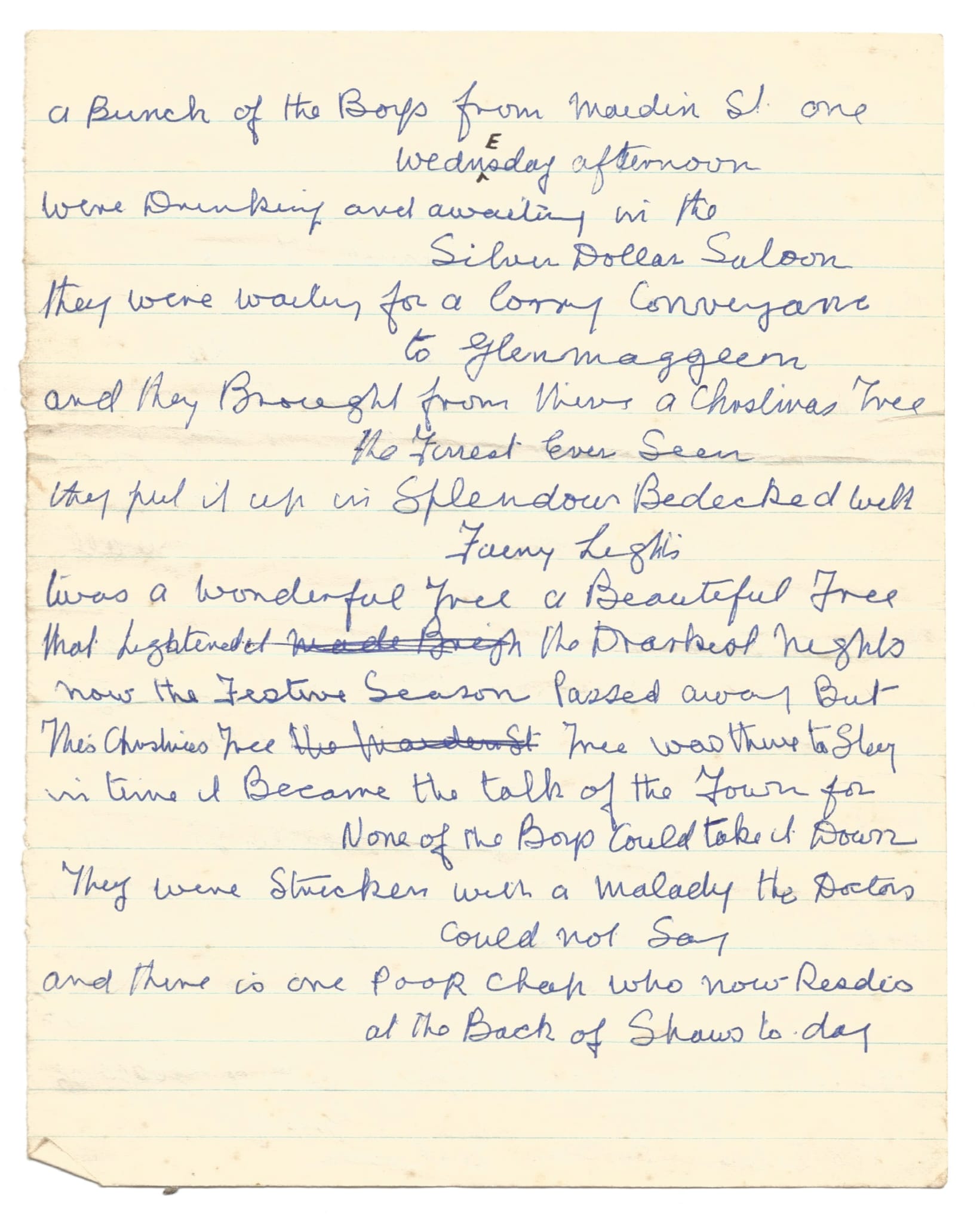
A bunch of the boys from Maiden Street, one Wednesday afternoon,

Were drinking and awaiting in the Silver Dollar Saloon,

Waiting for a lorry to convey them to Glenmageen.

And they brought from there a Christmas tree, the finest ever seen.


They put it up in splendour, bedecked with fairy lights.

It was a wonderful tree, a beautiful tree, that lightened the darkest night.

Now, the festive season passed away, but this Christmas tree was there to stay.

In time it became the talk of the town, for none of the boys dared take it down.


They were stricken with a malady the doctors could not say,

And there is one poor chap who now resides at the back of Shaw’s today.

Now, you have heard of Sprid na Barna, that very naughty dame,

That evil maid of Glenmageen, of the haunting ghostly fame.


The clergy had to banish her between the tree and the bark.

No more she would haunt and terrify the neighbours after dark.

Now the moral of this ditty I want you all to know

‘Twas a tree that grew in Glenmageen twenty years ago.


Now what I am trying to tell you will cause you all to frown

That the amadáns from Maiden Street have brought auld sprig* to town.

Now when the blackthorn blooms again and the sheepdogs howl at the full of moon

You could meet auld sprig with a glass of gin in the Silver Dollar Saloon.

*Sprid na Barna was sometimes mispronounced locally as Sprig na Barna

This beautiful video has been produced by Danny Barry’s grandson, Dan Barry. The poem is narrated by the poet Michael Hartnett and it is taken from a radio documentary that he did in 1979 for RTE Radio entitled Poems Plain.  The programme was produced by Donal Flanagan. The video contains copyrighted material that is being used for educational purposes under the doctrine of ‘fair use’. The use of this material is not intended to infringe upon the copyright owner’s rights. The material is used here solely for educational and non-commercial purposes.

Danny Barry perhaps wrote a couple of hundred poems, many of them now lost or mouldering in the cupboards of his victims. A handful, between twenty and twenty-five, have been recovered due to the perseverance of Danny’s family, especially his daughter Mary Flanagan, and in recent times by his grandchildren Dan and Graham Barry.

Michael Hartnett believed that the best poem Danny Barry wrote, is a piece called The Eviction. Again, it is based on a natural happening.  It is full of irony and humour, and of course, the elemental Irish hate for landlords, sheriffs, and bailiffs is very evident.

 The Eviction

My name is Peter Shea, my age is fifty-seven.

The old Dock Road was my abode, a station next to heaven.

I was happy as an angel, with my lot I was content,

But I took the drinking porter, and I could not pay the rent.

So now to all good neighbours, a sad tale I must state.

I was forced to go from my bungalow, beside the Sandpit Gate.


Tom Hartnett was my landlord, and a damn bad one was he.

I only owed him six years’ rent when he kindly summoned me.

I tried to calm his temper, but I could not calm old Tom,

So to ease the situation, I took in sweet Maggie Nom.

Poor Maggie was so gentle and mild in her debate

That she won my heart and I lost my house beside the Sandpit Gate.


It was on a fine September morn, the year was thirty-one,

The sheriff came and flung me out, myself and Maggie Nom.

As he called to his head bailiff, ‘Is there any more to go?’

I said, wait a while your honour, sir, you forgot poor Maggie’s po.

And when he raised the lid off in candour I must state,

I smothered all the neighbours that live around the Sandpit Gate.


So now to finish up my rhyme, there’s one thing I must say

About the smiling face and the charming grace of my darling Gurky Shea.

For when the world frowned at me, she did not hesitate

With me to stay, and perhaps to lay, down by the Sandpit Gate.

Hartnett is effusive in his praise for this poem and as already stated he was by nature a very severe critic.  His verdict here is glowing!

If you compare this poem, with the hundreds similar to it, which were written in Munster in the Irish language 200 years ago, it is easy to see the link between, say, Seán Ó Tuama and Danny Barry. The same love of place, of the cherished phrase, of galloping meters and tumbling rhyme, the same disregard for the very thin skins of the fool and of the oppressor, and amazingly enough, they had the same effect.

Danny Barry could frighten his enemies with a threat of public laughter,  and yet he achieved what all poets try to achieve. Because of the earlier efforts of Danny Barry and Jack Aherne, Michael Hartnett was very conscious of his local audience, and when he returned to Newcastle West in the mid-70s he wrote many ribald verses for that audience culminating in the publication of Maiden Street Ballad in 1980.  Like Hartnett, Danny Barry managed to ‘write a few songs for his people’, he was recognized by them as a poet, he could make his people laugh or sing or tremble, and he was well aware of the fragility of his own meagre attempts in verse. He says in one of his little poems, called Remembrance,

And so it will be when he is gone.

Someone will sing of him in song.

Someone will read what he held dear.

But too late for praise he will not hear.


References and Links:

“Poems Plain – Danny Barry” was a short radio documentary presented by Michael Hartnett on RTE radio in 1979 and produced by Donal Flanagan.  All quotations in this article come from a transcript of the documentary.  Listen to the full radio documentary by clicking on the link below

https://youtu.be/BcckbNKdYn4?si=9IeX-nx_zwYSCG3I

Listen to Hartnett recite ‘The Eviction’ by Danny Barry with photos added by Dan Barry from Sean Kelly’s collection

https://youtu.be/keIVQW6W9qQ?si=ysm79q64-UXq8LF3

Attached are a few more of Sean Kelly’s photos of Maiden Street taken from here https://ncwoldentimes.com/maiden-street-2/.

You might also like to browse through Michael’s own publication of Maden Street Ballad which you can see here: https://ncwoldentimes.com/maiden-street-ballad-2/

The author is indebted in particular to Dan Barry, grandson of Danny Barry, for invaluable background information in the preparation of this blog post.  The Barry family has done amazing work in collecting the scattered remnants of their grandfather’s life’s work.  They have done us all a great service.

undefined

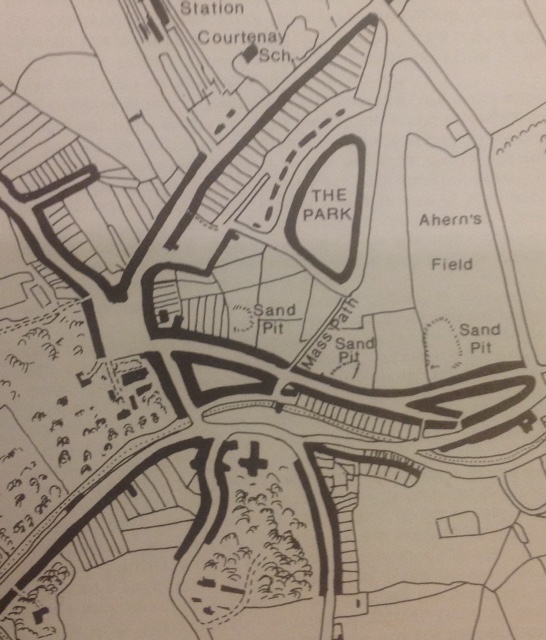
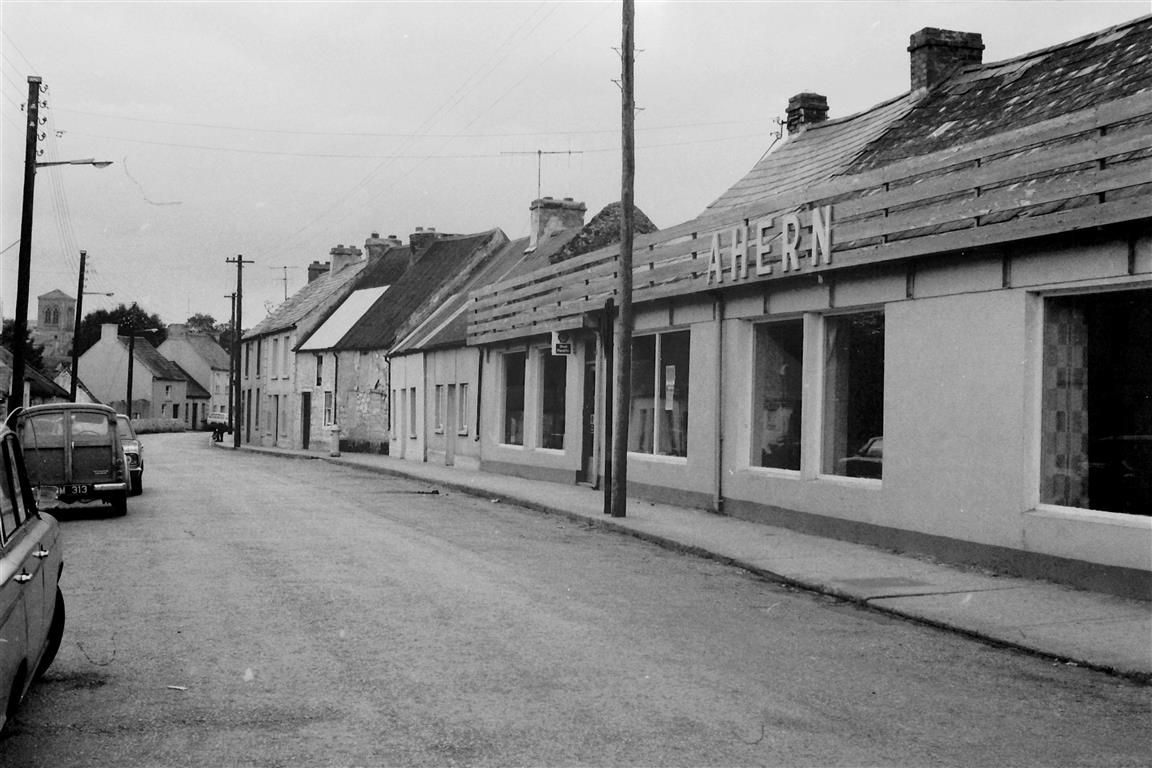
Jack Aherne’s Supermarket in Lower Maiden Street. Jack was also a coal merchant and he also sold sand and gravel from the sandpit behind the store in what was known as Aherne’s Field – now the location for the Lidl Supermarket and the Scanglo factory. When Jack Aherne closed his supermarket the premises were bought by Tom Moran who carried on an electrical business on the site. Jack’s father, also Jack Aherne is the other noted bard and rhymer whom Hartnett refers to in Maiden Street Ballad – ‘like Aherne and Barry before me’. Photograph by Sean Kelly.

Free Resources for Leaving Cert English 2024

Digging

I have been posting notes here for some years now since I retired as a teacher of English and as an Advising Examiner for English Higher Level for many years.  What I have done here is bring all those links together in one post or blog  – as a kind of Index of all the posts I’ve written that are specifically relevant to Leaving Cert English 2024 – to save you the trouble of constantly searching the internet each time you want to do some background work on a text or a poet or author. It’s not perfect and it won’t suit every student, class, or teacher – you may have already made different text choices from the many available.  It’s my version of a ‘One-Stop Shop’ and you know the drill: just click on the link if it’s relevant to your studies!  My choice of texts is personal and obviously will not suit every teacher, every student, or every class.  You can easily see where my own preferences lie by simply viewing the number of links provided for each text or poet!

However, Caveat Emptor!  Leaving Cert Student Beware !!  These are resources that you should use wisely.  They are my personal responses to the various texts and you should read and consider them and decide to study them if you find them useful.   IN OTHER WORDS, MAKE YOUR OWN OF THEM, ADD TO THEM, OR DELETE FROM THEM AS YOU SEE FIT.

Single Text

Hamlet (H/O)

Shakespearean Tragedy Defined

Hamlet: An Introduction

Hamlet: The World of the Play

Hamlet’s Antic Disposition: That is the Question!

Hamlet’s Delay

The Problem with Hamlet is Hamlet

Death and Deceit in Hamlet

The Moral Question in Hamlet

The King and Queen in Hamlet

Polonius and his family in Hamlet

Comparisons and Contrasts in Hamlet

Ghosts and the Supernatural in Hamlet

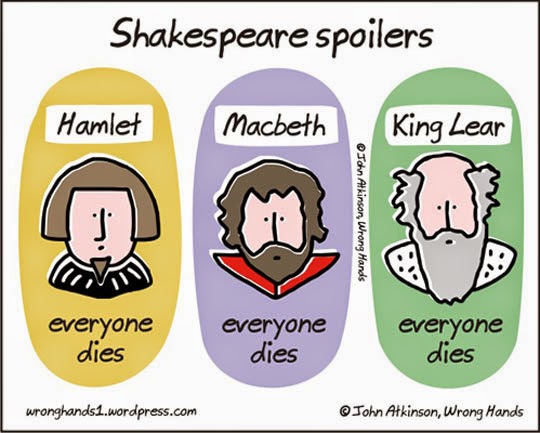
funny-Shakespeare-spoilers-Hamlet-Macbeth-King-Lear

Silas Marner (O)

Silas Marner: The Characters

Themes in Silas Marner

Imagery in Silas Marner

Fairy-Tale Elements in Silas Marner

Silas Marner by George Eliot is a radically disturbing social document

keep-calm-and-read-silas-marner-3

Philadelphia, Here I Come! (O)

Characters and Relationships in Philadelphia Here I Come!

The Theme of Communication in Philadelphia Here I Come!

The Theme of Escape in Philadelphia Here I Come!

1411150193-philly_tickets

Comparative Section 

MODES OF COMPARISON

For each Leaving Certificate course, three modes of comparison will be prescribed.  This means that the texts chosen for comparative study must be studied under these particular modes (headings).

This year the modes of comparison at Higher Level are as follows:

  • Literary Genre
  • Theme or Issue
  • Cultural Context

Two of these three will be examined in June 2024.

Literary Genre

This mode focuses on the ways that texts tell their story.  This is also a legitimate basis for comparison: whether it is a tragic play, a detective thriller, a film, a historical novel, an autobiography or a travel book.  (The amazing thing is that all these differing genres are available for study on your Leaving Cert course!).

The following questions should be asked about the texts being studied by you:

  • How is this story told? (Who tells it?  Where and when is it told?)
  • Why is the story told in this way?
  • What effects do all these have?
  • Is there just one plot or many plots? How do these relate?
  • What are the major tensions in the texts? Are they resolved or not?
  • Was this way of telling the story successful and enjoyable?
  • How do the texts compare as stories?
  • Is the story humorous or tragic, romantic or realistic?
  • To what genre does it actually belong?
  • Because your three texts are so different you have to be very aware of how different the experience of encountering a novel, a play, and viewing a film is.

 Theme or Issue

This involves comparing texts on a prescribed theme.  These would have to be themes that were pervasive and central to the texts chosen for study e.g.

  • Isolation and Loneliness.
  • Relationships and love.
  • Fantasy and reality.

These themes/issues will be the messages or concerns that the writer or film director wishes to impart to the audience.  In most texts, there will be a number of themes/issues worth considering

Your task, therefore, in this section is to compare and contrast the same theme as it is treated by different authors or film directors.

Cultural Context

Compare the texts focusing on social rituals, values, and attitudes.  This is not to be seen as a sociological study of the texts alone.  It means taking some perspectives, which enable the students to understand the kind of values and structures with which people contend.  It amounts to entering into the world of the text and getting some insight and feel for the cultural texture of the world created.  This would imply considering such aspects as the rituals of life and the routines of living, the structures of society, familial, social, economic, religious, and political: the respective roles of men and women in society, the position of children, the role and nature of work, the sources and structures of power and the significance of race and class.

When you answer a question in the Comparative Section remember that you have to be selective in emphasising the most meaningful similarities and differences between texts.  The more similar they appear to be, the more provocative and challenging it is to contrast them and to draw out differences between them.  Remember also that when you draw out surprising or disputable similarities or differences, you require detailed support from the texts.

 In a Comparative answer, it is vitally important to compare and contrast these different ways of looking at life, or to examine if there is coherence or a lack of coherence between all these differing viewpoints.

Pride and Prejudice

Character Study of Elizabeth Bennet and Mr Darcy in Pride and Prejudice

The Themes of Pride and Prejudice in Pride and Prejudice

The Theme of Marriage in Pride and Prejudice

e8675-pride-and-prejudice-2005-movie-download

Philadelphia,  Here I Come!

Characters and Relationships in Philadelphia Here I Come!

The Theme of Communication in Philadelphia Here I Come!

The Theme of Escape in Philadelphia Here I Come!

Silas Marner

Silas Marner: The Characters

Themes in Silas Marner

Imagery in Silas Marner

Fairy-Tale Elements in Silas Marner

Silas Marner by George Eliot is a radically disturbing social document

Macbeth

Shakespearean Tragedy Defined

Macbeth: A Tragedy

Macbeth: Order violated, order restored.

Macbeth: From Centrality to Isolation

Macbeth: A Truly Aware Tragic Hero?

Macbeth is a villain, but…

Some Grace Notes on Macbeth

Poetry

Emily Dickinson

An Overview of the Poetry of Emily Dickinson

John Donne

An Introduction to Metaphysical Poetry

John Donne and Metaphysical Poetry

An Analysis of Some of my Favourite Poems by John Donne

Seamus Heaney

The Poetry of Seamus Heaney: Some Recurring Themes

The Poetry of Seamus Heaney

Analysis of The Forge by Seamus Heaney

Bogland by Seamus Heaney

Analysis of The Harvest Bow by Seamus Heaney

The Treatment of Women in Seamus Heaney’s Poetry: a feminist critique.

FullSizeRender (13)
“In the Attic”, a portrait of Seamus Heaney by the artist Jeffrey Morgan now hanging in the HomePlace Centre in Bellaghy, Co. Derry.

Gerard Manley Hopkins

The Poetry of Gerard Manley Hopkins

An Analysis of Spring by Gerard Manley Hopkins

An Analysis of Inversnaid by Gerard Manley Hopkins

Analysis of The Windhover by Gerard Manley Hopkins

Commentary on Pied Beauty by Hopkins

The Terrible Sonnets are not so terrible after all!

Sylvia Plath

The Poetry of Sylvia Plath

William Butler Yeats

Study Notes on the Poetry of W.B. Yeats

An Overview of Yeats’s Poetry

YEATS: A POET OF OPPOSING TENSIONS.

W_B__Yeats_by_XxAlmightyStanxX

The Banshees of Inisherin – A Review

the_banshees_of_inisherin_quad_uki

Five years after his brilliant dark comedy “Three Billboards Outside Ebbing, Missouri”, Martin McDonagh has written and directed another brilliant tale about friendship, ambition, and loneliness. “The Banshees of Inisherin” is the best a McDonagh movie has ever looked, every scene has a visual landscape setting and the colour tone has a uniquely pleasing filter throughout.  It pays homage to other ‘Irish’ classics such as “Ryan’s Daughter” and “The Quiet Man” and in its costumes and setting there are very obvious echoes of J. M. Synge’s “The Playboy of the Western World”.

The movie is set on an island off the coast of Ireland about 100 years ago. On the mainland a Civil War is raging, where after long years of colonisation, brother is fighting brother; friends and families are being ruptured and irreparably damaged.  However, the island, the last bastion of innocence, has its own demons and banshees to contend with. Inisherin is an enclosed place, a microcosm, where everything is concentrated and the surrounding sea keeps everything compressed and isolated.  This island has deeply affected its inhabitants and they have each been moulded by it and damaged by its limited horizons.

McDonagh was born in London in 1970 the son of Irish parents from the West of Ireland.  The backdrop to his childhood and early adulthood was dominated by ‘The Troubles’ in Northern Ireland and Britain’s most recent involvement in that sad and tragic episode in Irish history.  The setting for this film, Inisherin, has only recently freed itself from the grip of British colonial domination, and the gossipy postmistress is seen painting the red postbox in the village a garish green, the colour of the new ‘Free State’.  There is evidence of other colonial powers at play also: the island is home to a prominently located Catholic church and the mysterious and magical Latin Mass reminds us of the power of Rome. There is also a grotto to the Virgin Mary which stands where the road diverges.

So, this is Ireland: there’s a pub, a church, a Post Office, a thatched cottage where  Pádraic Ó Súilleabháin (Colin Farrell) lives with his unmarried sister Siobhán; and another hovel where Colm Doherty (Brendan Gleeson) lives alone. Colm, who plays the violin and composes (mediocre) music, has recently become obsessed with the passing of time, with the pressing need to indulge his art in order not to be forgotten. His art now demands total exclusive focus from him, leaving no room for the banality of feelings and former friendships.  Pádraic Ó Súilleabháin (Colin Farrell) can’t figure out why his friend Colm Doherty (Brendan Gleeson) has become hostile and refuses to speak to him.  Colm’s behaviour turns darkly troubled and before long even Pádraic is acting a bit unhinged himself, especially after the departure of his sister, Siobhán, (played superbly by Kerry Condon), to the mainland.   Pádraic’s repeated efforts at reconciliation only strengthen his former friend’s resolve and when Colm delivers a desperate ultimatum, events swiftly escalate, with shocking consequences.

It becomes clear there’s something beneath the surface of their friendship that is struggling to break through to see the light of day. Colm no doubt knows what it is, but Pádraic may not have quite figured it out yet.   Only a few fleeting moments hint at their deep feelings for each other, but it is a subject neither of them can even articulate – much less try to fulfil.

The movie is a study of friendship on the edge of becoming something deeper, but instead, it works its way out in violent, destructive deeds.  The shockingly needless maiming is a metaphor for the Civil War atrocities taking place within earshot of the islanders.  What we have here is what Patrick Kavanagh would call ‘a local row’ and there is another bigger ‘local row’ in progress on the nearby mainland, again as Kavanagh would say, ‘God’s make their own importance’.

The movie tries to resolve its three main subplots and in the end, all three have their perfect conclusions and intersect cleverly. The writing is impeccable and as in “Three Billboards Outside Epping, Missouri” and the earlier “In Bruges”, there is a perfect blend of humour and tragedy. The three stories revolve around Pádraic trying to come to terms with the fact that his best friend Colm has rejected him; his sister Siobhán trying to find a meaningful purpose in her life and Dominic (played by Barry Keoghan), who is fighting his own demons and seeking friendship and intimacy.  Indeed, Barry Keoghan’s performance as the haunted abused, and fragile Dominic is a masterclass and equals John Mill’s performance in the classic “Ryan’s Daughter”.

The wild beauty and desolate qualities of the island are captured in the cinematography and the music is perfectly sewn into the fabric of the film without drowning it. What’s so satisfying about the story, is that you’re left to interpret it for yourself.  This, of course, has caused consternation on Twitter and Live Line and on other platforms because McDonagh leaves people to make up their own minds.

It is a well-told dark (even black) comedy that keeps you wanting more.  McDonagh explores a myriad of largely unexplored themes at a time when Ireland was full of despair, not long after the War of Independence and a long-suffering period that brought about a post-colonial inferiority complex (which still hasn’t been fully addressed to this day). Other motifs touched on include: the struggle to achieve an Irish identity, a repressive church, superstitions, isolation, mass emigration, poverty and to top it all off a brutal civil war. This film does a great job to capture the zeitgeist of the time and to top that off the cinematography, costumes, music, and atmosphere are wonderful.

Both leads, Colin Farrell and Brendan Gleeson, as they did in “In Bruges”, knock it out of the park, and they are ably supported by the two new shining stars of Irish cinema in Barry Keoghan and the beautiful Kerry Condon.  Pat Shortt who plays Jonjo Devine the publican and Jon Kenny who plays his sidekick Gerry add to the ensemble cast and they make valuable contributions to the banter and gossip in the pub scenes.  (And there are also goats, a dog and a donkey, a horse, and some nondescript cattle).

And then there is the war, distant but present, with ominous explosions heard in the distance. And finally, there is the old banshee (a fairy woman), a legendary harbinger of Death in Irish folklore and legend.  At times it’s hard to tell if this is a wonderful dark comedy or a Shakespearean tragedy. Served by a magisterial group of actors and actresses, this film takes you to stunning Irish landscapes and gives you a false sense of security with its comfortable scenery, cute farm animals, and lovely violin tunes in the old local shebeen … until men resort to a classic story of pride and stubbornness, mirroring the sad, pathetic and damaging Civil War being played out on the mainland.

Like a dark children’s tale, the movie seems to be a metaphor for the stupidity of war and humanity’s many contradictions. Colin Farrell, Brendan Gleeson, and a scene-stealing Barry Keoghan as Dominic are just wonderful at creating those flawed and unique men spiralling toward their destiny.

Martin McDonagh has created a fantastic piece of filmmaking here with a very timely message.  The ending, like all black comedies, is pessimistic – Pádraic suggests that scores have not been settled fully – like the war of brothers on the mainland this local skirmish will be played out until the banshee’s prophecy is finally fulfilled.  Dare I say it but Colm’s dog may well be Pádraic’s next target!

“The Banshees of Inisherin” is not perfect and no modern director has the ability to satisfy every critic – and there are many.  Maybe I ascribe far too much credit to McDonagh in this review but I have to say I really enjoyed exploring the intricate layers of meaning suggested in the dialogue and the cinematography.  For me, it is the best movie of the year so far, better even, dare I say it than “An Cailín Ciúin”. It has left me brooding long after the final credits and that’s no bad thing!

banshees-1600x1066-1

A Christmas Childhood by Patrick Kavanagh

Three-wise-men-christmas-getty
IrishCentral Staff @IrishCentral

A Christmas Childhood

by Patrick Kavanagh

I

One side of the potato-pits was white with frost –
How wonderful that was, how wonderful!
And when we put our ears to the paling-post
The music that came out was magical.

The light between the ricks of hay and straw
Was a hole in Heaven’s gable. An apple tree
With its December-glinting fruit we saw –
O you, Eve, were the world that tempted me

To eat the knowledge that grew in clay
And death the germ within it! Now and then
I can remember something of the gay
Garden that was childhood’s. Again

The tracks of cattle to a drinking-place,
A green stone lying sideways in a ditch,
Or any common sight, the transfigured face
Of a beauty that the world did not touch.

II

My father played the melodeon
Outside at our gate;
There were stars in the morning east
And they danced to his music.

Across the wild bogs his melodeon called
To Lennons and Callans.
As I pulled on my trousers in a hurry
I knew some strange thing had happened.

Outside in the cow-house my mother
Made the music of milking;
The light of her stable-lamp was a star
And the frost of Bethlehem made it twinkle.

A water-hen screeched in the bog,
Mass-going feet
Crunched the wafer-ice on the pot-holes,
Somebody wistfully twisted the bellows wheel.

My child poet picked out the letters
On the grey stone,
In silver the wonder of a Christmas townland,
The winking glitter of a frosty dawn.

Cassiopeia was over
Cassidy’s hanging hill,
I looked and three whin bushes rode across
The horizon — the Three Wise Kings.

And old man passing said:
‘Can’t he make it talk’ –
The melodeon. I hid in the doorway
And tightened the belt of my box-pleated coat.

I nicked six nicks on the door-post
With my penknife’s big blade –
There was a little one for cutting tobacco.
And I was six Christmases of age.

My father played the melodeon,
My mother milked the cows,
And I had a prayer like a white rose pinned
On the Virgin Mary’s blouse.


From Collected Poems (2004). Edited by Antoinette Quinn, Allen Lane. An imprint of Penguin Books, by kind permission of the Trustees of the Estate of the late Katherine B. Kavanagh, through the Jonathan Williams Literary Agency.

 Commentary

In this, one of Ireland’s most beloved and recognised poems, ‘A Christmas Childhood’,  Kavanagh (21 October 1904 – 30 November 1967) explores themes of memory, coming of age, and imagination. The poem is set in 1910 and it is a memory poem. We are told that Kavanagh was ‘six Christmases of age’ but the poem also remembers and celebrates the original Christmas event almost two thousand years earlier.  The poet is looking back on the magical and mysterious world of childhood and he is mourning its passing with some regret.

The poet recognises that his childhood was a time when the ordinary seemed extraordinary.  Through figurative language and colourful imagery, he paints a picture of his early childhood and what it meant to be a child in those difficult times.   In line one, we are presented with a factual and accurate description: ‘One side of the potato-pits was white with frost’ and line two is powered with emotion. The tone, the use of repetition and the exclamation mark in ‘How wonderful that was, how wonderful!’ convey wonder and excitement.

Similar to his poem ‘Advent’, this poem uses religion both as a theme and as its main source of imagery. Kavanagh’s spirituality is to the fore and this was very much informed and influenced by traditional pre-Vatican II Catholic theology.  He desires to return to the state of childish innocence when he was six years old and Christmas surely brings out the child in all of us!  Kavanagh’s well-worn theory was that if he could rediscover a world of childhood innocence he would ipso facto become a better poet. Indeed, the poem’s title gives the game away: he describes his childhood as ‘a Christmas childhood’ rather than the more limiting ‘a childhood Christmas’.

Both ‘Advent’ and ‘A Christmas Childhood’, therefore, are very religious poems – religious at a very personal level.  Kavanagh’s feeling is that experience has corrupted him – in ‘Advent’ he tells us that he has ‘tested and tasted too much’ and this has echoes in this poem when he says:

O you Eve, were the world that tempted me

To eat the knowledge that grew in clay

And death the germ within it! 

He wants to bring back the newness that was in the world before things grew stale through over-familiarity.  In ‘Advent’ he lists the mundane things that will inspire him in the New Year: a ‘black slanting Ulster hill’ will be new again; the boring chat of a tedious old man will become wonderful; the whole ordinary, ‘banal’, common world of reality will be renewed; wonderful then will be ‘whins’, ‘bog holes’, ‘cart-tracks’, ‘old stables’. To this list, he now adds ‘potato pits’, ‘paling posts’ and,

The tracks of cattle to a drinking place,

A green stone lying sideways in a ditch …

The poem is in two parts: Part II first appeared in The Bell magazine (December 1940) and Part I was published in The Irish Press (24 December 1943). Part I describes the townland of Mucker in the parish of Inniskeen, County Monaghan, and explores, from an adult’s perspective, how childhood is a time of innocence, an innocence that we inevitably lose. As a child he saw ‘An apple tree/ With its December-glinting fruit’ but just as Eve ate the apple which led to man’s Fall and sinful state, Kavanagh knows that as we leave childhood behind us we lose our innocence. The Garden of Eden is no more; but Christmas is a time when an Eden-like world becomes possible. Adulthood, says Kavanagh, blinds us to the beauty, freshness and innocence of childhood but it can be recaptured occasionally, especially at Christmas time.

Part II of the poem introduces a cast of characters – Kavanagh’s father, his beloved mother, and the neighbours. In Antoinette Quinn’s words ‘Through a series of crisp, lucid images it conjures up the child’s sense of being part of a family and a closely-knit Catholic community’.  Everything is in harmony and the poem is very musical.  We hear his father’s melodeon, the music that came from putting his ear to the paling-post, the music of milking, the screech of the water-hen in the nearby bog, the crunch of feet on the icy potholes along the road and also the sound of the bellows wheel in the country kitchen.  And of course, the beautiful onomatopoeic line ‘I nicked six nicks on the doorpost’ which creates its own marvellous music also. The melodeon calls to the Lennons and Callans and the stars dance to his father’s music. The music unites one place to another and neighbour to neighbour. The imagery of Co. Monaghan blends with imagery from the Biblical account of Christ’s birth: ‘The light of her stable-lamp was a star’ and the ‘three whin bushes’ become ‘the Three Wise Kings’.

The poem sums up his Christmases and the things that made them memorable and precious to him – his father playing the melodeon, his mother milking the cows, the special gift of ‘a white rose’ that he gave to the Virgin and pinned it on her blouse.  He was a real boy – can I say that now? – he notched his age on the doorpost – not six years but ‘six Christmases of age’! 

When all is said and done ‘A Christmas Childhood’ is a chatty little poem that deals with simple things in simple, everyday language.  Yet this seemingly rustic simplicity can be deceptive and underneath it all, there is the constant realisation of the presence of Christ and Christ’s mother – and perhaps all mothers.  After all, the final image is that of a father and mother and child, an ordinary family and the Holy Family.

Little wonder then that at Kavanagh’s funeral in Inniskeen on the 30th of November 1967, Seamus Heaney read ‘A Christmas Childhood’ at his graveside.

Works Cited

Kavanagh, Patrick. Collected Poems. Edited by Antoinette Quinn.  Allen Lane. An imprint of Penguin Books, London, 2004.

Quinn, Antoinette.  Patrick Kavanagh: A Biography. (Second Edition).  Gill Books, 2003.

‘The Weir’ at The Abbey – A Review

IMG_4630

Colin McPherson’s play, The Weir, first opened in London on July 4th, 1997. It was supposed to run for four weeks but, due to demand, they decided to extend it to five weeks, then eight weeks, then nine weeks, and then finally because of its continuing popularity they moved the show into a larger theatre, the Duke of York’s, in St Martin’s Lane. And it continued to play there for the next two years.  It is currently running at The Abbey Theatre from 26th November until January 14th.

The play began its lengthy gestation in the 1980s when in his mid-teens, Colin McPherson found himself going to visit his grandfather, Jack McPherson, regularly.  The Sligo train from Connolly swept him from his adolescent angst in Dublin to an entirely different world where his grandfather lived alone, near Jamestown in Co. Leitrim.  His grandfather’s little cottage was tucked away, down a dark winding boreen that ran alongside the River Shannon with its weir which gives the play its name. Beside the house was a fairy fort no one dared disturb.

In the evenings, grandfather and grandson would sit by the fire and Colin would be regaled by his grandfather with stories from his living memory: how a stooped man named McFadden had been cured of his ailment by the fairies; but when he returned again, asking for more favours, the fairies sent him away, twice as stooped over as he had been before.

He also told him how the house he grew up in had been built on a fairy road. And how knocking could sometimes be heard at the door in the dead of night. And how, as a boy, when the Civil War raged, he remembered a desperate man came to the door seeking refuge, but he was chased round the back of the house by other men who shot him out there.

The play itself opens as locals gather at the pub on a windy winter’s night.  Local estate agent and hotelier Finbar (Peter Coonan) arrives with blow-in Valerie (an openly vulnerable Jolly Abraham) who has just recently arrived from Dublin. They settle into a storytelling session that turns darker and more personal as they take it in turn to share their experiences of their various brushes with the supernatural.  At times ghostly and mesmerising, their tales draw Valerie into their world – but it is her story, when we finally get to it, which is the most gut-wrenching of all, stemming from the worst kind of tragedy.

The atmosphere is built through an utterly engrossing succession of monologues, in which each character is satisfyingly delineated. Brendan Coyle’s Jack sheds his cranky, contrary mask, while the brilliant Marty Rea conjures a wonderfully distinctive, quirky, but very believable Jim. Peter Cloonan peels away the bravura of Finbar to reveal his vulnerability.  He apologises self-consciously as he feels he has revealed too much, giving the lie to the old stereotype of the brash non-talkative Irishman.

Fact, fiction, history, ghosts, religion, and hearsay are all woven together and for us who were lucky enough to be present at Caitríona McLoughlin’s production of the play in The Abbey Theatre, we were glad that Colin McPherson soaked it all up on those youthful excursions West.  The play is a timely, glowing affirmation of the rural pub and its role as a sanctuary for wounded men – and women – at a time when that very institution is facing extinction.  As the only woman present, Jolly Abraham’s Valerie is distinctive in more ways than one: as a blow-in, an American, and, for those present in the bar, their intended audience.

Caitríona McLaughlin directs with a finely balanced awareness of the comedy of McPherson’s script as well as the darker emotional moments, the necessary silences as well as the endless eyrie stories of fairies and ghosts and family loss, and the resulting deep trauma that ensues.

The production runs straight through for 100 minutes, but our attention is mostly focused on the actors throughout apart from the erratic and distracting musical score. Sarah Bacon’s authentically worn set sits at an angle on the right-hand side of the stage against a stormy sky lit by Jane Cox, whose subtle design also helps focus the formal storytelling set pieces. One small quibble: the Irish have given the world many iconic cultural nuggets including the traditional music session in the ‘local’ and so here the use of live music outside the pub provided by musicians Éamonn Cagney and Courtney Cullen is somewhat disconcerting and jars a little. 

There are obvious parallels that can be detected between McPherson’s play and the earlier J. M. Synge classic The Playboy of the Western World.  That play caused riots when first premiered in the Abbey Theatre on January 26th, 1907, nearly 115 years ago. The Weir has since created its own ripples and there are particular details within the play that firmly locates it in the 1990s, a time of great social and economic change in Ireland like its illustrious forerunner. However, the fact that we can accurately place it in a definitive timeline makes the universality of its themes even more penetrating. Ask anyone who has ever had a pint in Scanlan’s Bar in Knockaderry or in any rural pub in Ireland and they will agree with you, just as this production suggests:  there is no better balm for loneliness than company.

Sadly, Jack McPherson never saw any of his grandson’s plays. He passed away before his grandson managed to get going as a writer, but something of those times he had spent with him in his lonely cottage in Leitrim had lodged somewhere in his subconscious. In this way, it may be that a play like The Weir comes through a writer rather than being intentionally composed. There is the sense that Colin McPherson heard it and wrote it down – and it works!

The Abbey stage has long been the place where such stories were told and present-day Abbey audiences should be very happy that we get to hear these stories commingling here with those riotous echoes from long ago.

IMG_4629
Front Row: Brendan Coyle, Jolly Abraham, Marty Rea. Back Row: Peter Coonan, Sean Fox.

Photo Credit: Ste Murray – Cover Image: Hazel Coonagh

CAST

Valerie – Jolly Abraham,

Finbar – Peter Coonan,

Jack – Brendan Coyle,

Brendan – Sean Fox,

Jim – Marty Rea,

Musician – Éamonn Cagney,

Musician – Courtney Cullen.

A Historical Sketch of Knockaderry from Early Christian Times to the Great Famine.

IMG-4292
Knockaderry Village as it appears on the c. 1840 Ordinance Survey map showing St. Munchin’s Church, RIC police barracks, and the Fair Green which became notorious for the Faction Fights it attracted in the 1800s.

The present-day parish of Knockaderry Clouncagh which in turn corresponds to the medieval parishes of Clouncagh, Clonelty and Grange, was once known as the Tuath of Maghreny (Máigh Ghréine which translates as the ‘Valley of the Sun’).  This area was ruled by local chiefs of the Uí Fhidheingte. Sources tell us that Uí Fhidheingte flourished in County Limerick from 377 AD and was recognised as one of the most prominent of the ancient kingdoms of Munster. 

By circa 950 AD, the territory of the Ui Fidhheingte was divided primarily between the two most powerful septs, the Uí Cairbre and the Uí Coileán. The Uí Cairbre Aobhdha (of which O’Donovan was chief), lay along the Maigue basin in the baronies of Coshmagh and Kenry and covered the deanery of Adare, and at one point extended past Kilmallock to Ardpartrick and Doneraile. The tribes of Uí Chonail Gabhra extended to a western district, along the Deel, and into Slieve Luachra, corresponding to the baronies of Upper and Lower Connello.

Other septs within the Uí Fhidheingte were long associated with other Limerick locations; a branch of the Fir Tamnaige gave its name to Mahoonagh, while today Feenagh is the only geographical trace extant of ancient Uí Fhidheingte. Though the changes in the name of Uí Fhidheingte down to the modern Feenagh seem strange, they are quite natural when one takes into account the gradual change from the Irish to the English language with a totally different method of spelling and pronunciation and the omission of the “Uí” which was unintelligible to those acquainted only with the latter language.

Therefore, the lands around Knockaderry were settled since pre-historic times with the stone called Leacht Phadraig in Gurteen West likely dating from the Neolithic period.  Local folklore has it that as part of his travels in Ireland in the 5th Century, St. Patrick visited Clouncagh where he rested a night in the townland of Gurteen West, in a place which was later part of the ‘priest’s farm’ and presbytery overlooking the present church in Clouncagh.  This place is just behind where Seanie Hartnett lives with its magnificent crafted front wall.  The land is owned today by a local farmer, Mike Wall.  You can see the location on the old maps and it is marked as Leacht Phadraig.  This was a stone on which it is said St. Patrick knelt in prayer. Unfortunately, although appearing prominently in early Ordnance Survey maps of the area it has disappeared without a trace in recent times. 

Local legend has it that St. Patrick rested here on his way from Knockpatrick, through Ardagh on his way to Ardpatrick near Kilfinnane.  It is said that he killed a huge serpent that occupied the fort in Clouncagh and three wells sprung up at the spot where the serpent lay dead.  Indeed, it is believed locally that the three wells to the south of the fort were named by St. Patrick as Tobar Rí an Domhnaigh (Sunday’s Well), Tobar Mhuire (Our Lady’s Well), and Tobar Phadraigh (St. Patrick’s Well). 

Unfortunately, local historian and academic, Dr. Liam Irwin, casts doubt and cold water on this local legend when he states that ‘the popular belief and tradition that St Patrick rested for the night in the area is sadly, groundless’ (Irwin, 149).

Cloncagh was an early ecclesiastical centre with a church, and a very large circular enclosure, and was said to be associated with St. Maidoc of Ferns.  He is credited locally with the foundation of a monastery within the fort at Clouncagh.   Again, however, no less an authority than Canon Begley in his acclaimed history of the diocese of Limerick, (Vol. 1) states that the association of Maidoc with Clouncagh is unsound.  Again Liam Irwin agrees saying that ‘The popular belief that Christianity was introduced to the area by St. Maidoc is based on a misreading of medieval documents’ (Irwin, 149).  However, the circular fort in Clouncagh which enclosed the monastic ruin and graveyard has been described by the noted Irish antiquarian, folklorist and archaeologist, T.J. Westropp, as being the largest ring fort in County Limerick.

There was also a vibrant church in Clonelty in the townland of Ballinoe and a monastic settlement in Grange and this site is still used as a cemetery to this day.  From a cursory examination of placename evidence, there were probably other churches at Kilcolman, Kiltanna and Kilgulban.

Some parts of the parish were densely settled during the Early Christian era especially in and around the area of Grange civil parish, and on the low hills north of a line from Knockaderry village to Cloncagh with evidence of a considerable number of ringforts in these two areas.  However, there are no ringforts in the southeast of the parish through the townlands of Gortnacreha Upper, Gortnacreha Lower, Ballyhahil, and Teernahilla.  The reason for this is unclear, but as Geraldine and Matthew Stout have pointed out, these lowland areas, because of forest cover and poor drainage were not favoured for settlement, while free-draining hill slopes were, such as is found in the north of the parish around Knockaderry village (Stout, 47).

All of the townland placenames in the parish were recorded between 1200 and 1655.  This is the only instance of this in West Limerick and is evidence of a land well-endowed with the trappings of human habitation since the early Norman period.  Also, baile finds its way into the making of nine townland names, confirmation of land intensely settled throughout the medieval period.  There is also evidence from the years of the Anglo-Norman Conquest of at least eight defensive structures being built within the parish to keep control of the newly acquired lands.  This is a high density of such structures and likely indicates a land difficult to hold or perhaps a land highly prized.  Rectangular enclosures were built at Ballybeggane, Ballynaroogabeg West, and Rathfreedy and moated sites were constructed at Ballybrown and Kiltanna, with two other possible sites at Rathfreedy and Ballynaroogabeg West.

The Civil Survey of 1654-6 gives details of the land ownership following the Plantation of Munster.  Much of the land in Knockaderry was transferred to Colonel Francis Courtenay, a planter.  In Clonelty civil parish Francis Courtenay held the following lands; Lissaniskie, Rathweillie, Ballynoe, Cuilbane and Ballyscanlane with an old ruined castle, two orchards and a mill.  He also owned lands at Killgulbane, Athlinny, Ballynwroony, and Kilteana with ‘a stone house and an orchard upon it’.  Cnockederry, Caharraghane, and Lisligasta were owned by Ellen Butler.  In Grange civil parish, Irish Papists named James Bourke held Ballyrobin, and John Shihy owned Ballyearralla.  The remainder of the parish was held by Francis Courtenay.  These lands included Cloineiskrighane, Tyrenemarte, Ballyleanaine, Downegihye and Ballyngowne, Grangieoughteragh, Granghy, Ightaragh and Lissgirraie, Galloughowe and Ballymorrishine, Caruegaere, Dromuine, Gortroe, Movidy and Ardrin.  In Cloncagh, Francis Courtenay owned Tiremoeny while Lt. Colonel William Piggott held Killnamony.  The rest of the civil parish was owned by Irish Papists; Edmund Shehy held Ballynerougy, Gorteene, Charaghane, Ballykennedy, Ballybeggaine, Ballycolman, and Castlecrome, while William Fitzgerald owned Tyrenehelly (Simmington, 255-8).

In the late medieval period, there is evidence that tower houses were built at Ballynoe and Ballynarooga More (South) with other possible sites at Grange Lower, Knockaderry, and Ballymorrisheen.  The church and tower house in close proximity at Ballynoe were likely indicators of the presence of a medieval village and the Civil Survey also notes that there was a mill nearby.  However, this small urban centre was not to survive and by the early nineteenth century a new village had taken hold two kilometres to the north at Knockaderry, no doubt helped by the granting of a patent to John Jephson in 1710 to hold regular fairs in the village.   Sean Liston points out that the combination of an important road junction between Dromcolliher, Newcastle West, and Rathkeale and the centre for a quarterly fair were the likely catalysts for the growth of a village at Knockaderry, and by 1841 there were seventy-one houses in the village (Liston, 10).

Regarding the records of the Catholic Church, in 1704, Hugh Conway, who lived at Gortnacreha was registered as a Catholic priest for Clouncagh, Clonelty, and Grange.  During the early nineteenth century, the parish was divided with James Quillinan in charge of the Cloncagh side, and Denis O’Brien, parish priest of the Knockaderry side.  When Quillinan died in 1853, O’Brien became parish priest of both sections of the parish (Begley, 630).

Clouncagh and Cloncagh seem to be interchangeable to this day on official documents and on signposts.  According to Donal Begley, a native of Clouncagh who was Chief Herald of Ireland for 13 years until he retired in June 1995,

The civil parish or state parish is written as ‘Cloncagh’, and under this form are classified such records as census and valuation returns.  In short ‘Clouncagh’ designated the Catholic parish and ‘Cloncagh’ the civil or state or Protestant parish (Donal Begley, 20).

In 1789 much of Knockaderry village was burned down when a candle set fire to some straw and the flames spread to neighbouring buildings.  No lives were lost (Begley, 94).

In 1806 Knockaderry Parish had 450 houses and 84 Baptisms were recorded during the year.

The Census of 1821 records a population for Knockaderry Parish of 3,328, including 253 pupils at pay Hedge Schools.  Pattern Day in Clouncagh was on St. Patrick’s Day.

During the Rockite Insurrection in 1822, the Knockaderry district was very much disturbed.  On the night of Saturday 23 February 1822, a house was set on fire by the Whiteboys  in Lissaniska and burned to the ground.  Such was the lawless state of this part of the county that a letter in the Limerick Chronicle on 27th February from a correspondent near Rathkeale which was timed and dated at 9pm on Tuesday 26 February 1822 reported; ‘We are now at this moment looking out of the windows and are illuminated with houses on fire all about the country’.

The era of the hedge school phenomenon in Ireland was between 1750 and 1875.  Hedge schools were the only means available to the Catholic population for the education of their children during this period.  Generally speaking, these schools were sited in discreet locations.  There is evidence to suggest that in the year 1824 here were three pay Hedge Schools recorded in the parish by an official report.  Two in Knockaderry run by John Mulcahy and John O’Callaghan and one in Clouncagh run by Edward Conway which was located, according to Donal Begley, in the corner of ‘Hartnett’s Field’ on the Begley farm.  The three schools had a total enrolment of 228. The first ‘official’ school in the parish assisted by the Board of Commissioners of National Education was established in the year 1832.  This school was located in the village of Knockaderry and John O’Callaghan was appointed headmaster of the Boys’ School and Amelia O’Callaghan, his daughter, was appointed as mistress of the Girls’ school.  John Croke, a relation of Archbishop Thomas Croke, the first patron of the GAA and after whom Croke Park is named, set up a hedge school in Clouncagh around 1850.  William McCann and his family offered him a thatched house and local children such as the Aireys, the Baggots, the Begleys, the Hartnetts, the Hickeys, the Quaids, and the Walls made their daily trek to sit at the feet of Master Croke.  The school flourished until the arrival of the first purpose-built national school which opened its doors in Ahalin in May 1867.  After this, the school suffered a gradual decline although it continued to operate until the death of John Croke circa 1885.

Begley's Farm
This is a drawing of the Begley Farm in Clouncagh which includes the names of each field as it was in 1852. The asterisk in the corner of Hartnett’s Field denotes the location of the hedge school operated by Edward Conway prior to the arrival of John Croke circa 1850 (Donal Begley, 13).

During the nineteenth century, Knockaderry was a major centre for fairs in the district.  Fairs were held on Ascension Day, 9th September, 29th October, and 19th December.  Samuel Lewis in 1837 described the village as being on the road to Ballingarry ‘containing fifty-eight small and indifferently built houses’ (Lewis, 101).

Knockaderry village was the scene of many faction fights in the 1830s.  These fights generally occurred on fair day when long-tailed families in the community met in combat on the main street of the village.  These altercations were fuelled by alcohol.  The major faction in the area was the Curtins who were joined on occasion by the Haughs and Mulcahys who fought the Connors’, Longs, and Lenihans.  Some of the factions could muster large numbers to appear for them.  On the 12th of September 1835, a report in the Limerick Chronicle stated that the Connors factions numbering three to four hundred strong paraded the main street of the village.  The Curtins who were few in number withdrew.

In 1836 there was another Outrage Report of a riot that occurred between rival factions at the Knockaderry Fair held on Ascension Thursday.  The opposing factions were named as The Three-Year-Olds and The Four-Year-Olds!!

During the 1830s the payment of tithes for the support of the Protestant Church was an issue that caused much tension among the Catholic community and this occasionally led to violence.  On the 16th of May 1838, an Outrage Report for County Limerick stated that at Carrowmore, Cloncagh, two men serving tithe processes were surrounded and attacked by a large number of ‘country people’ and were badly beaten.  This unrest followed largely as a consequence of the passing into law of the Catholic Emancipation Act in 1829 by the British Parliament.  Writing in an article for the Knockaderry Clouncagh Parish Annual in 1990, Canon T. J. Lyons P.P. remarked:

The results of the passing of the Act were quickly acted upon in County Limerick.  In Knockaderry and Clouncagh priests and people quickly organised themselves to build two churches, one in Knockaderry and one in Clouncagh.  Fr Denis O’Brien opened and dedicated Knockaderry new church to St Munchin in 1838 and Fr Quillinan opened and dedicated Clouncagh church to the Blessed Virgin Mary in 1840.

On the night of January 6th, 1839, The Night of The Big Wind, the roof was blown off the old timber Mass House in Clouncagh.  Within a year this Mass House had been replaced with a new church, St. Mary’s, which was officially opened in Clouncagh in 1840.  John Cregan, who was reputed to be the last native Irish speaker in Gortnacrehy, was born on this night during the storm.

In the spring of 1839, a shortage of fuel manifested itself in the district following poor weather the previous autumn.  According to the Outrage Reports County Limerick near Knockaderry village on the 21st of March 1839, 150 men and boys organised themselves and took matters into their own hands when they cut down and took away two acres of furze the property of Robert Quaid.

Knockaderry House and Chesterfield
A detail from the 1840 historic map showing the sculpted and structured gardens surrounding Knockaderry House and Chesterfield – including their very own fish pond. It seems unusual that two ‘Great Houses’ like these would be in such close proximity to each other.

In 1840, the important minor gentry in the parish were D’Arcy Evans of Knockaderry House, James Sullivan of Chesterfield House, the Meade family of Dromin House, Dromin Deel, and the Fitzgerald family of Moviddy.  D’Arcy Evans was the largest resident landlord holding 918 acres.  Almost seventy percent of the land was held by absentee landlords, such as Lord Clare and the Earl of Devon who were the largest landowners in the parish with 1,629 and 1,208 acres respectively.  An analysis of the Tithe Applotment Books in the 1830s shows that the holdings of tenants ranged from less than an acre to several hundred acres with the average size being thirty-two acres.  Many people lived in poverty at the lower end of the social scale with ninety labourers recorded as having less than five acres (Liston, 19, 29, 30).

In the Summer of 1840 the parish was surveyed by a team led by the renowned scholar, Dr. John O’Donovan as part of the Ordnance Survey National 6” Map series.  They recorded the antiquities, and the topographical features and settled on a definitive version of the various townland names which were to appear on the eventual maps produced by the survey teams. O’Donovan spent July and August 1840 in Limerick and he signed off on his work on the parish of Clonelty and Clouncagh on 25 July 1840.  He was assisted in his work in Limerick by Padraig Ó Caoimh and Antaine Ó Comhraí. 

O’Donovan records numerous landlords and ‘sundry Gentlemen’ owning the various townlands in the former parish of Clonelty: Aughalin with its 565 statute acres was the property of Robert Featherston who also owned extensive lands and property in Bruree, County Limerick; Ballybrown was the property of Thomas Locke, Esq.; Ballynoe was the property of the Court of Exchequer; the Glebe of Knockaderry was the property of James Darcy Evans and Knockaderry itself in 1840 was the property of Major Sullivan under James Darcy Evans; Kiltanna with its 370 acres was the property of Wellington Rose, Esq.; Rathfredagh was the property of Thomas Cullinan; Lissaniska East was the property of Lord Chief Baron O’Grady while Lissaniska West was the property of Thomas Locke, Esq.

The Census of 1841 records the population of the three civil parishes as Grange: 708; Clonelty: 1437; and Clouncagh: 1389.  52% of parishioners were living in one-room mud cabins.

The Great Famine struck the parish between the years of 1845 and 1847and many were forced to enter workhouses.  Many died of famine fever and many others are forced to emigrate.  The Census of 1851 records the population of the three civil parishes of Grange, Clonelty, and Cloncagh as Grange: 490; Clonelty: 942; Cloncagh: 872.  Overall, in the civil parishes of Clonelty, Grange, and Cloncagh during the decade of the Great Famine from 1841 to 1851, the population fell from 3,524 to 2,686.  The 1851 returns also included 382 females in an Auxiliary or Temporary Workhouse which was located in Knockaderry House.  Ignoring the workhouse returns the population loss was thirty-five percent. 

The Census of 1851 records that the population of Knockaderry village stayed fairly steady falling slightly from 366 to 346.  This figure stands in stark contrast to the neglected state of the village today with a population no higher than fifty people.  The Census also records that 50% of the surviving population were Irish speakers or at least had some knowledge of the Irish language.  This figure, rather than being a positive figure illustrated the success of efforts to eradicate the Irish language from common discourse in the locality, mainly through the efforts of the national school system.

References:

Begley, Donal. John O’Byrne Croke: Life and Times of a Clouncagh Scholar. Private publication, Modern Printers, Kilkenny, 2018.

Begley, Rev. John. The Diocese of Limerick from 1691 to the Present Time.  (Vol III), Browne and Nolan, Dublin, 1938.

Curtin, Gerard. Every Field Had a Name: The Place-names of West Limerick, Sliabh Luachra Historical Society, 2012.

Irwin, Liam. The Diocese of Limerick: An Illustrated History, ed. David Bracken, 2013.

Lewis, Samuel. A History and Topography of Limerick City and County. Mercier Press: Dublin and Cork, 1980.

Liston, Sean. ‘The Community of Grange, Clonelty and Cloncagh, 1805-1845’ unpublished M.A. in History and Local Studies Thesis, University of Limerick, 2001, pp 19,29,30.

Simmington, Robert C., The Civil Survey, County of Limerick, Volume IV, Published by the Stationery Office, Dublin, 1938.

Stout, Geraldine, and Matthew. ‘Early Landscapes from Prehistory to Plantation’, in F.H.A. Aalen, Kevin Whelan and Matthew Stout (eds), Atlas of Irish Rural Landscape, (Cork, 1997).

IMG-4293
Aughalin Wood in the townland of Aughalin which probably gave Knockaderry its name – ‘Cnoc an Doire’ meaning ‘The Hill of the Oak Wood’.

Éigse Michael Hartnett 2022

IMG_4599

We are on the final countdown to the Éigse Michael Hartnett Festival for 2022! There is a wide-ranging programme of events between workshops, poetry readings, music, exhibitions, film, book launches, street entertainment, and even a bus tour!

We’ve had some events already with the young people in the town in the schools and the youth organisations.  Colm Keegan has conducted workshops in creative writing in SMI and in Desmond College and the results of their labours will be on view during the Festival weekend. 

Aileen Nix, a local artist, has been working with the local Foróige group in town to produce lanterns for the opening parade.

Edward O’Dwyer also worked with the Foróige group and their poems will be on display around town.

The idea of the Éigse is to recognise Michael Hartnett’s genius and to celebrate his life and his poetry.  As you know he died in 1999 at the age of 58 and there has been an annual Éigse every year since – even during Covid we went online and kept it going. 

This year we are proud to announce that thanks to the generosity of Limerick City and County Council we have been able to increase the value of the annual Michael Hartnett Poetry Award to €8,000 and we are delighted that Eleanor Hooker from Dromineer on the shores of Lough Derg is this year’s deserving winner of the prestigious award.

We received great news yesterday with the confirmation that the recently acquired portrait of Hartnett by Edward McGuire which is now in the City Gallery will be on display in Newcastle West for the opening of this year’s Éigse.

THURSDAY

We kick things off on Thursday the 6th of October at 7.00pm in the Square with a rousing street performance by The Hit Machine Drummers, a kilted brotherhood of rhythmic warriors who enthrall and entertain with dynamic, captivating drumming. They will lead us in a lantern parade with members of the Foroige Youth Club in Newcastle West. The parade will leave the Square and travel down Hartnett’s beloved Maiden Street to the Council Offices down near the Longcourt House Hotel. There this year’s Éigse will be officially opened by the Lord Mayor, Francis Foley who will present this year’s poetry prize to Eleanor Hooker.  Other special guests on the night will be Gerard Stembridge and music from Brian Hartnett.

FRIDAY

On Friday the 7th we begin bright and early with a poetry reading by Eleanor Hooker which takes place upstairs in Marguerites at 11am.

This is followed by lunch with Mark Patrick Hederman former Abbott and Headmaster in Glenstal at 1.00pm at the Desmond Complex, where a light lunch will be served to accompany a reading from Dr. Hederman’s recently published works including Crimson and Gold: Life as a Limerick.

The evening events at the Longcourt House Hotel start at 6.00pm with a belated book launch that fell victim to Covid in 2020.  Keith McCoy will be reading from his debut novel Hello Larry Barry and from his recently published second novel The Jude Crew.  Both novels are set in Newcastle West although The Jude Crew spreads its wings a bit wider.

At 8pm in The Longcourt House Hotel, we have a fantastic poetry reading by two former Michael Hartnett award winners Kerry Hardie and Peter Sirr who were also our judges this year for the Michael Hartnett Poetry Award. The reading will be followed by live music from cellist Núria Vizcaino Estrada from Barcelona and currently studying for her MA in Classical String Performance in UL.

Also on Friday at 8.00pm you can enjoy two film screenings over at the Desmond Complex in partnership with Newcastle West Film Club and Askeaton Contemporary Arts. Based on the novel Foster by Claire Keegan, An Cailín Ciúin, is the acclaimed award -winning Irish-language film that has broken all Irish box office records this year. This will be followed by Seanie Barron: Only in Askeaton, a short film that dips into the life and work of wood artist Seanie Barron and examples of his work will also be on exhibition at the Red Door Gallery throughout the weekend.

SATURDAY

Saturday the 8th begins at the Desmond Complex with the annual Michael Hartnett Memorial Lecture at 11am. This year the lecture is being given by Historian and former Head of Special Projects at the National Archives of Ireland, Caitriona Crowe. Caitriona will deliver the lecture on: How did Ireland do in its decade of centenaries?  So, the lecture should be very thought-provoking and I’m looking forward to that.

This will be followed at 1.30pm by music and memories of Hartnett from uilleann piper and former RTE producer Peter Browne.  He has some great stories to tell about being on tour with Michael Hartnett back in the 80s.

We are particularly happy this year to be taking the Festival outside NCW  in partnership with the Kileedy Development Association and to acknowledge the wonderful work and community building going on in Raheenagh.  So, at 3 p.m. the Hartnett Bus Tour will depart from the Desmond Complex taking in Camas, home of Michael Hartnett’s grandmother Bridget Halpin, whom he immortalised in his beautiful poem ‘Death of an Irishwoman’.  Then it’s on to the Poet’s Corner at Killeedy Eco-Park and finishing with tea and tunes at the Tigh Cheoil in Ashford. 

Saturday evening’s events will begin with a reading from author Mary Costello at 8.00pm at the Longcourt House. She will be reading from her short story collection, The China Factory (2012), and her two novels Academy Street (2014), and The River Capture (2019) which was shortlisted for many awards.

The reading will be followed by live music from Mick Hanly who needs no introduction to Limerick audiences.   He is one of our foremost singer/songwriters, and of course, Mick was born and reared in Limerick.  We expect a big crowd in The Longcourt House Hotel next Saturday night.

SUNDAY

Salad Sunday is a new addition to the Éigse Michael Hartnett programme for 2022 and celebrates one of Michael Hartnett’s most amusing poems, The Balad of Salad Sunday, which pokes fun at an incident in Newcastle West back in the early 80s.

Salad Sunday is intended as a fun, entertaining event for the community and will take place in the Square, the Red Door Gallery, and the Desmond Complex.  Seamus Hennessy will be the MC for the events in the Square and there should be plenty of buskers and food stalls  – so come along and enjoy the craic – hopefully, the weather holds up!!

Our final two events of the weekend are the launch of two new books:  Gabriel Fitzmaurice is launching the new edition of Farewell to Poetry and Tom Moloney is launching his first collection of short stories called Overcoming the Joy and Other Yearnings.  Both take place at 1.00pm and 1.30pm respectively at the Desmond Complex.

As you can see it’s a full programme with something for everyone young and old, so we hope you can join us over the weekend.

Many of the events are free but some need to be booked on Eventbrite although money will also be taken at the door. Check out our website http://www.eigsemichaelhartnett.ie for up-to-date details of all the events.   

Éigse committee 2022: Vicki Nash, Norma Prendeville, Rachel Lenihan, John Cussen, Rose Liston, Rossa McMahon, Mary Carroll, and Vincent Hanley

082795e82fccaf04fa5bfd20023ca6f84136202c28d2a6c14a22add57f427c2e-rimg-w1200-h1800-gmir

‘Lint Water’ by Seamus Heaney

slide_4

Lint Water

       
by Seamus Heaney


The flax was pulled by hand once it ripened,

Bound into tall green pillars with rush bands

And buried underwater, roots upwards.

When the dam was full they loaded stones and sods

On top, then left the whole thing for three weeks

To rot, to stink: a pit of rotten eggs

Could not have generated such a fug

As flax decaying, steaming like a bog,

Wafting its heavy, nauseating fall-out.

As soon as stems had turned to slime and smut

The dam was emptied: men stood waist deep

In the fouled water, with fork and four-pronged grape

Pitching out sheaves like half-gone carcasses.

They spread it dripping, then, flat on the grass

To crisp and dry hard in the summer sun

Until it could be stooked up, stiff as broom

And whistling in the wind.  Toughened to sticks,

The stems were milled, spun, woven into fabrics.

The dam was cleared, poured down into the river

Its poisonous bellyful. “Lint water”

It was called.  Across the stream it swirled brown froth

That scummed clean stone and sickened fish to death;

And if the drains were blocked, it still seeped down,

Filtering unseen contamination.

Putrid currents floated trout to the loch,

Their bellies white as linen tablecloths.

This poem was first published in The Times Literary Supplement on August 5th, 1965.  Despite being a strong contender for inclusion in his first collection, Heaney seems to have opted instead for a very similar poem, ‘Death of a Naturalist’ after which his first collection is named.  The language of the poem, while on the surface appearing to be very matter-of-fact and factual, is loaded with allegorical undertones.  Words used to describe the flax dam, ‘rotten eggs’, ‘stink’, ‘decaying’, ‘poisonous’, ‘unseen contamination’, and ‘putrid currents’, are really intended to describe the dysfunctional nature of politics in the North of Ireland.  Heaney goes into much more detail here in this poem and the rotting flax is weighed down with ‘stones and sods’ which stands for the violence and coercion he has experienced as a young boy and man.

This poem, therefore, is not as innocent as it seems at first reading.  However, it does show early signs of an author who has found a way to illustrate the myriad tensions of his native province before the inevitable meltdown in the late 60s occurred. Unlike other ‘innocent’ poems from his early collections, there is a harsher more jarring approach here in this poem and yet, like much of his earlier poetry, the poem truly reflects his upbringing in Mossbawn and Annahorish. His use of allusion and his reference to the dying rural crafts such as that of the flax farmer, the farrier, the diviner, the ploughman, and his respect for those who worked in the bog is to the fore here also. So, we can see here the germ of an approach that would allow Heaney, in collections such as North and Wintering Out, to explain his unique predicament to an often oblivious and naive world audience.

6.Seamus-Heaney-34-e1561471357986 (1)
                                      The Hands of History by artist Raymie Watson

Free Resources for Leaving Cert English (Higher) 2023

river

I have been posting notes here for some years now since I retired as a teacher of English and as an Advising Examiner for English Higher Level for many years.  What I have done here is bring all those links together in one post or blog to save you the trouble of constantly searching the internet each time you want to do some background work on a text or a poet or author. It’s my version of a ‘One-Stop Shop’ and you know the drill: just click on the link!  My choice of texts is personal and obviously will not suit every teacher, every student, or every class.  You can easily see where my own preferences lie by simply viewing the number of links provided for each text or poet!

YEATS SAID OF  HIS OWN POETRY THAT IT WAS ‘BUT THE CONSTANT STITCHING AND RESTITCHING OF OLD THEMES’.  CHECK THIS OUT FOR YOURSELF!  

 YOUR AIM SHOULD BE TO PICK YOUR OWN FAVOURITES FROM THIS SELECTION AND GET TO KNOW THEM VERY WELL. 

However, Caveat Emptor!  Leaving Cert Student Beware !!  These are resources that you should use wisely.  They are personal responses to the various texts and you should read and consider them if you find them useful.   IN OTHER WORDS, MAKE YOUR OWN OF THEM, ADD TO THEM OR DELETE FROM THEM AS YOU SEE FIT.  ALSO, YOU MIGHT SPREAD THE WORD, DON’T KEEP THEM ALL TO YOURSELF!

Single Text

Study Notes on A Doll’s House by Henrik Ibsen

Macbeth

Shakespearean Tragedy Defined

Macbeth: A Tragedy

Macbeth: Order violated, order restored.

Macbeth: From Centrality to Isolation

Macbeth: A Truly Aware Tragic Hero?

Macbeth is a villain, but…

Some Grace Notes on Macbeth

Macduff’s Character Explored

Comparative Section 

Philadelphia,  Here I Come!

Characters and Relationships in Philadelphia Here I Come!

The Theme of Communication in Philadelphia Here I Come!

The Theme of Escape in Philadelphia Here I Come!

Wuthering Heights

Major Themes in Wuthering Heights

The Depiction of Childhood in Wuthering Heights: Some Observations on Characterisation in the Novel

Imagery and Symbolism in Wuthering Heights

Grace Notes on Wuthering Heights

Silas Marner

Silas Marner: The Characters

Themes in Silas Marner

Imagery in Silas Marner

Fairy-Tale Elements in Silas Marner

Silas Marner by George Eliot is a radically disturbing social document

Poetry

Elizabeth Bishop

Themes and Issues in the Poetry of Elizabeth Bishop

Elizabeth Bishop: The Poet’s Poet

These two at the end are not on your course but what the heck enjoy them anyway!

Roosters’ by Elizabeth Bishop: A poem whose time has come again?

Commentary on ‘Sandpiper’ by Elizabeth Bishop

Emily Dickinson

An Overview of the Poetry of Emily Dickinson

John Donne

An Introduction to Metaphysical Poetry

John Donne and Metaphysical Poetry

An Analysis of Some of my Favourite Poems by John Donne

Patrick Kavanagh

The Poetry of Patrick Kavanagh

Some Recurring Themes in the Poetry of Patrick Kavanagh

Analysis of Patrick Kavanagh’s Use of the Sonnet

An Overview of Patrick Kavanagh’s Poetry

Patrick Kavanagh is a very Religious Poet: Discuss

Patrick Kavanagh is a poet of the Ordinary: Discuss

Patrick Kavanagh’s Poetry is full of Honesty, Integrity, and Simplicity: Discuss

A sense of loss pervades much of Patrick Kavanagh’s poetry: Discuss

Stony Grey Soil by Patrick Kavanagh

Canal Bank Walk by Patrick Kavanagh

Advent by Patrick Kavanagh

Derek Mahon

Derek Mahon: An Overview

Adrienne Rich

Exploring the Poetry of Adrienne Rich (1929 – 2012)

Hidden Riches in The Poetry of Adrienne Rich

William Butler Yeats

Study Notes on the Poetry of W.B. Yeats

An Overview of Yeats’s Poetry

YEATS: A POET OF OPPOSING TENSIONS.

21036